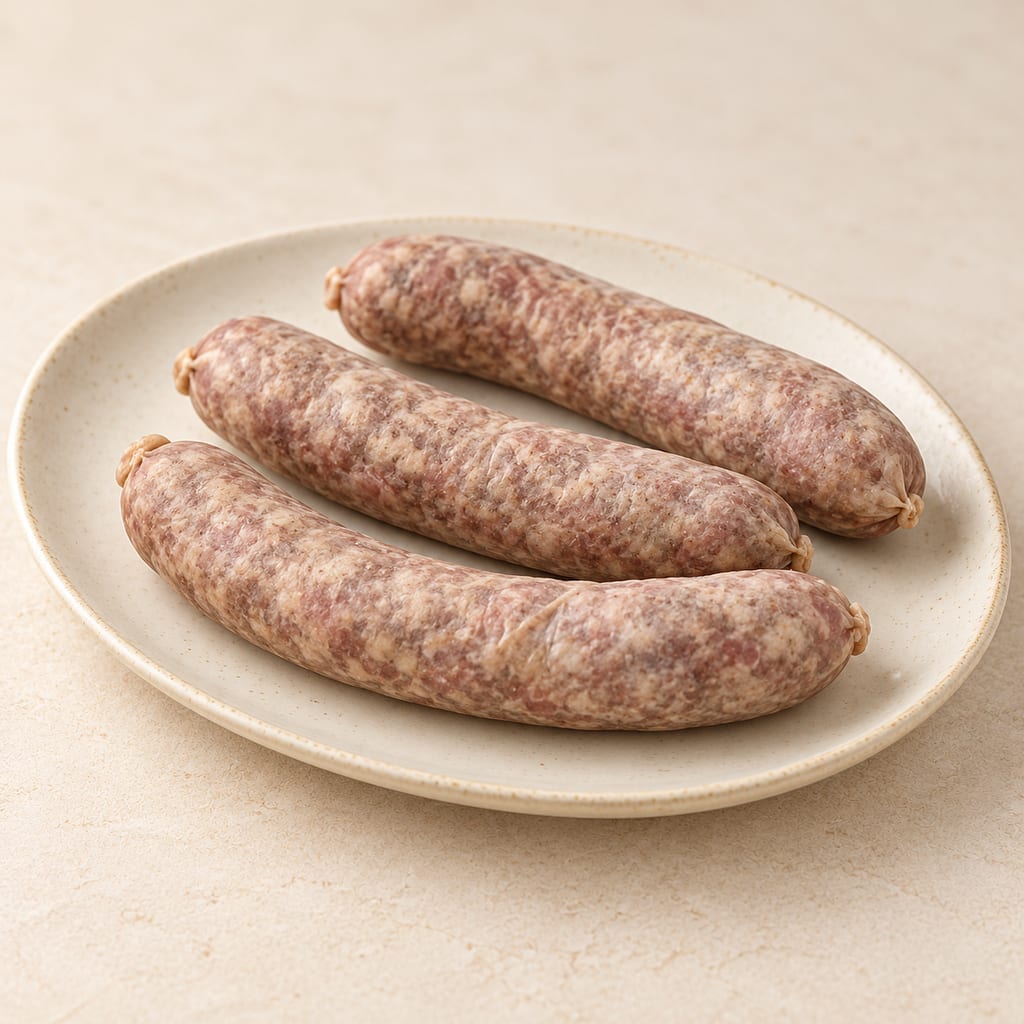
Maltese sausage, starter-cultured
A documentary account of Maltese zalzett and a contemporary starter-cultured adaptation. The cited raw-pork method lacks documented validation for pathogen reduction and is not offered as a preparation recipe.
 FermenteaWhere food goes to change
Processing aids
Starch separated from potato tubers is a neutral powder used for thickening, binding and texture. It differs from whole-potato flour and is not automatically fermentable by a sausage starter.
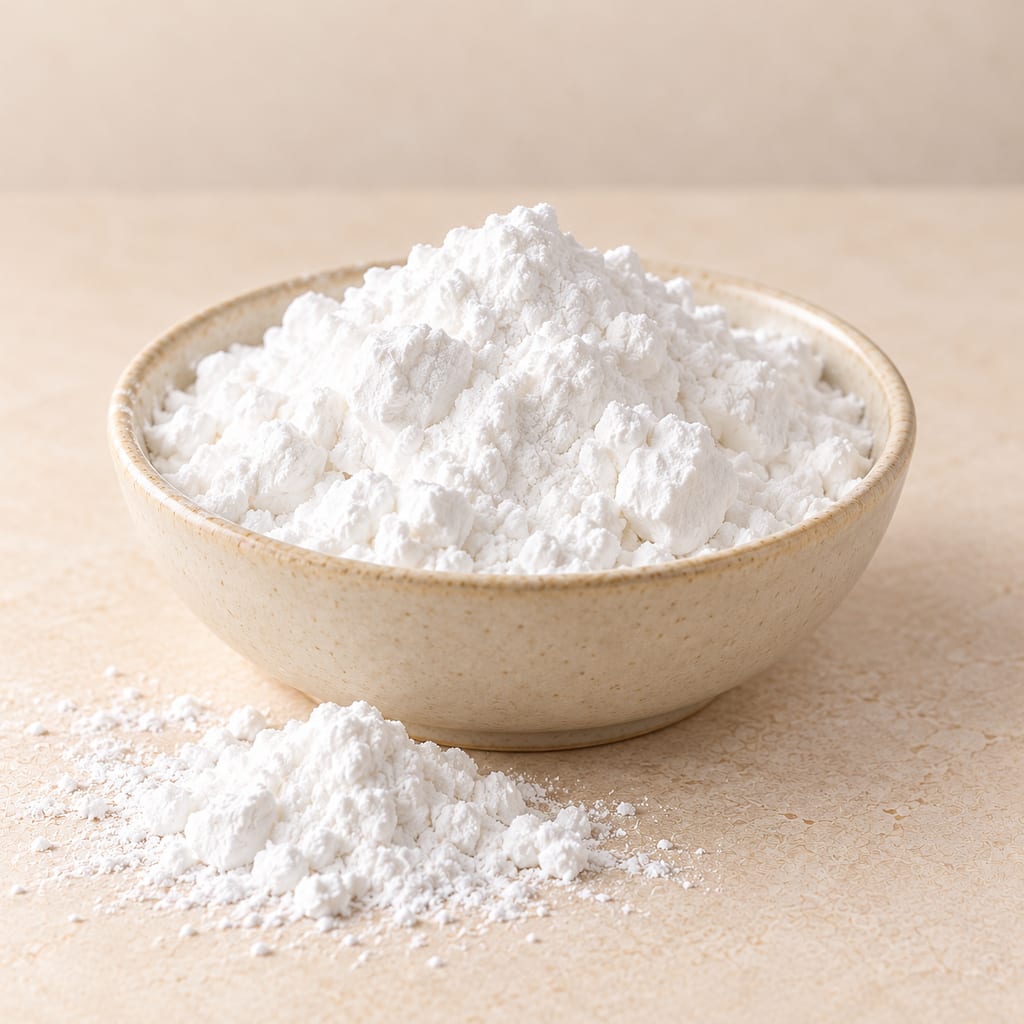
Potato starch is the fine, pale powder separated from the starch-bearing cells of a potato tuber. It is valued for what it does to texture: a little can thicken a liquid, help form a gel or change the surface of a fried coating. Its relatively neutral flavour lets the other ingredients remain prominent. The powder can disappear into a preparation while substantially changing how that food moves, sets or feels in the mouth.
The plant is the cultivated potato, Solanum tuberosum. Within its tubers, starch is stored in microscopic granules. Extraction releases and concentrates those granules, producing a material quite different from a mashed potato or a whole-potato flour. The familiar white powder is thus connected to a fresh crop, but its culinary identity comes from selecting one component of that crop.
That distinction is useful before a packet is opened. Potato starch, potato flour, a modified food starch and an instant thickener can all look unremarkable on a shelf. Their names describe different starting materials or processing histories. Choosing the right one is part of following the recipe, especially when the intended result depends on clarity, binding or the way the starch responds to heat.
In Japan, katakuriko, written 片栗粉, is now commonly associated with potato starch. Its name preserves an older material: starch obtained from katakuri. The original plant source became scarce, while potato cultivation in Hokkaido made another starch available in much greater quantities. Similar behaviour in cooking helped the replacement retain the familiar name.
The change was both agricultural and practical. A useful powder did not have to remain tied to its original plant if another crop could provide the properties cooks wanted. Potato starch formed a clear, sticky thickening when heated, allowing it to take over work previously done by katakuri starch. The name continued even as the supply chain changed from a gathered plant to a widely cultivated tuber.
Hokkaido's imomochi gives the ingredient a place in a particular food story. Potatoes became important in the region's settlement and food supply, and potato cakes offered an alternative to rice-based mochi. Commercially available starch later provided a convenient addition to mashed potato. The resulting snack belongs to a regional history of crop choice and household cooking, rather than simply illustrating an industrial thickener in the abstract.
Manufacture begins by cleaning potatoes and breaking open their cells. Washing removes soil and stones; crushing or rasping releases starch into water alongside fibre, skin and other tuber material. Screens separate the larger pieces. Further washing and separation refine the starch suspension before the purified material is dewatered and dried.
The purpose of these stages is separation. The factory is recovering starch already made by the plant, rather than creating glucose by breaking the starch into sugar. Filtration, settling and centrifugal equipment offer different ways to remove accompanying material. Equipment and plant layouts vary, but the distinction between starch recovery and starch conversion remains fundamental.
The co-products matter to the wider industry. Skin and fibre are separate streams, and processing can also recover other potato components. A bag of starch represents one selected fraction from a crop that can supply several products. This helps explain why commercial starch production is a different enterprise from drying a cooked potato and milling it whole.
Potato flour retains the character of the whole potato more strongly. It has a recognizably potato-like flavour and includes material that isolated starch production removes. Potato starch is more neutral and is selected for the behaviour of the starch granules themselves. A recipe asking for one should not silently be interpreted as asking for the other.
The difference also appears when the powders are mixed with water and heated. Non-starch components in a flour affect the food system around the granules. Protein, fibre and other solids change the balance of material being added, even if the ingredient names seem close. Equal spoonfuls consequently do not establish equal thickening, flavour or texture.
Other plant starches are separate ingredients too. Maize, wheat, cassava and sweet potato can all provide starch, but their granule structures and associated components differ. A white appearance is not evidence of identical cooking behaviour. Keeping the botanical source with the name allows a cook or food maker to choose a material for its intended function rather than treating every starch as anonymous powder.
Starch contains long chains of glucose units arranged mainly as amylose and amylopectin. Amylose is largely linear, while amylopectin is branched. Together they form an organized granule with regions of differing molecular order. These arrangements help determine how the material interacts with water and how it changes during heating and cooling.
Potato starch also contains naturally attached phosphate groups. These are part of the starch's chemistry, rather than seasoning added to the packet. They contribute to the unusual functional behaviour of potato starch, including its capacity to develop high viscosity. Research on potato starch shows that composition and properties vary with the potatoes and with the granules being examined.
That variation is useful to understand without turning it into a fixed composition for every bag. Cultivar, growing conditions and harvest can influence the material. A food manufacturer may select a starch to a specification, while a household recipe may name only the botanical source. Two powders can share a botanical source while differing in granule composition and pasting behaviour. A supplier's specification describes the selected commercial material more precisely than the generic ingredient name.
The water around the starch can matter as well. Calcium and magnesium can interact with esterified phosphate groups, changing how the material behaves during pasting. Experiments that enriched potato starch with these minerals found changes in viscosity and its stability. This is a useful example of an interaction between starch and its surroundings. It does not give every household water supply the same effect, or make mineral addition a necessary step in ordinary cooking.
Dispersing native starch in cool water is different from cooking it. The granules can be suspended without immediately producing the thickened texture associated with a finished sauce. With sufficient water and heat, they swell and lose molecular order, and the mixture develops viscosity. This change is called gelatinization.
The word describes a starch transformation, not the addition of animal gelatin. The ingredients are unrelated even though both can help create a gel. In starch, the developing texture arises from the behaviour of the granules and their glucose polymers. Water availability, the surrounding ingredients and the heating history affect the result.
A thick paste can change further under continued heat and mixing. Expanded granules are more vulnerable to disruption, and a high initial viscosity does not mean that thickening will remain unchanged through every subsequent step. The recipe's order of addition and treatment therefore matters. Starch is chosen for a process, not simply for the maximum thickness it can produce in a laboratory test.
After a starch mixture has been heated, its behaviour continues to change as it cools. Starch chains can reassociate into more ordered structures, a process called retrogradation. The food may become firmer, and some gels release liquid as their internal organization changes. The name for that water release is syneresis.
These are explanations of possible material changes, not a prediction that every potato-starch dish will behave identically. The concentration of starch, the water present and the rest of the food all matter. A sauce, a potato cake and a meat mixture surround the starch with very different ingredients and expose it to different treatment.
This is why results from a simple starch gel need to stay attached to the conditions in which they were observed. They can explain why cooling and storage alter texture, but they do not supply a universal cooking schedule. They also do not establish what starch will do in a preparation that never receives a gelatinizing heat treatment.
In fermentation, the presence of carbohydrate does not by itself establish that the chosen microorganisms can use it. Starch is a large polymer; many lactic-acid bacteria require it to be broken into smaller carbohydrates before they can obtain fermentable sugar from it. That breakdown depends on suitable enzymes and organisms.
Industrial studies deliberately select amylolytic microorganisms that can attack starch. Those systems show what a particular organism and designed process can accomplish. They do not mean that every sausage starter has the same capability. A method that adds dextrose and a named culture has identified a different substrate from an optional spoonful of native potato starch.
The linked modern Maltese sausage preparation lists potato starch as an optional binder. It is mixed with the meat and other ingredients, but the method does not establish a separate cooking stage that gelatinizes it. Its exact performance in that uncooked mixture is therefore not demonstrated by the familiar explanation of thickening a hot sauce. In this formulation it remains an optional binding ingredient, separate from the dextrose and named starter culture. Its presence alone establishes neither a fermentable sugar supply nor a preservation control.
The Government of Malta's traditional sausage account uses meat, salt, coriander, pepper, parsley, optional garlic and an intestinal envelope. It does not list potato starch. The contemporary starter-cultured version linked here makes a different choice by offering starch as a binder. That comparison identifies a feature of a particular adaptation; it does not establish an ingredient rule for every Maltese household.
Elsewhere, the powder has a more readily visible textural role. In imomochi it joins mashed potato in a cooked cake. In sauces, soups and fillings it can develop a relatively clear thickening, while coatings use starch to change the cooked surface. These foods employ the same material in different surroundings, with different purposes for heating and mixing.
A cook can therefore understand potato starch through several useful contrasts: isolated starch against whole-potato flour, a cold suspension against a cooked paste, a hot sauce against a cooled gel, and a texture ingredient against a deliberately fermentable sugar. Each comparison explains a different choice. None requires treating every preparation as an example of one universal starch recipe.
Read the ingredient name and the rest of the package. Native potato starch is distinct from a product labelled modified, pregelatinized or instant. Deliberate processing can alter how a starch thickens or tolerates subsequent treatment. A blend may contain several starches or other additions. The botanical source alone does not describe everything in the packet.
For storage, keep the product sealed in a cool, dry place and follow its manufacturer's instructions and date information. Protecting the dry powder's working condition is different from storing a food after it has been dispersed and cooked. A closed packet, a damp slurry and a finished starch-containing dish are separate storage situations.
Potato starch is derived from potato rather than wheat, but a generic ingredient name does not supply a product's allergen or cross-contact declaration. Read the actual package, particularly for blends and modified products. People avoiding a particular ingredient need that product-level information. The useful shopping decision rests on identity and documentation, not on the fact that several different powders happen to be white.
The linked sausage does not identify the starch's cultivar, supplier, processing specification or factory location, or demonstrate the optional binder's exact behaviour in that mixture. No universal household shelf life is assigned.
Potato-derived; use exact supplier ingredient and cross-contact declarations, especially for blends or modified products. The generic name is not an allergy-free guarantee.
Documented potato-starch production/use context and imomochi tradition, not sourcing of the linked sausage’s unnamed powder.
A documentary account of Maltese zalzett and a contemporary starter-cultured adaptation. The cited raw-pork method lacks documented validation for pathogen reduction and is not offered as a preparation recipe.
Salmon roe is the eggs of salmon, eaten fresh, salted or dried and preserved in distinct regional ways. Nuxalk records distinguish fresh roe from aged mutsi; those accounts are historical, not safe-process instructions.
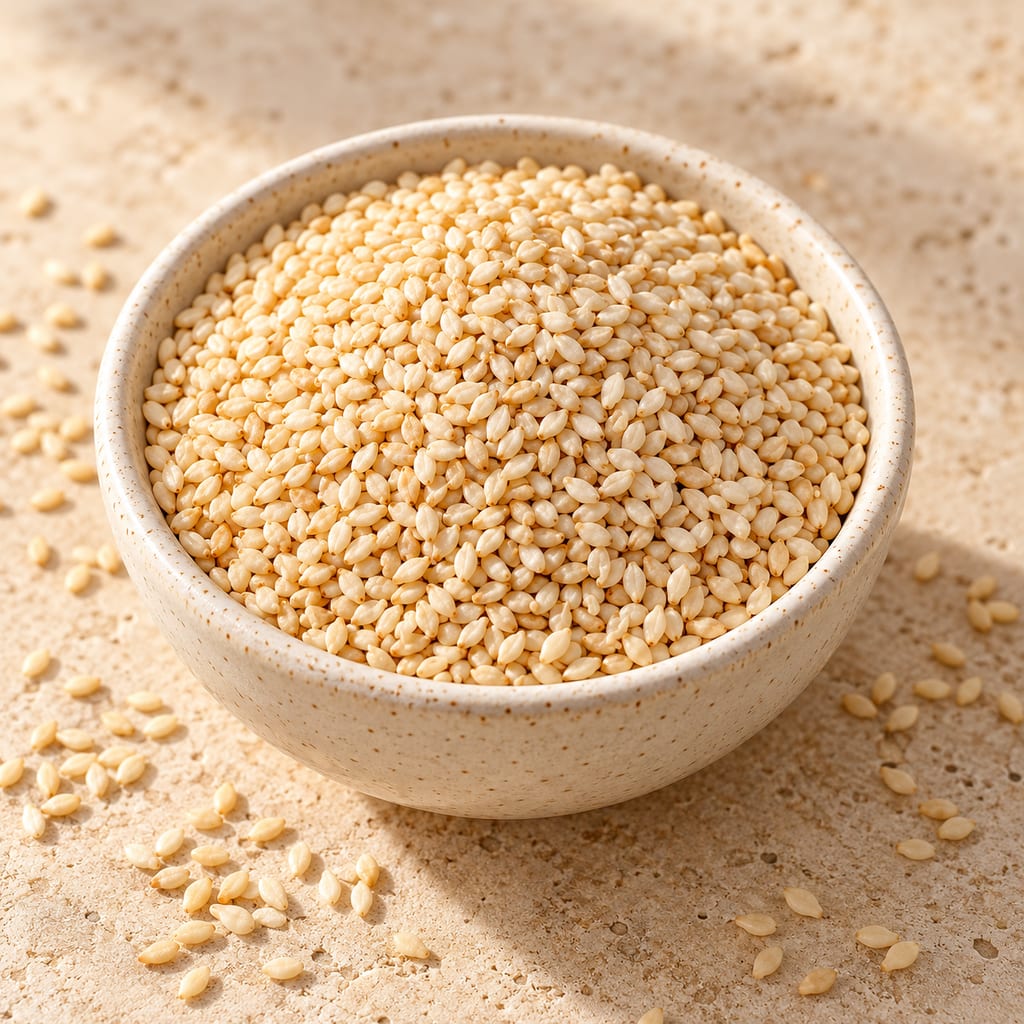
Sesame seed, from Sesamum indicum, is about half oil and is eaten whole, ground into paste or pressed into oil. It was a crop of South Asia by the Harappan period and reached Mesopotamia before 2000 BC.
No community contributions have been published for this entry yet.
Sign in to contribute. Published comments and photos are free to read.
Kew Science / Plants of the World OnlineIdentity · Production · Science · Uses
Solanum tuberosum L.Solanum tuberosum is the cultivated potato plant.
Cited in: A potato ingredient without a potato flavour
Bob’s Red MillIdentity · Production · Science · Uses
Are potato starch and potato flour the same product?Potato starch is the isolated starch, while potato flour contains the dried whole potato and retains a more noticeable potato flavour.
Cited in: A potato ingredient without a potato flavour; Starch and flour are different materials; Different recipes ask for different work; Buying and keeping the powder
Agriculture and Livestock Industries Corporation, JapanIdentity · Production · Science · Uses
片栗粉のお話 (A story about katakuriko)The name katakuriko derives from katakuri starch. Scarcity of the original plant and larger-scale potato-starch production helped make potato starch its common replacement.
Cited in: The older name inside katakuriko
Ministry of Agriculture, Forestry and Fisheries, JapanIdentity · Production · Science · Uses
Imomochi: Traditional Foods in JapanHokkaido imomochi developed in a regional potato-growing food culture; commercially available starch later became a convenient addition to mashed potato.
Cited in: The older name inside katakuriko; Different recipes ask for different work
U.S. Environmental Protection Agency / Research Triangle InstituteIdentity · Production · Science · Uses
Starch Manufacturing: A ProfileStarch production separates granules from washed and rasped potatoes, then refines, dewaters and dries the starch fraction.
Cited in: Releasing granules from the tuber; Starch and flour are different materials
PLOS ONEIdentity · Production · Science · Uses
Engineering Potato Starch with a Higher Phosphate ContentPotato starch contains amylose and amylopectin, polymers of glucose with different branching structures, and naturally attached phosphate groups.
Cited in: What is inside a granule
Japan Agricultural Research Quarterly / JIRCASIdentity · Production · Science · Uses
Characteristics of Potato Starch: Phosphorus Content, Physicochemical Properties, and DigestibilityPhosphate groups influence potato-starch pasting. Calcium and magnesium enrichment changes viscosity and stability; granule and crop characteristics also affect the material.
Cited in: A potato ingredient without a potato flavour; What is inside a granule; Heat and water change the structure; Cooling is another stage
American Society of BakingIdentity · Production · Science · Uses
Starch GelatinizationHeating starch with water disrupts granule molecular order and promotes swelling and thickening.
Cited in: Heat and water change the structure; Cooling is another stage
Journal of Chemical Technology & BiotechnologyIdentity · Production · Science · Uses
Direct fermentation of potato starch and potato residues to lactic acid by Geobacillus stearothermophilus under non-sterile conditionsMany lactic-acid bacteria need starch hydrolysed into smaller carbohydrates. Selected amylolytic microorganisms can perform that breakdown in designed fermentation systems.
Cited in: A binder is not automatically a sugar source
2 Guys & A Cooler / EricIdentity · Production · Science · Uses
Maltese SausageThe modern Maltese sausage card lists potato starch as an optional binder, mixed with the other ingredients without a separate gelatinizing stage.
Cited in: A binder is not automatically a sugar source; Different recipes ask for different work; Product details still needed
Government of MaltaIdentity · Production · Science · Uses
Maltese Sausage (Traditional Recipe)The published traditional Maltese sausage formulation contains no starch.
Cited in: Different recipes ask for different work
Bob’s Red MillIdentity · Production · Science · Uses
What is the best way to store your products?The manufacturer recommends keeping potato starch sealed in a cool, dry place.
Cited in: Buying and keeping the powder
U.S. Food and Drug AdministrationIdentity · Production · Science · Uses
Starch, Food, ModifiedStarch and modified food starch are ingredient categories with distinct descriptions and technical uses.
Cited in: Buying and keeping the powder
U.S. Food and Drug AdministrationIdentity · Production · Science · Uses
Food Allergies: What You Need to KnowIngredient labels and supplier declarations identify the actual product and relevant allergens for individual dietary needs.
Cited in: Buying and keeping the powder
Journal of the Science of Food and Agriculture / Dobosz and colleaguesScience
Short- and long-term retrogradation of potato starches with varying amylose contentStored potato-starch gels undergo structural and rheological changes and can release water; the changes depend on starch characteristics.
Cited in: Cooling is another stage