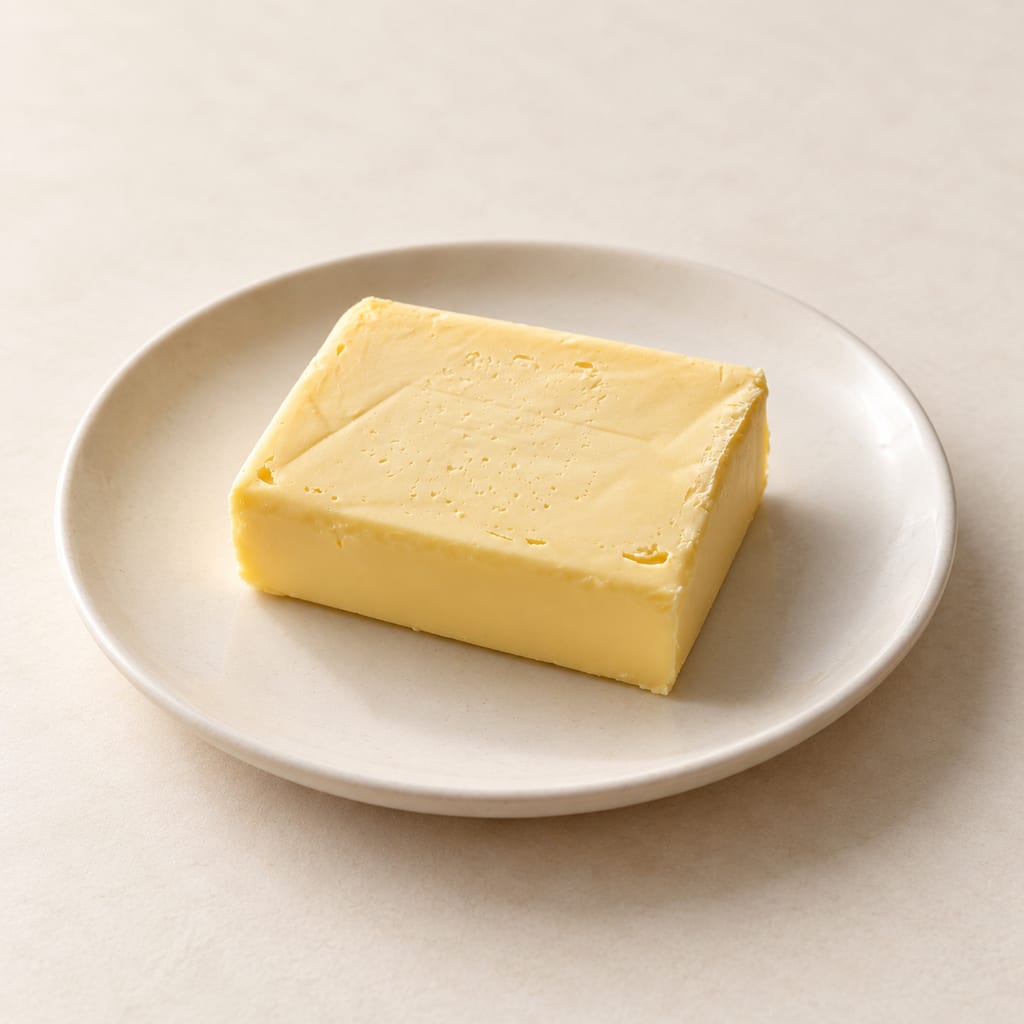
Butter
Butter is a milk-fat emulsion made by churning cream. It enriches dough or finishes bread; melted, cool and room-temperature butter serve different recipe roles.
 FermenteaWhere food goes to change
Modern adaptation
A fine-crumb, enriched wheat loaf baked in a lidded pan for even slices used in sandwiches, toast, French toast and melba toast.
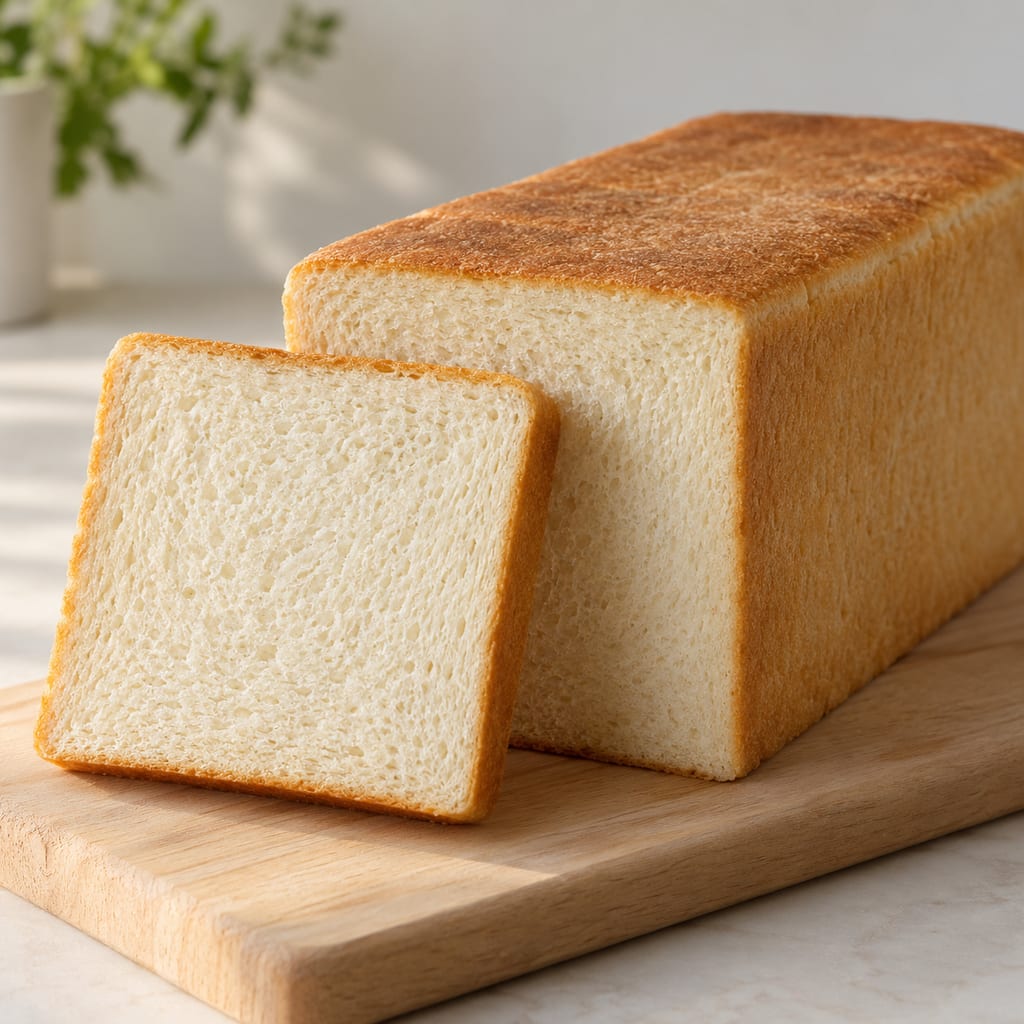
Pain de mie is a soft French-style bread distinguished by its fine, even crumb and relatively thin crust.
The French phrase pain de mie refers to bread characterised by its soft interior, or mie. It is commonly associated with rectangular sandwich loaves baked in covered tins.
The bread is designed to slice neatly. Its crumb has small, relatively regular gas cells rather than the large irregular holes characteristic of some rustic sourdough loaves.
This makes it especially useful for sandwiches, toast, French toast and other preparations where consistent slices are desirable.
The loaf in this recipe is enriched with milk, butter, sugar, dried milk and potato flour. These ingredients contribute tenderness, moisture retention and flavour.
The preparation uses commercial instant yeast, not sourdough.
Its fermentation therefore consists principally of yeast metabolism during the two dough-rising stages.
The original formula was published by King Arthur Baking and updated on 8 July 2022. It is a contemporary home-baking version of a traditional bread category.
Soft white bread with a comparatively fine crumb has a long European history.
Bakers developed different methods for controlling crust, shaping loaves and producing bread suited to slicing.
The rectangular lidded tin became particularly important because it restricted dough expansion and produced a loaf with four relatively flat sides.
The resulting shape was efficient for slicing, wrapping, storing and serving.
In English-speaking baking, this style is frequently called a Pullman loaf.
The name is associated with the Pullman railway company and the use of compact rectangular loaves in railway dining and catering.
However, lidded rectangular bread tins did not originate exclusively with the railway industry.
Evidence of square or rectangular tin-baked breads predates the Pullman company in Europe.
It would therefore be inaccurate to claim that George Pullman personally invented pain de mie.
The industrial catering connection helped popularise the square loaf, while the broader baking technology developed through earlier European practice.
The present King Arthur recipe does not identify an exact French bakery or date of origin for its particular ingredients.
American Society of Baking
Milk — 152 g — Water, milk proteins and flavour
Lukewarm water — 227 g — Dough hydration
Butter — 85 g — Tenderness and richness
Table salt — 14 g — Flavour and dough regulation
Granulated sugar — 35 g — Sweetness and fermentable carbohydrate
Dry milk powder — 28 g — Milk solids and crumb character
Potato flour — 35 g — Moisture retention and softness
Unbleached all-purpose flour — 570 g — Gluten-forming structure
Instant yeast — 2 teaspoons — Leavening and fermentation
The bread is made in a 13-inch pain-de-mie pan with a lid.
The recipe produces one loaf.
The butter is used at room temperature, at least 65°F / 18°C.
The original method does not prescribe a numeric dough fermentation temperature. It describes the water as lukewarm and allows the rise to vary with kitchen conditions.
The main flour is produced from common wheat, Triticum aestivum.
Wheat flour contains proteins, principally gliadin and glutenin fractions, that form gluten when hydrated and mixed.
Gluten provides an extensible network capable of trapping gas.
During fermentation, yeast produces carbon dioxide, which expands gas cells in the dough.
The gluten network stretches around those cells.
The recipe uses all-purpose flour rather than the very strong bread flour often used in other sandwich loaves.
This fits the desired tender, fine-grained crumb, provided the dough still develops sufficient structure.
The exact protein content of the flour may vary between countries and manufacturers.
A flour substitution can therefore affect dough strength even when the weight remains unchanged.
The recipe includes 152 g milk and 28 g dry milk powder.
These are not duplicates accidentally included in the ingredient list.
Liquid milk contributes water, milk sugars, proteins and other solids.
Dry milk increases the concentration of milk solids without adding an equivalent quantity of water.
Milk proteins and lactose can contribute to crust colour during baking.
Lactose is not readily fermented by ordinary baker's yeast, so it can remain available for browning reactions.
Milk also contributes the characteristic flavour of enriched white bread.
The two forms allow the baker to control liquid hydration and milk-solid content separately.
Potato flour is particularly useful in soft bread because potato-derived components can bind water.
Starch strongly influences how moisture is held within baked bread.
During baking, starch gelatinises, contributing to crumb structure.
As the loaf cools and ages, starch molecules gradually reorganise in a process associated with bread staling.
Ingredients that affect water distribution and starch behaviour can influence perceived softness.
Potato flour is therefore included for technological reasons, not simply to add a potato flavour.
It should not automatically be replaced gram-for-gram with potato starch without considering the product specification.
Different commercial potato powders contain different proportions of starch and other potato solids.
The recipe records potato flour specifically.
Place the milk, lukewarm water, room-temperature butter, salt, sugar, dry milk, potato flour, all-purpose flour and instant yeast in a mixing bowl.
Combine thoroughly.
The original method permits kneading by hand, with a mixer or using a bread machine's dough cycle.
The dough should develop into a smooth, soft mass.
No fixed kneading time is given because the required mixing depends on equipment and technique.
Continue kneading until the dough becomes cohesive and elastic.
It should hold together rather than remain a loose paste.
The purpose is to develop sufficient gluten to retain fermentation gas.
Avoid adding arbitrary quantities of extra flour merely because enriched dough feels soft.
A very stiff dough may produce a denser loaf than intended.
Place the dough in a lightly greased bowl or rising container.
Cover.
Leave for approximately 1½ hours.
The intended endpoint is a dough that has become noticeably puffy.
It does not necessarily have to double in volume.
The exact duration depends on kitchen temperature and yeast activity.
Lightly grease the 13-inch lidded pan.
Ensure the lid can slide or fit properly without sticking.
A correctly sized tin matters because this dough is intended to fill a particular enclosed space.
The same amount of dough in a smaller tin may expand excessively, while a much larger tin may produce a short loaf.
Turn the dough onto a lightly greased work surface.
Gently deflate it.
Shape into a log approximately 13 inches long.
Try to distribute the dough evenly along its length.
Place the log inside the prepared tin.
Cover the pan, initially with lightly greased plastic wrap rather than the rigid lid.
Proof for approximately 45–60 minutes.
The intended endpoint is dough that rises to just below the upper rim.
A cool kitchen may require longer.
The important measurement is its expansion in the pan, not the clock alone.
Heat the oven to 350°F / approximately 177°C.
Remove the temporary covering.
Fit the lidded tin's rigid cover.
Bake for 25 minutes with the lid in place.
The lid restricts upward expansion and produces the flat upper surface characteristic of a Pullman-style loaf.
The bread continues expanding early in baking as gas and water vapour increase in volume.
Remove the pan carefully.
Slide off the lid.
Return the loaf to the oven for another 10–20 minutes.
The documented baking endpoint is an internal temperature of 190°F / approximately 88°C.
The total baking time is approximately 35–45 minutes.
The internal temperature is the publisher's endpoint, not an independently validated control for every pan or oven.
Remove the loaf from the tin.
Place it on a cooling rack.
Allow it to cool completely before slicing.
Cutting a very hot loaf may compress its crumb and produce a gummy-looking cut surface.
Cooling allows moisture and crumb structure to stabilise.
King Arthur Baking
Instant yeast ordinarily contains Saccharomyces cerevisiae.
Yeast metabolises fermentable sugars in the dough.
The principal products of alcoholic fermentation are carbon dioxide and ethanol.
Carbon dioxide inflates gas cells within the gluten structure.
During baking, rising temperature increases gas pressure and changes the dough's physical properties.
Eventually the proteins coagulate and starch gelatinises, setting the loaf's structure.
Much of the ethanol produced during fermentation is lost through evaporation during baking.
The bread should therefore not be classified as an alcoholic beverage even though yeast metabolism includes alcoholic fermentation.
The dough is enriched and mixed sufficiently to develop a cohesive gluten network.
Shaping and gentle deflation redistribute large gas pockets.
The tin constrains expansion.
Together, these conditions favour a comparatively even distribution of small and medium gas cells.
An open-crumb sourdough loaf is often handled to preserve large gas bubbles.
Pain de mie is shaped for the opposite objective: a uniform crumb suitable for slicing.
This does not mean all gas should be forcibly removed.
The dough still requires enough gas retention to rise.
The goal is control and regularity rather than maximum openness.
A free-standing loaf expands into the space available above it.
Its upper crust becomes rounded, depending on dough strength and scoring.
A covered tin prevents the dough from forming a high dome.
As the dough rises, it approaches the underside of the lid.
The pan defines the final external geometry.
The lid also changes heat transfer and evaporation at the top surface.
The top crust receives a different baking environment from an uncovered loaf.
This helps explain the relatively thin, flat crust associated with the style.
Leaving the lid on throughout baking might produce different colouring from the published method, which specifically removes it for the final stage.
Butter contributes fat that interacts with the dough structure.
Sugar affects sweetness, water distribution and yeast metabolism.
Milk solids influence flavour and browning.
Potato flour helps with moisture retention.
The result is more tender than a lean bread containing only flour, water, salt and yeast.
However, it remains a bread rather than a cake.
The structure is still developed through gluten formation and fermentation.
This distinguishes pain de mie from chemically leavened quick breads.
A French pain de mie may be relatively lean or noticeably enriched.
Industrial sandwich breads may include dough conditioners and emulsifiers.
Some recipes use eggs.
Others use milk and butter but omit potato flour.
Pullman loaves can also be made with wholegrain flour.
These are variants of a rectangular, fine-crumb bread category, not automatically different named breads.
The current formula is particularly enriched and designed for a specified pan.
Its ingredients should remain attached to this version.
Pain de mie is especially well suited to sandwiches because its flat sides and even crumb produce consistent slices.
It can be used for delicate filled sandwiches.
It is also suitable for grilled cheese, toast and French toast.
For French toast, the enriched crumb absorbs the egg-and-milk mixture while retaining sufficient structure for cooking.
Melba toast is another documented application.
Thin slices can be dried or toasted until crisp.
The bread can also accompany soups, spreads, preserves and soft cheeses.
Its relatively mild flavour makes it versatile.
The top is rounded despite using the lid. The dough may not have filled the tin as intended, or the lid may have been fitted too late.
The bread pushes against the lid excessively. The pan may be overfilled or the dough overproofed.
The crumb is very dense. Possible causes include insufficient dough development, inactive yeast or inadequate proofing.
Large irregular holes appear. Shaping may have trapped large air pockets.
The crumb feels gummy. Underbaking or slicing before cooling may contribute.
The crust is excessively dark. Oven conditions and the uncovered finishing period affect colour.
The bread becomes dry in storage. Moisture migration and starch retrogradation contribute to staling.
The original baking source recommends wrapping the bread and storing it at room temperature for four days, or freezing it for up to three months.
These are quality and storage recommendations, not validated universal shelf-life limits.
Visible mould is grounds for discarding the affected bread.
The dough contains milk and butter, and normal kitchen hygiene remains necessary during preparation.
The recorded 88°C centre temperature is the publisher's baking endpoint.
King Arthur Baking presents this enriched instant-yeast formula as a fine-grained loaf for sandwiches, toast, French toast and melba toast. The page does not date the food's history or locate its origin.
Yield 1 loaf · Scaling: source batch only
The source gives a 190°F (88°C) centre reading as a baking endpoint, not as a separately validated food-safety control.
The inspected source gives a US-published home formula but does not identify a place of preparation or traditional origin for this formula.
Butter is a milk-fat emulsion made by churning cream. It enriches dough or finishes bread; melted, cool and room-temperature butter serve different recipe roles.
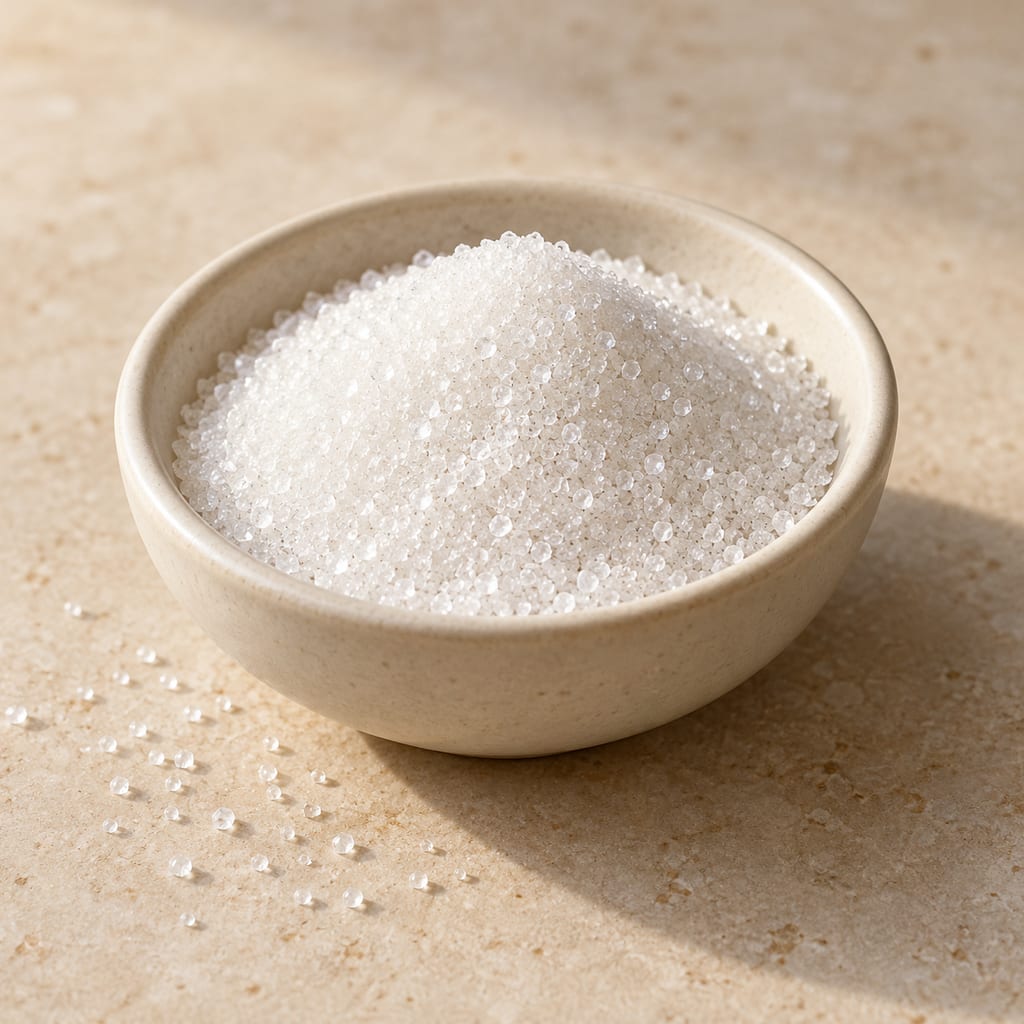
Granulated sugar is dry crystalline sucrose refined from cane or beet. It sweetens dough, feeds baking yeast, and helps set particular fruit spreads.
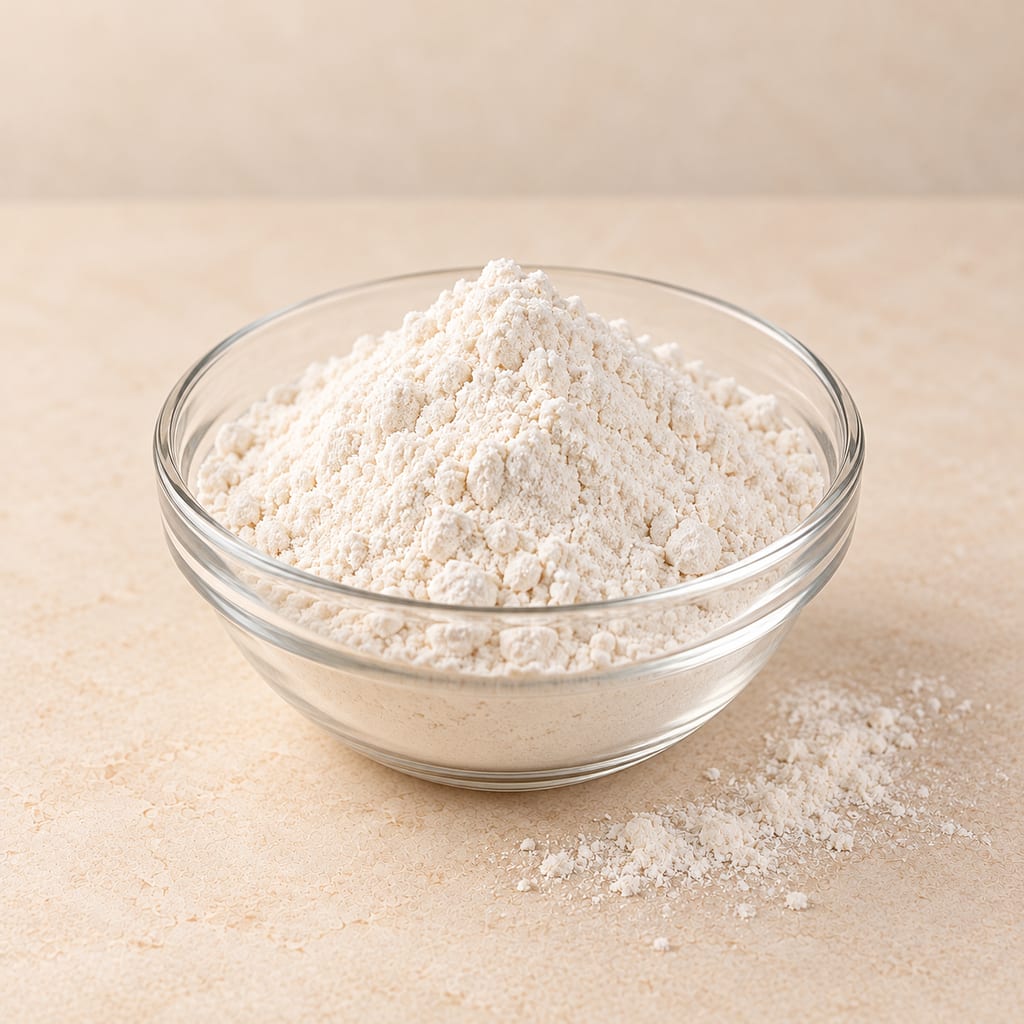
Bread flour and all-purpose flour give yeast dough its gluten network; pan de cristal and pain de mie use them in different ways.
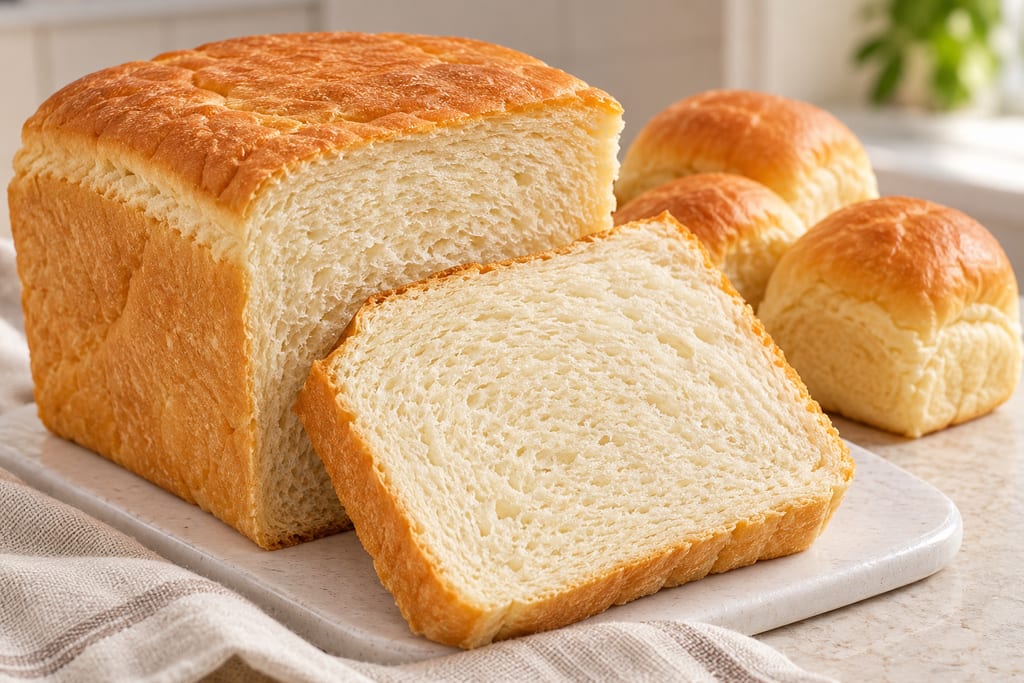
This softer home-style Agege bread uses a scalded flour paste, an enriched yeast dough and a 9×5-inch loaf pan, with rolls from the extra dough.
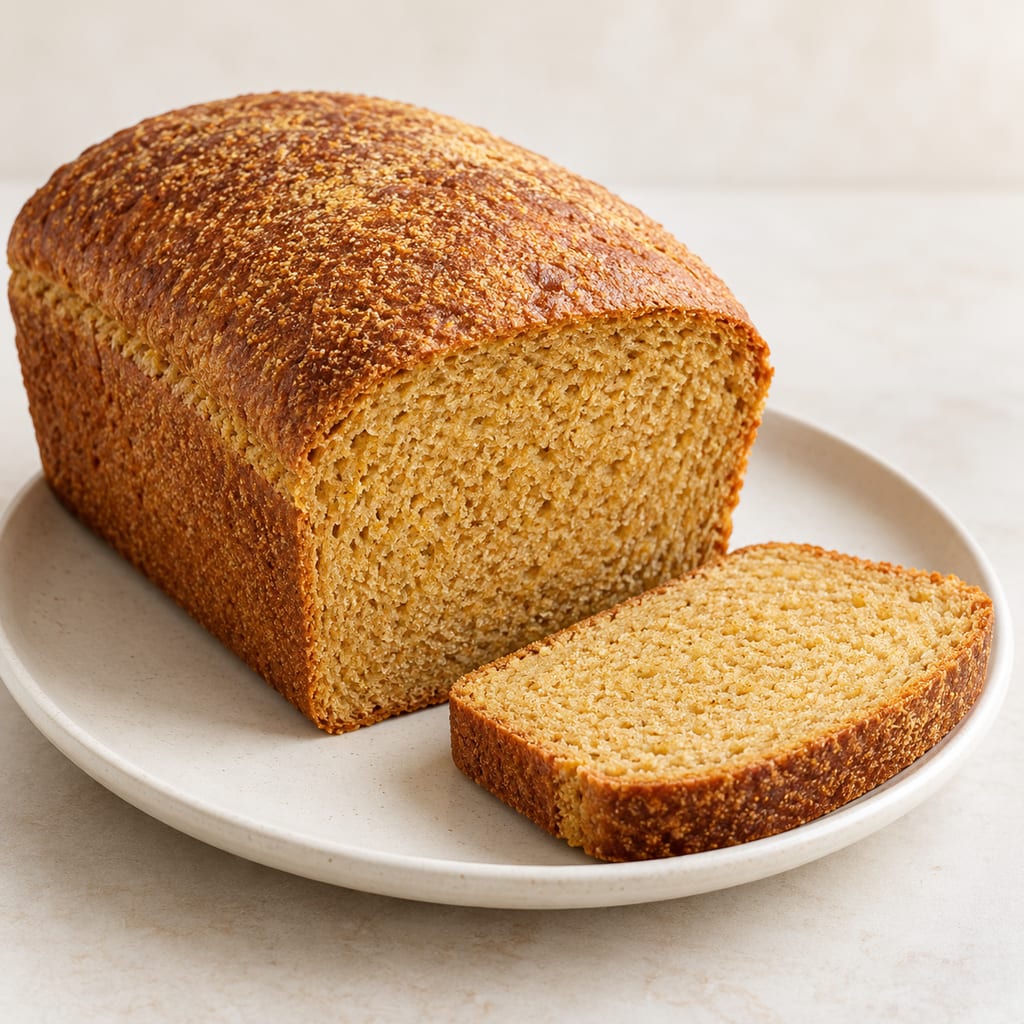
Anadama is a New England yeast loaf made with wheat flour, cornmeal and molasses. Scalded cornmeal enriches the dough, while molasses lends sweetness and a dark crust; it is especially good toasted or beside soup and baked beans.

A yeast-raised wheat ring shaped from a firm dough, briefly boiled and baked. This source-batch formula gives a gently malted crust and a chewy crumb.
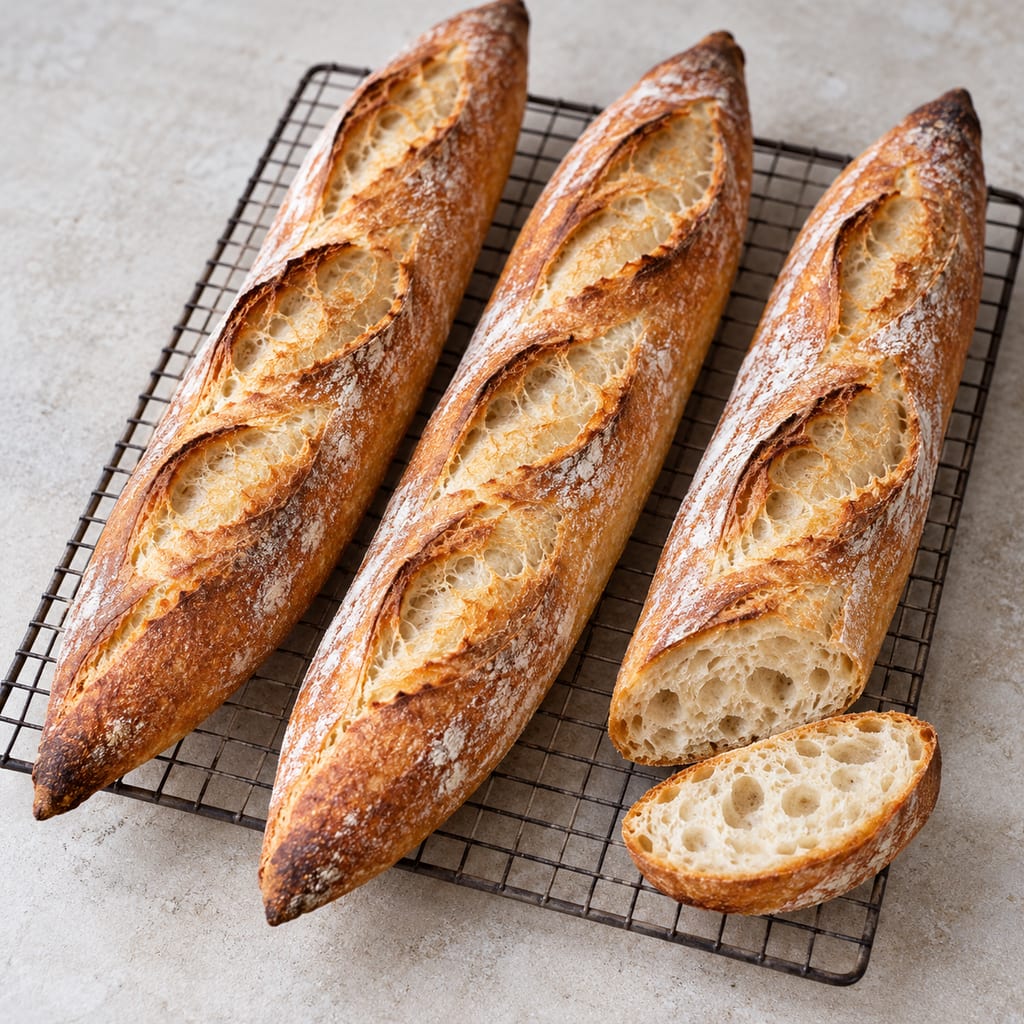
Three long, crusty wheat loaves made with an overnight yeast poolish, shaped by hand and baked with steam for a crisp crust.
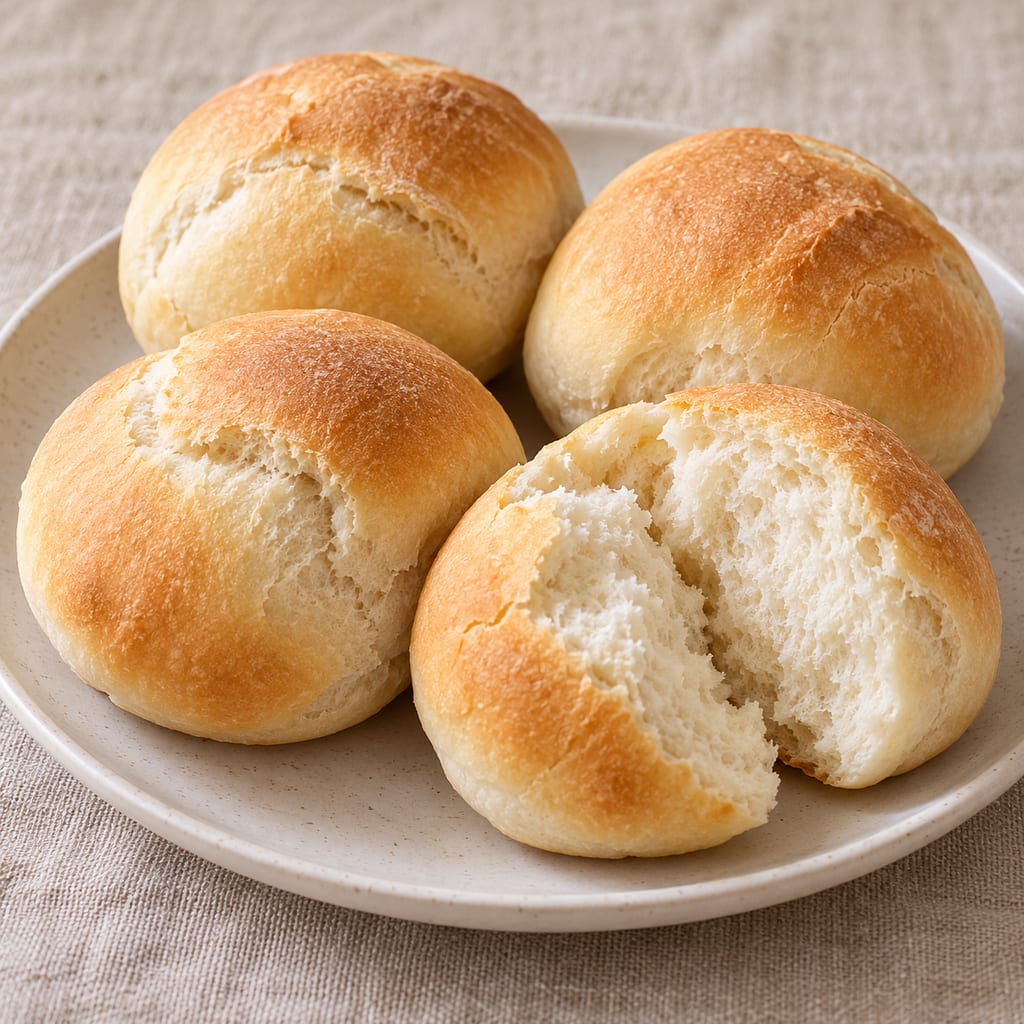
A lightly salted, yeast-raised Barbadian roll, baked in a dozen-roll home batch and often split for cutters.
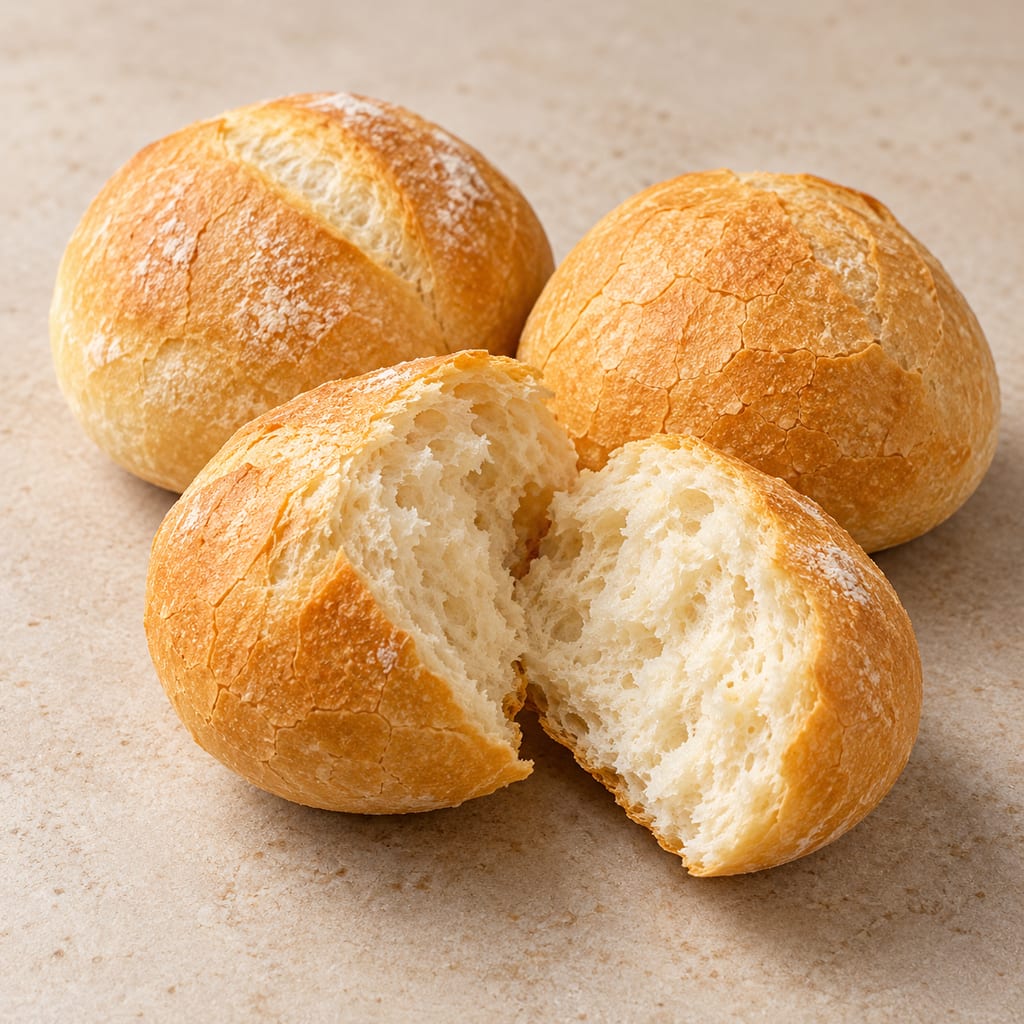
A crisp Belgian roll made from a supplier’s Croc-flour dough, mixed by hand or machine, proofed in rounds and baked with steam.
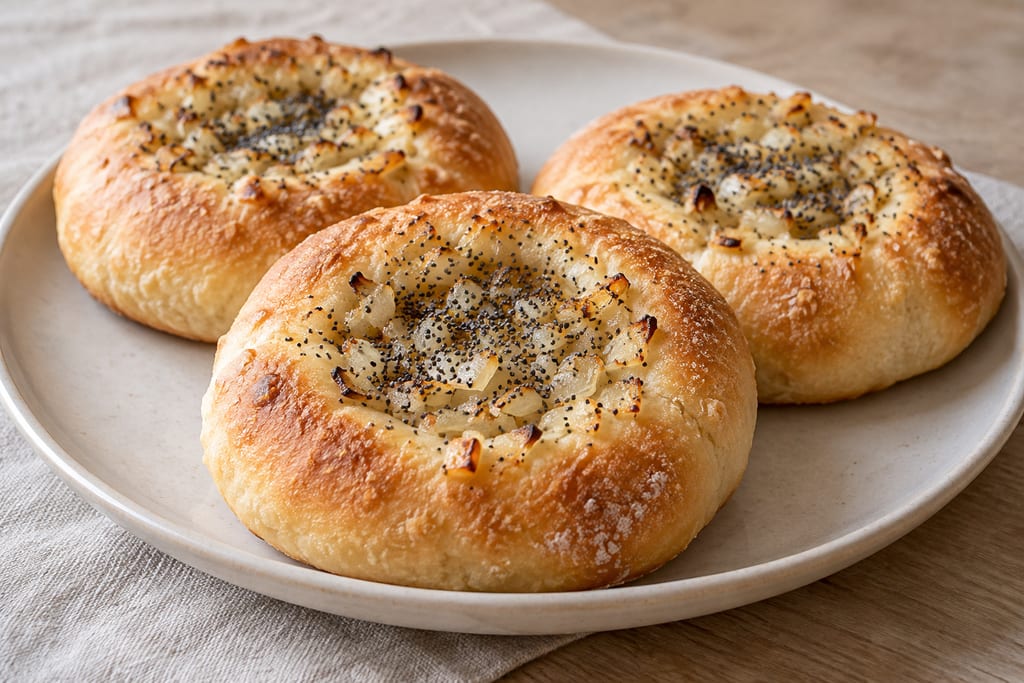
Bialys are soft, yeasted wheat rolls baked without boiling, each shaped with an onion-filled central depression instead of a hole.
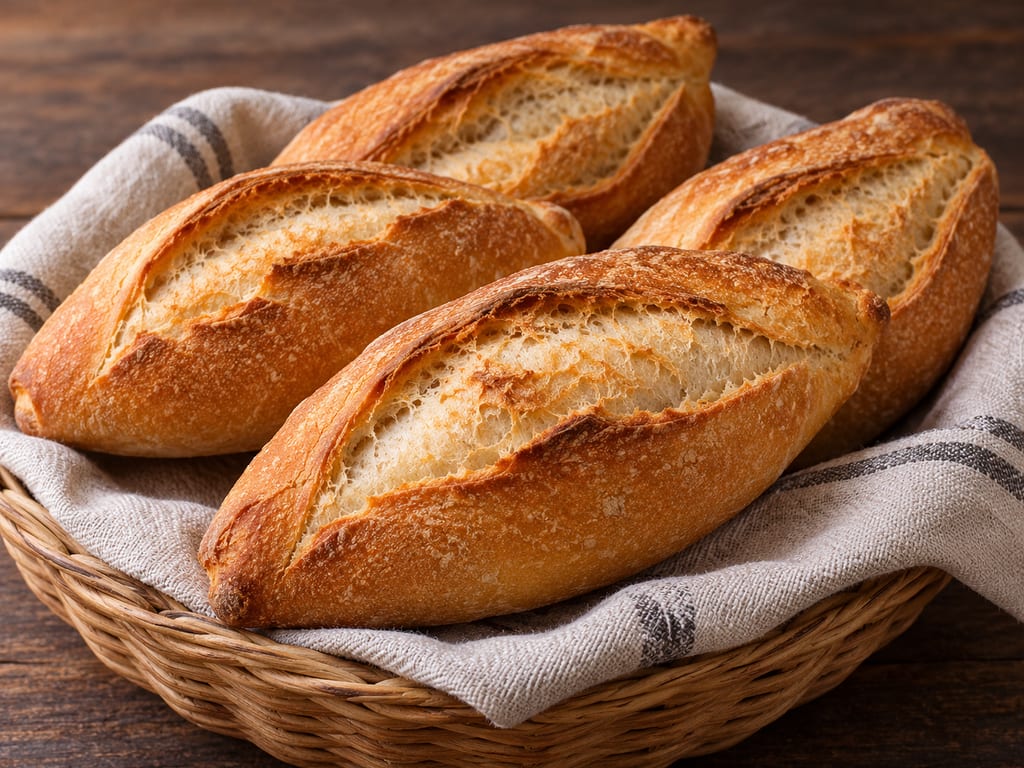
A measured, commercial-yeast home method for Guadalajara-style birote salado, with a six-hour preferment, shaped rolls and a two-temperature steam bake. This formula contains no egg.
No community contributions have been published for this entry yet.
Sign in to contribute. Published comments and photos are free to read.
King Arthur BakingRecipe · Home method · Use · Storage
Pain de MieLines 220-248 give update date 8 July 2022, author, named uses, 20-minute hands-on time, 35-45-minute bake, 3 hours 20 minutes total and one-loaf yield.
Lines 255-264 list milk 152 g, water 227 g, butter 85 g, salt 14 g, sugar 35 g, dry milk 28 g, potato flour 35 g, all-purpose flour 570 g and instant yeast 2 tsp.
Lines 272-285 give mixing/kneading options, about 1 1/2-hour first rise, 13-inch log/pan, 45-60-minute second rise, 350°F (177°C) bake under lid for 25 minutes then uncovered 10-20 minutes, 190°F (88°C) centre reading and cooling.
The source recommends wrapped room-temperature storage for four days or freezing for three months; this is publisher advice, not a validated safety limit.
Direct current-page re-open 2026-10-26, line 286: King Arthur advises storing wrapped at room temperature for 4 days or freezing up to 3 months; retained as publisher advice, not a validated safety limit.
Cited in: What is pain de mie?; Historical background: pain de mie and Pullman loaves; Ingredients; The wheat flour; Why there is both liquid milk and dry milk; The function of potato flour; Stage 1 — Prepare the dough; Stage 2 — Develop gluten; Stage 3 — First rise; Stage 4 — Prepare the tin; Stage 5 — Shape; Stage 6 — Second rise; Stage 7 — Preheat; Stage 8 — Bake covered; Stage 9 — Finish uncovered; Stage 10 — Cool; How yeast raises the bread; Why the crumb is fine rather than open; The physics of a lidded pan; How enrichment changes texture; Regional and commercial variants; Serving pain de mie; Troubleshooting; Storage and food safety
American Society of BakingHistory · Technology
Pullman LoafThe lidded Pullman pan and its effect on crumb and slice geometry
Commercial pan-bread practice behind the fine-crumb loaf
Cited in: Historical background: pain de mie and Pullman loaves; The physics of a lidded pan; Regional and commercial variants