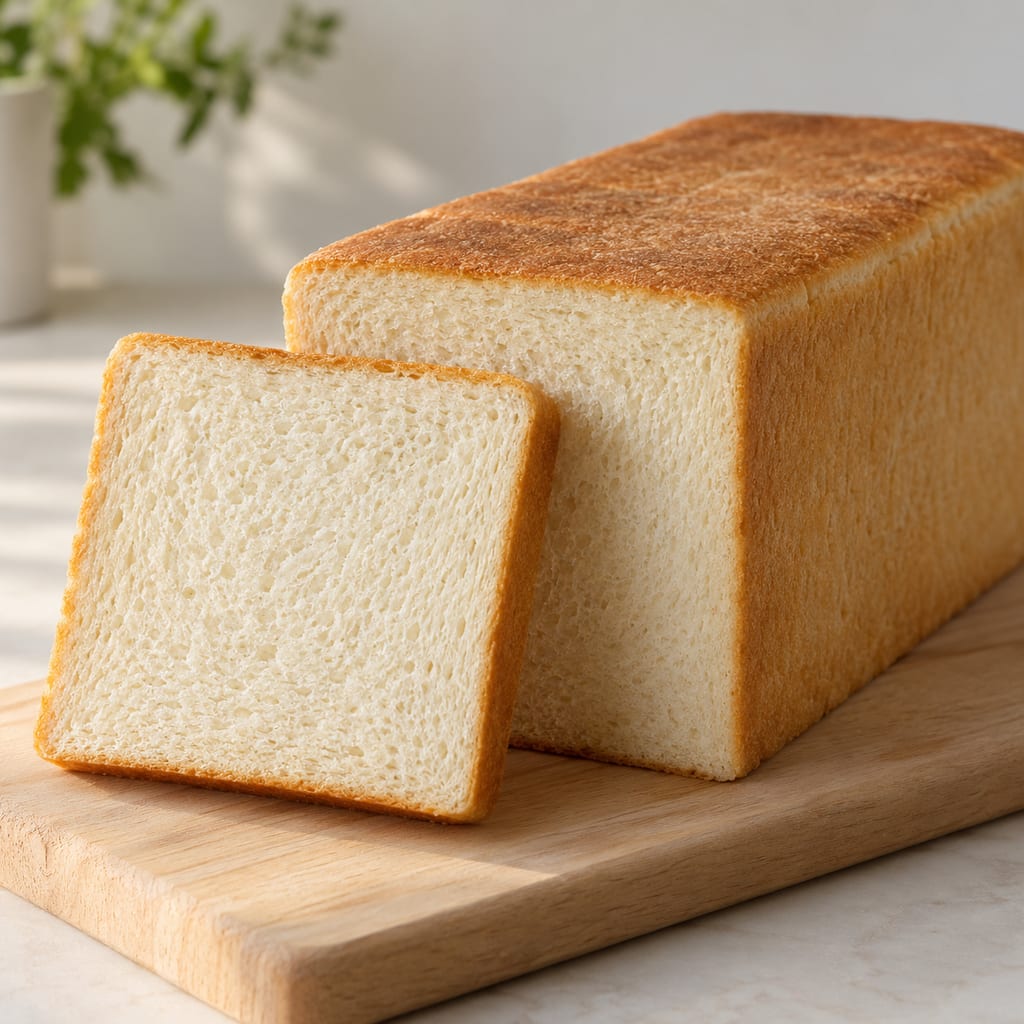
Pain de mie
A fine-crumb, enriched wheat loaf baked in a lidded pan for even slices used in sandwiches, toast, French toast and melba toast.
 FermenteaWhere food goes to change
Substrates
Bread flour and all-purpose flour give yeast dough its gluten network; pan de cristal and pain de mie use them in different ways.
Most bread starts with a decision that is easy to miss: which wheat flour. Two loaves from the King Arthur Baking test kitchen make the point. Pan de cristal, a high-hydration loaf with an open crumb, is built on 500 g of unbleached bread flour and 500 g of water, plus 2.5 g of instant yeast and 10 g of salt. Pain de mie, a fine-grained sandwich loaf baked in a lidded pan, uses 570 g of unbleached all-purpose flour, 35 g of potato flour, milk, water, butter, sugar and dry milk. The flours differ, but so does nearly everything else, and the sources do not claim the flour alone makes the difference. They show two ways a baker lets a flour do its job.
Worked out from the printed weights, the first dough is 100 per cent hydration: water equals flour by weight. Yeast is 0.5 per cent of the flour and salt 2 per cent. The second carries about 63 per cent liquid, counting milk as liquid, against the weight of its wheat and potato flours together, with butter at about 14 per cent and sugar at about 6 per cent. These percentages are derived here from the recipes; neither page states them. What each page does state is the baker’s intent: the first says the high protein content of its bread flour is a key ingredient for success, and the second gives no reason for its choice of all-purpose flour, saying only to weigh the flour or to spoon it into the cup and level it.
Wheat flour is mostly starch with a few per cent of storage proteins. Two families of those proteins, the gliadins and the glutenins, are the ones that matter in bread. When flour is wetted and worked they combine into a viscoelastic network, gluten, that stretches like a liquid and springs back like a solid. That network is what holds the gas of fermentation. The make-up of the glutenins carries more weight than a protein percentage alone: in the review that records it, the glutenin subunits of a wheat account for more than half of the difference in baking potential and dough elasticity between wheats.
Mixing does three jobs at once. It hydrates the proteins, it develops the gluten, and it folds air into the dough. Those tiny air pockets are the only places where bubbles will ever form. Yeast, Saccharomyces cerevisiae, ferments sugar, and flour holds under half a per cent of native sugar. Most of what a lean wheat dough ferments comes from amylase breaking down starch grains that milling has damaged, with maltose, glucose and fructose as the main products. The yeast turns these sugars to ethanol and carbon dioxide, the gas dissolves into the dough and diffuses into the air pockets, and the pockets swell. The review reports that roughly seventy per cent of the carbon dioxide the fermentation equation predicts actually appears, because yeast also spends sugar on its own energy and growth.
In the oven, protein and starch change. Between about 60 and 85 °C the proteins denature and cross-link while starch granules take up water and gelatinize, which turns the dough from a flexible foam into a rigid crumb. Heat expands the gas and water vapor, and the loaf rises fastest during the first six to eight minutes, which bakers call oven spring. A poorly built gluten network fails to retain the gas, and a well-built one holds it in the cells of the crumb.
Pan de cristal asks a lot of its flour. The dough begins as liquid as pancake batter, and the author describes it as turning smooth and silky over time and through the folds. The mixing is minimal: water, flour, yeast and salt are stirred together, poured into an oiled dish, and checked for temperature, with a target of 74 to 76 °F (23 to 24 °C) at the end of mixing and water that is cooler in summer and warmer in winter. After a 20-minute rest comes a bowl fold, in which the baker, hands wet, folds the dough over itself 8 to 12 times, and then four coil folds with 20-minute rests between them, lifting the dough, letting it coil over itself and turning the dish a quarter turn, with fewer folds each time as the dough tightens. The recipe lets the dough’s own resistance decide: the first coil folds continue until it resists stretching, and the last may be skipped if the dough is already strong.
Hydration is the other lever. A review of the literature finds that around 50 per cent water gives a finely textured, light crumb, while a dough with more water gives a coarser crumb and more carbon dioxide. At 100 per cent, pan de cristal is far wetter than that, and an open, irregular crumb is the point; the recipe explains that careful folding preserves it. The author names the high protein content of the bread flour as a key to success, which fits a dough this wet: it has to build a network strong enough to hold its shape through the folds.
The bake follows the same logic. The loaves rest two hours and bake on a stone or steel in a 475 °F (245 °C) oven, 15 minutes on the hot surface and 13 to 15 on a rack in the upper third. The author notes that the bread stales, and its crust softens, quickly because of its high ratio of crust to crumb.
Pain de mie reverses the priorities. Its flour is all-purpose, boosted with 35 g of potato flour, and the dough is rich: milk, butter, sugar and dry milk go in with the water. The baker kneads by hand, mixer or bread machine until the dough is smooth and soft, lets it rise for about an hour and a half until puffy but not doubled, shapes it into a 13-inch log and gives it a second rise to just below the rim of the pan. The second rise takes 45 minutes to an hour, longer in a cool kitchen, and the page notes that a slow rise gives great flavor.
The additions in this dough each have a known effect in the literature. Sugar tenderizes a crumb, retains moisture and raises the temperature at which starch gelatinizes, which may let the gas expand the loaf for longer. Small amounts of shortening improved loaf volume and crumb fineness in the studies reviewed; the recipe uses 85 g of butter, and this page does not claim it works the same way. The potato flour appears in the ingredient list with no stated purpose, and this page does not guess at one. The loaf bakes at 350 °F (175 °C) with the pan’s lid on for 25 minutes and then uncovered for 10 to 20 minutes, until a thermometer in the center reads 190 °F (88 °C). The result, according to the recipe, is a fine-grained crumb suited to sandwiches, toast and French toast, and it keeps wrapped at room temperature for up to four days or frozen for up to three months.
Because both formulas leave room for judgment, they tell the baker what to watch for. Pan de cristal is checked at the start by temperature: a probe in the center of the poured dough should read at least 72 °F (22 °C), and if it does not the dish moves somewhere warmer, such as an oven with only the light on. The folds are judged by feel, and after the two-hour rest, with the dough dusted generously with flour so that no sticky spots remain, the loaves are ready to bake when they show a few large bubbles and feel light and airy. Pain de mie is judged by size: the first rise should leave the dough puffy but not doubled, and the second should bring it just below the lip of the pan, with the time stretching in a cool kitchen.
Fermentation needs little help from additions. Flour supplies most of the sugar yeast uses, through amylase acting on damaged starch, and flour and milk solids often carry enough of the nitrogen, phosphorus and vitamins the yeast needs. Yeast nutrients are usually unnecessary in long-fermentation artisan doughs, the group pan de cristal belongs to, and the milk in pain de mie adds to what the flour already supplies. The yeast is also modest: 0.5 per cent of the flour weight in the first dough.
The pan de cristal page also gives a focaccia variation, in which the risen dough is eased into the pan with a slightly wet bowl scraper instead of being turned out onto a floured surface.
The two named flours exist in their present form because of the nineteenth-century change from millstones to rollers. British millers adopted roller mills for the white bread people wanted, and hard wheats imported from North America, Russia, Australia and India gave a higher-gluten flour that the gradual-reduction process handled well. Modern bread flour descends from that strong, white, hard-wheat flour.
The sources support a practical rule only in the narrowest form. A dough that has to hold a great deal of water, or be handled gently while it ferments, benefits from a flour with strong, elastic gluten, and pan de cristal is written that way. Pain de mie is written around softness, with milk, butter and sugar in the dough. Neither page says that one flour cannot replace the other, and neither gives a ratio for switching. A baker who swaps flours should expect the dough to feel different and should judge it by feel, as the pan de cristal recipe itself advises when it lets the dough’s strength decide how many folds to make.
For what bread flour, all-purpose flour and wheat flour mean, how they are milled and how they are stored, see their own pages; this page is about what they do in the bowl.
Both recipes ask for the flour to be weighed, or failing that spooned lightly into a measuring cup and leveled, and pan de cristal was developed by weight. Flour is also a raw agricultural product: it is made from grain grown in fields, and milling does not kill the Salmonella or pathogenic Escherichia coli it may carry. Raw flour, dough and batter should never be tasted, hands and surfaces should be washed after handling it, and the bread must be baked through, which in the case of pain de mie means the thermometer reading above.
Storage matters for the baked loaf too. Bread firms as its starch recrystallizes, mainly through the amylopectin, and the process runs fastest near refrigerator temperature, about 4 °C, and more slowly at warm temperatures. The recipes keep the bread wrapped at room temperature for a few days and freeze what is left.
Wheat is one of the nine major food allergens under U.S. labeling rules, and the gluten that makes bread rise is the protein that triggers celiac disease, which is treated with a strict gluten-free diet. Wheat allergy is a separate immune reaction. Neither is helped by a switch between bread flour and all-purpose flour.
wheat, gluten
The two recipe pages do not say where the flour was grown or milled; this page is about its behavior in dough.
A fine-crumb, enriched wheat loaf baked in a lidded pan for even slices used in sandwiches, toast, French toast and melba toast.
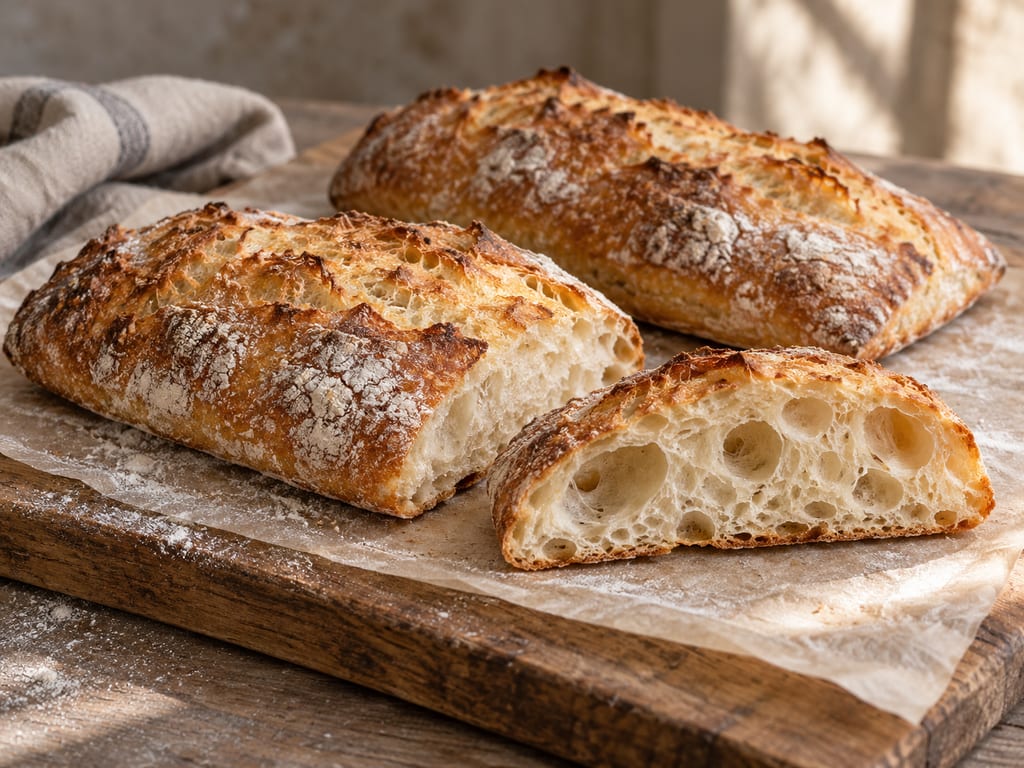
A Catalan-associated wheat loaf with a very wet dough, pan de cristal develops an open crumb through repeated folds and careful handling.

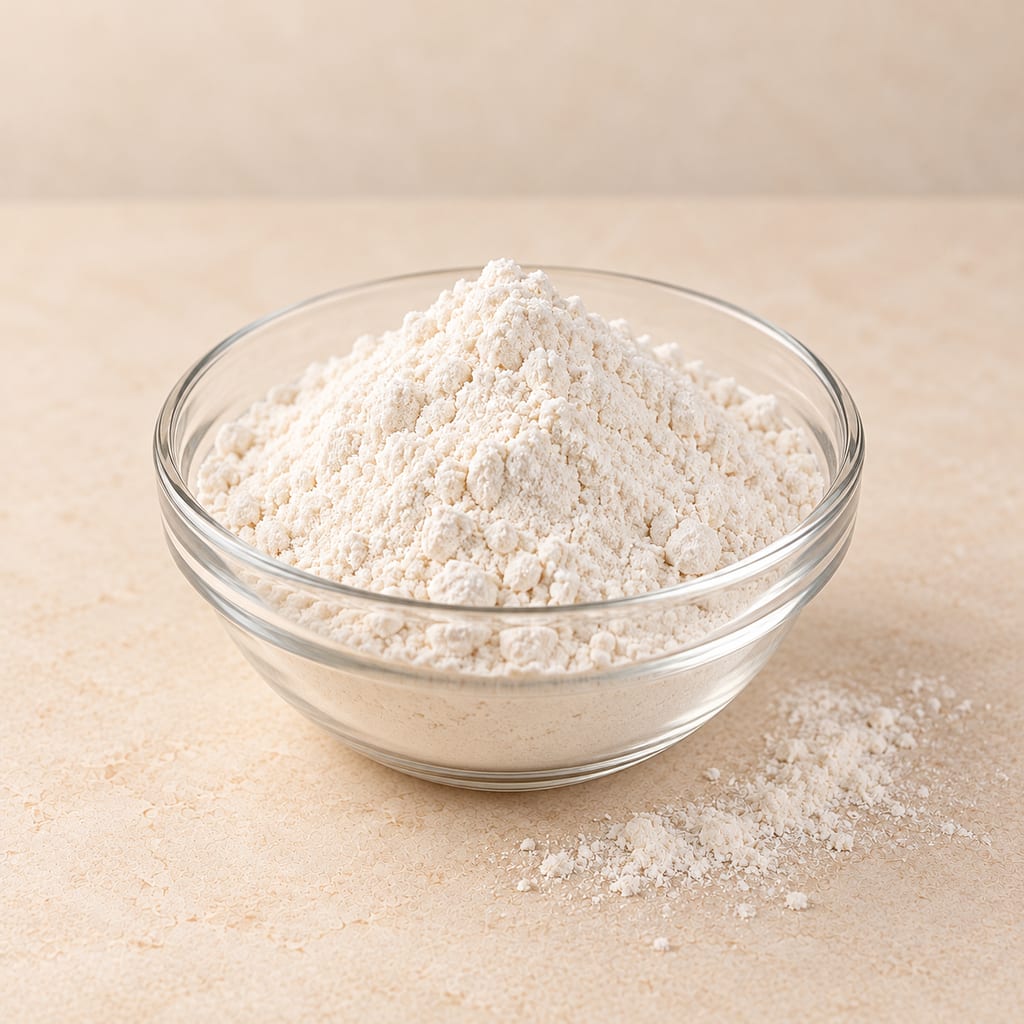
A refined common-wheat flour blended for a broad range of baking; its protein and behavior vary with wheat, milling and market.
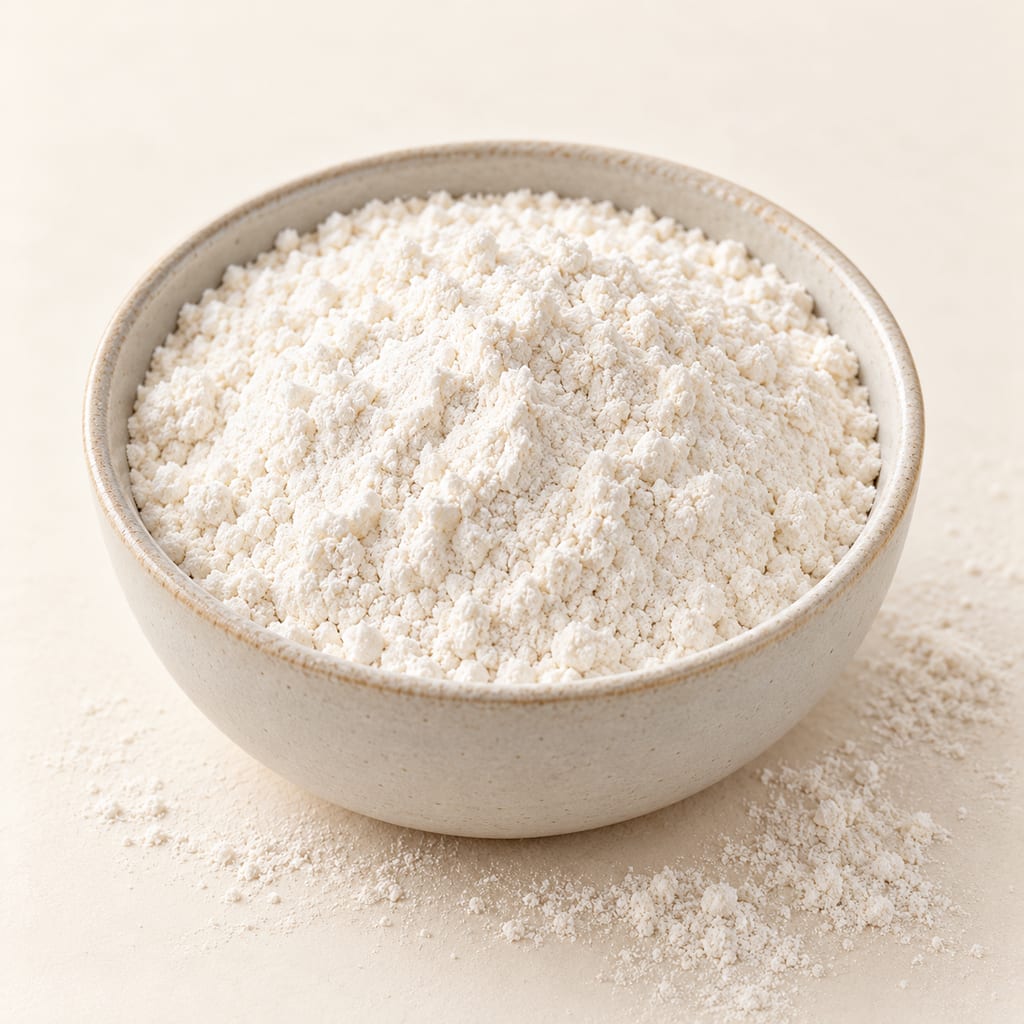
Bread flour is wheat flour chosen for dough strength and gas retention. Its protein level and baking performance vary by wheat, mill and product.
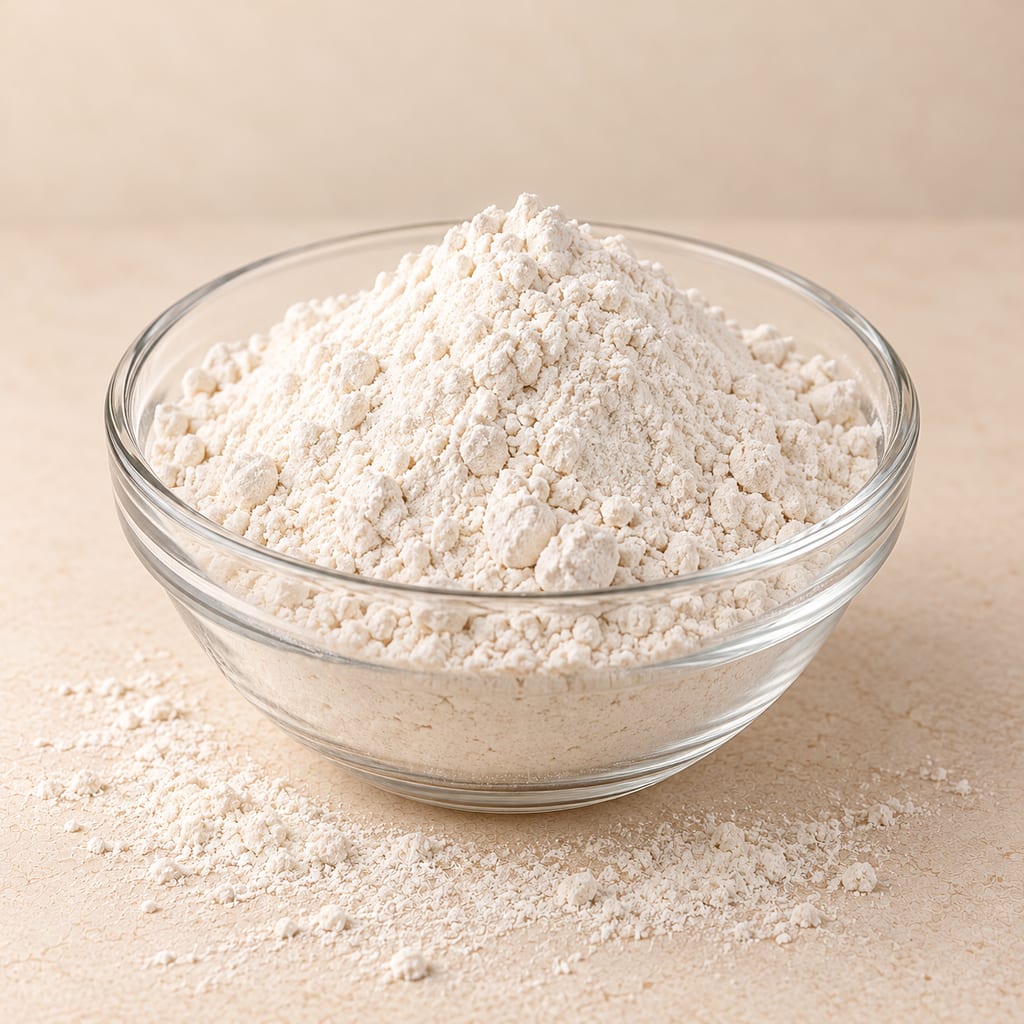
Wheat flour is milled wheat grain, from whole meal to fine white flour, used to make bread, thicken liquids and appear as an optional ingredient in fruit pastes such as Georgian mulberry tklapi.
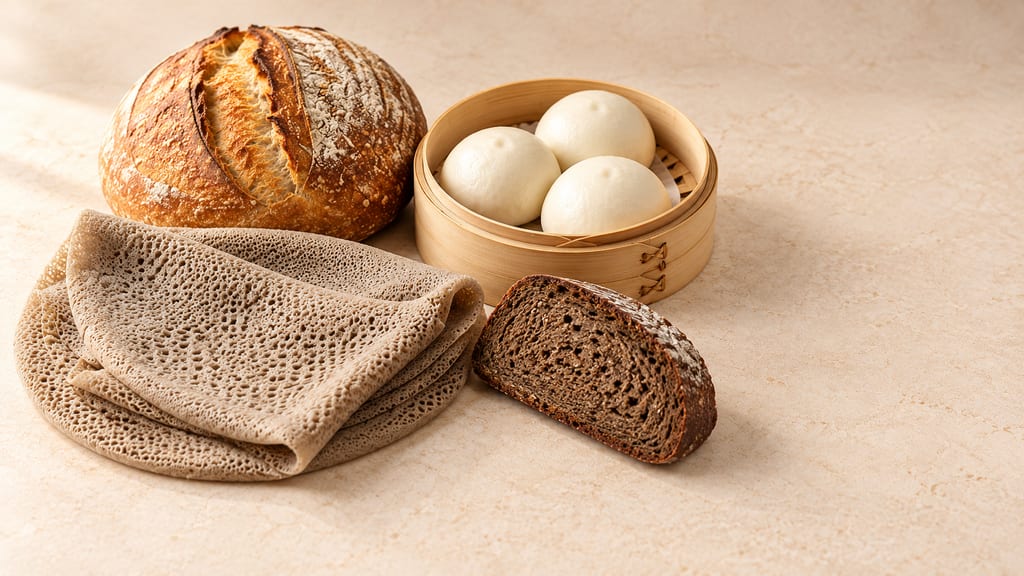
From the baguette and the steamed bun to injera, titiyas, Finnish rye and cassava bread: how grain, microbes and heat answer the question of what bread is for.

A Cap-Pelé boucanière is an Acadian herring-smoking building. The documented Willie Niles example is a one-storey wood-frame structure with a ridge smoke vent and interior bays for hanging fish-bearing cannes.

Achcharu is a family of Sri Lankan vinegar pickles made with mixed vegetables or seasonal fruit and a piquant spice dressing. This version is a quick, refrigerated, non-fermented mixed-vegetable pickle.

The acocote is a long, hollowed and dried gourd used to draw aguamiel from a mature maguey. It is a harvesting tool: the sap is transferred to a separate vessel before it ferments into pulque.

Adrak murabba preserves young ginger in sugar syrup, a sweet South Asian preparation recorded in Indian cookery and food-processing sources.

Parkia biglobosa seeds are fermented into regional West African seasonings, including nététou, iru, dawadawa and soumbala. The yellow fruit pulp is a separate food, and names and methods vary by place.

Japanese reddish-brown vinegar from sake lees matured about three years, turned to vinegar by acetic bacteria; the vinegar of Handa and Edomae sushi rice.

The almond mushroom, Agaricus subrufescens, was cultivated in eastern North America in the 1800s, lost its market, and returned as a cultivated mushroom from Brazil, where it is grown under several names.
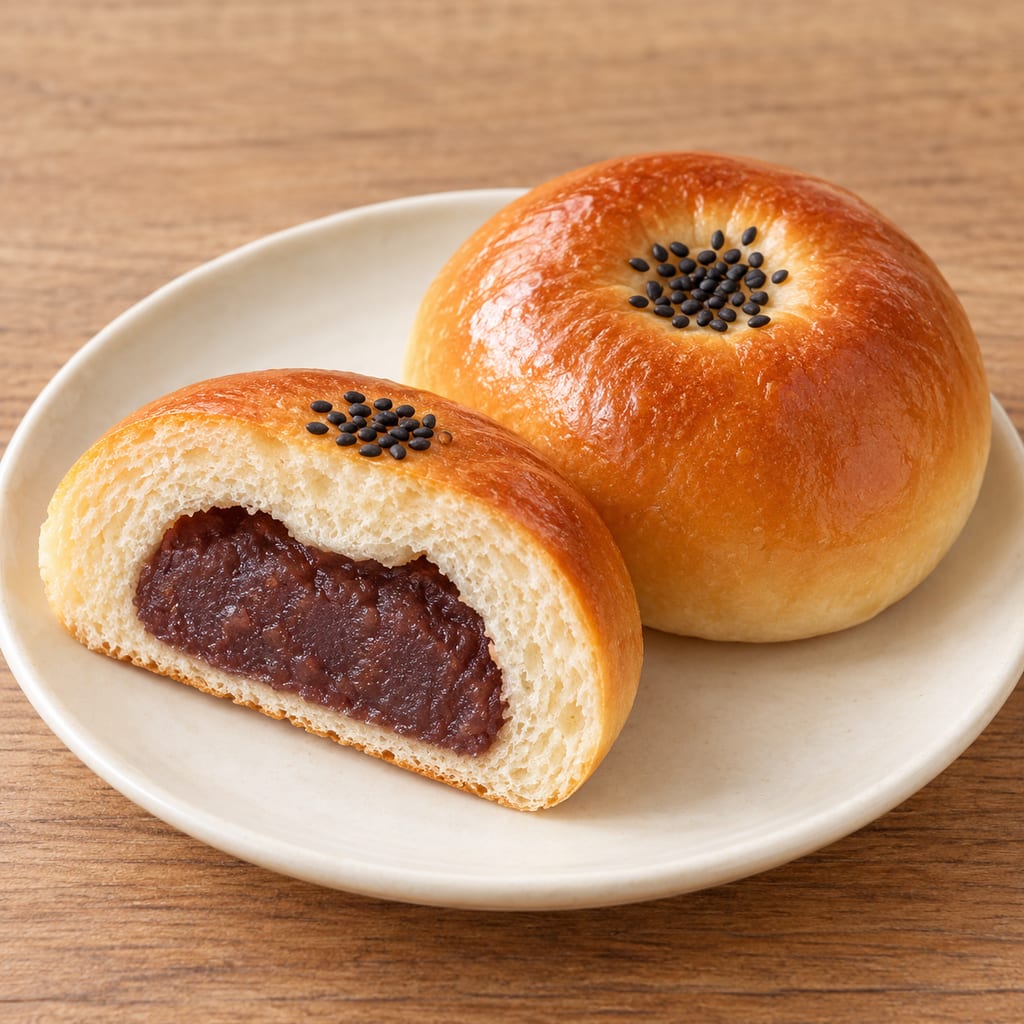
Anpan is a soft wheat bun filled with sweet red-bean paste and finished with egg wash and black sesame. This dough rises with commercial instant yeast.
No community contributions have been published for this entry yet.
Sign in to contribute. Published comments and photos are free to read.
King Arthur BakingRecipe use
Pan de Cristal500 g King Arthur Unbleached Bread Flour, 500 g water, 2.5 g instant yeast and 10 g table salt make four 5 by 7 inch loaves; the dough begins as thin as pancake batter and is strengthened by one bowl fold and four coil folds with 20-minute rests; it is divided, rested 2 hours, and baked at 475 °F on a hot stone or steel for 27 to 30 minutes.
The author writes that the high protein content of the bread flour is a key ingredient for success; the recipe was developed by weight; the bread stales quickly because of its high ratio of crust to crumb.
Cited in: One flour question, two different loaves; Pan de cristal: strength and water; Reading the dough in the bowl; Choosing between them; Handling and safety
King Arthur BakingRecipe use
Pain de Mie570 g unbleached all-purpose flour and 35 g potato flour, with 152 g milk, 227 g water, 85 g butter, 35 g sugar, 28 g dry milk, 14 g salt and 2 tsp instant yeast, make one loaf in a 13-inch lidded pan.
The dough is kneaded until smooth and soft, rises about 1.5 hours until puffy but not doubled, is shaped and rises to just below the rim, then bakes at 350 °F for 25 minutes with the lid on and 10 to 20 minutes without it, to 190 °F in the center; it keeps up to 4 days wrapped at room temperature or up to 3 months frozen.
Cited in: One flour question, two different loaves; Pain de mie: softness and structure; Reading the dough in the bowl; Choosing between them; Handling and safety
International Journal of Food ScienceDough and baking science
Porous Crumb Structure of Leavened Baked ProductsDuring mixing and hydration, gliadins and glutenins combine into a viscoelastic gluten network that retains gas in fermentation and baking; a poorly built network lets the gas escape.
Kneading hydrates proteins, develops gluten and entrains the air that forms nuclei for gas cells; yeast ferments sugars to ethanol and carbon dioxide, which diffuses into those nuclei; about 70% of the theoretical carbon dioxide is produced.
In baking, protein denaturation and starch gelatinization occur between 60 and 85 °C, and the loaf expands in the first 6 to 8 minutes (oven spring).
Sugar tenderizes, retains moisture and raises the gelatinization temperature of starch; small amounts of shortening give a finer crumb; crumb firms in storage mainly through retrogradation of amylopectin, fastest near refrigerator temperature (4 °C).
Cited in: How flour becomes a dough that holds gas; Pan de cristal: strength and water; Pain de mie: softness and structure; Choosing between them; Handling and safety
Frontiers in NutritionGluten proteins
Wheat quality: A review on chemical composition, nutritional attributes, grain anatomy, types, classification, and function of seed storage proteins in bread making qualityGliadins and glutenins are the gluten-forming proteins; more than 50% of the difference in baking potential and dough viscoelasticity depends on the high-molecular-weight glutenin subunits of the wheat.
Cited in: How flour becomes a dough that holds gas; Pan de cristal: strength and water; Choosing between them
American Society of BakingFermentation
Yeast NutrientsFlour holds under 0.5% native glucose, fructose and maltose; amylase hydrolysis of damaged starch produces most of the fermentable sugar in lean dough; yeast prefers glucose and fructose and can also use maltose and sucrose; flour and milk solids often supply enough nutrients for yeast.
Cited in: How flour becomes a dough that holds gas; Reading the dough in the bowl
The Mills Archive TrustHistory
Roller milling: A gradual takeoverRoller milling replaced millstones in nineteenth-century Britain, driven by demand for white bread and imports of hard wheat, whose higher-gluten flour suited the gradual reduction process.
Cited in: Choosing between them
U.S. Food and Drug AdministrationSafety
Handling Flour Safely: What You Need to KnowFlour is made from raw grain; milling does not kill Salmonella or pathogenic E. coli; raw flour, dough and batter should not be tasted; wash hands and surfaces after handling flour.
Cited in: Handling and safety
U.S. FDAAllergen
What is a major food allergen?Wheat is one of nine major food allergens under U.S. allergen labeling requirements.
Cited in: Handling and safety
U.S. National Institute of Diabetes and Digestive and Kidney DiseasesDietary context
Definition & Facts for Celiac DiseaseGluten, a protein in wheat, barley and rye, triggers celiac disease, treated with a strict gluten-free diet.
Cited in: Handling and safety