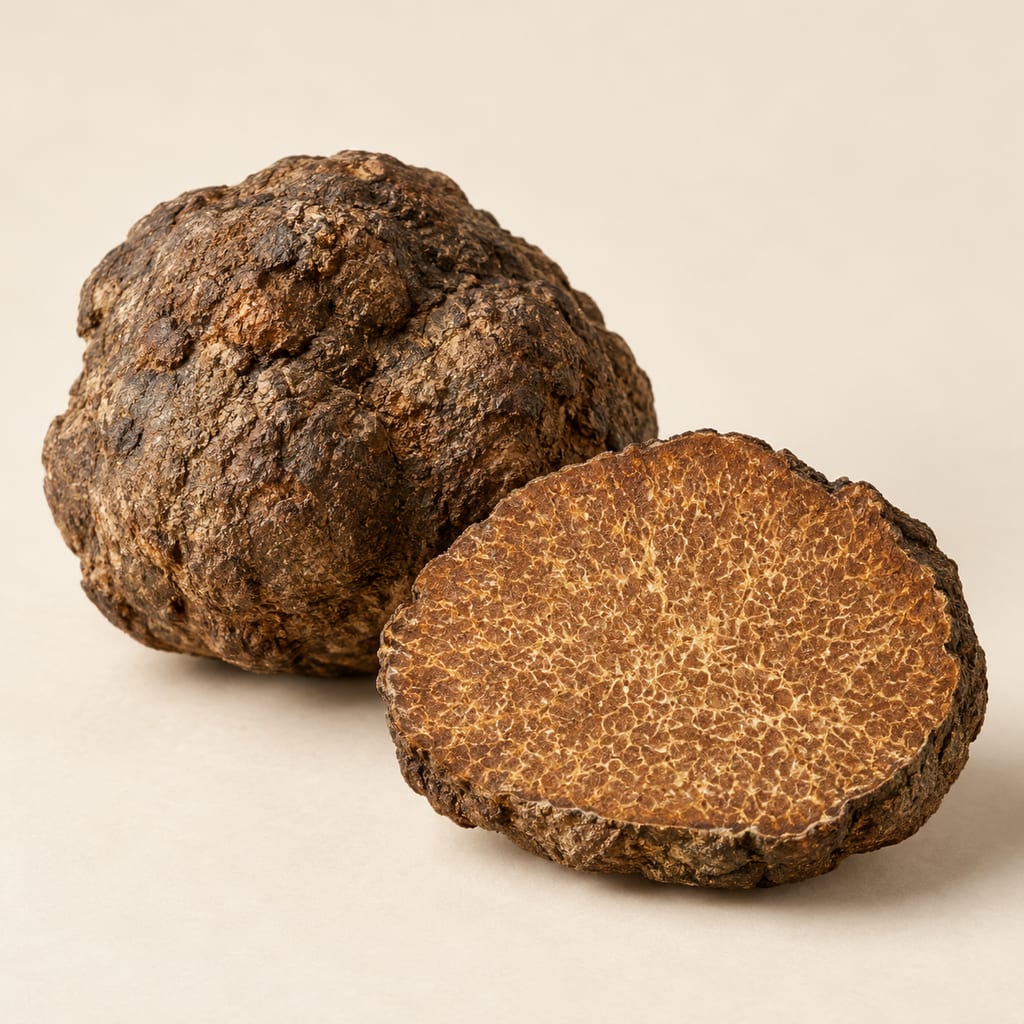
Amazonian polypore
Polyporus indigenus, a polypore of the Brazilian Amazon. Its underground sclerotium, not the fruiting body, is the part people eat, and it is known locally as pão do índio.
 FermenteaWhere food goes to change
Mushrooms
The almond mushroom, Agaricus subrufescens, was cultivated in eastern North America in the 1800s, lost its market, and returned as a cultivated mushroom from Brazil, where it is grown under several names.

Agaricus subrufescens is a cultivated mushroom. In the cultivation literature it is usually called the almond mushroom, and in Brazil it has been sold under local and marketing names. The Mycologia review by Richard Kerrigan (2005) treats it as a species with a long, confused naming history, and that history is the most important thing a buyer or cook needs to know about it.
The species is best understood as a set of names rather than a single product. The Brazilian mushroom was grown for years as Agaricus blazei Murrill, in the form sensu Heinemann, and later as A. brasiliensis. Kerrigan argues that these Brazilian mushrooms belong to the same species as A. subrufescens, based on rDNA ITS sequence comparison, mating studies and analysis of hybrid progeny. The review presents this as a strong case rather than a settled fact, and this page follows that wording.
The sources reviewed here do not describe the texture, aroma or cooking behaviour of the fresh or dried mushroom in enough detail to support a sensory account, so none is given.
Kerrigan's review states that Agaricus subrufescens Peck was first cultivated in the late 1800s in eastern North America. It was a popular market mushroom for a time and then faded from commerce in the early 20th century. The record of its later life runs through Brazil.
The review says a mushroom growing wild in Brazil was introduced into cultivation in Brazil, in Japan and elsewhere. The dates of that rediscovery are not agreed in the sources consulted. One account places it in 1960, when a collection near São Paulo was sent to Japan in 1965, and another places the rediscovery in the 1970s. This page does not choose between them, because the reviewed abstract does not give a date.
Once the Brazilian material was in cultivation, marketers gave it several names, and the sources report that the mushroom was promoted for purported medicinal properties. The Mycologia review's title calls the species an edible and medicinal mushroom. This page records the title and does not assess any medicinal claim, since the sources reviewed give no clinical basis for one.
The main names in the record are Agaricus subrufescens Peck, A. blazei Murrill (sensu Heinemann) and A. brasiliensis Wasser et al. The review lists these as the most common and the most recent names. A product labelled with any of them may be the same species, so a buyer should check the scientific name and the supplier's identification rather than trust the common name alone.
The review also mentions the western European A. rufotegulis, which the abstract suggests may be conspecific, and it proposes that hybridisation between populations may play a part in current stock. For a cook this matters because the strains on sale differ in their history.
The sources reviewed for this page do not give a cultivation method, substrate, temperature or yield for the almond mushroom, so none is given here. Growing the mushroom is a specialised task, and a home method cannot be taken from this page.
The review does not describe the cooking behaviour of the fresh mushroom, its texture after cooking or its flavour in a dish. This page makes no claim about them. Where a preparation uses the mushroom, the preparation's own page should carry its method and its sources.
Almond mushroom is a cultivated food ingredient rather than a fermentation organism in the sources reviewed. Any fermented or preserved preparation that uses it belongs on that preparation's own page.
Buy a cultivated product from a supplier who names the species. Because of the naming confusion, check the scientific name on the label or the supplier's statement against the synonyms above. The sources reviewed do not give a storage life, a shelf life or a freshness indicator, so this page gives none.
Safety: the sources reviewed describe a cultivated product. They do not provide a safety assessment for wild collection of this species, and this page gives no identification or edibility verdict for wild material. Wild mushrooms should be identified by an expert before they are eaten, and this page should not be used to identify one.
The sources do not settle the date of the Brazilian rediscovery, and the naming of the Brazilian population remains disputed in the sources consulted. A next research pass should read the primary Brazilian and Japanese accounts of the 1960s and 1970s and any strain-level study of commercial material.
Country-level. The Mycologia review records cultivation in Brazil; it does not give a single origin for the commercial strains.
Country-level. The review names Japan among the places where the Brazilian mushroom was taken into cultivation.
Region, not a locality. Cultivation first recorded in eastern United States and Canada per the Mycologia review.
Polyporus indigenus, a polypore of the Brazilian Amazon. Its underground sclerotium, not the fruiting body, is the part people eat, and it is known locally as pão do índio.
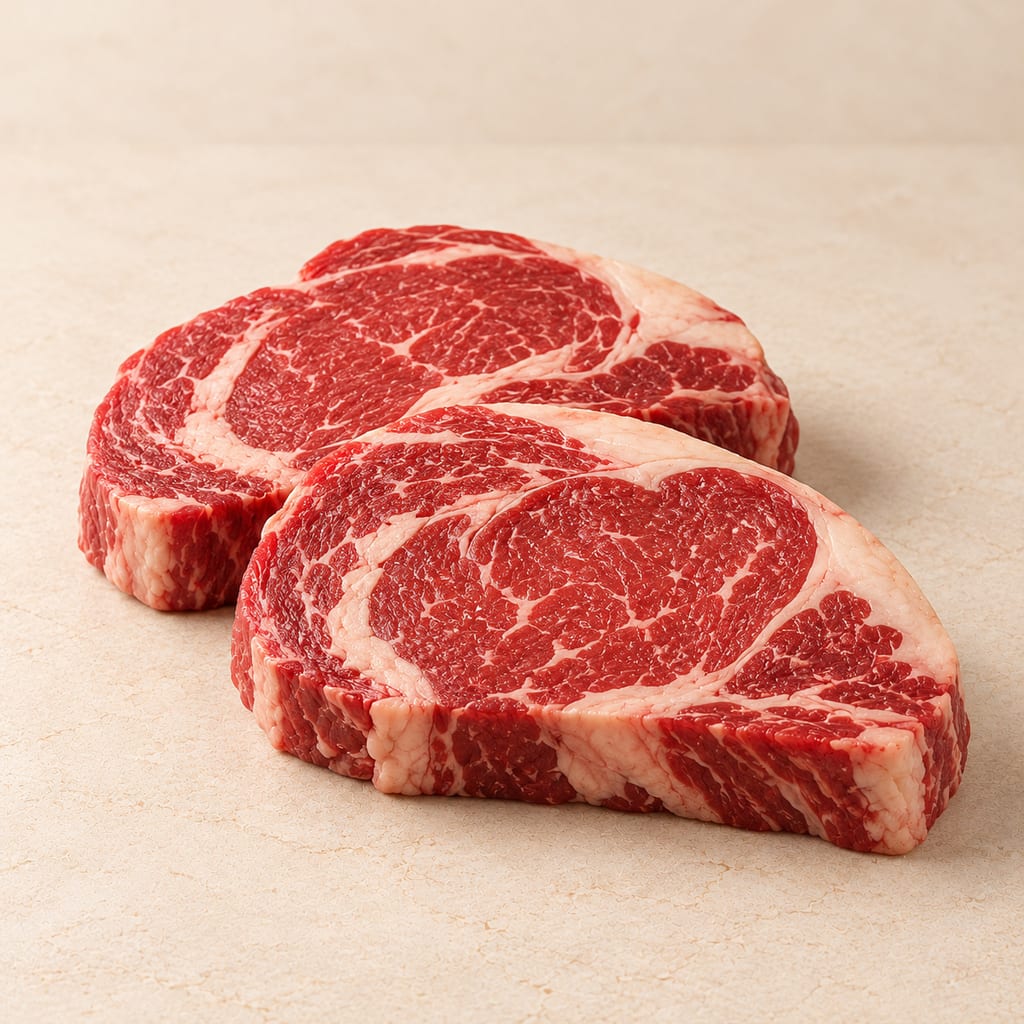
Beef is the meat of domestic cattle, Bos taurus and Bos indicus, sold as steaks, roasts, ground meat and cured products, and used in broths, salami and koji seasonings.
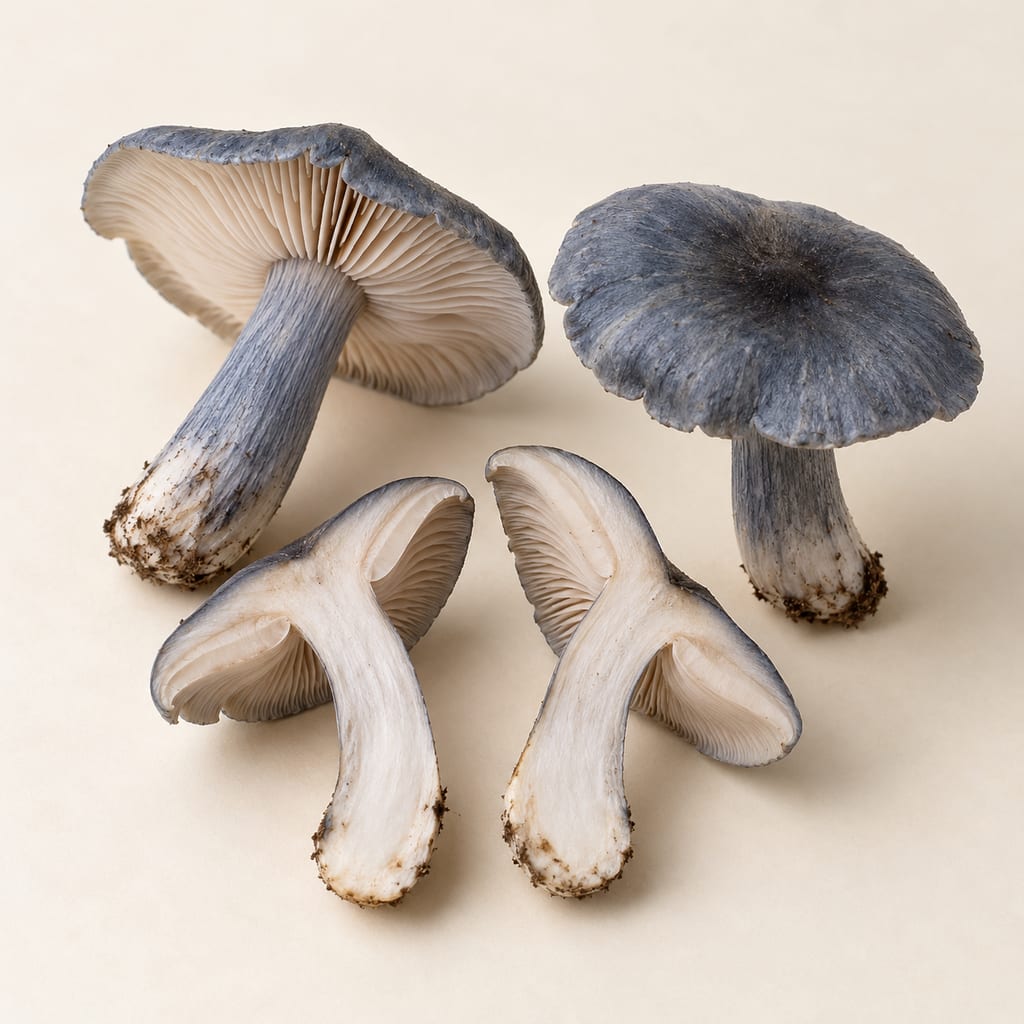
Bloxam's entoloma is a rare pink-gilled mushroom of old grasslands. Historical sources call it edible, but food-use evidence and older identifications remain uncertain; this does not recommend gathering or eating it.
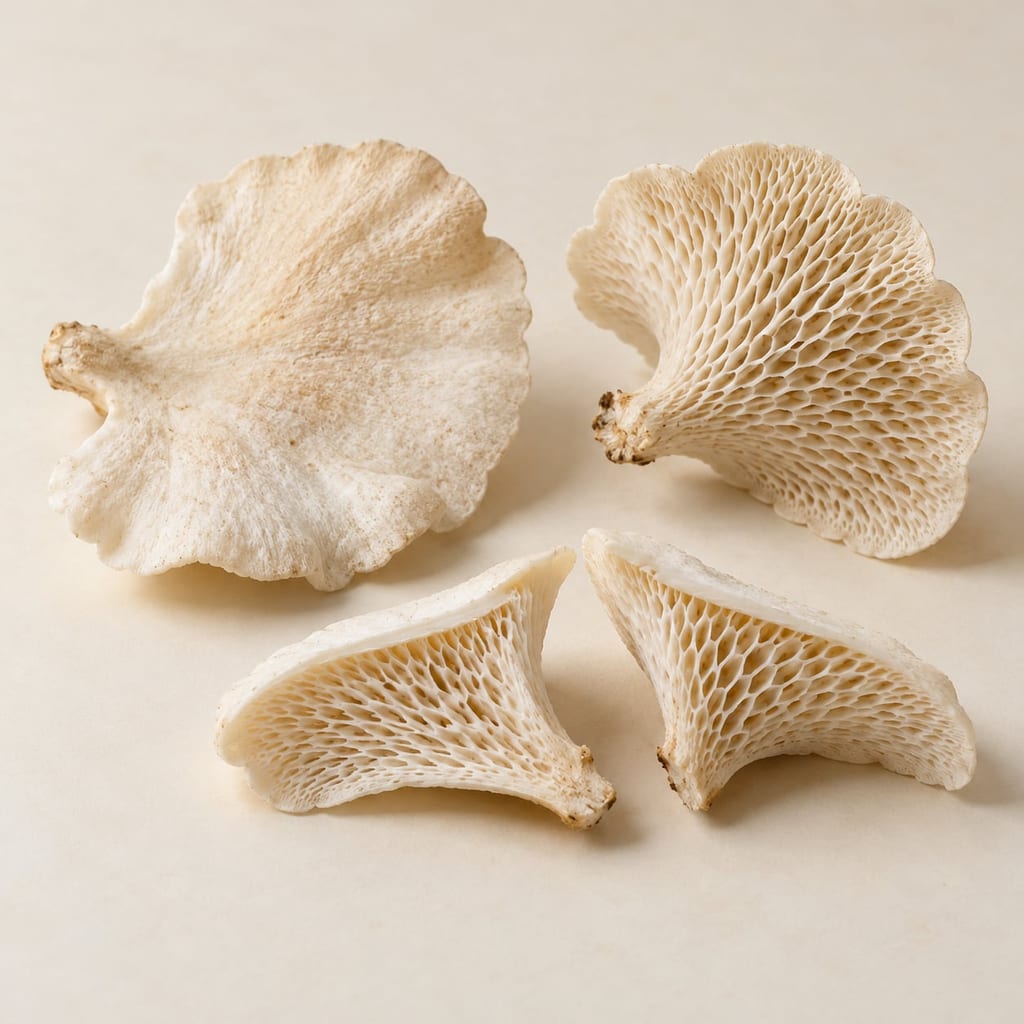
Brazilian honeycomb polypore, Favolus brasiliensis, is a wood-growing fungus of tropical forests recorded as food in Brazil and Guyana. It has no standardized food-safety assessment.
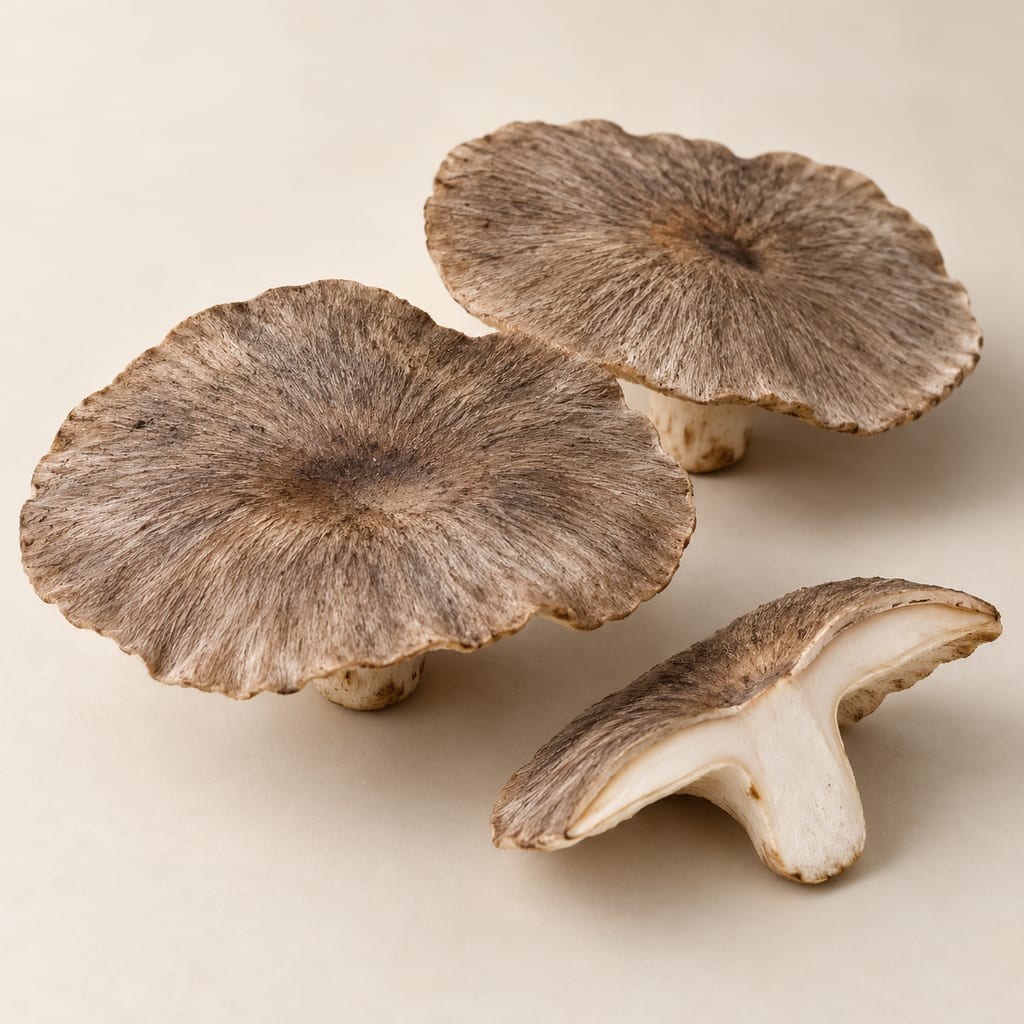
Bresadolia paradoxa is a large fungus of dead hardwood logs in Amazon and Atlantic Forest sites in Brazil and Colombia. Its only edibility source is a conservation assessment, so the claim is lightly documented.
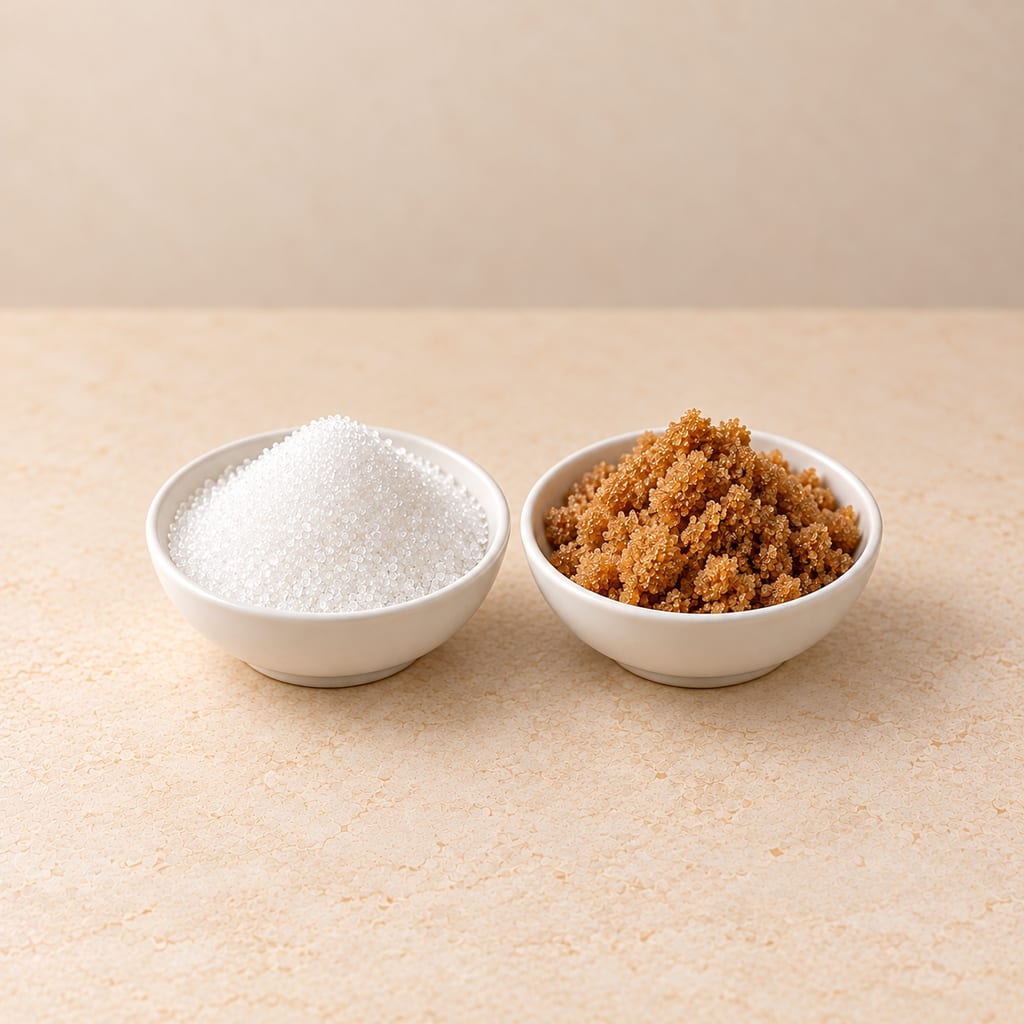
White sugar is refined sucrose, almost pure; brown sugar is sucrose with molasses, left in or added back. Molasses makes brown sugar moister, darker and more strongly flavoured.
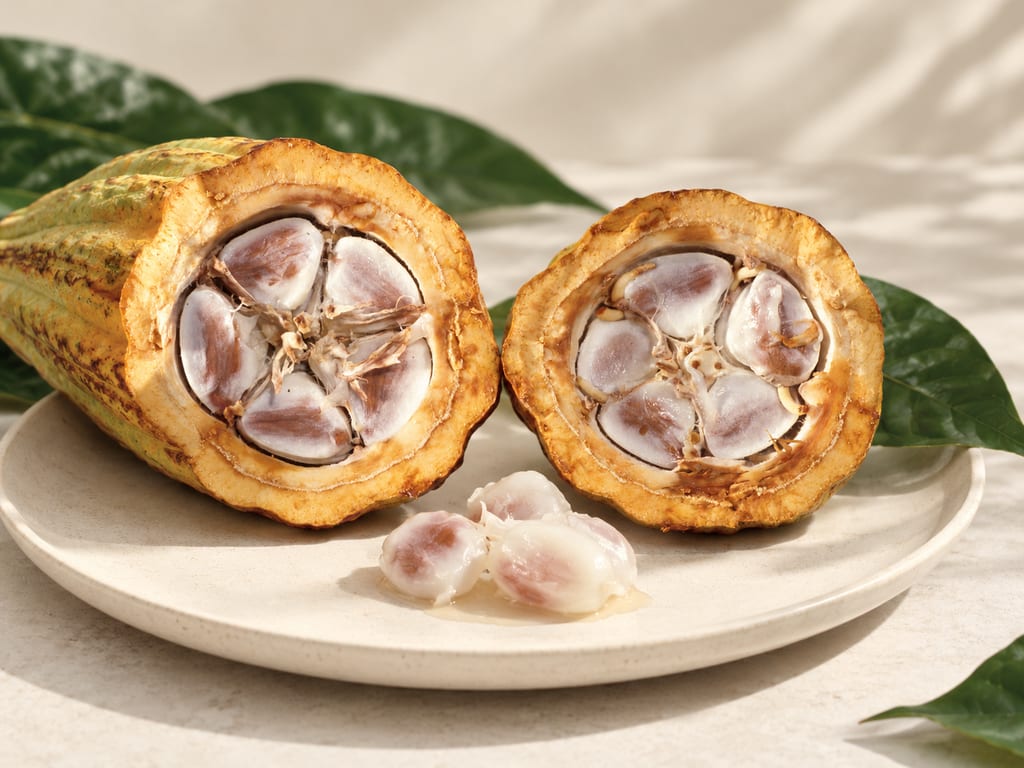
Cacao pulp is the moist, sweet-acid mucilage around cacao seeds. It fuels bean fermentation and can be extracted for fruit drinks, wine and vinegar.
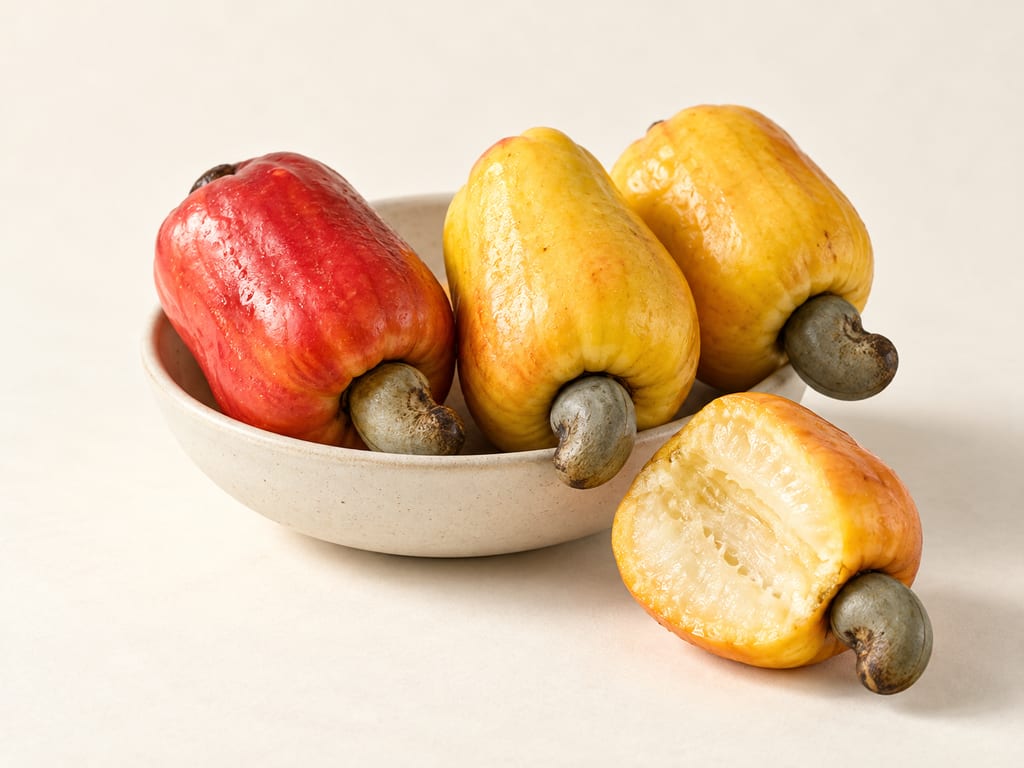
Cashew apple is the juicy swollen flower stalk attached to the cashew nut. Its fresh juice, cajuína, alcoholic ferments and vinegar are distinct products; the nut and its shell are separate materials.

A Cap-Pelé boucanière is an Acadian herring-smoking building. The documented Willie Niles example is a one-storey wood-frame structure with a ridge smoke vent and interior bays for hanging fish-bearing cannes.

Achcharu is a family of Sri Lankan vinegar pickles made with mixed vegetables or seasonal fruit and a piquant spice dressing. This version is a quick, refrigerated, non-fermented mixed-vegetable pickle.

The acocote is a long, hollowed and dried gourd used to draw aguamiel from a mature maguey. It is a harvesting tool: the sap is transferred to a separate vessel before it ferments into pulque.

Adrak murabba preserves young ginger in sugar syrup, a sweet South Asian preparation recorded in Indian cookery and food-processing sources.

Parkia biglobosa seeds are fermented into regional West African seasonings, including nététou, iru, dawadawa and soumbala. The yellow fruit pulp is a separate food, and names and methods vary by place.

Japanese reddish-brown vinegar from sake lees matured about three years, turned to vinegar by acetic bacteria; the vinegar of Handa and Edomae sushi rice.

A refined common-wheat flour blended for a broad range of baking; its protein and behavior vary with wheat, milling and market.
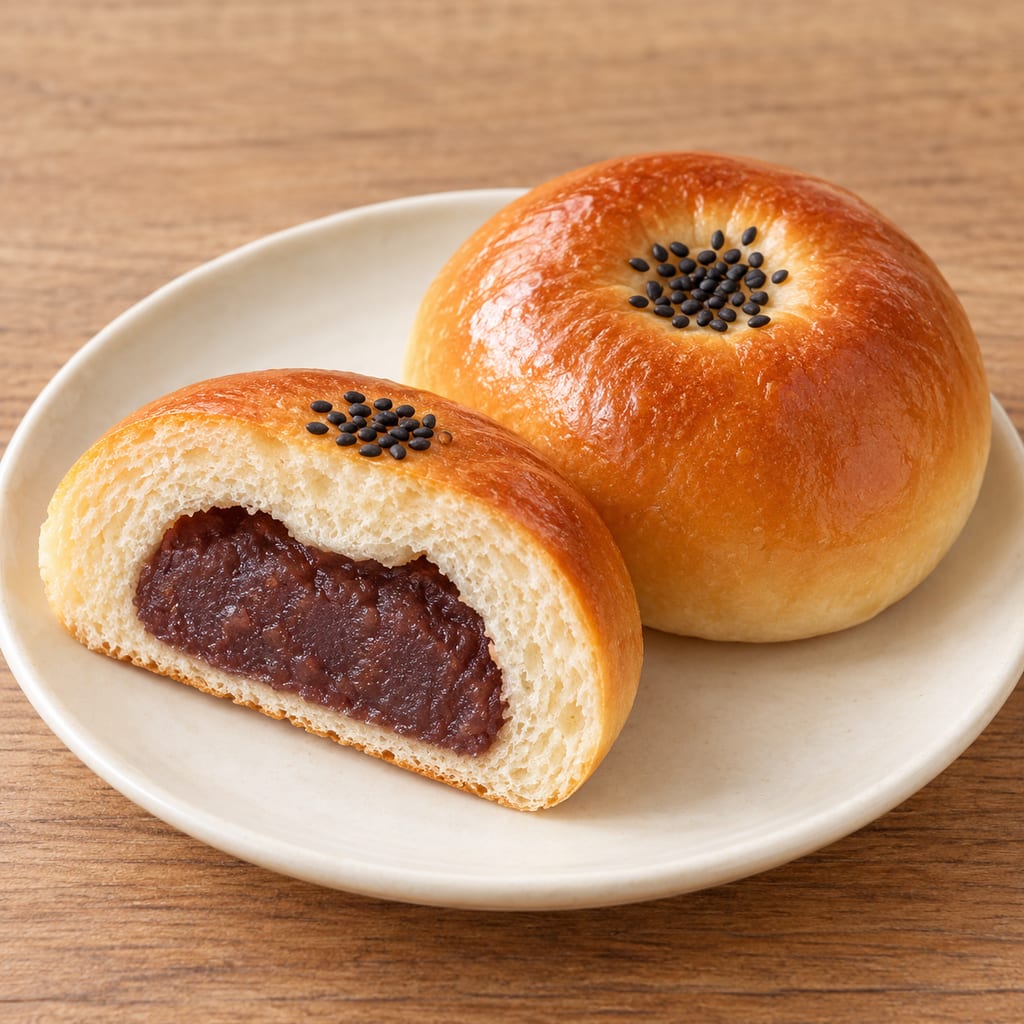
Anpan is a soft wheat bun filled with sweet red-bean paste and finished with egg wash and black sesame. This dough rises with commercial instant yeast.
No community contributions have been published for this entry yet.
Sign in to contribute. Published comments and photos are free to read.
Mycologia (PubMed record)History · Taxonomy · Safety
Agaricus subrufescens, a cultivated edible and medicinal mushroom, and its synonymsAgaricus subrufescens Peck was cultivated first in the late 1800s in eastern North America and faded from commerce in the early 20th century.
A mushroom growing wild in Brazil was introduced into cultivation in Brazil, Japan and elsewhere.
Names in use include A. blazei Murrill (sensu Heinemann) and A. brasiliensis Wasser et al.
A strong case for conspecificity of the Brazilian mushrooms with A. subrufescens, based on ITS sequence, mating studies and hybrid progeny analysis.
Cited in: What it is; Its history in North America and Brazil; Names and why they matter to a buyer; How it is grown and what it does in a kitchen; Choosing and handling; Open questions
Wikimedia CommonsImage
File:Agaricus subrufescens 111585490.jpgReference photograph labelled almond mushroom (Agaricus subrufescens), CC BY 4.0.