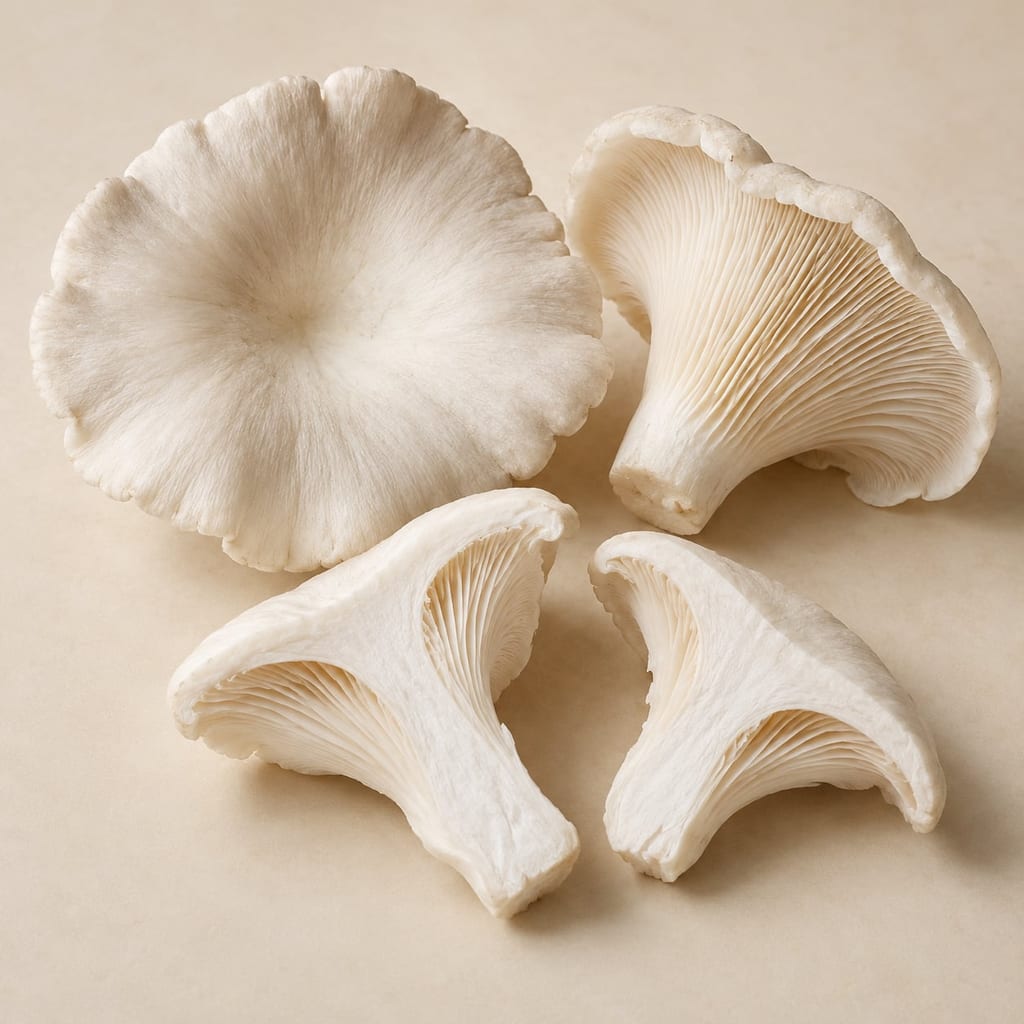
White oyster mushroom
The white oyster mushroom, Pleurotus albidus, is a wood-rotting oyster of Amazonian and Atlantic Forest Brazil and parts of Mexico. Its food use is catalogued, and it has been proposed for commercial cultivation.
 FermenteaWhere food goes to change
Mushrooms
Bresadolia paradoxa is a large fungus of dead hardwood logs in Amazon and Atlantic Forest sites in Brazil and Colombia. Its only edibility source is a conservation assessment, so the claim is lightly documented.
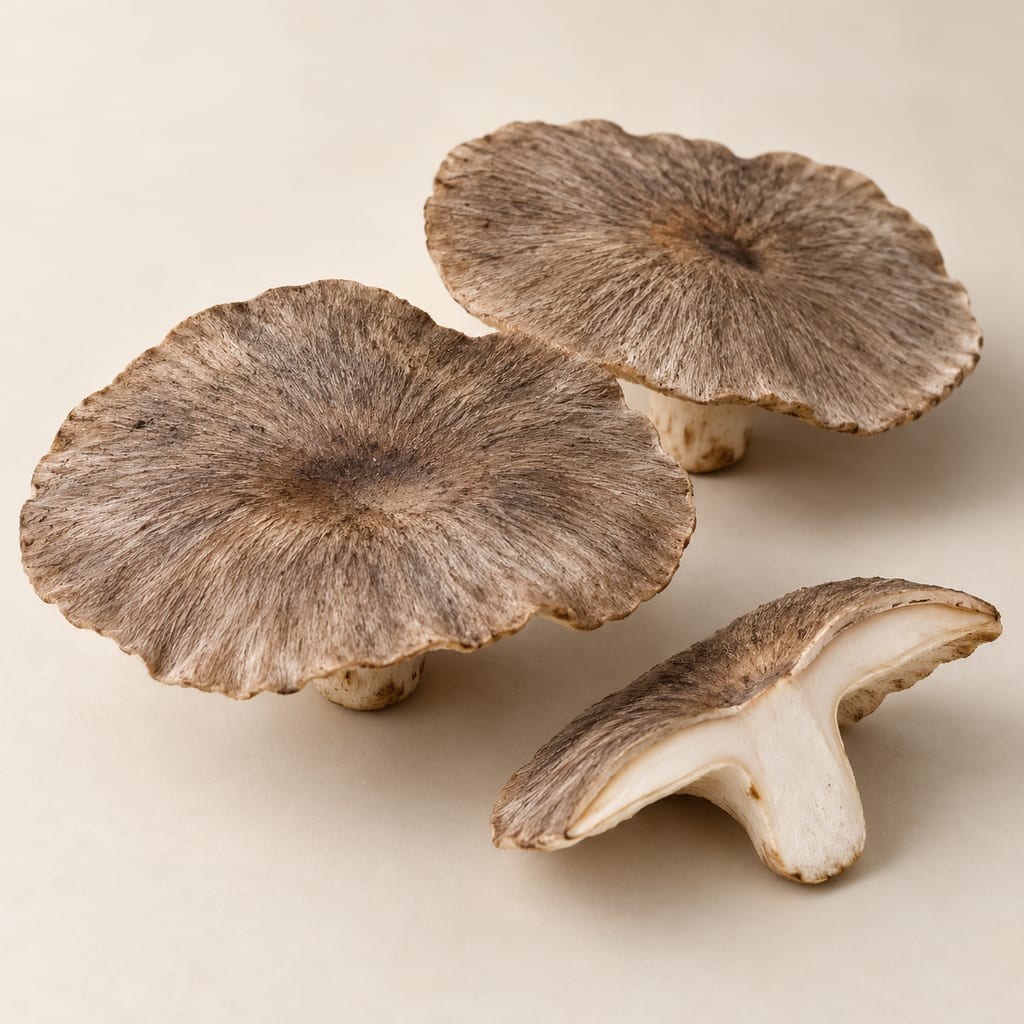
Bresadolia paradoxa grows on dead hardwood logs and produces large caps, typically about 10 cm across. The species is named after the Italian mycologist Giacomo Bresadola.
Several similarly named fungi exist, including Agaricus bresadolanus, Suillus bresadolae and Mucronella bresadolae. None of them is the same species, and their edibility does not carry over to Bresadolia paradoxa.
The IUCN assessment records the species from 19 sites in the Amazon forest of Brazil and Colombia, and from Atlantic Forest sites in southeastern and southern Brazil.
The IUCN assessment describes the species as a conspicuous edible fungus. It states that specimens from São Paulo state have been eaten by experienced mycologists, and that the Yanomami sell it in mixed mushroom markets.
The sources reviewed give no toxicity study and no preparation method. The edibility claim rests on that single conservation assessment and should be treated as lightly documented.
This record is not a guide to identifying wild mushrooms, and it does not support foraging this species without expert identification.
Known from Brazil and Colombia per the IUCN assessment. Colombia is named in the source but no Colombian site is given separately.
The white oyster mushroom, Pleurotus albidus, is a wood-rotting oyster of Amazonian and Atlantic Forest Brazil and parts of Mexico. Its food use is catalogued, and it has been proposed for commercial cultivation.
No community contributions have been published for this entry yet.
Sign in to contribute. Published comments and photos are free to read.
IUCN Red ListIdentity · Food · Habitat
Bresadolia paradoxaEdible; 19 Amazon sites in Brazil and Colombia; Atlantic Forest sites; Sao Paulo specimens eaten; Yanomami markets
Cited in: What it is; Where it is known; Food use; Safety
WikipediaSafety
Agaricus bresadolanusName confusion with a different edible species
Cited in: What it is