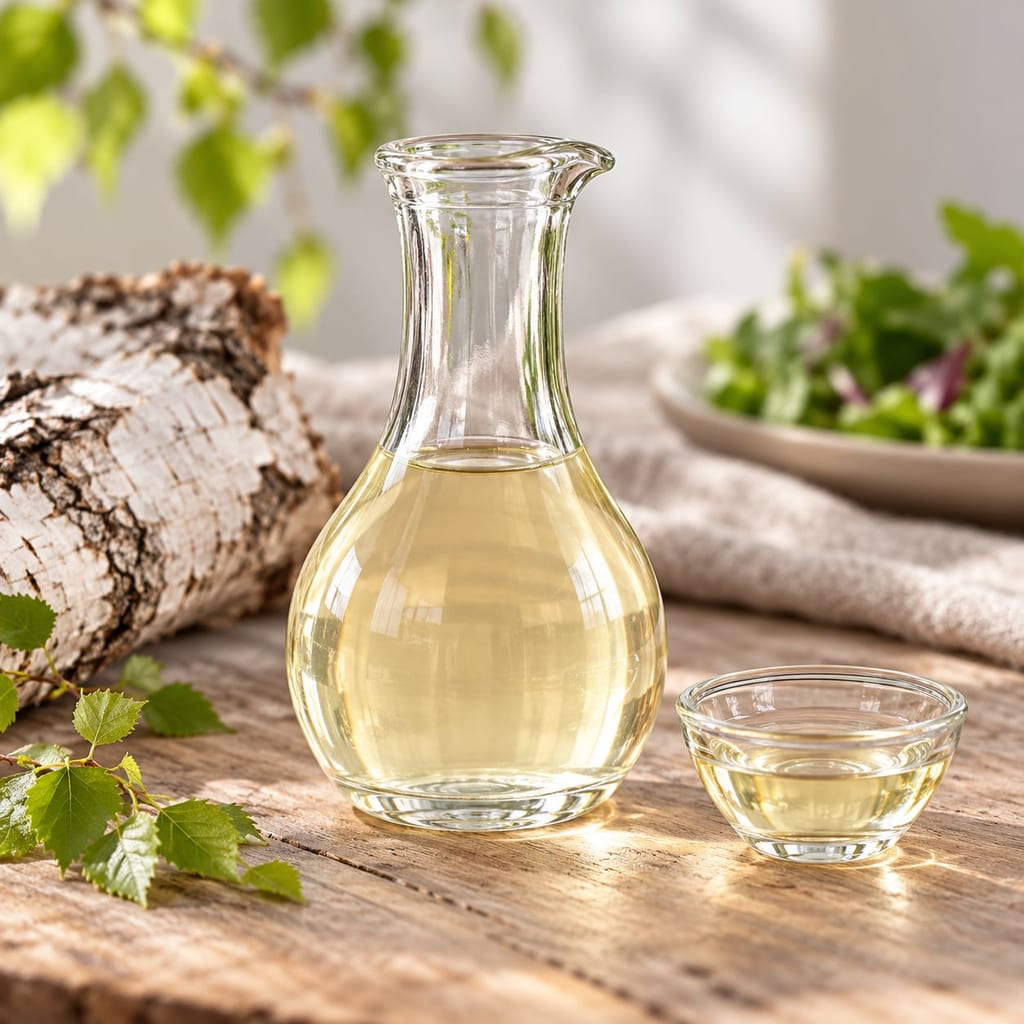
Birch sap vinegar
Vinegar from spring birch sap fermented to alcohol and then acetic acid, usually with added sugar or honey because the sap is so dilute; made in Sweden and described in older eastern European accounts.
 FermenteaWhere food goes to change
Modern adaptation
Must leib · Estonian black bread · Leib
This Estonian rye loaf uses a sourdough preferment, a rye scald and soaked seeds, with a small amount of baker’s yeast. Two tins bake through a staged hot-to-moderate oven schedule.
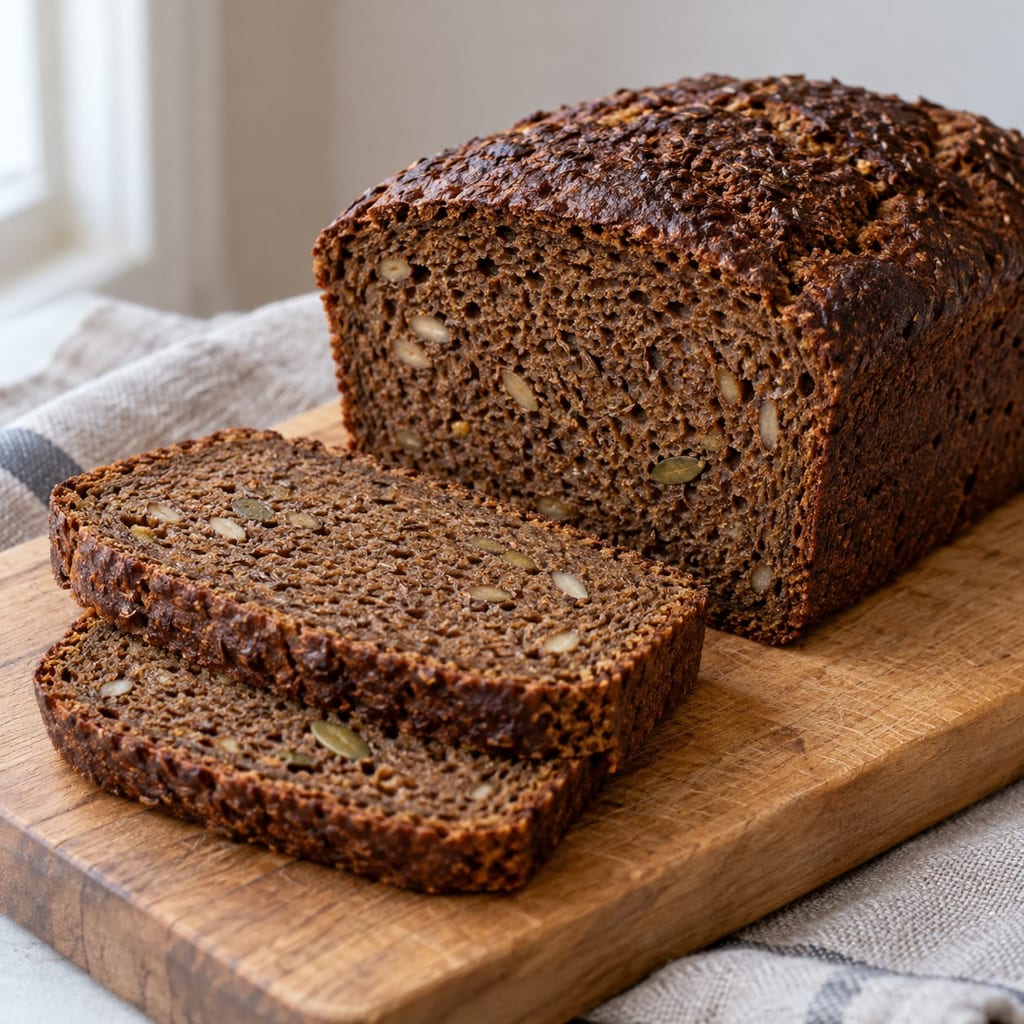
Must leib is Estonia's dark rye bread, made in many forms. Visit Estonia describes it as a staple of traditional meals and notes that commercial loaves may contain wheat, while 100% rye versions are denser. Rye has been grown in Estonia for more than a thousand years, but the inspected overview does not date the bread's first attestation.
This entry records one Deutsche Welle demonstration formula from 2019. It combines a sourdough preferment, a rye scald, soaked seeds, sugar beet syrup, malt, caraway and added baker's yeast. That blend is one modern method, not a rule for all Estonian black bread.
The dough begins with three separate mixtures. The first combines 240 g wholemeal rye flour, 240 mL water and 30 g rye starter and ferments for about 17 hours. The second combines 360 g wholemeal rye flour, 390 mL hot water and 12 g salt. The third covers 60 g pumpkin seeds and 80 g sunflower seeds with 150 mL hot water and 10 g salt. The scald and seed mixture stand for the same 17 hours as the sourdough.
The source does not give a temperature for the overnight rests. Bubbles or sourness are not treated here as proof of safety; this is a source-specific bread fermentation schedule, followed by a measured bake endpoint.
Combine all three mixtures with 260 g wholemeal flour, 15 g yeast, 3 teaspoons roasted malt, 4 tablespoons sugar beet syrup and 3 teaspoons caraway seeds. The recipe does not identify the grain of the 260 g flour or whether the yeast is fresh or dry. Mix with a dough hook for about 8 minutes and leave the dough covered for 30 minutes.
Grease two 22 × 11 × 6 cm tins with 15 g butter. Divide the sticky dough between them, smooth it with a wet hand or spatula and proof for 70–80 minutes. Heat the oven to 250°C and set a lower pan inside. The recipe's potato-starch colour and glaze steps are omitted because it does not say how the listed 8 g starch is divided or how much water to use for the glaze.
Brush the loaf tops with water. Put the tins in the oven and pour a glass of water into the lower pan. Bake at 230°C for 10 minutes, open the door briefly to release steam, bake another 10 minutes, then reduce to 180°C and bake for 40 minutes. The source checks the centre with a thermometer and calls for at least 98°C. Remove the loaves from their tins when cool enough to handle, set them on a rack and wait a day before slicing.
Raw flour can carry germs. Do not taste the dough before baking. Keep flour and raw dough separate from ready-to-eat foods, and wash hands, bowls, utensils and work surfaces after handling. Follow the source's baking schedule and use its thermometer endpoint for this formula.
Visit Estonia records sayings against beginning a new loaf in the evening and a custom of showing respect to bread that falls. These are reported cultural beliefs, not instructions for judging whether dropped bread is safe to eat.
Its account also describes renewed interest in home-baked black bread and additions such as seeds, berries or raisins. That variety gives context to the seeded Deutsche Welle loaf without turning its preferment, scald and added yeast into a national formula. The specific ingredient uncertainties and overnight-rest limits remain stated.
Must leib, Estonian dark rye bread, is described by Visit Estonia as a staple of Estonian cuisine and an essential part of traditional meals. Rye has been cultivated in Estonia for more than a thousand years; the first attestation of must leib is not dated in the inspected overview. Deutsche Welle's 2019 demonstration is one modern formula with a sourdough preferment and added baker's yeast; its ingredient and oven details are not universal rules.
Yield 2 loaves in 22 × 11 × 6 cm tins · Scaling: source batch only
Uncooked flour and dough can carry germs. Do not taste the dough before baking.
Hazard sourceKeep raw flour and dough away from ready-to-eat foods, wash hands and surfaces after handling, and bake according to the source schedule. Check the loaf centre with a cooking thermometer as the recipe directs.
Control sourceThis is one Deutsche Welle demonstration formula, not a standard for every Estonian black bread. The source leaves the grain for 260 g of wholemeal flour and the yeast type unspecified.
Do not taste raw dough. The source gives no storage duration; cooling for a day before slicing is a quality instruction, not a safety guarantee.
Visit Estonia describes dark rye bread as a staple in Estonian cuisine; Deutsche Welle presents this one measured demonstration recipe. Neither establishes a single national formula or exact birthplace.
Vinegar from spring birch sap fermented to alcohol and then acetic acid, usually with added sugar or honey because the sap is so dilute; made in Sweden and described in older eastern European accounts.
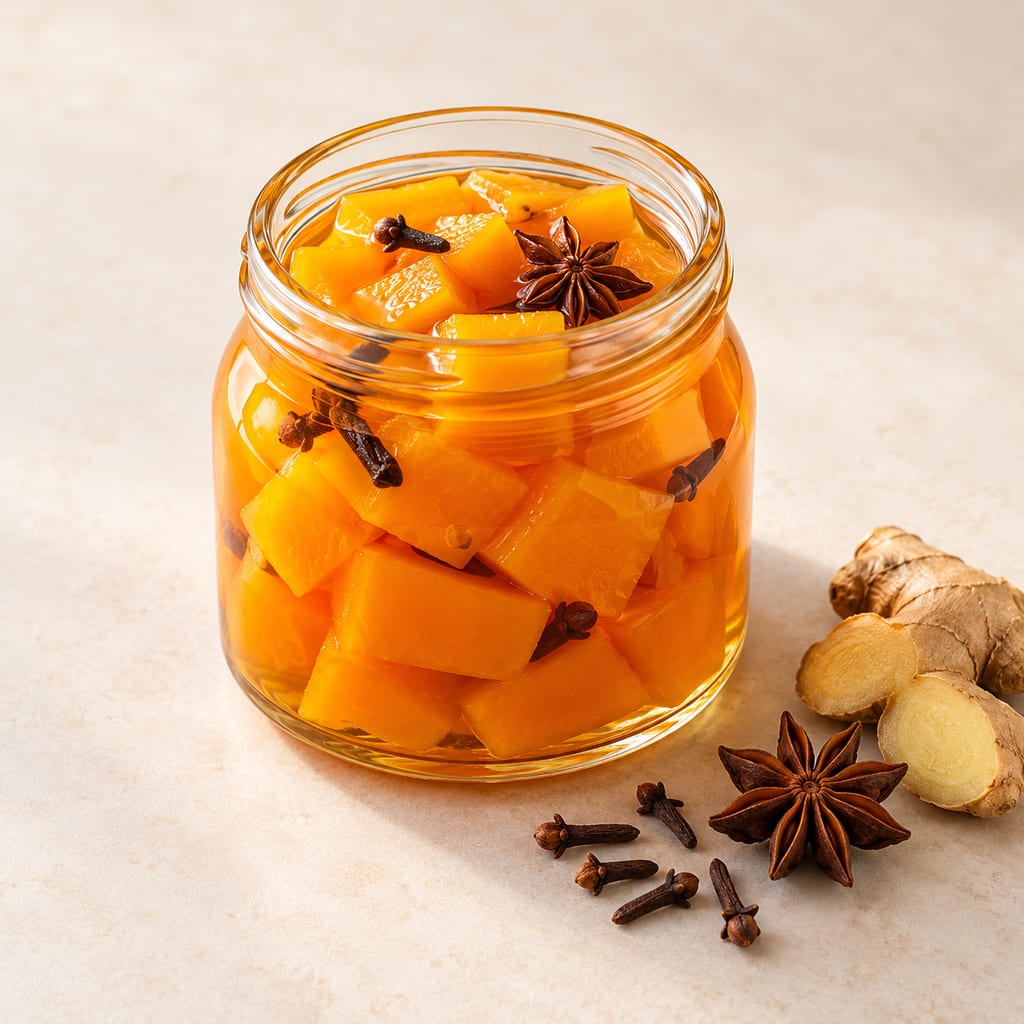
Marineeritud kõrvits: Freeze for winter; small fresh portion refrigerated up to 48 hours.
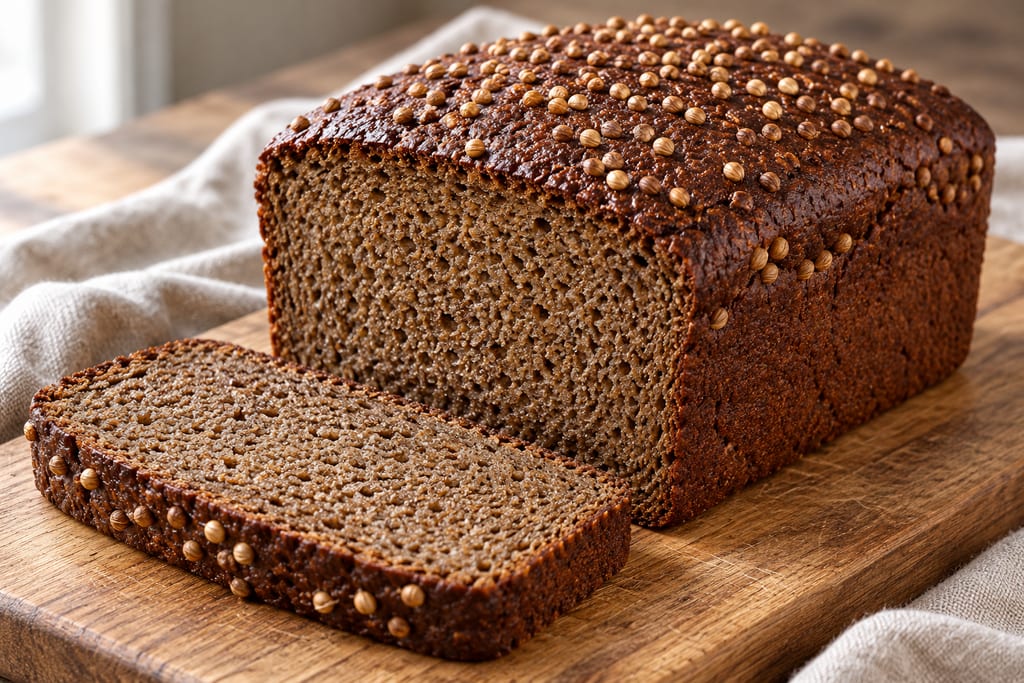
A dark rye sourdough with coriander and roasted barley-malt scald, based on Lily McCann's measured Borodinsk-ish home formula.
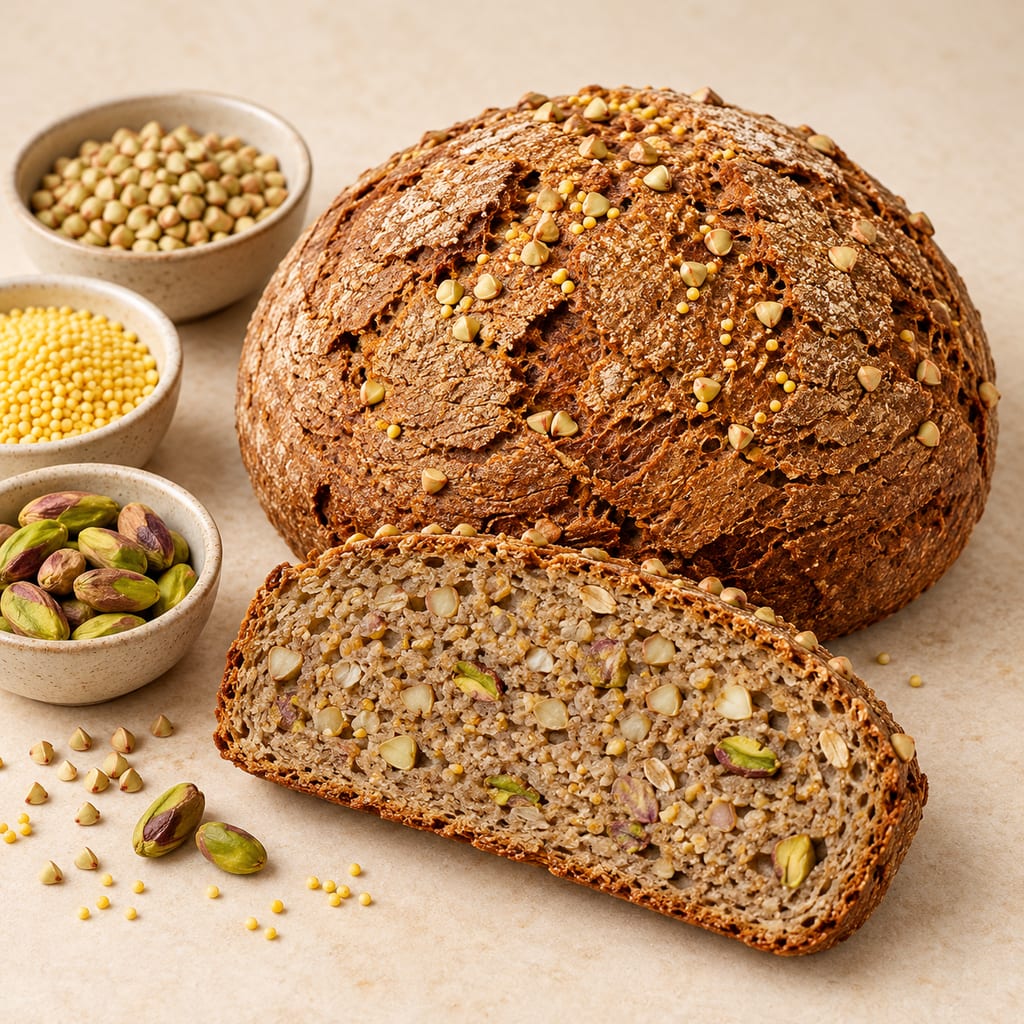
A gluten-free sourdough loaf of about 1 kg. A buckwheat and quinoa starter leavens a dough with cooked whole buckwheat groats, millet and a dark gluten-free bread mix, baked in a lidded pot.
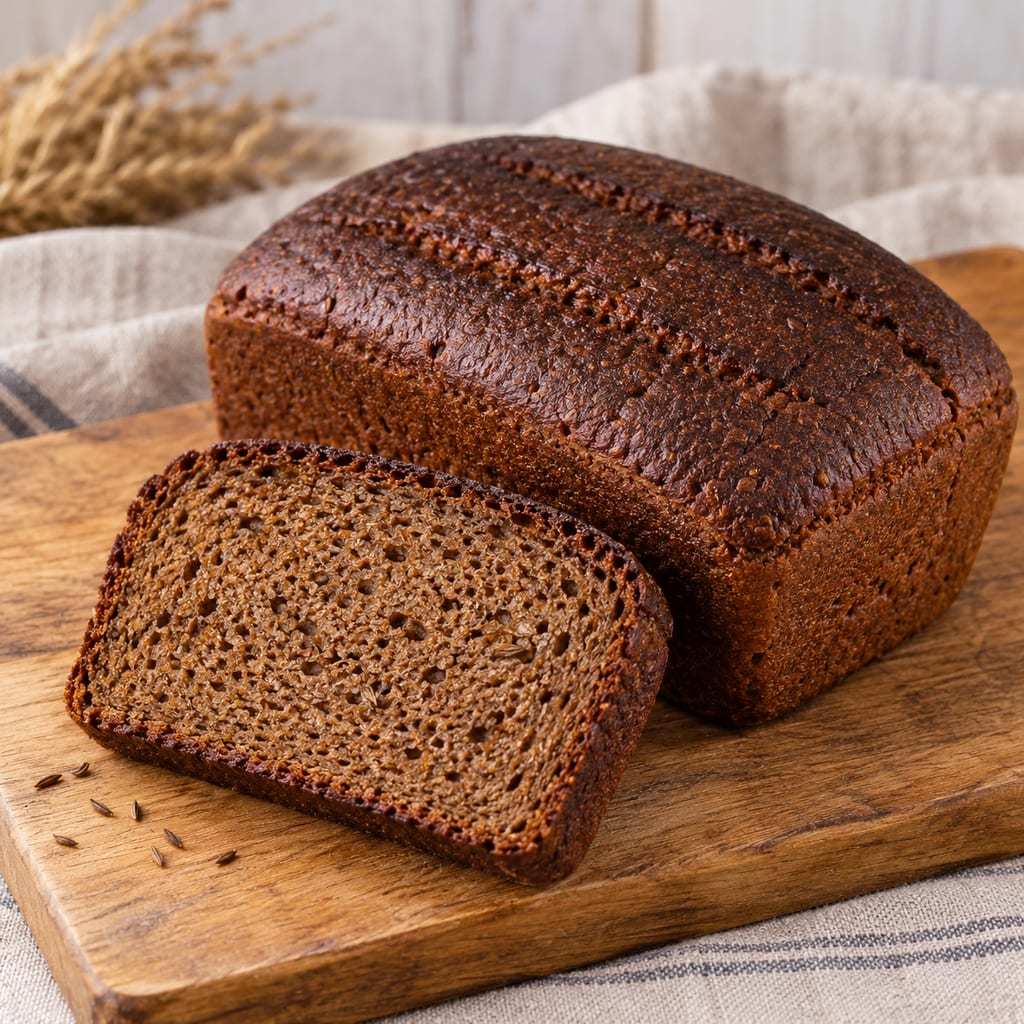
A Lithuanian dark rye loaf made with an overnight rye preferment, caraway, honey and sugar, then proofed in a loaf pan and baked in two stages.
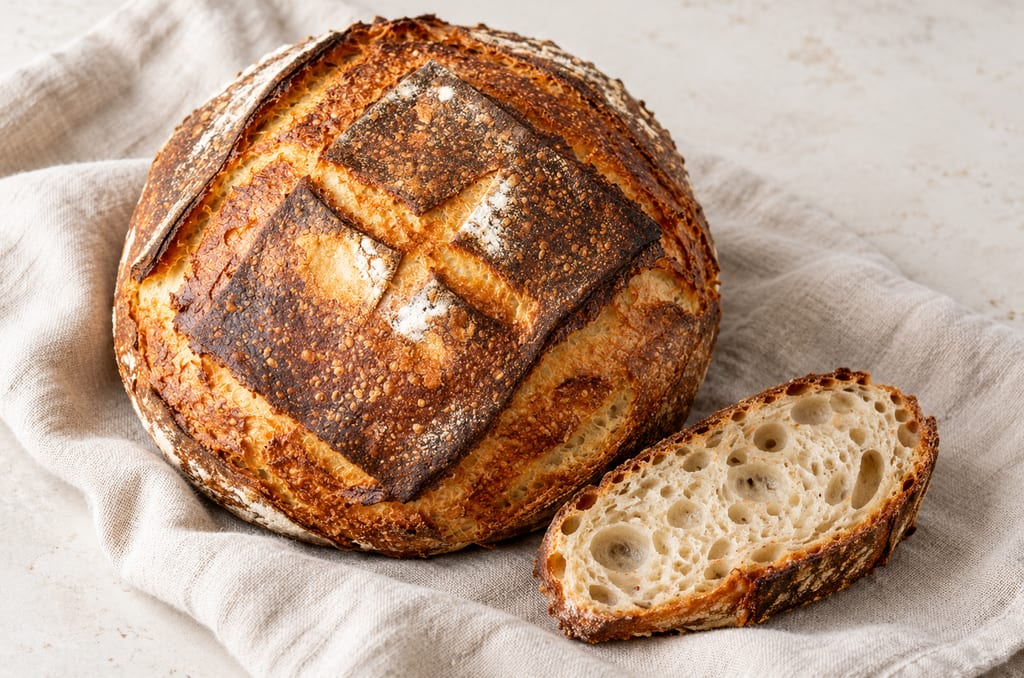
A ripe sourdough starter leavens this modern low-handling loaf. Three hourly folds organize the sticky dough before a long refrigerator rest, final proof and covered bake.
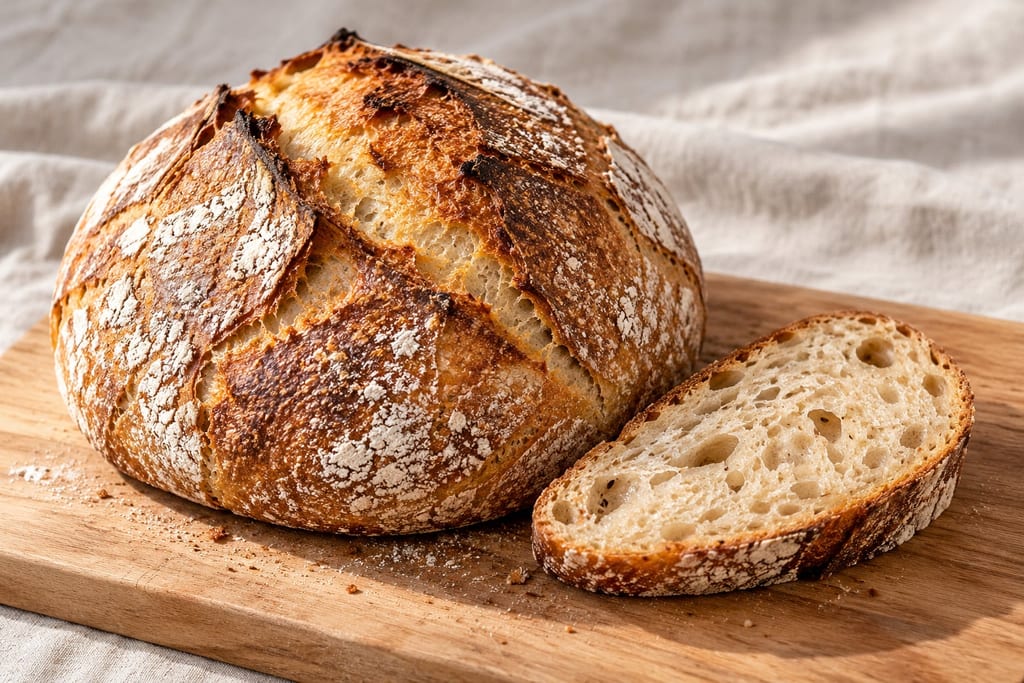
Two large French-style wheat loaves use unfed sourdough starter, whole-wheat flour, long room-temperature fermentation and a covered-pot bake.
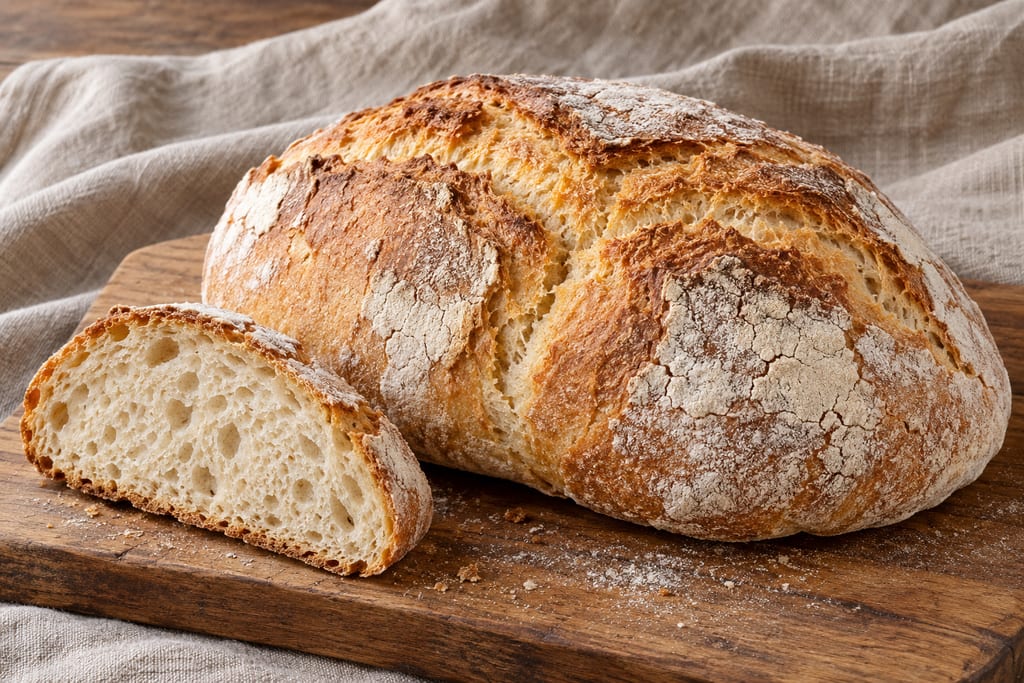
This home sourdough adaptation borrows Pan de Cea’s wheat-forward loaf and central fenda while using a domestic oven and a separately documented modern formula.
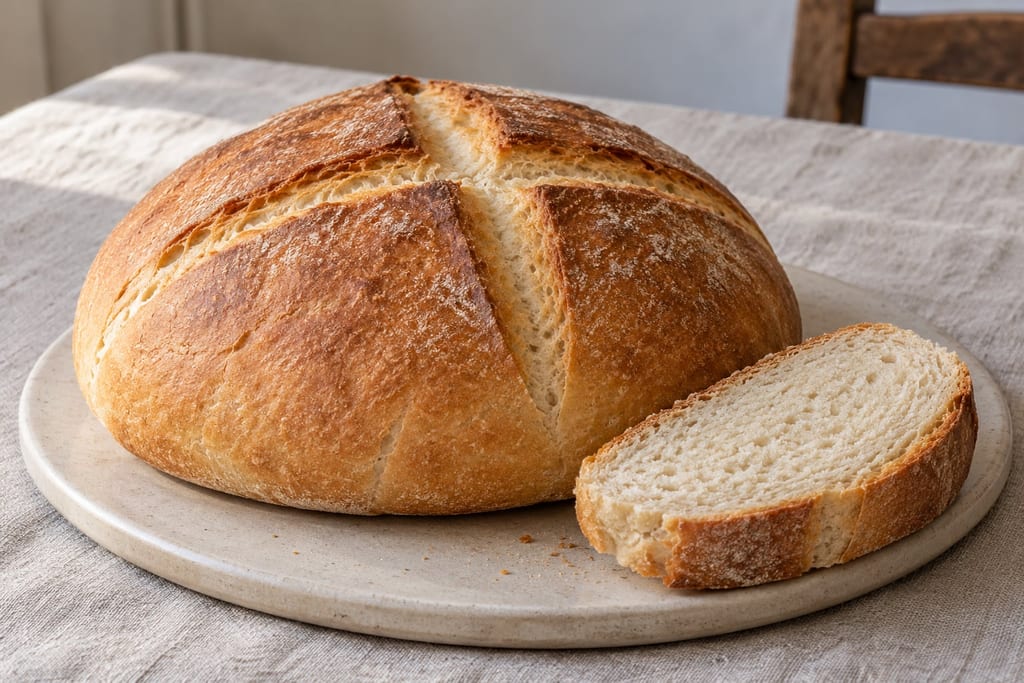
This household Pan de Cruz adaptation uses sourdough and a folded, tight-crumb wheat dough, marked with a cross and baked in a home oven.
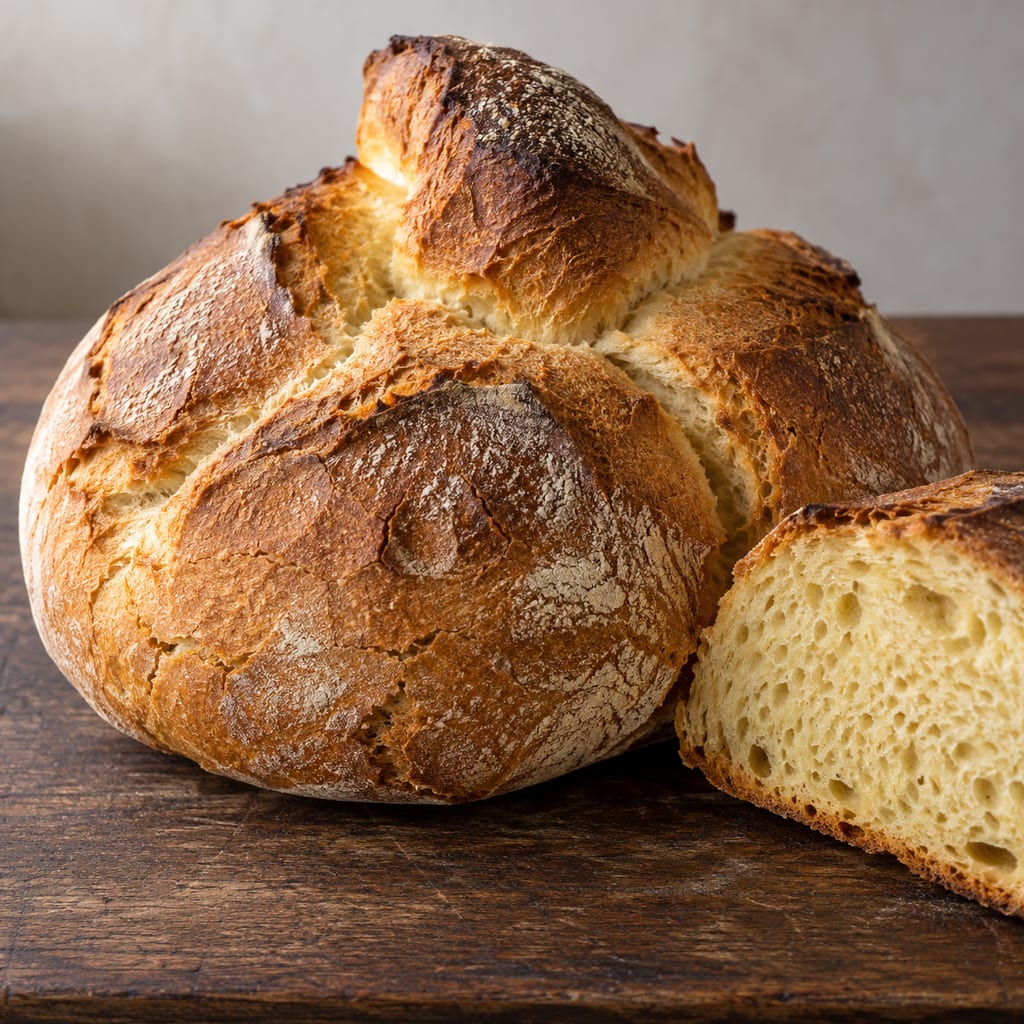
A protected durum-wheat sourdough bread documented by a commercial production specification. The official 100 kg batch and oven process are recorded without inventing a household scale.
No community contributions have been published for this entry yet.
Sign in to contribute. Published comments and photos are free to read.
Deutsche WelleIdentity · Ingredients · Method
Baking Bread EstoniaProvides a measured demonstration formula for Estonian black bread with rye sourdough, a rye scald, soaked pumpkin and sunflower seeds, wholemeal flour, yeast, roasted malt, sugar beet syrup and caraway.
The method rests the three mixtures for 17 hours, mixes the dough for about 8 minutes, gives a 30-minute bulk rise and a 70–80-minute shaped proof, and bakes in two tins using steam at 230°C then 180°C.
The source gives a centre temperature of at least 98°C and says to wait a day before slicing. Its 260 g wholemeal flour grain and yeast type are unspecified; this is one demonstration formula, not a universal Estonian recipe.
Cited in: Estonia's dark rye bread; Prepare three mixtures overnight; Mix, proof and bake; Handle the dough safely; Customs around a valued loaf
Visit Estonia / Estonian Business and Innovation AgencyIdentity · Geography · History · Use
Must leib: Estonia's national breadDescribes must leib as Estonian dark rye bread and a staple of traditional meals, eaten with soups, main courses, Baltic herring or salted butter.
Describes several forms of black rye bread and says commercial loaves often include wheat while pure rye loaves are denser; this supports variation rather than one formula.
States rye has been grown in Estonia for over a thousand years but does not date a first attestation of must leib.
Cited in: Estonia's dark rye bread
Centers for Disease Control and PreventionFood safety
Raw Flour and DoughUncooked flour and raw dough can carry germs; do not taste raw dough and wash hands, tools and surfaces after handling.
Cited in: Handle the dough safely
Visit EstoniaContext
Five classic foods to try in EstoniaDescribes sayings and customs about black bread and varied additions in contemporary home baking; these are cultural beliefs, not food-safety instructions.
Cited in: Customs around a valued loaf
Wikimedia CommonsImage reference
Kala&Leib täistera rukkileib.jpgFile-level CC BY-SA 4.0; not PD/CC0 and excluded.
Wikimedia Commons / The Encyclopedia of FoodImage reference
Bread retailed from street counters, Revale, Esthonia1923 publication with public-domain metadata. Historical bread-market context only; exact must-leib identity and visual details not established, so not counted.