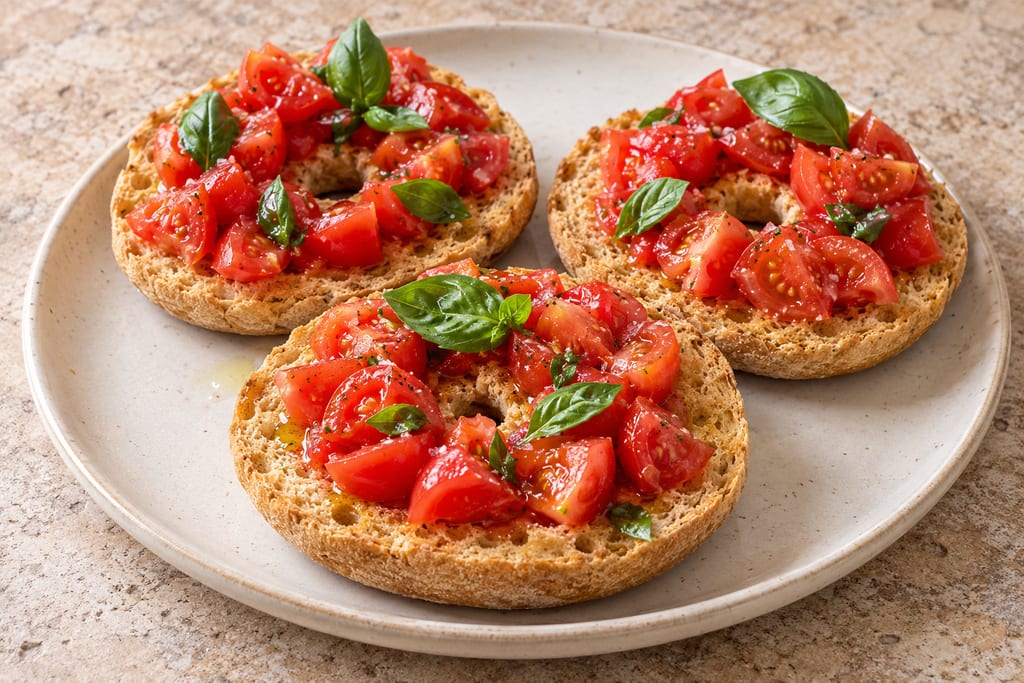
Friselle
Puglian wheat-and-semolina bread rings are baked, split, then dried in a second bake; briefly moisten and top them before serving.
 FermenteaWhere food goes to change
Pane di Altamura · Pane di Altamura DOP · Altamura bread
A protected durum-wheat sourdough bread documented by a commercial production specification. The official 100 kg batch and oven process are recorded without inventing a household scale.
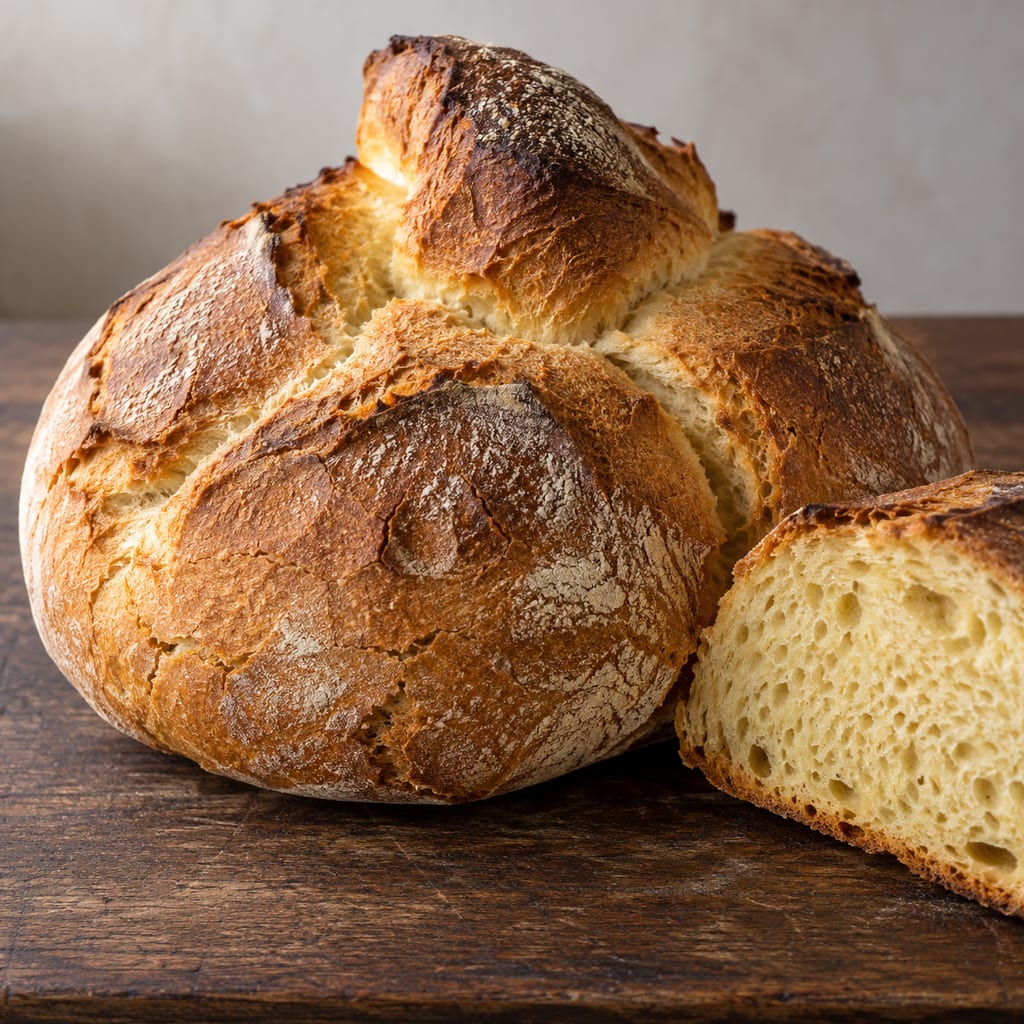
Pane di Altamura DOP is a durum-wheat sourdough bread tied to a protected area in Puglia. The registered specification describes a commercial batch based on 100 kilograms of re-milled durum semolina. This entry follows that documented batch and keeps it distinct from a household adaptation: the source uses an arm mixer, specifies an oven at 250°C and does not provide a smaller scaling formula.
The formula uses natural leaven, sea salt and water. The leaven is refreshed at least three times before mixing, but the registration does not give refreshment quantities or timing. The leaven itself is listed at 20 kilograms per 100 kilograms of semolina. That commercial proportion does not supply a starter recipe or explain how to create the leaven from scratch.
The specification also gives water criteria, including a 12–15°C range, pH 7–8.5, hardness 14.5–15.5 °GF, calcium 46–55 mg/L, alkalinity 130–160 mg/L and other mineral and microbiological properties. It separately says that mixing water is 18°C and phrases the sodium threshold as less than 5–6 mg/L. These statements are recorded as written; they are not reconciled or converted into household targets.
For the registered batch, the natural leaven receives at least three refreshments with water and durum-wheat semolina. The source gives semolina for these additions as 20% of the semolina used in the dough, but it does not give a full refreshment schedule. Combine 100 kilograms of semolina with 20 kilograms of natural leaven, 2 kilograms of sea salt and approximately 60 litres of water, then mix for 20 minutes in an arm mixer. The specification calls for water supplied in the designated area with detailed properties; the regional authority says its quality is certified by the local water supplier.
Cover the dough with a thick cotton cloth so it rises at a homogeneous temperature. Leave it for at least 90 minutes. The temperature is not quantified. Weigh and shape the dough by hand, then leave the formed loaves for 30 minutes. Shape them again and rest for at least 15 minutes.
The source gives minimum rest periods but no total elapsed time. Starter refreshments, transitions between stages and the amount of dough in each loaf are not timed or quantified here. No household proofing cues or alternative equipment have been added.
Turn each loaf before loading it into an oven at 250°C. The specification prefers indirect wood or gas heat; a direct-fired oven for this product uses oakwood. Bake for 15 minutes with the oven mouth open, close it and bake for another 45 minutes, then leave the mouth open for at least five minutes before unloading. These are production-specification stages, not a validated household method.
The protected area includes five named municipalities in the Alta Murgia: Altamura, Gravina di Puglia, Poggiorsini, Spinazzola and Minervino Murge. The protected geography covers a production area, not a single point of invention. Regione Puglia identifies Puglia as the product's regional setting and records the DOP registration in 2003.
Regione Puglia describes the bread as part of a farming tradition in the Murgia area. Its account says dough was commonly mixed and worked at home, then taken to a public oven, where the baker added a family mark. That historical household practice is different from the specified commercial method recorded above.
The regional authority also says the bread's durability served farmers and shepherds during week- or fortnight-long stays in rural masserie. This is historical context; it is not current guidance for storing a modern loaf. The inspected sources do not establish a precise first attestation or a safe consumer storage period.
Raw flour can carry germs, so do not taste the unbaked dough and clean hands and tools after handling flour. The industrial oven and dough volumes present substantial heat and handling demands. This entry does not describe a home-equivalent process, a finished-loaf internal temperature or storage limit.
Regione Puglia describes Pane di Altamura as a durum-wheat, sourdough bread associated with the Murgia area and records its historical domestic kneading followed by baking in public ovens, with family marks. The authority says durability supported farmers and shepherds during week- or fortnight-long stays; this is historical use, not present-day storage advice. The EU registration file reproduces an application narrative about the product's history; it does not independently fix a first attestation.
Scaling: source batch only
Uncooked flour can carry germs; avoid tasting the dough before baking.
Hazard sourceThe specified 250°C oven and unloading stages present burn hazards.
Hazard sourceDo not eat or taste raw dough. Clean hands and equipment after handling flour and dough.
Control sourceUse the commercial oven and handling procedure only with appropriate equipment and trained operators; this entry does not provide a household-equivalent process.
Control sourceThis is the DOP commercial production method, with a 100 kg semolina basis; it is not a household recipe and must not be scaled down by simple arithmetic.
The specification conflicts on water temperature (18°C for mixing water versus 12–15°C in the water-property list) and gives an ambiguous sodium threshold (<5–6 mg/L). Do not resolve these technical discrepancies or treat the specification as household control guidance.
The specification gives no numeric fermentation temperature, starter-refreshment schedule, finished-loaf yield, measured internal endpoint or consumer storage duration. Historical claims about keeping bread for a week or longer are not current storage guidance.
The DOP area is a regional production zone, not a single birthplace.
Puglian wheat-and-semolina bread rings are baked, split, then dried in a second bake; briefly moisten and top them before serving.
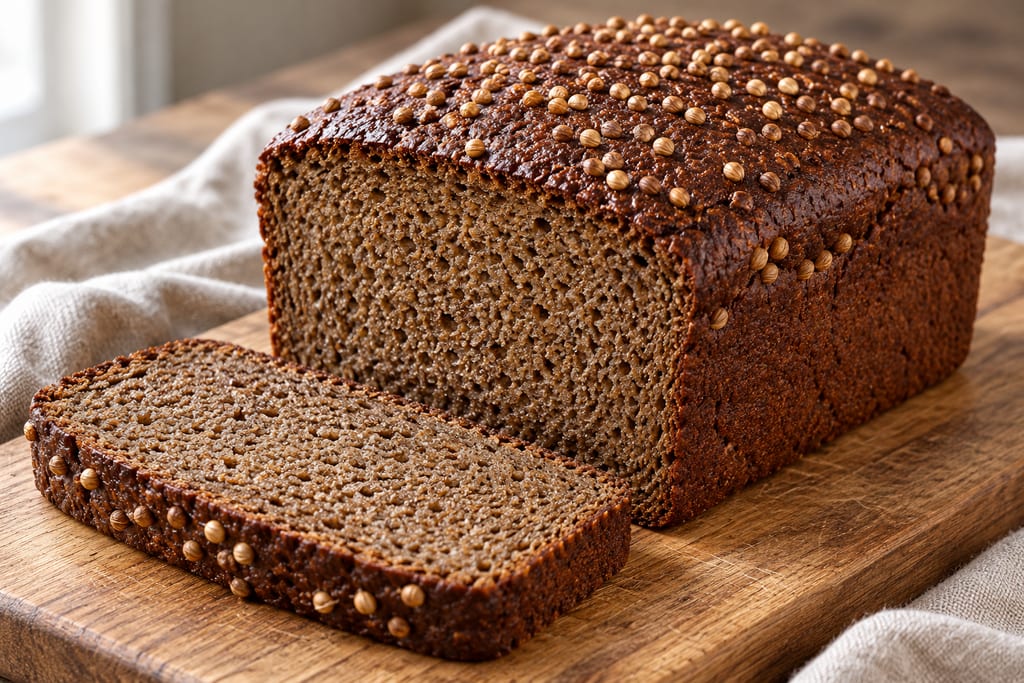
A dark rye sourdough with coriander and roasted barley-malt scald, based on Lily McCann's measured Borodinsk-ish home formula.
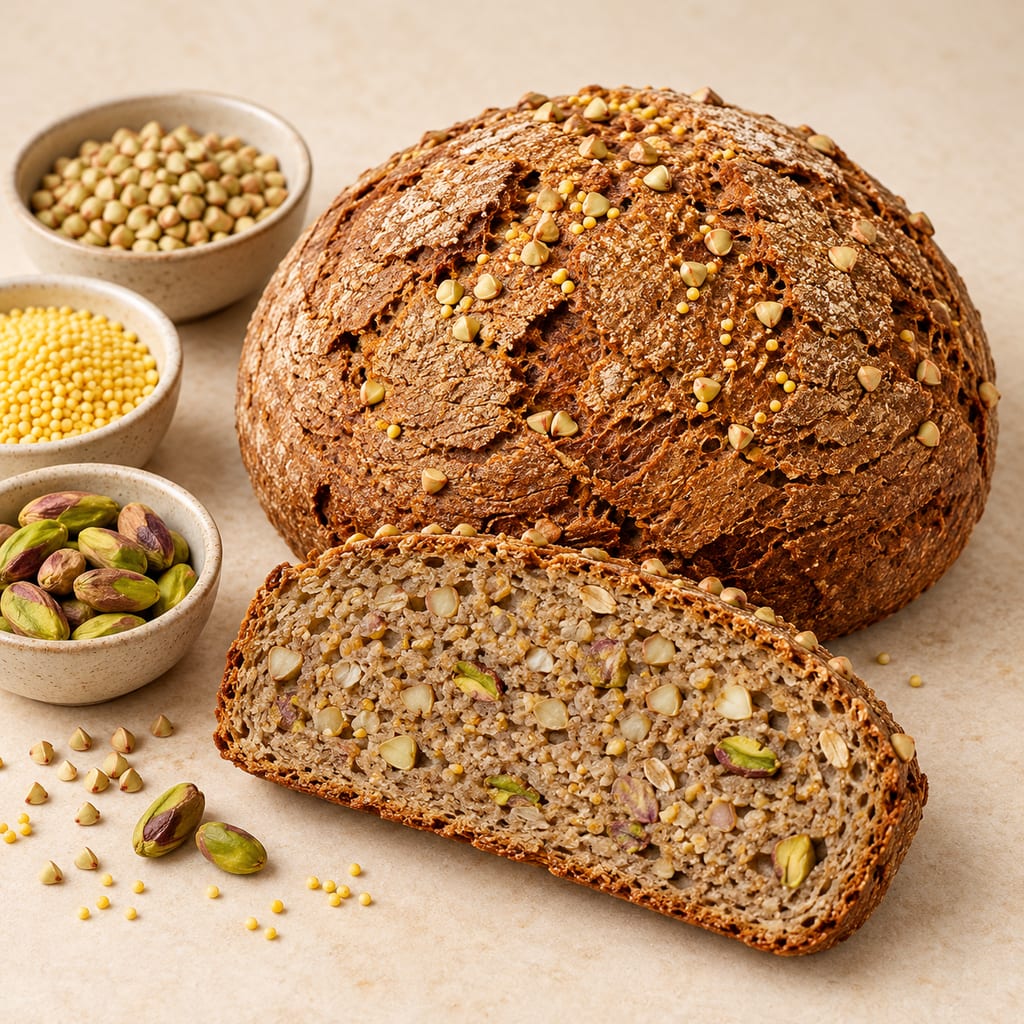
A gluten-free sourdough loaf of about 1 kg. A buckwheat and quinoa starter leavens a dough with cooked whole buckwheat groats, millet and a dark gluten-free bread mix, baked in a lidded pot.
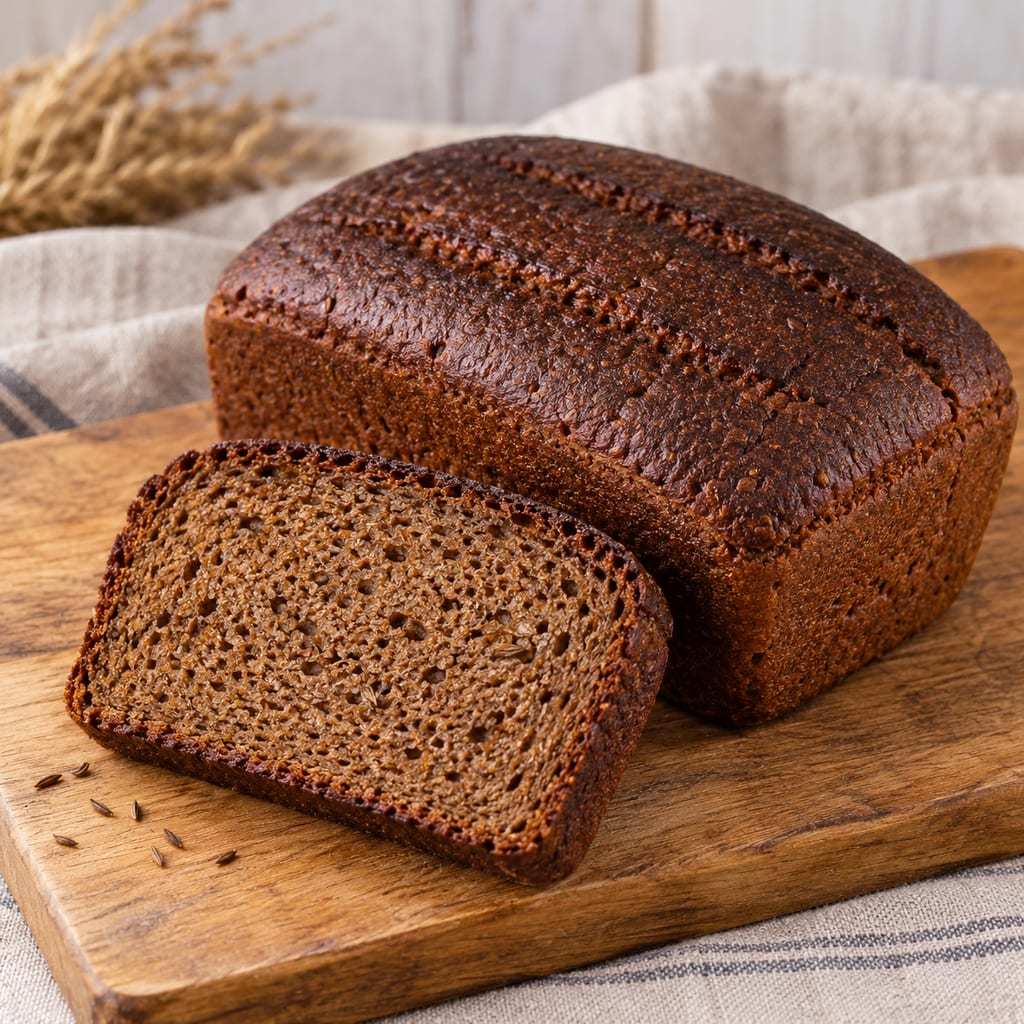
A Lithuanian dark rye loaf made with an overnight rye preferment, caraway, honey and sugar, then proofed in a loaf pan and baked in two stages.
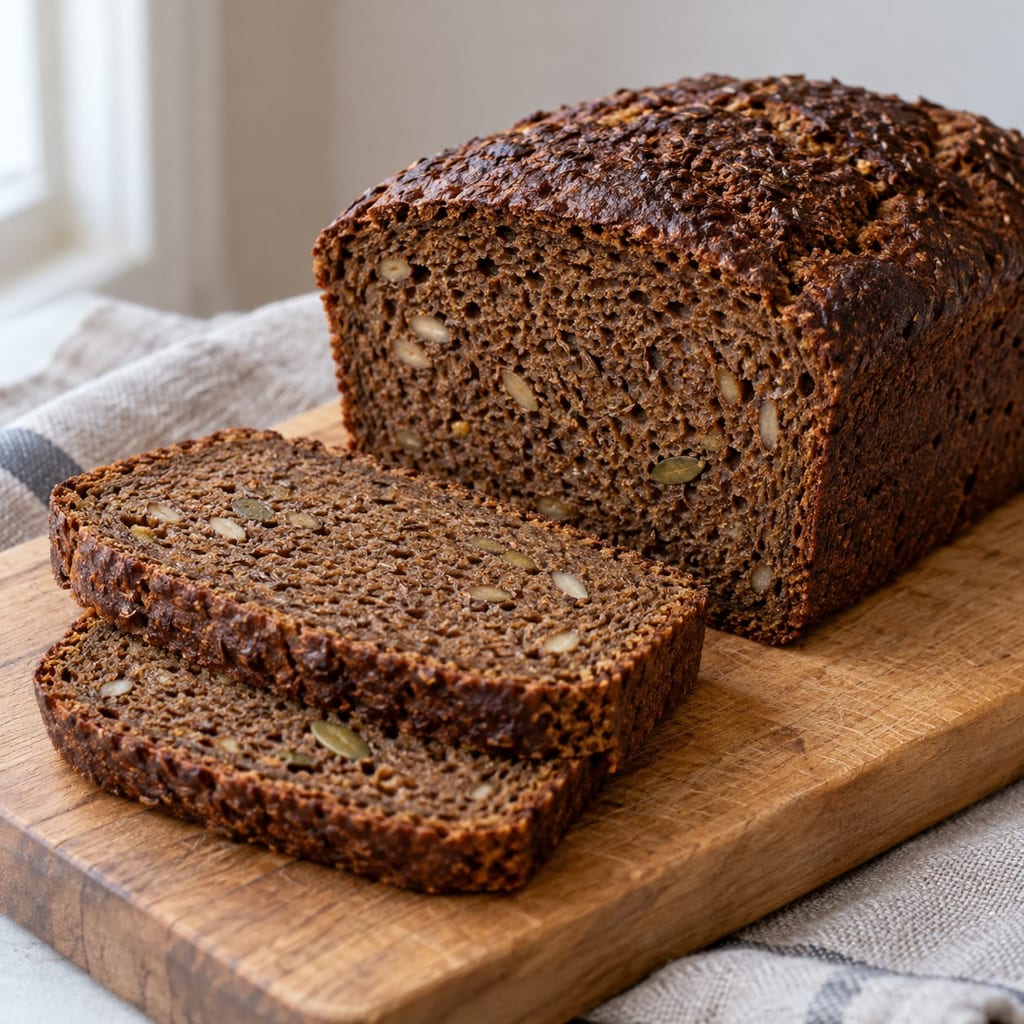
This Estonian rye loaf uses a sourdough preferment, a rye scald and soaked seeds, with a small amount of baker’s yeast. Two tins bake through a staged hot-to-moderate oven schedule.
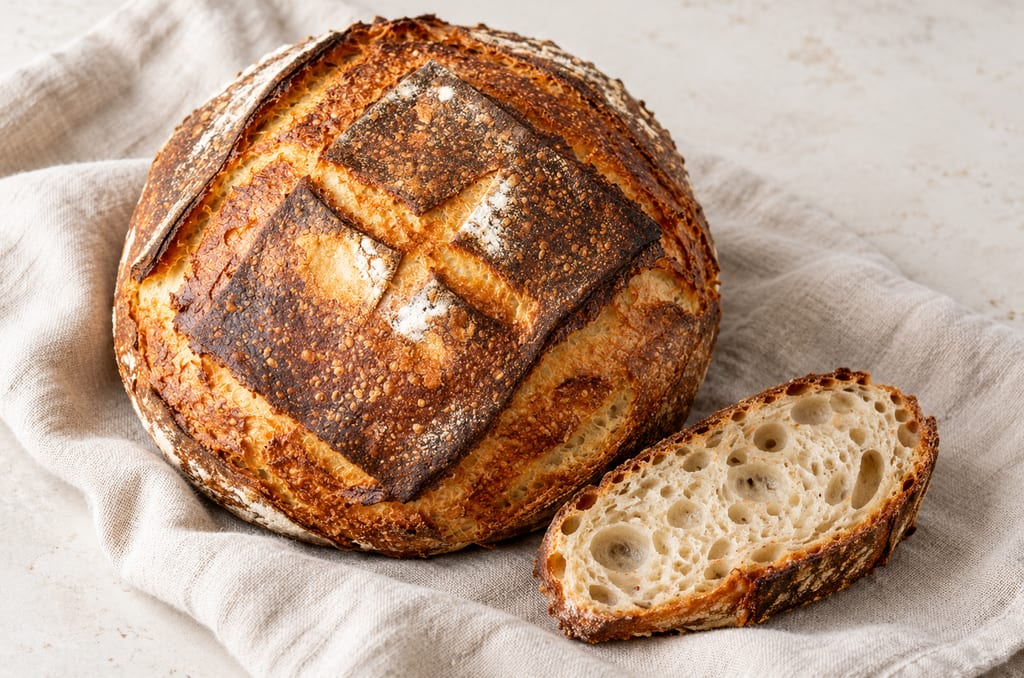
A ripe sourdough starter leavens this modern low-handling loaf. Three hourly folds organize the sticky dough before a long refrigerator rest, final proof and covered bake.
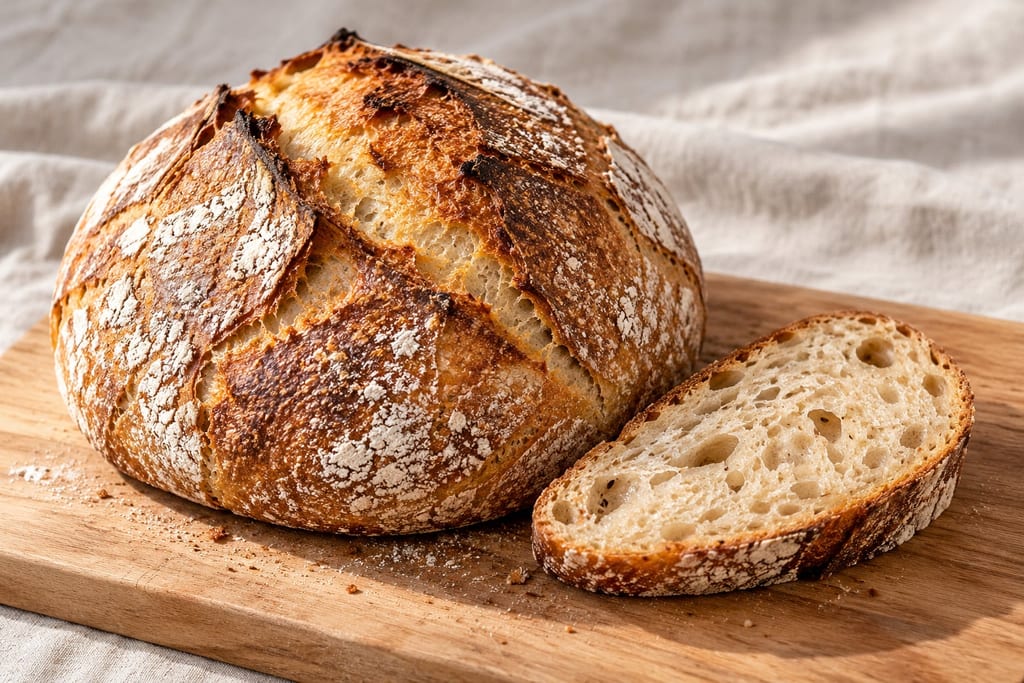
Two large French-style wheat loaves use unfed sourdough starter, whole-wheat flour, long room-temperature fermentation and a covered-pot bake.
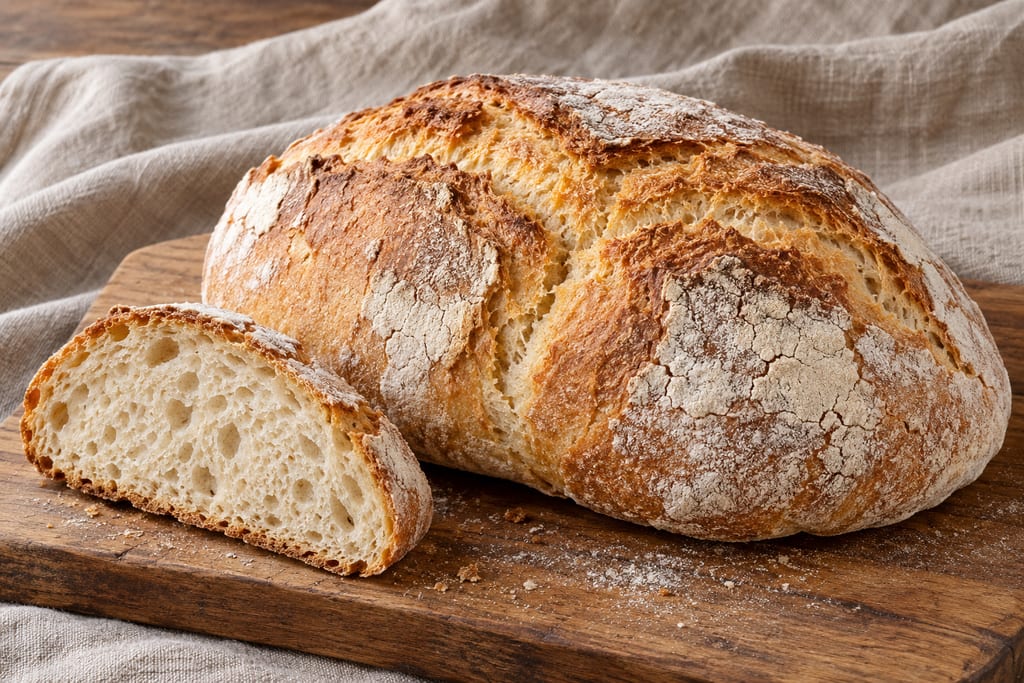
This home sourdough adaptation borrows Pan de Cea’s wheat-forward loaf and central fenda while using a domestic oven and a separately documented modern formula.
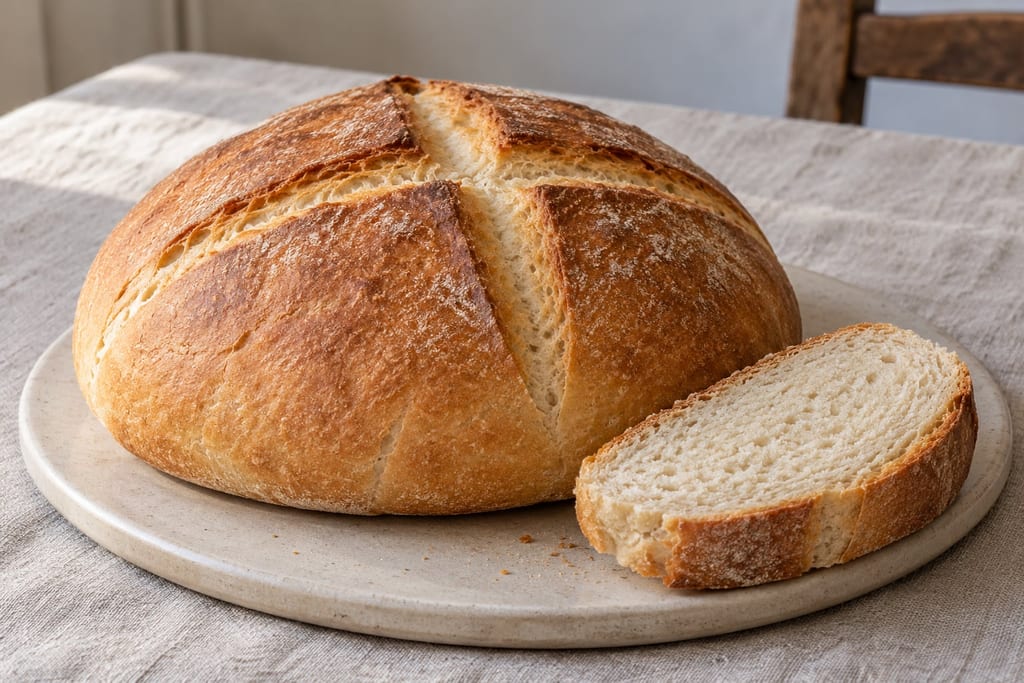
This household Pan de Cruz adaptation uses sourdough and a folded, tight-crumb wheat dough, marked with a cross and baked in a home oven.
No community contributions have been published for this entry yet.
Sign in to contribute. Published comments and photos are free to read.
European Commission / Official Journal of the European UnionRecipe · Identity · Geography · Process context
Commission Regulation (EC) No 1291/2003: Pane di Altamura, Annex IIAnnex II describes the protected product and production territory and specifies durum semolina, natural leaven, sea salt and water.
The production section gives a 100 kg semolina batch, 20 kg leaven, 2 kg sea salt, approximately 60 L water, 20-minute arm mixing, at least 90-minute first rest, 30-minute shaping rest, at least 15-minute second shaping rest, 250°C oven, 15 minutes open-mouth baking, 45 minutes closed-mouth baking and at least five minutes venting.
The specification says mixing water at 18°C while a separate water-property list gives 12–15°C; the discrepancy is preserved.
The historical narrative is part of the registration application and is not presented as proof of a first attestation.
Cited in: A protected production method, not a household formula; Mixing, rising and shaping; Oven stages and protected area
Regione Puglia, Produzioni di qualitàHistory · Geography · Identity
Pane di Altamura DOPThe regional authority identifies durum-wheat varieties, sourdough, sea salt and water and gives the two traditional loaf forms.
It associates preparation with the Alta Murgia/Puglia area, describing home kneading and shaping followed by baking in public ovens and family marks.
It describes historical use among farmers and shepherds, with loaves expected to last through week- or fortnight-long stays; this is not current consumer storage advice.
The authority records DOP registration on 19 July 2003.
Cited in: A protected production method, not a household formula; Oven stages and protected area; Household history and limits
Consorzio per la tutela e la valorizzazione del Pane di Altamura DOPProcess context · Recipe
Fasi della lavorazioneThe consortium's process page confirms the protected semolina sourcing, at least three leaven renewals, formula, mixer and mixing duration, staged rests, shaping, oven type and baking sequence.
Its page repeats the specification's 18°C water for the mix; it does not resolve the separate 12–15°C water-properties statement in the EU regulation.
Cited in: Mixing, rising and shaping
Centers for Disease Control and PreventionSafety
Raw Flour and DoughRaw flour can carry germs; CDC advises against eating raw dough and recommends washing hands and equipment after handling it.