
Apple sauce for goose and pork
Apple sauce for goose and pork is a plain English accompaniment: cooked apples pulped with water, then sweetened with sugar and finished with a little butter.
 FermenteaWhere food goes to change
Butterscotch topping · Butterscotch syrup
A pourable dessert sauce of brown sugar, butter and cream, with a little corn syrup and salt. It is the sauce form of the butterscotch confection and is made without water, unlike caramel.

Butterscotch is first a confection: a hard sweet made mainly from brown sugar and butter, boiled to the soft crack stage rather than the hard crack stage used for toffee. Wikipedia describes the sauce as a single step further, in which brown sugar is cooked to about 240 F (116 C), then mixed with butter and cream.
The word butterscotch also names the flavour itself, as in butterscotch pudding, and the sauce is one of its uses. This record covers the sauce only.
Caramel starts from white sugar and water. The butterscotch sauce starts from brown sugar and butter, with no water, and then takes cream. The brown sugar gives the sauce its character. The two sauces are kept as separate records in the database for this reason.
The earliest known butterscotch recipes, from mid-19th century Yorkshire, used treacle or molasses instead of or alongside sugar, according to Wikipedia. Brown sugar is the nearer modern equivalent.
The butter is melted first so that the sugar dissolves into a fat base. The cream then goes in once the sugar has melted, and the sauce is brought to a foamy boil before it is taken off the heat. The source warns that the butter should not brown, and that the cream should be warm, so that the sauce does not split.
The source says that the sauce is ready when it coats the back of a spoon, and that it thickens further as it cools and is refrigerated.
The origin of butterscotch is not settled. Wikipedia says food historians have several theories about the name and origin, and that none is conclusive. Samuel Parkinson of Doncaster is often credited with the sweet. An 1848 Liverpool Mercury item is cited for a Doncaster butterscotch recipe, and by 1851 several Doncaster firms were selling it. The claim that Queen Victoria was given a tin in 1851 rests on a local newspaper video, and the claim that Parkinson's original recipe is still made is disputed.
No source read dates the sauce. The garlicandzest page gives no history beyond popular attributions of the name, which it does not confirm.
The source keeps the sauce in a glass jar with a tight lid for about two weeks, or more, in the refrigerator, and freezes it for 2 to 3 months in an airtight container. It advises defrosting overnight in the refrigerator and reheating over medium heat, stirring to recombine any separated parts, or in the microwave in short bursts.
A sauce of sugar, butter and cream is a perishable dairy product. No room temperature storage is recorded in the sources, and none is proposed here.
The butterscotch confection has disputed origins in 19th century Yorkshire, and the sauce is a later use of the same brown sugar and butter base. The sources read do not date the sauce itself.
Yield 8 serving · Scaling: source batch only
The mixture bubbles vigorously when the cream goes in, and the source warns of splitting.
Hazard sourceWarm the cream before adding it, pour it in steadily, and whisk warm cream in a spoonful at a time if the sauce splits
Control sourceThe source gives about two weeks in the refrigerator in a sealed glass jar, or more, and 2 to 3 months frozen. No room temperature storage is recorded.
Wikipedia links early butterscotch mentions to Doncaster but treats the origin claims cautiously. This places the confection, not the sauce.
Wikipedia says the British sweet became popular in the US in the late 19th and early 20th centuries. It does not give a dated history of the sauce.
Apple sauce for goose and pork is a plain English accompaniment: cooked apples pulped with water, then sweetened with sugar and finished with a little butter.
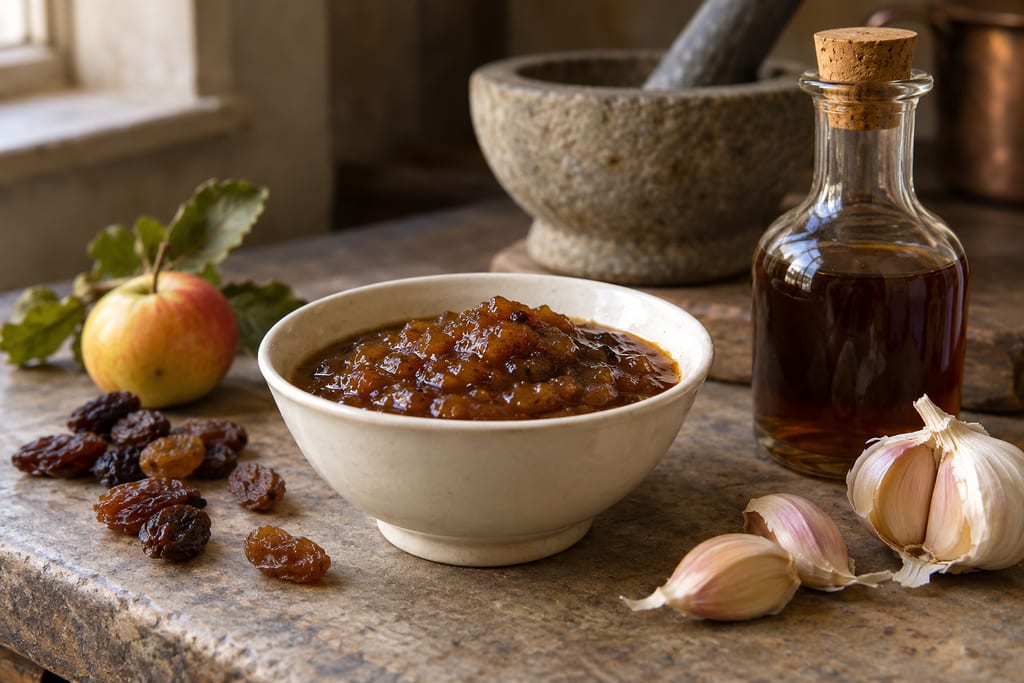
Eliza Acton's Bengal receipt for chetney sauce: stoned raisins and a hard acid fruit pounded with brown sugar, ginger, salt, cayenne and garlic, then thinned with vinegar to the consistence of thick cream.
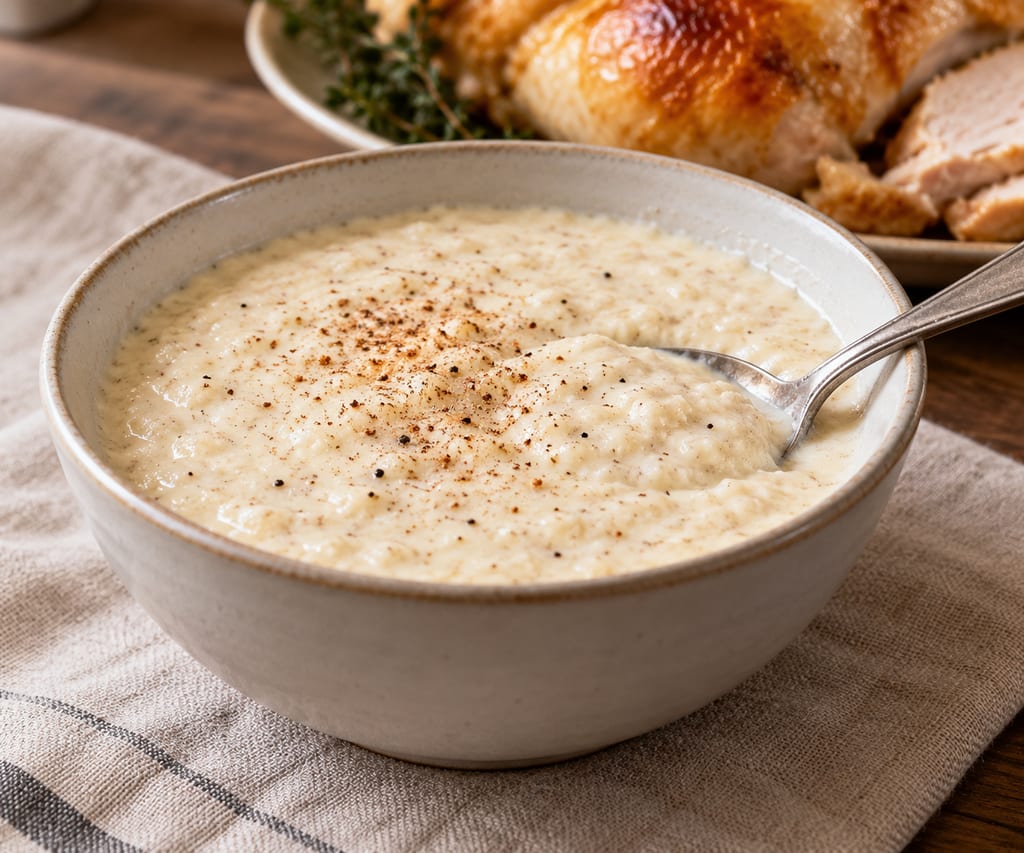
Bread sauce is a British sauce of milk infused with onion, clove and bay, thickened with stale breadcrumbs and finished with butter, served with roast chicken or turkey.
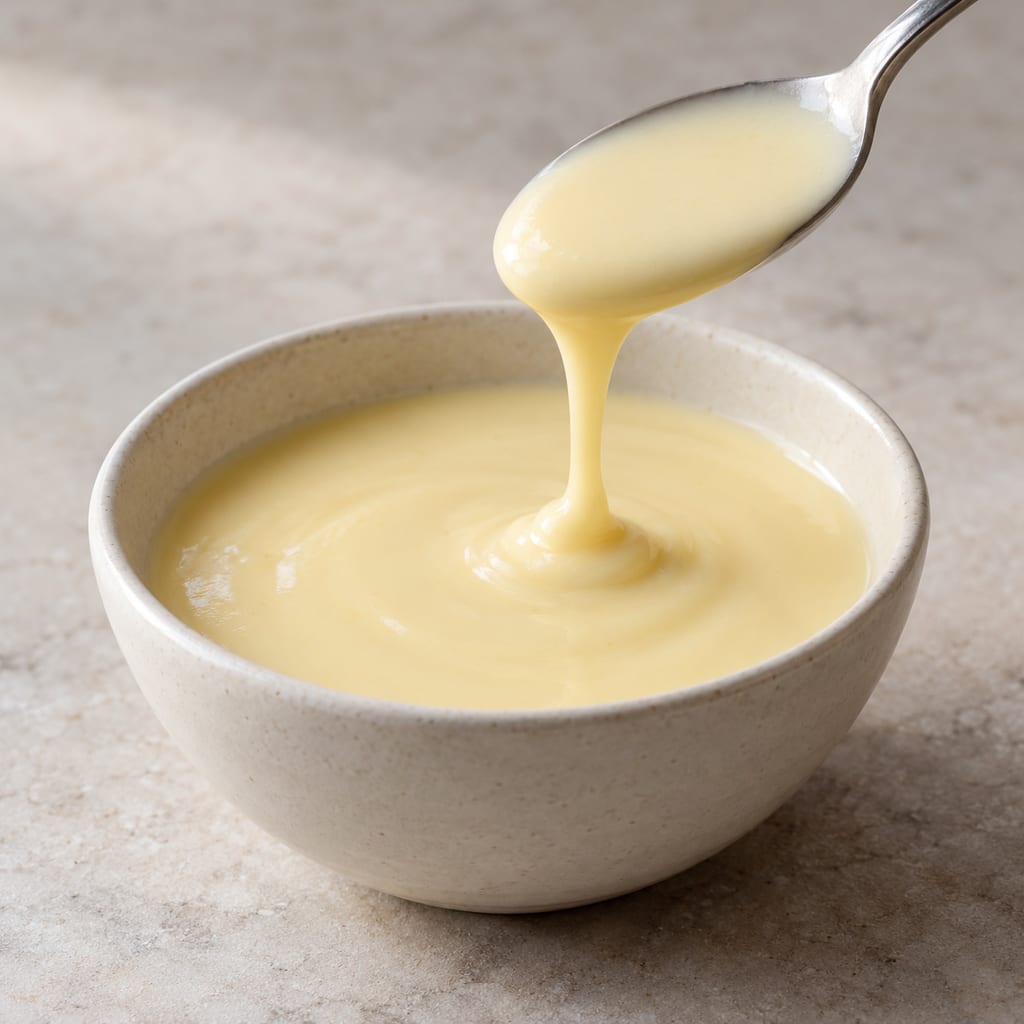
Starch-thickened salad-cream prototype with pasteurised yolk added after cooling; not a Heinz copy. Approximate yield 300 g.
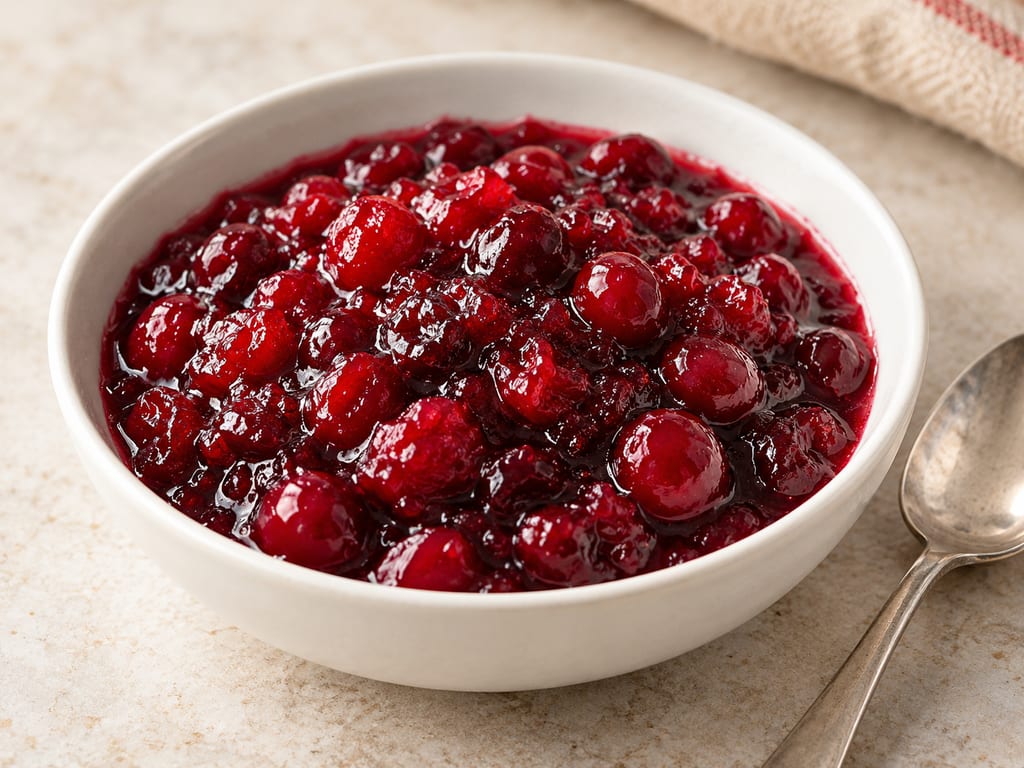
Cranberry sauce is a sauce of cranberries cooked in sugar syrup until the berries burst and thicken, served with roast turkey, pork, chicken and ham.
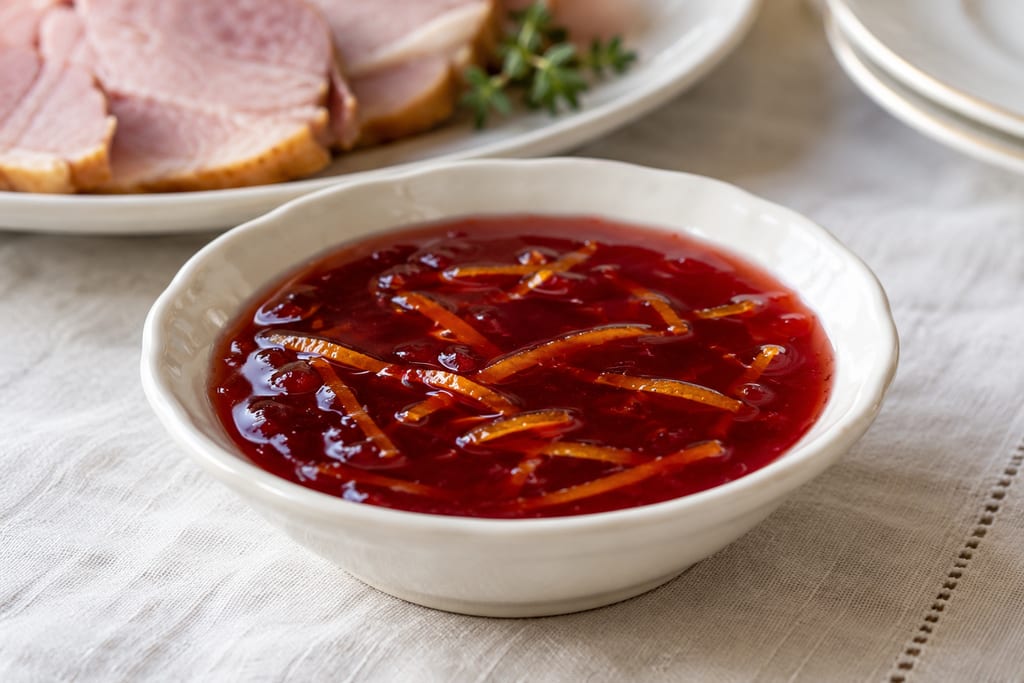
Cumberland sauce is a British condiment of redcurrant jelly, mustard, blanched orange peel and port, traditionally served cold with ham, game and cold meats.
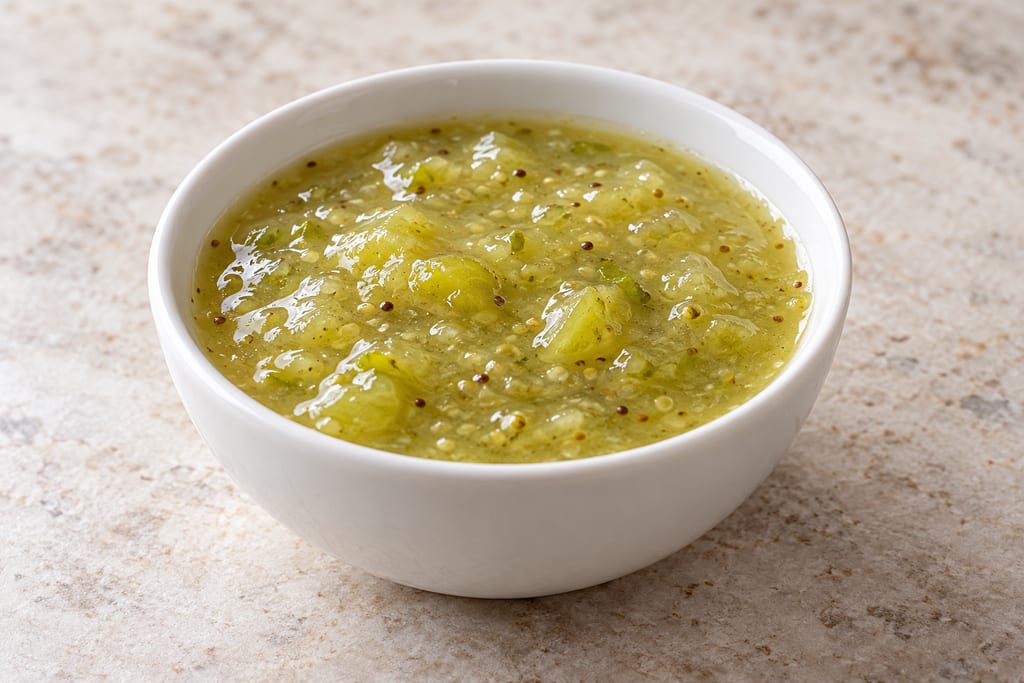
Gooseberry sauce is a soft, tart sauce of cooked green gooseberries, sharpened with wine or vinegar and lightly sweetened, traditionally served with mackerel.
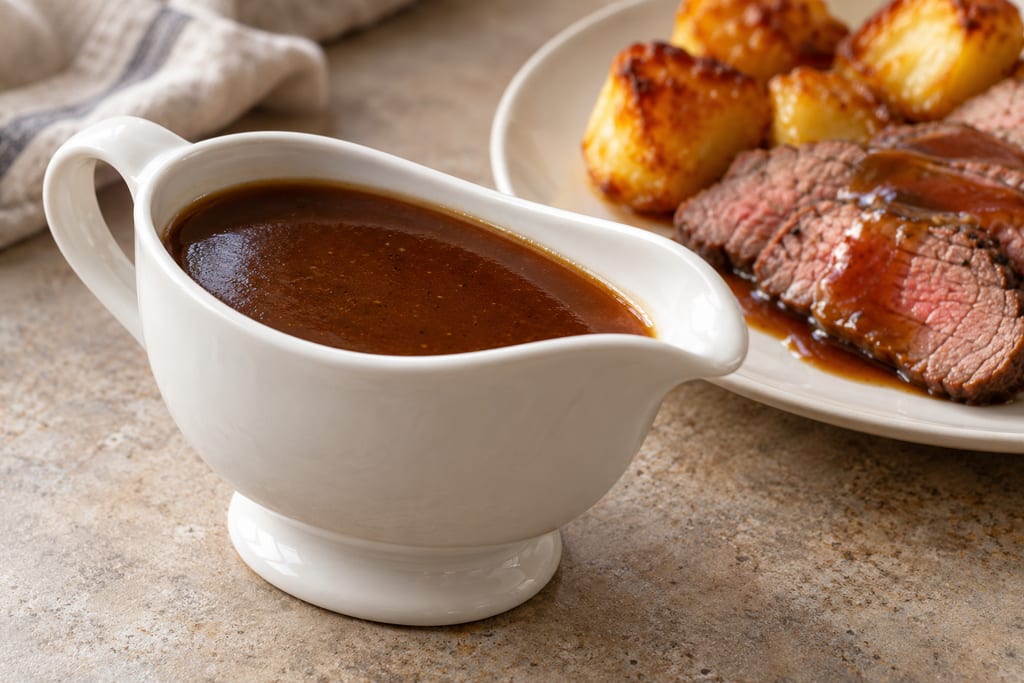
A savoury sauce made from the juices a roast releases in the tin, reduced with stock and thickened, or thickened with flour or starch.

Ajvar is a cooked Balkan pepper preserve built around roasted red peppers, peeled, drained, ground and slowly fried with oil and seasoning. Leskovac’s protected version is a pepper specialty; regional versions vary.

Amlou is a nutty, lightly sweet Moroccan spread of roasted almonds, culinary argan oil and honey. The almonds are ground first, then loosened with oil and sweetened; the balance can range from a thick spread to a dip.

A warm dip of garlic, anchovy and olive oil, often enriched with butter, that Piedmont serves over a flame with raw and cooked vegetables and bread.

A sweet-hot table sauce of ripe banana simmered with vinegar, sugar, onion, garlic and fresh chilli, in the manner of Philippine banana ketchup. An untested development batch of about 500 g.

A Georgian walnut sauce of ground walnuts, garlic, vinegar and spices, thinned with water or broth. It is served with poultry, vegetables and bread, and is the sauce of the dish satsivi.

Byzantine murrī is a cooked imitation of murrī from the medieval Arabic repertoire, made from scorched honey, toasted bread, walnuts, quince, carob and spices rather than from a long grain fermentation.
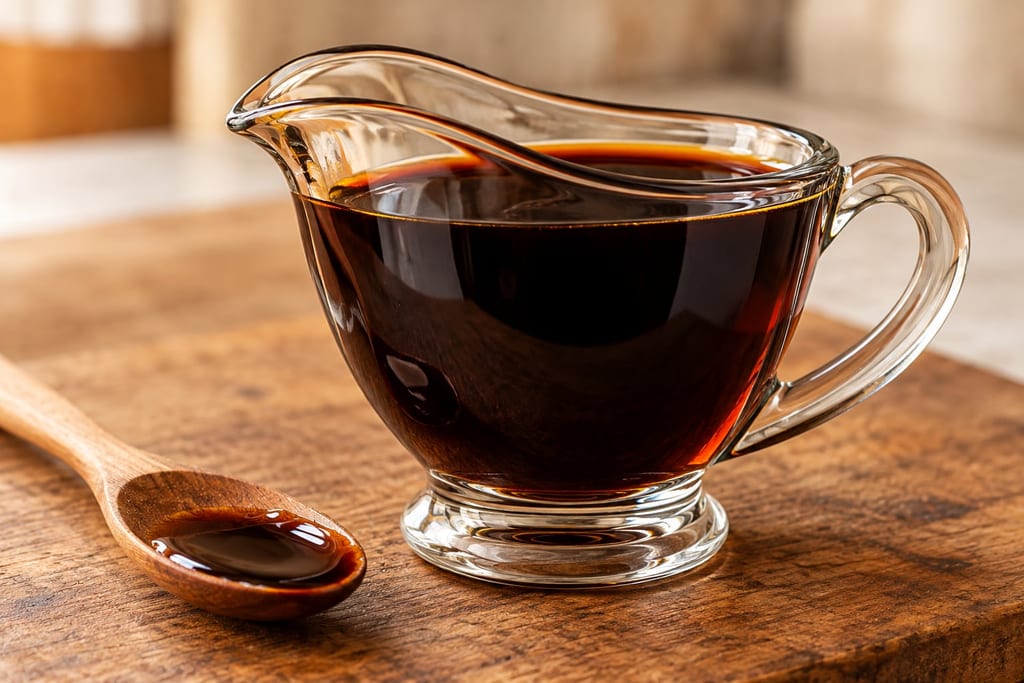
Caribbean browning is a dark liquid of deeply caramelised sugar, used in small amounts for colour and a smoky, bitter-sweet flavour in stews and black cake.
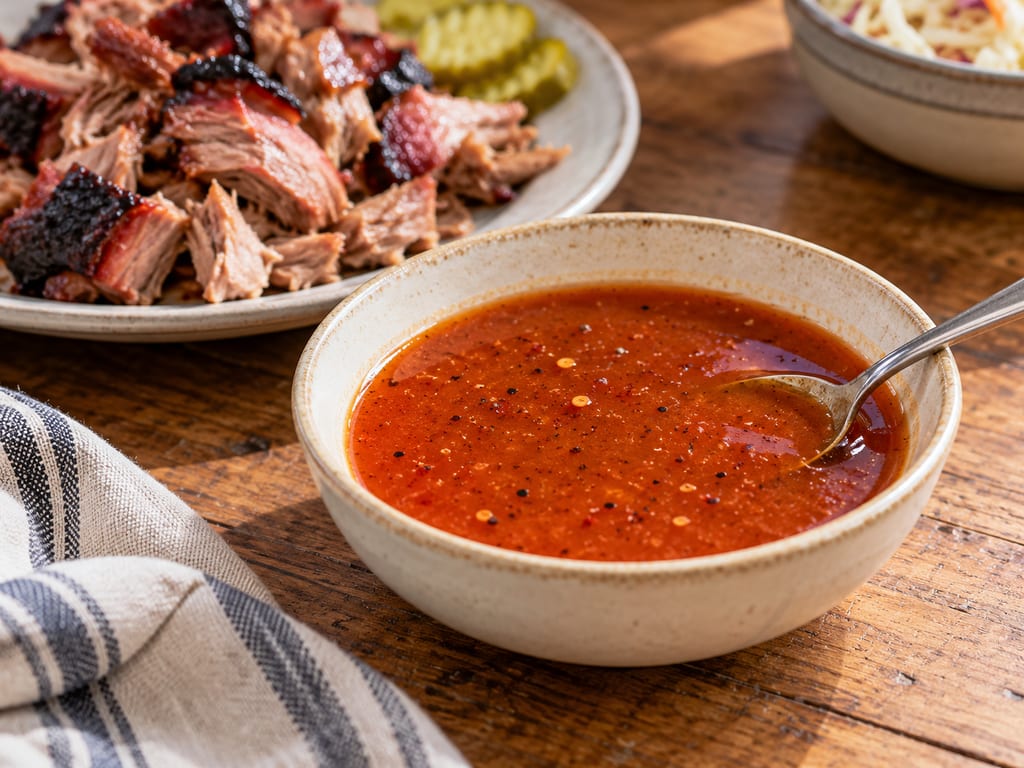
Light tomato barbecue sauce is a thin, sharp South Carolina sauce: a vinegar and pepper base with a small amount of ketchup, sitting between the clear vinegar sauce and the sweeter tomato sauces.
No community contributions have been published for this entry yet.
Sign in to contribute. Published comments and photos are free to read.
Garlic and ZestMethod · Storage · Safety
Butterscotch Sauce RecipeIngredients: 1 cup brown sugar, 1/4 cup unsalted butter, 1 tsp flaky sea salt, 1 tbsp corn syrup (optional), 3/4 cup heavy cream, 1 tsp vanilla.
Melt butter over medium heat without browning; add sugar, corn syrup, salt and whisk until melted; pour in cream; stir to a foamy boil; remove from heat; stir in vanilla; cool and refrigerate, sauce thickens as it chills.
Refrigerate in a glass jar with a tight lid for two weeks (or more); freeze 2 to 3 months; defrost overnight and reheat over medium heat or in the microwave in 20 second bursts.
The page does not give a definitive history of butterscotch.
Cited in: Butterscotch, the confection and the sauce; How the method works; Origin and uncertainty; Storage and handling
WikipediaHistory · Method
ButterscotchButterscotch is a confection made mainly of brown sugar and butter, boiled to soft crack stage.
Butterscotch sauce is brown sugar cooked to 240 F (116 C), then mixed with butter and cream.
Earliest known recipes are from mid-19th century Yorkshire and used treacle; origin claims are disputed.
An 1848 Liverpool Mercury item gives a Doncaster butterscotch recipe; by 1851 several firms sold it.
The British sweet became popular in the US in the late 19th and early 20th centuries (Kate Hopkins, Sweet Tooth, 2012, p. 170).
Cited in: Butterscotch, the confection and the sauce; Why it is not a caramel; Origin and uncertainty