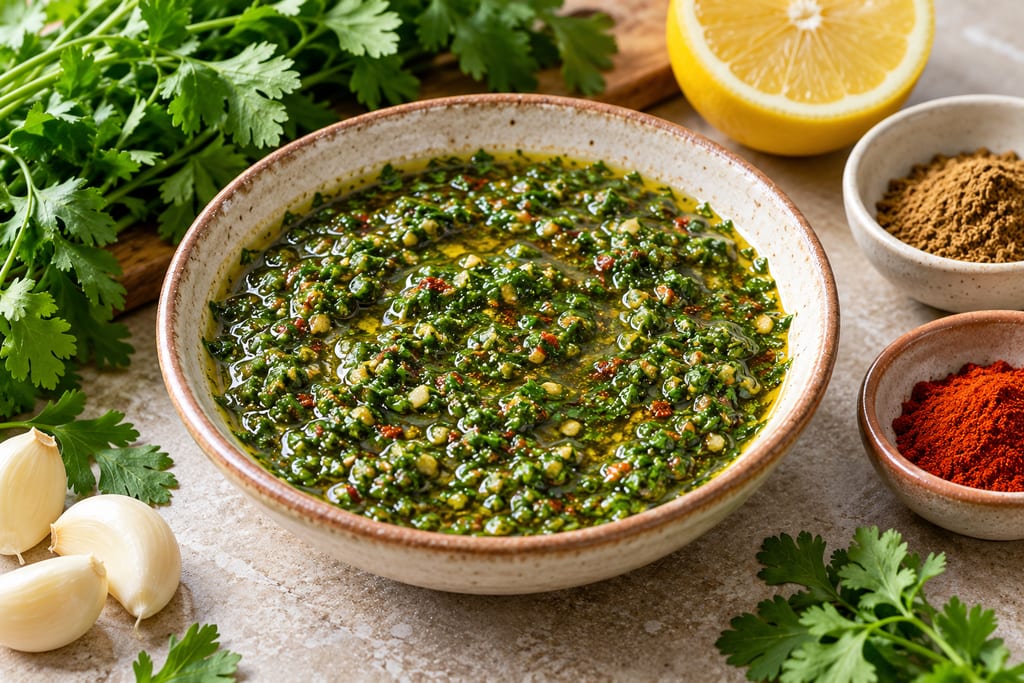
Fresh chermoula
Fresh chermoula is a chopped-herb Moroccan-style sauce of coriander, parsley, garlic, lemon, olive oil and warm spices, made here as an explicitly untested development formula.
 FermenteaWhere food goes to change
أملو · Amlou spread
Amlou is a nutty, lightly sweet Moroccan spread of roasted almonds, culinary argan oil and honey. The almonds are ground first, then loosened with oil and sweetened; the balance can range from a thick spread to a dip.

Amlou (أملو) is a Moroccan spread made by grinding roasted almonds with culinary argan oil and honey. It is usually brown to golden-brown, with a nutty, toasted aroma and a texture that may be thick enough to swipe across bread or loose enough to scoop as a dip. The precise texture depends on how finely the almonds are ground and how much oil is mixed in. It is not a fermented paste: no culture, starter or aging stage defines it.
Amlou is closely tied to the Souss-Massa region of southwestern Morocco, where argan trees and argan-oil knowledge are part of local life. The ingredients are simple, but the spread is not merely generic almond butter with a regional name: the characteristic roasted culinary argan oil gives it a distinct aroma, and household formulas vary in sweetness and flow. Published descriptions sometimes compare it with nut butter for convenience, while local serving accounts place it among bread dips and breakfast foods.
The argan tree, Argania spinosa, is endemic to the argan woodland of southwest Morocco. UNESCO's heritage record describes a chain of work around the tree and its oil: collecting and drying fruit, pulping it, cracking and sorting kernels, milling them, then mixing the ground material. The record emphasizes that women in rural communities carry much of this work and teach it through everyday practice. Oil extraction, the making of foods such as Amlou, and the craft of the tools around them are connected forms of knowledge, not isolated factory steps.
Amlou's exact beginnings are not established by the sources used here. A 2022 ethnographic study of domestic cooking in Marrakech follows one family's effort to make the spread: a young wife asks her mother-in-law, whose family came from the Souss, to teach her. The grinding stone, called al-raha in that account, matters because its use and the knowledge of a regional preparation travel through family relationships. That scene documents one household and one moment; it does not prove that every Amlou is made by women, that a single family invented it, or that today's food processor has replaced all hand milling.
A Moroccan government report in 2026 describes Amlou as a Souss-Massa culinary specialty and records its stronger presence at iftar in many families during Ramadan. The article presents it as hospitality and regional identity as well as food. These are living customs, and the account should not be turned into a dated origin legend.
Roasting is a flavour-making step. The official Moroccan account describes gently grilling the almonds until golden; the aromatic changes of roasting make the nut's flavour deeper and more pronounced. Cooling before grinding keeps the milling step separate from the heat treatment and makes the nuts easier to handle. The cited recipes do not set one universal roasting temperature or duration, so this version uses the visual endpoint of an even golden colour rather than claiming a fixed schedule.
Grinding changes the almonds physically. A mill or food processor breaks the nut tissue into smaller particles; continued grinding releases almond oil, so a dry-looking meal becomes damp and begins to clump. Fine grinding produces a smoother spread, while stopping earlier leaves more grain. Traditional stone milling and a modern processor are different tools for the same central task, but the texture and labour are not identical. The ethnographic account describes the slow hand mill as a valued technique; a machine makes a household batch faster.
Argan oil then loosens and binds the ground almonds into a cohesive paste. The addition is gradual so the maker can stop at the desired consistency before the mixture turns too fluid. Honey contributes sweetness and body, but it is not a microbial starter and does not ferment the almonds. Amlou's transformation is mechanical mixing, not fermentation or preservation.
Use culinary argan oil sold for food. Roasted kernels give this oil the characteristic toasted, nut-like aroma that distinguishes the food product from cosmetic argan oil; SBS explicitly warns readers to choose oil intended for cooking. The argan kernels' roasting occurs upstream during oil production, separate from roasting the almonds for this recipe. Cosmetic oils are not a substitute simply because they carry the same tree name.
This page follows one published formula: 250 g roasted almonds with 80 ml argan oil and 80 ml honey, a yield described as about 400 ml. The source author notes that Amlou is traditionally more fluid than the thick spread she prefers, and suggests increasing the oil to 120 ml for a thinner dip. Other writers use different ratios: a 2019 recipe uses 500 g almonds, 250 ml oil and 125 ml honey, while SBS publishes 300 g almonds with half a cup each of oil and honey. Those are separate published balances, not proof of a single standard ratio.
Honey quantity can also vary by household and taste. One source treats cinnamon and salt as additions; another says they are not traditional in its account. This version lists them as optional and keeps the main preparation to almonds, argan oil and honey. Peanuts or other vegetable oils may appear in commercial products, but they change the ingredient identity and should not be silently substituted into this almond-and-argan formula.
Begin with sound sweet almonds. Sort and clean them, then roast gently in a dry pan, turning them so their colour develops evenly. The regional account describes low-heat roasting to a golden finish; this method does not add an unsupported temperature or clock time. Spread the nuts out to cool before grinding.
Grind until fine, then keep working until some almond oil is released and the mass begins to hold together. A food processor is a home substitute for the traditional stone mill, not a claim that the two produce identical texture. Add the culinary argan oil gradually, stirring or processing between additions. At 80 ml the mixture stays thick; for a looser dip, follow the cited author’s 120 ml variation rather than adding water.
Blend or stir in the honey a little at a time. Taste before adding more: honey is both the sweetener and part of the mixture's texture, so changing its amount changes the balance. Cinnamon and flaky salt are optional contemporary choices in the cited household recipe; leave them out for the three-ingredient version. Transfer the spread to a clean, dry jar with a cover. The cited sources give no validated shelf life, so this recipe makes no promise about weeks or months of storage.
Amlou is served as a dip or spread with bread and pancakes. Sources name baghrir, msemen and other Moroccan breads; SBS also suggests fresh figs and pancakes. Its richness means a little can carry a piece of bread, while the looser version is easy to scoop. Warm flatbread provides a simple contrast to the spread's dense, nutty texture.
The government account situates it at breakfast and at the Ramadan iftar table in parts of Souss-Massa, where families may serve it after breaking the fast with dates. It is also presented to guests as an expression of welcome. UNESCO's description of argan oil as a wedding gift and festive-food ingredient speaks to the larger social value of argan products, but that record does not say every Amlou serving is ceremonial. Daily breakfasts, family teaching and festive hospitality belong side by side without being collapsed into a single custom.
The 2022 Marrakech ethnography shows how an apparently simple spread can carry technique and family relations: asking an older relative to demonstrate the grinding and preparation is part of learning the food. Its account is specific to its participants, but it helps explain why the stone mill and the hand that uses it matter beyond the mechanics.
A thick result usually reflects a smaller oil addition or coarser grinding; a more fluid dip reflects more oil and finer mixing. Natural oil separation can occur in nut pastes, so stir before serving rather than treating a surface layer as proof of spoilage. Do not use smell or appearance alone to establish safety, and do not keep the jar for an invented fixed period: the sources do not supply a tested storage interval or water-activity measure.
Amlou contains almonds, which FDA lists among the major food allergens. Identify the almond clearly and avoid cross-contact where allergy is a concern. Because honey is an ingredient, CDC advises against giving honey or foods made with honey to children younger than 12 months. These are ingredient-specific handling points, not fermentation controls; there is no microbial maturation stage in Amlou.
The sources document Amlou as a traditional Amazigh spread associated especially with the Souss-Massa region, but do not identify a first attestation or a single inventor. UNESCO's argan heritage record places the argan woodland in southwest Morocco and describes food preparation, oil extraction and transmitted know-how as part of living community practice. A 2022 ethnography records one Marrakech family learning Amlou from a mother-in-law whose family came from the Souss; it is a situated household account rather than a universal historical origin story.
Yield 400 ml · Scaling: source batch only
Amlou contains almonds, a tree nut; identify it clearly and avoid cross-contact for people with relevant allergies.
Hazard sourceBecause the spread contains honey, do not give it to children younger than 12 months.
Hazard sourceLabel or disclose almonds; prevent allergen cross-contact where needed.
Control sourceDo not serve honey or foods containing honey to infants under 12 months.
Control sourceAmlou is documented as a Souss-Massa specialty; the regional association does not establish one village of origin.
Fresh chermoula is a chopped-herb Moroccan-style sauce of coriander, parsley, garlic, lemon, olive oil and warm spices, made here as an explicitly untested development formula.
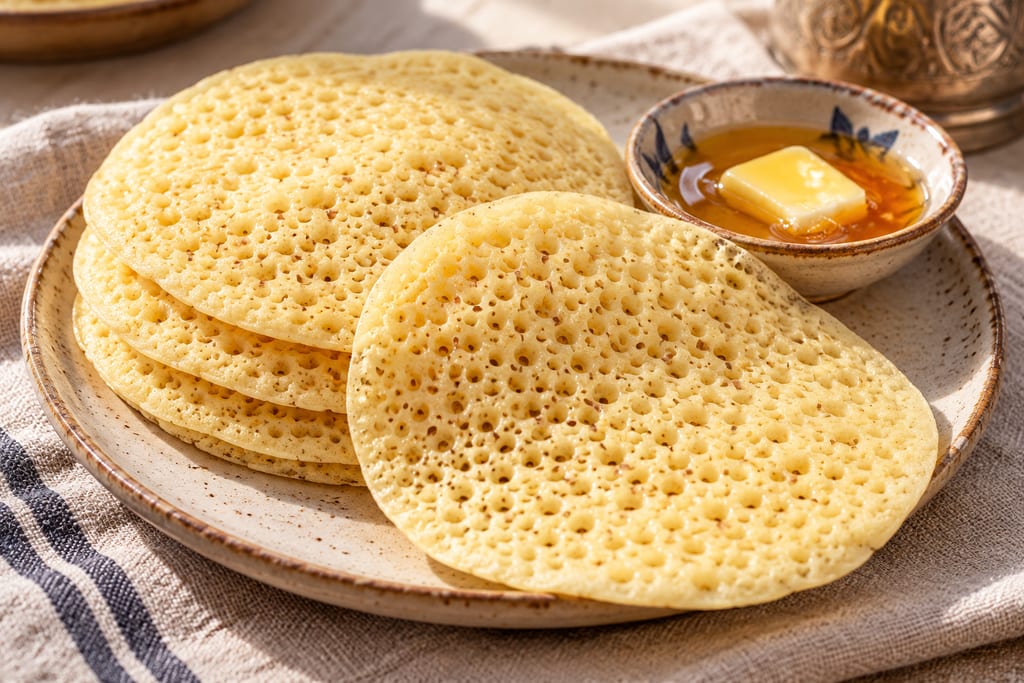
Moroccan semolina pancakes made from a thin yeast batter, rested until foamy and cooked on one side until the surface sets with a honeycomb of holes. This source-specific batch makes sixteen 5-inch pancakes.
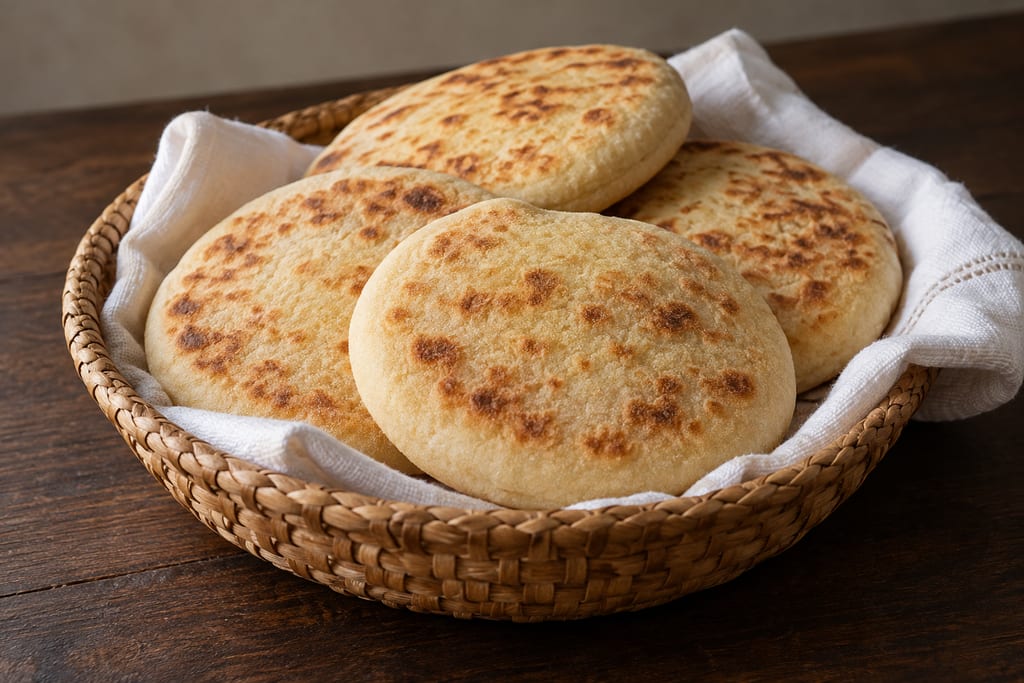
A Moroccan yeast-raised semolina pocket bread cooked on a dry pan or griddle; this measured batch makes about twenty 4-inch rounds.
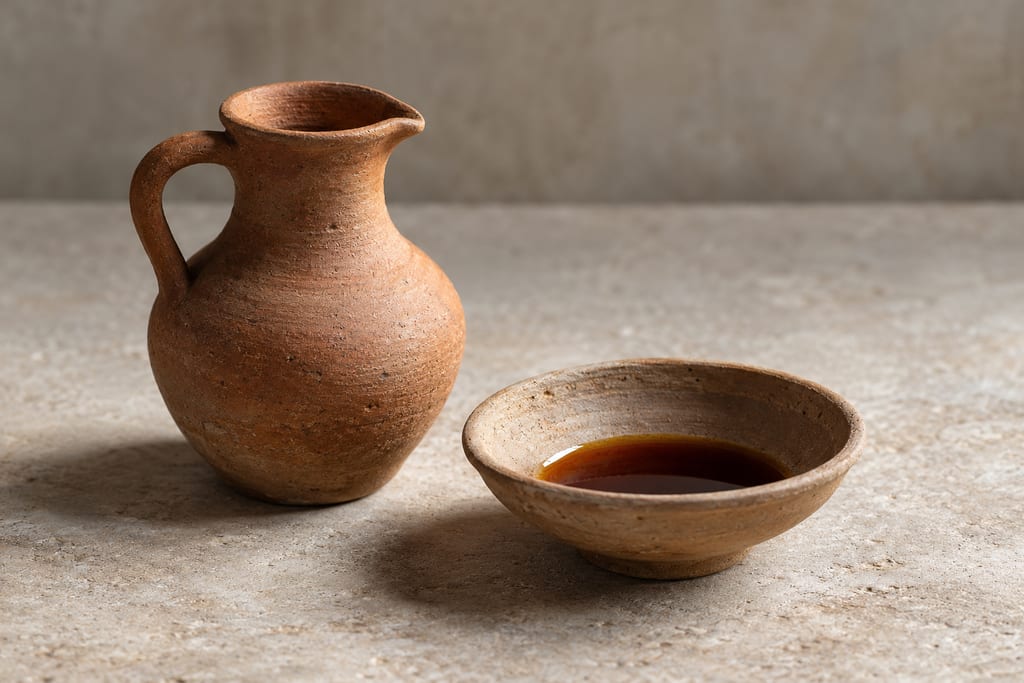
Garum, Greek garos and Latin liquamen, was the fish sauce of the ancient Mediterranean: fish and viscera salted and left in the sun, then drained off as a savoury liquid.
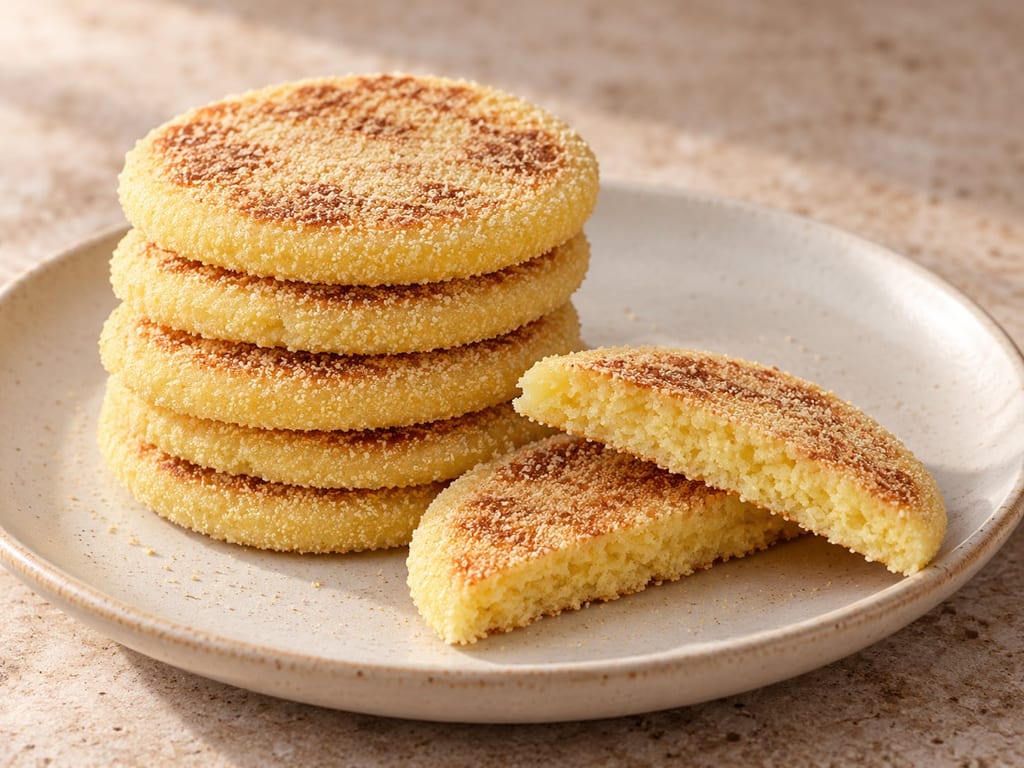
Harcha is a Moroccan semolina griddle bread with olive oil and butter rubbed into the grain, then shaped into thin rounds and cooked until golden. This family formula uses both dry yeast and baking powder.
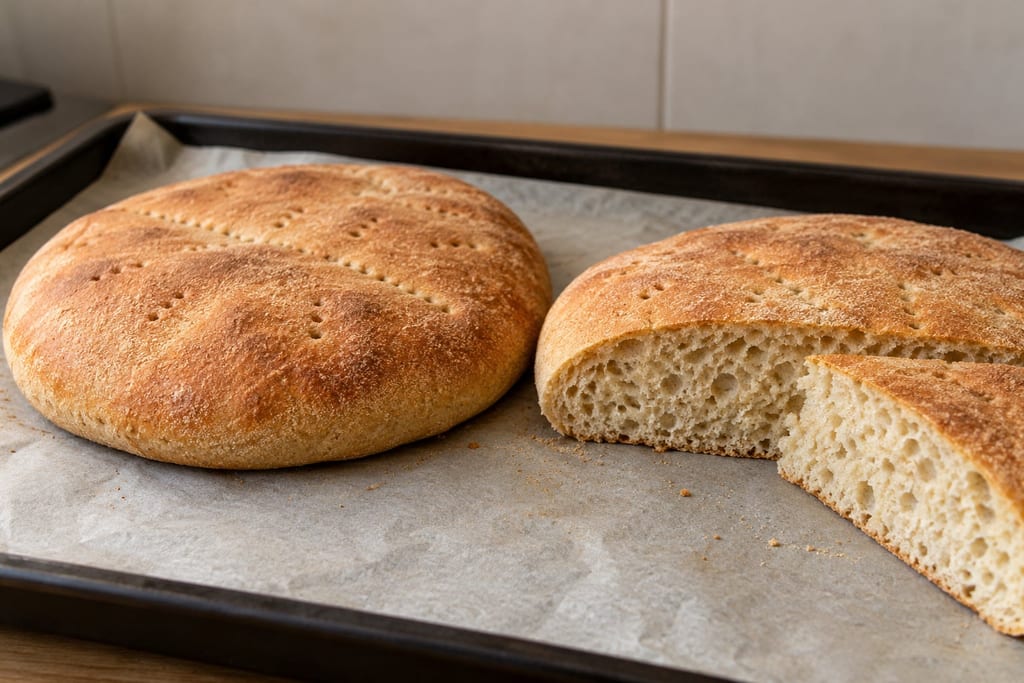
A Moroccan round wheat bread with a firm crust and coarse interior; this home formula makes two 8-inch loaves for serving with meals.
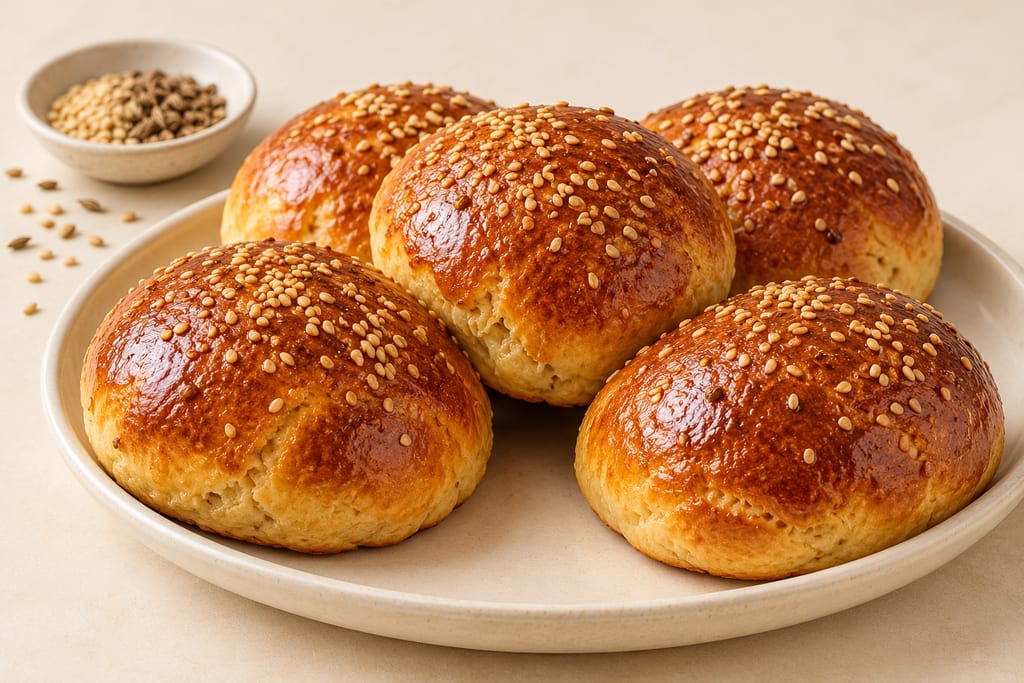
Krachel, also called el gors, are Moroccan sweet yeast rolls scented with anise, sesame and orange flower water. This version follows the three-rise method documented by Christine Benlafquih.
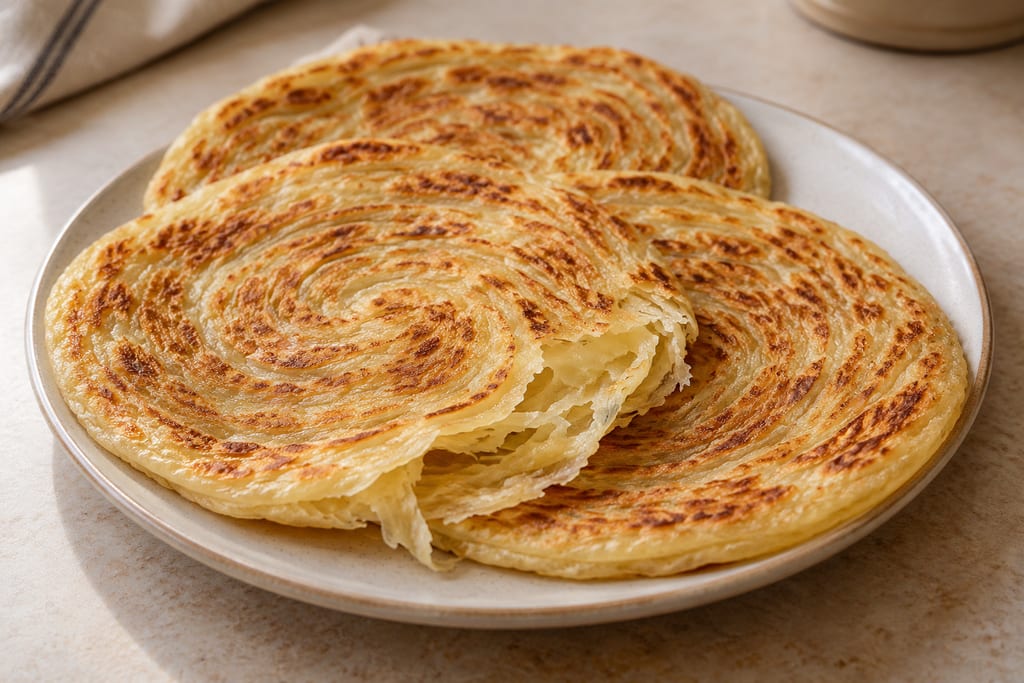
A Moroccan round laminated griddle bread; thin sheets of a lightly yeasted semolina dough are buttered, rolled into layered coils, sliced and flattened.

Ajvar is a cooked Balkan pepper preserve built around roasted red peppers, peeled, drained, ground and slowly fried with oil and seasoning. Leskovac’s protected version is a pepper specialty; regional versions vary.

Apple sauce for goose and pork is a plain English accompaniment: cooked apples pulped with water, then sweetened with sugar and finished with a little butter.

A warm dip of garlic, anchovy and olive oil, often enriched with butter, that Piedmont serves over a flame with raw and cooked vegetables and bread.

A sweet-hot table sauce of ripe banana simmered with vinegar, sugar, onion, garlic and fresh chilli, in the manner of Philippine banana ketchup. An untested development batch of about 500 g.

A Georgian walnut sauce of ground walnuts, garlic, vinegar and spices, thinned with water or broth. It is served with poultry, vegetables and bread, and is the sauce of the dish satsivi.

A pourable dessert sauce of brown sugar, butter and cream, with a little corn syrup and salt. It is the sauce form of the butterscotch confection and is made without water, unlike caramel.

Byzantine murrī is a cooked imitation of murrī from the medieval Arabic repertoire, made from scorched honey, toasted bread, walnuts, quince, carob and spices rather than from a long grain fermentation.
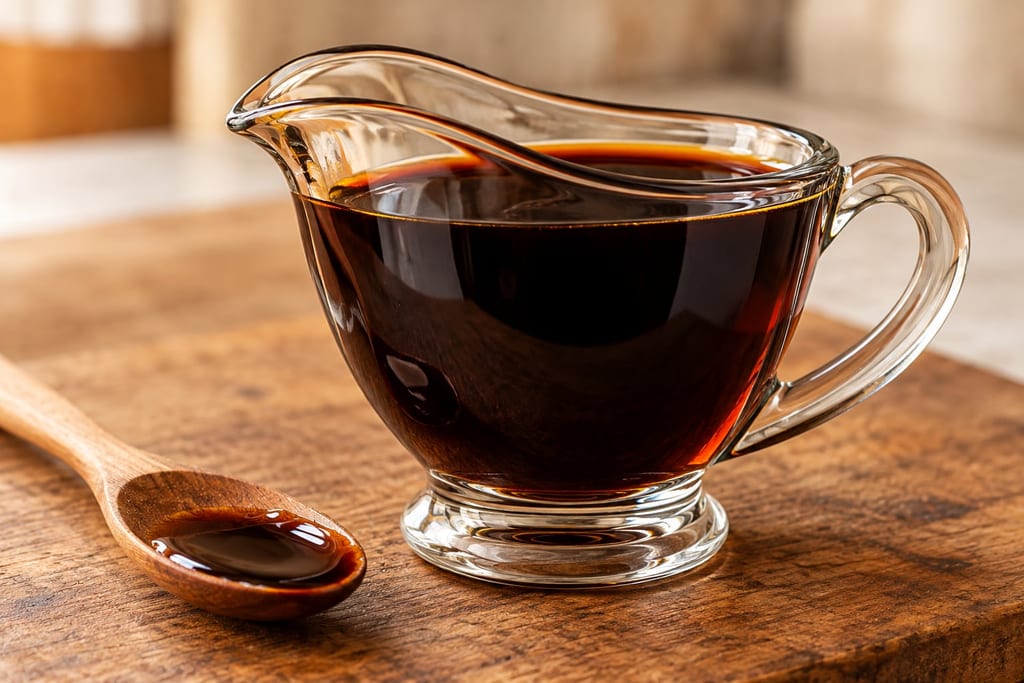
Caribbean browning is a dark liquid of deeply caramelised sugar, used in small amounts for colour and a smoky, bitter-sweet flavour in stews and black cake.
No community contributions have been published for this entry yet.
Sign in to contribute. Published comments and photos are free to read.
Maroc.ma / Maghreb Arabe PresseHistory · Geography · Method · Uses
«Amlou», une saveur du patrimoine culinaire qui orne les tables du Souss à l’heure du ftourThe article identifies Amlou as a three-ingredient Amazigh spread associated with Souss-Massa.
A cooperative representative describes sorting, cleaning, gently roasting, cooling, grinding, gradually mixing argan oil, and sweetening with honey.
The article describes Amlou at breakfast and Ramadan iftar and as a regional hospitality food.
Cited in: A spread shaped by three ingredients; Argan country and transmitted knowledge; Why the almonds are roasted and ground; A careful household method; From breakfast table to iftar
UNESCO Intangible Cultural HeritageHistory · Geography · Culture
Argan, practices and know-how concerning the argan treeUNESCO describes the argan tree as endemic to southwest Morocco's Arganeraie reserve.
The heritage record documents traditional oil tasks and transmission of knowledge, including preparation of recipes and derived products.
It describes argan oil in cooking, wedding gifts and festive foods without dating Amlou's origin.
Cited in: Argan country and transmitted knowledge; From breakfast table to iftar
The Journal of North African StudiesHistory · Technique · Culture
Cooking with(out) others? Changing kitchen technologies and family values in MarrakechA 2022 ethnographic account follows one Marrakech family preparing Amlou with knowledge shared across generations.
The account describes a young wife seeking instruction and use of the al-raha stone mill from her mother-in-law, whose family came from the Souss.
The case is situated ethnography, not a universal account of all Amlou makers.
Cited in: Argan country and transmitted knowledge; Why the almonds are roasted and ground; From breakfast table to iftar
My Moroccan FoodMethod · Ingredients · Uses · Variation
AmlouThe published recipe uses 250 g roasted unpeeled almonds, 80 ml argan oil and 80 ml honey, with optional salt and cinnamon.
The author says her preferred texture is thicker than the traditionally more liquid dip and suggests 120 ml oil for a thinner version.
The author says cinnamon and salt are not traditional in her account and names bread, msemen, baghrir and pastries as serving uses.
Cited in: A spread shaped by three ingredients; Choosing the oil and balancing the paste; A careful household method
SBS FoodMethod · Ingredients · Uses
Moroccan amlouSBS uses roasted almonds, argan oil, honey and optional cinnamon.
SBS distinguishes culinary argan oil from cosmetic oil and attributes the culinary oil's aroma to roasted kernels.
SBS names bread, figs and pancakes as serving uses and notes extra oil gives a runnier result.
Cited in: A spread shaped by three ingredients; Choosing the oil and balancing the paste; From breakfast table to iftar; Reading the result and handling it
Morocco World NewsMethod · Ingredients · Uses
How to Make Moroccan Amlou, Mixture of Argan Oil, Honey, AlmondsThe recipe uses almonds, argan oil and honey and gives an alternate ratio to the formula used here.
It describes roasting almonds until crunchy and golden, cooling, grinding, mixing oil and honey, then storing covered.
It names baghrir, hersha, msmen and bread as serving uses.
Cited in: Why the almonds are roasted and ground; Choosing the oil and balancing the paste; A careful household method
U.S. Food and Drug AdministrationSafety
The FASTER Act: Sesame Is the Ninth Major Food AllergenFDA lists tree nuts, including almonds, among the nine major food allergens.
Cited in: Reading the result and handling it
Centers for Disease Control and PreventionSafety
Foods and Drinks to Avoid or LimitCDC advises that children younger than 12 months should not be given honey or foods containing honey because of infant botulism risk.
Cited in: Reading the result and handling it