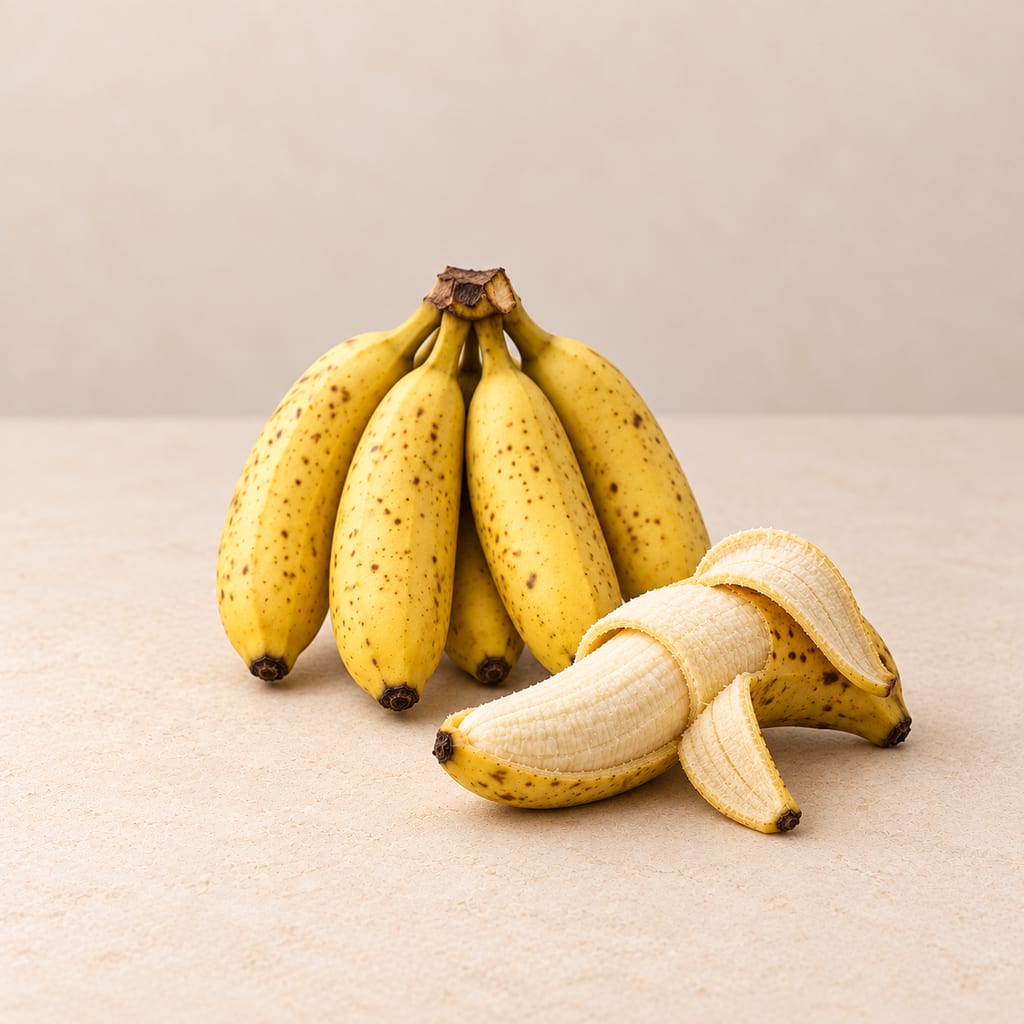
Ripe banana
A ripe banana is sweet, soft pulp in which ripening has turned most of the starch into sugar. That sugar and softness make it a base for banana ketchup, beer, wine and vinegar.
 FermenteaWhere food goes to change
Banana catsup · Sweet-hot banana ketchup
A sweet-hot table sauce of ripe banana simmered with vinegar, sugar, onion, garlic and fresh chilli, in the manner of Philippine banana ketchup. An untested development batch of about 500 g.
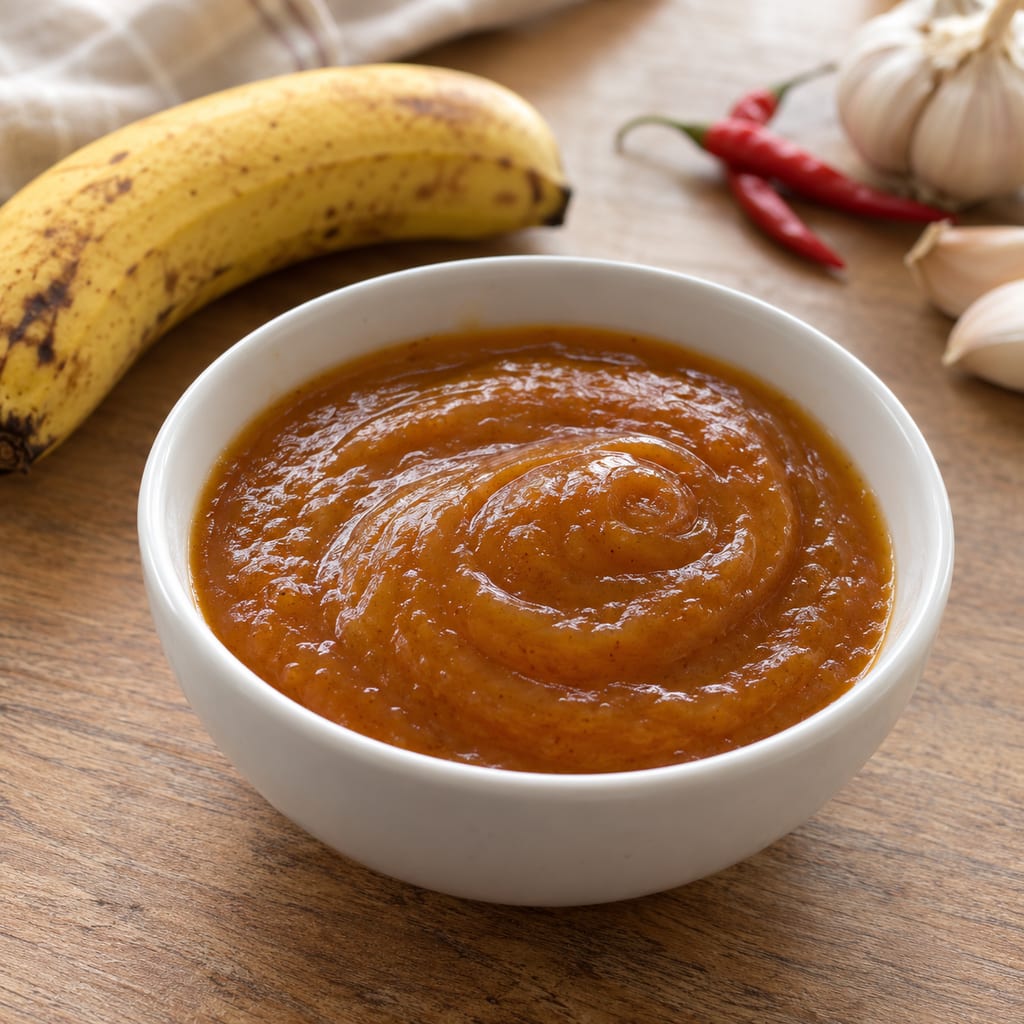
Ketchup need not start with tomatoes. In the Philippines, banana ketchup, also written banana catsup, is a bottled table sauce of its own, sweet at first and then hot. The US National Park Service says the food chemist Maria Ylagan Orosa developed it in the 1930s in response to expensive imported tomatoes and local growing conditions, and the National Nutrition Council lists it among her inventions. NutriAsia's UFC brand separately dates its banana catsup to 1969. These are retrospective accounts; none establishes a first formulation or who sold it first.
UFC describes its sauce as select bananas with fresh spices, for dipping, cooking and marinating, and publishes no proportions. A distributor's listing for the regular bottle names banana, water, sugar, vinegar, iodised salt, modified starch, onion, spices and garlic, with sodium benzoate and a yellow colour. Because no brand publishes its recipe, this page does not try to copy one. It takes the sweet-hot balance as its target and works out its own route there.
Banana does the job tomato does in an ordinary ketchup: it supplies the body and most of the sweetness. Banana varieties differ and so does ripeness, and both change how sweet and how thick the sauce comes out, so the first batch is a test, and it is worth knowing which banana you are using before changing the 55 g of sugar. The rest of the formula pulls the fruit away from dessert. Ninety grams of white vinegar and 5 g of salt give the sour and salty frame of a condiment, 35 g of onion and 5 g of garlic lay a savoury base, and 2 to 8 g of fresh red chilli, chosen for its heat, provides the hot half of the pairing, with a trace of ginger and allspice behind it.
Everything is blended raw to a smooth puree before it is heated, so that banana, onion and chilli cook together as one sauce. The raw mixture weighs about 592 to 598 g depending on the chilli, and 20 to 30 minutes of gentle simmering takes it towards about 500 g. A thick fruit puree catches easily on the bottom of a pan, hence the heavy saucepan and careful stirring as it thickens. If it ends up too dense, water brings it back to a thick but pourable sauce.
This formula uses no colouring, so expect the colour of cooked banana rather than a tomato red. Colouring would change only the look, and adding tomato paste would make a different sauce, a banana and tomato hybrid, which should be recorded as one.
A contemporary home recipe from Panlasang Pinoy takes a different route: 2 pounds of saba bananas boiled for 12 minutes, blended with onion, bell pepper and garlic, then cooked for 60 minutes with white vinegar, brown sugar, salt, chilli and spices and finished with brown and red colouring and sodium benzoate. The page's listed 100 ounces of water does not match its method, and it gives no storage guidance, so it is a record of one author's recipe rather than a preservation instruction. Its history section says Orosa also added red dye so the sauce would look like tomato ketchup.
Serve it cold as a table sauce wherever tomato ketchup would go, especially with fried and grilled food, and taste it with that food before changing the recipe. Cool it promptly in small clean containers, keep it at 4 °C or colder and use it within 48 hours, or freeze portions while fresh. The 48 hours borrows general leftovers advice and is not a measured shelf life for this formula. The formula has not been cooked and compared with a bottle of UFC, and it is not for room-temperature storage or home canning.
The US National Park Service ties banana ketchup to the food chemist Maria Ylagan Orosa in the 1930s, and NutriAsia dates its UFC banana catsup to 1969. Both are retrospective accounts, not a contemporary record of a first formulation.
Yield 500 g · Scaling: source batch only
This is an untested development formula. The 48-hour refrigerated window is a cautious house convention borrowed from general leftovers advice, not a measured shelf life.
Not a canning recipe. A hot fill, plenty of vinegar and a sealed lid do not by themselves make a tested shelf-stable process, however sharp the sauce tastes.
Banana ketchup is a Philippine bottled table sauce. This formula is an original development batch aimed at the sweet-hot balance of the Philippine product and is not a copy of any brand's formula.
A ripe banana is sweet, soft pulp in which ripening has turned most of the starch into sugar. That sugar and softness make it a base for banana ketchup, beer, wine and vinegar.
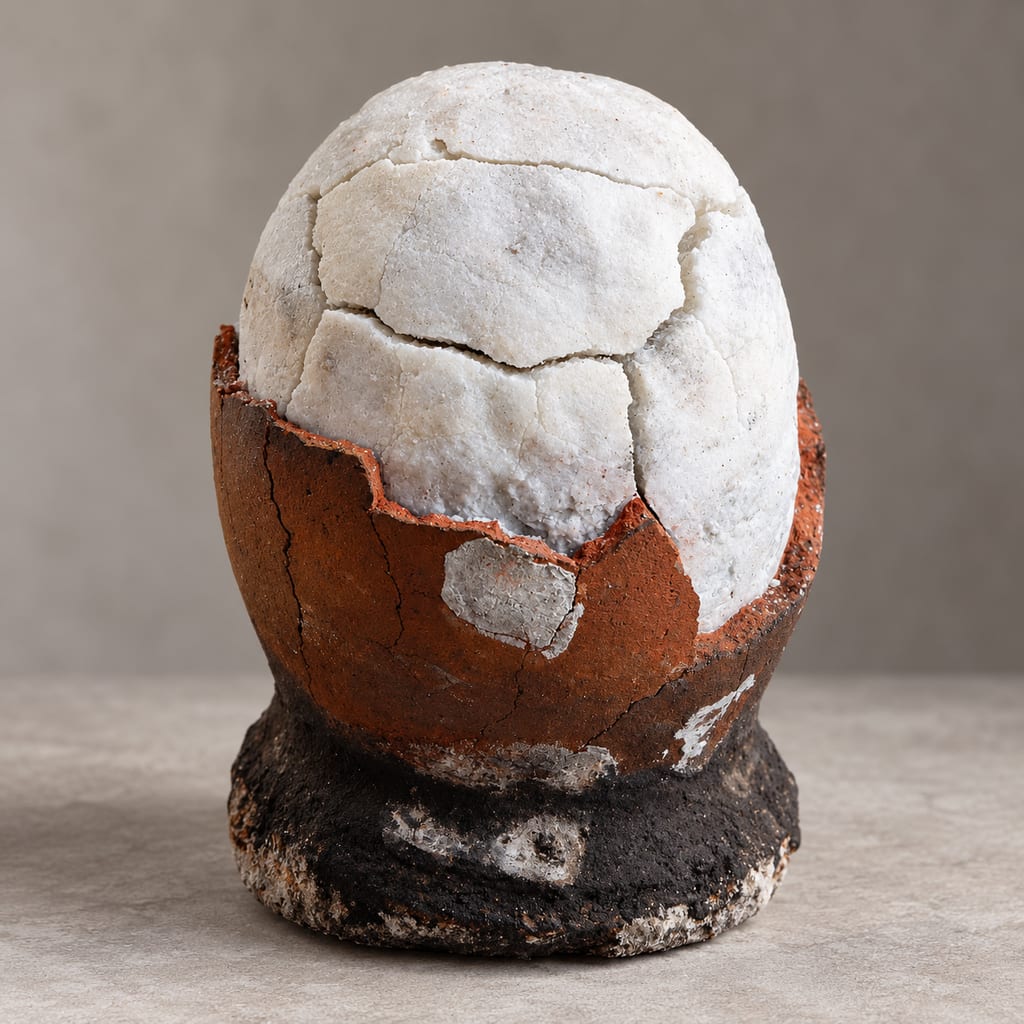
Asin tibuok is a Boholano salt-making craft that turns seawater-soaked coconut husks into a salt-rich ash, brine and formed sea salt in specialized clay pots. This record follows one published account of the community process; it is not a validated household formula.
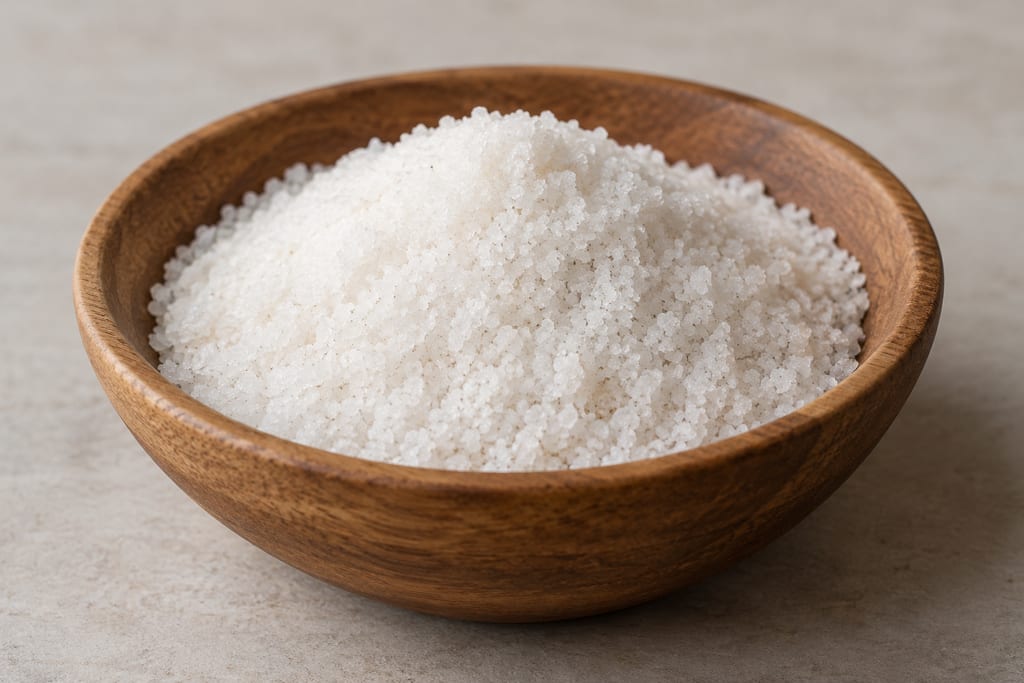
Asin sa buy-o is a fine sea salt made in Panayunan, Botolan, and packed in a woven nipa pouch called a buy-o. Salt-bearing coastal earth is leached with seawater, and the brine is boiled to crystals.
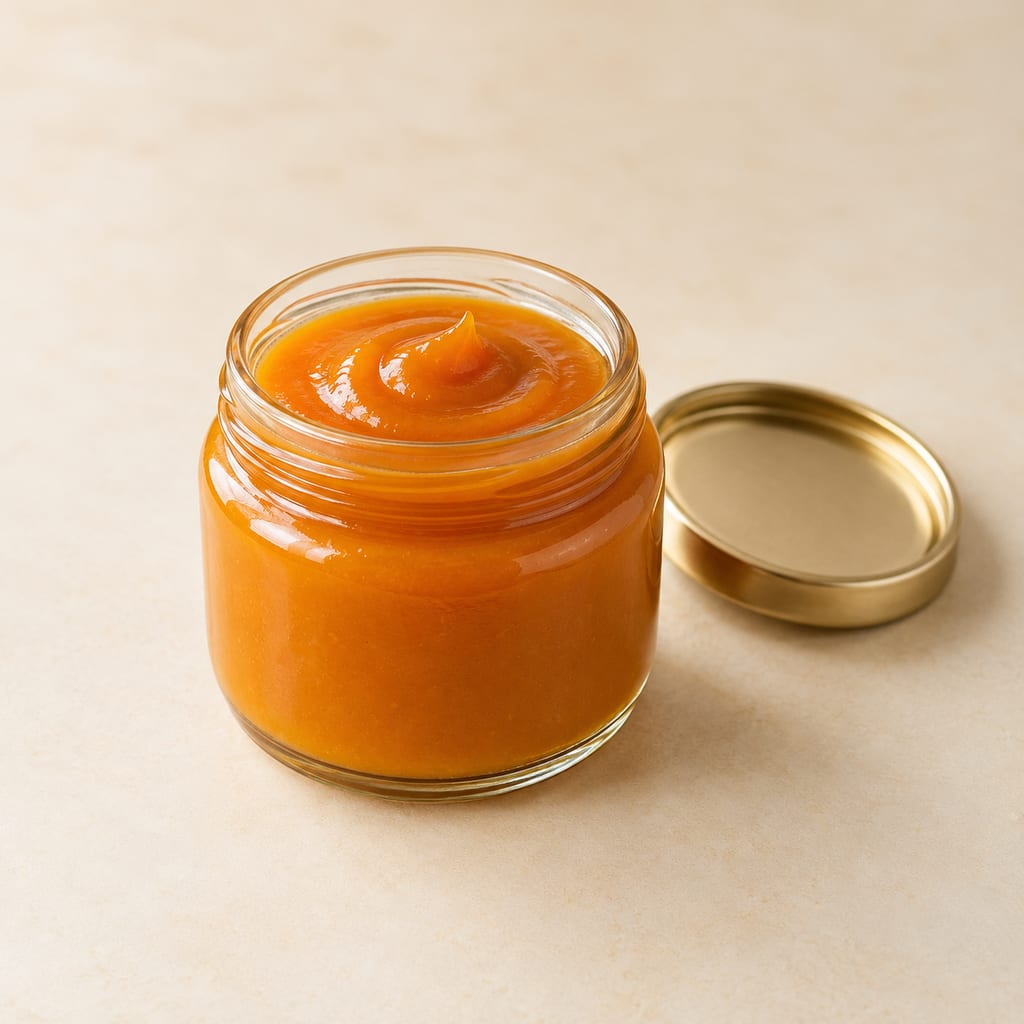
Kalabasa catsup: Freeze for winter; small fresh portion refrigerated up to 48 hours.
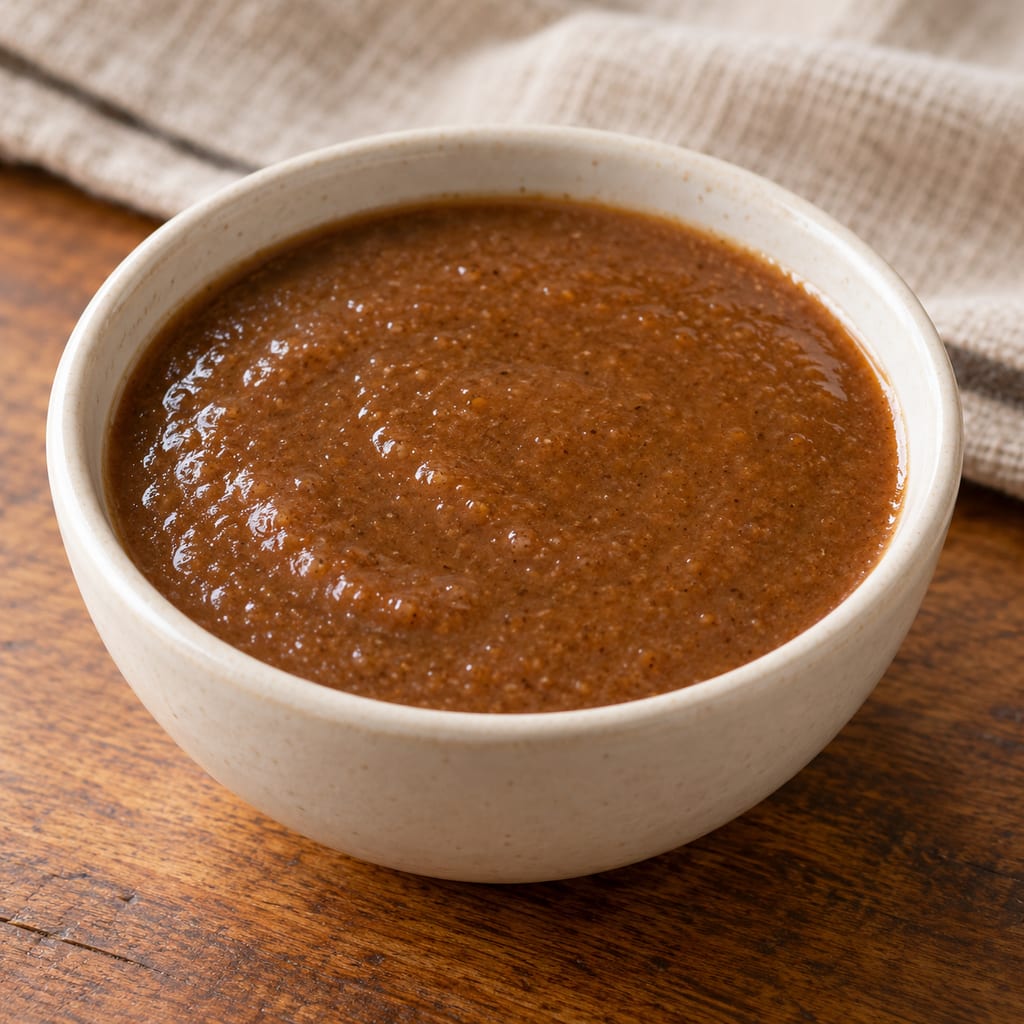
A cooked Filipino roast-meat sauce thickened from canned liver spread, vinegar, water, sugar and breadcrumbs, with browned garlic and softened onion.
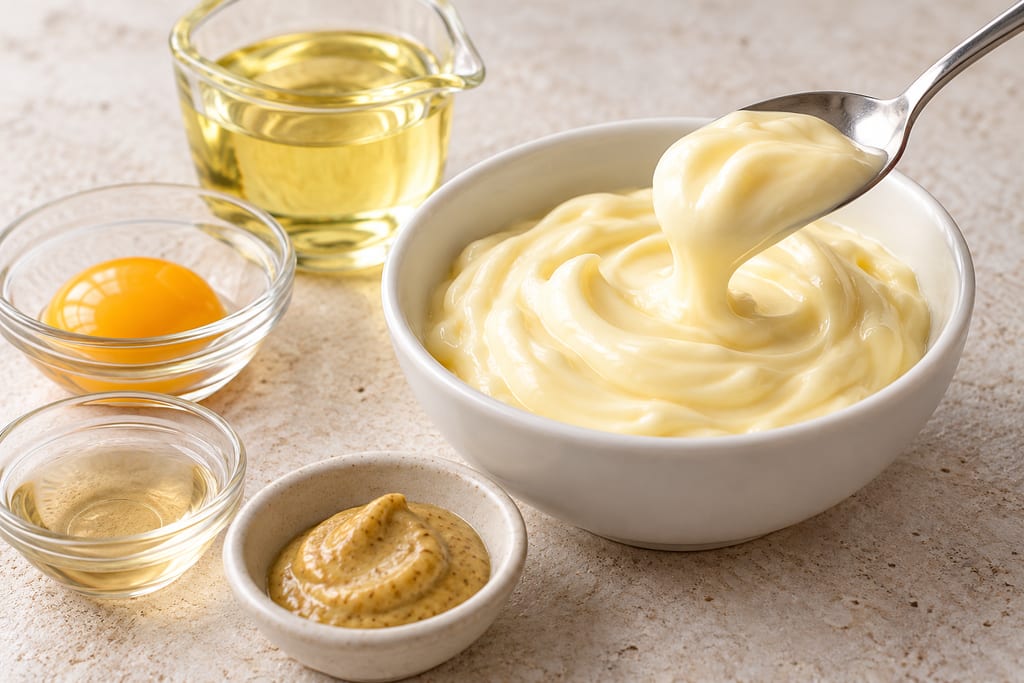
A plain mayonnaise of 200 g refined neutral oil emulsified into pasteurised yolk, vinegar, water and a little Dijon mustard: a clean base for tasting, comparing and flavouring.
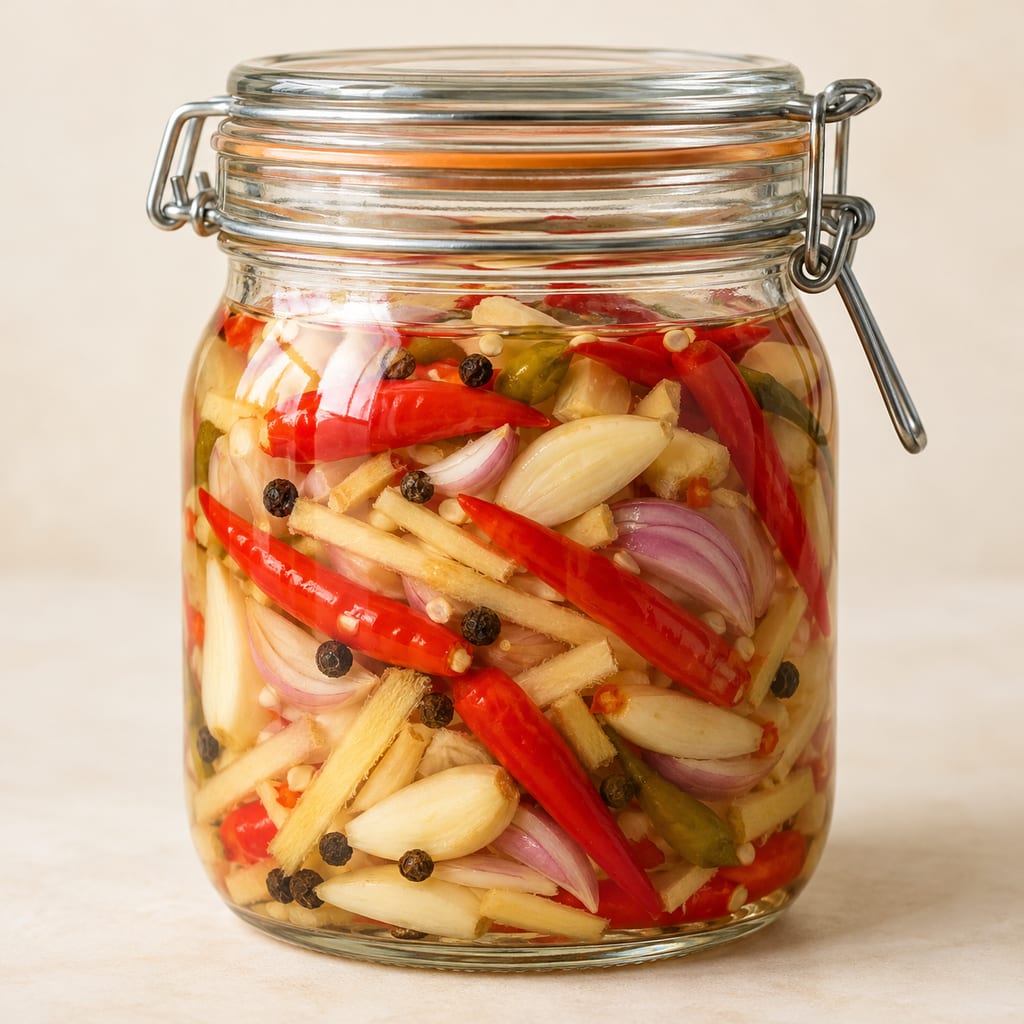
Sinamak is a Philippine spiced vinegar: white, cane or coconut vinegar steeped with chilies, ginger, garlic, onion and peppercorns for days or weeks until it is ready to use as a condiment.
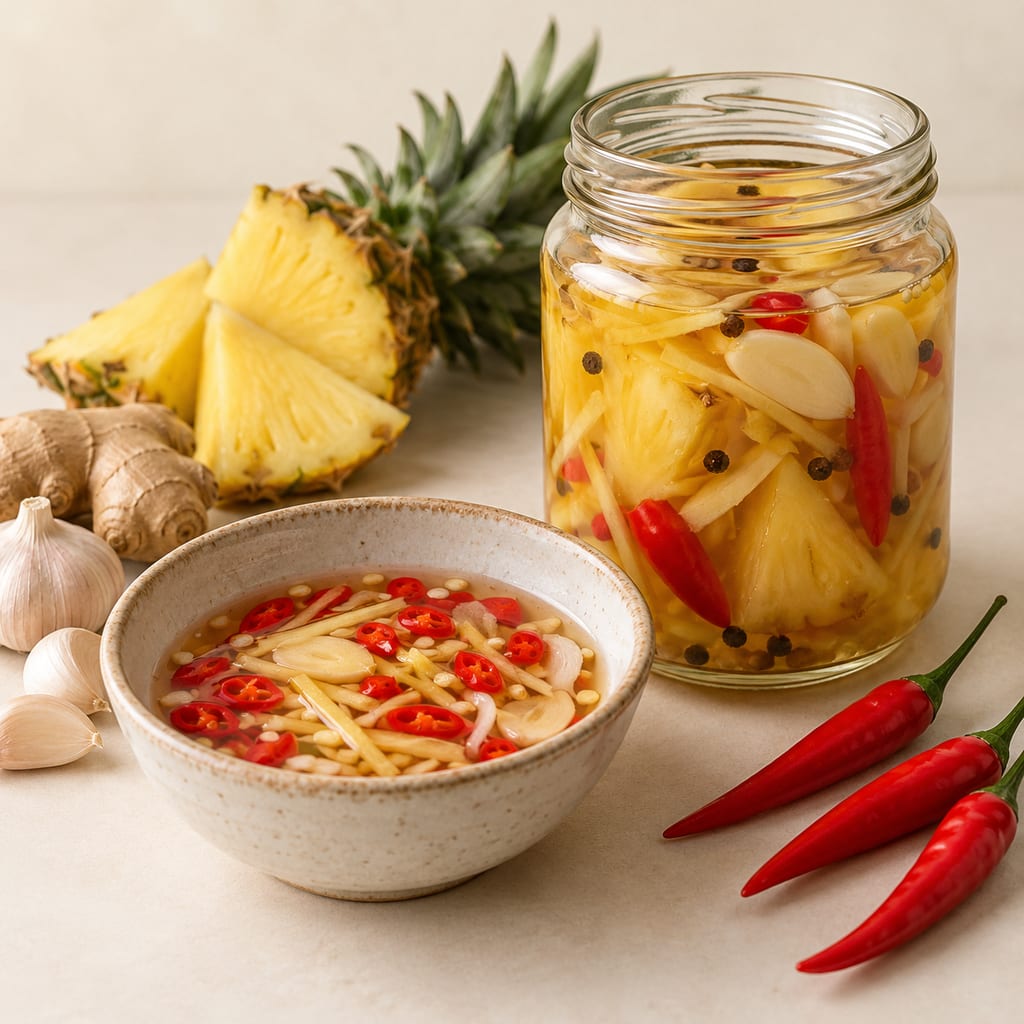
Filipino vinegar dips: vinegar steeped or mixed with chilli, garlic, ginger and other aromatics, from the pineapple sinamak of Iloilo to coconut-vinegar sawsawan. Not a single formula.
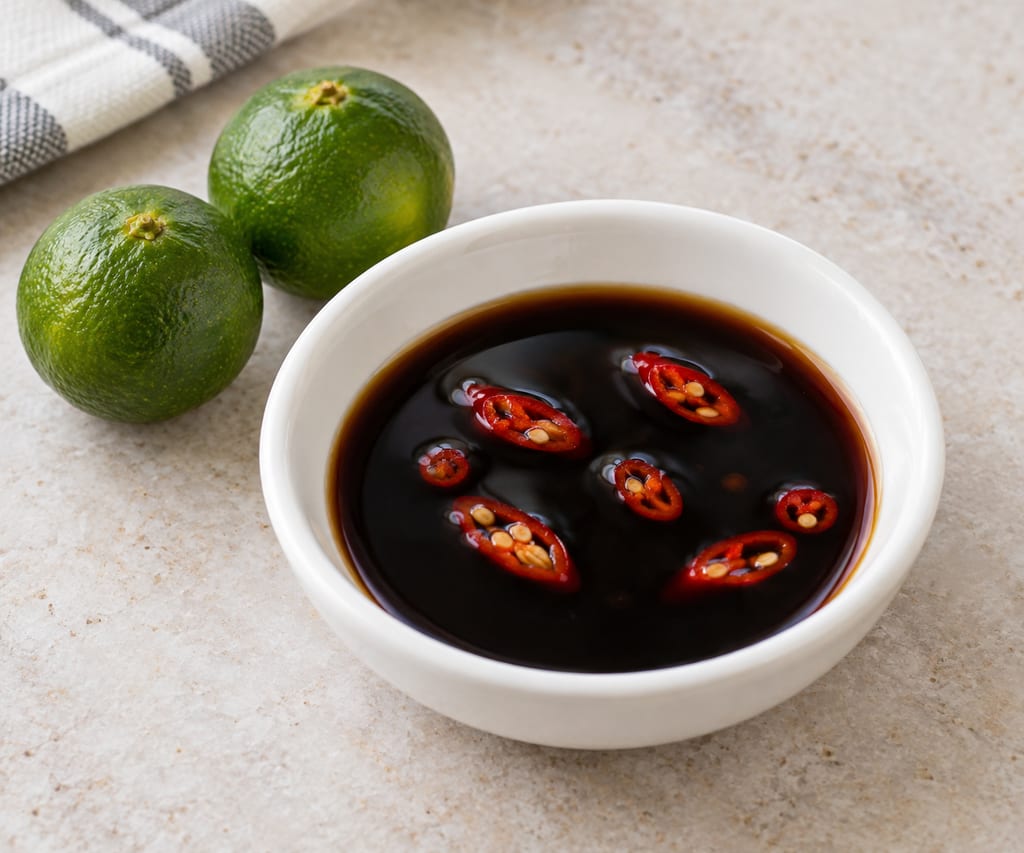
Toyomansi is a Filipino table dip of soy sauce and calamansi juice, served with grilled or fried foods; this version adds sliced chilli and optional sugar.
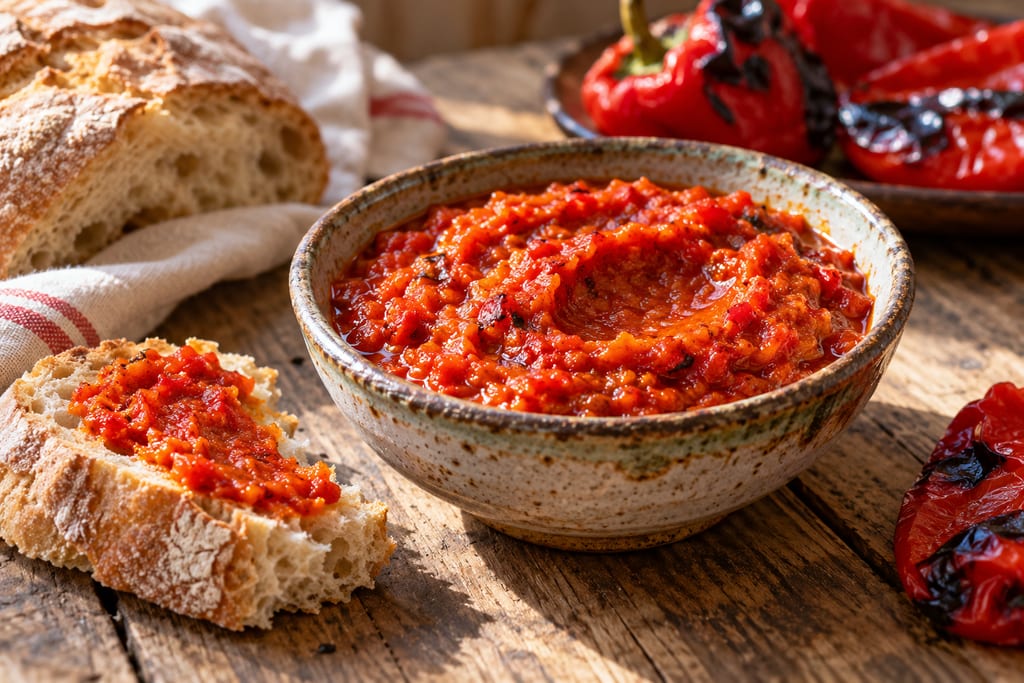
Ajvar is a cooked Balkan pepper preserve built around roasted red peppers, peeled, drained, ground and slowly fried with oil and seasoning. Leskovac’s protected version is a pepper specialty; regional versions vary.
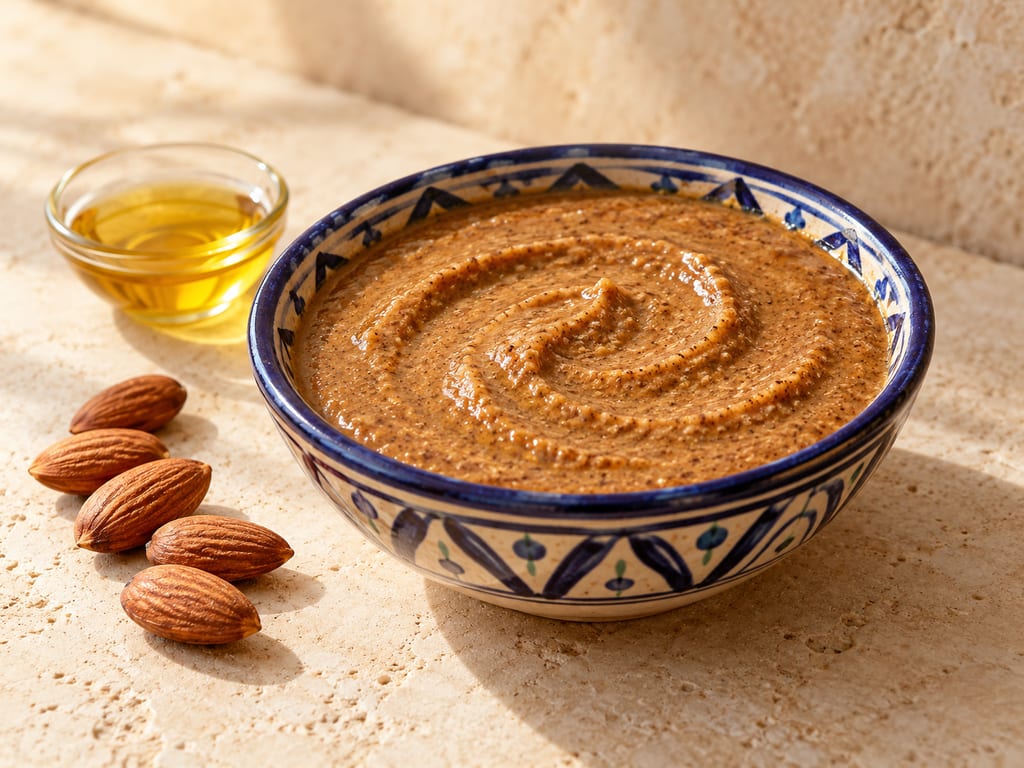
Amlou is a nutty, lightly sweet Moroccan spread of roasted almonds, culinary argan oil and honey. The almonds are ground first, then loosened with oil and sweetened; the balance can range from a thick spread to a dip.
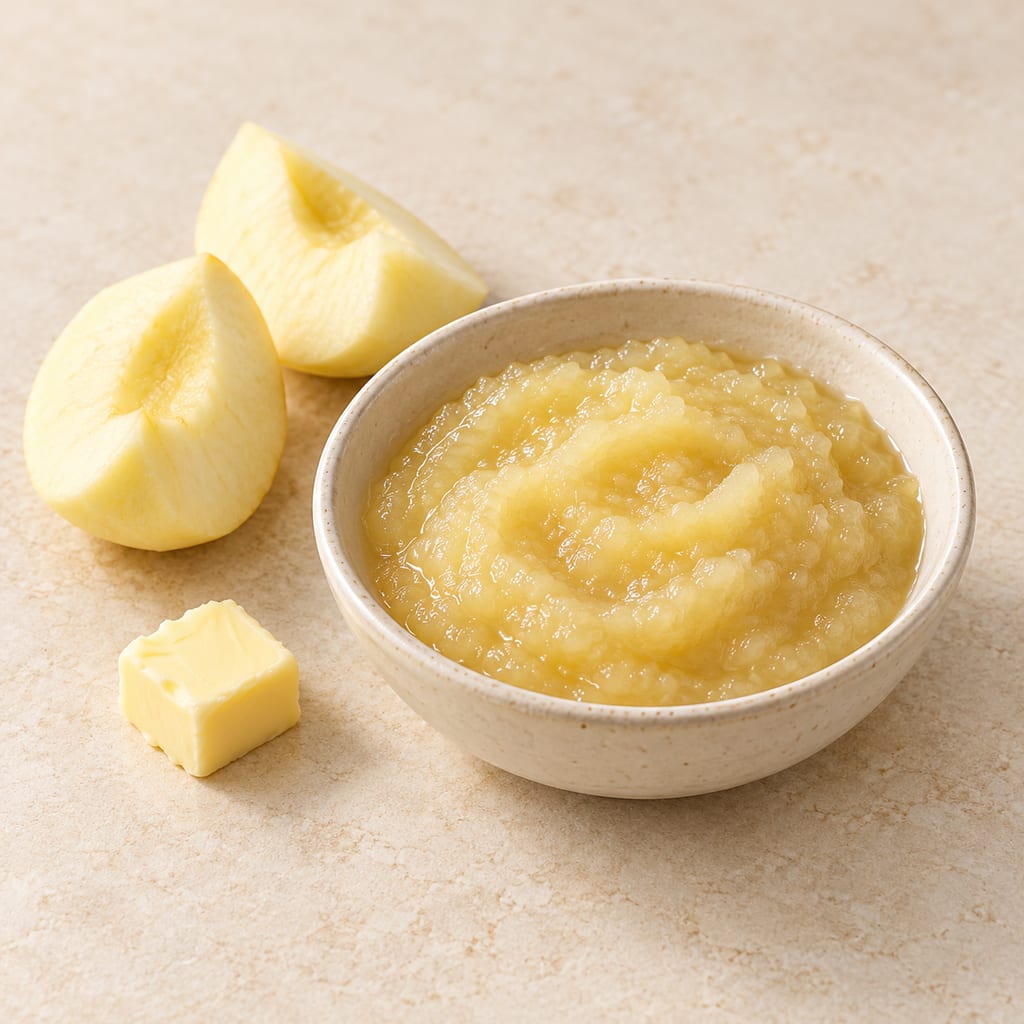
Apple sauce for goose and pork is a plain English accompaniment: cooked apples pulped with water, then sweetened with sugar and finished with a little butter.

A warm dip of garlic, anchovy and olive oil, often enriched with butter, that Piedmont serves over a flame with raw and cooked vegetables and bread.
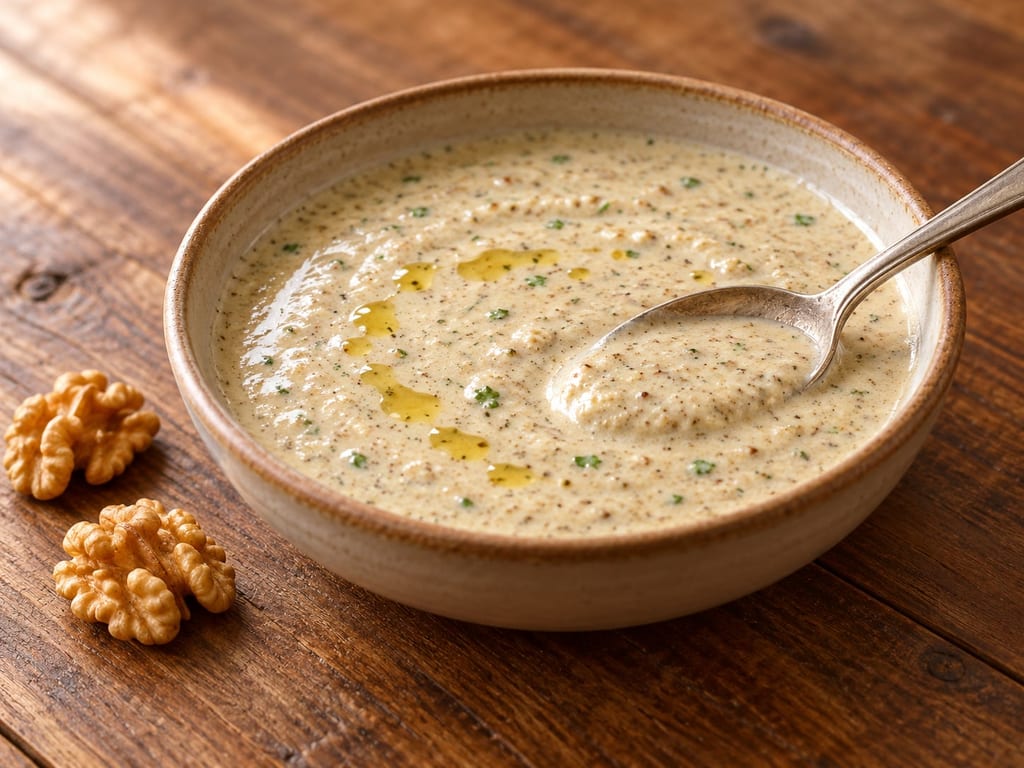
A Georgian walnut sauce of ground walnuts, garlic, vinegar and spices, thinned with water or broth. It is served with poultry, vegetables and bread, and is the sauce of the dish satsivi.
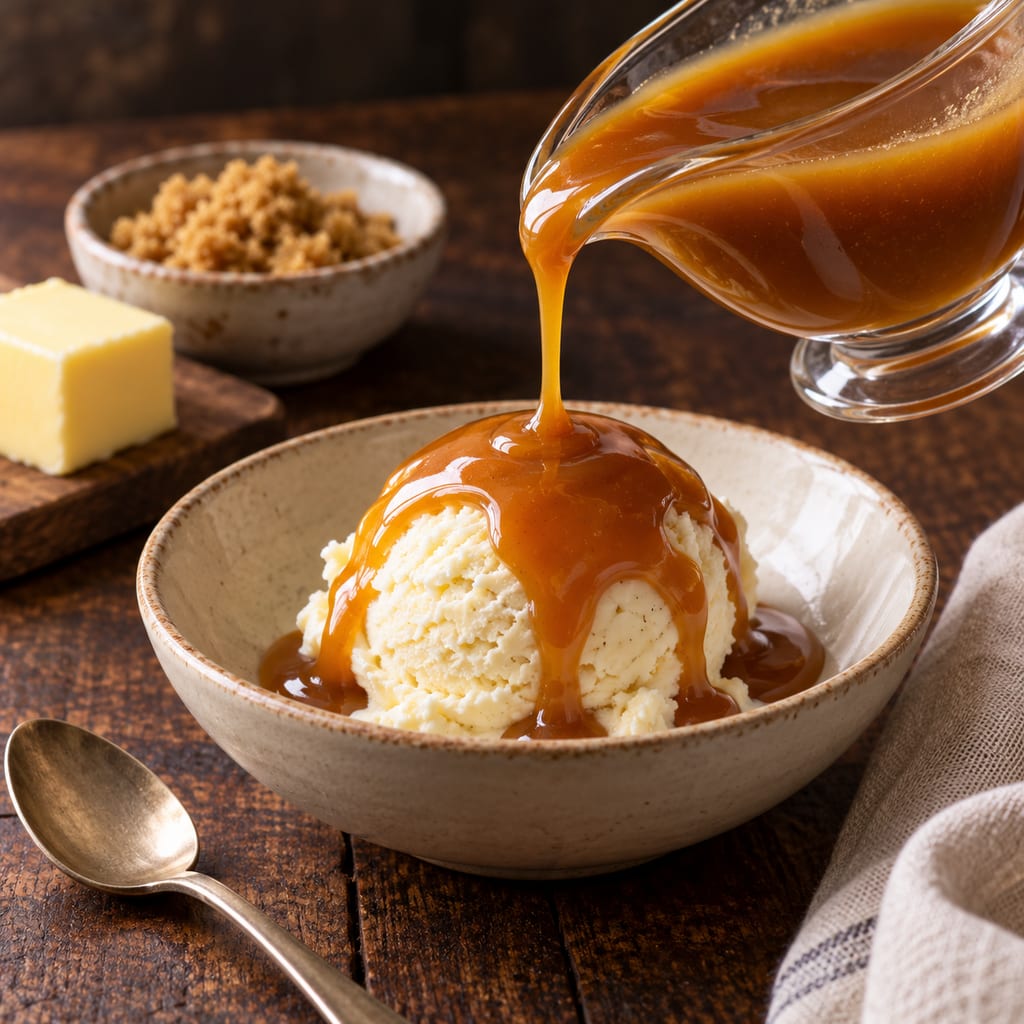
A pourable dessert sauce of brown sugar, butter and cream, with a little corn syrup and salt. It is the sauce form of the butterscotch confection and is made without water, unlike caramel.
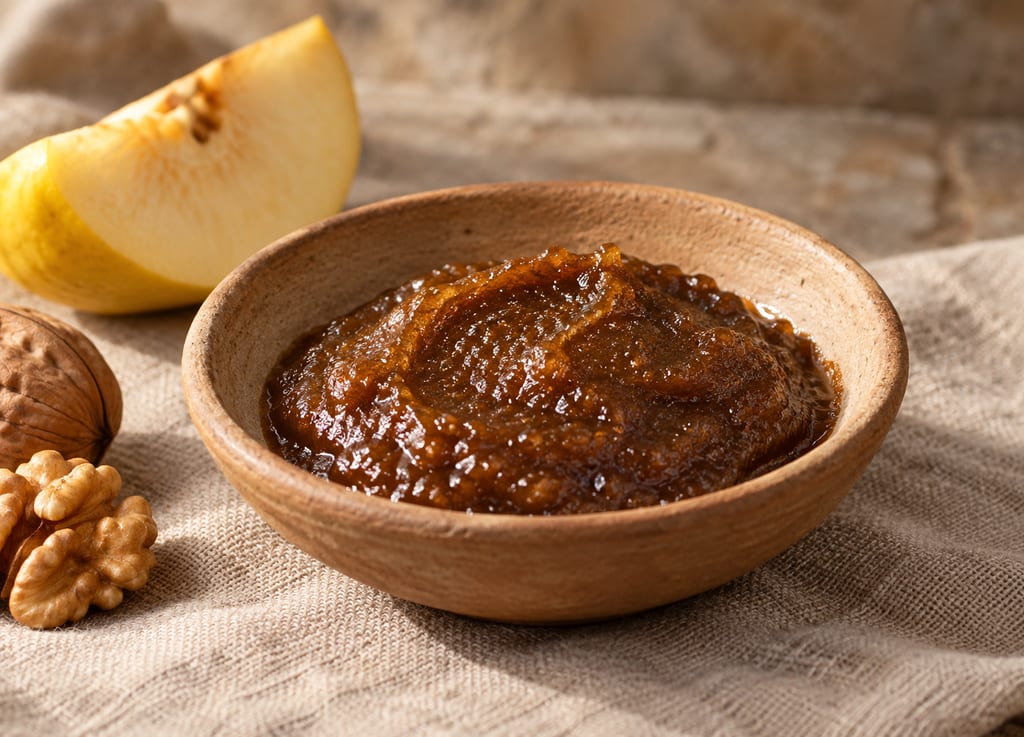
Byzantine murrī is a cooked imitation of murrī from the medieval Arabic repertoire, made from scorched honey, toasted bread, walnuts, quince, carob and spices rather than from a long grain fermentation.
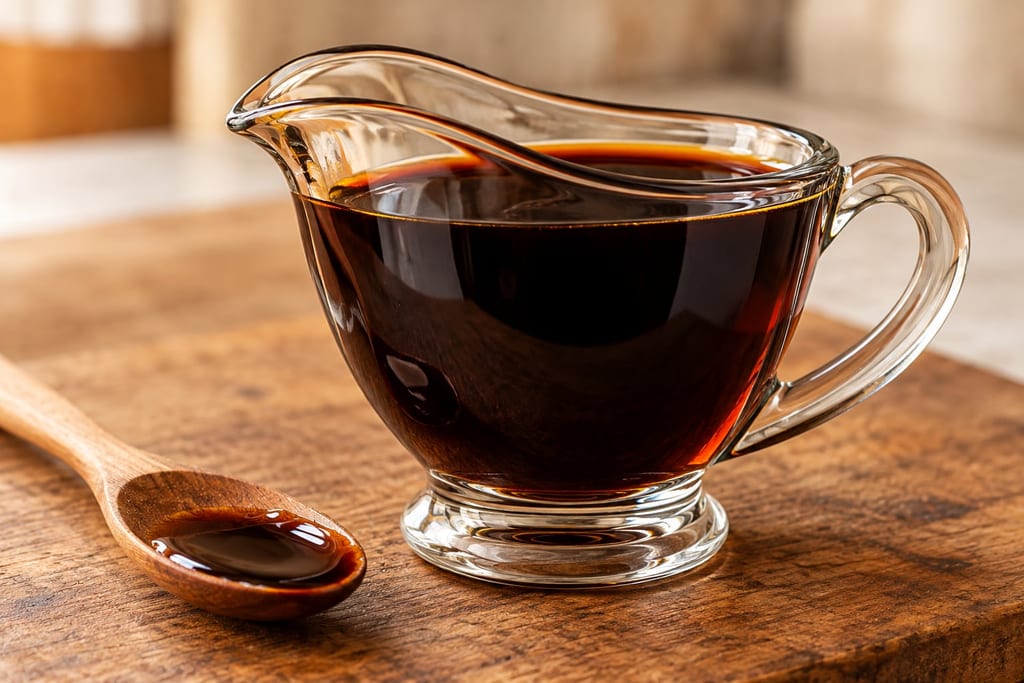
Caribbean browning is a dark liquid of deeply caramelised sugar, used in small amounts for colour and a smoky, bitter-sweet flavour in stews and black cake.
No community contributions have been published for this entry yet.
Sign in to contribute. Published comments and photos are free to read.
NutriAsia, Inc.Identity · Use · History
UFCUFC banana catsup is described as select bananas with fresh spices, with dipping, cooking and marinating uses; the brand dates its catsup to 1969 and gives no proportions.
Cited in: Ketchup without tomatoes; How banana becomes a condiment; Serving and keeping
U.S. National Park ServiceHistory
Maria Ylagan OrosaIn the 1930s Orosa developed banana ketchup in response to expensive imported tomatoes and local growing conditions.
Cited in: Ketchup without tomatoes
National Nutrition Council, Republic of the PhilippinesHistory
The Filipina Nutrition Heroine: Maria Y. OrosaLists banana ketchup among Orosa's inventions; gives no invention date.
Cited in: Ketchup without tomatoes
Panlasang PinoyVariation
Banana Ketchup RecipeA contemporary home recipe: 2 lb saba bananas boiled 12 minutes, blended with onion, bell pepper and garlic, then cooked 60 minutes with vinegar, brown sugar, salt, chilli and spices, finished with colouring and sodium benzoate; its water quantity does not match its instructions.
Cited in: Colour, and another home version
Manning Impex distributor listingComposition
UFC Banana Sauce regularA retailer's listing for the regular bottle names banana, water, sugar, vinegar, iodised salt, modified starch, onion, spices and garlic, with sodium benzoate and a yellow colour; secondary product information, not a manufacturer label.
Cited in: Ketchup without tomatoes