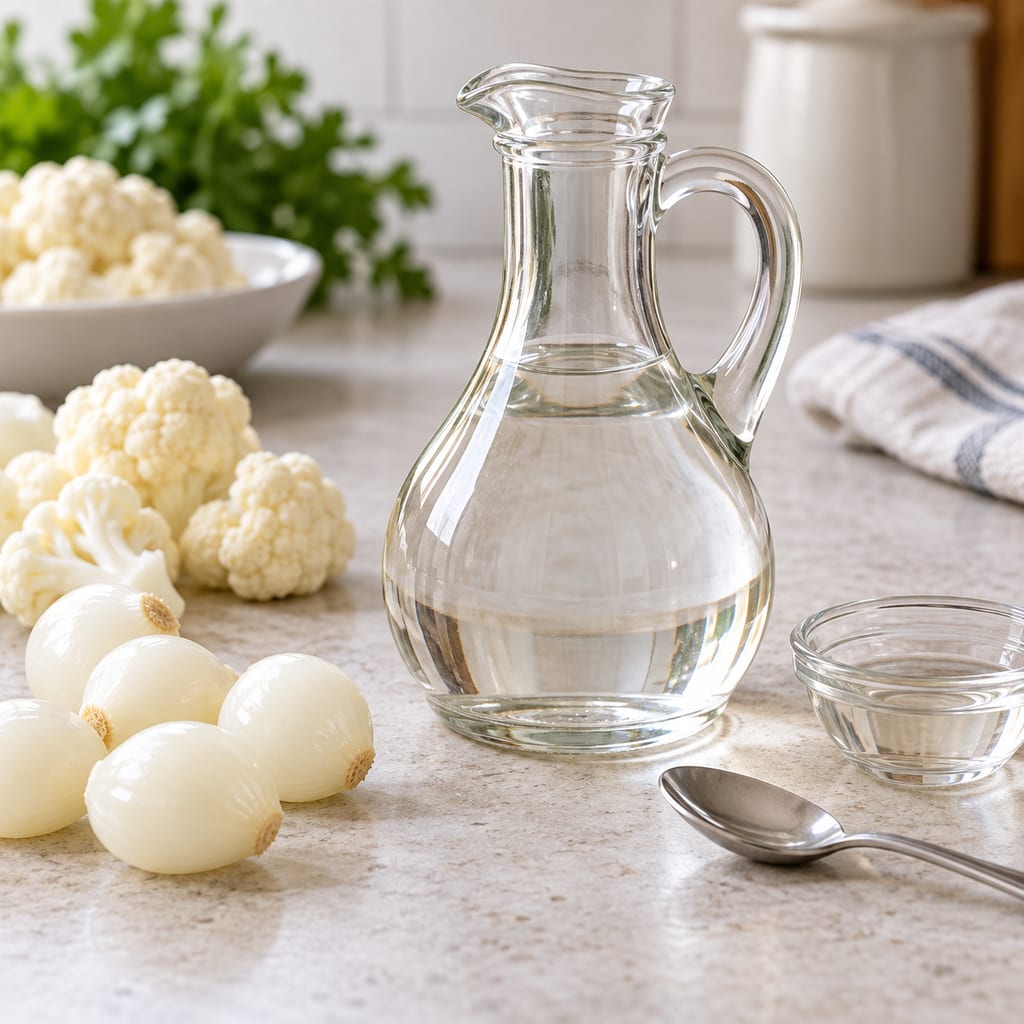
Spirit / distilled white vinegar
A clear, sharp vinegar made by acetifying alcohol. Its restrained color and aroma suit pickles, sauces and dressings where darker or more aromatic vinegars would change the result.
 FermenteaWhere food goes to change
Modern method
Kalabasa catsup: Freeze for winter; small fresh portion refrigerated up to 48 hours.
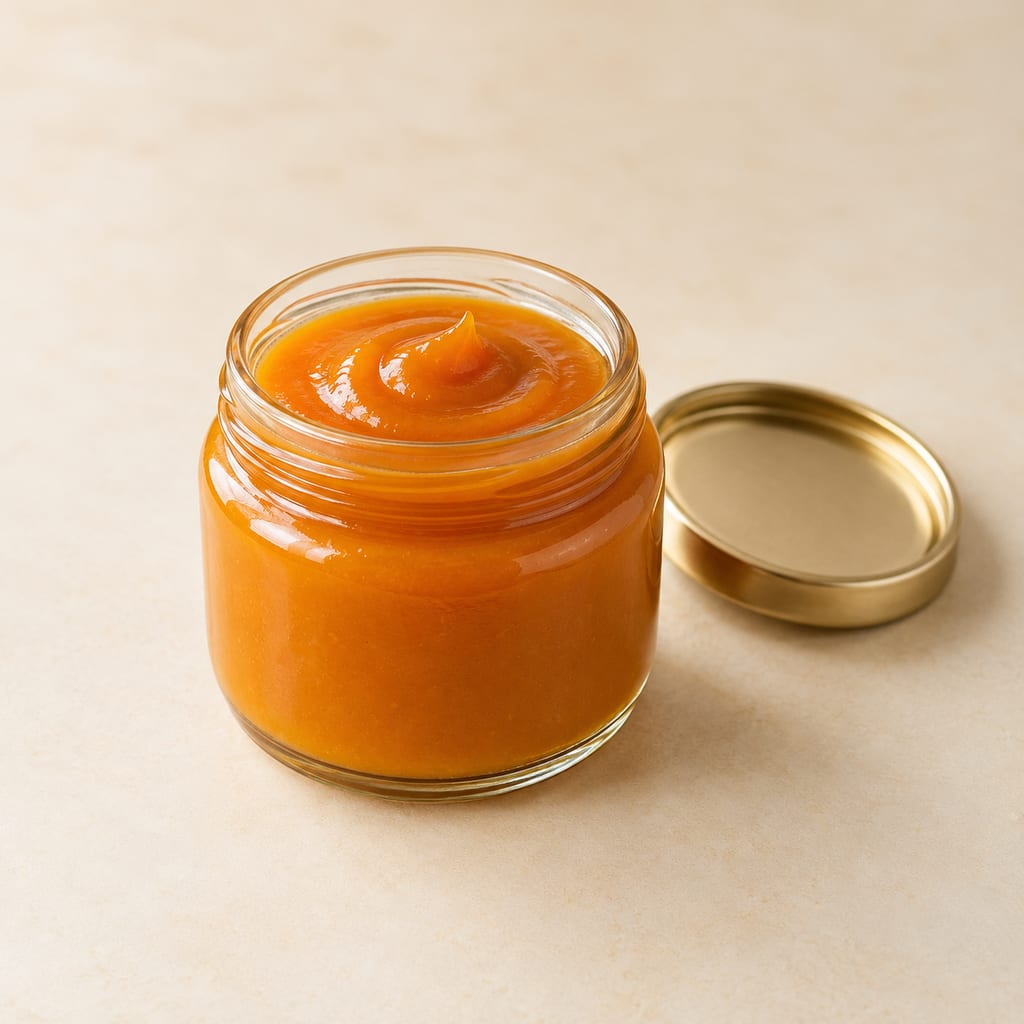
The Philippines' Industrial Technology Development Institute includes kalabasa catsup in its 2013 Kalabasa Food Products booklet. The Department of Agriculture's Agricultural Training Institute also reproduces the method. This is documented Philippine product-development practice, not an ancient recipe. The material is mature yellow squash, rather than the wax gourd used in some unrelated Asian preserves.
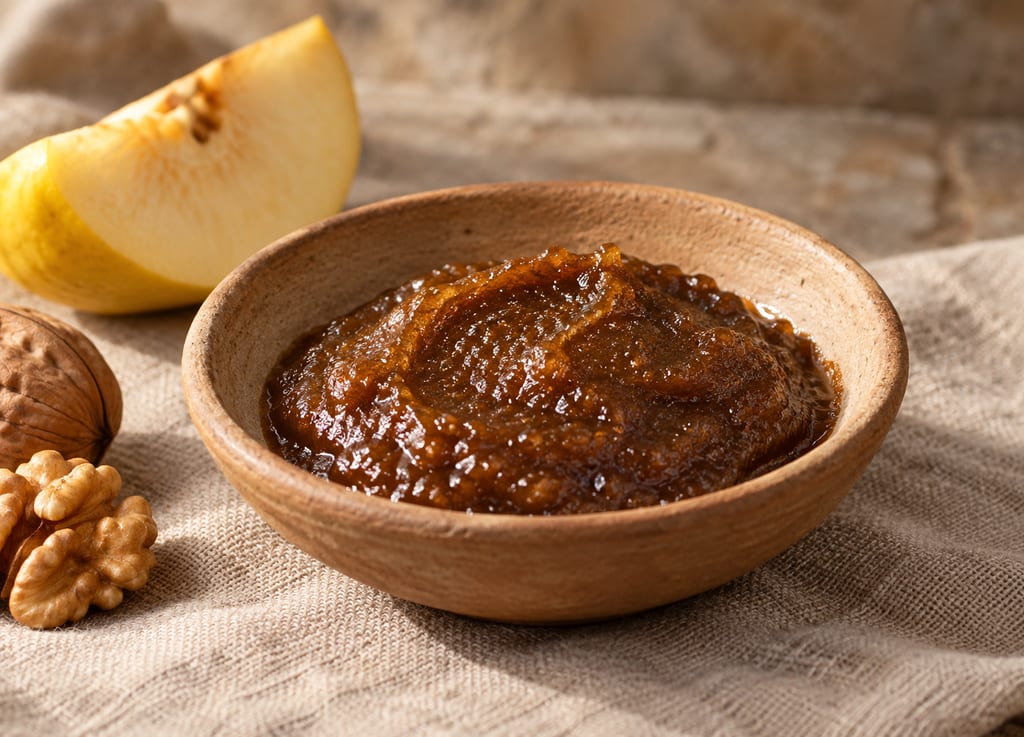
Product: a smooth, sweet-and-sour pumpkin condiment. Batch: begin with four US measuring cups of diced prepared squash; final yield varies with evaporation, so have approximately one litre of freezer-container capacity ready. Storage: freeze for winter; keep only a small working portion refrigerated.
For this home adaptation, the source's unspecified cup is treated as approximately 240 ml. The metric sugar and vinegar quantities are practical rounded equivalents of its three-quarter-cup measures. Ground cloves are specified here to make the small spoon measure reproducible; the source does not specify their form. These are editorial choices, not a validated reformulation.
The source includes sodium benzoate, xanthan gum and optional red colouring. This home freezer version omits all three. It also uses an observable gentle simmer rather than repeating the booklet's inconsistent reference to cooking at 50–60°C. Its method is therefore explicitly a freezer adaptation, not the source's complete industrial formulation and not a shelf-stable bottled product.
The very small onion measure looks unusual but is what the official recipe prints. Do not silently turn it into a whole onion while claiming exact reproduction. A larger onion addition could make an agreeable fresh condiment, but would be another adaptation with different composition. Likewise, a red colour would be cosmetic; keeping the squash's orange colour makes the ingredient easier to recognise.
Converting pumpkin to ketchup is a way to store it as a ready-to-use ingredient rather than a finished meal. The finished texture is already smooth, making it a sensible candidate for a frozen stock where retained cube crunch is not the objective. A useful production arrangement is one small refrigerator container plus flat, dated freezer portions.
The vinegar and citric acid provide sourness, but their inclusion alone does not establish a safe ambient-storage process for a thick squash puree. The authors do not supply the home canning schedule needed to make that claim. Do not apply processing times intended for canned pumpkin cubes to this puree.
Cool in small portions and refrigerate at 0–5°C within one to two hours. Use the refrigerated working portion within 48 hours and freeze the rest promptly. Thaw in the refrigerator and use within 24 hours of complete defrosting. Stir after thawing if some liquid separates. These are conservative home handling instructions; a commercial product requires its own validated formulation and process.
The Philippines' Industrial Technology Development Institute includes kalabasa catsup in its 2013 Kalabasa Food Products booklet. The Department of Agriculture's Agricultural Training Institute also reproduces the method. This is documented Philippine product-development practice, not an ancient recipe. The material is mature yellow squash, rather than the wax gourd used in some unrelated Asian preserves.
Scaling: source batch only
Freeze for winter; small fresh portion refrigerated up to 48 hours
Hazard sourceFreeze for winter; small fresh portion refrigerated up to 48 hours
Control sourceFreeze for winter; small fresh portion refrigerated up to 48 hours
Do not transfer a canning schedule from a different pumpkin preparation.
Geographical association of this documented version, not an asserted origin.
A clear, sharp vinegar made by acetifying alcohol. Its restrained color and aroma suit pickles, sauces and dressings where darker or more aromatic vinegars would change the result.
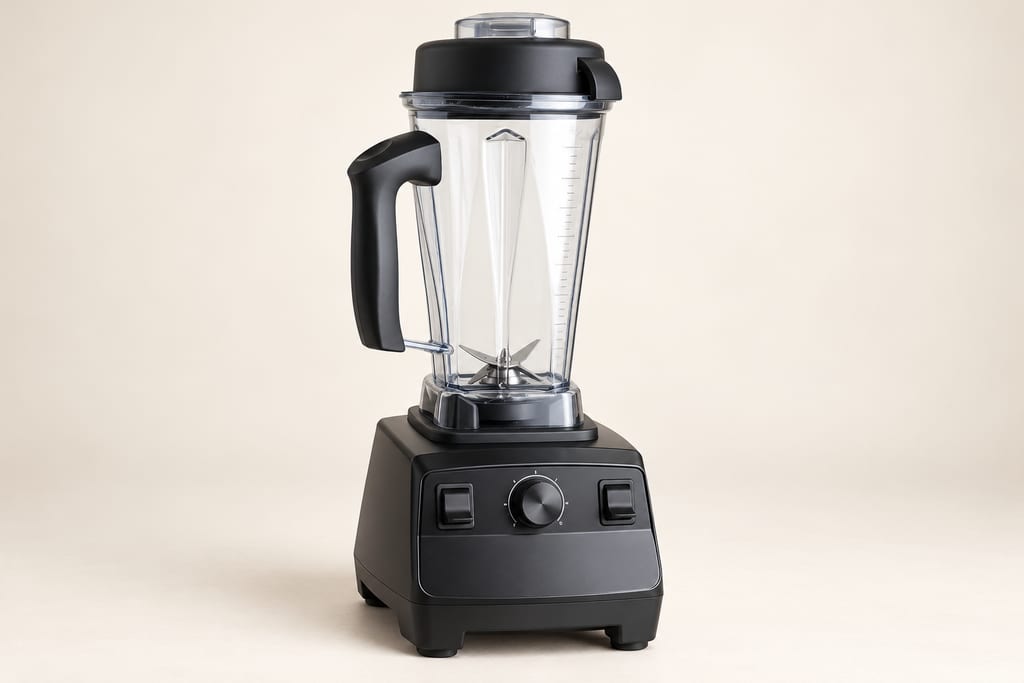
A food blender uses motor-driven blades to purée, emulsify, grind or disperse ingredients in a jar or directly in a pot. Countertop, personal and immersion forms differ in vessel and limits; food processors remain a separate tool family.
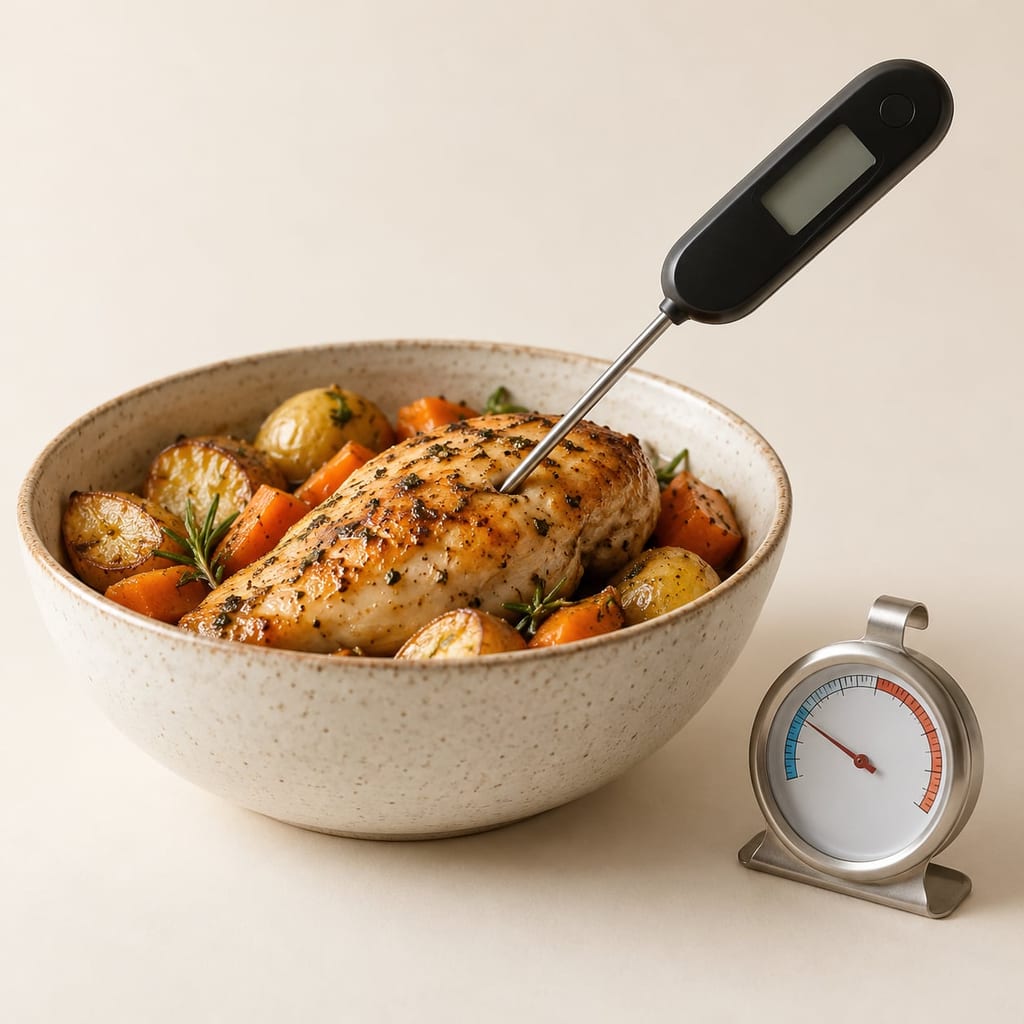
A food probe measures the temperature inside food at the probe tip; a refrigerator thermometer measures the cold storage environment. They answer different questions and cannot establish acidity or validate a preservation process.

A household freezer holds food in a frozen state for storage and selected texture or separation work; its batch-storage role differs from industrial equipment that freezes individual pieces separately.
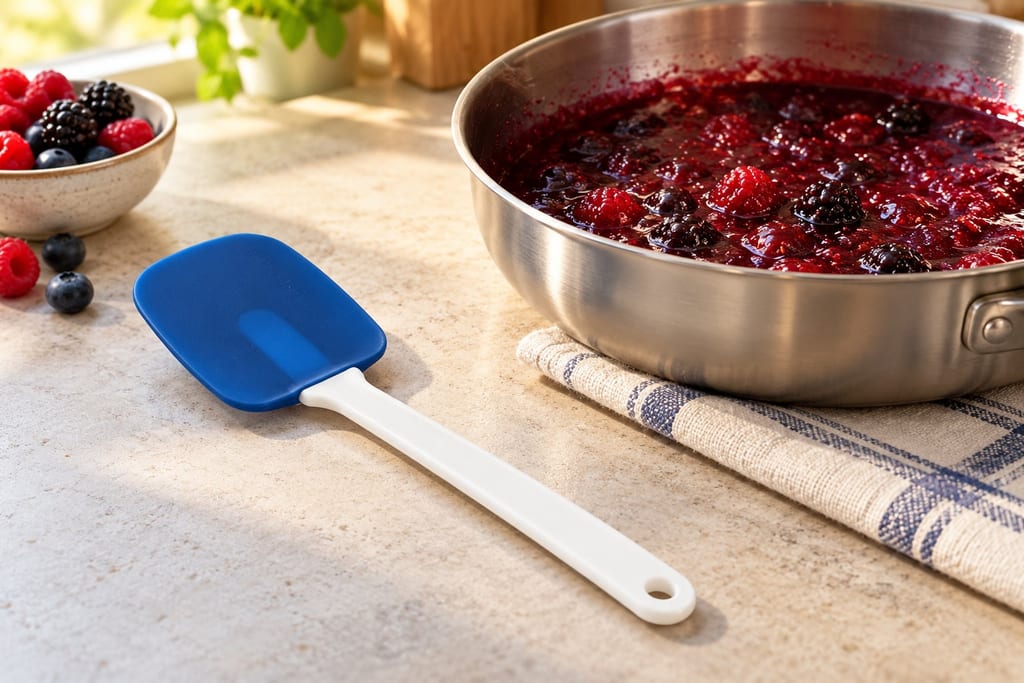
A hand utensil for stirring and scraping a pan of hot preserves. The supplied atlas lists a heatproof spatula for small trials but gives no blade material, dimensions, temperature rating or specific construction.
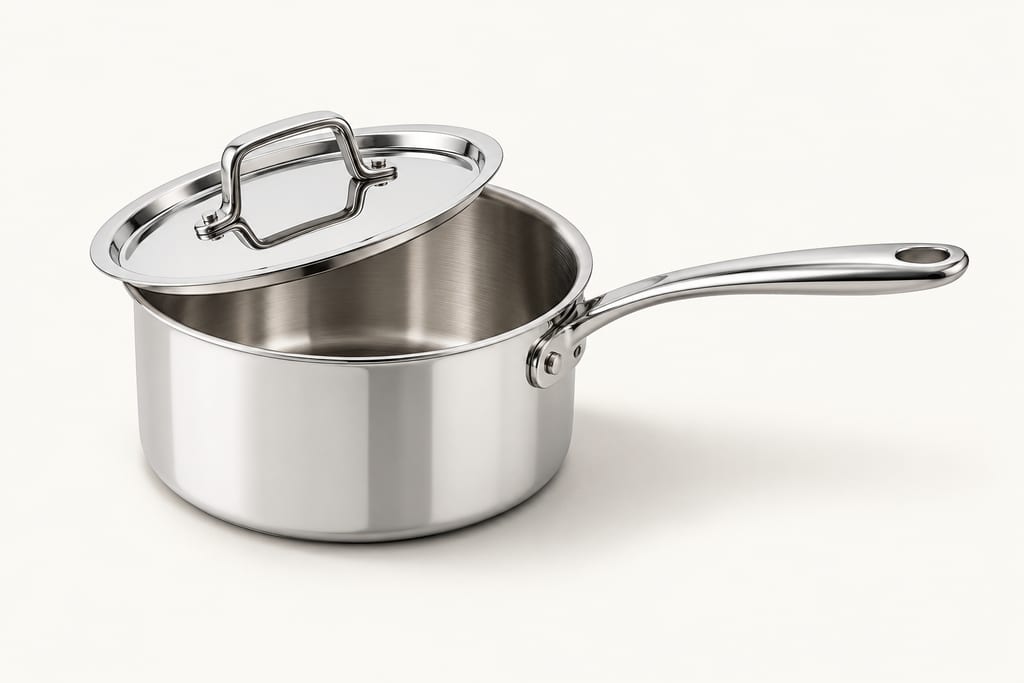
A modern, portable stovetop pan with a stainless-steel cooking surface for sauces and other small simmering jobs. Size, cladding, lid, compatibility and care vary by model.
An ordinary household refrigerator used to store selected fresh produce in vented crates or drawers, at low temperature and at a humidity chosen by the drawer. Not every crop benefits from cold.
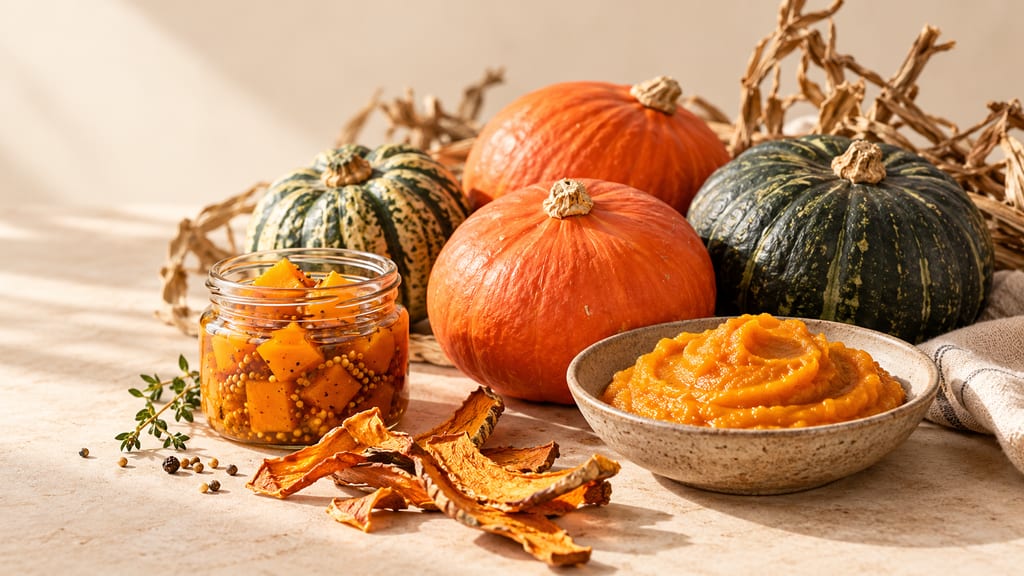
A full harvest-to-pantry guide to keeping pumpkins whole, drying and freezing them, and making pickles and sweet preserves around the world—with the exact distinction between tested canning and cold storage.
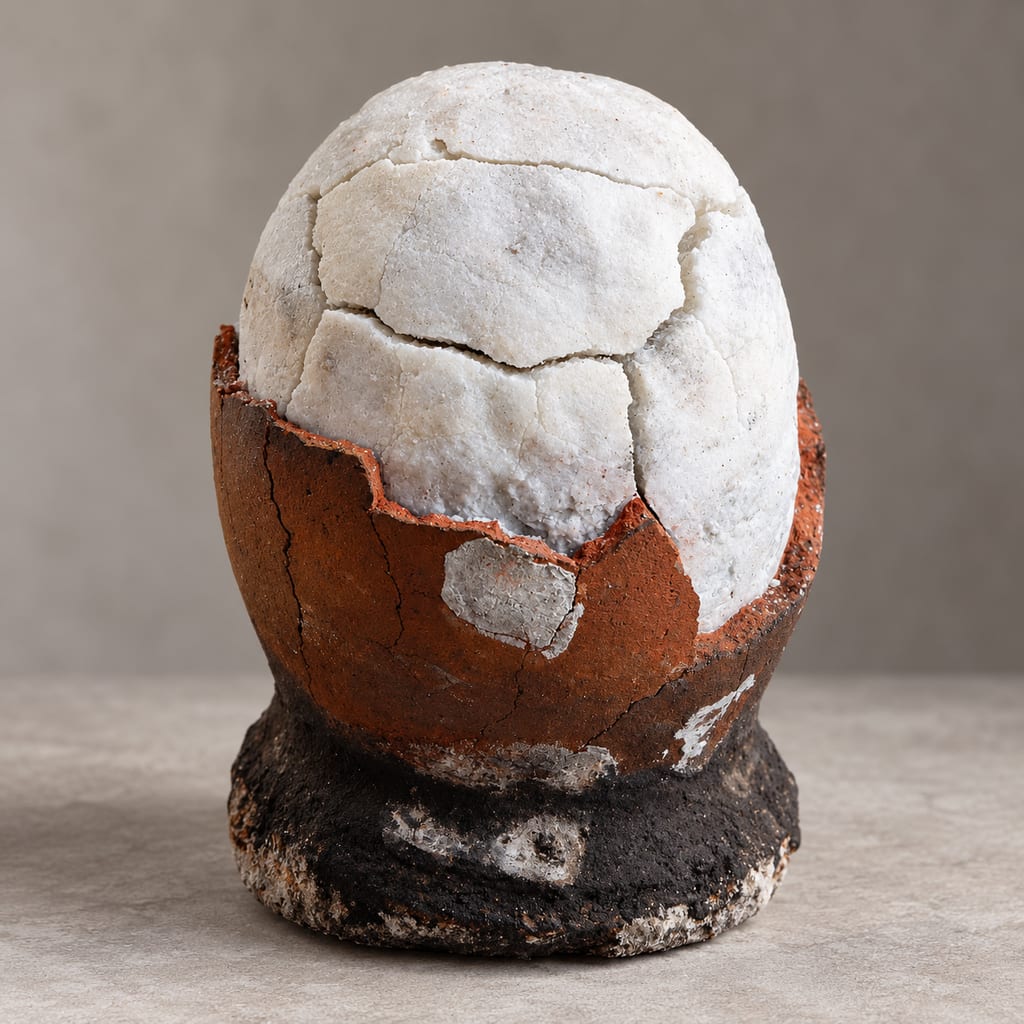
Asin tibuok is a Boholano salt-making craft that turns seawater-soaked coconut husks into a salt-rich ash, brine and formed sea salt in specialized clay pots. This record follows one published account of the community process; it is not a validated household formula.
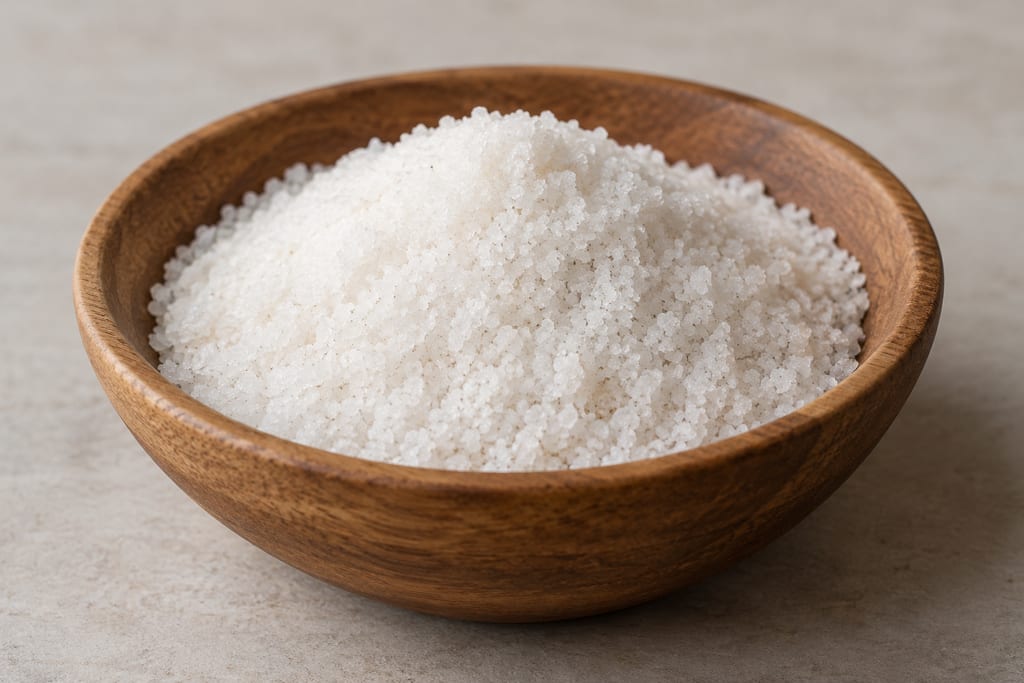
Asin sa buy-o is a fine sea salt made in Panayunan, Botolan, and packed in a woven nipa pouch called a buy-o. Salt-bearing coastal earth is leached with seawater, and the brine is boiled to crystals.
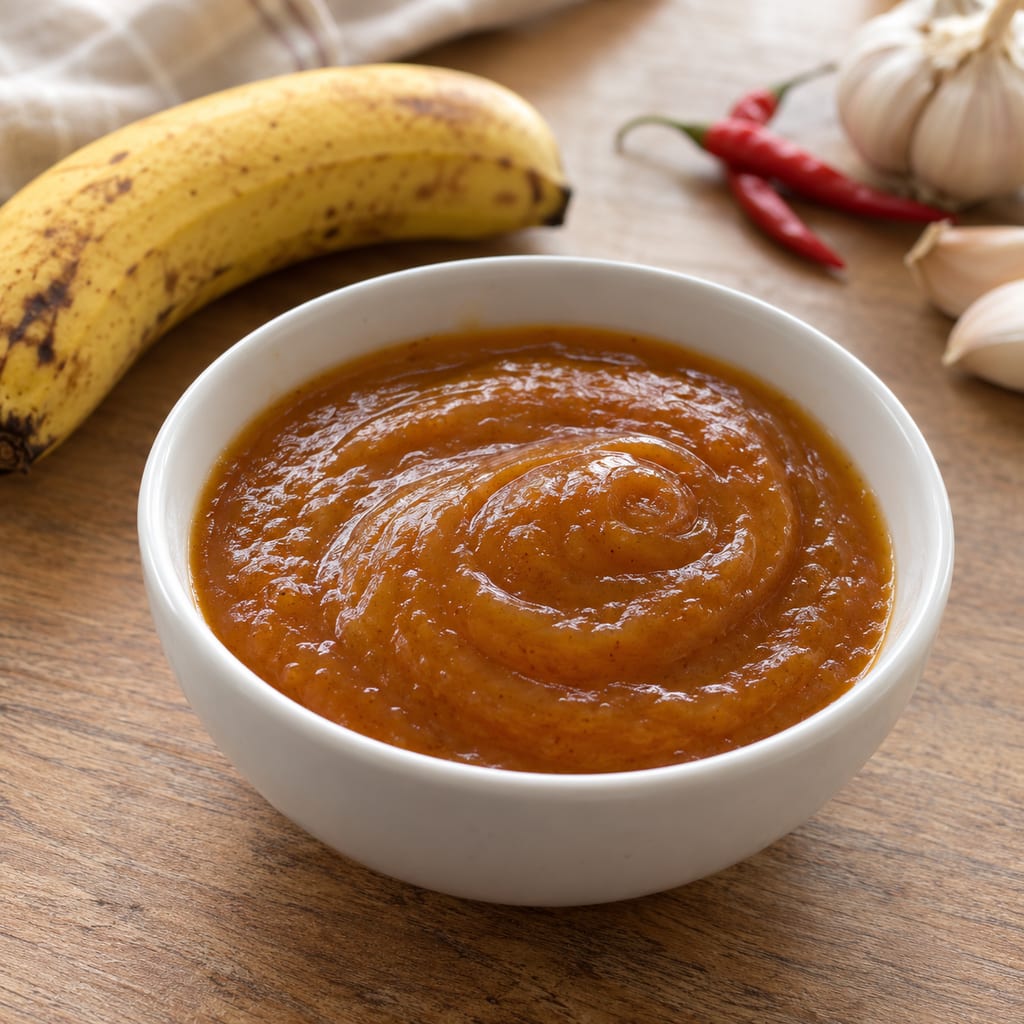
A sweet-hot table sauce of ripe banana simmered with vinegar, sugar, onion, garlic and fresh chilli, in the manner of Philippine banana ketchup. An untested development batch of about 500 g.
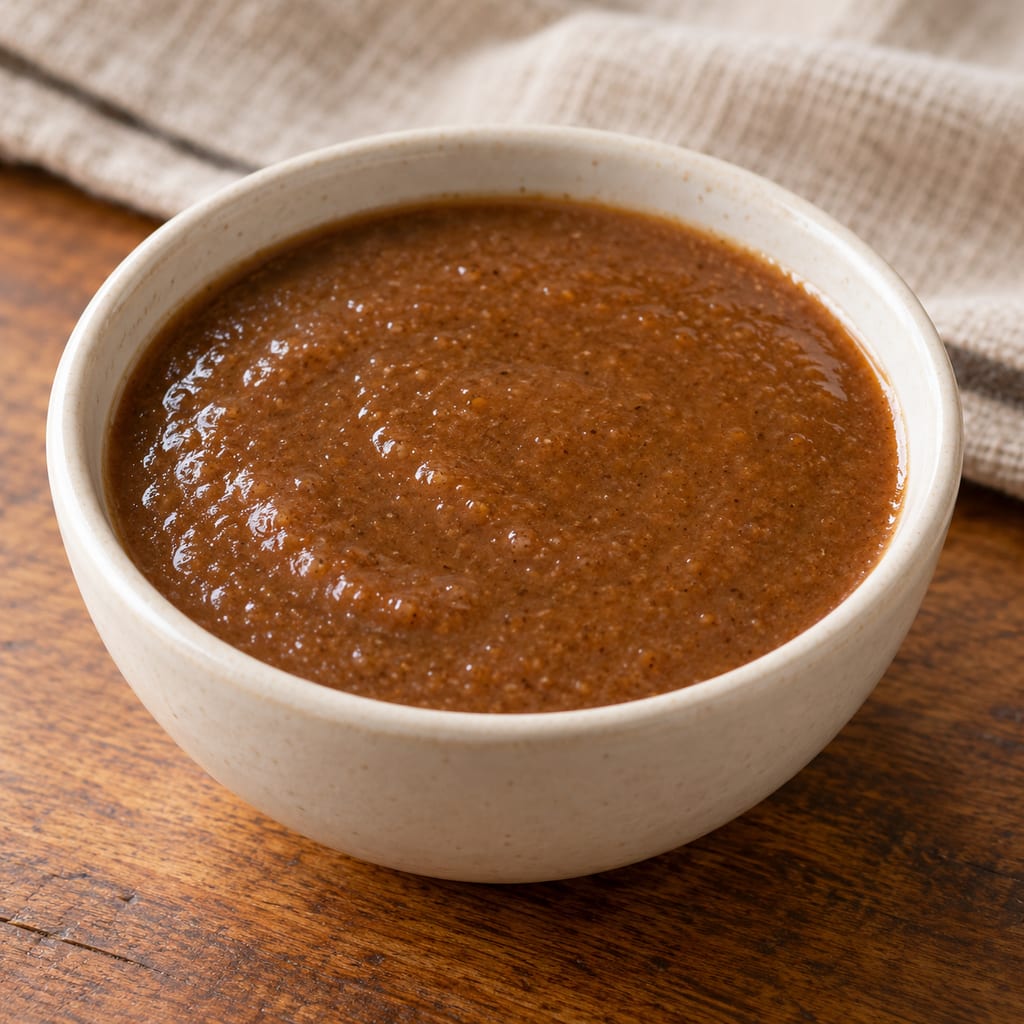
A cooked Filipino roast-meat sauce thickened from canned liver spread, vinegar, water, sugar and breadcrumbs, with browned garlic and softened onion.
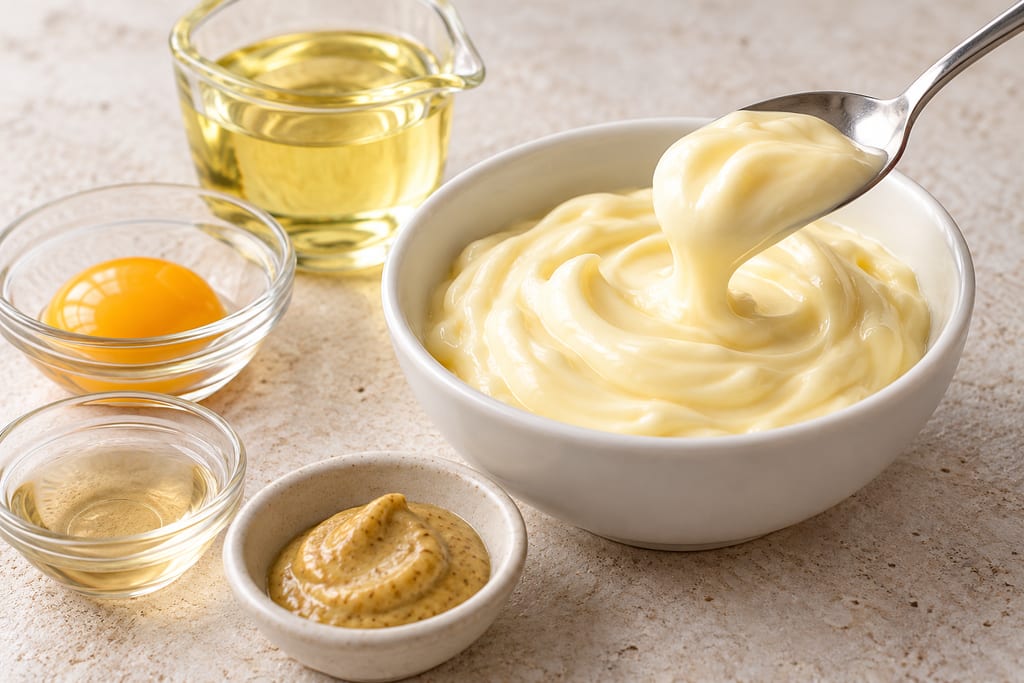
A plain mayonnaise of 200 g refined neutral oil emulsified into pasteurised yolk, vinegar, water and a little Dijon mustard: a clean base for tasting, comparing and flavouring.
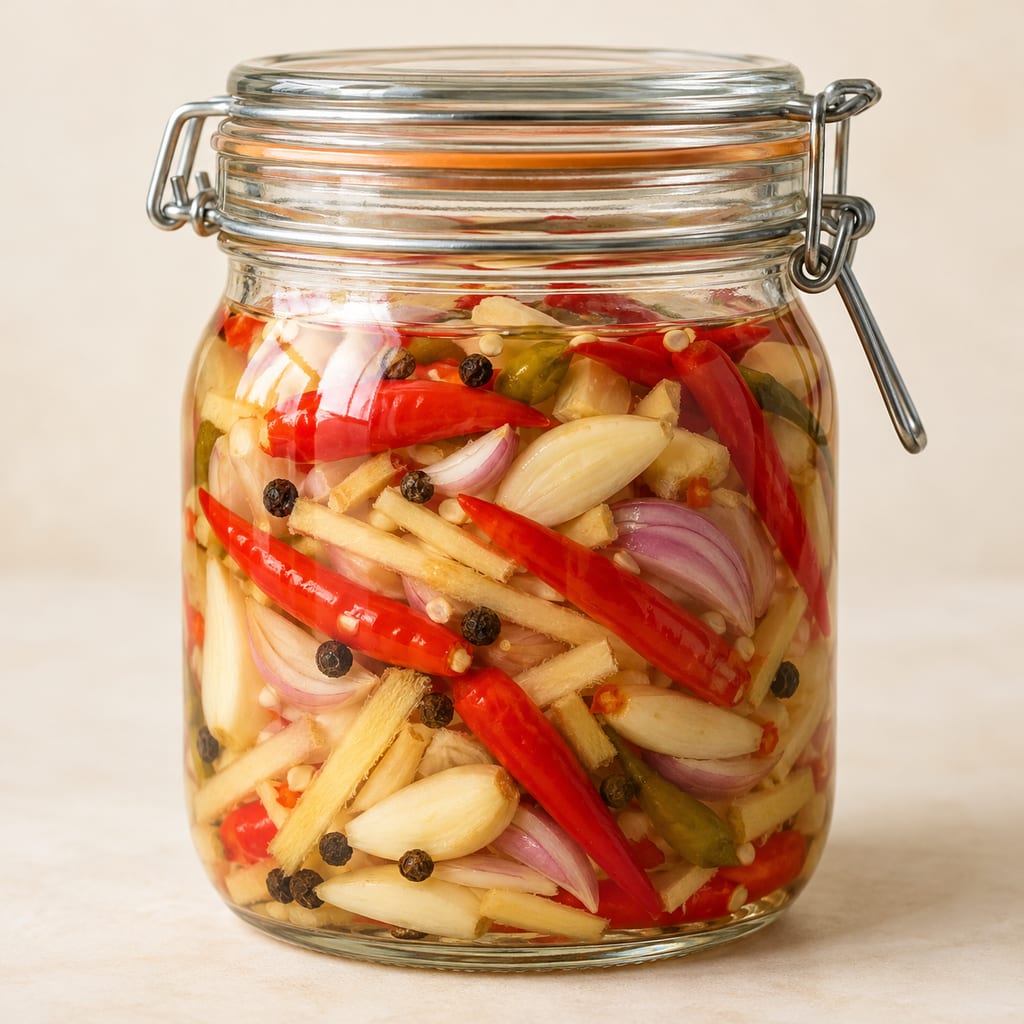
Sinamak is a Philippine spiced vinegar: white, cane or coconut vinegar steeped with chilies, ginger, garlic, onion and peppercorns for days or weeks until it is ready to use as a condiment.
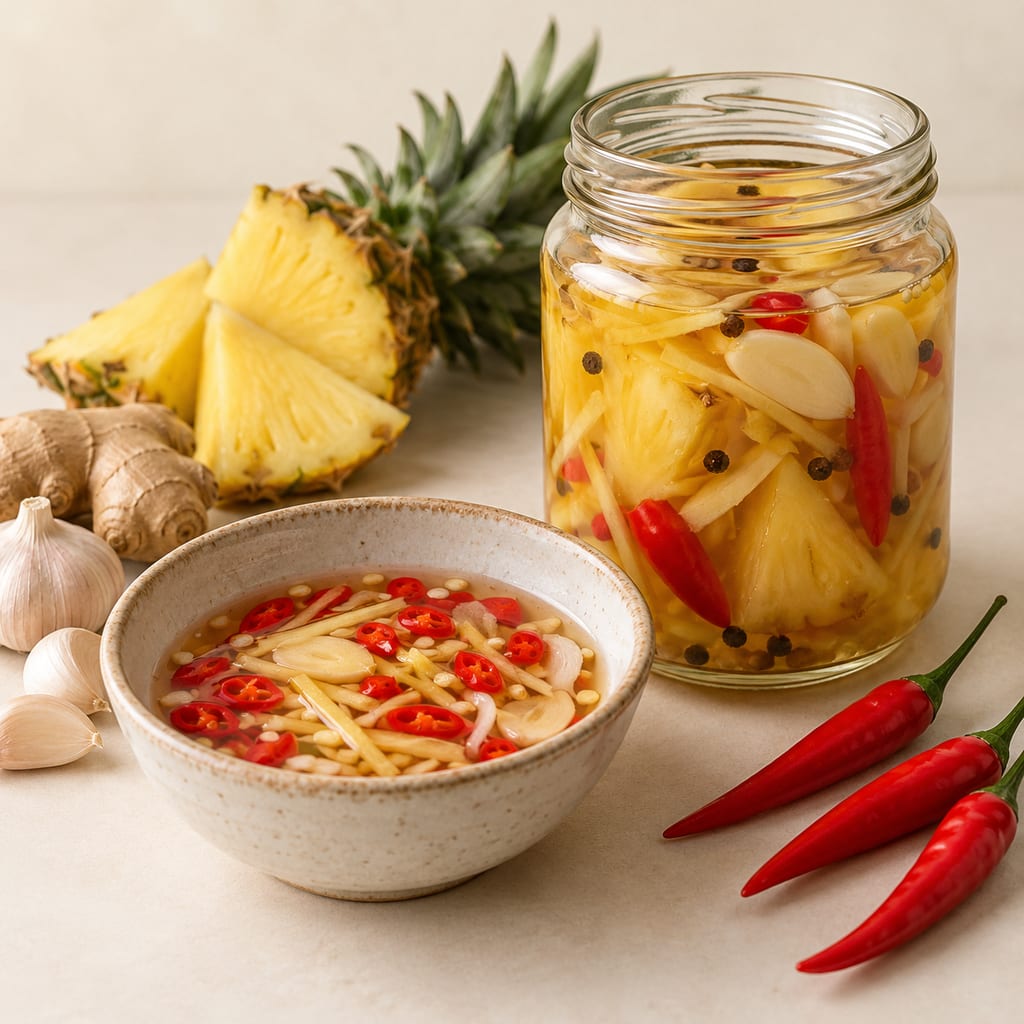
Filipino vinegar dips: vinegar steeped or mixed with chilli, garlic, ginger and other aromatics, from the pineapple sinamak of Iloilo to coconut-vinegar sawsawan. Not a single formula.
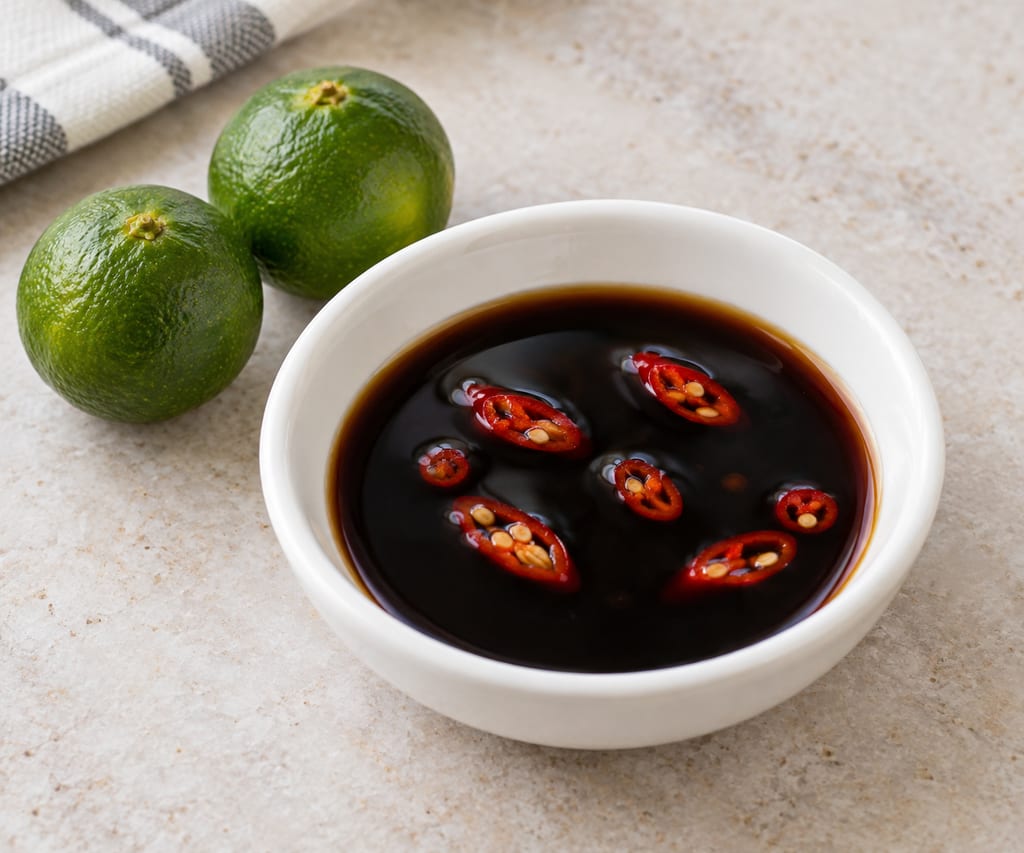
Toyomansi is a Filipino table dip of soy sauce and calamansi juice, served with grilled or fried foods; this version adds sliced chilli and optional sugar.
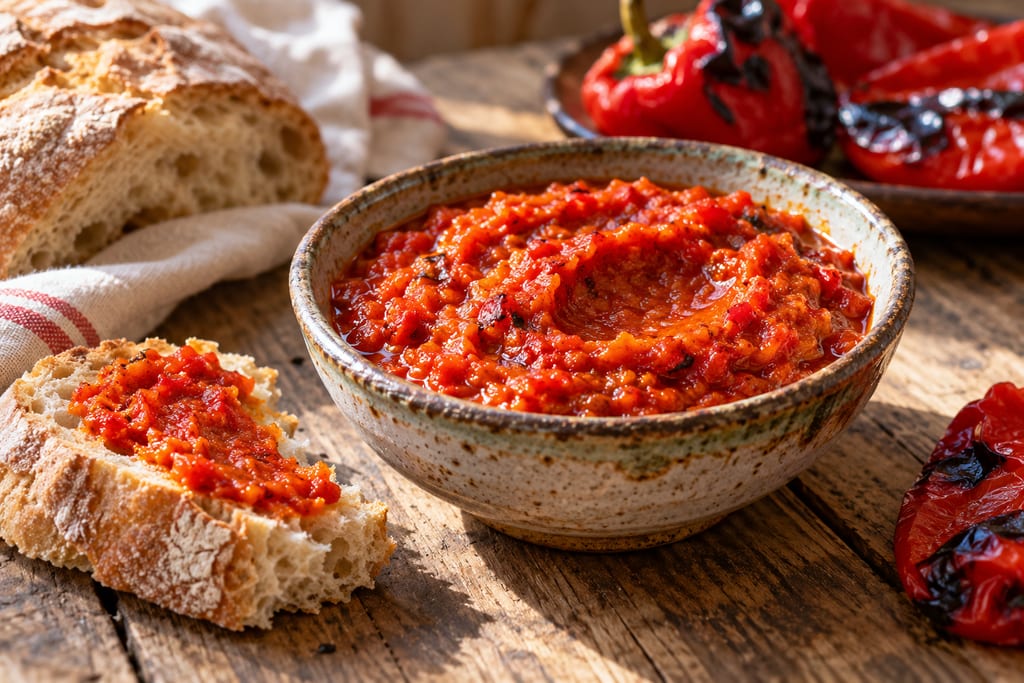
Ajvar is a cooked Balkan pepper preserve built around roasted red peppers, peeled, drained, ground and slowly fried with oil and seasoning. Leskovac’s protected version is a pepper specialty; regional versions vary.
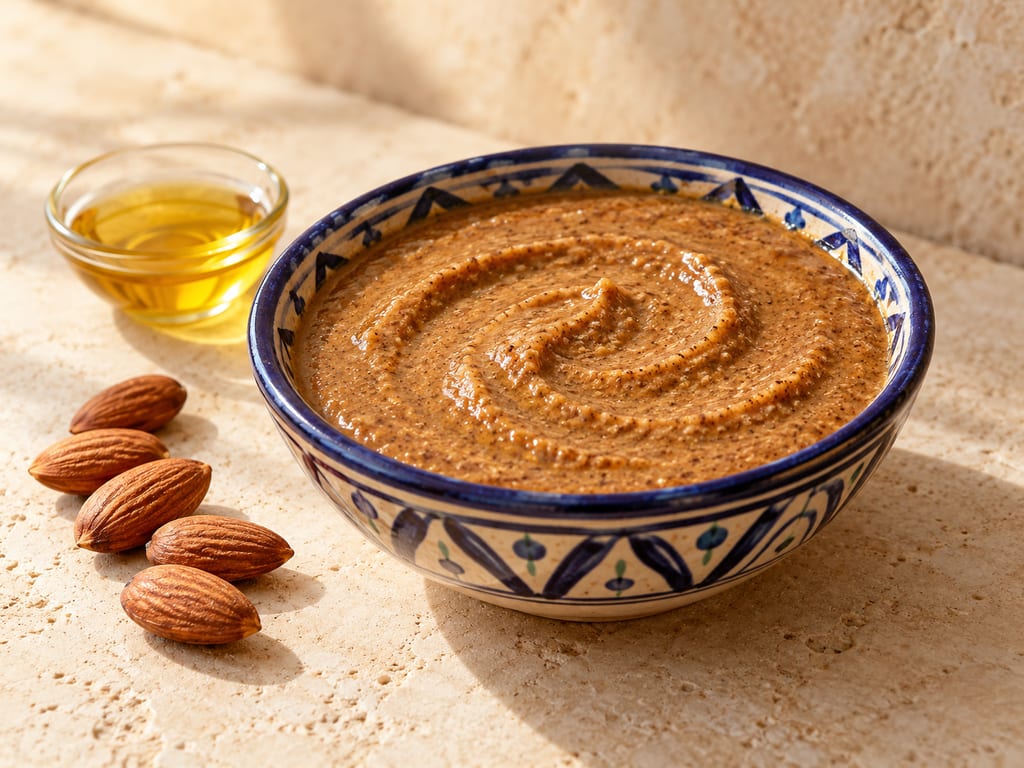
Amlou is a nutty, lightly sweet Moroccan spread of roasted almonds, culinary argan oil and honey. The almonds are ground first, then loosened with oil and sweetened; the balance can range from a thick spread to a dip.
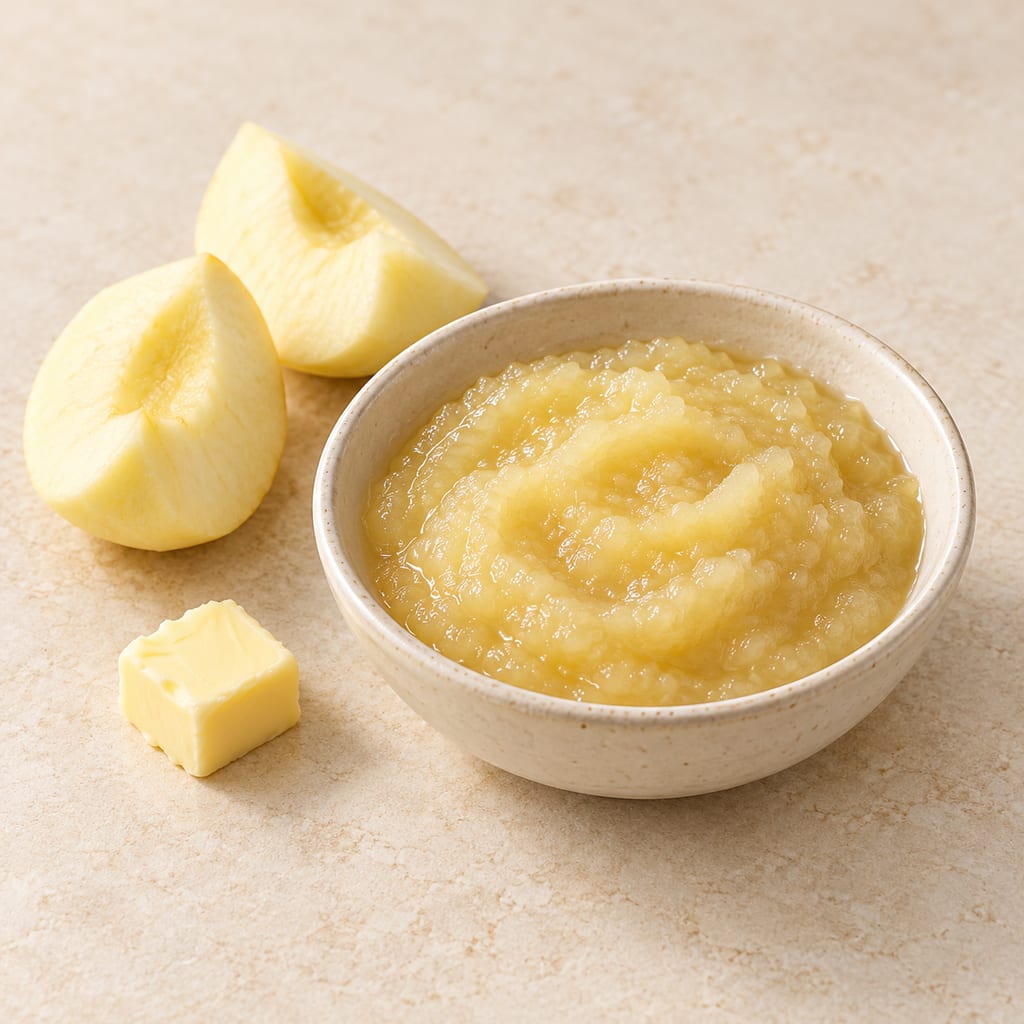
Apple sauce for goose and pork is a plain English accompaniment: cooked apples pulped with water, then sweetened with sugar and finished with a little butter.

A warm dip of garlic, anchovy and olive oil, often enriched with butter, that Piedmont serves over a flame with raw and cooked vegetables and bread.
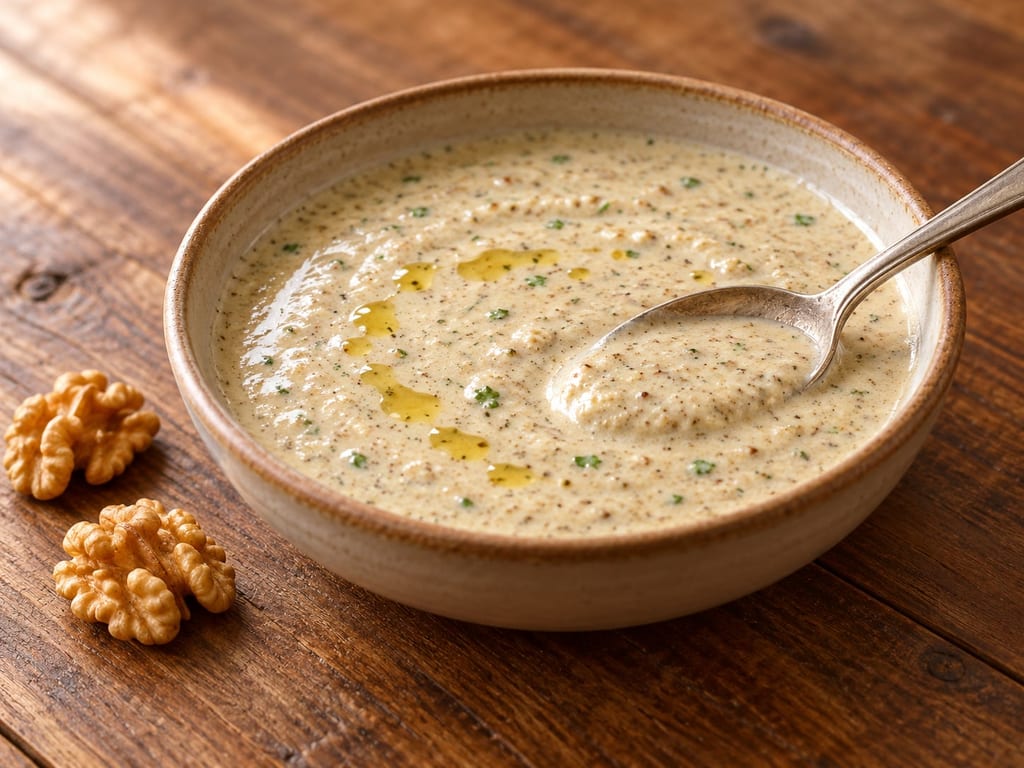
A Georgian walnut sauce of ground walnuts, garlic, vinegar and spices, thinned with water or broth. It is served with poultry, vegetables and bread, and is the sauce of the dish satsivi.
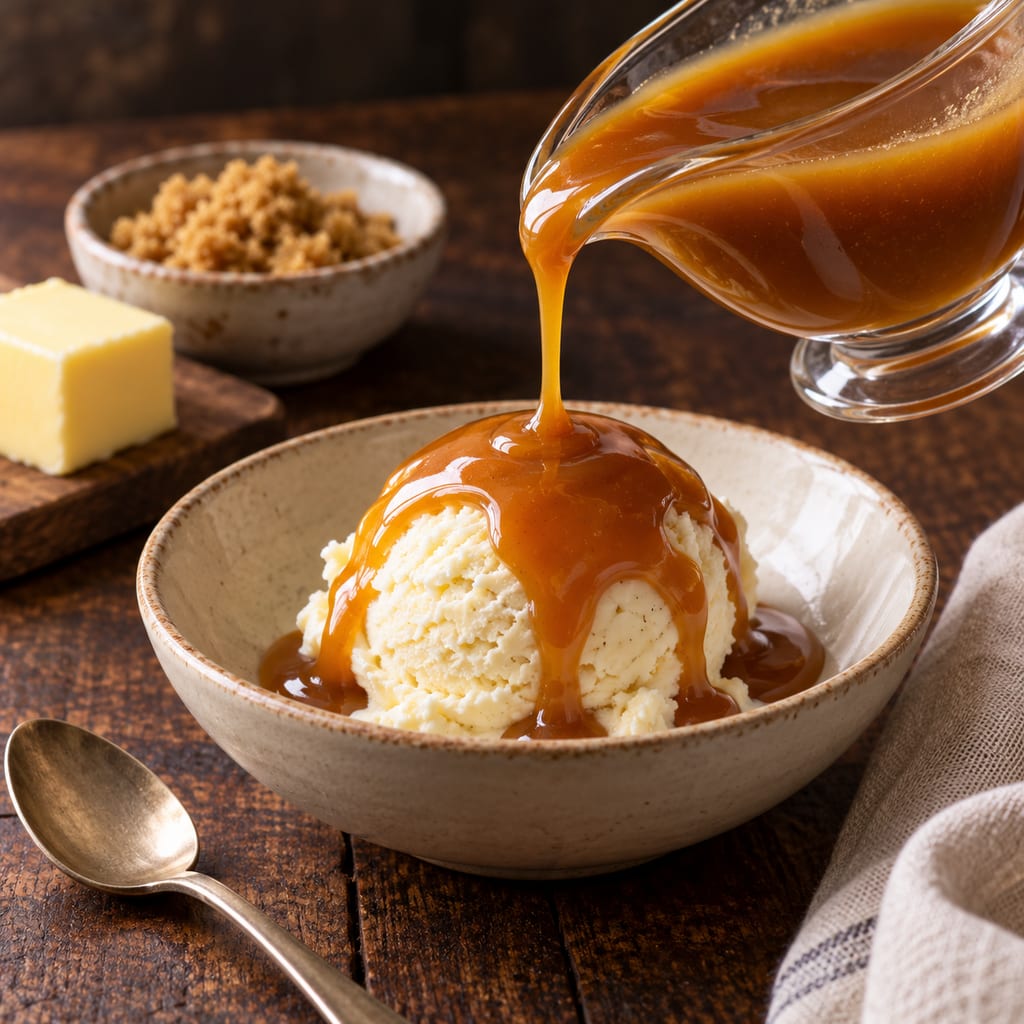
A pourable dessert sauce of brown sugar, butter and cream, with a little corn syrup and salt. It is the sauce form of the butterscotch confection and is made without water, unlike caramel.
Byzantine murrī is a cooked imitation of murrī from the medieval Arabic repertoire, made from scorched honey, toasted bread, walnuts, quince, carob and spices rather than from a long grain fermentation.

Caribbean browning is a dark liquid of deeply caramelised sugar, used in small amounts for colour and a smoky, bitter-sweet flavour in stews and black cake.
No community contributions have been published for this entry yet.
Sign in to contribute. Published comments and photos are free to read.
ati2.da.gov.phMethod · Context · Handling
Philippines Department of Agriculture ATI: Kalabasa catsup, with DOST technical-brochure linkDocumented preparation, regional context or preservation handling, with the limits stated in the text.
Cited in: The preserve; Ingredients; Declared changes from the processing booklet; Why this belongs in a preservation collection
www.itdi.dost.gov.phMethod · Context · Handling
DOST–ITDI, Kalabasa Food Products, Livelihood Technology Series 1, third edition, 2013Documented preparation, regional context or preservation handling, with the limits stated in the text.
Cited in: The preserve; Ingredients; Declared changes from the processing booklet; Why this belongs in a preservation collection
ucanr.eduMethod · Context · Handling
University of California, PumpkinsDocumented preparation, regional context or preservation handling, with the limits stated in the text.
Cited in: The preserve; Ingredients; Declared changes from the processing booklet; Why this belongs in a preservation collection
www.gov.ukMethod · Context · Handling
Food Standards Agency / GOV.UK, How to chill, freeze and defrost food safelyDocumented preparation, regional context or preservation handling, with the limits stated in the text.
Cited in: The preserve; Ingredients; Declared changes from the processing booklet; Why this belongs in a preservation collection