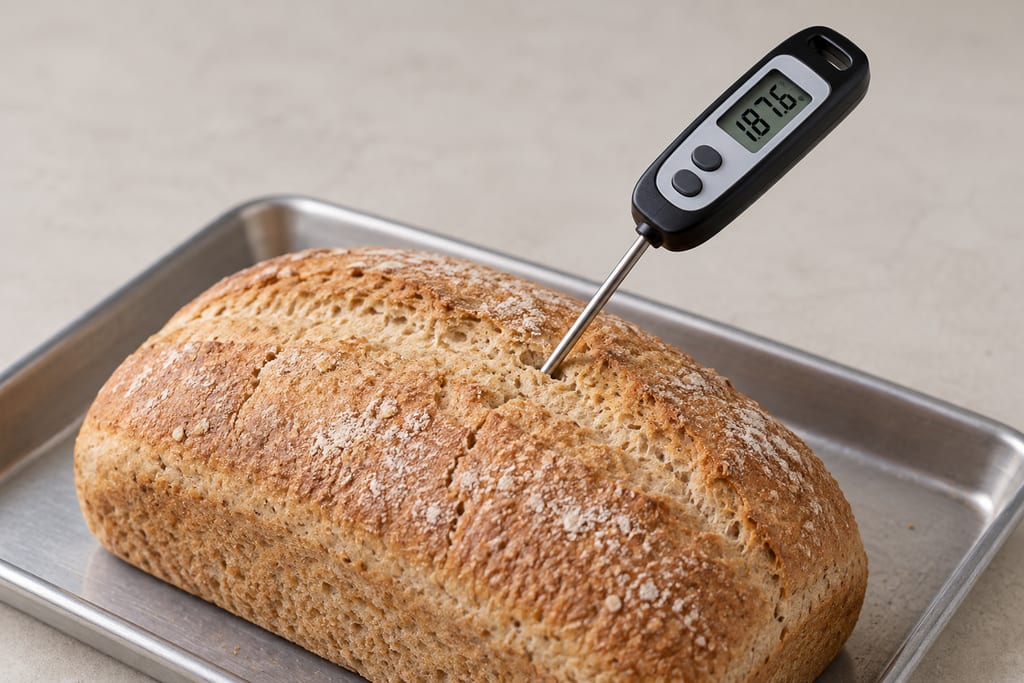
Food probe thermometer
A probe thermometer measures the temperature of food at its sensing tip. It answers a different question from a kettle, oven or water-bath display, and from a pH meter.
 FermenteaWhere food goes to change
Equipment · Instruments
A food probe measures the temperature inside food at the probe tip; a refrigerator thermometer measures the cold storage environment. They answer different questions and cannot establish acidity or validate a preservation process.
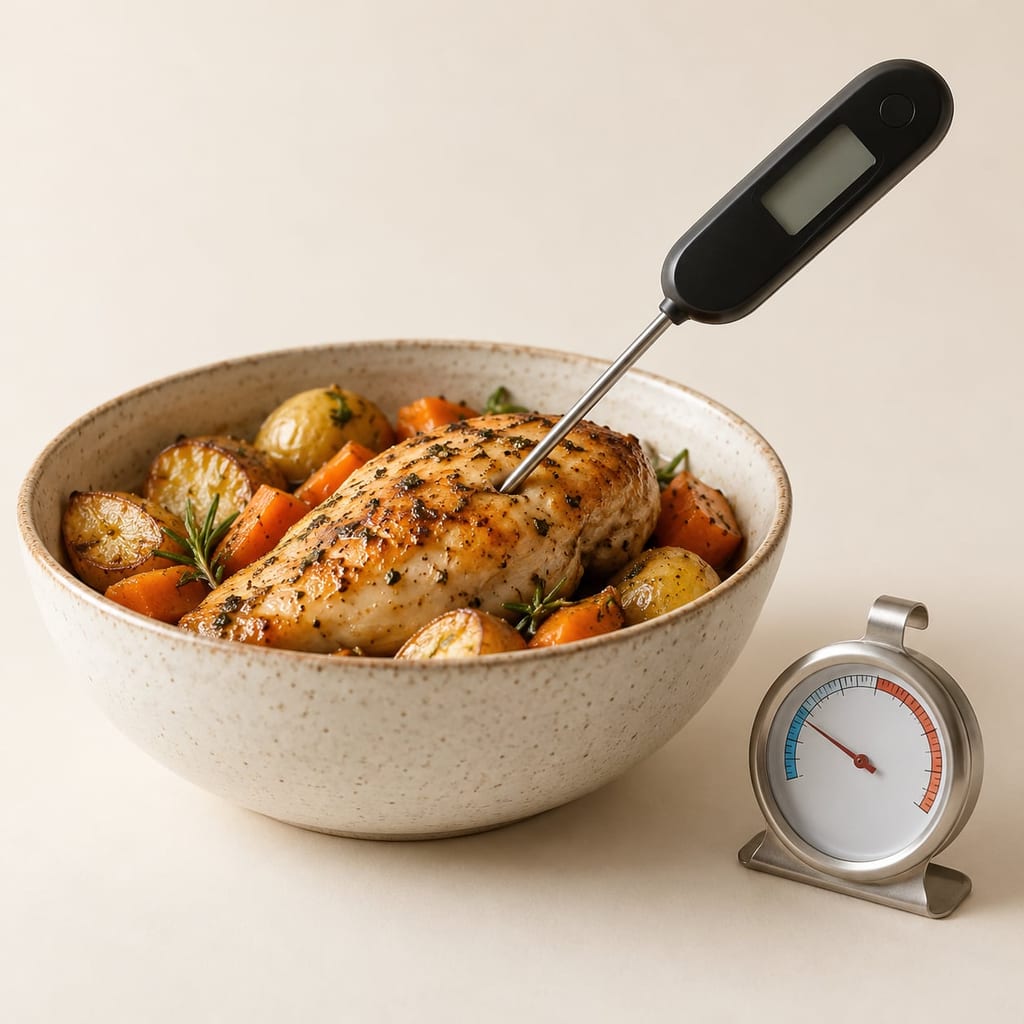
A food thermometer has a sensing tip or stem that is placed in food. It reports temperature at that point, so probe placement, insertion depth and waiting time depend on the instrument and the food. Instant-read, oven-safe dial, wired probe and other designs are not interchangeable; follow the maker's directions. A refrigerator thermometer instead reports the temperature near where it sits inside the appliance. It lets a user check actual storage conditions when a refrigerator's control is only a setting or has no temperature display.
These measurements support different tasks in condiment preparation. A suitable food probe can check a temperature specified by a tested recipe or process. A refrigerator thermometer can monitor chilled storage. Neither instrument measures acidity, salt concentration or water activity, and neither by itself validates a fermentation, cooling or preservation process.
For U.S. household storage, FDA recommends keeping the refrigerator at or below 40°F (4°C). Its guidance says to place a refrigerator thermometer in the middle of the refrigerator and allow 5–8 hours before checking so the reading can settle. Canadian public-health guidance also uses 4°C or below. UK household guidance uses 5°C or below. These are jurisdiction-specific recommendations, not one universal threshold; follow the applicable local guidance and the recipe or process requirements.
An appliance reading describes the thermometer's location and time. Air and food temperatures can differ, and conditions can vary around a loaded refrigerator or when the door opens. One reading does not establish the temperature history of every food or shelf. Listeria can grow at refrigerator temperatures, so chilling slows growth but does not sterilize food.
Clean and disinfect a food-contact probe before and after use and between foods, using the method and products allowed by its manufacturer. Insert the sensing area as directed and wait for a stable reading. Extension guidance describes an ice-water check for dial thermometers; this procedure should not be assumed to calibrate every digital, infrared or specialty instrument. Use the manufacturer's calibration and accuracy instructions.
An infrared thermometer reads a surface, not the center of a jar or the interior of a thick piece of food. A refrigerator thermometer cannot replace a food probe when a tested method specifies internal temperature. A thermometer also cannot make an untested recipe shelf-stable or prove that a ferment is safe. For condiments, use it only to answer the temperature question the documented method actually asks, and keep unvalidated products refrigerated as directed.
Current government and extension guidance in several countries recommends thermometers for checking food temperatures or refrigerator conditions. These sources do not establish an invention date, inventor or single standard design.
A food probe measures the food at its sensing tip; a refrigerator thermometer measures the appliance environment. A refrigerator dial or setpoint is not a measurement of the food.
Source →Temperature alone does not measure pH, acidity, salt concentration or water activity, and does not validate a fermentation, cooling or canning process. Follow the tested recipe or process limits.
Source →A refrigerator thermometer reports conditions at its placement point; it does not demonstrate that every shelf, food item or moment had the same temperature.
Source →U.S. FDA and Canadian guidance use 4°C/40°F or below for household refrigerators; UK household guidance uses 5°C or below. Apply the guidance for the relevant jurisdiction and any stricter recipe requirement.
Source →Infrared thermometers read surface temperature only; they do not measure the center of food. Use an appropriate clean probe when the procedure calls for internal temperature.
Source →Documented for international use, with no single place of origin assigned.
A probe thermometer measures the temperature of food at its sensing tip. It answers a different question from a kettle, oven or water-bath display, and from a pH meter.
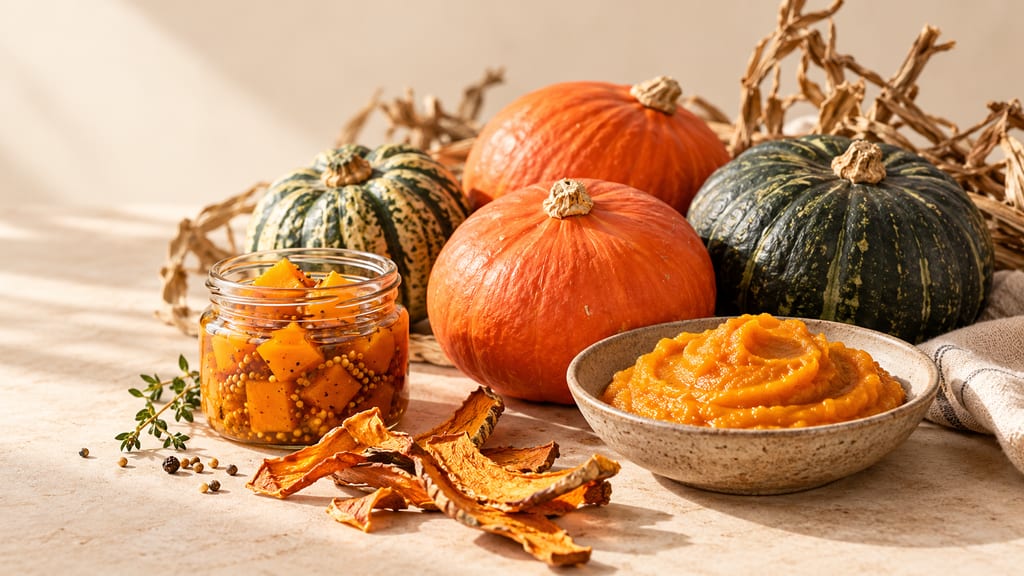
A full harvest-to-pantry guide to keeping pumpkins whole, drying and freezing them, and making pickles and sweet preserves around the world—with the exact distinction between tested canning and cold storage.
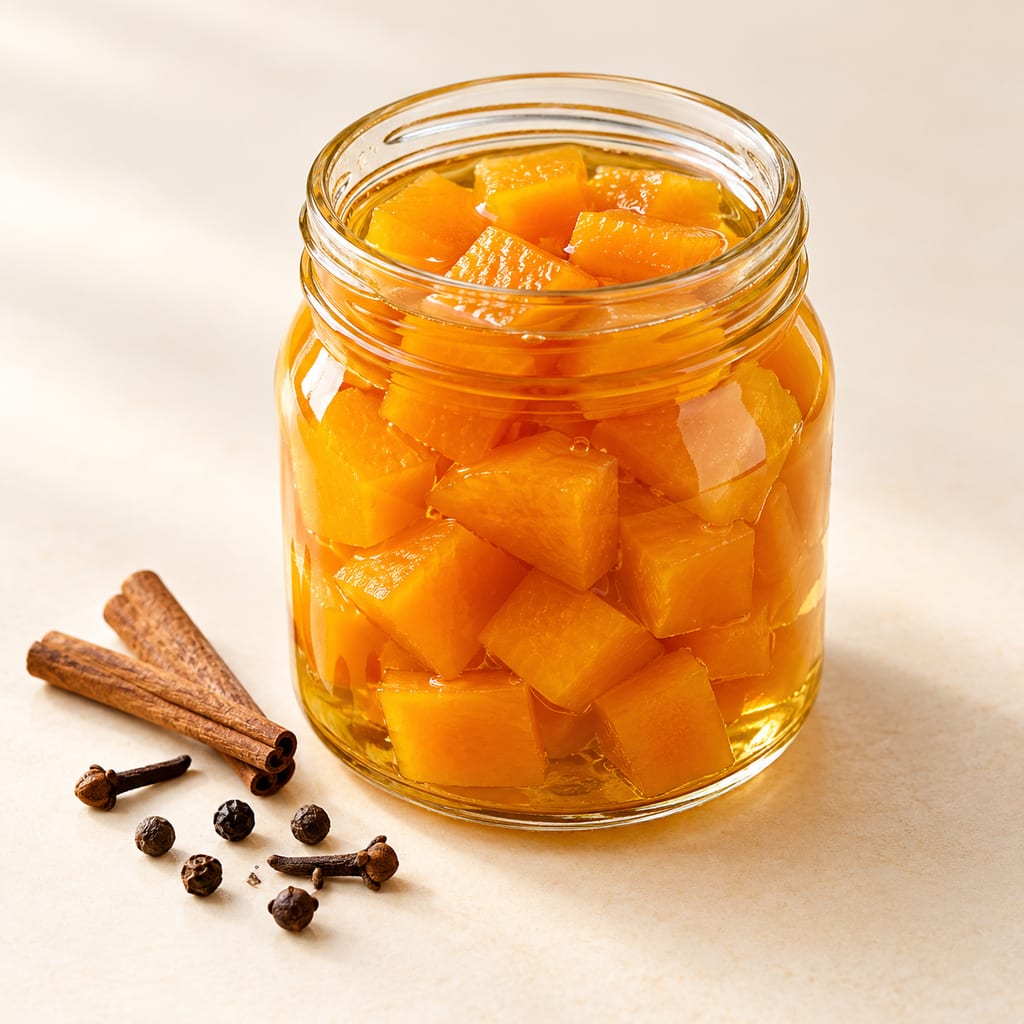
Ball sweet pumpkin pickles: Cupboard: exact published Ball formulation and water-bath process.
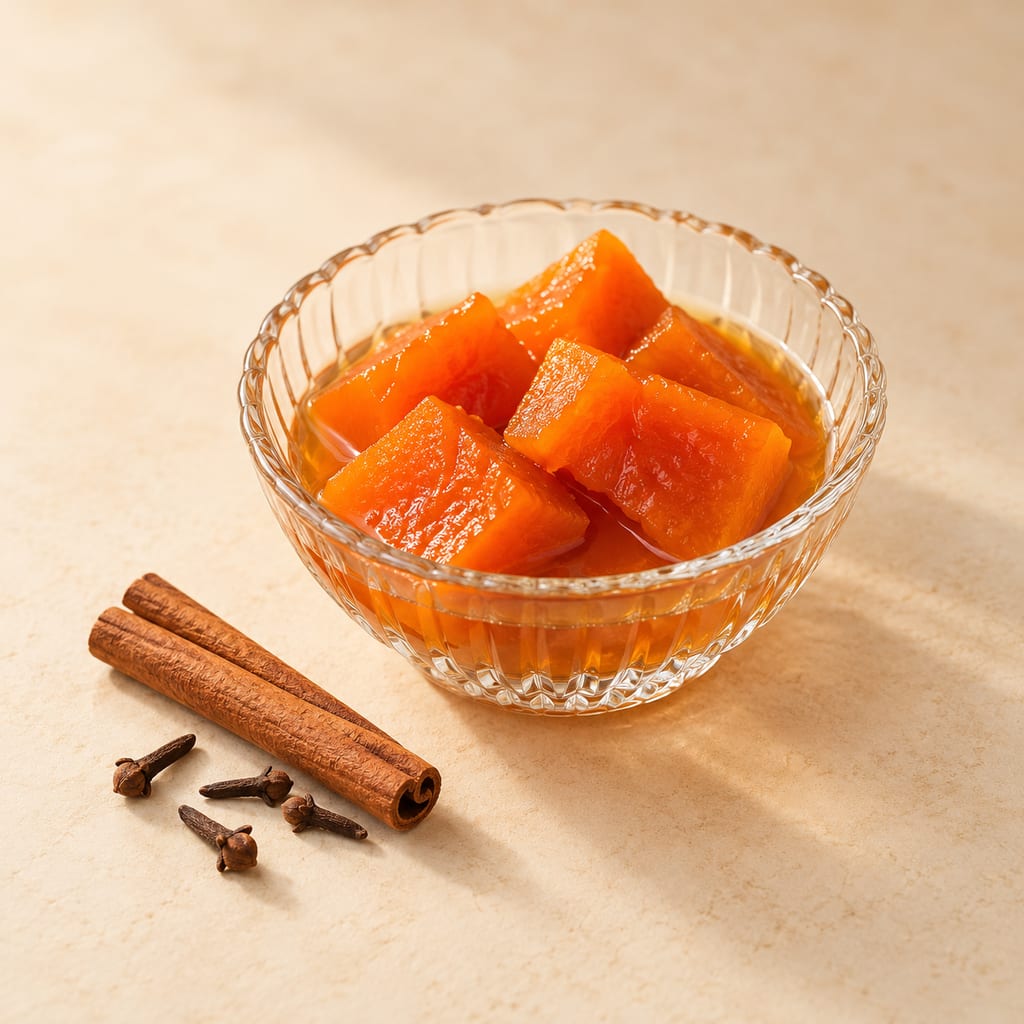
Brazilian doce de abóbora: Freeze for winter; small fresh portion refrigerated up to 48 hours.
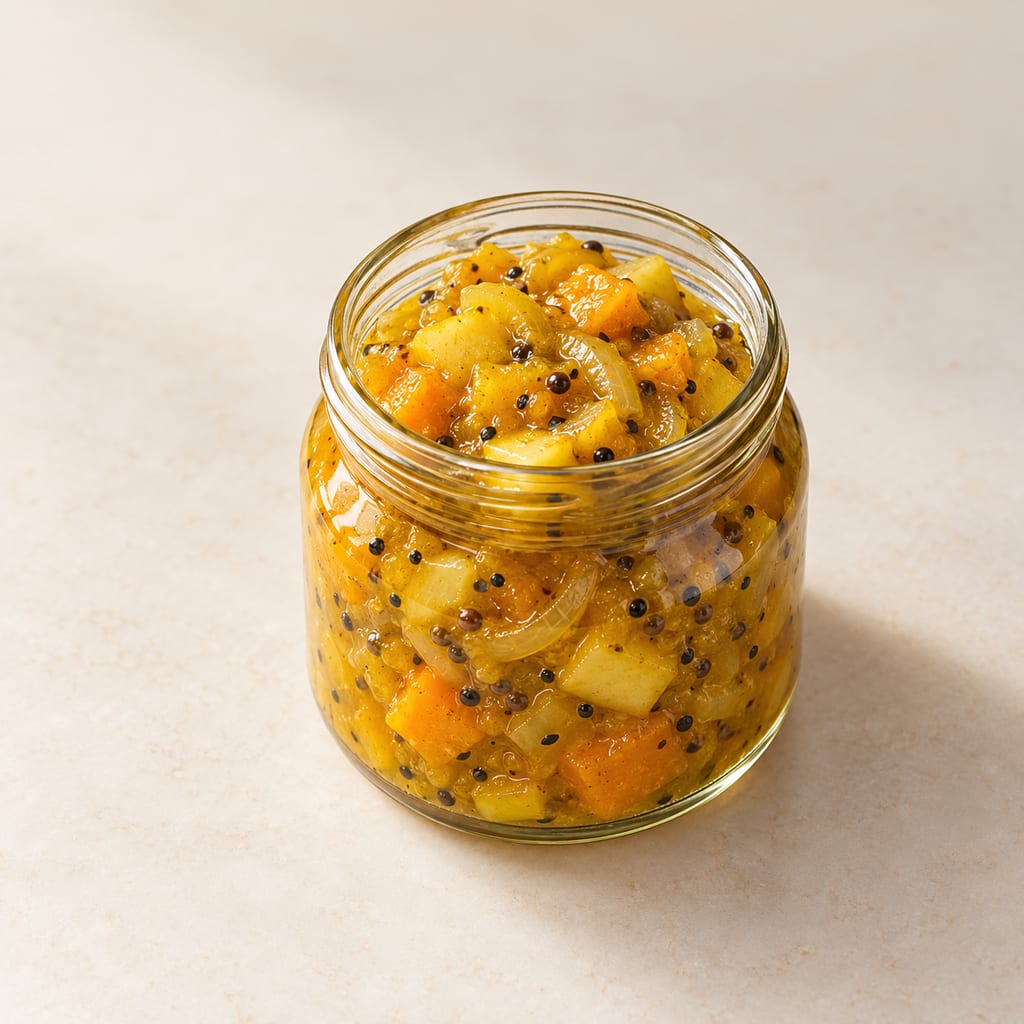
British pumpkin, apple and mustard pickle: Freeze for winter; small fresh portion refrigerated up to 48 hours.
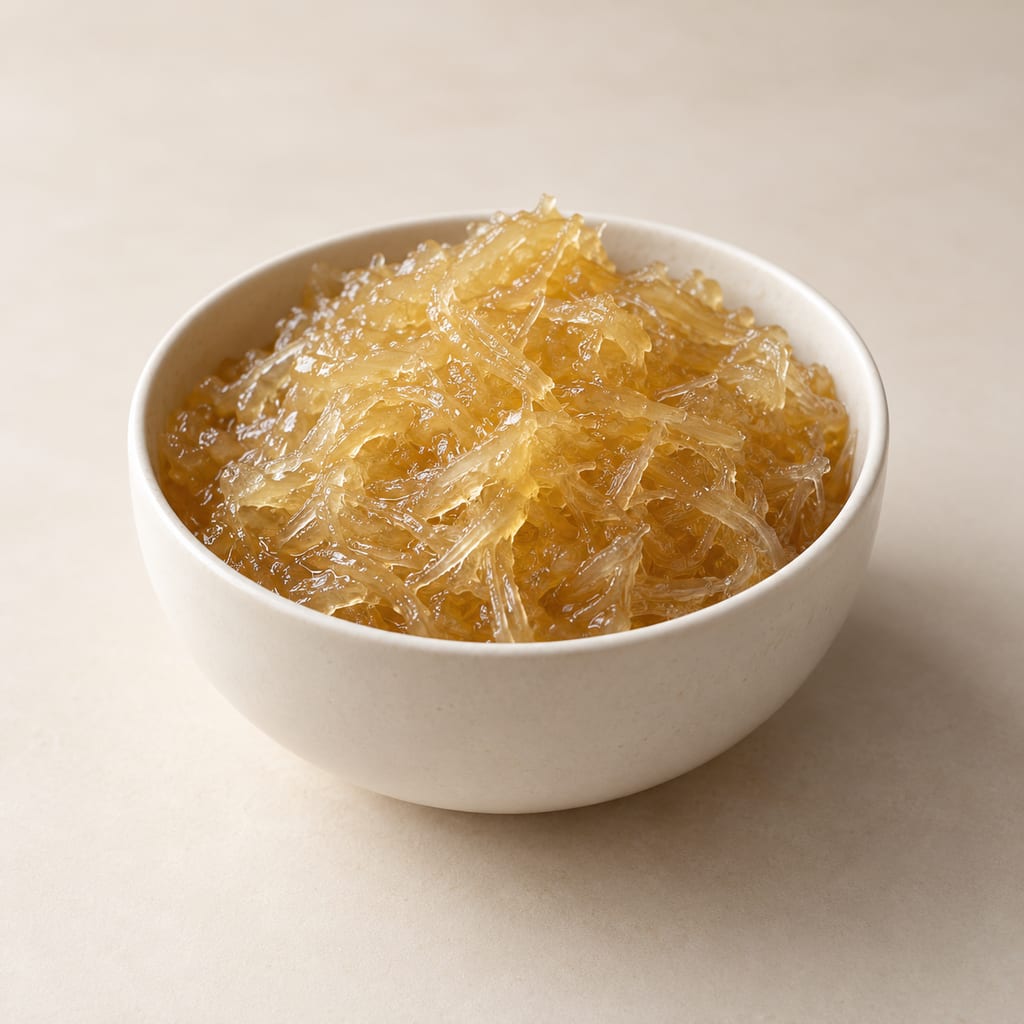
Fine strands of Cucurbita ficifolia cooked in an equal weight of sugar, then portioned for refrigerator or freezer storage. Ordinary orange pumpkin does not give the same fibres.
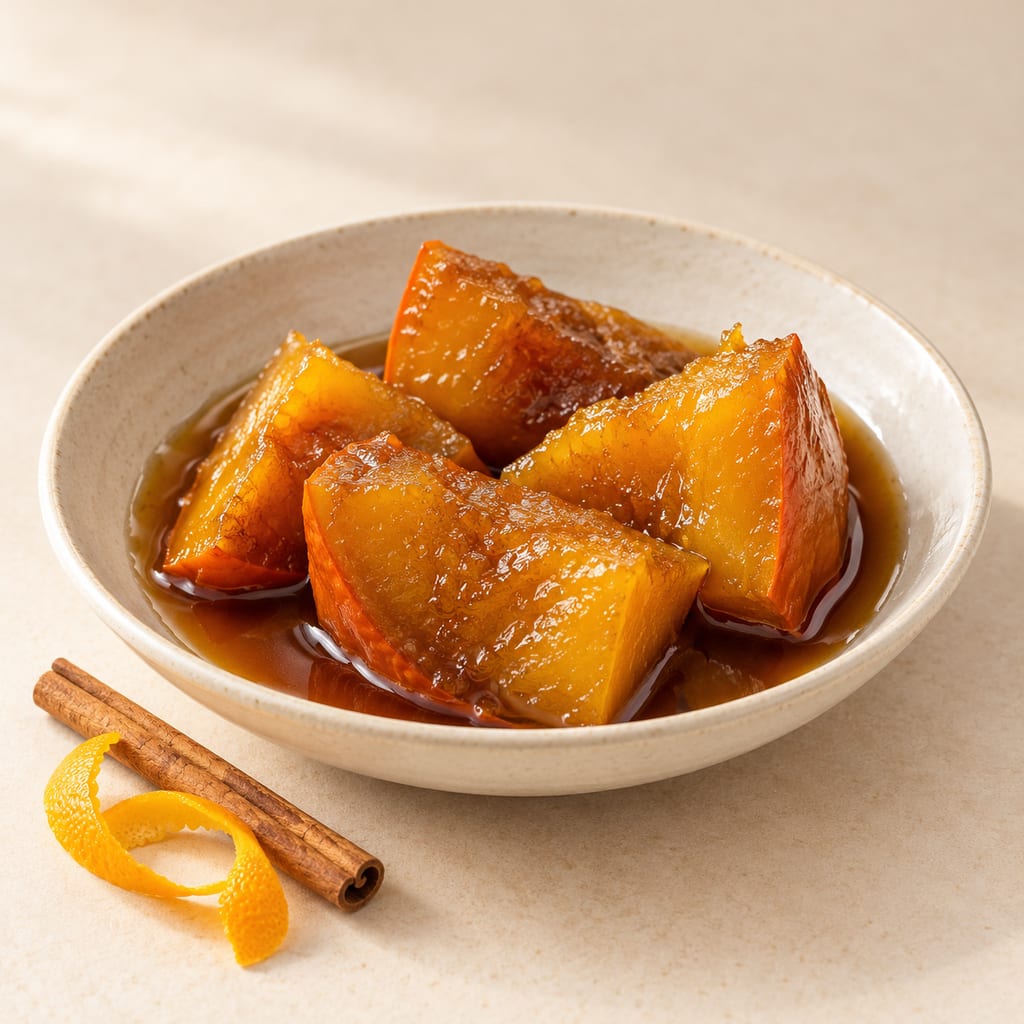
Rind-on pumpkin simmered with piloncillo, orange and cinnamon until glazed. This Mexican sweet keeps refrigerated for up to one week.
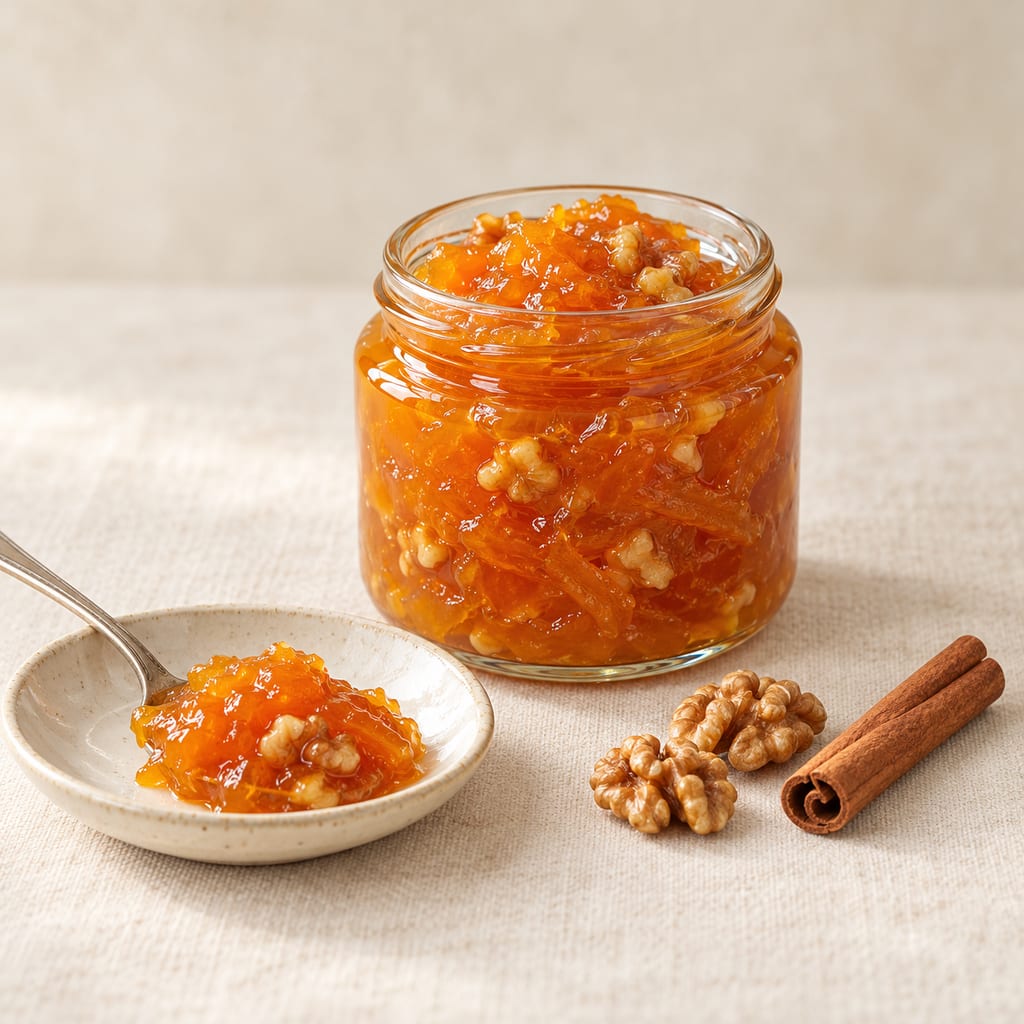
Portuguese pumpkin jam cooked with cinnamon and optional walnuts. A sweet spread to refrigerate or freeze, rather than a home-canned preserve.
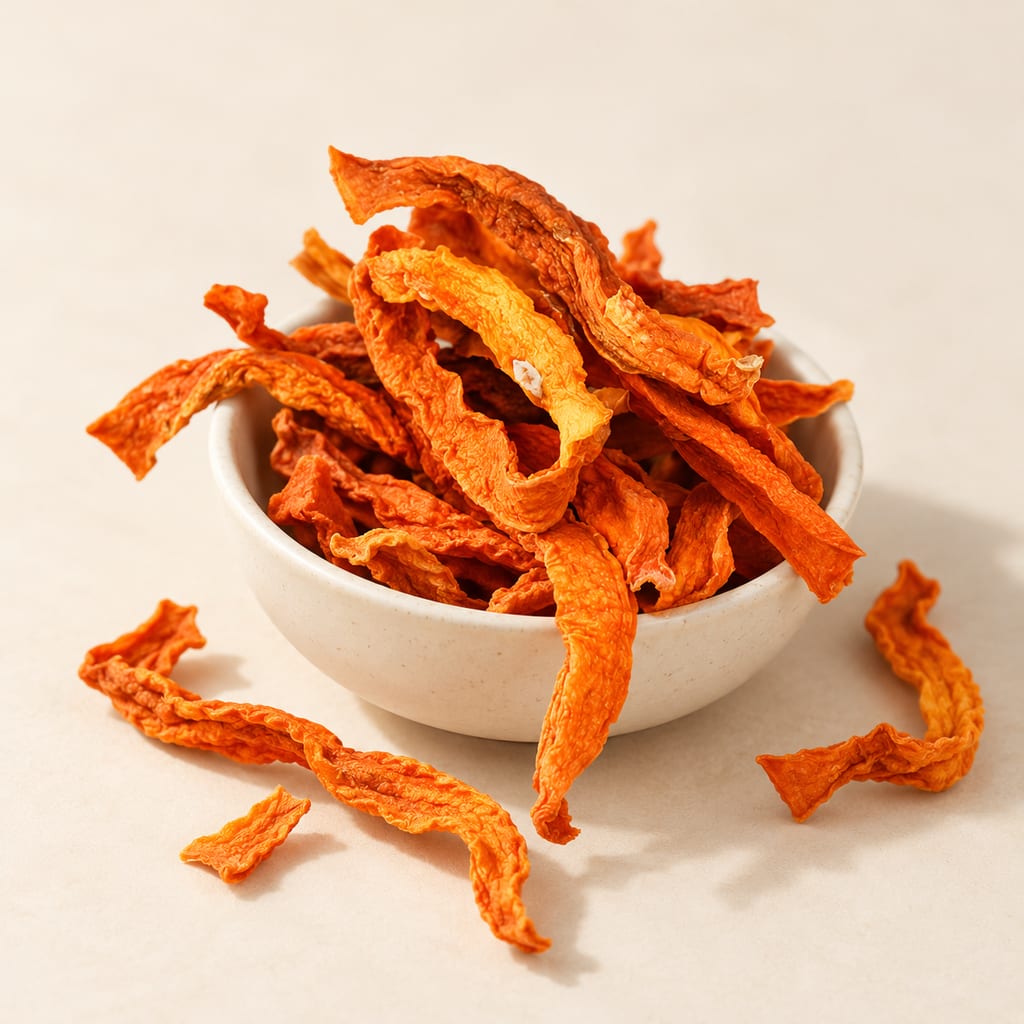
Steam-blanched pumpkin dried until brittle, kept as pieces or ground into powder, with pumpkin-specific packaging and quality guidance.
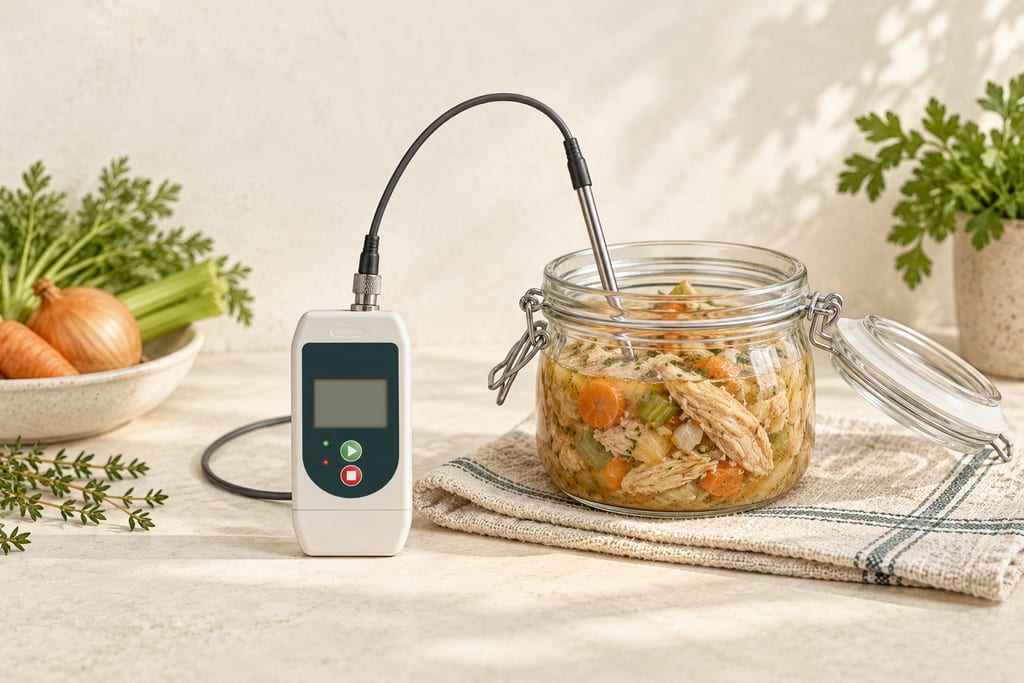
A thermometer gives a reading at its sensor; a temperature logger records readings over time. Sensor placement and context determine what that record can tell you.

Soft, spreadable Calabrian pork sausage made with a great deal of red chilli and fatty pork, stuffed into natural casings, sometimes smoked and matured while staying soft.

A way to add independent temperature logging to an existing food dehydrator without changing its built-in controls or protections. It is a monitoring method, not a rewiring plan.

Pleurotus cystidiosus is the abalone mushroom, a cultivated oyster-type fungus with dark brown caps that grows more slowly and is more demanding than other Pleurotus species.

A dark, balanced vinegar from Emilia-Romagna made by combining cooked or concentrated grape must with wine vinegar, then acetifying and refining it in wood under a protected specification.

A living dairy inoculum that starts controlled cream fermentation, developing acidity and aroma before sour cream or cultured butter is finished.

A small electric incubator holds jars at a selected temperature for yogurt and other documented warm food preparations. Controls, capacity and vessel arrangement vary by model.

Adygean salt is a seasoned table salt associated with Adygea and the wider North Caucasian culinary tradition. Salt is blended with garlic and a variable selection of herbs and spices; the exact mix depends on the named style and maker.

The African Caesar-group mushroom, Amanita masasiensis, is a wild ectomycorrhizal species of central and southern African woodlands, eaten locally. The genus contains deadly poisonous species, so identification needs care.
No community contributions have been published for this entry yet.
Sign in to contribute. Published comments and photos are free to read.
U.S. Food and Drug AdministrationRefrigerator measurement · U.S. storage guidance
Refrigerator Thermometers: Cold Facts about Food SafetyA refrigerator thermometer checks the actual appliance temperature when controls do not display it.
FDA advises U.S. consumers to keep refrigerators at or below 40°F (4°C) and check appliance temperature.
Cited in: Two instruments, two measurement jobs; Placement and jurisdiction matter; Probe care and limits
U.S. Food and Drug AdministrationRefrigerator thermometer placement · U.S. storage guidance
What You Need to Know About Preventing Listeria InfectionsFDA advises placing a thermometer in the middle of the refrigerator and allowing 5–8 hours before checking it.
Listeria can grow at refrigerator temperatures; cold storage slows growth but does not make food sterile.
Cited in: Placement and jurisdiction matter
University of Minnesota ExtensionFood probe use · Cleaning · Accuracy checks
Cooking food safely at homeAn instant-read thermometer measures internal food temperature at its sensing stem; insertion depth and waiting time depend on design.
Probe stems should be washed after use; extension guidance describes an ice-water accuracy check for dial thermometers, not as a universal calibration method.
The page distinguishes instant-read, oven-safe and corded probe types.
Cited in: Two instruments, two measurement jobs; Probe care and limits
Food Standards AgencyUK refrigerator measurement
Storing chilled foods at incorrect temperaturesUK household guidance recommends a fridge temperature of 5°C or below.
The FSA documents use of fridge thermometers because an appliance control setting may not reveal the actual storage temperature.
Cited in: Placement and jurisdiction matter
Public Health Agency of CanadaCanadian refrigerator guidance · Food thermometer use
General food safety tipsCanadian guidance recommends keeping refrigerators at 4°C or below and using a thermometer to verify temperature.
Food thermometers measure internal temperature; external appearance cannot establish the internal temperature.
Cited in: Two instruments, two measurement jobs; Placement and jurisdiction matter
Food Standards AgencyProbe cleaning · Infrared thermometer limits
Safe method: prove itThe FSA safe method instructs users to clean and disinfect a probe and wait for its display to stabilize.
Infrared thermometers read surface temperature and cannot establish the centre temperature of food.
Cited in: Probe care and limits