Storage for this version: Cool in small portions and refrigerate within one to two hours at 5°C or below (aim for 4°C). Use the fresh chilled portion within 48 hours; freeze the winter portions promptly at about −18°C in freezer-rated containers with expansion space. Thaw in the refrigerator and use within 24 hours of complete defrosting. This is the collection's conservative handling policy, not a laboratory shelf-life result for this preserve.
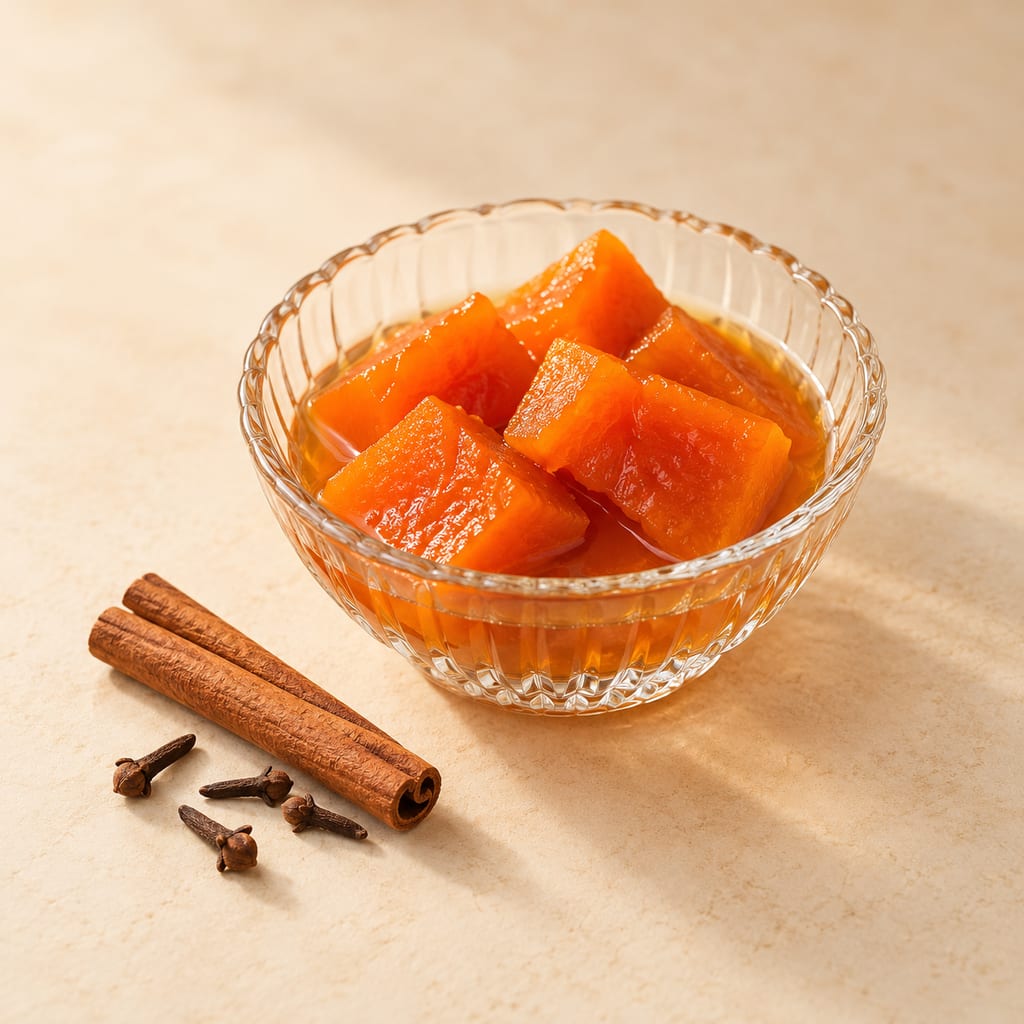
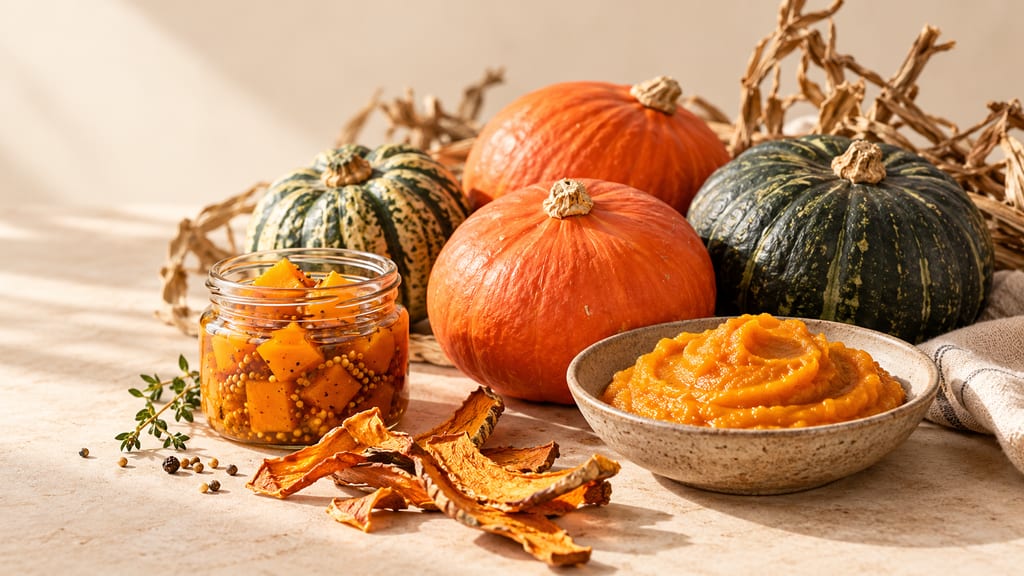
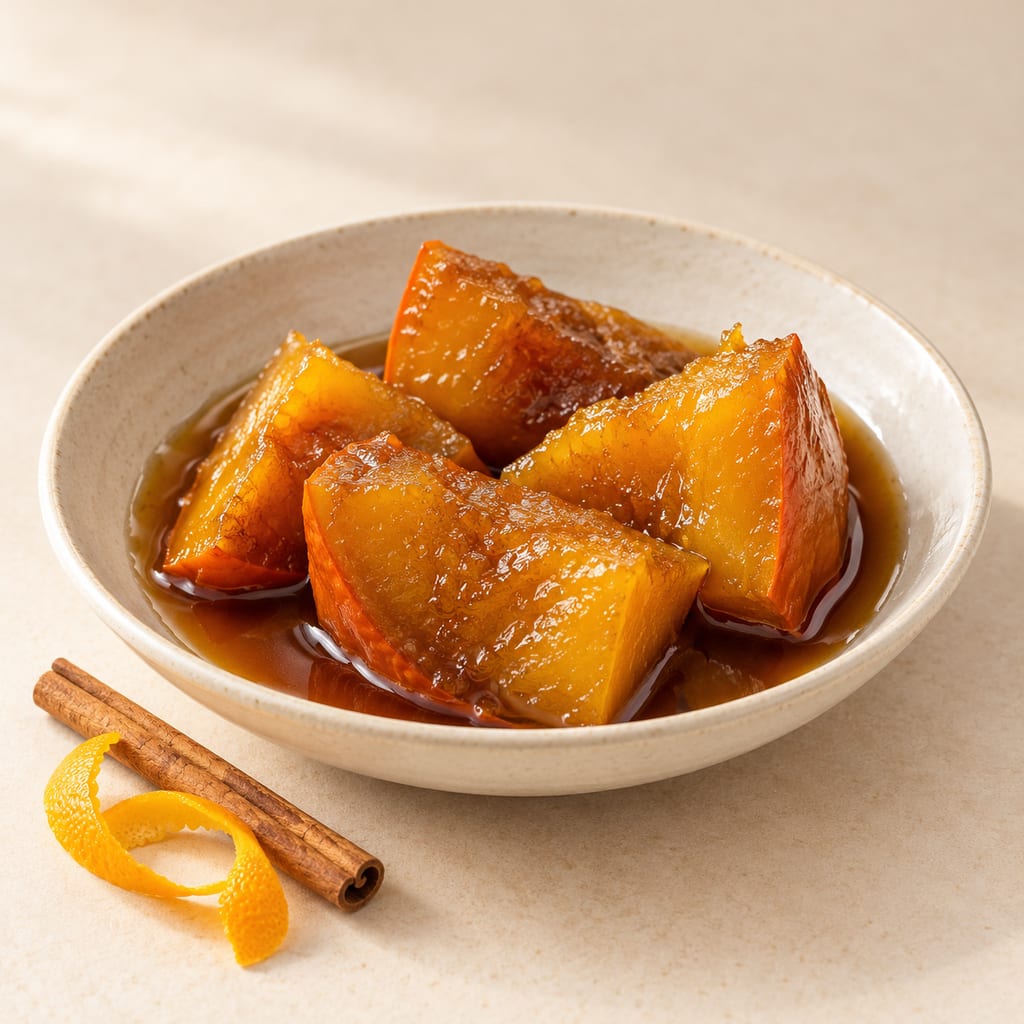
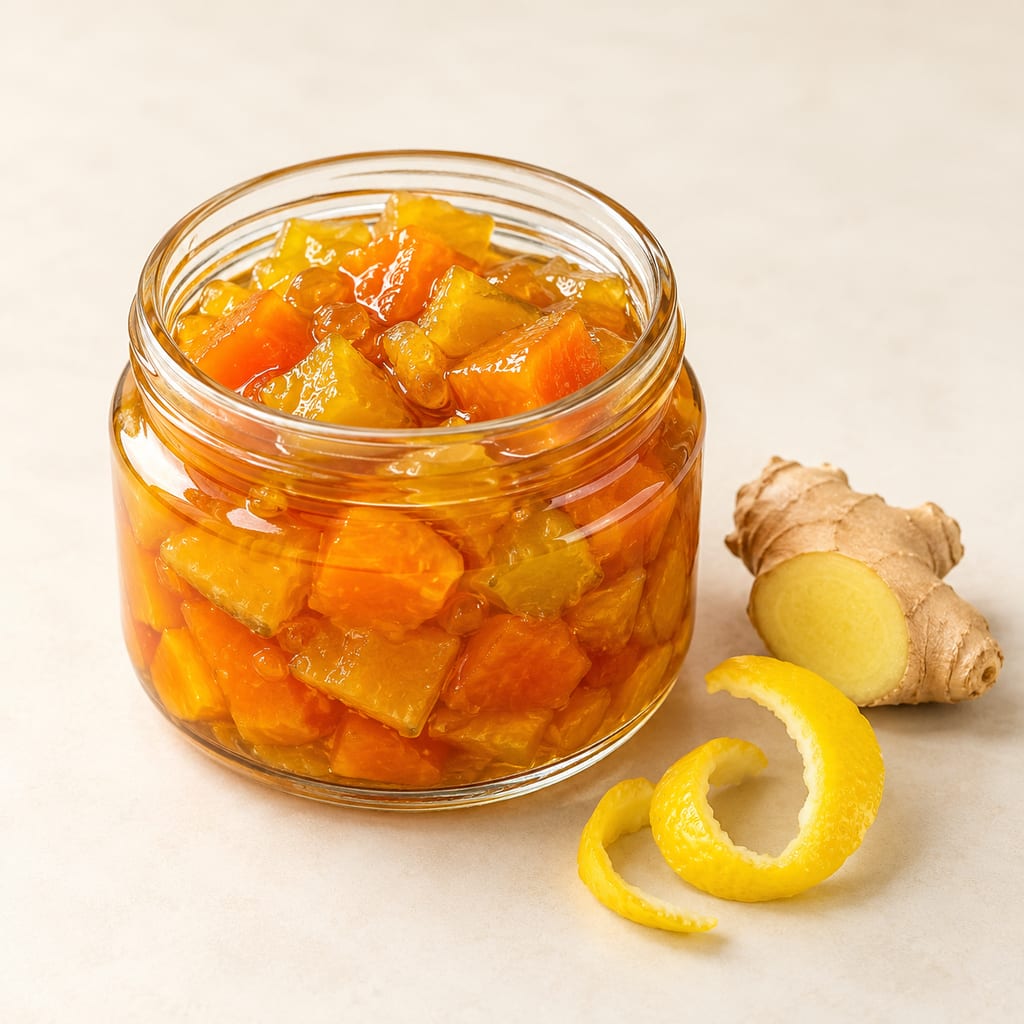
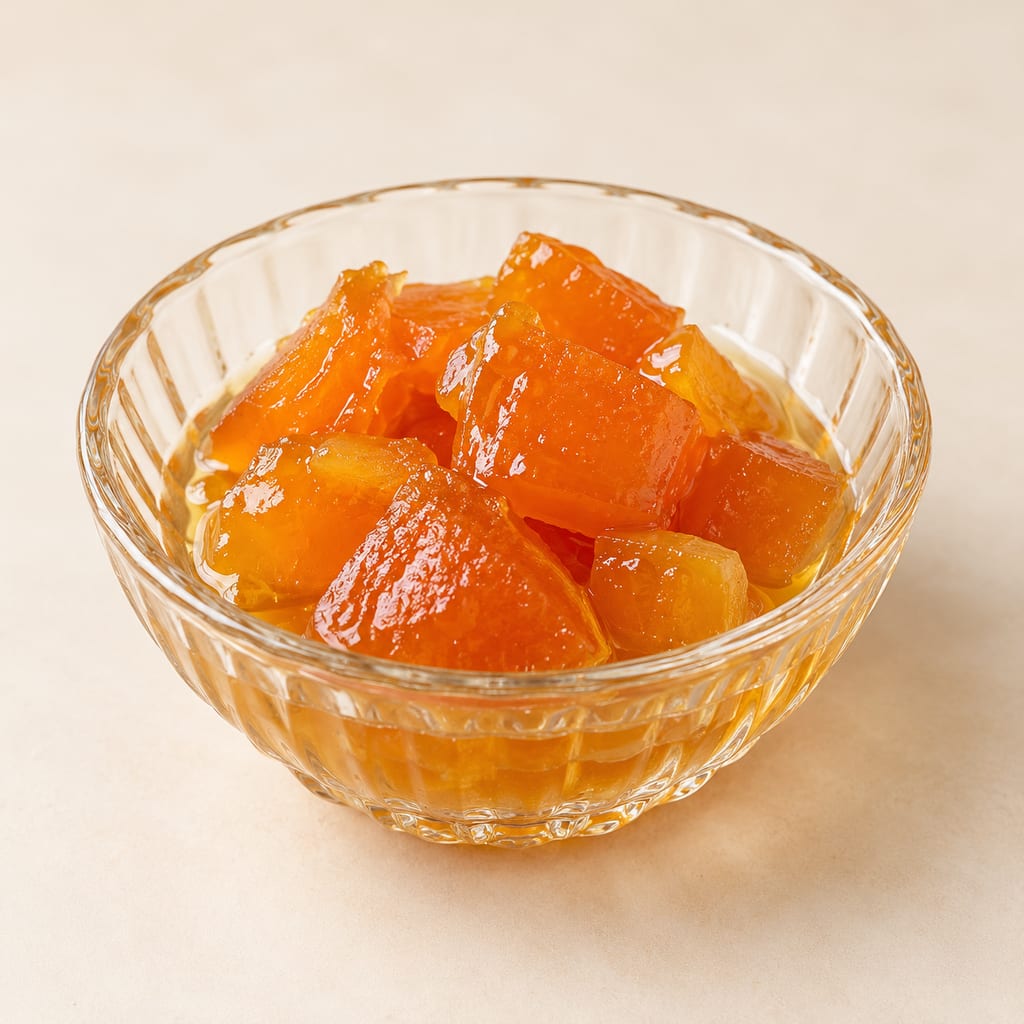
Brazilian doce de abóbora can retain pieces of pumpkin or be worked into a thick paste. Rita Lobo's Panelinha publishes both forms. That distinction matters when preserving a surplus: pieces keep some structure, while a paste makes use of softer flesh and packs compactly. This recipe makes the first form; it does not require the lime treatment found in some other crunchy pumpkin sweets.
The formula below retains Panelinha's small-batch quantities. The significant editorial change is storage: it is a freezer preserve here. The source's instruction to leave the finished compote in a cool, airy place is not presented as a validated method for overwintering pumpkin.
Yield: a small batch of pieces and syrup; final weight varies with the pumpkin. Equipment: heavy saucepan with lid, shallow cooling containers, freezer containers.
The syrup comes partly from moisture drawn out of the pumpkin. A very watery carving cultivar may produce considerably more liquid than a dense winter squash. If the pumpkin is tender before the liquid has reduced, lift out the pieces and simmer the liquid separately, then reunite them. This is a practical texture adjustment for a frozen product, not an authorised alteration to a canned formula.
Pieces may soften further after freezing and thawing. For firmer results use a mature, dense pumpkin and stop cooking as soon as the pieces are tender. If the pieces collapse, the batch can become a spread: no produce has been wasted, but the result should be described as paste rather than cubed compote.
Panelinha's separate doce de abóbora em pasta starts with 1 kg of peeled neck pumpkin, demerara sugar, cloves and cinnamon. It cooks with a lid first, then uncovered while the pumpkin is pressed down and moisture evaporates. This gives a concentrated, spoonable paste. The source refrigerates it; its stated storage duration has not been adopted as a validated life for different pumpkins and home conditions.
The paste is a texture variation within this sweet-preserve family. It is a useful variant within the same Brazilian sweet-preserve entry. Other Brazilian formulas include coconut, but coconut is not part of the documented recipe used here and should not be silently added to a preservation record.
This is not a method for filling jars and leaving them in a cupboard. Freeze the portions intended for winter. The short refrigerator limit is a conservative editorial rule, not a finding that every traditional doce deteriorates after exactly two days. Retain that distinction when adapting the entry for a reference site.
Cool in small portions and refrigerate within one to two hours at 5°C or below, aiming for 4°C. Use the fresh chilled portion within 48 hours. Freeze winter portions promptly at about −18°C in freezer-rated containers with expansion space. Thaw in the refrigerator and use within 24 hours of complete defrosting. These are conservative handling instructions, not a measured shelf life for this particular preserve. Sugar concentration, a jam-like set and a sealed lid do not establish a home-canning process.
Storage for this version: Cool in small portions and refrigerate within one to two hours at 5°C or below (aim for 4°C). Use the fresh chilled portion within 48 hours; freeze the winter portions promptly at about −18°C in freezer-rated containers with expansion space. Thaw in the refrigerator and use within 24 hours of complete defrosting. This is the collection's conservative handling policy, not a laboratory shelf-life result for this preserve.
Orange-blossom water (optional)Food-grade; optional.
4.9 mL1 tsp as recorded
Method
Risks and precautions · Standard risk
Incorrect storage process
Freezer for winter; conservative 48-hour refrigerated handling
Hazard source
Freezer for winter; conservative 48-hour refrigerated handling
Control source
Freezer for winter; conservative 48-hour refrigerated handling
Do not transfer a canning schedule from a different pumpkin preparation.
Cut the pumpkin into approximately 2 cm cubes. Mix with the sugar, cloves and cinnamon. Cover and let the sugar draw out juice for about two hours in the refrigerator.
Transfer everything to a saucepan. Warm gently, then bring to a simmer. Partly cover and cook until the pieces are tender, checking from about 20 minutes. Avoid vigorous stirring if you want the cubes to hold together.
If using orange-blossom water, stir it in after switching off the heat. Remove the whole spices before packaging.
Divide the pieces and syrup between small containers. Cool promptly, keeping the cubes coated with syrup, and use the shared chilled/freezer handling rule.
Cool in small portions and refrigerate within one to two hours at 5°C or below. Use the fresh chilled portion within 48 hours. Freeze winter portions promptly at about −18°C in freezer-rated containers with expansion space. Thaw in the fridge and use within 24 hours of complete defrosting. This is a conservative handling policy, not a measured shelf life for the recipe.
Conditions
Temperature controlRefrigerated
Places
Brazil
Documented preparation · Country evidence
Geographical association of this documented version, not an asserted origin.
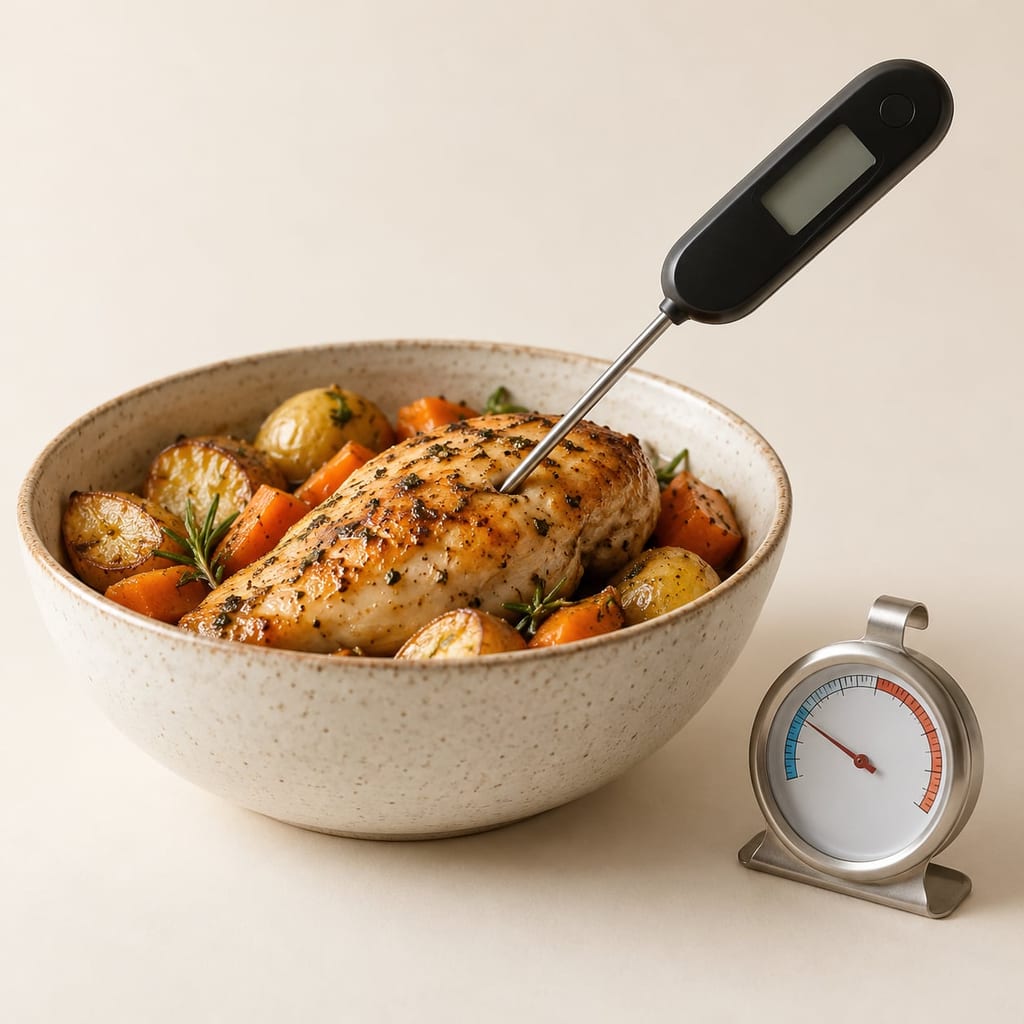
A food probe measures the temperature inside food at the probe tip; a refrigerator thermometer measures the cold storage environment. They answer different questions and cannot establish acidity or validate a preservation process.
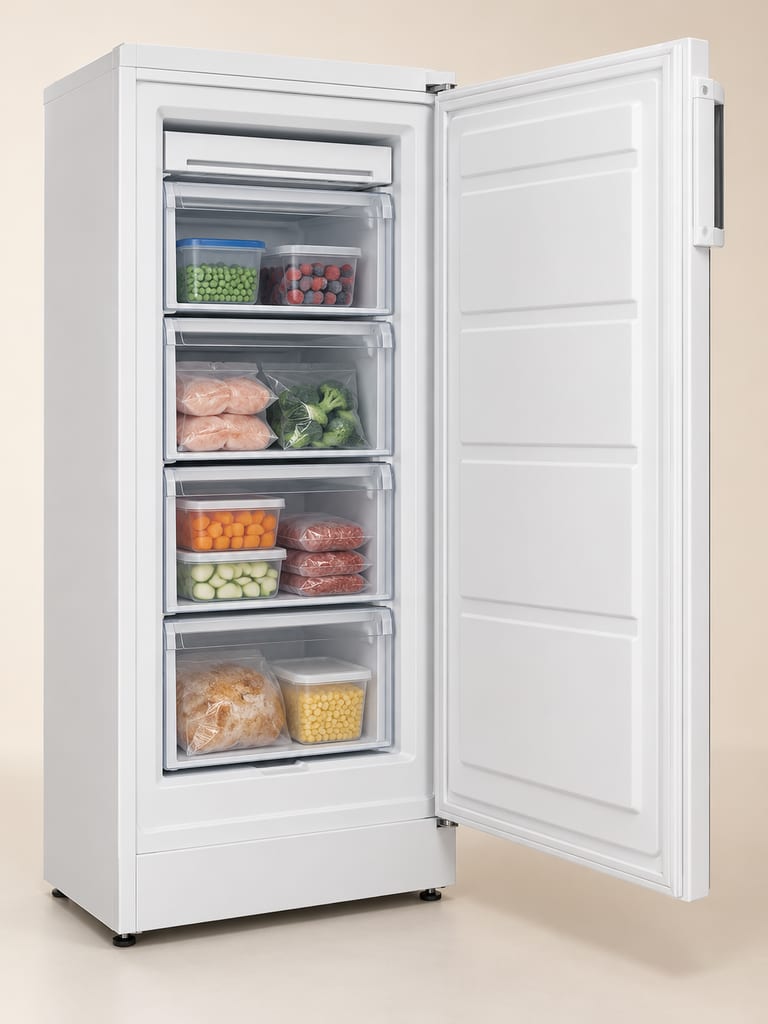
A household freezer holds food in a frozen state for storage and selected texture or separation work; its batch-storage role differs from industrial equipment that freezes individual pieces separately.
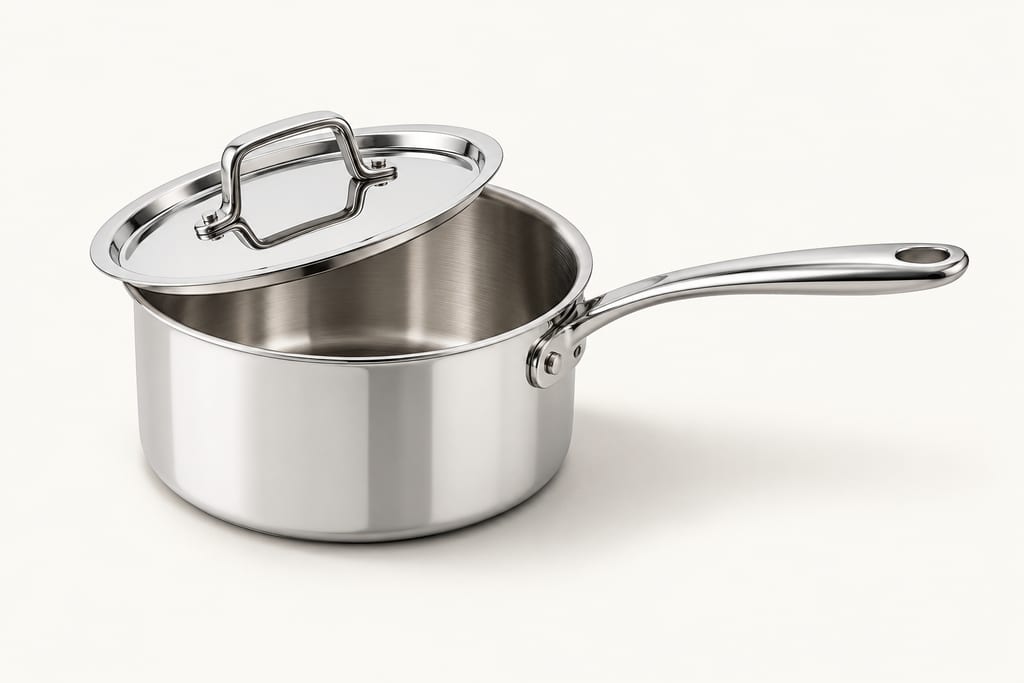
A modern, portable stovetop pan with a stainless-steel cooking surface for sauces and other small simmering jobs. Size, cladding, lid, compatibility and care vary by model.
An ordinary household refrigerator used to store selected fresh produce in vented crates or drawers, at low temperature and at a humidity chosen by the drawer. Not every crop benefits from cold.
A full harvest-to-pantry guide to keeping pumpkins whole, drying and freezing them, and making pickles and sweet preserves around the world—with the exact distinction between tested canning and cold storage.
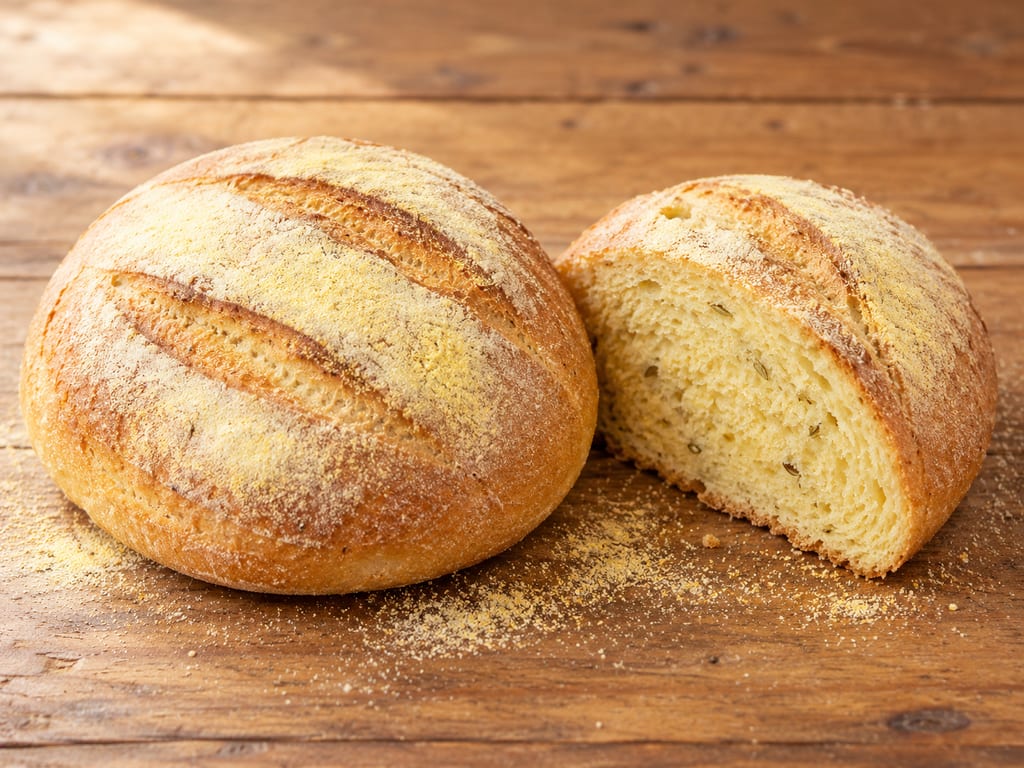
Brazilian broa de milho is a lightly sweet wheat-and-fine-maize bread with fennel and dry yeast, shaped into two small loaves for a Festa Junina or coffee break.
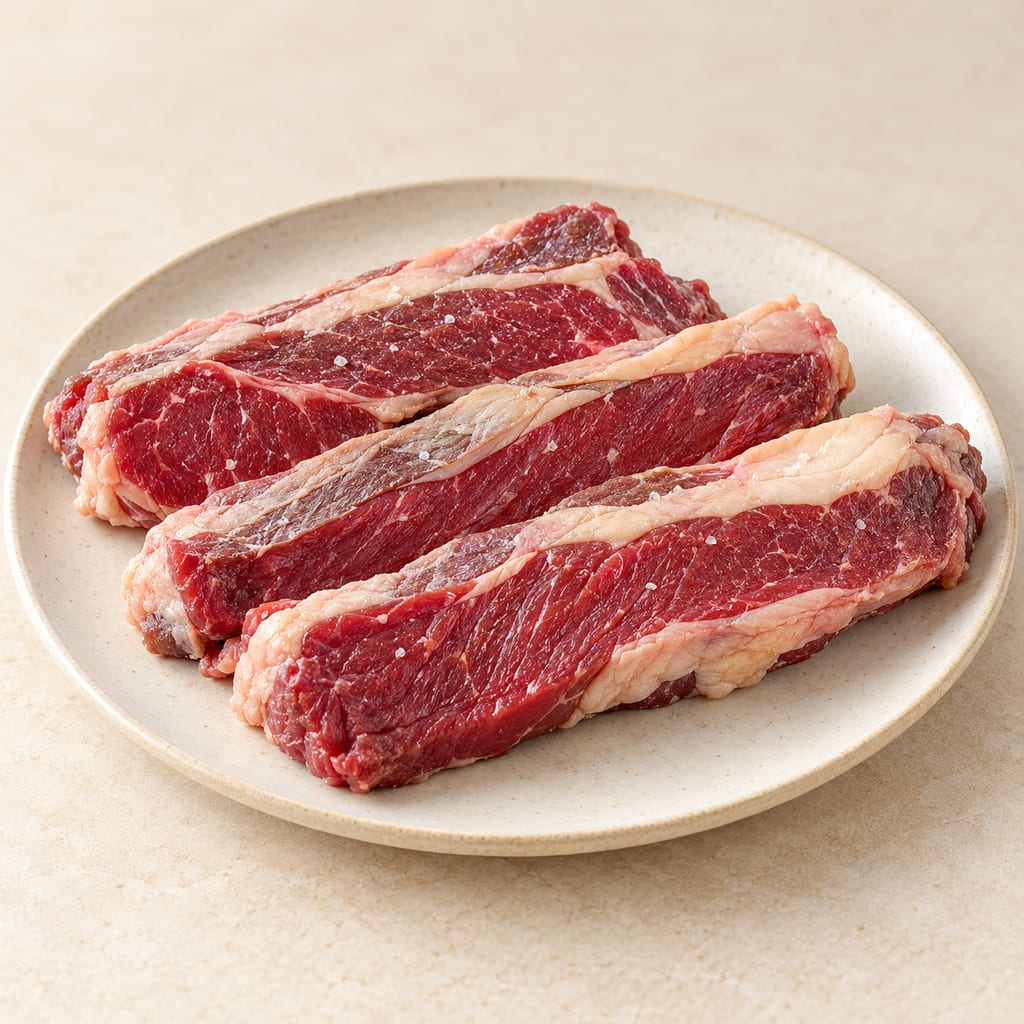
Beef given limited salt and partial surface drying, a short-keeping Brazilian meat that is much less durable than fully dried charque and is treated as a cold-chain product.
Vinagre de caju is made by fermenting cashew-apple juice into an alcoholic base, then aerating it so acetic bacteria can convert ethanol into acid. Brazilian guidance records the sequence, but not a complete home-scale formula.
Beef salted heavily and dried into a strongly preserved ingredient that is desalted before it is cooked in stews; a Brazilian form of salt-dried meat that keeps far longer than the lightly salted carne-de-sol.
Dulce de leche and its relatives, including Mexican cajeta from goat's milk, are milk and sugar cooked slowly until thick and brown. The name changes across Latin America, and the browning gives each its character.
Farinha d’água is a coarse cassava flour associated with Brazil's Amazon and Pará. This page documents one published experiment; it is not a household recipe or validated safety guide.
A Brazilian table sauce made from hot peppers, most often dedo-de-moça, cooked briefly with onion, garlic and vinegar and then blended smooth. Household versions differ widely.
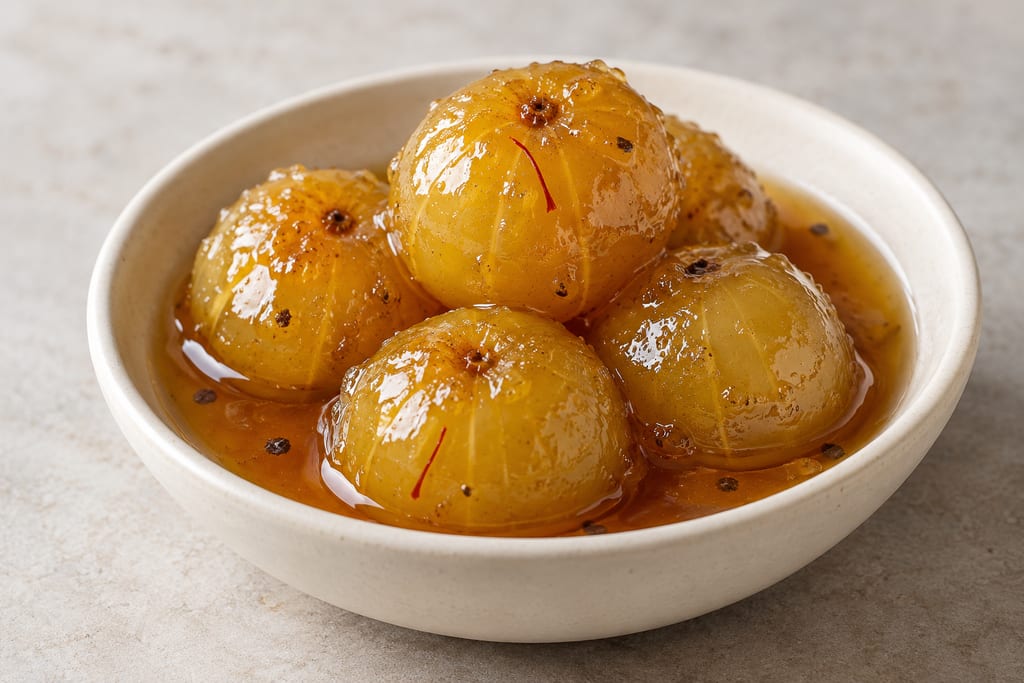
Amla murabba preserves whole Indian gooseberries in a heavy sugar syrup scented with cardamom and sharpened with pepper and black salt. This household method soaks the fruit before cooking.
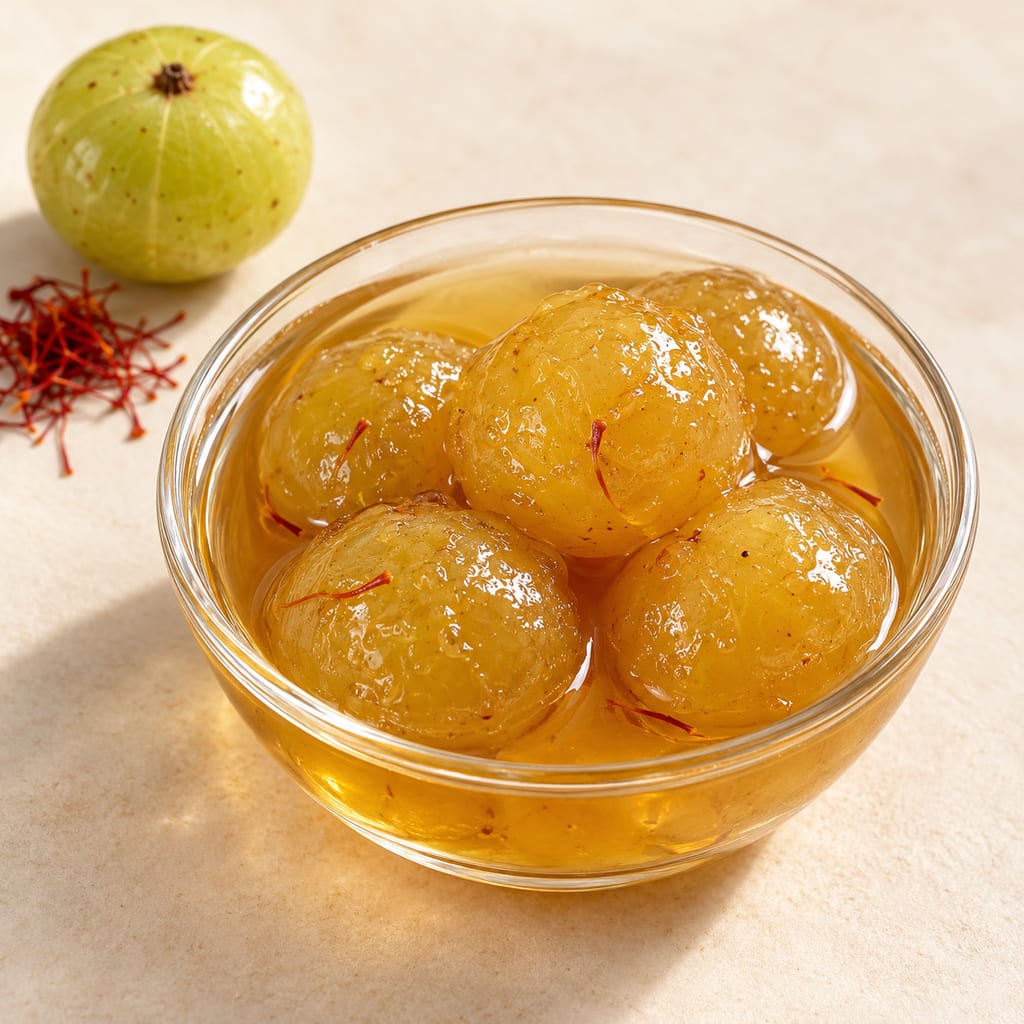
Whole amla simmer in sugar syrup with saffron, black cardamom and pepper in this chef's version of the Indian fruit preserve. The fruit is soaked overnight before cooking.
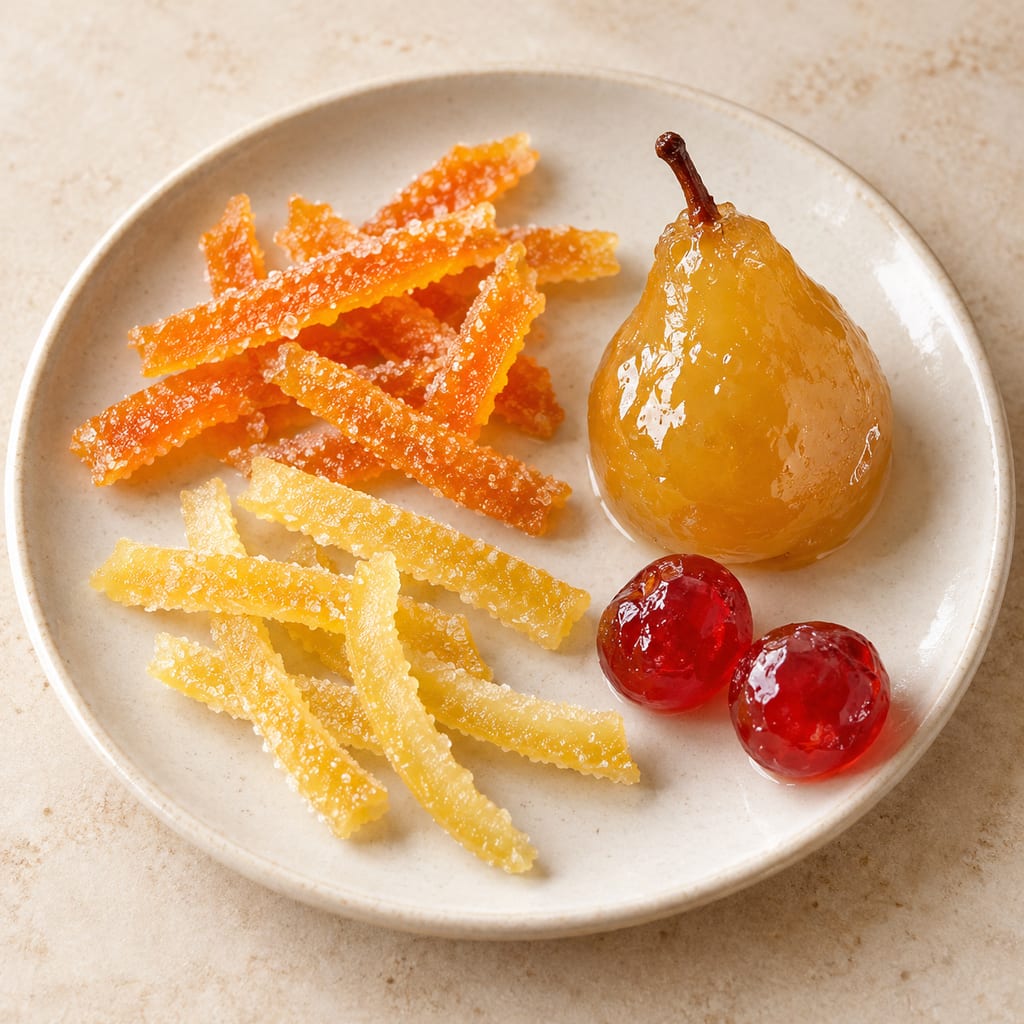
Candied fruit is fruit that has been repeatedly steeped in concentrated sugar syrup, which replaces part of its water with sugar, often followed by drying. It differs from fruit served in a thin syrup.
Cypriot cherry glyka made by layering firm pitted cherries with sugar, briefly boiling them, chilling overnight, and boiling again to concentrate the syrup. This version is refrigerated and has no shelf-stable canning process.