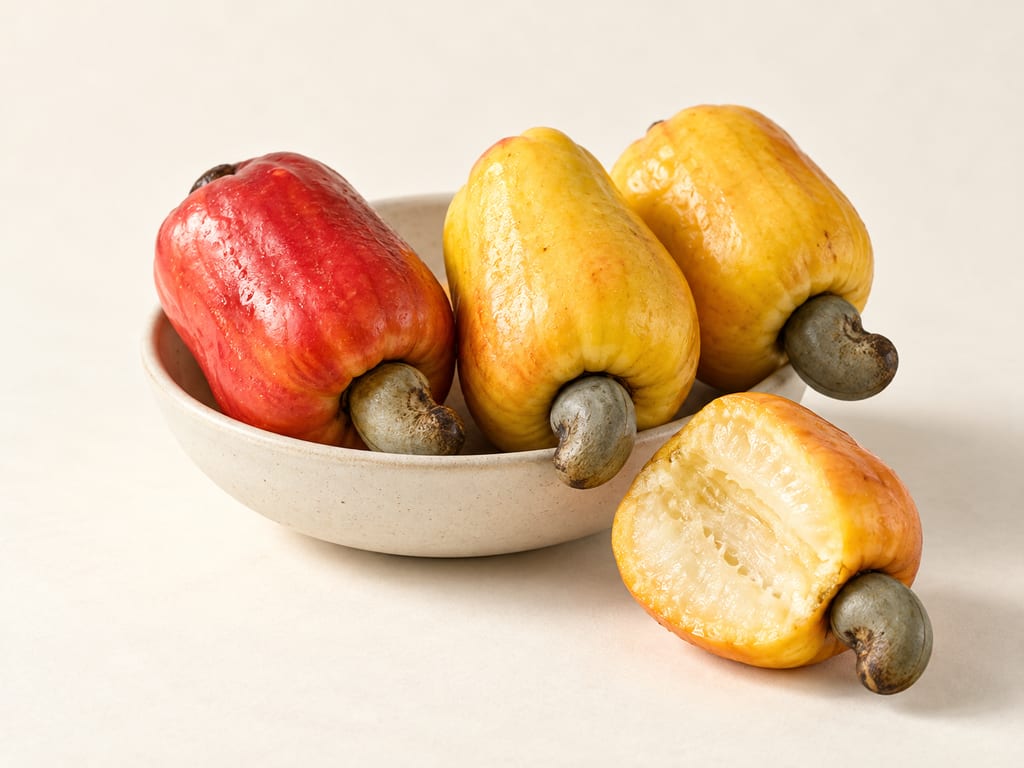
Cashew apple (Anacardium occidentale)
Cashew apple is the juicy swollen flower stalk attached to the cashew nut. Its fresh juice, cajuína, alcoholic ferments and vinegar are distinct products; the nut and its shell are separate materials.
 FermenteaWhere food goes to change
Modern method
Vinagre de caju · Cashew fruit vinegar
Vinagre de caju is made by fermenting cashew-apple juice into an alcoholic base, then aerating it so acetic bacteria can convert ethanol into acid. Brazilian guidance records the sequence, but not a complete home-scale formula.
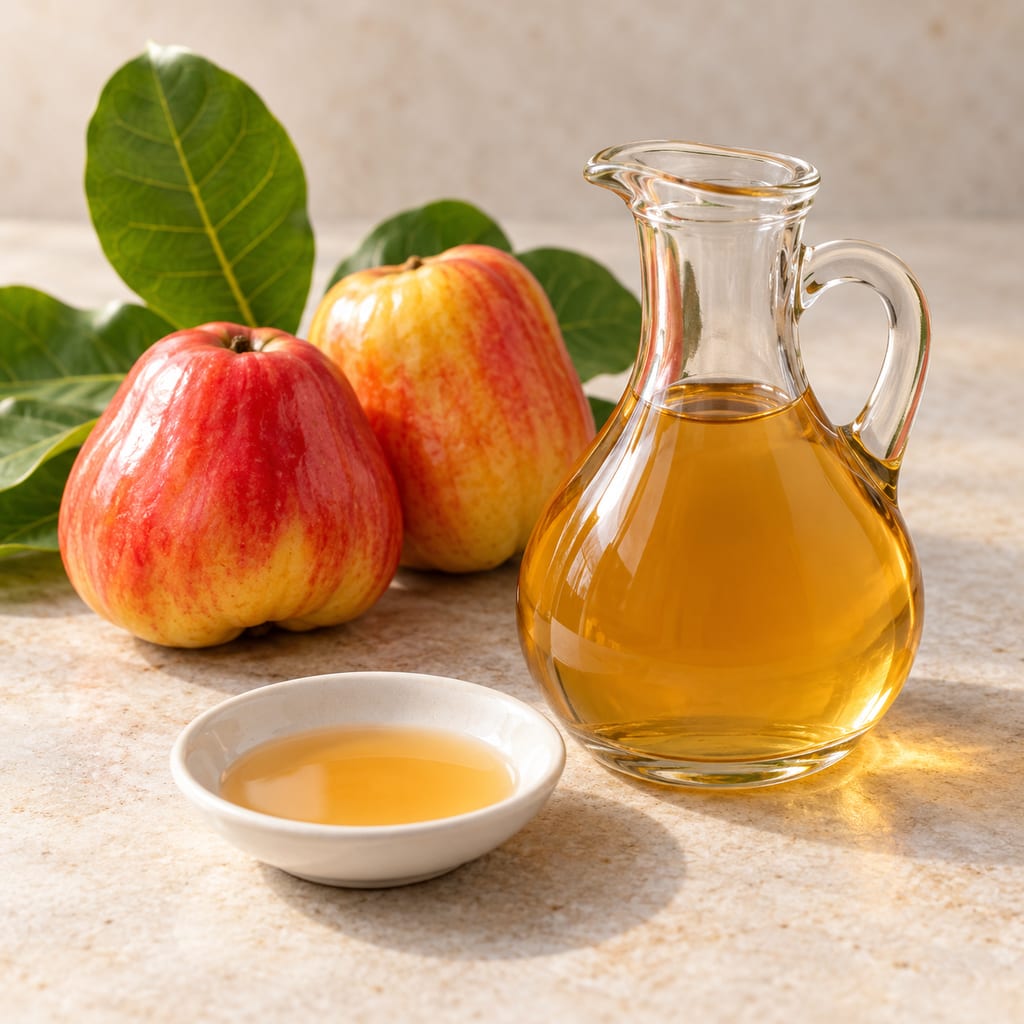
Vinagre de caju is a vinegar made from the cashew apple, the fleshy fruit stalk or peduncle attached to the familiar kidney-shaped cashew nut. The vinegar is not made from the nut. That distinction matters because the juice that can be fermented comes from the succulent peduncle; the edible kernel is a different product. Brazilian research papers use the botanical name Anacardium occidentale and describe vinegar production from cashew wine or fermented cashew juice.
The starting liquid is not yet vinegar. Cashew-apple juice first undergoes alcoholic fermentation, producing an alcoholic ferment that Brazilian sources call fermentado de caju. Embrapa explains that Brazilian legal usage reserves the word vinho for grape-wine, so the analogous beverage made from other fruit is called a fermentado. The vinegar stage then acts on that already-fermented liquid. A source-backed page should keep those stages distinct: juice is the fruit feedstock, fermentado de caju is the alcoholic intermediate, and vinegar is the acidified final preparation.
The 2003 study frames the product as one possible use for cashew peduncles in Brazil’s Northeast, where the authors identify Ceará, Piauí and Rio Grande do Norte as major cashew-producing states. That regional context explains why researchers considered the fruit a plausible vinegar substrate. It does not identify a single birthplace, nor does it establish an unbroken local tradition. The sources examined here document technical and experimental work rather than an ancient origin story.
The juice-to-vinegar route depends on two biological stages. Yeasts carry out the first, alcoholic fermentation, consuming fermentable sugars and producing ethanol. Acetic acid bacteria carry out the second: in the presence of oxygen, they oxidize ethanol to acetic acid. Embrapa describes aeration as the way to favour these bacteria after alcoholic fermentation is complete. The Australian Wine Research Institute likewise describes vinegar production as inoculating a base wine with live acetic acid bacteria and managing air exposure.
That oxygen requirement sets vinegar apart from many sealed fermentations. A cover or closure that prevents contamination must still allow the documented process to receive air; an airlock used for an alcoholic ferment is not, by itself, the same as an aerated acetification system. The Brazilian sources do not specify the vessel design or air-transfer rate, so this explanation clarifies the mechanism but cannot be turned into an equipment specification for this recipe.
Acid production is not the same thing as measuring a safe preservation strength. Embrapa describes the product as reaching acidity around 4%, but its short answer does not state a test method, calibration procedure, or whether the figure is a household target. Penn State Extension warns that homemade vinegar has variable acidity and should not be used for pickling or canning; preservation recipes rely on a specified vinegar strength. The approximate endpoint here should therefore be read as a reported technical description, not as a guarantee of shelf stability.
Embrapa’s 2015 cashew handbook gives a concise process sequence: first complete the alcoholic fermentation of cashew juice; then aerate the ferment to favour acetic bacteria; continue until the acidity is around 4%; filter, pasteurize and bottle. The statement is useful because it names the transformations and finishing steps in order. It is not a weighed formula. It supplies no cashew-juice volume, sugar adjustment, alcohol strength for the vinegar stage, acetic-bacteria culture dose, aeration rate, duration, pasteurization schedule, or storage period.
For that reason, the structured method on this page begins with a prepared cashew-apple alcoholic ferment rather than pretending to teach the complete production of one. The vinegar-stage instructions preserve what the technical source actually reports. They do not fill its gaps with a generic cider- or wine-vinegar recipe, because different substrates and process controls may not be interchangeable.
The precursor beverage has its own documented method. In a separate answer, Embrapa describes clarified cashew juice, yeast, nutrient additions and an alcoholic stage for fermentado de caju. That is helpful context for understanding what the vinegar source means by fermented cashew juice, but it is a separate preparation with its own stabilization and filtration instructions. It should not be spliced into the vinegar method without confirming that each step is appropriate for a base that will undergo acetic fermentation.
A 2003 paper by Moacir Epifânio da Silva, Flávio Luiz Honorato da Silva and Ramdayal Swarnakar examined cashew-wine vinegar at the Federal University of Campina Grande. Its aim was to study how initial ethanol and acetic-acid concentrations affected yield and productivity. The authors used acetic bacteria carried on sugarcane bagasse and compared a 30-litre packed reactor with a 600-millilitre bench reactor. Their experiments ran in 72-hour intervals.
That design is evidence that researchers tested a second, more specific route; it is not a household recipe. Experimental yields and productivity changed with the initial alcohol and acid levels. The abstract and tables describe a factorial study rather than a single recommended formula. Those results should not be averaged with Embrapa’s approximate endpoint or treated as a universal process. The inoculum, reactor arrangement, acidity additions and test duration belong to that experiment.
The study’s practical contribution is also historical evidence. It records that the authors did not find cashew-wine vinegar for sale in the supermarkets they surveyed in Campina Grande and Juazeiro do Norte at the time. That observation explains their interest in production and reducing fruit waste. It does not prove that no household or local producer made it elsewhere, and it cannot date the first cashew vinegar.
The production route belongs to a wider cashew economy in which the nut and the fruit stalk are handled differently. The 2003 authors describe interest in using cashew juice and its fermentation products in Brazil’s Northeast. Their account links the research to regional agriculture and possible use of a perishable fruit material, but it does not provide a complete account of farm practice, seasonal supply or the economics of vinegar manufacture.
Current Brazilian retail listings show that cashew-fruit vinegar is also sold as a bottled condiment. One producer presents a slow-fermented product, while a separate listing identifies a sugar-free cashew-fruit vinegar. These commercial examples establish contemporary product variation, not a shared traditional method: their labels and marketing descriptions cannot be used to rewrite the Embrapa process or infer its fermentation time.
A vinegar made from fruit can be used where a cook wants acidity and a fruit-derived seasoning, including dressings, sauces and marinades when the product label supports those uses. The acidity can brighten rich or sweet ingredients, while fruit-derived compounds may contribute a character that differs from clear distilled vinegar. The sources available here do not establish a canonical Brazilian dish that must use cashew vinegar, so it is better treated as a regional specialty condiment than as an obligatory ingredient in a named traditional recipe.
The evidence has three useful layers: an official Brazilian production outline, a university experiment that tests specific process variables, and present-day product listings. Together they show that cashew-apple vinegar is a real preparation with a documented Brazilian technical route and contemporary commercial examples. They do not provide a complete standard formula that connects those examples to one another.
A reader can learn the essential sequence—alcoholic fermentation followed by oxygen-dependent acetic fermentation—but cannot derive missing batch quantities or heat-treatment controls from that sequence alone. The 2003 experiment underscores why: yield and productivity depended on the starting ferment and acidity conditions. A result reported for one bench or reactor setup is not a universal household endpoint.
The food-preservation boundary is especially important. An acidity figure reported as approximate is not a validated substitute for a tested canning recipe. Penn State Extension advises against using homemade vinegar of inconsistent acidity for pickling or canning. Use commercial vinegar at the strength specified by a tested preservation recipe for shelf-stable preserves. Do not infer acidity from sourness, smell, bubbles or the appearance of a surface film.
The cashew peduncle is not interchangeable with the nut or with clarified juice products already sold for drinking. Embrapa lists non-fermented nectar and syrup among processed peduncle products; the vinegar route instead begins with an alcoholic ferment. The 2007 Brazilian study notes that damaged or already-spoiled fruit was excluded from its research and that processing decisions around the peduncle affect the base liquid. A reader should therefore recognize that a cashew-fruit drink, a sweet syrup, and cashew vinegar are different preparations, even when all start with the same plant.
Cashew juice also has processing characteristics that make a generic fruit-wine formula a poor substitute for a verified cashew method. In its laboratory wine process, the 2007 study discusses pectin in the peduncle juice and checks methanol in the alcoholic intermediate. Those are features of that particular technical study, not household instructions for removing pectin or measuring methanol. They help explain why this recipe starts from an already-prepared alcoholic base and why the missing base-wine controls should not be supplied by guesswork.
The wider processing context also explains the interest in vinegar as a value-added product. The Northeast Brazilian study describes the fruit stalk as underused relative to the nut industry, while Embrapa documents a broader set of uses for juice and fiber. Converting a seasonal fruit into an acid condiment is one possible processing route among many; it does not imply that every cashew juice was historically fermented or that vinegar was the principal traditional use.
Published work from other cashew-growing regions shows that the fruit can lead to different vinegar processes. At Kerala Agricultural University’s Cashew Research Station in India, A. Sobhana and Jose Mathew tested six treatments and reported a three-week alcoholic-then-acidic fermentation study. Their selected sample used cashew-apple juice, sugar, yeast and mother vinegar and reached 4.66% acidity. That is a separate Indian experiment and should not be merged into the Embrapa route or treated as its ingredient ratio.
A study at Ghana’s Cocoa Research Institute followed another path: cashew-apple juice was first fermented into wine with Saccharomyces cerevisiae, then vinegar was produced by spontaneous acetic fermentation. The researchers monitored the change over 29 days. This differs from the Brazilian laboratory process that used acetic bacteria carried on sugarcane husk and concentrated vinegar inoculum, and from Embrapa’s concise instruction to aerate a completed cashew ferment.
These papers make the geographic range visible without proving that all methods are equivalent. They vary in starter approach, substrate preparation, experimental setup, monitoring and reported endpoints. A cook who encounters a cashew vinegar from another country should use that maker’s own description and product label; the Brazilian route on this page does not stand in for a Kerala or Ghana formulation.
Vinegar is used as a souring seasoning in dressings, sauces and marinades. Contemporary Brazilian listings position cashew-fruit vinegar in this condiment role, although they do not establish a single traditional dish or a fixed recipe for it. The product’s fruit base makes it a different choice from neutral distilled vinegar, but the sources reviewed here do not provide a formal tasting profile or a standardized color, aroma or texture for every producer’s version.
A name such as vinagrete de caju can also cause confusion: in Brazilian recipe writing, it may refer to a vinaigrette made with fresh cashew fruit, not to a dressing made from cashew-apple vinegar. That distinction is useful when reading menus and recipes. A dish that calls for white-wine vinegar and fresh cashew pieces is not evidence that cashew vinegar itself is a traditional ingredient.
Acidity also has a technical role beyond flavor. Some vinegars are used in tested pickling and canning formulas, but the acidity of homemade vinegar can vary. Penn State Extension advises against using homemade vinegar for pickling or canning. A producer’s approximate acidity figure, a product’s sour taste, or a visible surface culture cannot replace a measured specification and tested preservation procedure.
The inspected evidence describes a Brazilian technical process and a 2003 laboratory study, not a documented ancient or continuous household tradition.
Scaling: source batch only
The source's approximate acidity endpoint does not establish a tested shelf-stable preserve or a safe home-canning acid strength.
Hazard sourceDo not use homemade vinegar of uncertain acidity for pickling or canning; use a research-tested preservation recipe and the specified commercial vinegar.
Control sourceThe documented 4% acidity endpoint is approximate and is not a validated canning specification. This source outline omits the measurement and heat-treatment controls needed for a complete home recipe.
The sources document Brazilian production research and an Embrapa process outline; they do not establish a precise birthplace or continuous traditional use.
Cashew apple is the juicy swollen flower stalk attached to the cashew nut. Its fresh juice, cajuína, alcoholic ferments and vinegar are distinct products; the nut and its shell are separate materials.
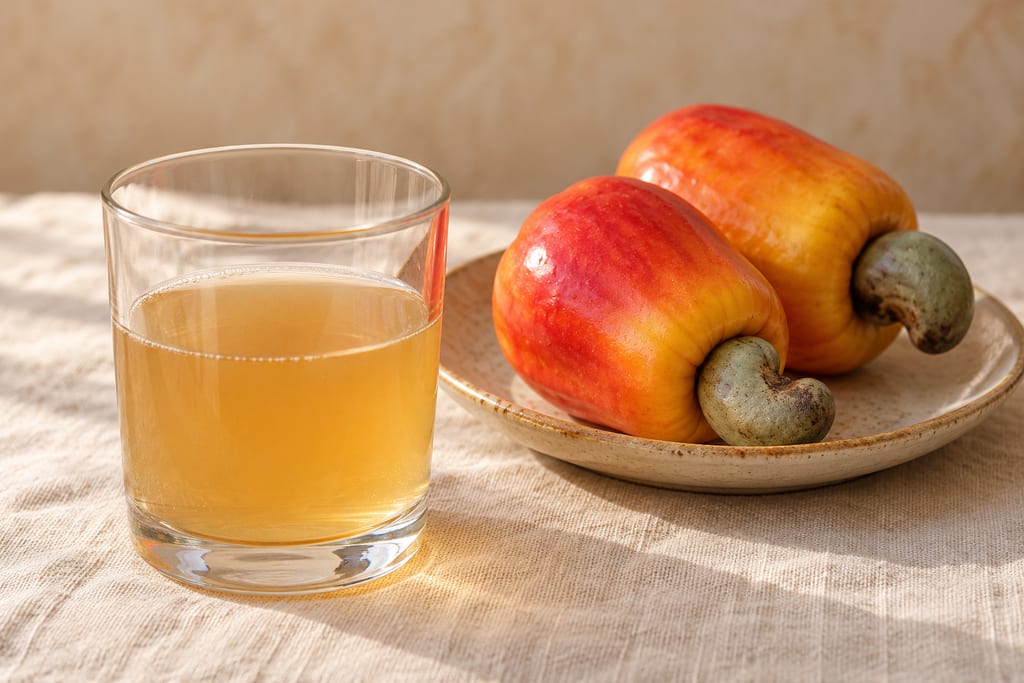
Vinho de caju is a seasonal alcoholic drink made from expressed cashew-apple juice. In southern Guinea-Bissau, an ethnographic account records a simple press-and-strain method, while harvest timing and local trade shape its place.
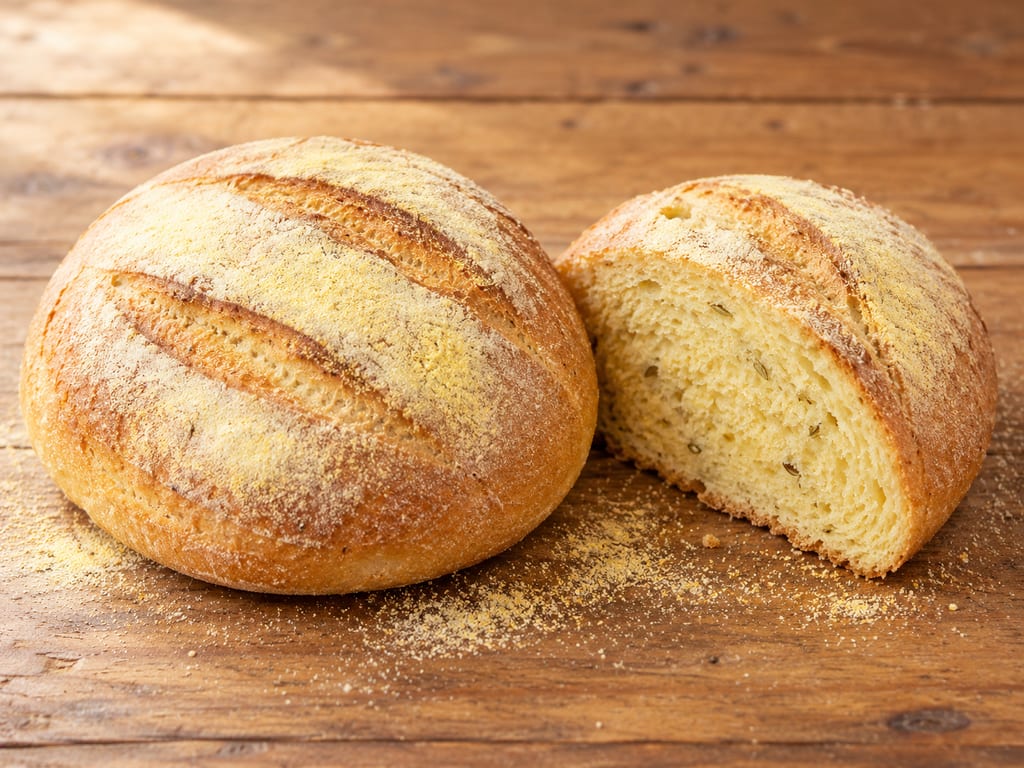
Brazilian broa de milho is a lightly sweet wheat-and-fine-maize bread with fennel and dry yeast, shaped into two small loaves for a Festa Junina or coffee break.
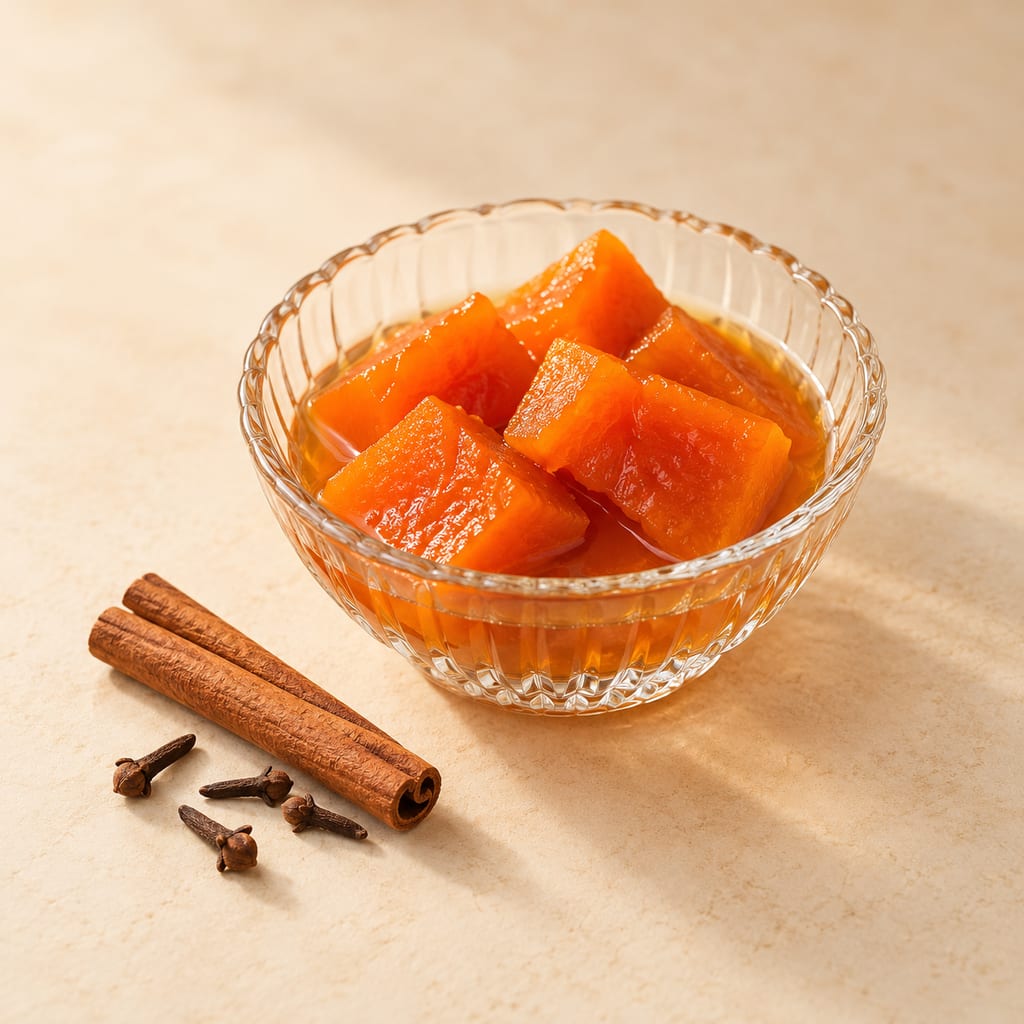
Brazilian doce de abóbora: Freeze for winter; small fresh portion refrigerated up to 48 hours.
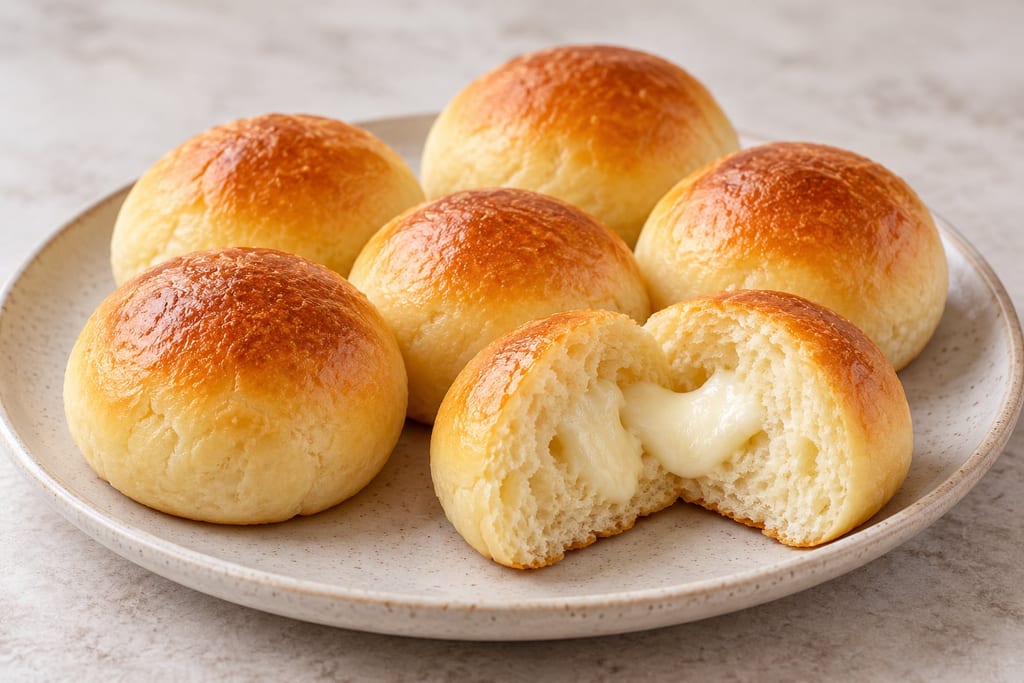
Soft Brazilian yeast rolls use cooked mashed potato in an enriched dough, with mozzarella cubes enclosed before baking.
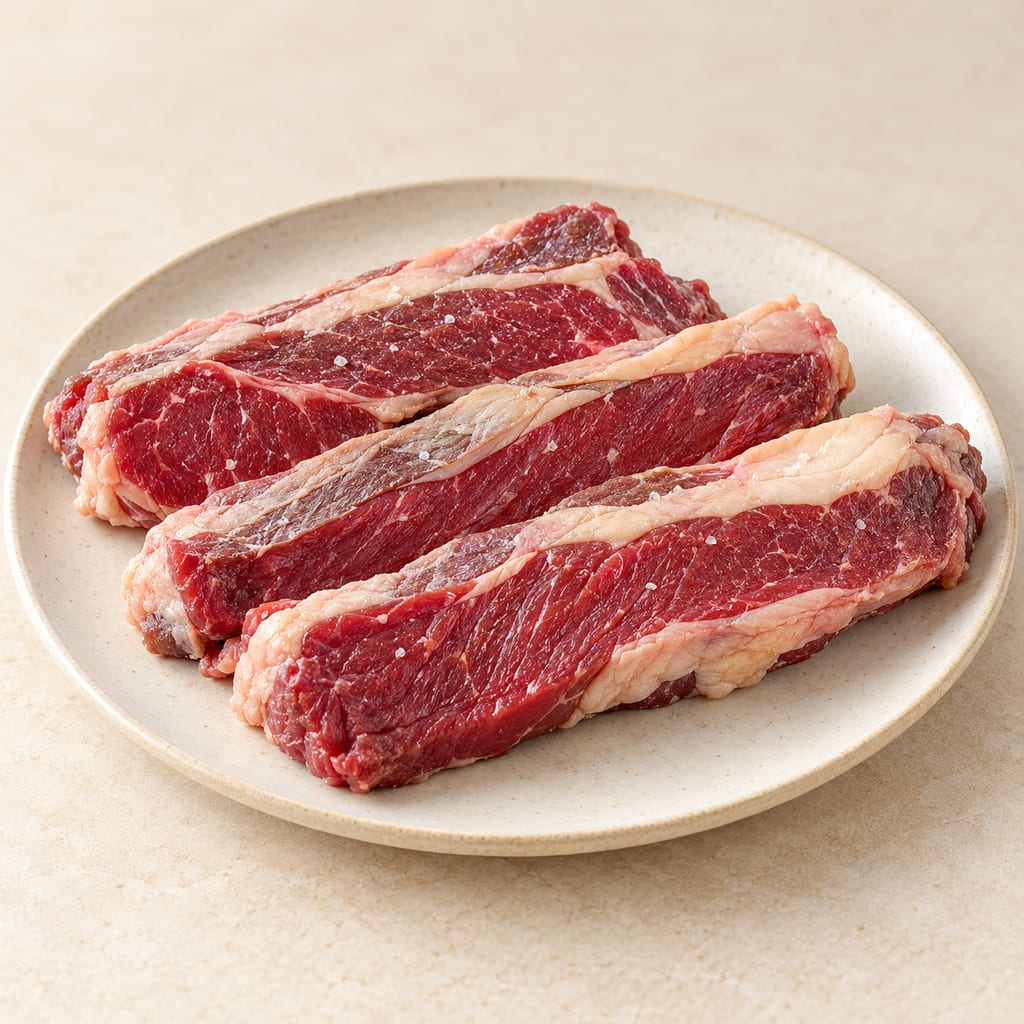
Beef given limited salt and partial surface drying, a short-keeping Brazilian meat that is much less durable than fully dried charque and is treated as a cold-chain product.
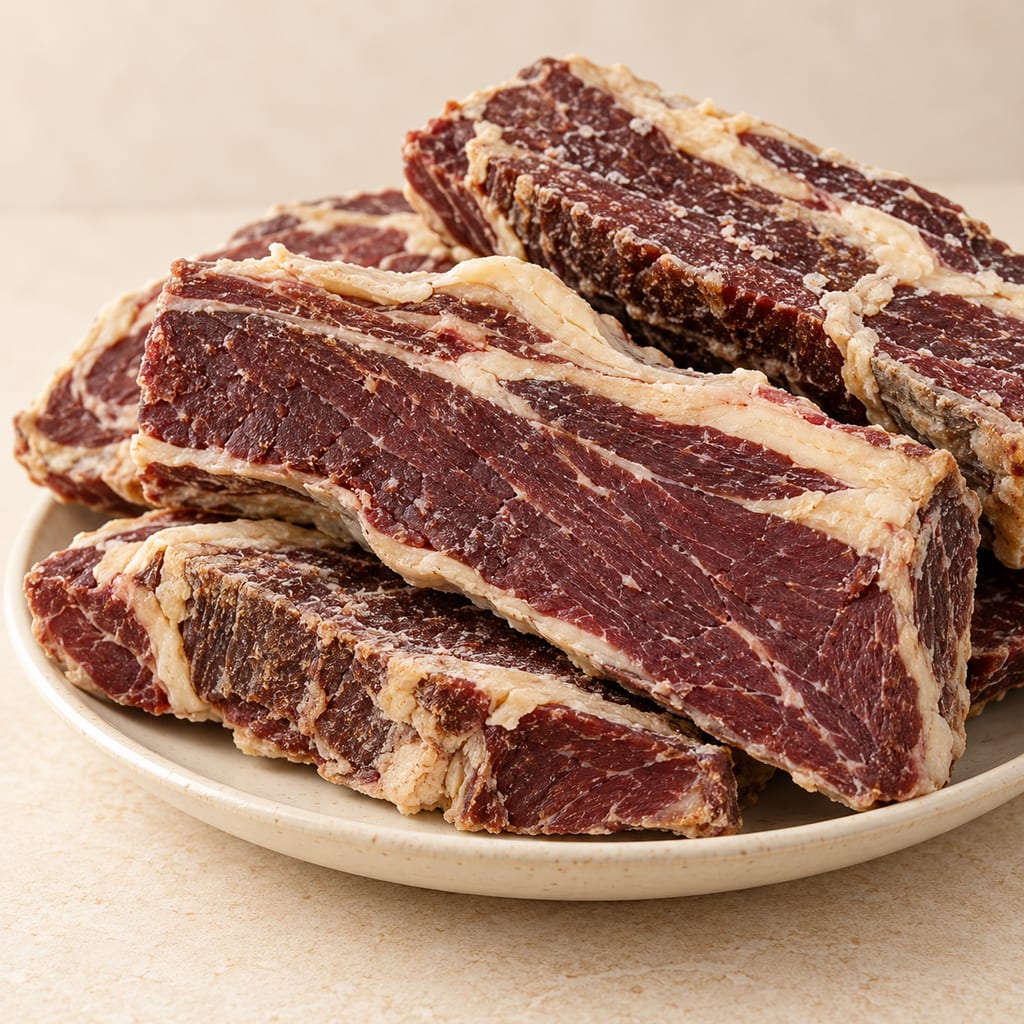
Beef salted heavily and dried into a strongly preserved ingredient that is desalted before it is cooked in stews; a Brazilian form of salt-dried meat that keeps far longer than the lightly salted carne-de-sol.
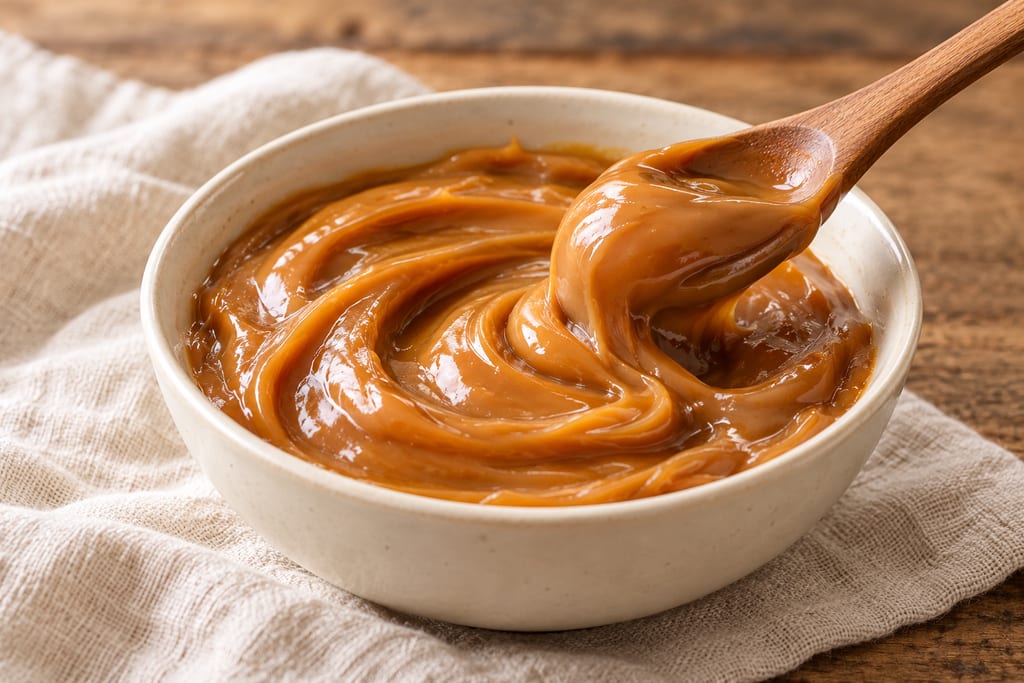
Dulce de leche and its relatives, including Mexican cajeta from goat's milk, are milk and sugar cooked slowly until thick and brown. The name changes across Latin America, and the browning gives each its character.

Farinha d’água is a coarse cassava flour associated with Brazil's Amazon and Pará. This page documents one published experiment; it is not a household recipe or validated safety guide.
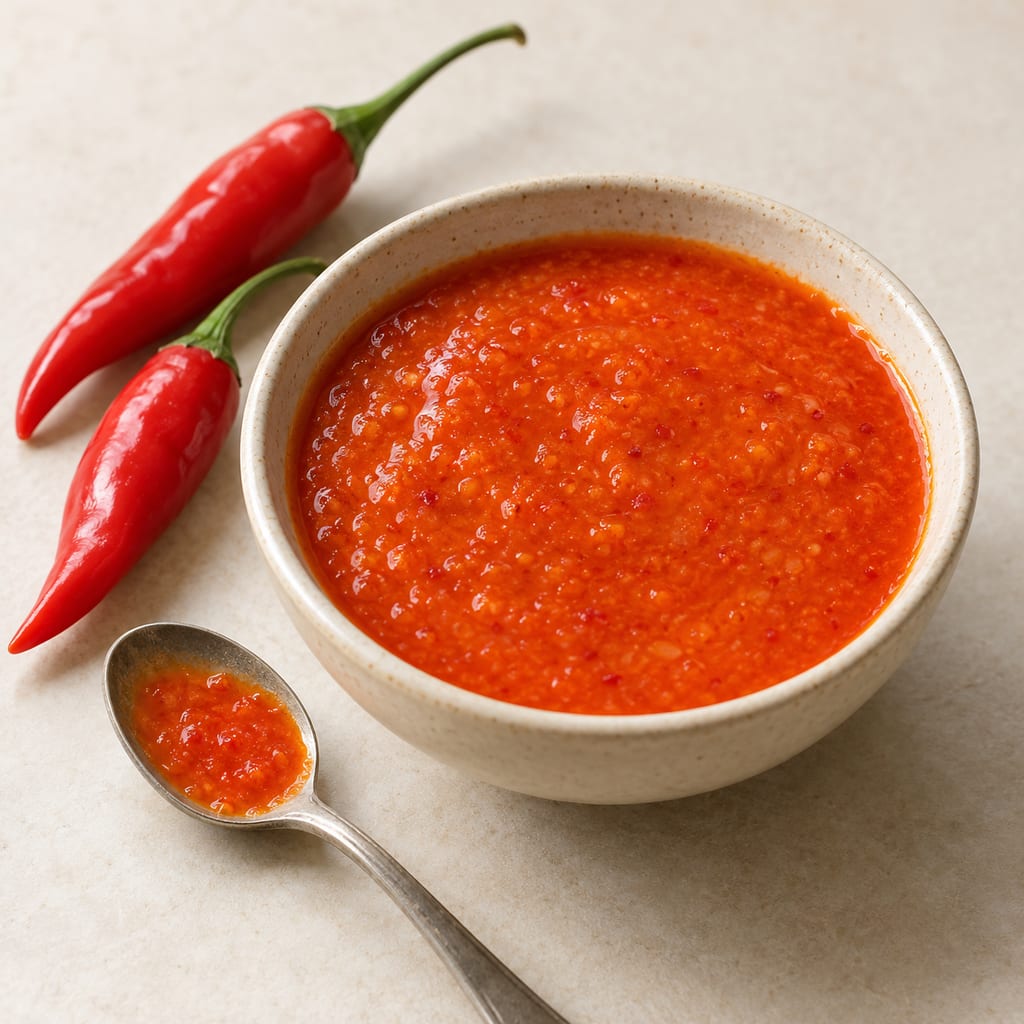
A Brazilian table sauce made from hot peppers, most often dedo-de-moça, cooked briefly with onion, garlic and vinegar and then blended smooth. Household versions differ widely.

A dark, balanced vinegar from Emilia-Romagna made by combining cooked or concentrated grape must with wine vinegar, then acetifying and refining it in wood under a protected specification.
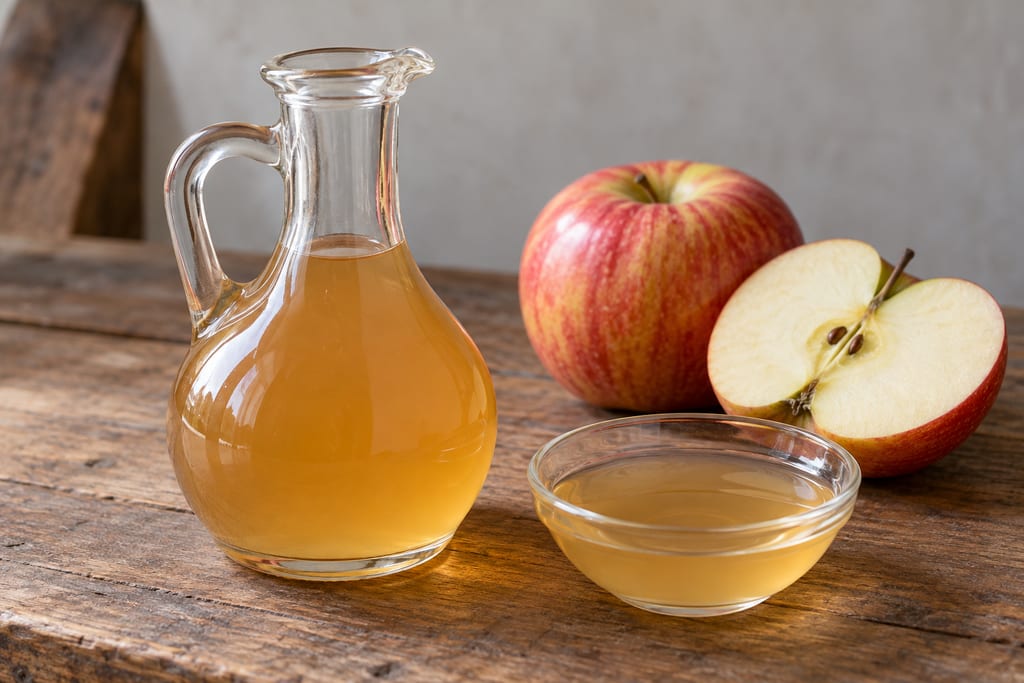
Cider vinegar is made when acetic-acid bacteria use oxygen to turn the alcohol in dry apple cider into acetic acid. This historical cask method begins with fermented cider and differs from apple-scrap vinegar made with sugar and water.
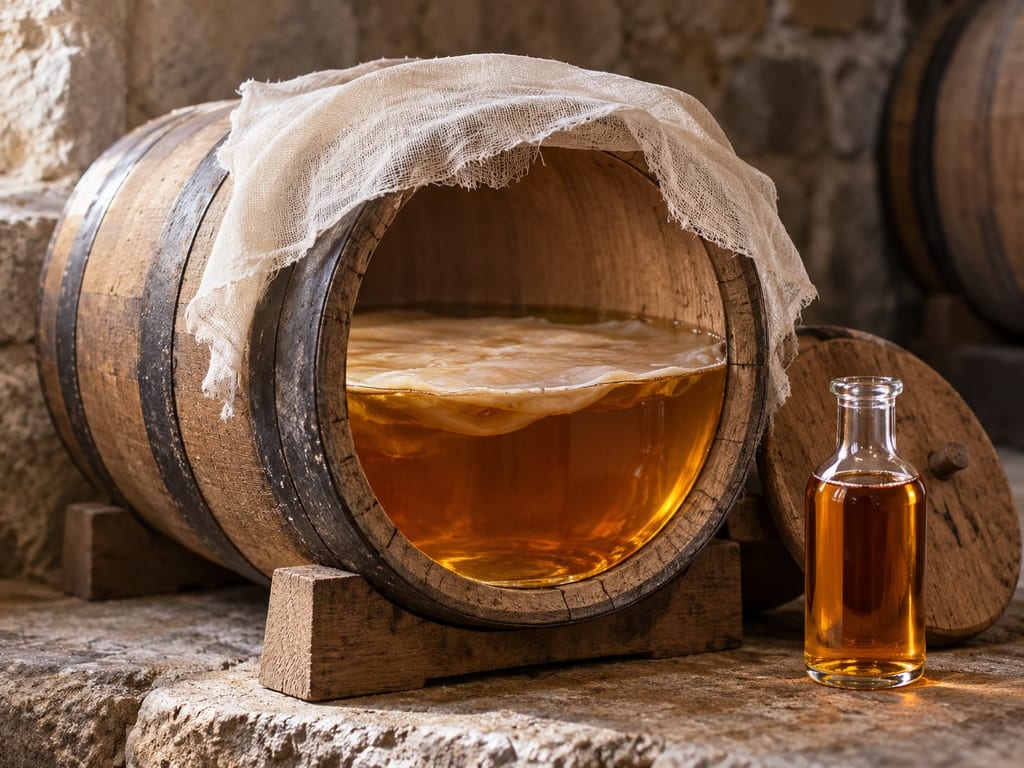
Fruit wine turned into vinegar by acetic acid bacteria at the surface of a half-filled, air-vented vessel. The Orleans method takes one to three months for a 9% wine.

Japanese vinegar from ripe persimmons: yeast turns the fruit sugar to alcohol and acetic bacteria turn that to acid; made at home in a month and by makers in Wakayama and Nagasaki over several years.

Soft, spreadable Calabrian pork sausage made with a great deal of red chilli and fatty pork, stuffed into natural casings, sometimes smoked and matured while staying soft.

A way to add independent temperature logging to an existing food dehydrator without changing its built-in controls or protections. It is a monitoring method, not a rewiring plan.

Pleurotus cystidiosus is the abalone mushroom, a cultivated oyster-type fungus with dark brown caps that grows more slowly and is more demanding than other Pleurotus species.

A living dairy inoculum that starts controlled cream fermentation, developing acidity and aroma before sour cream or cultured butter is finished.

A small electric incubator holds jars at a selected temperature for yogurt and other documented warm food preparations. Controls, capacity and vessel arrangement vary by model.

Adygean salt is a seasoned table salt associated with Adygea and the wider North Caucasian culinary tradition. Salt is blended with garlic and a variable selection of herbs and spices; the exact mix depends on the named style and maker.

The African Caesar-group mushroom, Amanita masasiensis, is a wild ectomycorrhizal species of central and southern African woodlands, eaten locally. The genus contains deadly poisonous species, so identification needs care.
Ghanaian sour cassava dough fermented with traditional inoculum and drained during fermentation. It is used as a base for cooked foods such as banku and akple; process variants and safety outcomes differ.
No community contributions have been published for this entry yet.
Sign in to contribute. Published comments and photos are free to read.
EmbrapaMethod · History · Geography
Caju: o produtor pergunta, a Embrapa responde, 2nd editionEmbrapa describes cashew-juice alcoholic ferment as fermentado de caju and distinguishes it from grape wine in Brazilian nomenclature.
The vinegar route aerates completed alcoholic ferment to favour acetic bacteria, continues to around 4% acidity, then filters, pasteurizes and bottles.
The source does not give a full vinegar batch formula or acetic-stage duration.
Cited in: The cashew fruit behind the vinegar; Two fermentations, two different jobs; What the Brazilian process source actually says; Reading the evidence and the limits
EmbrapaMethod · History
Listagem Perguntas e Respostas – Caju, Questions 470–471Question 470 describes cashew alcoholic ferment and says Brazilian usage reserves vinho for grape wine.
Question 471 describes aeration after alcoholic fermentation, acetic bacteria converting ethanol to acetic acid, approximate acidity around 4%, filtration, pasteurization and bottling.
Cited in: What the Brazilian process source actually says
Universidade do Vale do Paraíba, XIII Encontro Latino Americano de Iniciação CientíficaMethod · History · Geography
Estudo da verificação dos efeitos das concentrações iniciais de etanol e de ácido acético sobre a eficiência da produção de vinagre de vinho de cajuThe 2003 study investigated cashew-wine vinegar in bench and packed-reactor arrangements using acetic bacteria carried by sugarcane bagasse.
The researchers ran 72-hour experimental intervals and reported that performance varied with initial ethanol and acetic-acid concentrations.
The authors discuss cashew production in Brazil's Northeast and their survey of selected local supermarkets.
Cited in: The cashew fruit behind the vinegar; Two fermentations, two different jobs; A laboratory study is a separate route; A regional ingredient, with modern product forms; Reading the evidence and the limits
Australian Wine Research InstituteMethod
Vinegar production: inoculation of a base wine with live acetic acid bacteriaThe vinegar process uses live acetic acid bacteria and requires attention to base-wine composition and aeration.
Cited in: Two fermentations, two different jobs
Penn State ExtensionSafety · Uses
Advice about VinegarHomemade vinegar acidity is inconsistent and should not be used for pickling or canning.
Commercial vinegar used for home preservation should match the acidity and directions specified by a tested recipe.
Cited in: Reading the evidence and the limits; At the table: seasoning rather than a preservation guarantee
Companhia dos FermentadosModern use · Variation
Vinagre de caju – 250 mlA current Brazilian producer listing markets bottled cashew vinegar as a slow-fermented condiment.
Cited in: A regional ingredient, with modern product forms; At the table: seasoning rather than a preservation guarantee
Casa Santa LuziaModern use · Variation
Vinagre de Caju Sem Açúcar Dom Spinosa 250 mlA current Brazilian retail listing identifies a bottled cashew-fruit vinegar as sugar-free.
Cited in: A regional ingredient, with modern product forms; At the table: seasoning rather than a preservation guarantee
EmbrapaIngredient · Geography
Processamento do pedúnculo – CajuEmbrapa distinguishes non-fermented cashew nectar from clarified cashew syrup and other products made from peduncle juice.
The page documents several different uses and processing routes for cashew peduncle, keeping juice products distinct from fermented beverages.
Cited in: The peduncle is a distinct starting material
Brazilian Journal of Chemical EngineeringMethod · Safety · Geography
Cashew wine vinegar production: alcoholic and acetic fermentationA 2007 Brazilian study documents a stirred alcoholic fermentation followed by experimental acetic fermentation in laboratory reactors.
The vinegar experiments used cashew wine, sugarcane husk carrying acetic bacteria and concentrated vinegar inoculum; the results are process-specific.
The authors discuss peduncle pectin and methanol analysis, and report the tested lab process rather than a home-scale formula.
Cited in: The peduncle is a distinct starting material; Research from other regions records separate methods
International Journal of Processing and Post Harvest Technology; Kerala Agricultural University, Cashew Research StationMethod · Geography · Variation
Vinegar production from cashew appleA 2015 Kerala study tested an Indian cashew-apple-vinegar method over three weeks and compared six treatments.
One treatment using cashew-apple juice, sugar, yeast and mother vinegar reached 4.66% acidity; this is a separate Indian experimental batch, not the Brazilian process.
Cited in: Research from other regions records separate methods
Biotechnology Journal InternationalMethod · Geography · Variation
Production of Wine and Vinegar from Cashew (Anacardium occidentale) “Apple”A Ghana study conducted between 2009 and 2013 made wine from cashew-apple juice with Saccharomyces cerevisiae and then produced vinegar by spontaneous acetic fermentation.
The study followed the acetic fermentation for 29 days and measured changes in alcohol, pH and volatile acidity.
Its reported results are a Ghana-specific research outcome and are not a formula for the Brazilian route.
Cited in: Research from other regions records separate methods