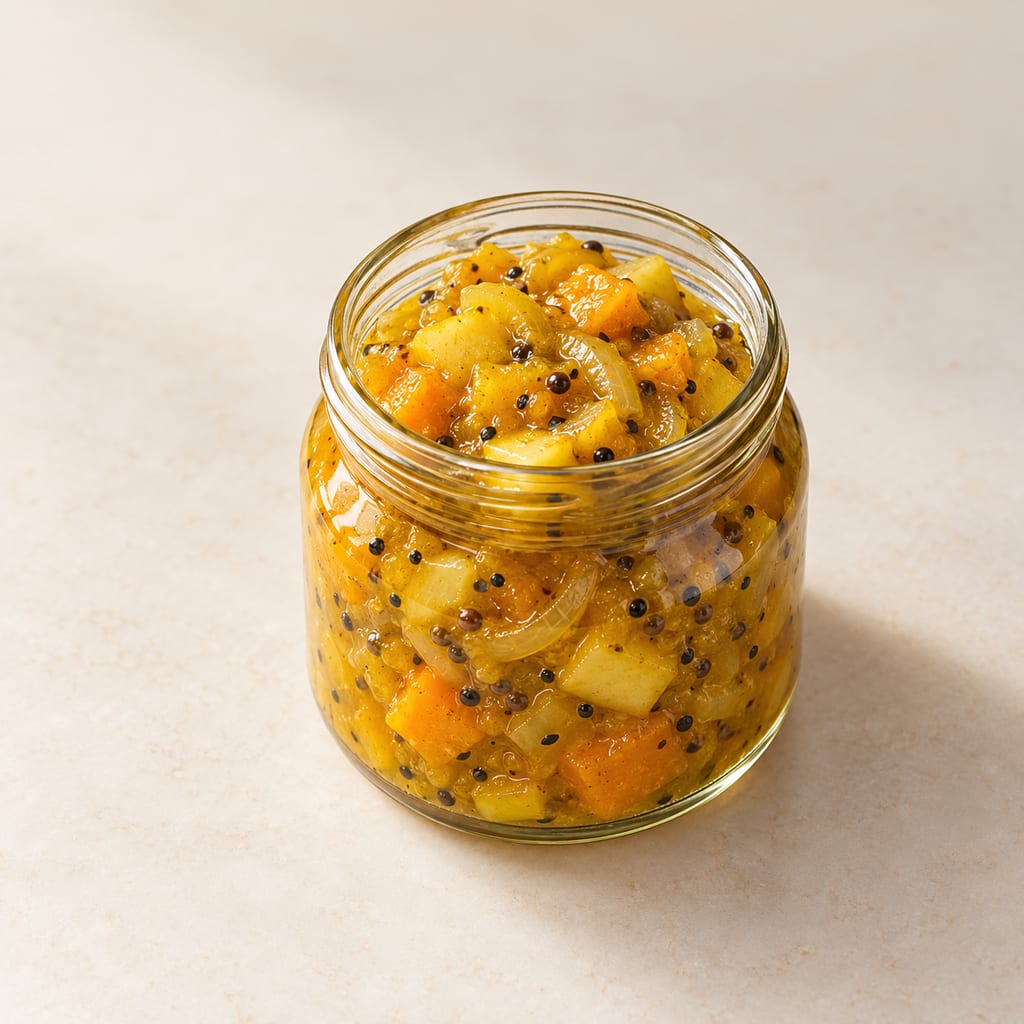
British pumpkin, apple and mustard pickle
British pumpkin, apple and mustard pickle: Freeze for winter; small fresh portion refrigerated up to 48 hours.
 FermenteaWhere food goes to change
Apple cider vinegar · Apple vinegar
Cider vinegar is made when acetic-acid bacteria use oxygen to turn the alcohol in dry apple cider into acetic acid. This historical cask method begins with fermented cider and differs from apple-scrap vinegar made with sugar and water.
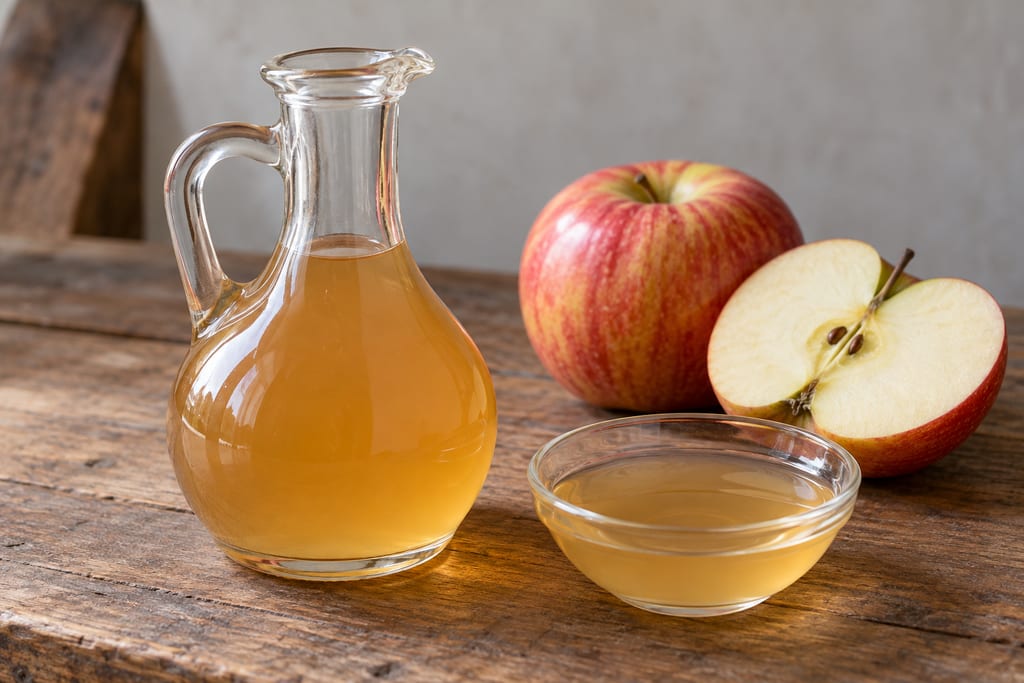
Cider vinegar is the sour apple product made when acetic-acid bacteria oxidize the alcohol in fermented apple juice. It may be clear or hazy, pale gold or amber, depending on the cider and on whether the vinegar is filtered or left with sediment and a surface culture. Its aroma can retain the fruit and fermentation character of cider, while acetic acid gives it the sharpness expected of vinegar. This description covers a family of products, not one fixed flavour or standardized strength.
The method here starts with dry, fully fermented cider. That point separates it from apple-scrap vinegar, where chopped apples or peelings are combined with sugar and water and must first become alcoholic. The two recipes share apple-derived material but have different starting liquids and different stages. The cask method uses the alcohol already present in dry cider as substrate for acetic fermentation; it does not include the preceding cider-making stage.
Vinegar production is often summarized as a single fermentation, but cider vinegar involves two biologically distinct transformations. Yeast first converts fermentable apple sugars to ethanol and carbon dioxide. Acetic-acid bacteria then use oxygen to convert ethanol into acetic acid. The second process needs air, so a sealed bottle is not the vessel described by this recipe. The page keeps the historical cask method separate from modern apple-scrap instructions rather than combining their quantities and schedules.
Cider vinegar belongs to places where apples were pressed and cider was part of the seasonal food supply. A North Carolina Historic Sites account describes farm families making vinegar each season from hard cider, storing it in a barrel with an opening protected by cloth. It presents vinegar as a useful household food for cooking and preservation. That source documents one American setting and a reported practice; it does not identify a single birthplace for cider vinegar.
In a 1917 note, Otto Grove of Long Ashton Research Station discussed cider vinegar as a satisfactory substitute for malt vinegar when wartime supplies of the latter were short. His explanation begins with cider exposed to air: bacteria use oxygen to change its alcohol into acetic acid. He distinguishes this from the prior yeast fermentation of apple juice. This is a specific British account of production and supply, not evidence that the method originated in Britain or that it was universal.
By 1904, the New York State Agricultural Experiment Station had published a study devoted to the chemistry of home-made cider vinegar. The United States Department of Agriculture later issued a home-and-farm vinegar bulletin. Together these records show practical vinegar-making becoming a subject of agricultural research and public instruction. They also remind the reader to keep old methods in their historical setting: cask materials, cider, ambient microorganisms and household conditions were not necessarily the same as those available today.
Yeast and acetic-acid bacteria perform different work. In the first fermentation, yeast consumes sugars and releases ethanol and carbon dioxide. In the second, acetic-acid bacteria oxidize the ethanol when oxygen is available. The simplified chemical balance is ethanol plus oxygen yielding acetic acid and water. The alcohol is the substrate at the vinegar stage; apple pieces do not become vinegar simply by being submerged in water.
Acetic-acid bacteria grow where air meets liquid and may form a cellulose-rich pellicle called a vinegar mother. The film can retain a surface culture, but it is not a measurement of acid strength or a reliable identification of every organism present. Grove’s cask instructions say a little good vinegar can be added to start the process. That presumes active vinegar: filtered or pasteurized commercial vinegar may not contain a living culture that can inoculate a new batch.
Oxygen supply and temperature shape the process. A cloth-covered opening admits air while helping exclude vinegar flies and debris. The historic report specifies 65–85°F and describes sampling after about two months, with four to six months possible in a cooler room. These are observations attached to that historical method, not a guarantee that a new batch will be complete. A visible mother, a sharp smell or a sour taste does not reveal a standardized acetic-acid concentration.
Use a clean six-gallon cask suitable for acidic liquid, fitted with a tap and an air opening that can be covered with fine cloth or gauze. Fill it a little over halfway with dry, fully fermented cider. Grove describes adding a small amount of good vinegar if available and setting the cask on its side. His apparatus uses a funnel and tube to introduce air above the liquid while protecting the openings from vinegar flies. The detailed arrangement is historical; its central requirements are an alcoholic cider, a protected path for oxygen and a vessel that tolerates acidity.
Keep the cask in a warm room within the report’s stated 65–85°F range. Do not close it airtight while acetification is active. The report suggests drawing a sample after about two months, while noting that a cooler room may extend the process to four to six months. These timings describe the source’s practice rather than a validated endpoint. For a household batch, treating the cask as one batch makes it easier to interpret changes than continuously replacing drawn vinegar with fresh cider.
When the vinegar has developed the culinary character desired, draw a small sample through the tap and transfer the finished liquid into a clean container. Grove observed that clear vinegar could turn cloudy in the bottle and described settling, racking or filtering to clarify it. Those operations change appearance, not acidity. His report also describes period bottling treatments; this page does not present those historical directions as a modern shelf-stable packaging protocol.
Dry cider is the raw material at the acetification stage. Its residual alcohol supplies what the acetic bacteria oxidize. Grove specifies cider fermented to dryness and discusses cider containing four to five percent alcohol by weight. He gives a theoretical relationship between alcohol and acetic acid, then explains why practical yields differ: some alcohol remains and some is lost. Those numbers clarify the relationship between substrate and potential acid; they are not test results for a home batch.
A little active vinegar may supply an acetic culture, but the report does not give a universal inoculation quantity. The visible mother may be used as a starter when its culture is known to be active. A bottle’s cloudy appearance or a label such as raw does not establish that. The historical method also assumes conditions in which active acetic organisms could be found in the vinegar or cider. Modern filtered products and cider may differ, so the old assumption should not be made silently.
The cask and tap are functional parts of the method. The tap lets the maker sample without lifting or moving the vessel. Air openings supply oxygen; gauze helps keep vinegar flies out. Penn State Extension likewise emphasizes oxygen and temperature and advises choosing vessel materials that do not react with acidic liquid. A cloth is a screen, not a sterile barrier, so clean equipment and protection from insects remain important.
The dry-cider cask method is not the only way to make apple vinegar. A modern home recipe described by the American Homebrewers Association starts with chopped apples or scraps, sugar and water. Fruit solids are held under the liquid during an early stage, then the liquid is strained and left under a breathable cover. It begins before alcoholic fermentation and so cannot be substituted step-for-step for this cask recipe.
Commercial acetification can increase oxygen transfer by distributing alcoholic liquid over a large surface. Grove describes a packed generator that recirculates the liquid, while the household cask proceeds more slowly and depends more heavily on its surroundings. Filtering and pasteurizing change the finished product’s clarity and culture activity. These are process choices, not proof that a cloudy vinegar is necessarily better or that a clear vinegar is necessarily weaker.
The sources establish particular practices in North Carolina, Britain and New York agricultural research, but not one origin or exclusive region. They do not name a required apple cultivar for this method. The cider’s fruit and fermentation character will influence the result, but this recipe has no evidence-based cultivar rule or target sweetness. Its main historical distinction is the use of dry cider, air and a surface acetification process.
Cider vinegar is a culinary acid for vinaigrettes, sauces, marinades and cooked dishes. Its apple-derived character can complement rich foods and balance sweetness; the precise effect depends on the cider and the finished vinegar. It can brighten a pan sauce or chutney, add sharpness to a dressing, and supply acid to an emulsion such as mayonnaise. In that last use, the archive’s mayonnaise mention identifies cider vinegar as an ingredient; it does not describe how the vinegar itself is made.
Homemade cider vinegar must not be assumed suitable for shelf-stable pickling or canning. The National Center for Home Food Preservation says tested preserving recipes depend on vinegar of known acidity and fixed proportions. The historical cask recipe here gives no measured pH or titratable acidity. Sourness, a mother, elapsed time, clarity and aroma do not show that the vinegar meets a preserving specification. Use a tested recipe and commercially labelled vinegar of the required acidity for shelf-stable preserves.
Use the finished cask vinegar where its flavour is wanted, and adjust it in ordinary cooking to taste. Do not infer that a batch is safe for any use simply because it smells or tastes like vinegar. The source method is a historical culinary process, not a modern validated preservation procedure. If the visible growth is fuzzy or unlike a smooth surface film, do not taste it to identify it.
Household cider-vinegar methods are documented in nineteenth- and early-twentieth-century North American and British sources; these sources do not establish a single origin.
Scaling: source batch only
The cask method provides no measured endpoint; taste and surface growth do not establish standardized acidity.
Hazard sourceThe open acetification process uses gauze to exclude vinegar flies.
Hazard sourceKeep a protected air path open during acetification; do not seal the active cask.
Control sourceDo not use homemade vinegar in tested canning or pickling recipes that require known acidity.
Control sourceThis historical method does not measure the final acetic-acid concentration.
Do not substitute this homemade vinegar for commercially labelled vinegar in home canning or shelf-stable pickling.
A mother, smell, taste or elapsed time does not establish safety or preservation strength.
A North Carolina Historic Sites account documents seasonal farm cider-vinegar practice; it does not identify an origin.
The 1917 cider-vinegar method was reported by Long Ashton Research Station near Bristol; this locates the research institution, not an origin.
A New York State Agricultural Experiment Station bulletin studied home-made cider-vinegar chemistry; it marks a research context, not an origin.
British pumpkin, apple and mustard pickle: Freeze for winter; small fresh portion refrigerated up to 48 hours.
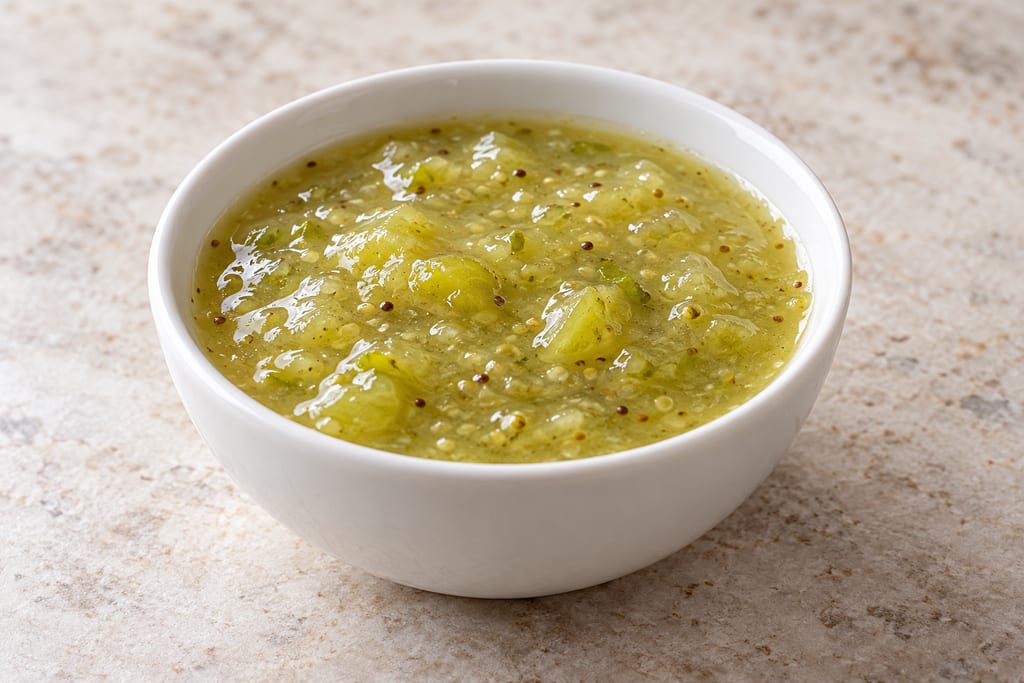
Gooseberry sauce is a soft, tart sauce of cooked green gooseberries, sharpened with wine or vinegar and lightly sweetened, traditionally served with mackerel.
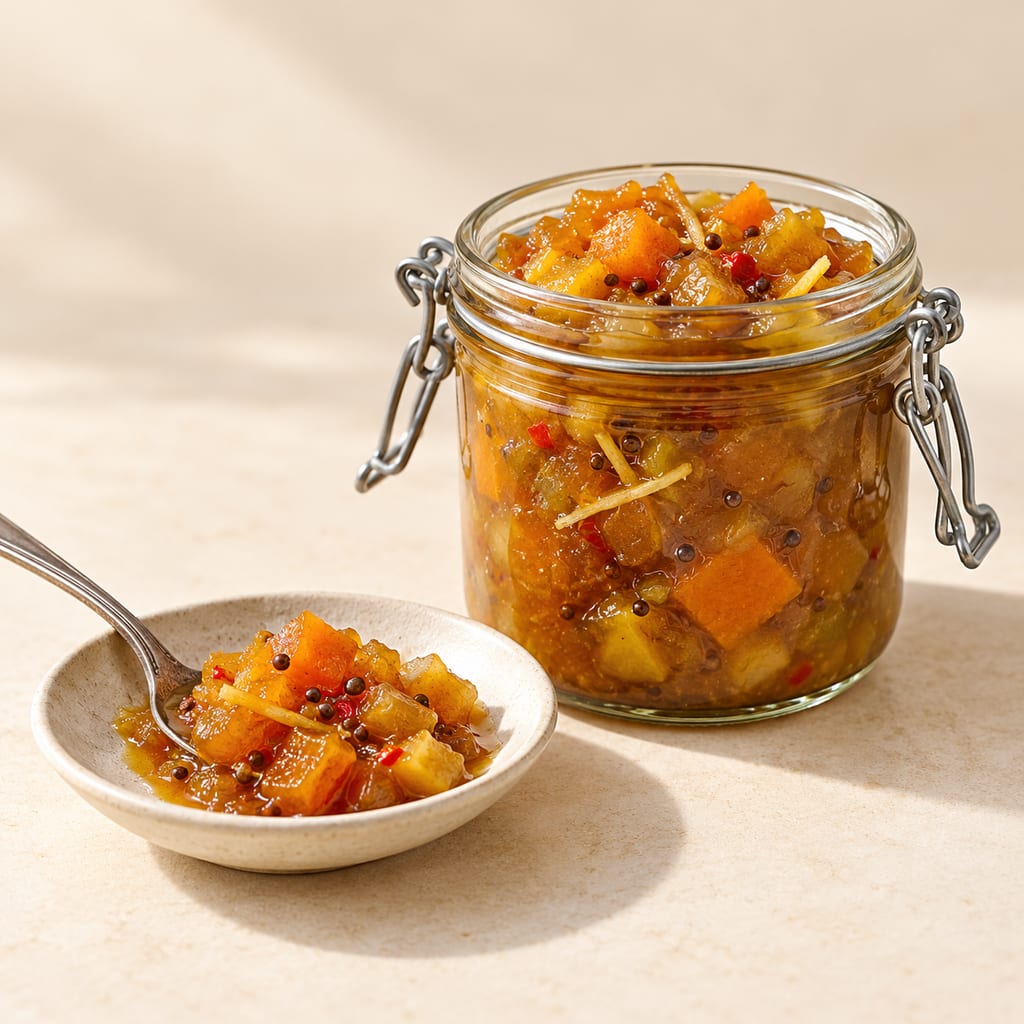
Pumpkin chunks and tart apples cooked with ginger, whole spices and cider vinegar. This version is for refrigeration or freezing, not cupboard storage.
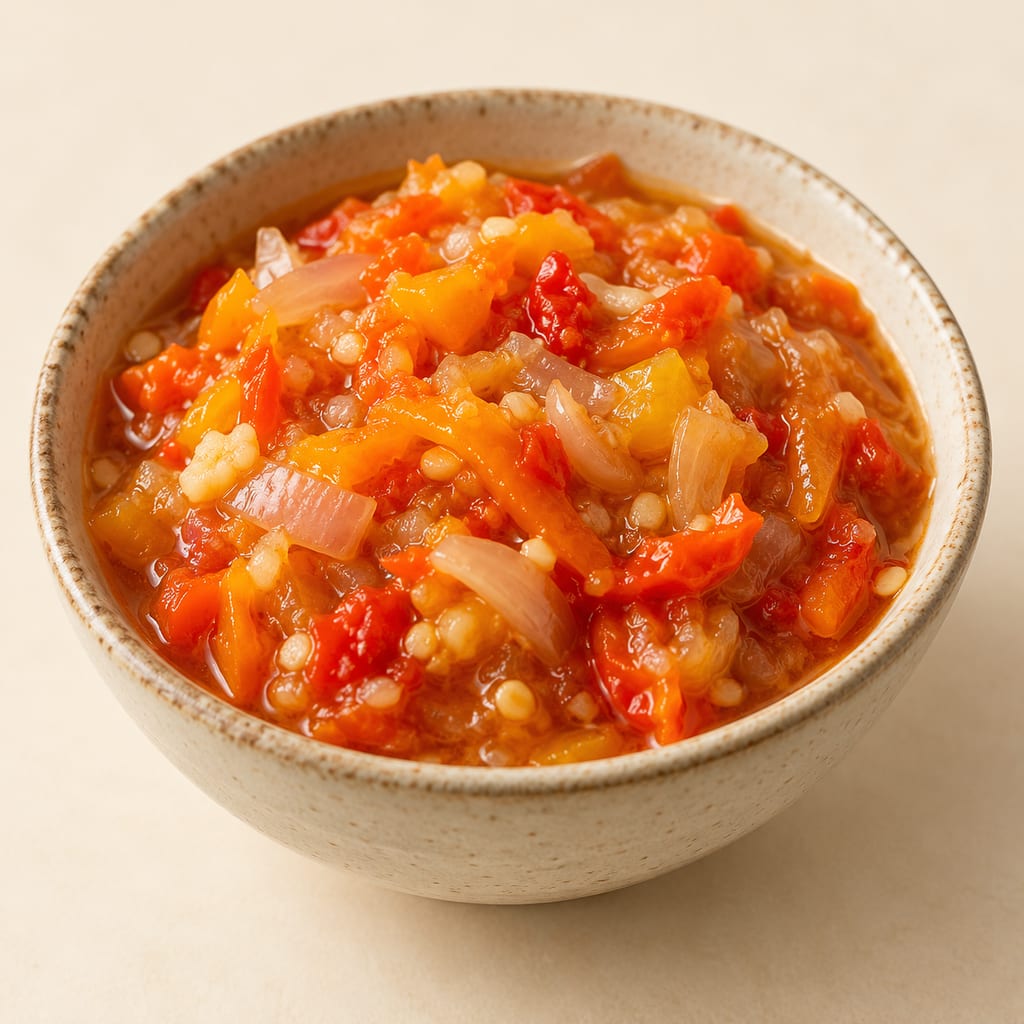
A Haitian hot sauce of habanero or Scotch bonnet, onion, shallot and garlic, softened in vinegar and lime, simmered briefly and served on grilled or fried meat and seafood.
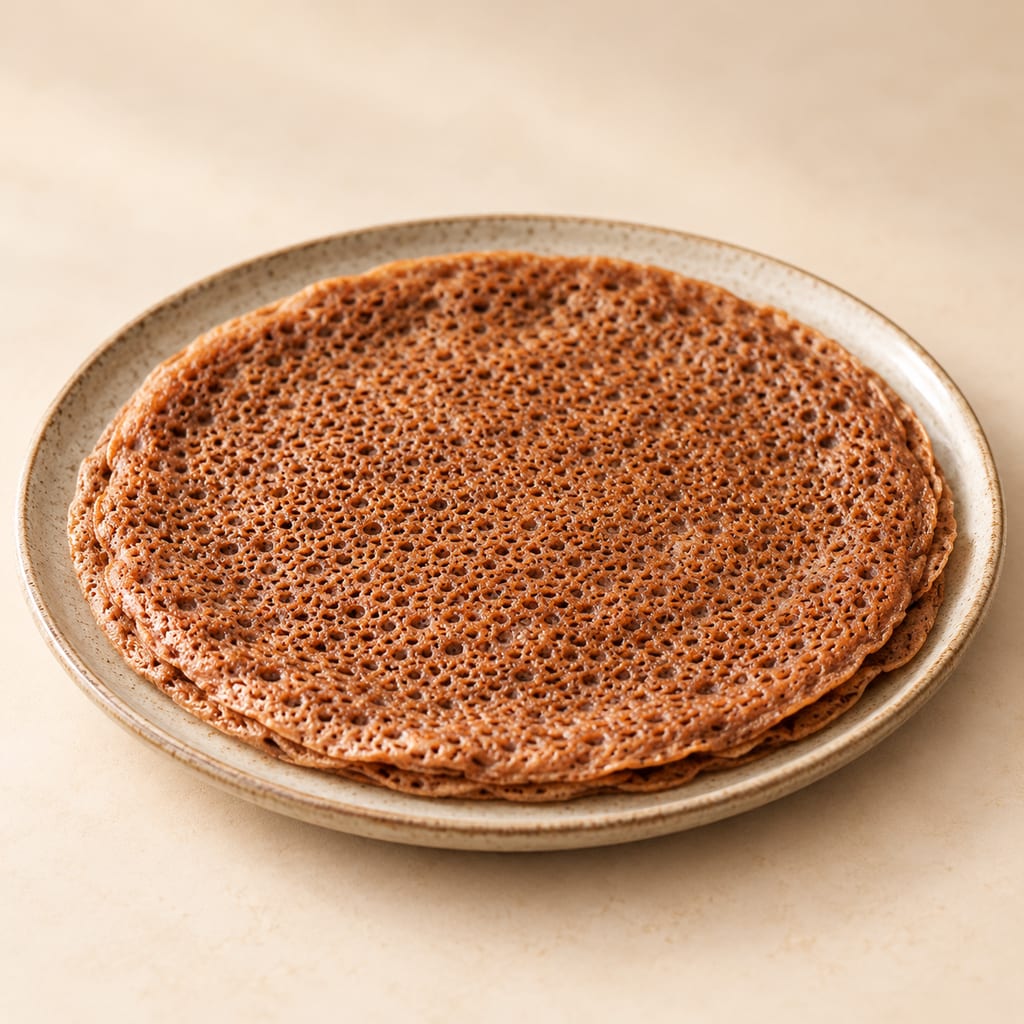
A modern home adaptation of Ethiopian injera using a 24-hour fermentation window. This method balances traditional souring with accessible ingredients like baking powder or starter cultures to achieve the characteristic porous texture.
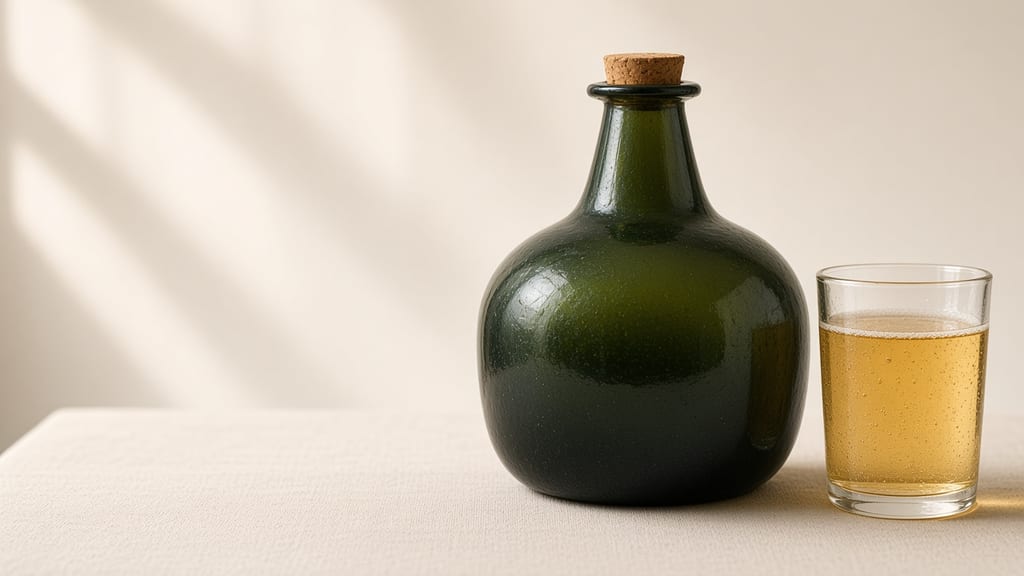
In the 1650s and 1660s English cider makers bottled cider with a little life left in it, sometimes with a lump of sugar, so it would mantle and sparkle in the glass, decades before Champagne sparkled on purpose.
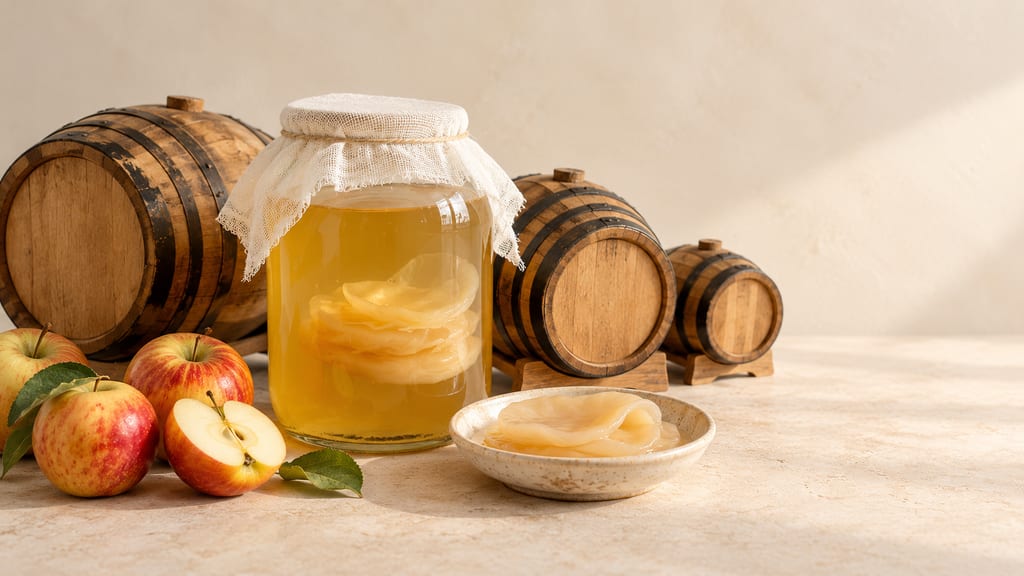
Vinegar forms when bacteria and oxygen turn alcohol into acetic acid. This reference follows wine, fruit, grain and sap through that change, the ways of supplying oxygen, the measurements and the choices that finish a bottle.
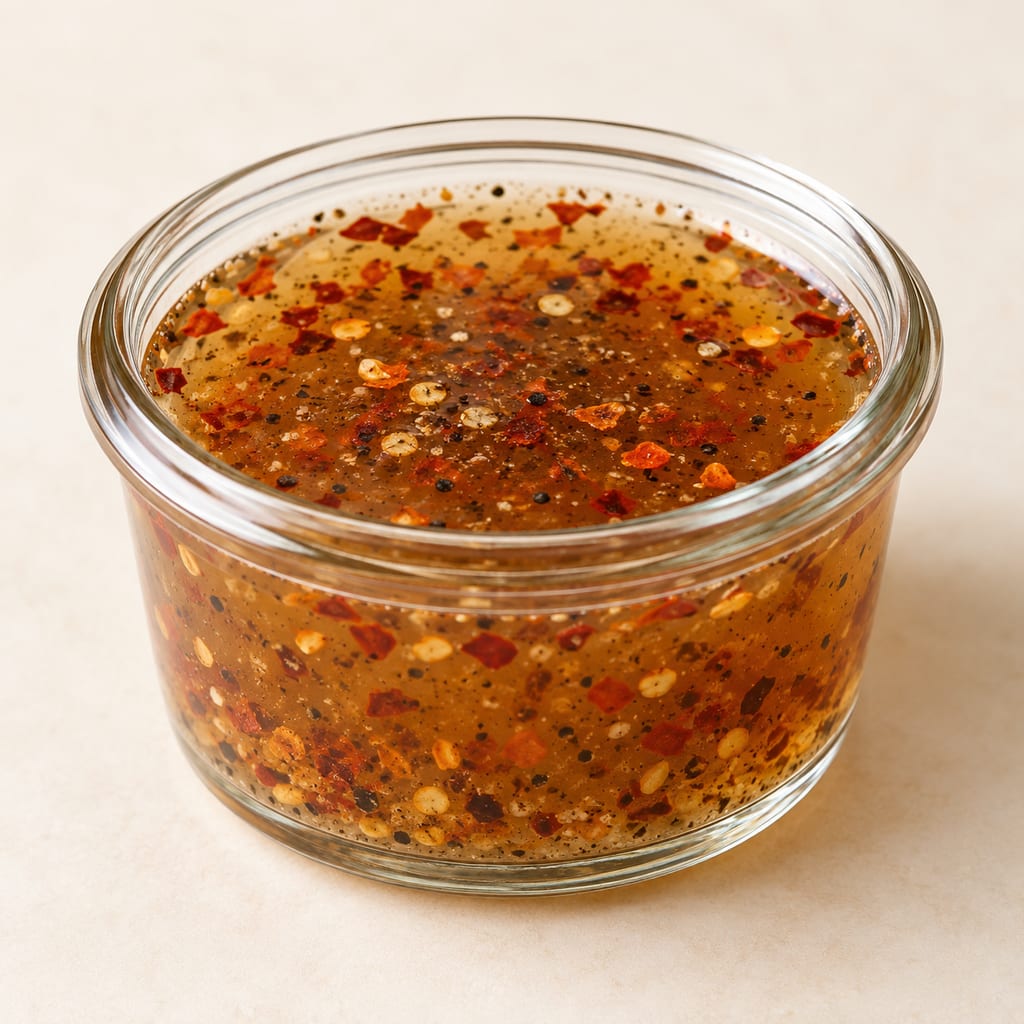
A thin eastern North Carolina sauce of distilled vinegar, pepper flakes, black pepper and salt, mixed cold and used to season chopped or pulled pork.

A dark, balanced vinegar from Emilia-Romagna made by combining cooked or concentrated grape must with wine vinegar, then acetifying and refining it in wood under a protected specification.
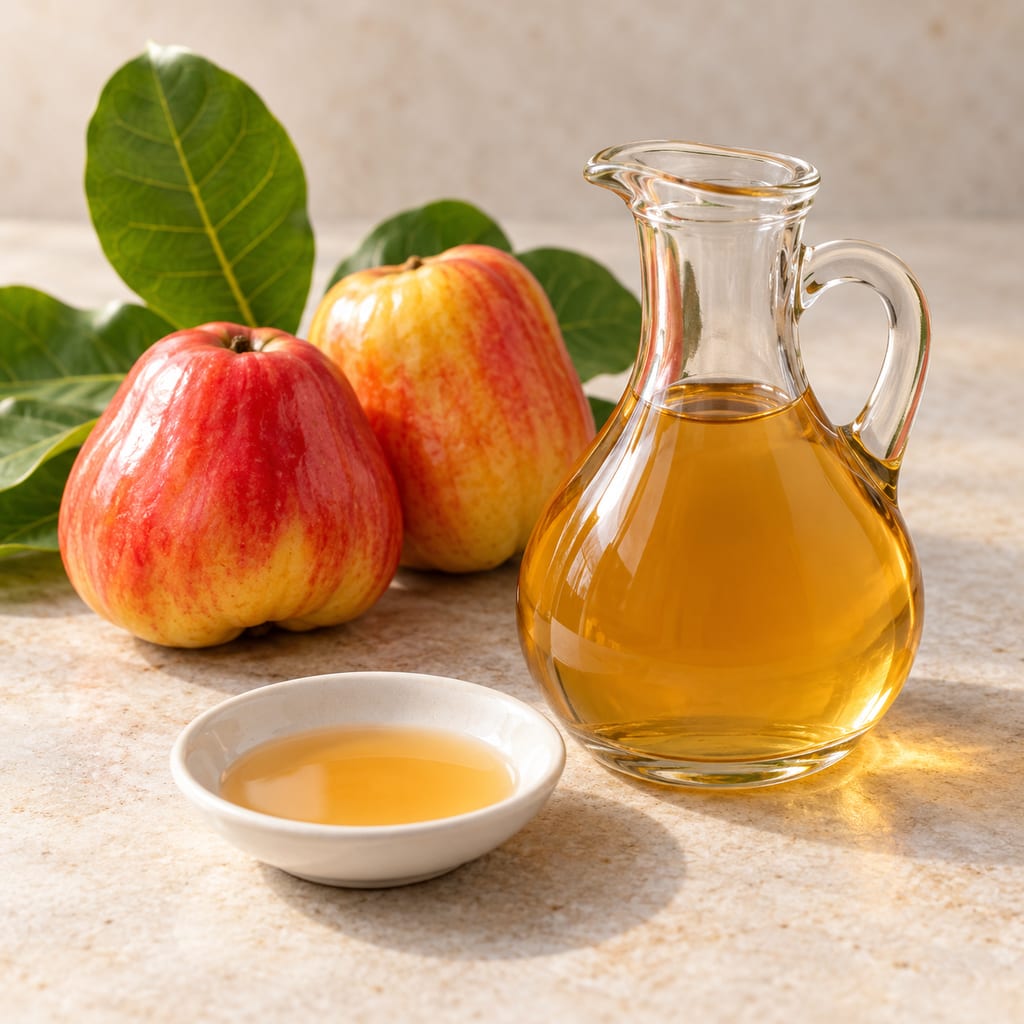
Vinagre de caju is made by fermenting cashew-apple juice into an alcoholic base, then aerating it so acetic bacteria can convert ethanol into acid. Brazilian guidance records the sequence, but not a complete home-scale formula.
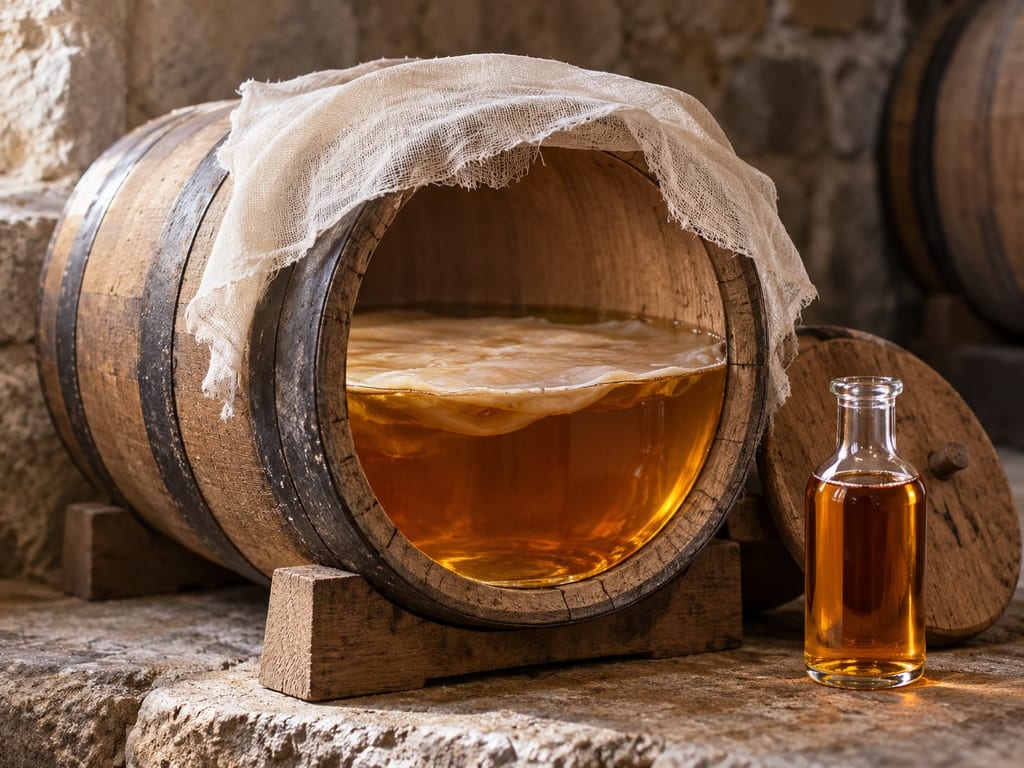
Fruit wine turned into vinegar by acetic acid bacteria at the surface of a half-filled, air-vented vessel. The Orleans method takes one to three months for a 9% wine.

Japanese vinegar from ripe persimmons: yeast turns the fruit sugar to alcohol and acetic bacteria turn that to acid; made at home in a month and by makers in Wakayama and Nagasaki over several years.

A Cap-Pelé boucanière is an Acadian herring-smoking building. The documented Willie Niles example is a one-storey wood-frame structure with a ridge smoke vent and interior bays for hanging fish-bearing cannes.

Achcharu is a family of Sri Lankan vinegar pickles made with mixed vegetables or seasonal fruit and a piquant spice dressing. This version is a quick, refrigerated, non-fermented mixed-vegetable pickle.

The acocote is a long, hollowed and dried gourd used to draw aguamiel from a mature maguey. It is a harvesting tool: the sap is transferred to a separate vessel before it ferments into pulque.

Adrak murabba preserves young ginger in sugar syrup, a sweet South Asian preparation recorded in Indian cookery and food-processing sources.

Parkia biglobosa seeds are fermented into regional West African seasonings, including nététou, iru, dawadawa and soumbala. The yellow fruit pulp is a separate food, and names and methods vary by place.

Japanese reddish-brown vinegar from sake lees matured about three years, turned to vinegar by acetic bacteria; the vinegar of Handa and Edomae sushi rice.

A refined common-wheat flour blended for a broad range of baking; its protein and behavior vary with wheat, milling and market.

The almond mushroom, Agaricus subrufescens, was cultivated in eastern North America in the 1800s, lost its market, and returned as a cultivated mushroom from Brazil, where it is grown under several names.
No community contributions have been published for this entry yet.
Sign in to contribute. Published comments and photos are free to read.
Long Ashton Research Station Annual ReportHistory · Method · Science
A Note on Cider VinegarExplains two fermentations: yeast makes alcohol from apple sugars; acetic bacteria oxidize alcohol with oxygen.
Specifies dry cider at 4–5% alcohol by weight and gives practical six-gallon cask equipment and a 65–85°F range.
Reports sampling after about two months, with four to six months in cooler conditions, and notes variable acid yield.
Cited in: Cider vinegar begins with fermented cider; Cider, orchards and household vinegar; The change from alcohol to acid; A household cask method; Why the cider, culture and cask matter; Related methods and regional differences; Using cider vinegar
United States Department of AgricultureHistory · Method
Making Vinegar in the Home and on the Farm, Farmers’ Bulletin 14241924 federal bulletin on home and farm vinegar methods and apparatus.
Cited in: Cider, orchards and household vinegar
New York State Agricultural Experiment StationHistory · Science
A Study of the Chemistry of Home-Made Cider Vinegar, Bulletin 258A 1904 agricultural experiment station study dedicated to the chemistry of home-made cider vinegar.
Cited in: Cider, orchards and household vinegar; Related methods and regional differences
North Carolina Historic SitesHistory · Uses
VinegarFarm households made vinegar seasonally from hard cider and used it in cooking and preservation; the account describes a household barrel approach.
Cited in: Cider, orchards and household vinegar; Related methods and regional differences; Using cider vinegar
Penn State Extension, adapted from Ohio State University ExtensionMethod · Science
Making Cider Vinegar at HomeHome cider vinegar depends on oxygen supply and temperature; a cloth cover admits air while excluding insects and debris; suitable non-reactive vessels are used.
Cited in: The change from alcohol to acid; Why the cider, culture and cask matter
National Center for Home Food PreservationSafety
General Information on FermentingPreservation recipes depend on known acidity and tested proportions; do not alter tested pickling recipes.
Cited in: Using cider vinegar
American Homebrewers AssociationComparison · Method
How to Make Apple Cider Vinegar at HomeA distinct apple-scrap recipe begins with apples, sugar and water; its alcoholic and acetic stages differ in oxygen needs.
Cited in: Cider vinegar begins with fermented cider; Related methods and regional differences
University of BristolLocation · History
Cider making at Long AshtonLong Ashton Research Station was located at Long Ashton south of Bristol and researched cider-making; this locates the institution behind the 1917 vinegar report, not the origin of cider vinegar.