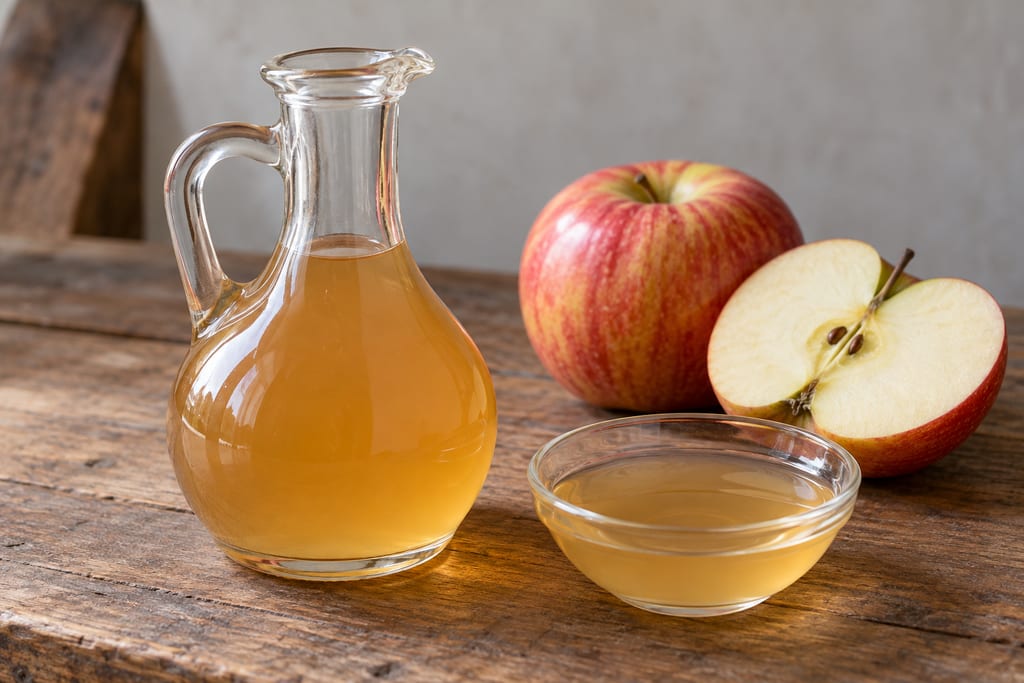
Cider vinegar
Cider vinegar is made when acetic-acid bacteria use oxygen to turn the alcohol in dry apple cider into acetic acid. This historical cask method begins with fermented cider and differs from apple-scrap vinegar made with sugar and water.
 FermenteaWhere food goes to change
Sauce ti malice · Ti malice · Ti-Malice hot sauce · Sos ti-malis
A Haitian hot sauce of habanero or Scotch bonnet, onion, shallot and garlic, softened in vinegar and lime, simmered briefly and served on grilled or fried meat and seafood.
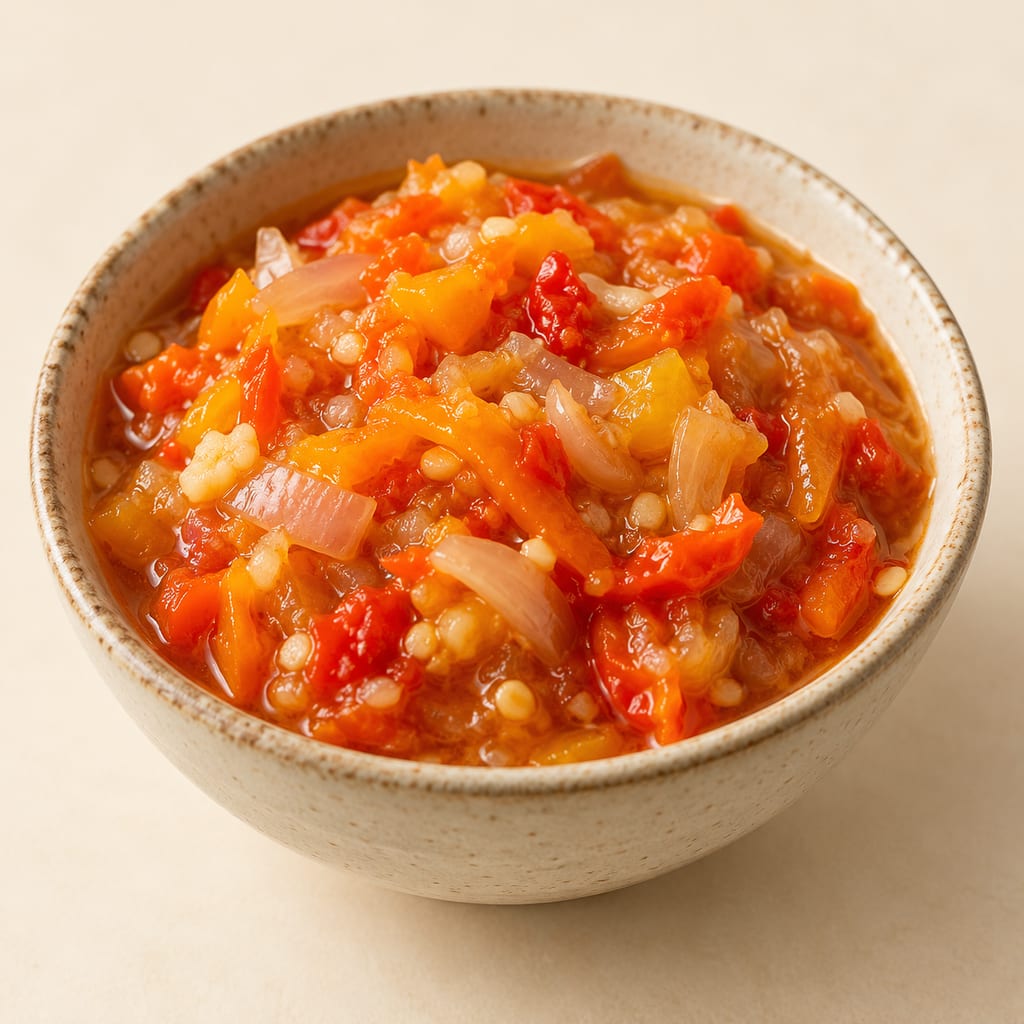
Sos ti malis, or sauce ti-malice, is a Haitian hot sauce built from a hot pepper, onion or shallot, garlic and an acid. Vinegar and lime or sour orange provide the sharpness, and a brief simmer brings the chopped aromatics together. Some households add tomato paste for colour and body, and others leave it out. The sauce is usually served on grilled, fried or roasted meat, poultry, fish or seafood.
The name comes from a folk tale about two friends, Ti-Malice, a prankster, and Bouki, who is portrayed as not very bright. In the tale, Ti-Malice makes a special sauce and pours it over a meal; Bouki loves it and tells the neighbourhood, and the sauce has been called Ti-Malice ever since. A second telling has Ti-Malice add a hot pepper to the sauce to keep Bouki away, with the reverse effect.
These are stories. They explain the name but do not date the sauce, and this record keeps them apart from any verified origin.
The aromatics are marinated in the vinegar and lime for one to two hours before cooking. The mixture is brought to a boil over medium-low heat and then the peppers, garlic, tomato paste, water, oil and seasoning are added. The sauce simmers for fifteen minutes, cools, and is either kept chunky or blended smooth before refrigerating.
A tomato-free household version marinates onion and shallots in sour orange juice, sometimes for a day, cooks them with water and a little oil, adds mashed salt, hot pepper and garlic, and finishes with lime juice and parsley. That version gives no amounts, and this record does not supply them.
The page advises gloves for chopping the peppers, and against touching the eyes afterwards, because the peppers cause burning. The sauce is kept in an airtight container in the refrigerator; the page says it lasts a few months and that the vinegar and lime help to keep it. Canning is possible, the author says, but only with proper canning supplies, and this record does not give a canning method.
Ti-malice is served with chicken and poultry, especially in stew form, with red meat such as tasso or a slow-cooked chuck roast, and with fish and vegetables. The Tchakayiti page calls it the typical Haitian sauce and serves it with fried or grilled meat or seafood.
The sauce is named after a folk tale about the trickster Ti-Malice and his friend Bouki, in which a sauce Ti-Malice makes wins Bouki's praise and the sauce becomes known by his name. The tale is a story and is not a dated record of the sauce.
Yield 12 servings · Scaling: the page gives one batch that makes about 12 servings; scale all the liquids together and adjust the pepper count to heat.
The author describes the sauce as common in Haiti; no locality or dated source is given.
Cider vinegar is made when acetic-acid bacteria use oxygen to turn the alcohol in dry apple cider into acetic acid. This historical cask method begins with fermented cider and differs from apple-scrap vinegar made with sugar and water.
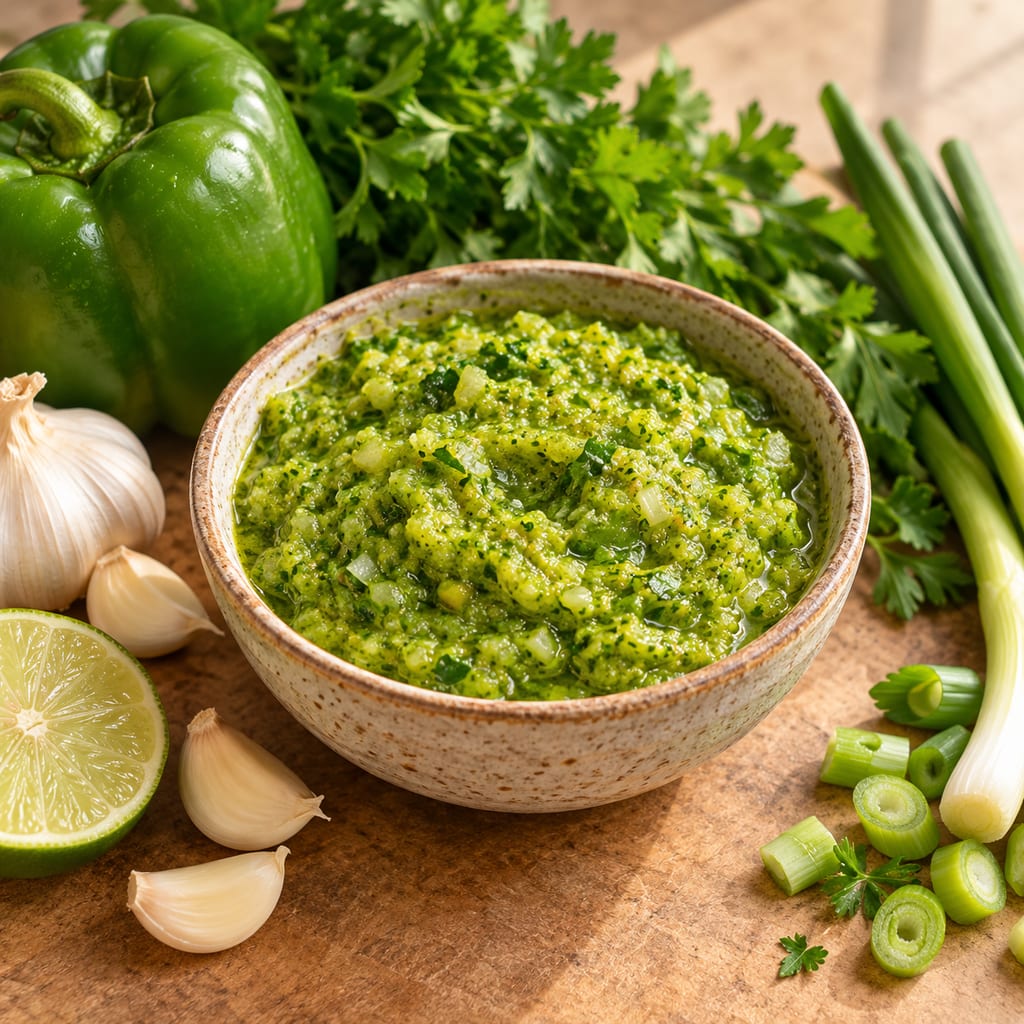
A Haitian seasoning base of fresh herbs, peppers, onion, garlic, citrus and vinegar, blended to a paste, used to marinate meat and fish and to start soups, stews, rice and beans.

Pikliz is a Haitian cabbage-and-vegetable condiment pickled with vinegar, citrus and hot peppers. It brings sharp acidity and chilli heat to rich fried foods; its history and shelf life remain unestablished here.
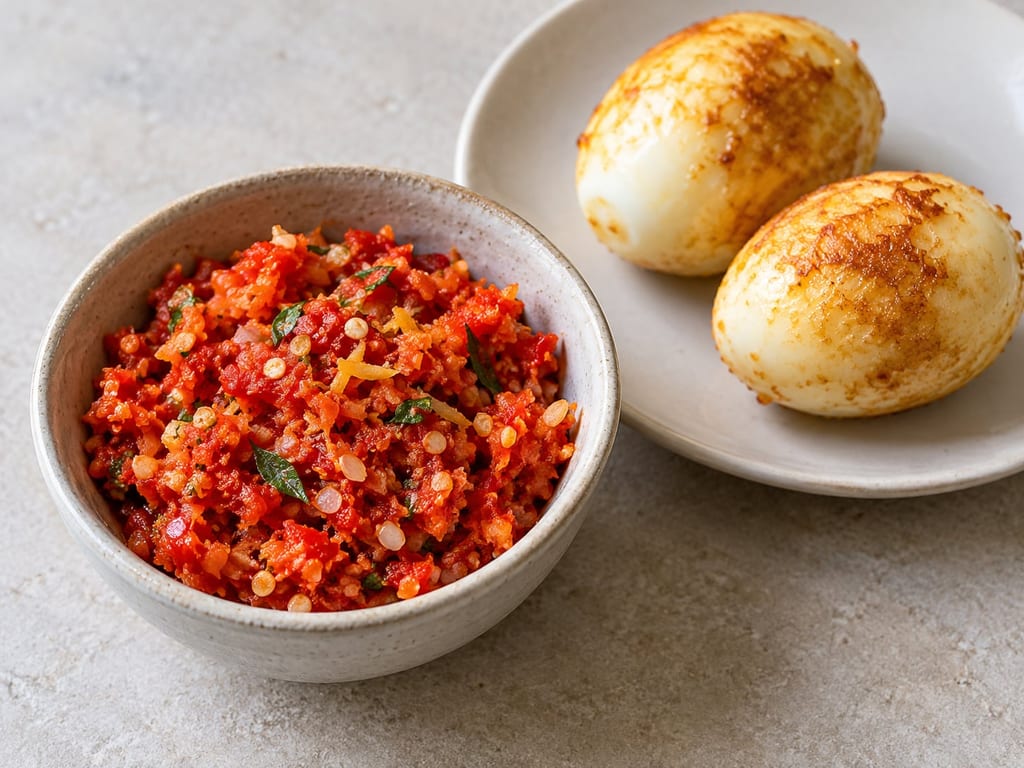
Ai-manas is described as a very hot chilli paste served with Timorese meals. One published version blends fresh chillies, shallots, garlic, Thai basil, ginger, lemon and salt, and serves it with eggs. Sources do not establish a standard formula, precise birthplace or earliest date.
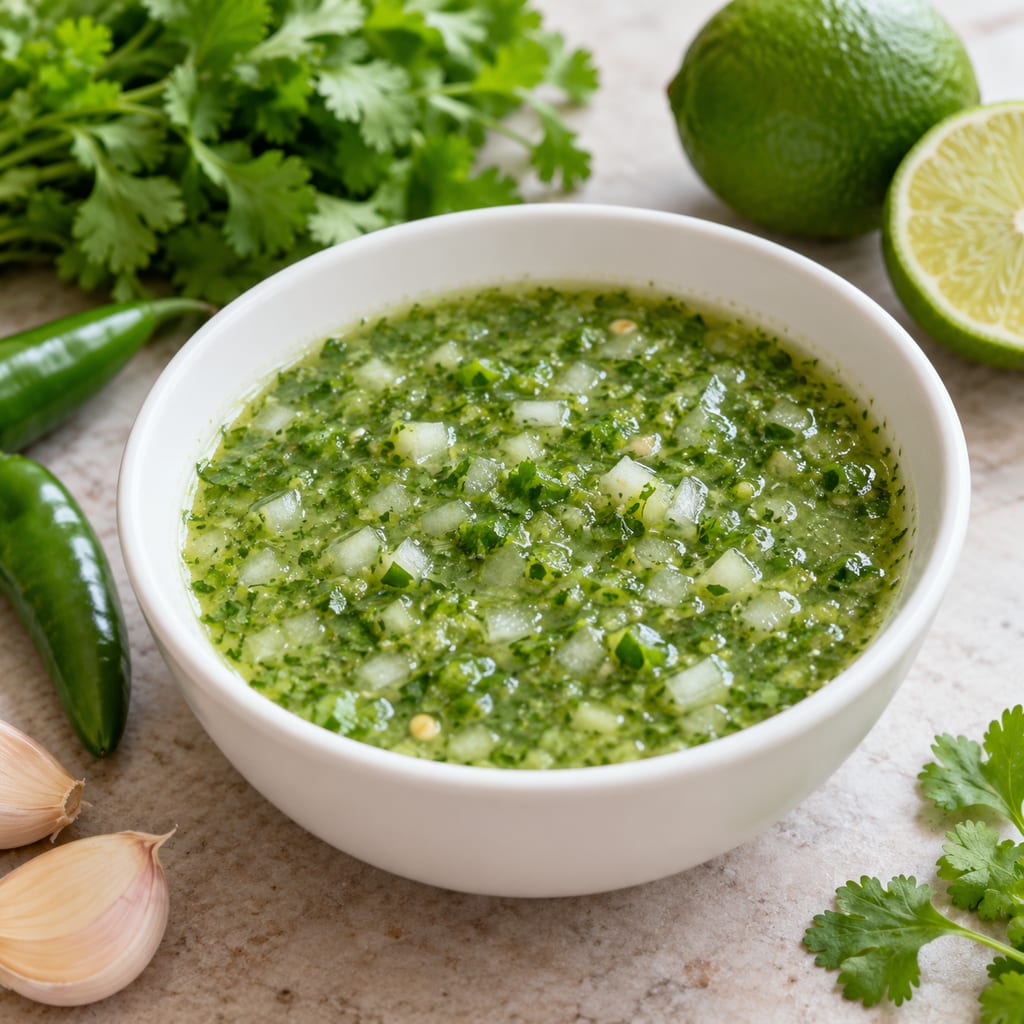
A fresh, uncooked Ecuadorian table sauce of hot pepper, cilantro, garlic and lime, served with most everyday dishes.
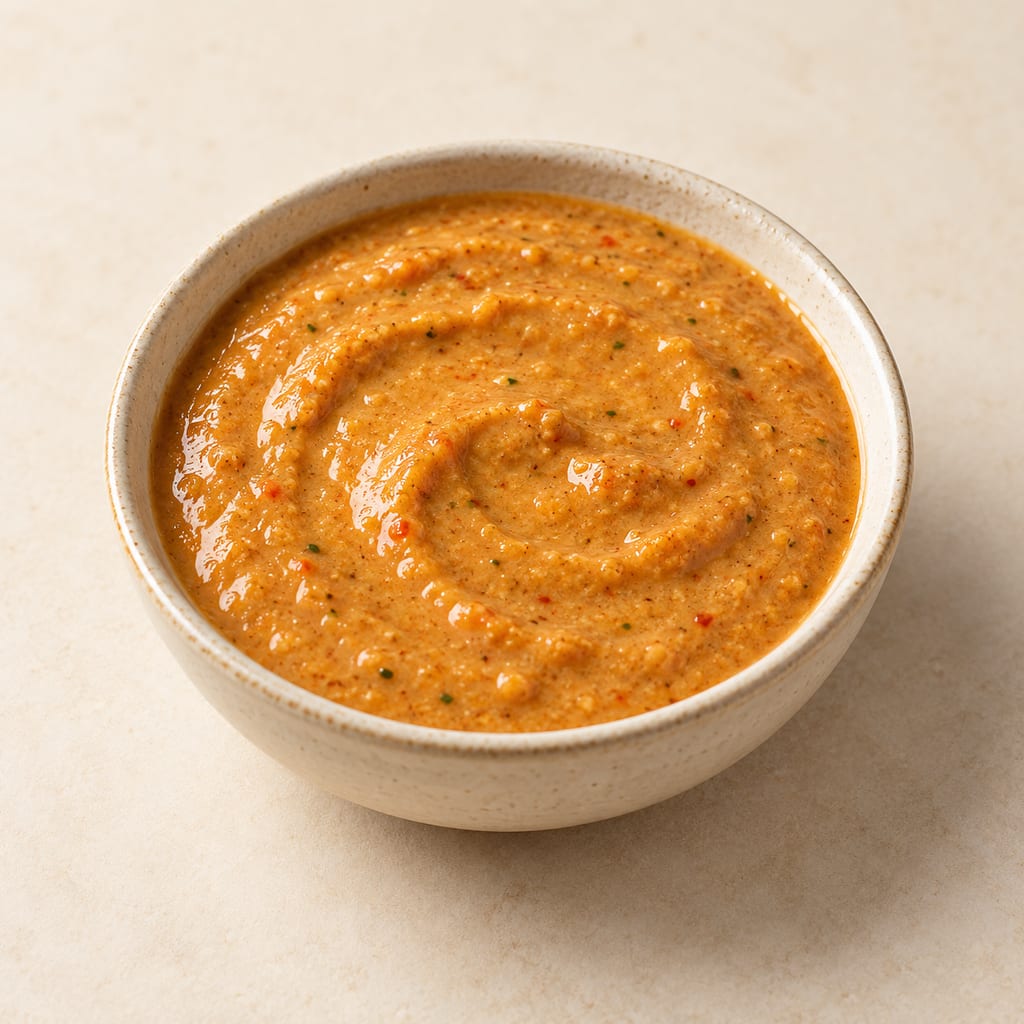
A spicy peanut hot sauce from the Popayán and Cauca region of Colombia, traditionally served with pipián empanadas and tamales.
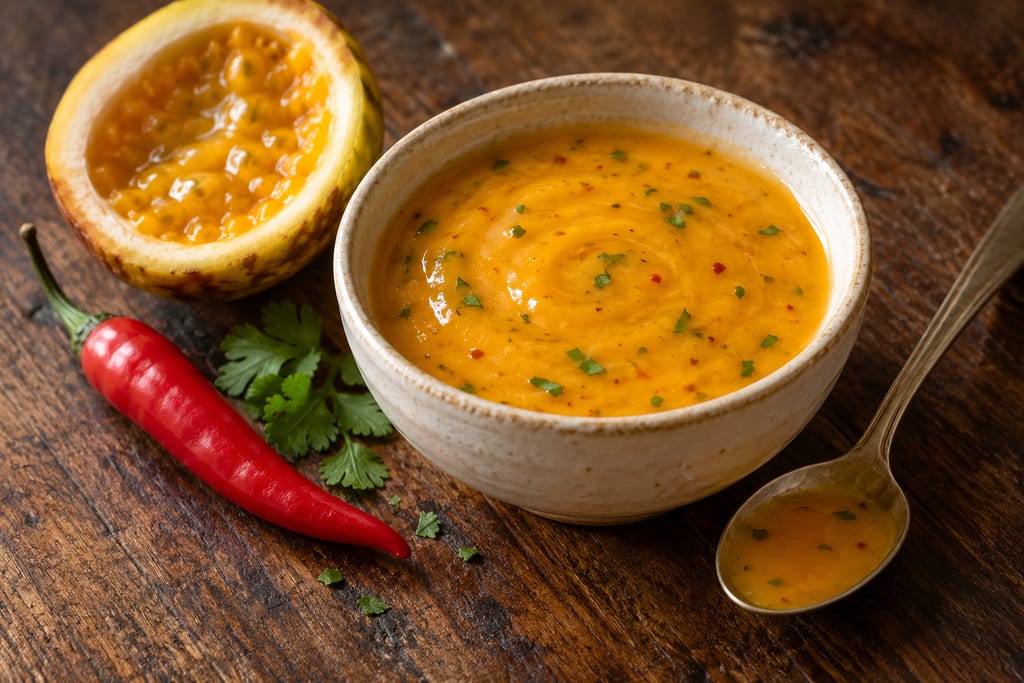
A contemporary Ecuadorian hot sauce that pairs passion fruit juice with boiled chile peppers, oil and lime.
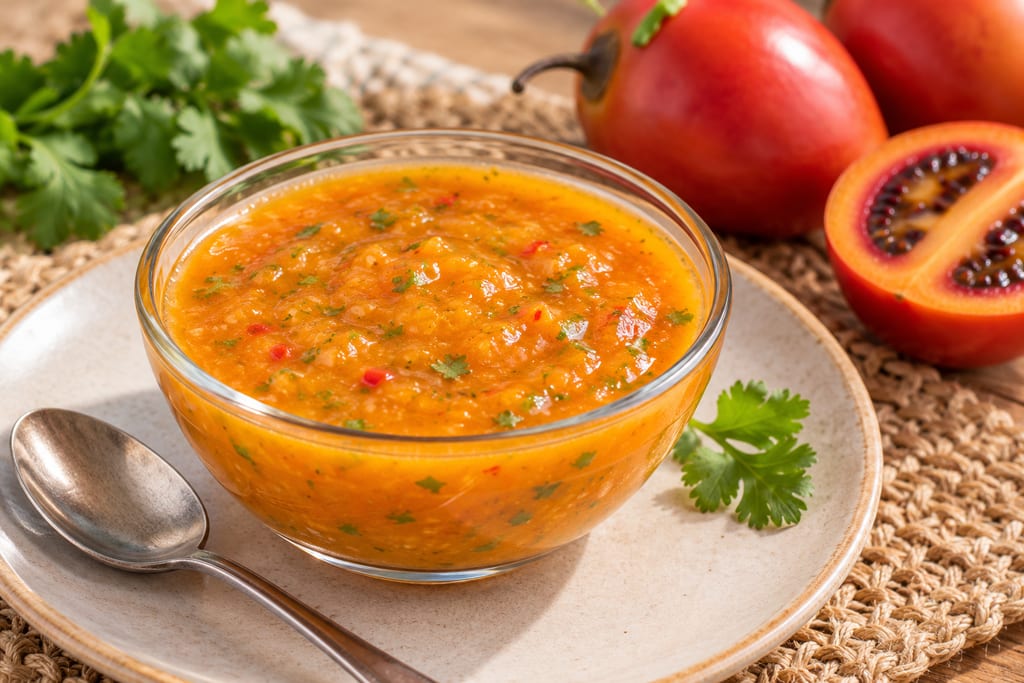
An Ecuadorian hot sauce built on tamarillo, a tart fruit that gives a sharper, fleshier base than ordinary tomato salsa.
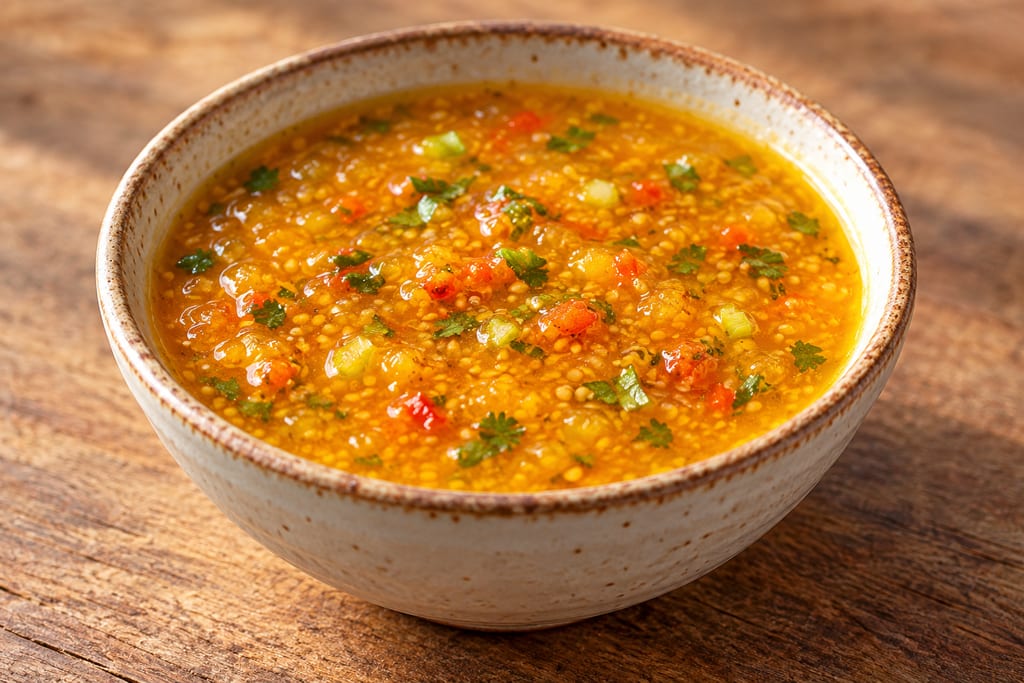
A sweet, tart and spicy Colombian sauce of uchuva, the yellow physalis fruit, with hot pepper, scallion, cilantro and lime.
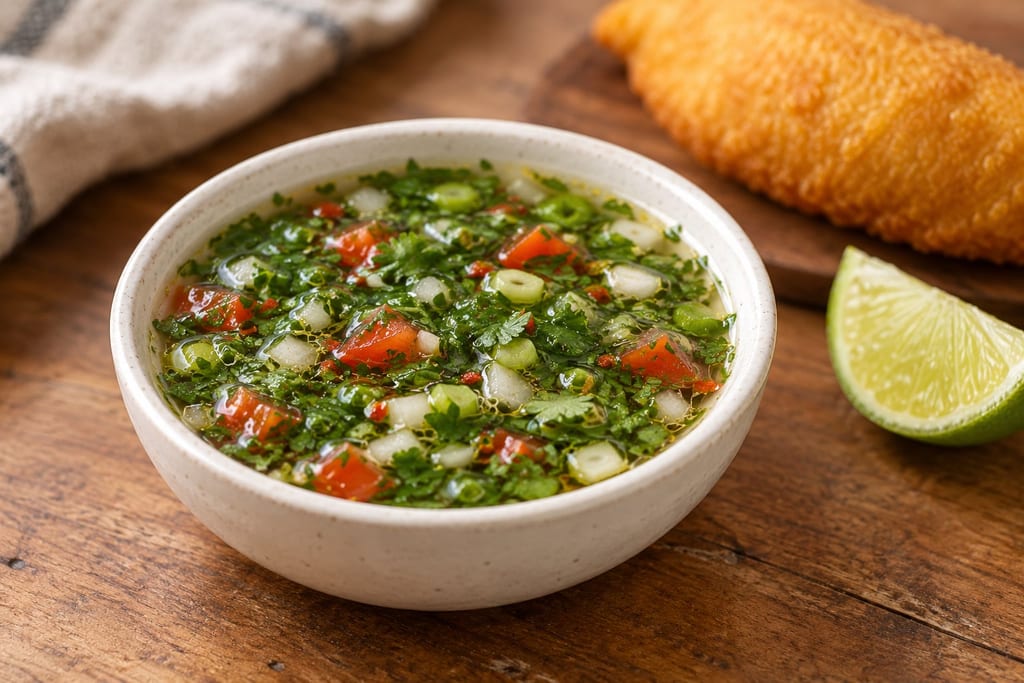
A fresh Colombian table condiment of chopped herbs, scallion and tomato in a vinegar and chile base, served beside fried and filled dishes.
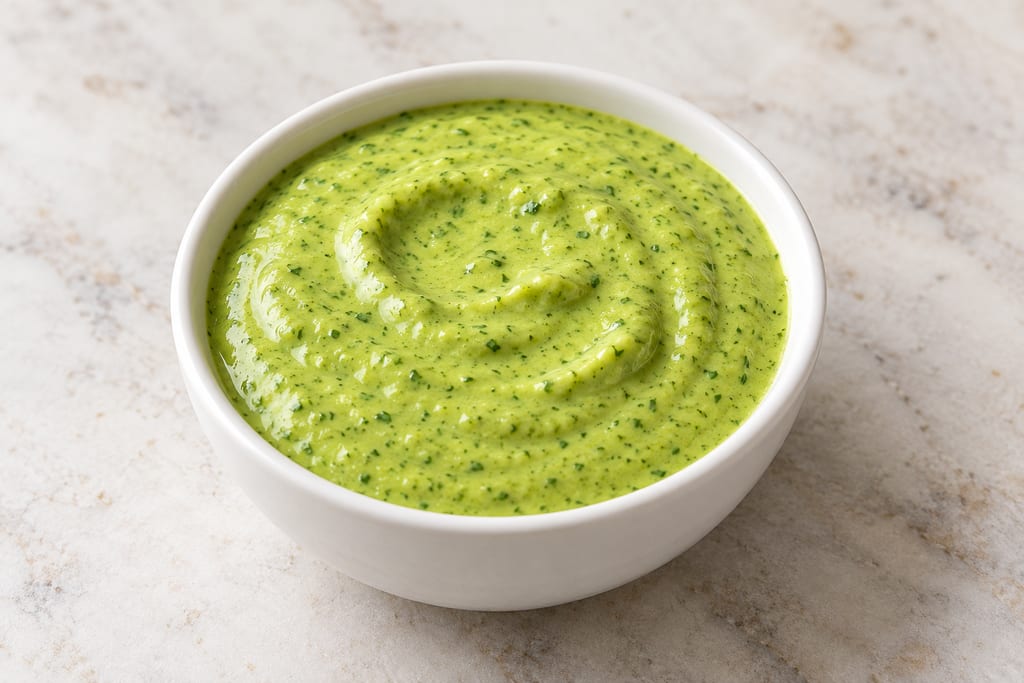
Ají verde is a Peruvian green sauce of coriander, chilli, onion and garlic in a mayonnaise or cheese base. It is best known through Peruvian restaurant cooking abroad.
No community contributions have been published for this entry yet.
Sign in to contribute. Published comments and photos are free to read.
Savory ThoughtsMethod · Storage · Uses · History
Ti Malice (Homemade Haitian Hot Sauce)Ingredients: 6 habaneros, 1 large onion, 2 shallots, 3 garlic cloves, juice of 1 lime, 1/3 cup oil, 2 tablespoons tomato paste, 1 cup water, salt and black pepper, 1 cup apple cider vinegar; makes about 12 servings.
Method: marinate onion and shallots in the vinegar and lime for 1 to 2 hours; boil over medium-low heat 5 to 7 minutes; add the rest; simmer 15 minutes; cool; keep chunky or blend; refrigerate.
Storage: refrigerate; a few months, with vinegar and lime as acid; canning possible with proper supplies.
The sauce is named for a folk tale about Ti-Malice and Bouki; it is served with chicken, red meat, fish and vegetables.
Cited in: Overview; Name and folk tale; Method and versions; Handling and storage; Serving
TchakayitiMethod · History · Uses
Sauce Ti Malice, a Typical Haitian Hot SauceA version with no tomato: onion and shallots marinated in sour orange juice for a day, then cooked with water and oil, with mashed salt, pepper and garlic, finished with lime juice and parsley; no amounts are given.
The page presents the sauce's folk tale and says it is served with any fried or grilled meat or seafood, and warns that it is very hot.
Cited in: Overview; Name and folk tale; Method and versions; Serving