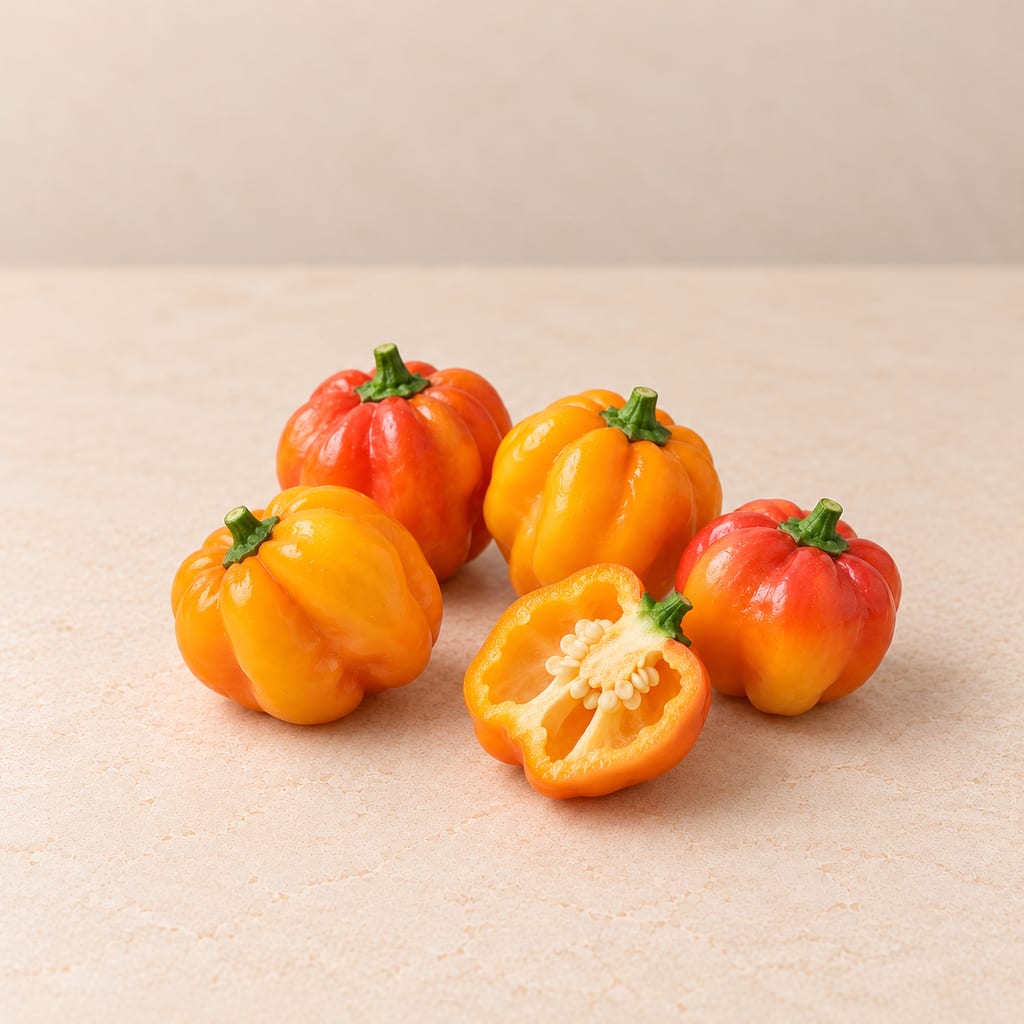
Scotch bonnet pepper
The Scotch bonnet is the squat, fiercely hot, fruity chilli of Jamaican jerk and Caribbean pepper sauces, a Capsicum chinense cousin of the habanero.
 FermenteaWhere food goes to change
Modern adaptation
Haitian pickled vegetable relish
Pikliz is a Haitian cabbage-and-vegetable condiment pickled with vinegar, citrus and hot peppers. It brings sharp acidity and chilli heat to rich fried foods; its history and shelf life remain unestablished here.

Pikliz is a sharply acidic, chilli-hot vegetable condiment associated with Haitian cooking. Cabbage and carrot give many versions their crisp body; vinegar or citrus supplies the sour edge, and hot pepper gives the heat. The details shift from recipe to recipe. A contemporary published version, for example, pairs cabbage, carrot and shallot with Scotch bonnet, thyme, clove, vinegar and lime. It is one documented formula, not a fixed national standard.
An open-access review describes pikliz as a regular accompaniment to Haitian meals and as an expression of Haitian identity in Haiti and among diaspora communities. The same review says its historical origin is unknown. The sources consulted here do not establish a first date, a birthplace within Haiti or a single inventor, so the recipe records a country-level association and leaves the origin open.
The vegetables make pikliz more than a pepper sauce. Thin cabbage and carrot hold a crisp texture while the sour liquid seasons each bite. Shallot adds allium flavour; thyme and clove give the cited version an aromatic note. The mixture is served alongside richer foods, where sourness and chilli can sharpen the meal rather than replace its main dish.
Scotch bonnet is a characteristic hot pepper in many pikliz recipes, though sources also list habanero or other peppers. In the cited formula, six peppers are used for a four-cup batch. Pepper heat varies between fruit and batches, and the source gives no measured heat value. The amount is part of this formula rather than a universal ratio; a reader should not take it as a precise measure of how hot every batch will taste.
This measured version follows one contemporary recipe: cabbage, carrot, shallot, Scotch bonnets, thyme, cloves and salt are packed in a jar, then covered with white vinegar and lime juice. The recipe's three-day chill is its stated serving interval; it is not a safety endpoint. Its four-cup yield and listed quantities belong to that source-specific batch, and no scale-up calculation is supplied.
This is a quick vinegar pickle, not a demonstrated fermentation. A different pikliz may use another vegetable mix, pepper level, citrus or handling method. The National Center for Home Food Preservation notes that acidity matters to pickle safety and warns against changing ingredient proportions in tested preservation recipes. The cited pikliz recipe does not report vinegar strength or a measured final acidity, so this record does not present it as shelf-stable or suitable for canning. Keep it refrigerated; general food-safety advice about chilling does not set a recipe-specific shelf life.
An open-access review describes pikliz as a Haitian condiment and says its historical origin is unknown. It discusses Haitian identity and use among communities in Haiti and abroad; it does not establish a first date or locality.
Yield 4 cups · Scaling: source batch only
The recipe source does not specify the vinegar acidity or validate final acidity for safe shelf storage. Acid content matters to pickle safety.
Hazard sourceThis draft treats the preparation as a refrigerated fresh pickle and does not establish a shelf life.
Hazard sourceKeep refrigerated; return perishable food to refrigeration within two hours. This general handling guidance does not validate a storage life for this recipe.
Control sourceDo not can, store at room temperature, or treat this formula as shelf-stable. National Center for Home Food Preservation guidance says acidity and exact ingredient proportions matter and advises following tested preservation recipes.
Control sourceThe cited recipe is a refrigerated culinary preparation, not a tested canning formula; do not infer shelf stability from vinegar or lime.
The precise acidity of the vinegar and final pickle is not reported; no pH or preservation limit is invented.
The Scotch bonnet quantity sets a substantial, variable heat; pepper strength varies, and this record does not assign a Scoville value.
The review associates pikliz with Haitian food culture and Haitian communities at home and abroad; it states that the condiment's historical origin is unknown.
The Scotch bonnet is the squat, fiercely hot, fruity chilli of Jamaican jerk and Caribbean pepper sauces, a Capsicum chinense cousin of the habanero.
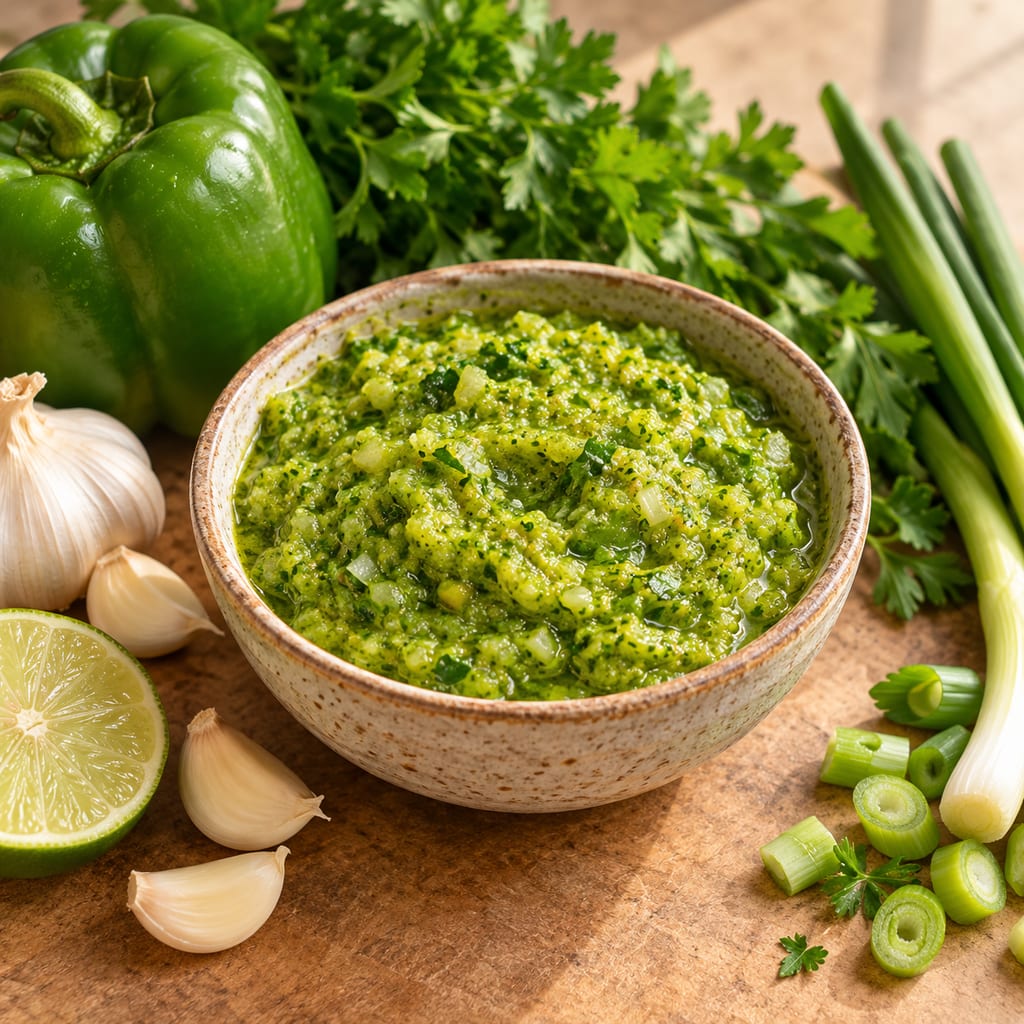
A Haitian seasoning base of fresh herbs, peppers, onion, garlic, citrus and vinegar, blended to a paste, used to marinate meat and fish and to start soups, stews, rice and beans.
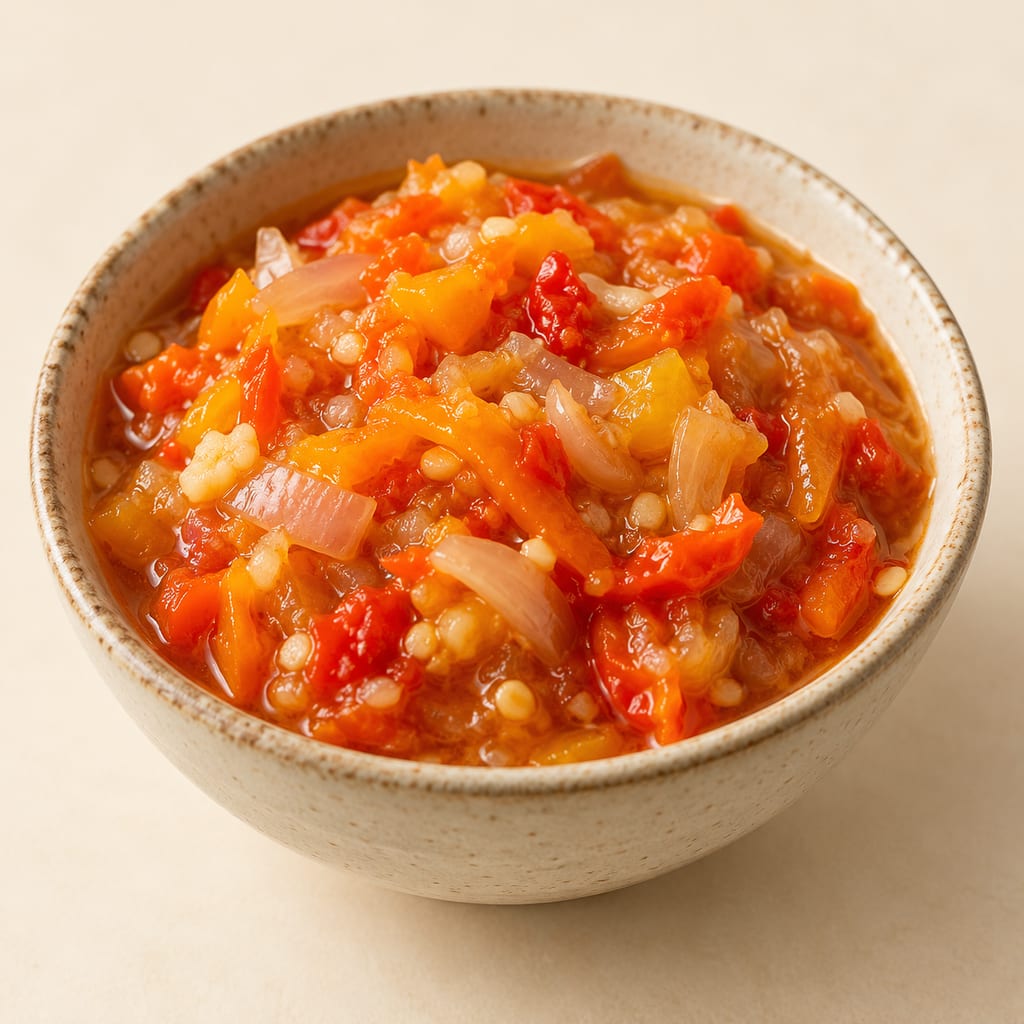
A Haitian hot sauce of habanero or Scotch bonnet, onion, shallot and garlic, softened in vinegar and lime, simmered briefly and served on grilled or fried meat and seafood.
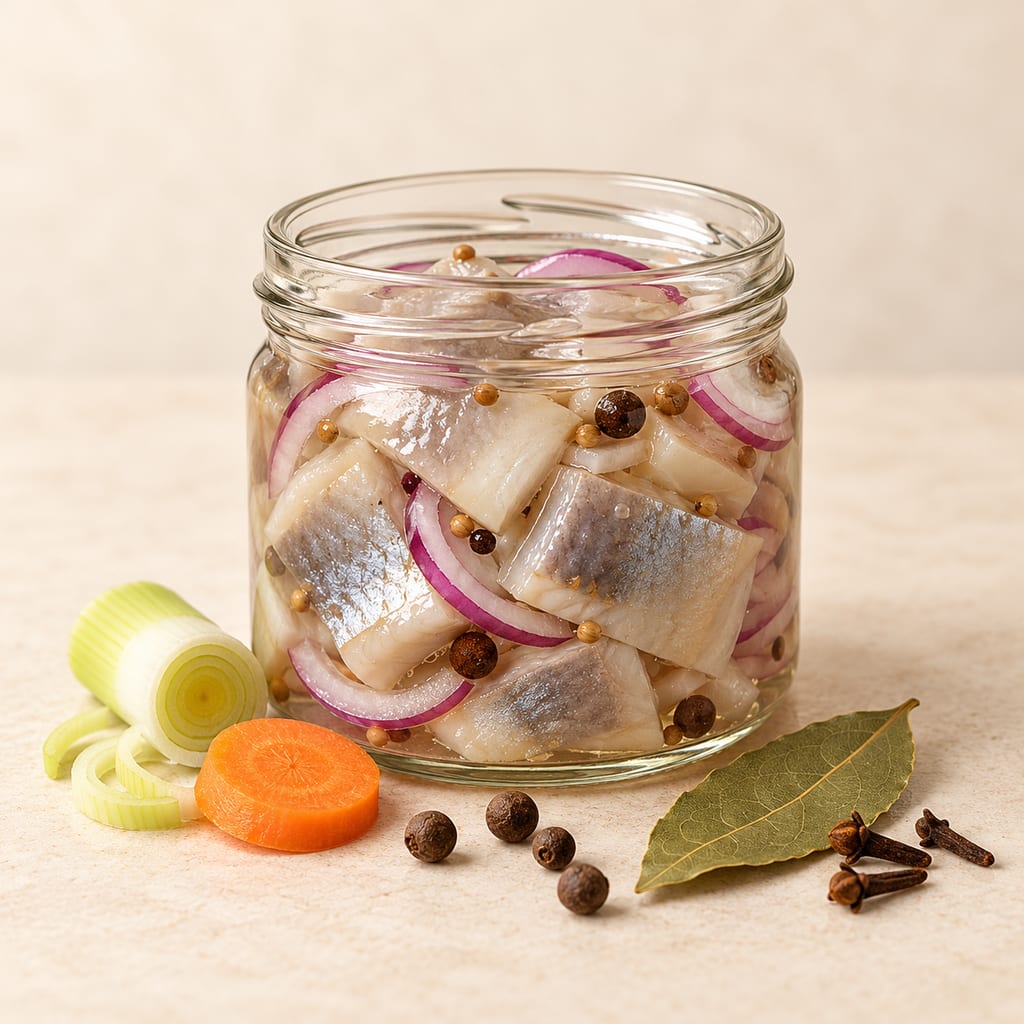
A Swedish ready-to-dress herring preparation: add the classic sliced aromatics and spices to already prepared herring, then serve or chill for fuller flavour.

Achcharu is a family of Sri Lankan vinegar pickles made with mixed vegetables or seasonal fruit and a piquant spice dressing. This version is a quick, refrigerated, non-fermented mixed-vegetable pickle.
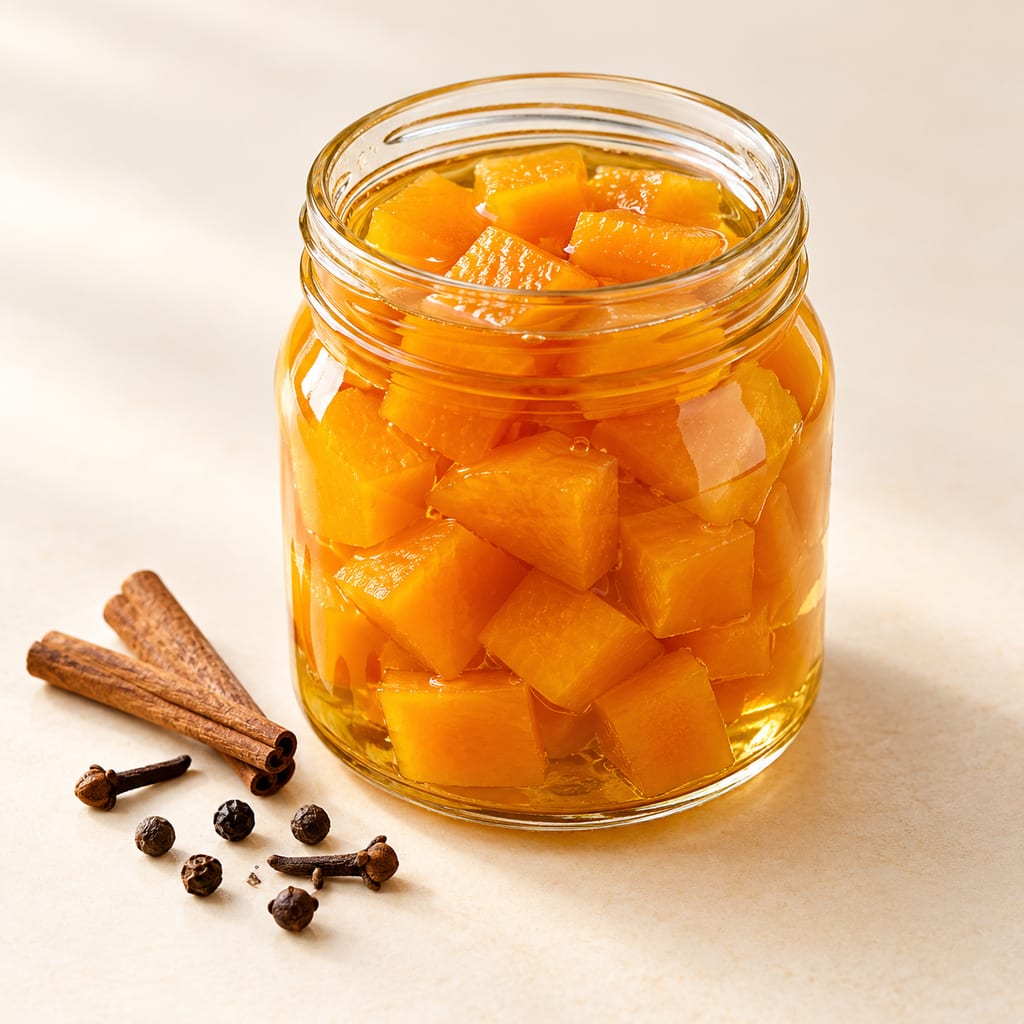
Ball sweet pumpkin pickles: Cupboard: exact published Ball formulation and water-bath process.
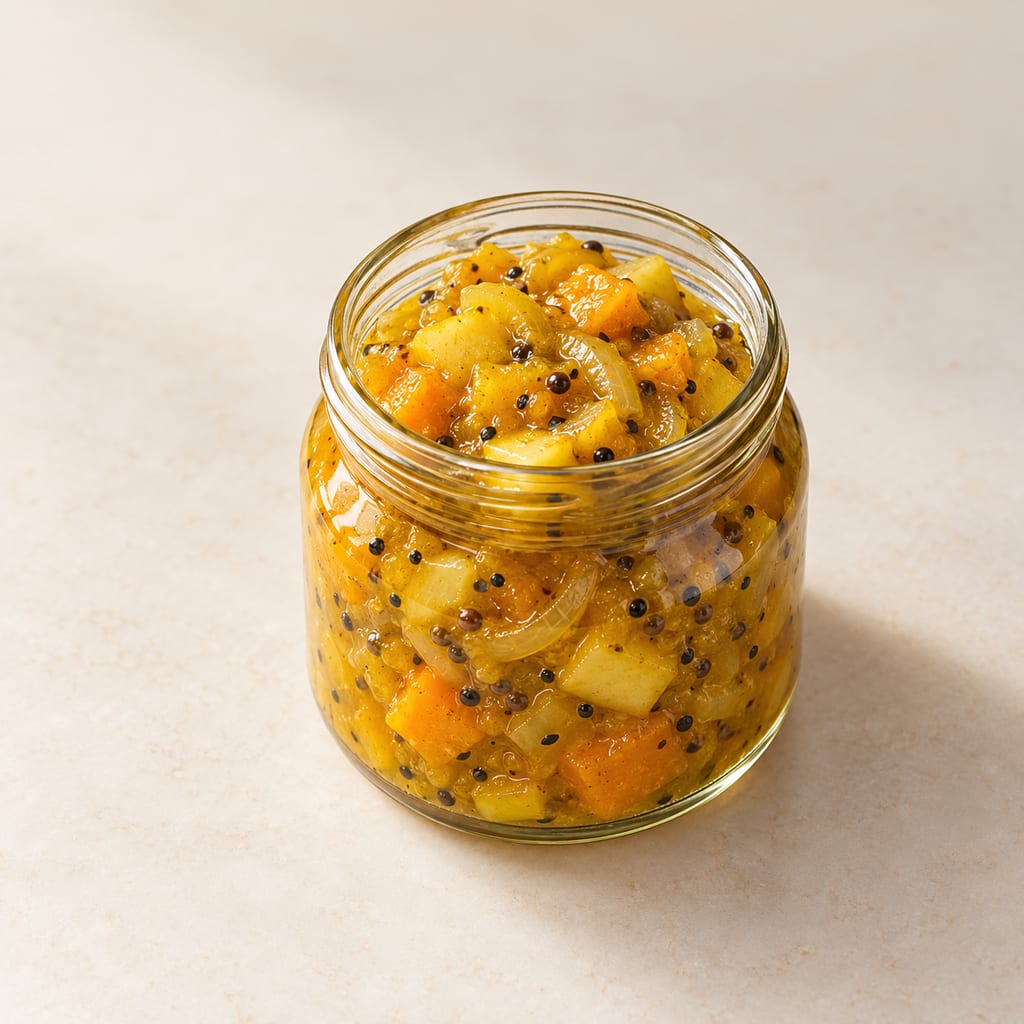
British pumpkin, apple and mustard pickle: Freeze for winter; small fresh portion refrigerated up to 48 hours.
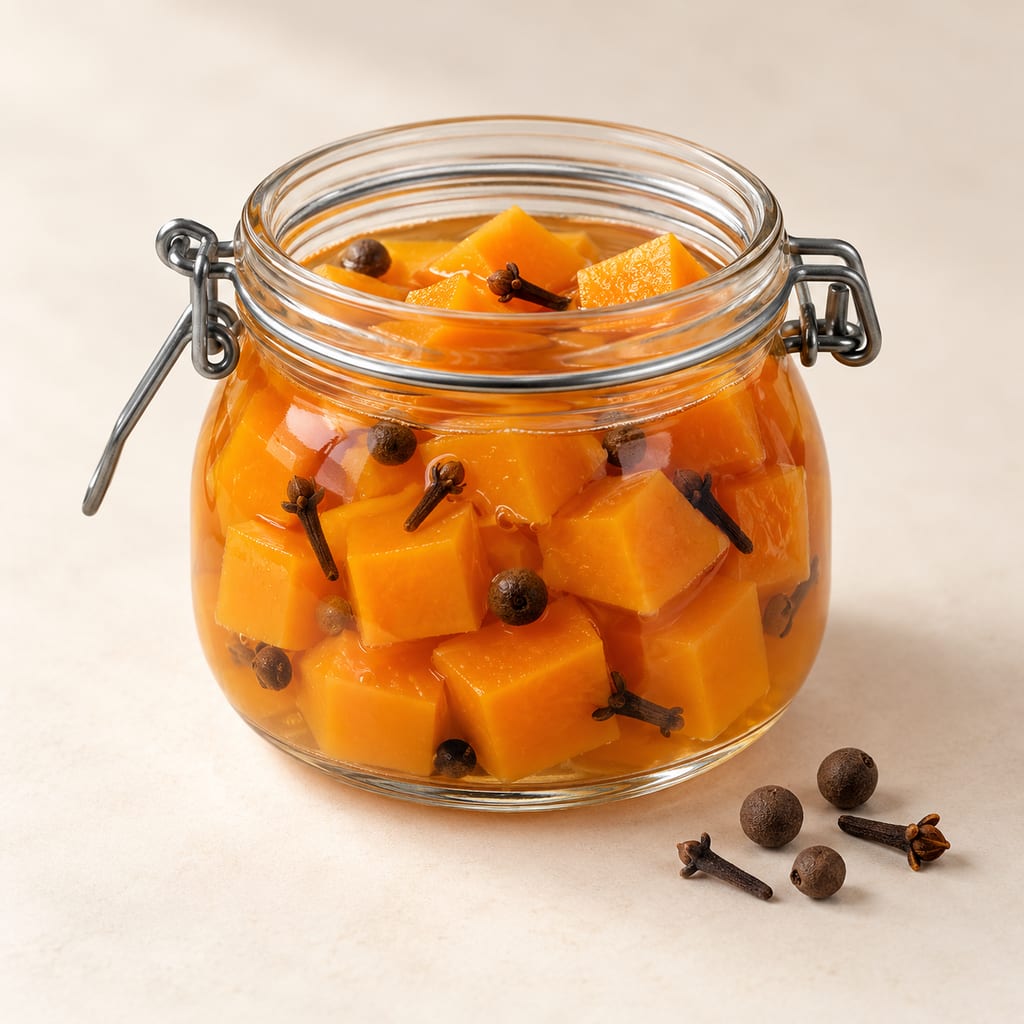
Dynia marynowana: Freeze for winter; small fresh portion refrigerated up to 48 hours.
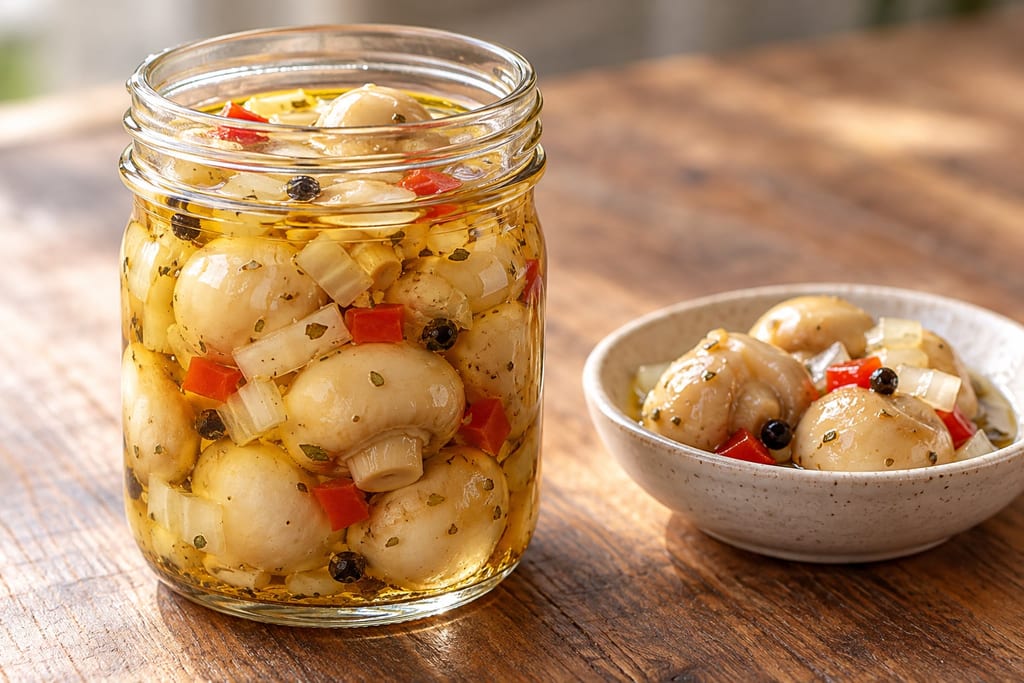
Small edible mushrooms are briefly cooked and packed in a seasoned vinegar marinade, a sweet-sour preserve served cold in Poland and neighbouring cuisines.

Fried or cooked food covered in a vinegar-based preparation, the heat and the externally supplied acid working together; a family of methods whose early form is a Roman instruction for treating fried fish with hot vinegar.
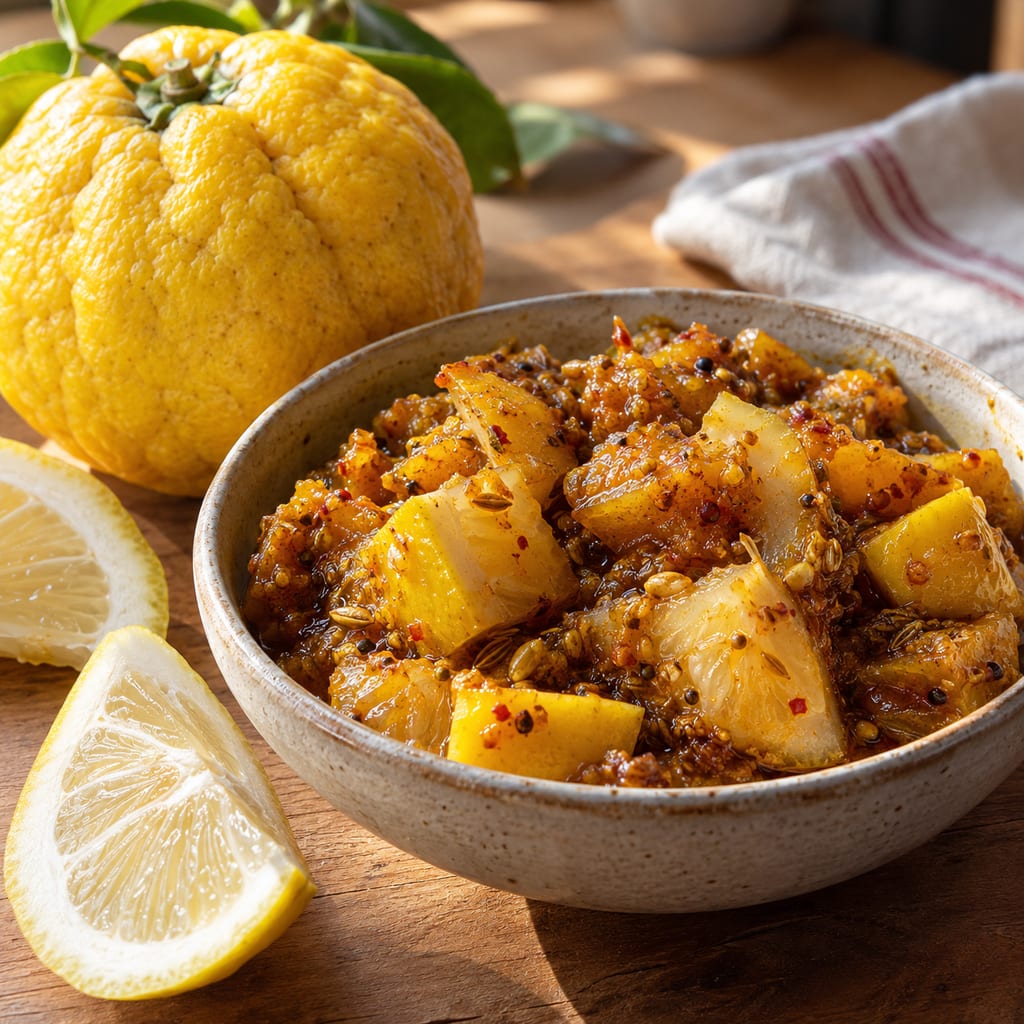
Ripe Himalayan galgal is boiled, sun-dried and cooked with mustard oil, spices and jaggery before a further rest in a ceramic jar.
No community contributions have been published for this entry yet.
Sign in to contribute. Published comments and photos are free to read.
Journal of Ethnic Foods, Springer NatureHistory · Geography · Use · Flavour
Valorization of pikliz: a spicy meal garnishment in Haitian cuisineThe review describes pikliz as a spicy Haitian condiment served with meals and discusses Haitian cultural identity in Haiti and diaspora.
It states the historical origin of pikliz is unknown.
It summarizes common versions with shredded cabbage, carrot, peppers and vinegar or citrus; formulas vary.
Cited in: A Haitian table condiment; Crunch, acidity and pepper heat
EpicuriousInspiration · Process · Flavour
Pikliz (Haitian Pickled Vegetable Relish)This contemporary formula uses cabbage, carrot, shallot, Scotch bonnet, thyme, cloves, salt, distilled white vinegar and lime juice.
The source gives a 4-cup yield, at least three days of refrigeration before serving, and Scotch bonnet or habanero as options; its storage statement is not treated as a validated shelf life.
Cited in: A Haitian table condiment; Crunch, acidity and pepper heat; One refrigerated vinegar version
National Center for Home Food Preservation, University of GeorgiaSafety
General Information on PicklingThe guidance says acidity is critical to pickled-food safety, warns against changing vinegar, food or water proportions in tested preservation recipes, and recommends vinegar with known acidity.
Cited in: One refrigerated vinegar version
FoodSafety.govSafety
4 Steps to Food Safety: Clean, Separate, Cook, ChillGeneral guidance says refrigerate perishable foods within two hours and keep a refrigerator at or below 40°F/4°C; this is not a recipe-specific shelf-life validation.
Cited in: One refrigerated vinegar version