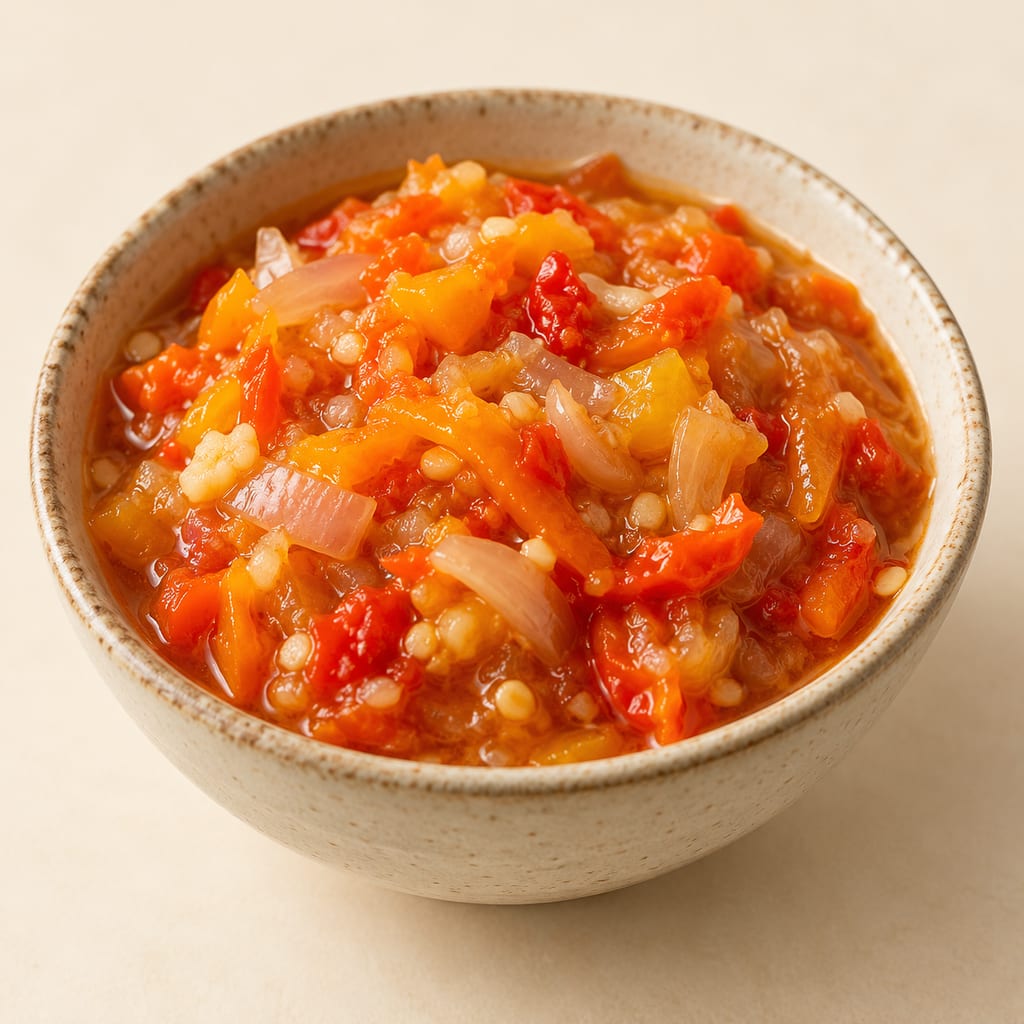
Sos ti malis
A Haitian hot sauce of habanero or Scotch bonnet, onion, shallot and garlic, softened in vinegar and lime, simmered briefly and served on grilled or fried meat and seafood.
 FermenteaWhere food goes to change
Epis · Epis · Epise · Zepis · Haitian seasoning base
A Haitian seasoning base of fresh herbs, peppers, onion, garlic, citrus and vinegar, blended to a paste, used to marinate meat and fish and to start soups, stews, rice and beans.
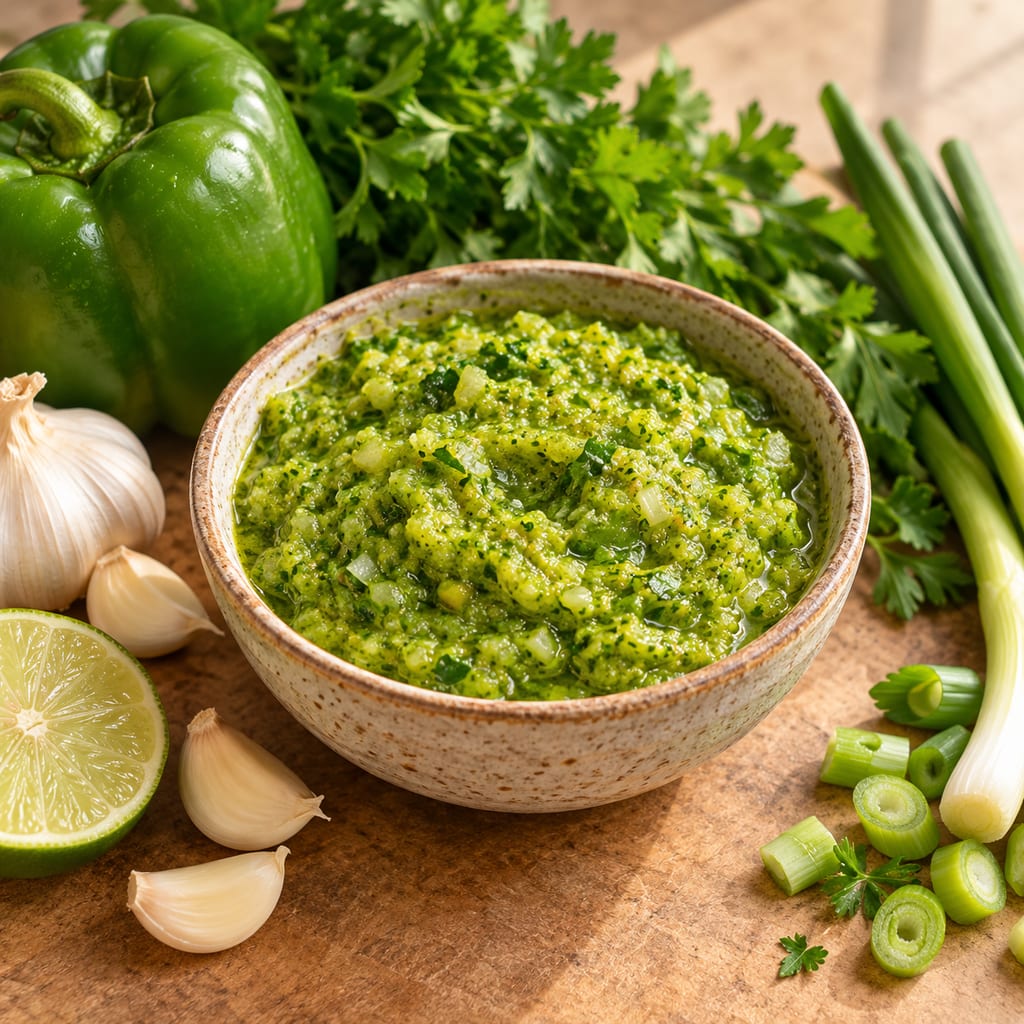
Epis is the seasoning base of Haitian cooking. It is a paste of fresh herbs, peppers, onion, garlic and citrus, often with vinegar and oil, that cooks blend and keep on hand to season a dish from its start. The paste is spoonable, and it is used both raw as a marinade and cooked into a sauce, soup or stew. The article says its acidity helps prevent spoilage.
Epis is also written epise and zepis. The article describes the seasoning as having Taíno and African origins and as resembling the sofrito of Hispanic cooking. The sources give no date or documented first maker for the paste, so the origin rests on general statements rather than an attested record.
Haitian households are described as each keeping a personal recipe, and regional recipes differ. This record keeps one formulation and does not claim a single standard epis.
Parsley, green onion and thyme are the herb core, and bell pepper and onion give body. Garlic adds pungency, and habanero or Scotch bonnet adds the heat. Lime juice and white vinegar supply the acid, and oil is part of the paste. Ground cloves and a bouillon cube are optional in the page's recipe.
Many recipes add allspice, thyme or citrus in different proportions, and the article notes that the paste changes with the cook and the region. The record keeps the one formulation the BMC page gives and lists the other ingredients as documented variations.
Traditionally the herbs and aromatics are pounded to a paste in a large wooden mortar, the munsh pilon. Most cooks now use a blender or food processor, and the paste is blended to the smoothness the cook wants. The page's method is to chop the herbs, pepper and onion roughly, add everything to the blender, blend until paste-like, and add water a tablespoon at a time if the paste is too thick.
The paste is then poured into a jar and refrigerated. The page gives no storage duration.
Epis is used as a marinade for meat and fish and as a flavour for rice and beans, soups and stews. Griot and Haitian spaghetti are among the dishes it starts. The Wikipedia article says the paste keeps up to three months in the refrigerator, depending on ingredients, and that it can be frozen in ice cube trays for later use, and it says the paste lasts indefinitely in the freezer without taking up other odours. That freezing claim is the article's and is not tested here.
The Wikipedia article describes epis as having Taíno and African origins and as resembling Hispanic sofrito, and notes that the traditional method uses a large wooden mortar and pestle. No dated source records when the paste was first made.
Yield 8 servings · Scaling: the page gives one batch that serves 8; scale the herbs, peppers and aromatics together, and treat the bouillon and cloves as optional.
The sources name Haiti as the place of origin and say that recipes differ by region and by household; no locality is documented.
A Haitian hot sauce of habanero or Scotch bonnet, onion, shallot and garlic, softened in vinegar and lime, simmered briefly and served on grilled or fried meat and seafood.

Pikliz is a Haitian cabbage-and-vegetable condiment pickled with vinegar, citrus and hot peppers. It brings sharp acidity and chilli heat to rich fried foods; its history and shelf life remain unestablished here.
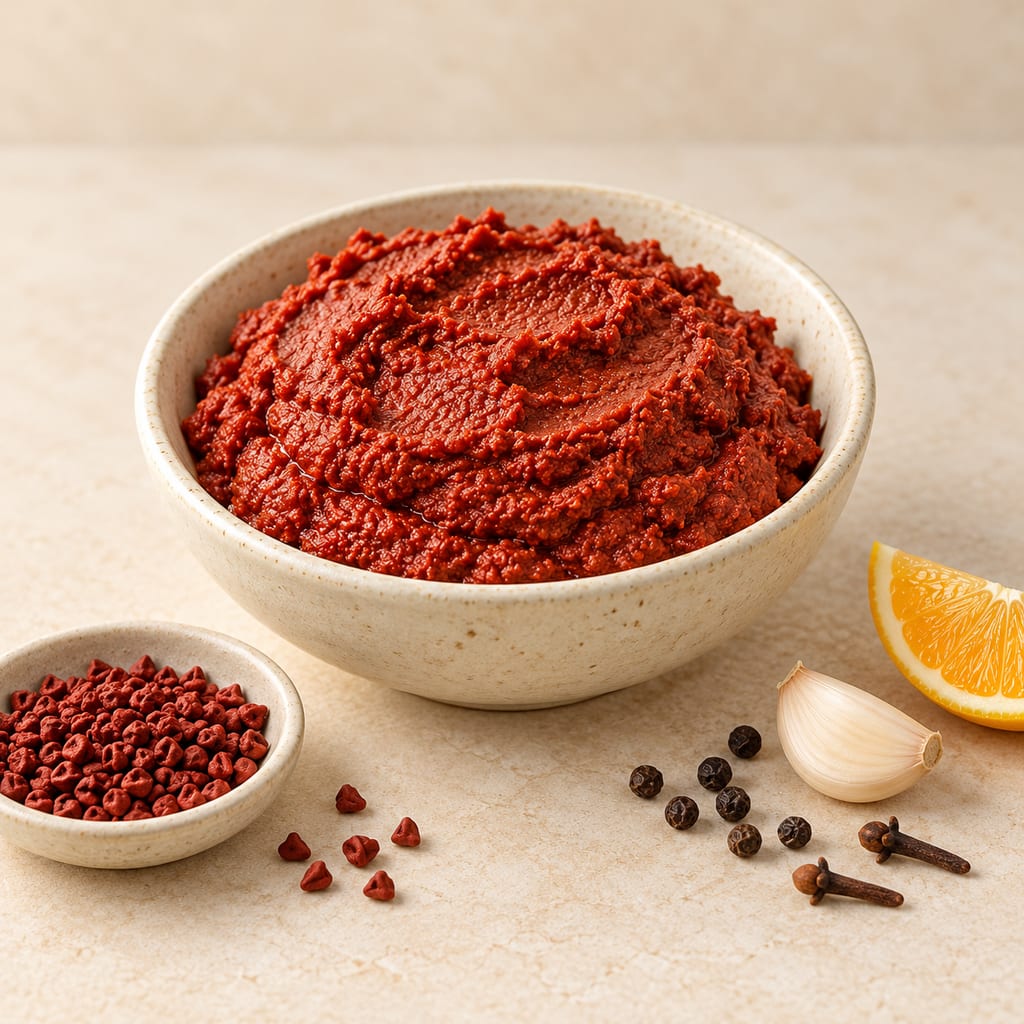
A Yucatecan recado rojo is a brick-red seasoning paste built on annatto seed, garlic and sour orange. This measured home version shows one route into a much wider family of market and household recados.
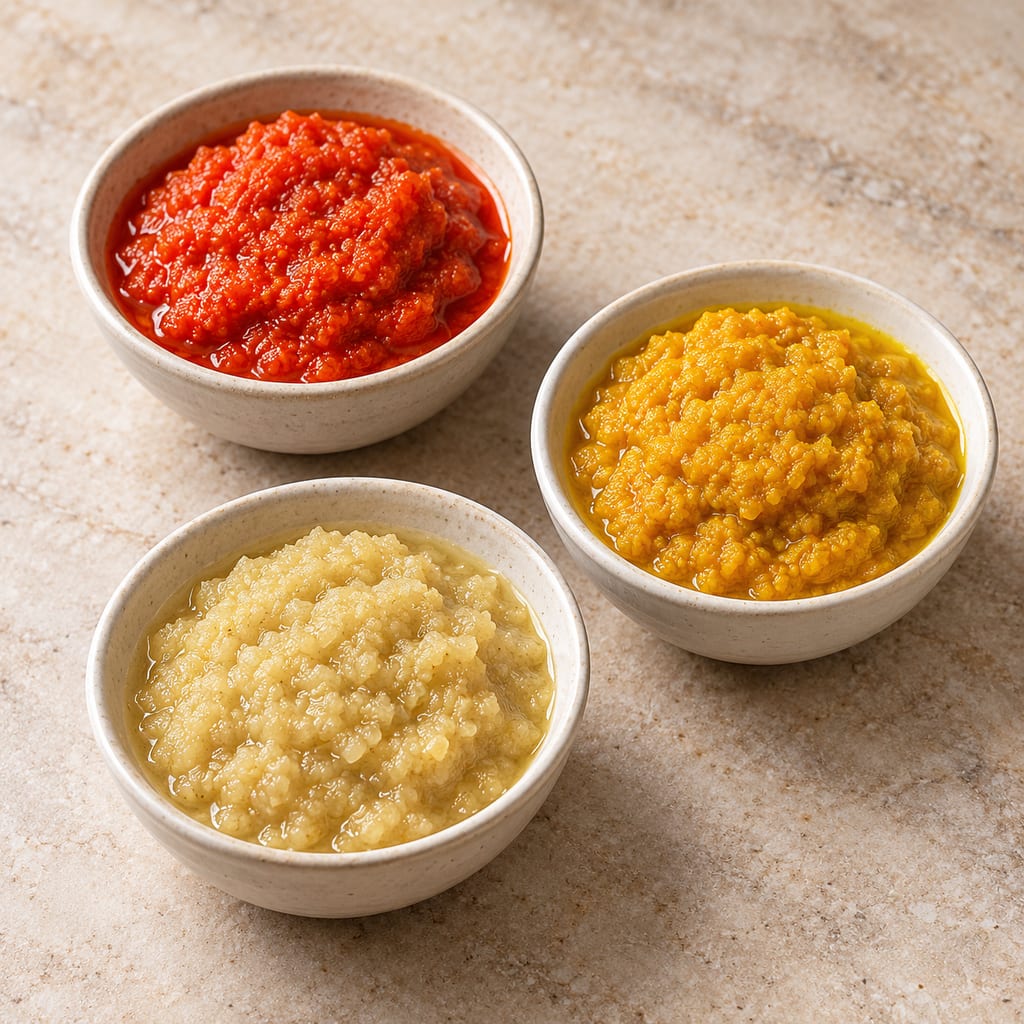
Bumbu dasar are the ground spice bases of Indonesian cooking: a white paste of shallot, garlic and salt, with chile added for red and turmeric for yellow, cooked into dishes.
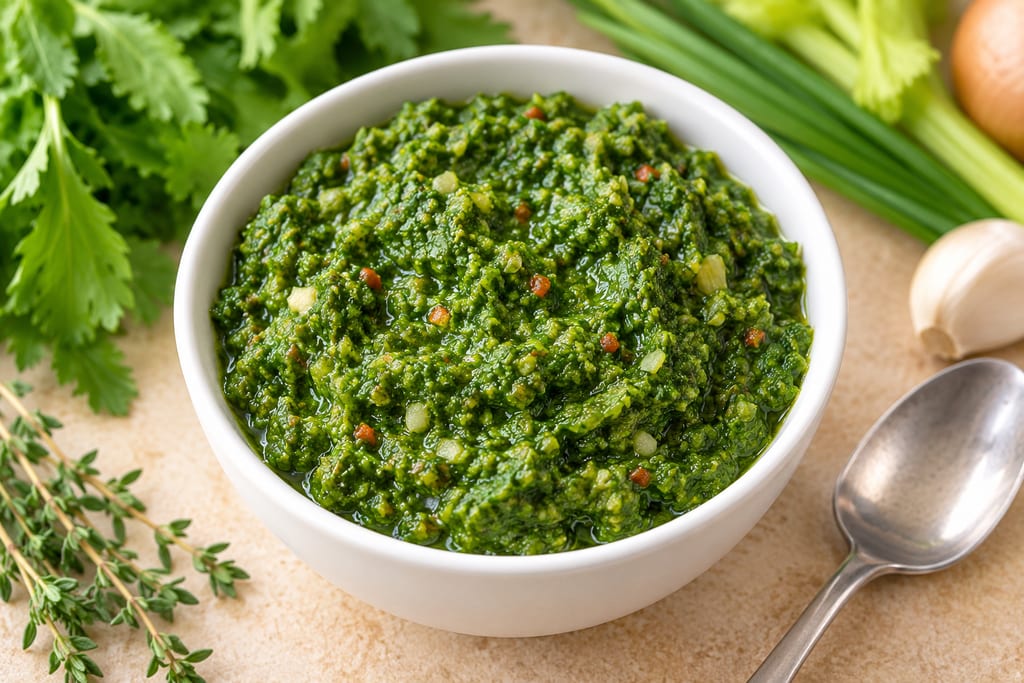
A fresh herb and aromatic paste of chadon beni (culantro), thyme, chives, celery, onion, garlic and peppers, blended with vinegar and water and used as the base for Trinidadian cooking.
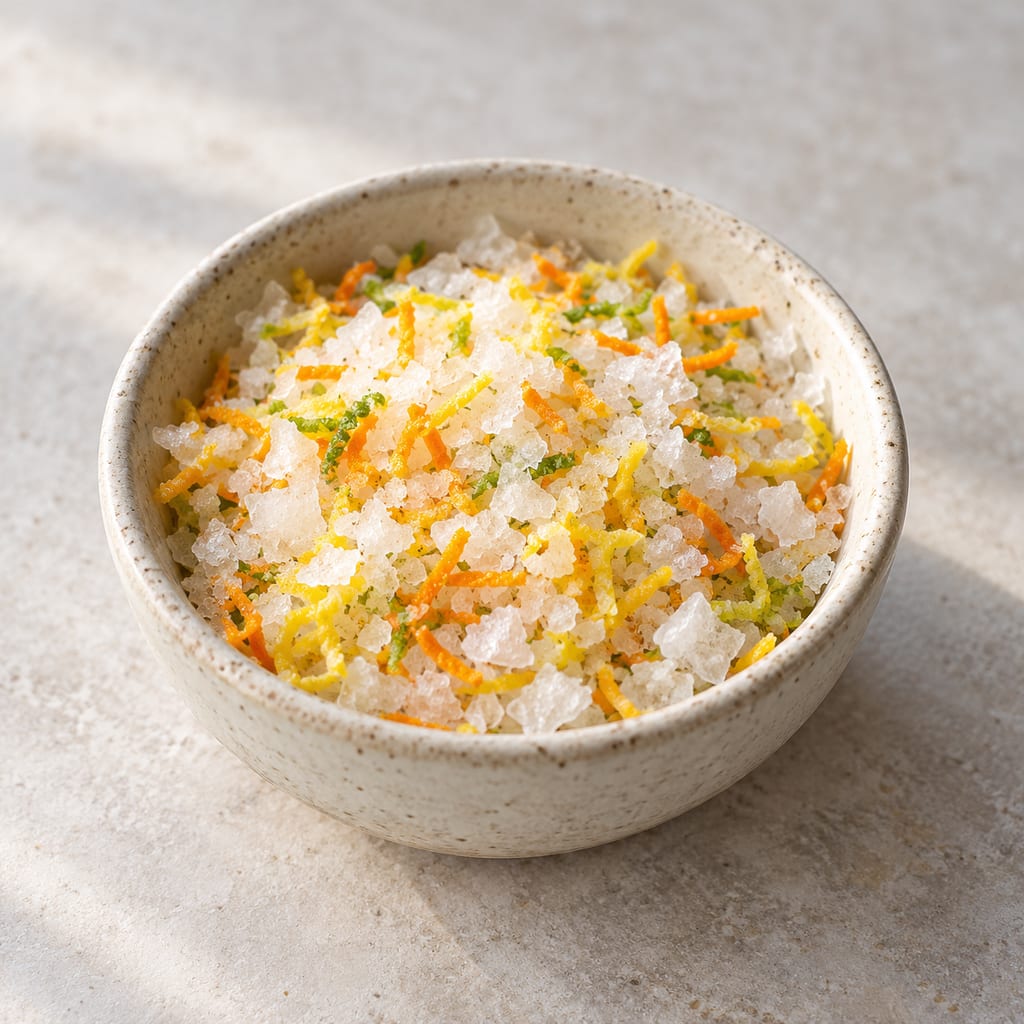
Citrus zest is rubbed into coarse or flake salt and dried on a tray. This peel-based seasoning preserves the chosen citrus aroma without adding juice.
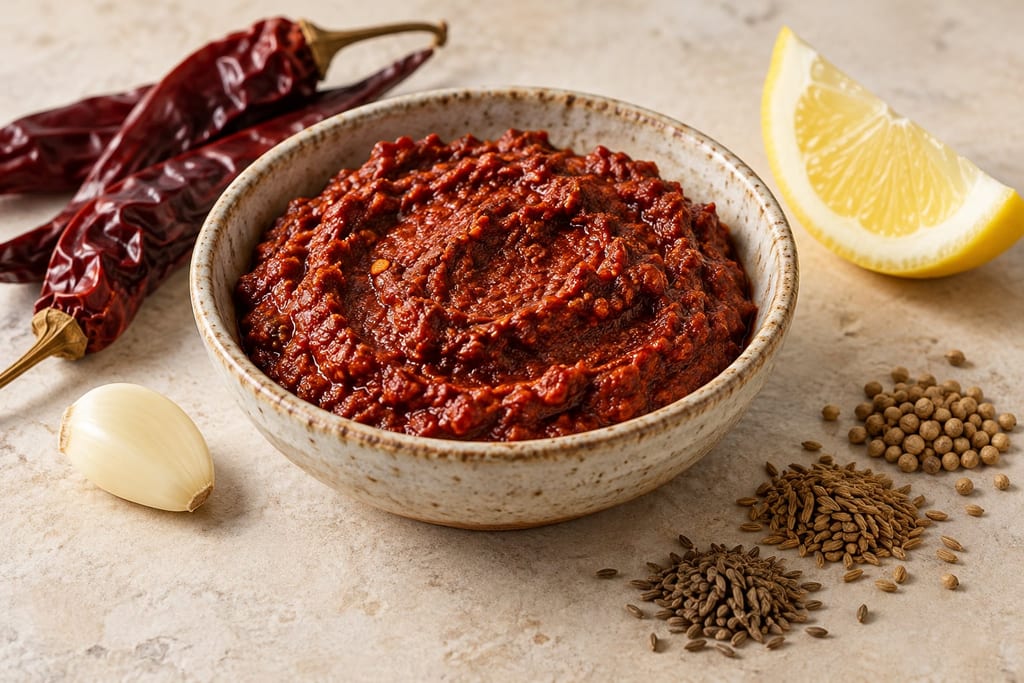
A fresh chilli paste made from rehydrated dried red peppers, garlic, olive oil, lemon and warm spices; this small-batch formula adapts the harissa family rather than reproducing a tested Tunisian method.
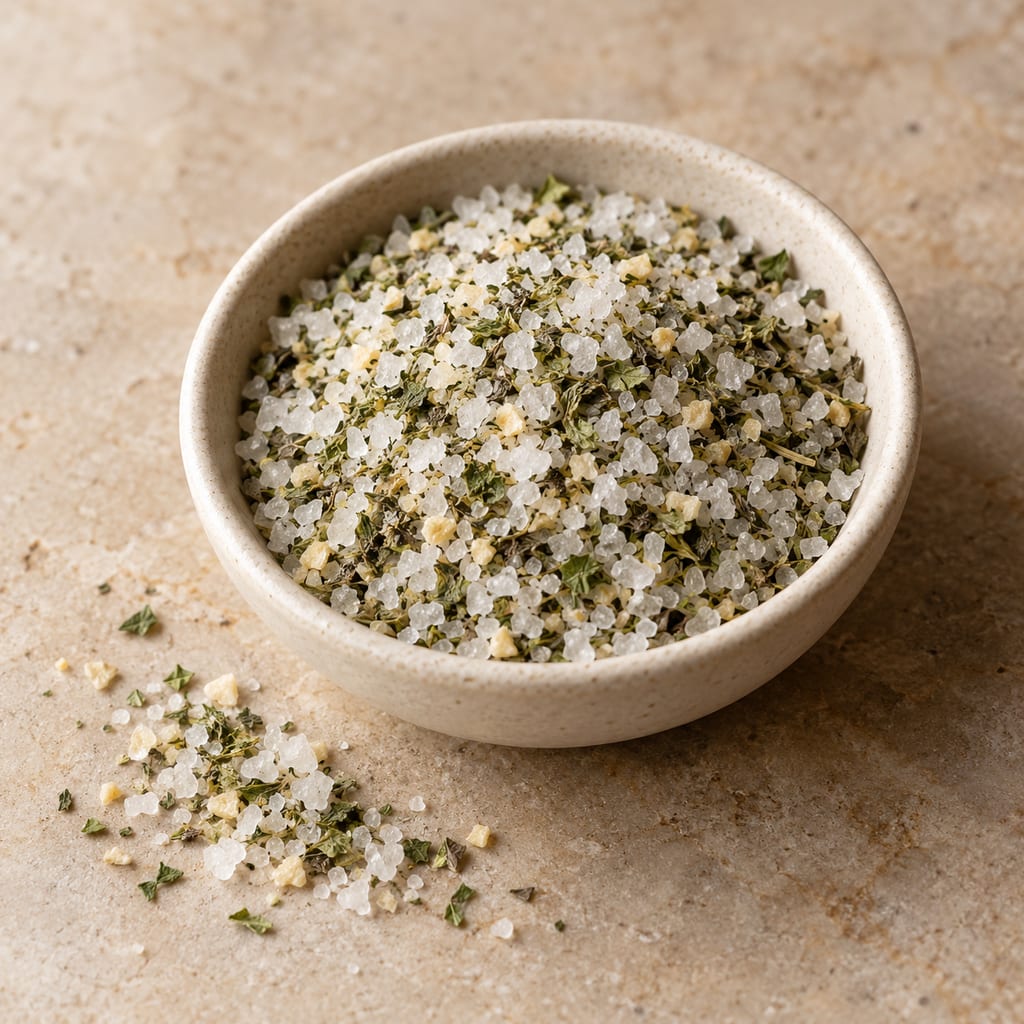
Fresh garlic and pungent herbs are chopped with kosher salt, then dried in the warmth of a switched-off oven. The blend keeps the selected herbs together in one seasoning.
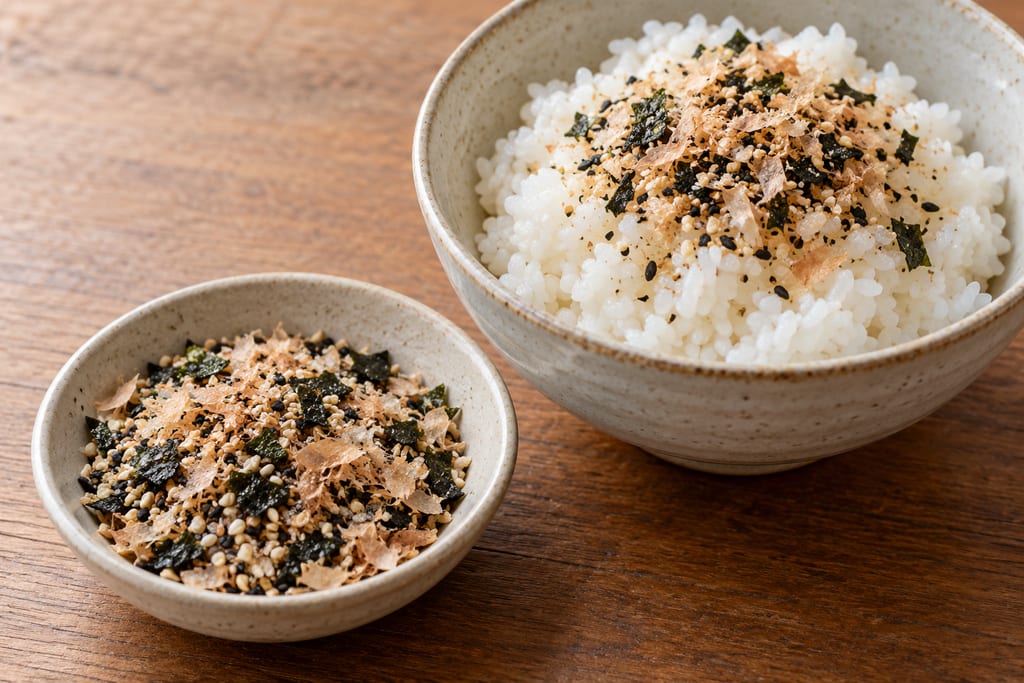
A dry Japanese rice seasoning of sesame, bonito, nori, sugar and salt. This documented home blend is one specific formula within a varied category with several early product histories.
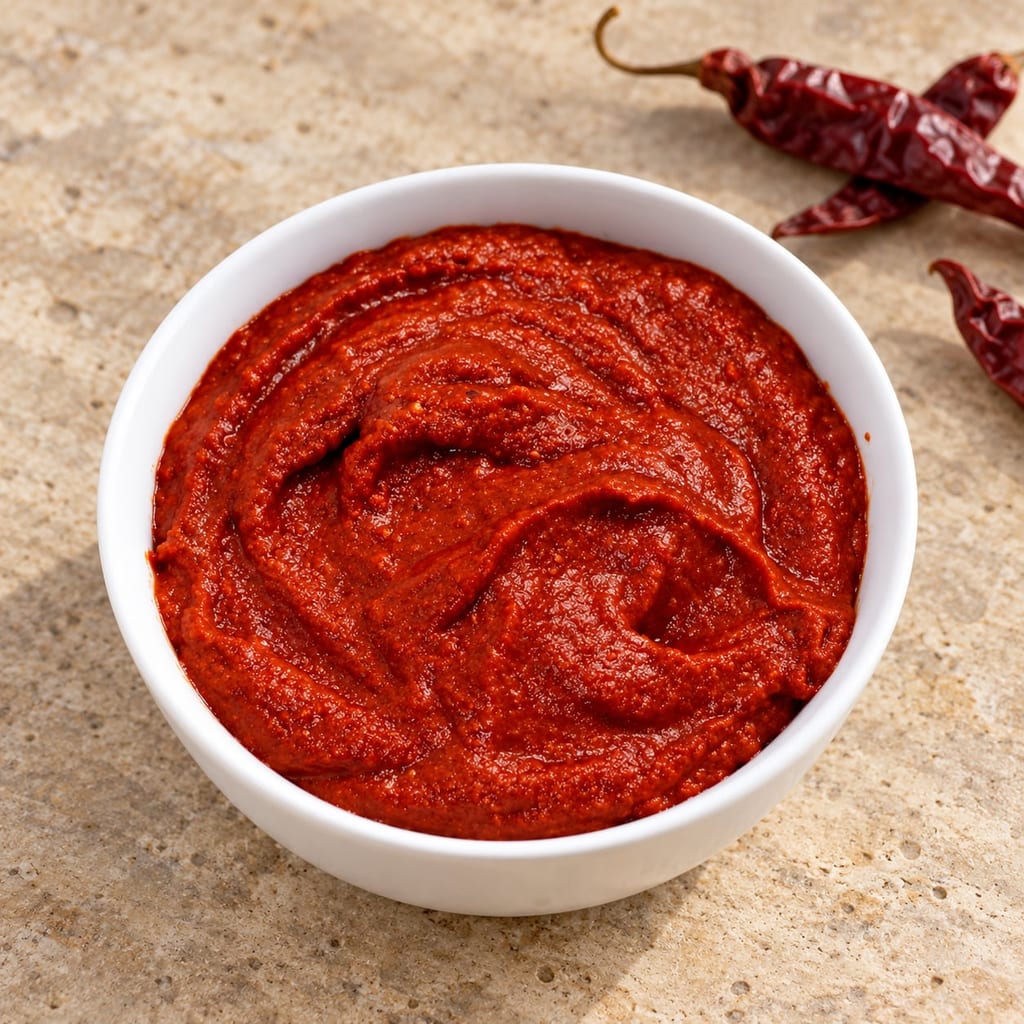
Recheado is a red Goan spice paste of Kashmiri chillies, garlic and spices ground in vinegar, best known as the stuffing for fried fish such as mackerel.
No community contributions have been published for this entry yet.
Sign in to contribute. Published comments and photos are free to read.
WikipediaHistory · Ingredients · Method · Storage · Uses
EpisEpis is a blend of peppers, garlic and herbs used as a flavour base in Haitian cuisine; also known as epise and zepis.
Epis often contains parsley, scallions, garlic, citrus juice and Scotch bonnet peppers, with vinegar, cloves, thyme, allspice, bouillon and onion in many recipes.
Traditionally made in a large wooden mortar and pestle (munsh pilon); today often blended.
Used as a marinade for meat and fish and to flavour rice and beans, soups and stews; the article lists griot and Haitian spaghetti.
Keeps up to three months refrigerated; freezes well in ice cube trays; the article says it lasts indefinitely in the freezer without transferring its odour.
Cited in: Overview; Name and origins; What goes in; Making it; Use and storage
Boston Medical CenterMethod · Ingredients
Epis (Haitian Seasoning Mix)Serves 8; ingredients include 1 cup assorted parsley, green onions and thyme, 1 small bell pepper, 1 onion, 6 garlic cloves, 1 to 2 habanero peppers, optional 1/2 teaspoon ground cloves, 1 lime, 1 tablespoon white vinegar, optional bouillon, 1/4 cup oil and 1 to 2 tablespoons water.
Method: chop, blend to a paste, add water a tablespoon at a time if thick, refrigerate in a jar; the page gives no storage duration or freezing guidance.
Cited in: Overview; What goes in; Making it