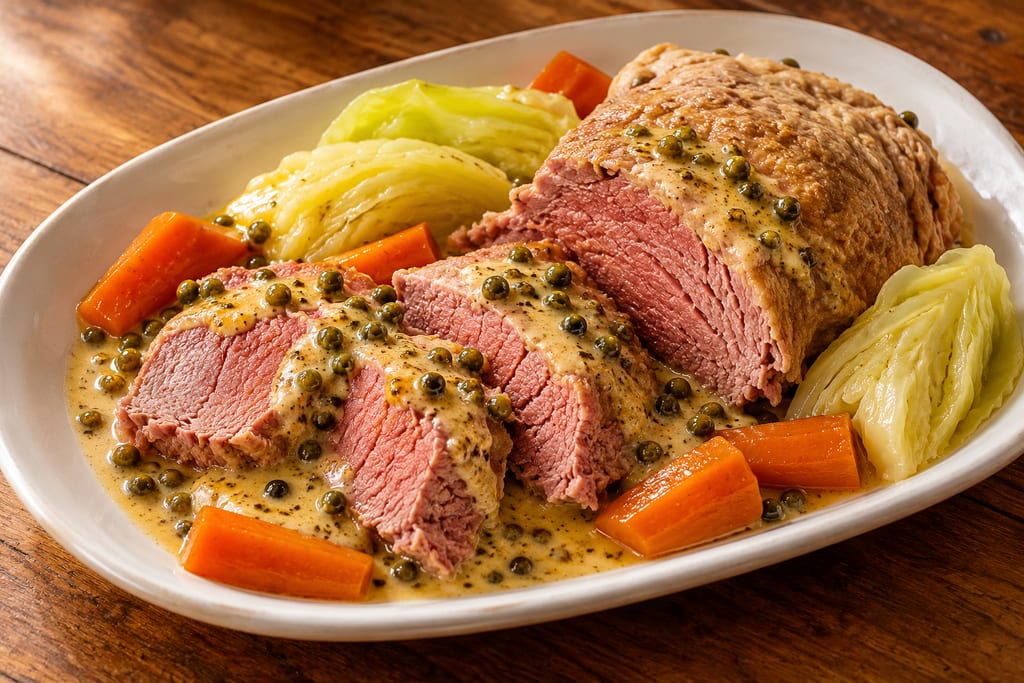
Salt beef with green peppercorn and mustard sauce
A Karoo-style festive dish of already cured salt beef simmered with vegetables and aromatics, served with a cream sauce of brined green peppercorns and wholegrain mustard.
 FermenteaWhere food goes to change
Spices and aromatics
Parsley (Petroselinum crispum) is a cultivated Apiaceae herb grown mainly for its fresh leaves, though root parsley is a separate crop form. Flat-leaf and curly-leaf parsley differ in leaf shape and reported flavour.
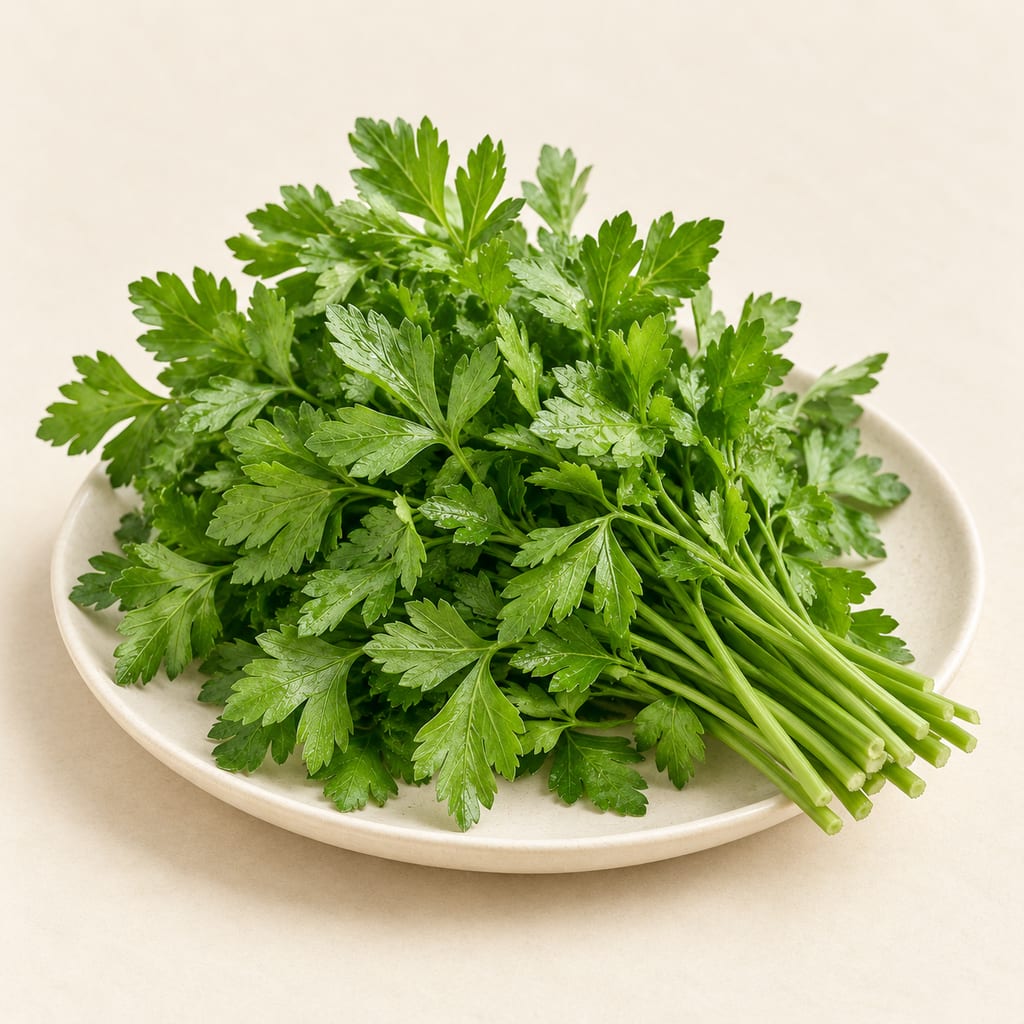
Parsley is Petroselinum crispum (Mill.) Fuss, a member of Apiaceae, the carrot family. The ingredient named in most recipes is the leafy shoot: fresh leaves with their tender stems, used chopped, torn or as a whole sprig. A label that says only “parsley” does not identify a cultivar, and a recipe does not necessarily mean that every stem should be included. Strongly fibrous lower stems can be removed when a recipe calls for leaves or tender stems.
Parsley is a biennial plant. It forms leafy growth in its first season and can flower and set seed in its second. Gardeners often grow it as an annual culinary crop, harvesting the leaves before flowering. The botanical name covers the cultivated garden herb, while common names also describe horticultural forms grown for a root. This page uses parsley primarily for the fresh leaf-and-stem herb and names root parsley separately when the source means it.
Parsley is not coriander leaf, celery leaf or poison hemlock. They are different plants in or near the same botanical family and their common names can confuse a market list or forager. Fresh flat-leaf parsley is especially easy to mistake at a glance for other flat-leaved herbs, so the source label and known cultivation matter. A photograph can show a culinary form, but it cannot certify the identity of a wild plant.
Flat-leaf and curly-leaf parsley are the familiar garden leaf forms. Flat-leaf parsley has broader, flatter leaflets with sharply divided edges. Curly parsley has tightly curled leaflets that make a compact, ruffled mass. The Royal Horticultural Society describes flat-leaf parsley as stronger in flavour and curly parsley as milder. That is a general culinary comparison, not a guarantee about every cultivar, growing condition or bunch.
Flat-leaf leaves are easy to chop and distribute through sauces, salads, soups and cooked fillings. Curly leaves hold their shape and are often used as a garnish, but they are also edible and can be chopped. A cook should choose by the texture and flavour needed rather than treating curly parsley as inedible decoration. If a recipe names Italian or flat-leaf parsley, substitute another form only with the expected change in leaf texture and flavour in mind.
Root parsley, also called Hamburg or turnip-rooted parsley in some horticultural guidance, is grown for an enlarged pale root as well as leaves. Wisconsin Extension uses the botanical variety name var. tuberosum for this crop form, while Kew's accepted taxonomy does not list it as an accepted infraspecific taxon. The records therefore describe the term as a horticultural name rather than resolving it into a taxonomic claim. A recipe for parsley root means a different plant part from a recipe for parsley leaves; do not replace one with the other automatically.
Fresh parsley has a green, herbal flavour with a clean, slightly peppery edge. The RHS describes flat-leaf parsley as stronger and curly parsley as milder, while extension guides emphasize its use as a flavouring herb. The taste of an individual bunch also depends on its age and freshness. Leaves that have wilted, yellowed or dried lose the fresh character that makes parsley useful near the end of cooking.
Parsley can provide the main herb bulk in a chopped sauce or salad, where its green flavour is central, or act as a small finishing addition that brightens a cooked dish. Its taste is more restrained than the pungent aromatic leaves of some other Apiaceae herbs. Parsley does not provide the citrusy scent of coriander leaf or the anise-like character associated with fennel; those distinctions matter in a mixed-herb recipe.
The plant contains volatile oils, and studies of parsley oil report changes with harvest stage and growing conditions. One study of four harvests found that the measured oil composition shifted during the season, including changes in apiol and myristicin. These are results for extracted oil from a particular trial. They do not give the concentration in a bunch of fresh parsley or predict the flavour of every cultivar.
Parsley appears in many cuisines, but the cited recipes use it in distinct ways. The Iğdır Provincial Directorate of Culture and Tourism lists parsley with dill in the filling for etli sarma, a stuffed vine-leaf dish. The Muğla cookbook hosted by Türkiye’s Ministry of Culture and Tourism includes parsley with dill and mint for stuffed grey mullet, and parsley with dill in herb tray pastry. These pages document local recipe contexts; they do not define a single Turkish mixture or show that parsley began in either region.
The Cultural Institute of the Islamic Republic of Iran in Rome describes baghali polo, rice with broad beans and dill, and lists chopped parsley or coriander as optional fresh herbs. The herb is an optional finish in that account, distinct from dill's more central role in the named rice dish. The source is a recipe account, not a survey of all Iranian practice.
Outside those examples, the RHS describes parsley in salads and cooked foods including casseroles, sauces and pies. Parsley leaves can be chopped into a dish, stirred through at the end, or used as a sprig for a short infusion. Flat-leaf form is often selected when stronger herb flavour is wanted; curly form can give a milder taste and a more distinct leafy texture.
Chimichurri and herb sauces use parsley in different proportions and textures. A chopped herb sauce may make parsley the main bulk, while chermoula and green sauces combine it with another herb, garlic, spices, oil or acid. Those sauces are preparations in their own right, not variants of the raw parsley ingredient. When reading an ingredient line, note whether it specifies leaves, tender stems, flat-leaf parsley, root parsley, or simply parsley.
The plant part changes how parsley behaves in the mouth. Finely chopped leaves spread their aroma through the rest of a sauce or filling, while a larger piece of leaf gives a more noticeable green texture. Tender stems can be chopped finely with the leaves; thick lower stems are often held back when a recipe calls only for leaves. A sprig used as a garnish can be lifted away, while parsley in a chopped salad or herb pastry is part of the food. These are practical differences in preparation, not separate cultivars. The sources give examples of parsley in salads, sauces, fillings and pastries, but do not set one standard chopping size or quantity. Follow the form and measure named by the specific recipe. When a recipe specifies fresh parsley, dried flakes are not a direct textural replacement; drying reduces the fresh flavour and changes how it disperses. Likewise, root parsley should not replace leaf parsley in a cold salad just because both carry the same common name.
Parsley is slow to germinate compared with many garden herbs. The RHS recommends sowing into a final outdoor bed or container when possible because the plant develops a root that dislikes disturbance. Its guide also describes starting seed indoors and transplanting carefully. Illinois Extension likewise advises direct sowing and identifies transplanting as difficult. These are home-gardening recommendations, not commercial sowing specifications.
In the UK guidance, parsley grows in sun or partial shade in fertile soil that holds moisture without becoming waterlogged. Regular watering helps prevent the soil from drying out. Parsley can be grown in garden beds, containers and on a bright indoor windowsill. The RHS describes leaf harvest from late spring into autumn in its setting and says outdoor plants usually die down over winter there. Those seasons cannot be applied unchanged to every climate.
Leaf parsley is harvested repeatedly as the plant grows. Taking outer leaves allows the centre to continue producing; a second-year plant may send up a flowering stem and shift from leafy growth to seed production. Garden guidance varies by climate, cultivar and intended crop. Root parsley has a different harvest aim because the enlarged root is part of the crop, so leaf-only cultivation advice does not specify how or when to lift roots.
Choose a bunch with fresh-looking green leaves and firm stems. Yellowing, slimy or heavily wilted leaves have lost quality. If the recipe needs leaves only, strip them from thick stems and reserve tender stems for chopping into stocks, sauces or fillings when appropriate. Rinse herbs under clean running water before use and dry them well if they will be chopped into an oil-based or raw sauce; excess surface water changes texture and dilutes the dressing.
The RHS suggests using parsley leaves fresh, freezing chopped leaves in water-filled ice-cube trays, or drying leafy stems and storing the crushed leaves in an airtight jar. It notes that dried parsley has less flavour than fresh. These are home-use options, not a tested preservation process for every product and not a universal shelf-life statement. A fresh bunch can be kept according to reliable local storage guidance, but the sources consulted do not establish one safe duration for all conditions.
Once parsley is mixed with water, yoghurt, oil, garlic or another fresh ingredient, the result is a prepared sauce or dish with its own handling needs. The fresh herb does not preserve the mixture. Do not treat a parsley-and-oil jar as shelf-stable because it smells fresh or because the leaves are submerged.
Parsley belongs to Apiaceae, a family that includes edible crops and toxic plants. The Washington State Noxious Weed Control Board warns that young poison hemlock can be confused with other members of the carrot family. Its information supports caution; it is not a complete field key. Do not collect a wild plant for food based on a common name, leaf resemblance or a web photograph. Use parsley from a known culinary source or a plant you have positively identified through reliable local expertise.
People with a known allergy or dietary restriction should check the specific product and meal. The sources consulted for this entry do not establish an allergen profile or a complete cross-contact standard for every parsley product. A mixed herb sauce may contain oil, garlic, mustard, dairy or other ingredients beyond parsley, so the ingredient name alone does not describe the whole preparation.
Kew's Plants of the World Online provides the accepted species name and a botanical distribution record. Horticultural pages describe present-day cultivation and leaf forms. The regional recipe sources identify parsley in dishes associated with Iğdır and Muğla in Türkiye and in an optional herb garnish for baghali polo in an Iranian recipe account. These sources support plant identity and documented culinary settings, not a single birthplace.
The sources consulted here do not establish the earliest dated culinary use of parsley or a secure point of origin. A species distribution is not a domestication date; a modern recipe is not evidence that a dish began with the herb; and a botanical name cannot settle how long people have eaten its leaves. The period for culinary history therefore remains unknown in this record.
The available guidance does not establish a universal frost threshold, greenhouse setpoint, safe wild-plant identification method or storage interval for fresh parsley. The sources use the root-parsley name in a horticultural sense that is not resolved as an accepted taxonomic variety by Kew. Regional recipe passages record different foods and do not establish one fixed formula for parsley. These limits are retained rather than filled with estimates.
The provincial culture page lists parsley with dill in an etli sarma filling. This documents a recipe context, not the herb's origin or local cultivation.
The Ministry-hosted Muğla cookbook lists parsley with dill and mint in stuffed grey mullet and parsley with dill in herb tray pastry. These examples do not claim exclusive use.
The Cultural Institute account names chopped parsley or coriander as optional fresh herbs for baghali polo; it does not date the use or establish a single national form.
A Karoo-style festive dish of already cured salt beef simmered with vegetables and aromatics, served with a cream sauce of brined green peppercorns and wholegrain mustard.

Black carrot is the anthocyanin-pigmented Eastern carrot (Daucus carota var. atrorubens), the purple root that preceded orange types and still colours kanji and şalgam.
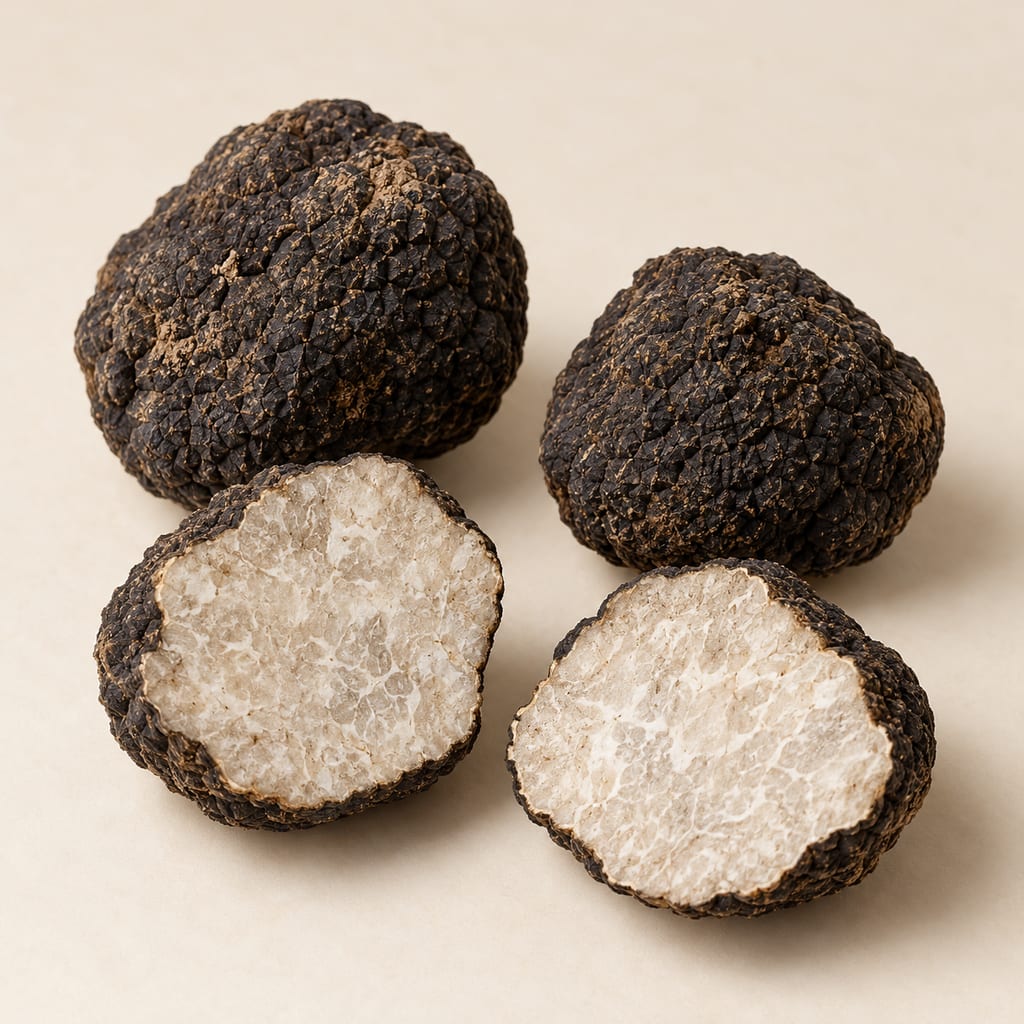
The black desert truffle, catalogued as Picoa juniperi, is a subterranean fungus gathered wild in arid and semi-arid lands. Eastern Anatolian households eat it, usually fried with eggs.
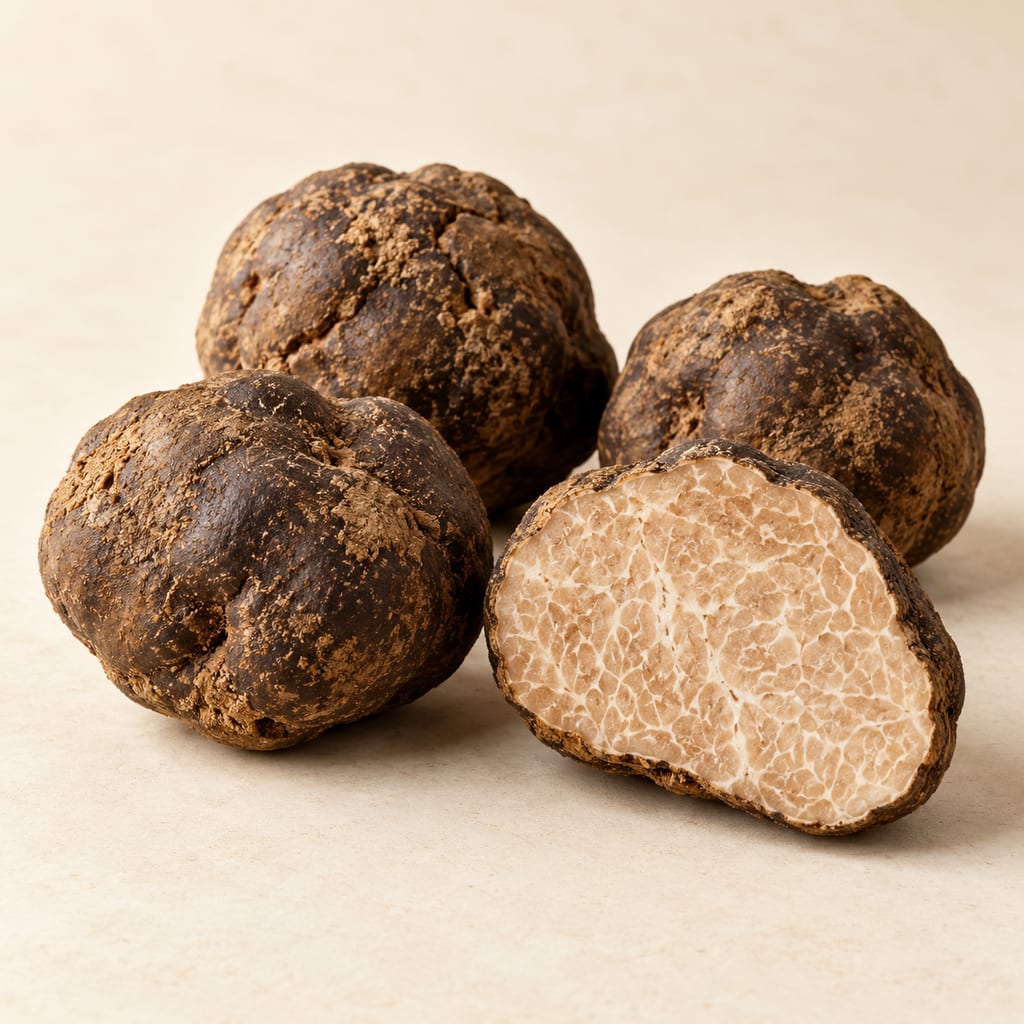
The brown desert truffle, Terfezia boudieri, is an underground fungus of arid soils around the eastern Mediterranean and North Africa, gathered and sold in Turkey and eaten fried with eggs.
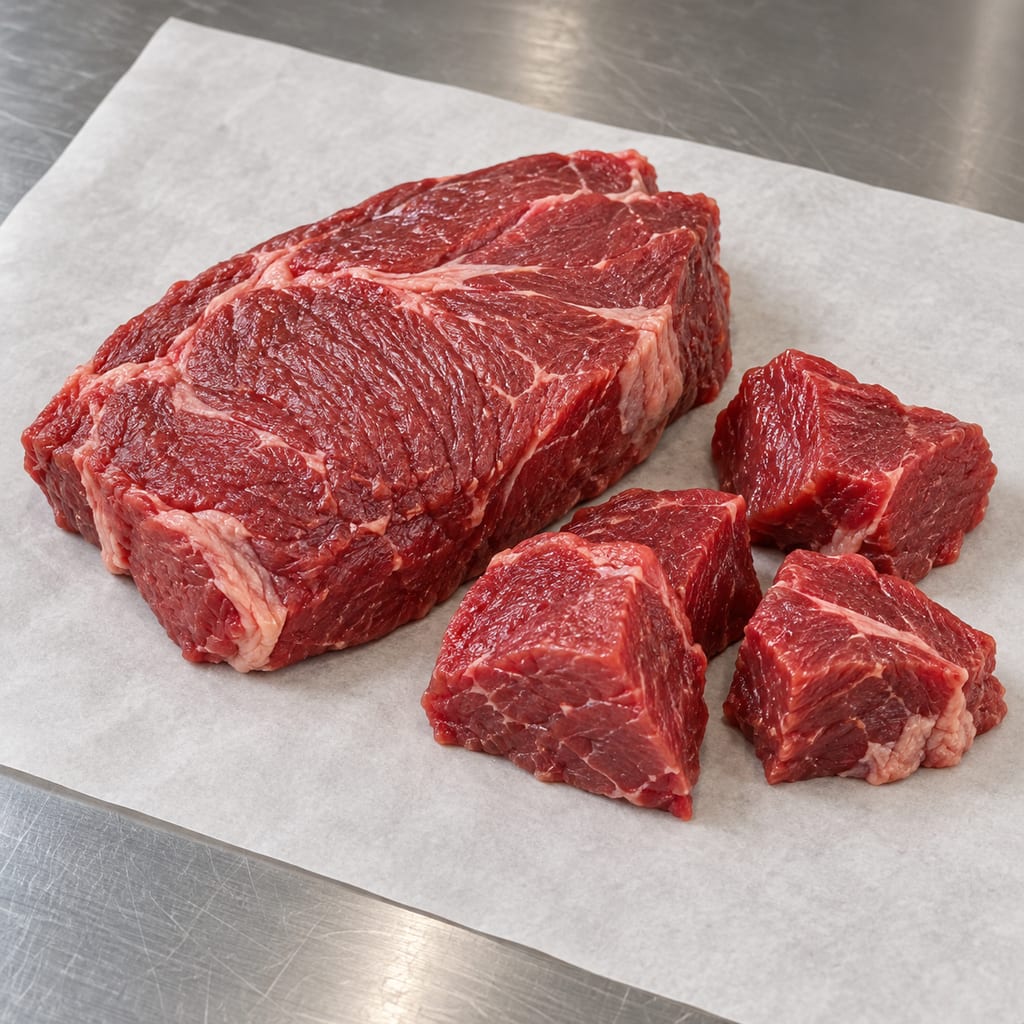
Water-buffalo meat, often called carabeef, is the flesh of Bubalus bubalis; its colour, texture and fat vary with animal, cut and production system. “Buffalo” can also mean bison or African buffalo in other contexts.
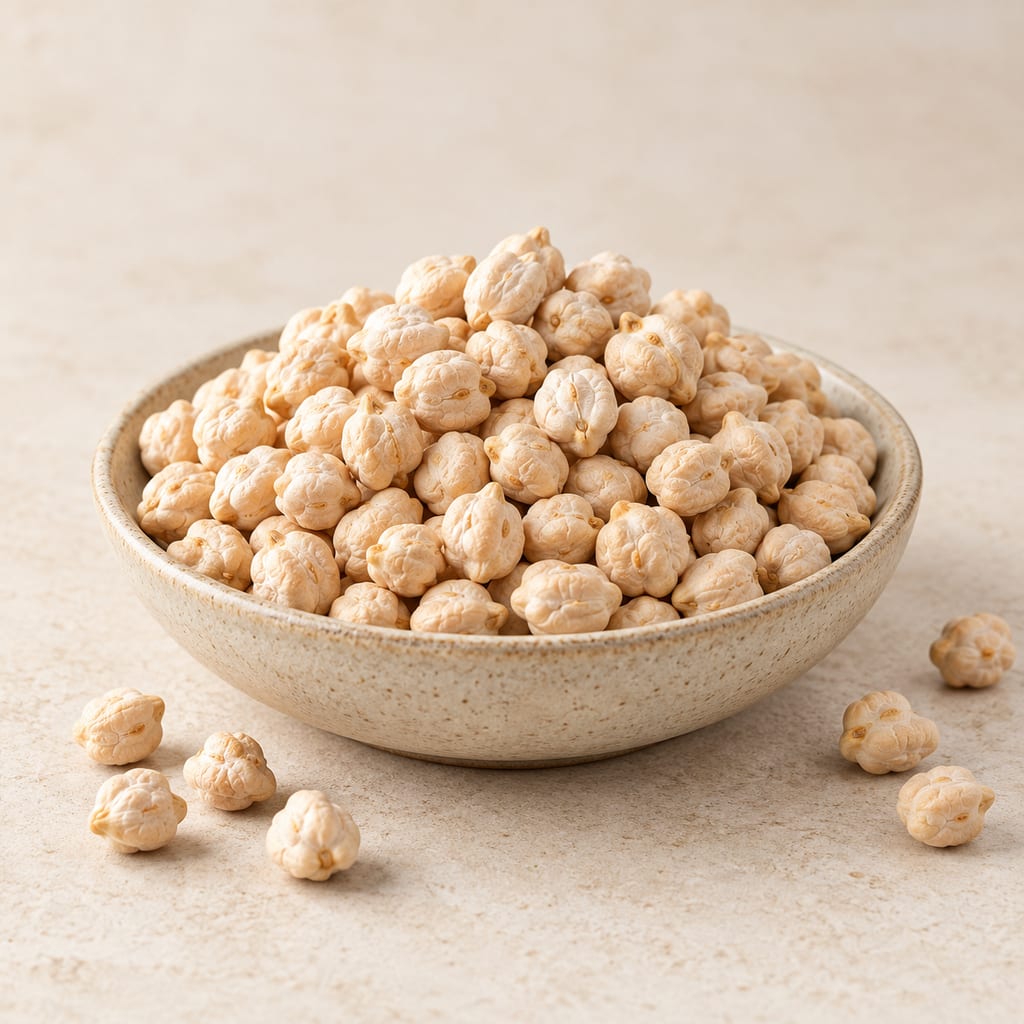
Chickpeas (Cicer arietinum) are dry pulses eaten whole or milled into flour, which gives socca, farinata and other breads a dense, nutty batter or dough.
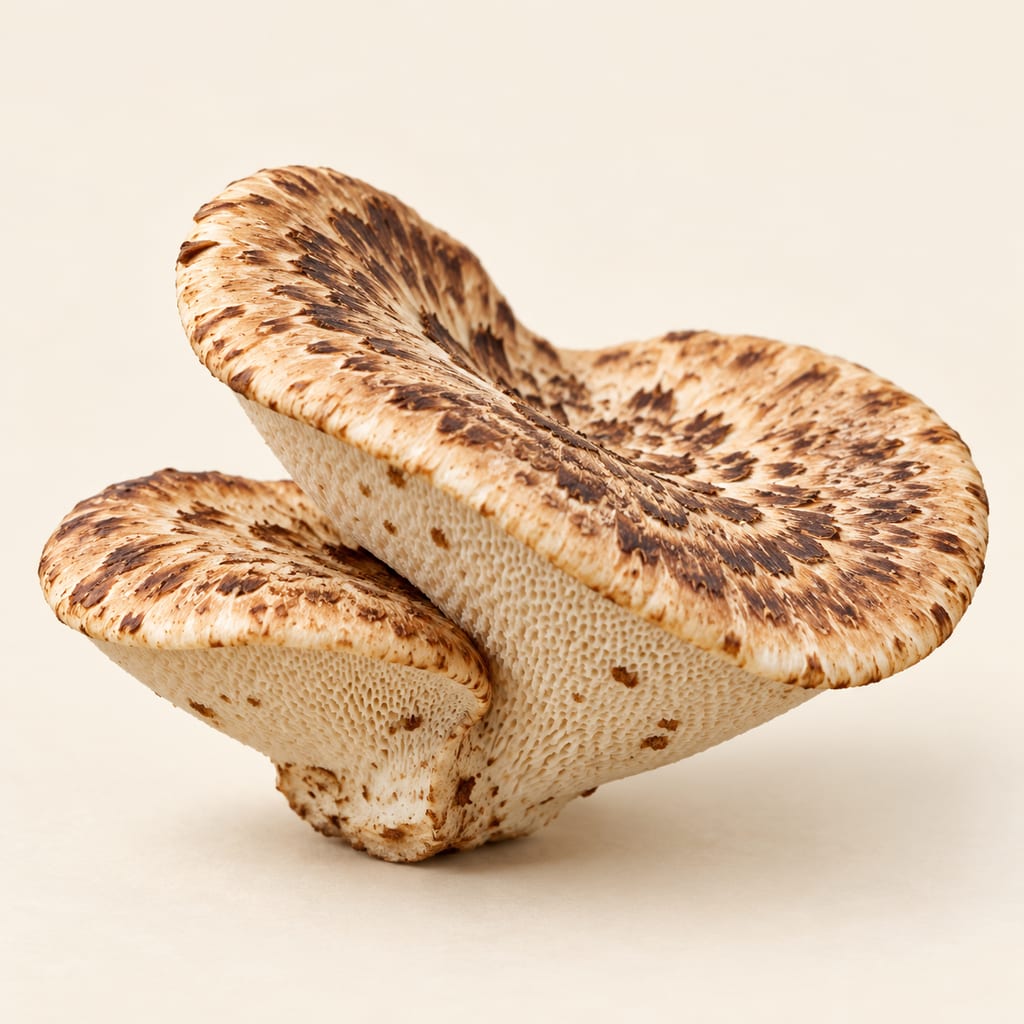
Dryad’s saddle is a wild hardwood polypore whose young tender margins are cooked in some regional food traditions; mature brackets quickly become tough.
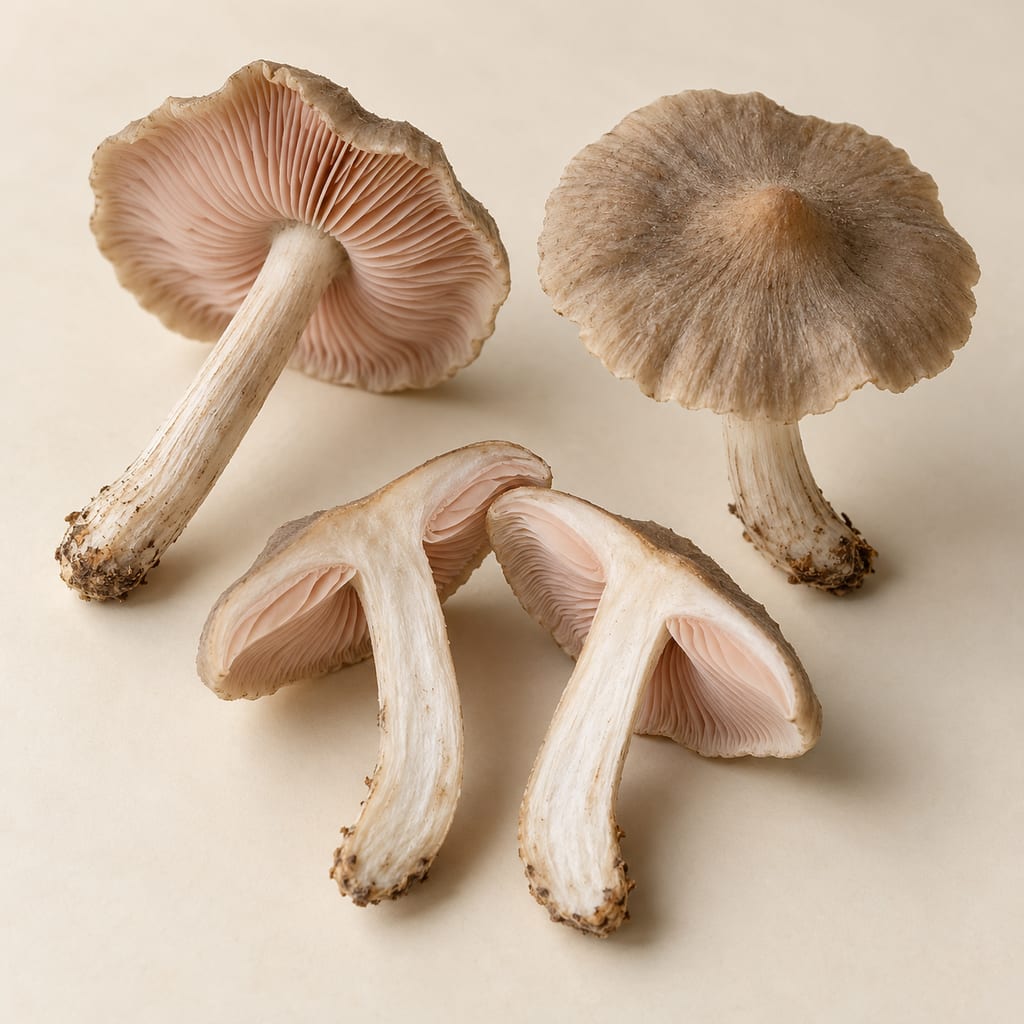
A spring pink-spored mushroom associated with Rosaceae. European food use is documented, alongside a Turkish poisoning report and unresolved species-complex records in Mexico.
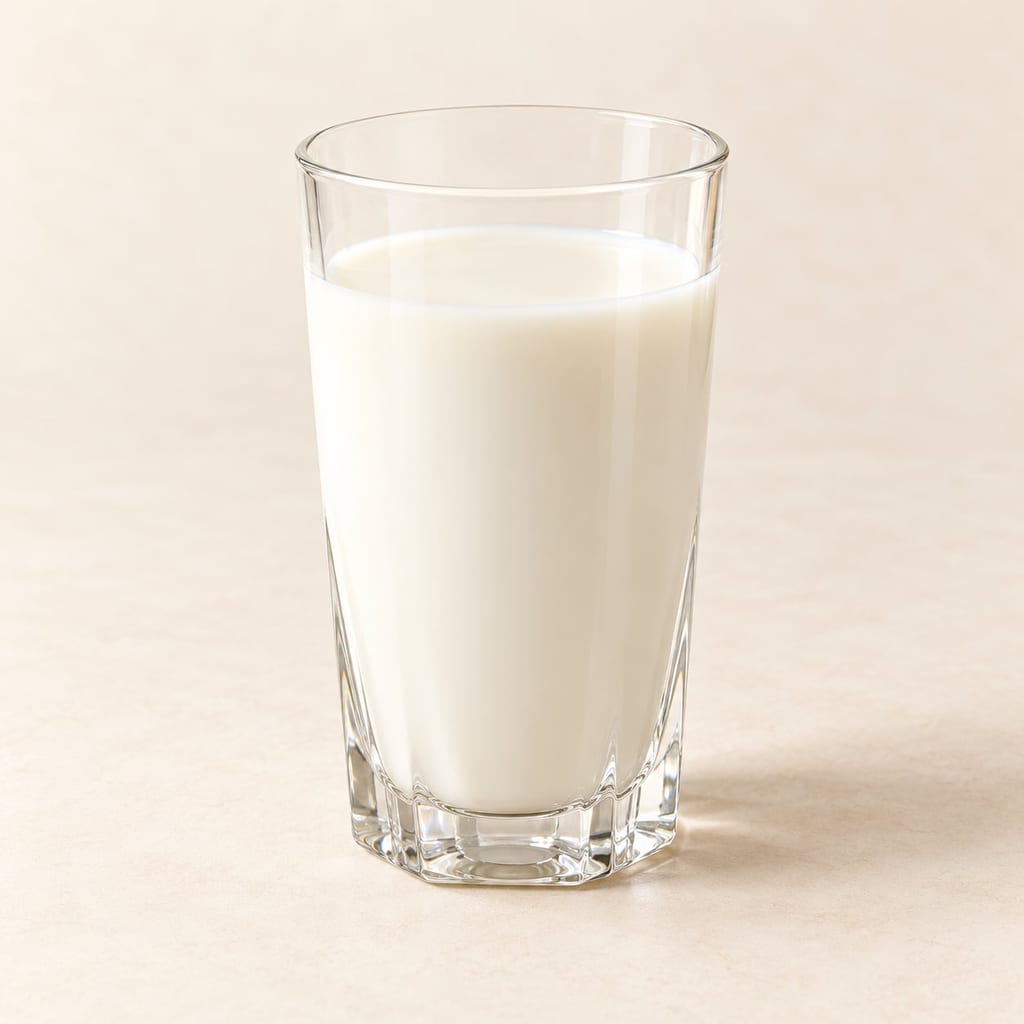
Milk is the fluid produced by dairy animals. Its species, fat level, heat treatment and handling shape the way it can be drunk, cultured or turned into curd.
No community contributions have been published for this entry yet.
Sign in to contribute. Published comments and photos are free to read.
Royal Botanic Gardens, KewIngredient research
Petroselinum crispum (Mill.) Fuss, Plants of the World OnlineCited in: Plant identity and the part cooks use; Safety and lookalikes; History and geography: what the sources establish; Research limits
Royal Horticultural SocietyIngredient research
How to Grow ParsleyCited in: Plant identity and the part cooks use; Flat-leaf, curly-leaf and root parsley; Flavour and aroma; Regional food uses; Cultivation and harvest; Choosing, preparing and storing; Research limits
University of Illinois ExtensionIngredient research
ParsleyCited in: Plant identity and the part cooks use; Flat-leaf, curly-leaf and root parsley; Flavour and aroma; Cultivation and harvest; Choosing, preparing and storing; Research limits
University of Wisconsin-Madison Division of ExtensionIngredient research
Parsley, Petroselinum crispumCited in: Plant identity and the part cooks use; Flat-leaf, curly-leaf and root parsley; Flavour and aroma; Regional food uses; Cultivation and harvest; Choosing, preparing and storing; Research limits
Washington State Noxious Weed Control BoardIngredient research
Poison HemlockCited in: Safety and lookalikes; Research limits
Iğdır Provincial Directorate of Culture and TourismIngredient research
Sebze YemekleriCited in: Regional food uses; History and geography: what the sources establish; Research limits
Türkiye Ministry of Culture and Tourism, Cultural PortalIngredient research
Muğla Mutfağı, pages 44–45Cited in: Regional food uses; History and geography: what the sources establish; Research limits
Cultural Institute of the Islamic Republic of Iran in RomeIngredient research
Baghali polo: rice with beans and dillCited in: Regional food uses; History and geography: what the sources establish; Research limits
Türkiye Ministry of Culture and Tourism, Cultural PortalIngredient research
Muğla Mutfağı, pages 104–105Cited in: Regional food uses; Research limits
FermenteaResearch provenance
Parsley (Petroselinum crispum): original plant research