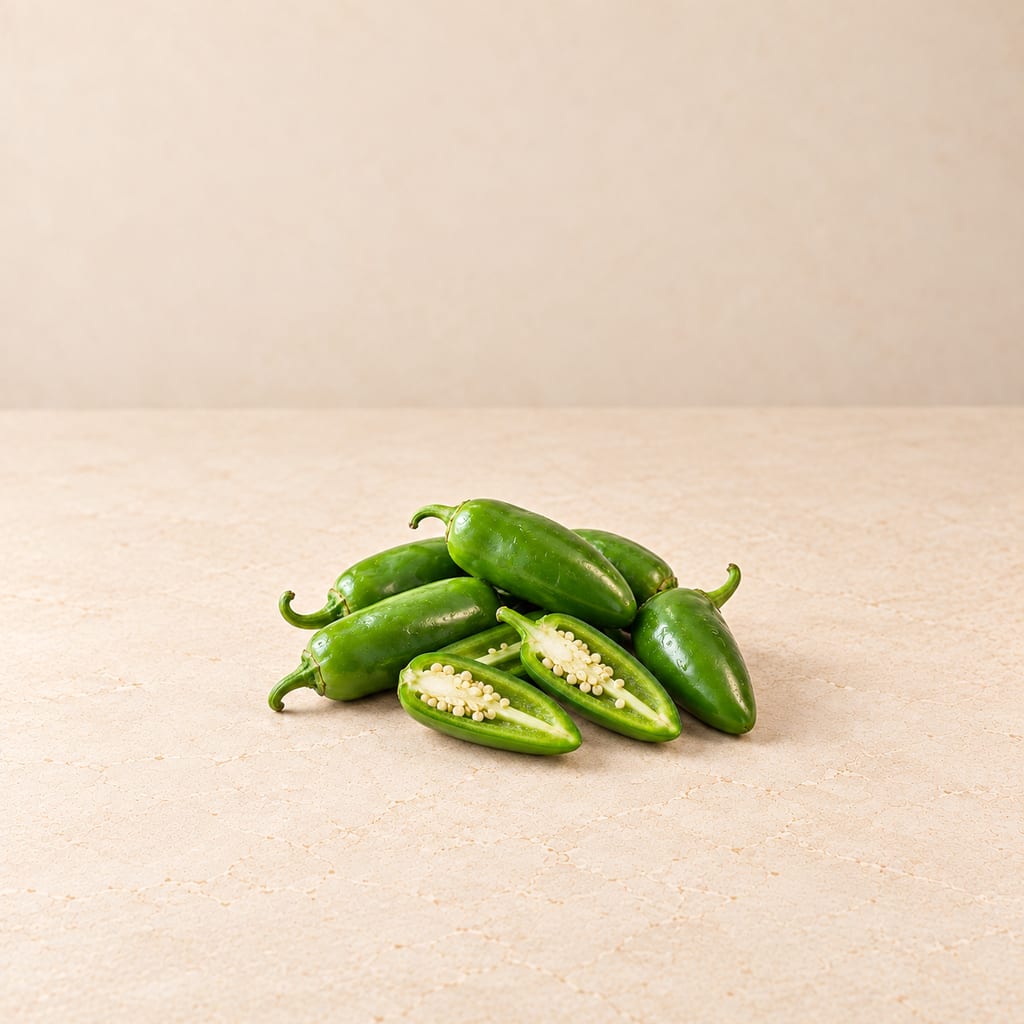
Green chilli (serrano, jalapeño and milder varieties)
Green chillies are fresh, unripe or just-ripe pods of Capsicum annuum, from the medium-hot jalapeño and hotter serrano to mild New Mexican types, used raw in sauces and cooked in pastes.
 FermenteaWhere food goes to change
Zhoug · Zhug · Sahawiq · Skhug · Schug · Harif
A Yemeni hot sauce of fresh chilli, coriander and garlic bound with olive oil, the base of sahawiq and a common condiment in Israel. It is made by crushing, not cooking, and keeps only briefly in the refrigerator.
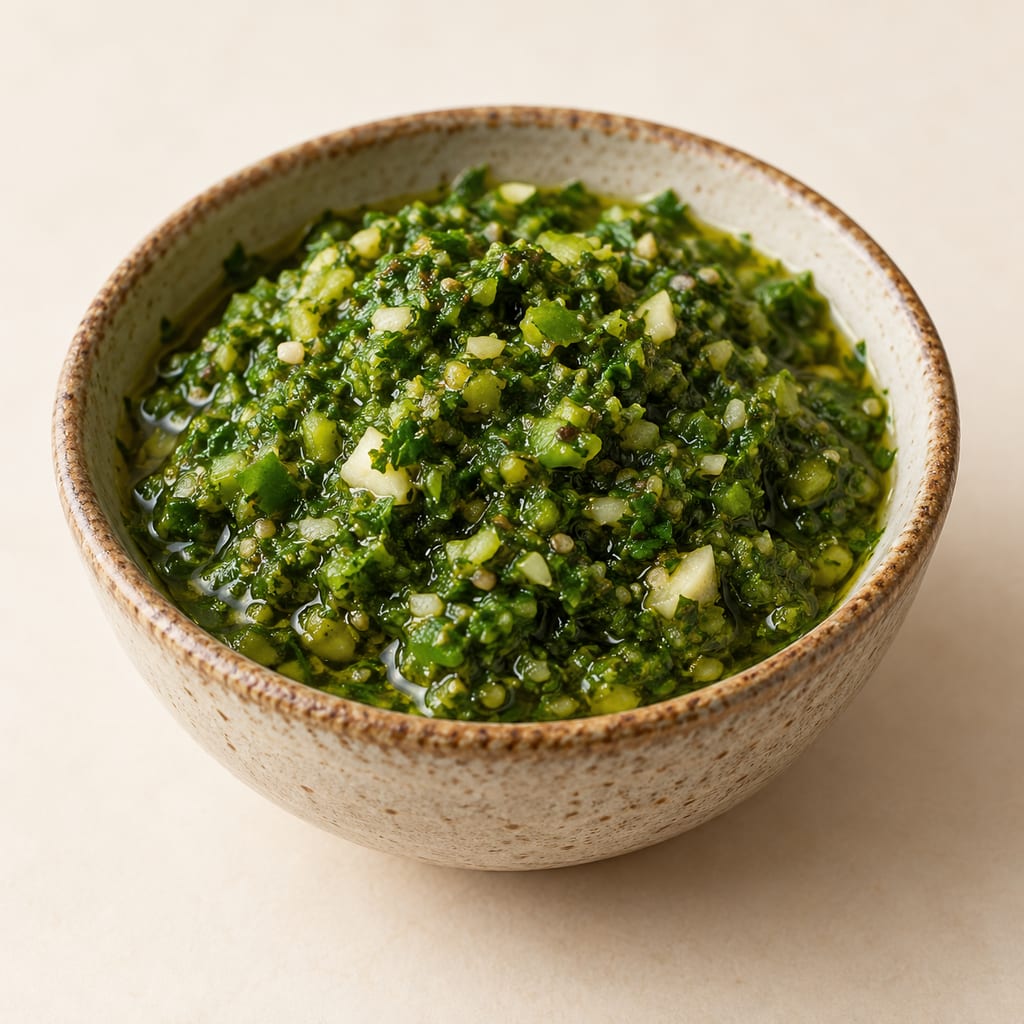
Zhug is a hot sauce from Yemeni cuisine. Its base is fresh hot pepper, coriander and garlic, crushed into a loose, slightly chunky paste with olive oil. Yemeni cooks call it sahawiq, from an Arabic root meaning to pound or crush, which makes it a close cousin of pesto in name and method.
The sauce is most often served as a table condiment. In Yemen sahawiq is also a main ingredient of saltah, a stew, according to the Wikipedia article.
The fixed core is fresh hot pepper, coriander, garlic, salt and oil. Parsley is common but not universal. Cumin, coriander seed, cardamom, black cumin, lemon juice, caraway and black pepper appear as optional seasonings, and the sources differ on which of them belong.
Chilli choice sets the heat. Bird's eye chilli is the traditional choice in the sources; jalapeño and serrano are used in less traditional versions. The three colours of the sauce follow the peppers used: green from green peppers and herbs, red from red peppers. Israeli brown versions (khum) are described with tomato; Wikipedia marks that claim as needing a citation.
Traditional Yemeni makers crushed the ingredients on a large stone with a smaller stone as the crusher. A mortar and pestle or a food processor does the same work. The recipe source describes pulsing the coriander, parsley, peppers and garlic together until the mixture is slightly chunky, then adding olive oil and seasoning to taste.
The sauce is thinned with water only when it is too thick. Its texture is a deliberate paste, not a smooth purée.
Yemen names three sahawiq forms: a green version, a red version, and sahawiq bel-jiben, made with Yemeni cheese. Sahawiq wazif includes dried baby sardines. In Israel the sauce is called skhug, with the red, green and brown (khum) versions in common use.
Some Yemeni cooks add Pulicaria jaubertii to the paste. The sources do not establish how widely.
Zhug is described as Yemeni in origin. Its spread to Israel is attributed to Yemenite Jewish migrants of the 1950s, and in Israel it has become a common condiment, served at falafel and shawarma stands and with hummus.
The earlier history of the sauce is not documented in the sources read. Recipe sites repeat a claim that the sauce came with the Operation Magic Carpet airlift in 1949 and 1950; that date is not confirmed by the sources read and is not stated here as fact.
A fresh herb and oil paste is perishable. The recipe source advises refrigeration and use within several days, without a figure. No validated shelf life or pH is given, so the storage time here is a source's advice rather than a tested limit.
Zhug, also called sahawiq in Yemeni Arabic, is described as originating in Yemeni cuisine. Its spread to Israel is attributed to Yemenite Jews who came to Israel in the 1950s, in the airlifts that brought thousands of Yemenites out of the country. The sources give no dated record of the sauce before that migration. The name zhug is one of many spellings, and the Hebrew form skhug is pronounced with a guttural kh.
Scaling: not stated
A moist, oil-bound fresh paste is perishable. Keep it cold between uses.
Hazard sourceRefrigerate promptly after making and keep closed.
Control sourceWikipedia describes the sauce as Yemeni in origin. It gives no locality, so the row stays at country level.
Sources record its spread to Israel, where it is a common condiment. Dates for the migration are given only loosely as the 1950s.
Green chillies are fresh, unripe or just-ripe pods of Capsicum annuum, from the medium-hot jalapeño and hotter serrano to mild New Mexican types, used raw in sauces and cooked in pastes.
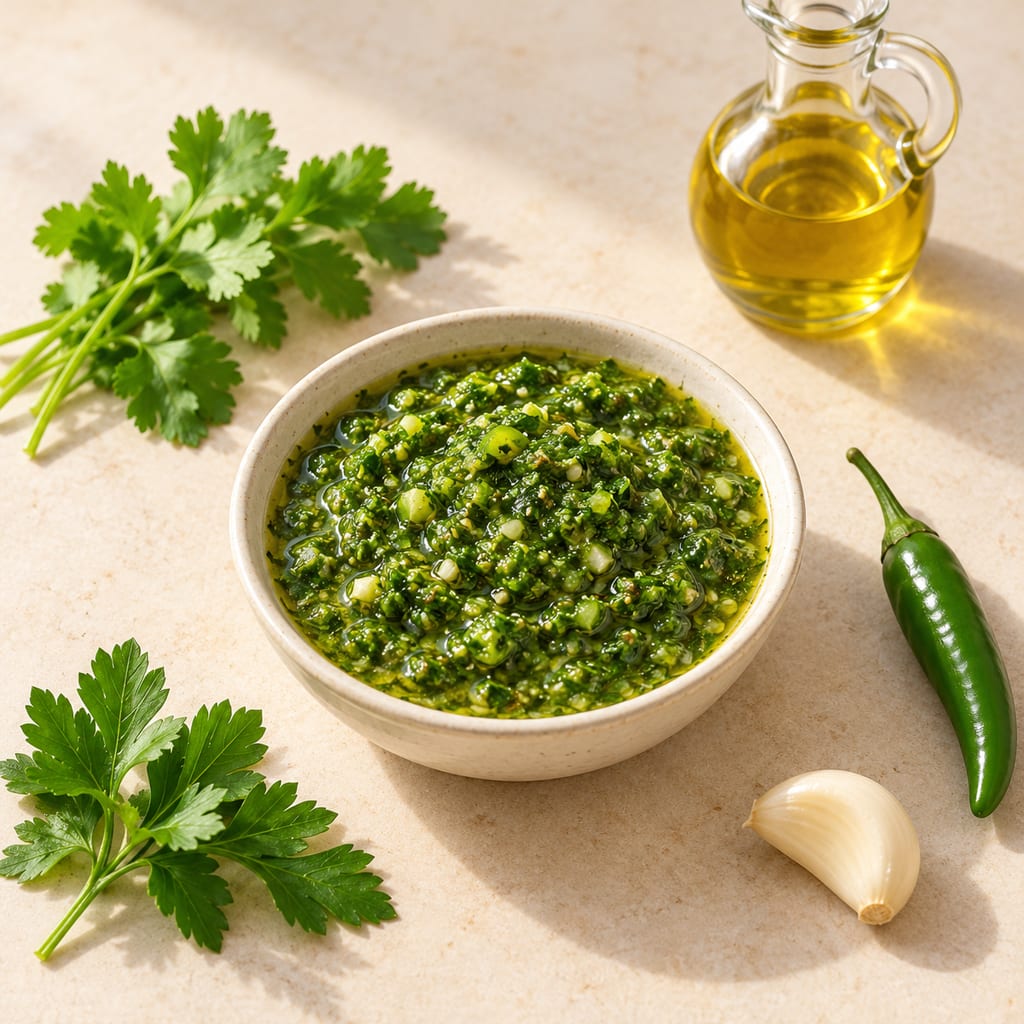
Yemeni zhug inspires this fresh sauce of coriander, parsley and green chilli. Its weighed mild-chilli formula is one contemporary variation, not a canonical household recipe.
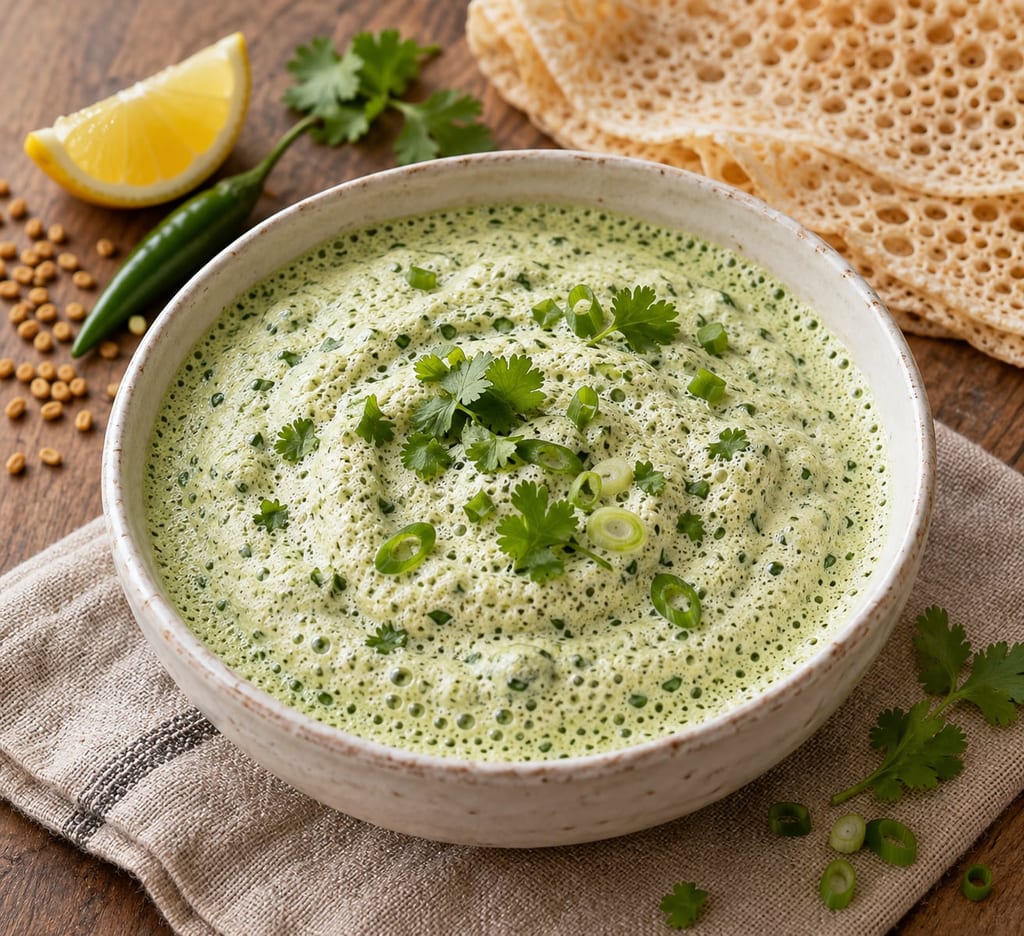
A whipped condiment of soaked ground fenugreek seed, aerated until foamy and finished with herbs, chilli and lemon. It comes from Yemen.
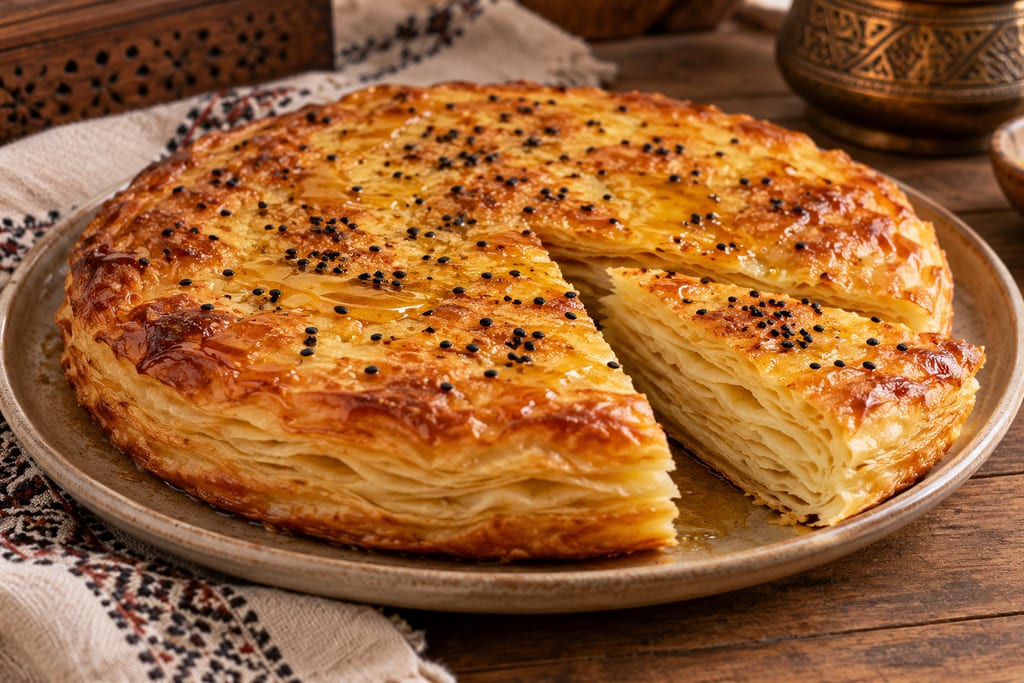
Bint al-sahn is a Yemeni celebration and home bread built from thin, egg-rich yeast dough layers brushed with ghee or butter. This source-specific version makes one round cake, baked until golden and served warm with honey.
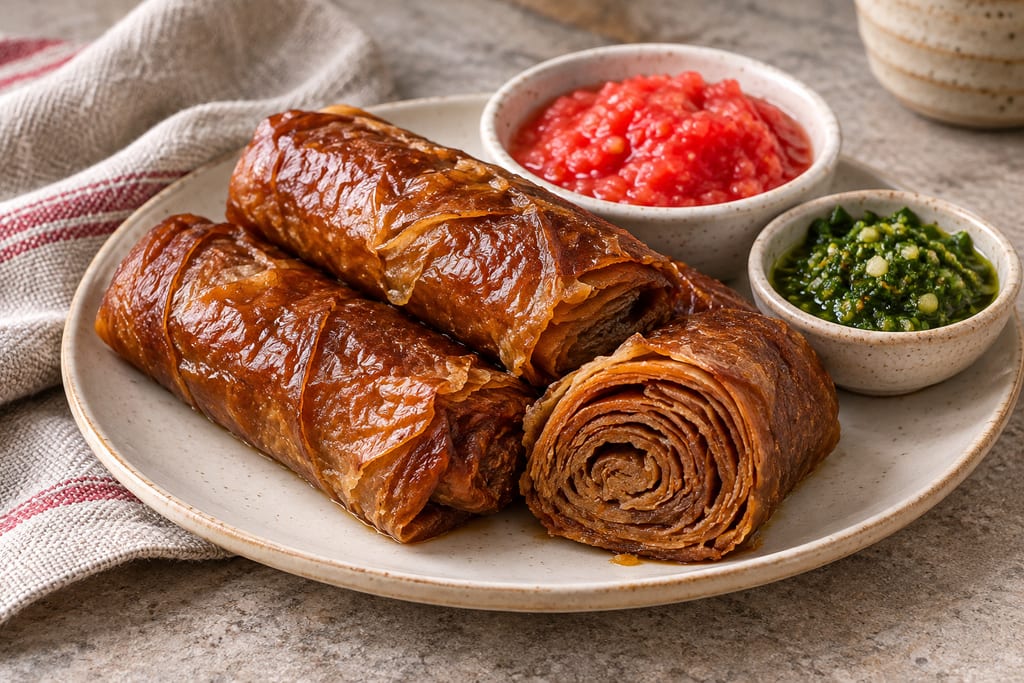
Jachnun is a rolled, butter-layered wheat pastry baked covered for hours at very low oven heat and served warm, often with grated tomato and schug.
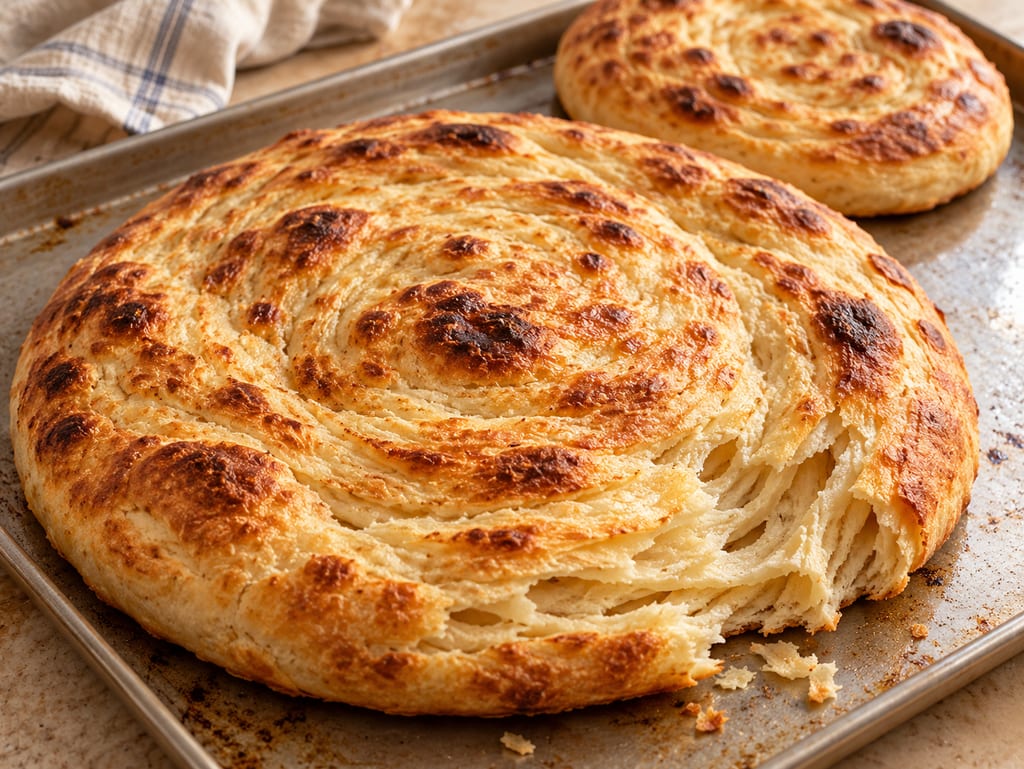
This Yemeni home-oven variation uses a yeast-raised wheat dough, folds it repeatedly with semn and oil, then bakes it as large rounds.
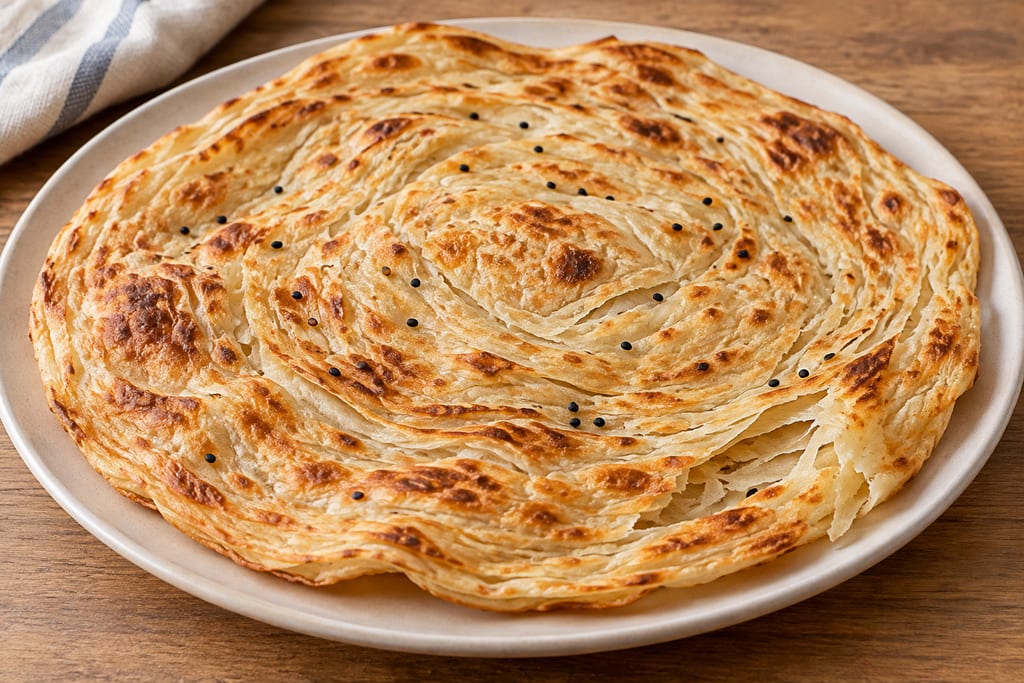
A Yemeni layered wheat bread made by stretching an unleavened dough thin, folding butter or ghee through it, and baking it on a very hot stone.
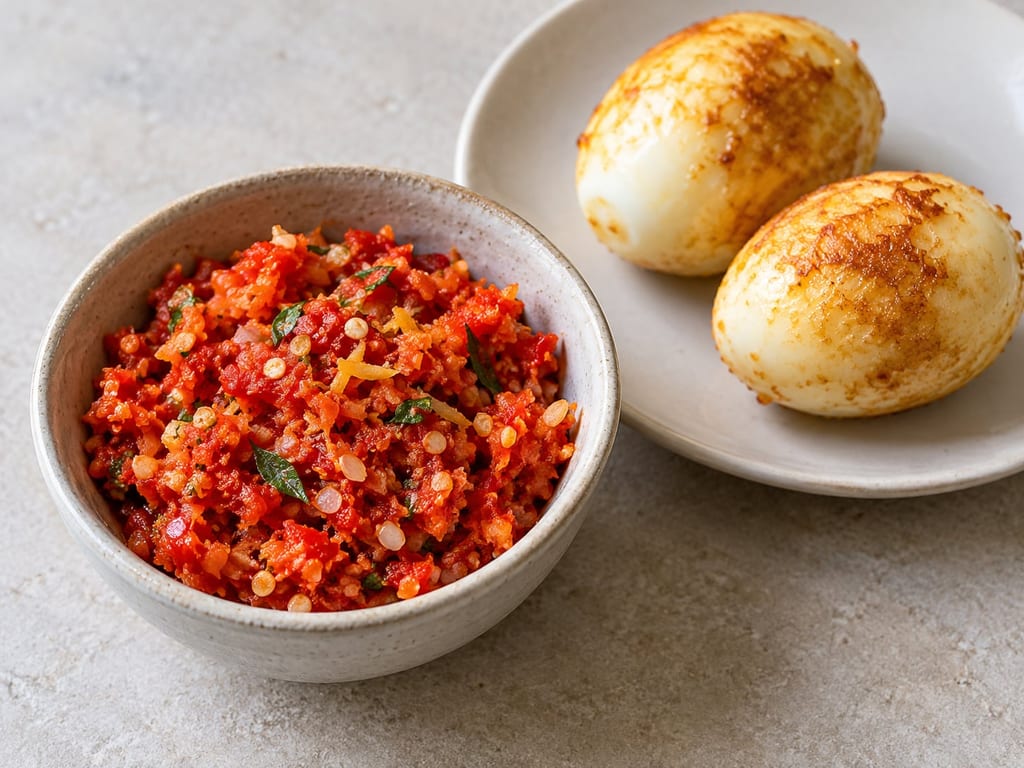
Ai-manas is described as a very hot chilli paste served with Timorese meals. One published version blends fresh chillies, shallots, garlic, Thai basil, ginger, lemon and salt, and serves it with eggs. Sources do not establish a standard formula, precise birthplace or earliest date.
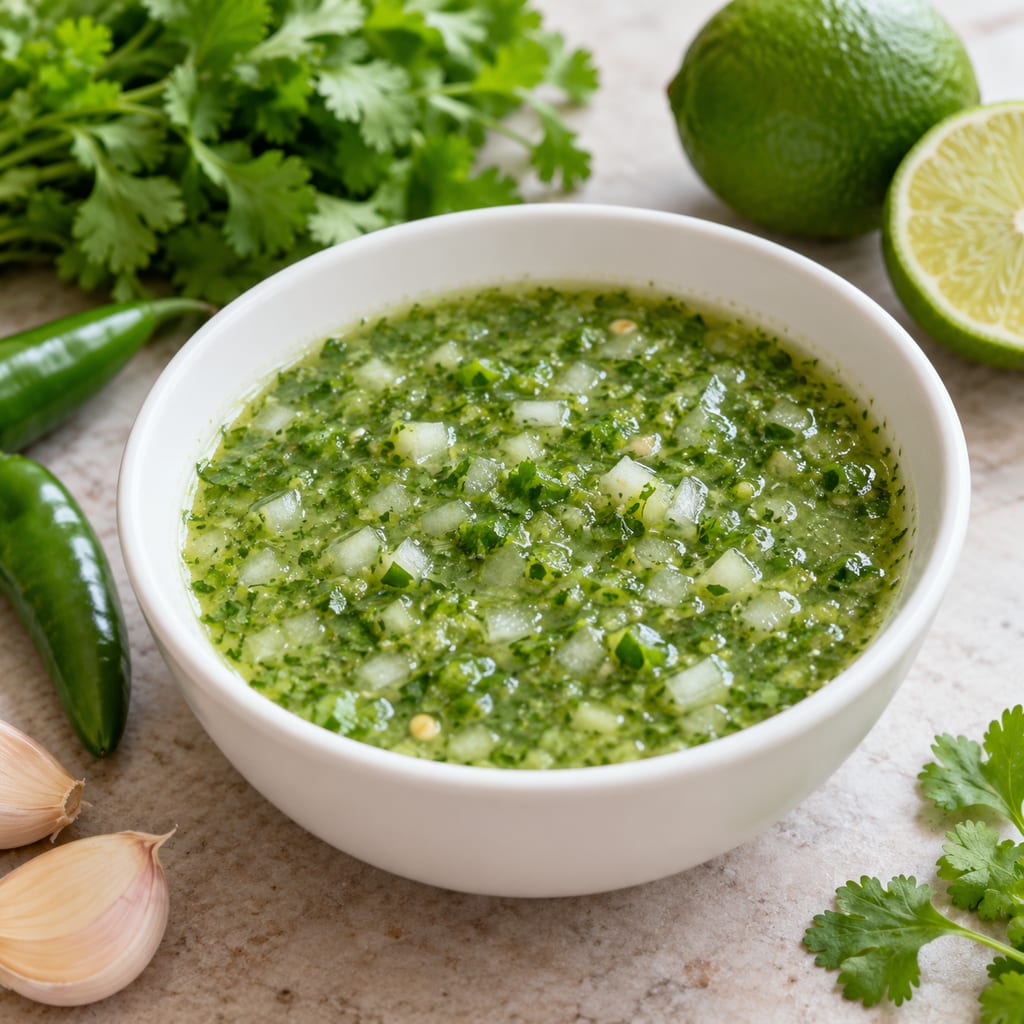
A fresh, uncooked Ecuadorian table sauce of hot pepper, cilantro, garlic and lime, served with most everyday dishes.
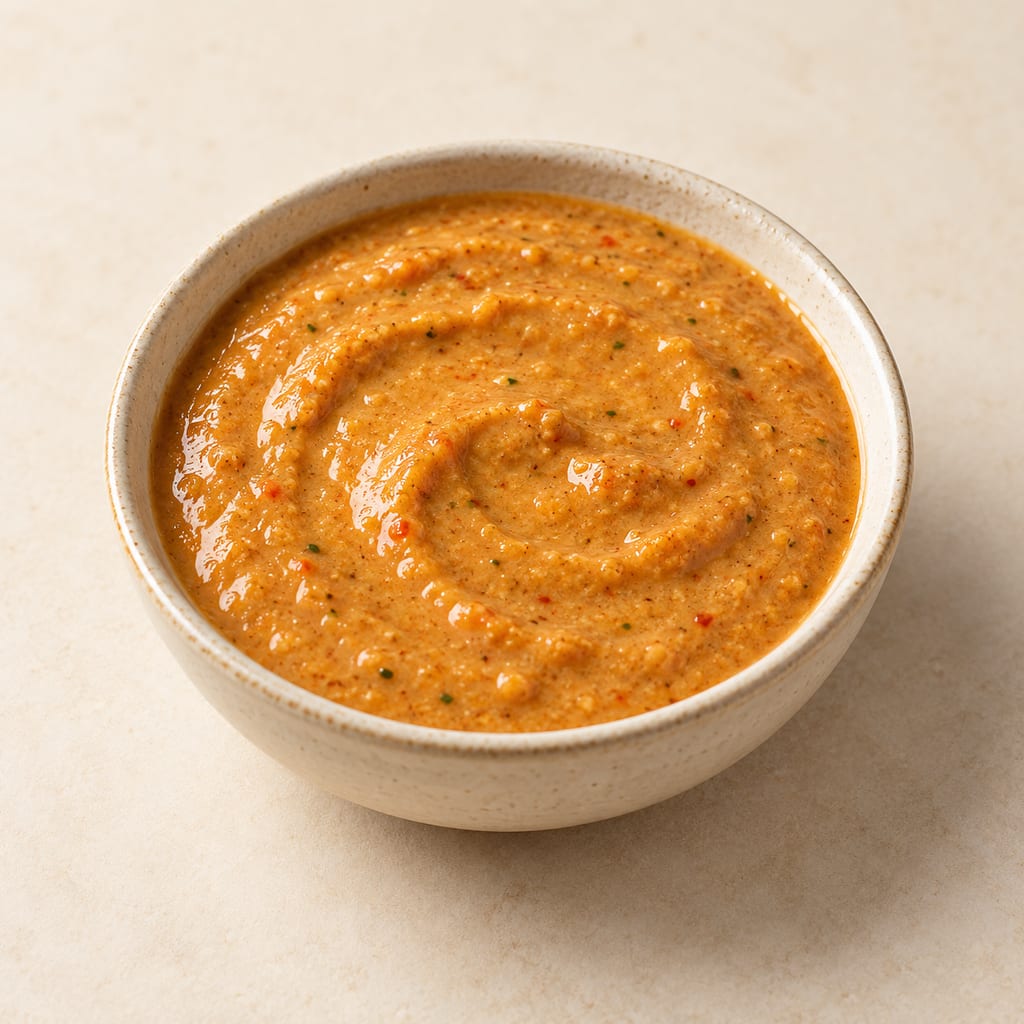
A spicy peanut hot sauce from the Popayán and Cauca region of Colombia, traditionally served with pipián empanadas and tamales.
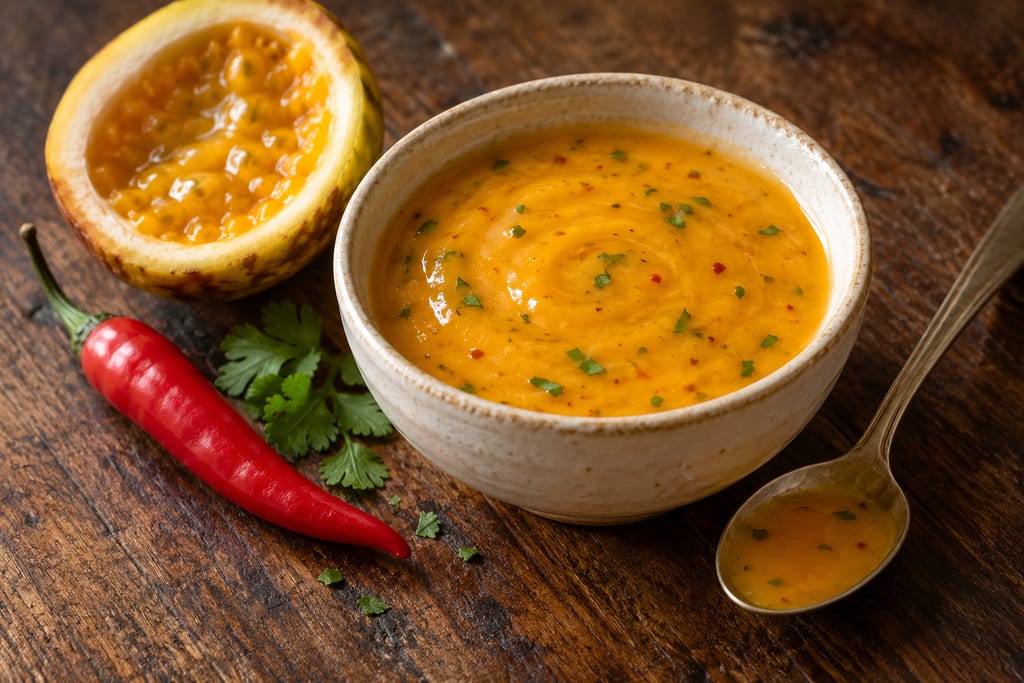
A contemporary Ecuadorian hot sauce that pairs passion fruit juice with boiled chile peppers, oil and lime.
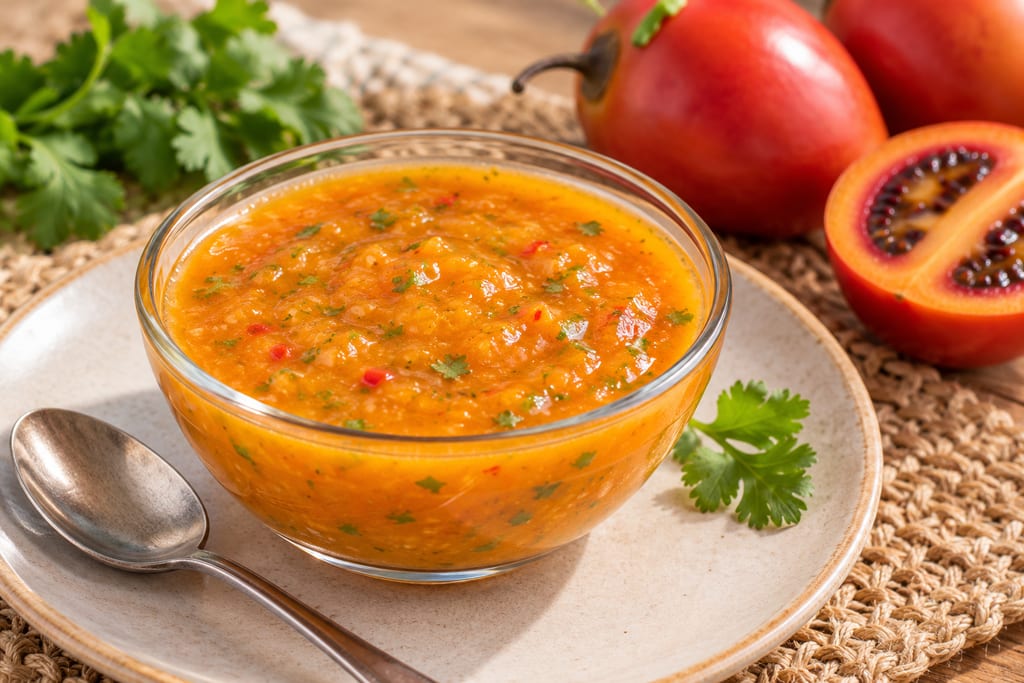
An Ecuadorian hot sauce built on tamarillo, a tart fruit that gives a sharper, fleshier base than ordinary tomato salsa.
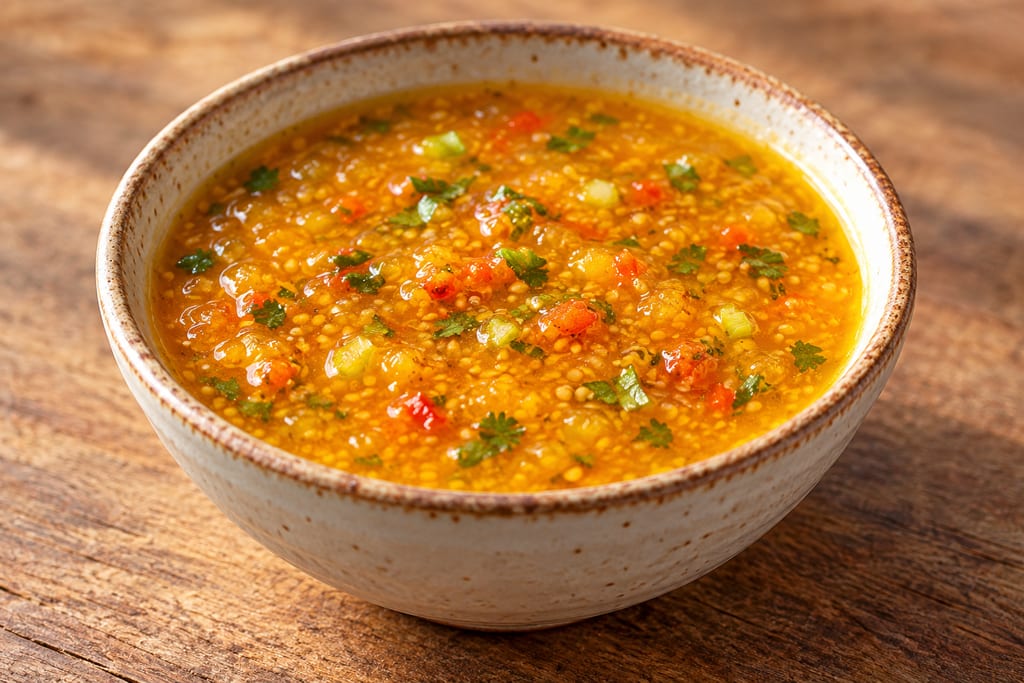
A sweet, tart and spicy Colombian sauce of uchuva, the yellow physalis fruit, with hot pepper, scallion, cilantro and lime.
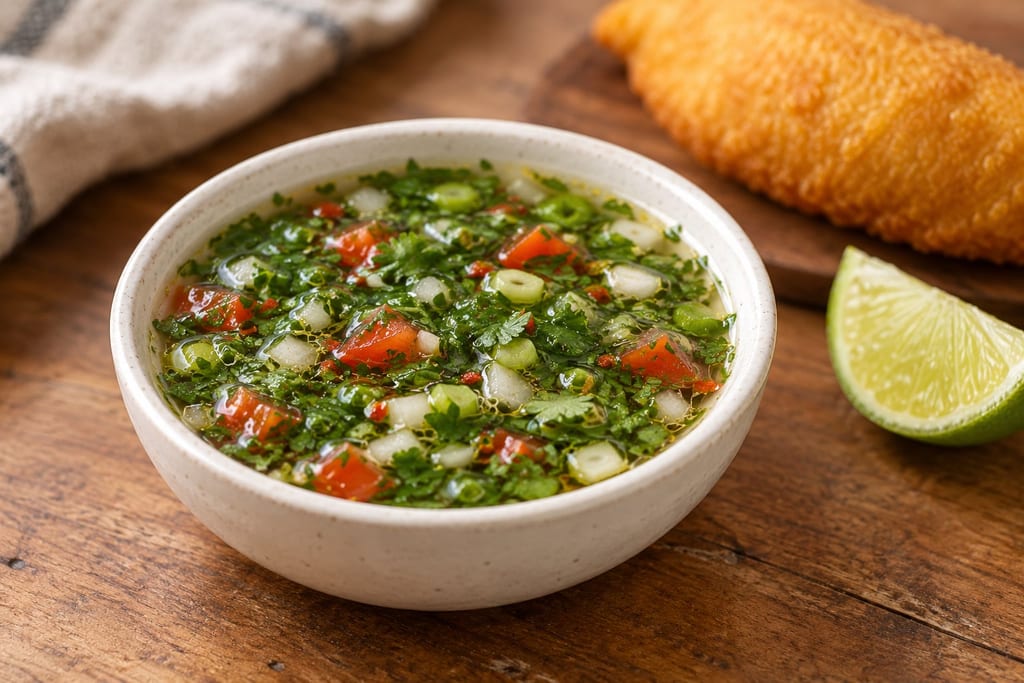
A fresh Colombian table condiment of chopped herbs, scallion and tomato in a vinegar and chile base, served beside fried and filled dishes.
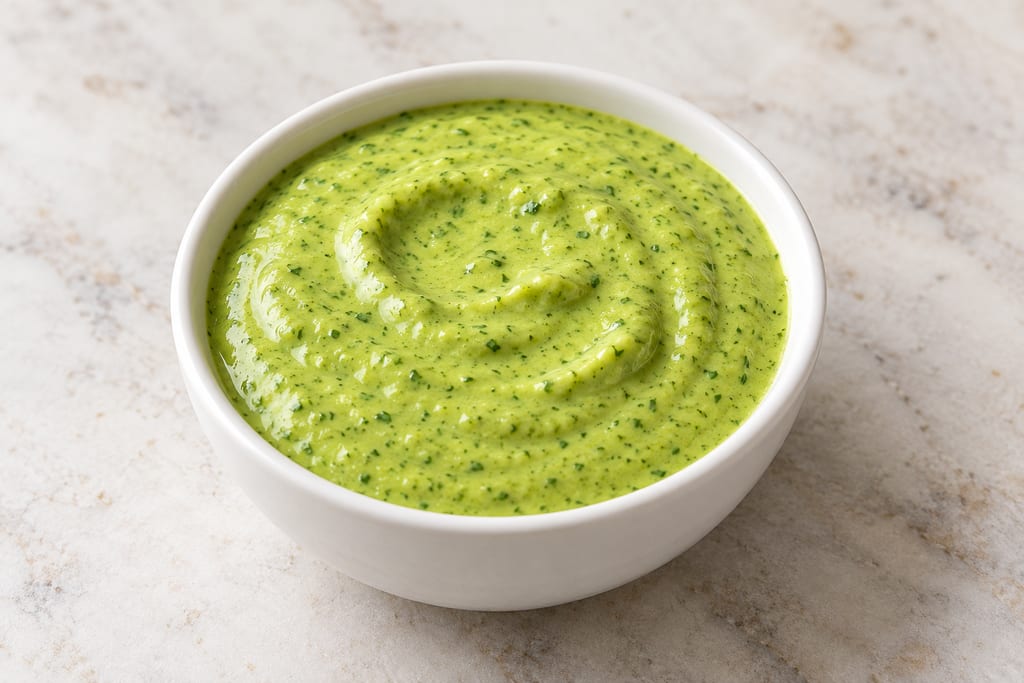
Ají verde is a Peruvian green sauce of coriander, chilli, onion and garlic in a mayonnaise or cheese base. It is best known through Peruvian restaurant cooking abroad.
No community contributions have been published for this entry yet.
Sign in to contribute. Published comments and photos are free to read.
WikipediaHistory · Ingredients · Method · Regional variation
ZhugYemeni origin, also called sahawiq; other names mabooj, bisbaas, harif, sahowqa, schugg, skhug
Base of fresh red or green hot peppers, coriander, garlic, salt, parsley, optional black cumin, olive oil; optional lemon, caraway, cardamom, black pepper
Crushed by hand on stone or made in a mortar or processor
Yemeni variants sahawiq akhdar, ahmar and bel-jiben; Israeli skhug adom, yarok and khum
Sahawiq is a main ingredient of saltah
Cited in: A green sauce from Yemen; Ingredients; Method; Regional variants; History and spread
Taste of the PlaceMethod · History · Safety
Zhoug - a fresh and spicy sauce from YemenOrigin thought to be Yemen; popular in Israel; brought by Yemenite Jews in the 1950s during the airlifts
Pulse-to-chunky paste method in a processor, or hand chopped or pounded
Keeps well in the refrigerator for several days; no figure given
Cited in: Ingredients; Method; History and spread; Storage and safety