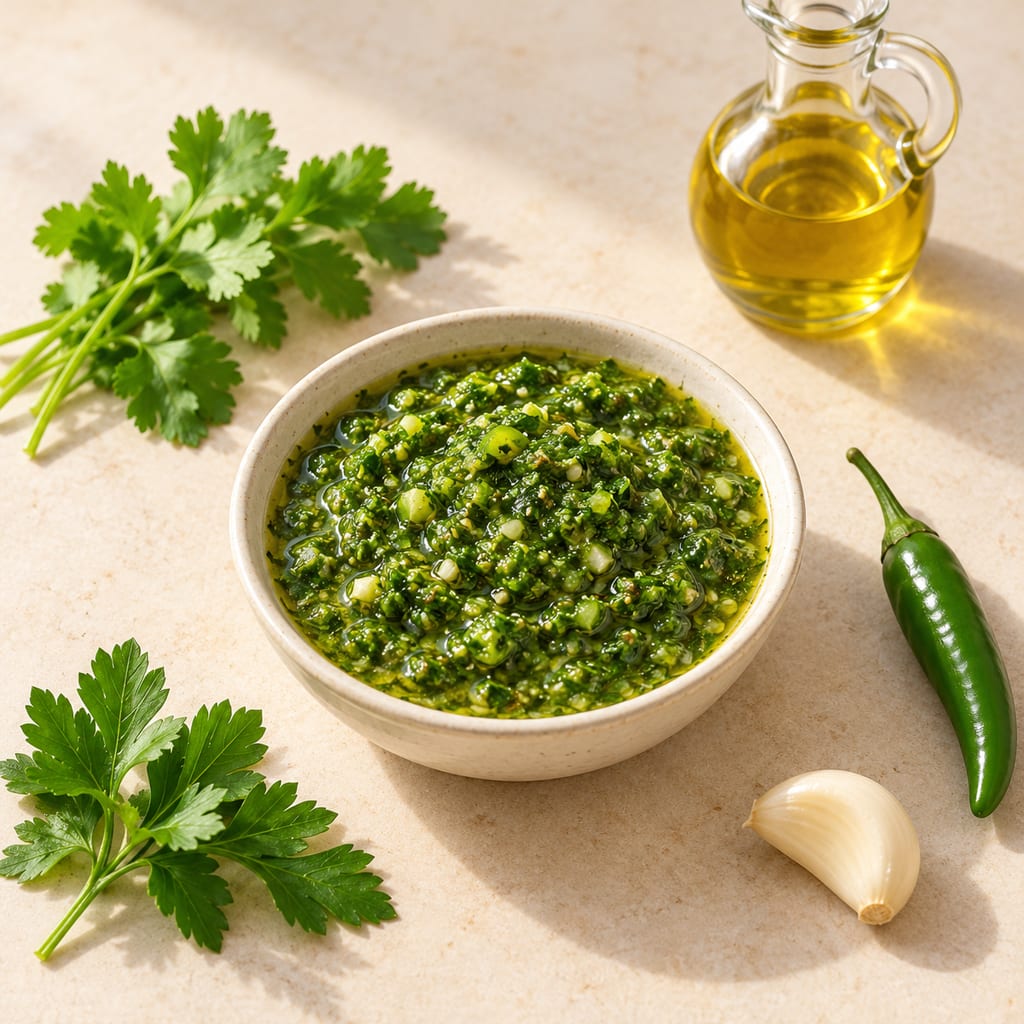
Coriander-and-green-chilli zhug-inspired sauce
Yemeni zhug inspires this fresh sauce of coriander, parsley and green chilli. Its weighed mild-chilli formula is one contemporary variation, not a canonical household recipe.
 FermenteaWhere food goes to change
Spices and aromatics
Green chillies are fresh, unripe or just-ripe pods of Capsicum annuum, from the medium-hot jalapeño and hotter serrano to mild New Mexican types, used raw in sauces and cooked in pastes.
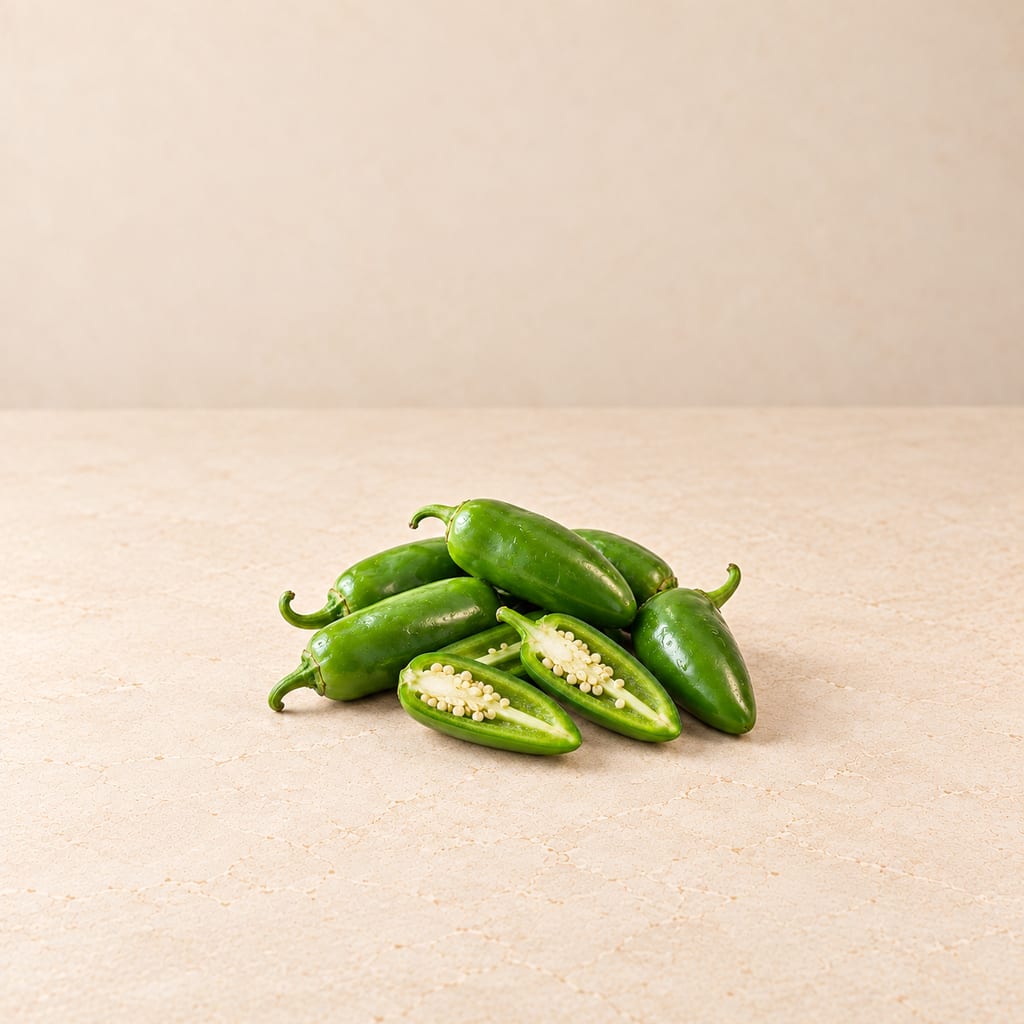
A green chilli is a fresh chilli pod picked before it reaches full red, sold and cooked while it is still green. It is not a single variety. Serrano and jalapeño are the two best-known green chillies in Mexican cooking, both belonging to Capsicum annuum, and the milder New Mexican and Anaheim types are green chillies in the same sense. What they share is a fresh, vegetal, bright character, a thicker and juicier flesh than a dried pod, and a heat that ranges from nearly nothing to hot. Left on the plant, most of them ripen to red, orange or yellow, and the pigments change as they do: chlorophyll gives way to carotenoids, whose profile and concentration vary with the stage of maturity.
A ripe red jalapeño is called huachinango, and red peppers are generally hotter than green ones of the same variety. The green stage is therefore a choice: growers and cooks pick green for a fresher flavour, a firmer texture and, in many cases, a milder bite.
The colour of a chilli is a record of its ripeness. Green pods owe their colour to chlorophyll, and as the fruit ripens the pigment profile shifts towards the carotenoids, chiefly capsanthin and capsorubin, which give red and are described as highly stable; the profile and concentrations vary across maturity stages. The dried, red forms of the same plants are treated as different ingredients with their own names.
Green chillies begin in the Americas. Capsicum annuum was domesticated in Mesoamerica, and the Aztecs used the jalapeño before the Spanish conquest. Bernardino de Sahagún's Florentine Codex, compiled in the sixteenth century, describes Aztec markets selling chipotles, the smoke-dried ripe jalapeño, and a mole made from them. In the north, the Pueblo peoples grew early chile varieties, and Spanish settlers later developed cultivars in their towns; the horticulturist Fabián García then developed the modern New Mexican cultivars at what is now New Mexico State University, releasing the major No. 9 in 1913, while Emilio Ortega is credited with bringing seeds to Anaheim, California, in 1894.
After 1493 chillies travelled the world. They were common in Spanish gardens by the middle of the sixteenth century, appeared in Italy by 1526 and Germany by 1543, and reached the Balkans by 1569. Portuguese traders took them to Africa and Arabia and then to Goa, Sri Lanka and Malacca, and the earliest Chinese record is from 1591. Green chilli reached each of these places as a fresh vegetable and a sauce ingredient: in Yemen and Israel it became zhug, in Mexico salsa verde, in Japan yuzu kosho, and in India the green chutneys. Today the world grows about 45 million tonnes of green chillies a year, led by China with 17.3 million tonnes, India with 5.3 million, Turkey with 3.4 million, Mexico with 3.2 million, Indonesia with 3.0 million, Spain with 1.5 million and Egypt with 1.1 million; the figure gathers chillies of every kind sold fresh, so it does not isolate the serrano or jalapeño.
The jalapeño is the most widely recognised green chilli. Mature pods are 5 to 10 centimetres long and 25 to 38 millimetres wide, and hang from the plant. Pungency is usually 4,000 to 8,500 Scoville heat units, though it can range from a few thousand to more than 10,000, and heat varies even within a single plant: stress from salinity, irregular watering, temperature or illness raises pungency. Pods are usually picked green but can ripen to red, orange or yellow; a ripe red jalapeño is called huachinango, and red peppers are generally hotter than green ones of the same variety. Small brown scar lines on the skin, known as corking, correlate with higher heat, and corking is unattractive to American shoppers but favoured in some other markets, particularly for pickled or oil-preserved peppers.
The name means from Xalapa, the capital of Veracruz, although jalapeños are not grown there; Vicente Jiménez is credited with inventing the process of pickling and canning them in Xalapa. Genetic analysis places the jalapeño in a distinct clade within Capsicum annuum. Cultivars bred for mildness include TAM Mild Jalapeño and the colourful NuMex Piñata, and TAM Dulcito is a sweet type.
Mexico grew about 41,000 hectares of jalapeños by 2011, roughly 30 percent of its chilli production, and produced 619,000 tons in 2009, 42 percent of it in Chihuahua, followed by Sinaloa, Jalisco and Michoacán. California has led production in the United States since 2010. The growing period is 70 to 80 days, and a plant typically bears 25 to 35 pods. In the kitchen the jalapeño is stuffed, pickled whole or sliced, blistered in oil as chiles toreados, chopped into salsas and chillies and fried as poppers.
The serrano takes its name from the sierras, the mountains of Puebla and Hidalgo in Mexico where it comes from. It is slimmer than the jalapeño, notably hotter, with a bright, biting flavour, and it is the second most used chilli in Mexican cooking after the jalapeño; its heat varies with the plant and the growing conditions. Fruit can be harvested green or ripe, and ripe fruit may be green, red, brown, orange or yellow. A plant carries up to 50 fruit, which are botanically berries and not true pods.
The serrano is usually eaten raw. Its fleshy texture suits pico de gallo, fresh salsa and hot sauces. The plant grows 0.5 to 1.5 metres tall, prefers a soil pH of 7.0 to 8.5 and a warm climate above 24 degrees Celsius, and has little frost tolerance. Veracruz, Sinaloa, Nayarit and Tamaulipas together produce about 180,000 tonnes a year.
The names are worth knowing. The New Mexican group is also called New Mexico chile, chile de Nuevo México and chile del norte, with Anaheim, Pueblo chile, green chile and red chile as marketing names; in New Mexican English chile with an e refers to the fruit and chili with an i to the Texan stew. Primavera is a mild jalapeño, Rio Grande 21 is large and mild, and the Suave Red and Suave Orange are mild Capsicum chinense types, a reminder that low heat is a trait of cultivars and not of green chilli as such.
Heat in a chilli is measured in Scoville units. The scale originated with Wilbur Scoville in 1912, and since the 1980s the pungent compounds have been measured by high-performance liquid chromatography. A bell pepper rates zero, a Fresno or jalapeño 3,500 to 10,000, cayenne 30,000 to 50,000, and the Scotch bonnet and habanero 100,000 to 350,000. Within the New Mexican group the Conquistador has none, the Sweet 200 to 300, the Anaheim 500 to 2,500, the Chimayó 4,000 to 6,000 and the Barker's Hot 15,000 to 30,000. These are ranges, and a given pod can fall outside them: water-stressed plants can produce hotter fruit, and the same plant may bear pods of different heat.
The practical consequence for a cook is that the name on a green chilli says more about its flavour and texture than about its heat. A serrano is generally hotter than a jalapeño, and an Anaheim is generally milder, but each can surprise, and the standard test is to taste a small piece before adding the whole.
The New Mexican chilli group, which includes the Anaheim, covers a wide range of heat: from the sweet, paprika-type Conquistador at no heat to the Barker's Hot at 15,000 to 30,000 Scoville units, with Anaheim itself at 500 to 2,500, Chimayó at 4,000 to 6,000 and Sweet at 200 to 300. Pods are long, from about 12 centimetres for the Española to 18 to 43 centimetres for the Big Jim, and typically green when picked and red when ripe. The family grew from chillies cultivated by the Pueblo peoples, and Spanish settlers developed cultivars in their towns. The horticulturist Fabián García developed the modern New Mexican cultivars at what is now New Mexico State University, and his major release, No. 9, came in 1913. The Anaheim pepper traces to Emilio Ortega, who brought seeds to Anaheim, California, in 1894.
In New Mexico green chile is a seasonal product. Roasting begins around August when the first crop reaches retail, and the pods are tumbled over propane flames in a drum roaster to blister the skins for peeling. The season usually ends with the first freeze, around late October. The Chile Pepper Institute recommends cooking roasted chile to 165 degrees Fahrenheit (74 degrees Celsius) before eating it. Hatch chile comes from the Hatch Valley along the Rio Grande, which calls itself the chile capital of the world and has held a chile festival every summer since 1971; a 2012 New Mexico law restricts the sale of New Mexican chile unless it was grown in the state or is labelled otherwise. Roasted and peeled green chile is eaten in enchiladas, burritos and burgers, and New Mexican chiles rellenos are coated in egg batter and fried.
Fresh green chilli is the heat and the green colour of a family of sauces, each with its own recipe page: Mexican salsa verde, where green chillies join the tart tomatillo, a different plant that was domesticated in Mexico before the Europeans arrived; the Yemeni zhug, or sahawiq, built on crushed fresh peppers, coriander and garlic, whose name comes from a root meaning to pestle or crush; the Japanese yuzu kosho, whose name means yuzu and pepper; and the green chutneys of India. In Israel the green skhug yarok is made with green peppers or jalapeños and served at falafel and shawarma stands. In each, the chilli contributes pungency and a fresh, vegetal note while the other ingredients carry the identity of the dish.
Raw jalapeño is mostly water, 91.7 grams in 100, with 29 kilocalories, 4.1 grams of sugars and 2.8 grams of fibre, and it is rich in vitamin C. Jalapeños are a low-acid food with a pH of 4.8 to 6.0, which is why pickled or canned jalapeños need botulism precautions, and calcium chloride is used to improve firmness. Fresh jalapeños stored at 7.5 degrees Celsius keep for about three to five weeks, and in 2008 jalapeños were linked to a Salmonella outbreak in the United States, so a raw chilli needs washing like any raw vegetable. Chipotle is the example of preservation by smoke rather than acid. A pickle's safety is set by its acidity and salt under a tested procedure and not by flavour or bubbles.
Because heat varies within a single plant and with growing conditions, the safest approach to a green chilli is to taste a small piece. For a milder dish remove the placenta and seeds; for a hotter one keep the ribs. Ripe red pods are generally hotter than green ones, and corky scarring suggests more heat. For roasted green chile, blister the skin, peel it and cook it to 165 degrees Fahrenheit (74 degrees Celsius), as the Chile Pepper Institute recommends. The heat is a real irritant to the mouth and throat, because capsaicinoids bind to pain receptors there, and sensitivity varies between people.
Jalapeño and serrano are Mexican chillies; the row names regions the sources mention, not birthplaces of the varieties.
Home of the New Mexican green chile group and its seasonal roast.
Zhug or sahawiq is a Yemeni sauce built on fresh green or red peppers; the row does not date it.
Yemeni zhug inspires this fresh sauce of coriander, parsley and green chilli. Its weighed mild-chilli formula is one contemporary variation, not a canonical household recipe.
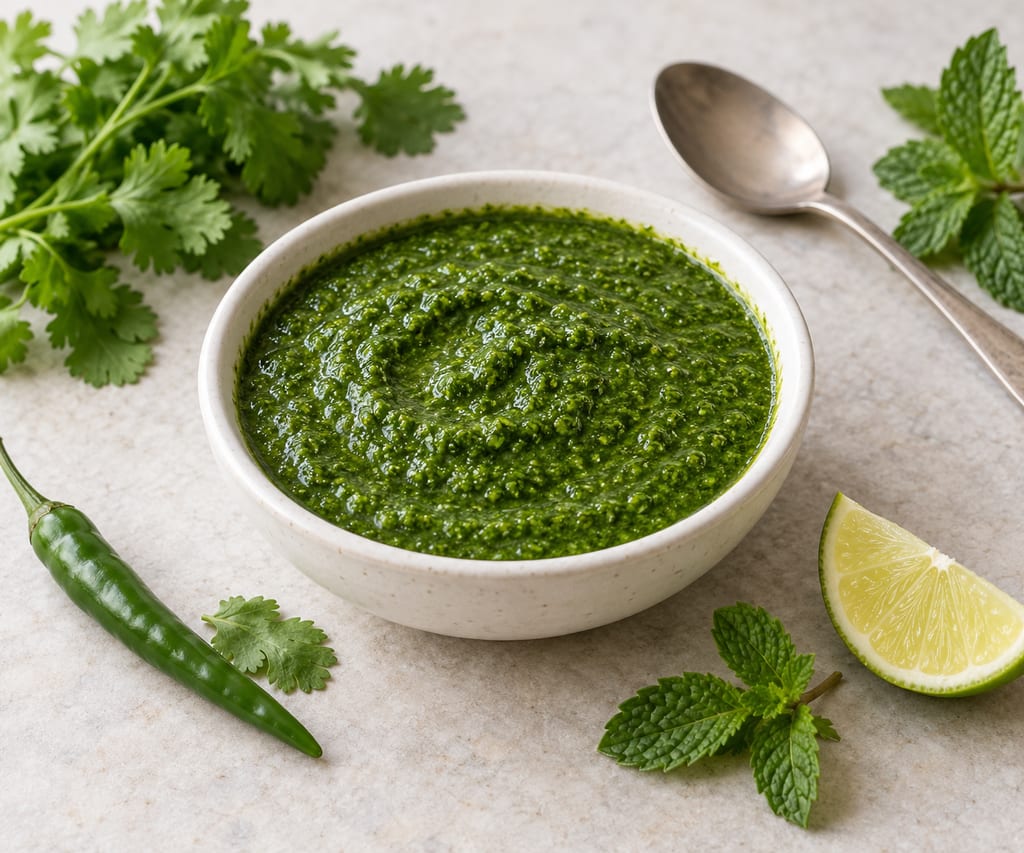
A fresh, uncooked green chutney blended from coriander, mint, chilli and citrus. This measured development batch is untested and intended for prompt serving.
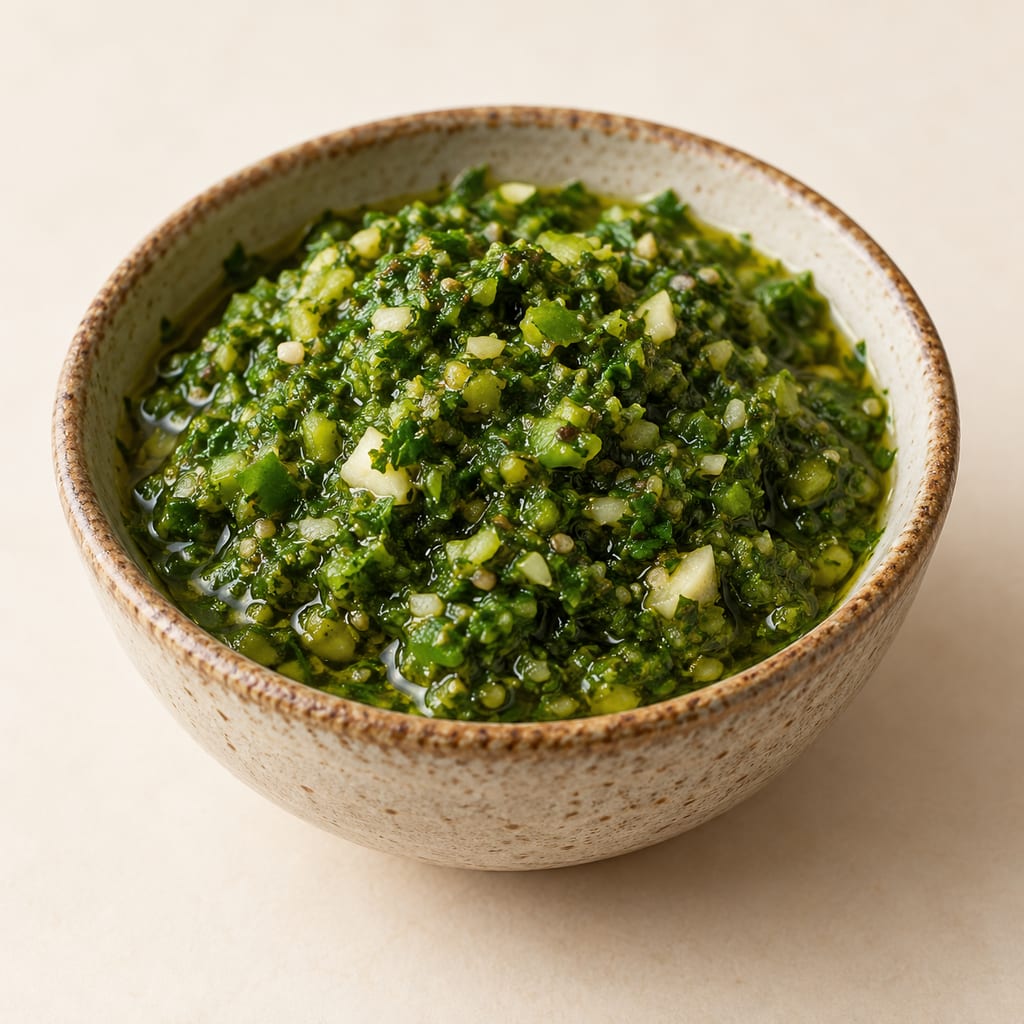
A Yemeni hot sauce of fresh chilli, coriander and garlic bound with olive oil, the base of sahawiq and a common condiment in Israel. It is made by crushing, not cooking, and keeps only briefly in the refrigerator.
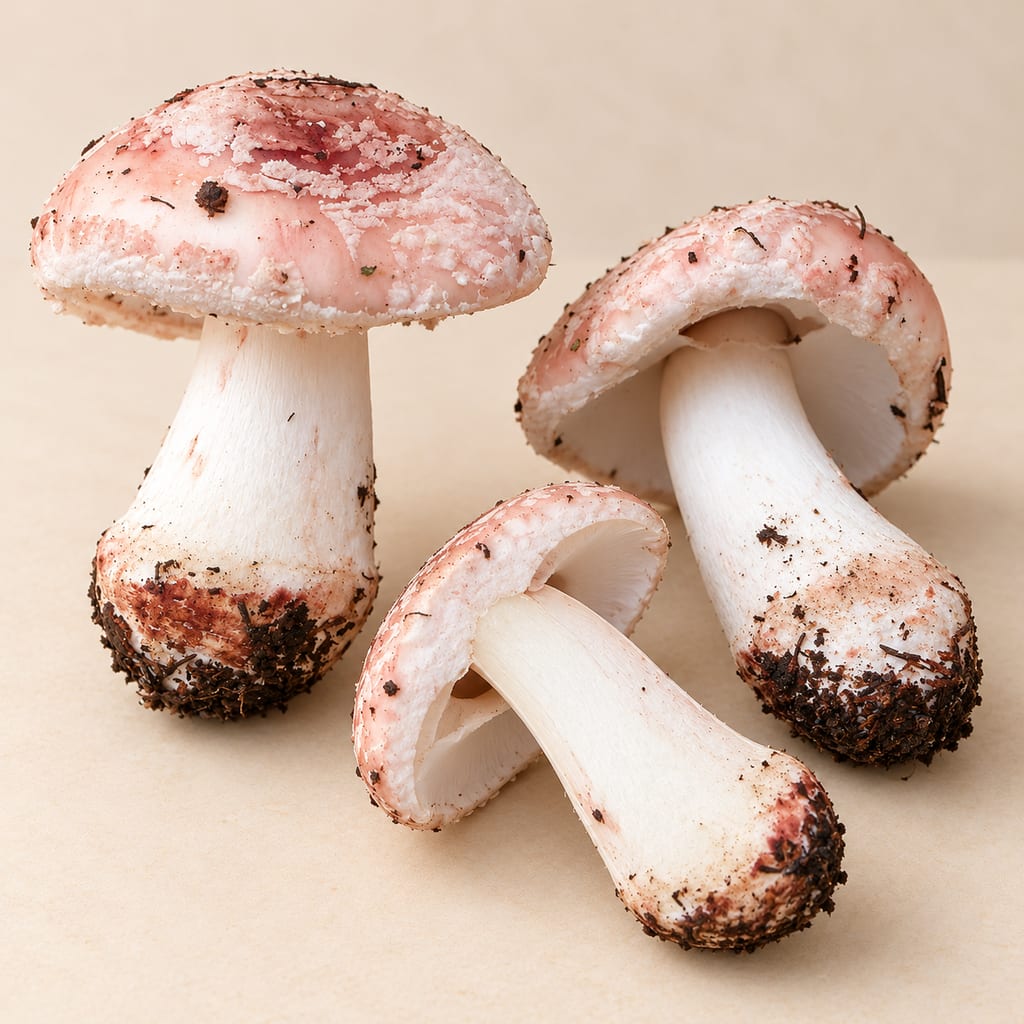
Amanita novinupta is a western North American blusher, a forest mushroom recorded as food in Mexico, and one that must be cooked because its raw flesh is toxic.

Ripe avocado flesh is the soft, buttery, fat-rich pulp of Persea americana, eaten raw. It is low in acid, so it is a fresh ingredient that needs care in chilled dishes.
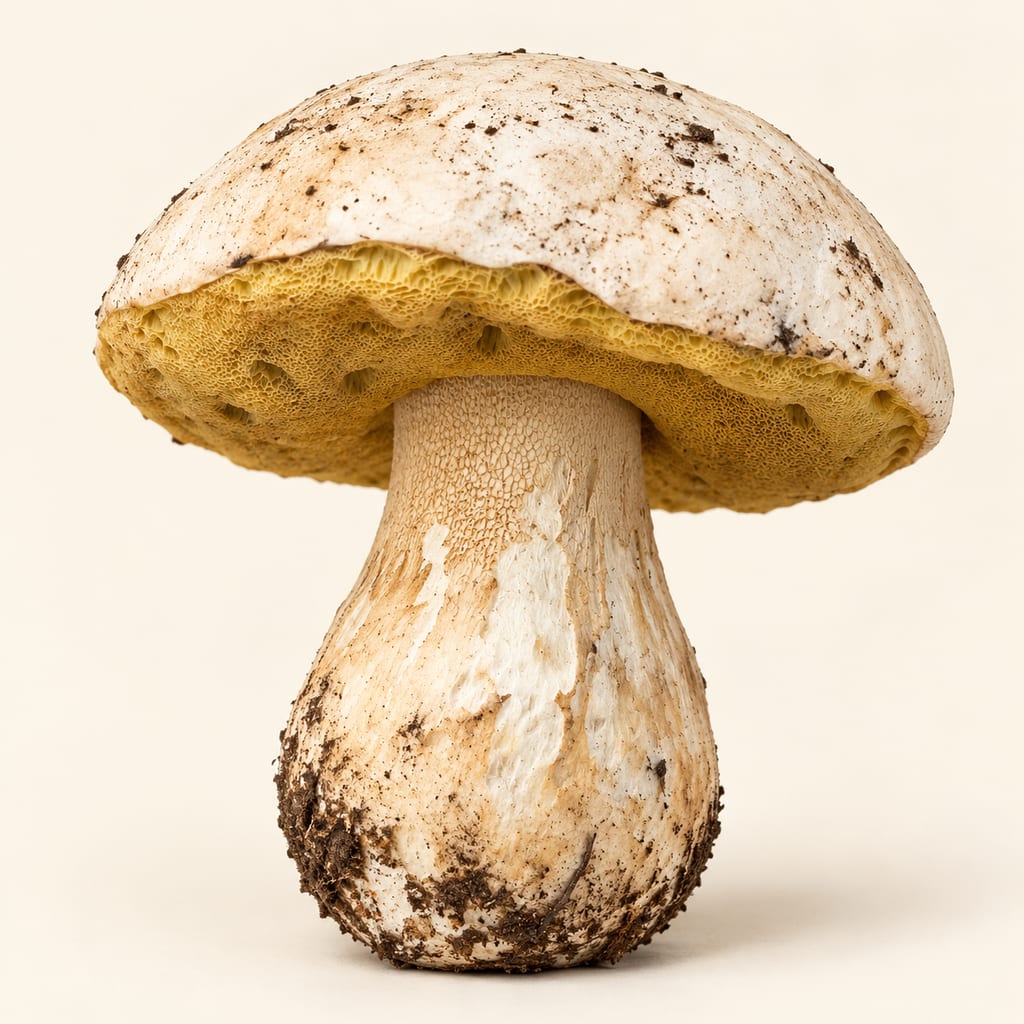
Boletus barrowsii, the white king bolete, is a western porcini relative with documented local food use in Mexico. Its pale cap and netted stem are not enough for field identification.
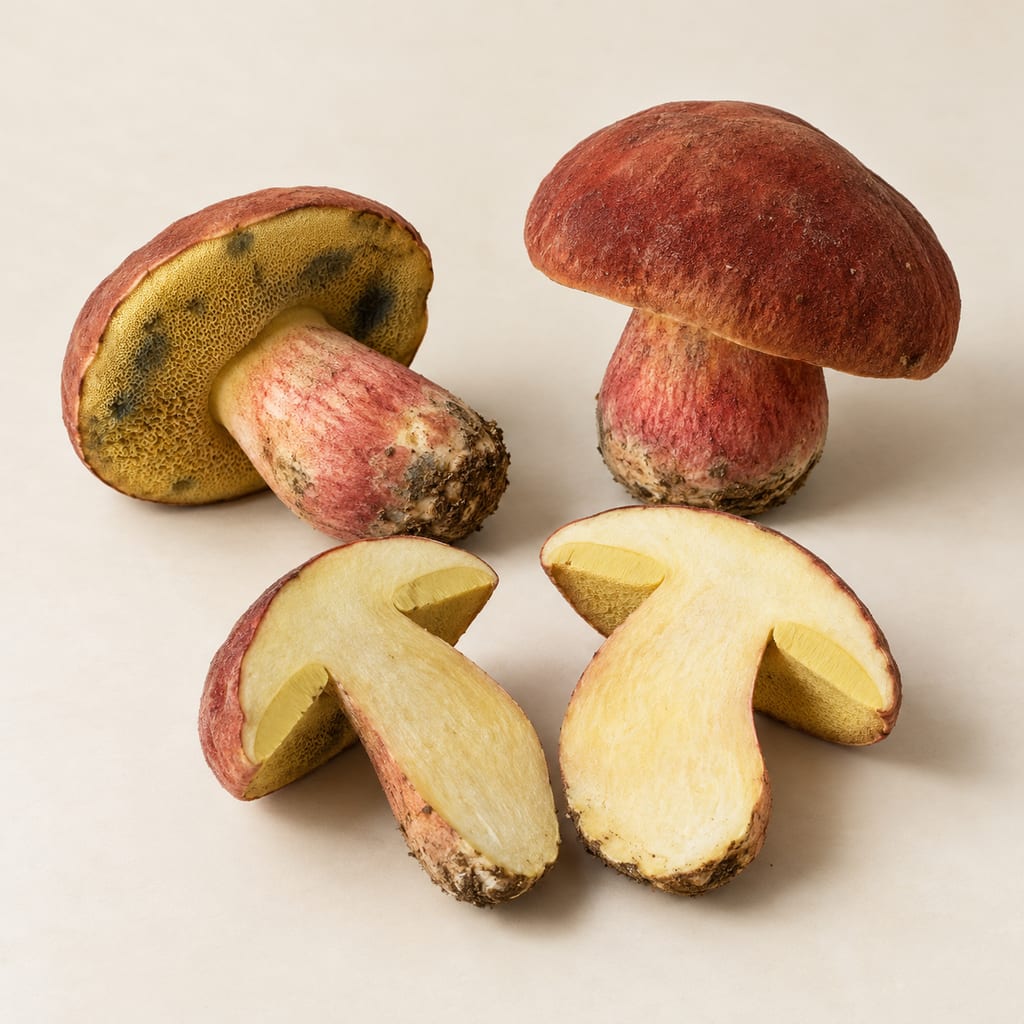
A red-and-yellow bolete described from Michigan and also listed in Mexican fungal records. Historical sources classify it as food, but its species limits, Mexican range and safe food use need careful qualification.
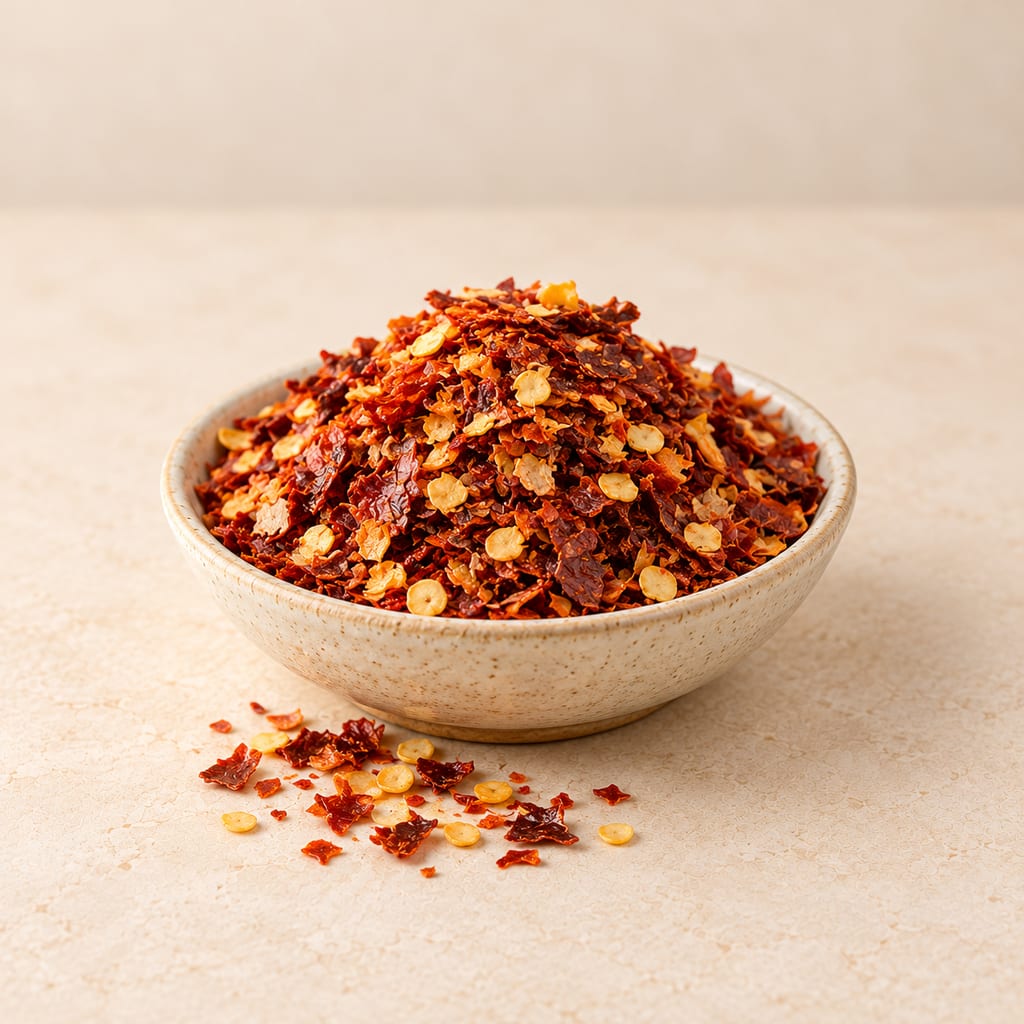
Calabrian pepper flakes are dried red Capsicum annuum from Calabria, crushed into coarse pieces; Peperoncino di Calabria is a protected geographical indication.
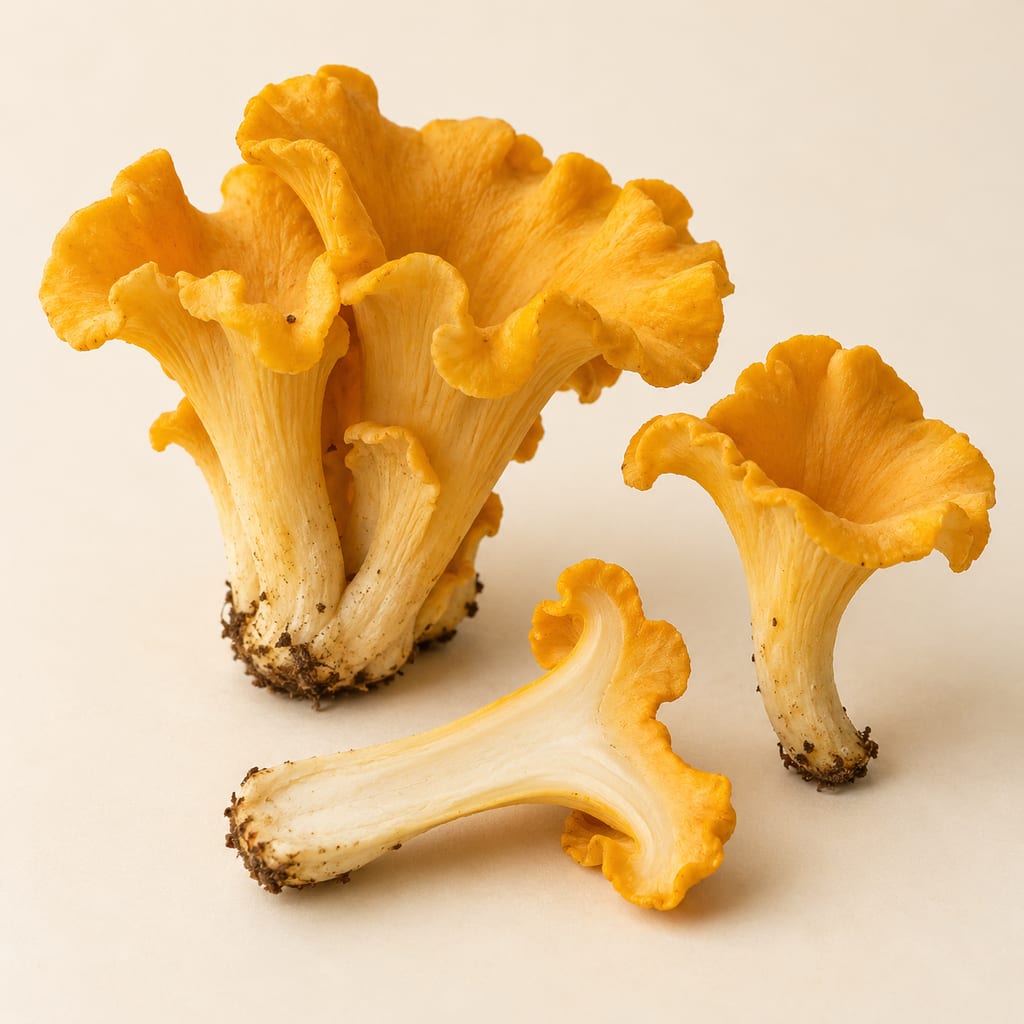
Cantharellus odoratus, the fragrant chanterelle, is a North American and Central American oak-woodland fungus. It was sold in a Veracruz market in the 1980s and in Guatemala in 2002, and its name is still disputed.
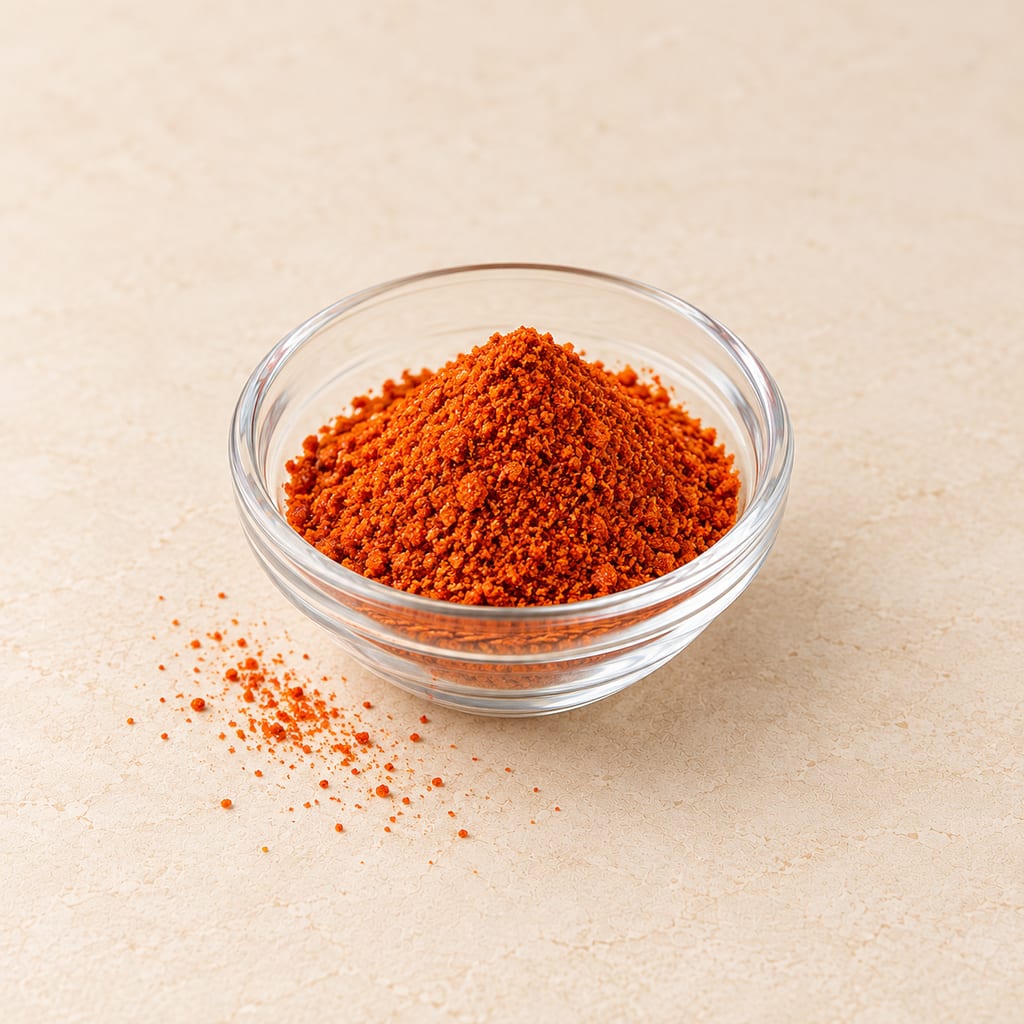
Cayenne is a very pungent red powder from dried, ground hot chilli pods, mostly Capsicum annuum, and the name of the long red peppers it comes from.
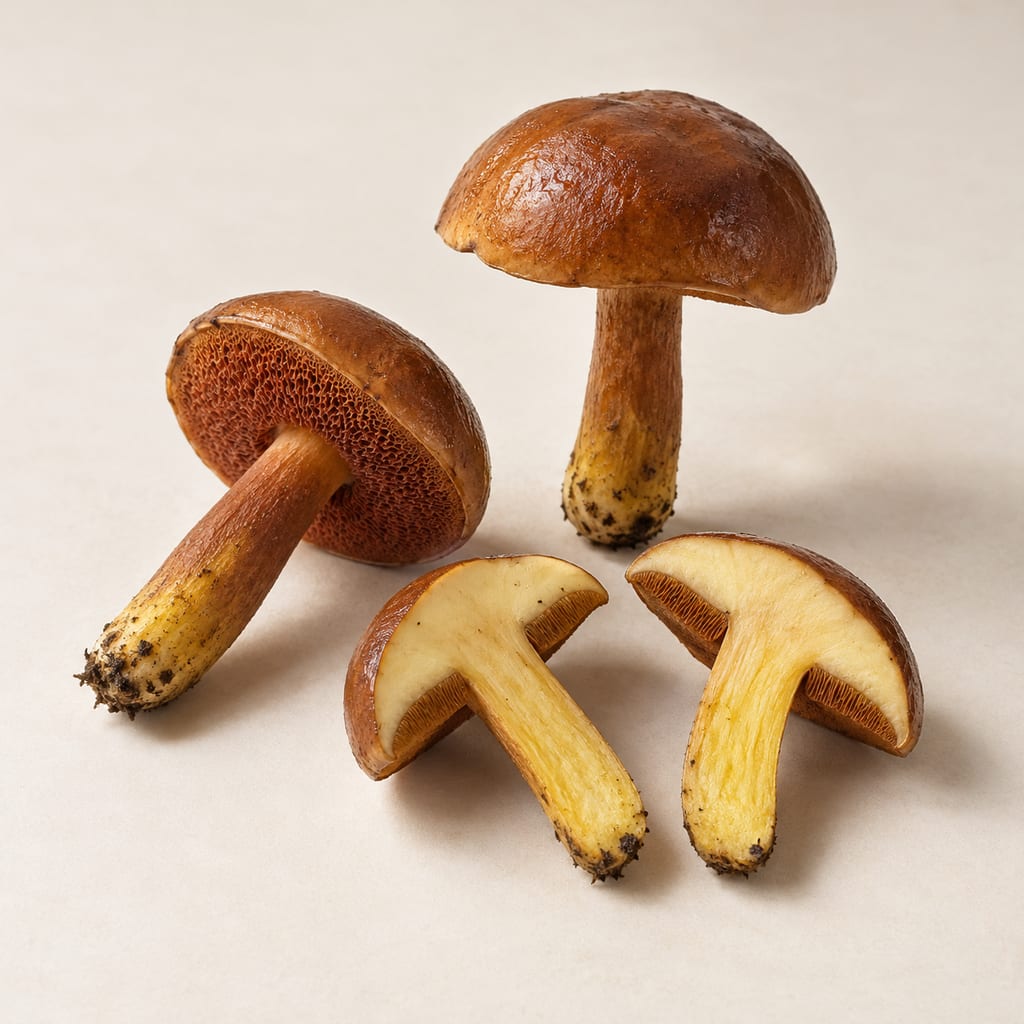
A peppery woodland bolete with historical edible labels and reported condiment use in Querétaro. Current mycological references call its edibility suspect or unestablished; this entry does not recommend consumption.

A gelling polysaccharide extracted from red seaweeds, sold as kanten strips or powder; it sets firm at a low concentration and stays solid until about 85 °C.

A Dominican table and seasoning condiment of sour orange juice, mixed with lime and salt and bottled raw; garlic, oregano or a hot pepper may be added for meat or a spicier bottle.

Cicerbita alpina is an alpine perennial whose tender shoots and leaves have been eaten raw or cooked. Sámi milk preparations and modern Carnian dishes are distinct uses, with serious identification and preservation limits.

Japanese skipjack tuna cooked, then repeatedly smoked and dried over a wood fire by the hand-fired tebiyama method into a hard block for shaving into dashi: the first stage of katsuobushi.

A Swedish-style spirit vinegar made by fermenting neutral alcohol with live vinegar bacteria, with a separate guide to commercial ättika strengths.

A yeast-raised wheat ring shaped from a firm dough, briefly boiled and baked. This source-batch formula gives a gently malted crust and a chewy crumb.

A warm dip of garlic, anchovy and olive oil, often enriched with butter, that Piedmont serves over a flame with raw and cooked vegetables and bread.

Bechamel is a white sauce of milk thickened with a butter and flour roux, one of the French mother sauces, and the base from which Mornay and other cheese and cream sauces are made.
No community contributions have been published for this entry yet.
Sign in to contribute. Published comments and photos are free to read.
WikipediaIdentity · Production · Safety
JalapeñoSize, heat, corking, name and chipotle
Production in Mexico and the United States
Nutrition, pH 4.8 to 6.0 and botulism precautions, storage at 7.5 degrees Celsius
Cited in: What a green chilli is; How green chillies spread; The jalapeño; Heat and how it is measured; What green chilli brings to sauces, pastes and pickles; Choosing and handling
WikipediaIdentity · Production
Serrano pepperOrigin in Puebla and Hidalgo, heat range, raw use
Production in four Mexican states
Cited in: What a green chilli is; The serrano
WikipediaIdentity · Use
Anaheim pepperHeat of New Mexican cultivars
History: Pueblo peoples, Fabián García, Ortega
Roasting season and Chile Pepper Institute cooking advice
Cited in: How green chillies spread; Heat and how it is measured; Milder green chillies; Choosing and handling
WikipediaGeneral · Production
Chili pepperGreen chilli production in 2024
Spread of chillies after 1493
Capsaicinoids bind to pain receptors
Cited in: What a green chilli is; How green chillies spread; Heat and how it is measured; Choosing and handling
WikipediaUse
Salsa verdeMexican salsa verde of tomatillos and green chillies, Aztec documentation, cooked, roasted and raw styles
Cited in: What green chilli brings to sauces, pastes and pickles
WikipediaUse
TomatilloPhysalis philadelphica, domesticated in Mexico before European contact, tart flavour
Cited in: What green chilli brings to sauces, pastes and pickles
WikipediaUse
ZhugYemeni sauce ingredients, green and red forms, Israeli use
Cited in: What green chilli brings to sauces, pastes and pickles
WikipediaUse
YuzuYuzu kosho of yuzu zest, green or red chillies and salt
Cited in: What green chilli brings to sauces, pastes and pickles
Antioxidants (Basel), via PubMedScience
Carotenoids of Capsicum Fruits: Pigment Profile and Health-Promoting Functional AttributesPigment profile and concentrations vary with maturity
Cited in: What a green chilli is