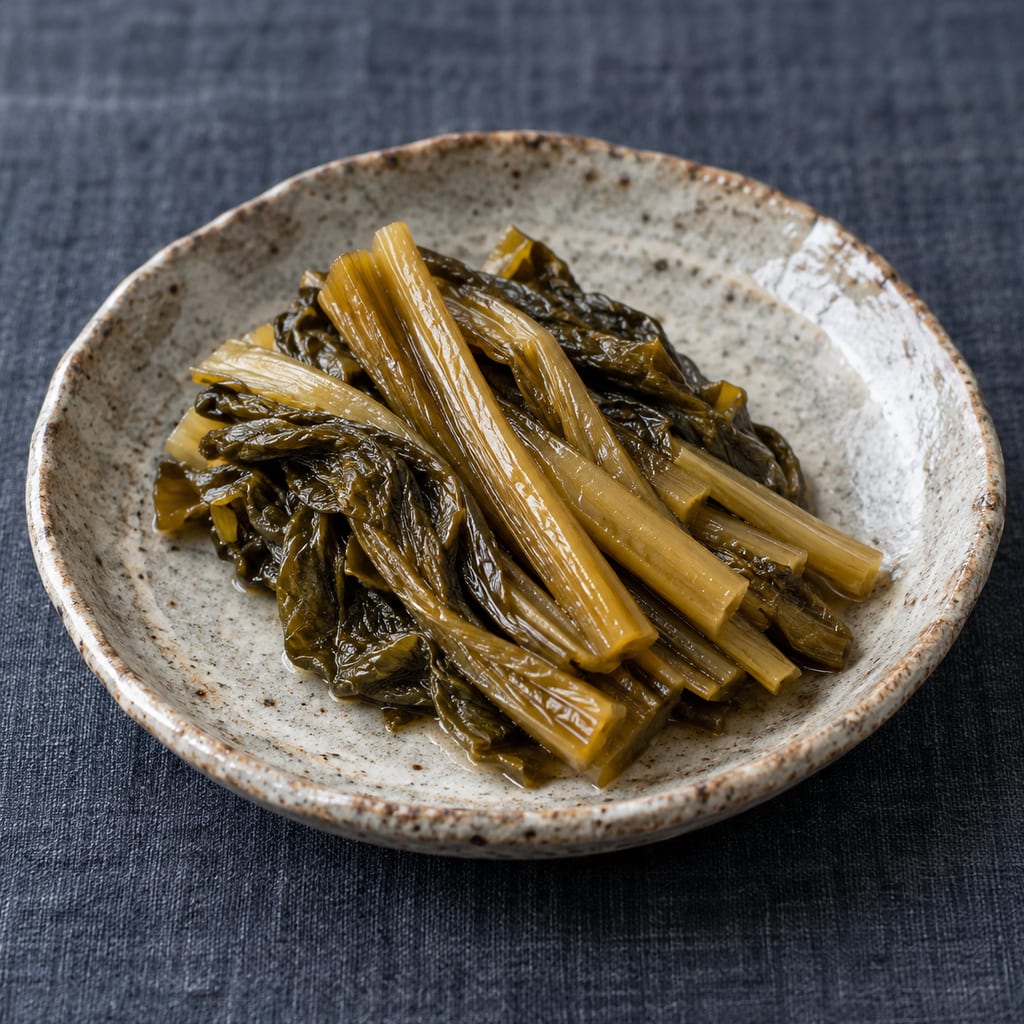
Aso takanazuke
Takana mustard greens from Aso in Kumamoto are salted and pressed into a fresh spring pickle, or aged into a sour furuzuke that is fried and mixed into takana rice.
 FermenteaWhere food goes to change
Traditional method
しば漬け (shibazuke)
Eggplant and perilla are layered with cucumber, myoga and chiles, pressed with salt and left to mature into Kyoto’s sour purple pickle.
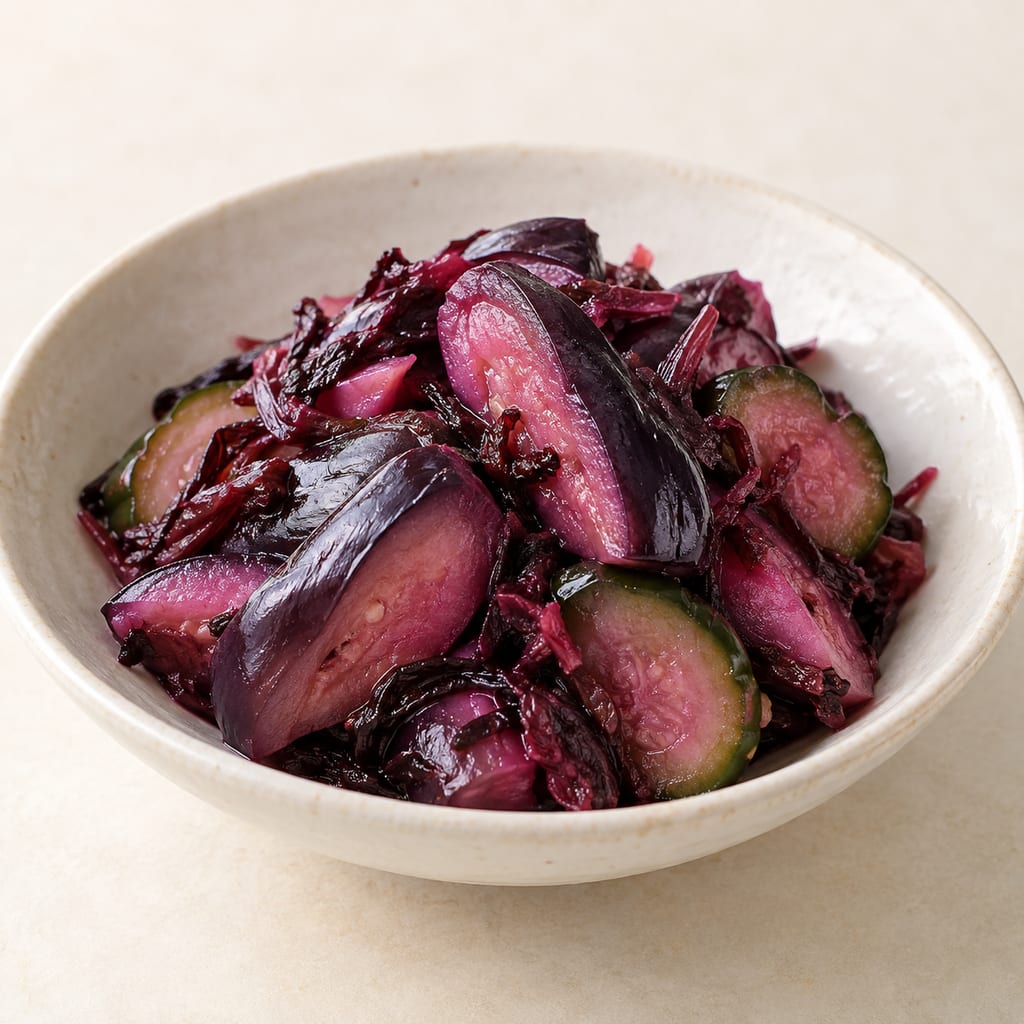
Shibazuke is a traditional Kyoto pickle made from vegetables, particularly aubergine and red perilla, preserved with salt and allowed to develop a distinctive sour, aromatic flavour. The vegetables become soft but retain some texture, while the purple colouring of the perilla produces the pickle's characteristic reddish-purple appearance.
Its Japanese name is しば漬け, also written 柴漬け, and pronounced shibazuke or shibadzuke.
The food belongs to Japan's broader tradition of tsukemono (漬物), preserved vegetables. It is often counted among Kyoto's three celebrated pickles, alongside sugukizuke and senmaizuke.
The distinctive ingredient is red shiso, 赤紫蘇 (aka-jiso), a cultivated variety of perilla, Perilla frutescens var. crispa. Shiso contributes fragrance, colour and plant compounds that participate in the pickle's flavour development.
The aubergine is Solanum melongena. Cucumber is Cucumis sativus, myoga is Zingiber mioga, and the green chillies belong to Capsicum species.
This recipe is a substantial traditional batch from Kyoto's regional-cuisine documentation. It uses aubergine, perilla, cucumber, myoga, chillies and salt, held under a heavy weight.
The traditional fermented version is different from modern quick shibazuke products made by seasoning vegetables with prepared vinegar, colouring and other flavourings. Both can be sold under similar names, but their acidity develops differently.
Shibazuke is particularly associated with Ohara, a rural district in the northern part of Kyoto City.
The area's cool upland environment and agricultural traditions have long supported vegetable production. Ohara is especially known for its red shiso, valued for its strong fragrance and colour.
Local accounts place the pickle within Kyoto's long-developed culture of salted vegetables, which provided preserved food beyond the immediate harvest season.
A famous historical story associates the name with Kenreimon-in, the former empress consort who lived at Jakko-in after the fall of the Taira clan in the late twelfth century. In that tradition, villagers offered her vegetables preserved with purple perilla, and their colour inspired the name murasakiha-zuke, or purple-leaf pickle.
That is a naming legend, not a securely dated account of the first manufacture of shibazuke.
Likewise, claims that the food has existed unchanged for precisely eight centuries go beyond the available recipe evidence.
What is secure is the association of shibazuke with Kyoto, particularly Ohara, and its continuing production by households and established pickle makers.
Red shiso is especially important in summer, when its leaves can be harvested and used for preserving vegetables.
The pickle remains widely available in Kyoto's specialist pickle shops, markets and supermarkets. Traditional salt-fermented versions coexist with faster commercial products.
Documented batch for one large pickling vessel.
Ingredient: Aubergines — Quantity: 10 kg — Preparation: Remove stalks, wash, slice 5 mm thick
Ingredient: Red perilla — Quantity: 1 kg — Preparation: Wash and prepare leaves or flowering shoots
Ingredient: Cucumbers — Quantity: Up to 2 kg — Preparation: Cut into large diagonal slices
Ingredient: Myoga — Quantity: Small amount — Preparation: Slice thinly
Ingredient: Green chillies — Quantity: 500 g — Preparation: Halve lengthwise
Ingredient: Salt — Quantity: 550 g — Preparation: Distribute between layers
There is an important inconsistency in the source: the ingredient list specifies shiso fruit or seed-bearing shoots (しその実), while the preparation instructions describe removing and chopping shiso leaves (しその葉). The two should not be silently treated as identical ingredients. The original 1 kg quantity is retained, but its precise plant part needs editorial clarification before this recipe becomes a fixed commercial specification.
Aubergine supplies most of the volume. Its comparatively soft flesh absorbs salt, loses water under pressure and takes up the colouring compounds released from perilla.
Red shiso provides aroma and pigment. Its anthocyanins, including shisonin-related pigments, respond to acidity and contribute to the developing purple-red colour.
Cucumber provides a firmer, juicier texture. Using more cucumber changes the finished pickle's water balance, so the documented quantity is a maximum rather than an instruction to add exactly 2 kg.
Myoga is a Japanese ginger-family aromatic with a distinctive floral, slightly pungent flavour. It contributes fragrance without functioning as the main fermenting substrate.
Green chillies add pungency and vegetable flavour. The original formula uses 500 g, but does not establish a required chilli cultivar.
Salt draws water from the vegetables, changes their texture and selects for microorganisms capable of growing in the salted environment. It is a crucial process ingredient rather than simply a final seasoning.
The original recipe requires a large pickling vessel, a fitted pressing board and substantial weights.
The pressing weight is equal to the combined mass of the ingredients. This is a traditional weight instruction, not a universal pressure expressed in pascals or kilograms per square centimetre.
The source also requires sufficient space for brine to accumulate above the pressing board.
Use clean food-contact materials that will not react with salt and acidic brine.
Remove the stalks and wash the aubergines.
Slice the flesh 5 mm thick.
The relatively thin slices expose surface area and help salt reach the vegetable tissue.
Uniform cutting also assists even pressing.
Halve the green chillies lengthwise.
Cut the cucumbers into large diagonal pieces.
Slice the myoga thinly.
Wash the perilla. For the leaf-based version described in the method, remove the leaves from the stems and chop them coarsely.
Mix the chopped leaves with the aubergines.
Place the aubergine-and-perilla mixture in the pickling vessel in layers approximately 10 cm thick.
Sprinkle salt between layers.
Distribute myoga, cucumber and chillies through the vegetable mass.
Continue until all the prepared ingredients are packed.
Place extra perilla leaves across the upper surface.
This helps distribute their aroma and colour through the vegetables beneath.
The source does not quantify the additional uppermost leaves separately from the listed perilla quantity.
Place the pressing board over the vegetables and apply a weight equal to the combined ingredient mass.
The pressure compresses the vegetables and encourages water to leave their cells.
As liquid accumulates, it dissolves the salt and forms the preserving brine.
After one day and night, inspect the liquid.
If dark liquid has accumulated, the documented method calls for pouring it off.
The recipe then requires the clearer brine to remain approximately 3–4 cm above the pressing board.
This is a detail specific to this substantial traditional pickle batch. It should not be generalized into routinely draining the liquid from every lactic-acid vegetable fermentation.
Maintain the pickle under appropriate conditions while the salted vegetables develop acidity.
Kyoto's broader traditional-pickle documentation describes approximately two months of lactic fermentation for shibazuke.
The ingredient-specific household method does not supply a numerical fermentation temperature, exact pH endpoint or independently validated storage period.
The two-month description is therefore a traditional maturation period, not a microbiological guarantee.
Remove an appropriate portion of the mature pickle and cut it into smaller pieces if necessary.
Serve alongside rice or incorporate it into other dishes.
Once removed from the preserving brine, the prepared portion should be handled as a perishable food.
Traditional shibazuke belongs to the group of lactic-acid vegetable fermentations.
Salt creates an environment in which some organisms are inhibited while salt-tolerant lactic-acid bacteria can continue growing.
These bacteria consume available vegetable sugars and produce organic acids, principally lactic acid.
As acid accumulates, the pH falls.
The increasingly acidic environment changes flavour and contributes to preservation.
The exact bacterial species depend on the raw vegetables, salt concentration, production environment and fermentation stage.
It would be inaccurate to claim that every shibazuke batch is dominated by one species without identifying evidence for that specific process.
Salt first removes water from vegetable tissue.
This causes aubergine and cucumber cells to lose turgor, changing their crispness and flexibility.
The released water becomes brine.
Pressing accelerates physical compaction and helps keep the material beneath the liquid.
The colour of red perilla is largely due to anthocyanins.
These pigments respond to acidity.
As fermentation proceeds, the increasingly acidic environment contributes to the familiar magenta-purple appearance.
The vegetables themselves may also contain pigments that influence the final colour.
The chemistry helps distinguish naturally coloured fermented shibazuke from products coloured with added food dyes.
Perilla contains aromatic compounds that are noticeable even before fermentation.
During storage, volatile compounds from the vegetables interact with fermentation-derived acidity.
The resulting flavour combines herbal fragrance, sourness, salt and vegetable notes.
The overall effect is more complex than adding vinegar to raw aubergines.
The original large-batch version includes six ingredients.
Other established recipes use principally aubergine, red perilla and salt.
Cucumber can be added or omitted.
Myoga and chilli quantities vary among producers.
Some shibazuke products are vinegar-pickled or prepared with seasoning liquids rather than aged by lactic-acid fermentation.
These should be described as modern or rapid variations.
They can be enjoyable foods, but the underlying process is different.
A quick acidified pickle has acquired its acidity directly from the added acid. Traditional fermented shibazuke develops much of its acidity through microbial metabolism.
In Kyoto, shibazuke is commonly served as a small accompaniment to rice.
It can be eaten beside plain steamed rice, rice porridge or a simple Japanese meal.
Chopped shibazuke can be mixed into rice or used in rice balls.
Its acidic character also provides contrast to richer dishes.
Commercially prepared shibazuke is sometimes added to sandwiches, tartar sauce or modern fusion dishes.
These are contemporary culinary applications rather than evidence of a long historical tradition.
A properly fermented pickle should develop the expected sour flavour and a softened but recognisable vegetable texture.
The brine and vegetables may become strongly coloured by perilla.
However, colour, smell and taste alone cannot prove microbiological safety.
The traditional recipe does not give a final pH or a tested microbial specification.
Exposed vegetables: Pieces rising above the liquid can support unwanted surface growth.
Insufficient or uneven salting: Salt distribution influences which microorganisms can develop and how consistently the vegetables lose moisture.
Excessive softening: Poor raw material, uncontrolled temperatures or unwanted microbial activity can produce an unpleasant texture.
Surface films or mould: Unexpected growth needs careful assessment. Do not assume that coloured growth belongs to the perilla.
Unusual putrid odours or slime: These are reasons to reject the product rather than attempt to rescue it by adding salt.
Loss of brine: Excessive drainage or evaporation can leave portions exposed.
The documented historical recipe provides exact ingredient quantities and pressing instructions, but no validated final acidity or microbiological acceptance limits.
This is particularly important for a large batch aged over weeks.
For a modern commercial recipe, the manufacturer would need to assess the raw materials, effective salt concentration, pH development, temperature and storage conditions.
The familiar taste of a traditional pickle is not sufficient process validation.
Refrigeration after opening is a sensible precaution unless the producer supplies different validated instructions.
The formula should remain flagged as traditional method requiring process validation rather than being presented as an experimentally certified home-preservation procedure.
Shibazuke demonstrates how a regional crop can shape the identity of a fermented food.
The vegetables provide the physical substance, salt and pressure enable preservation, microbes create the acidity, and Ohara's red perilla contributes the colour and characteristic aroma.
Its historical identity is therefore not reducible to an aubergine pickle.
It is one of the distinctive fermented foods of Kyoto.
MAFF records shibazuke as a Kyoto City pickle and documents its local perilla association. A legend about its naming is not used as a verified date.
Scaling: source batch only
Contaminated equipment or uncontrolled fermentation can compromise the batch; the recipe is not professionally validated.
Hazard sourceUse clean food-grade equipment and follow the source method. Recipe-specific validated limits are not supplied; do not treat taste or appearance as proof of safety.
Control sourceMAFF identifies Kyoto City as a main area for shibazuke and gives a local association and recipe.
Takana mustard greens from Aso in Kumamoto are salted and pressed into a fresh spring pickle, or aged into a sour furuzuke that is fried and mixed into takana rice.
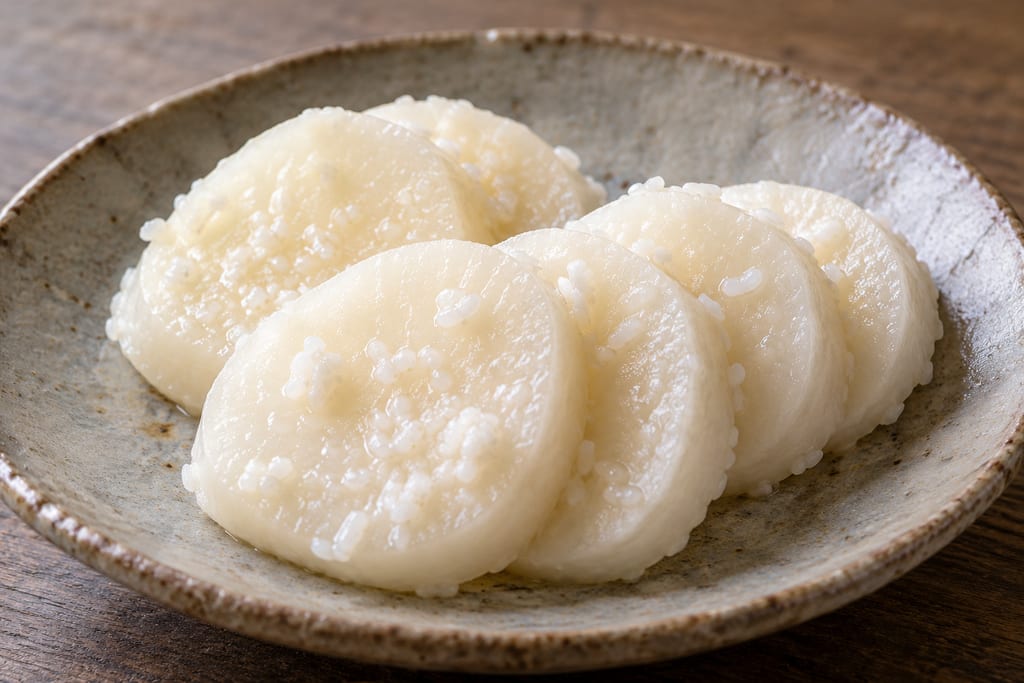
A sweet, crisp Japanese daikon pickle from Tokyo's Nihonbashi district, made by salting fresh radish and dressing it in rice koji, sugar or koji amazake without the heavy drying used for takuan.
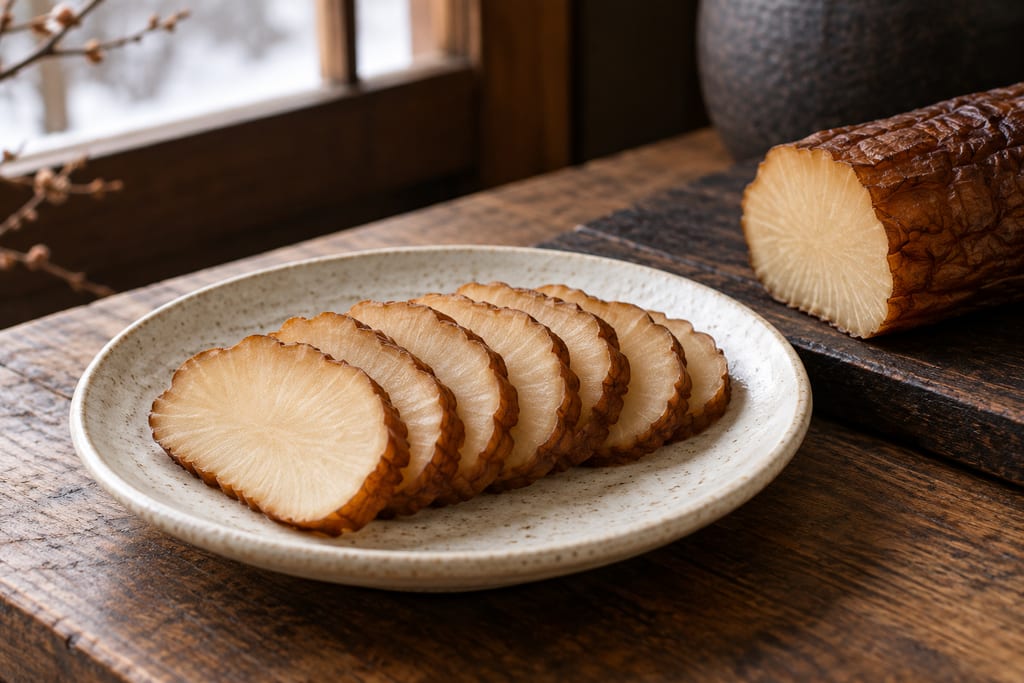
Iburigakko is Akita pickled daikon dried with smoke before it is fermented in rice bran.
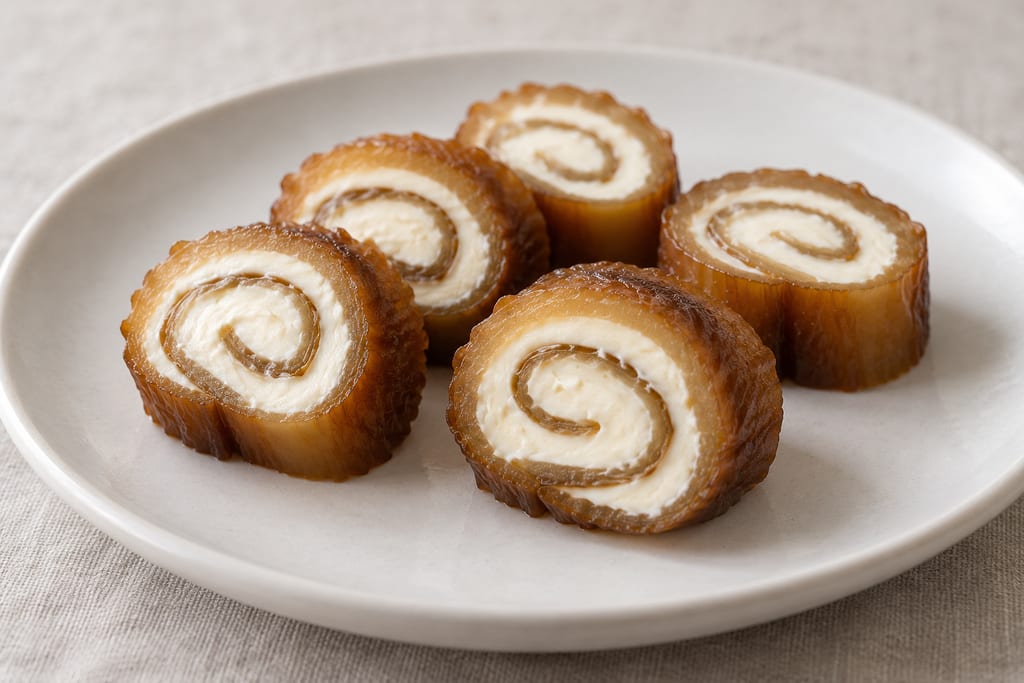
A Morinaga snack pairs thin ribbons of iburigakko with cream cheese, then chills the roll before cutting it into portions.
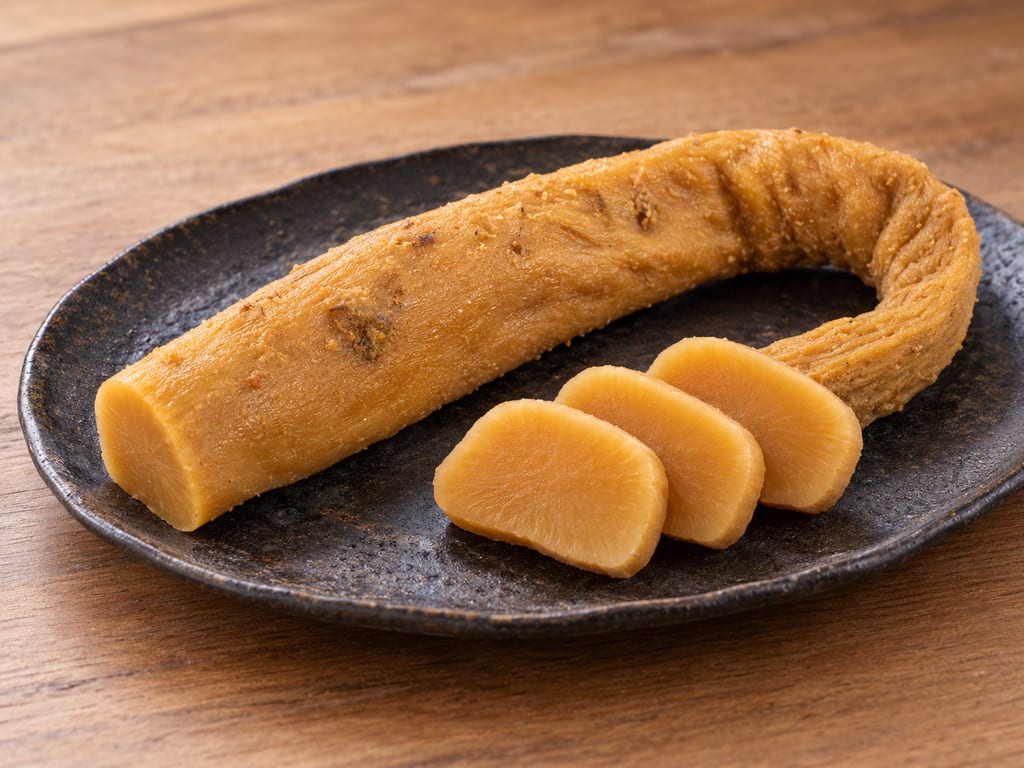
Regional takuan from Ise City, Mie, made with Misono daikon dried on a rack, then matured in a weighted barrel of rice bran and salt for months to years.
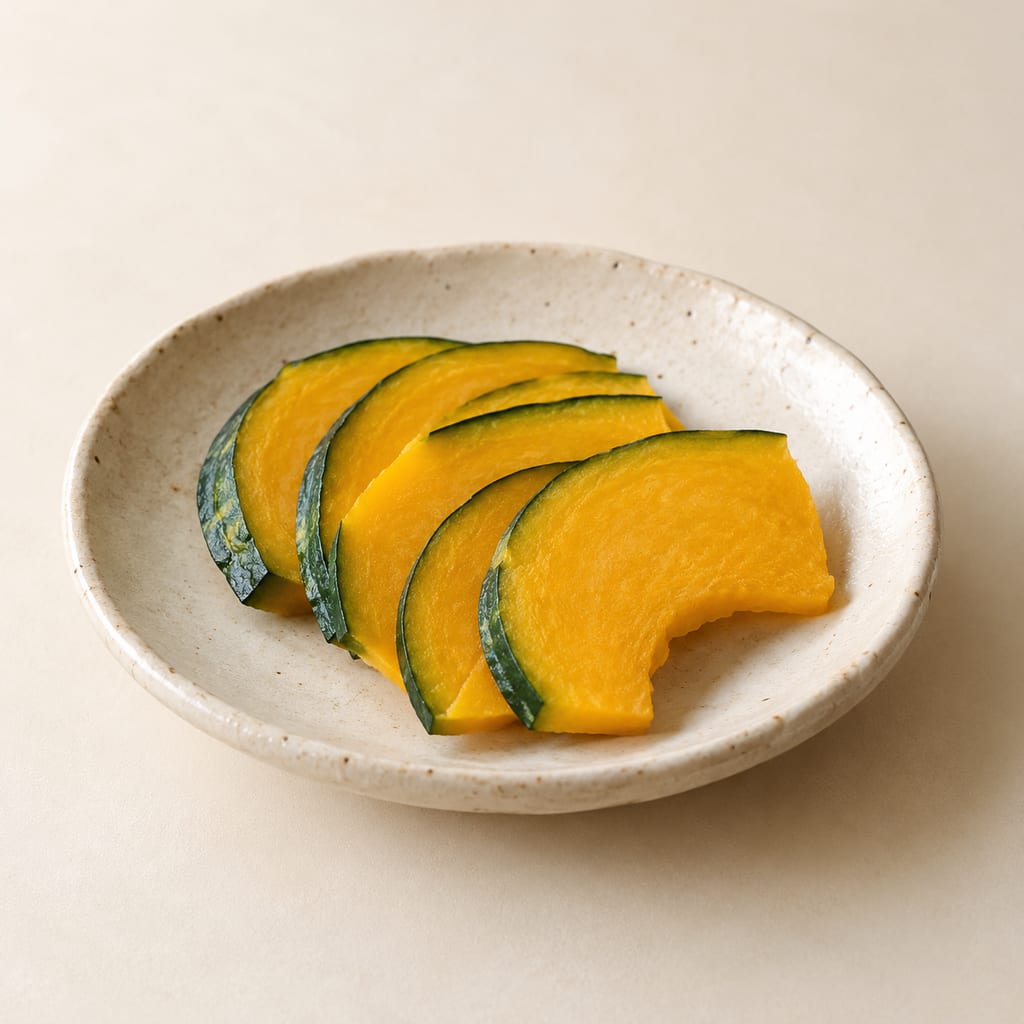
Kabocha no nukazuke: Refrigerated commercial fermented bed; use removed portions the same day.

Foods embedded in salty fermented miso paste, which transfers salt and fermentation products into them; misozuke uses an already transformed medium rather than a fresh vegetable brine.
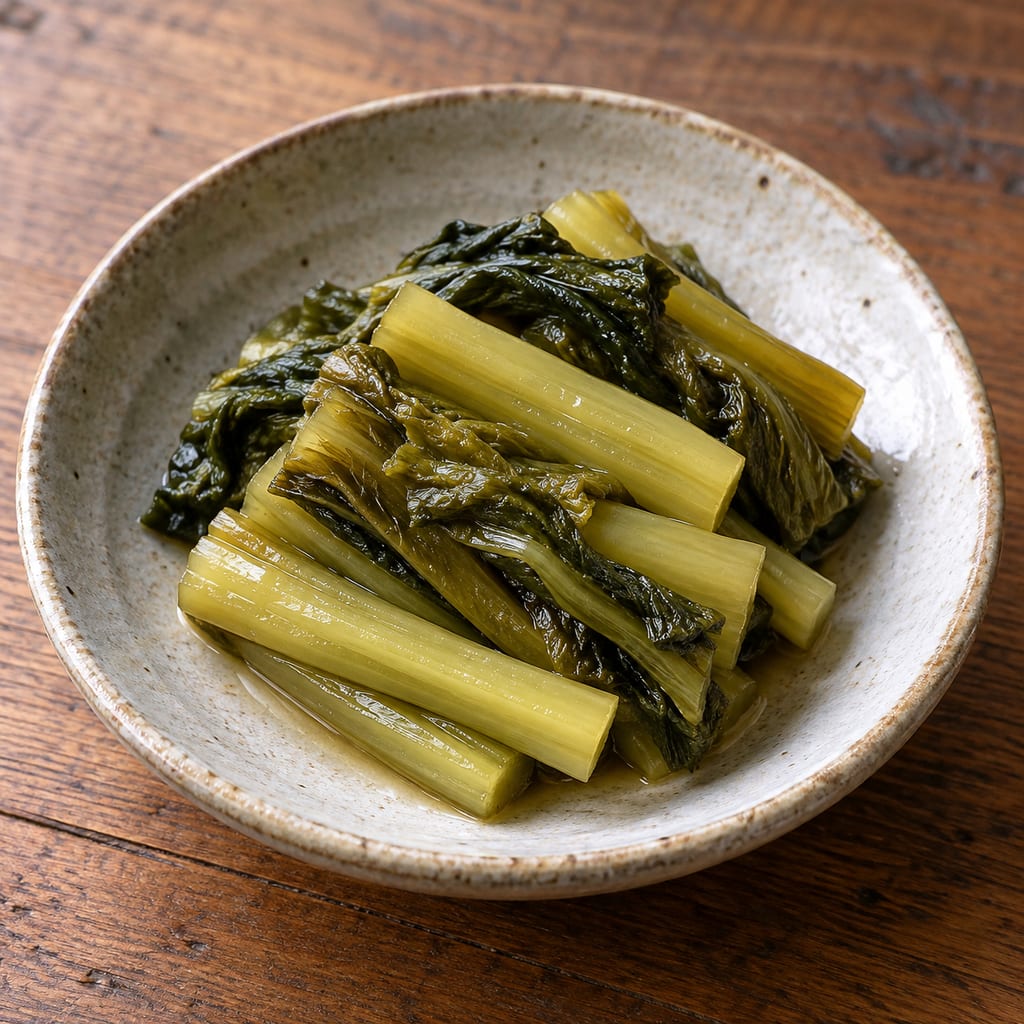
Nozawana greens salted in a barrel and weighted overnight, a Nagano household pickle sampled after about two weeks and soured by a month.
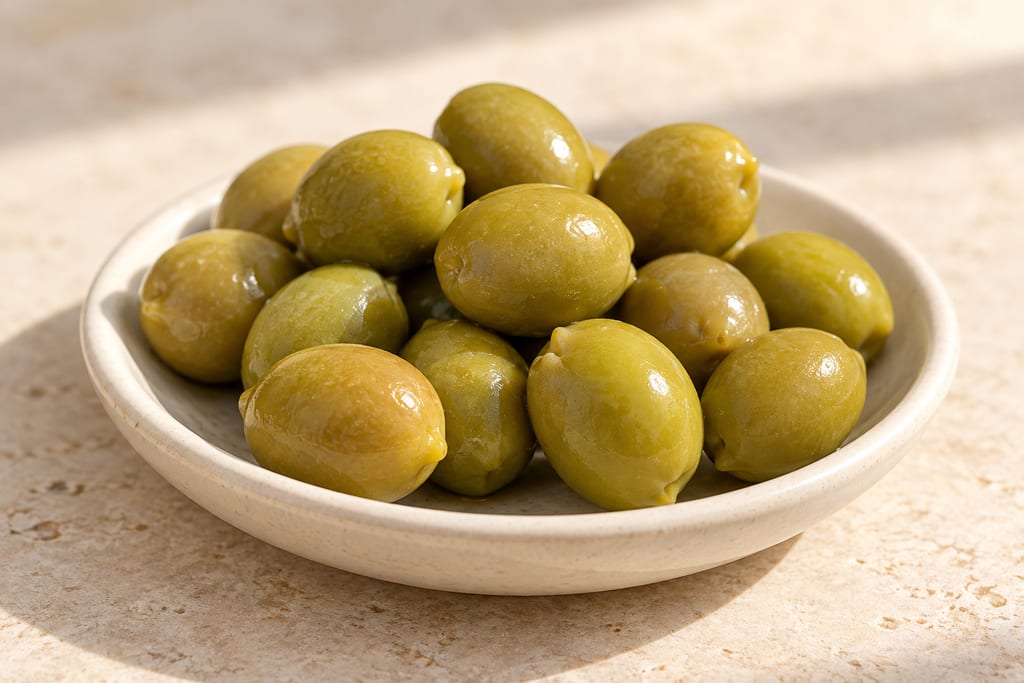
A Portuguese table-olive product from the Negrinha cultivar in northeastern Portugal, sold in three commercial styles, two of them brined fermentations and one oxidised to black.
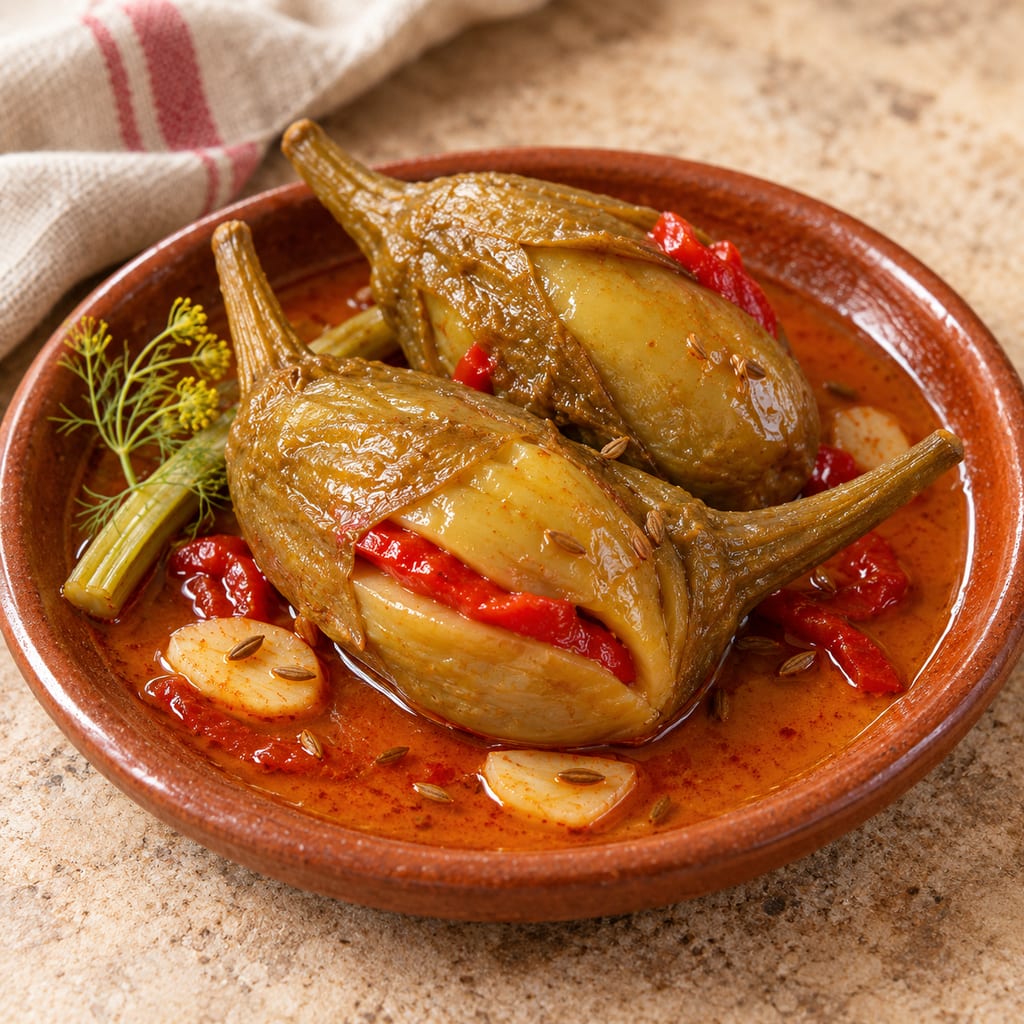
A protected aubergine preserve from Ciudad Real in Spain: tender fruit of the local Dealmagro variety, cooked briefly and then fermented in a vinegared, paprika-seasoned dressing.
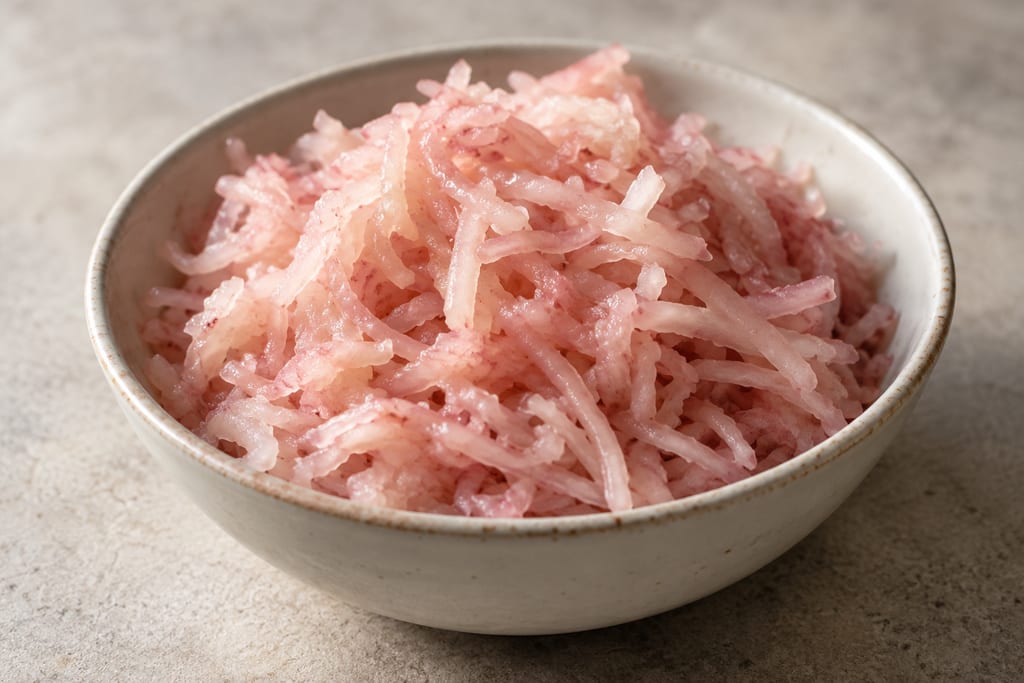
Source-specific Brovada DOP producer method for Friuli Venezia Giulia turnips and red-grape marc. This records a regulated producer process; it is not a validated home-scale recipe.
An industrial fermentation patio places factory-made fiberglass-reinforced polyester olive tanks below floor level, with drainage and transfer infrastructure arranged around the buried vessels.
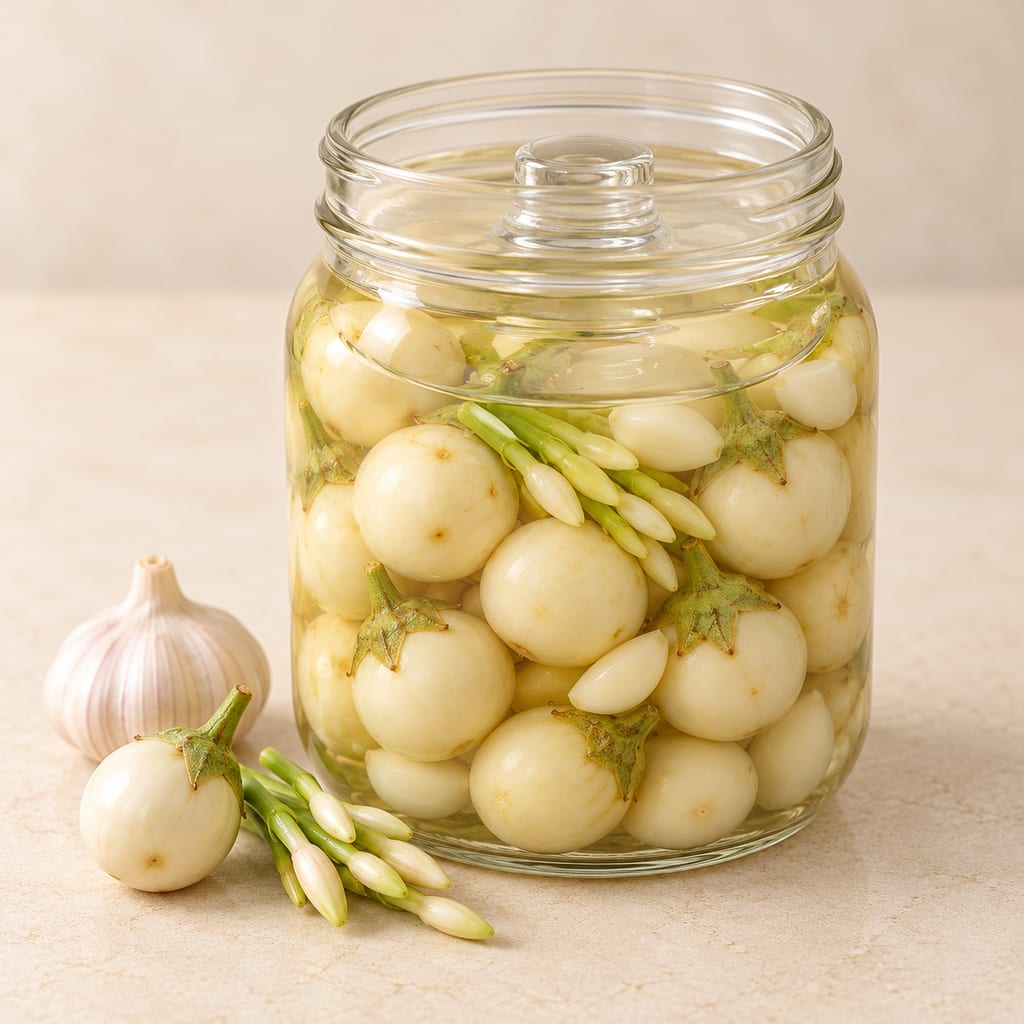
Vietnamese salted and fermented small eggplant, dried on the day of purchase, then held submerged in warm salty water with garlic and galingale flower for a week or longer.
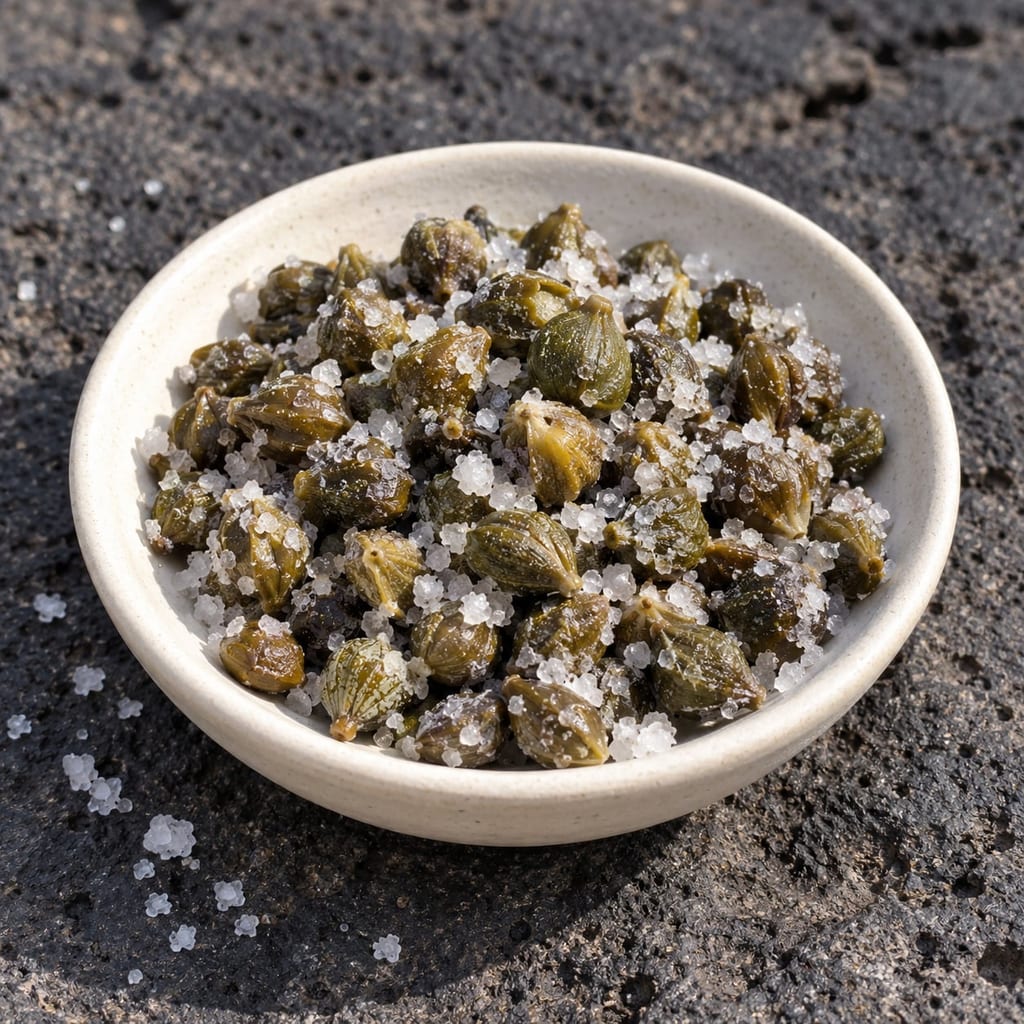
A protected Sicilian product: unopened caper buds from the island of Pantelleria, dry-salted with sea salt in a two-stage process that encourages lactic fermentation.
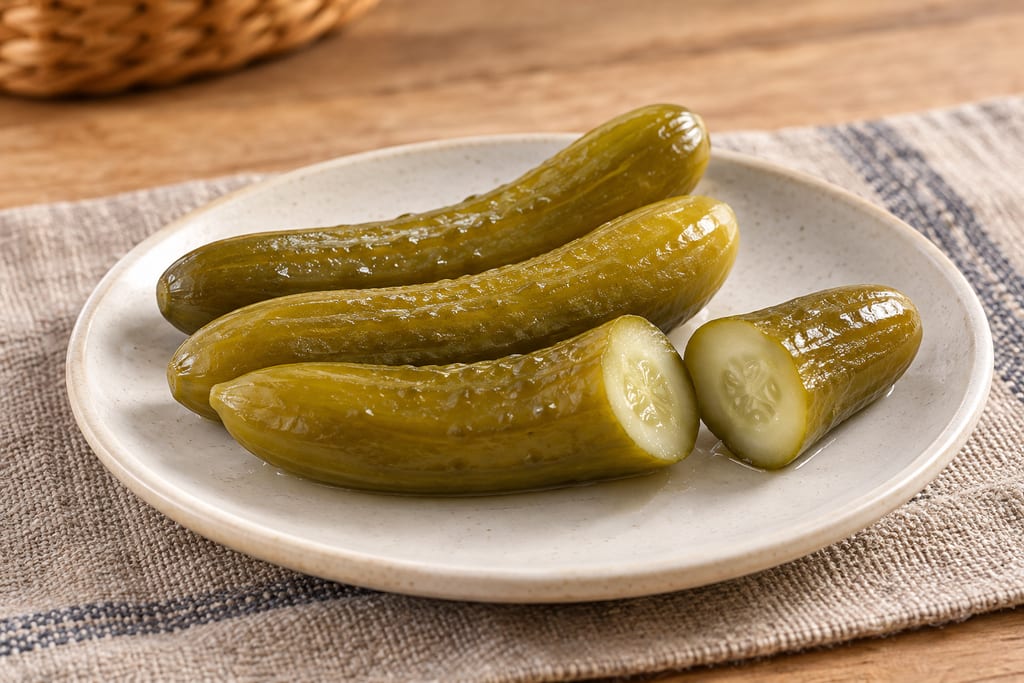
Çubuk turşusu is a registered pickle from Çubuk district in Ankara. Its cucumber variant is sold as Salatalık Turşusu, and a commercial specification sets its brine and room-temperature period.
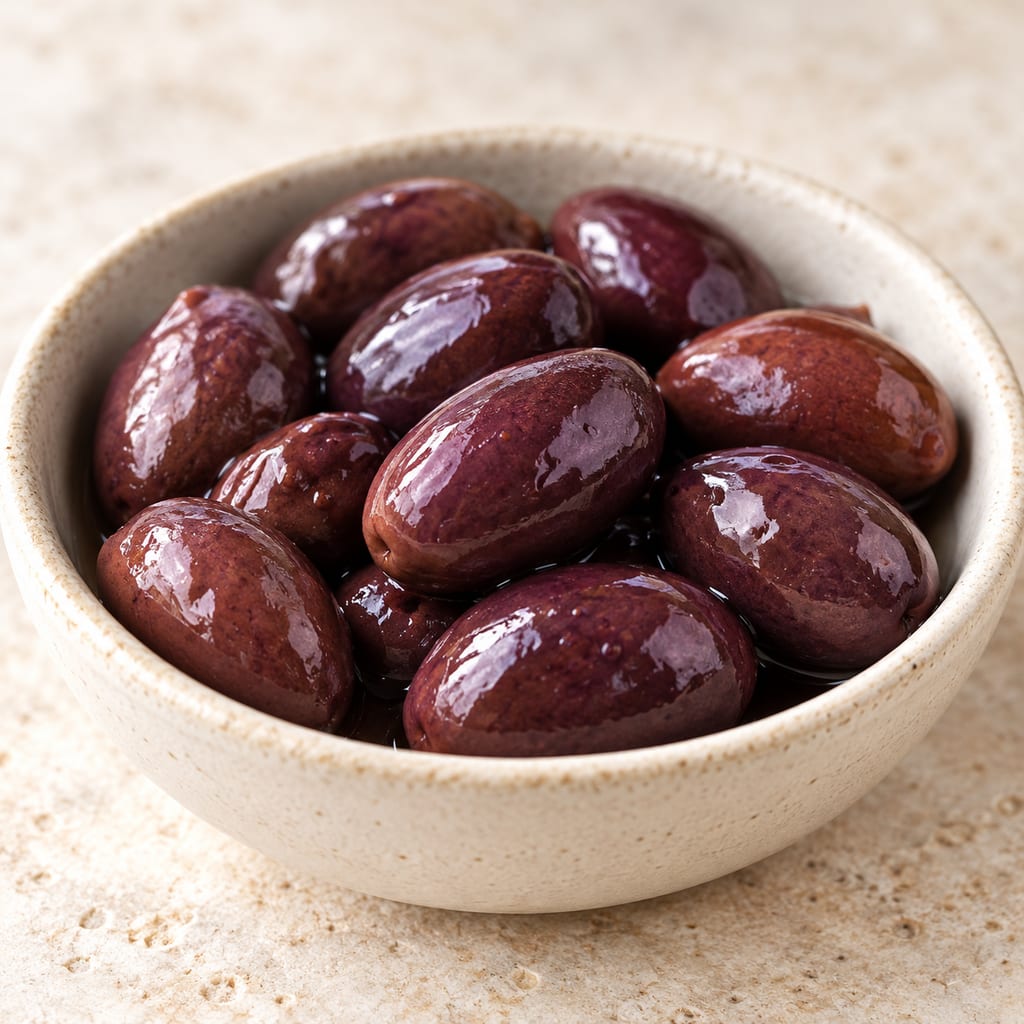
Elia Kalamatas is a Messinia table olive of the Kalamon variety, picked before full ripeness and fermented in brine for six to nine months; it is a PDO product, not a generic black olive.
No community contributions have been published for this entry yet.
Sign in to contribute. Published comments and photos are free to read.
Japan Ministry of Agriculture, Forestry and FisheriesInspiration · Geography
Shibazuke, Kyoto PrefectureKyoto City association, ingredient quantities, cutting, layering, weight and first-day brine handling.
Cited in: What is shibazuke?; History: Kyoto, Ohara and the purple leaf; Ingredients; Equipment; 1. Prepare the aubergines; 2. Prepare the remaining vegetables; 3. Start layering; 4. Finish with perilla; 5. Apply the weight; 6. Inspect after 24 hours; 7. Allow fermentation and maturation; 8. Prepare for serving; How shibazuke is eaten; Signs of successful maturation
Japan Ministry of Agriculture, Forestry and FisheriesInspiration · Geography
Kyo TsukemonoLactic fermentation of shibazuke and about two months maturation.
Cited in: What is shibazuke?; History: Kyoto, Ohara and the purple leaf; Why each ingredient matters; The microbiology of shibazuke; Osmosis; Pigment chemistry; Aroma; Traditional and modern variations; Why shibazuke matters
University of Minnesota ExtensionSafety
Preserving food at home: FermentationGeneral advice on equipment, brine coverage and acidity monitoring; not validation of this recipe.
Cited in: 6. Inspect after 24 hours; 7. Allow fermentation and maturation; The microbiology of shibazuke; Osmosis; Pigment chemistry; Aroma; Traditional and modern variations; Signs of successful maturation; What can go wrong?; Safety and storage; Why shibazuke matters
Cited in: What is shibazuke?; Ingredients; Equipment; 1. Prepare the aubergines; 2. Prepare the remaining vegetables; 3. Start layering; 4. Finish with perilla; 5. Apply the weight; 6. Inspect after 24 hours; 7. Allow fermentation and maturation; 8. Prepare for serving
Cited in: History: Kyoto, Ohara and the purple leaf; Why each ingredient matters; Traditional and modern variations; How shibazuke is eaten; Why shibazuke matters