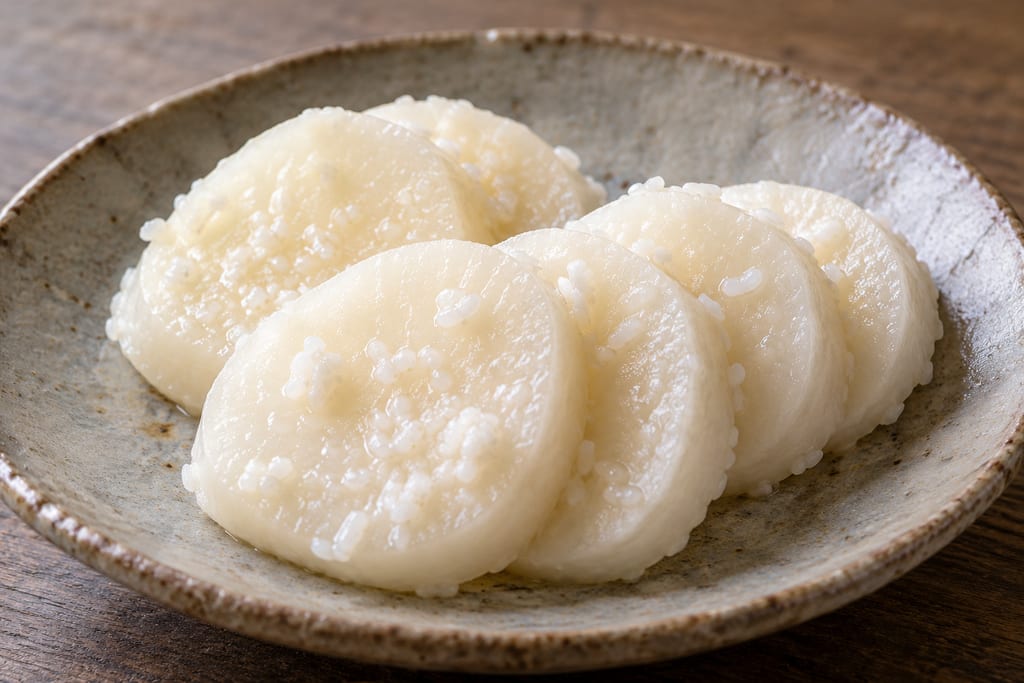
Bettara-zuke
A sweet, crisp Japanese daikon pickle from Tokyo's Nihonbashi district, made by salting fresh radish and dressing it in rice koji, sugar or koji amazake without the heavy drying used for takuan.
 FermenteaWhere food goes to change
阿蘇高菜漬け · Aso takana pickle · 阿蘇高菜漬け · shin-zuke · furuzuke
Takana mustard greens from Aso in Kumamoto are salted and pressed into a fresh spring pickle, or aged into a sour furuzuke that is fried and mixed into takana rice.
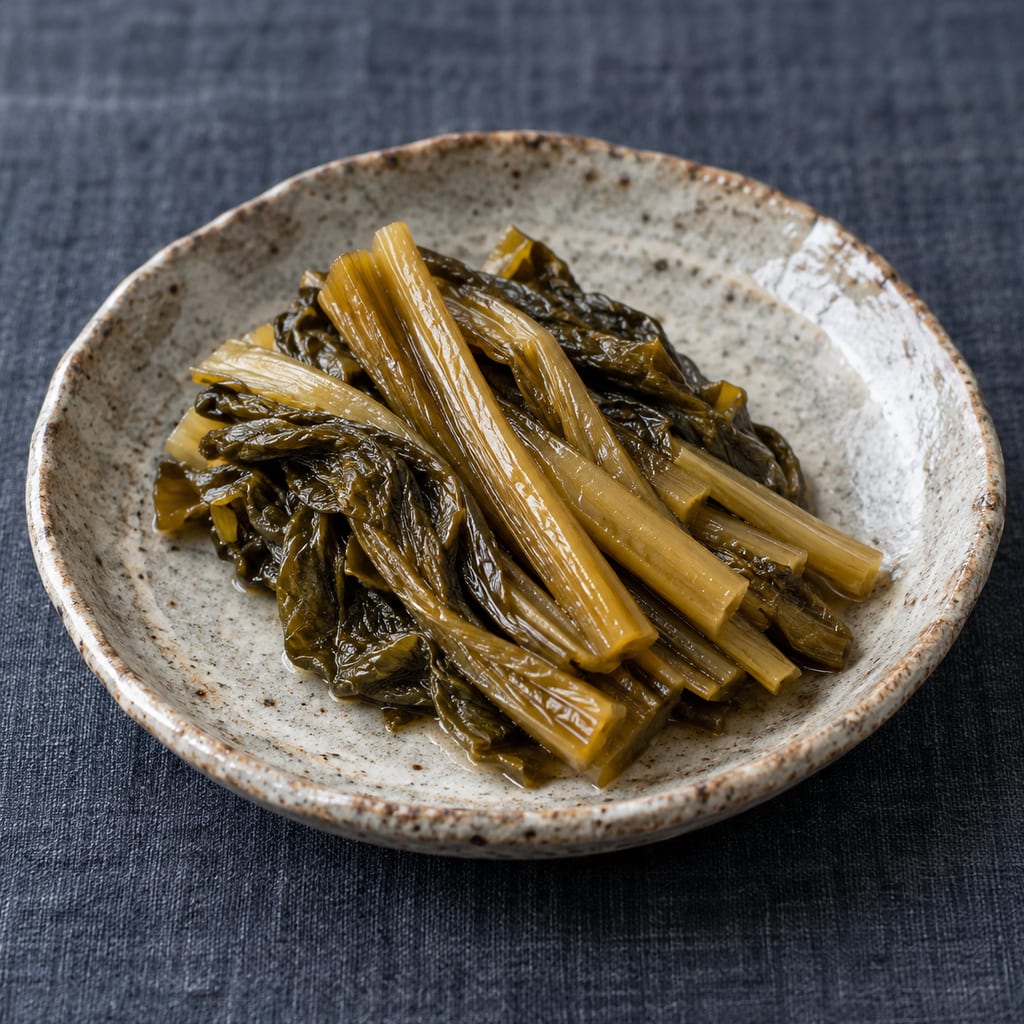
Aso takanazuke is a pickle of takana mustard greens grown in the Aso region of Kumamoto Prefecture. The Japanese Ministry of Agriculture, Forestry and Fisheries (MAFF) distinguishes this local crop from other takana, and describes the pickle as centred on the thin, tender stems that form when the plant bolts. The traditional harvest, called takana-ori, breaks the stems by hand.
Two forms are described. The fresh spring pickle, shin-zuke, is associated with the March harvest and is eaten as it is. The aged pickle, furuzuke, is more sour. MAFF describes it as undergoing lactic fermentation and as appearing in autumn.
MAFF reports a Central Asian origin for takana and its movement to Japan, but presents this as hearsay. The inspected sources do not document a route, a date or an early attestation for the pickle. The earliest dated statement available here concerns the local crop, not the pickle.
The Kumamoto regional recipe is for a batch of 10 kg of takana with 400 g of salt, which is 4% of the produce weight, and chilli. The greens and salt are layered and packed, pressed under a lid and weight, and the liquid is wiped from the lid every two to three days. After one week the liquid is discarded.
For longer aging the recipe gives two branches, 6% salt for six months or 8% salt for one year. A second MAFF account describes wiping the liquid every few days and aging the more heavily salted pickle for six months to a year. The sources do not explain how the one-week draining step connects with the longer branches, and they give no conditions after draining.
The fresh pickle is served as a pickle on its own. The aged pickle is chopped, fried in oil with chilli and mixed into takana rice, a dish MAFF describes for the aged form. The regional recipe page also lists rice balls, fried rice, gyoza, savoury bread and pasta as uses.
The pickle is a traditional process that has not been validated. No finished storage temperature, shelf life, critical salt level or endpoint is given for a household batch, and the recipe is not a complete home-preservation procedure.
Taste, smell and appearance do not establish that a pickle is safe. A safe household process would need tested limits that these sources do not supply.
MAFF's Japanese traditional-food encyclopedia describes Aso takanazuke as a local pickle of takana grown in the Aso region of Kumamoto Prefecture. It distinguishes the fresh spring form, shin-zuke, from the sour aged form, furuzuke, which is described as lactic fermentation and as appearing in autumn. MAFF reports a Central Asian origin and a movement to Japan as hearsay. The inspected sources do not establish a documented route or date for either claim.
Yield 10 kg takana · Scaling: source batch only
A traditional salted pack held for weeks or months depends on salt level, cleanliness and the draining step; the sources do not validate those controls.
Hazard sourceUse clean equipment and follow the regional method as written. No validated critical limits are supplied; do not treat taste, smell or appearance as proof of safety.
Control sourceThe reviewed sources do not establish a validated endpoint, post-drain process conditions, household storage conditions or a shelf life.
The one-week draining stage is not shown to connect with the six- and twelve-month aging branches. Do not combine them into one home procedure.
MAFF describes the pickle as a traditional food of the Aso region.
A sweet, crisp Japanese daikon pickle from Tokyo's Nihonbashi district, made by salting fresh radish and dressing it in rice koji, sugar or koji amazake without the heavy drying used for takuan.
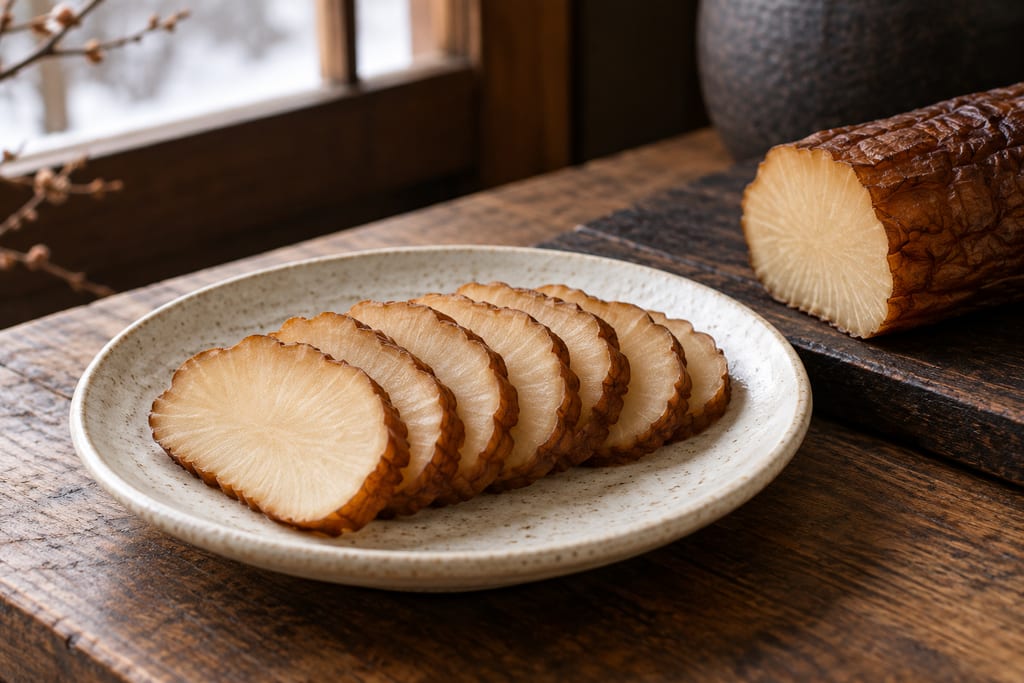
Iburigakko is Akita pickled daikon dried with smoke before it is fermented in rice bran.
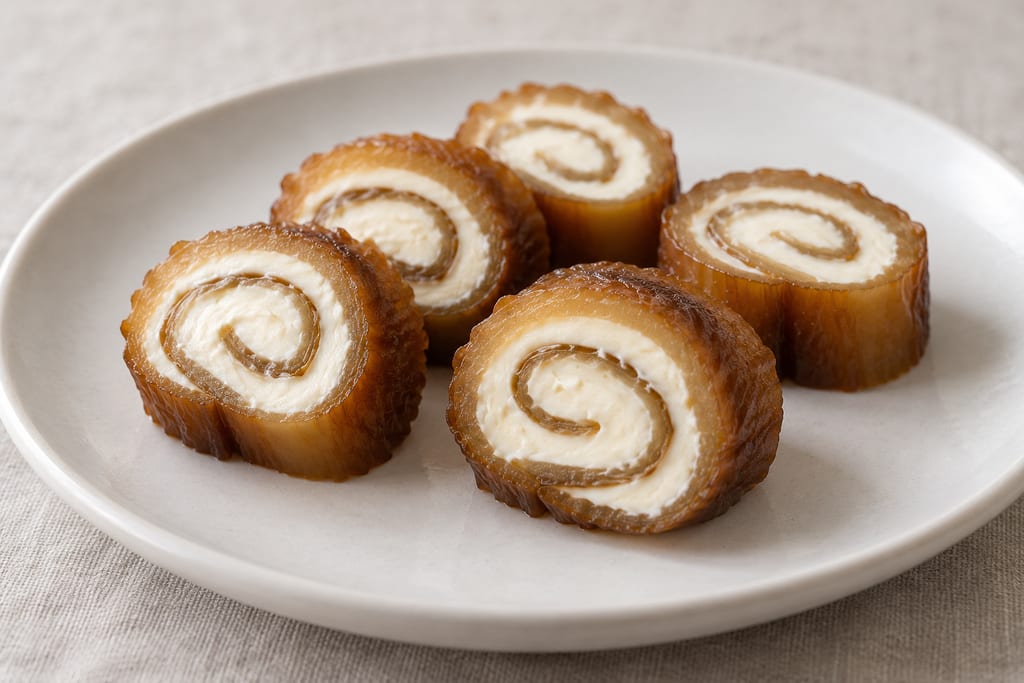
A Morinaga snack pairs thin ribbons of iburigakko with cream cheese, then chills the roll before cutting it into portions.
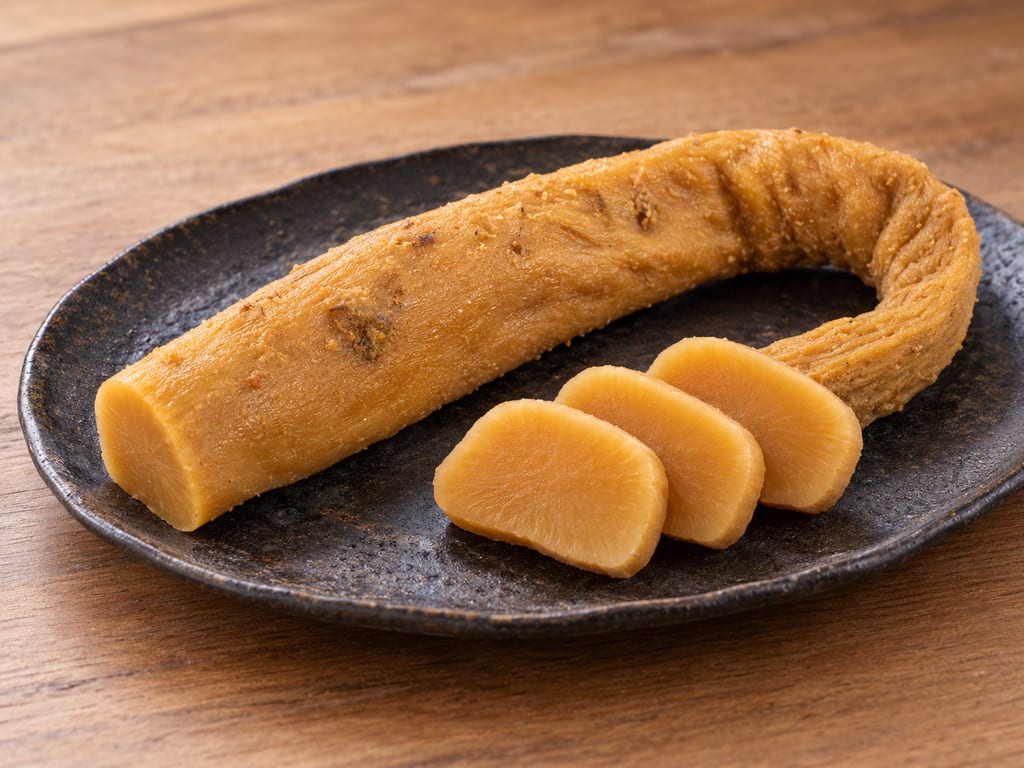
Regional takuan from Ise City, Mie, made with Misono daikon dried on a rack, then matured in a weighted barrel of rice bran and salt for months to years.
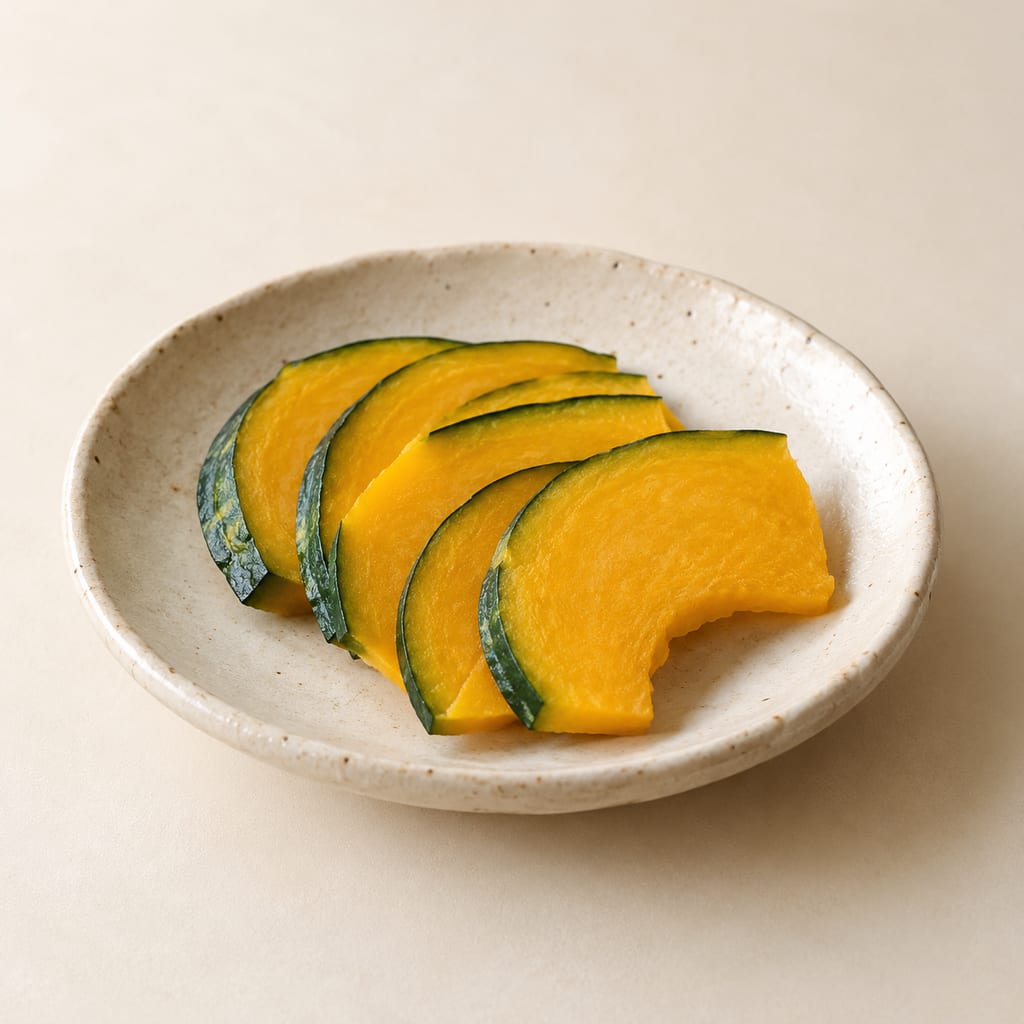
Kabocha no nukazuke: Refrigerated commercial fermented bed; use removed portions the same day.
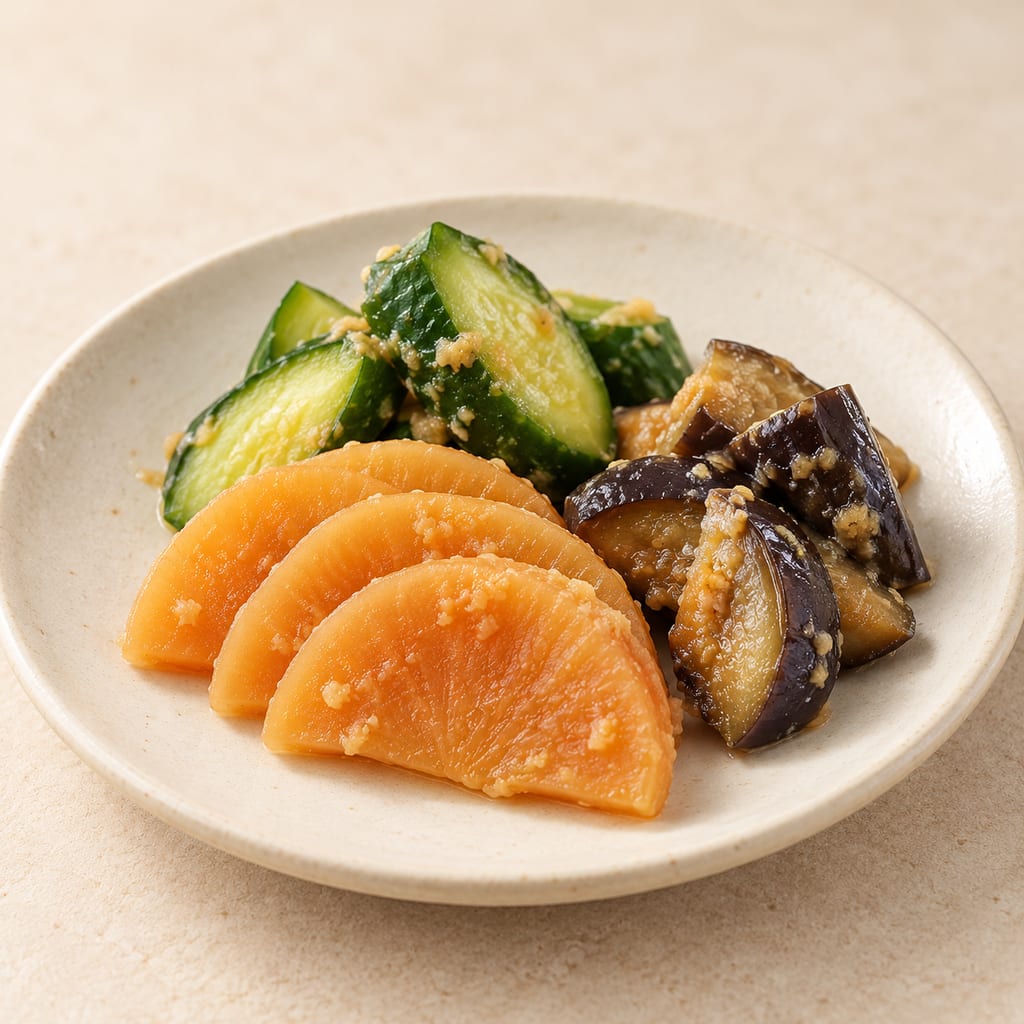
Foods embedded in salty fermented miso paste, which transfers salt and fermentation products into them; misozuke uses an already transformed medium rather than a fresh vegetable brine.
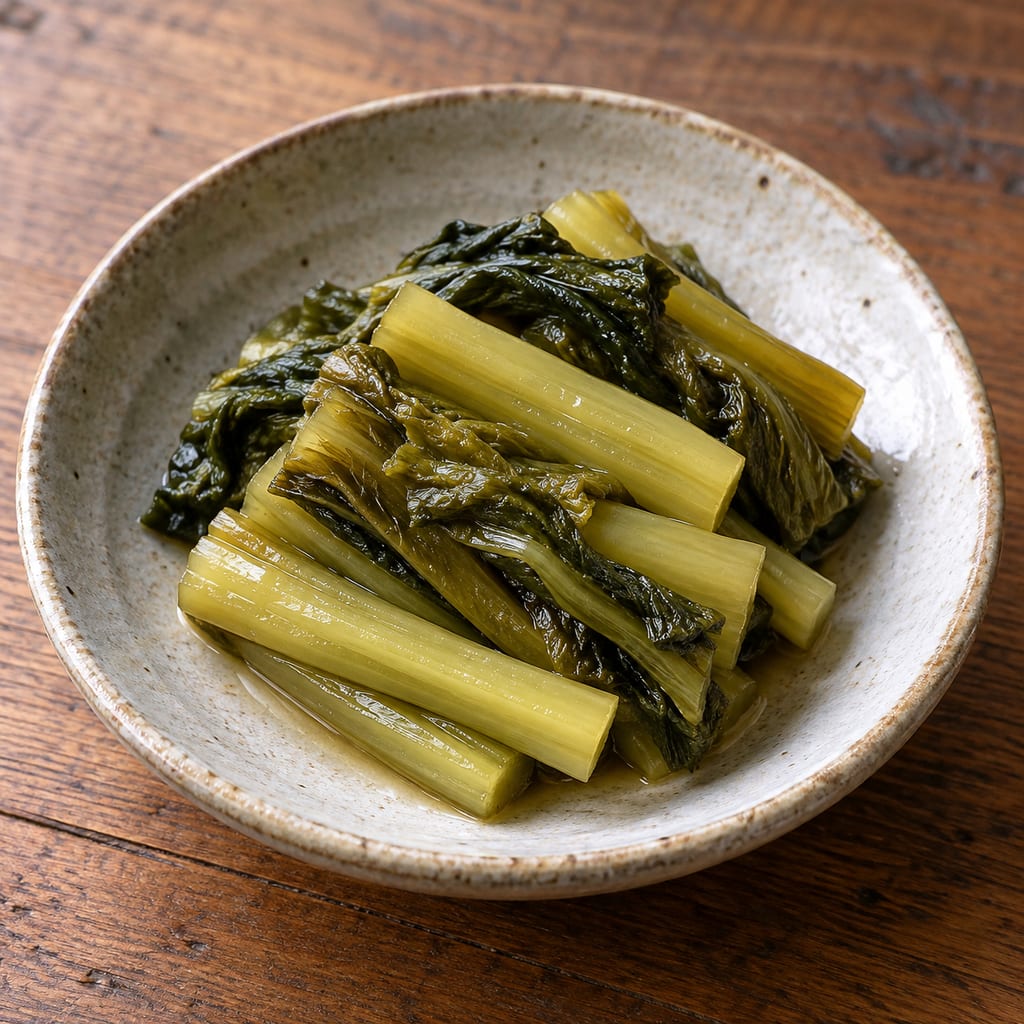
Nozawana greens salted in a barrel and weighted overnight, a Nagano household pickle sampled after about two weeks and soured by a month.
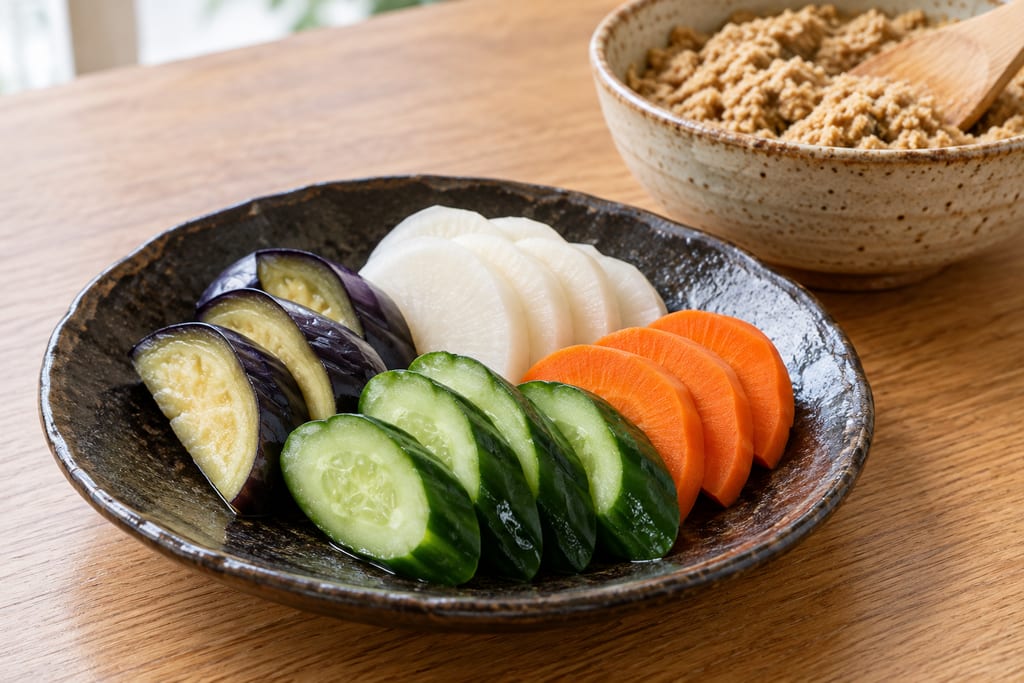
Japanese pickles made by burying vegetables in nukadoko, a reusable bed of rice bran, salt and water that is turned daily and ripened by lactic and yeast fermentation.
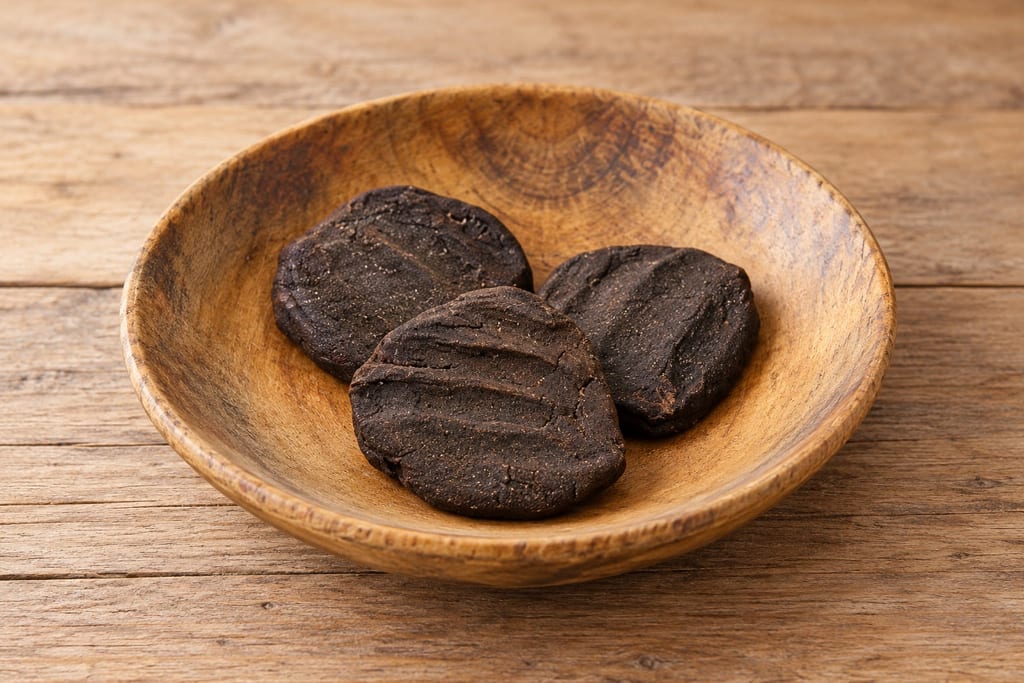
Dried cakes of pounded taro leaves from the Ao Naga in Nagaland, yellowed in a bag, then dried by hot ash or sun and used to flavour meat dishes.
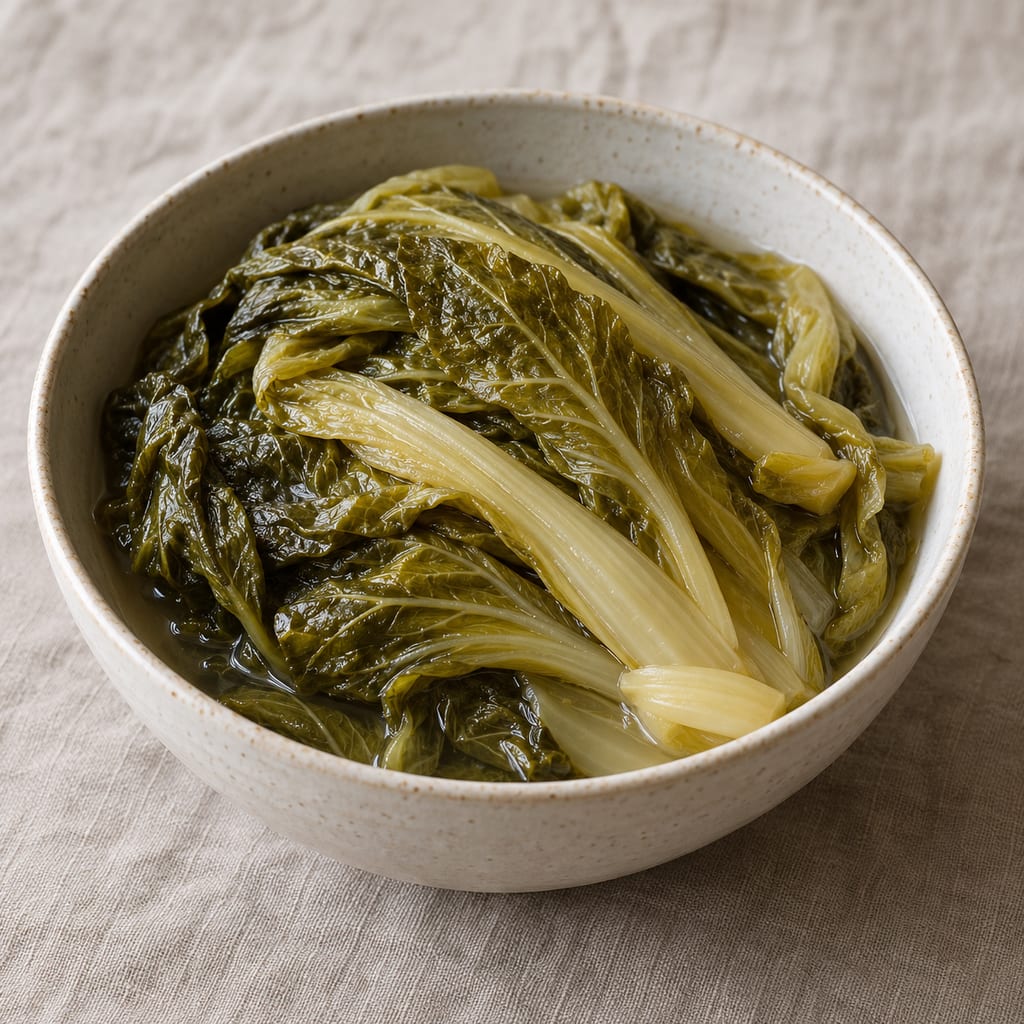
Wilted flat mustard leaves ferment with rice water and salt as a Filipino appetizer and cooking ingredient.
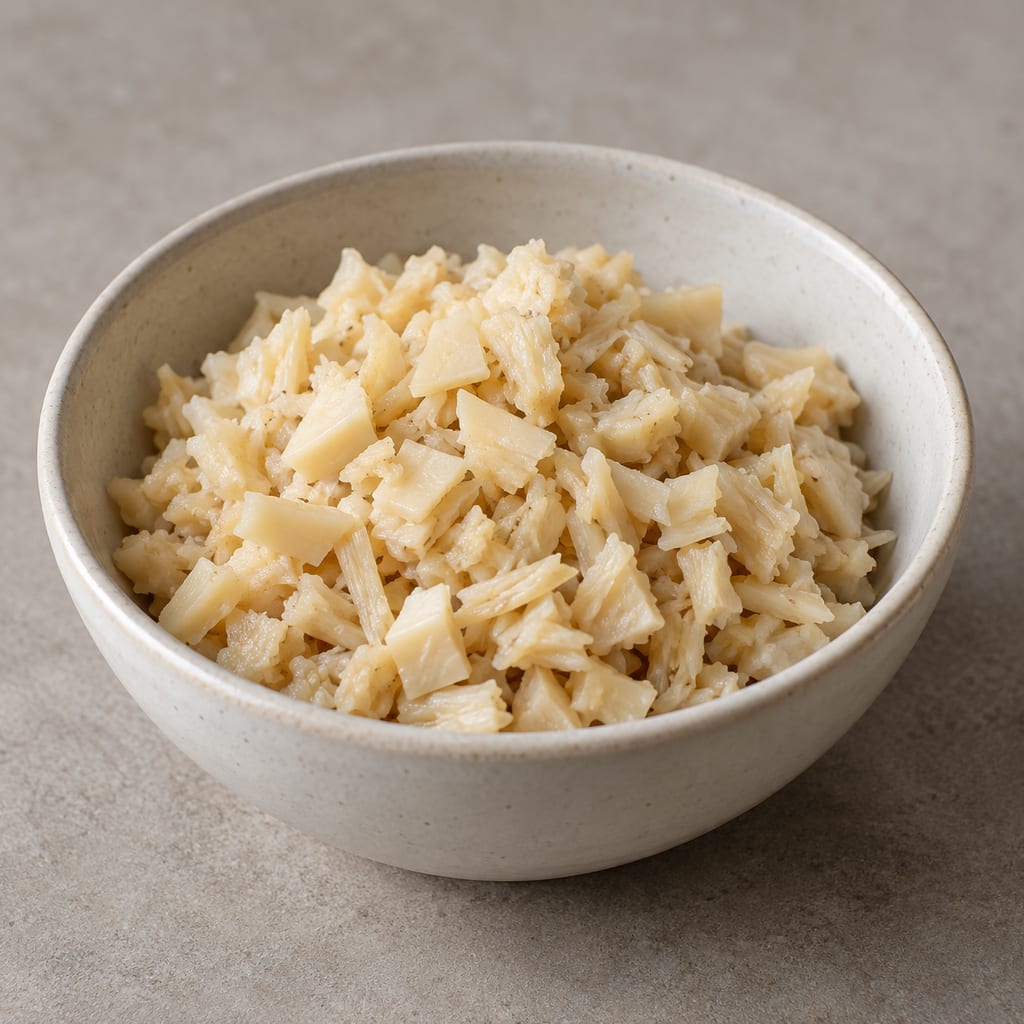
Finely chopped young bamboo shoots packed in leaf-lined baskets, sealed in a forest pit and weighted for one to three months, from Arunachal Pradesh.

Pit-fermented bamboo shoots from Arunachal Pradesh, cut smaller and sun-dried for five to ten days, used in curries.
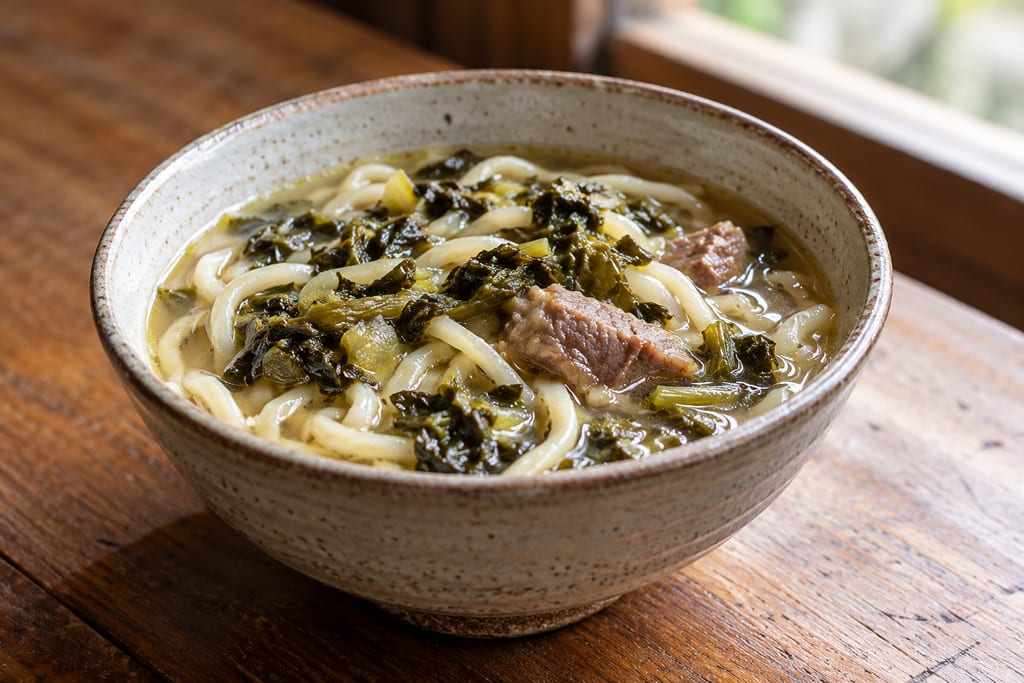
Goyang is a Sherpa fermented wild leafy food of the Darjeeling hills and Sikkim. Rainy-season magane-saag leaves are packed in a bamboo basket, held at room temperature for about a month, then eaten fresh or dried and used in soup.
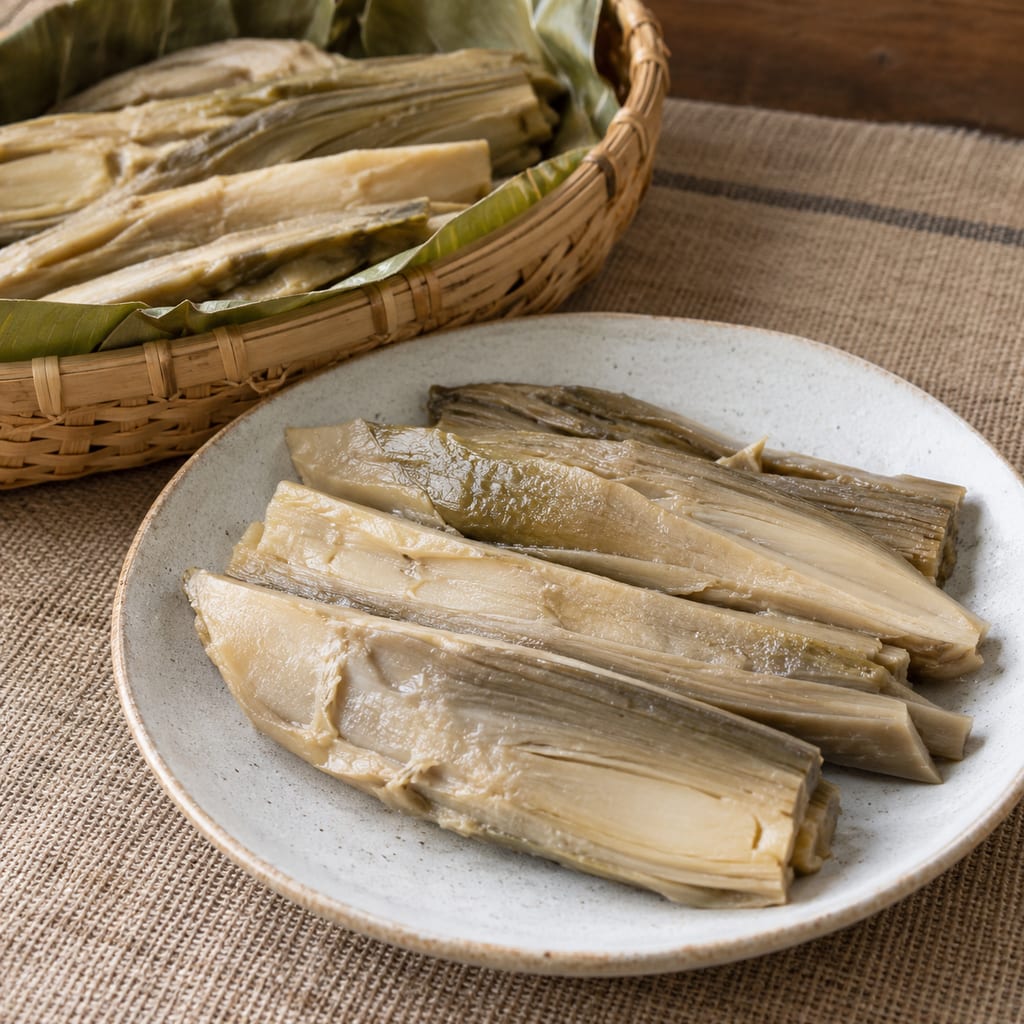
Upper tender bamboo-shoot tips, split or flattened, pit-fermented one to three months in Arunachal Pradesh and eaten in curries.
The original Polish barszcz: young hogweed leaves soured in warm water for a few days, then boiled into soup with egg, butter, cream or millet. Recorded from 1595, with warnings about the sap and lookalikes.
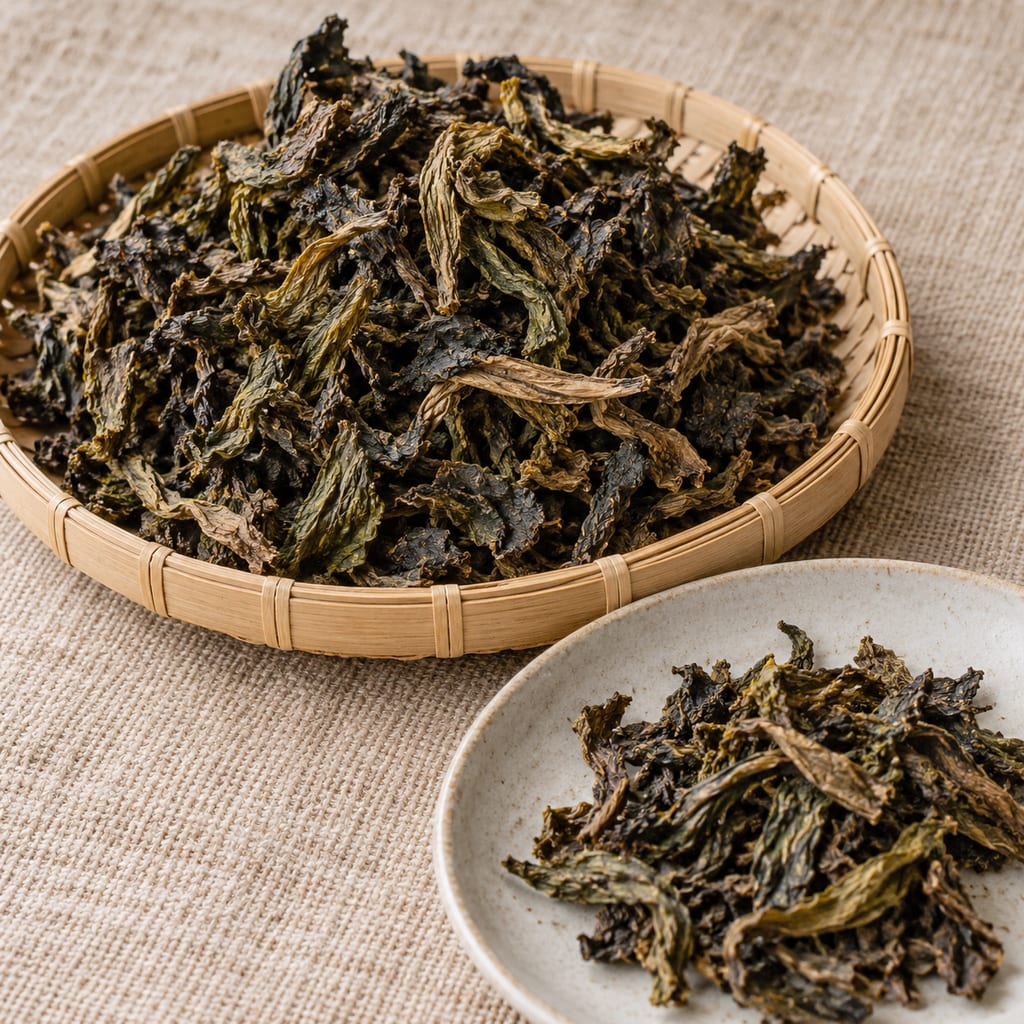
Inziangsang is a Naga fermented food of mustard leaves from Nagaland and Manipur. Crushed, soaked and squeezed leaves ferment for 7 to 10 days, then dry in the sun. A squeezed liquid can be boiled to a concentrate.
No community contributions have been published for this entry yet.
Sign in to contribute. Published comments and photos are free to read.
Ministry of Agriculture, Forestry and Fisheries of JapanHistory · Geography · Method · Uses
阿蘇高菜漬け(あそたかなづけ)|にっぽん伝統食図鑑 (Aso Takanazuke, Nippon Traditional Food Encyclopedia)Aso takana is grown locally; the pickle centres on the stems that form at bolting; takana-ori is hand breaking; shin-zuke is fresh and eaten in spring; furuzuke is sour and lactic and appears in autumn; the Central Asian origin account is hearsay.
Cited in: Overview; History and origin; Use
Ministry of Agriculture, Forestry and Fisheries of Japan; recipe attributed to Kumamoto PrefectureMethod · Uses · Safety
阿蘇高菜漬け 熊本県 (Aso Takanazuke, Kumamoto Prefecture)10 kg takana, 400 g salt (4%) and chilli; lid and weight; liquid wiped every two to three days; liquid discarded after one week; 6% salt for six months or 8% for one year; takana rice, fried rice, gyoza, bread and pasta uses.
Cited in: Preparation; Use; Safety and limits