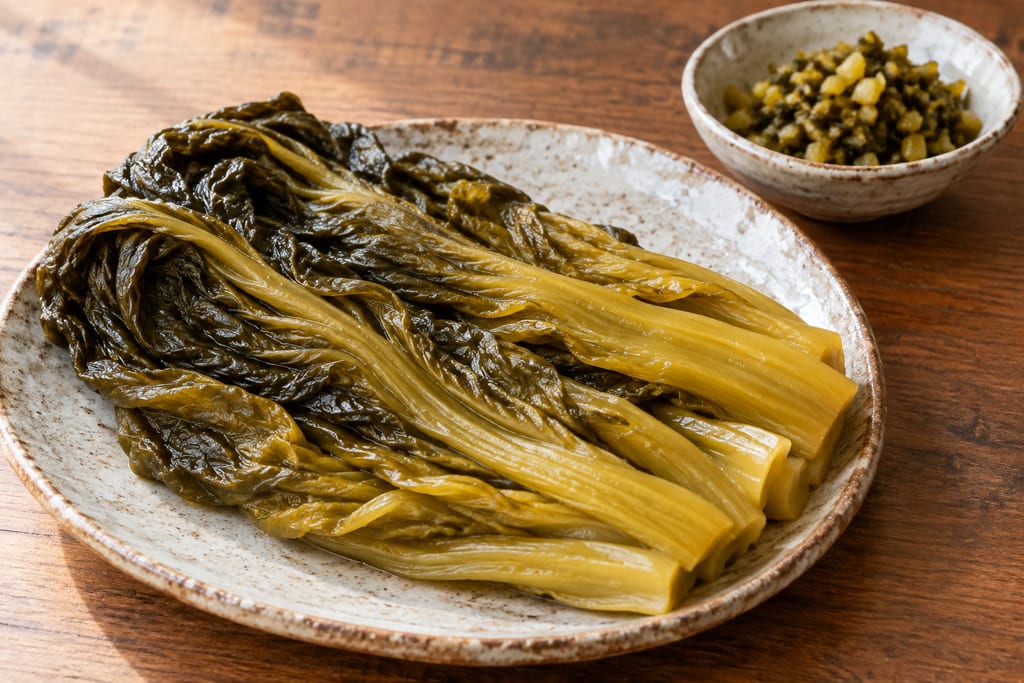
Setaka no takana-zuke
Giant red mustard leaves are dried, layered with salt and chile, pressed in a wooden tub, drained after a week and left through the rainy season.
 FermenteaWhere food goes to change
Substrates
Takana is Japanese leaf mustard, including Miike takana of Fukuoka: pungent, broad leaves and stems eaten fresh or preserved as pickles.
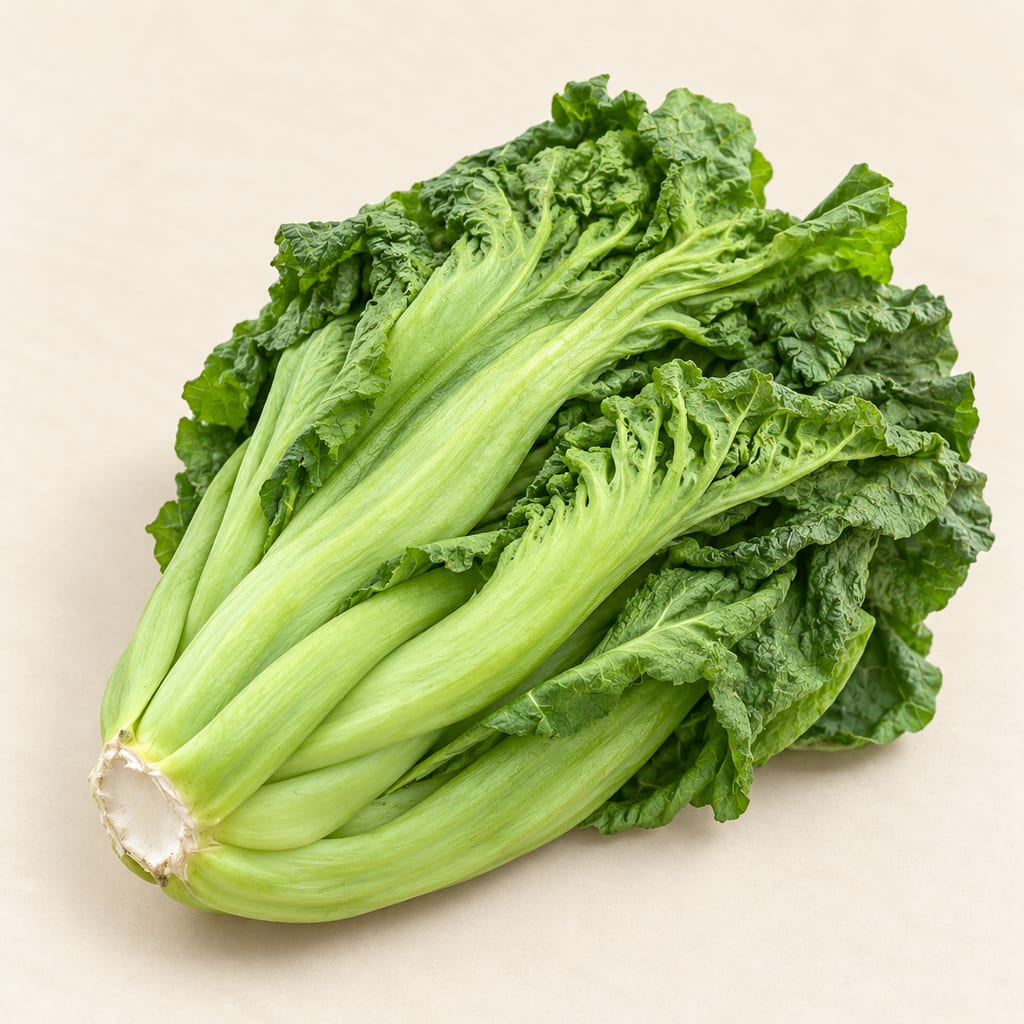
Takana (高菜) is a Japanese leaf mustard, called giant red mustard in the Ministry of Agriculture's account. The name covers leafy mustard rather than one single cultivar. A seed listing identifies Miike takana as Brassica juncea. Its broad, thick leaves and stems carry a tangy, pungent flavour; local growers select forms with paler leaves even though some stocks show purple around the veins. This page uses Miike takana as a well-documented regional example, not as a claim that every takana cultivar looks identical.
The Ministry of Agriculture describes Miike takana as a mustard from Sichuan blended with a local variety. It dates the introduction of pickled takana to the Meiji period, but gives no exact year for either the crop's development or the pickle's first sale. The Meiji era ran from 1868 to 1912.
Takana is the fresh plant used in preparations such as Setaka no takana-zuke. The separate recipe record documents drying, salting, pressing and seasonal maturation for that Fukuoka pickle; those steps describe the preparation, not the fresh ingredient. The Ministry says the pickle keeps for a long time and reports that older pickles contain more lactic acid bacteria and develop a fuller taste. It does not provide a measured fermentation endpoint in its regional account.
A Kagawa grower describes Miike takana as a fresh market vegetable that can be eaten in salads or lightly blanched. The Ministry also lists takana pickles with rice, as a ramen topping, and in stir-fries or marinated dishes. The Food Standards Agency classifies mustard as an allergen and names mustard liquid, powder and seeds; its entry does not specifically address fresh leaves, so this page makes no claim about a legal allergen declaration for unprocessed takana.
The Ministry identifies Chikugo in Fukuoka Prefecture, especially the former town of Setaka in Miyama City, as the growing area associated with Miike takana. It describes the local climate, water and fertile soil as suitable for the crop and says it is still grown there. This is a regional association for Miike takana, not an exclusive origin for every mustard leaf sold as takana.
The Food Standards Agency lists mustard as an allergen, with examples including liquid mustard, powder and seeds; its entry does not specifically address fresh takana leaves.
Records regional cultivation and pickle use for Miike takana; it does not claim all takana is grown here.
Giant red mustard leaves are dried, layered with salt and chile, pressed in a wooden tub, drained after a week and left through the rainy season.

A gelling polysaccharide extracted from red seaweeds, sold as kanten strips or powder; it sets firm at a low concentration and stays solid until about 85 °C.

Akahatsu, Lactarius akahatsu, is a wild milkcap of East Asian pine and mixed forests that is sold in Yunnan markets, with its edibility and identity still needing species-level review.

The almond mushroom, Agaricus subrufescens, was cultivated in eastern North America in the 1800s, lost its market, and returned as a cultivated mushroom from Brazil, where it is grown under several names.
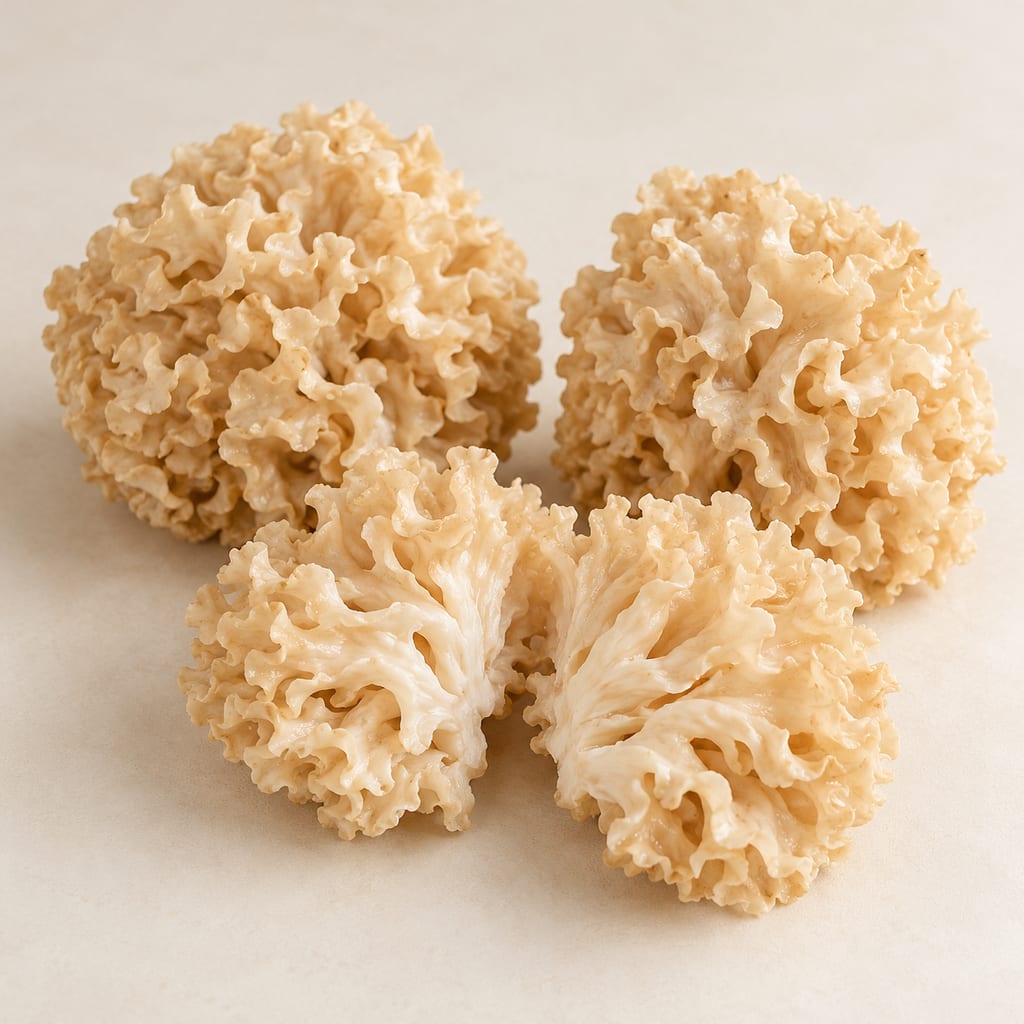
The Asian cauliflower mushroom, Sparassis latifolia, is a cultivated fungus with a frilled, fronded form that is eaten in China, Japan and Korea. Many Asian records under the name Sparassis crispa refer to this species.
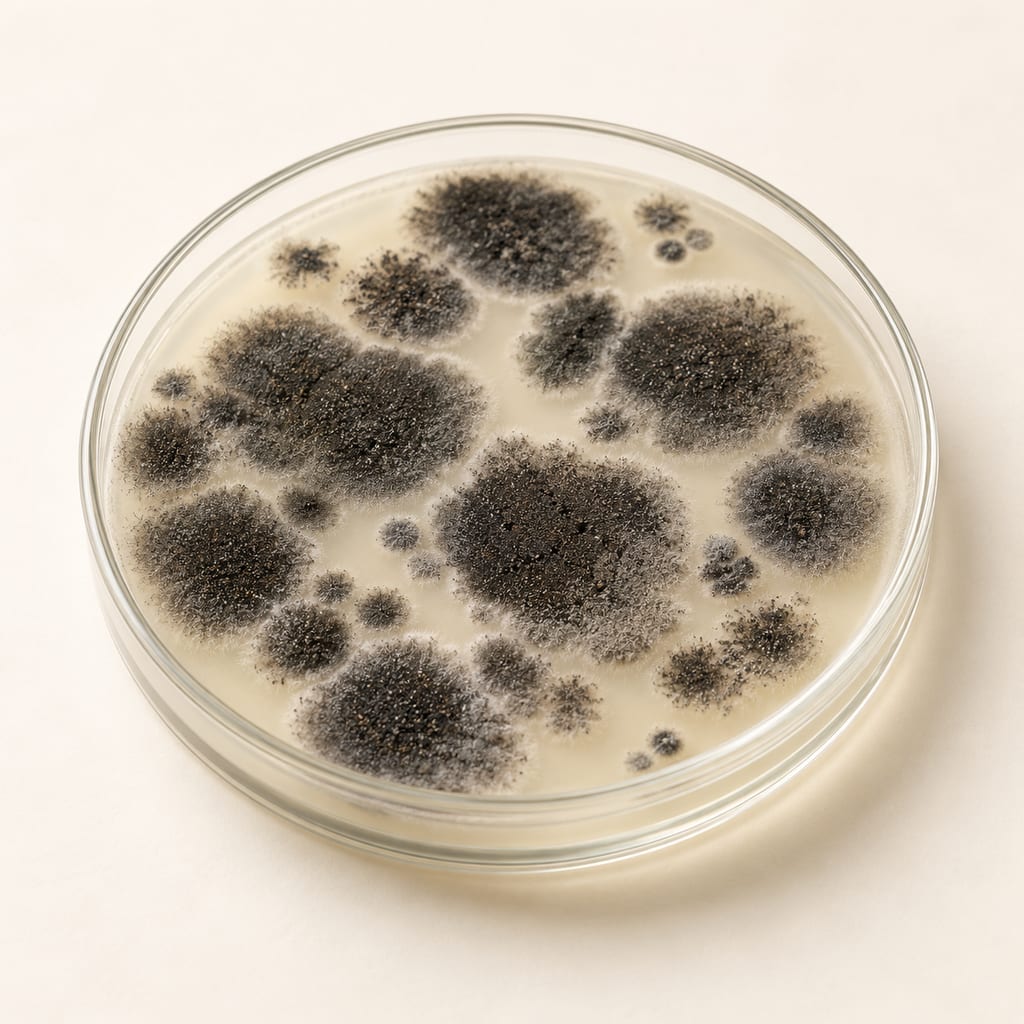
Aspergillus luchuensis is the black koji mould used in Japanese shochu and awamori, valued for the citric acid it makes alongside the starch-converting enzymes of koji.
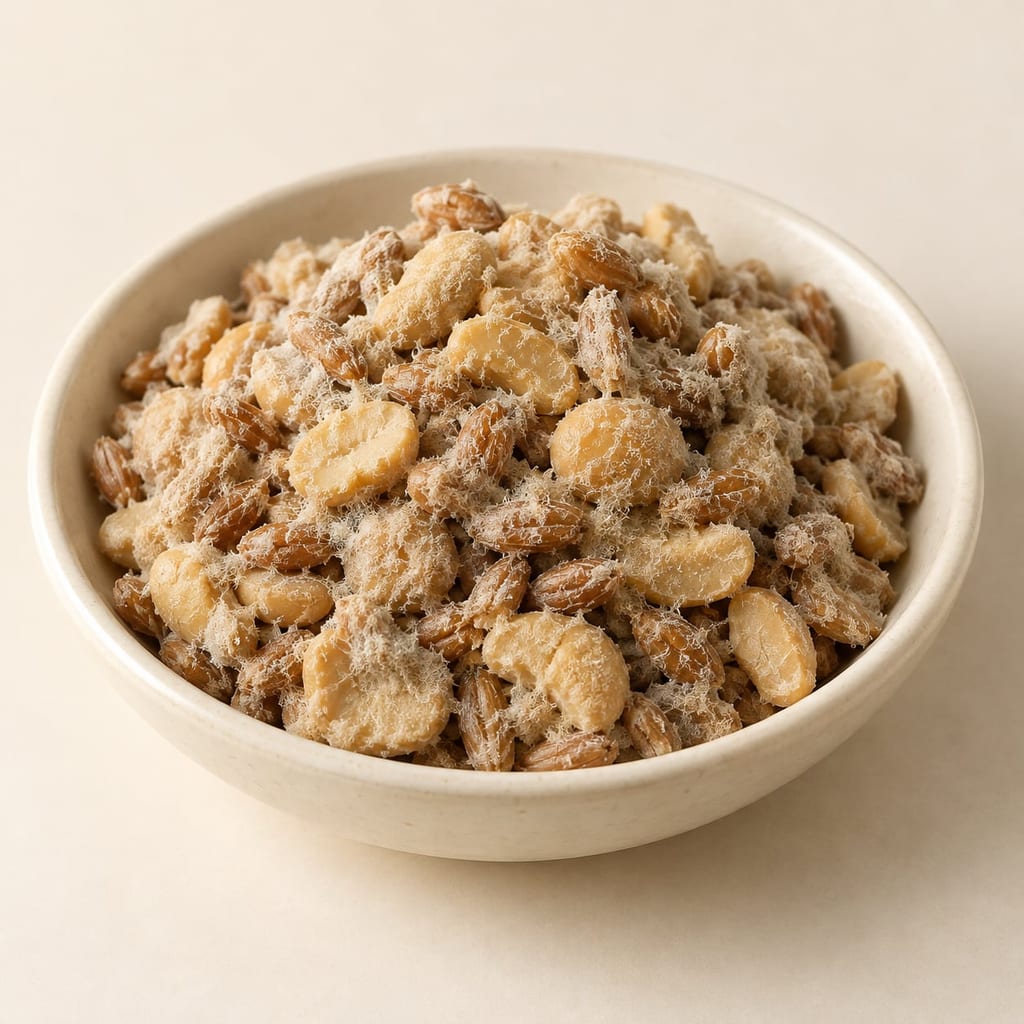
Aspergillus sojae is a koji mould of the Aspergillus flavus group, closely related to A. oryzae, used as a starter in soybean fermentations such as Korean meju, doenjang and ganjang.
Awamori yeast ferments sugar released from rice koji in the Okinawan spirit’s mash. Sakimoto names the ingredient but gives no strain, form, supplier or dose.
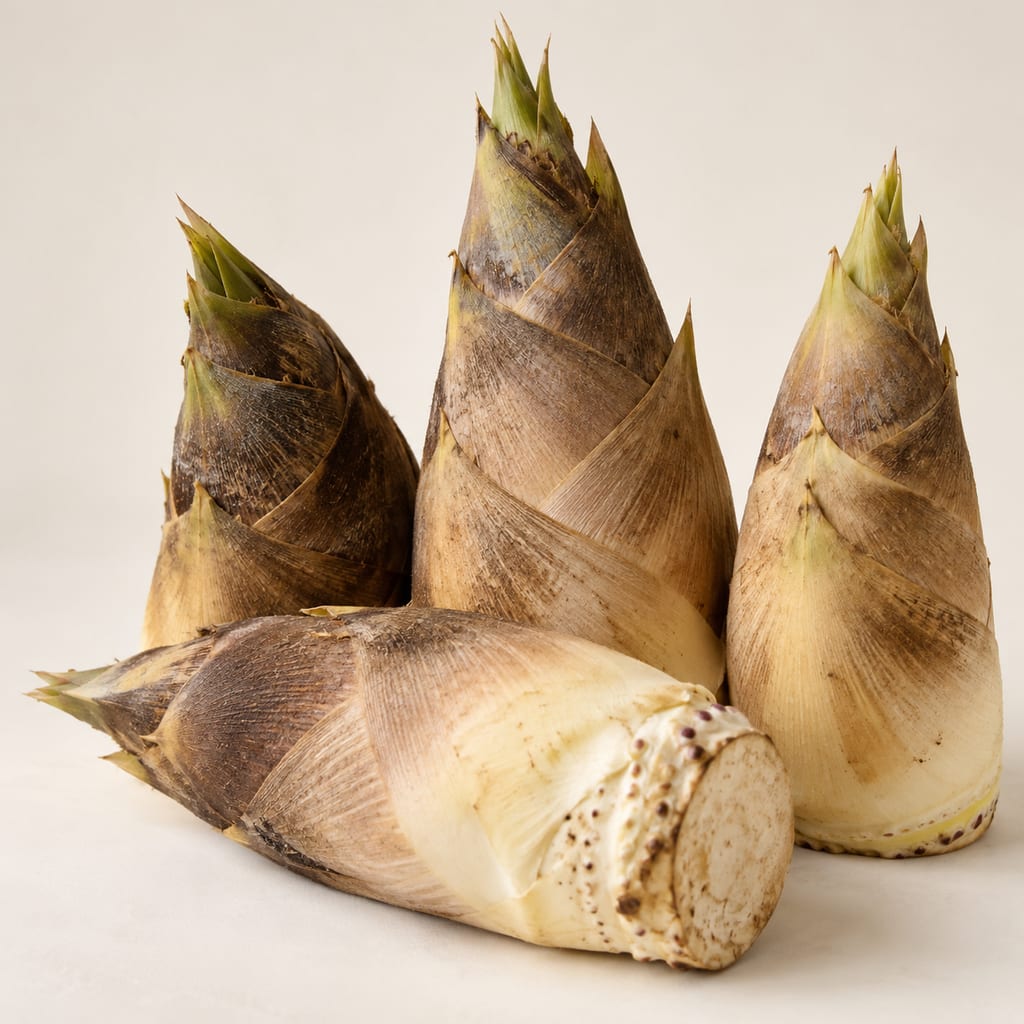
Bamboo shoots are the young culms of many bamboo species, eaten after boiling or leaching in Asia, and fermented into sour and preserved foods in the Himalayas, northeast India and Burma.

A Cap-Pelé boucanière is an Acadian herring-smoking building. The documented Willie Niles example is a one-storey wood-frame structure with a ridge smoke vent and interior bays for hanging fish-bearing cannes.

Achcharu is a family of Sri Lankan vinegar pickles made with mixed vegetables or seasonal fruit and a piquant spice dressing. This version is a quick, refrigerated, non-fermented mixed-vegetable pickle.

The acocote is a long, hollowed and dried gourd used to draw aguamiel from a mature maguey. It is a harvesting tool: the sap is transferred to a separate vessel before it ferments into pulque.

Adrak murabba preserves young ginger in sugar syrup, a sweet South Asian preparation recorded in Indian cookery and food-processing sources.

Parkia biglobosa seeds are fermented into regional West African seasonings, including nététou, iru, dawadawa and soumbala. The yellow fruit pulp is a separate food, and names and methods vary by place.

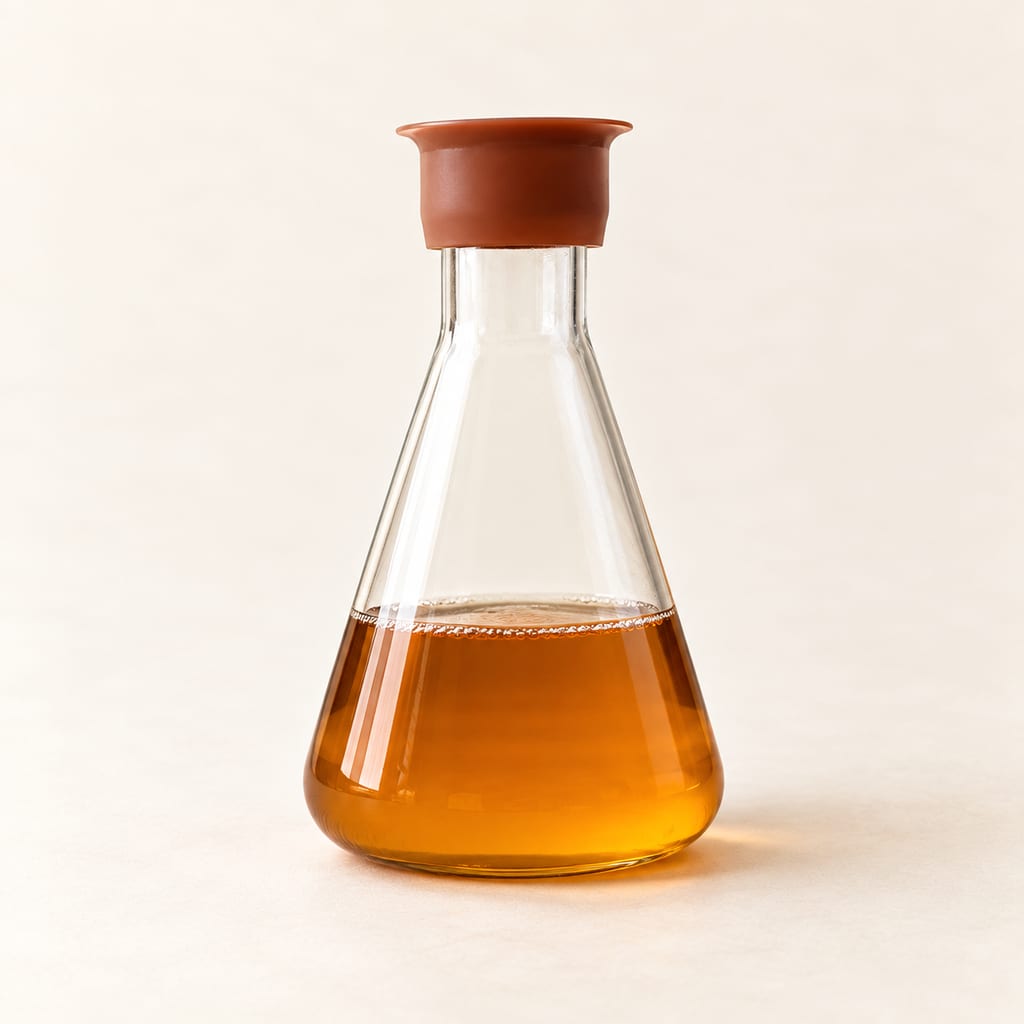
Japanese reddish-brown vinegar from sake lees matured about three years, turned to vinegar by acetic bacteria; the vinegar of Handa and Edomae sushi rice.

A refined common-wheat flour blended for a broad range of baking; its protein and behavior vary with wheat, milling and market.
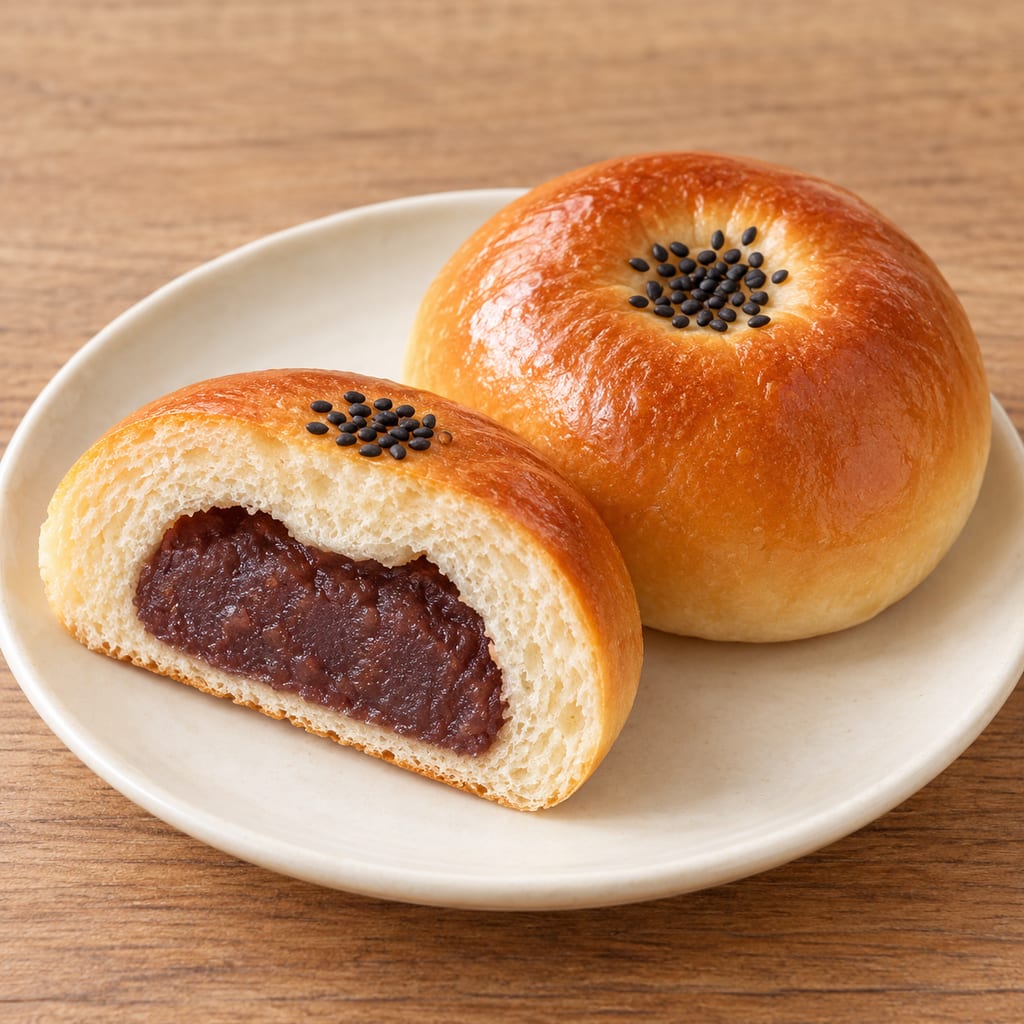
Anpan is a soft wheat bun filled with sweet red-bean paste and finished with egg wash and black sesame. This dough rises with commercial instant yeast.
No community contributions have been published for this entry yet.
Sign in to contribute. Published comments and photos are free to read.
Japan Ministry of Agriculture, Forestry and FisheriesIdentity · History · Geography · Preservation · Culinary use
Setaka no Takana Zuke (Pickled takana) | Our Regional CuisinesIdentifies takana as giant red mustard, a leaf mustard with tangy pungent leaves and stems.
Describes Miike takana as made by mixing Sichuan mustard with a local variety; says the pickle entered the market during the Meiji period.
Places cultivation in Chikugo, especially Setaka in Miyama City, and reports that Miike takana is still grown there.
Reports year-round pickle use with rice, ramen, stir-fries and marinated dishes; says older pickles contain more lactic acid bacteria and develop a richer taste.
Cited in: Identity and varieties; History; Use in pickling and preservation; Fresh use and allergen context; Cultivation place
Noguchi Seed Research InstituteScientific identity · Variety · Cultivation · Culinary use
Miike Takana (Japanese seed listing)Lists Miike takana as Brassica juncea.
Describes large thick leaves, sometimes purple around the veins, with paler selections used locally; grown in Kyushu for spring harvest and takana pickling.
Cited in: Identity and varieties
Shima Tabi Nouen HotoriModern cultivation · Fresh culinary use
Is This Really Takana Fried Rice!? A Kagawa Farmer Talks About Takana That Isn't PickledA farmer describes Miike takana grown in Kagawa as a fresh vegetable, with large deep-green leaves and a mild raw pungency; the farmer reports salad and lightly blanched uses.
Cited in: Fresh use and allergen context
National Archives of JapanPeriod
Outline of the National Archives of JapanDates the Meiji period to 1868–1912.
Cited in: History
Food Standards AgencyAllergen context
Food Standards Agency Codes: MustardClassifies mustard as an allergen and names liquid mustard, mustard powder and mustard seeds; the entry does not specifically address fresh mustard leaves.
Cited in: Fresh use and allergen context