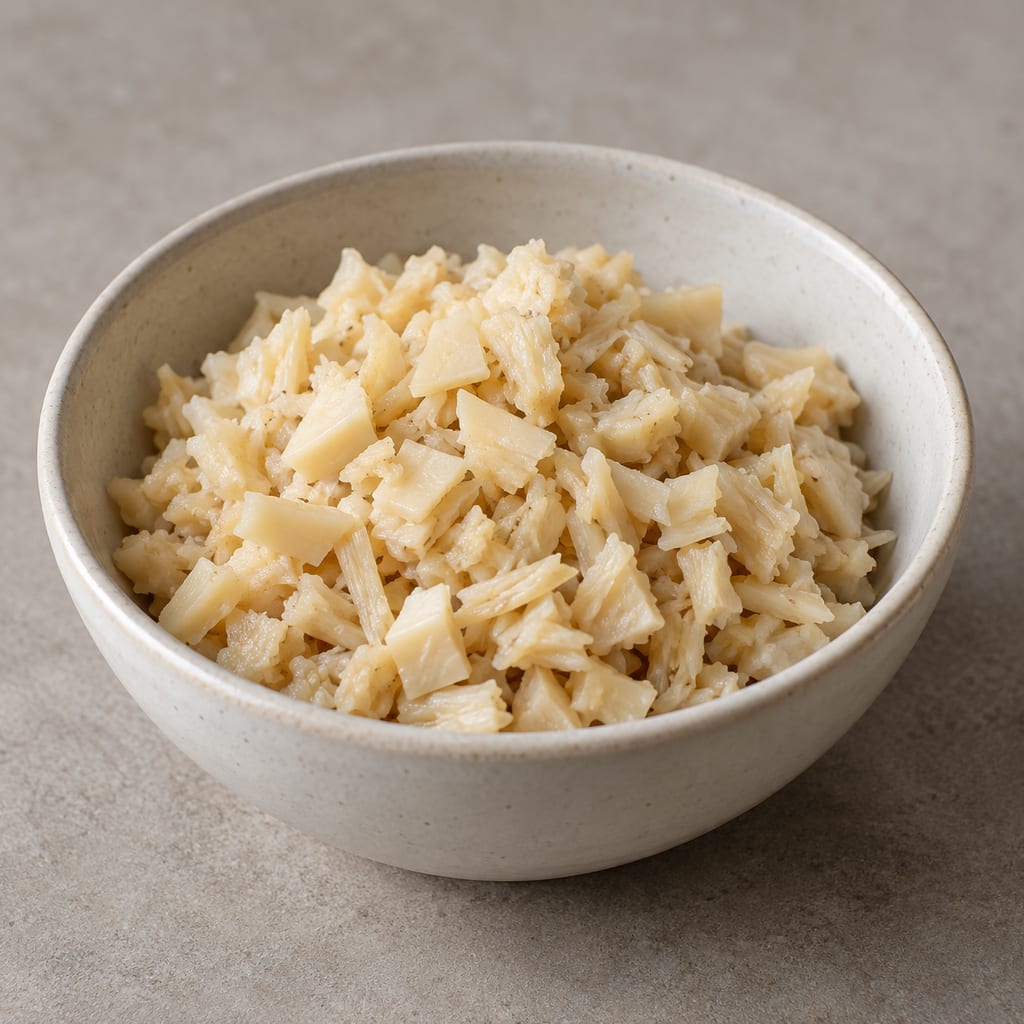
Ekung
Finely chopped young bamboo shoots packed in leaf-lined baskets, sealed in a forest pit and weighted for one to three months, from Arunachal Pradesh.
 FermenteaWhere food goes to change
Eepe · Eup or eepe, dried fermented bamboo shoots
Pit-fermented bamboo shoots from Arunachal Pradesh, cut smaller and sun-dried for five to ten days, used in curries.

Eup is a dried bamboo-shoot product from Arunachal Pradesh. The 2009 account describes it as dry fermented bamboo tender shoots. It follows a pit fermentation like Ekung and adds a cutting and sun-drying stage.
Its name also appears as eepe in a supplied record and in a 2024 regional overview. The atlas keeps both spellings and does not assume a community-wide alias.
The account peels and washes tender shoots, chops them small, packs them in a leaf-lined bamboo basket in a pit, and seals and weights it. The fermentation takes one to three months.
The pieces are then cut smaller and sun-dried for five to ten days until they turn from whitish to chocolate brown. The account gives no quantities, process temperature or validated home endpoint.
Cooks use Eup in curries with meat, fish or vegetables, and it is also eaten as a side dish with rice. Lactic acid bacteria were recovered from sampled Eup, but no starter is specified. A 2024 study also found yeast and fungi in market samples labelled Eup.
The 2009 regional account associates Eup with Nyishing foods. A 2024 regional overview writes the name as 'eup or eepe' and groups it regionally without mapping the names by community. No origin date is established.
Scaling: source batch only
The sources give colour change and sun drying as cues, not measured endpoints. One account reports up to two years of ambient storage without validated conditions.
Hazard sourceDry the pieces until the colour change is complete, and keep them in a dry place. The sources set no moisture limit.
Control sourceNo validated drying endpoint, moisture limit or storage time is given for Eup. The two-year storage period in one account is a source claim, not advice.
Do not treat colour, smell or taste as proof that the dried product is safe.
The 2009 account names Nyishing foods; market samples were labelled Eup in Basar, Naharlagun and Ganga. These do not establish origin or exclusive distribution.
Finely chopped young bamboo shoots packed in leaf-lined baskets, sealed in a forest pit and weighted for one to three months, from Arunachal Pradesh.
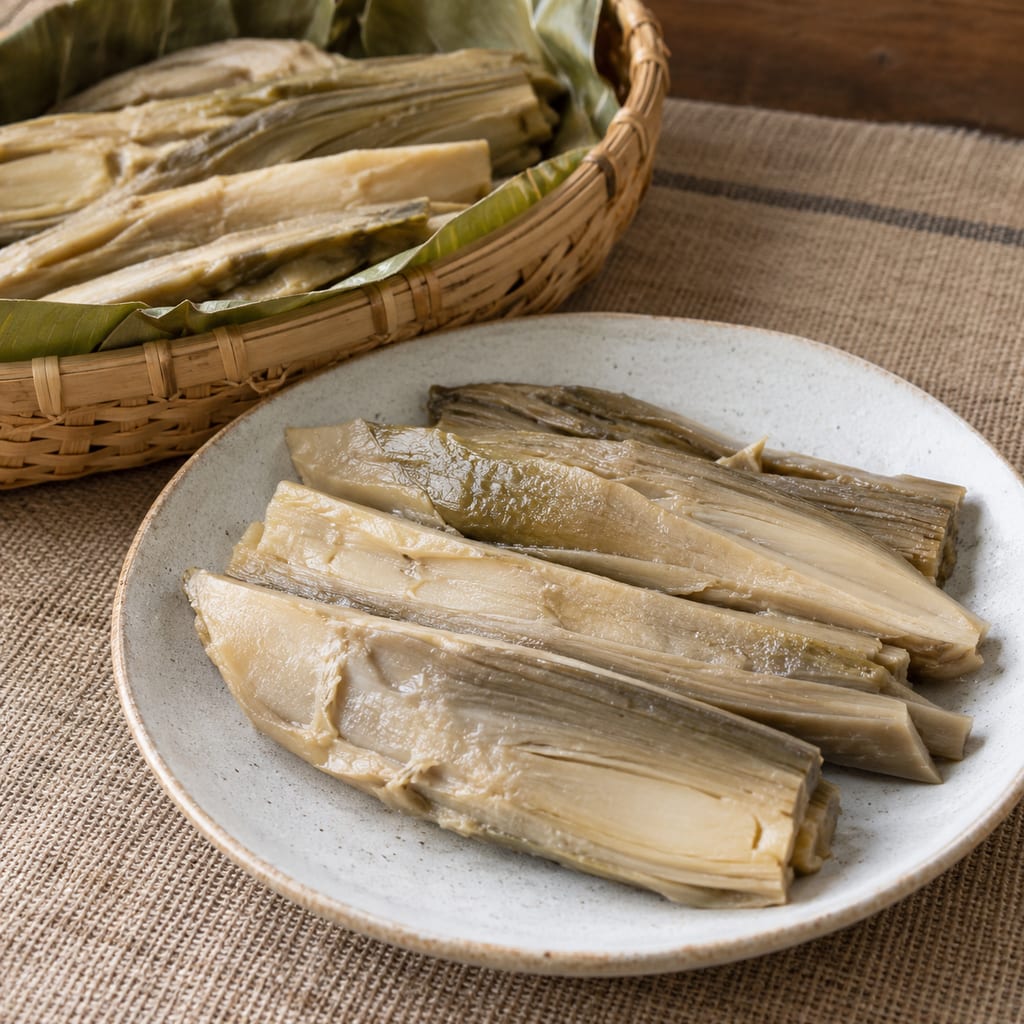
Upper tender bamboo-shoot tips, split or flattened, pit-fermented one to three months in Arunachal Pradesh and eaten in curries.
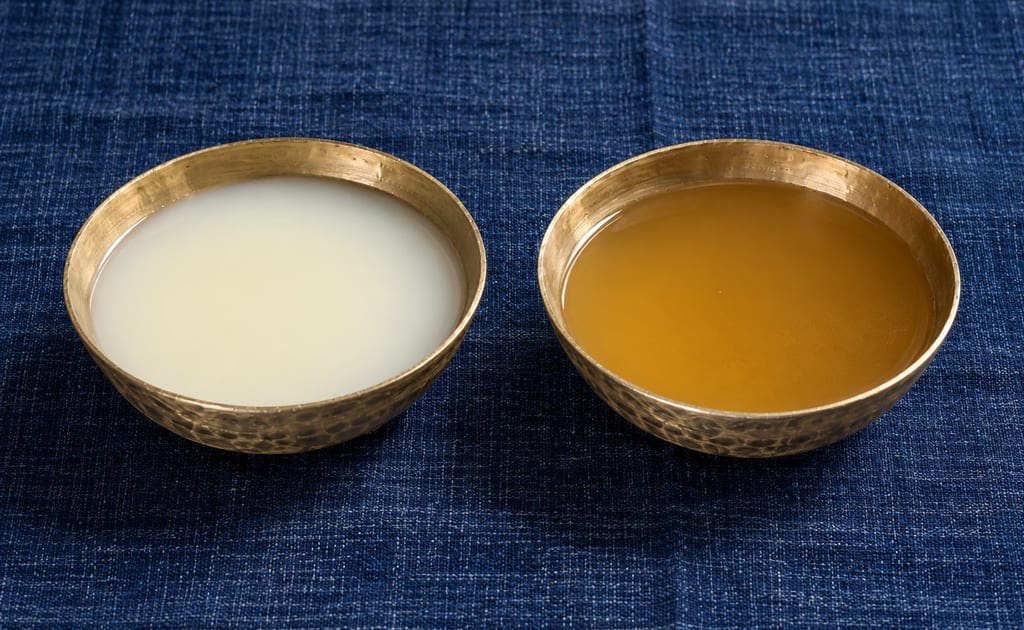
Apong names Mising rice beverages in Assam, including pale Nogin and ash-associated Po:ro. Sources describe distinct preparations and do not establish one unified household recipe or validated safety endpoint.
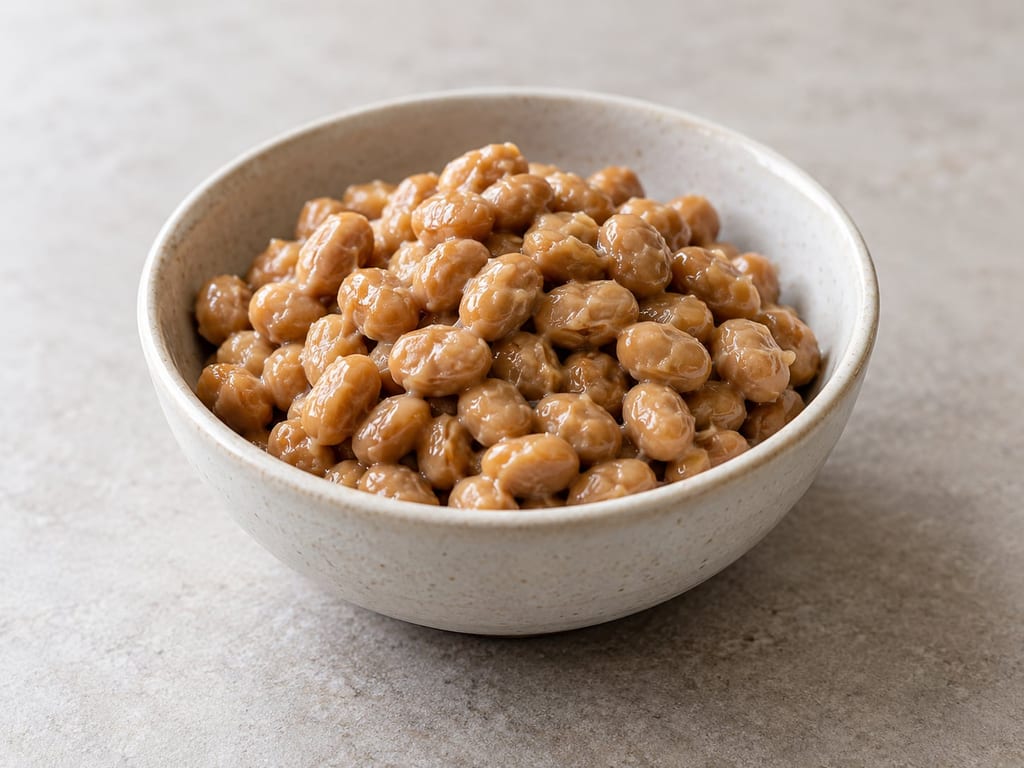
An Apatani fermented soybean food from the Ziro Valley of Arunachal Pradesh: cooked beans are wrapped in ginger leaves and left near the hearth until sticky and savoury, then eaten with rice or as a chilli-seasoned chutney.
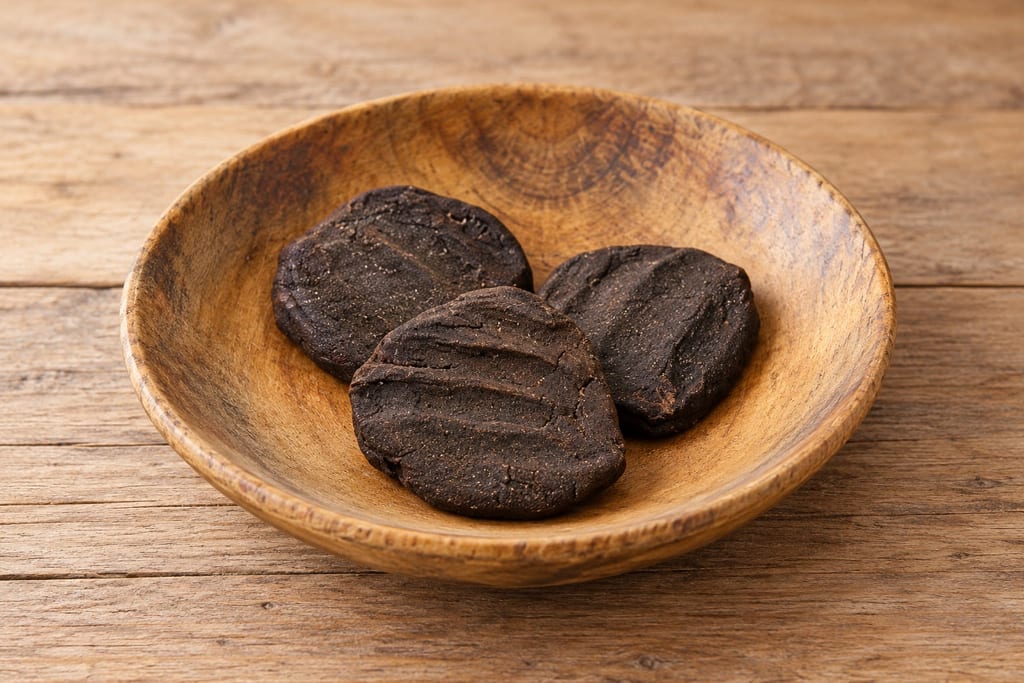
Dried cakes of pounded taro leaves from the Ao Naga in Nagaland, yellowed in a bag, then dried by hot ash or sun and used to flavour meat dishes.
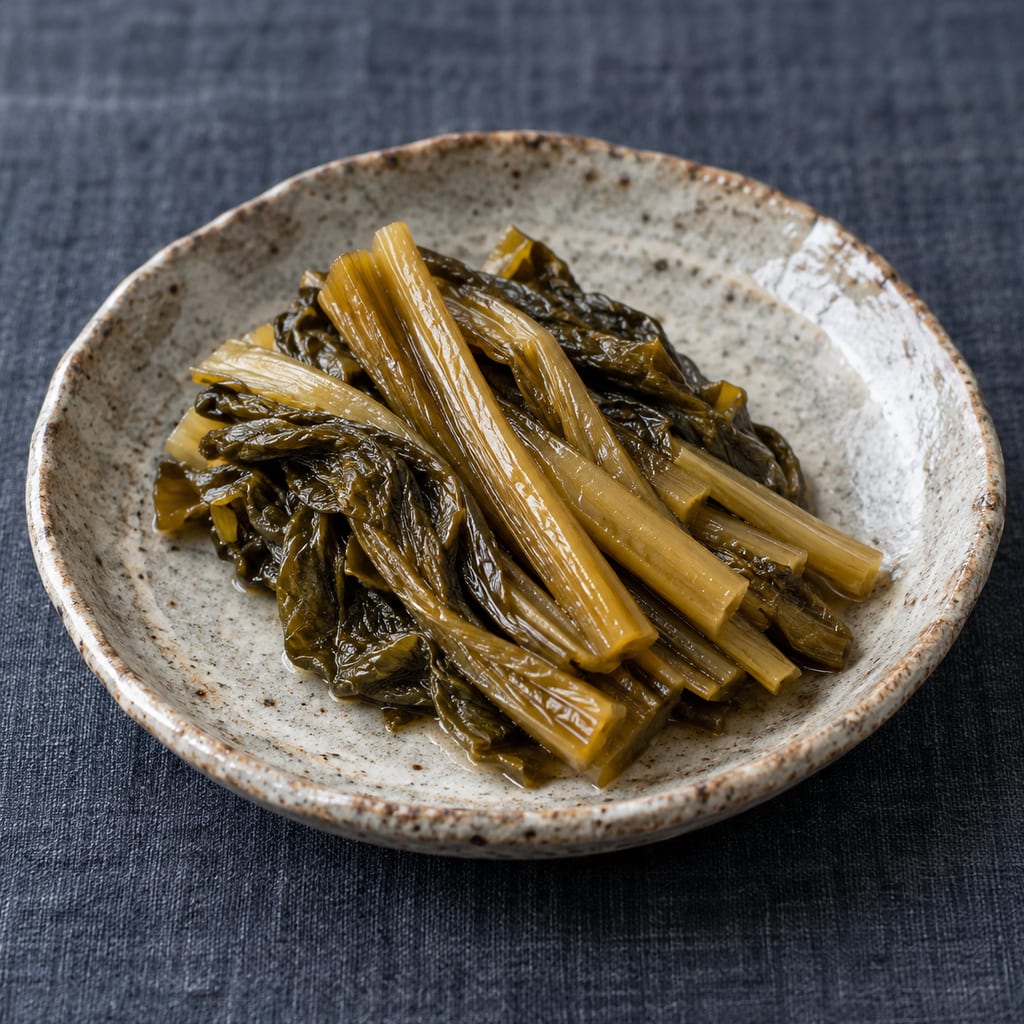
Takana mustard greens from Aso in Kumamoto are salted and pressed into a fresh spring pickle, or aged into a sour furuzuke that is fried and mixed into takana rice.
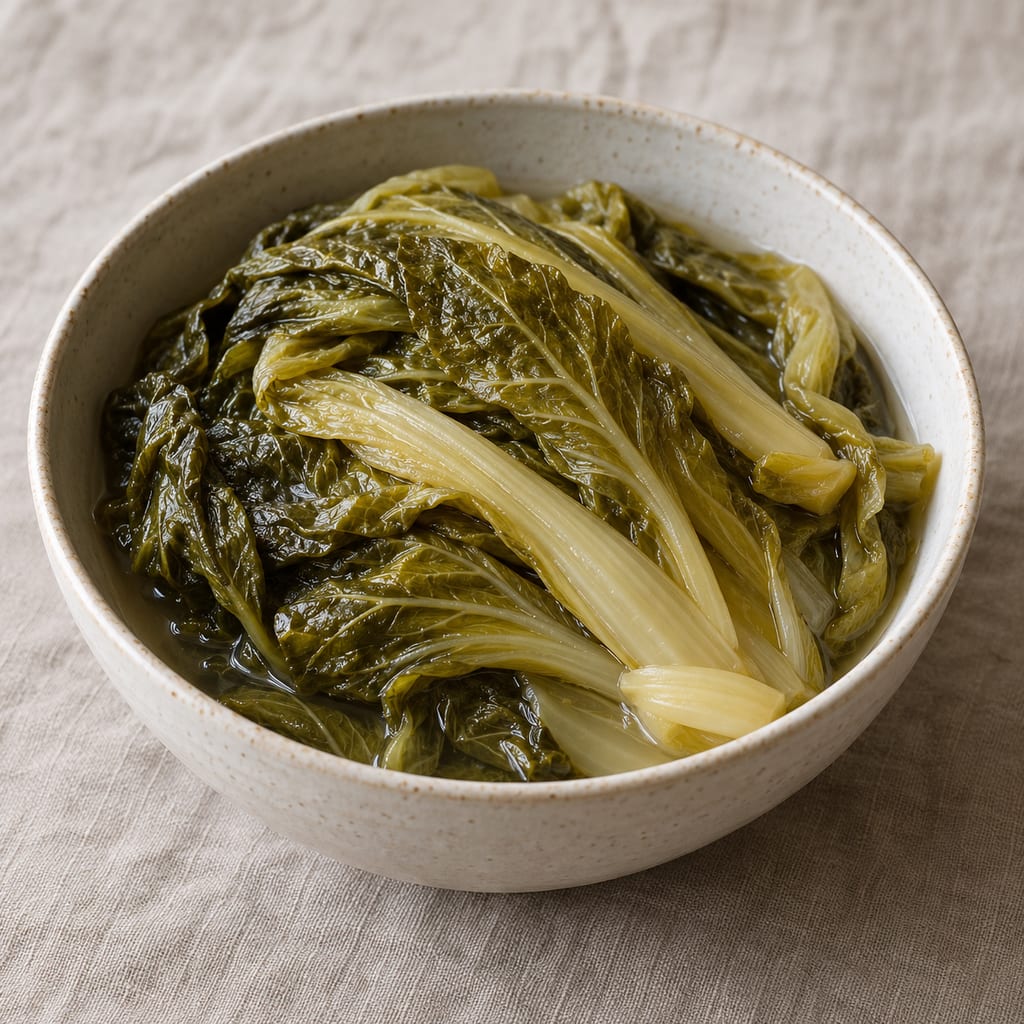
Wilted flat mustard leaves ferment with rice water and salt as a Filipino appetizer and cooking ingredient.
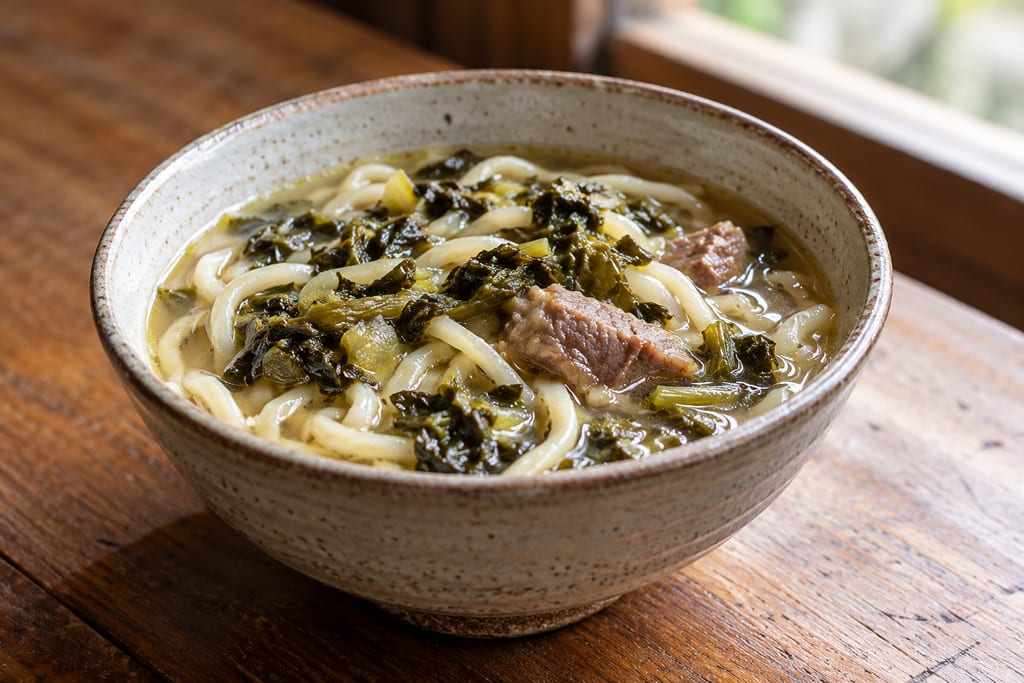
Goyang is a Sherpa fermented wild leafy food of the Darjeeling hills and Sikkim. Rainy-season magane-saag leaves are packed in a bamboo basket, held at room temperature for about a month, then eaten fresh or dried and used in soup.
The original Polish barszcz: young hogweed leaves soured in warm water for a few days, then boiled into soup with egg, butter, cream or millet. Recorded from 1595, with warnings about the sap and lookalikes.
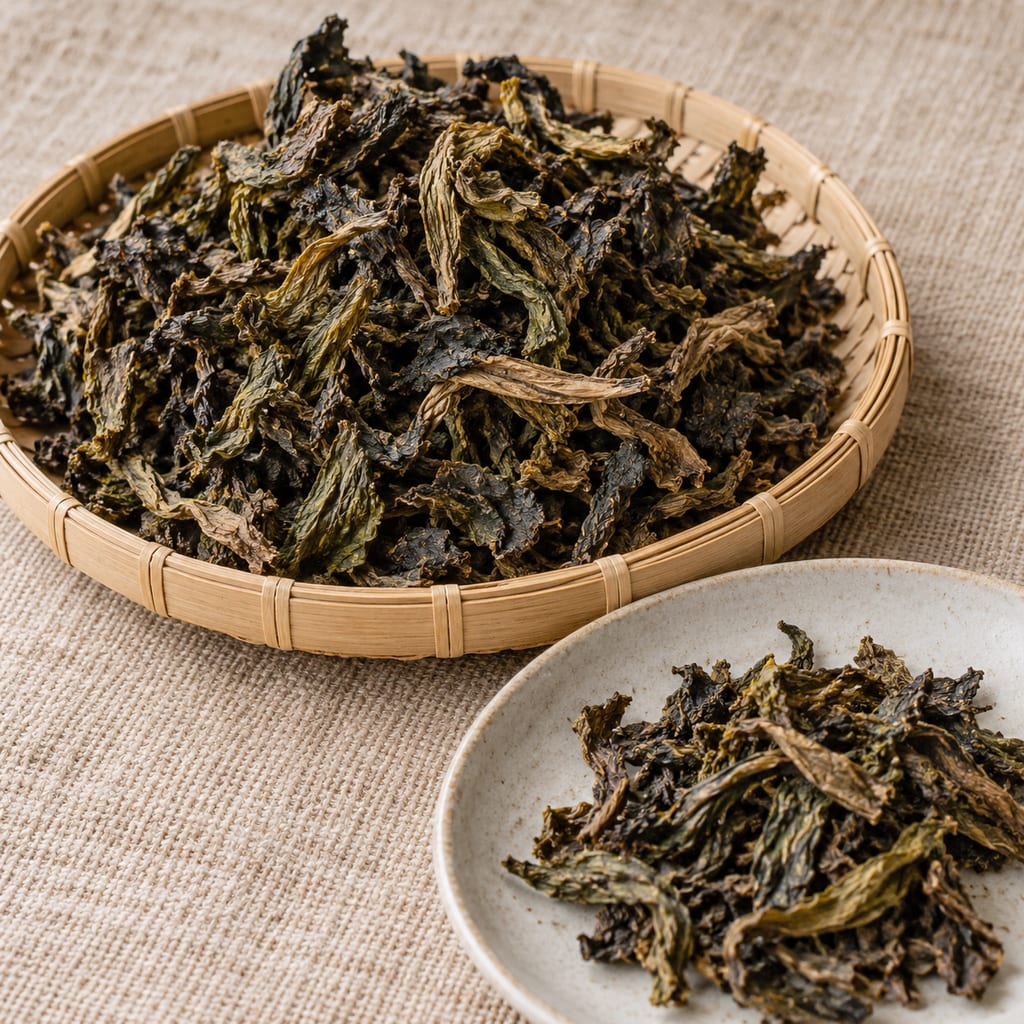
Inziangsang is a Naga fermented food of mustard leaves from Nagaland and Manipur. Crushed, soaked and squeezed leaves ferment for 7 to 10 days, then dry in the sun. A squeezed liquid can be boiled to a concentrate.
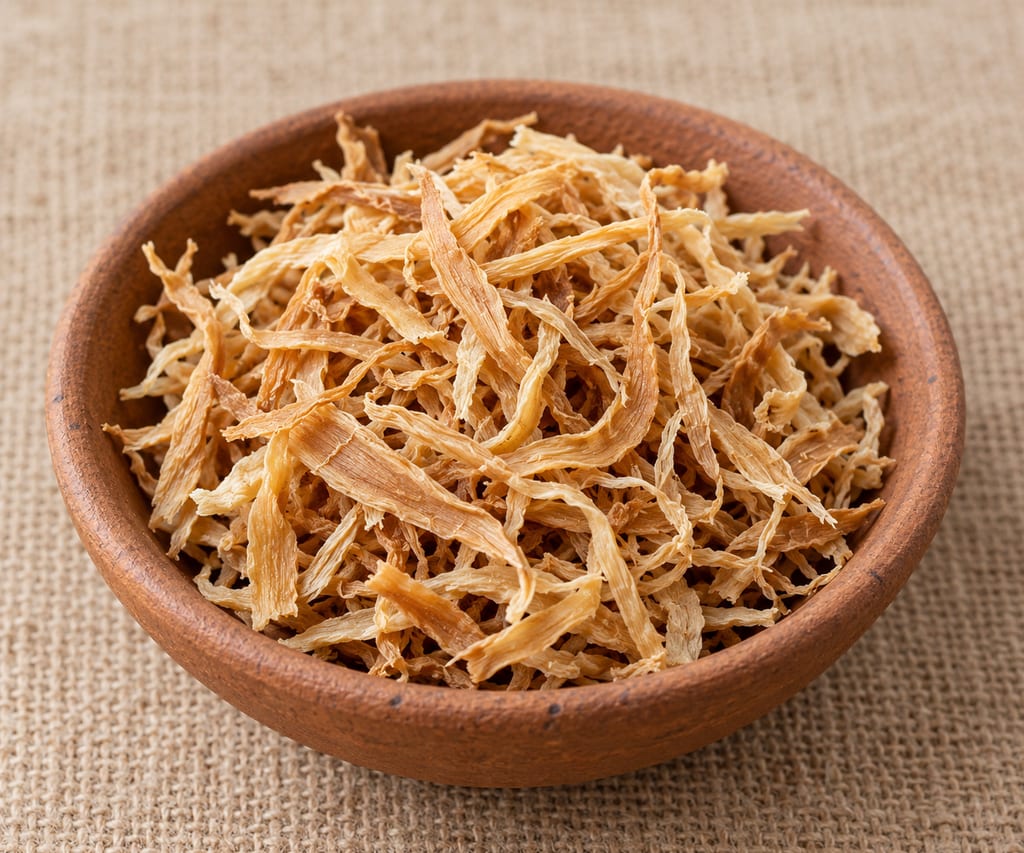
Khorisa is an Assamese fermented bamboo-shoot food. This page records cultural and lab accounts, not a validated home method. FSANZ says shoots must be fully cooked before eating; it does not validate Khorisa or set its cooking time.
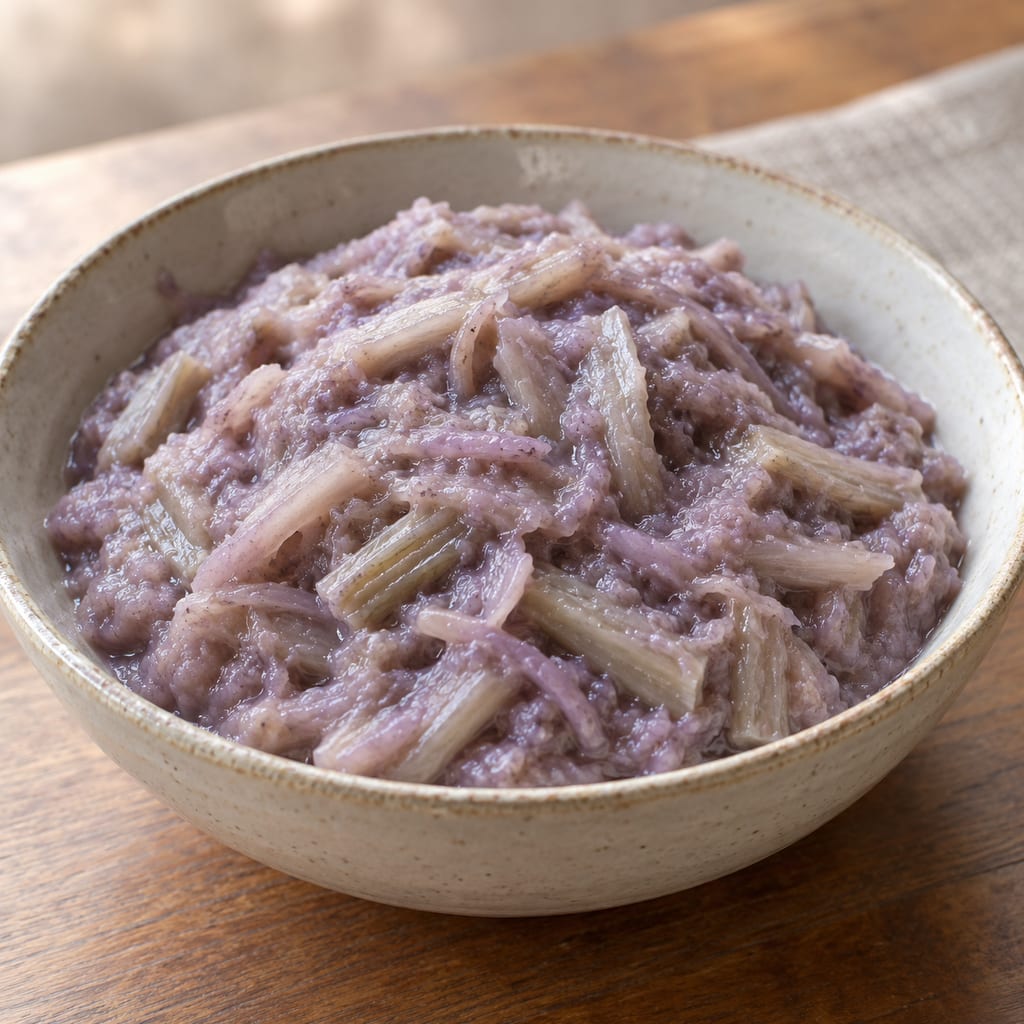
Thai pickle of young taro leaf stalks, salted, kneaded and held in rice-washing water in an earthen jar at room temperature. JIRCAS records it as a home-level product with no validated endpoint.
No community contributions have been published for this entry yet.
Sign in to contribute. Published comments and photos are free to read.
Indian Journal of Traditional Knowledge 8(1), 89–95; Sikkim University / CSIR-NIScPRResearch
Traditional knowledge of biopreservation of perishable vegetable and bamboo shoots in Northeast India as food resourcesCited in: Overview; Method
Food Biotechnology 23(2), 133–147; Taylor & Francis; Sikkim Government College / Sikkim UniversityResearch
Lactic Acid Bacteria Isolated from Indigenous Fermented Bamboo Products of Arunachal Pradesh in India and Their FunctionalityCited in: Use and microbiology
Heliyon 10(20), e39500; Sikkim University / CSIR-Indian Institute of Integrative MedicineResearch
Probiotic yeast characterization and fungal amplicon metagenomics analysis of fermented bamboo shoot products from Arunachal Pradesh, northeast IndiaCited in: Overview; Use and microbiology