
Axone
Soybeans boiled soft and fermented in a leaf-lined basket by the hearth, then in many Naga households pounded, wrapped in leaves and fermented again into a dark, pungent seasoning paste.
 FermenteaWhere food goes to change
Anüshe · Anushe · Anishi (KIRAN spelling Anüshe)
Dried cakes of pounded taro leaves from the Ao Naga in Nagaland, yellowed in a bag, then dried by hot ash or sun and used to flavour meat dishes.
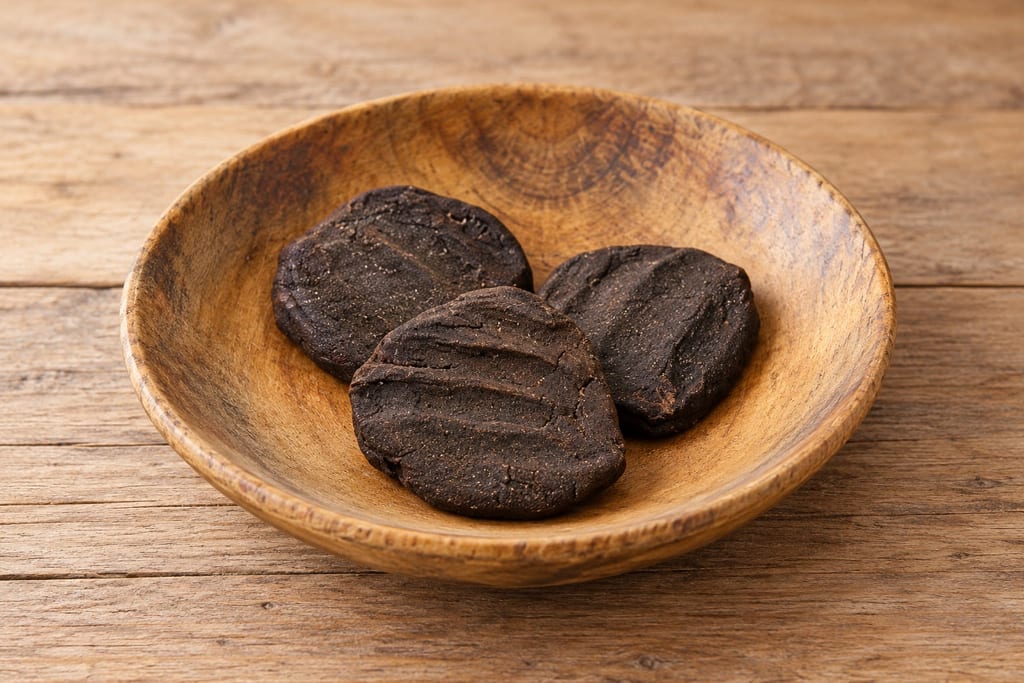
Anishi is a Naga cooking ingredient made from Colocasia leaves. The leaves are yellowed, pounded and dried into hard cakes, which are then used to add a strong, sour flavour to dishes. The 2017 study calls the product non-salted.
Sources spell the name Anishi and Anüshe. The atlas keeps both forms, and the relationship between them needs community review.
The 2017 study describes the most complete household sequence. The leaves are washed and held in gunny bags for four to five days until yellow, the petioles and midribs are removed, the leaves are pounded into paste and formed into cakes, and the cakes are dried near a fireplace under hot ash or in sunlight.
Slow Food describes a week wrapped until yellow, then grinding and drying. KIRAN describes a weighted draining step with a fire plate. These accounts differ and are kept separate. None gives quantities.
Slow Food calls Anishi sour and a condiment, especially when cooked with dried meat or pork. Taro leaves should not be eaten raw: the National Parks Board of Singapore notes calcium oxalate in taro leaves and says heat cooking destroys it in edible Colocasia esculenta. This general guidance does not validate Anishi’s yellowing, fermentation or drying steps as a safety control or establish a recipe-specific endpoint. KIRAN describes Anishi as a taste-maker, stored for times when fresh leaves are scarce. These are use contexts, not a complete recipe.
The 2017 study reports Bacillus subtilis, B. licheniformis, B. pumilis and Enterococcus faecium in its results table. Its abstract names Enterococcus faecalis instead. The sampled cakes had pH 5.8 and 3.8 per cent moisture. Organisms found in the sample do not define a starter or prove a mechanism.
The KIRAN account links Anüshe to Ao Naga people in Mokokchung and describes it as useful when fresh leaves are less available. Slow Food lists the product in its Ark of Taste and gives Ao and Konyak associations. The sources do not establish an origin date or a harvest calendar.
Scaling: source batch only
No reviewed source gives a drying endpoint, storage limit or a validated control. The sources do not show that yellowing, fermentation, pounding, heating or drying removes oxalates, cyanogens or other hazards from taro leaves.
Hazard sourceSeek locally validated, species-specific guidance before adapting the process. Do not use smell, taste or appearance as a safety test.
Control sourceTaro leaves should not be eaten raw. The documented Anishi use is cooked with dried meat; general heat guidance for edible Colocasia esculenta does not validate the Anishi fermentation or drying process as a safety control.
No validated household safety limit, drying endpoint or storage condition is given for Anishi.
The sources give distinct accounts that do not combine into one recipe. The 2017 study reports pH 5.8 and 3.8 per cent moisture in its samples; these are analytical results, not acceptance criteria.
The KIRAN portal names Mokokchung district for Anüshe. Slow Food also reports Ao and Konyak associations. Community association only, not a claim of exclusive origin.
Soybeans boiled soft and fermented in a leaf-lined basket by the hearth, then in many Naga households pounded, wrapped in leaves and fermented again into a dark, pungent seasoning paste.
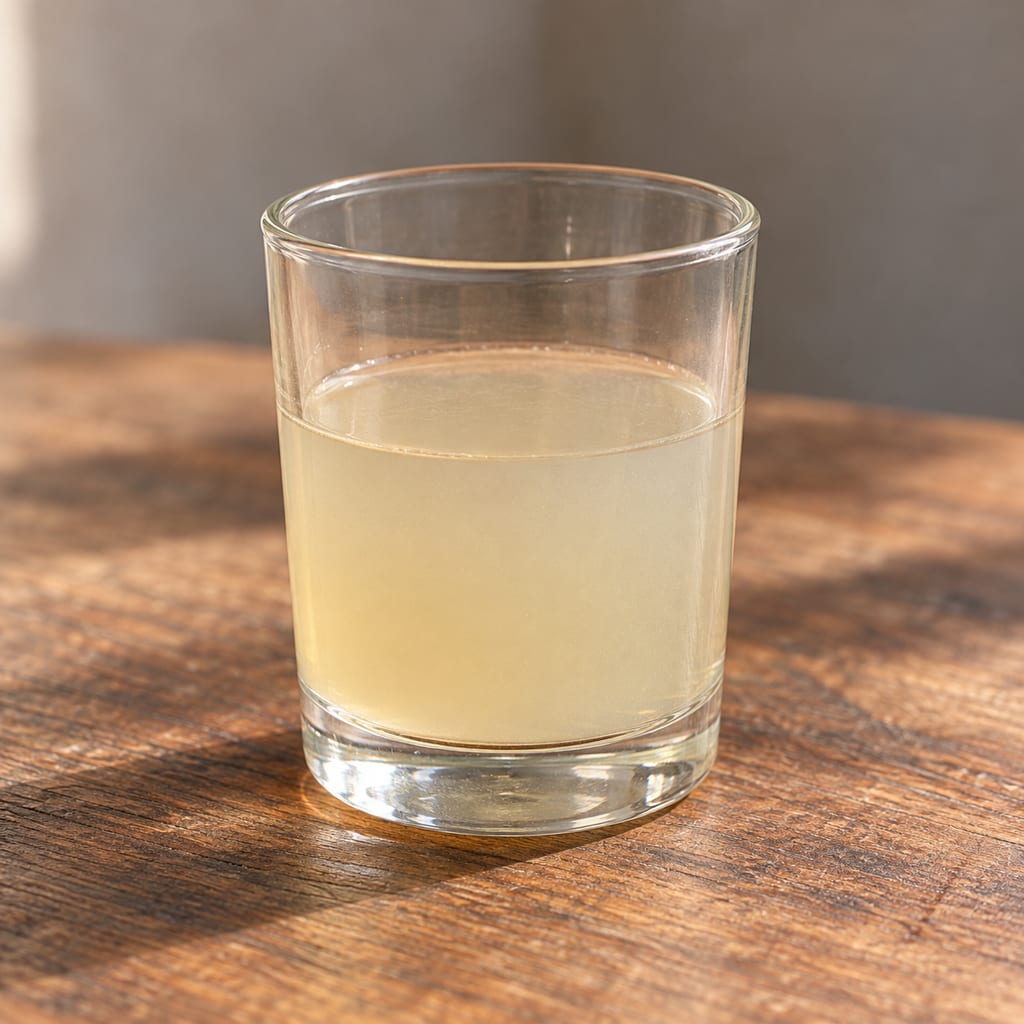
Judima is a Dimasa fermented rice drink from Assam. A 2022 Dhansiri account describes humao starter and rice fermentation, but sources disagree on the thembra bark species and do not provide a complete or validated home batch.
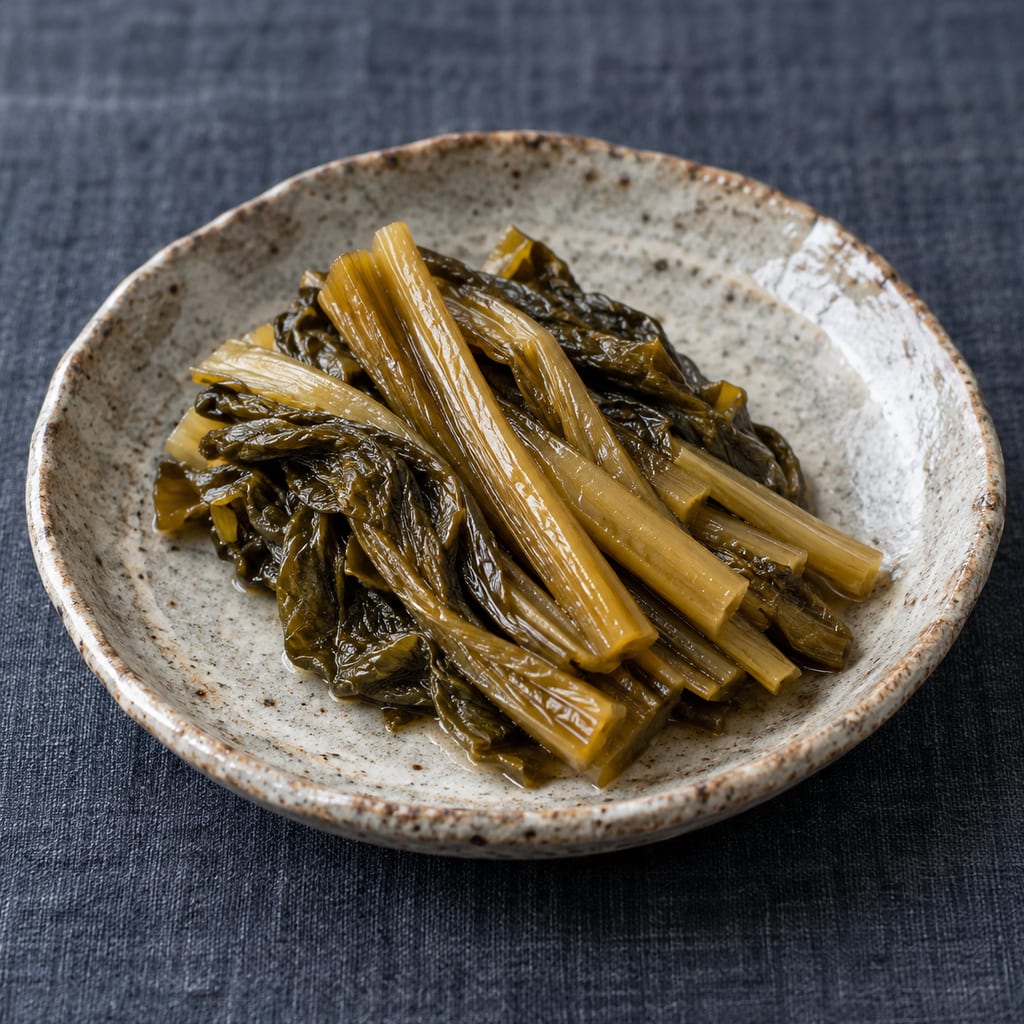
Takana mustard greens from Aso in Kumamoto are salted and pressed into a fresh spring pickle, or aged into a sour furuzuke that is fried and mixed into takana rice.
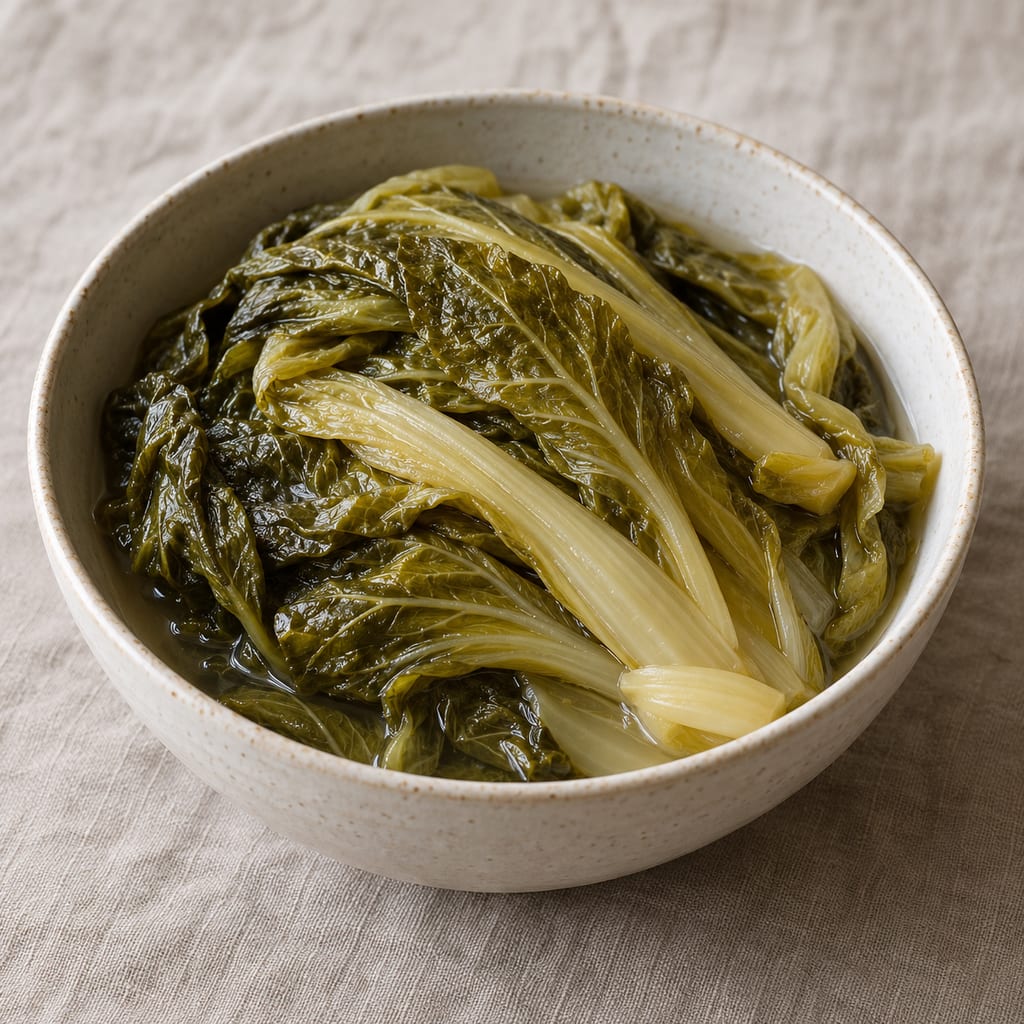
Wilted flat mustard leaves ferment with rice water and salt as a Filipino appetizer and cooking ingredient.
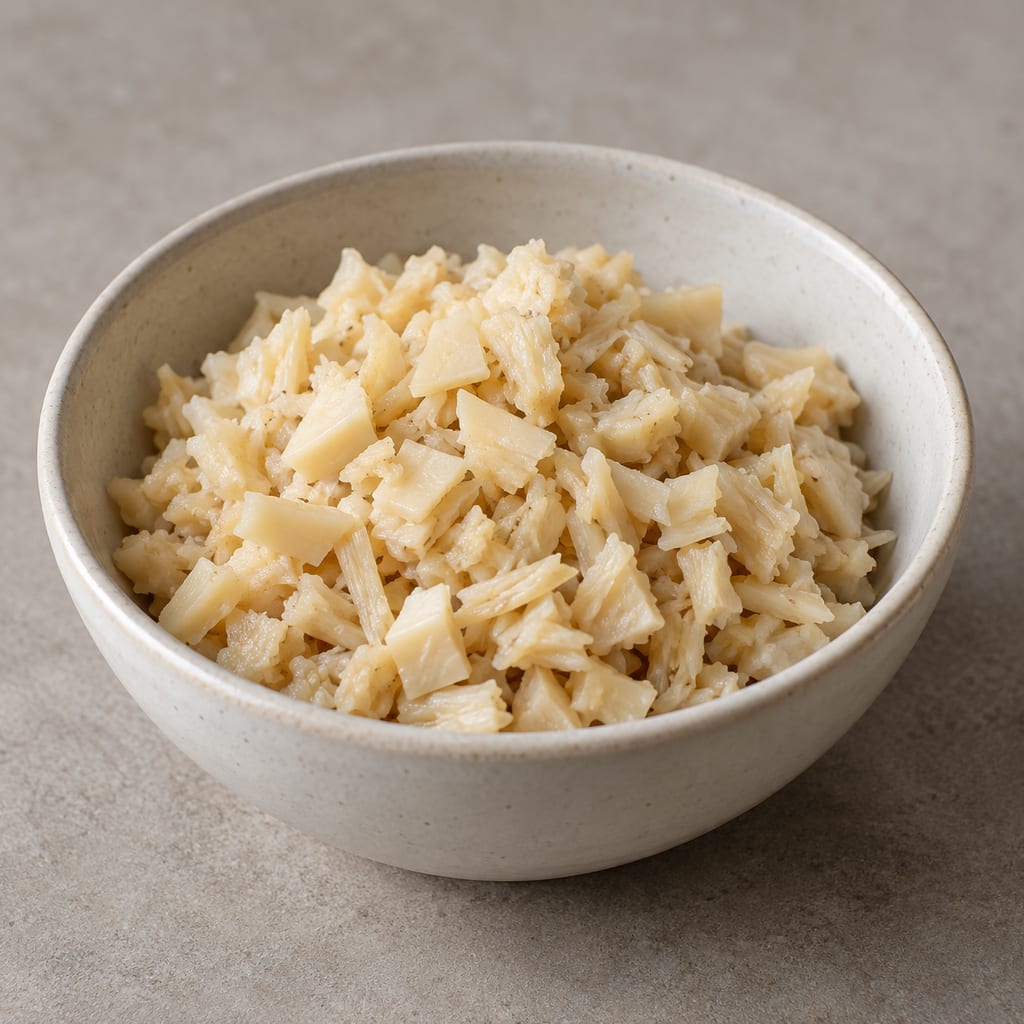
Finely chopped young bamboo shoots packed in leaf-lined baskets, sealed in a forest pit and weighted for one to three months, from Arunachal Pradesh.

Pit-fermented bamboo shoots from Arunachal Pradesh, cut smaller and sun-dried for five to ten days, used in curries.
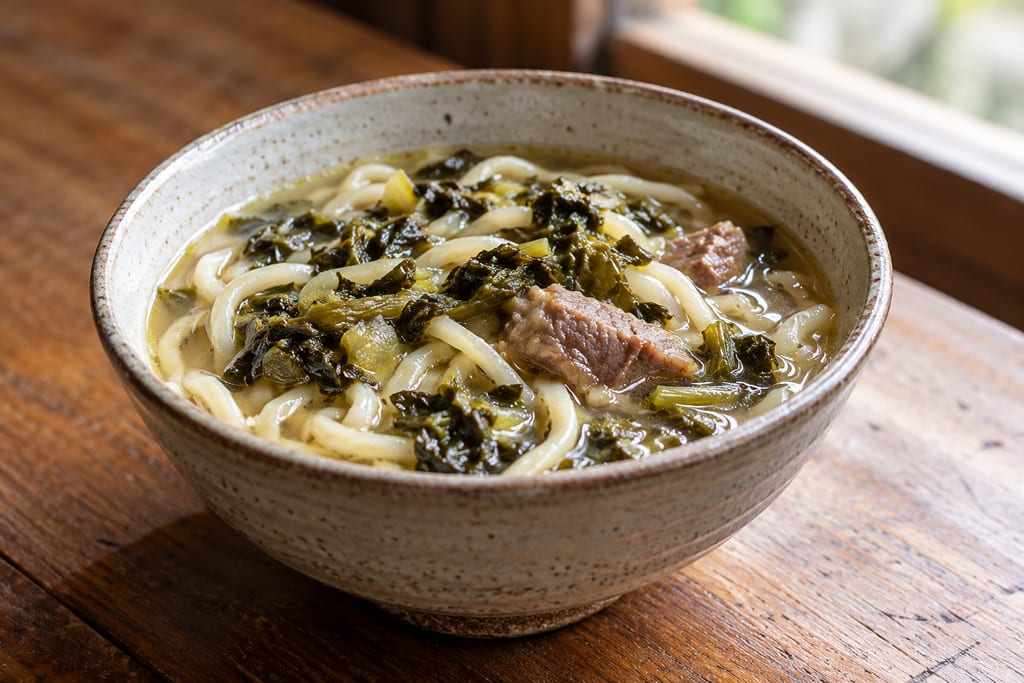
Goyang is a Sherpa fermented wild leafy food of the Darjeeling hills and Sikkim. Rainy-season magane-saag leaves are packed in a bamboo basket, held at room temperature for about a month, then eaten fresh or dried and used in soup.
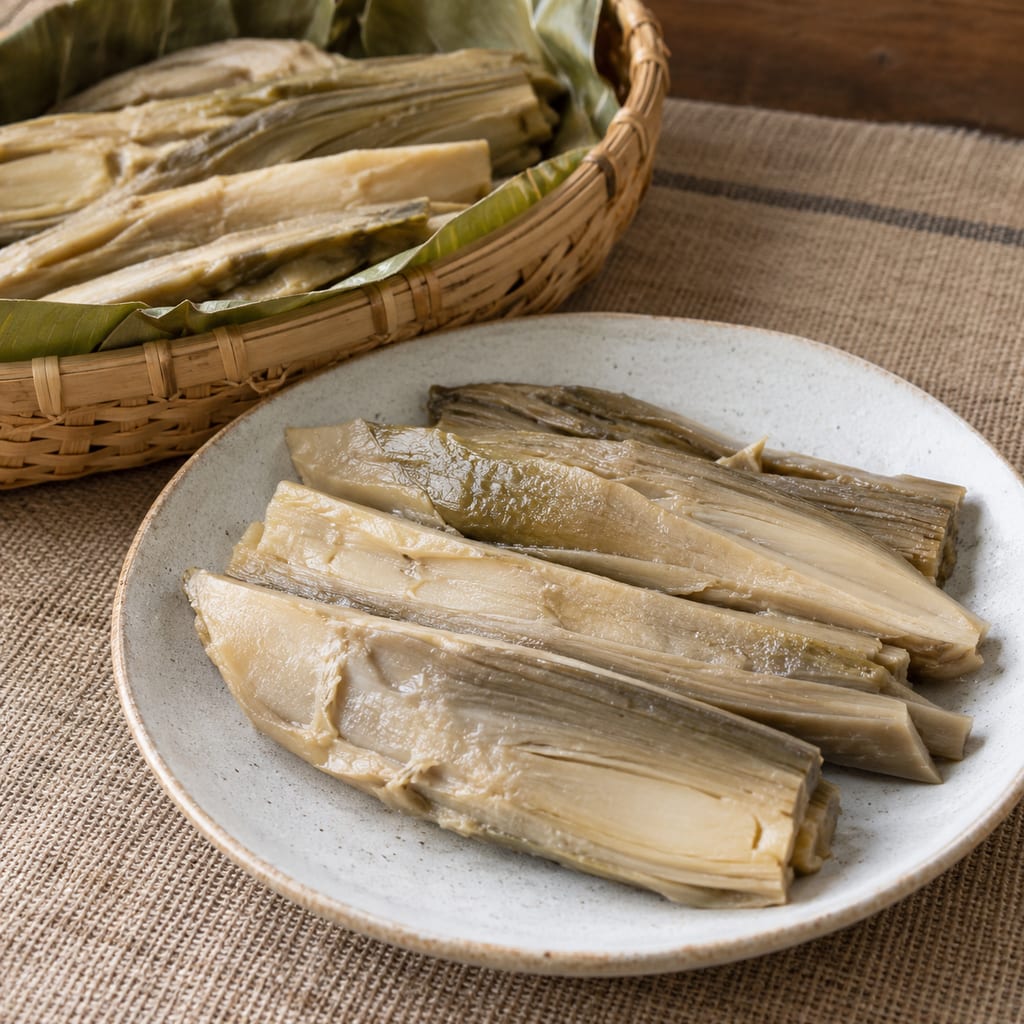
Upper tender bamboo-shoot tips, split or flattened, pit-fermented one to three months in Arunachal Pradesh and eaten in curries.
The original Polish barszcz: young hogweed leaves soured in warm water for a few days, then boiled into soup with egg, butter, cream or millet. Recorded from 1595, with warnings about the sap and lookalikes.
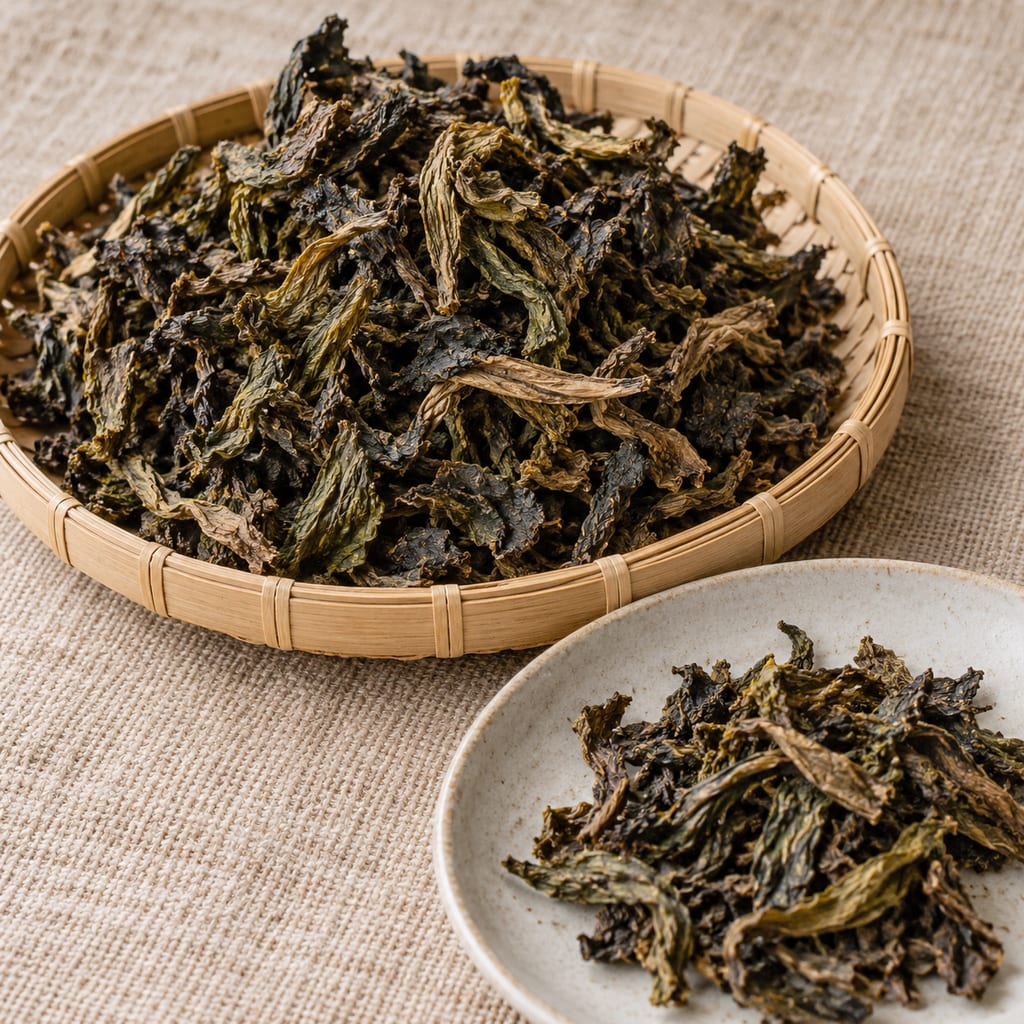
Inziangsang is a Naga fermented food of mustard leaves from Nagaland and Manipur. Crushed, soaked and squeezed leaves ferment for 7 to 10 days, then dry in the sun. A squeezed liquid can be boiled to a concentrate.
No community contributions have been published for this entry yet.
Sign in to contribute. Published comments and photos are free to read.
Journal of Advances in Food Science & Technology 4(3), 113–121; I.K. PressResearch
Nutritional and Microbiological Study of Anishi: A Traditional Fermented Food Product of Nagaland, IndiaCited in: Overview; Methods; Microbiology
KIRAN: Empowering Agricultural Knowledge and Innovation in North EastResearch
Nagaland: Anüshe (colocasia) leaf biscuit as ethnic foodCited in: Overview; Methods; Use
KIRAN, North Eastern Region; government publicationResearch
Nagaland – A world of its ownNational Parks Board, Singapore (GardeningSG)Safety
TaroTaro leaves should not be eaten raw because they contain calcium oxalate; for Colocasia esculenta, the page says calcium oxalate is destroyed by cooking with heat.
Cited in: Use