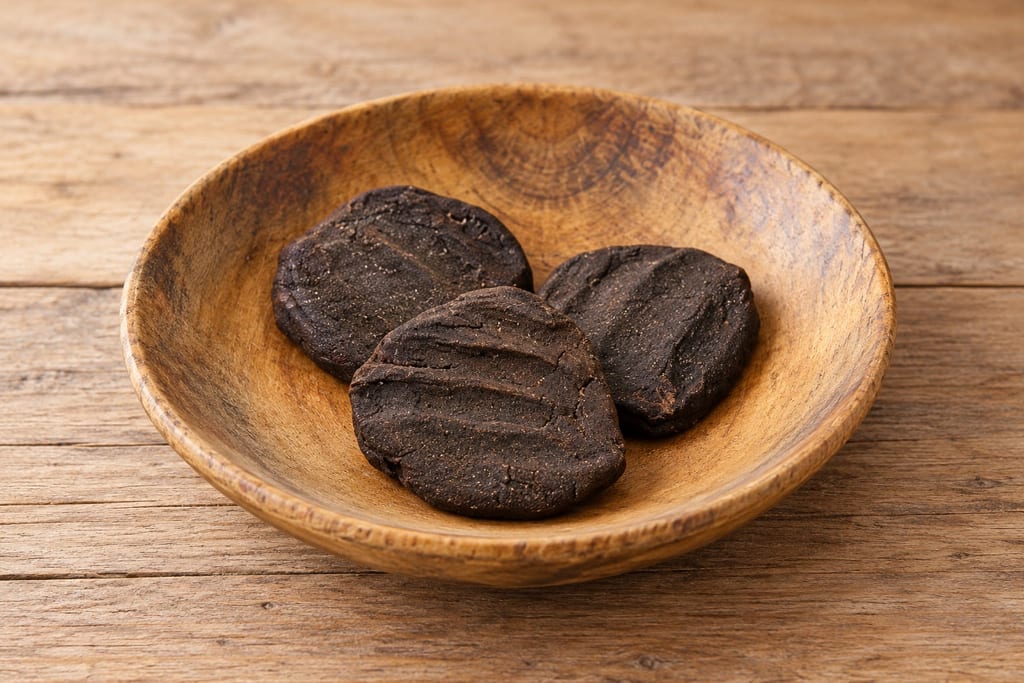
Anishi
Dried cakes of pounded taro leaves from the Ao Naga in Nagaland, yellowed in a bag, then dried by hot ash or sun and used to flavour meat dishes.
 FermenteaWhere food goes to change
Traditional method
Akhuni · Akhone
Soybeans boiled soft and fermented in a leaf-lined basket by the hearth, then in many Naga households pounded, wrapped in leaves and fermented again into a dark, pungent seasoning paste.

Axone, also written akhuni or akhone, is a traditional fermented soybean food of Nagaland in northeastern India.
It is particularly associated with Sumi Naga food culture, though related products are made and eaten among several other Naga communities.
Its main ingredient is the soybean, Glycine max (L.) Merr.
The beans are cooked until soft, allowed to undergo microbial fermentation and often processed further by pounding, wrapping, maturation, smoking or drying.
The resulting ingredient has an assertive savory aroma, a concentrated flavor and a characteristic sticky or paste-like texture.
Axone is not a complete dish in itself. It functions as a flavoring ingredient in many meals, including pork preparations, vegetable stews, fish dishes and chutneys.
It is especially valued alongside smoked pork, where its fermented character reinforces the meat's deep savory flavor.
The name is conventionally written in Devanagari in Hindi-language discussions, although these transliterations should not be mistaken for an original standardized orthography shared by every Naga language.
Naga is a collective regional description, not one language or one homogeneous cultural group.
Local terms, practices and preferred preparations differ across communities.
The familiar Sumi-associated spelling axone has become widely used in English-language writing, but it does not erase the other names.
Soybeans provide a substantial amount of protein and fat, making them valuable in food systems where a strongly flavored protein-rich ingredient can complement rice and vegetables.
Freshly cooked soybeans are highly perishable.
Fermentation changes their chemistry and flavor, while subsequent drying or smoke exposure can contribute additional preservation effects.
Axone is part of a broader family of fermented soybeans found across northeastern India.
Related foods include kinema in the eastern Himalayas, hawaijar in Manipur, tungrymbai in Meghalaya, bekang in Mizoram and peruyyan in Arunachal Pradesh.
These foods share certain microbial principles, but they do not necessarily use the same preparation or serve the same role in regional cooking.
Axone is particularly distinctive because some traditional versions undergo an additional stage after the beans have already fermented.
They are pounded and formed into smaller packages, then held near a household fireplace before use or further preservation.
This can create a more concentrated, mature and strongly flavored product than a preparation consisting only of fermented whole beans.
The precise origin date of axone is unknown.
The practice is firmly documented in household food culture and modern ethnography, but available evidence does not permit an invention date thousands of years in the past.
Published studies from the early 21st century describe fermentation practices inherited across generations.
A 2014 study documented multiple fermented foods of Nagaland, including axone and fermented vegetables.
A 2025 survey examined preparation methods across nineteen communities living in Nagaland, reporting differences in names, soybean selection, wrapping leaves and handling.
These records establish that axone belongs to a diverse and continuing regional tradition.
They also show why one Sumi recipe cannot be treated as representative of every Naga household.
Axone is closely connected with home cooking.
Its strong aroma can permeate a kitchen, and preparing it has sometimes attracted criticism from people unfamiliar with the food.
For Naga communities living outside Nagaland, it can therefore carry significance beyond taste: it is a familiar ingredient that helps maintain connections with home.
The 2020 film Axone brought some of these social questions to a broader audience, including tensions around food, migration and cultural identity.
That modern cultural history belongs alongside the preservation technology, but it does not replace the older evidence of household production.
The traditional process begins with dry soybeans.
The beans are cleaned to remove foreign material and damaged seeds.
Some methods involve soaking before cooking. Other recorded methods emphasize washing and prolonged boiling without specifying the same preliminary soaking stage.
The goal is to soften the seeds sufficiently for fermentation.
A documented Nagaland method describes boiling for 3–4 hours in an ordinary pot, or approximately 1 hour in a pressure cooker.
Another study records shorter boiling in its surveyed processing sequence.
The difference reflects actual variation in equipment and preparation, not necessarily an error.
Thorough cooking hydrates and softens the beans.
Heat disrupts cellular structures, changes the behavior of proteins and makes nutrients more accessible to microorganisms.
It also reduces the number of viable organisms on the raw beans.
However, cooking does not make the beans permanently sterile.
After they are removed from heat, they can be exposed to microorganisms from utensils, containers, leaves, air and handling.
The beans are drained before fermentation.
This is important because axone is generally produced as a moist solid rather than as beans submerged in a large volume of brine.
A widely recorded process transfers the softened soybeans into a bamboo basket.
The basket may be lined with leaves of Ficus species.
Other documented leaf materials include banana, Phrynium pubinerve and Macaranga indica.
The beans are covered and held near or above the kitchen fireplace.
The hearth provides warmth, and the household environment contributes to the conditions in which the fermentation develops.
One process documented by Nagaland University researchers describes a first stage lasting 3–4 days.
Other accounts give approximately 3–7 days, depending on weather and local practice.
These are descriptive durations, not scientifically validated universal incubation requirements.
The beans soften further and develop an increasingly characteristic aroma.
Depending on the microorganisms and conditions, a sticky substance may form around the bean surfaces.
At this stage, the product resembles other fermented soybean foods in the region.
For some preparations, it is already suitable for subsequent cooking.
Other axone traditions continue to a second processing stage.
In a well-documented Sumi-associated process, the first-stage fermented beans are pounded or mashed.
They are not necessarily ground into a completely smooth paste.
Some makers preserve a coarse texture in which fragments of individual beans remain recognizable.
The pounded material is divided into portions and wrapped in leaves.
Banana leaves and Phrynium pubinerve are recorded for this stage.
The wrapped packages are returned to the warm kitchen environment.
One Nagaland study describes another 3–4 days near the fireplace.
Other community accounts describe one or two further days, while some makers allow a longer period of maturation.
The second stage changes more than the shape.
Pounding exposes additional bean material, redistributes microorganisms and alters the surface area available for enzymatic activity.
Wrapping also changes the conditions surrounding the food.
Continued bacterial metabolism may intensify the savory flavor and modify its aroma.
Exposure to a smoky hearth can introduce additional flavor and encourage surface drying.
These effects depend on the actual packaging and fireplace arrangement.
A product kept close to smoke without losing sufficient moisture is not necessarily shelf-stable.
Axone is primarily a bacterial fermented soybean food.
Bacillus species, particularly Bacillus subtilis and related organisms, are important in the broader group of alkaline soybean fermentations.
These microorganisms produce enzymes that degrade soybean proteins.
Proteases cleave proteins into peptides and free amino acids.
Some products of this breakdown contribute savory taste, while other metabolites are responsible for the strong characteristic aroma.
Soybeans also contain carbohydrates and lipids that can undergo additional transformations.
The fermentation is often described as alkaline because protein and amino-acid metabolism can produce nitrogen-containing compounds, including ammonia.
As these accumulate, the pH may rise rather than fall.
That distinguishes axone from lactic-acid vegetable preservation, where successful fermentation generally produces a substantial decrease in pH.
An alkaline fermentation does not rely on acidity as its principal microbial barrier.
That has important implications for food safety.
Some fermented soybean preparations become sticky or stringy.
This can result partly from extracellular polymers produced by Bacillus organisms.
One particularly important polymer is poly-gamma-glutamic acid.
It consists of glutamic-acid units linked into long chains and can give fermented soybeans a viscous or mucilaginous texture.
The phenomenon is closely related to the characteristic stickiness of Japanese natto and Himalayan kinema.
However, axone does not always retain the appearance of whole sticky beans.
Pounding, packaging and additional drying can transform it into a dark coarse paste, dense cake or crumbly preserved ingredient.
A photograph of a nearly black fermented soybean cake and a photograph of pale sticky whole beans can therefore both represent related stages of the tradition.
The exact appearance should be identified by preparation stage.
Stickiness is evidence of a physical transformation, but it is not proof that all microorganisms present are desirable.
A detailed 2014 microbial-quality study examined 191 axone samples from markets in Nagaland.
The collection comprised 35 fresh, 136 matured and 20 dried samples.
Samples were associated with seven community groups.
The pH results varied substantially.
These numbers reveal that axone cannot be represented by one simple acidic-fermentation model.
Some samples were mildly acidic, while others were clearly alkaline.
Maturation was associated with higher pH in parts of the dataset.
The variation reflects differences in product stage, microbial metabolism and household practice.
It also makes it inappropriate to infer safety from the general term “fermented.”
The study demonstrates that axone products may remain within a pH range compatible with growth of undesirable microorganisms.
Fresh axone — 4.56–7.54
Matured axone — 5.70–8.62
Dried axone — 5.58–8.54
Traditional axone may be consumed relatively fresh, further matured or dried.
Some household processes leave wrapped portions in a smoke-rich kitchen environment for extended periods.
As moisture is lost, the product can become denser and darker.
A documented dry preparation involves allowing matured axone to dry further, then grinding it into a powder for later cooking.
Other versions are sun dried.
A broader review describes approximately 2–3 days of sun drying for certain fermented soybean preparations, but that figure is not a universally validated axone specification.
One composition report gives matured axone approximately 48% moisture.
At that moisture level, the product cannot be presumed shelf-stable merely because it is called mature.
Drying, smoking and fermentation each have different effects.
A thoroughly dried ingredient may store differently from a moist fermented paste, and sealed packaging can create additional hazards if moisture remains high.
The reviewed traditional literature does not provide a single validated water activity or shelf life applicable to all forms.
Axone is often associated most strongly with the Sumi, historically also called Sema.
However, related fermented soybean practices occur among Ao, Angami, Lotha, Chakhesang and other communities.
The 2025 survey documents nineteen communities and records local differences in both terminology and procedure.
These include variations in soaking, cooking, leaf selection, incubation and preservation.
One family may favor a strongly matured cake.
Another may prefer a fresher preparation retaining more recognizable beans.
A household using banana leaves may produce a somewhat different sensory result from one using Ficus leaves.
Climate and the arrangement of the household fireplace can further affect fermentation.
These variations deserve recognition because they represent inherited technical choices, not failures to follow a standardized recipe.
The distinction between Nagaland's various fermented soybean foods is also culturally important.
Axone should not become a generic label applied without qualification to every northeastern Indian soybean ferment.
One of the most characteristic uses is pork cooked with axone.
A contemporary documented Sumi preparation combines smoked pork, fermented soybeans, water, salt, ginger, garlic and red chili.
The mixture is boiled and simmered until the meat is tender and the seasoning is incorporated.
A field survey at Nagaland's Hornbill Festival recorded cooking for at least one hour in one smoked-pork-and-axone preparation.
This is a documented cooking duration for the dish, not a universal preservation or pathogen-destruction specification.
The resulting food can have a rich, reddish-brown broth or a thicker consistency, depending on the amount of water and cooking.
Axone contributes savory depth, while the smoked pork provides fat, meat flavor and its own preservation-derived aroma.
Garlic, ginger and chili supply additional aromatic and pungent notes.
Served with rice, the dish forms a substantial meal.
The fermented soybean ingredient is particularly effective here because a small portion can strongly influence a much larger quantity of food.
Axone is also prepared as chutney.
A common contemporary version combines fermented soybeans with roasted tomato, chili, ginger and salt.
The ingredients can be mashed together to produce a concentrated condiment.
Some versions add garlic or other locally preferred seasonings.
The fermented soybean provides a savory foundation, while tomato and chili contribute acidity, sweetness and heat.
Axone also appears in vegetable stews, dried-fish dishes and beef preparations.
These uses show that it is not restricted to pork.
Its culinary role is similar to that of certain other concentrated fermented ingredients: a small amount is incorporated to bring complexity to the finished dish.
However, direct comparisons with miso or natto can be misleading if they suggest identical microorganisms, salt levels or preparation methods.
The best way to understand axone is through the particular foods in which Naga cooks use it.
A festival field study recorded a preparation with smoked pork, axone, ginger, garlic, red chili, salt and water.
The ingredients were boiled and simmered together.
The source documents a cooking time of at least one hour and a consistency ranging from a thinner curry to a thicker preparation.
It does not publish a universally applicable weight of every ingredient in the accessible summary.
The recipe should therefore remain descriptive rather than presenting invented quantities.
A practical editorial recipe derived from it would need to be clearly marked as a tested modern adaptation, with its own measured ingredients, cooking conditions and food-safety assessment.
It should not be passed off as an exact historical formula.
Traditional makers evaluate axone using aroma, texture and appearance.
A strong fermented aroma is characteristic of the product.
The beans may develop stickiness before they are pounded.
Matured preparations can be darker and denser.
However, sensory assessment has limitations.
Unexpected putrefaction, uncontrolled surface contamination, signs of infestation or visible abnormal growth should lead to rejection.
A pronounced smell alone does not distinguish desirable alkaline fermentation from microbial spoilage.
This is especially significant because spontaneous axone production may contain microorganisms other than the desirable Bacillus strains.
A successful-looking batch can still contain pathogens.
Axone has been investigated directly for microbiological hazards.
The study of 191 market samples identified considerable variation in bacterial contamination.
Of those samples, 60 were positive for lactose-fermenting bacteria on the study's selective culture medium.
Escherichia coli was detected in 24 samples.
Klebsiella pneumoniae was detected in 14 samples.
The investigators also reported Salmonella enterica serovar Typhimurium in 4 samples, alongside other organisms including Aeromonas and Proteus species.
These are findings from the sampled market products, not proof that all axone is unsafe.
They do demonstrate that traditional fermentation alone cannot guarantee the absence of foodborne pathogens.
The study additionally found large numbers of Bacillus spores.
Spore-forming bacteria are particularly important because some can survive heating and persist in the environment.
Certain strains of Bacillus cereus can cause foodborne illness and produce toxins.
A product dominated by bacteria belonging to the genus Bacillus is not automatically safe merely because some members of that genus are useful fermentation organisms.
Axone is often cooked before eating, which can reduce some microbiological hazards.
However, food-safety control must begin before the final cooking stage.
Poor handling during soybean cooling, contaminated wrapping material, unhygienic fermentation vessels and prolonged storage at unsuitable conditions can all introduce risks.
Some bacterial spores can survive ordinary cooking.
Certain preformed toxins may not be reliably eliminated by reheating.
The maturity or intensity of flavor does not provide a validated measure of microbiological safety.
For modern food manufacturing, a controlled culture and validated processing environment would reduce some of the uncertainties.
Yet any selected starter must be assessed for the specific strains involved, including toxin-producing potential.
Commercial production also requires appropriate controls for moisture, water activity, storage and packaging.
The traditional sources do not provide one safe time–temperature specification that can be applied indiscriminately to every household axone.
Axone is sometimes described primarily through its smell.
That is an incomplete account of the food.
Its importance comes from the transformation of soybeans into a powerful seasoning, the skill involved in producing different degrees of fermentation and maturation, and its role in meals built around rice, vegetables, smoked meat and other preserved ingredients.
Its continued preparation also preserves knowledge of local plants, containers, hearth arrangements and household food systems.
The process can vary from comparatively fresh sticky beans to dark matured cakes and dried powders.
These forms are related, but they are not identical products in terms of texture, storage or safety.
Understanding axone properly requires keeping those distinctions in view.
Its value as a reference subject lies in showing how alkaline fermentation can produce both a distinctive ingredient and a sophisticated regional cuisine, while modern microbiology reveals the need for careful food-safety control.
Soybeans give a substantial amount of protein and fat, which makes a strongly flavoured protein-rich ingredient valuable alongside rice and vegetables, and freshly cooked soybeans are highly perishable; fermentation changes their chemistry and flavour while subsequent drying or smoke exposure can add preservation effects. What distinguishes axone within its family is the second stage: some traditions pound the already-fermented beans, form them into smaller packages and hold them near the household fireplace before use or further preservation, which can produce a more concentrated, mature and strongly flavoured product than fermented whole beans alone. Axone is also closely connected with home cooking, and its strong aroma has sometimes attracted criticism from people unfamiliar with the food, which is part of why it carries significance beyond taste for Naga communities living outside Nagaland. The 2020 film Axone brought some of those social questions — food, migration and cultural identity — to a broader audience; that modern cultural history belongs alongside the preservation technology without replacing the older evidence of household production. The variations across the state deserve recognition as inherited technical choices rather than failures to follow a standard recipe: one family may favour a strongly matured cake and another a fresher preparation with recognisable beans, a household using banana leaves may get a different result from one using Ficus, and climate and the arrangement of the fireplace change the fermentation again.
Scaling: source batch only
In the survey of 191 axone samples, 60 were positive for lactose-fermenting bacteria on the study's selective medium, Escherichia coli was detected in 24, Klebsiella pneumoniae in 14 and Salmonella enterica serovar Typhimurium in 4, alongside other organisms including Aeromonas and Proteus species. These are findings from the sampled products rather than proof that all axone is unsafe, and they demonstrate that traditional fermentation alone cannot guarantee the absence of foodborne pathogens.
Hazard sourceThe same study found large numbers of Bacillus spores. Spore-forming bacteria matter because some can survive heating and persist in the environment, certain strains of Bacillus cereus can cause illness and produce toxins, and a product dominated by the genus Bacillus is not automatically safe because some members of that genus are useful fermentation organisms.
Hazard sourceThe measured pH spans 4.56 to 7.54 in fresh samples, 5.70 to 8.62 in matured and 5.58 to 8.54 in dried ones, so the study demonstrates that axone products may remain within a pH range compatible with the growth of undesirable microorganisms, and an alkaline fermentation does not rely on acidity as its principal barrier.
Hazard sourceOne composition report gives matured axone approximately 48 per cent moisture, and at that moisture level the product cannot be presumed shelf-stable merely because it is called mature; sealed packaging creates additional hazards if moisture remains high, and the reviewed traditional literature provides no single validated water activity or shelf life for all forms.
Hazard sourcePoor handling during soybean cooling, contaminated wrapping material, unhygienic fermentation vessels and prolonged storage at unsuitable conditions can all introduce risks, and once the beans are off the heat they can be exposed to microorganisms from utensils, containers, leaves, air and handling.
Hazard sourceCooking can reduce some hazards, but some bacterial spores survive ordinary cooking and certain preformed toxins may not be reliably eliminated by reheating, so control has to begin before the final cooking stage.
Hazard sourceBoil the beans thoroughly before fermentation and drain them, then protect them from recontamination while they cool
Control sourceUse clean fermentation vessels and uncontaminated wrapping leaves, and handle the pounding, dividing and wrapping hygienically
Control sourceReject batches showing unexpected putrefaction, uncontrolled surface contamination, signs of infestation or visible abnormal growth
Control sourceDry the product properly if it is to be stored, and match the packaging to the actual moisture rather than to the name of the stage
Control sourceFor manufacture, use a controlled culture and a validated processing environment, assessing any selected starter for the specific strains involved including toxin-producing potential, with controls for moisture, water activity, storage and packaging
Control sourcePathogens were isolated from market samples of this food: Escherichia coli in 24 of 191, Klebsiella pneumoniae in 14 and Salmonella Typhimurium in 4, so traditional fermentation on its own does not exclude them.
Axone cannot be described by one acidic-fermentation model: measured pH ran from 4.56 to 8.62 across stages, and much of that range is compatible with the growth of undesirable microorganisms.
Cooking is not a complete substitute for control, because some bacterial spores survive ordinary cooking and certain preformed toxins may not be reliably eliminated by reheating.
A pronounced smell is characteristic of the product and cannot distinguish a desirable alkaline fermentation from spoilage; a successful-looking batch can still contain pathogens.
Matured axone reported at approximately 48 per cent moisture is not shelf-stable because it is called mature, and sealing a moist product creates its own hazard.
The documented durations are separate community and study observations, not one range: 3 to 4 days against approximately 3 to 7 for the first stage, and 3 to 4 days against one or two days or a longer maturation for the second.
Stickiness is evidence of a physical transformation, not proof that the microorganisms present are the desirable ones, and it is a bacterial polymer rather than fungal growth.
The at-least-one-hour cooking time recorded for the smoked-pork dish is a cooking duration for that dish and not a pathogen-destruction specification.
Soy allergy applies to this product as it does to the bean.
A state-region row, which is as fine as the evidence supports. Axone is most strongly associated with the Sumi, historically also called Sema, while related fermented soybean practices occur among Ao, Angami, Lotha, Chakhesang and other communities, and the 2025 survey documents nineteen communities living in Nagaland with local differences in terminology and procedure. The row therefore records the practice's presence in the state and explicitly not one Naga method: Naga is a collective regional description, not one language or one homogeneous cultural group, and one Sumi recipe cannot be treated as representative of every Naga household. Contemporary culinary accounts also describe axone dishes in the Mokokchung area, which this row covers without claiming a locality.
A broad regional row recording that axone travels with Naga communities living outside Nagaland, for whom it is a familiar ingredient that helps maintain connections with home. It is deliberately not a claim that axone is made across northeastern India: the region's other fermented soybean foods — hawaijar in Manipur, tungrymbai in Meghalaya, bekang in Mizoram, peruyyan in Arunachal Pradesh and kinema in the eastern Himalayas — are separate named foods, and axone should not become a generic label applied to every northeastern Indian soybean ferment.
Dried cakes of pounded taro leaves from the Ao Naga in Nagaland, yellowed in a bag, then dried by hot ash or sun and used to flavour meat dishes.

Judima is a Dimasa fermented rice drink from Assam. A 2022 Dhansiri account describes humao starter and rice fermentation, but sources disagree on the thembra bark species and do not provide a complete or validated home batch.
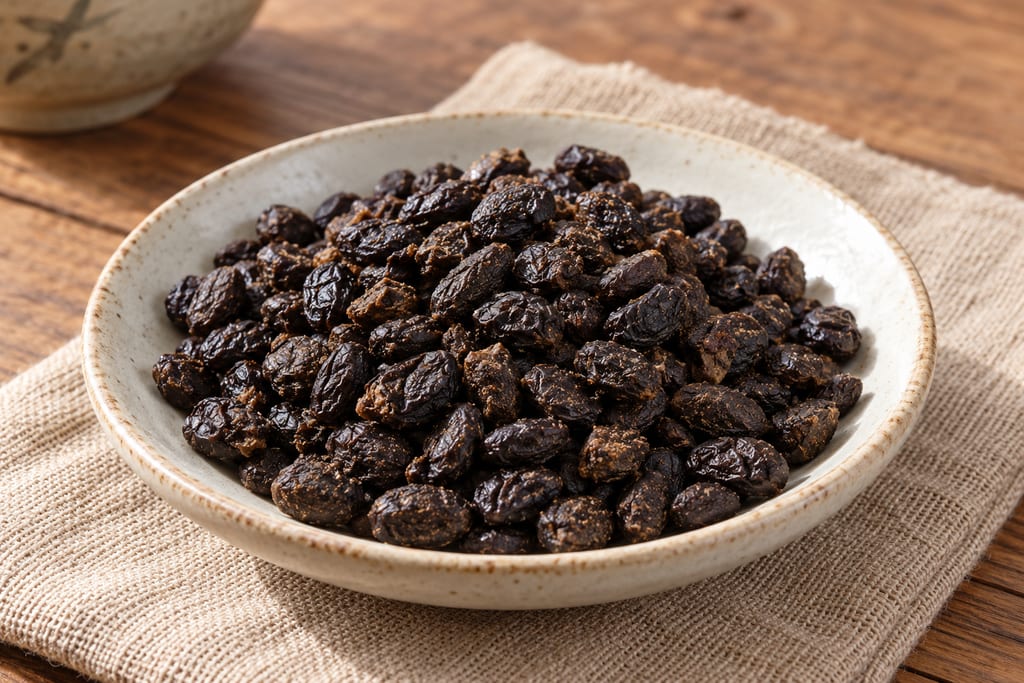
A Chinese fermented soybean condiment in which Bacillus-led bacteria, not moulds, drive the fermentation. Documented in Zunyi, Guizhou, and kept separate from mould-led douchi.
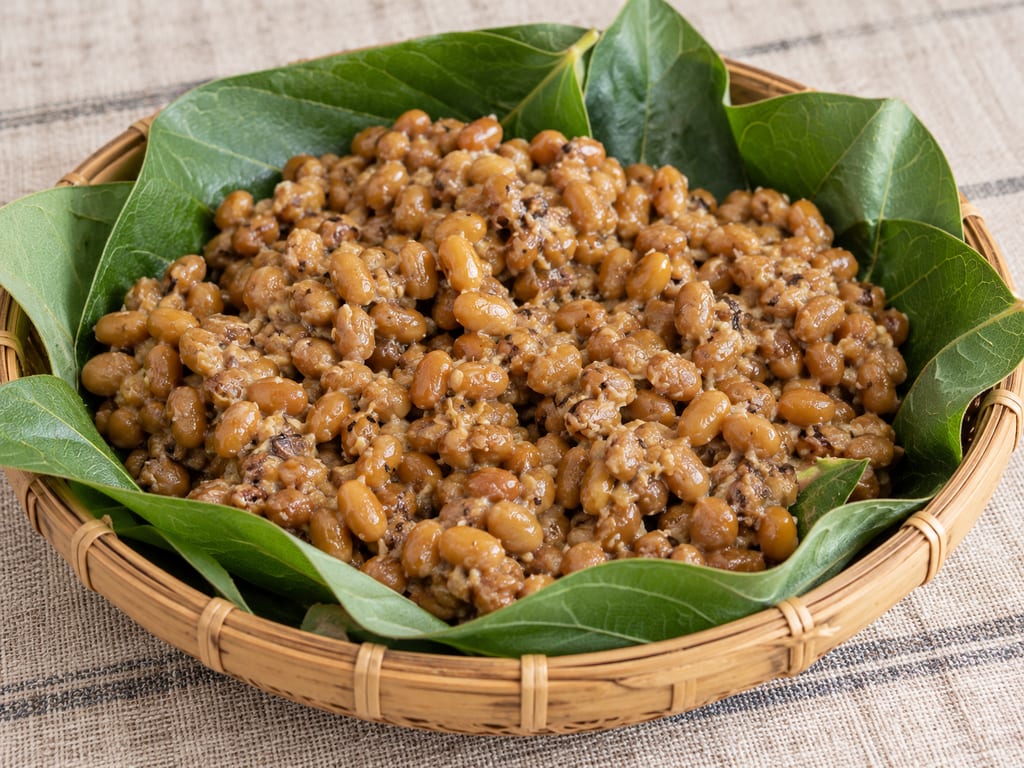
A Mizo alkaline soybean ferment made by holding cooked beans in leaf-lined containers, sometimes with wood ash, until they turn sticky, soft and pungent; eaten fresh or used as a seasoning.
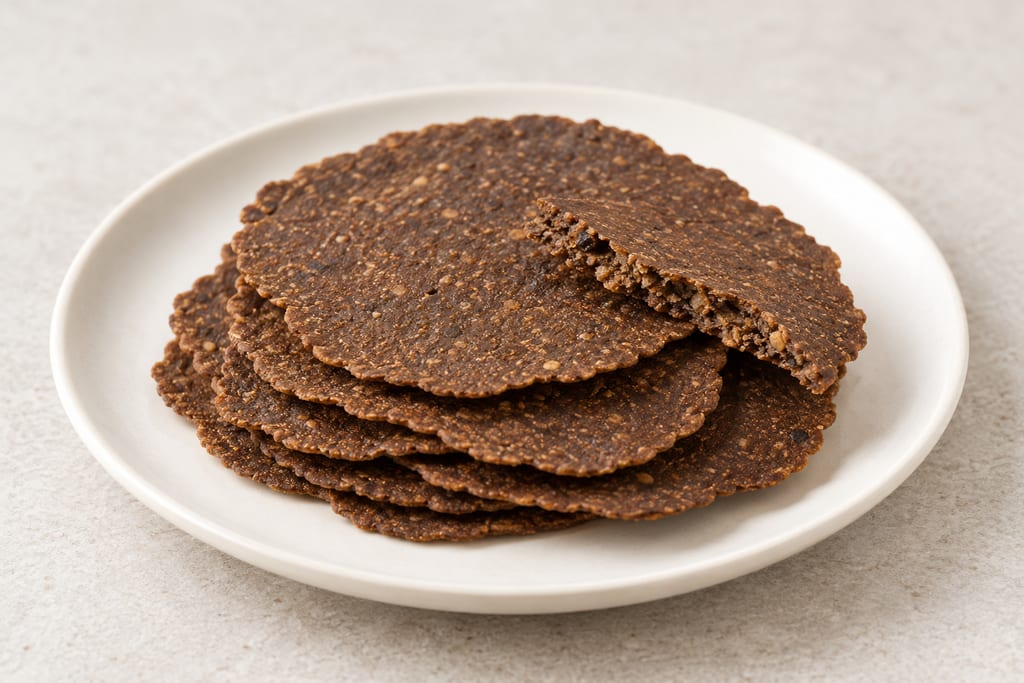
Black soybeans cooked, inoculated with a named Bacillus subtilis culture and fermented warm and humid into northern Thailand's thua nao, then optionally dried into thin discs.
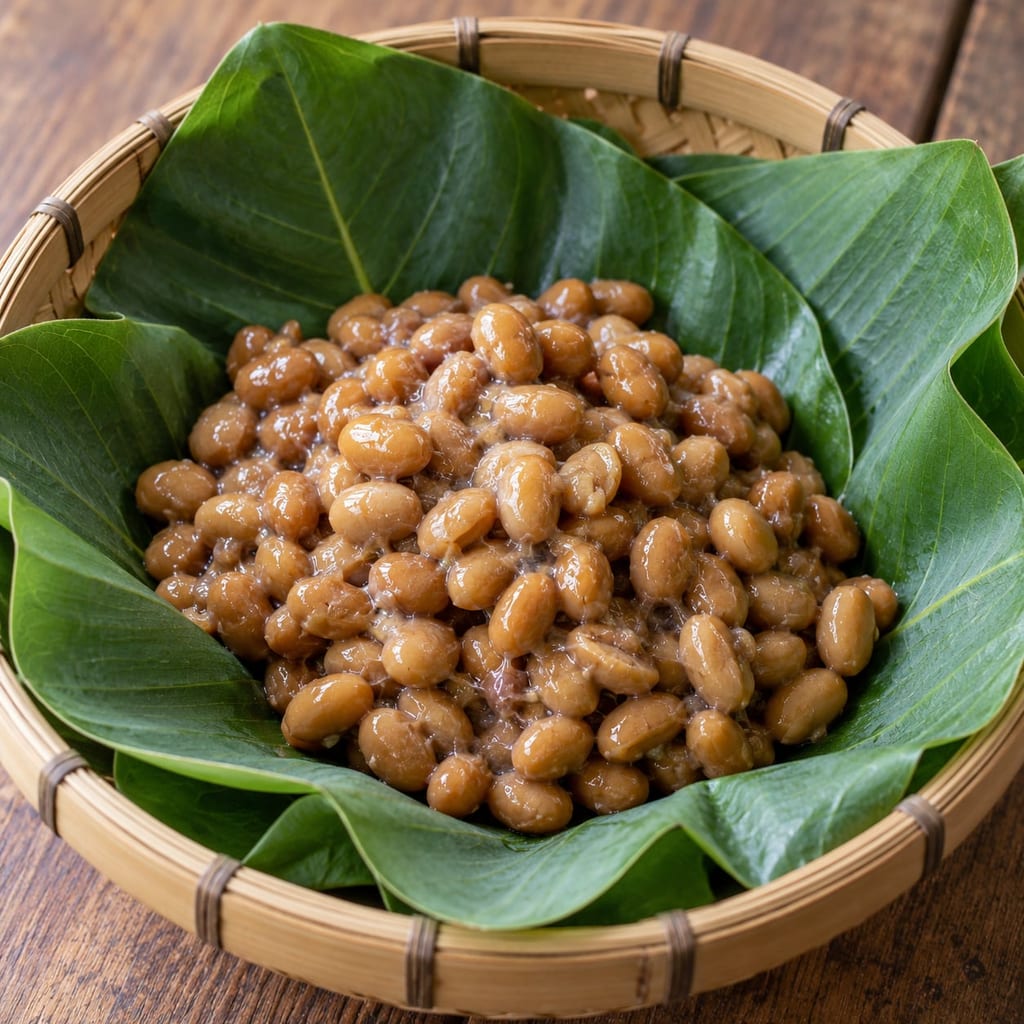
A sticky fermented soybean food of Manipur, made by packing cooked soybeans in leaf-lined bamboo baskets and keeping them warm, related to but distinct from Bekang and Akhone.
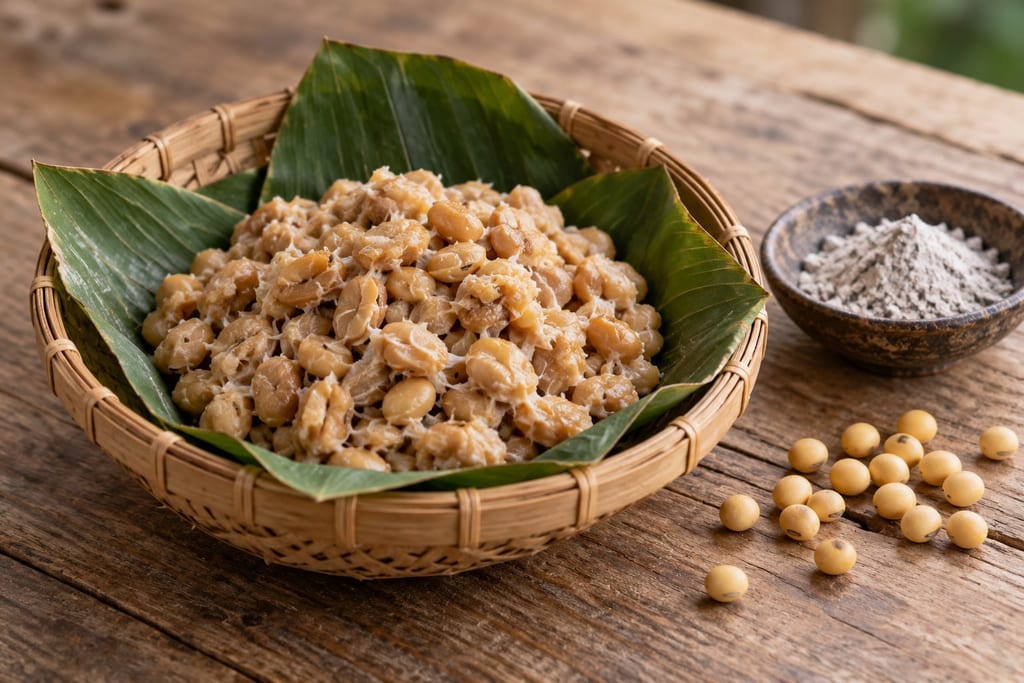
A sticky fermented soybean food of the eastern Himalaya, made here with a measured addition of firewood ash as an alkaline aid to the bacteria that drive it.
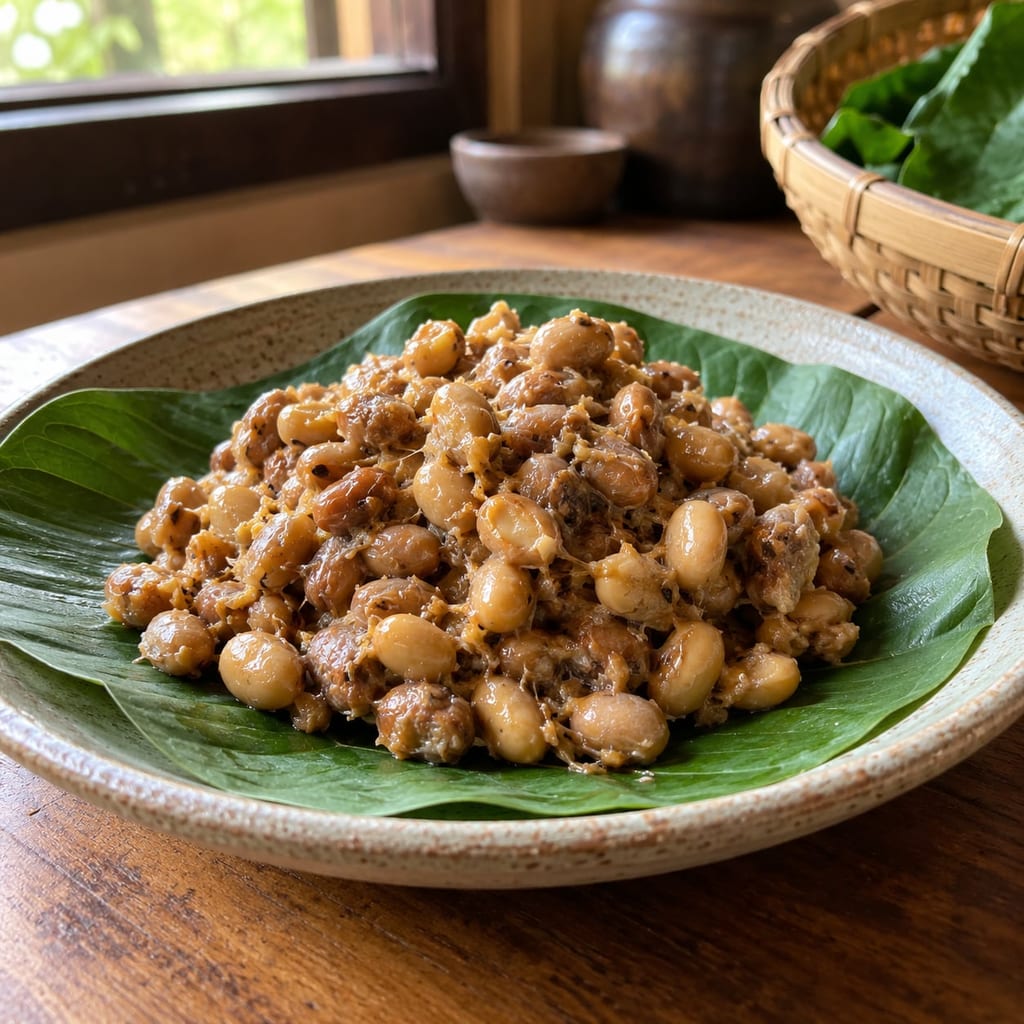
A home kinema made from overnight-soaked white soybeans, cooked, drained hot, wrapped in cloth and insulated to ferment for about a week.
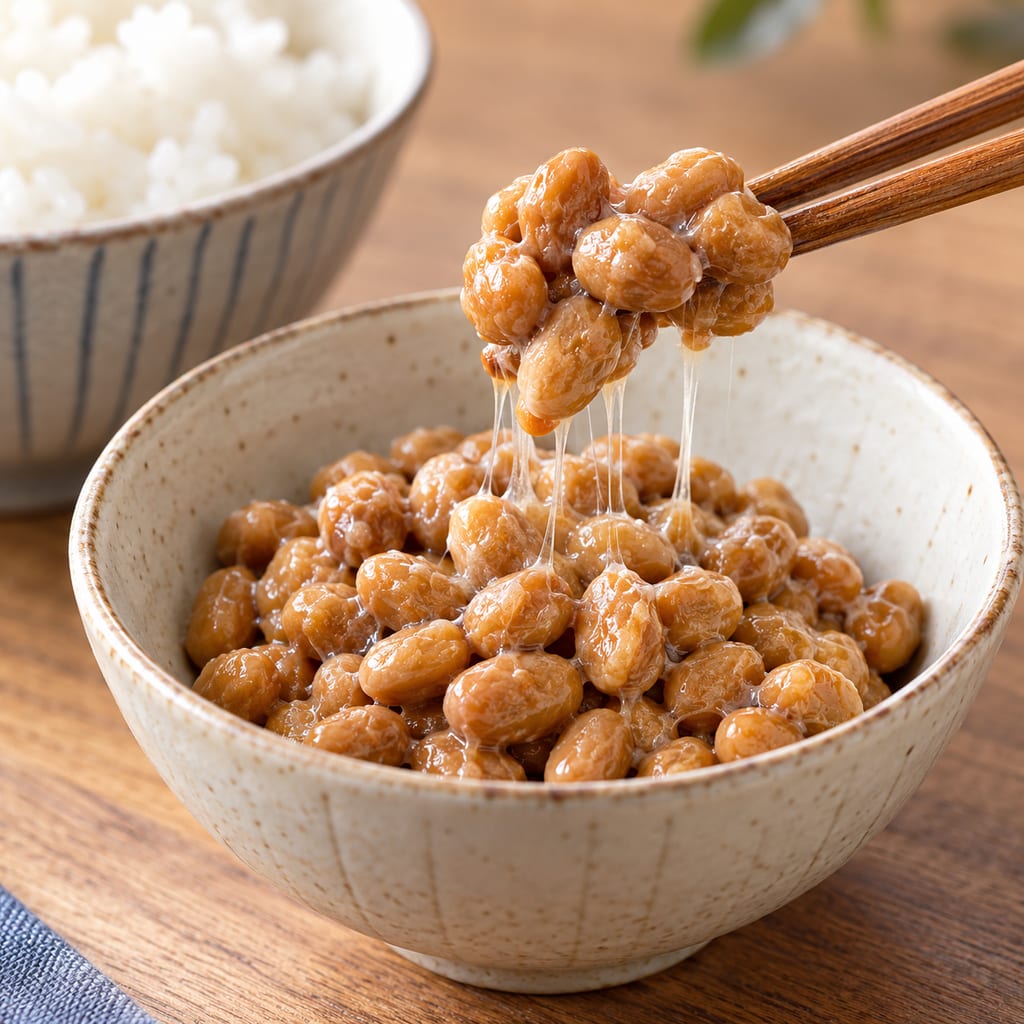
Natto is a Japanese fermented soybean food with a sticky coat and long strings, made by steaming soybeans and inoculating them with a natto Bacillus starter, then keeping them warm.
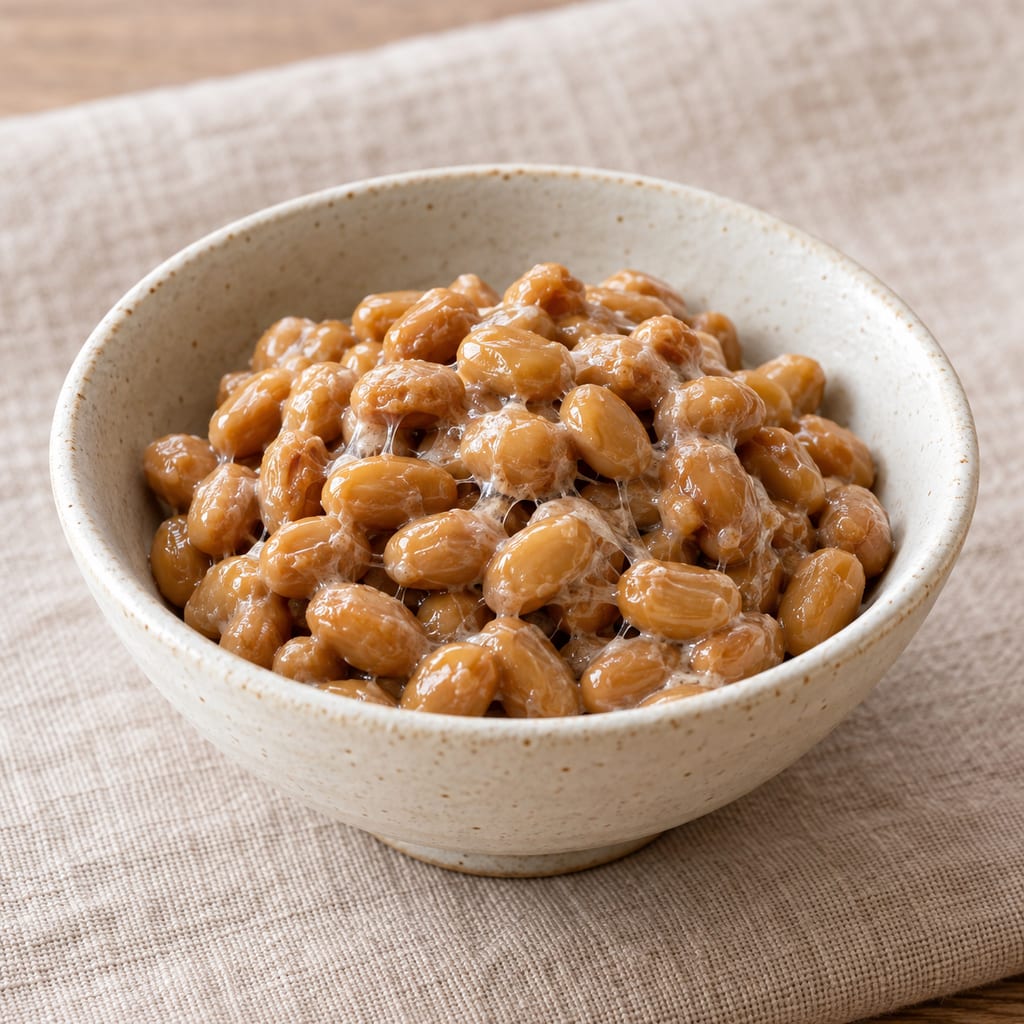
Steamed soybeans fermented by a named strain of Bacillus subtilis into Japan’s sticky, strongly savoury whole-bean food, bound by the thread-forming polymer the bacteria secrete.
No community contributions have been published for this entry yet.
Sign in to contribute. Published comments and photos are free to read.
Indian Journal of Fundamental and Applied Life SciencesMethod · History
Jamir and Deb (2014), Some fermented foods and beverages of Nagaland, IndiaA 2014 study documenting fermented foods and beverages of Nagaland, including axone and fermented vegetables, and describing fermentation practices inherited across generations.
A documented Nagaland method: boiling the cleaned soybeans for 3 to 4 hours in an ordinary pot, or approximately 1 hour in a pressure cooker, draining them, transferring them to a bamboo basket that may be lined with leaves of Ficus species, covering them and holding them near or above the kitchen fireplace for a first stage lasting 3 to 4 days, then pounding or mashing the beans, wrapping the portions in leaves and returning them to the warm kitchen for another 3 to 4 days.
Other documented leaf materials include banana, Phrynium pubinerve and Macaranga indica, with banana and Phrynium pubinerve recorded for the wrapping stage.
Cited in: History and cultural setting; Choosing and preparing soybeans; The first fermentation; Pounding and the second fermentation
ResearchGateSafety · Science
Singh and colleagues, Microbial quality and safety of axone (akhuni), a fermented soybean food of NagalandA detailed 2014 microbial-quality and safety survey of 191 axone samples from markets in Nagaland, comprising 35 fresh, 136 matured and 20 dried samples associated with seven community groups.
Measured pH ranges by product category: fresh axone 4.56 to 7.54, matured axone 5.70 to 8.62 and dried axone 5.58 to 8.54, with maturation associated with higher pH in parts of the dataset.
Of those samples, 60 were positive for lactose-fermenting bacteria on the study's selective culture medium, Escherichia coli was detected in 24, Klebsiella pneumoniae in 14, and Salmonella enterica serovar Typhimurium in 4, alongside other organisms including Aeromonas and Proteus species.
The study additionally found large numbers of Bacillus spores. These are findings from the sampled market products rather than proof that all axone is unsafe, and they demonstrate that traditional fermentation alone cannot guarantee the absence of foodborne pathogens.
One composition report gives matured axone approximately 48 per cent moisture.
Cited in: A surprisingly wide range of acidity; Drying and storage; What a satisfactory fermentation looks like; The unusually important food-safety evidence
International Journal of Creative Research ThoughtsMethod · History
Imchen and Sinha (2025), Traditional Preparation Methods and Tribal Variations of AxoneA 2025 survey examining preparation methods across nineteen communities living in Nagaland, reporting differences in names, soybean selection, wrapping leaves and handling, including variations in soaking, cooking, incubation and preservation.
Some methods involve soaking before cooking while other recorded methods emphasise washing and prolonged boiling without specifying the same preliminary soaking stage, and this study records shorter boiling in its surveyed processing sequence.
Related fermented soybean practices occur among Ao, Angami, Lotha, Chakhesang and other communities as well as the Sumi, historically also called Sema, with whom axone is most strongly associated.
Some community accounts describe one or two further days for the second stage while some makers allow a longer period of maturation.
Cited in: A powerful ingredient at the heart of Naga cooking; History and cultural setting; Choosing and preparing soybeans; The first fermentation; Pounding and the second fermentation; Regional variation within Nagaland; Axone as a living culinary tradition
Slow Food Foundation for BiodiversityHistory · Method
Slow Food Foundation: Axone fermented soybeansA regional product description covering axone's culinary uses: a flavouring ingredient rather than a complete dish, used in pork preparations, vegetable stews, fish dishes and chutneys, and especially valued alongside smoked pork.
Related foods of the wider family include kinema in the eastern Himalayas, hawaijar in Manipur, tungrymbai in Meghalaya, bekang in Mizoram and peruyyan in Arunachal Pradesh, which share microbial principles without using the same preparation or filling the same culinary role.
A documented dry preparation allows matured axone to dry further and then grinds it into a powder for later cooking, while other versions are sun dried.
Cited in: A powerful ingredient at the heart of Naga cooking; Why fermented soybeans became important; Drying and storage; Axone in pork dishes; Chutneys, stews and other accompaniments; Axone as a living culinary tradition
Annals of MicrobiologyScience · Safety
Impact of Bacillus in fermented soybean foods on human healthA microbiological comparison of Bacillus in fermented soybean foods and its safety context: Bacillus species, particularly Bacillus subtilis and related organisms, are important in the broader group of alkaline soybean fermentations, producing proteases that cleave soybean proteins into peptides and free amino acids.
Poly-gamma-glutamic acid, glutamic-acid units linked into long chains, can give fermented soybeans a viscous or mucilaginous texture; the same polymer underlies the stickiness of Japanese natto and Himalayan kinema.
Certain strains of Bacillus cereus can cause foodborne illness and produce toxins, and a product dominated by bacteria of the genus Bacillus is not automatically safe merely because some members of that genus are useful fermentation organisms. Spore-forming bacteria matter particularly because some can survive heating and persist in the environment, and any selected starter must be assessed for the specific strains involved, including toxin-producing potential.
A broader review describes approximately 2 to 3 days of sun drying for certain fermented soybean preparations, a figure that is not a universally validated axone specification.
Cited in: Why fermented soybeans became important; The microbiology of axone; What the sticky texture means; Drying and storage; What a satisfactory fermentation looks like; The unusually important food-safety evidence; Why cooking is not a complete substitute for control
PubMed CentralMethod · Safety
Hornbill Festival survey of traditional foods in NagalandA field survey of traditional foods at Nagaland's Hornbill Festival recording a contemporary Sumi preparation combining smoked pork, fermented soybeans, water, salt, ginger, garlic and red chilli, boiled and simmered until the meat is tender and the seasoning is incorporated, with a recorded cooking time of at least one hour and a consistency ranging from a thinner curry to a thicker preparation.
The survey does not publish a universally applicable weight of every ingredient in the accessible summary, and the recorded cooking duration is a duration for the dish rather than a preservation or pathogen-destruction specification.
Market safety discussion supporting the point that food-safety control must begin before the final cooking stage, because poor handling during soybean cooling, contaminated wrapping material, unhygienic fermentation vessels and prolonged storage at unsuitable conditions can all introduce risks.
Cited in: Axone in pork dishes; A documented modern smoked-pork application; Why cooking is not a complete substitute for control
Incredible IndiaInspiration
Incredible India: Traditional food of MokokchungA regional culinary description used here for contemporary uses and dishes: axone prepared as a chutney with roasted tomato, chilli, ginger and salt mashed together into a concentrated condiment, sometimes with garlic or other locally preferred seasonings, and its appearance in vegetable stews, dried-fish dishes and beef preparations served with rice.
Cited in: Chutneys, stews and other accompaniments