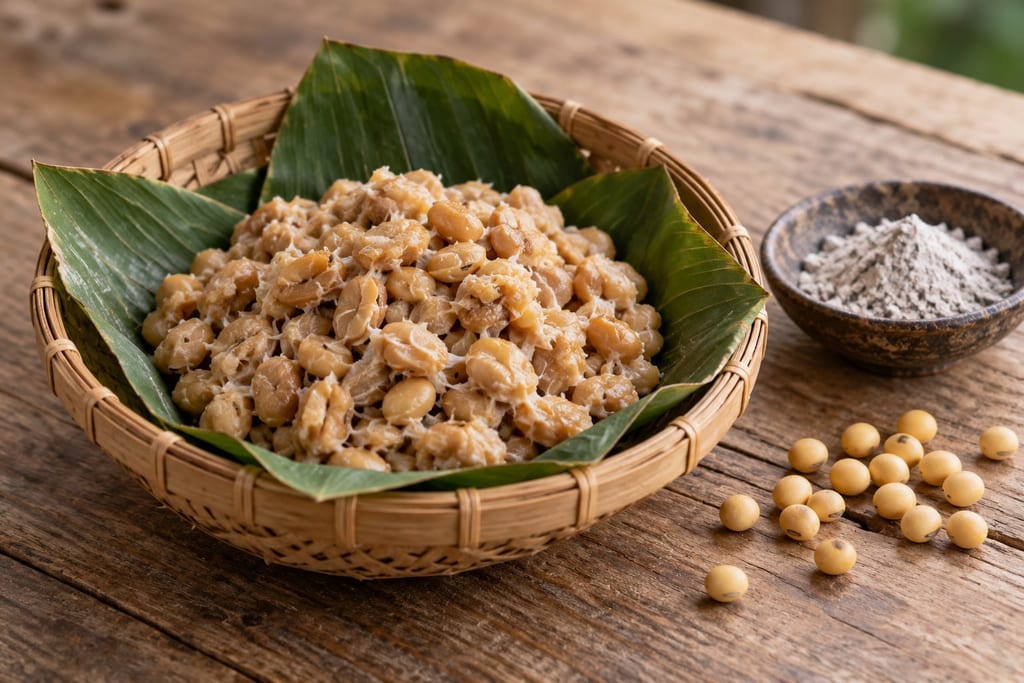
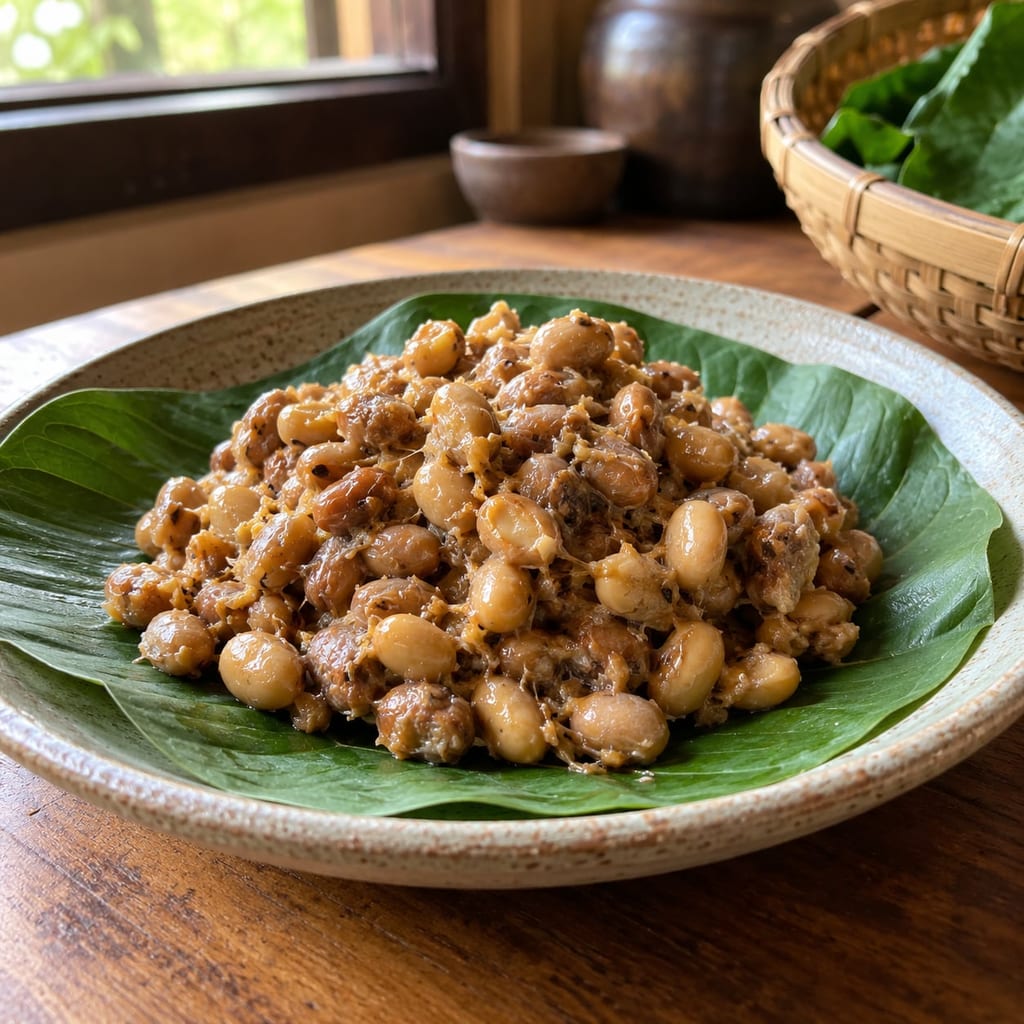
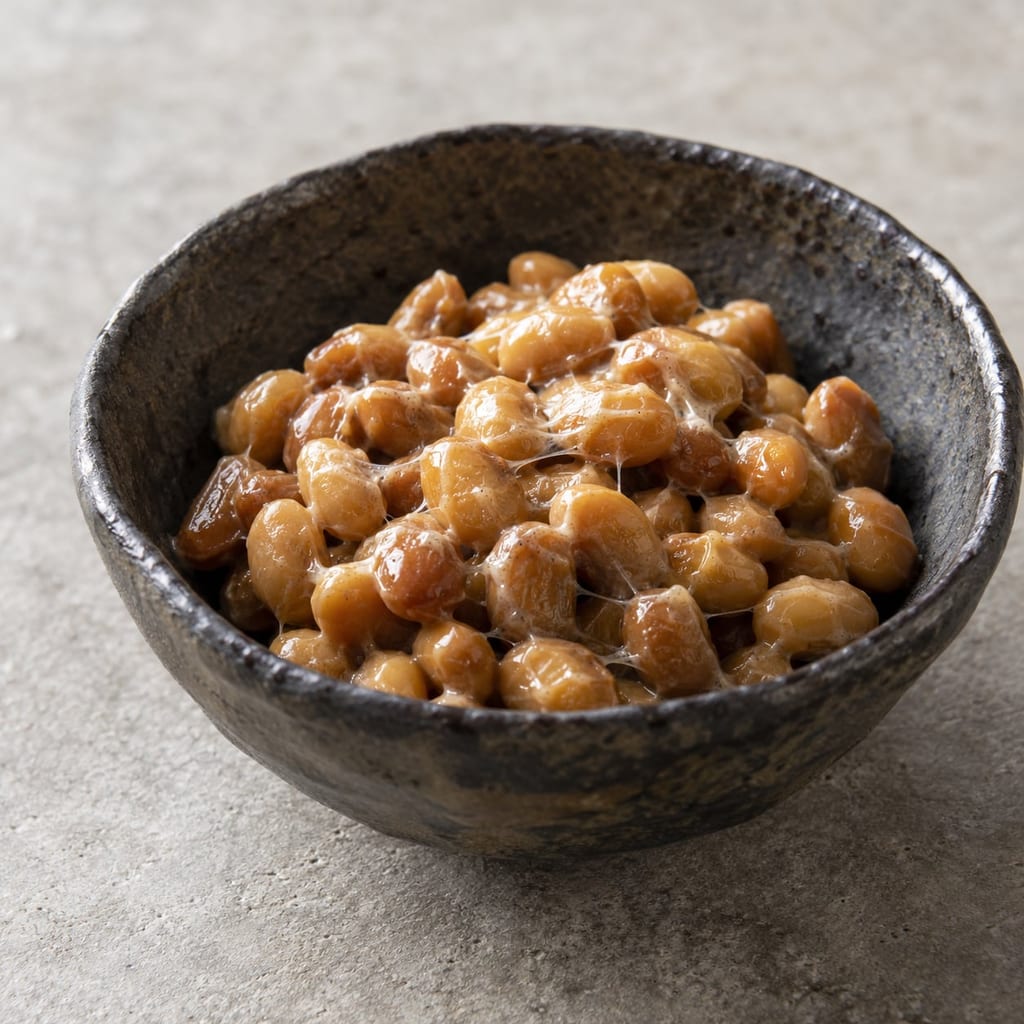
Natto is a Japanese fermented soybean food with a sticky coat and long strings, made by steaming soybeans and inoculating them with a natto Bacillus starter, then keeping them warm.
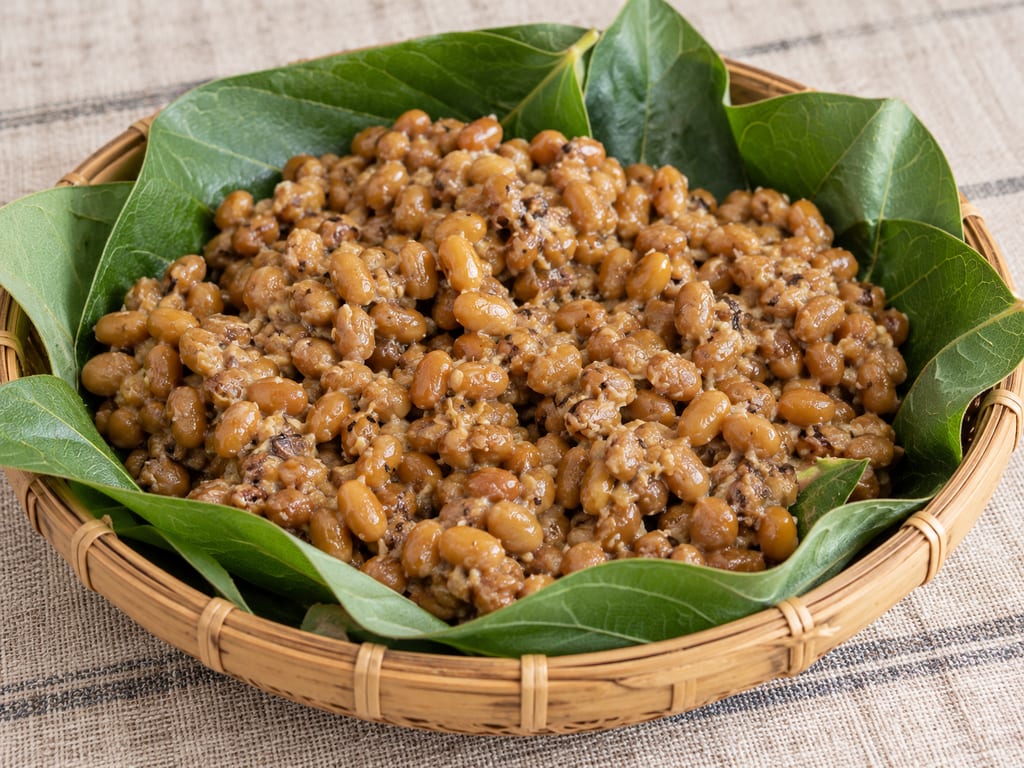
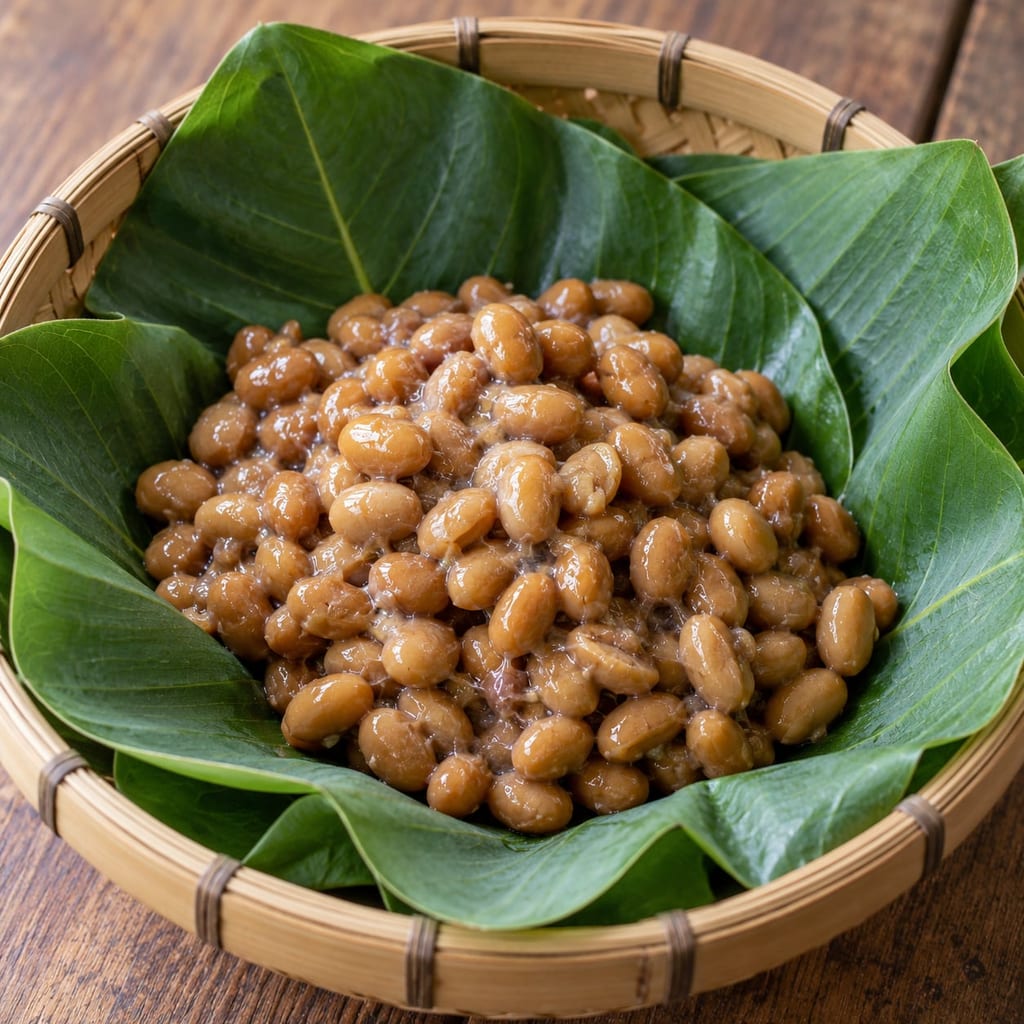
Natto is a Japanese fermented soybean food. Whole soybeans are steamed and then inoculated with a natto starter, and the warm incubation turns them into a sticky, stringy mass with a strong smell. It is eaten on rice, often with soy sauce, mustard and green onion, and it is also used in rolls and soup, as Kikkoman's account describes.
The starter is the key to the batch. Commercial natto is made from Bacillus subtilis cultures selected for the job, and research on natto-associated strains reports differences among tested strains. A home batch that uses a retail pack or a liquid starter does not always disclose the strain, so the culture cannot be identified from the product name alone.
The most complete batch comes from a home video that uses 250 g of dry soybeans. The beans are soaked for about 15 hours, then pressure-steamed with 1.5 cups of water for 40 minutes. Once the heat is off, the cooker rests for 15 to 20 minutes before it is opened.
Frozen retail natto is cut into nine portions. One portion is mixed with a teaspoon of cooled soybean cooking liquid and combined with the beans. The beans go into a shallow heat-safe dish under two layers of film, one with air holes, and a towel. An oven light and a hot-water bottle keep them warm. The creator aims for 35 to 40°C and reports readings between 38 and 41.5°C over about 20 hours, while the caption says 18 to 22 hours. The wording of where the starter is mixed is not fully clear in the captions.
A video from the Netherlands uses 400 g of dry soybeans, a 12-hour soak, a 1 hour 45 minute boil, one quarter of a frozen retail pack, and a 42°C yogurt-maker incubation for 24 hours, followed by one and a half to two days in the refrigerator. A liquid-starter video uses 150 g of beans with 1 g of liquid starter, pressure-cooks them, and holds them in a foam box warmed by hot water for 20 to 24 hours. A yogurt-maker video uses 150 g of beans and half a retail pack, steams for 30 minutes, incubates at 45°C for 24 hours, then refrigerates for 24 hours and reports about 300 g of finished natto.
The batches differ in starter, mass and temperature, and none of them is a standard. This page keeps each one as the creator's account and does not merge them. One video compares four container layouts; its captions are too garbled to pair the observations with each layout, and the creator's preference for a paper-towel layer is a personal choice, not a safety finding.
The reviewed batches hold the beans warm for about a day and then refrigerate them. The BC Centre for Disease Control's guidance on natto is general safety context. It does not validate these home temperatures or the creator's one-week storage claims.
Surface film, aroma and stickiness are the creators' observations. They are not measurements, and they do not show that a batch is safe to eat. The sources do not establish an earliest food attestation or a batch location for the home methods.
The BC Centre for Disease Control's Natto guidance identifies Bacillus cereus and Clostridium perfringens as hazards when soybeans are improperly cooked or cooled. It specifies soaking in potable water at 4°C or below, controlling the period after cooking so starter is added within two hours after the beans fall below 60°C, and cooling fermented soybeans to 10°C or below within four hours. The home videos do not report the soak temperature or timed cooling controls. These professional guidance points are separate safety context; they do not validate the video batches or turn them into a tested home process.
Natto is a Japanese soybean food. Commercial production is described separately by the Japan Natto PR Center. The home batches reviewed here are modern.
Ingredients
Yield 300 g · Scaling: source batch only
SoybeansSoak for about 15 hours, then pressure-steam with 1.5 cups water for 40 minutes. Let the cooker rest 15 to 20 minutes before opening.
250 g
Quantity from the Mariko Vegan batch. Other home batches use 150 g to 400 g.
Frozen retail nattoCut the pack into nine portions. Use one portion as the starter, mixed with 1 tsp of cooled soybean cooking liquid. Keep the other eight frozen.
1
One of nine portions. The pack's mass and brand are not given.
Soybean cooking liquidCool it, then mix it with the starter portion.
4.9 mL1 tsp as recorded
Method
Risks and precautions · Elevated risk
Warm incubation of cooked soybeans without a validated control
The batch is held at 35 to 41.5°C for about 20 hours on creator observations, with no validated endpoint.
Hazard source
Storage claims made without a validated limit
The one-week refrigerated and frozen storage statements are the creator's and are not reconciled with qualified guidance.
Hazard source
Qualified review of incubation temperature and storage limits for home natto
Control source
Surface film, aroma, stickiness and taste are creator observations, not safety endpoints.
Retail natto's brand, culture and mass are not given, so the starter cannot be identified.
Use the home method as a record of practice, not a validated process.
Soak the soybeans for about 15 hours.
Pressure-steam the beans with 1.5 cups water for 40 minutes. Let the cooker rest 15 to 20 minutes before opening.
Cool the beans. Mix one portion of frozen retail natto with 1 tsp of cooled cooking liquid as the starter. The source's wording of where this mixture goes is not fully clear.
Spread the beans in a shallow heat-safe dish and cover them with cling film that touches the beans. Lay a second outer film with many air holes over it, and wrap the dish in a towel.
Keep it warm with an oven light and a hot-water bottle. The creator's target is 35 to 40°C. Readings over about 20 hours were 38, 41.2, 39.9 and 41.5°C.
Incubate for 18 to 22 hours, as the source gives.
Cover the beans with fresh film and refrigerate for 24 hours.
The creator says the refrigerated portion should be eaten within one week and the rest frozen in 50 g portions wrapped in wax paper.
Conditions
Yield300 g
Fermentation18–22 h
Temperature35–41.5°C
Places
Japan
Traditional preparation · Country evidence
Kikkoman describes natto as Japanese. Its origin discussion is tentative, so no first date or birthplace is assigned.
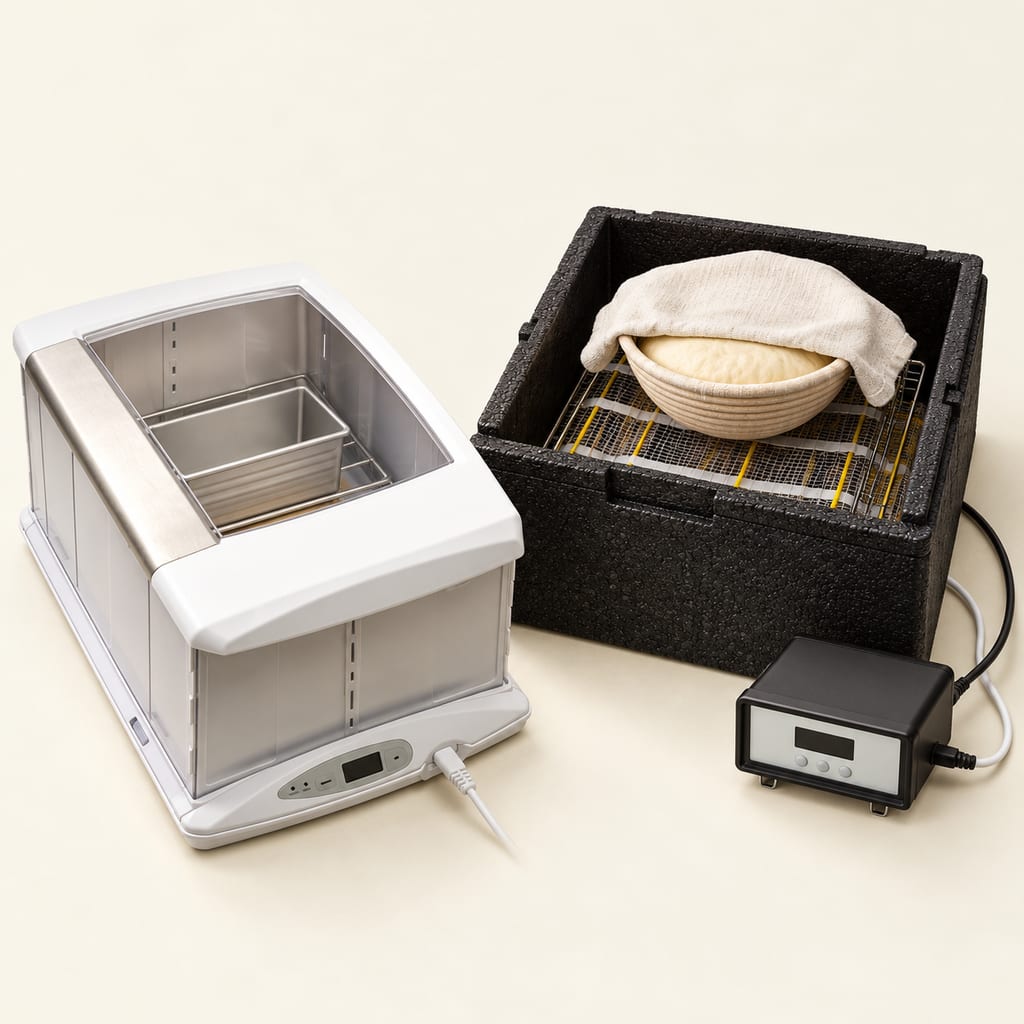
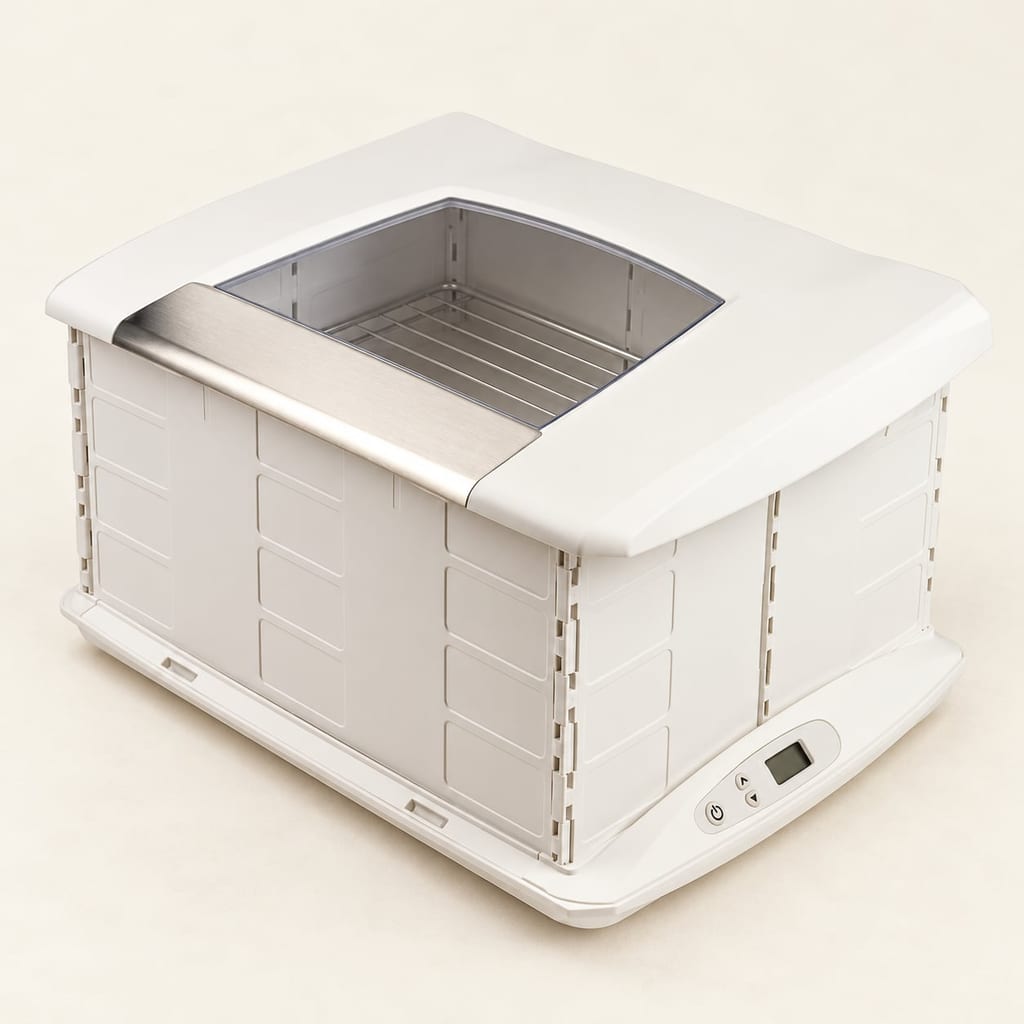
A bread proofer creates a warm, sheltered place for dough to rise. Purpose-built countertop proofers and insulated boxes with separately controlled heat are different designs; neither sets one temperature or proofing time for every dough.
A folding, electric proofing cabinet with a heated aluminum plate, removable rack and water tray. The maker also documents it for yogurt, kombucha, tempeh, natto and black garlic.
A heat-only proofer used in turn for tempeh bags, natto jars, kombucha, yogurt and black garlic, each with its own container, rack and water-tray setting.
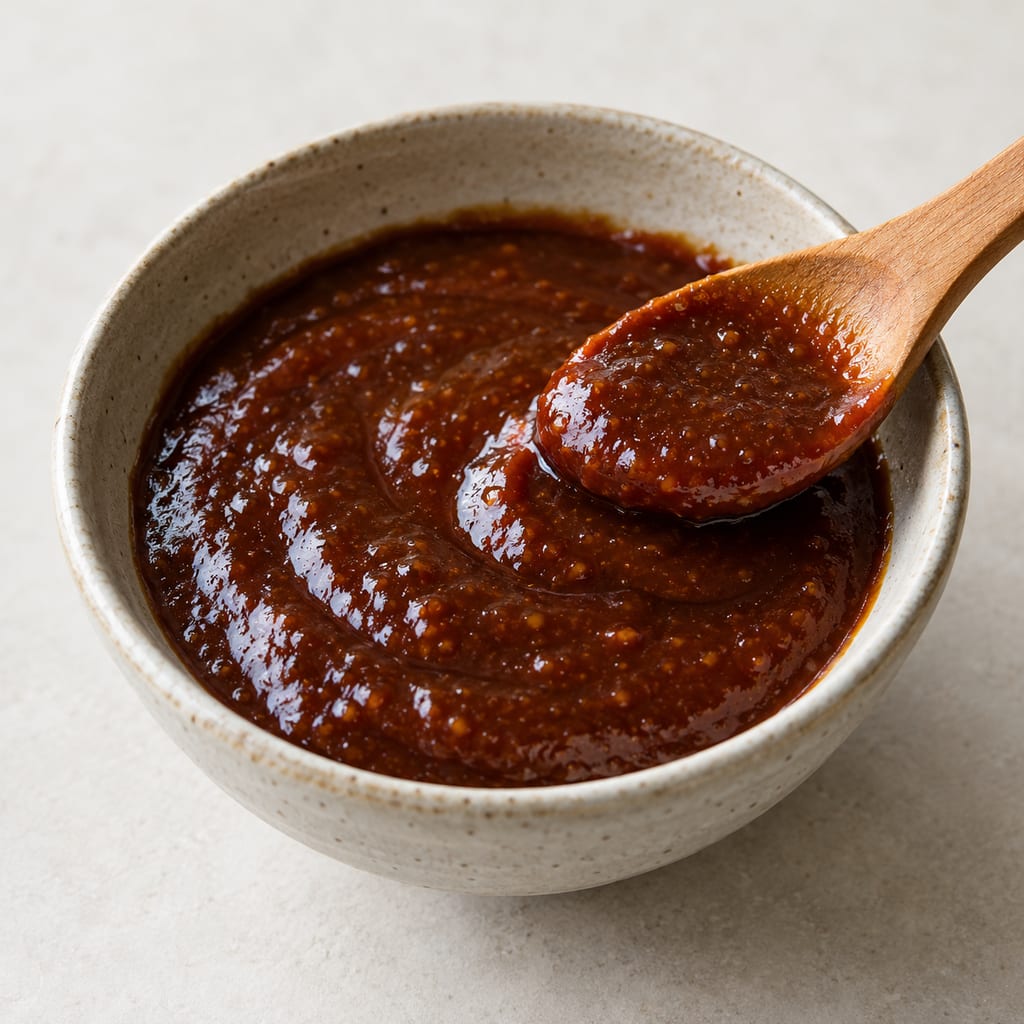
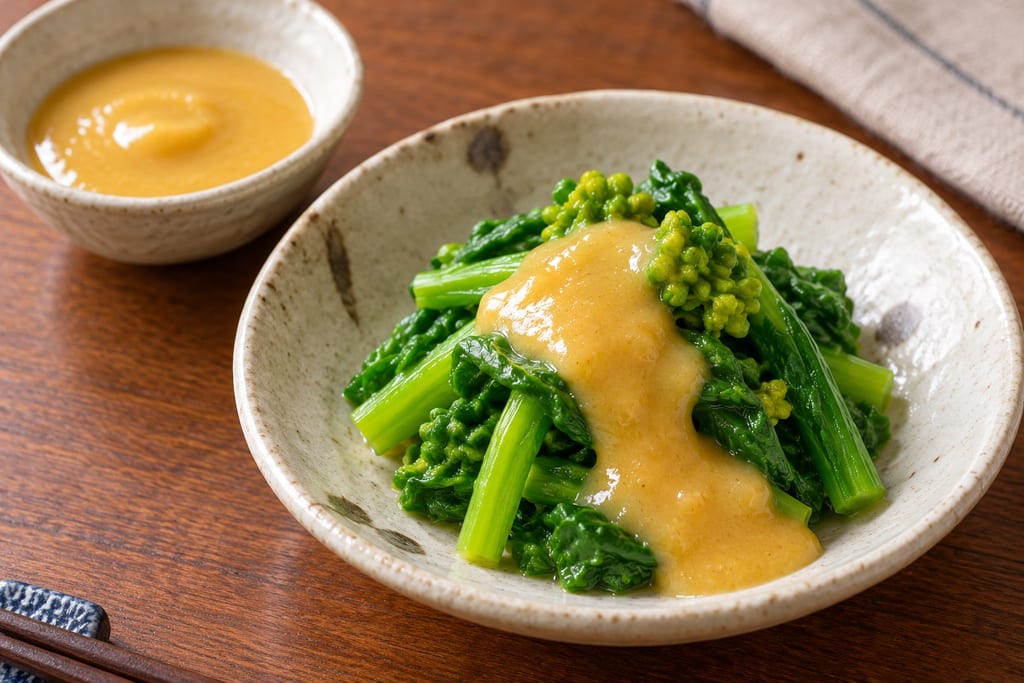
A sweet-salty Japanese glaze of miso, mirin, sake and sugar, warmed until thick and spread on grilled tofu, eggplant, daikon or konnyaku. Regional versions in Aichi use red miso and dashi.
Steamed soybeans fermented by a named strain of Bacillus subtilis into Japan’s sticky, strongly savoury whole-bean food, bound by the thread-forming polymer the bacteria secrete.
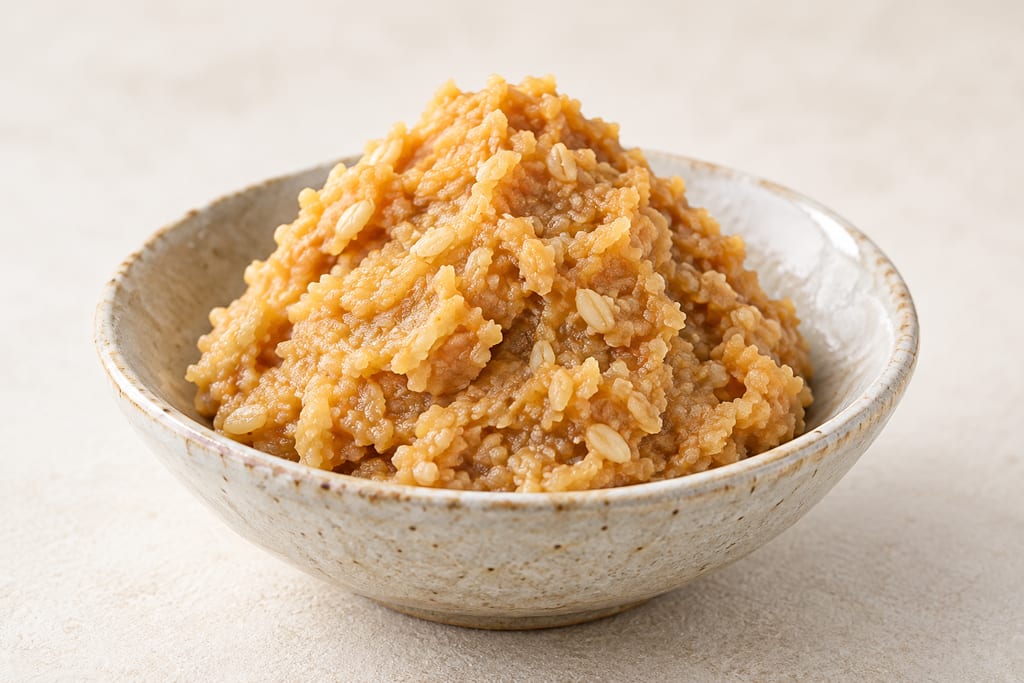
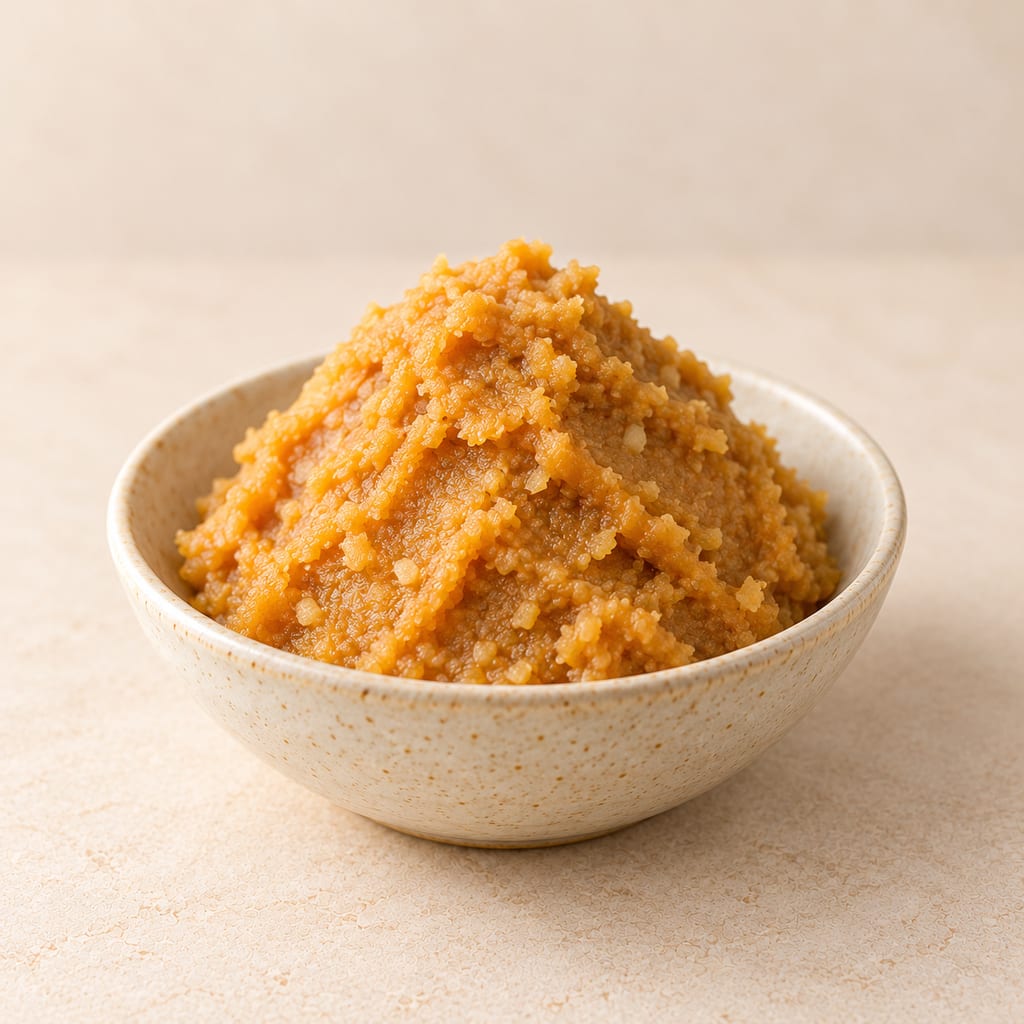
A traditional Japanese fermented paste made by mixing cooked soybeans with rice koji and salt. This guide details the ratio, the long enzymatic breakdown, and the months-long maturation required for depth.
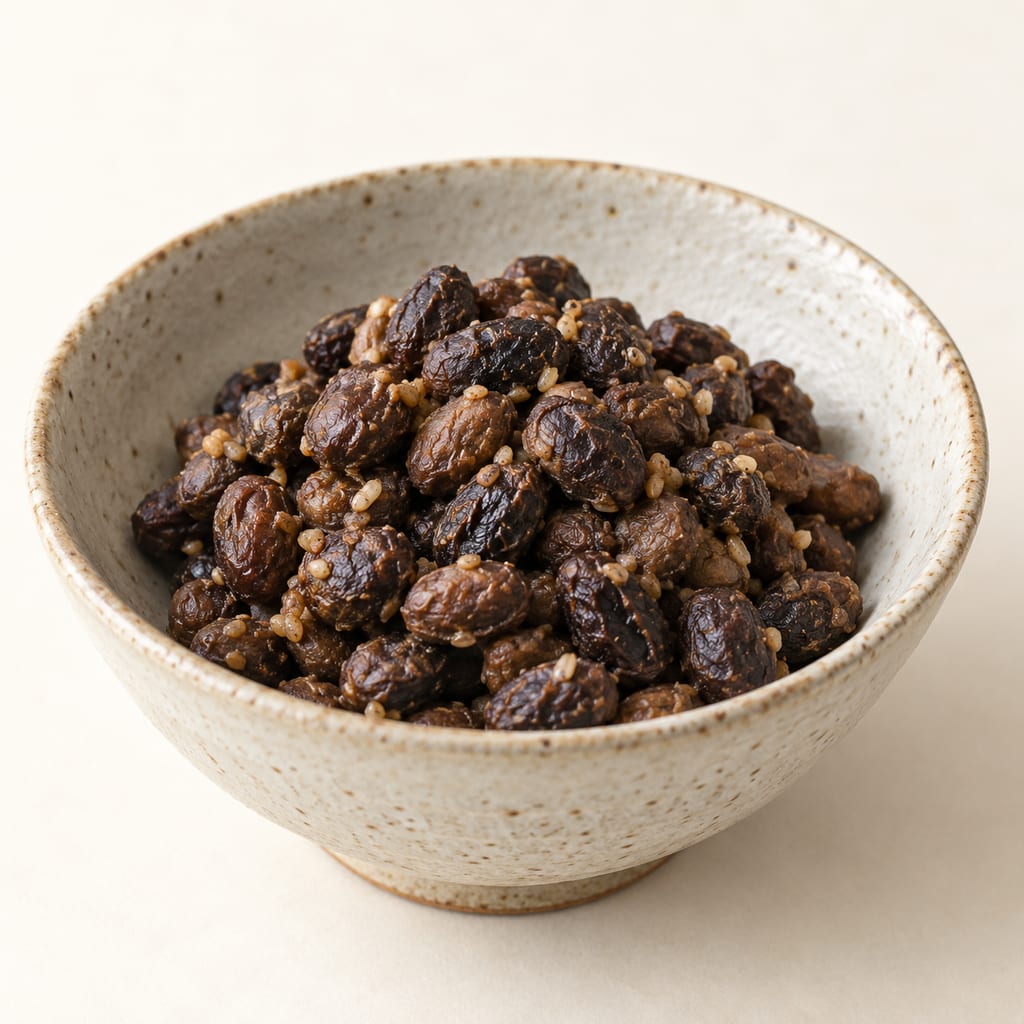
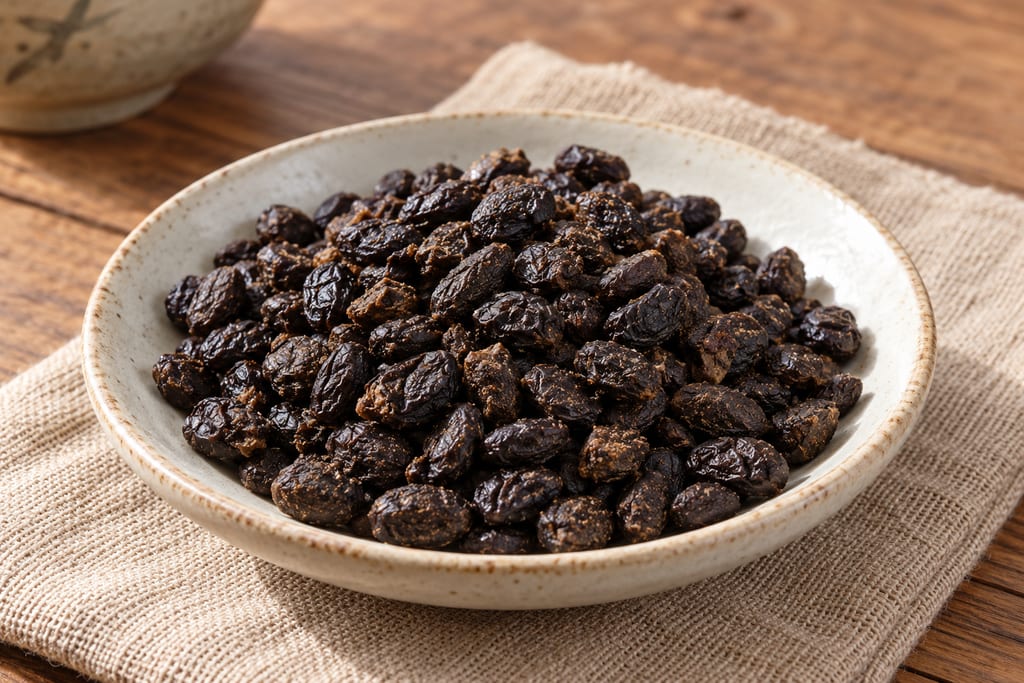
A Japanese family of salted, dark, non-stringy natto made from whole soybeans, roasted grain and salt water, with names such as hama-natto, Daitokuji-natto and tera-natto. Not the sticky Bacillus natto.
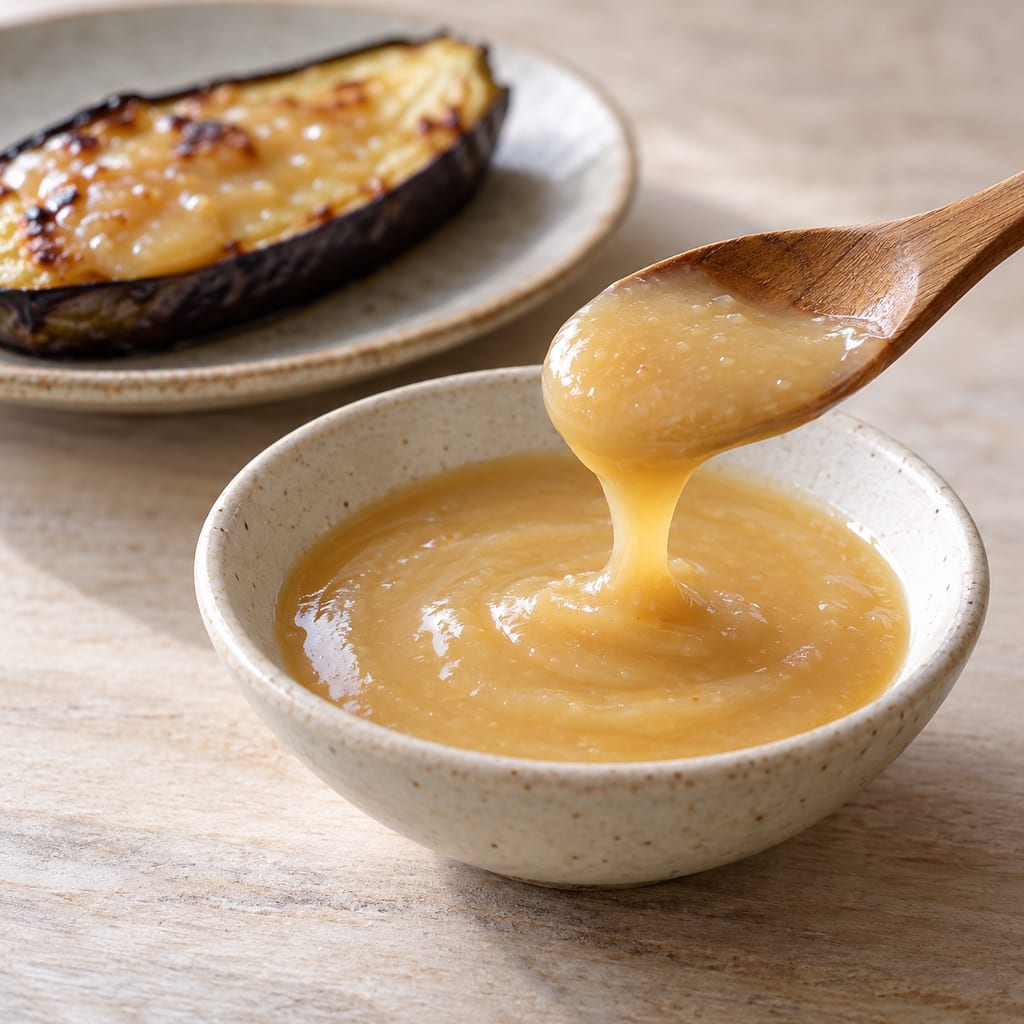
A Japanese-style glaze of pale rice miso, water, sugar and rice vinegar, heated gently until it coats a spoon and spread over cooked aubergine, tofu or vegetables.
Japanese reddish-brown vinegar from sake lees matured about three years, turned to vinegar by acetic bacteria; the vinegar of Handa and Edomae sushi rice.
Soybeans boiled soft and fermented in a leaf-lined basket by the hearth, then in many Naga households pounded, wrapped in leaves and fermented again into a dark, pungent seasoning paste.
A Chinese fermented soybean condiment in which Bacillus-led bacteria, not moulds, drive the fermentation. Documented in Zunyi, Guizhou, and kept separate from mould-led douchi.
A Mizo alkaline soybean ferment made by holding cooked beans in leaf-lined containers, sometimes with wood ash, until they turn sticky, soft and pungent; eaten fresh or used as a seasoning.
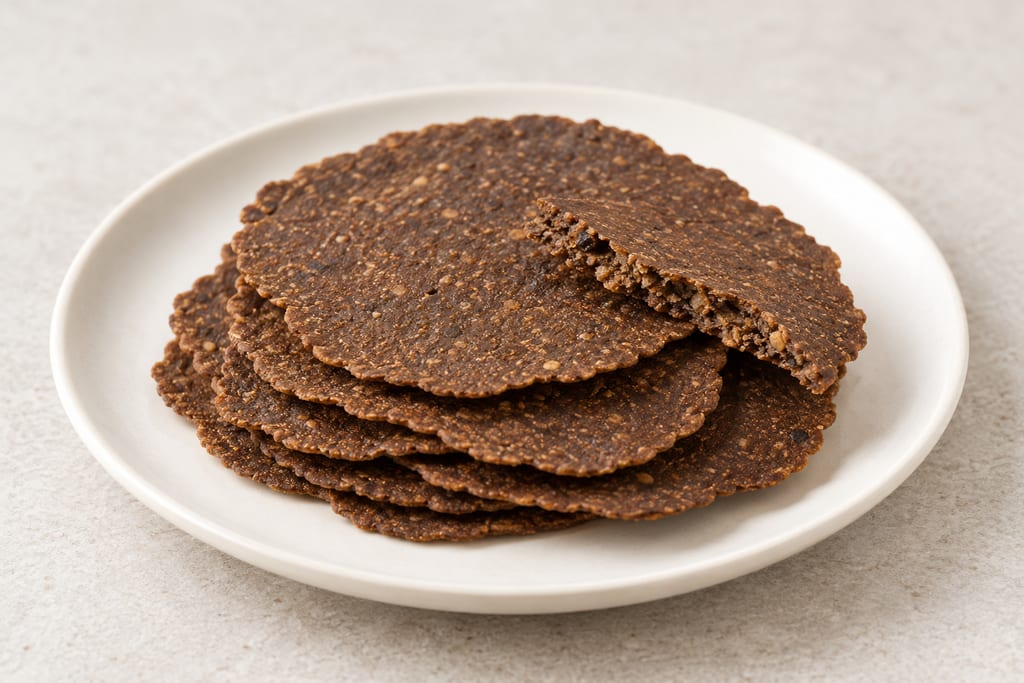
Black soybeans cooked, inoculated with a named Bacillus subtilis culture and fermented warm and humid into northern Thailand's thua nao, then optionally dried into thin discs.
A sticky fermented soybean food of Manipur, made by packing cooked soybeans in leaf-lined bamboo baskets and keeping them warm, related to but distinct from Bekang and Akhone.
A sticky fermented soybean food of the eastern Himalaya, made here with a measured addition of firewood ash as an alkaline aid to the bacteria that drive it.
A two-cup soybean batch uses one Cultures for Health Natto Spores packet, a shallow perforated cover, and the supplier’s stated incubation and chilling sequence. The supplier’s instructions are not a validated home process.
Community
No community contributions have been published for this entry yet.
Share what you made
Sign in to contribute. Published comments and photos are free to read.
BCCDC natto safety guidance identifies B. cereus and C. perfringens hazards when soybeans are improperly cooked or cooled.
Guidance specifies soaking in potable water at ≤4°C, starter addition within 2 hours after beans fall below 60°C, and cooling fermented beans to ≤10°C within 4 hours.
These controls are professional safety context and do not validate the documented home-video batches.