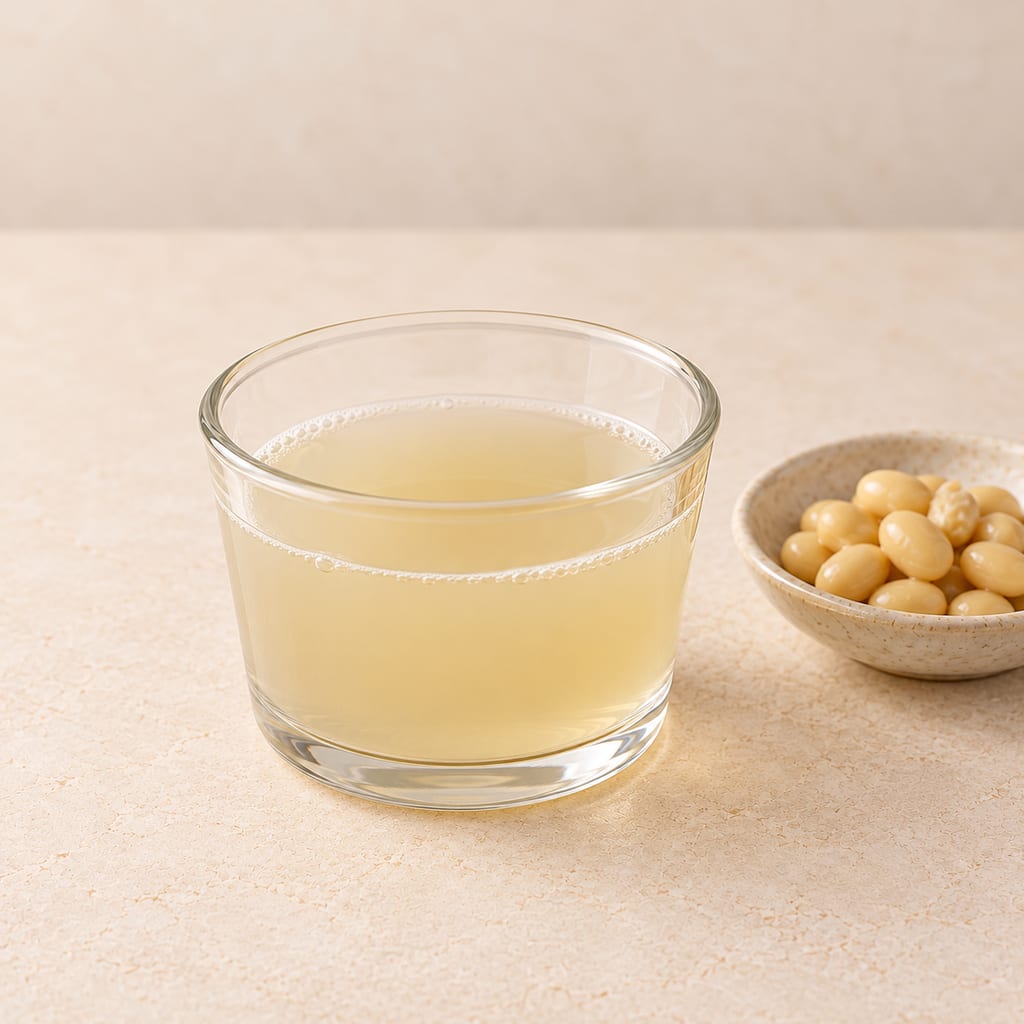
Cooked soybean liquid
The liquid remaining after boiling or steaming soybeans, often reserved to adjust the moisture content and consistency of the miso mash (moromi) during fermentation.
 FermenteaWhere food goes to change
Traditional method
Miso
A traditional Japanese fermented paste made by mixing cooked soybeans with rice koji and salt. This guide details the ratio, the long enzymatic breakdown, and the months-long maturation required for depth.
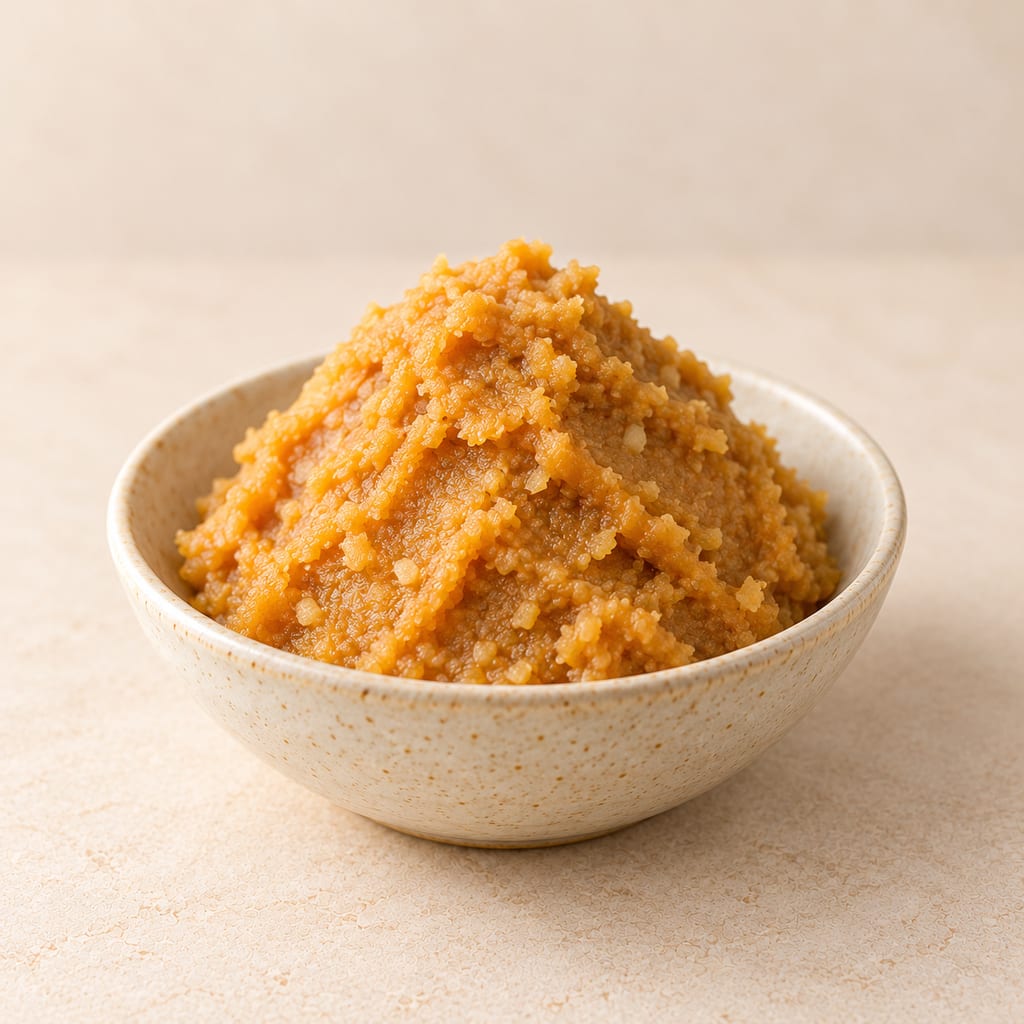
Rice-koji soybean miso represents a cornerstone of Japanese culinary heritage, functioning not merely as a condiment but as a fundamental building block of flavor. This fermented paste is distinct from other global fermented foods due to its specific reliance on rice koji—rice inoculated with the mold Aspergillus oryzae—as the primary enzymatic agent. When combined with cooked soybeans and salt, this mixture undergoes a complex transformation over several months, resulting in a product prized for its deep umami character, complex aroma, and rich texture. The process is fundamentally a two-stage fermentation: first, the cultivation of koji on rice to develop specific enzymes; second, the mixing of this koji with soybeans and salt to undergo long-term enzymatic and microbial breakdown.
The resulting paste varies significantly in color, taste, and consistency depending on the precise ratios of ingredients and the duration of fermentation. While some varieties are sweet and light-colored, others are dark, salty, and robust. The recipe detailed here follows a traditional method that balances the sweetness derived from the rice koji with the savory depth provided by the soybeans. This balance requires patience and careful attention to temperature and hygiene throughout the process. The final product is versatile, used in soups, marinades, dressings, and glazes, reflecting centuries of culinary refinement and scientific understanding of fermentation.
This specific formulation, often referred to simply as rice miso, accounts for approximately 80% of miso production in Japan, highlighting its cultural and economic significance. The method described by the Edible Schoolyard Japan (ESYJ) provides a clear, accessible framework for home fermentation, emphasizing simplicity and traditional ratios. By understanding the underlying principles of koji cultivation and enzymatic activity, home fermenters can replicate the complex flavors found in commercial products while maintaining control over ingredients and process.
The Edible Schoolyard Japan (ESYJ) recipe provides a clear, accessible framework for home fermentation, emphasizing simplicity and traditional ratios. The method begins with soaking dried soybeans for 18 to 24 hours, a step crucial for ensuring even cooking and proper texture. This rehydration process allows the beans to absorb water, reducing the cooking time and ensuring that the interior of the bean becomes tender without the exterior becoming mushy. The beans are then boiled until they are extremely tender, a state confirmed by the ability to crush a bean easily between the thumb and pinky. This thorough cooking breaks down the cell walls of the soybeans, making the proteins accessible to the enzymes in the koji.
A key aspect of the ESYJ method is the management of temperature during mixing. The cooked beans must be cooled to a point where they are warm to the touch but not hot, as high temperatures will kill the Aspergillus oryzae mold in the koji. This critical temperature control ensures that the enzymes remain active and capable of breaking down the soybean proteins and rice starches. The koji is crumbled and mixed with the majority of the salt before being combined with the beans. This pre-mixing helps distribute the salt evenly, which is vital for both flavor and safety. The salt acts as a preservative and a regulator of microbial activity, suppressing undesirable bacteria while allowing salt-tolerant yeasts and lactic acid bacteria to thrive.
The mixture is then packed into a crock, removing air pockets to create an anaerobic environment conducive to long-term aging. This packing step is essential to prevent the growth of aerobic spoilage organisms and to ensure that the fermentation proceeds uniformly. The use of reserved cooking liquid to adjust the consistency of the mash ensures that the final product has the correct texture, which is described as similar to the softness of an earlobe. This tactile description helps home fermenters gauge the correct moisture content, which is crucial for proper fermentation and final texture.
Miso fermentation is a complex interplay of enzymatic and microbial activities. Once the koji, beans, and salt are mixed, the process enters a long maturation phase. The enzymes produced by the koji, specifically amylase and protease, begin to break down the starches in the rice and the proteins in the soybeans. This breakdown produces sugars and amino acids, which are the precursors to the miso's characteristic umami flavor and brown color. The sugars are then consumed by lactic acid bacteria and yeasts, which produce lactic acid and ethanol, respectively.
The role of Aspergillus oryzae is foundational. In the production of rice koji, cooked rice is cooled to 35°C within two hours before inoculation with Aspergillus spores, and incubated at approximately 30°C. During this phase, temperature adjustments control enzyme production: 2-5°C above 30°C favors amylase for sweet miso, while 27-30°C favors protease for saltier miso. Temperatures must not exceed 40°C, or enzyme development halts. The koji fermentation is complete in 42 to 48 hours when water activity reaches 0.80 and spores develop; black spores indicate over-aging. This precise control over the koji cultivation stage is critical for determining the final flavor profile of the miso.
In the second stage, the koji enzymes continue to work on the soybean proteins and rice starches. Salt suppresses undesirable bacteria, while salt-tolerant yeasts like Zygosaccharomyces rouxii produce ethanol, and lactic acid bacteria like Tetragenococcus halophilus produce lactic acid. This creates the acidic, alcoholic, and enzymatic environment that defines the final paste. The interaction between these microorganisms and the enzymes creates a dynamic ecosystem where flavors evolve over time. The Maillard reaction, a chemical reaction between amino acids and reducing sugars, also contributes to the browning and flavor development of the miso during the long maturation period.
The balance of ingredients in miso determines its final character. The ESYJ recipe uses a ratio of 1 part cooked soybeans to 1 part rice koji to 0.2 parts salt by weight. This is a relatively low-salt formulation compared to some traditional commercial misos, which may use salt concentrations between 10% and 13%. The general recommended ratio for home miso often cited is 1:1:0.5, meaning higher salt content. The lower salt ratio in this recipe may result in a faster fermentation but requires stricter hygiene controls to prevent spoilage. Understanding these ratios allows home fermenters to tailor the final product to their taste preferences and safety requirements.
The amount of koji relative to the beans also influences the sweetness and enzymatic activity. A higher proportion of koji can lead to a sweeter, more complex flavor profile as more amylase enzymes are available to convert rice starches into sugars. Conversely, a lower koji ratio might produce a more savory, protein-forward paste. The salt acts not only as a preservative but also as a regulator of microbial activity, suppressing undesirable bacteria while allowing salt-tolerant yeasts and lactic acid bacteria to thrive. The interplay between salt concentration and microbial activity is a delicate balance that must be carefully managed to ensure a safe and flavorful product.
Temperature control during the koji-making stage is critical for directing enzyme production. For sweet miso, higher temperatures (up to 35°C) favor amylase, while lower temperatures (27-30°C) favor protease for saltier miso. During the miso maturation stage, ambient temperature is used, with no specific numeric range provided in the source, though the process is designed to span at least one summer to allow for deep flavor development. The seasonal variation in temperature can influence the rate of fermentation and the final flavor profile, making the timing of the process an important consideration for home fermenters.
The process begins with rehydrating dried soybeans in three times their volume of water for 18–24 hours. This soaking step is essential to ensure that the beans cook evenly and achieve the desired tenderness. After soaking, the beans are drained and cooked in plenty of water until very tender. Stovetop cooking can take 6–9 hours, depending on the age of the beans and the heat source. The readiness is tested by squeezing a bean between the thumb and pinky; it should break down easily. Approximately 2 cups of the cooking liquid are reserved for later adjustment, as this liquid contains dissolved proteins and starches that can help adjust the consistency of the final mash.
The cooked beans are cooled until they are warm to the touch but not hot, to avoid killing the koji mold. This cooling step is critical, as temperatures above 40°C can denature the enzymes in the koji, halting the fermentation process. They are then mashed to a slightly textured paste. Separately, the rice koji is crumbled and mixed thoroughly with 95% of the salt until the mixture feels slightly moist. This pre-mixing ensures that the salt is evenly distributed, which is vital for both flavor and safety.
Reserved cooking liquid is added gradually until the mixture reaches a texture similar to the softness of an earlobe. This tactile description helps home fermenters gauge the correct moisture content, which is crucial for proper fermentation and final texture. The mixture is formed into compact balls and pressed firmly into a clean crock to remove all air pockets. The top is leveled, and the remaining 5% of salt is sprinkled across the surface and the base of the crock. The surface is covered tightly with plastic wrap, and a lid or weight is placed on top to maintain pressure and exclude air.
The packed miso is stored in an unheated, cool, dark place for at least six months, ensuring the process spans at least one summer. This long period allows for the development of deep, complex flavors and the gradual Maillard reaction that darkens the paste. The seasonal variation in temperature during the summer months can accelerate enzymatic activity, contributing to the depth of flavor. Some sources suggest checking the miso after three months to remove any surface mold, a practice that also introduces oxygen and can alter the fermentation dynamics. This intermediate step requires careful handling to avoid introducing contaminants.
During this time, the koji enzymes continue to break down proteins and carbohydrates. The growth of the Aspergillus mold is retarded, and the environment becomes dominated by lactic acid bacteria and yeasts. The final product is ready when it has achieved the desired color and flavor intensity, which can vary significantly based on ambient temperature and the specific microbial community present. The maturation process is not merely a waiting period but an active transformation where flavors evolve and deepen over time.
After maturation, the miso is transferred to smaller containers and refrigerated to halt further rapid fermentation. Refrigeration slows down the enzymatic and microbial activity, preserving the flavor and texture of the miso for extended periods. This step is crucial for maintaining the quality of the product after the primary fermentation phase is complete. The miso can be stored in the refrigerator for several months, allowing home fermenters to enjoy the fruits of their labor over an extended period.
Fermenting miso at home carries specific risks that must be managed carefully. The primary concern is the growth of undesirable molds and bacteria, particularly in low-salt formulations. The British Columbia Centre for Disease Control (BCCDC) guidelines highlight that salt concentrations of at least 4% are necessary to inhibit the growth of pathogens like Bacillus cereus and Staphylococcus aureus. The ESYJ recipe's salt level is within this safety margin, but vigilance is required. Using food-grade koji is essential, as wild molds can produce harmful mycotoxins. It is crucial to source koji from reputable suppliers to ensure safety and quality.
Hygiene during the mixing and packing stages is critical. All equipment must be clean, and the miso should be packed tightly to exclude air, which can encourage aerobic spoilage organisms. Surface mold may appear during aging; while some traditional practices involve scraping this off, it is a sign that the environment is not fully anaerobic or that salt distribution was uneven. If extensive mold growth occurs, especially if it is colored or fuzzy, the batch should be discarded. Temperature control is also important; while the source does not specify a numeric range, keeping the crock in a cool, stable environment helps prevent runaway fermentation and spoilage.
Texture problems can also occur. If the miso is too dry, it may not ferment evenly; adding reserved cooking liquid can help adjust the consistency. If it is too wet, it may become slimy or spoil more easily. The color of the miso will naturally darken over time due to the Maillard reaction, but if it turns black or develops unusual spots, it may be spoiled. Patience is key; miso is a slow-fermenting product, and rushing the process can lead to inferior results. Regular monitoring and careful attention to detail are essential for successful home fermentation.
Miso is a versatile ingredient that extends far beyond miso soup. Its umami-rich profile makes it an excellent base for marinades, glazes, and dressings. In Japanese cuisine, it is commonly used to season vegetables, fish, and meats, adding depth and complexity. A popular application is miso mustard, a blend of miso and mustard that serves as a condiment for grilled meats and vegetables. The paste can also be dissolved into sauces and soups, where it adds body and savory notes. The versatility of miso allows it to be used in both traditional and contemporary culinary applications.
When using miso in cooking, it is often added towards the end of the process to preserve its delicate flavor and probiotic benefits, although high heat is used in some traditional preparations. The choice of miso type affects the dish: lighter, sweeter misos like Saikyo are ideal for delicate fish and marinades, while darker, saltier misos like Hatcho are better suited for hearty stews and robust dishes. The texture of the miso also matters; smoother pastes dissolve more easily, while chunkier pastes can add texture to dishes. Understanding the characteristics of different miso types allows cooks to select the appropriate variety for their culinary needs.
The use of miso in modern cuisine has expanded globally, with chefs incorporating it into a wide range of dishes, from salad dressings to chocolate desserts. Its ability to enhance umami and add depth of flavor makes it a valuable tool in the kitchen. Whether used in traditional Japanese dishes or innovative fusion cuisine, miso continues to be a celebrated ingredient that reflects the art and science of fermentation.
Miso has established traditions across Japan with different regional ingredients and fermentation lengths. This published school recipe is a modern documented preparation, not a universal miso formula.
Yield 2.2 kg miso · Scaling: source batch only
BCCDC identifies elevated concerns during koji/miso processing and discusses salt and cooking controls.
Hazard sourceUse food-grade koji and apply BCCDC's process guidance, including its salt formulation and cooking/cooling controls; the cited source ratio is 10% salt relative to combined cooked beans and koji.
Control sourceDo not substitute wild mold for food-grade koji.
The source gives no precise fermentation temperature, so this recipe does not invent one.
Surface mold handling needs qualified review before publication.
Aspergillus oryzae — Enzyme production (amylase, protease)
Tetragenococcus halophilus — Lactic acid production
Zygosaccharomyces rouxii — Ethanol production
At least six months, spanning one summer. Turning after three months to remove mold is recommended by some sources.
The school recipe is documented in Japan; regional miso types vary.
The liquid remaining after boiling or steaming soybeans, often reserved to adjust the moisture content and consistency of the miso mash (moromi) during fermentation.
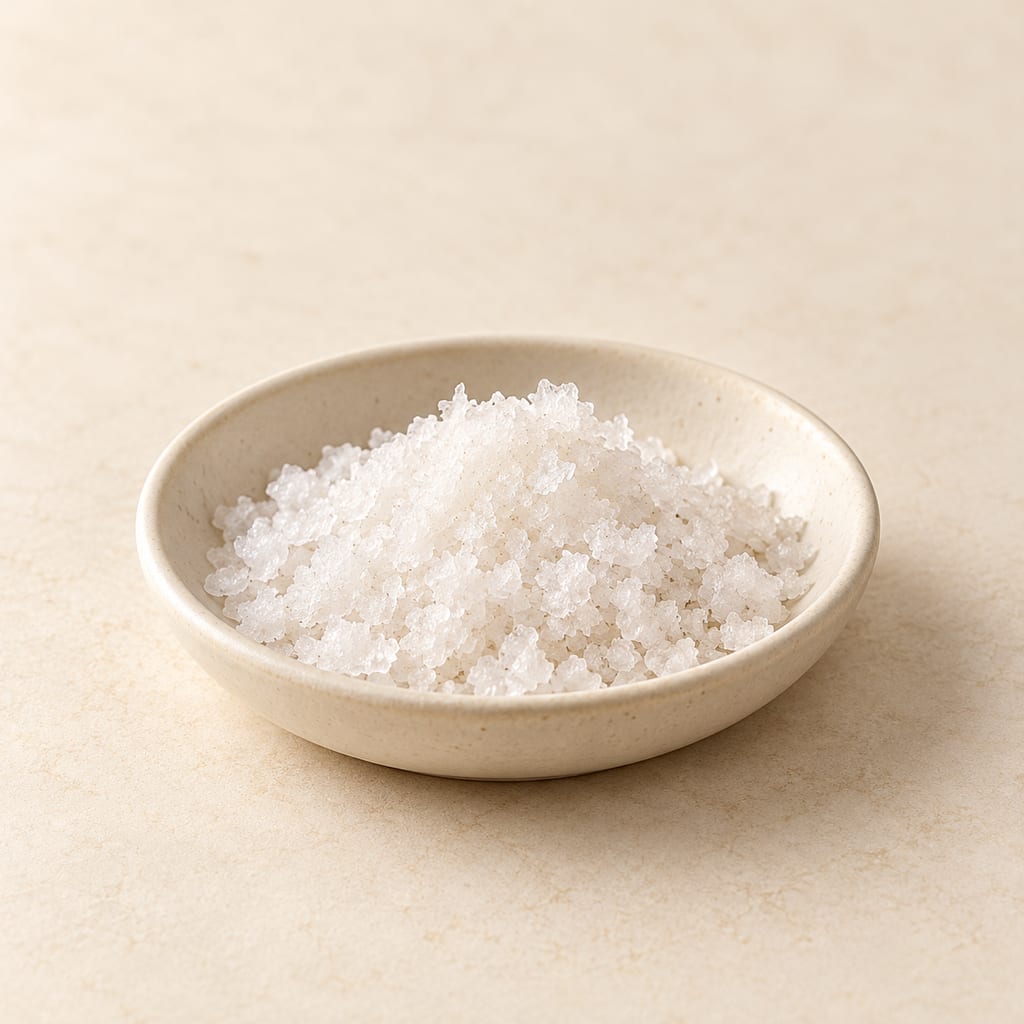
Salt recovered from seawater comes as fine grains, coarse crystals and delicate flakes. Its production, crystal form and measured use connect coastal saltworking with cooking and preservation.
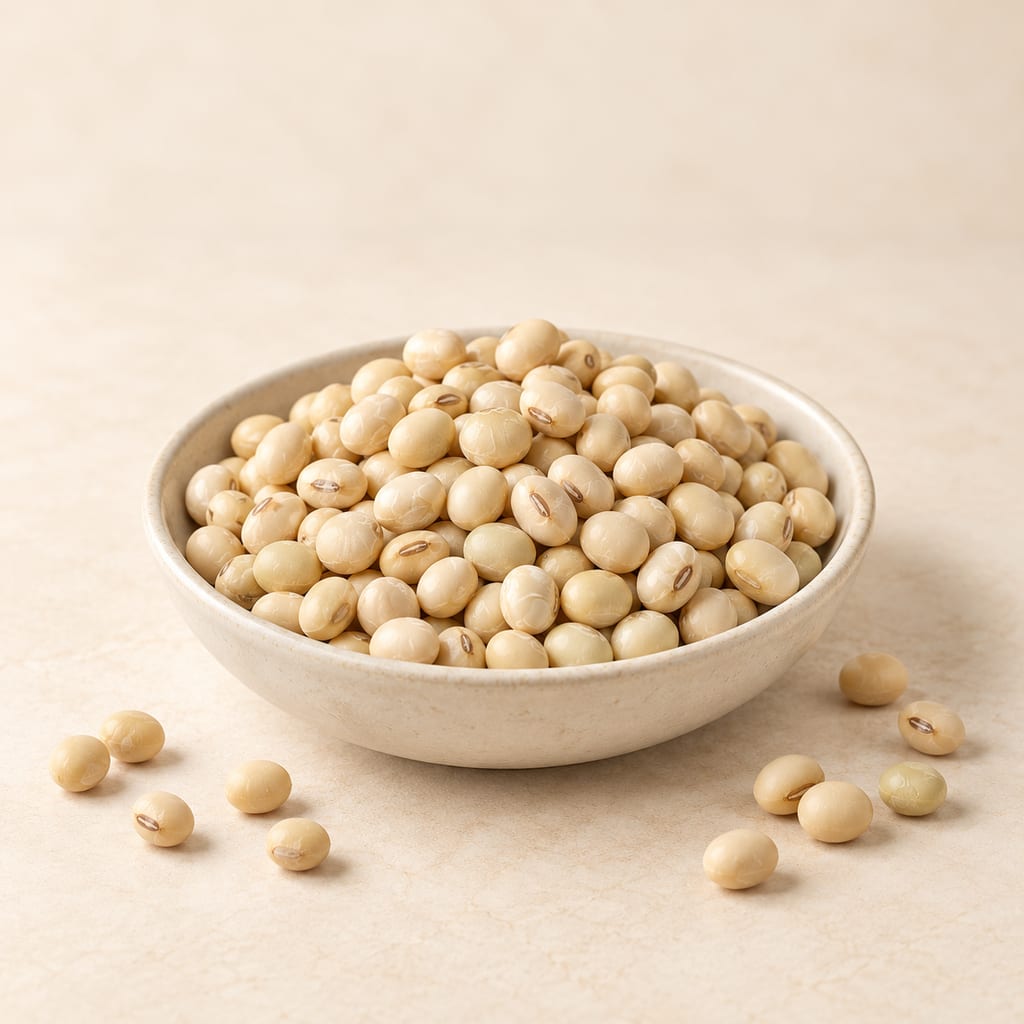
Soybeans are the mature dry seeds of Glycine max, about 40 percent protein and 20 percent oil, the substrate of tempeh, natto, miso, soy sauce and many other fermented foods.
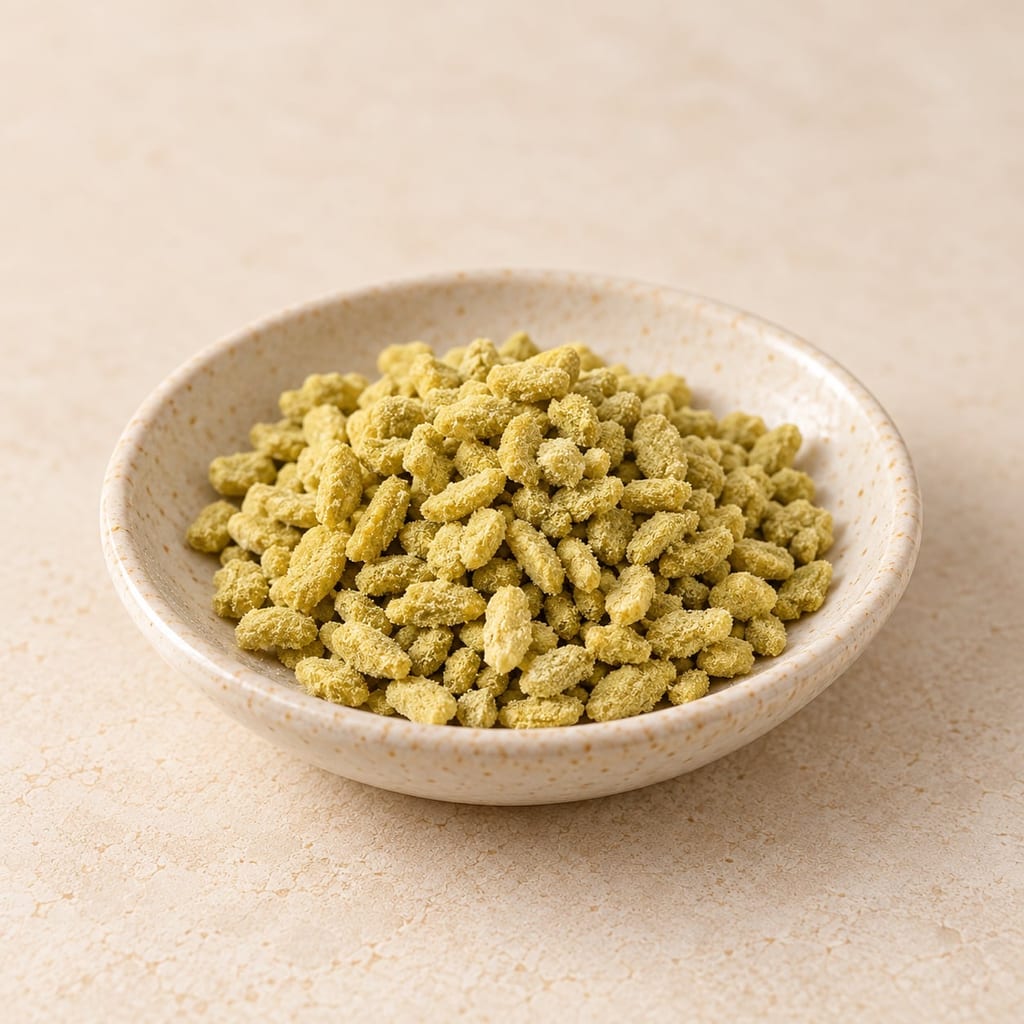
Yellow-koji starter is the spore inoculum of the yellow koji mold — Aspergillus oryzae and the related A. sojae — sold by specialist tane-kōji houses to grow koji for sake, miso and soy sauce.
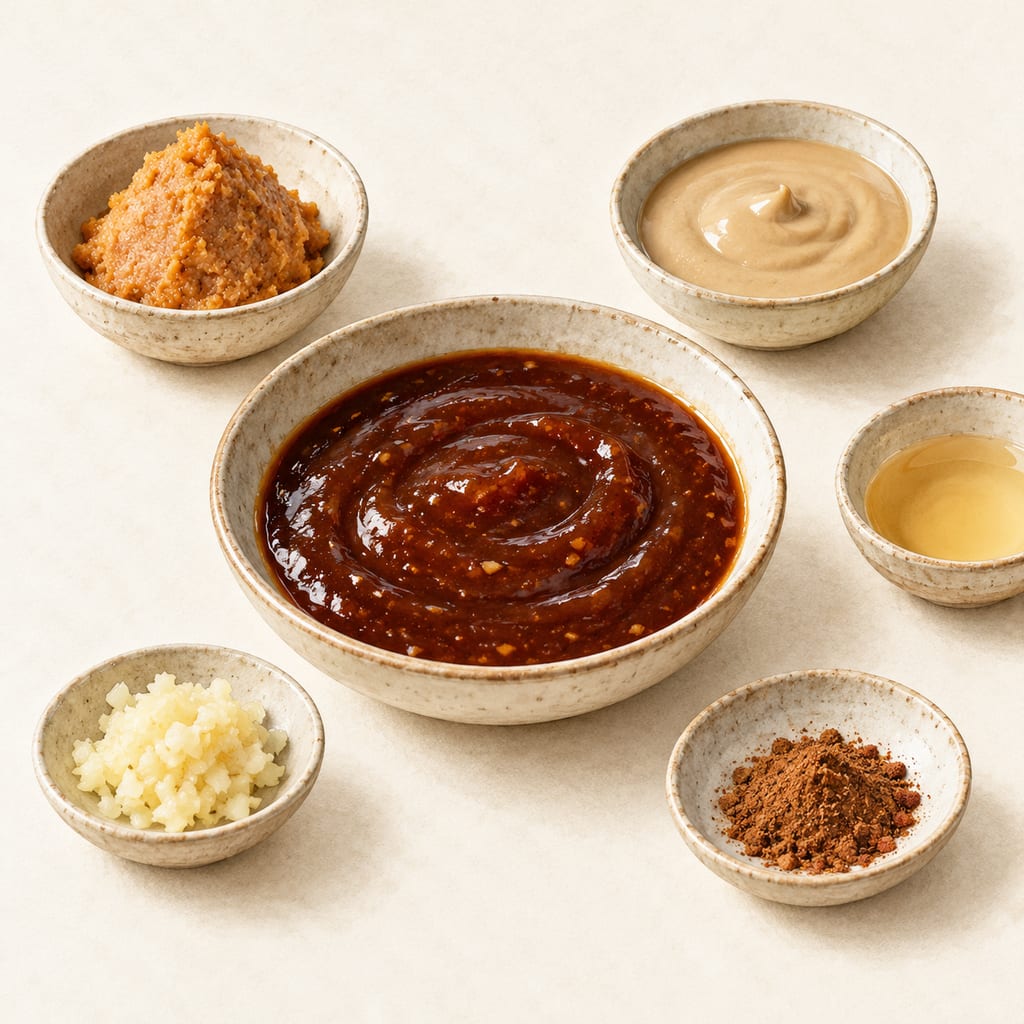
An untested modern miso-based sauce inspired by hoisin's sweet, savory profile; this prototype is not traditional hoisin or a copy of a commercial brand.
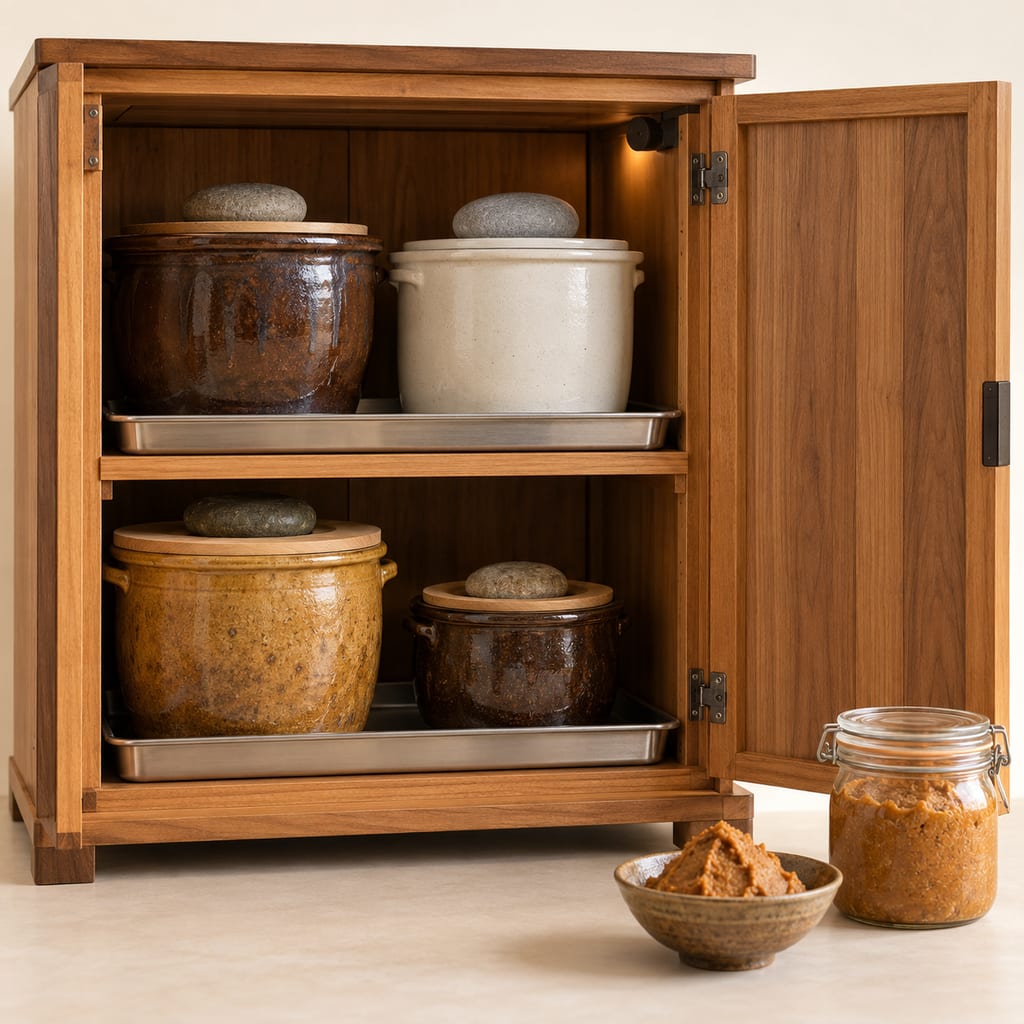
A low-power controlled cupboard for the maturation stage of miso, holding weighted, covered food-safe pots, with spill containment, kept separate from koji production.
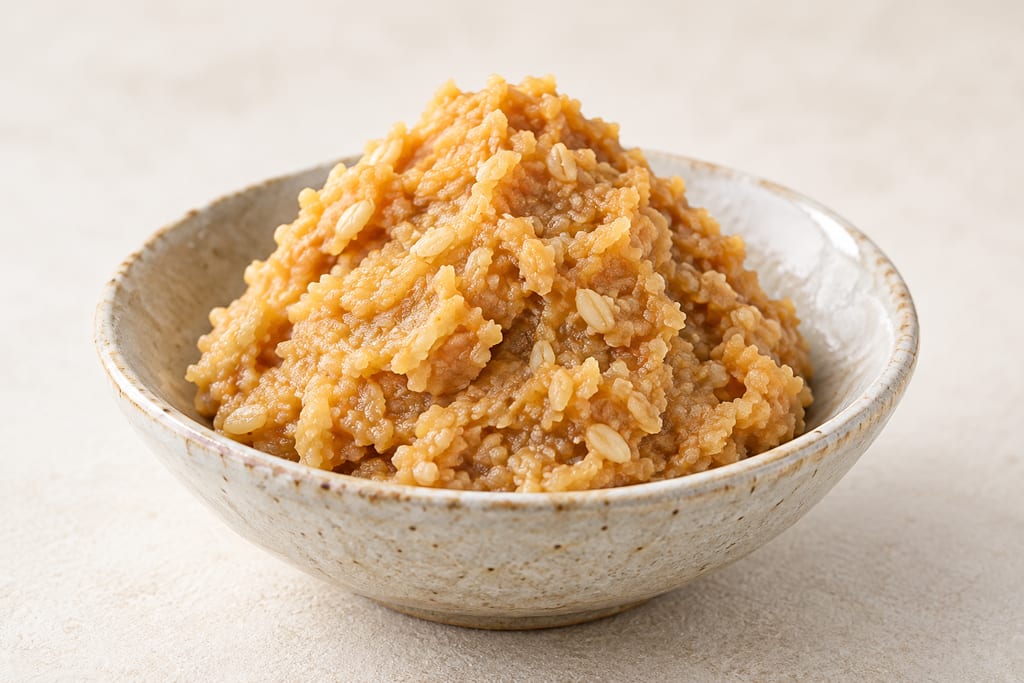
A Japanese soybean paste fermented with barley koji and salt, made mostly in Kyushu, Shikoku and western Japan. It is sweet, savoury and grainy.
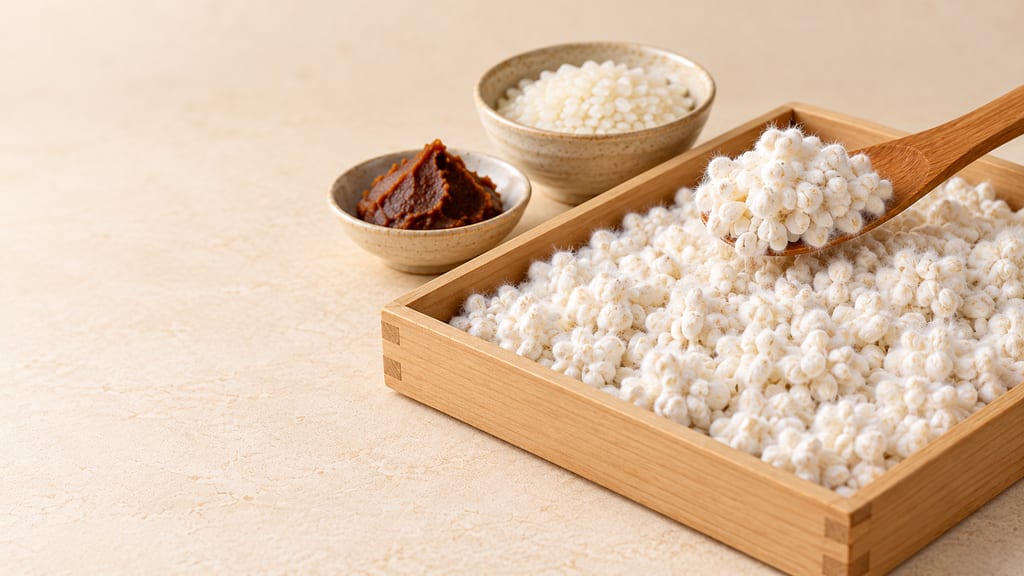
Koji is grain or beans grown with a mould whose enzymes break food down. This guide separates the mould, the starter and the finished koji, and follows them into sake, amazake, miso, soy sauce and shio-koji.
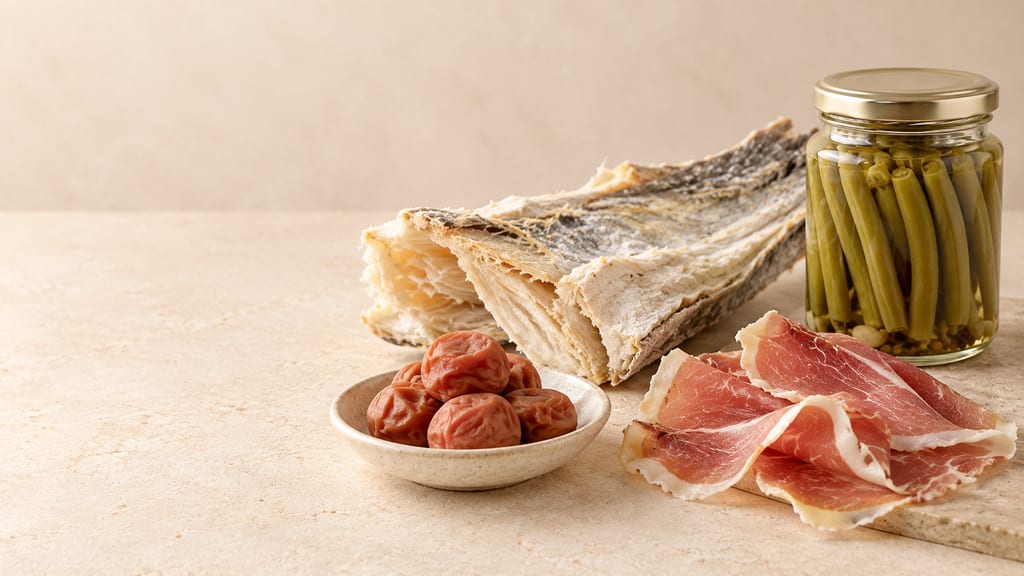
Every preserved food is a stack of barriers against microbes, enzymes, air and time. This is how they work, what a recipe's numbers measure, and how cooks worldwide build them.
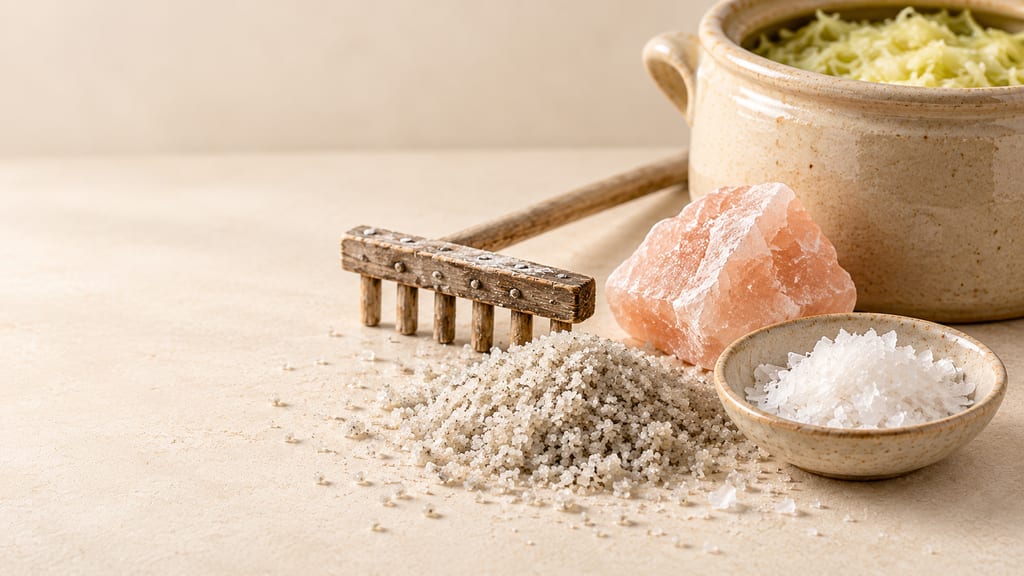
Salt seasons a meal, shapes fermentation and preserves food. Its history follows the people who mine, harvest, trade and transform it, and the choices hidden inside an ordinary packet.
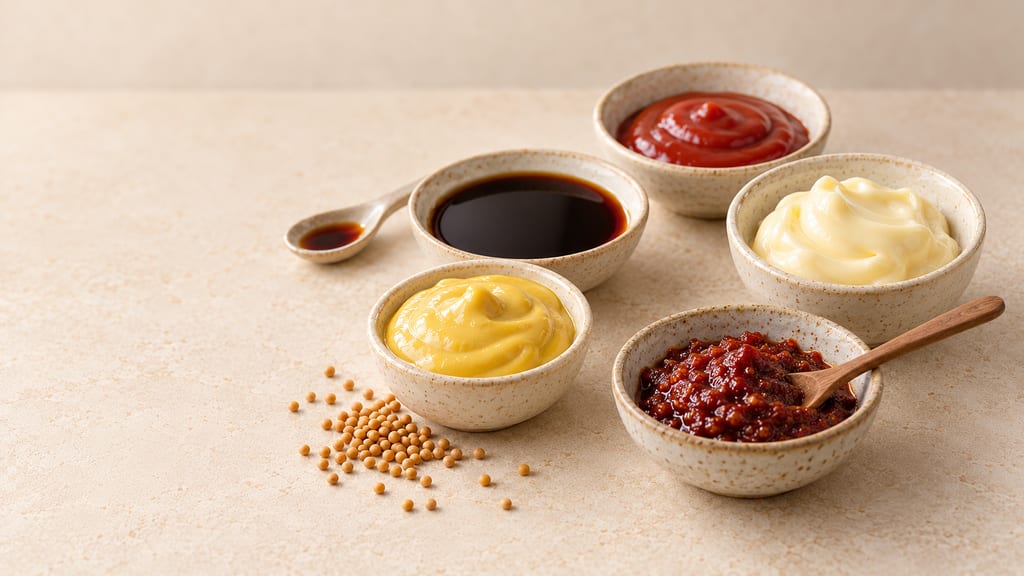
Ketchup, mayonnaise and mustard are three kinds of kitchen engineering. This guide shows how each works, compares real bottles instead of national clichés, then follows the sauces of Asia, the Caucasus, Europe, the Americas and Africa.
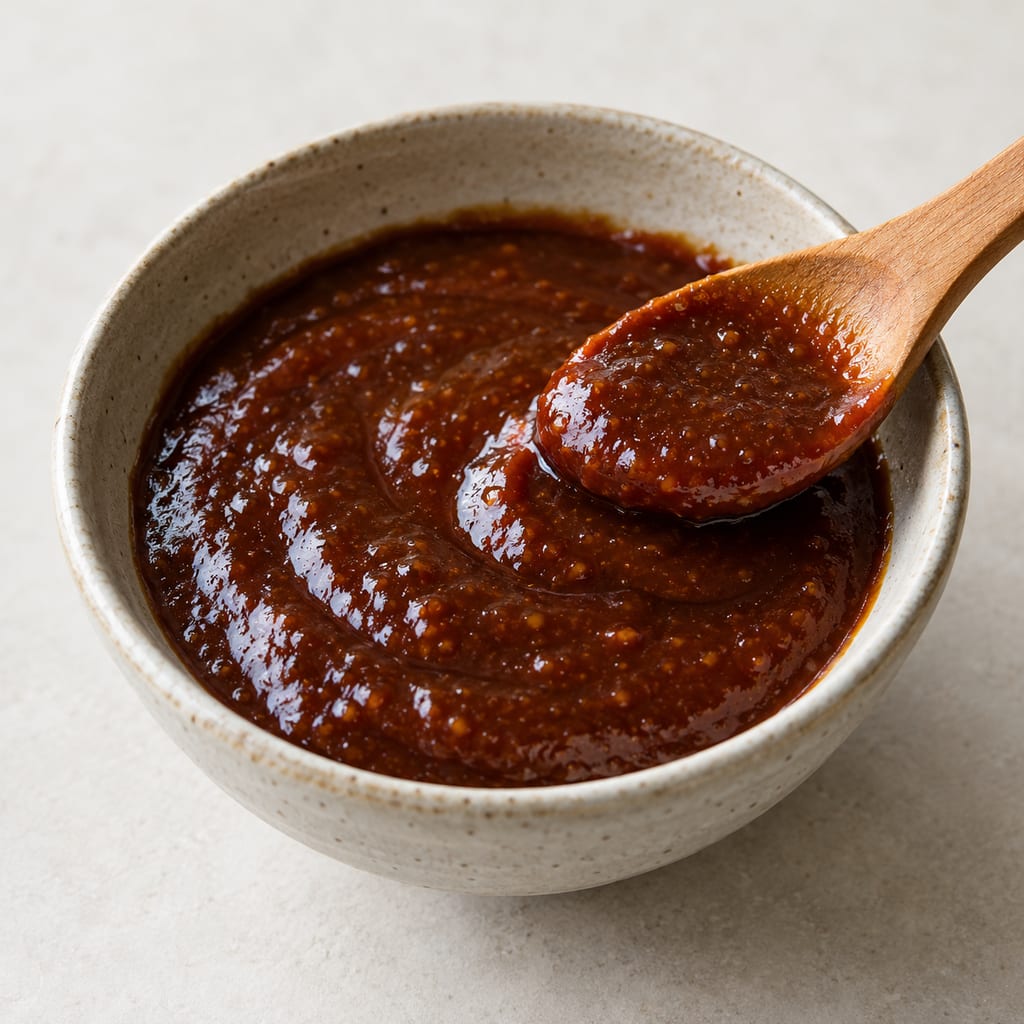
A sweet-salty Japanese glaze of miso, mirin, sake and sugar, warmed until thick and spread on grilled tofu, eggplant, daikon or konnyaku. Regional versions in Aichi use red miso and dashi.
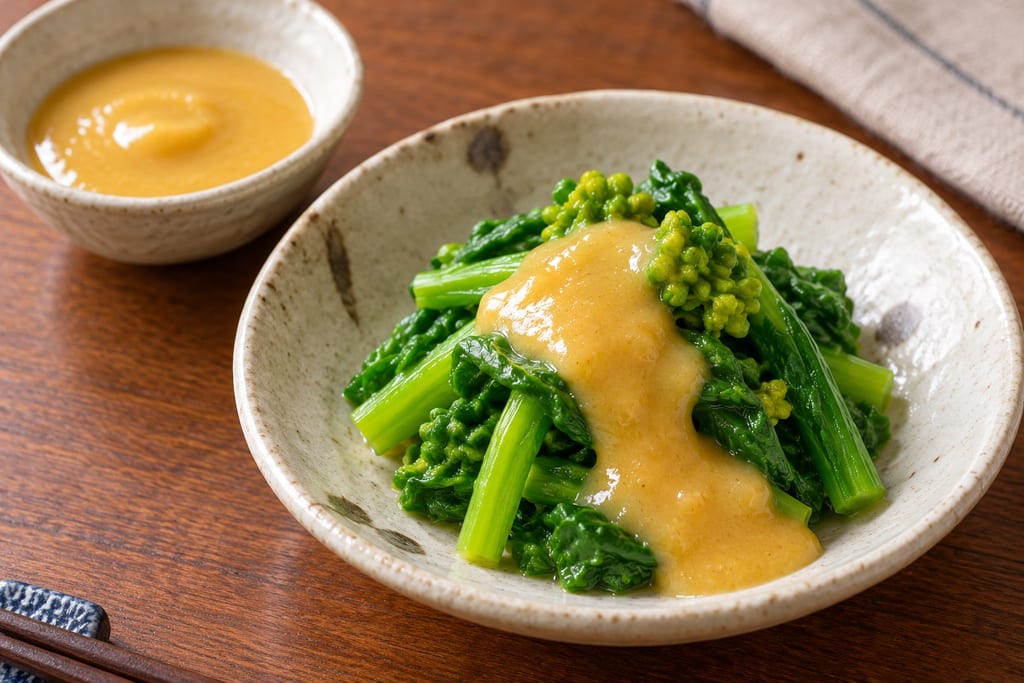
Karashi-su-miso is a smooth Japanese sauce of sweet miso, rice vinegar and hot mustard, stirred together for vegetables, seafood or poached fish.
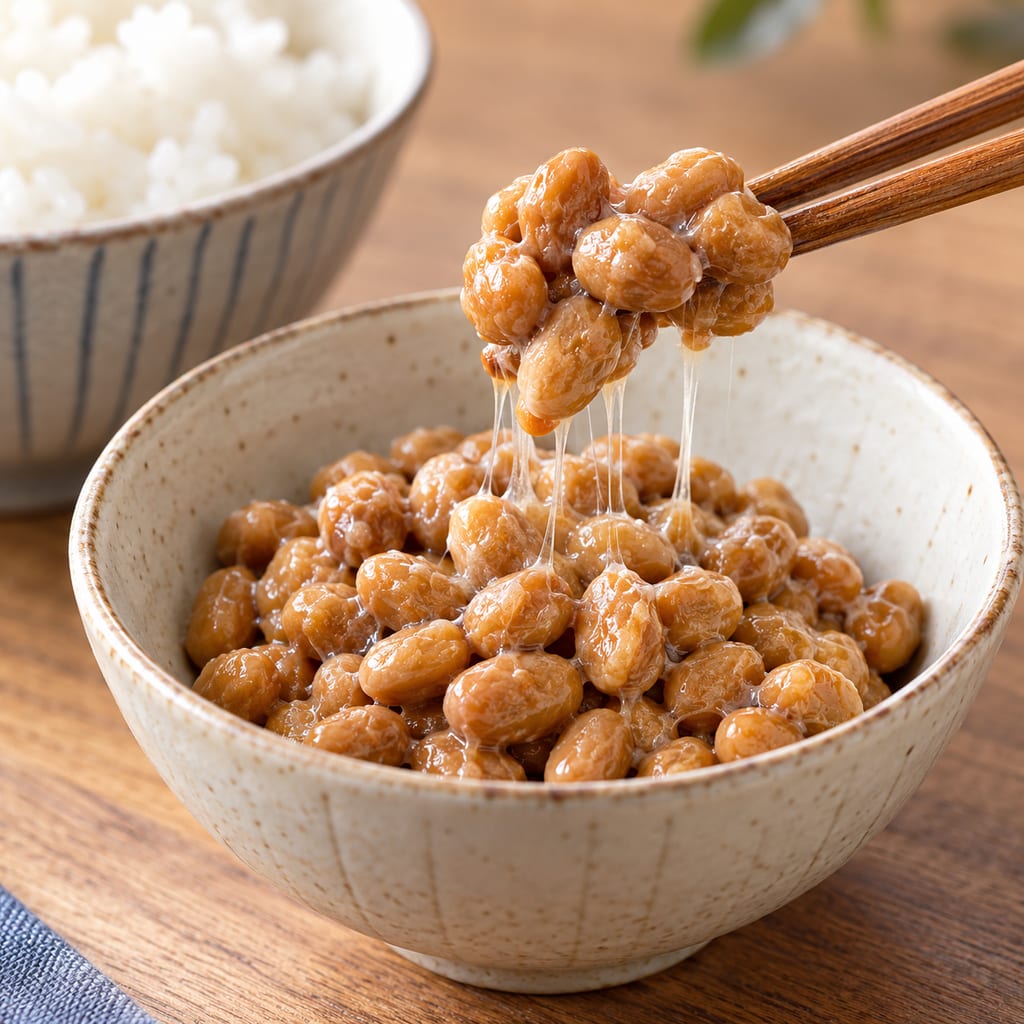
Natto is a Japanese fermented soybean food with a sticky coat and long strings, made by steaming soybeans and inoculating them with a natto Bacillus starter, then keeping them warm.
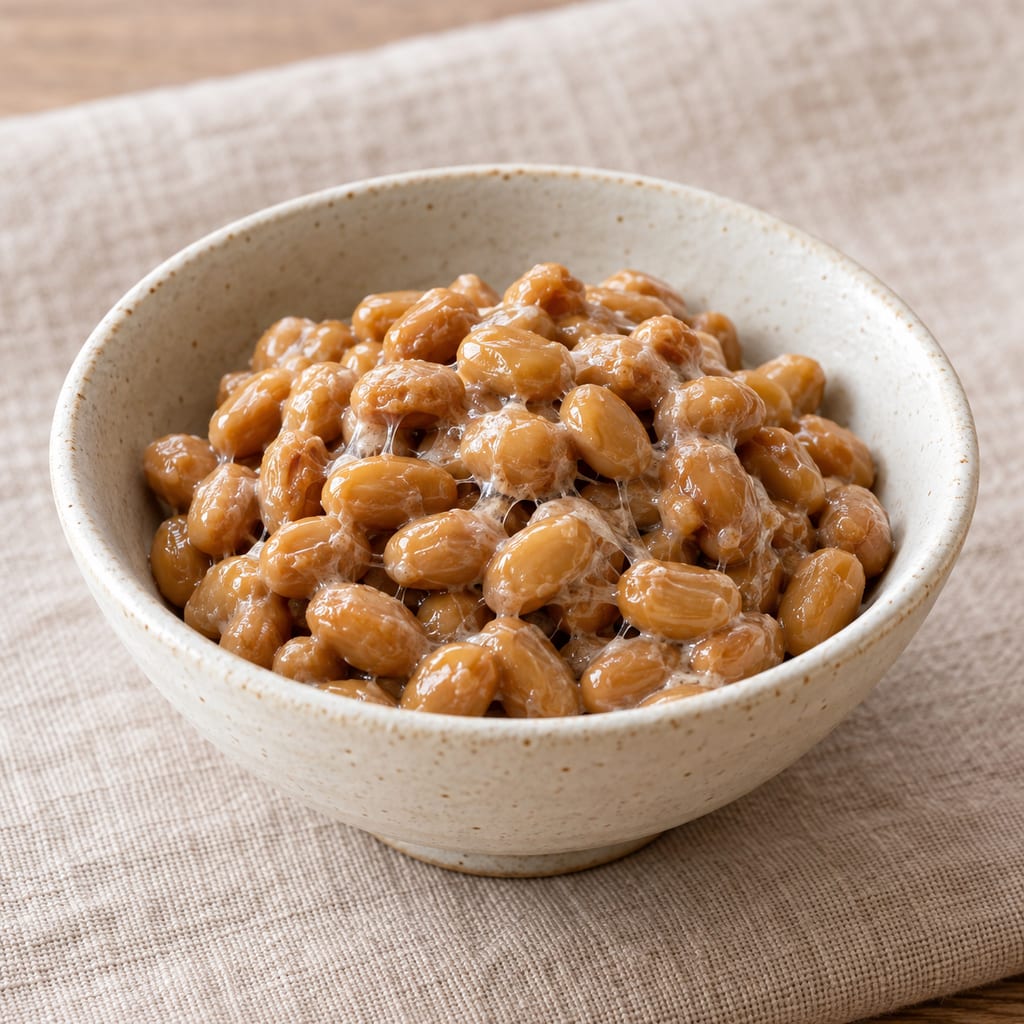
Steamed soybeans fermented by a named strain of Bacillus subtilis into Japan’s sticky, strongly savoury whole-bean food, bound by the thread-forming polymer the bacteria secrete.
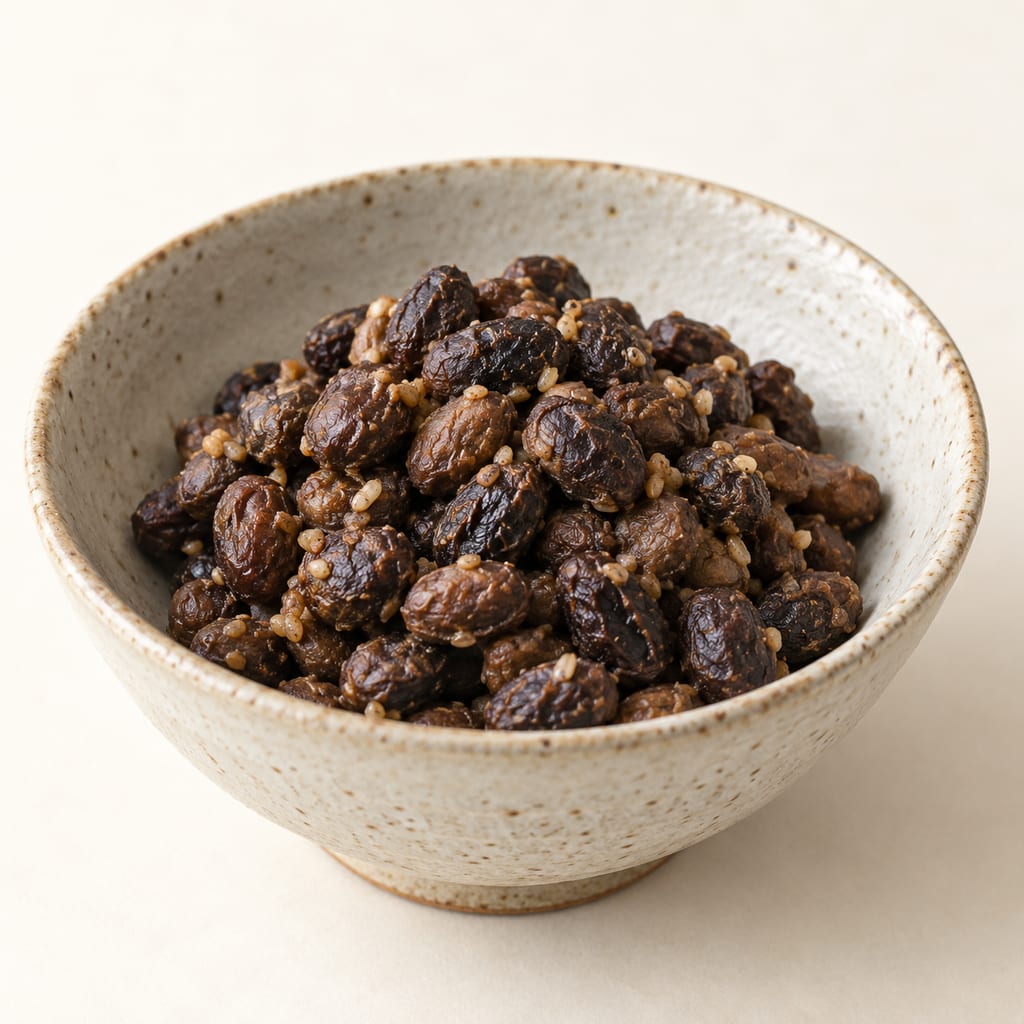
A Japanese family of salted, dark, non-stringy natto made from whole soybeans, roasted grain and salt water, with names such as hama-natto, Daitokuji-natto and tera-natto. Not the sticky Bacillus natto.
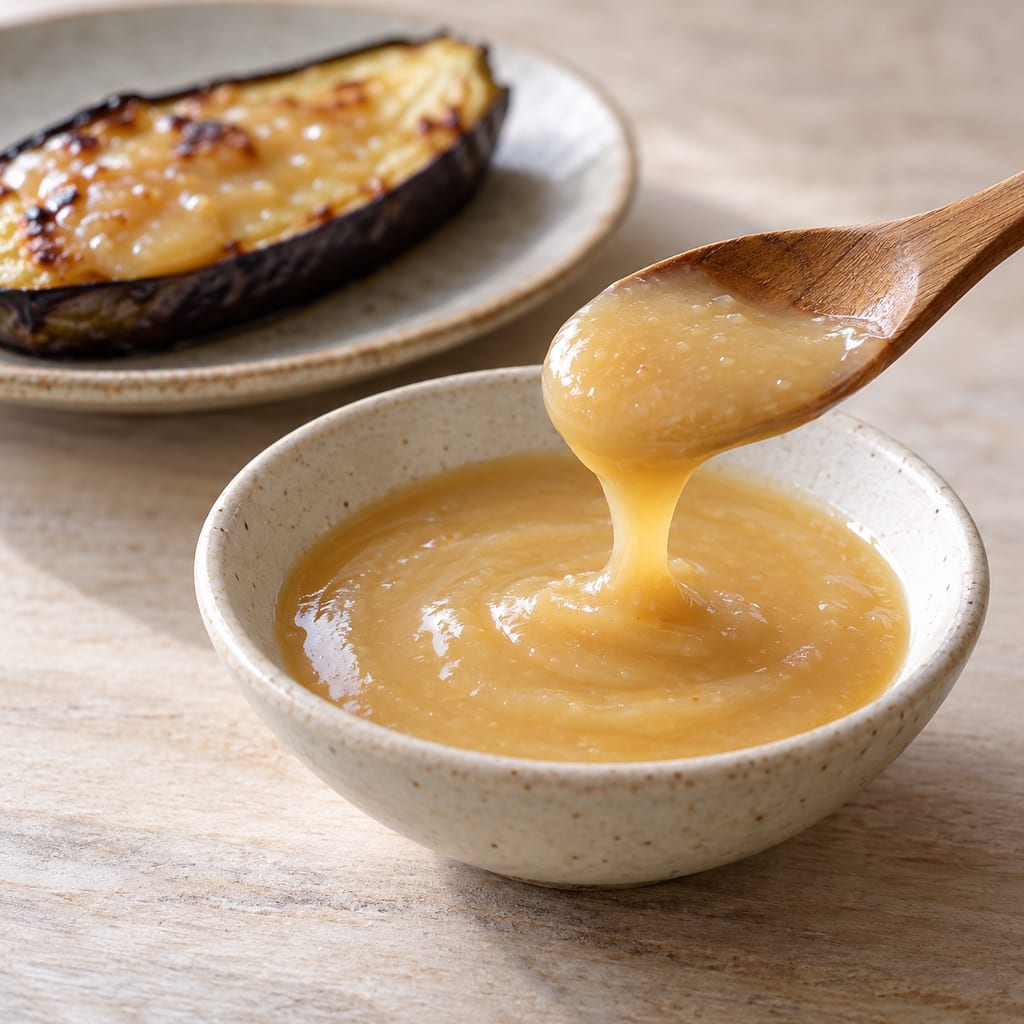
A Japanese-style glaze of pale rice miso, water, sugar and rice vinegar, heated gently until it coats a spoon and spread over cooked aubergine, tofu or vegetables.

Japanese reddish-brown vinegar from sake lees matured about three years, turned to vinegar by acetic bacteria; the vinegar of Handa and Edomae sushi rice.

A thick, naturally sweet rice-and-koji preparation used to add body and sweetness to marinades, dressings and sauces. This method follows a published Marukome home recipe and is an enzyme-conversion hold, not a way to grow koji mould.
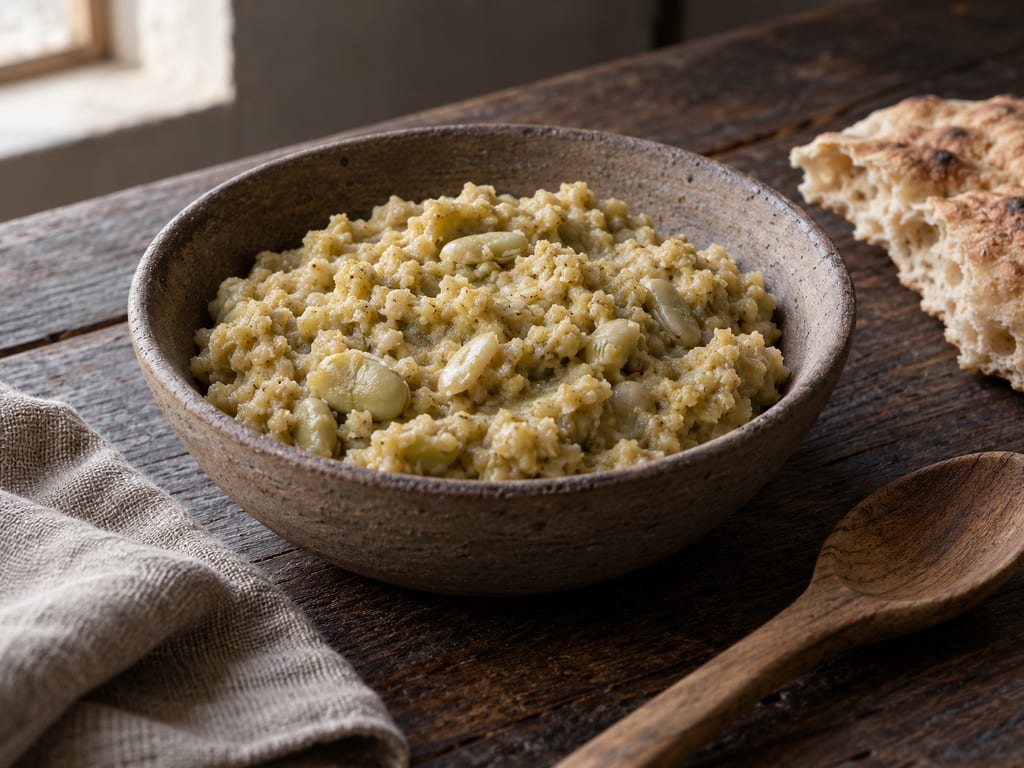
Cooked broad beans crushed to a thick paste with garlic and salt, a museum preparation built on the one European pulse that was already old when the Viking Age began.
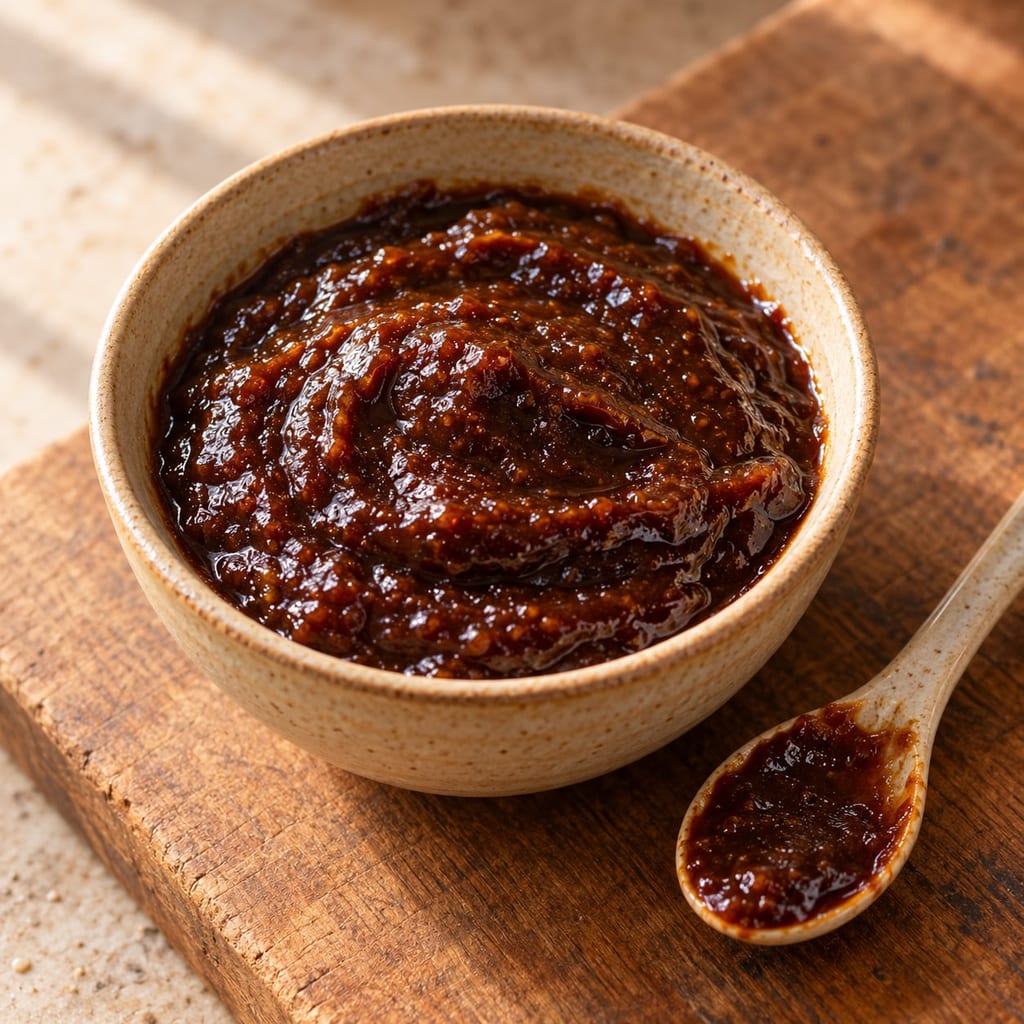
Chu hou is a sweet, savoury Cantonese paste of fermented soybeans, fermented bean curd, garlic, ginger and sesame, used mainly to braise meat.
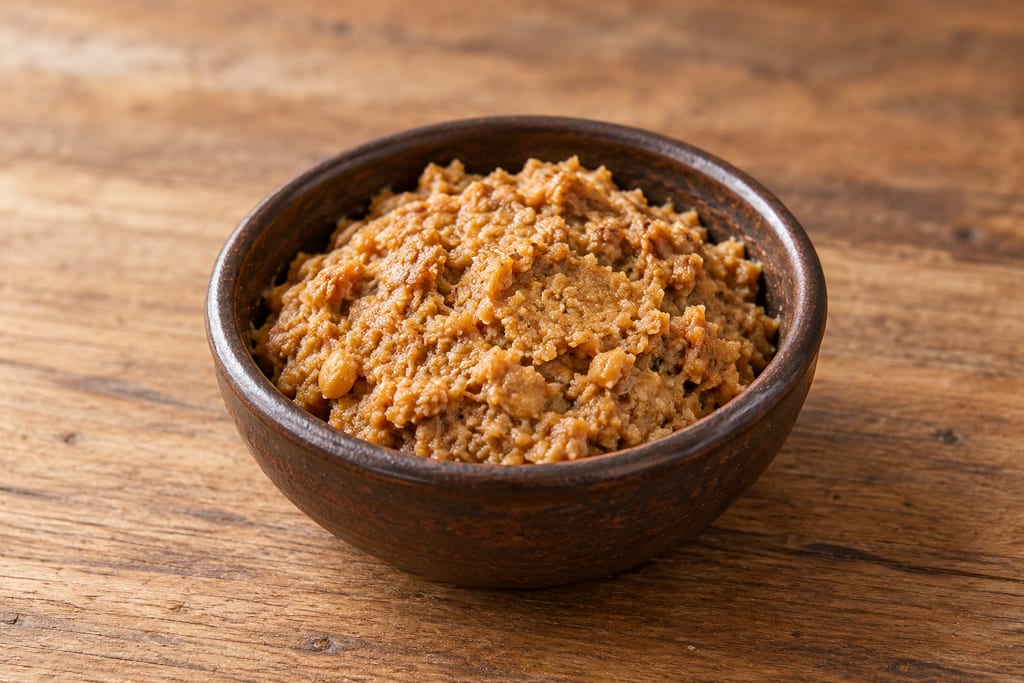
Doenjang (된장) is a Korean fermented soybean paste made by brining meju, separating ganjang, then mashing and aging the solids. This recipe follows one documented Sunchang processing study.
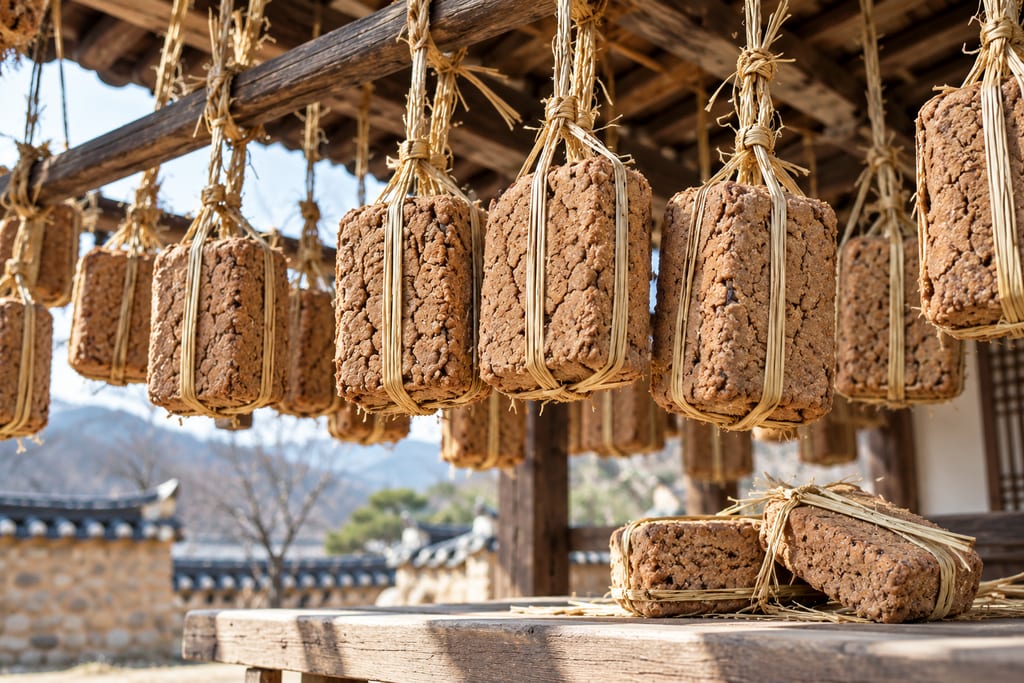
A cooked soybean brick, shaped and dried, that is fermented as a solid and later brined to make the Korean soy paste doenjang and the soy sauce ganjang.
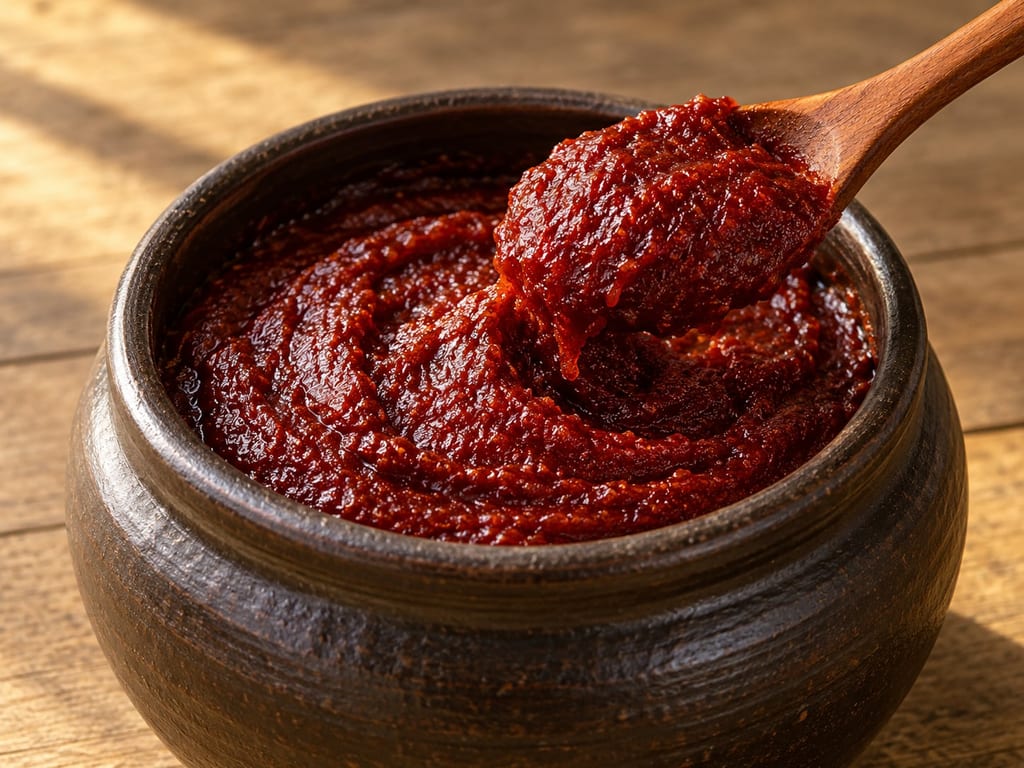
Korea’s sweet, savoury and fiery red paste of glutinous rice, barley-malt enzymes, fermented soybean meju powder and chilli powder, matured in earthenware.
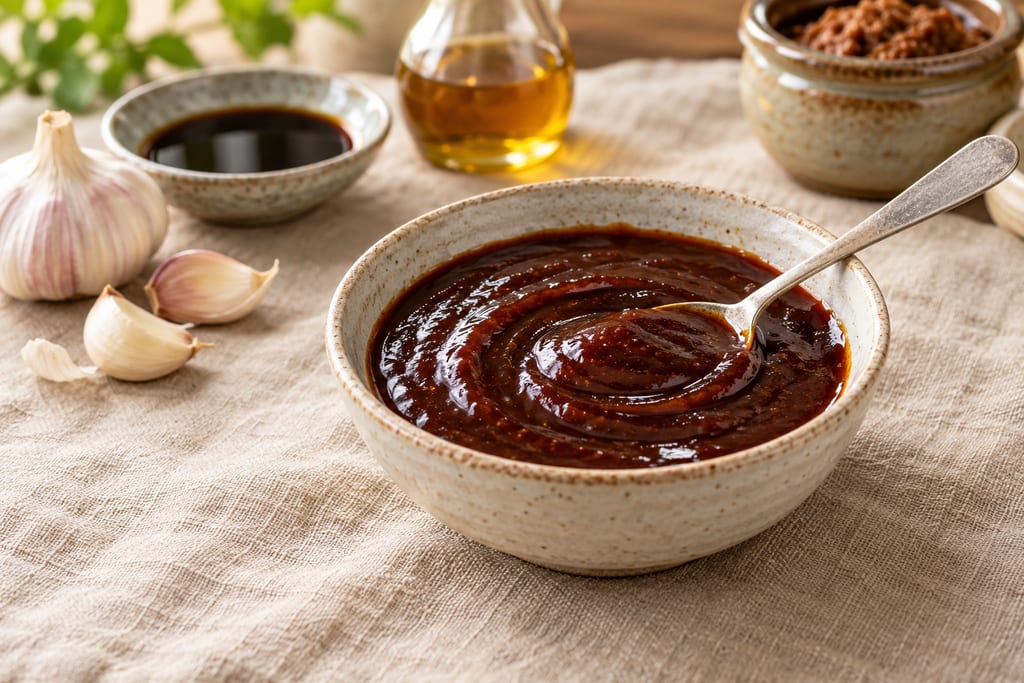
A thick, dark, sweet-salty Chinese condiment built on fermented soybean paste. This page gives one quick home version and records how commercial formulas differ.
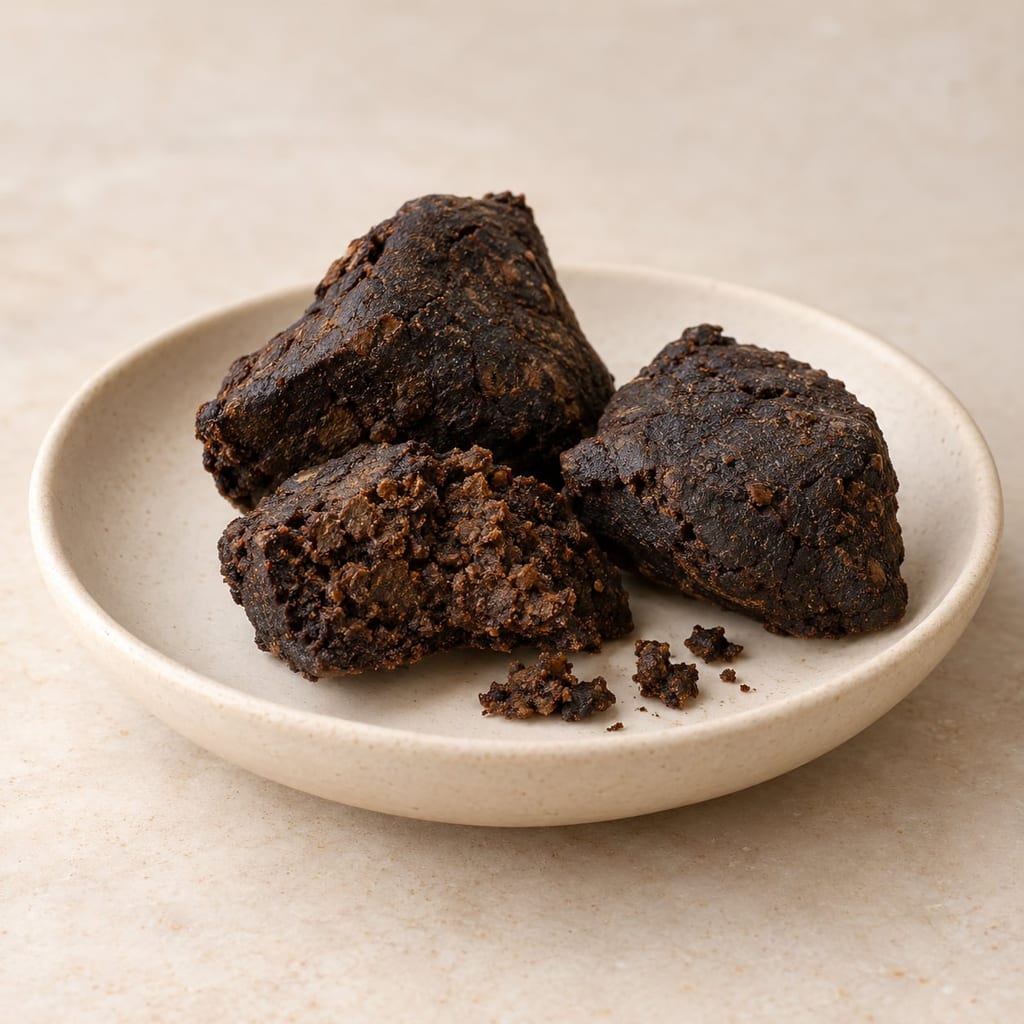
Okpiye, also written okpeye, is a Nigerian condiment from fermented Prosopis africana seeds; published studies describe laboratory batches, not a validated home method.
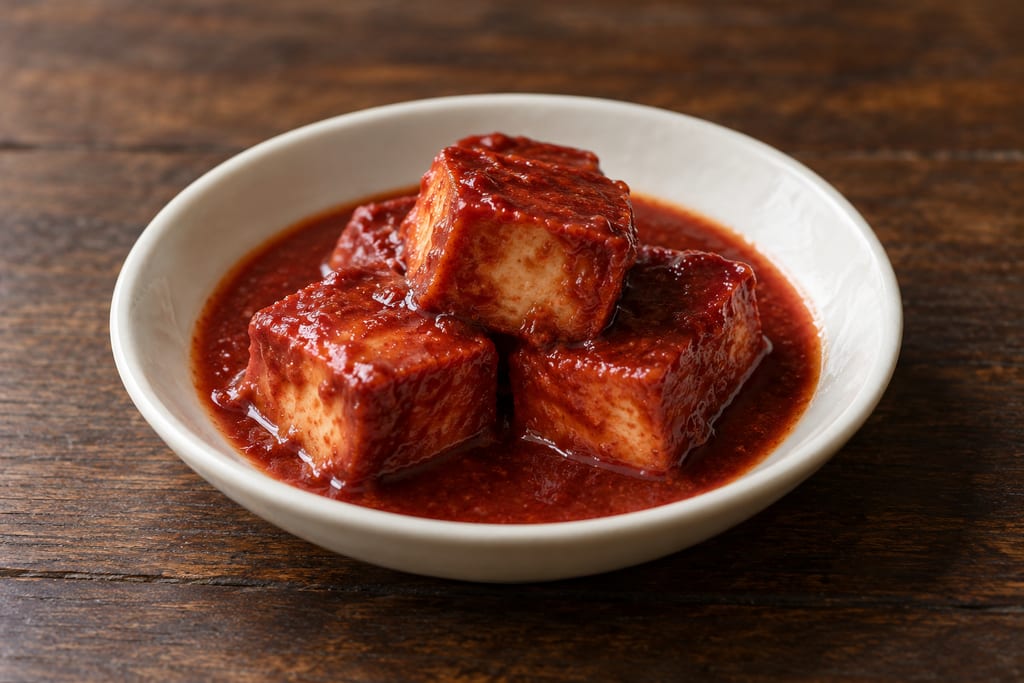
Red sufu is tofu grown with an identified Mucor racemosus mould, salted, seasoned with red pepper and zanthoxylum, then matured under brine for 180 days.

Soft, spreadable Calabrian pork sausage made with a great deal of red chilli and fatty pork, stuffed into natural casings, sometimes smoked and matured while staying soft.

A way to add independent temperature logging to an existing food dehydrator without changing its built-in controls or protections. It is a monitoring method, not a rewiring plan.

Pleurotus cystidiosus is the abalone mushroom, a cultivated oyster-type fungus with dark brown caps that grows more slowly and is more demanding than other Pleurotus species.

A dark, balanced vinegar from Emilia-Romagna made by combining cooked or concentrated grape must with wine vinegar, then acetifying and refining it in wood under a protected specification.

A living dairy inoculum that starts controlled cream fermentation, developing acidity and aroma before sour cream or cultured butter is finished.

A small electric incubator holds jars at a selected temperature for yogurt and other documented warm food preparations. Controls, capacity and vessel arrangement vary by model.

Adygean salt is a seasoned table salt associated with Adygea and the wider North Caucasian culinary tradition. Salt is blended with garlic and a variable selection of herbs and spices; the exact mix depends on the named style and maker.

The African Caesar-group mushroom, Amanita masasiensis, is a wild ectomycorrhizal species of central and southern African woodlands, eaten locally. The genus contains deadly poisonous species, so identification needs care.
No community contributions have been published for this entry yet.
Sign in to contribute. Published comments and photos are free to read.
Edible Schoolyard Japan
Miso Recipe by Edible Schoolyard JapanBritish Columbia Centre for Disease Control
Fermented Foods Guideline 3.10: Koji and MisoCited in: Introduction to Rice-Koji Soybean Miso; The Science of Fermentation: Koji and Enzymes; Critical Factors: Ratios, Salt, and Temperature; Maturation: The Six-Month Wait; Troubleshooting: Identifying Spoilage vs. Success
Ministry of Agriculture, Forestry and Fisheries, Japan
Traditional Japanese Food: Soy Sauce and MisoCited in: Introduction to Rice-Koji Soybean Miso; The Science of Fermentation: Koji and Enzymes; Maturation: The Six-Month Wait
Goodlok
Goodlok Play — Miso mustardumamimart.com
MOTOism: Homemade Miso – Umami MartCited in: The Edible Schoolyard Japan Method; Critical Factors: Ratios, Salt, and Temperature; Step-by-Step Process: From Prep to Packing; Maturation: The Six-Month Wait; Troubleshooting: Identifying Spoilage vs. Success
kojihouse.co
What is Miso and How Do I Make it? – Koji House