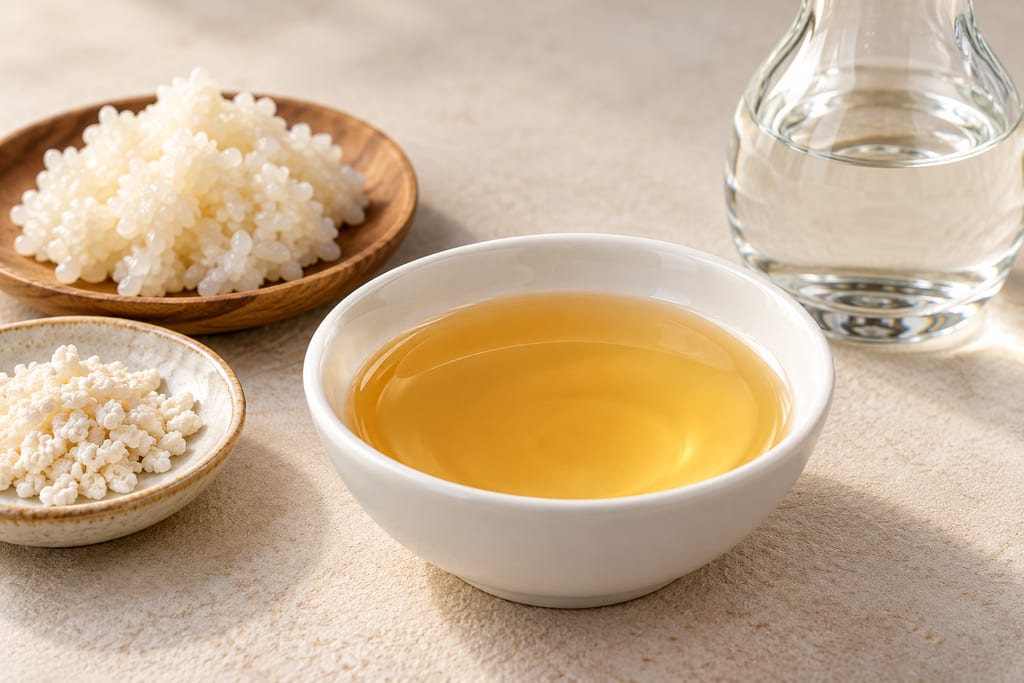
Mirin
Hon-mirin is a Japanese rice seasoning made by saccharifying glutinous rice with rice koji in shochu, then pressing and usually heating the mash.
 FermenteaWhere food goes to change
Traditional method
味噌田楽 (miso dengaku) · Dengaku miso
A sweet-salty Japanese glaze of miso, mirin, sake and sugar, warmed until thick and spread on grilled tofu, eggplant, daikon or konnyaku. Regional versions in Aichi use red miso and dashi.
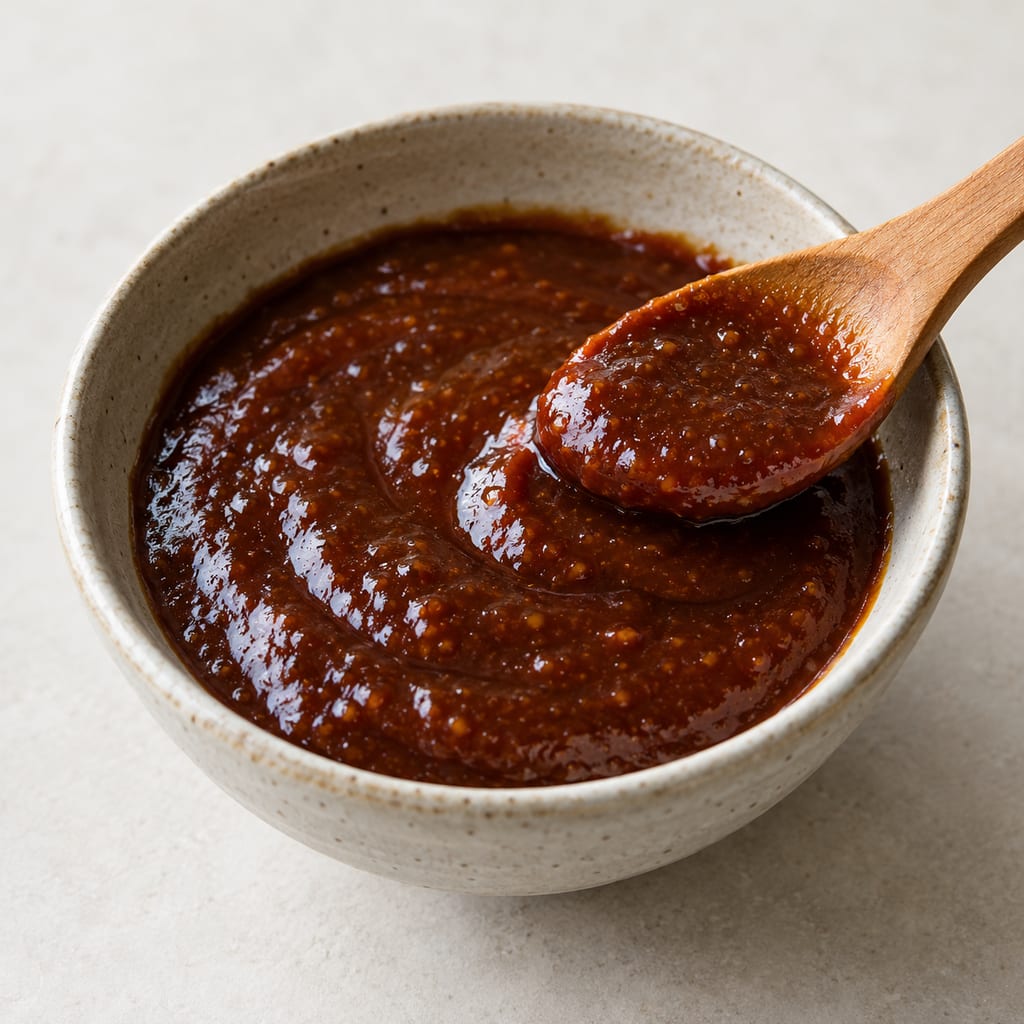
Dengaku miso is the sweetened miso sauce that makes miso dengaku what it is: grilled tofu, eggplant, daikon, konnyaku or taro with a brown, savoury-sweet coating. In Japanese cooking such a sauce is a tare, a seasoned dressing, and this one rests on miso, mirin, sugar and a thin liquid, either sake or dashi. Fish prepared the same way is called gyoden.
The glaze on this page is a cooked mixture of a fermented ingredient, not a new fermentation. The miso arrives already fermented; warming it with sugar and mirin thickens and blends it, and the grill browns the surface.
The Ministry of Agriculture, Forestry and Fisheries gives the usual account of the name. It probably comes from dengaku-mai, the rice-planting dances of farming villages, whose stilt-walking performers were said to look like skewered, miso-topped tofu. Tofu itself came to Japan from China around the Nara and Heian periods and was valued by aristocrats and warrior families as a source of protein in vegetarian cooking. The Edo-period cookbook Tofu Hyakuchin includes dengaku.
These are regional and popular accounts. They do not date the first miso-glazed tofu, and a modern cookbook source only says the dish has been enjoyed since the 1500s.
The recipe above is Just One Cookbook's home version: 4 tablespoons miso, 2 tablespoons each of sake and mirin, and 2 tablespoons sugar, warmed on the lowest heat to a gentle simmer and stirred for 2 to 3 minutes until it thickens. Red miso is traditional but any miso works. With hatcho miso, a dark, firm miso from the Nagoya region, the author raises the sugar to 3 tablespoons.
The author suggests starting with half the sugar and mirin and adding more to taste, because sugar and mirin offset the saltiness of the miso. A strong miso such as hatcho can be thinned with dashi. Sesame seeds, yuzu zest, shiso or kinome leaves are optional. Some Japanese versions add egg yolk; the author leaves it out because of the raw egg.
The ministry's Aichi collection gives a different balance for four servings: 100 g red miso, 55 g sugar, 1 tablespoon mirin and at least 2 tablespoons dashi, mixed in a pot until the paste looks like raw miso. Drained firm tofu is cut into eight pieces per block, skewered, grilled over high heat on both sides until the water evaporates, brushed with the paste and grilled lightly until the surface browns. Kinome sprouts and a little hot pepper paste finish it.
Two cautions come with that version: do not overwork the paste, or it softens and slides off during the second grilling, and drain the tofu well, or it is too soft to skewer. The Japanese version of the page describes the paste as hot mustard paste where the English version says hot pepper paste.
Aichi has its own forms. Mikawa is known for nameshi dengaku, which pairs rice with greens, and Owari for fu dengaku, deep-fried wheat gluten coated in red miso. The page notes that recipes vary by region and household.
The ministry describes dengaku as originally a winter dish that warms the body, later tied to spring through its tree-bud garnish. In the Edo period it was eaten at cherry-blossom parties because it is easy to eat outdoors. Konnyaku and taro versions are common at home.
Shinagawa City's local-history feature translates a kinome dengaku passage from Tofu Hyakuchin. Soft tofu is cut and skewered in a basin of hot water and taken straight to the fire. The miso is seasoned with sansho and about 0.75 g of stiff amazake, and the note warns that more amazake makes it too sweet. This is a translation of an old passage, without a tofu weight, miso quantity or grilling time, so it is context rather than a measured recipe.
For tofu and eggplant, spread the glaze over the pieces before broiling and sprinkle toasted white sesame. For daikon, pour a generous amount over the warm vegetable. For konnyaku, apply generously and serve at once. The author keeps the glaze in an airtight container in the refrigerator for up to 3 to 4 weeks and dressed leftovers for up to 3 days. These are household figures, not a tested shelf life.
Dengaku, skewered grilled tofu topped with miso, is tied in the sources to an Edo-period tofu cookbook and to rice-planting dance performers. The names are accounts of origin, not verified earliest records.
Scaling: source batch only
The author gives a refrigerated keeping time for the glaze but no testing behind it.
Hazard sourceKeep the glaze in an airtight container in the refrigerator, as the author advises.
Control sourceThe author's 3 to 4 weeks of refrigerated keeping for the glaze, and 3 days for leftover dressed dishes, are household advice rather than a tested shelf life.
The author avoids the egg yolk that some Japanese versions add, because it would be raw.
The ministry's regional-cuisine page documents Mikawa and Owari household versions; it does not claim Aichi as the origin.
A modern home-cooking account of the glaze; no regional origin is claimed.
Hon-mirin is a Japanese rice seasoning made by saccharifying glutinous rice with rice koji in shochu, then pressing and usually heating the mash.
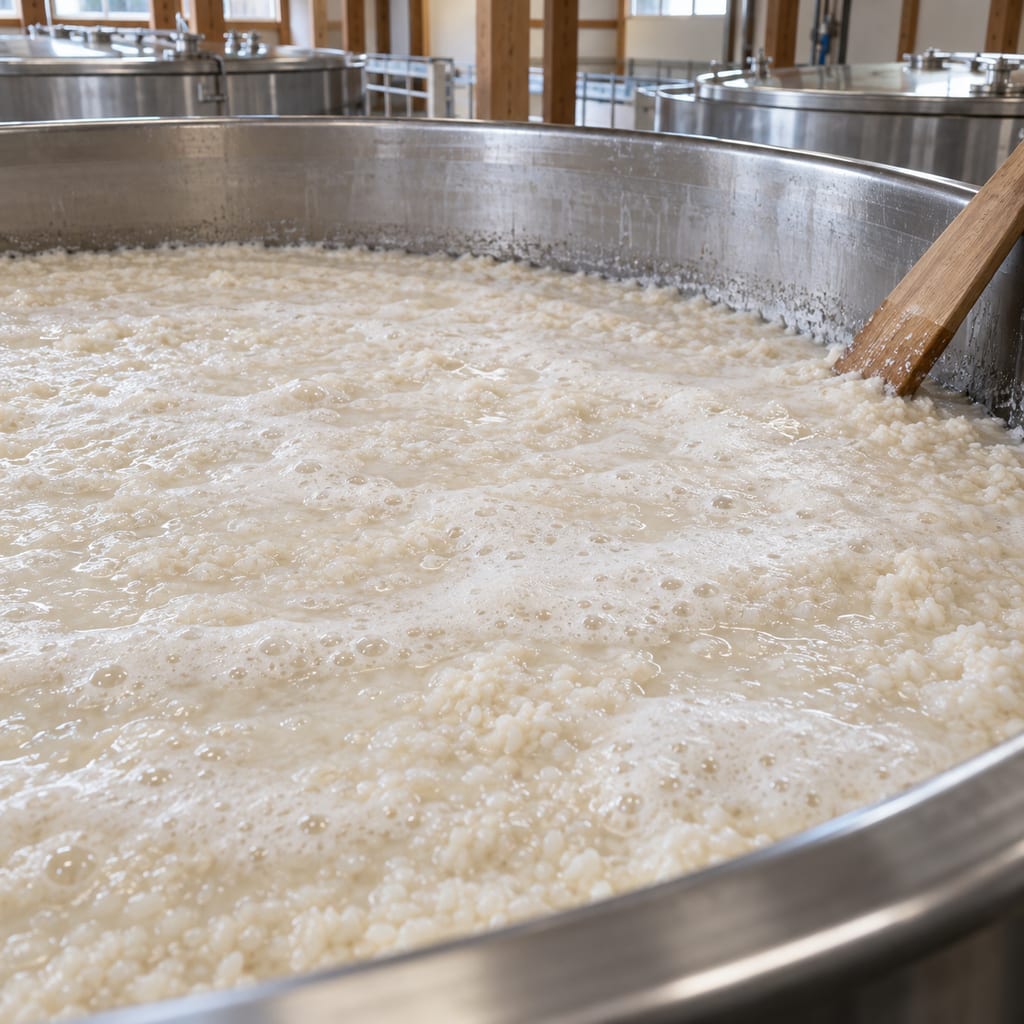
Nihonshu (日本酒), or seishu, is Japanese rice sake: steamed rice, rice koji, water and a yeast starter ferment together in one mash, which is then pressed and finished.
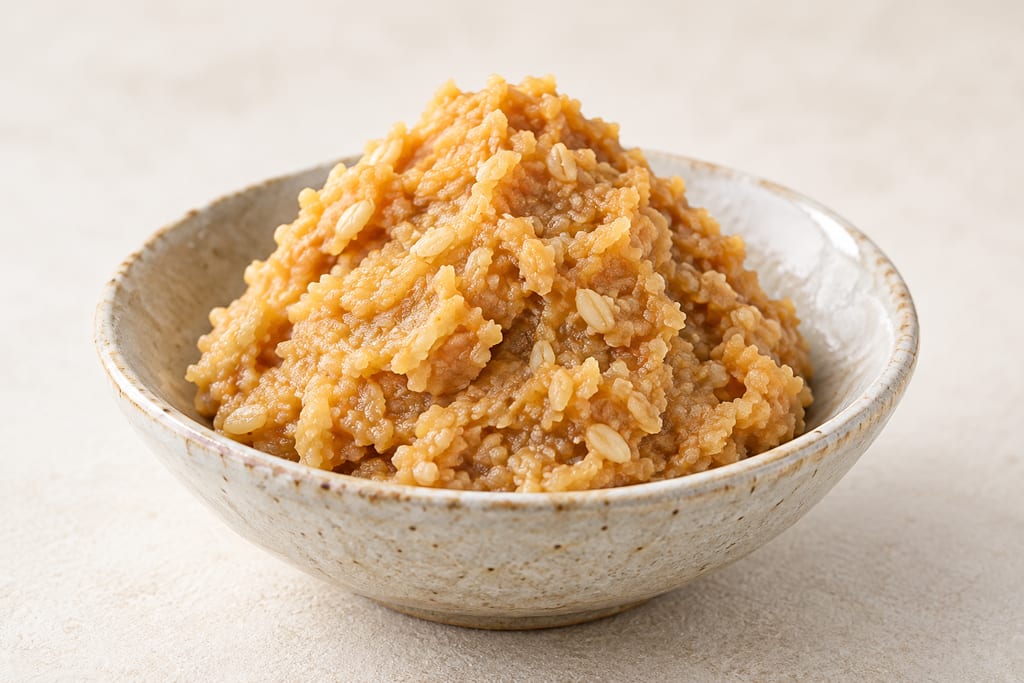
A Japanese soybean paste fermented with barley koji and salt, made mostly in Kyushu, Shikoku and western Japan. It is sweet, savoury and grainy.
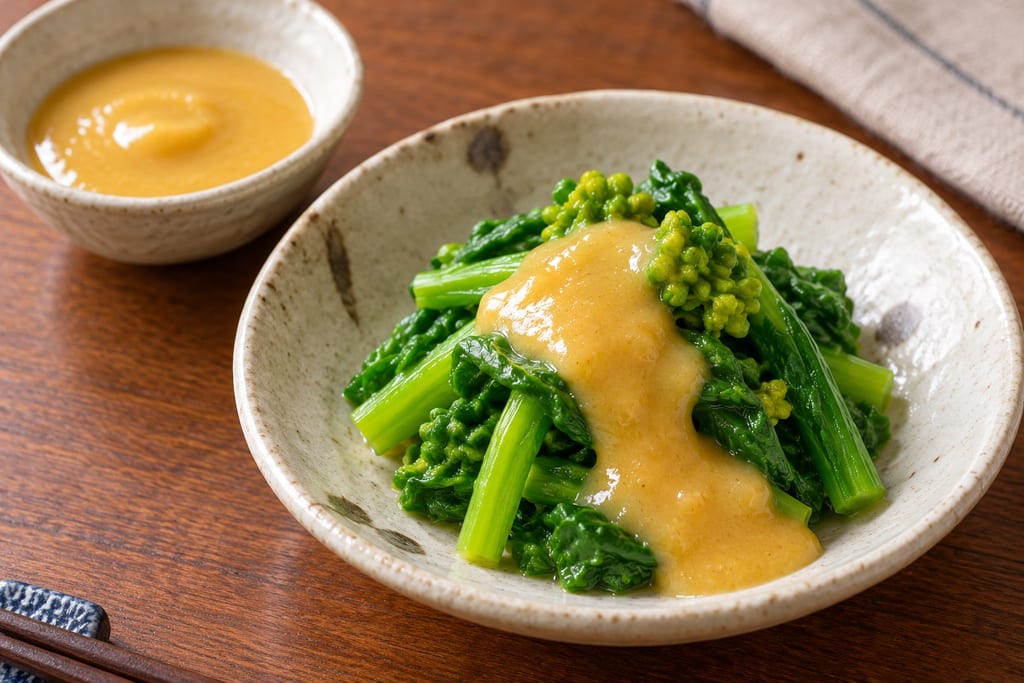
Karashi-su-miso is a smooth Japanese sauce of sweet miso, rice vinegar and hot mustard, stirred together for vegetables, seafood or poached fish.
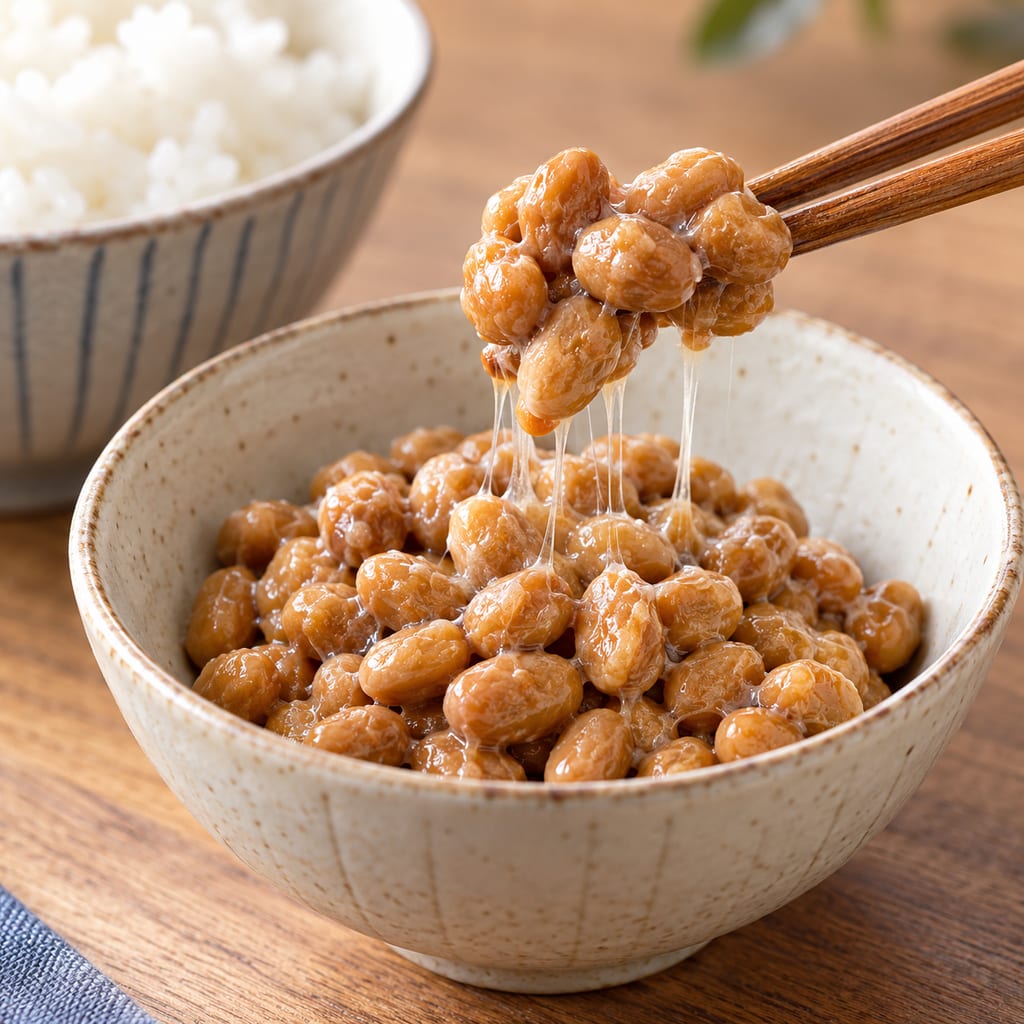
Natto is a Japanese fermented soybean food with a sticky coat and long strings, made by steaming soybeans and inoculating them with a natto Bacillus starter, then keeping them warm.
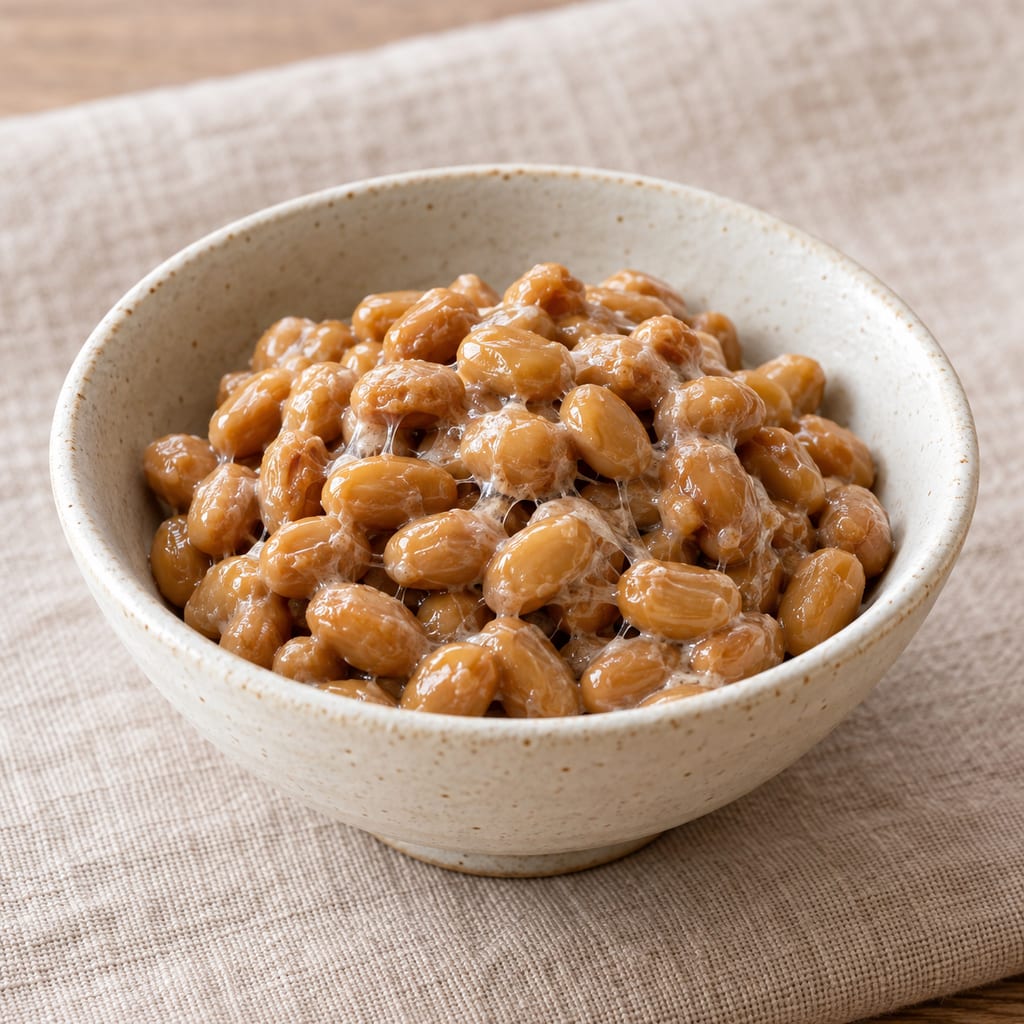
Steamed soybeans fermented by a named strain of Bacillus subtilis into Japan’s sticky, strongly savoury whole-bean food, bound by the thread-forming polymer the bacteria secrete.
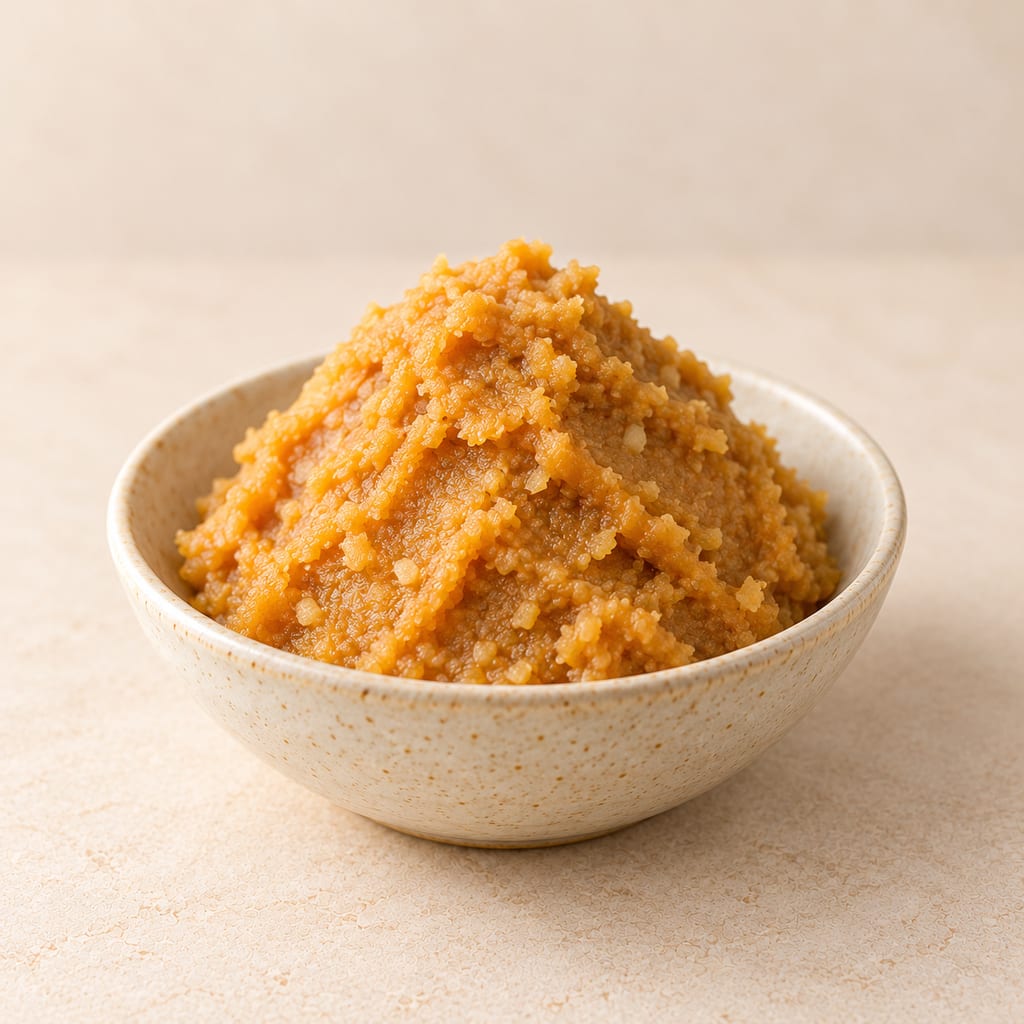
A traditional Japanese fermented paste made by mixing cooked soybeans with rice koji and salt. This guide details the ratio, the long enzymatic breakdown, and the months-long maturation required for depth.
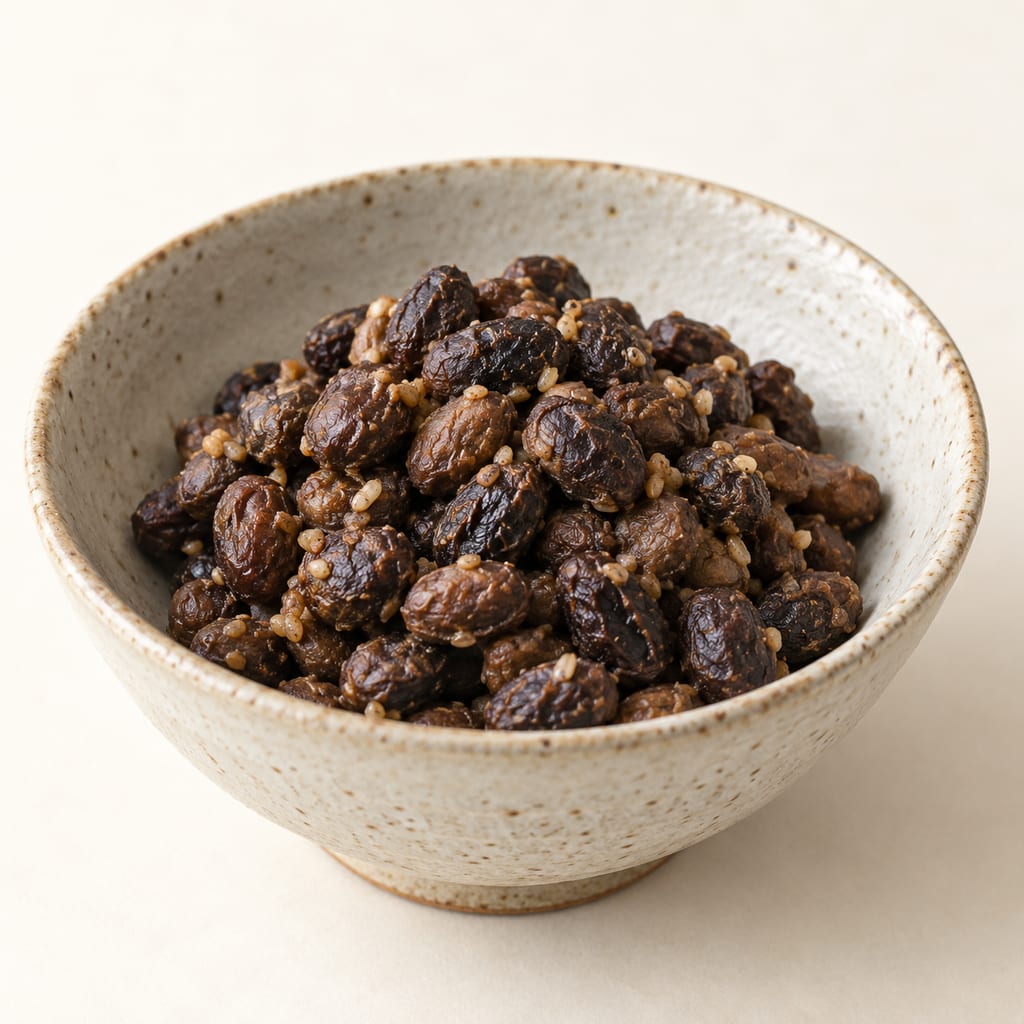
A Japanese family of salted, dark, non-stringy natto made from whole soybeans, roasted grain and salt water, with names such as hama-natto, Daitokuji-natto and tera-natto. Not the sticky Bacillus natto.
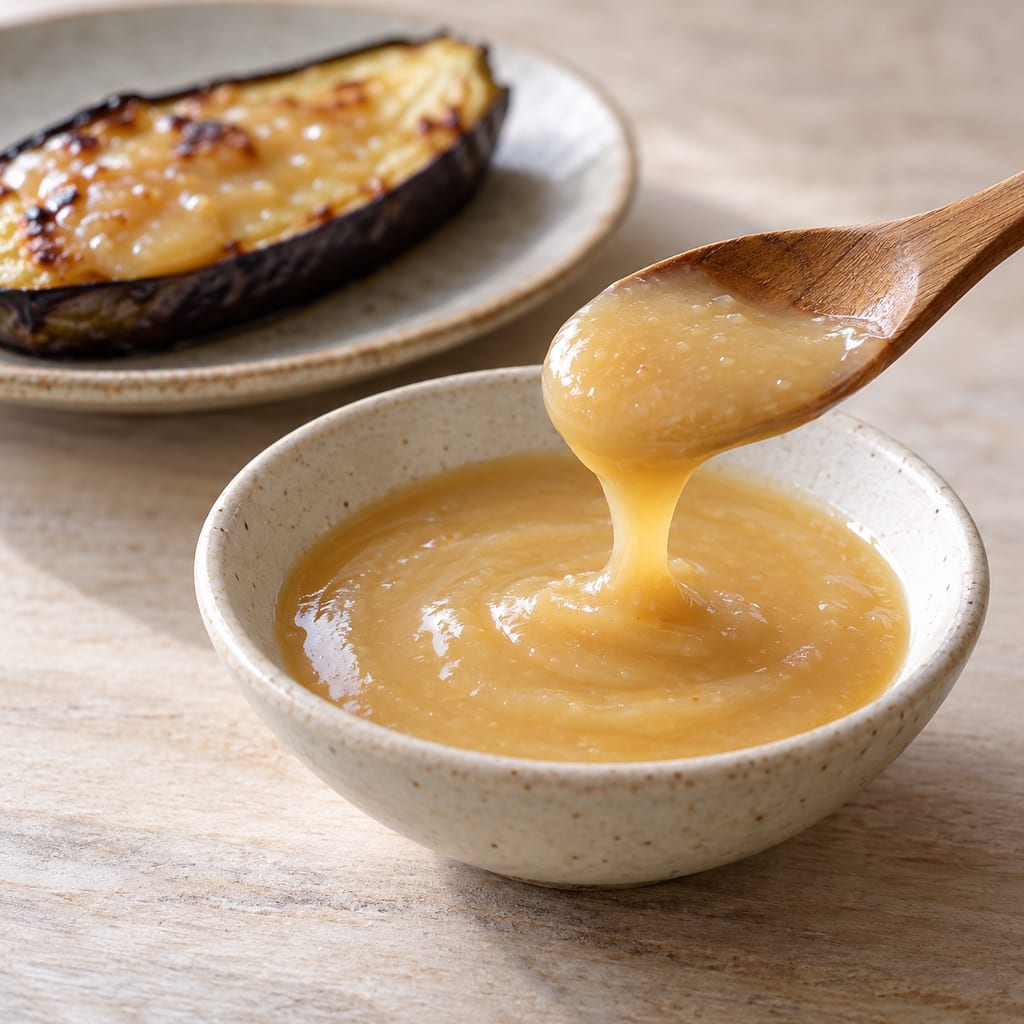
A Japanese-style glaze of pale rice miso, water, sugar and rice vinegar, heated gently until it coats a spoon and spread over cooked aubergine, tofu or vegetables.

Japanese reddish-brown vinegar from sake lees matured about three years, turned to vinegar by acetic bacteria; the vinegar of Handa and Edomae sushi rice.
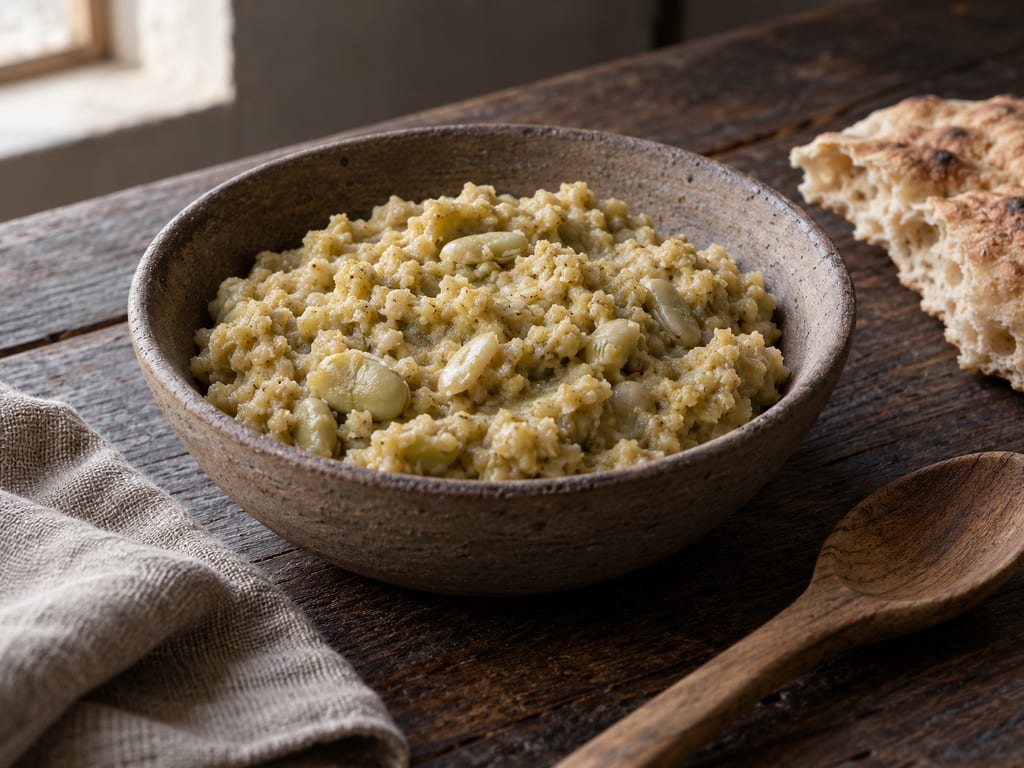
Cooked broad beans crushed to a thick paste with garlic and salt, a museum preparation built on the one European pulse that was already old when the Viking Age began.
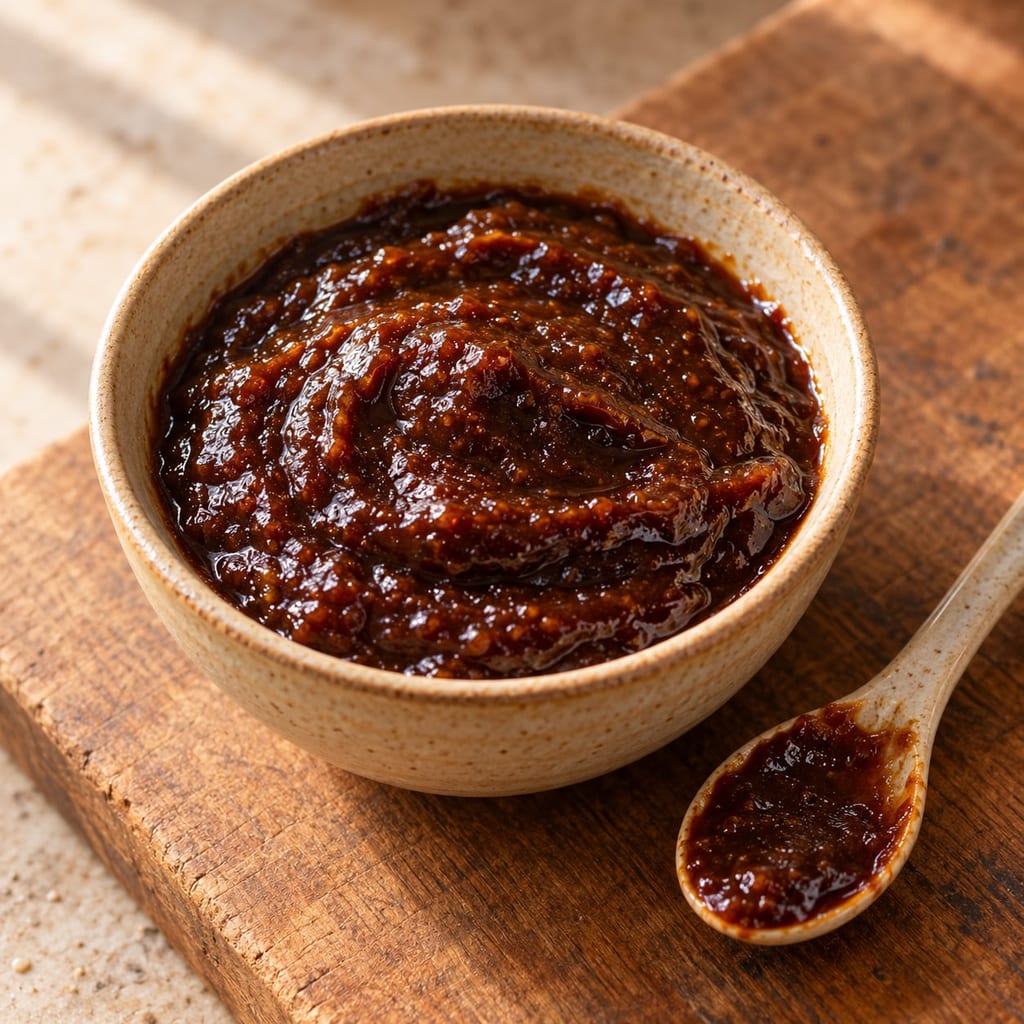
Chu hou is a sweet, savoury Cantonese paste of fermented soybeans, fermented bean curd, garlic, ginger and sesame, used mainly to braise meat.
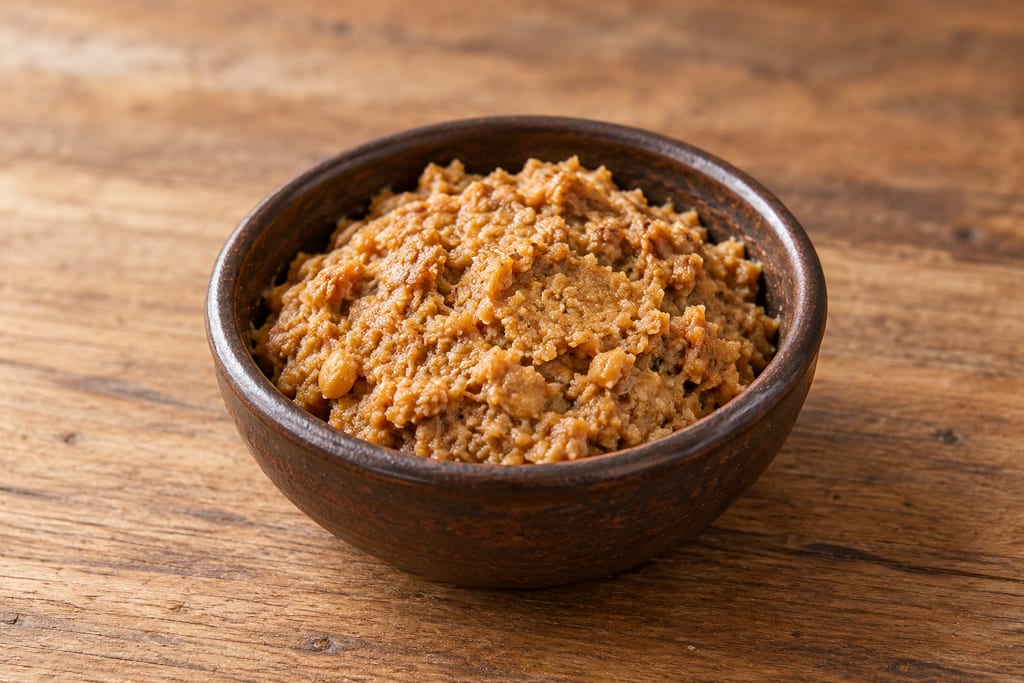
Doenjang (된장) is a Korean fermented soybean paste made by brining meju, separating ganjang, then mashing and aging the solids. This recipe follows one documented Sunchang processing study.
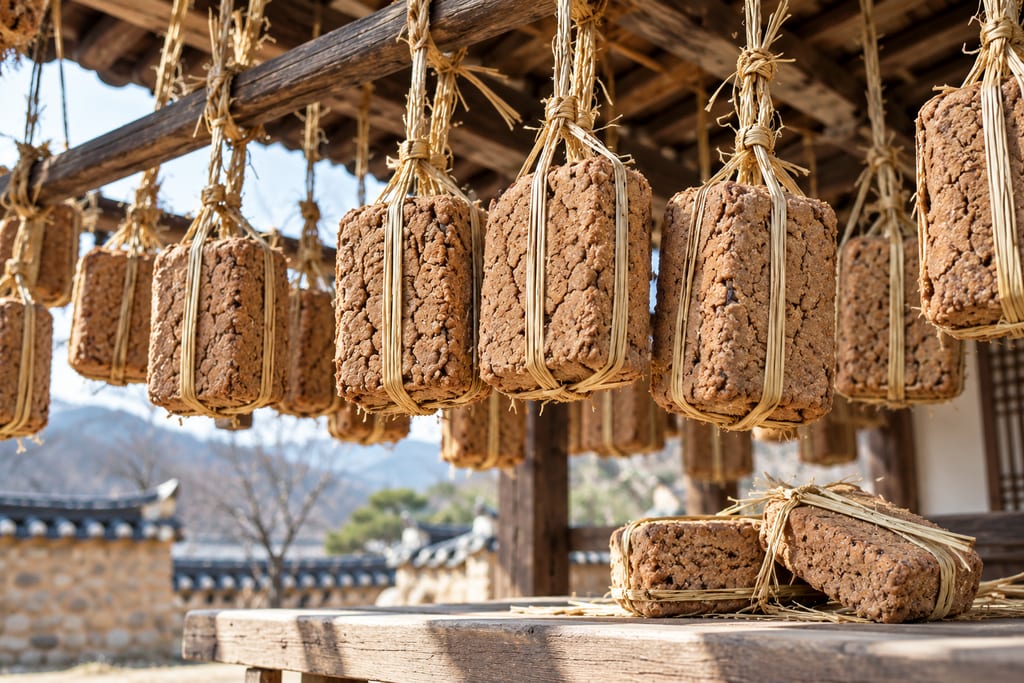
A cooked soybean brick, shaped and dried, that is fermented as a solid and later brined to make the Korean soy paste doenjang and the soy sauce ganjang.
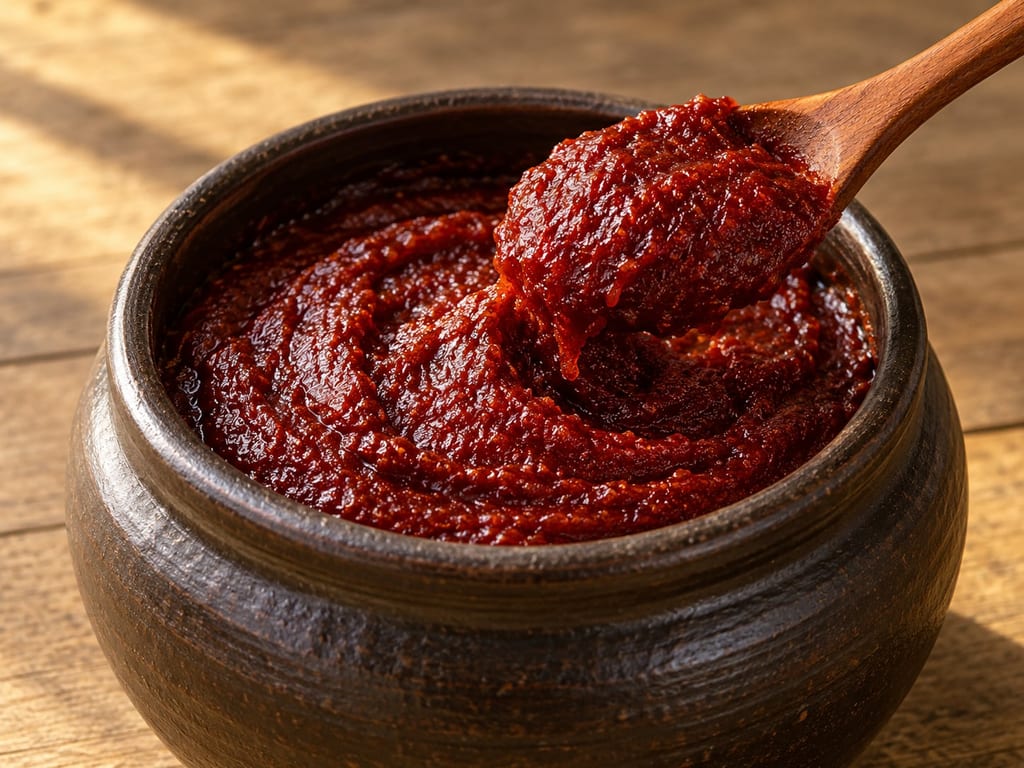
Korea’s sweet, savoury and fiery red paste of glutinous rice, barley-malt enzymes, fermented soybean meju powder and chilli powder, matured in earthenware.
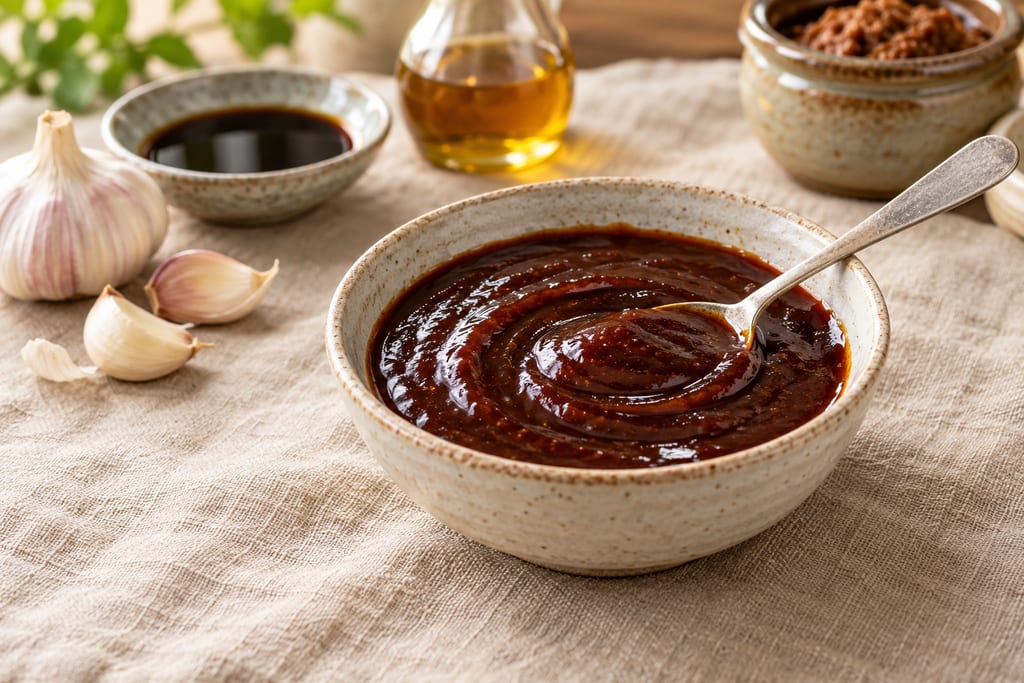
A thick, dark, sweet-salty Chinese condiment built on fermented soybean paste. This page gives one quick home version and records how commercial formulas differ.
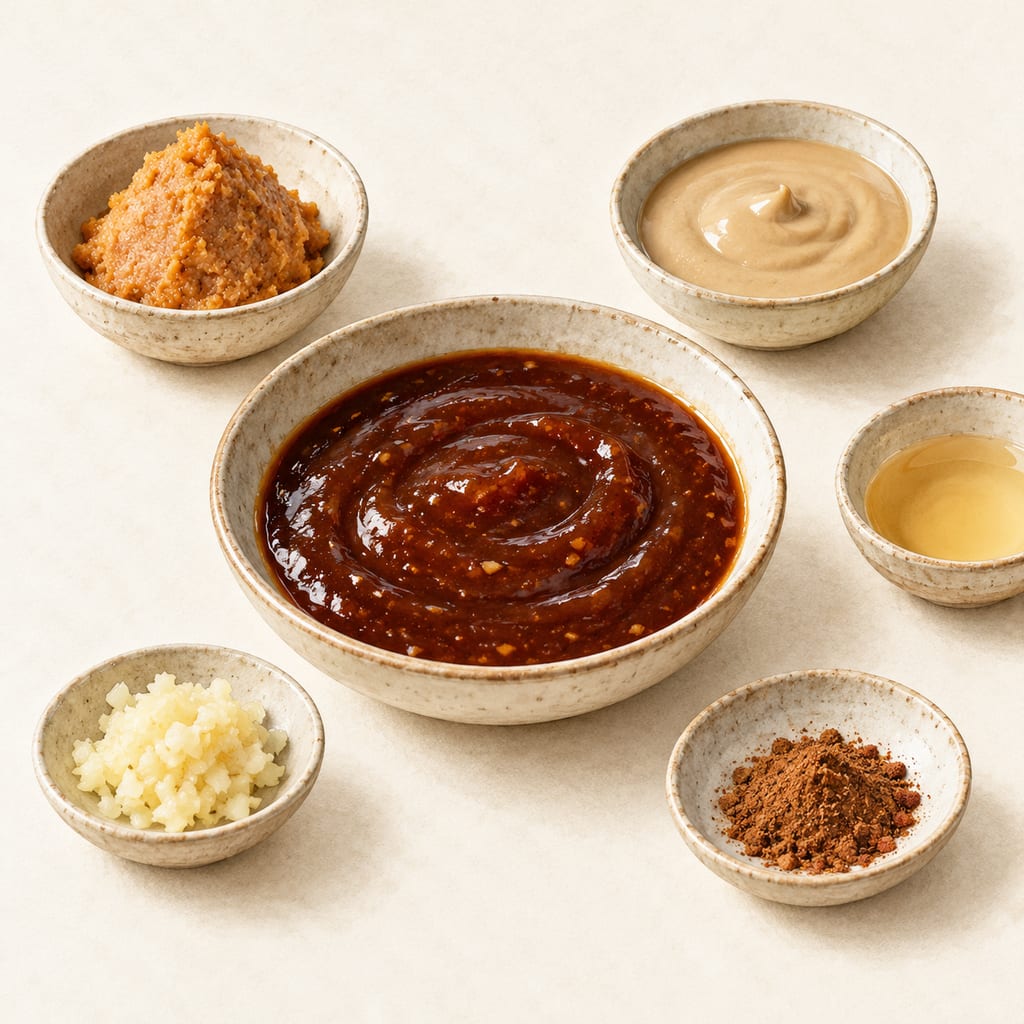
An untested modern miso-based sauce inspired by hoisin's sweet, savory profile; this prototype is not traditional hoisin or a copy of a commercial brand.
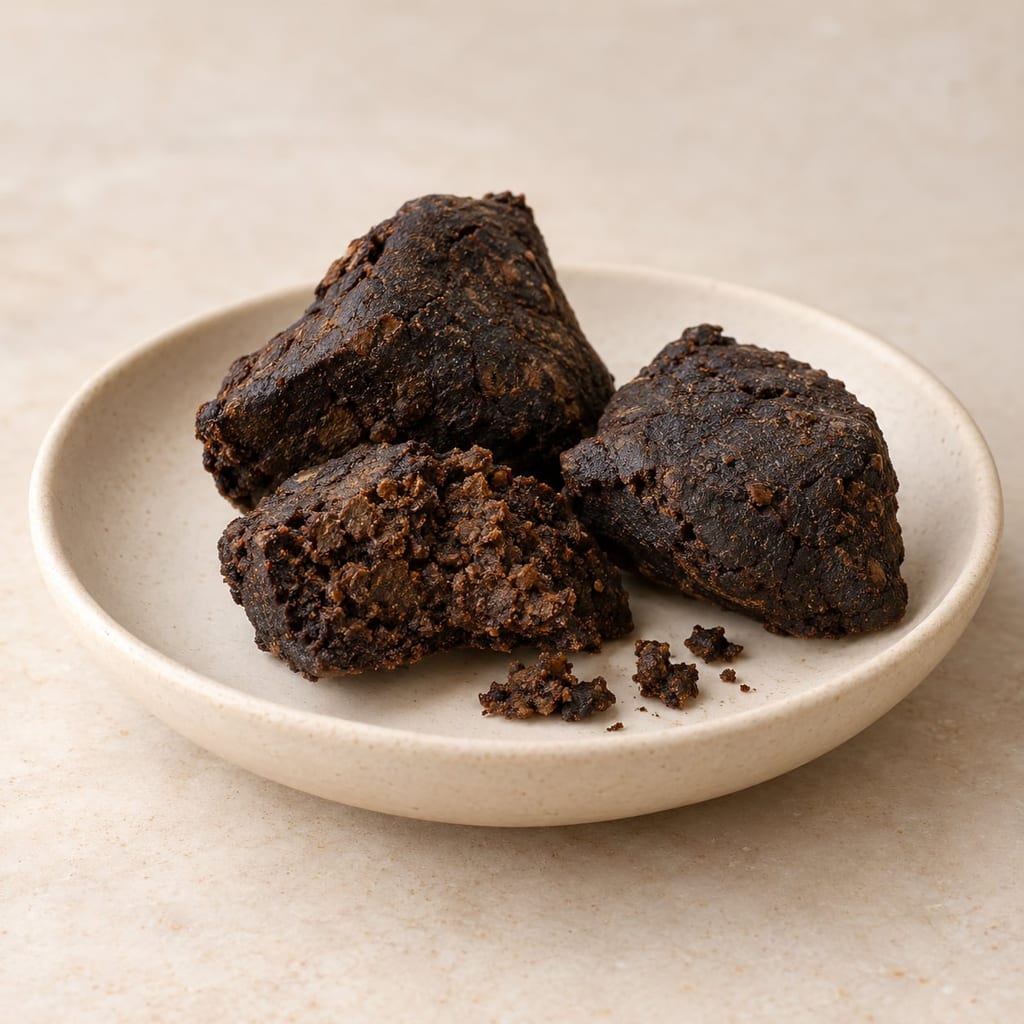
Okpiye, also written okpeye, is a Nigerian condiment from fermented Prosopis africana seeds; published studies describe laboratory batches, not a validated home method.
No community contributions have been published for this entry yet.
Sign in to contribute. Published comments and photos are free to read.
Just One CookbookMethod · History · Use
Miso Dengaku (Tofu, Eggplant, Daikon & Konnyaku)Glaze ingredients, method and storage
Serving notes and adjustments
Dengaku background
Cited in: What dengaku miso is; The name and the old dish; The modern simmered glaze; Using and keeping it
Ministry of Agriculture, Forestry and Fisheries, JapanMethod · History · Geography
Miso-dengaku (Miso Stick) | Our Regional CuisinesAichi paste quantities and grilling method
Background, season and Aichi variants
Cited in: What dengaku miso is; The name and the old dish; The Aichi household preparation; Season, serving and an older kinome passage
Ministry of Agriculture, Forestry and Fisheries, JapanMethod · Geography
味噌田楽 愛知県Japanese Aichi recipe and mustard-paste garnish
Cited in: The Aichi household preparation
Shinagawa CityHistory
江戸時代の豆腐料理Translated kinome dengaku passage from Tofu Hyakuchin
Cited in: Season, serving and an older kinome passage