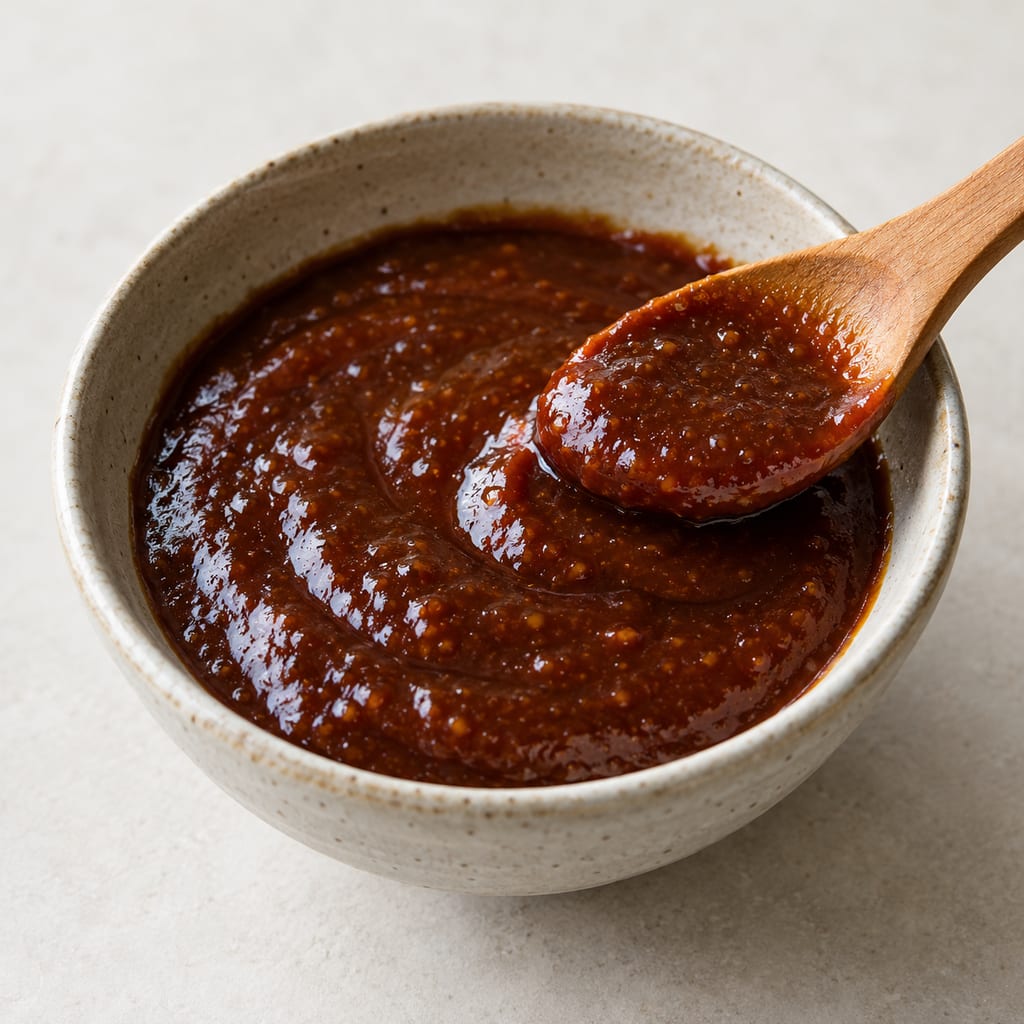
Miso dengaku glaze
A sweet-salty Japanese glaze of miso, mirin, sake and sugar, warmed until thick and spread on grilled tofu, eggplant, daikon or konnyaku. Regional versions in Aichi use red miso and dashi.
 FermenteaWhere food goes to change
Traditional method
日本酒 · Nihonshu · seishu · 清酒 · sake · multiple parallel fermentation
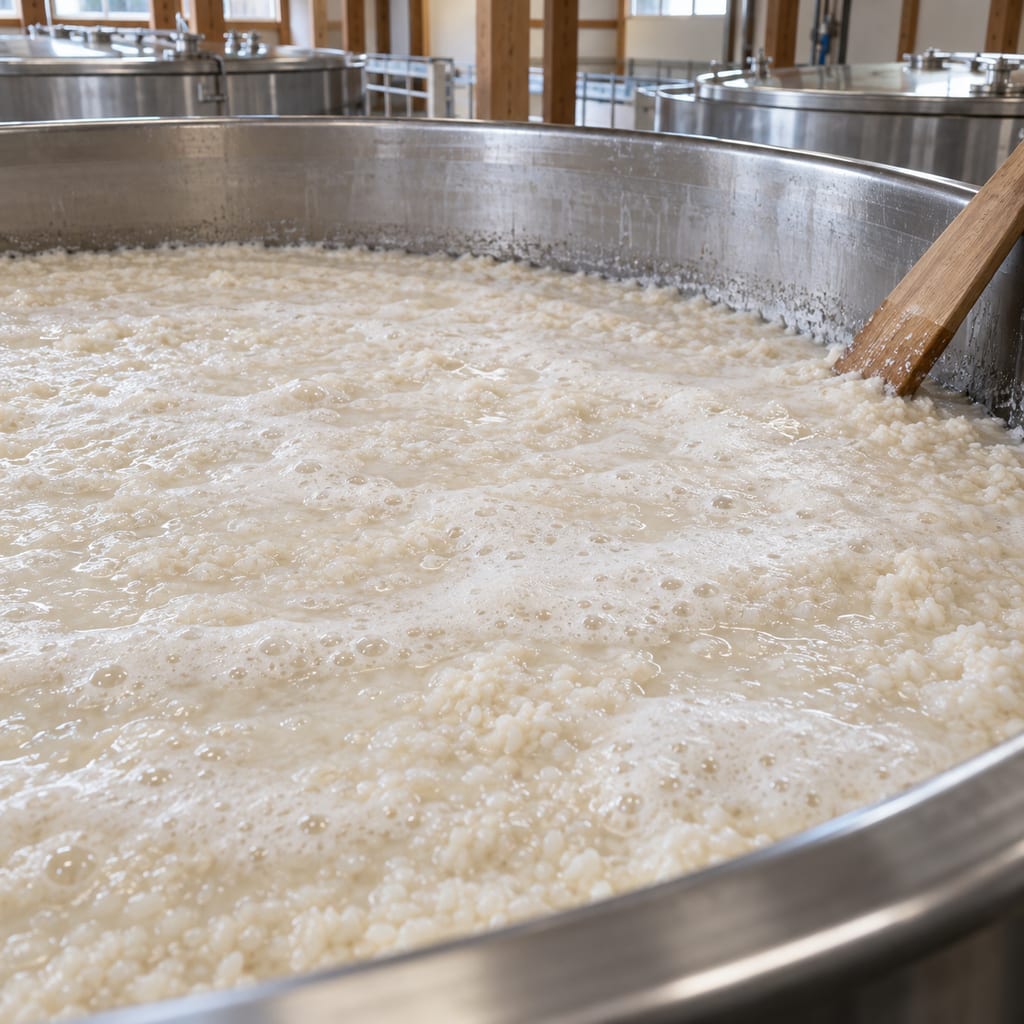
Nihonshu (日本酒), or seishu, is Japanese rice sake: steamed rice, rice koji, water and a yeast starter ferment together in one mash, which is then pressed and finished.
Nihonshu (日本酒) is the clearer name for Japanese rice sake in comparative English writing, because “sake” can refer to alcoholic drink more broadly in Japanese. Seishu (清酒) is a statutory beverage category described by Japan’s liquor-tax materials through fermentation and filtration of rice, rice koji, water and permitted ingredients. A registered geographical indication called Nihonshu has separate origin and production criteria; those criteria do not define every seishu. These legal and GI descriptions are Japan-specific and should be checked against the relevant source version.
The National Tax Agency describes koji-based sake-making as a tradition thought to have settled more than five centuries ago and transmitted by toji and brewery workers, with adjustments to local climate and materials. This is a heritage account, not an exact invention date or proof of one unchanged method. UNESCO inscription in 2024 dates recognition of traditional knowledge and skills, not the drink’s origin. The inspected evidence supports Japan at country precision but does not establish one birthplace, a single regional method, or a complete regional comparison.
The National Research Institute of Brewing places sake within Japanese brewing history and describes regional variation shaped by rice, water, climate and brewery practice. Traditional brewing seasons followed the rice harvest and winter work, while modern cooling can support production through the year. The same guide records sake at meals, ceremonies and seasonal gatherings. These are Japanese cultural and brewing contexts, not evidence for one birthplace, calendar or serving style.
Sake’s parallel fermentation happens in the main mash. Enzymes made by koji release fermentable sugars from steamed rice while yeast ferments the sugars that are available into alcohol and carbon dioxide. The two processes run together, but the materials and stages stay distinct.
Koji is steamed rice grown with a mould used for its enzymes. The shubo, also called moto, is a yeast-rich starter mash. Moromi is the main fermentation mash. The three are not interchangeable names for one culture.
Institutional process accounts describe rice being washed, soaked and steamed; a portion is inoculated with koji mold, whose enzymes make rice starch available as sugars. A separate shubo starter combines water, koji, steamed rice and cultured yeast. Sokujo uses added lactic acid, while kimoto and yamahai rely on lactic acid bacteria during starter preparation; the sources do not establish one microbial succession for every brewery. The starter seeds the main moromi. Rice, koji and water enter in three additions over four days, with a rest day after the first addition in the NRIB representative account. Saccharification and alcoholic fermentation proceed together. The moromi is pressed to separate liquid sake from sake lees. Filtering, added brewing alcohol, pasteurization, maturation and storage vary by producer and product.
Cold-season brewing is described alongside year-round production at some larger breweries; neither establishes one national brewing calendar. Kimoto and yamahai are starter methods already represented by the separate kimoto-and-yamahai-moto item. Doburoku, nigorizake, shochu, awamori and mirin have distinct product or process boundaries in the inspected sources. They are not aliases for nihonshu. A contemporary homebrew doburoku item is not evidence for a Japanese seishu production route, and a cloudy home rice ferment is a different product from clear sake.
The institutional descriptions name rice washing, soaking and steaming equipment; koji-growing spaces and trays; a separate starter vessel and main-mash vessels; mixing paddles; pressing and filtration equipment; and product-specific heating and storage equipment. A brewery account shows these stages at production scale. Existing catalogue equipment records distinguish a wooden fermenting vat, sake pressing bag and serving or storage taru. These named tools do not establish one universal brewery setup or a design for a household vessel. The sources do not supply common capacities, materials, sensor accuracy, sanitation specifications or household alternatives.
The representative process is not a complete batch: no matching quantities, yield, validated endpoint, contaminant rejection procedure, full cleaning protocol or qualified household safety validation is supplied.
Japan’s National Tax Agency states that a producer needs a manufacturing licence for the liquor type and premises under Japanese law. This source-bound legal context does not describe other jurisdictions and is not a method for avoiding licensing requirements. The makers’ association recommends storage conditions for finished commercial sake to protect quality; its advice, like the storage and service notes in the institute’s FAQ, is not a validated fermentation control or a consumer safety shelf life.
Japan’s National Tax Agency describes koji-based sake-making as a tradition thought to have settled more than five centuries ago. UNESCO inscription in 2024 dates heritage recognition, not the beverage’s origin. The sources inspected here do not identify one birthplace or establish that present-day seishu methods are unchanged from an ancient process.
The sources describe the professional brewery workflow. They do not give a complete household batch, a validated endpoint or a household safety assessment.
The National Tax Agency licensing information applies to production in Japan and is not universal legal advice.
Finished-product storage guidance concerns quality and does not establish a fermentation control or a safety shelf life.
Country-level association only; the inspected sources do not support a single birthplace or prefecture-wide method.
A sweet-salty Japanese glaze of miso, mirin, sake and sugar, warmed until thick and spread on grilled tofu, eggplant, daikon or konnyaku. Regional versions in Aichi use red miso and dashi.
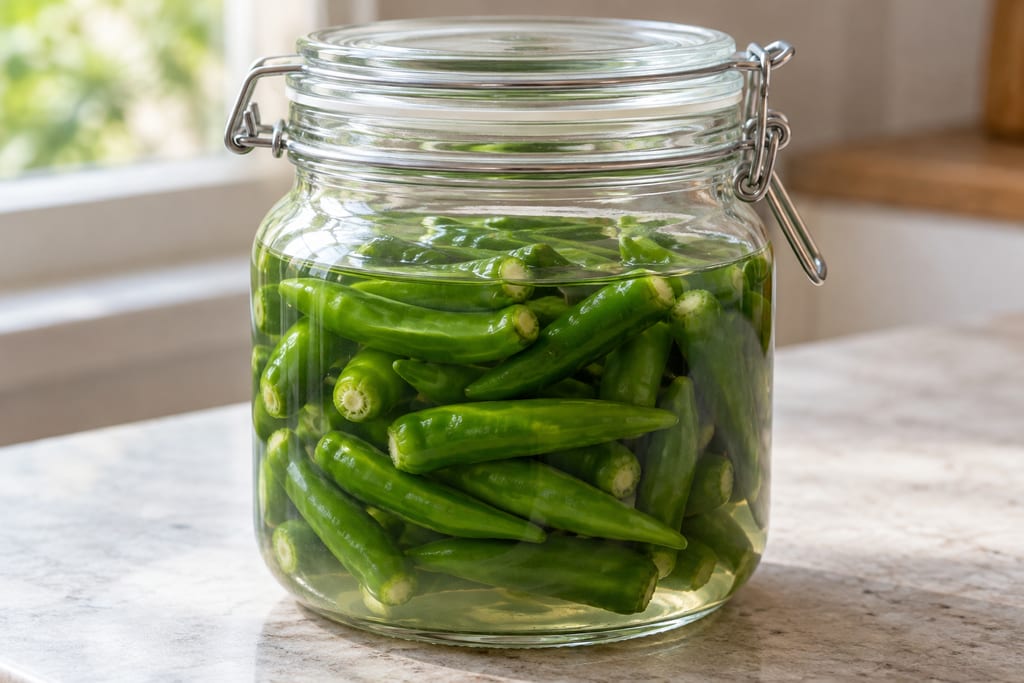
Whole green chiles are blanched briefly, then fermented in 3% salt brine with sake in a modern Japanese presentation of a wider Asian preparation.
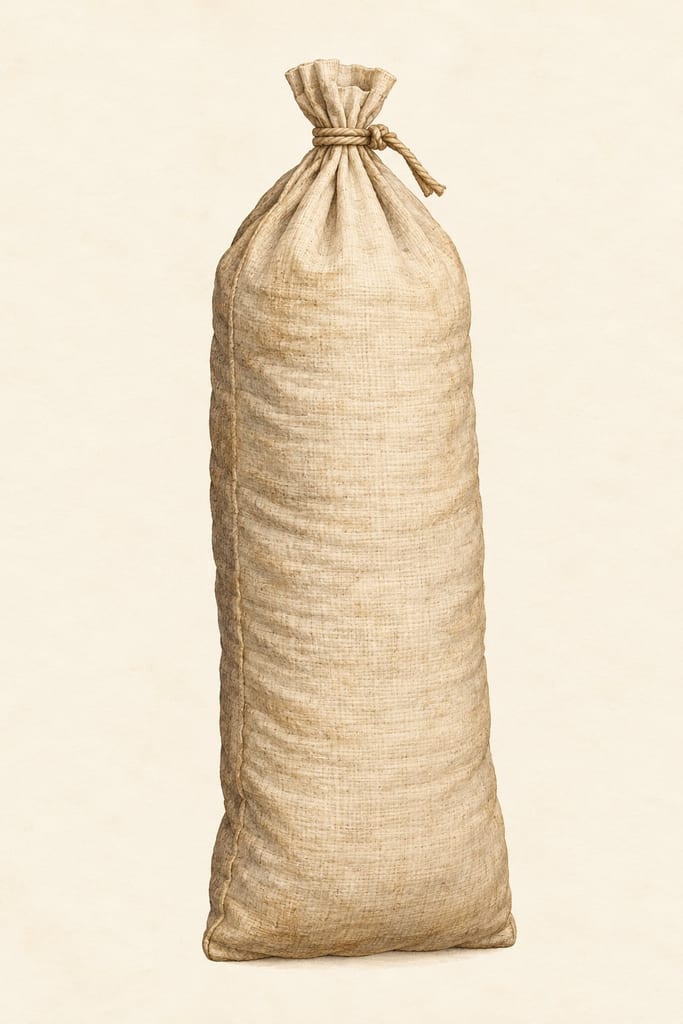
A sake pressing bag holds moromi while cloth separates liquid sake from rice-and-yeast lees. Traditional fune presses stack filled bags; material and shape vary by method and period.
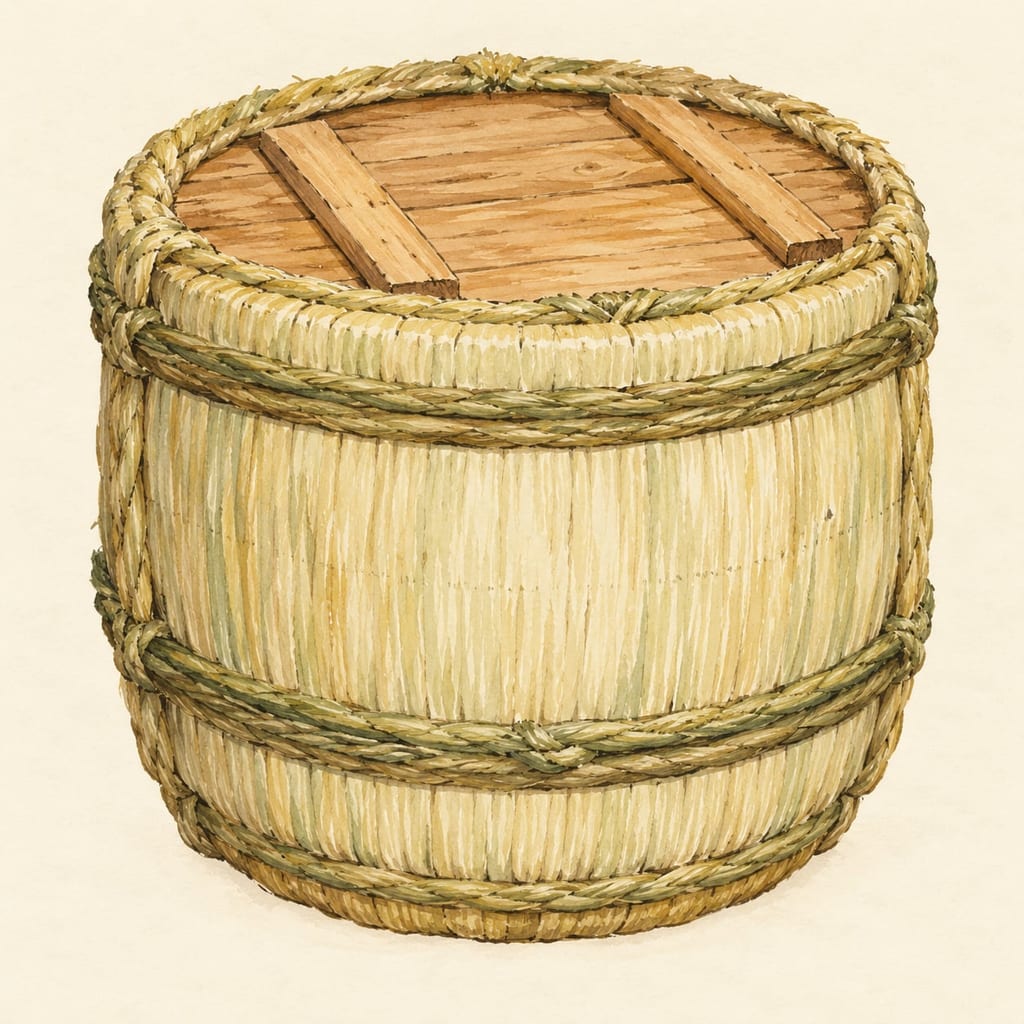
A sake taru is a short wooden cask for holding and presenting finished sake; traditional examples may show bare cedar or a woven-straw covering.
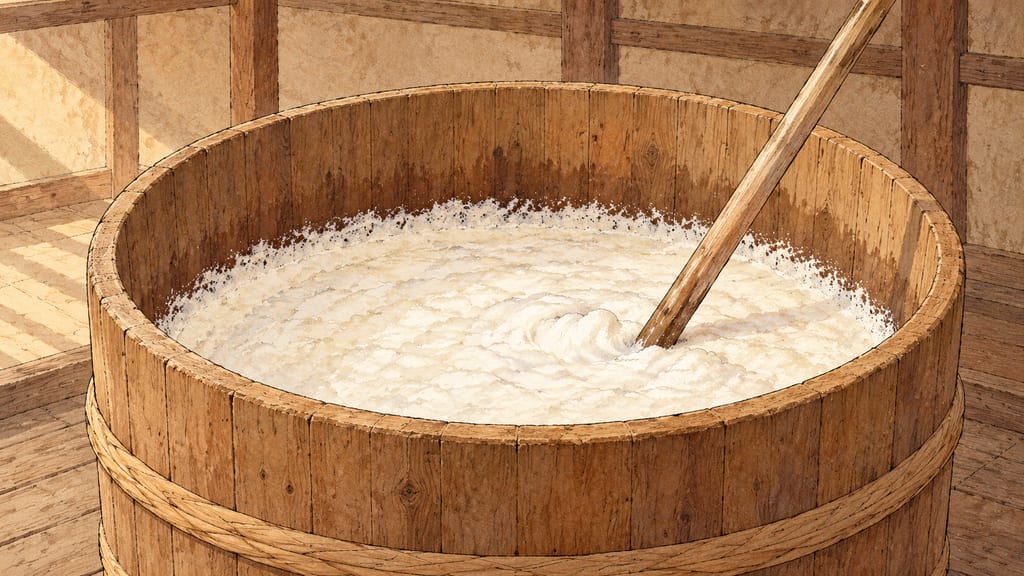
An upright, open-topped stave vat used for fermenting sake mash. Terada Honke documents a current wooden-vat practice and a new Sanbu-sugi cedar vat completed in 2023.

Traditional Japanese sake yeast starters made from steamed rice, rice koji and water, acidified by naturally growing lactic acid bacteria. Kimoto grinds the rice mash with paddles; yamahai omits that step.
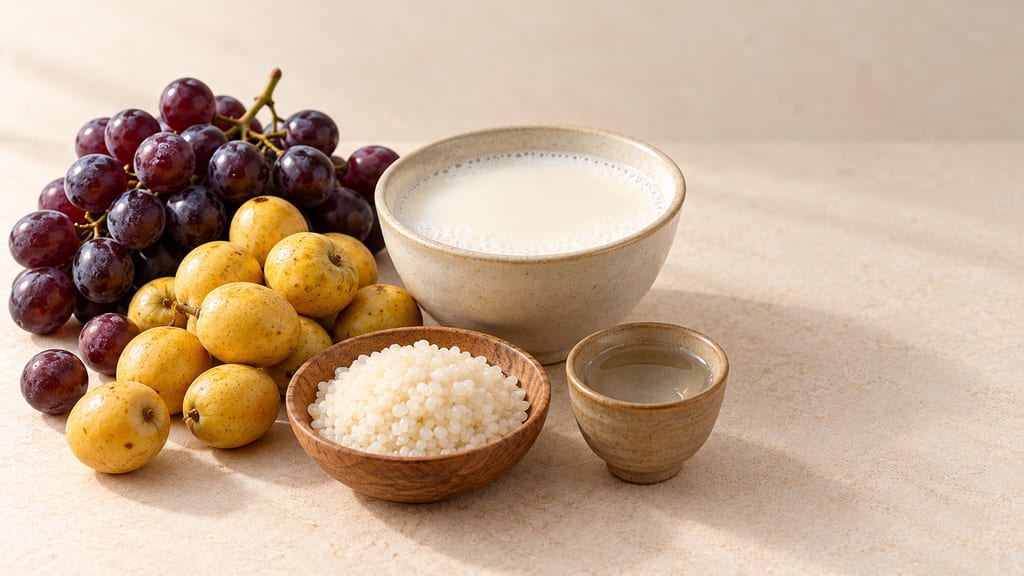
A marula harvest, a rice mash and a bowl of fermented mare’s milk reveal different ways to make alcohol, and different kinds of knowledge behind the drink.
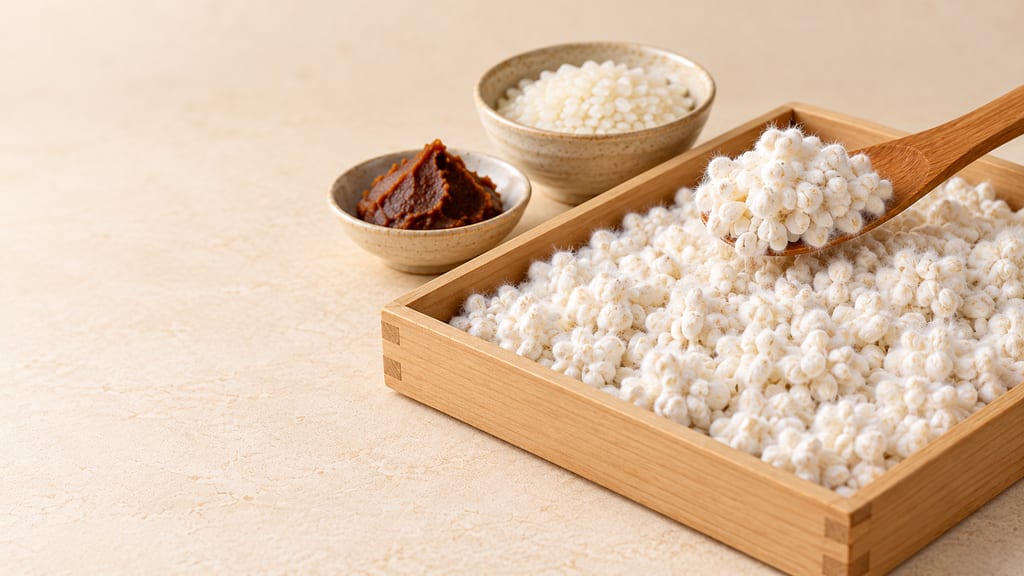
Koji is grain or beans grown with a mould whose enzymes break food down. This guide separates the mould, the starter and the finished koji, and follows them into sake, amazake, miso, soy sauce and shio-koji.
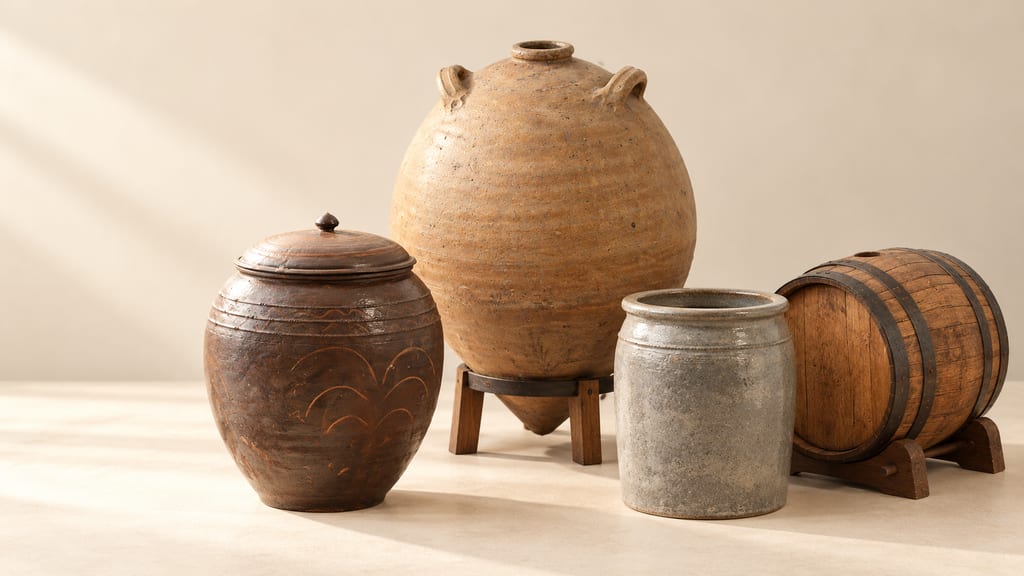
Jars, barrels, skins, leaves, pits and whole rooms decide much of what happens to fermented and cured food. This is how a container works on its contents, and how people in different places chose theirs.
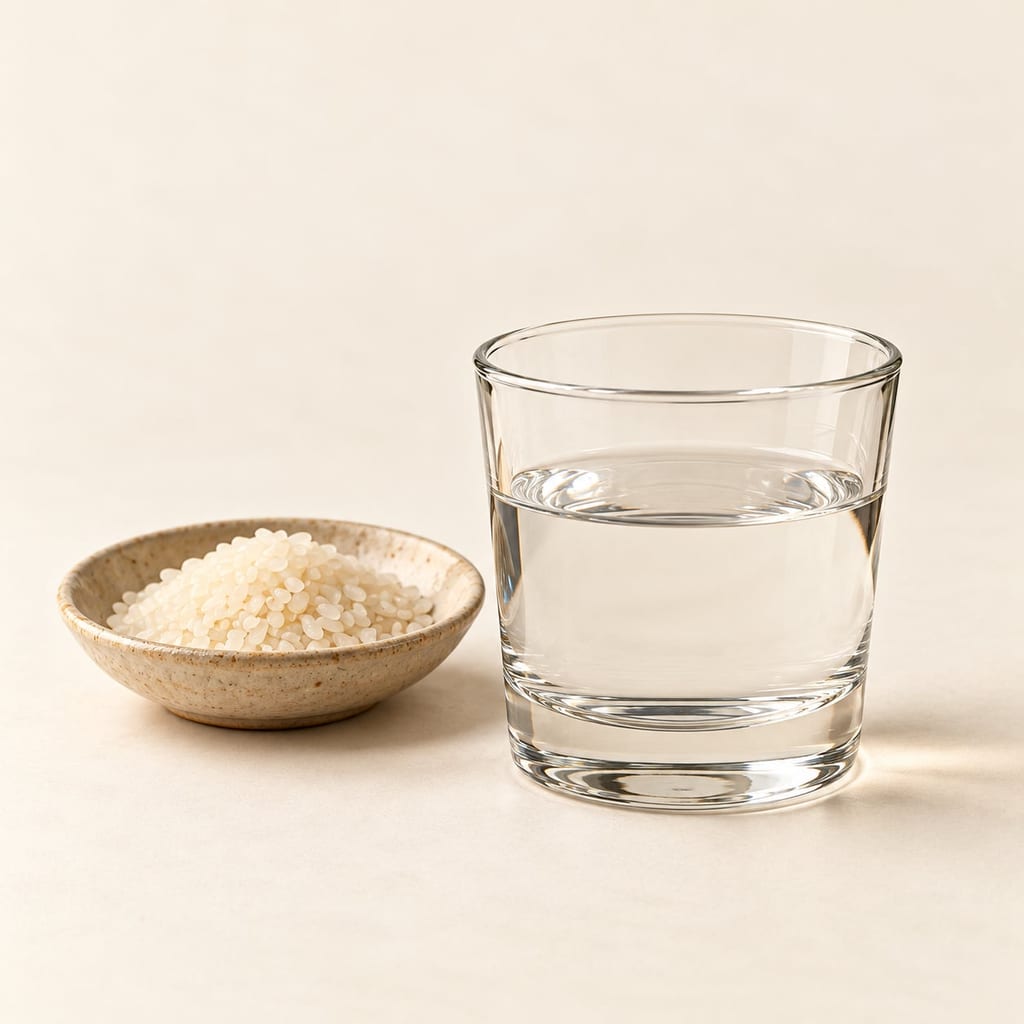
An Okinawan rice spirit made by turning all the rice into black koji, fermenting it with water and yeast, then pot-distilling and maturing the spirit.
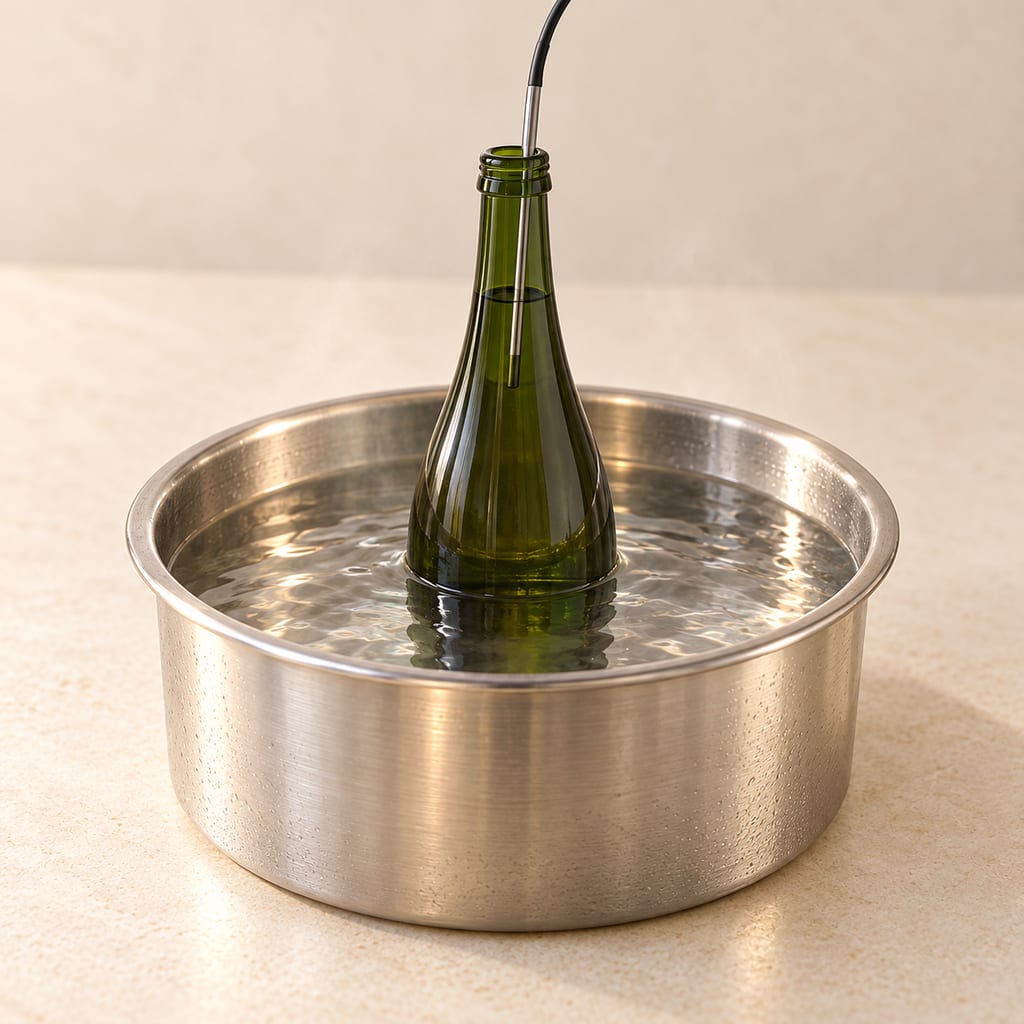
Hi-ire is the Japanese heat treatment of finished sake, about 65 °C, used to stop re-fermentation and souring. Brewers applied it from the Muromachi era.
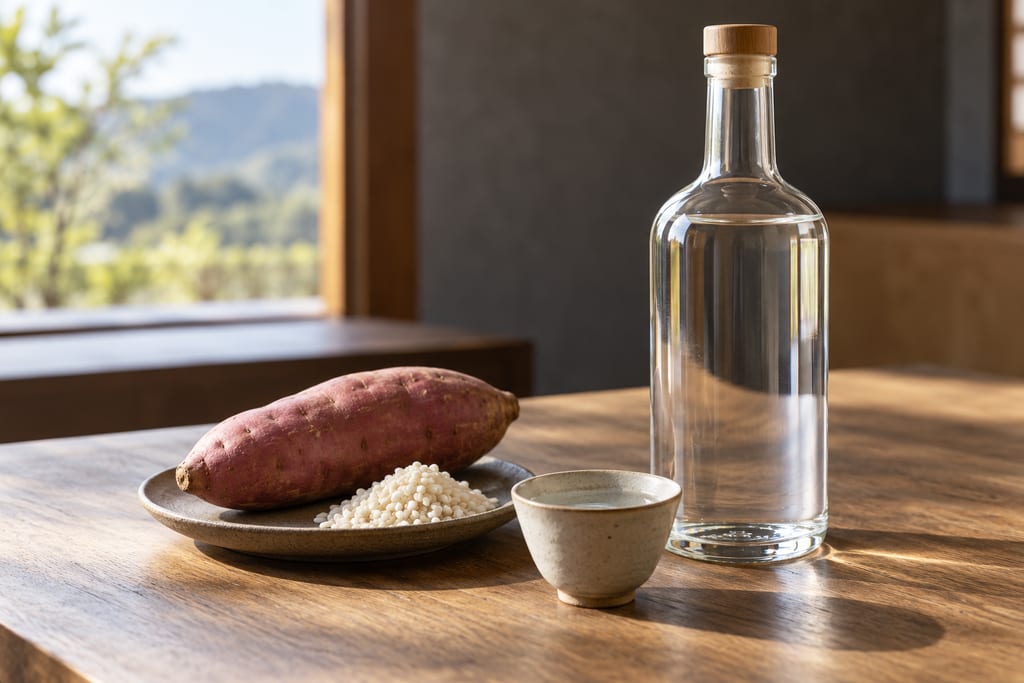
Japanese pot-distilled spirit made by fermenting sweet potatoes, rice or barley with koji and yeast in two stages, then distilling the mash once so the ingredients' aroma survives.
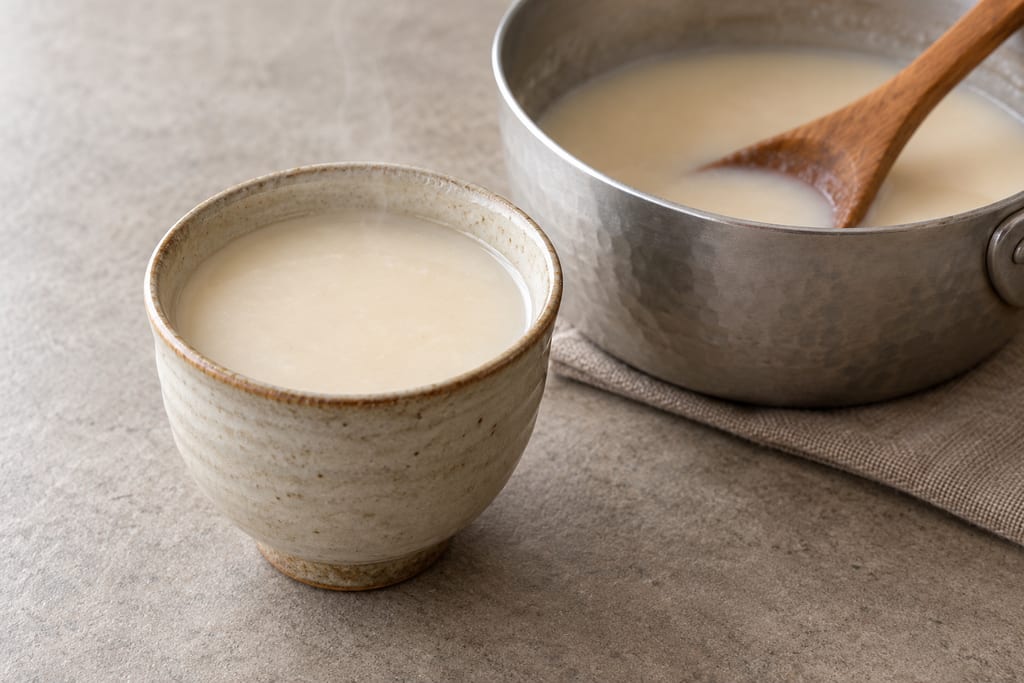
A Japanese sweet drink made by dissolving sake lees in hot water and adding sugar, often with ginger or salt; it carries flavours and alcohol from sake brewing but normally undergoes no new fermentation.
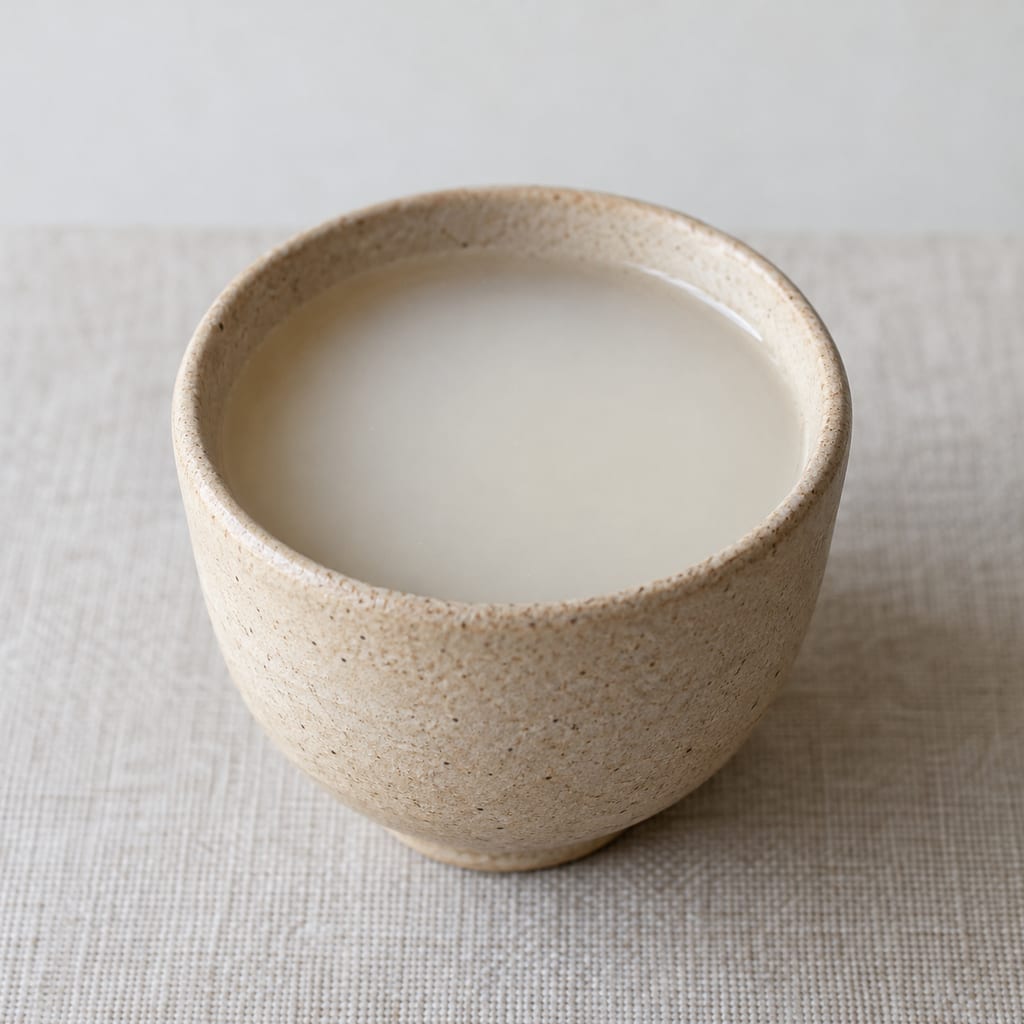
Tonoto is an Ainu ceremonial grain drink. This Saru River version ferments equal amounts of rice and egg millet with malted rice for about two to three days in summer or a week in winter.
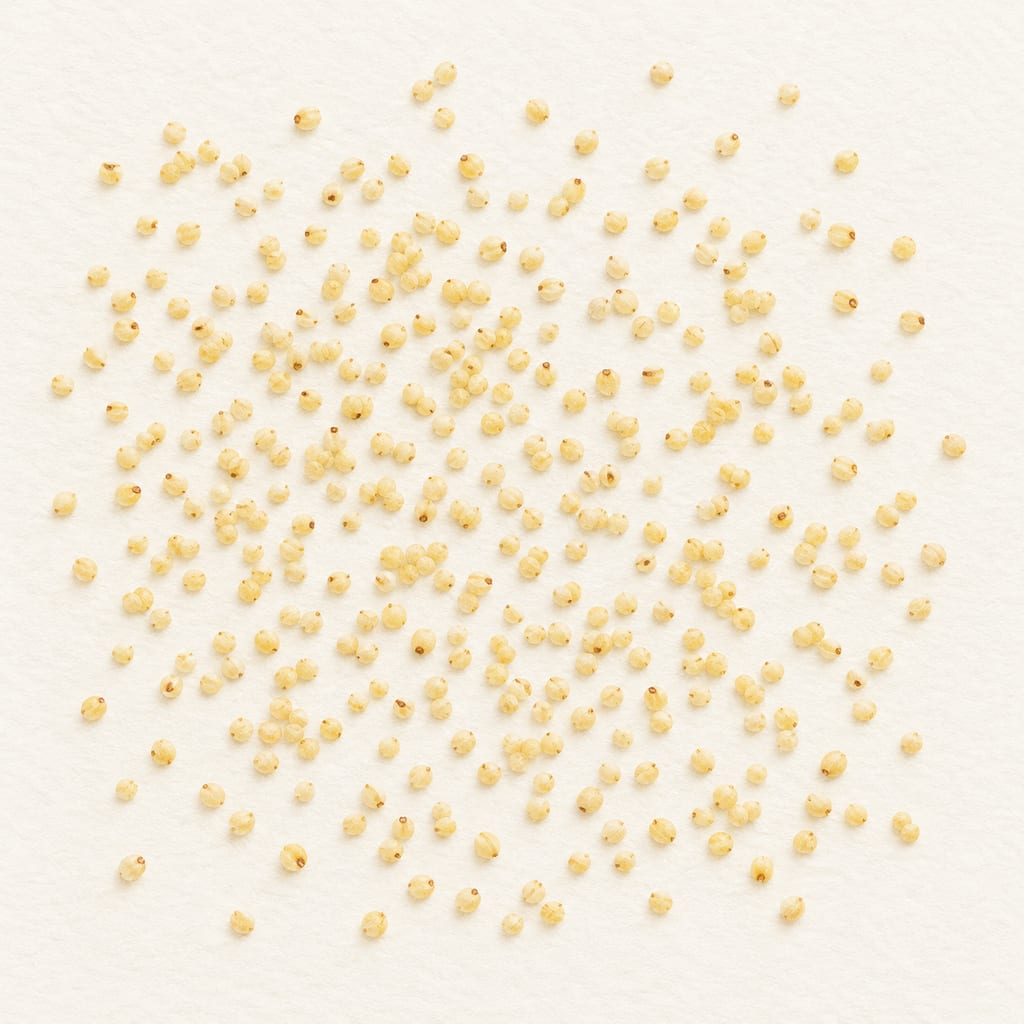
Tonoto from Shizunai in Hidaka is made of barnyard millet alone: a firm porridge kneaded with an equal amount of malted grain in a sake vessel, warmed by two embers, and left a week to ten days.
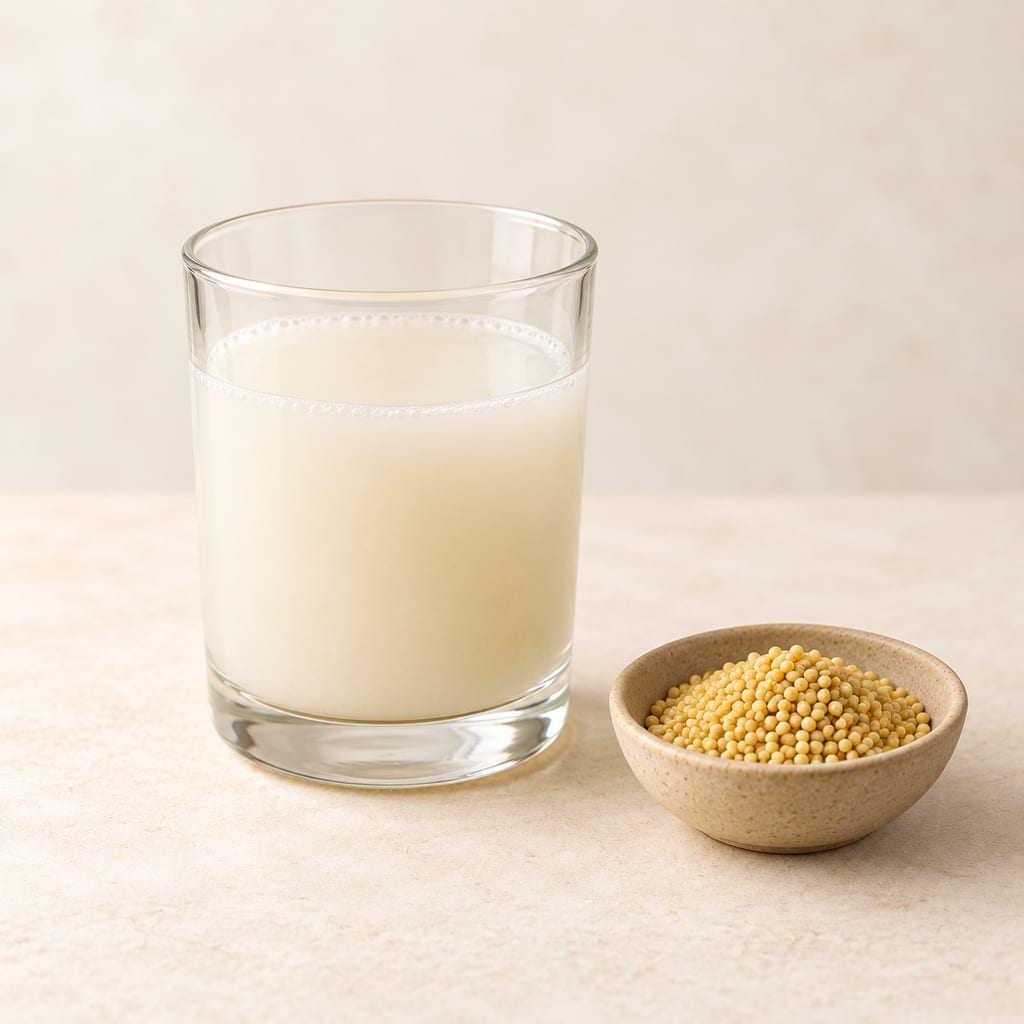
An Ainu grain drink for festivals and housewarmings, made by cooling cooked grain gruel, adding millet malt and holding it in a sake-making vessel.
A Yonaguni rice spirit made with two-day koji, a nineteen-day moromi stage and direct-fire pot distillation, followed by filtration and tank maturation.
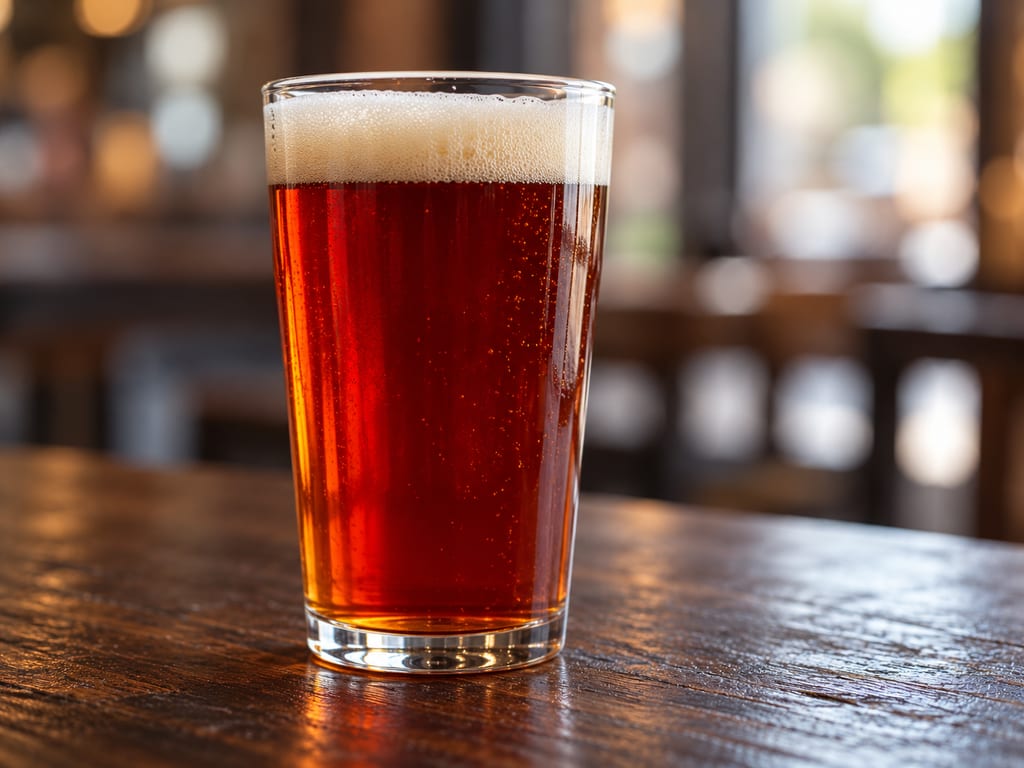
A deep amber-red American ale brewed from pale, Munich, CaraVienne and chocolate malts, bittered with Columbus hops and finished with Amarillo.
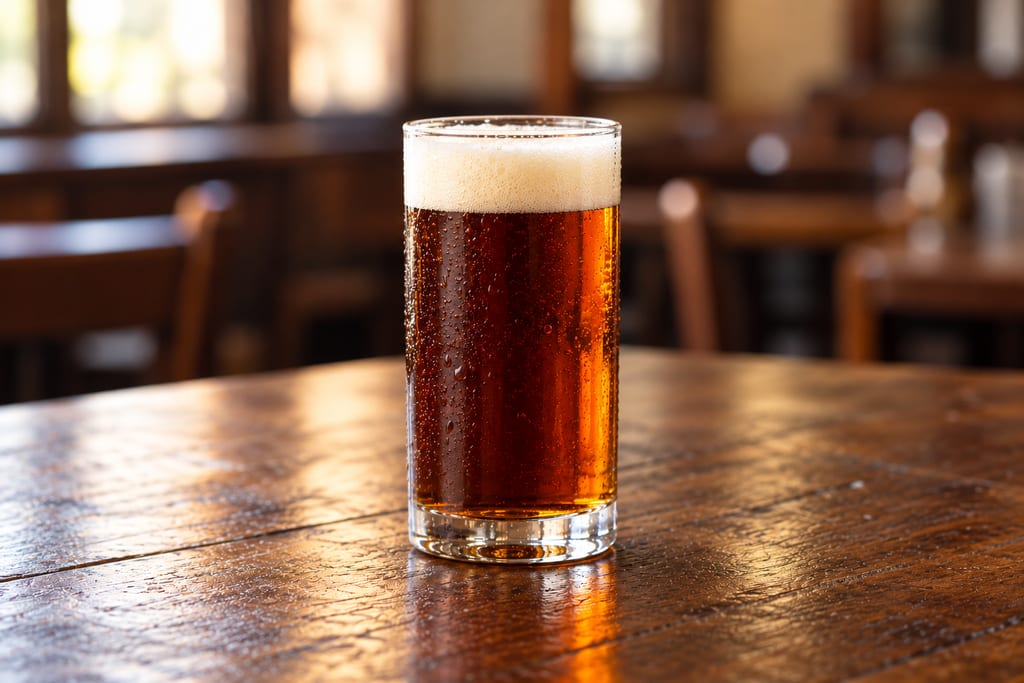
A source-specific modern extract adaptation of Düsseldorf Altbier, with specialty malts, two hop additions and an ale yeast. It is distinct from a brewery's commercial Altbier process and from Kölsch.
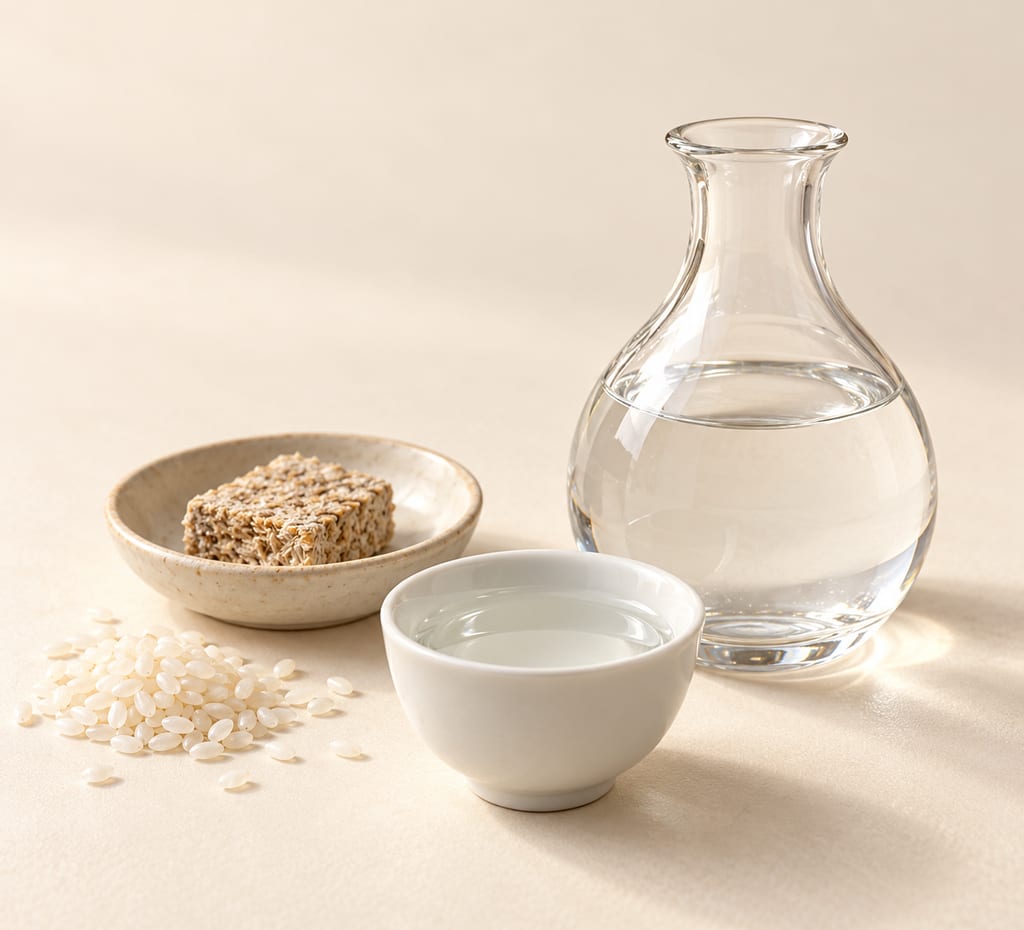
Andong soju is a rice spirit from North Gyeongsang, distilled from steamed rice and wheat nuruk. This method makes the starter before fermenting the rice mash in a jar.
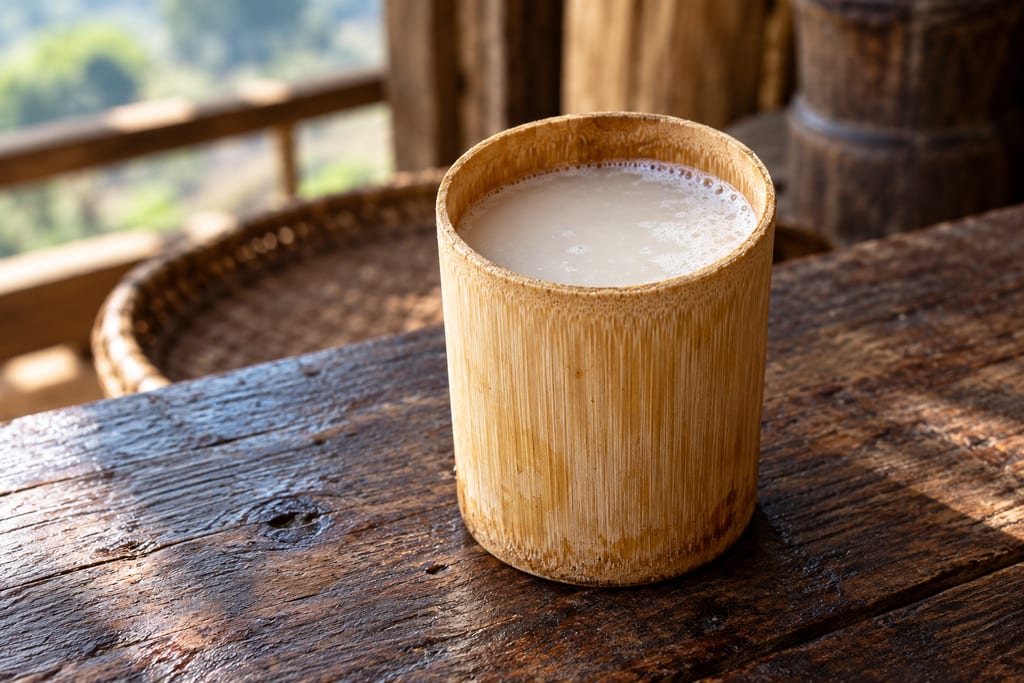
Angami rice beer from Nagaland. A surveyed method mixed cooked rice with piazu, fermented it for about four days in summer or a week in winter, then added water and filtered it. The starter ratio leaves the rice-weight basis unclear.
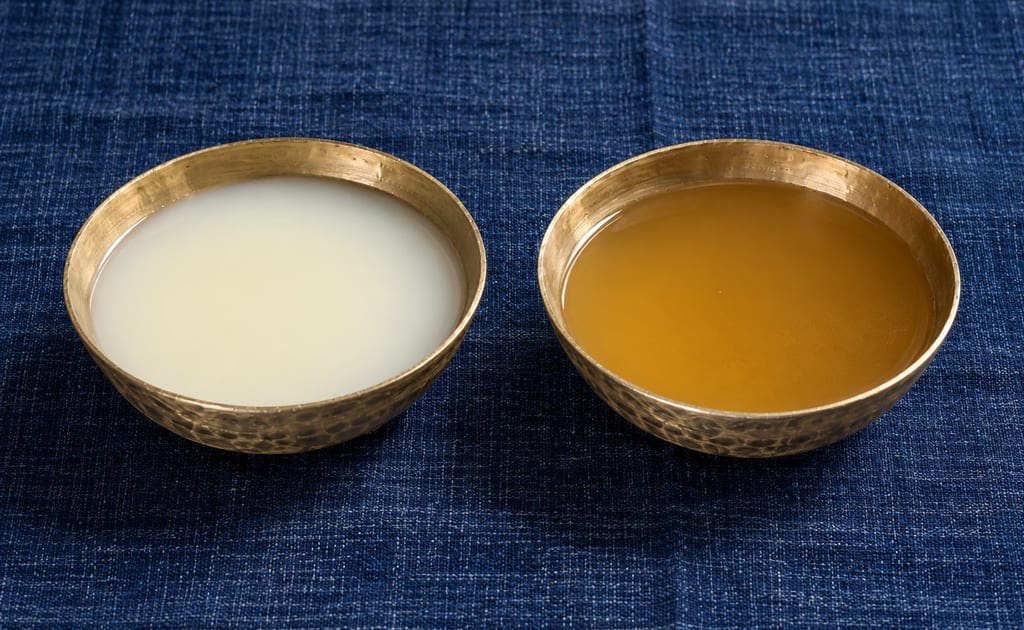
Apong names Mising rice beverages in Assam, including pale Nogin and ash-associated Po:ro. Sources describe distinct preparations and do not establish one unified household recipe or validated safety endpoint.
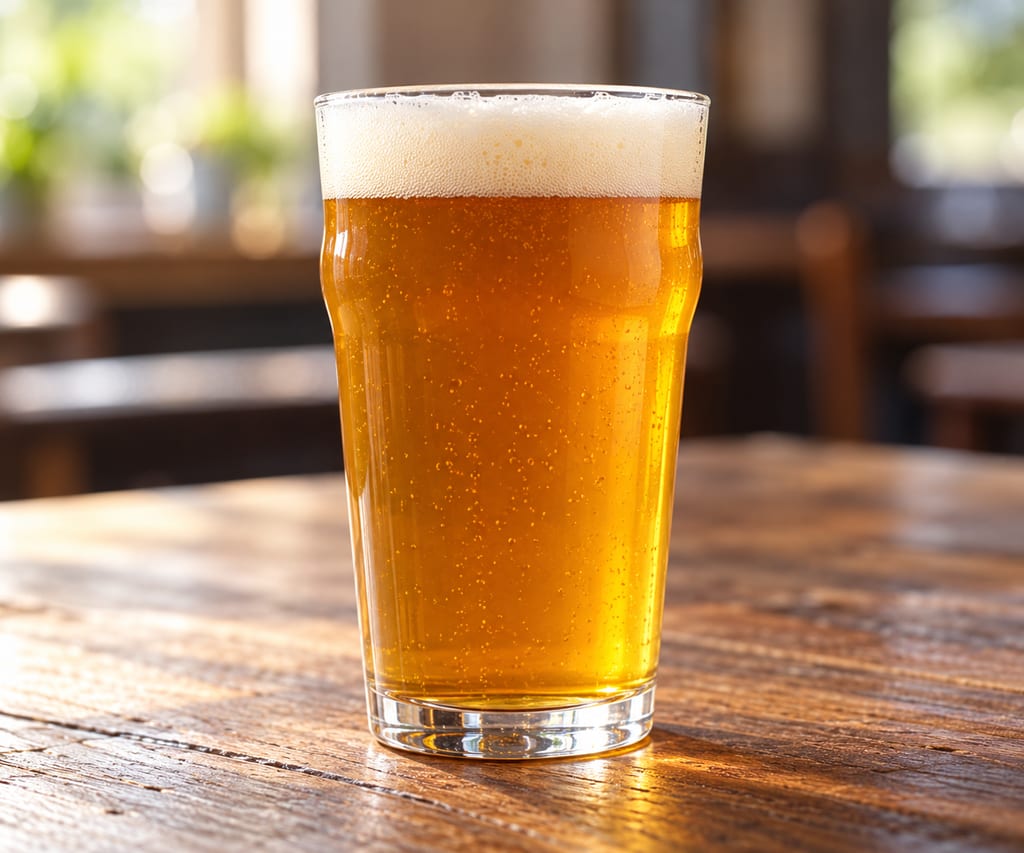
This is a process overview, not a complete batch recipe: key quantities, yield and packaging directions are absent. The AHA tutorial uses Hop Hammer Imperial IPA as an example; this page is not that full formulation.
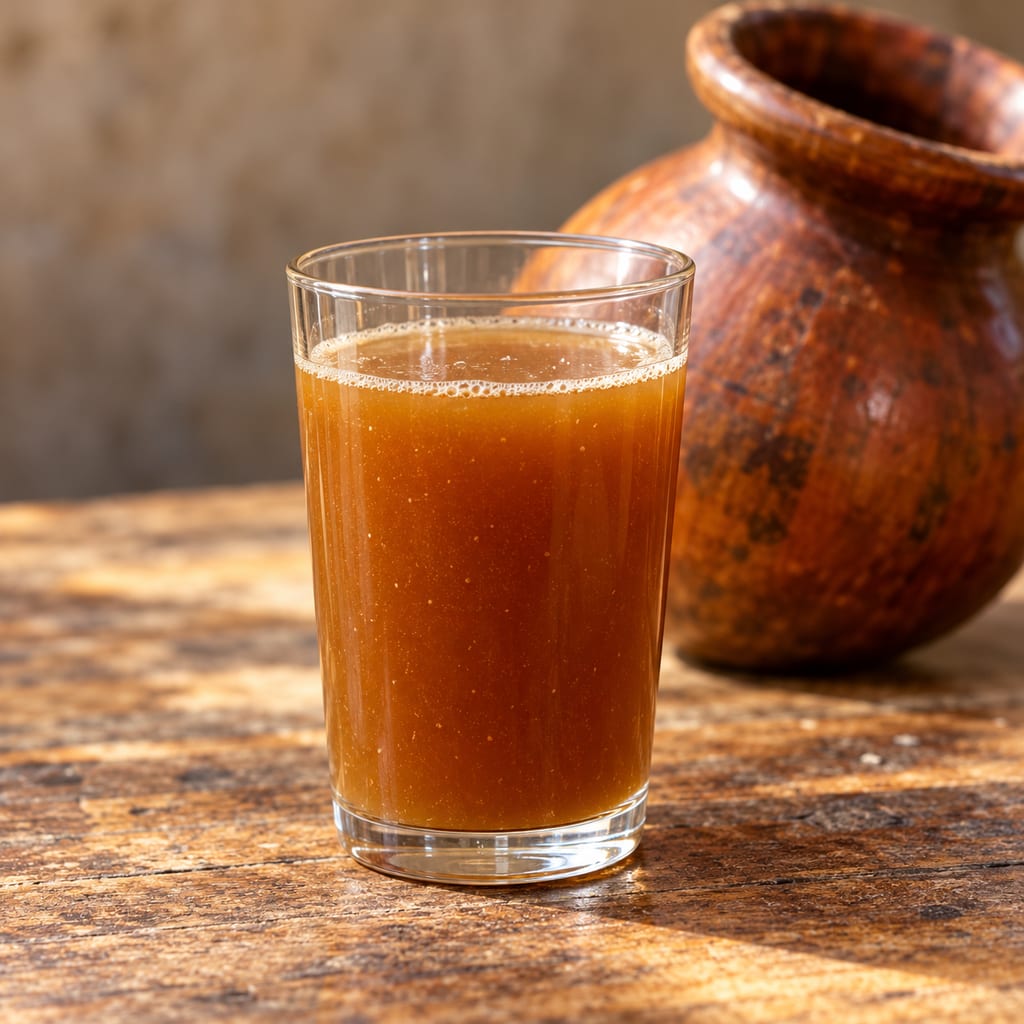
A darker Ethiopian maize tella, brewed from maize baked into a hot, dry kita pancake and then fermented in three stages with barley malt, gesho and water.
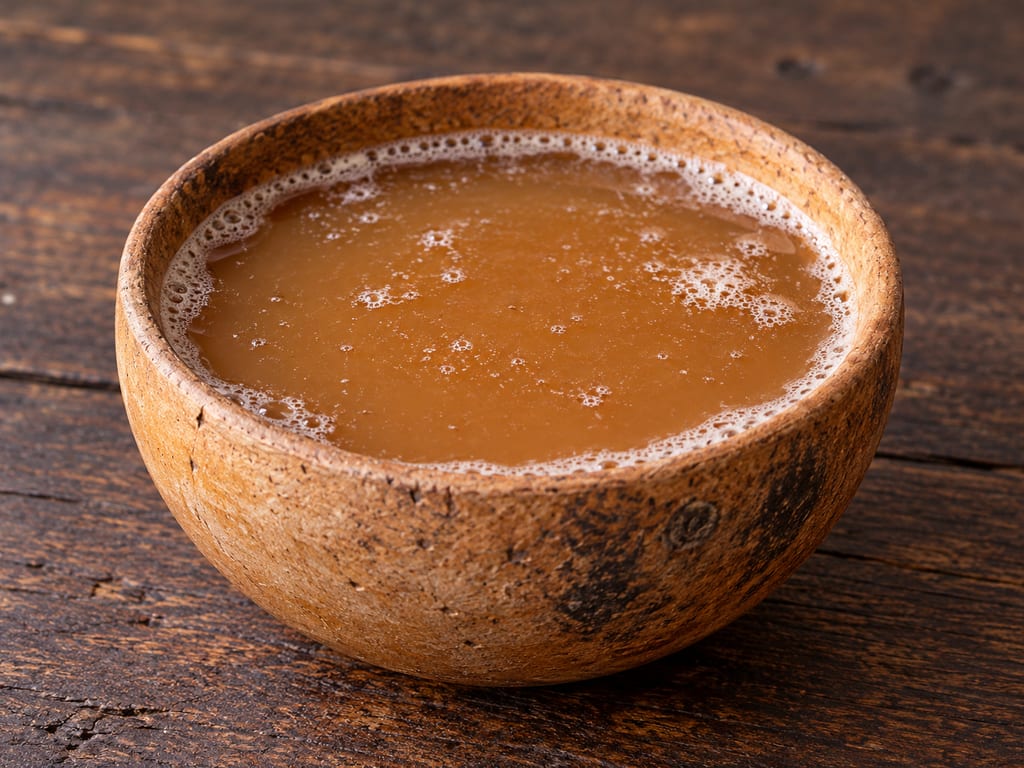
A Burkina Faso sorghum beer brewed from malted grain, soured by a spontaneous lactic stage and then fermented with a traditional yeast leaven.
No community contributions have been published for this entry yet.
Sign in to contribute. Published comments and photos are free to read.
National Tax Agency, JapanHistory · Process
Traditional knowledge and skills of sake-making with koji mold in JapanNational heritage account describes sake-making with koji mold as a long-developed Japanese tradition; recognition of the practice does not establish an exact invention date or one unchanging process.
Cited in: History and geography
National Research Institute of Brewing, JapanProcess · Equipment
The Story of SakeRepresentative institutional process describes rice steaming, koji growth, shubo, staged moromi additions, parallel saccharification and fermentation, daily mixing and pressing; not a complete household batch.
Cited in: Fermentation and pressing; Seasonal and named variants; Equipment and limits of the evidence
Japan Sake and Shochu Makers Association and National Research Institute of BrewingProcess · Equipment · History
A Comprehensive Guide to Japanese SakeExplains sake categories, starter alternatives, brewing and pressing; places sake within Japanese brewing history, regional variation, brewing seasons and ceremonial and seasonal use; it does not provide a complete source-specific household formula with yield and validated safety endpoint.
Cited in: History and geography; Koji, starter and main mash do different work; Fermentation and pressing; Seasonal and named variants; Equipment and limits of the evidence
National Research Institute of Brewing, JapanIdentity
Information about types of alcoholic beveragesDistinguishes seishu from other Japanese alcoholic beverage categories and explains rice fermentation and filtration.
Cited in: Names and product boundaries; Seasonal and named variants
National Research Institute of BrewingProcess · Storage
Seishu (sake) FAQStorage and service notes by commercial sake style; product-quality guidance rather than a fermentation or safety limit.
Cited in: Japan-specific law and finished-product storage
Ministry of Agriculture, Forestry and Fisheries, JapanProcess · Identity
An Introduction to Japanese Fermented Foods, Part 2Describes koji as steamed rice grown with a mould used for its enzymes, the shubo or moto as a yeast-rich starter mash, and moromi as the main fermentation mash.
Cited in: Koji, starter and main mash do different work
Hakushika Co., Ltd.Process · Equipment
Hakushika Brewing ProcessA brewery account of the production-scale stages from rice preparation to pressing and finishing.
Cited in: Equipment and limits of the evidence
Japan External Trade Organization, Oita officeProcess · Equipment
Seishu (sake) Making ProcessOutlines the stages of seishu production in a brewery.
Cited in: Equipment and limits of the evidence
National Tax Agency, JapanIdentity · Legal context
第3条 その他の用語の定義Japan Liquor Tax Act interpretation of statutory seishu category; legal terms remain Japan-specific and source-date bounded.
Cited in: Names and product boundaries
National Tax Agency, JapanIdentity · Geography
What is the Geographical Indications (GI) for Liquor Products in Japan?Distinguishes registered geographic indications and their criteria from the statutory seishu beverage category; criteria apply only to named GI products.
Cited in: Names and product boundaries
Japan Sake and Shochu Makers AssociationProcess · Equipment
日本酒の製造工程Describes general Japanese sake production stages; season and producer schedules vary, and this overview is not a complete household batch.
Cited in: Fermentation and pressing; Equipment and limits of the evidence
National Tax Agency, JapanLegal context
酒類の製造免許The Japanese tax agency says alcohol production requires licensing by liquor type and premises, under its jurisdiction and stated legal framework; not a universal rule or recipe instruction.
Cited in: Japan-specific law and finished-product storage
Japan Sake and Shochu Makers AssociationFinished product storage
How to Store and Preserve SakeGives finished-commercial-sake quality storage recommendations; not a validated fermentation control or universal safety shelf life.
Cited in: Japan-specific law and finished-product storage