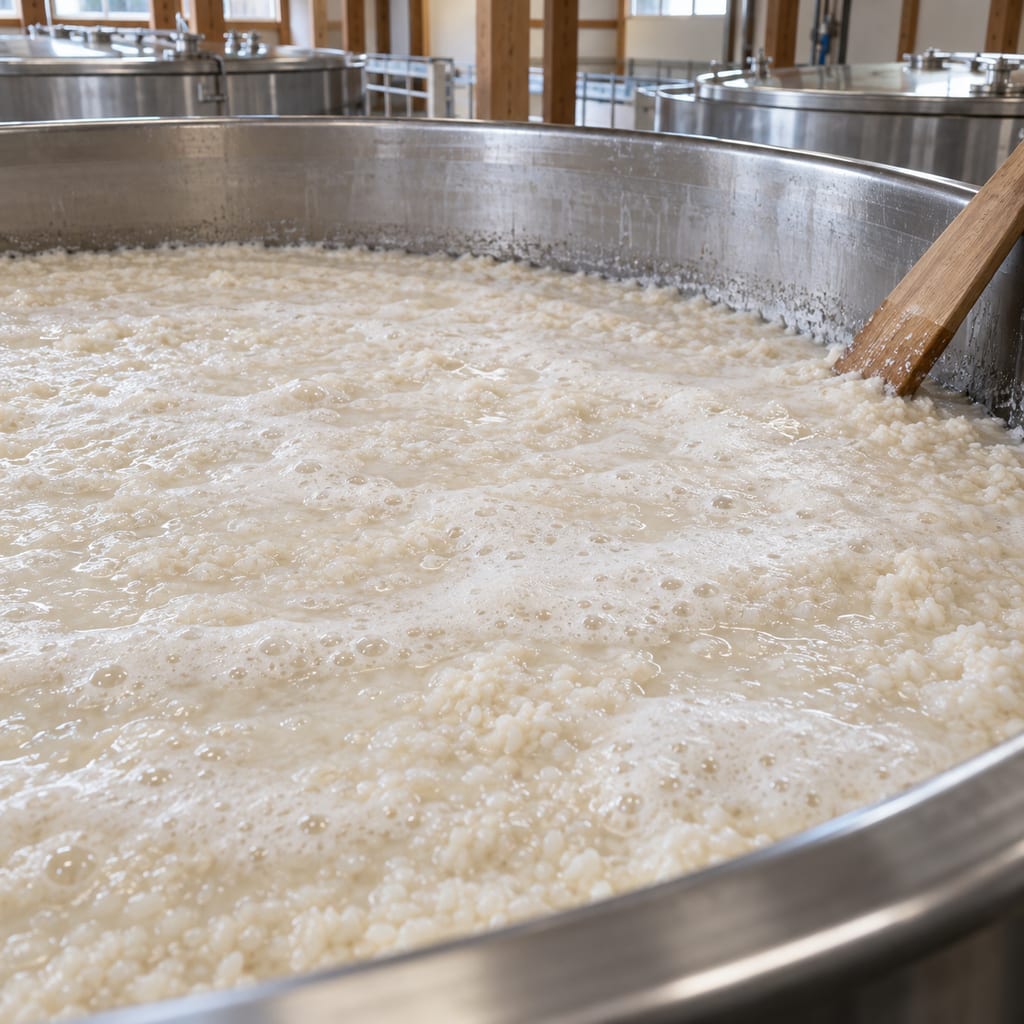
Nihonshu / seishu (Japanese rice sake)
Nihonshu (日本酒), or seishu, is Japanese rice sake: steamed rice, rice koji, water and a yeast starter ferment together in one mash, which is then pressed and finished.
 FermenteaWhere food goes to change
Modern method
泡辣椒 (pào làjiāo · name used by source)
Whole green chiles are blanched briefly, then fermented in 3% salt brine with sake in a modern Japanese presentation of a wider Asian preparation.
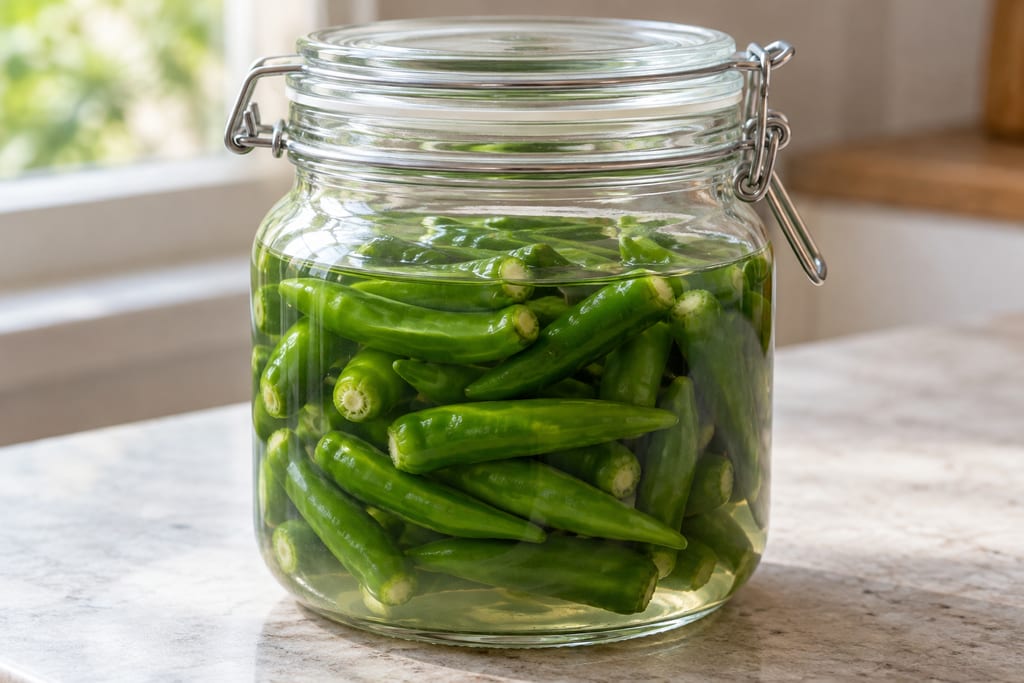
Pào làjiāo are Chinese pickled chilli peppers associated particularly with Sichuan cuisine.
The name refers to chillies preserved by soaking or pickling, often in a salted fermentation medium.
These peppers are important because they deliver a combination of acidity, chilli heat and aroma that fresh chillies alone cannot reproduce.
They can be eaten in pieces or chopped to season cooked dishes.
Some commercial peppers are naturally fermented.
Others may be prepared using vinegar, added acids, preservatives or combinations of techniques.
It should not be represented as a precise historical formula from a named Sichuan household.
Chilli peppers originated in the Americas and entered Asian food systems after transoceanic exchange beginning in the early modern period.
Their eventual adoption into Chinese regional cuisines transformed local seasoning practices.
Sichuan cuisine became particularly associated with chilli, fermented beans, aromatics and strongly flavoured preserved ingredients.
Pickled chillies entered this wider culinary system, where acidity and heat could be incorporated into sauces, stir-fries and soups.
Modern Sichuan cooking distinguishes different chilli varieties and preserved-pepper products.
Erjingtiao chillies, for example, are valued for their fragrance and suitability in characteristic Sichuan seasonings.
Some preparations use smaller, sharper chillies such as those marketed as yeshanjiao.
The chilli cultivar changes the flavour and texture even where the preservation principle is broadly similar.
Fresh green chillies — 20, approximately 40 g
Water — 300 ml in the documented batch
Salt — 9 g
Sake — 1 tablespoon
The salt proportion is 3% of the water weight.
For the published example, 300 ml water is combined with 9 g salt.
If the quantity of water changes, the source instructs the cook to calculate the salt against the actual water quantity.
The one-tablespoon sake addition is part of this Japanese version.
Sichuan preparations may use Chinese baijiu instead.
The addition of an alcoholic spirit does not make the finished brine sterile.
The recipe identifies fresh green chillies without establishing a single botanical species or cultivar.
Chillies belong to the genus Capsicum.
Many common green chillies are forms of Capsicum annuum, but the description alone is insufficient for a definitive species identification.
Choose sound fruit without soft rotten areas, mould or extensive damage.
Small chillies are convenient because they can be preserved whole.
A whole chilli has a different diffusion profile from a finely chopped one.
The skin, internal cavities and cut stem area influence how brine moves through the fruit.
Variety and maturity also affect capsaicinoid concentration, flavour and firmness.
Wash the green chillies.
Bring water to a boil.
Briefly blanch the chillies for 2 seconds.
Drain thoroughly and allow them to cool.
Remove their stems.
The brief blanching changes the surface of the fruit but should not be interpreted as a complete microbial kill step.
It is far shorter than a validated thermal sterilisation treatment.
Use a clean glass jar suitable for food fermentation.
Place the drained chillies inside.
Do not crush them unnecessarily.
The recipe uses whole chillies rather than chopped pepper paste.
Measure the water required for the batch.
Dissolve salt at 3% of water weight.
The documented example uses 300 ml water and 9 g salt.
Heating the water can help dissolve the salt.
Allow the brine to cool before combining it with the chillies.
Adding hot liquid would change the microbial and thermal conditions of the preparation.
Pour the cooled brine over the chillies.
Add 1 tablespoon sake.
Close the jar using a fermentation-appropriate closure.
The original article describes sake as an ingredient intended to discourage unwanted microorganisms.
At this amount, it should not be regarded as a validated sterilising treatment.
The documented method gives 3–4 days in summer or approximately one week in winter.
No measured temperature range is supplied.
The original method includes gently shaking the jar once daily to distribute the brine.
Any handling must avoid introducing contamination or allowing pressure to accumulate dangerously.
For a controlled fermentation system, keeping the chillies submerged is important.
The recipe does not provide a validated water-activity or acidity endpoint.
When the batch has fermented appropriately and meets applicable safety controls, refrigerate.
The Japanese recipe suggests a refrigerated keeping period of approximately six months.
That is a recipe author's storage recommendation, not an independently validated shelf-life guarantee for every home ferment.
The peppers remain a refrigerated fermented food rather than a tested shelf-stable canned pickle.
Fresh chilli peppers contain carbohydrates, organic acids, pigments and aromatic compounds.
Lactic-acid bacteria can metabolise available sugars into lactic acid and other products.
Some species produce carbon dioxide, causing bubbles in the brine.
As acidity increases, the peppers develop a sour quality absent from the fresh fruit.
Salt changes which microorganisms can compete successfully and influences the movement of water and dissolved compounds.
Capsaicin and related capsaicinoids are responsible for much of the characteristic chilli heat.
Fermentation can change the perception of heat because acidity, salt, texture and aroma change.
This does not necessarily mean capsaicin itself has been destroyed.
The assertion that fermentation always removes chilli heat is too simplistic.
A strongly pungent variety may remain intensely hot after fermentation.
Vinegar pickling and lactic fermentation can both produce acidic preserved peppers, but their chemistry differs.
In vinegar pickling, the principal acid is added directly.
In lactic fermentation, acids are produced through microbial metabolism.
Additional flavour-active metabolites may develop during fermentation.
Consequently, two peppers with similar measured acidity can taste different.
The distinction is particularly relevant to a fermentation database that records process categories.
Some Chinese pickling methods incorporate baijiu, a distilled alcoholic beverage.
The Japanese adaptation uses sake instead.
These ingredients differ substantially in alcoholic strength and flavour composition.
Sake is a fermented rice alcoholic beverage, while baijiu is distilled.
Substitution therefore changes the recipe.
Neither ingredient should be presented as an assured method of sterilising a fermentation vessel or raw vegetable.
Their presence is part of the culinary method, not a replacement for clean equipment or adequate acidification.
It can be chopped and cooked with ginger, garlic and other aromatics.
Despite the name, the style does not necessarily contain fish.
Pickled chillies help create its distinctive combination of savoury, sweet, sour and spicy flavours.
Different chilli varieties are chosen for their heat and aromatic properties.
The Japanese version described here also uses the finished peppers in pasta, demonstrating the contemporary adaptation of the ingredient beyond its original Chinese culinary setting.
That serving variation does not change the product's core identity.
Remove the required quantity with a clean utensil.
Slice or mince the peppers for a sauce.
Their flavour is concentrated, so a small amount may noticeably affect a dish.
The brine is also salty and acidic.
If using it in cooking, account for that contribution before adding other salt or acid.
The peppers may be cooked, meaning their usefulness is not limited to raw consumption.
Cooking can change volatile aromas and destroy viable microorganisms, but the sour chilli flavour remains valuable.
Green chillies become duller: Pigment changes can occur during fermentation and acidification.
Brine becomes cloudy: This may be consistent with microbial activity.
Gas develops: Carbon dioxide may be produced.
A white surface film develops: Film-forming yeasts can occur, but an unidentified surface growth is not proof of safety.
Soft or slimy chillies: Reject the batch if the texture indicates abnormal deterioration.
Visible mould: Discard the batch.
Little acidity: Do not simply assume the recipe requires a longer period. Assess fermentation conditions and measured pH.
Strong alcoholic smell: Alcoholic aroma may come from the added sake or microbial activity. It does not establish safety.
The recipe's very short blanching stage is not a validated sterilisation treatment.
Its seasonal timings do not give a numeric fermentation temperature.
The addition of sake should not be interpreted as a microbiological safety guarantee.
The product requires appropriate fermentation monitoring and refrigerated storage.
Marukome presents a contemporary Japanese author’s version under the name pao lajiao and describes the preparation as eaten in China and other Asian countries; no narrow lineage is claimed.
Scaling: source batch only
Poor brine coverage or contaminated equipment can compromise vegetable fermentation; this recipe has not been professionally validated.
Hazard sourceUse clean food-grade equipment, keep produce submerged where the method uses brine, and follow established acidity-monitoring guidance. No recipe-specific validated endpoint is supplied.
Control sourceThe source calls this pao lajiao and says it is eaten in China and other Asian countries, but the exact recipe is a Japanese author’s presentation.
Nihonshu (日本酒), or seishu, is Japanese rice sake: steamed rice, rice koji, water and a yeast starter ferment together in one mash, which is then pressed and finished.
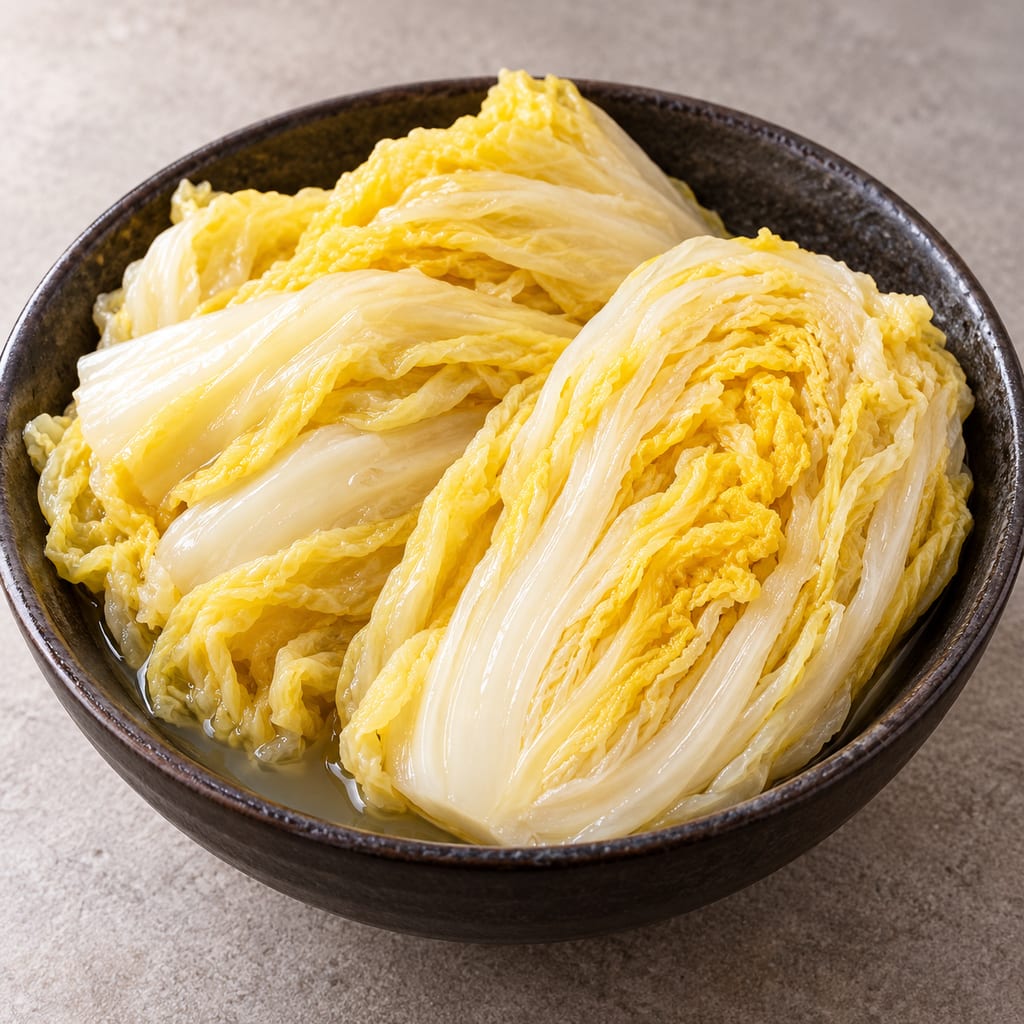
Napa cabbage fermented in a salt brine in Northeast China, traditionally in large ceramic or glass jars, until it turns sour.
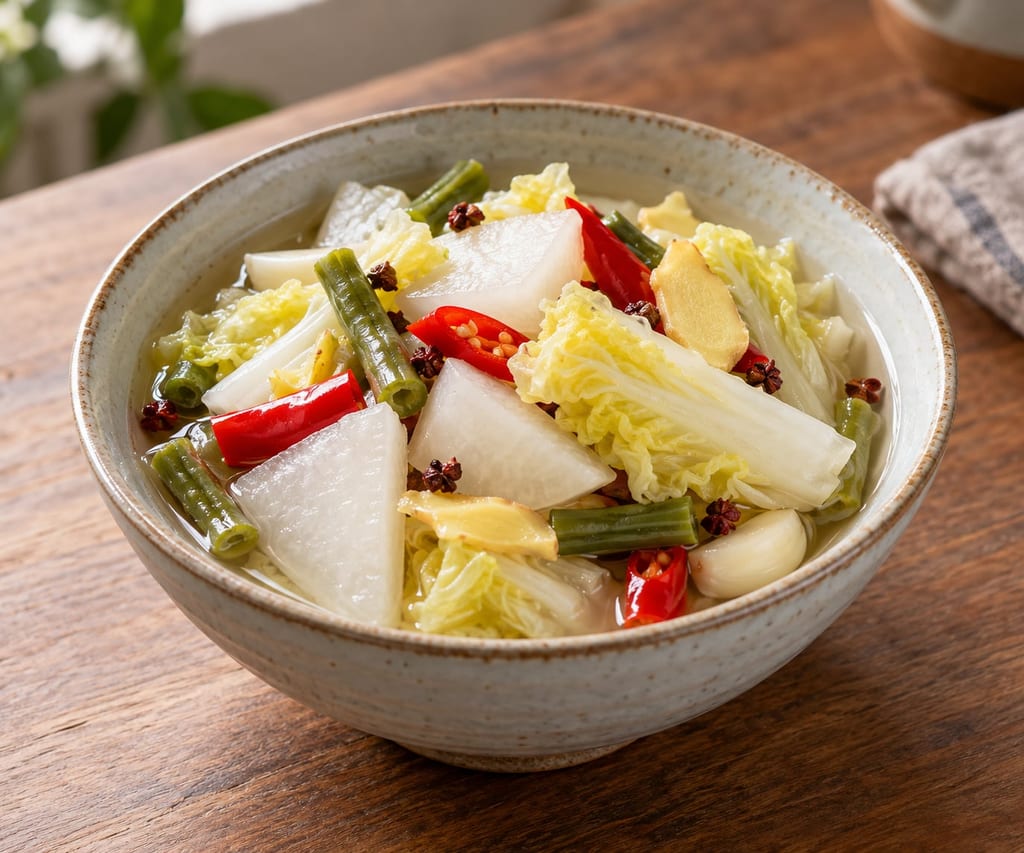
Sichuan paocai is a family of vegetables, most often radish, fermented by lactic-acid bacteria in a salted, spiced brine in a water-sealed pottery jar, with mature brine kept and reused.
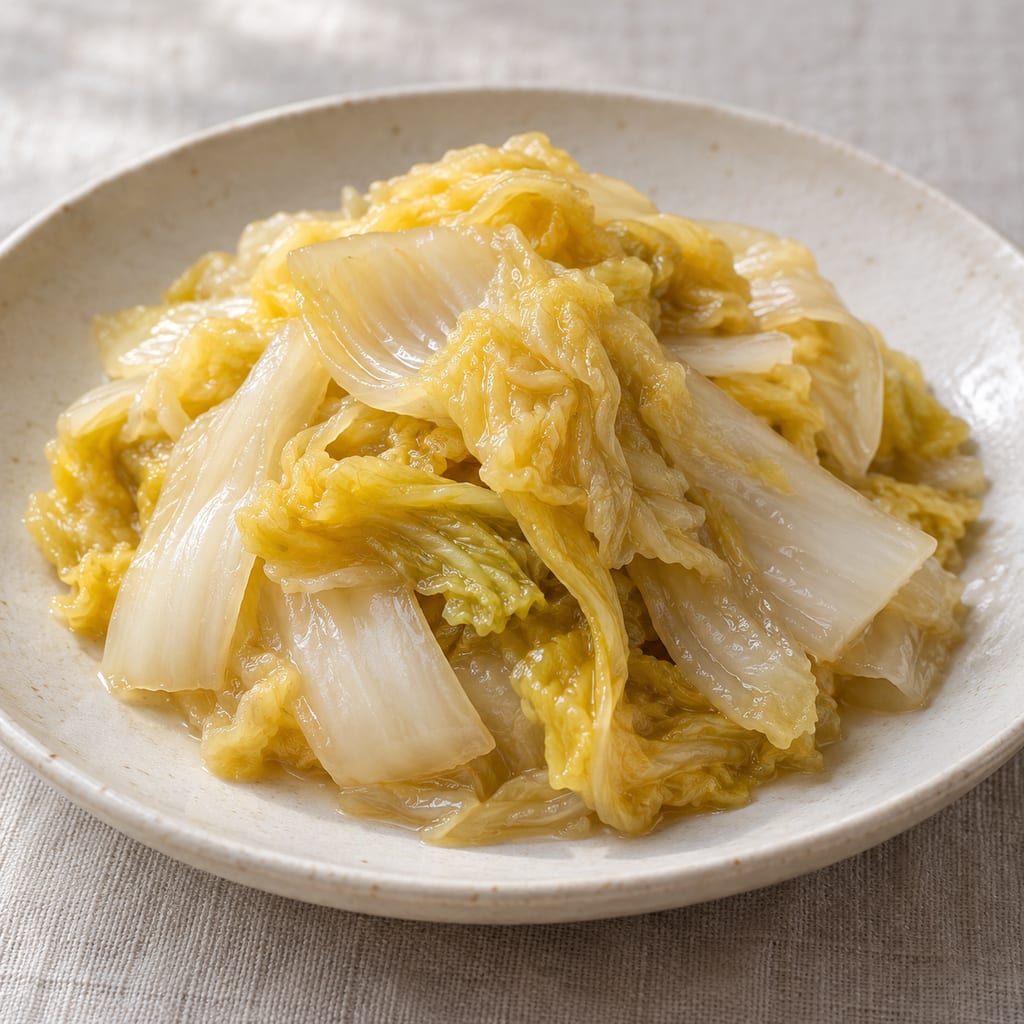
Chinese cabbage or mustard greens salted and held under a weight until lactic fermentation turns them sour; northeastern and southern China keep distinct traditions of it.
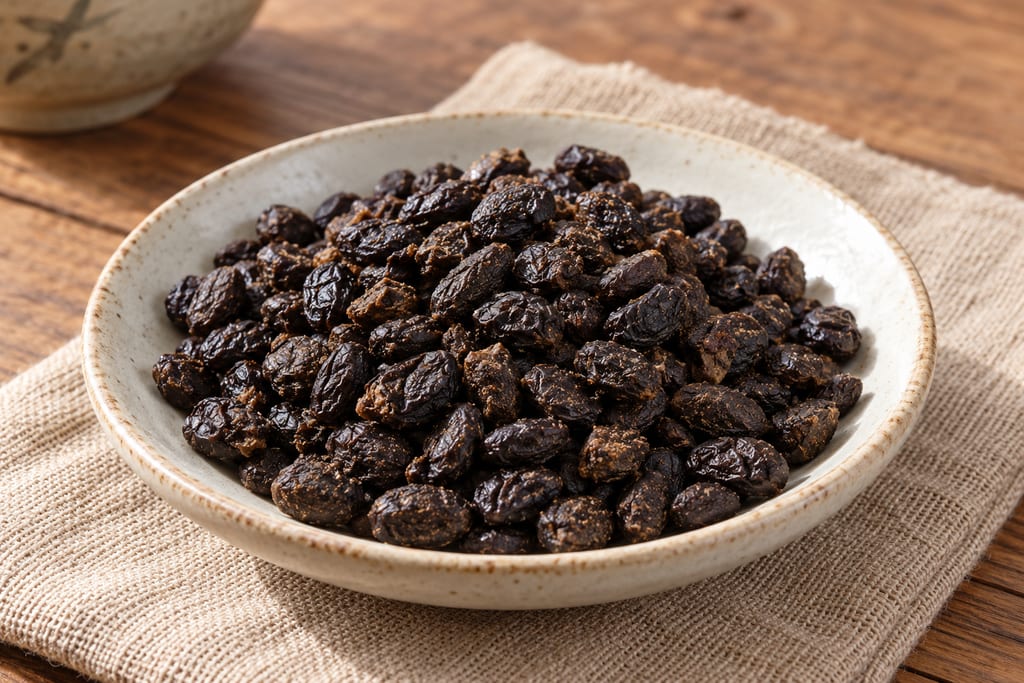
A Chinese fermented soybean condiment in which Bacillus-led bacteria, not moulds, drive the fermentation. Documented in Zunyi, Guizhou, and kept separate from mould-led douchi.
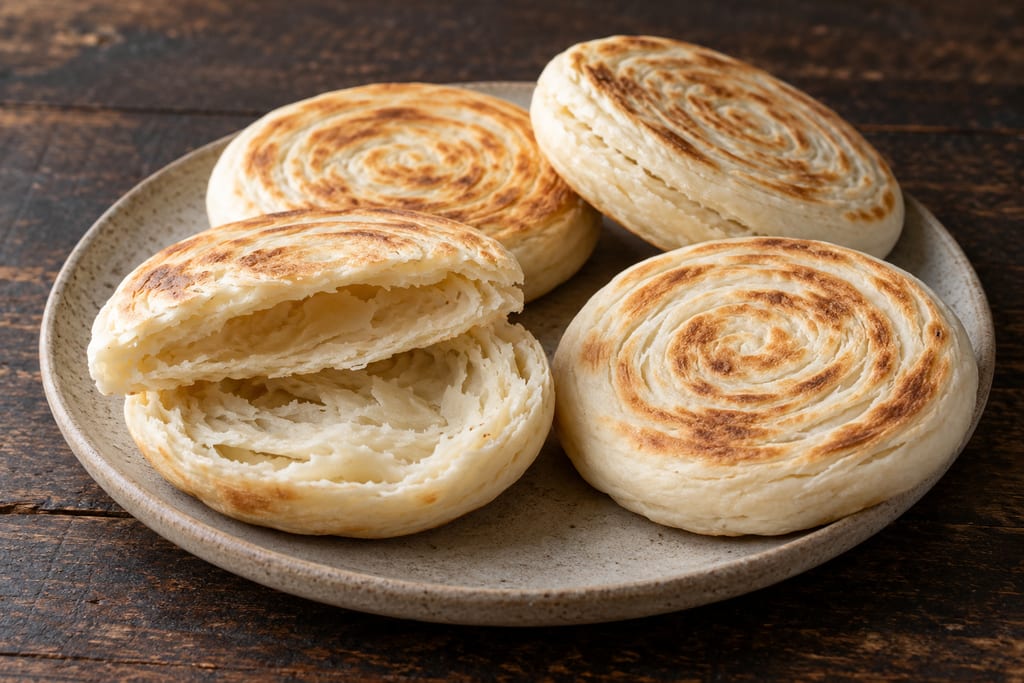
This Shaanxi-associated yeast flatbread uses a simple water dough, coiled shaping and a skillet bake. It is the bread used in roujiamo, not the filled meat dish.
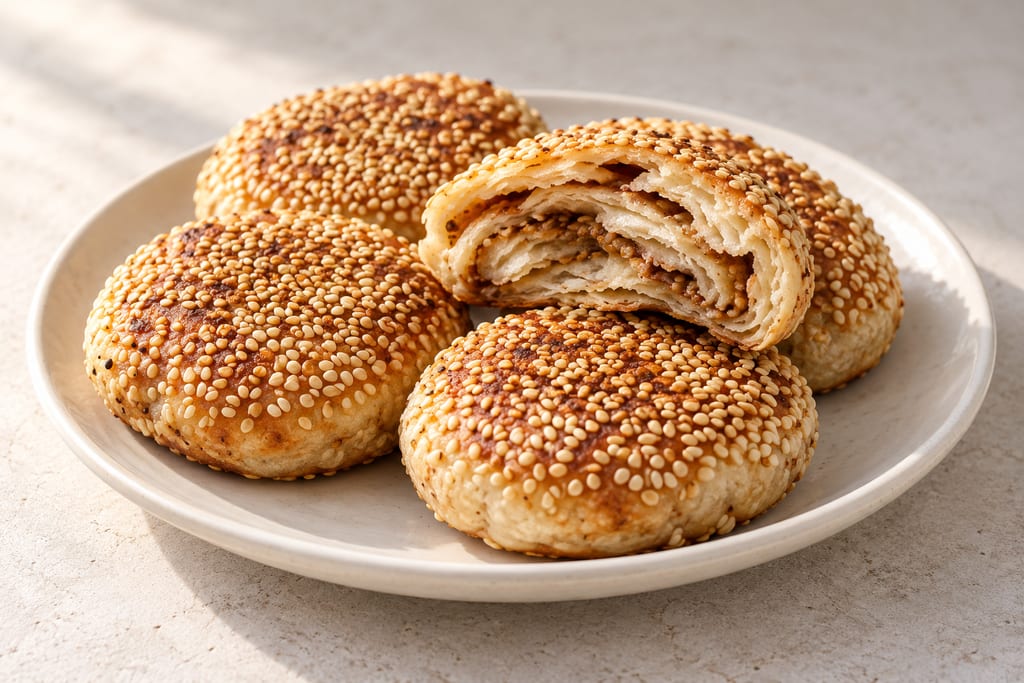
A Beijing-style yeast dough is layered with seasoned sesame paste, sealed into small buns, briefly pan-fried, seeded, and baked.
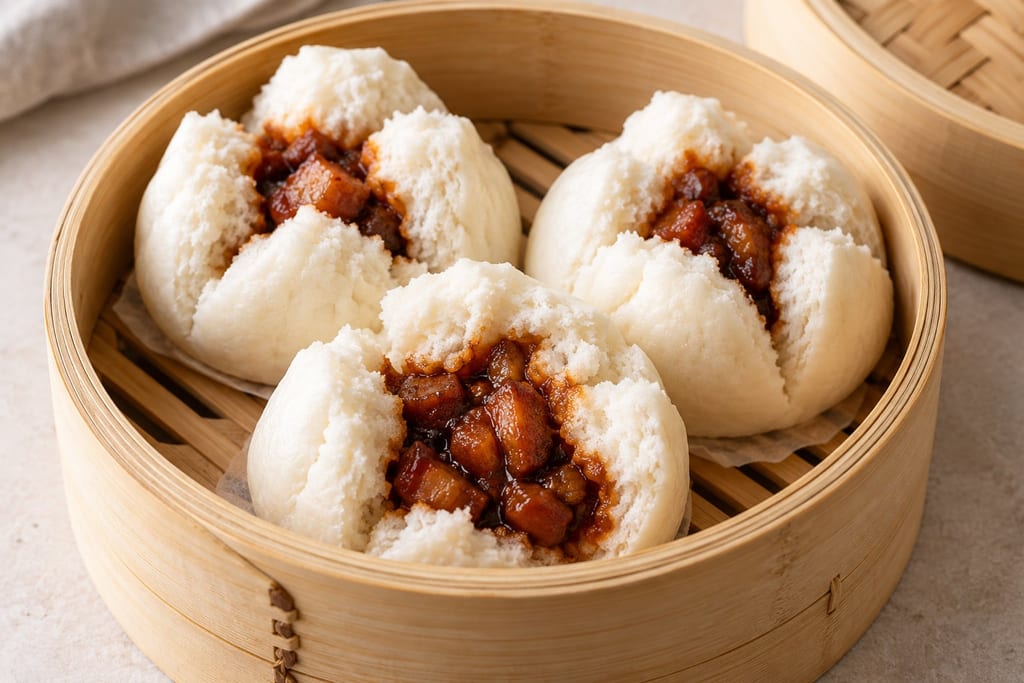
Fourteen fluffy steamed buns filled with cooked char siu and a thickened oyster-soy sauce.
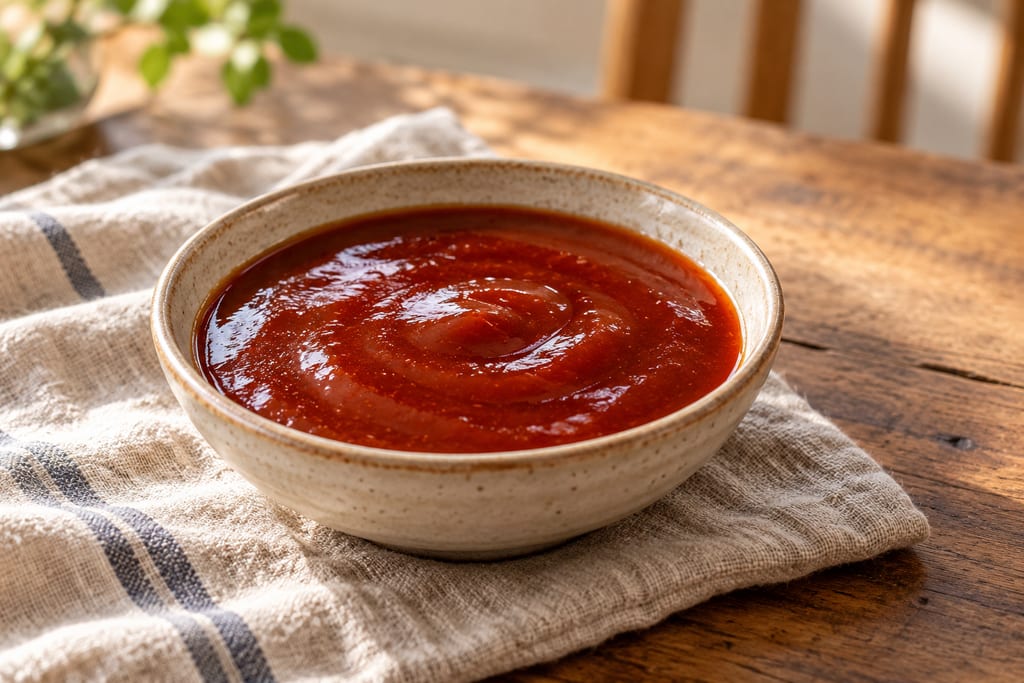
A smooth, tomato-based sweet-and-sour sauce of sugar, vinegar, tomato paste and soy sauce, thickened with starch for dipping or coating; it is not the sauce on Hangzhou's sweet-and-sour ribs.
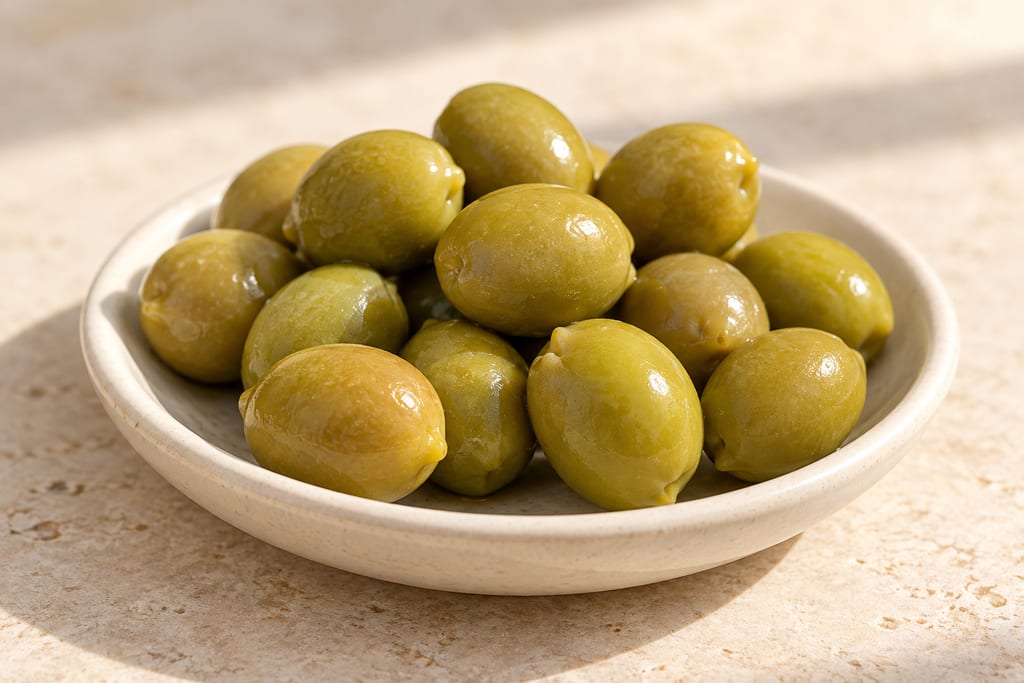
A Portuguese table-olive product from the Negrinha cultivar in northeastern Portugal, sold in three commercial styles, two of them brined fermentations and one oxidised to black.
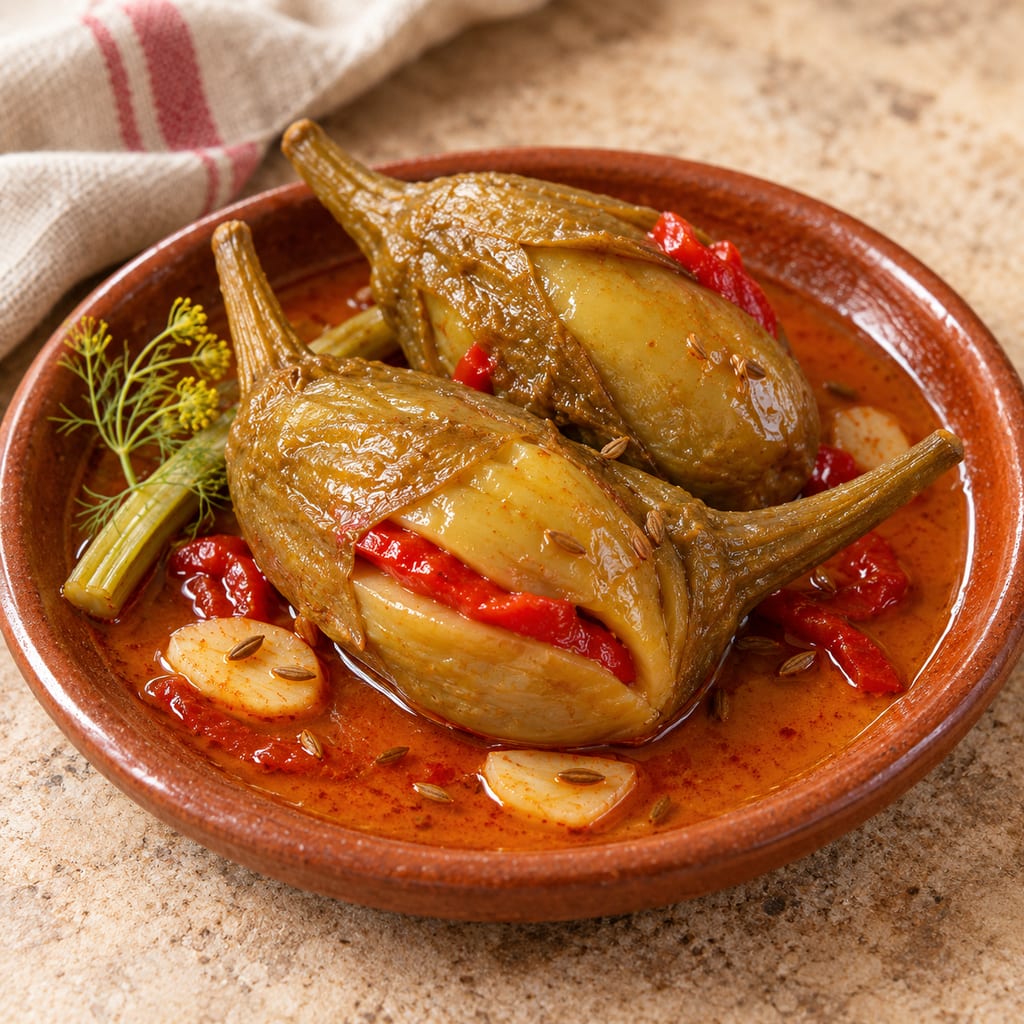
A protected aubergine preserve from Ciudad Real in Spain: tender fruit of the local Dealmagro variety, cooked briefly and then fermented in a vinegared, paprika-seasoned dressing.
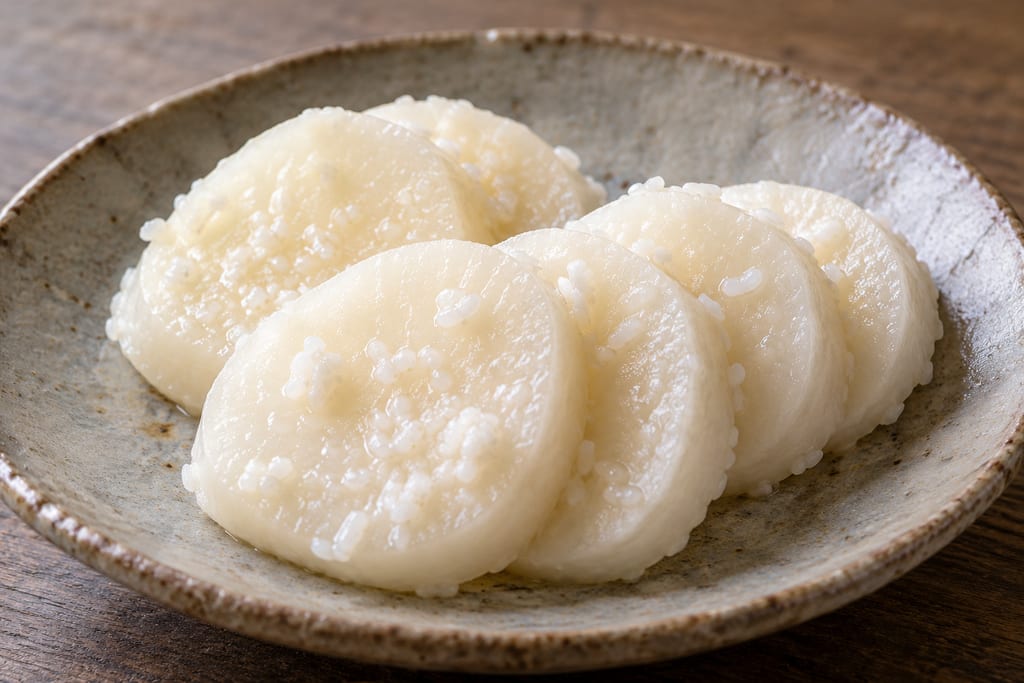
A sweet, crisp Japanese daikon pickle from Tokyo's Nihonbashi district, made by salting fresh radish and dressing it in rice koji, sugar or koji amazake without the heavy drying used for takuan.
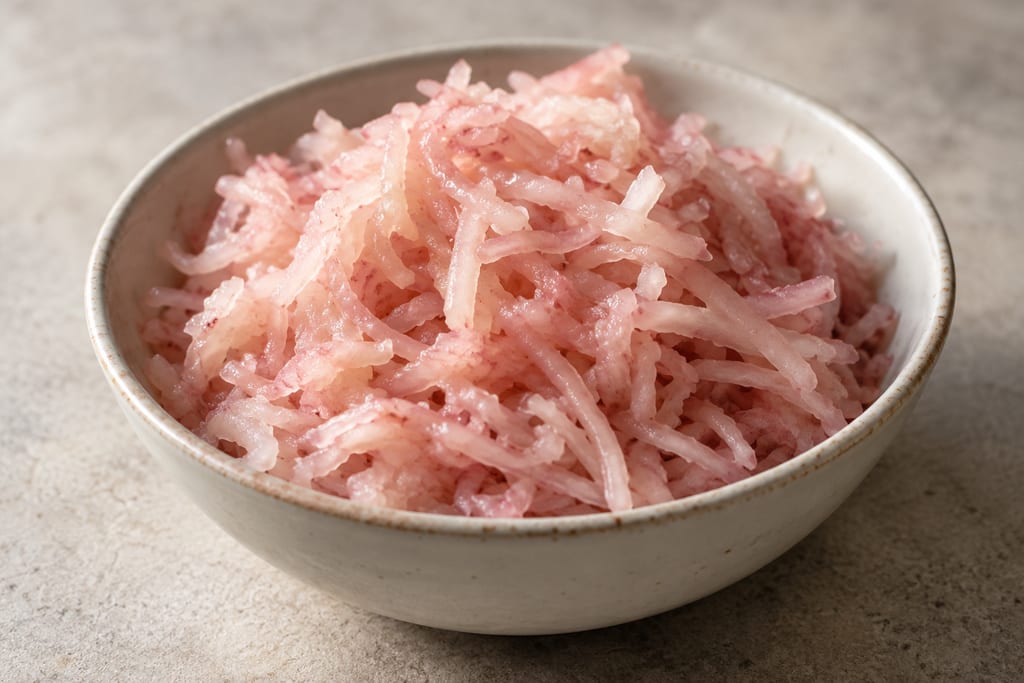
Source-specific Brovada DOP producer method for Friuli Venezia Giulia turnips and red-grape marc. This records a regulated producer process; it is not a validated home-scale recipe.
An industrial fermentation patio places factory-made fiberglass-reinforced polyester olive tanks below floor level, with drainage and transfer infrastructure arranged around the buried vessels.
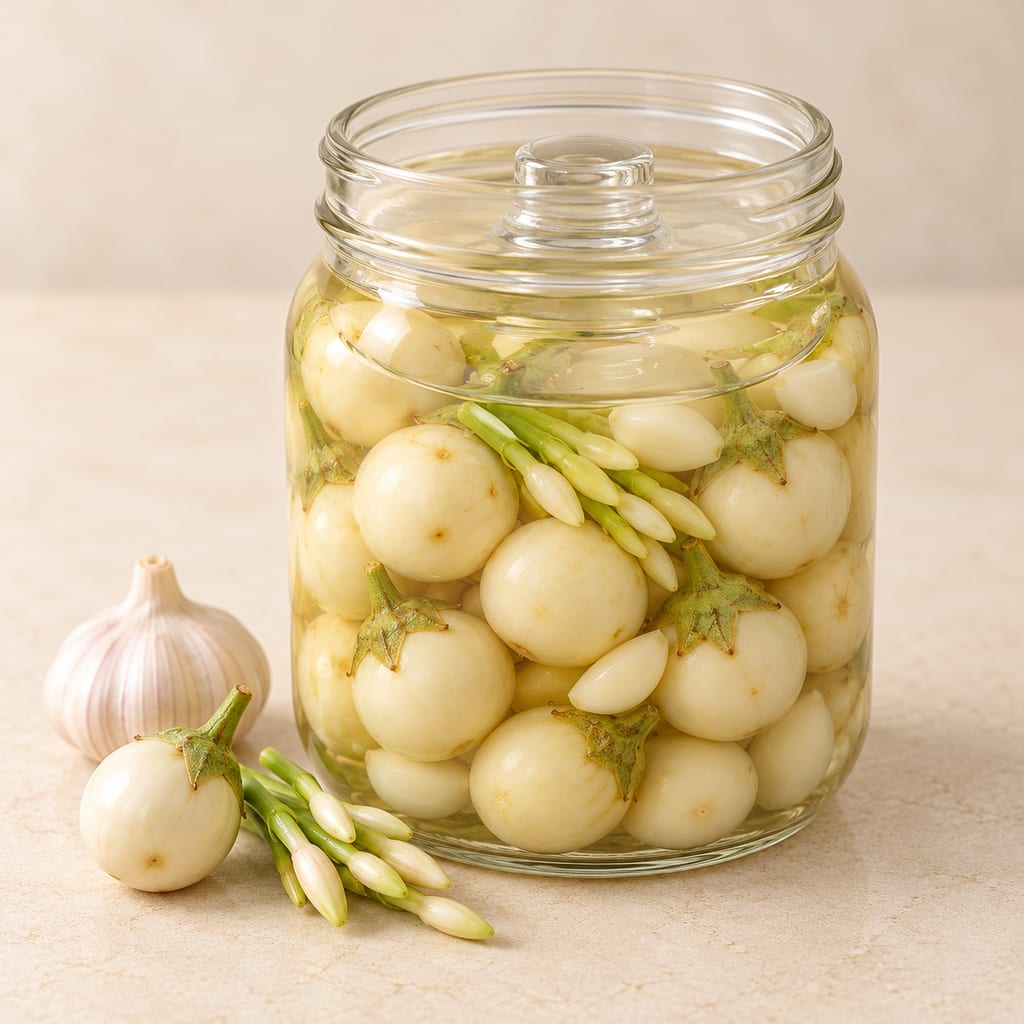
Vietnamese salted and fermented small eggplant, dried on the day of purchase, then held submerged in warm salty water with garlic and galingale flower for a week or longer.
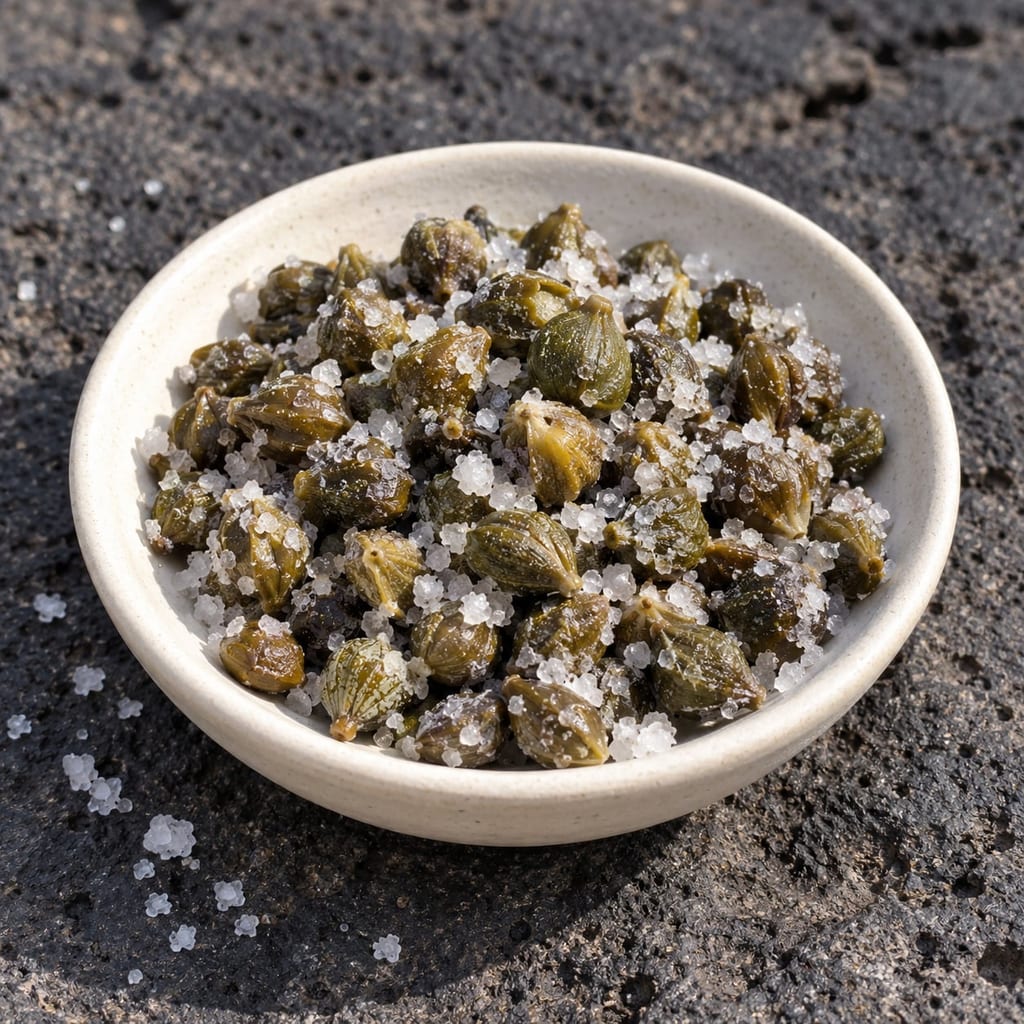
A protected Sicilian product: unopened caper buds from the island of Pantelleria, dry-salted with sea salt in a two-stage process that encourages lactic fermentation.
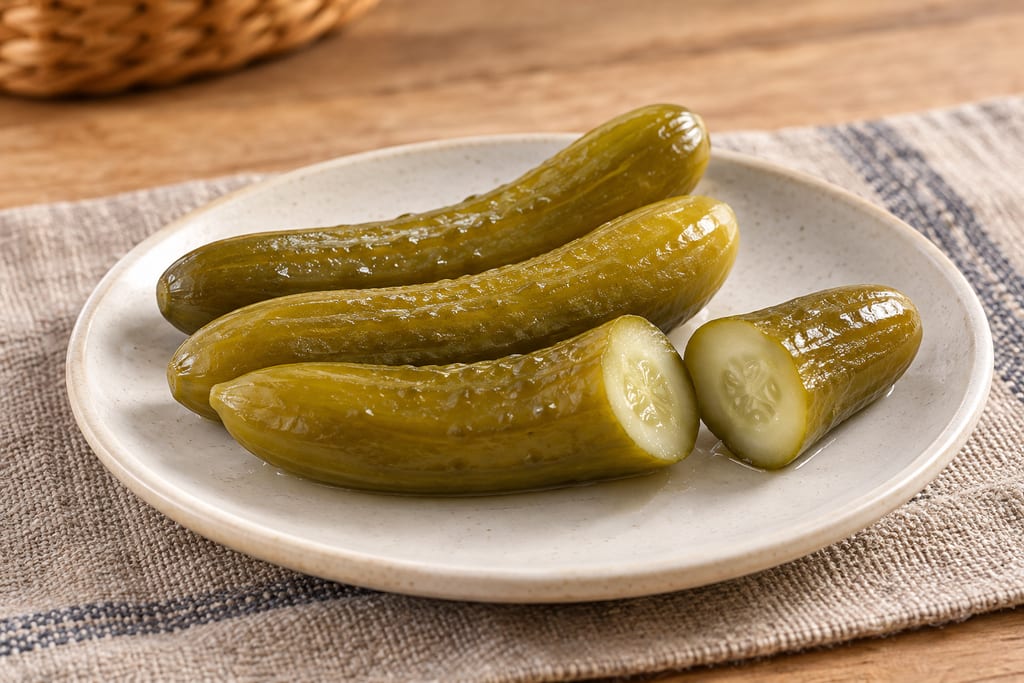
Çubuk turşusu is a registered pickle from Çubuk district in Ankara. Its cucumber variant is sold as Salatalık Turşusu, and a commercial specification sets its brine and room-temperature period.
No community contributions have been published for this entry yet.
Sign in to contribute. Published comments and photos are free to read.
Marukome; recipe by Mai ShindoInspiration · Geography
Pao lajiao green chiles (泡辣椒)Broad regional context; exact chile count, 3% salt formula, blanching, daily shaking and seasonal time schedules.
Cited in: What are pào làjiāo?; Ingredients; Understanding the chilli ingredient; Stage 1 — Prepare the chillies; Stage 2 — Pack the jar; Stage 3 — Prepare the brine; Stage 4 — Add sake; Stage 5 — Ferment; Stage 6 — Refrigerate; What fermentation does to chilli peppers; The role of baijiu and sake; Regional variations and culinary uses; How to use the finished peppers
University of Minnesota ExtensionSafety
Preserving food at home: FermentationGeneral guidance for vegetable fermentation, submersion and acidity monitoring; not validation of this recipe.
Cited in: Ingredients; Understanding the chilli ingredient; Stage 1 — Prepare the chillies; Stage 2 — Pack the jar; Stage 3 — Prepare the brine; Stage 4 — Add sake; Stage 5 — Ferment; Stage 6 — Refrigerate; Regional variations and culinary uses; Troubleshooting; Safety
MarukomeReference
Marukome — Pào làjiāo with Green Chillies, 2026Marukome
Cited in: A history of pickled peppers; Ingredients; Understanding the chilli ingredient; Stage 1 — Prepare the chillies; Stage 2 — Pack the jar; Stage 3 — Prepare the brine; Stage 4 — Add sake; Stage 5 — Ferment; Stage 6 — Refrigerate; Why pickled chilli flavour differs from vinegar pickling; Regional variations and culinary uses; Troubleshooting; Safety
The Mala MarketReference
The Mala Market — Sichuan Pickled PeppersThe Mala Market
Cited in: Ingredients; Understanding the chilli ingredient; Stage 1 — Prepare the chillies; Stage 2 — Pack the jar; Stage 3 — Prepare the brine; Stage 4 — Add sake; Stage 5 — Ferment; Stage 6 — Refrigerate; Regional variations and culinary uses
China Sichuan FoodReference
China Sichuan Food — Pàoji?oCited by the written account of this record.
Cited in: A history of pickled peppers; Ingredients; Understanding the chilli ingredient; Stage 1 — Prepare the chillies; Stage 2 — Pack the jar; Stage 3 — Prepare the brine; Stage 4 — Add sake; Stage 5 — Ferment; Stage 6 — Refrigerate; Why pickled chilli flavour differs from vinegar pickling; Regional variations and culinary uses; Troubleshooting; Safety