A buried installation, not a buried pot
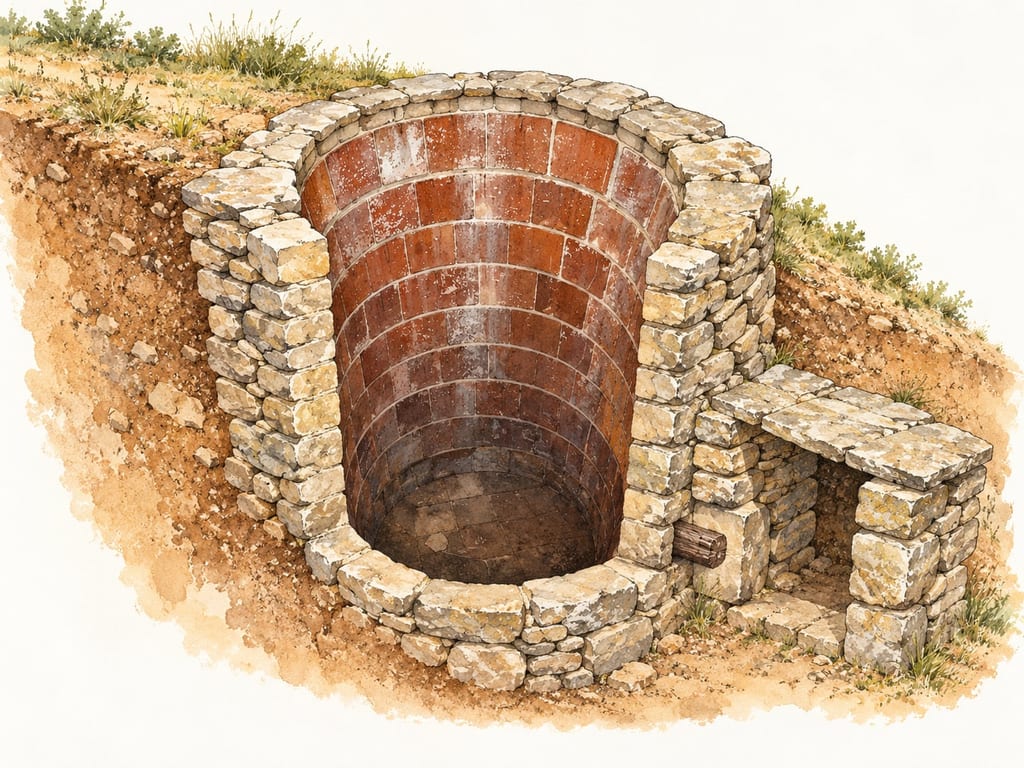
A buried industrial olive fermenter is a site arrangement for large, factory-made vessels. In a 2021 Badajoz experiment on Spanish-style Manzanilla de Sevilla olives, six buried fermenters were compared with old above-floor tanks and insulated units. The buried tanks were made of polyester reinforced with fiberglass, held 16,000 litres each and were installed under the floor. They were part of that experiment’s design, not a universal capacity or a complete construction plan.
A Spanish engineering installer describes the larger patio around such equipment: civil works, permeable drainage channels below ground, drainage wells and reinforced-polyester tanks on a draining surface. Its system also uses pumps and overhead racks to transfer olives and brine. A municipal plan for Benacazón provides another site-specific example, listing 35 buried fermenters rated at 1,000 kg each. These records show that the installation is distinct from the manufactured tank: the excavation, drainage and yard arrangement are built in place, while the vessel is supplied as equipment.
Sources for this section
What the sources establish
Burial is one way industrial processors manage the fermenters’ thermal environment. The Badajoz study treated location under the floor as one experimental condition; it also reports that the buried vessels in that experiment received artificially warmed air below the floor. That added heating should not be assumed for every patio. A 2025 study describes underground fiberglass vessels for Spanish-style green table olives as a system used since the late 1960s, while also discussing a newer interconnected stainless-steel alternative.
The sources do not establish one standard tank shape, burial depth, excavation profile, foundation, drainage capacity or arrangement of access openings. The name therefore covers an installation family rather than a construction drawing. Its description should stay at the level documented by the cited sites and studies; engineering design depends on the particular ground, tank and facility.
Sources for this section
History
A 2025 study describes underground fiberglass olive fermenters as a Spanish-style system that has remained in use since the late 1960s. The record does not claim that this is the only modern tank arrangement.
Site
SettingIndustrial olive-processing yard with fermenters installed below floor level.
GroundA draining patio with buried permeable drainage channels and drainage wells is described by an installer; the specific ground and foundation design varies by site and is not specified in the cited study.
ClimateBurial is used as a temperature-management choice. No climate threshold or universal operating temperature is specified.
FootprintCommercial installation; one municipal planning document describes a proposed patio for 35 underground fermenters, while the Badajoz experiment used six buried 16,000 L vessels. These are site examples, not standard sizes.
NotesThe factory-made tank is distinct from this in-place installation. Do not infer tank shape, burial depth, manhole arrangement or a standard foundation from the general term 'buried'.
A build is made where it stands: moving it means building it again.
How it is built
Materials
- Fiberglass-reinforced polyester fermenter — Factory-made vessel installed below floor level; the tank itself is separate from the site build.
- Permeable buried drainage channels — Part of the draining patio installation described by the engineering installer.
- Drainage wells — Used with the patio's buried drainage channels.
- Overhead transfer racks and piping — Used to move olives and brine to and from the vessels.
- Prepare an industrial patio with buried drainage channels and drainage wells, as described for modern fermenter installations.
- Install the separately manufactured reinforced-polyester vessels below floor level. The cited Badajoz study identifies buried tanks, but does not provide a general excavation or foundation specification.
- Arrange pumping and overhead transfer racks for olives and brine where the installation uses that arrangement; these are documented features of one Spanish installer’s patio system.
Conditions
Temperature controlAmbient, monitored
Places
Spain
Documented use · Country evidenceRecords documented installations and research in Spain; does not claim this design is exclusive to Spain.