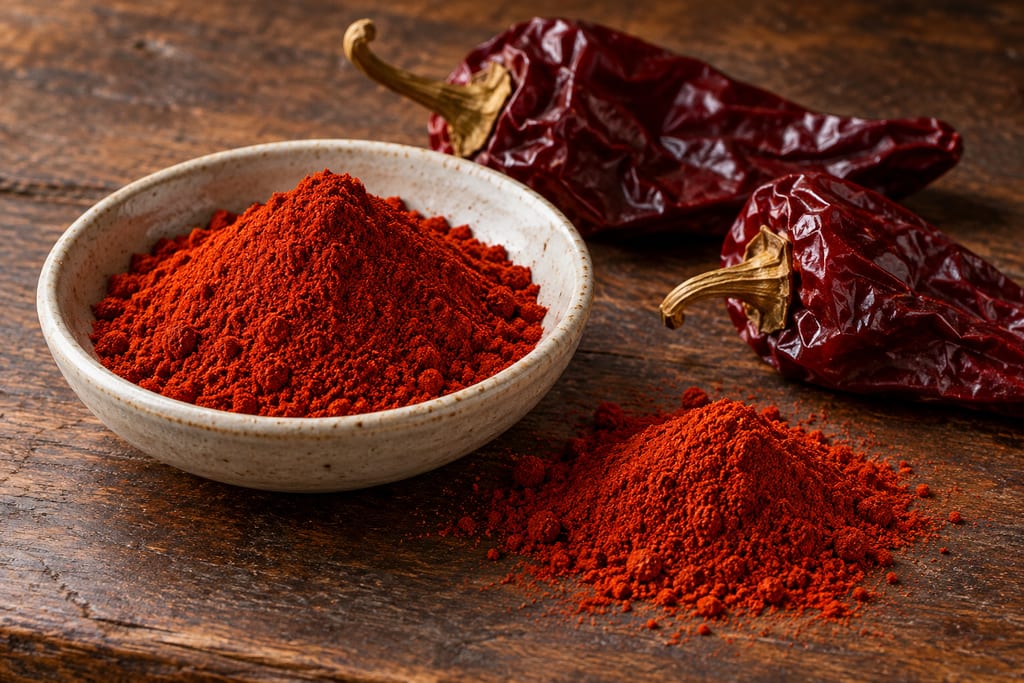
Pimentón de la Vera
Spanish smoked paprika from Capsicum peppers dried over oak or holm-oak smoke in a dryer called a secadero, then ground. Protected by a designation of origin in La Vera.
 FermenteaWhere food goes to change
Built structures · crop-curing-kilns
Secadero de pimiento para pimentón · La Vera pepper dryer
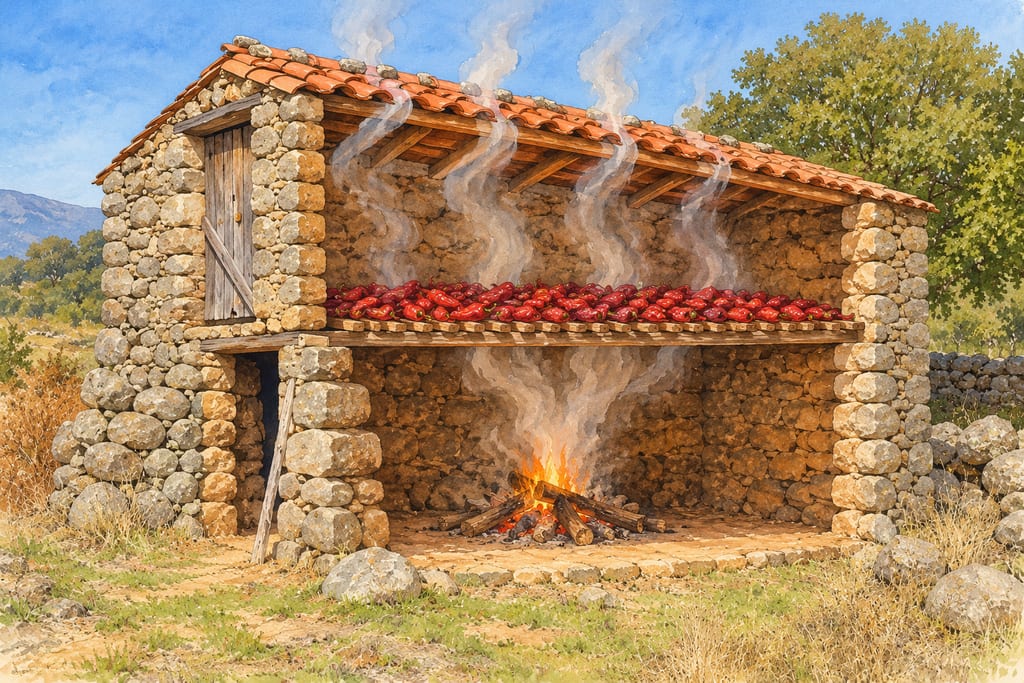
The traditional two-level pepper-drying building used for Pimentón de la Vera puts a wooden drying floor above an oak or holm-oak hearth, with heat and smoke rising through the peppers.
A secadero is a fixed agricultural building for drying peppers before they are milled into paprika. This account focuses on the traditional form associated with Pimentón de la Vera in northern Cáceres, Extremadura. The protected geographical area is wider than La Vera alone: the current specification lists municipalities in La Vera, Campo Arañuelo, Valle del Ambroz and Valle del Alagón. The Regulatory Council says these dryers were historically built on the plots where peppers grew, with farmers carrying out this first processing stage before dried peppers went to mills.
The name can refer to a family of structures rather than one surviving, dated building. The Council describes dimensions as variable; many examples are square or rectangular and roughly five metres high. It also allows other dimensions, materials and improved technologies when the final product's quality is unaffected. This page therefore presents the documented traditional arrangement, not a universal blueprint or a measured reconstruction.
In the traditional layout described by the DOP specification, the lower level contains a hearth burning holm oak and/or oak. The pepper chamber sits above it. Its floor is a wooden grate, allowing hot air and combustion gases to rise through the fruit by convection. Ceramic roof tiles cover the building, with an open or loose-laid roof arrangement allowing the gases to escape. This direct smoke path is the defining feature of the protected product: the smoke aroma comes from the drying method itself.
The Council describes brick and Arabic ceramic roof tiles as common materials, but it explicitly permits variation. A Commons photograph on this page shows a stone-built pepper dryer in Candeleda, Ávila, a neighboring regional example. It is not identified as a La Vera specimen, and the illustration is a schematic of the documented two-level form rather than a measured interior of that photographed building.
The current specification defines Pimentón de la Vera as ground peppers that are fully red, mature, healthy and clean, from eligible varieties, and dried with holm-oak and/or oak wood within the protected area. It describes a drying period of 10 to 15 days and regular turning of the peppers for more even drying. Its stated moisture transition and process details belong to the regulated commercial product description; they are not a household recipe or a safe operating standard for an improvised dryer.
The Regulatory Council's history links the vertical dryer to autumn rains that coincide with harvest, and attributes its development to farmers in the seventeenth century. That is the Council's account of the tradition, not an independently confirmed date for any surviving structure. The DOP specification is the stronger source for the present protected process and geographic boundaries; the council history supplies the attributed origin story.
No single secadero is identified here as the original or definitive example. The image's Candeleda building is explicitly a neighboring example, not proof of a La Vera site's exact materials or internal layout. The sources also do not provide a plan for a particular building, safe domestic fire controls, ventilation settings, construction dimensions for a named site or instructions for processing peppers at home. The page describes a traditional regional structure and how it relates to the protected commercial product.
The DOP Regulatory Council's historical account says farmers in La Vera developed the vertical-current, lower-hearth secadero in the seventeenth century in response to autumn rain during the pepper harvest. This is attributed institutional history; the underlying seventeenth-century records were not independently examined here.
A build is made where it stands: moving it means building it again.
The documented structure combines a wood hearth with smoke and hot gases rising through an upper crop chamber.
Hazard sourceThis is a descriptive account of a regional agricultural building and protected commercial process, not a construction, fire-safety or operating guide.
The protected production area covers listed municipalities in four comarcas; the page does not imply every dryer is in La Vera proper.
A neighboring regional pepper-drying building shown as a comparative photo reference, not part of the Cáceres DOP production zone and not a La Vera specimen.
Spanish smoked paprika from Capsicum peppers dried over oak or holm-oak smoke in a dryer called a secadero, then ground. Protected by a designation of origin in La Vera.
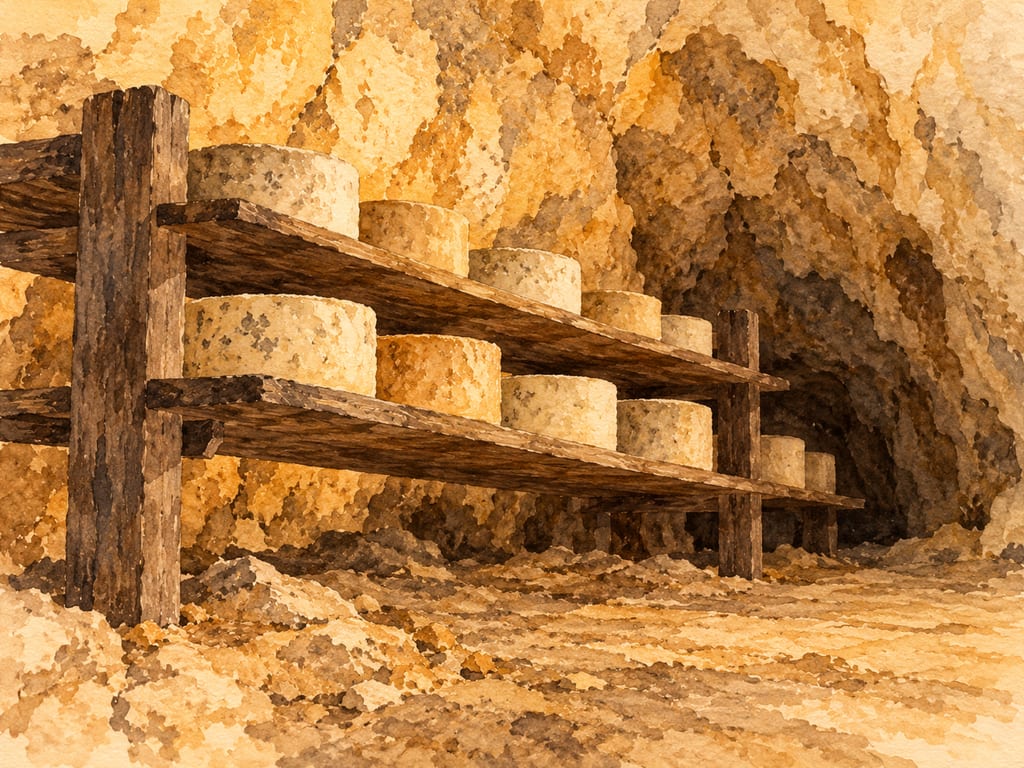
Natural limestone caves in Asturias’s Picos de Europa are used to mature Cabrales cheese. Their airflow, humidity and water are part of the site; the documented cave conditions should not be generalized to other ripening rooms.
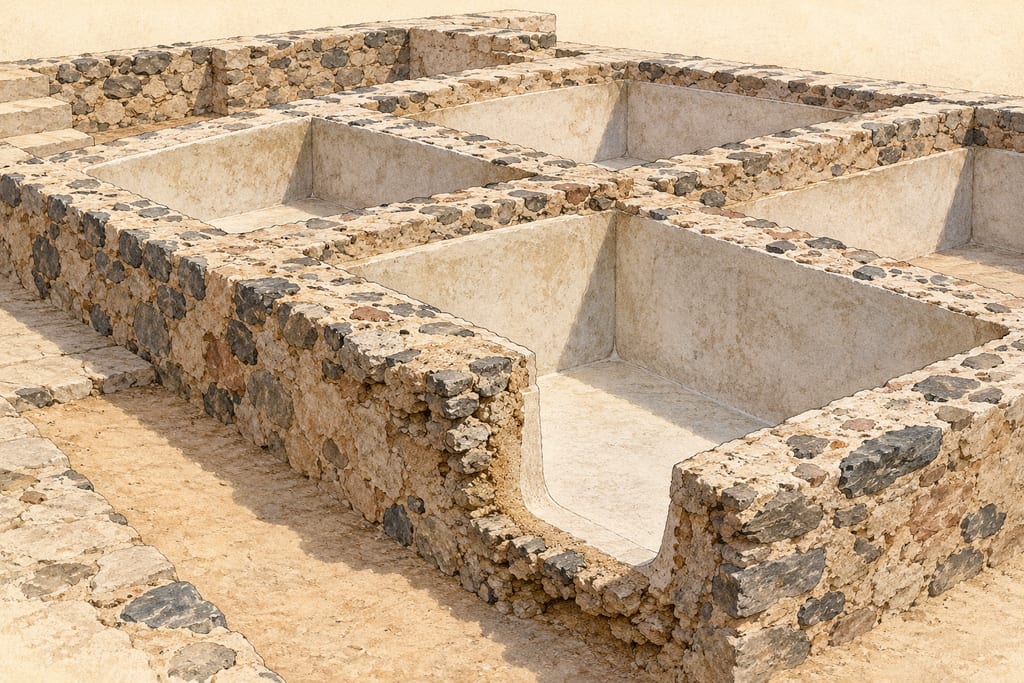
A cetaria is a fixed masonry basin in a Roman fish-processing installation. Examples at Baelo Claudia, Tróia and Monte Molião show varied forms, not one universal design.
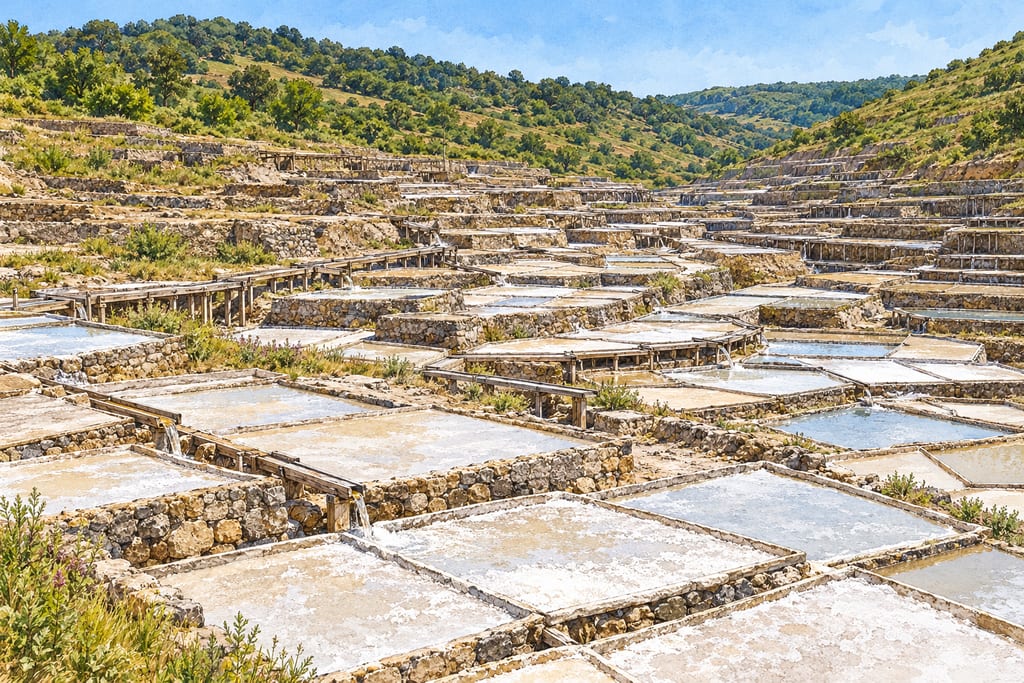
Valle Salado de Añana is an inland spring-brine saltworks in Álava, Spain, where wooden channels carry brine by gravity to stepped terraces of shallow evaporation pans.
An industrial fermentation patio places factory-made fiberglass-reinforced polyester olive tanks below floor level, with drainage and transfer infrastructure arranged around the buried vessels.
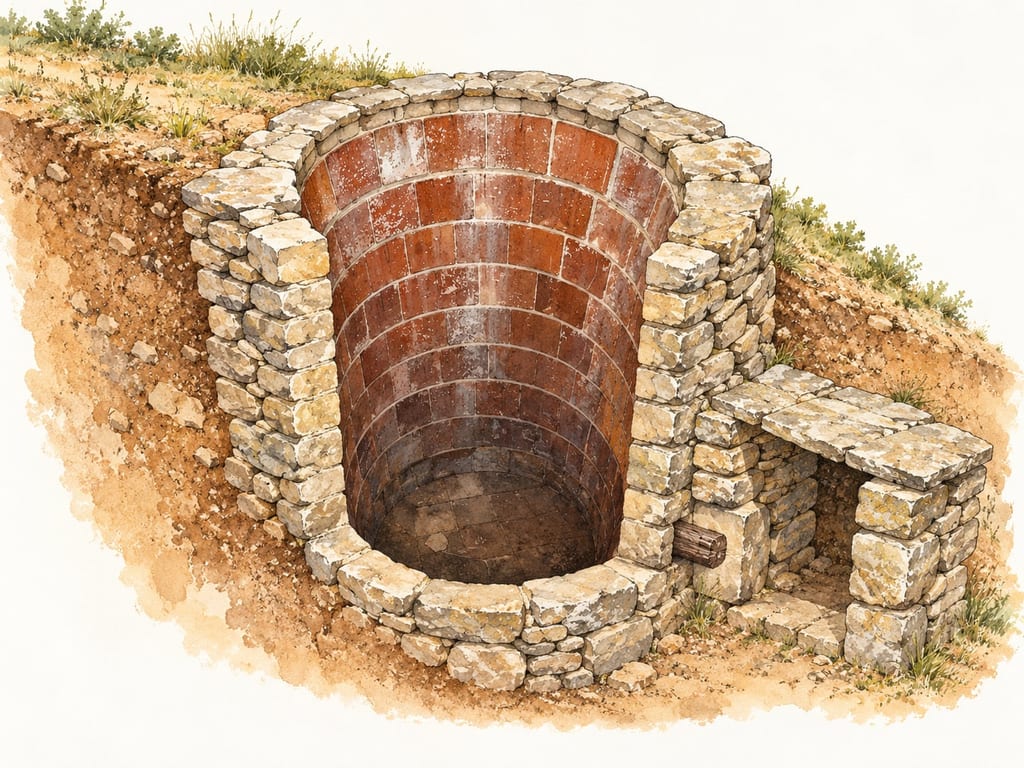
A tina de pedra seca is a fixed stone-built wine vat found among vineyards in Catalonia’s Bages region. These installations used dry-stone masonry and an inner lining of glazed ceramic cairons; variants and individual layouts differ.

A gelling polysaccharide extracted from red seaweeds, sold as kanten strips or powder; it sets firm at a low concentration and stays solid until about 85 °C.

A Dominican table and seasoning condiment of sour orange juice, mixed with lime and salt and bottled raw; garlic, oregano or a hot pepper may be added for meat or a spicier bottle.

Cicerbita alpina is an alpine perennial whose tender shoots and leaves have been eaten raw or cooked. Sámi milk preparations and modern Carnian dishes are distinct uses, with serious identification and preservation limits.

Japanese skipjack tuna cooked, then repeatedly smoked and dried over a wood fire by the hand-fired tebiyama method into a hard block for shaving into dashi: the first stage of katsuobushi.

A Swedish-style spirit vinegar made by fermenting neutral alcohol with live vinegar bacteria, with a separate guide to commercial ättika strengths.

A yeast-raised wheat ring shaped from a firm dough, briefly boiled and baked. This source-batch formula gives a gently malted crust and a chewy crumb.

A warm dip of garlic, anchovy and olive oil, often enriched with butter, that Piedmont serves over a flame with raw and cooked vegetables and bread.

Bechamel is a white sauce of milk thickened with a butter and flour roux, one of the French mother sauces, and the base from which Mornay and other cheese and cream sauces are made.
No community contributions have been published for this entry yet.
Sign in to contribute. Published comments and photos are free to read.
Consejo Regulador de la Denominación de Origen Protegida Pimentón de la VeraStructure · Materials · Method · Geography
Pliego de Condiciones DOP Pimentón de la VeraCurrent specification describes a vertical-current drying system with lower hearth; common masonry/tile construction, upper wooden grid, oak and/or holm-oak fuel, variable dimensions, peppers regularly turned and a 10–15 day commercial process.
The product zone includes listed municipalities in La Vera, Campo Arañuelo, Valle del Ambroz and Valle del Alagón, northern Cáceres.
Cited in: A pepper dryer built into the landscape; Two levels and a rising current; Harvest, drying and the protected product; What this record does not establish
Consejo Regulador de la Denominación de Origen Protegida Pimentón de la VeraHistory · Site · Use
Elaboración del Pimentón de La VeraThe Council says secaderos were historically the farmer's first processing step, built on cultivation plots, and attributes development of the vertical-current lower-hearth form to seventeenth-century farmers reacting to autumn rain.
Cited in: A pepper dryer built into the landscape; Harvest, drying and the protected product
Wikimedia CommonsImage reference · Neighboring example
Sequero de pimentón en Candeleda.jpgThe inspected photo shows a stone pepper-drying building identified by its uploader as a sequero in Candeleda, Ávila; it is a neighboring example, not a La Vera specimen. The file page identifies author Cortex pb and CC BY-SA 4.0.
Cited in: Two levels and a rising current; What this record does not establish
Consejo Regulador de la Denominación de Origen Protegida Pimentón de la VeraHistory · Seasonal context
Pimentón de la Vera, un imprescindible de la buena cocinaThe Council associates autumn harvest with rainfall and attributes development of the vertical lower-hearth dryer to seventeenth-century farmers.
Cited in: Harvest, drying and the protected product