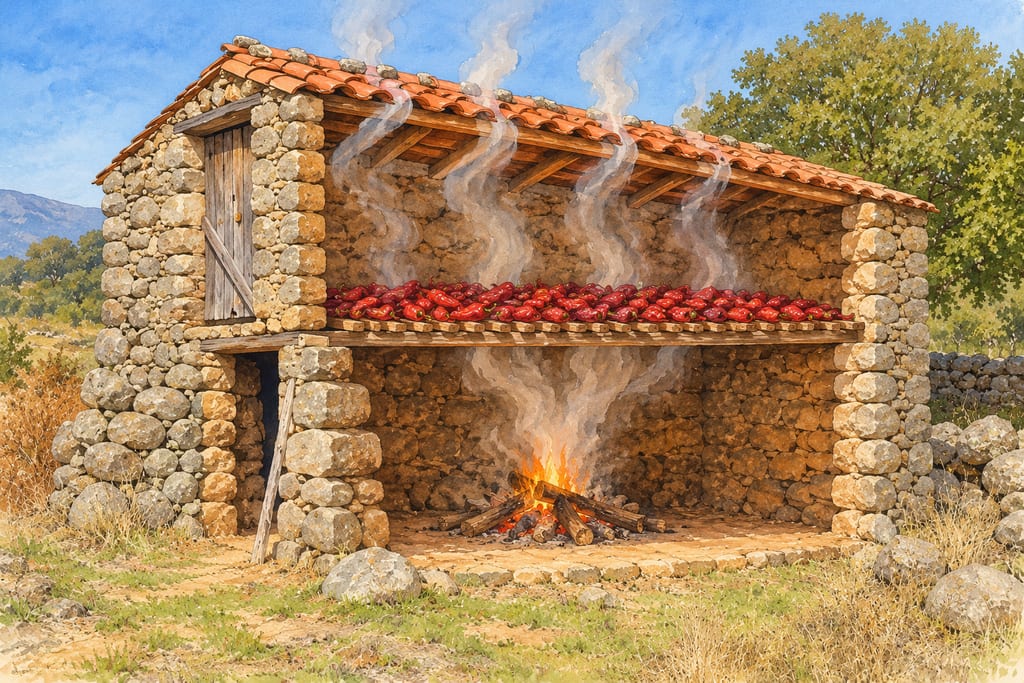
La Vera pepper-drying secadero
The traditional two-level pepper-drying building used for Pimentón de la Vera puts a wooden drying floor above an oak or holm-oak hearth, with heat and smoke rising through the peppers.
 FermenteaWhere food goes to change
Traditional method
Smoked paprika (pimentón) · Pimentón de La Vera DOP
Spanish smoked paprika from Capsicum peppers dried over oak or holm-oak smoke in a dryer called a secadero, then ground. Protected by a designation of origin in La Vera.
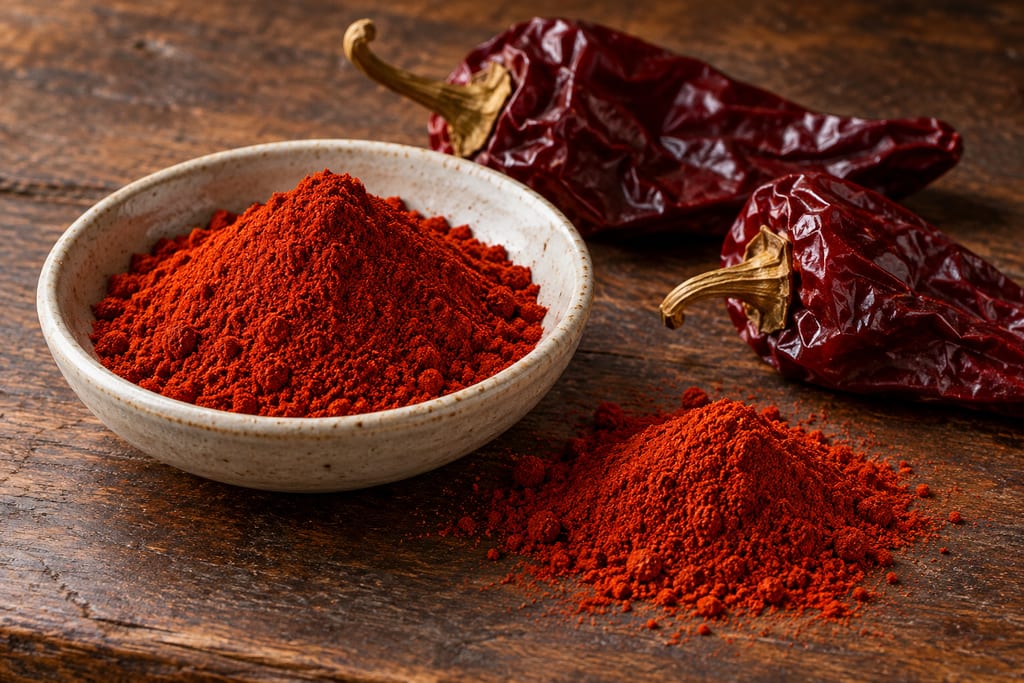
Pimentón is Spanish smoked paprika. The name covers several grades, and the most common in accounts is the one from La Vera, a district in Cáceres in Extremadura. That paprika is dried over oak or holm-oak smoke, which gives it its smoky taste and smell. Its designation of origin sets the area, the variety and the drying method.
The product is a spice, not a sauce or a cured food. Cooks use it in stews, rice dishes, sausage and grilled meat, and it is sold in sweet, bittersweet and hot grades.
The drying happens in a secadero, a two-level dryer. Oak fires burn on the lower level, and peppers are laid on a wooden grid above the smoke. Gases leave through loose roof tiles. Accounts describe the structure in more detail than the household equipment that might copy it, and they do not establish that a domestic smoker gives the same result.
Ripe, healthy fruit is turned by hand during drying so that it dries evenly. Drying normally takes 10 to 15 days, and sources differ: one retailer gives about two weeks, and another adds a few days over a slightly warmer fire at the end. When dry, the peppers are ground, traditionally in stone mills.
The grade follows the pepper and the process. Sweet, bittersweet and hot powders are sold separately.
The designation of origin and its production scale are current facts. The dating of oak smoke drying in La Vera is not established in accounts reviewed.
Scaling: not applicable
Accounts describe a commercial dryer. Smoke from an uncontrolled fire, and mould or insects on drying peppers, are not controlled by any household method given in accounts.
Hazard sourceNo household drying method is established in accounts. Do not treat a home smoke-drying attempt as the designated product.
Store ground paprika sealed and dry; no storage limit is given in accounts.
The designated area is a defined district. The protected name does not cover paprika dried by other methods.
The traditional two-level pepper-drying building used for Pimentón de la Vera puts a wooden drying floor above an oak or holm-oak hearth, with heat and smoke rising through the peppers.
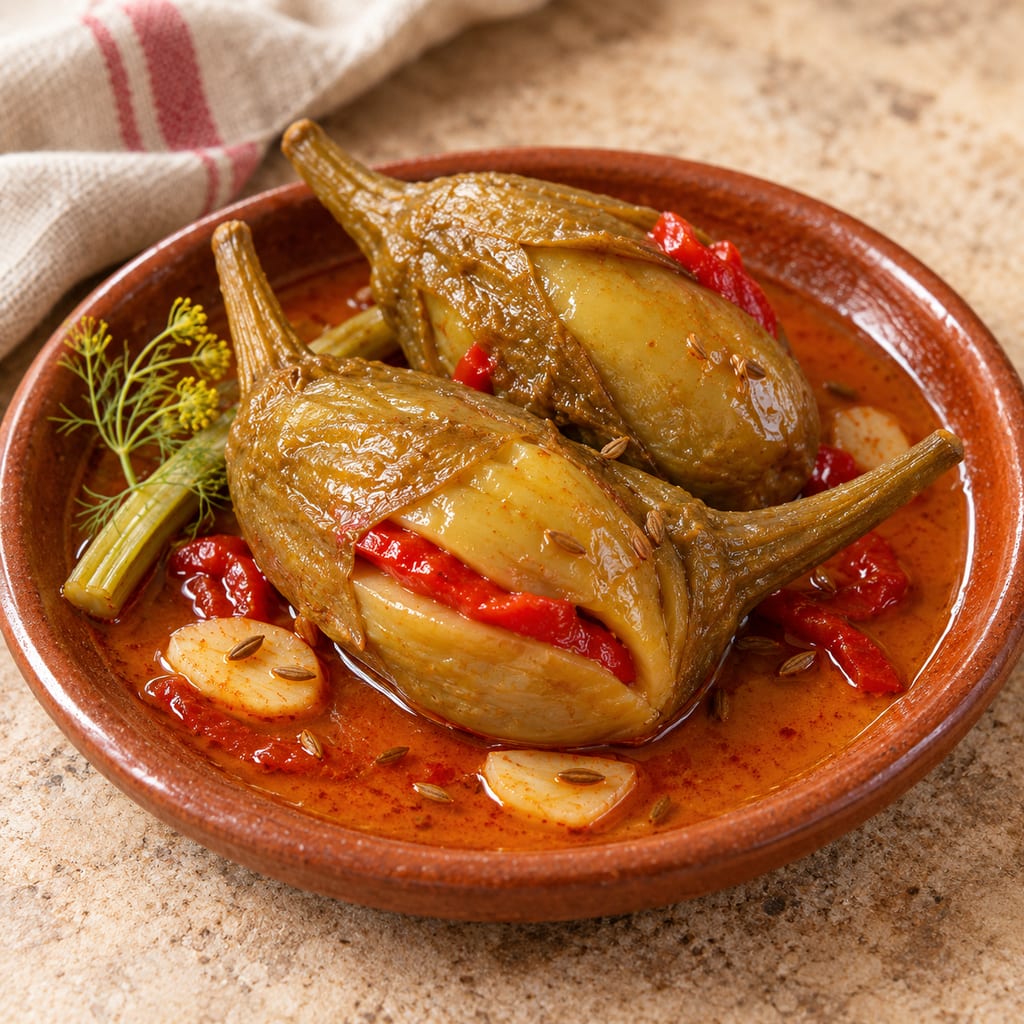
A protected aubergine preserve from Ciudad Real in Spain: tender fruit of the local Dealmagro variety, cooked briefly and then fermented in a vinegared, paprika-seasoned dressing.
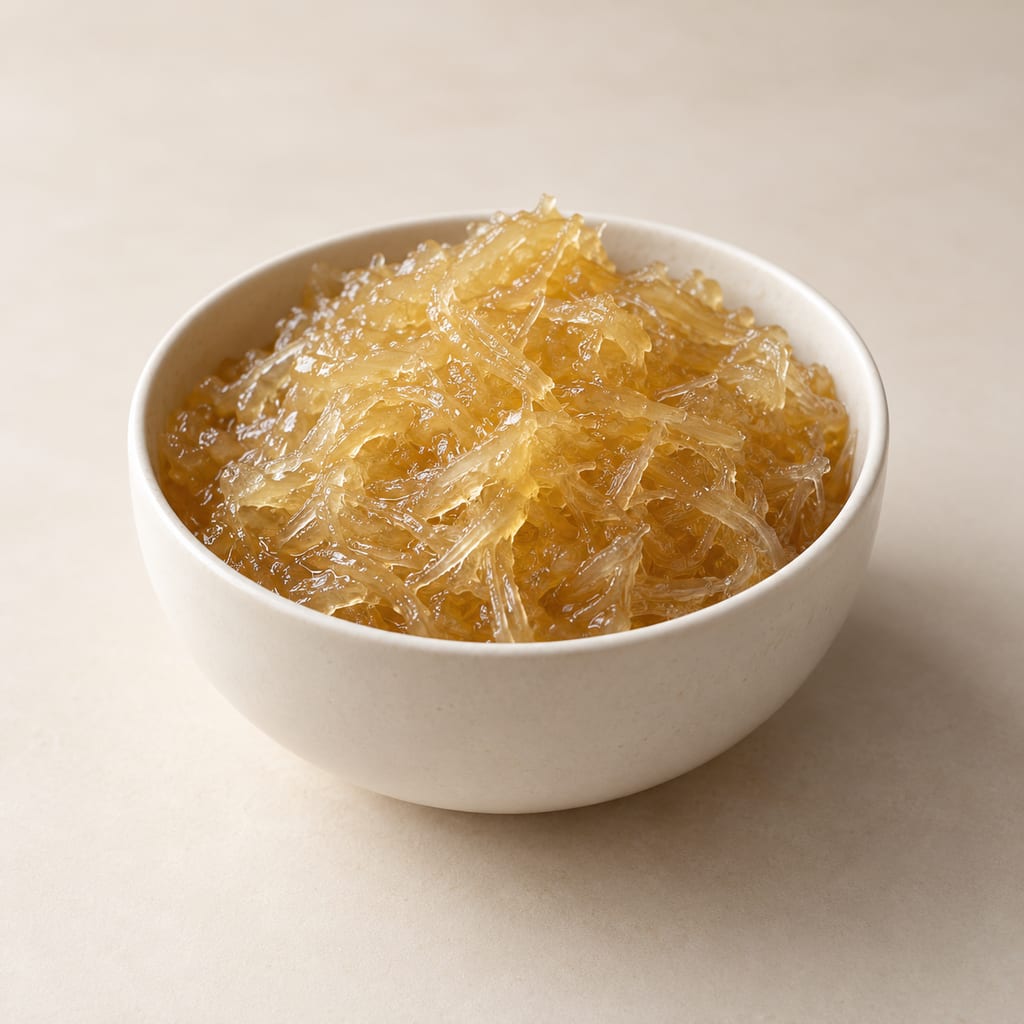
Fine strands of Cucurbita ficifolia cooked in an equal weight of sugar, then portioned for refrigerator or freezer storage. Ordinary orange pumpkin does not give the same fibres.
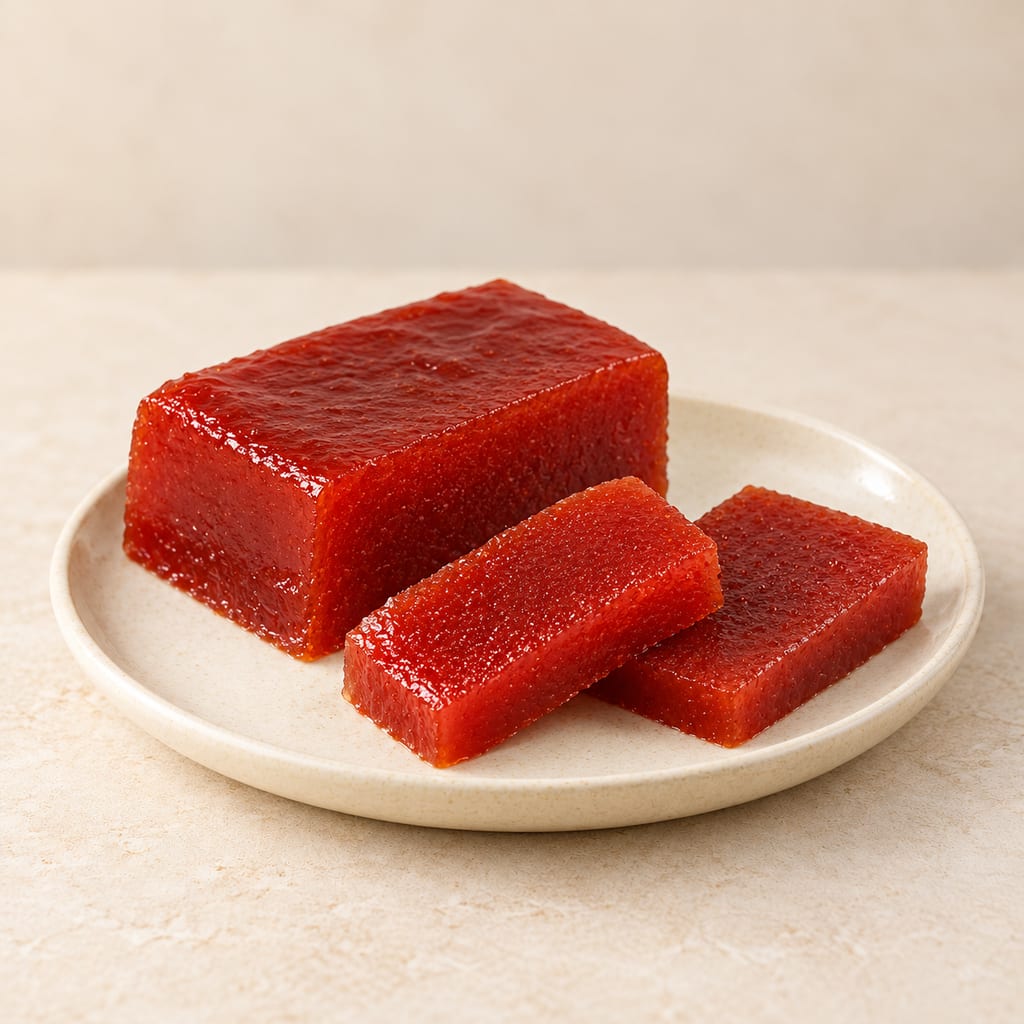
Dulce de membrillo is quince cooked with sugar into a firm paste for slicing. This family method softens the fruit in a pressure cooker, then blends it and leaves it to set.
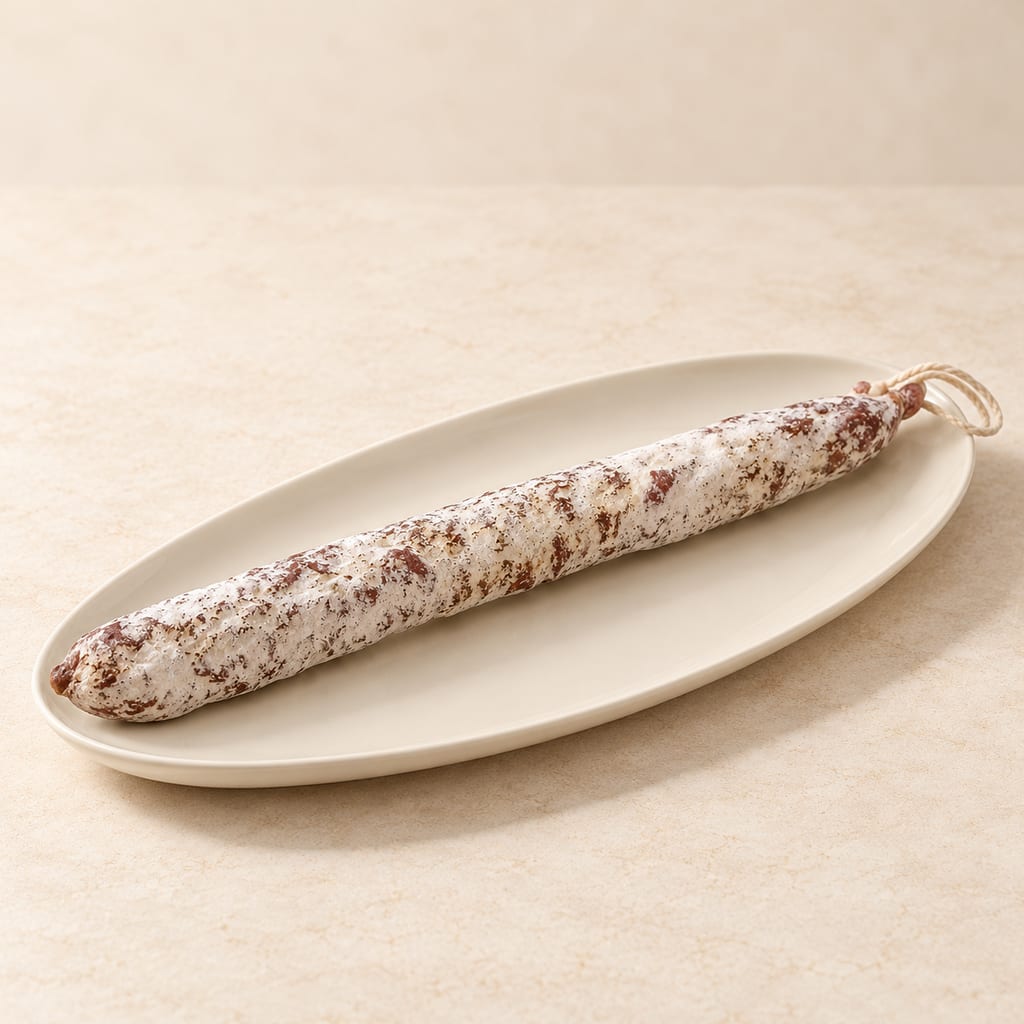
A documentary account of a modern starter-cultured Fuet formula and its place in Catalan sausage culture. The cited raw-pork process lacks matched safety validation, so this page does not present it as a household recipe.
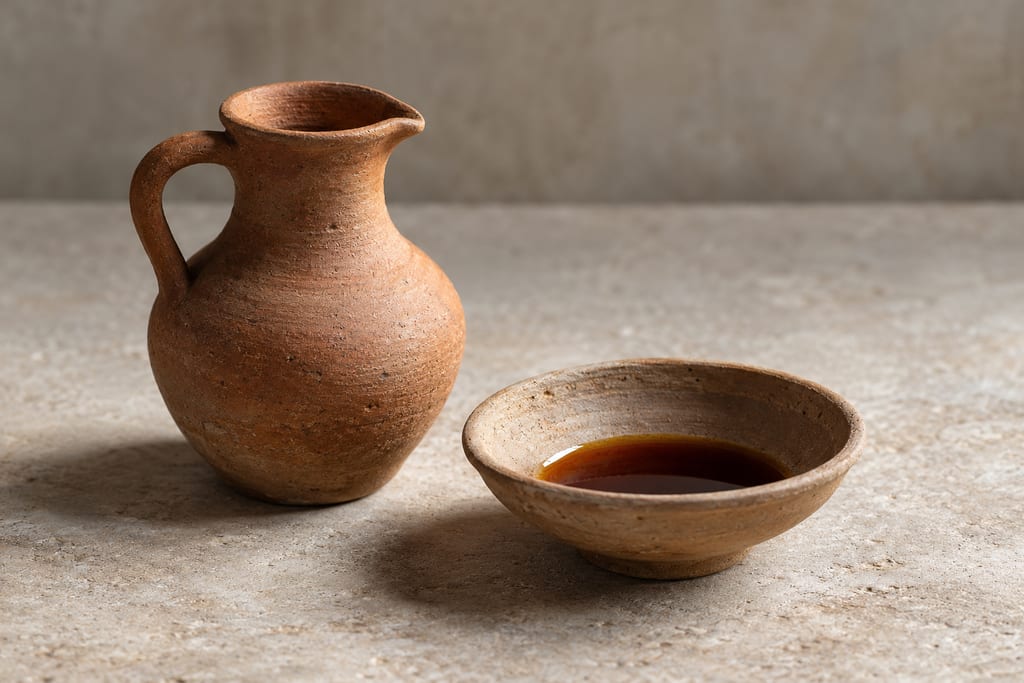
Garum, Greek garos and Latin liquamen, was the fish sauce of the ancient Mediterranean: fish and viscera salted and left in the sun, then drained off as a savoury liquid.
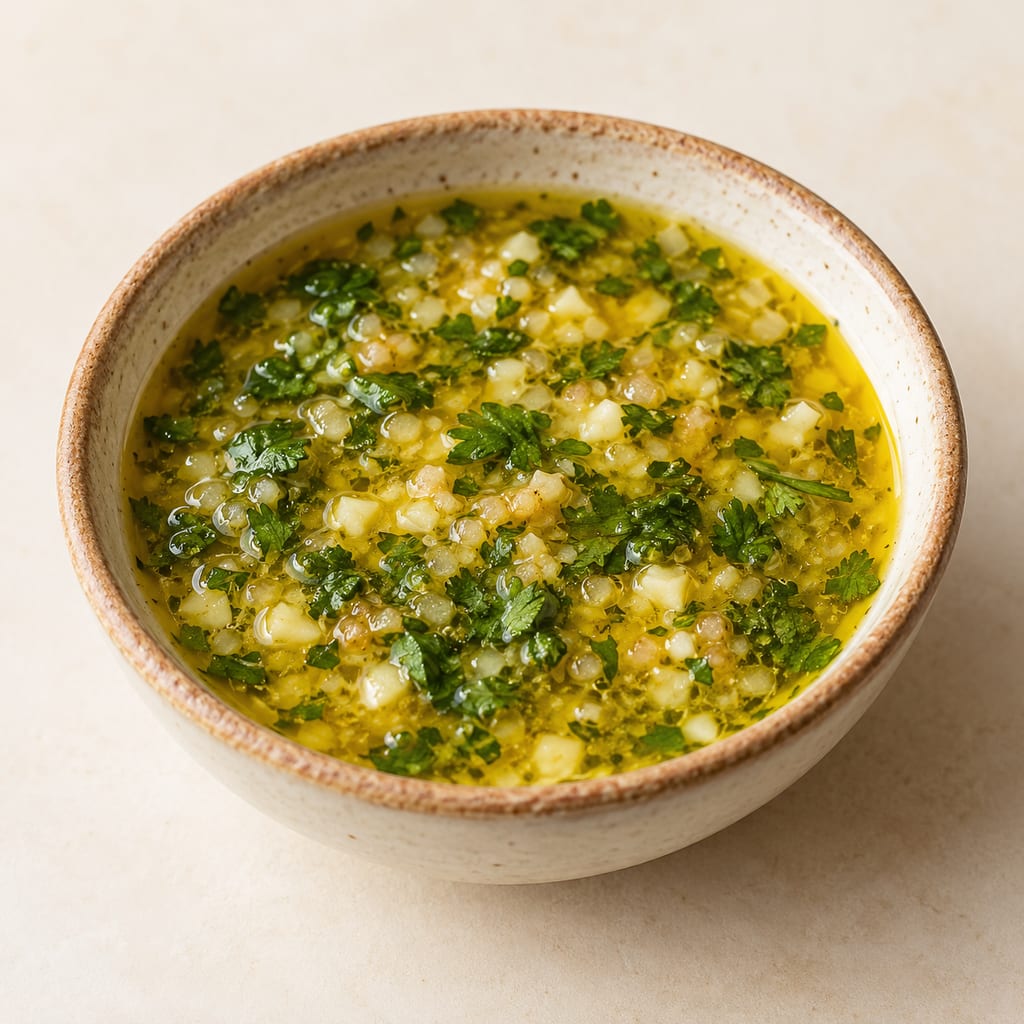
Mojo criollo is a Cuban sauce of garlic and sour orange juice with oil and herbs, used to marinate roast pork and as a dip.
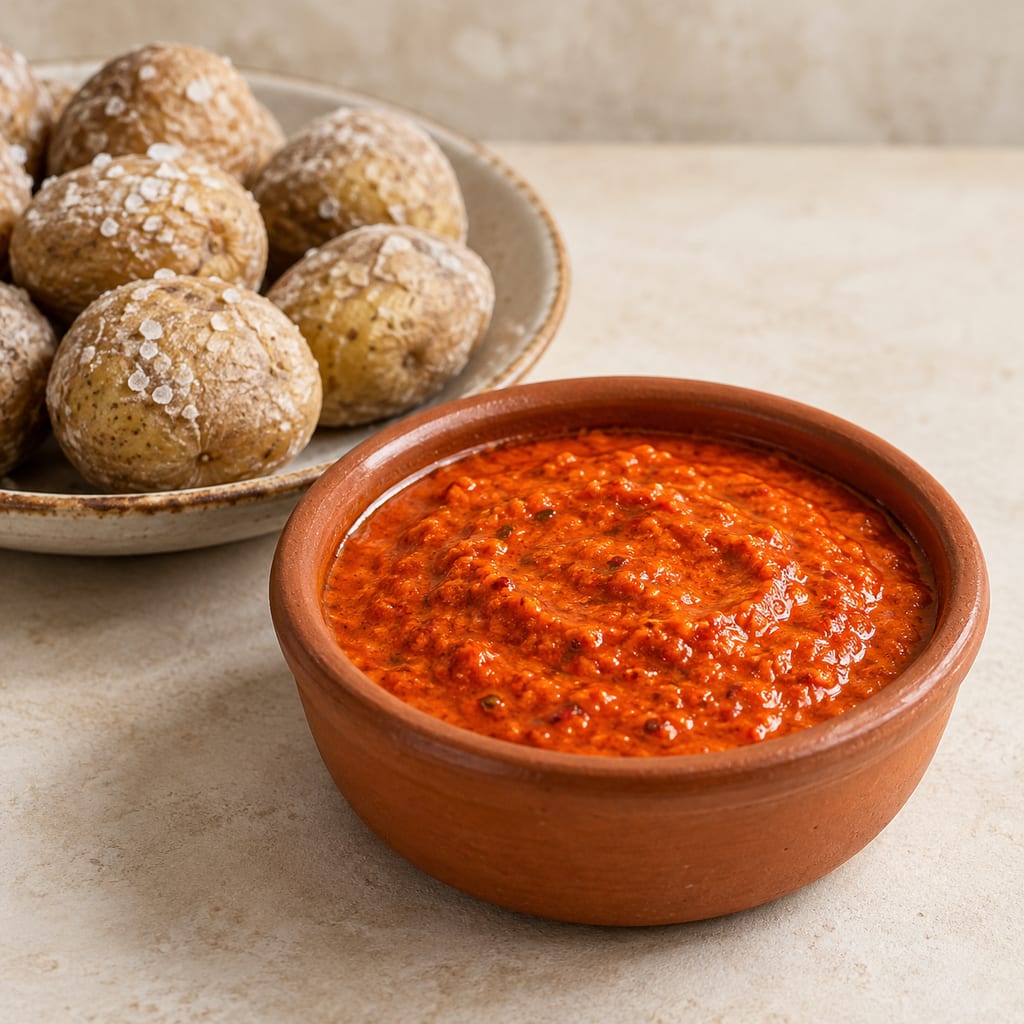
A red sauce of garlic, dried or fresh red pepper, paprika and cumin in olive oil and vinegar, served with salt-cooked potatoes across the Canary Islands.
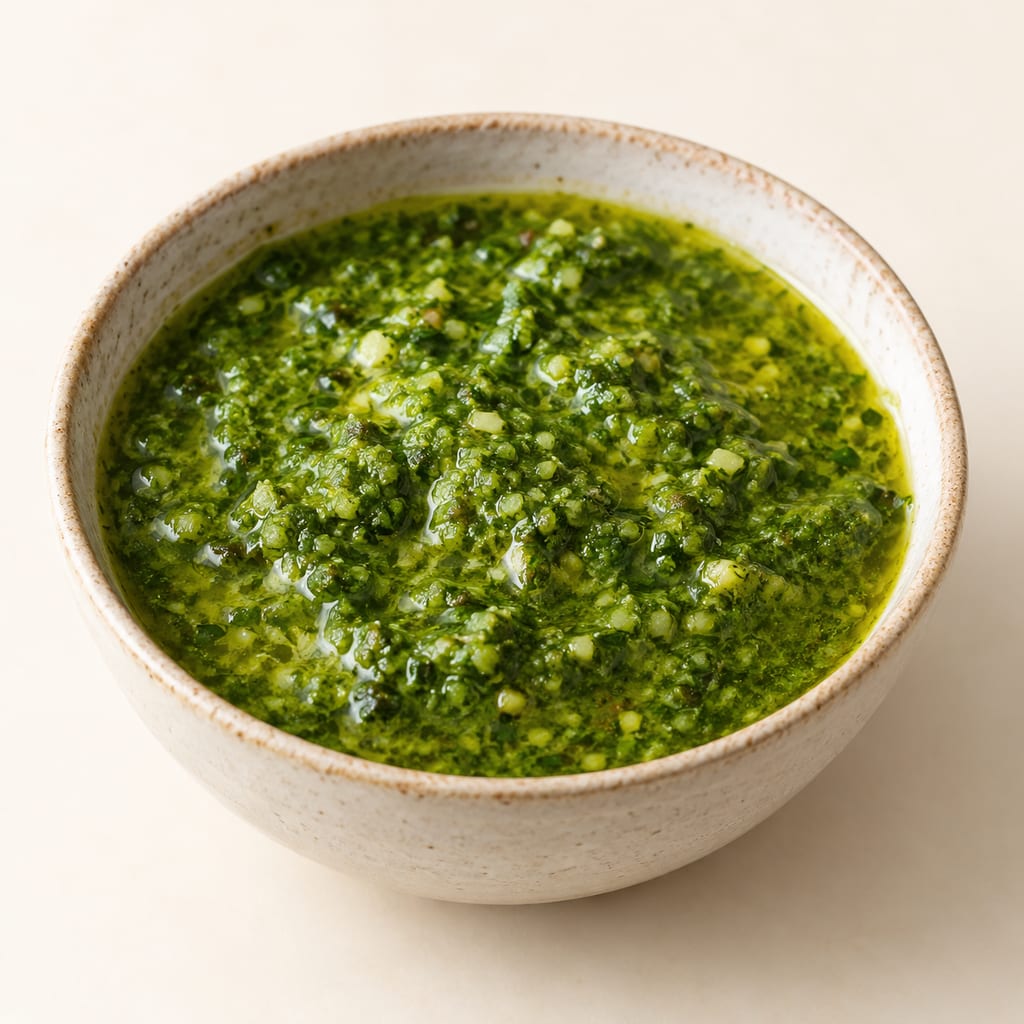
A green sauce of garlic, cumin, green chilli and fresh coriander or parsley in olive oil and vinegar, traditionally served with fish in the Canary Islands.
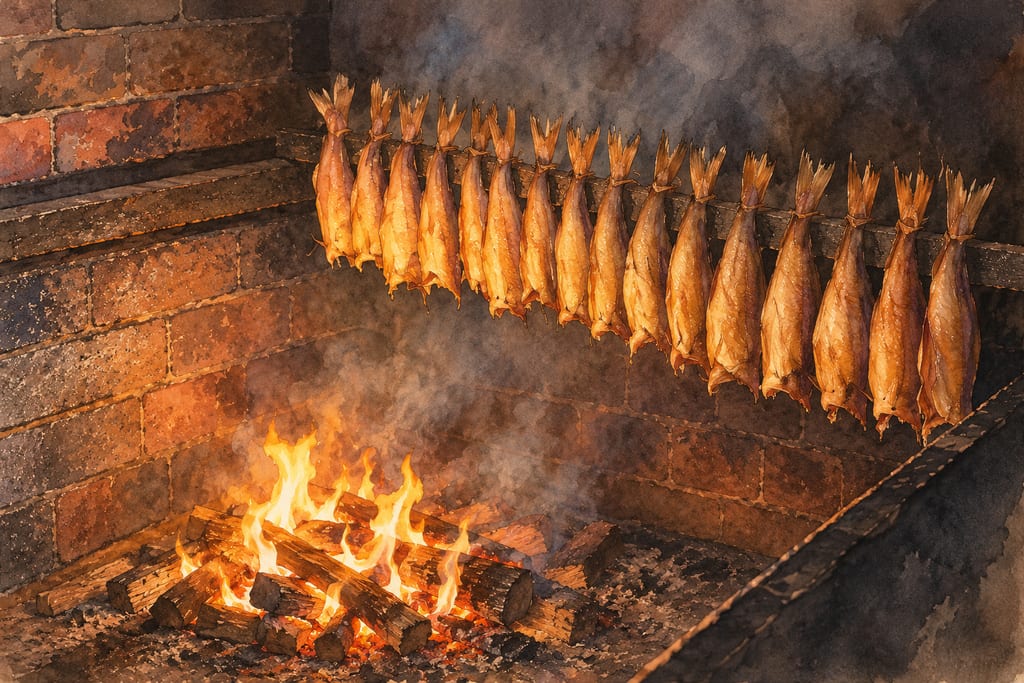
The Arbroath “barrel” is a hardwood-fired smoking pit with triangular rails and a cover. Its documented form belongs to the traditional hot-smoking of haddock around Arbroath and Auchmithie, Scotland.
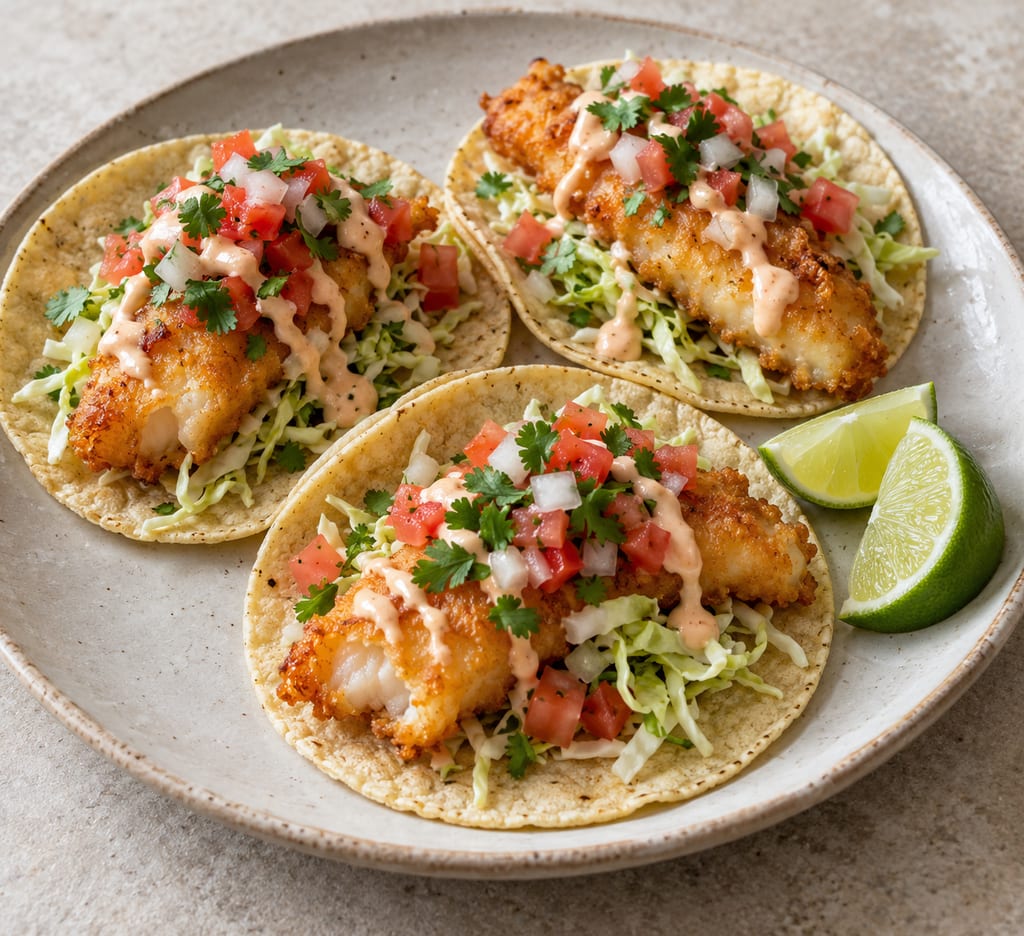
Crisp battered white fish in warm corn tortillas with shredded cabbage, lime and fresh salsa. This home version draws on the Ensenada style without claiming to be a definitive historic formula.
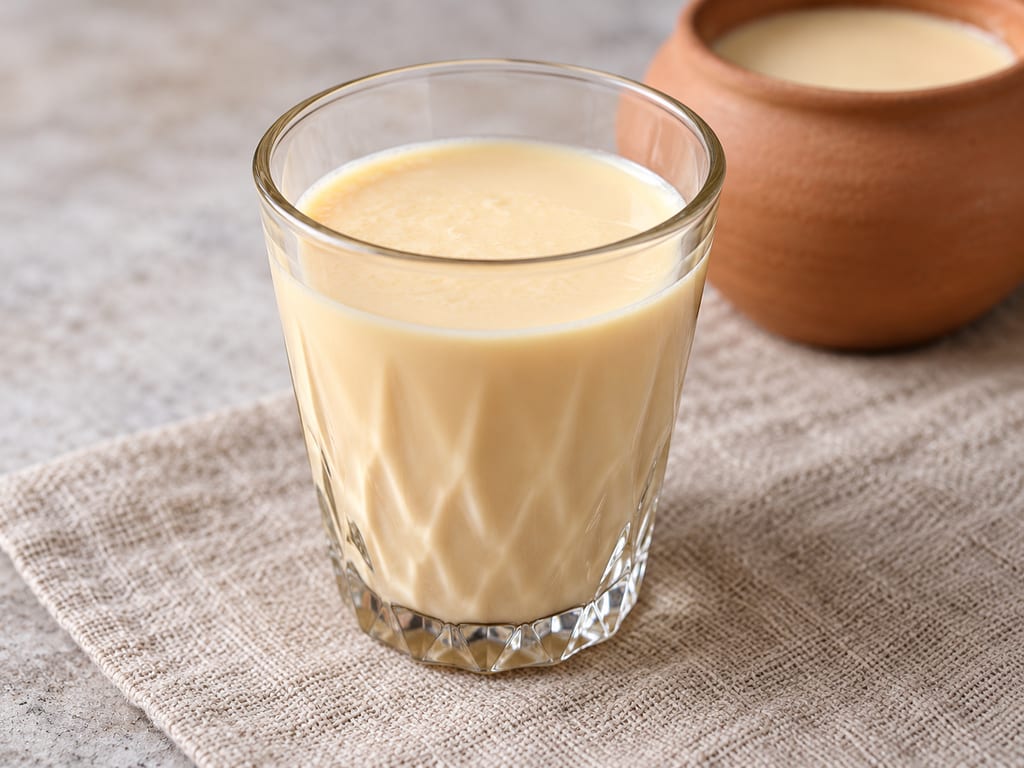
Baked milk is an Eastern European preparation of milk held at high heat for hours until it turns cream-coloured with a cooked, mildly sweet flavour, without any fermentation.
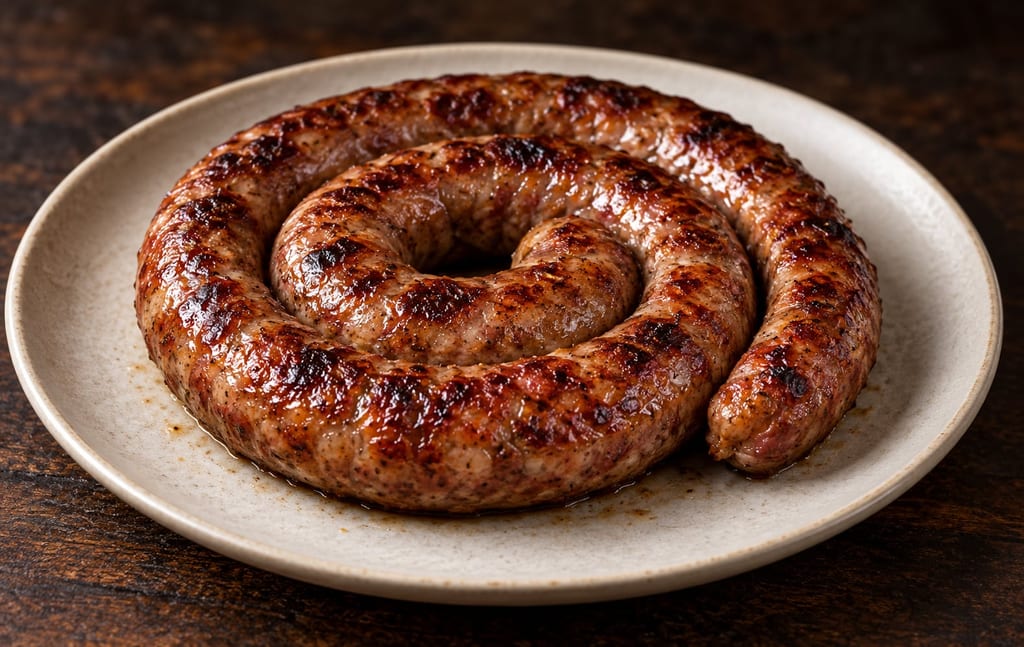
A coarse South African farmhouse sausage of beef with pork or mutton fat, defined by its coriander seasoning and cooked fresh over coals rather than preserved.
A flood-season pit store described for Omagua communities along the Amazon: manioc tubers were buried before inundation and recovered as waters receded. Its shape and lining are not recorded.
A temporary, in-place earthen oven used to cook camas with heat retained by fire-heated stones. The dimensions described here belong to one Kalispel-supervised reconstruction, not a universal form.

Chuño negro is a source-documented Andean potato-preservation practice. This entry records producer tradition; it is not a validated household process for making potentially toxic bitter potatoes safe.
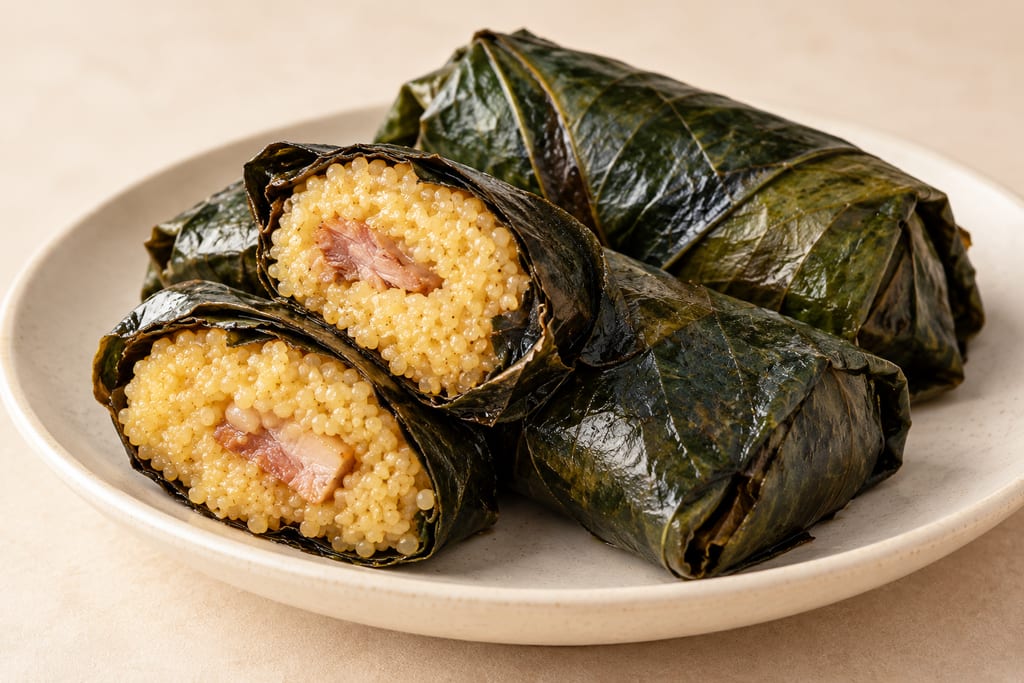
Cinavu is a Paiwan leaf-wrapped parcel built around millet or taro, meat and locally gathered leaves. It belongs to a food culture of harvest, hospitality and shared work, with village recipes differing in both filling and cooking time.
No community contributions have been published for this entry yet.
Sign in to contribute. Published comments and photos are free to read.
WikipediaIdentity · Geography · Process overview
PaprikaPimentón de la Vera is dried by smoking, typically with oak wood, and is a designation of origin.
The La Vera crop covers about 1,500 hectares and produces about 4.5 million kg a year.
Three grades: dulce, agridulce and picante.
Cited in: A smoked spice from La Vera; The secadero; Turning, drying and grinding
MasterClassMethod
Pimentón Guide: 4 Types of Spanish Smoked PaprikaOak or holm-oak smoke, with drying over about two weeks in one retailer account.
Daily hand turning and grinding in stone mills, as one account describes.
Cited in: Turning, drying and grinding
European Union, Official JournalIdentity · Geography · Process overview
Pimentón de la Vera — approved standard amendment and single documentThe EU single document names the authorised pepper varieties Jaranda, Jariza, Jeromín and Bola, and lists Capsicum annuum L. and Capsicum longum L.; the peppers are harvested ripe, healthy and clean.
The product must be dried with oak and/or holm-oak wood in the traditional fashion of La Vera and ground within the designated area.
Cited in: A smoked spice from La Vera