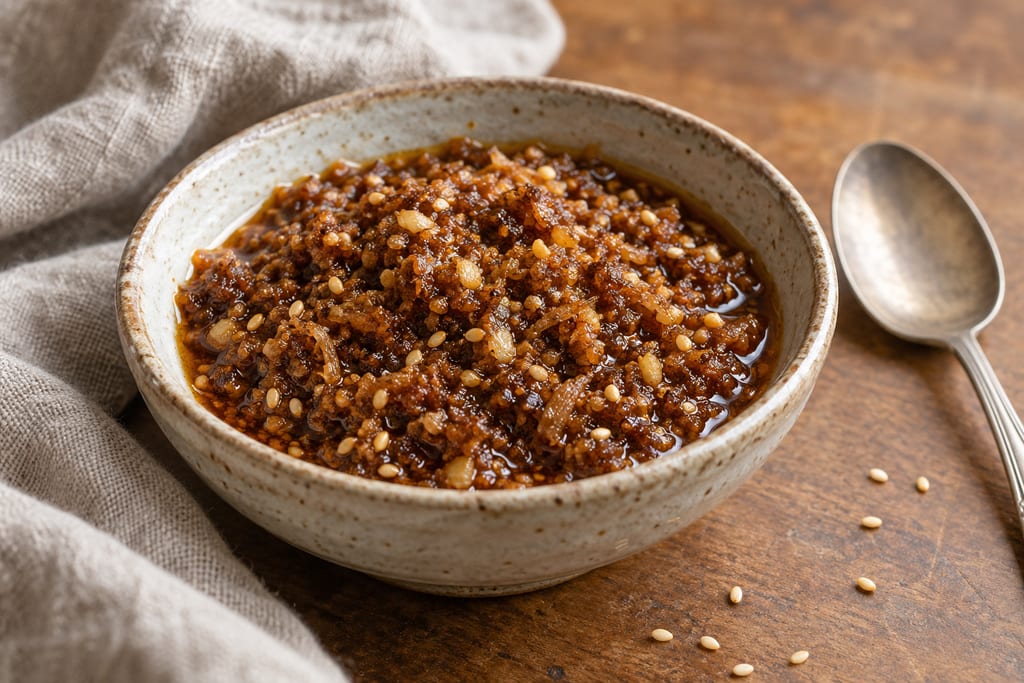
Shacha sauce
Shacha is a savoury, granular Fujian, Teochew and Taiwanese condiment of oil, garlic, shallot and dried seafood, often sold as Chinese barbecue sauce.
 FermenteaWhere food goes to change
cinavu
Cinavu is a Paiwan leaf-wrapped parcel built around millet or taro, meat and locally gathered leaves. It belongs to a food culture of harvest, hospitality and shared work, with village recipes differing in both filling and cooking time.
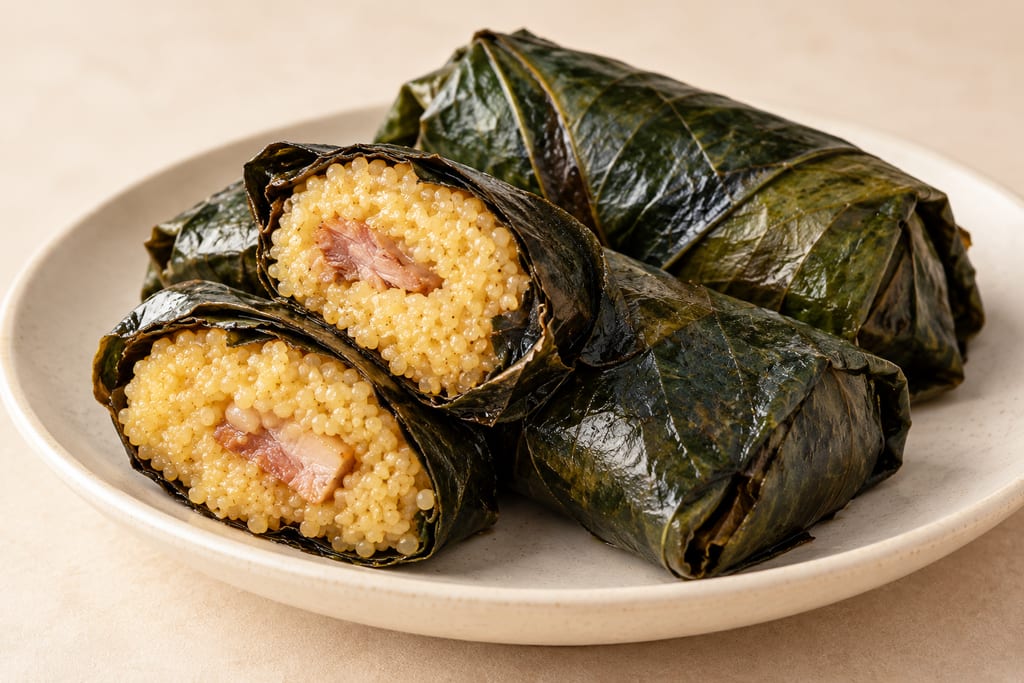
Cinavu is a Paiwan food whose name is commonly rendered in Chinese as 奇拿富 or 吉拿富. In the archive record it is a small leaf parcel combining grain or taro with meat and cooked for eating. It can resemble a rice dumpling in outline, but that resemblance does not make it a version of the Han Chinese zongzi: its ingredients, names, leaf choices and social life come from Paiwan communities.
The dish is most visible at gatherings that call for hospitality. Taiwan's Council of Indigenous Peoples records it for festivals, special occasions and weddings. A field record from Liangshan Village in Majia Township, Pingtung, describes it as a former staple and notes its continued appearance at festivals, births, journeys, ceremonies, military service and weddings, while some elders still eat it in everyday life. The point is not a single fixed calendar. Cinavu moves between household food and food made for an occasion, with the scale and labour of its preparation reflecting the gathering.
A 2025 account from Wenle Village describes the preparations as collective work that can take two days: gathering and sorting leaves first, then assembling and cooking. That schedule belongs to the household it documents, not every Paiwan cook. Still, it shows why a wrapped parcel can carry meaning beyond its ingredients. Gathering, cleaning, folding and tending a pot create a shared task, and the finished parcels are offered to guests and eaten together.
Millet is more than a convenient grain in Paiwan foodways. The Council of Indigenous Peoples lists foxtail millet among crops used for daily consumption alongside upland rice, sweet potatoes and taro. Agriharvest's account of Wenle Village places millet in harvest-season celebrations and describes Masalut as a period of thanksgiving and shared eating. In cinavu, whole grains stay recognisable in the filling rather than being pounded into a smooth mass. This separates the parcel described there from qavay, a pounded millet cake with a softer, mochi-like texture.
Taro offers a different route to a substantial filling. The national college resource describes taro flour or millet as alternatives, with glutinous rice noted as uncommon. The Liangshan archive records a mixture of millet and taro powder; the Wenle account names a separate Palju cinavu made with dried mountain-taro flour and pork belly. These are useful distinctions, not interchangeable measurements: the sources do not specify how much flour binds a given quantity of meat or grain.
Leaves are both container and part of the food's character. False-nightshade leaves (ljavilu, Trichodesma calycosum) are a common inner layer, and a Paiwan educational resource says some villages use young kataljap leaves. In the Liangshan method, shell ginger makes the outer wrapper. Other documented choices include older leaves of kataljap or blood tree, wild ginger leaves, and bundles secured with grass stems, cotton thread or strips of shell-ginger sheath. These choices track local availability and practice; they should be understood as village variations rather than a shopping list of mandatory alternatives.
Wenle's seasonal account is especially clear about leaf maturity: young edible leaves are placed close to the filling, while larger older leaves protect the parcel outside. In that household's winter preparation, kataljap had become old and bitter, so blood-tree and false-nightshade leaves were used instead. The account describes aromatic leaves and a protected inner layer, but makes no measured chemical claim about flavour transfer. The practical lesson supported by the record is to use the leaf pairing and maturity appropriate to the local method.
The Liangshan Village record offers a concise sequence rather than a fully weighed home formula. It combines millet and taro flour with a meat filling, lays the mixture on leaves of false-nightshade, encloses that inner package with shell-ginger leaves, ties it, and cooks it in water for one hour. The record was collected in 2021 in Liangshan Village, Majia Township, Pingtung County. It does not specify weights, seasoning, grain soaking, parcel size or how many parcels the method makes.
Adding exact weights or an assumed pre-soak would make a different recipe, not restore missing information. Where a family or community has a current recipe, its proportions and handling practices take precedence. The one-hour cooking time belongs to this recorded preparation only and should not be merged with a separate Wenle recipe, although both are called cinavu.
The wrapping stage keeps the filling together during cooking and makes individual parcels that can be carried and shared. The inner leaves create the surface in contact with the filling; outer leaves and ties hold the shape through boiling. The available Liangshan description does not explain whether its millet is whole, soaked or ground, nor how the taro flour is hydrated. Those details remain unknown in this record and should be learned from the cooks of that version rather than supplied by analogy.
Use the recorded hour as a description of the source's method, not as a general safety guarantee: parcel size and meat cut affect cooking, and the archive does not report internal temperatures. As with any meat dish, confirm that the centre is thoroughly cooked before serving. The source presents cinavu as a cooked food, not a preserved meat product, so this page does not assign it a shelf life or advise keeping it unrefrigerated.
The Wenle account documents a second, much longer-cooked method. Niwa's version keeps the millet whole, mixes in peanuts, and uses pork belly in mountain communities. Chicken is reported for households that avoid pork for religious reasons, while coastal communities use dried salted fish. For Palju cinavu, dried mountain-taro flour takes millet's place. These choices reflect particular settings and households; they are not universal Paiwan rules.
In that account, the inner filling is rolled in tender leaves and protected by larger outer leaves. The parcels are tied with grass and cotton thread, then boiled for ten hours, with the pot rearranged at intervals so parcels heat evenly. The long cooking described by this household is distinct from Liangshan's one-hour field-recorded method. Differences in grain preparation, parcel construction, vessel and local practice may matter, but the sources do not experimentally compare them. Readers should keep each account intact rather than average the times or combine the ingredients.
Other naming distinctions are also important. Qavay is a pounded millet cake; Agriharvest explains that whole grains and meat give cinavu a different texture. The term abai is used for a related-looking whole-millet parcel among neighbouring Rukai communities, while Paiwan use of the word qavay can refer to a different food. The national indigenous encyclopedia distinguishes further local preparations and ceremonial forms. Similarity in leaf wrapping does not erase these community names or the occasions attached to them.
A contemporary art project and Museum MACAN workshop have also explored cinavu with giant African snail. The museum traces this ingredient to the snail's introduction to Taiwan from Singapore by Japanese colonial officials in 1933, and frames it as an invasive species and colonial legacy. That is a modern, historically specific adaptation, not evidence that snail belongs in every traditional cinavu. It demonstrates how a community food can absorb changing ecological and political histories while remaining recognisable through the wrapping practice.
Cinavu is served at occasions where food welcomes guests, marks a transition or helps a group celebrate together. The Paiwan educational resource names festivals, weddings, births and journeys, and describes elders gathering leaves and ingredients, then cleaning, wrapping and cooking in company. This account presents the work itself as part of the social occasion. Agriharvest's Wenle story links millet parcels to Masalut, the harvest celebration, and to sharing the harvest with the community.
The sources support multiple sensory outcomes rather than one canonical taste. Whole millet remains grain-like and contrasts with pounded qavay; pork belly contributes a rich filling in one village account; taro flour produces a different parcel; shell ginger and other leaves are selected as wrappers, with local accounts describing distinctive aroma. No single texture, sweetness or seasoning profile should be imposed across all versions.
A useful comparison is a family of leaf-wrapped foods with distinct histories and names. Cinavu's ingredients and form make it portable; its preparation also gathers people around the harvest, the leaves and the pot. The Liangshan archive and Wenle household account document both everyday and ceremonial roles, each in its own setting. The page keeps those records distinct because the one-hour and ten-hour preparations are not interchangeable.
The available sources do not establish a single origin date, a universal ingredient ratio or one cooking time. They describe an ongoing tradition through institutional cultural documentation, a village field record and a reported household method. Treat the one-hour Liangshan preparation and the ten-hour Wenle method as separate documented records, and seek community knowledge for any details either account leaves unstated.
For serving, unwrap the parcel at the table and eat the cooked filling while warm, as a simple serving suggestion rather than a documented ritual rule. The community sources emphasize sharing and hospitality but do not prescribe accompaniments or portion sizes. A cook should follow the practice of the household whose version they are preparing, especially where leaf identification and meat handling are concerned.
Recipe records preserve choices as well as procedures. The Liangshan field entry gives a cooking sequence and a locality; it does not claim to be a complete formula for every family. The Wenle report follows one household and captures a seasonal leaf choice, a long boil and the work surrounding Masalut. The national cultural summaries place cinavu within a wider Paiwan food landscape. Read together, these accounts show a shared form without making every detail uniform.
That distinction matters when translating a community food into a home kitchen. If a reader can obtain the ingredients, the next question is whose preparation they are trying to make. A family recipe may specify soaking, meat seasoning, folding style or bindings that the short archive does not. Such knowledge belongs to the cooks who maintain that version. The absence of measurements in a brief record is not an invitation to invent a standard ratio.
The cultural resources also caution against collapsing foods that look alike. The encyclopedia lists distinct Paiwan forms shaped by filling and occasion, while neighboring communities have their own names and associations. Even within one broad label, a taro-flour parcel, a pounded qavay cake and a whole-millet cinavu can differ in texture and purpose. These names help keep the reader attentive to who made the food and how they understand it.
Today cinavu is also encountered through workshops, reporting and cultural interpretation outside the village. The Museum MACAN program used a contemporary snail preparation as a way to engage with Chang En-Man's work and with the history of an introduced species. It should be read alongside, rather than substituted for, the millet-and-meat records: the workshop is evidence of contemporary experimentation and historical reflection, not a recipe template for all communities.
Institutional and village records document Paiwan practice; none establishes a single origin date.
Scaling: source batch only
Records one specific Paiwan preparation; not claimed as cinavu's birthplace or universal method.
A household account of seasonal ingredients, method and Masalut use; not claimed as universal.
Shacha is a savoury, granular Fujian, Teochew and Taiwanese condiment of oil, garlic, shallot and dried seafood, often sold as Chinese barbecue sauce.
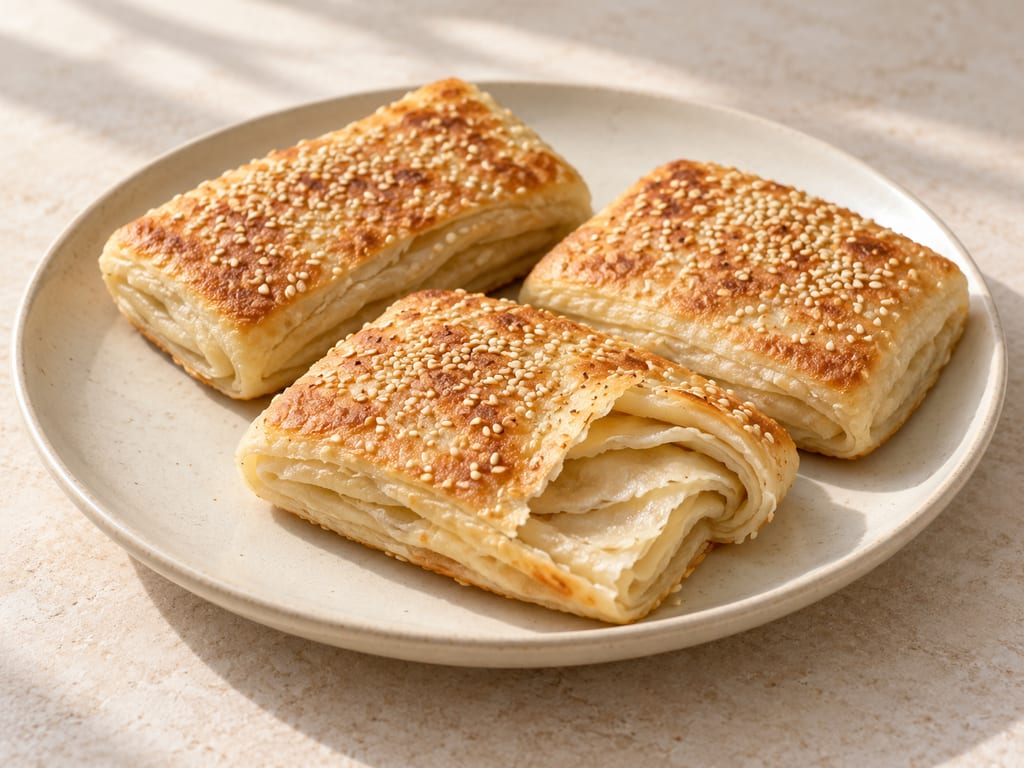
A Taichung family recipe uses a hot-and-cool water dough, vegetable-oil roux, repeated folds and sesame seeds for crisp, layered shaobing.
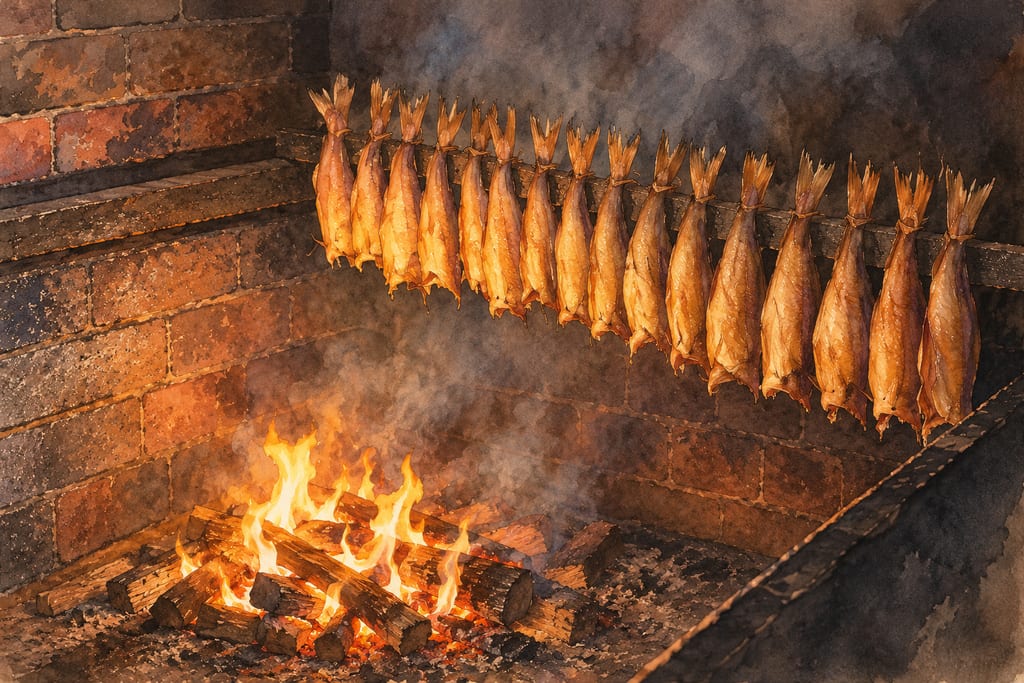
The Arbroath “barrel” is a hardwood-fired smoking pit with triangular rails and a cover. Its documented form belongs to the traditional hot-smoking of haddock around Arbroath and Auchmithie, Scotland.
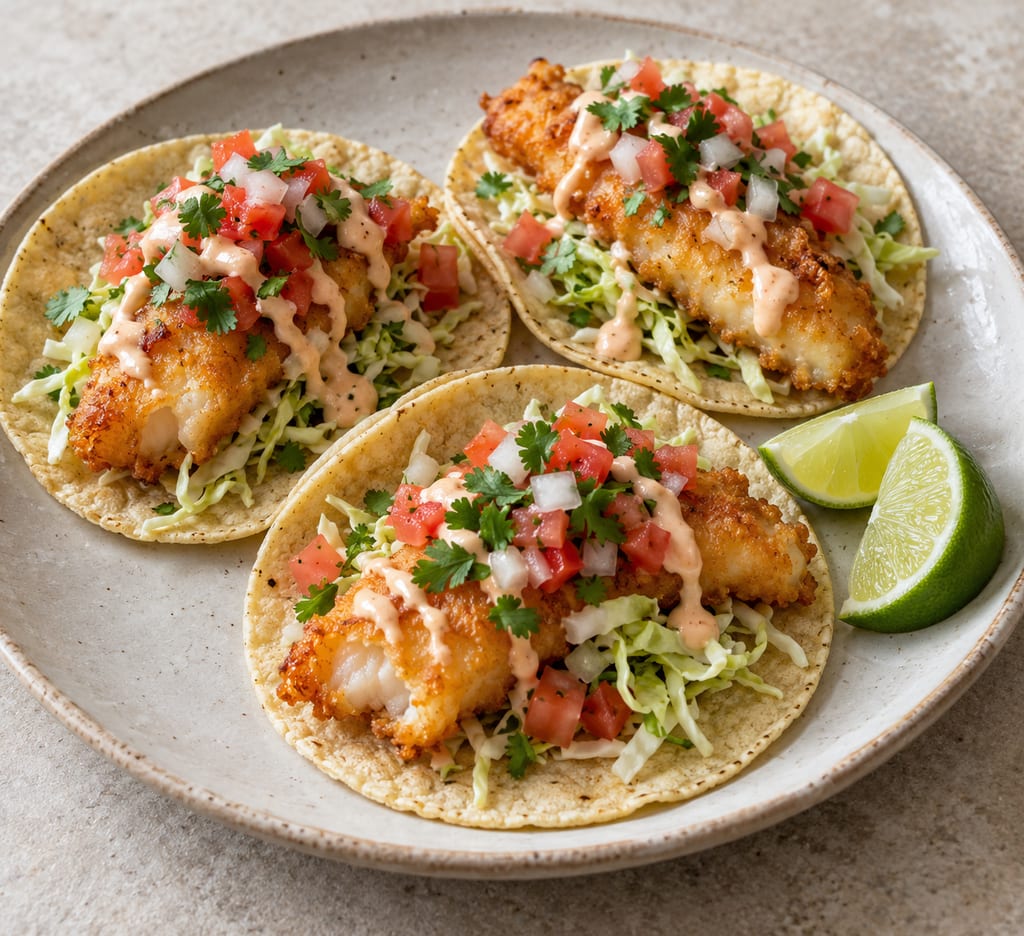
Crisp battered white fish in warm corn tortillas with shredded cabbage, lime and fresh salsa. This home version draws on the Ensenada style without claiming to be a definitive historic formula.
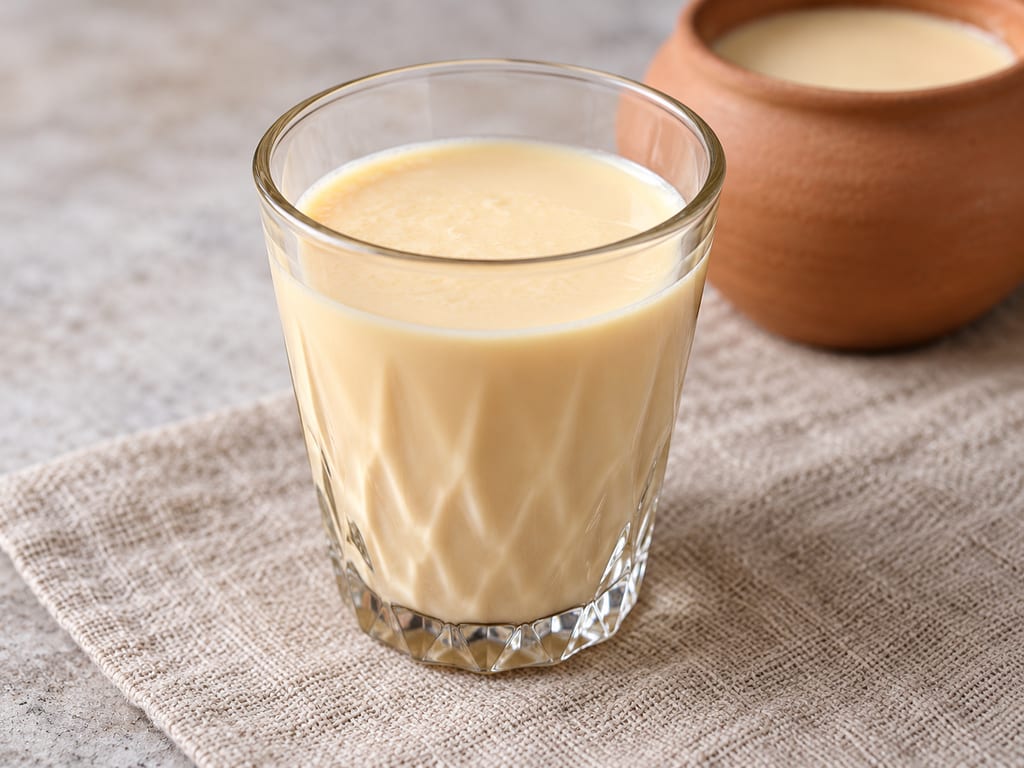
Baked milk is an Eastern European preparation of milk held at high heat for hours until it turns cream-coloured with a cooked, mildly sweet flavour, without any fermentation.

A coarse South African farmhouse sausage of beef with pork or mutton fat, defined by its coriander seasoning and cooked fresh over coals rather than preserved.
A flood-season pit store described for Omagua communities along the Amazon: manioc tubers were buried before inundation and recovered as waters receded. Its shape and lining are not recorded.
A temporary, in-place earthen oven used to cook camas with heat retained by fire-heated stones. The dimensions described here belong to one Kalispel-supervised reconstruction, not a universal form.

Chuño negro is a source-documented Andean potato-preservation practice. This entry records producer tradition; it is not a validated household process for making potentially toxic bitter potatoes safe.
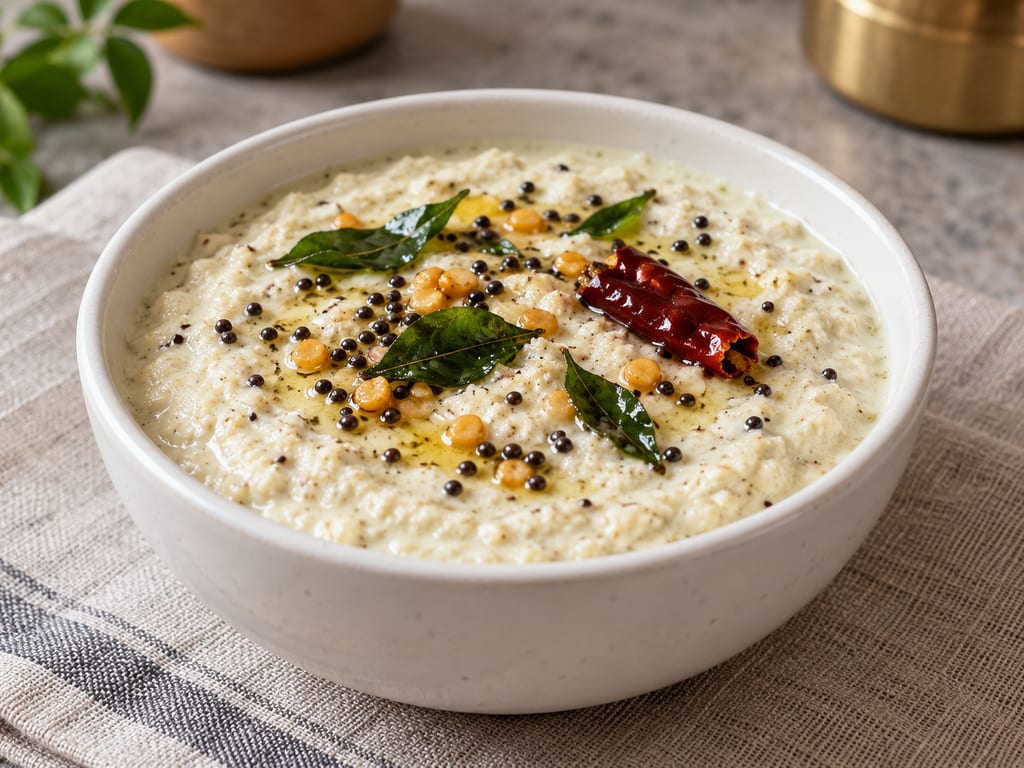
A coconut chutney whose ground base is finished with a separate oil tempering of mustard, urad dal, curry leaves and spices; the author pairs it with South Indian breakfast foods and snacks.
No community contributions have been published for this entry yet.
Sign in to contribute. Published comments and photos are free to read.
Council of Indigenous Peoples, TaiwanCultural context · Ingredients
PaiwanPaiwan foodways include foxtail millet, upland rice, sweet potatoes, taro and hunted meat.
Cinavu is made for festivals, special occasions and weddings; millet, glutinous rice or powdered taro and meat are wrapped in Trichodesma calycosum leaves.
Cited in: A parcel shaped by sharing; Millet, taro and the work of a wrapper
National Pingtung University Department of Social Development; Taiwan Rural Digital MuseumDocumented method · Locality
Traditional food: cinavuLiangshan Village field record describes millet and taro powder with meat, wrapped in Trichodesma calycosum leaves then shell ginger leaves and tied; simmered in water for one hour.
Recorded in Liangshan Village, Majia Township, Pingtung County, on 2021-09-17.
The archive describes former staple use and contemporary ceremonial, life-event and some household use.
Cited in: A parcel shaped by sharing; A documented Liangshan method; Serving, memory and careful interpretation; Reading the method as a community record
National Taiwan College of Performing Arts Indigenous Students Resource CenterMethod · Cultural context · Variations
Original-style together: making CINAVUFalse-nightshade leaves are a common inner wrapper; some villages use young kataljap leaves.
Fillings can use taro flour, millet or rarely glutinous rice with seasoned pork, or sweetened peanut powder; outer leaves vary by local availability.
Leaves are gathered and prepared communally for life events; cinavu expresses hospitality and blessing.
Cited in: Millet, taro and the work of a wrapper; Serving, memory and careful interpretation
農傳媒 (Agriharvest)History · Documented method · Variations · Use
Faithful to the original: Qavay and Cinavu, Paiwan village New Year foodsNiwa of Wenle Village prepares whole millet and peanuts with pork belly; chicken is used by some Paiwan households and dried salted fish in coastal communities.
Palju cinavu uses dried mountain-taro flour and pork belly.
Her described 2025 seasonal method uses inner false-nightshade leaves, outer blood-tree leaves, grass and cotton string, boiling for ten hours with turning for even heat.
The article distinguishes the soft pounded Qavay from whole-grain cinavu and documents Masalut harvest celebrations and community sharing.
Cited in: A parcel shaped by sharing; Millet, taro and the work of a wrapper; Different villages, different parcels; Serving, memory and careful interpretation; Reading the method as a community record
Museum MACANHistorical context · Variation
Trails of the Tongue: CinavuThe museum describes cinavu as a Paiwan leaf-wrapped cooking method served on special occasions.
It presents giant African snail, introduced to Taiwan by Japanese colonial officials from Singapore in 1933, as a contemporary ingredient explored in Chang En-Man's artwork and workshop, not a universal traditional filling.
Cited in: Different villages, different parcels; Reading the method as a community record
Taiwan Indigenous Peoples Encyclopedia, National Chengchi UniversityRegional terminology · Variations
Leaf-wrapped foods (dumplings)Paiwan cinavu and named local forms such as djinukul, cininavunavu, qavay, ljaljak and kingber differ in filling, wrapper and occasion; related-looking Rukai abai has a distinct name and use.
Cited in: Different villages, different parcels; Reading the method as a community record