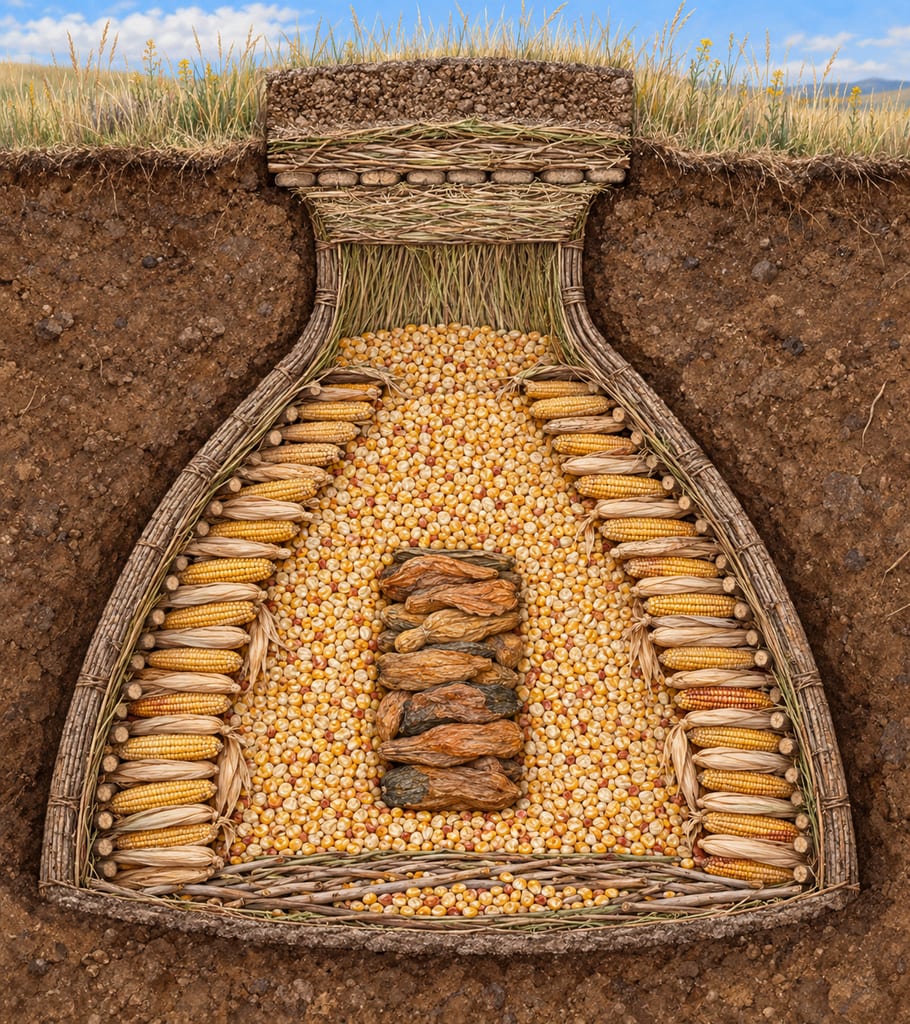
Hidatsa cache pit
A Hidatsa underground storage chamber described by Buffalo Bird Woman in a first-person account published in 1917: a narrow-necked, jug-shaped pit lined with dry willow and grass, used to protect stored crops and other provisions.
 FermenteaWhere food goes to change
Built structures · Pits and cavities
A temporary, in-place earthen oven used to cook camas with heat retained by fire-heated stones. The dimensions described here belong to one Kalispel-supervised reconstruction, not a universal form.
An earth oven is made where it is used: a prepared hollow in the ground holds a fire-heated stone element and food, then earth or other insulating material helps retain heat. Accounts show ovens ranging from shallow basins to deeper pits, with dimensions, stones, fuel and packing shaped by the food and intended cooking time. Archaeological deposits of fire-cracked rock alone cannot identify the food cooked there. This record concerns a camas earth oven; it does not claim that every earth oven shares one construction.
Camas bulbs have been an important food for Nez Perce people since time immemorial. At Weippe Prairie in September 1805, Nez Perce people were harvesting and processing camas when Lewis and Clark arrived. The National Park Service describes small earthen kilns used to cook the bulbs before making bread and other meals. This historical attestation is separate from the much later experimental reconstruction described by archaeologist Alston Thoms, supervised by Kalispel elder Alice O’Conner. The experiment is one documented example, not a template for every community or period.
In the mid-1980s experiment, the oven was about 1.75 metres across. It cooked about 20 kilograms of camas with several kilograms of edible black moss for roughly 40 hours. The heating element contained about 300 kilograms of cook stones fired with almost as much lodgepole pine. Ferns and skunk-cabbage leaves packed the food parcels above the heated stones; green plant material and ponderosa-pine bark formed upper insulating layers. Those quantities and layers belong to this specific reconstruction. They are not specifications for a traditional oven or instructions to reproduce a process without local knowledge and expertise.
Long cooking transforms inulin-rich camas into a sweet, usable food through heat; this is not fermentation. Temperatures measured at a fire or heating element do not establish the temperature reached throughout the food. Earth ovens vary in depth and arrangement, and fire-cracked-rock deposits do not by themselves identify the cooked plant or dish. This page records what its sources establish and leaves local geometry and broader community protocols unspecified.
The earliest dated attestation in these sources is the 1805 account; Thoms separately describes a modern experimental reconstruction.
A build is made where it stands: moving it means building it again.
The NPS records camas processing and earthen kilns here; this does not identify the precise oven geometry.
The research concerns hot-rock cooking practices in western North America and a Kalispel-supervised camas reconstruction; it does not establish a single regional design.
A Hidatsa underground storage chamber described by Buffalo Bird Woman in a first-person account published in 1917: a narrow-necked, jug-shaped pit lined with dry willow and grass, used to protect stored crops and other provisions.
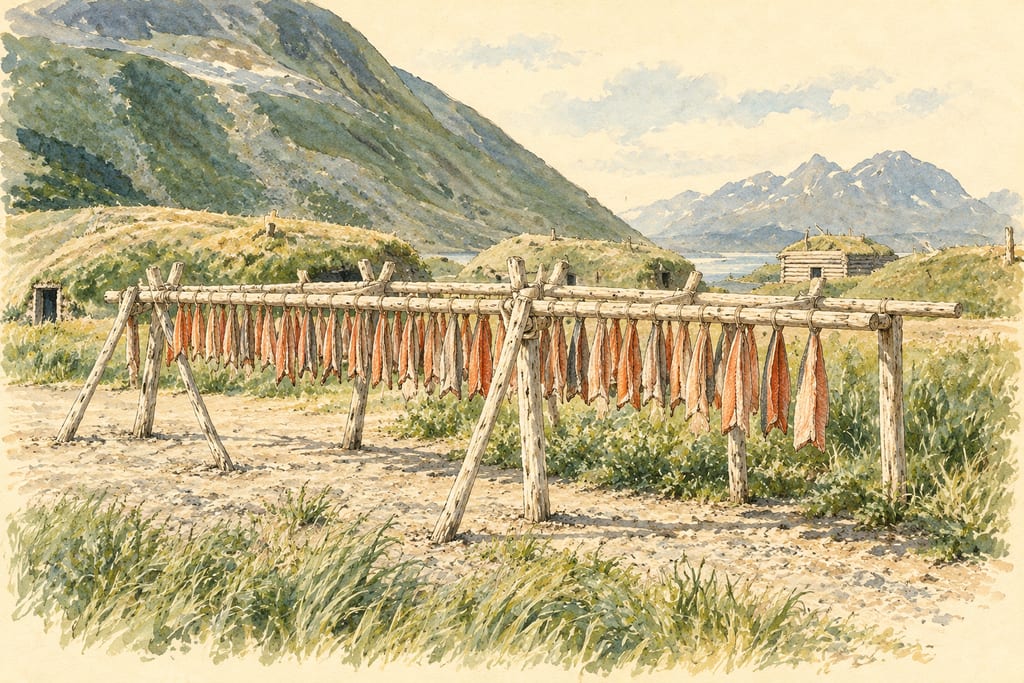
An Alutiiq initaq is a wooden hanging rack for air-drying fish around Kodiak. An 1889 Old Harbor photograph shows an open rail structure; the Alutiiq Museum documents contemporary spruce-pole or lumber racks and airflow-preserving covers.
A large clay-lined depression built beneath some Alutiiq house floors in the Kodiak region, documented in Koniag contexts for food storage and possibly fermentation.
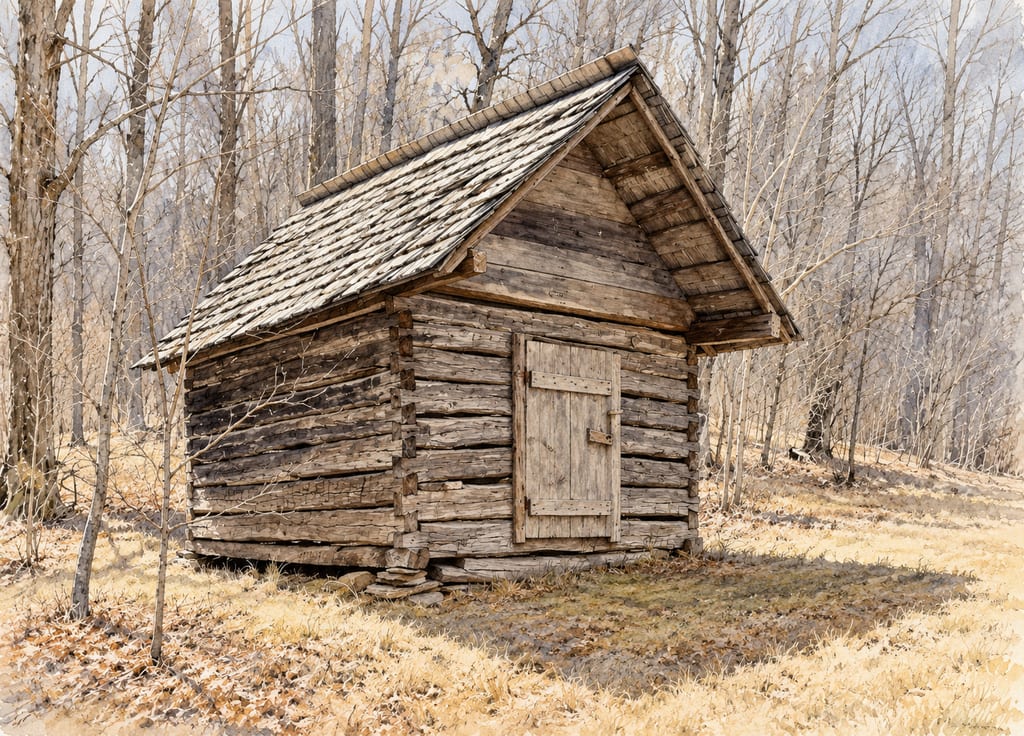
A source-based account of Appalachian meat-curing outbuildings, centered on the Henry Whitehead Place smokehouse at Cades Cove, Tennessee. Regional practice and this one building are kept distinct.
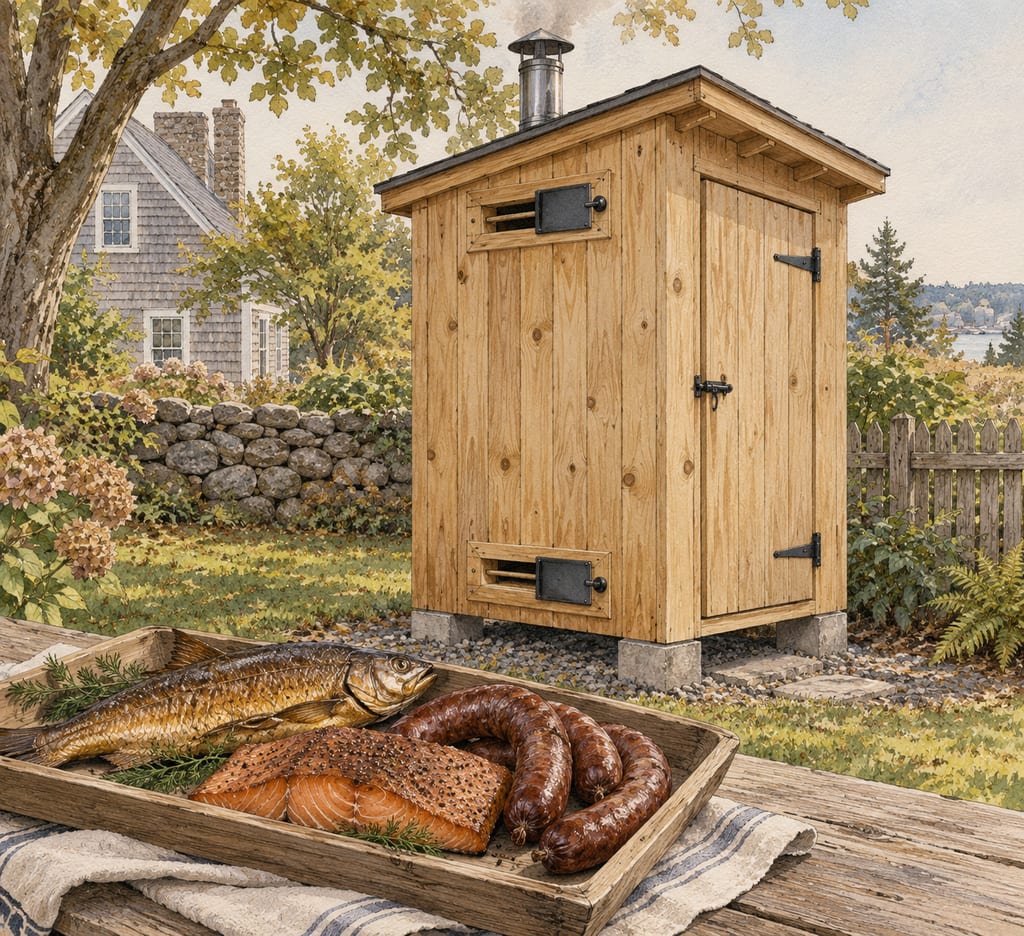
A wood-framed backyard smokehouse built from pine tongue-and-groove boards, with a sloped roof, vent dampers and a door, set out in a Connecticut Extension guide for smoking fish, pork, turkey, jerky and sausage.
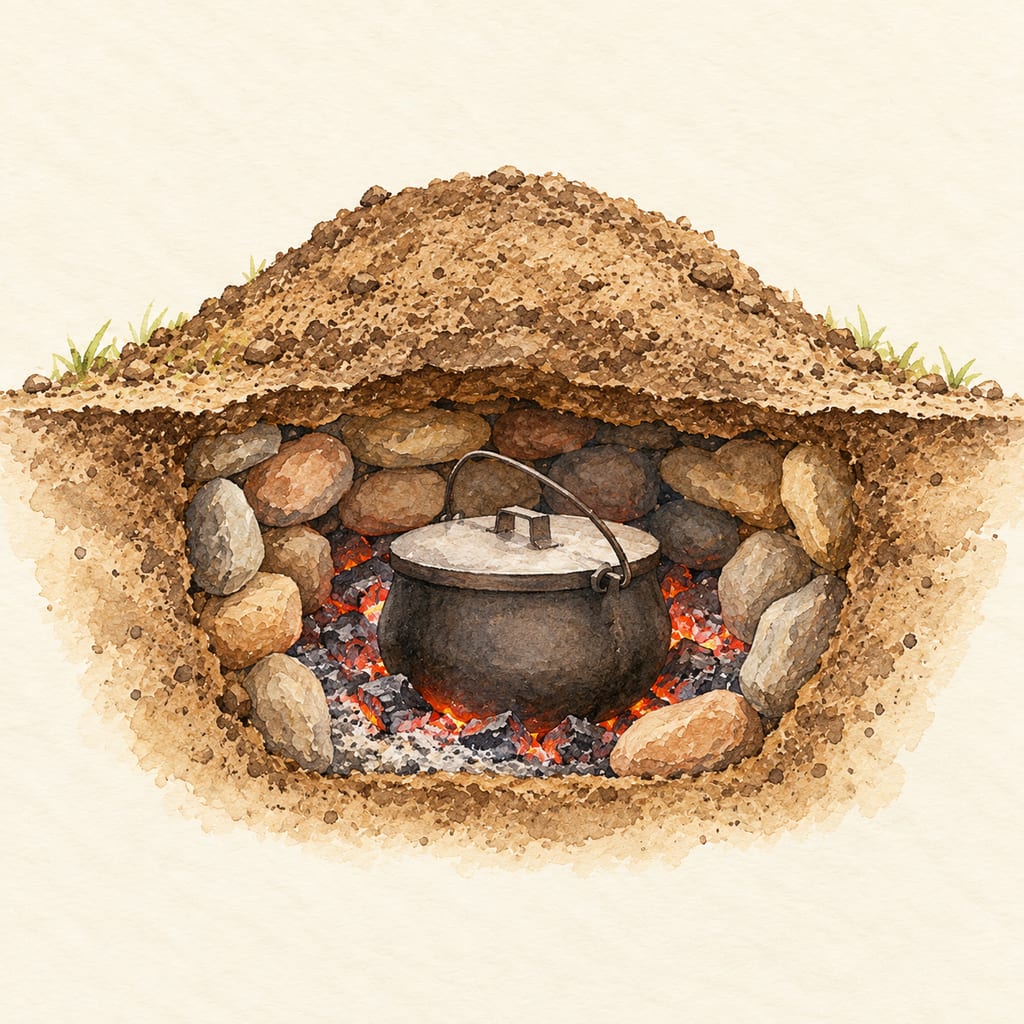
A Maine bean hole is a fixed, stone-lined pit that holds a covered iron pot among coals beneath earth. Logging-camp testimony and present-day demonstrations document related local practices.
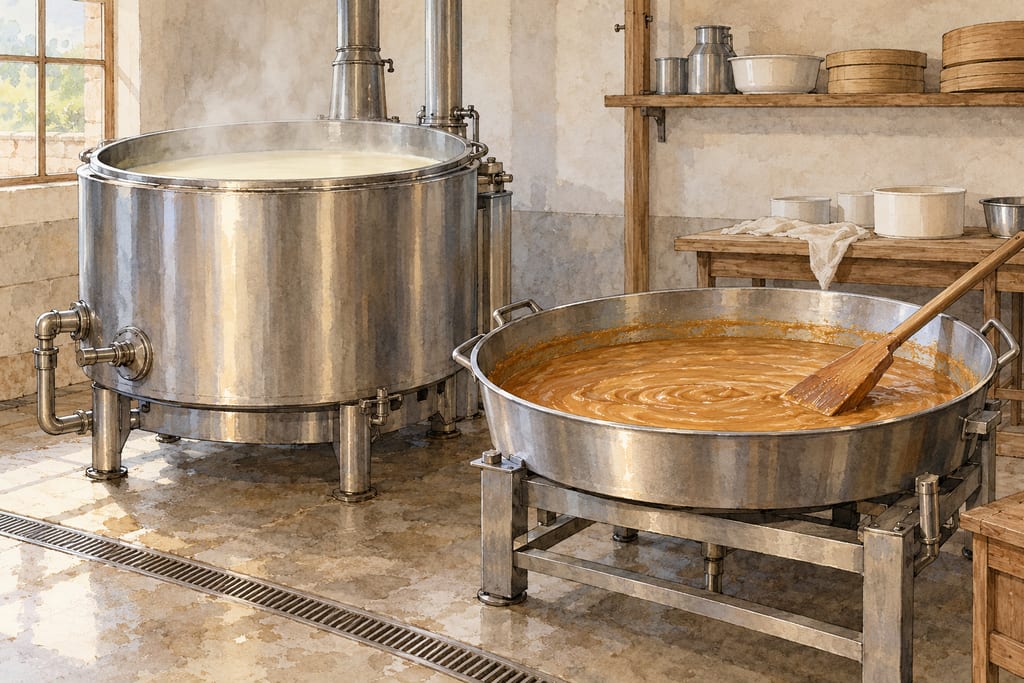
The kettle heats and reduces a large volume of thin liquid such as whey; before it nears the brewer's minimum fill the batch moves to a wide pan for the thick, stirred finish.
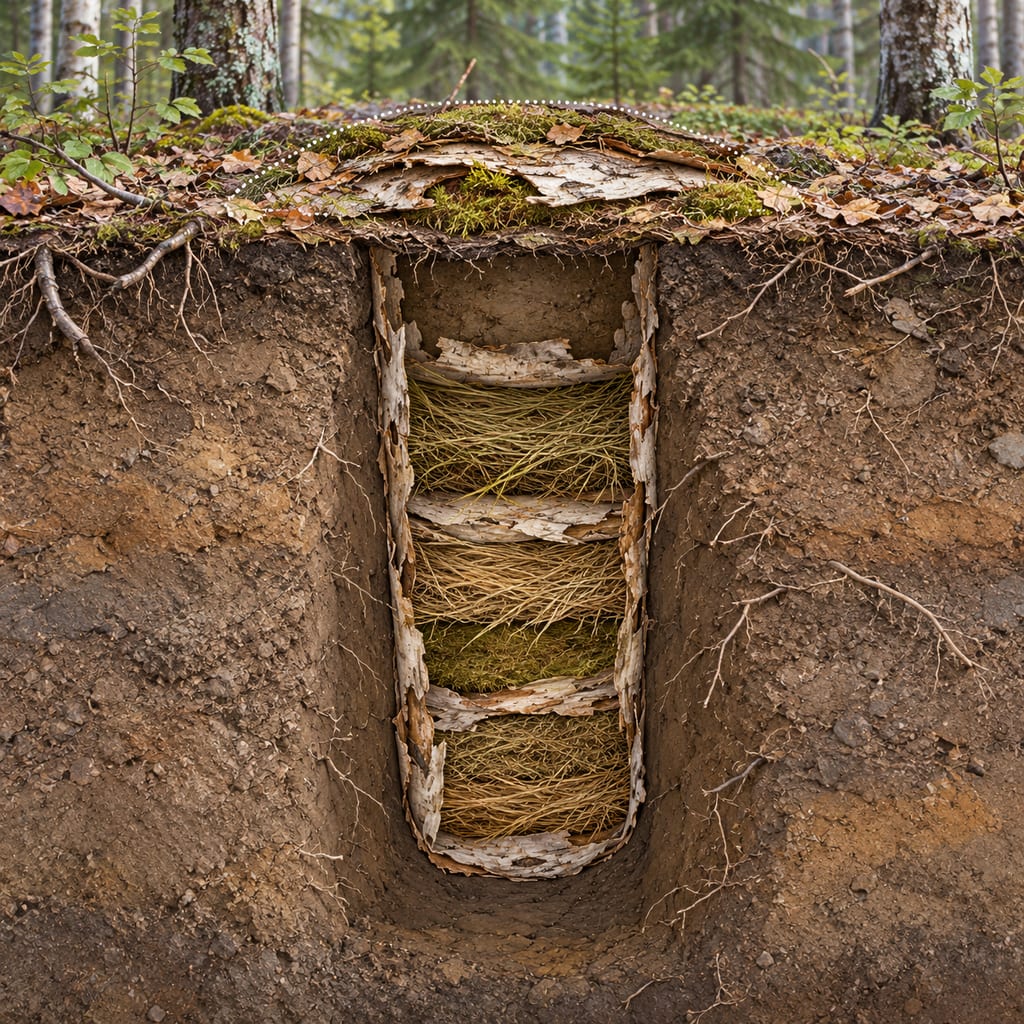
A Dene cache pit at Upper Cook Inlet, Alaska, initially dated to around 1,000 years ago. JBER documents a below-ground feature lined with birch bark and grasses; exact contents and construction details remain under study.
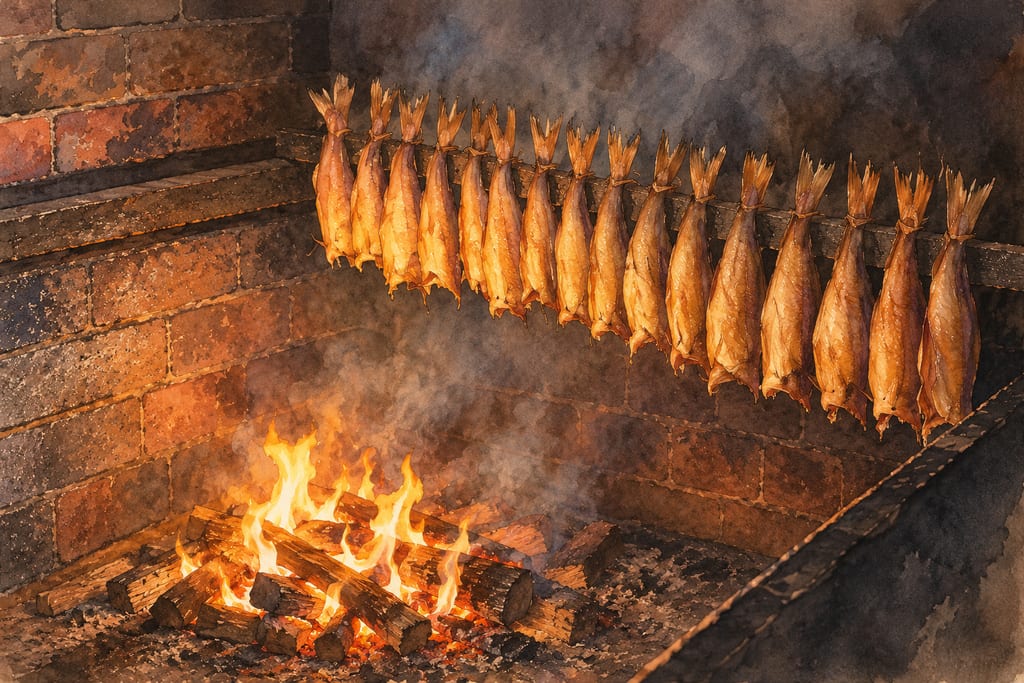
The Arbroath “barrel” is a hardwood-fired smoking pit with triangular rails and a cover. Its documented form belongs to the traditional hot-smoking of haddock around Arbroath and Auchmithie, Scotland.
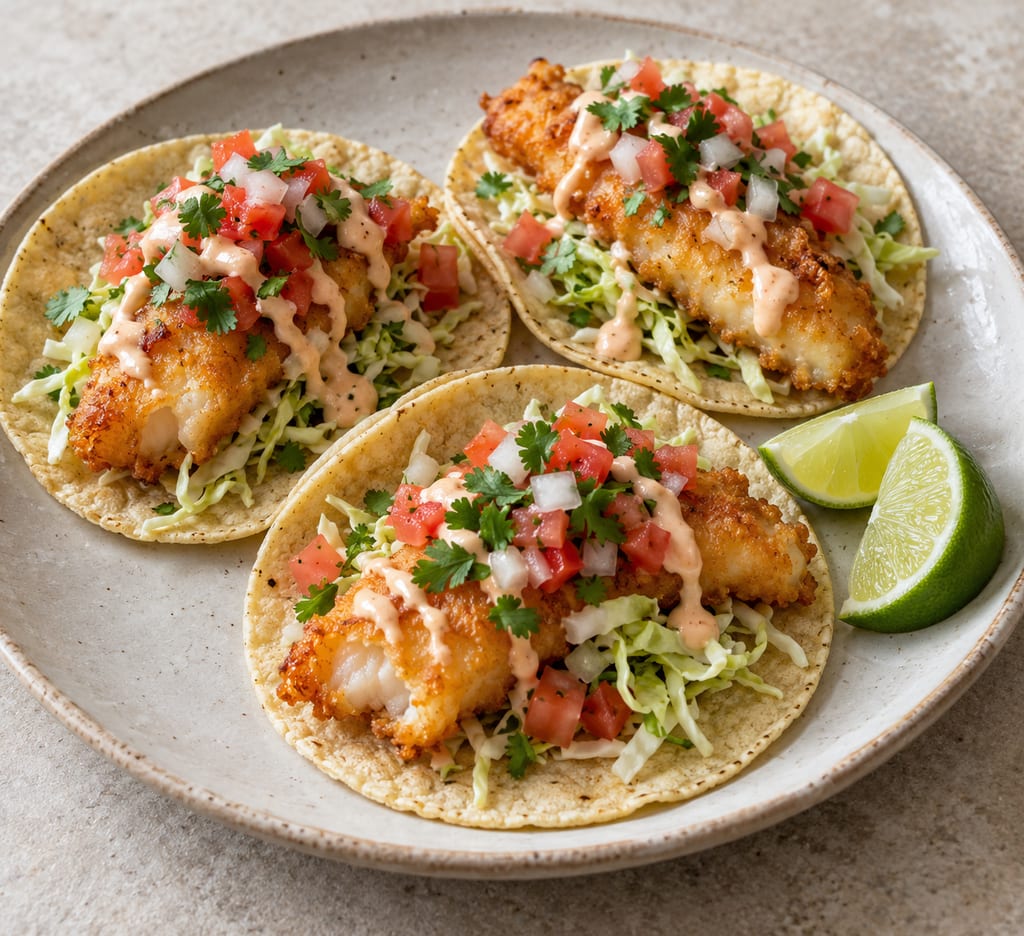
Crisp battered white fish in warm corn tortillas with shredded cabbage, lime and fresh salsa. This home version draws on the Ensenada style without claiming to be a definitive historic formula.
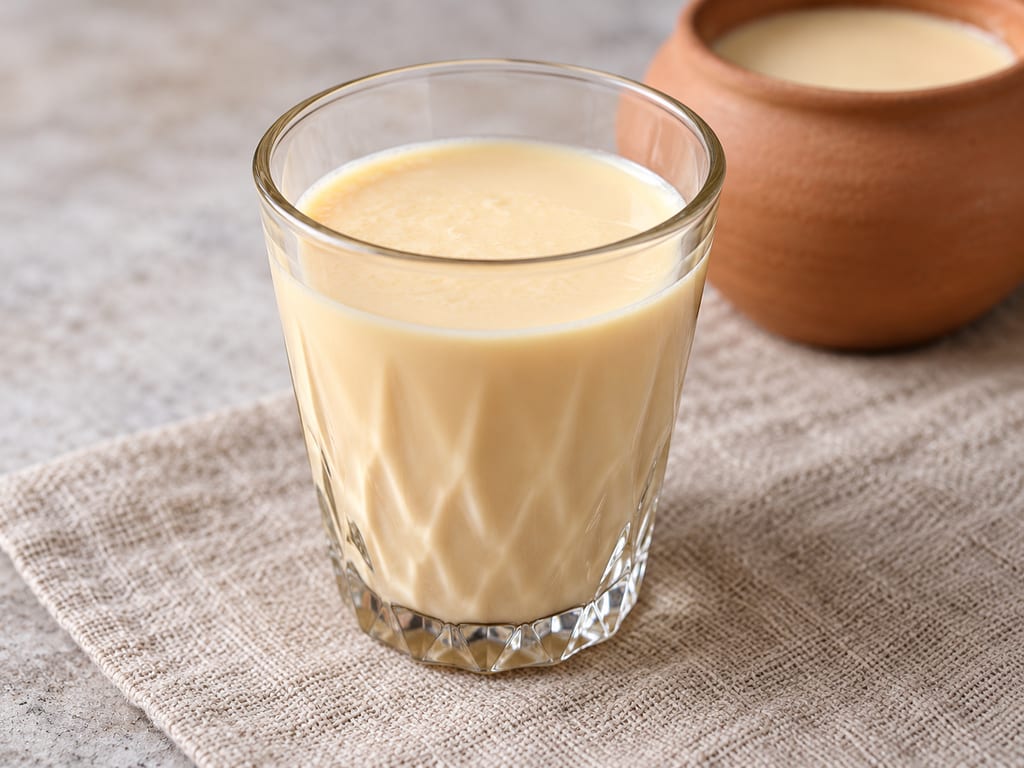
Baked milk is an Eastern European preparation of milk held at high heat for hours until it turns cream-coloured with a cooked, mildly sweet flavour, without any fermentation.
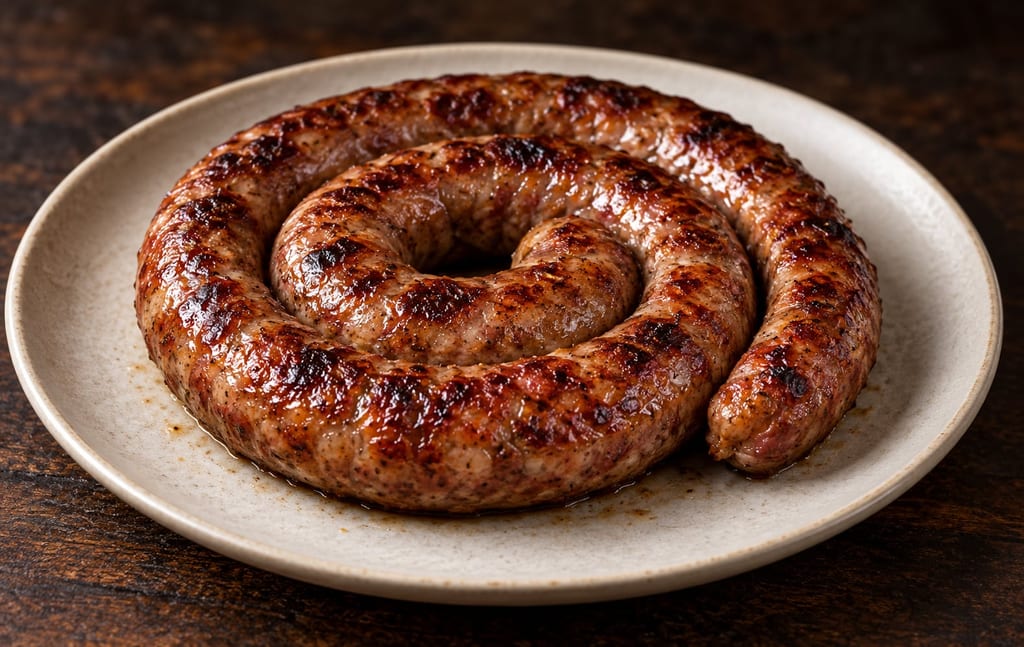
A coarse South African farmhouse sausage of beef with pork or mutton fat, defined by its coriander seasoning and cooked fresh over coals rather than preserved.
A flood-season pit store described for Omagua communities along the Amazon: manioc tubers were buried before inundation and recovered as waters receded. Its shape and lining are not recorded.

Chuño negro is a source-documented Andean potato-preservation practice. This entry records producer tradition; it is not a validated household process for making potentially toxic bitter potatoes safe.
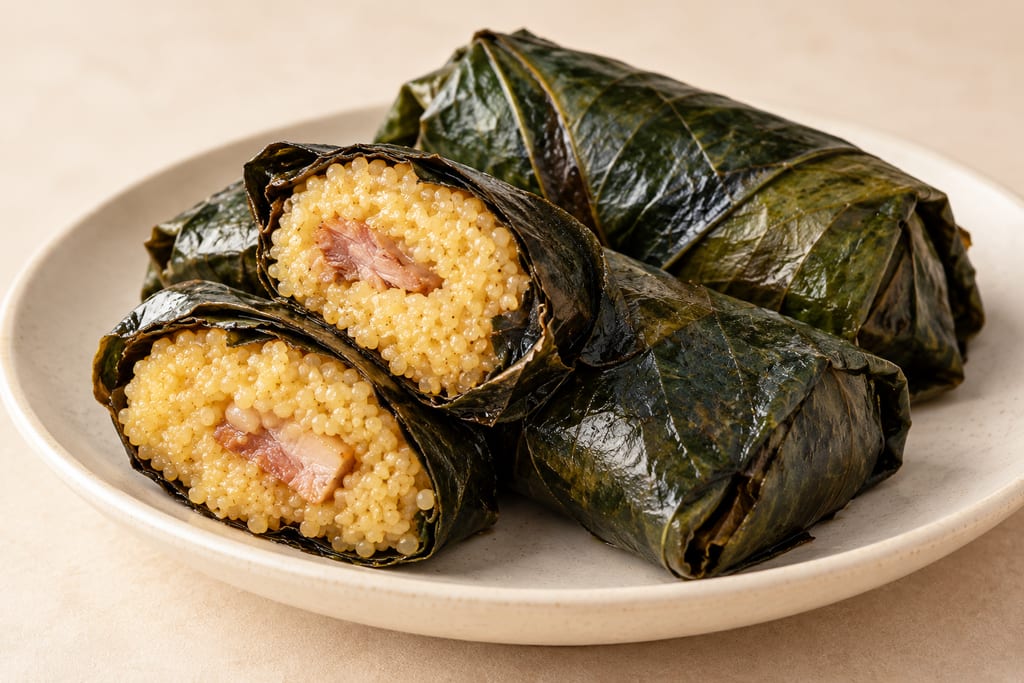
Cinavu is a Paiwan leaf-wrapped parcel built around millet or taro, meat and locally gathered leaves. It belongs to a food culture of harvest, hospitality and shared work, with village recipes differing in both filling and cooking time.
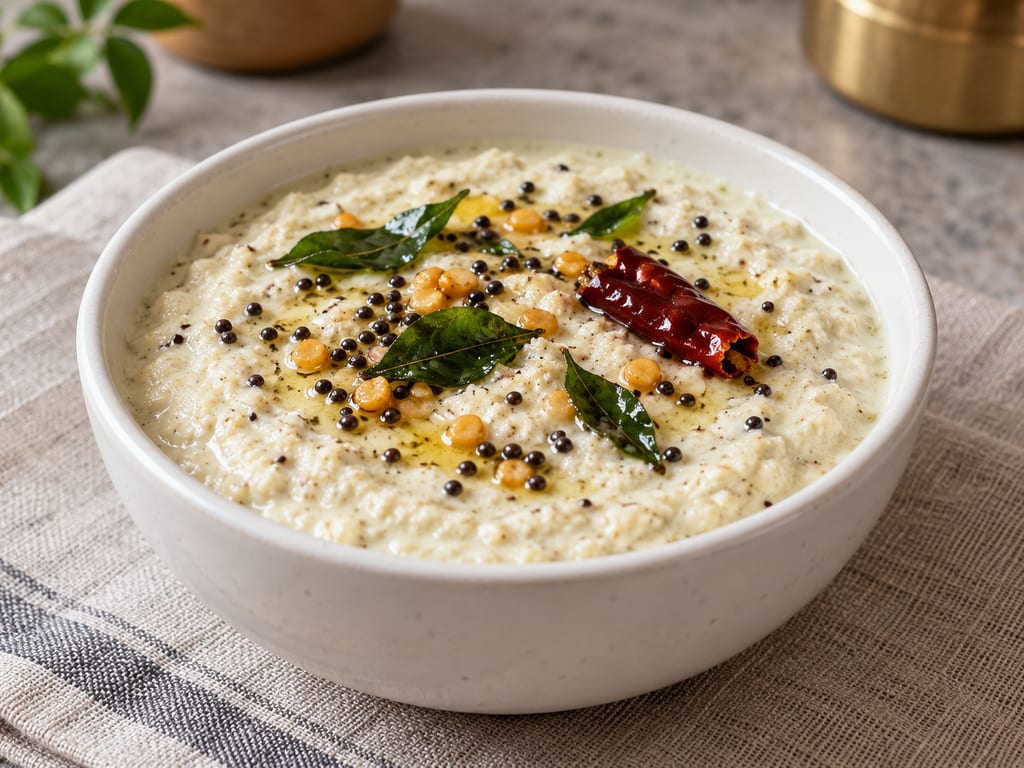
A coconut chutney whose ground base is finished with a separate oil tempering of mustard, urad dal, curry leaves and spices; the author pairs it with South Indian breakfast foods and snacks.

A Cap-Pelé boucanière is an Acadian herring-smoking building. The documented Willie Niles example is a one-storey wood-frame structure with a ridge smoke vent and interior bays for hanging fish-bearing cannes.

Achcharu is a family of Sri Lankan vinegar pickles made with mixed vegetables or seasonal fruit and a piquant spice dressing. This version is a quick, refrigerated, non-fermented mixed-vegetable pickle.

The acocote is a long, hollowed and dried gourd used to draw aguamiel from a mature maguey. It is a harvesting tool: the sap is transferred to a separate vessel before it ferments into pulque.

Adrak murabba preserves young ginger in sugar syrup, a sweet South Asian preparation recorded in Indian cookery and food-processing sources.

Parkia biglobosa seeds are fermented into regional West African seasonings, including nététou, iru, dawadawa and soumbala. The yellow fruit pulp is a separate food, and names and methods vary by place.

Japanese reddish-brown vinegar from sake lees matured about three years, turned to vinegar by acetic bacteria; the vinegar of Handa and Edomae sushi rice.

A refined common-wheat flour blended for a broad range of baking; its protein and behavior vary with wheat, milling and market.

The almond mushroom, Agaricus subrufescens, was cultivated in eastern North America in the 1800s, lost its market, and returned as a cultivated mushroom from Brazil, where it is grown under several names.
No community contributions have been published for this entry yet.
Sign in to contribute. Published comments and photos are free to read.
Journal of Anthropological ArchaeologyHistory · Method · Archaeology
The fire stones carry: Ethnographic records and archaeological expectations for hot-rock cookery in western North Americamid-1980s camas and black moss experiment supervised by Alice O’Conner
dimensions, quantities, fuel, packing, insulation and duration in that experiment
variable earth-oven forms and cautions interpreting archaeological remains
heating-element temperatures do not establish food temperature
Cited in: A fixed oven, not a portable vessel; Camas cooking in the Plateau; One reported reconstruction; Heat, limits and interpretation
National Park Service, Lewis & Clark National Historic Trail and Nez Perce National Historical ParkHistory · Geography
Camascamas as a longstanding Nez Perce food
camas processing at Weippe Prairie in September 1805
small earthen kilns, cooked bulbs and food uses
continued Nez Perce cultivation and harvest in region
Cited in: A fixed oven, not a portable vessel; Camas cooking in the Plateau; Heat, limits and interpretation