Camas earth oven
A temporary, in-place earthen oven used to cook camas with heat retained by fire-heated stones. The dimensions described here belong to one Kalispel-supervised reconstruction, not a universal form.
 FermenteaWhere food goes to change
Built structures · Pits and cavities
A Hidatsa underground storage chamber described by Buffalo Bird Woman in a first-person account published in 1917: a narrow-necked, jug-shaped pit lined with dry willow and grass, used to protect stored crops and other provisions.
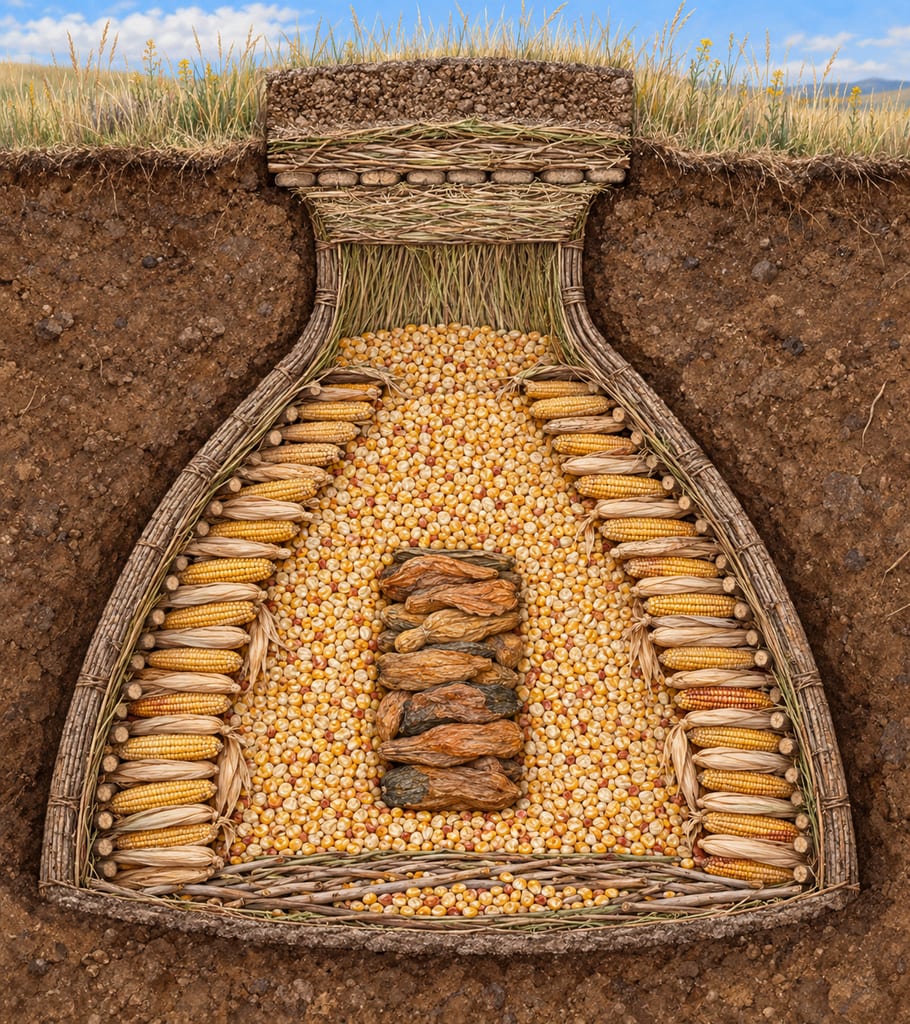
A cache pit was an underground food store used by Hidatsa families in villages along the Missouri River. Buffalo Bird Woman, also known as Maxi´diwiac, described her family’s use in an account recorded by Gilbert Livingstone Wilson and published by the University of Minnesota in 1917. She recalled storing ripe corn, beans, sunflower seed and dried squash for winter, as well as meat and bone grease at other times of year. Her account is a specific first-person record, not a claim that every Hidatsa household used an identical pit.
Her account recalls family use through the nineteenth century, including a particular episode around 1877; it does not date the beginning of cache-pit practice. The National Park Service likewise presents the structure as an underground earthen store and names the family’s winter crops. These records document food storage and protection from dampness, not a fermentation process.
Buffalo Bird Woman compared the chamber to a jug: a relatively narrow opening led down into a wider body. She said the mouth was commonly about two feet across, while noting larger openings and differences between pits. In one family account, the broad lower part was sized to fit a bull-boat cover; the recorded measurements belong to that example and should not be treated as a standard specification.
The pit was lined with dry materials. The floor was made from dead, dry willow sticks. Dried grass covered the floor and walls, with willow rods and forked wooden pins holding the wall lining in place. The account says the willow was kept dry and explains that a particular grass gathered near springs and watercourses was chosen because other kinds had molded in repeated trials. A piece of hide or a bull-boat skin could cover the bottom.
The family’s packing arrangement used more than one kind of store. Braided ears of corn were placed around the chamber’s wall, with loose kernels filling the interior spaces. Dried squash was coiled in the center and surrounded by loose corn. Buffalo Bird Woman explicitly explained that the ripe corn helped shield dried squash from dampness because the squash spoiled more readily in her experience. The drawings accompanying her account show a plan and cross-section of this arrangement.
She also describes skin bags of beans in some pits and records dried turnips, berries, meat and other provisions in particular stores. Those examples show that a cache could hold different household supplies; they do not mean every pit had the same contents. The attached historical drawings are the specific references for the pit’s exposed below-ground shape and one documented packing layout.
For smaller pits, the account describes split-log planks, called puncheons, resting in a trench across the mouth; grass, a hide cover and earth finished the closure. It gives a different arrangement for larger openings. The pit was made level with the surrounding ground, and the narrator says pits could be reused year after year. One pit was abandoned after mice got into it, a reminder that the account reports particular successes and failures rather than a guarantee of storage life.
This page describes a historically documented Hidatsa structure, not a current construction plan or food-safety method. It supplies no modern validation for keeping food at safe moisture, pest protection, or shelf life. The linked recipe records for Hidatsa dried squash and dried green corn show foods associated with related seasonal work; they do not prescribe this cache as a modern storage method.
Buffalo Bird Woman's first-person account describes her family's cache pits, including a remembered episode around 1877. The publication is evidence of documented family use, not the origin date of the practice.
A build is made where it stands: moving it means building it again.
The sources support Hidatsa village use along the Missouri River, not a single mapped cache-pit site or an exact installation location.
A temporary, in-place earthen oven used to cook camas with heat retained by fire-heated stones. The dimensions described here belong to one Kalispel-supervised reconstruction, not a universal form.
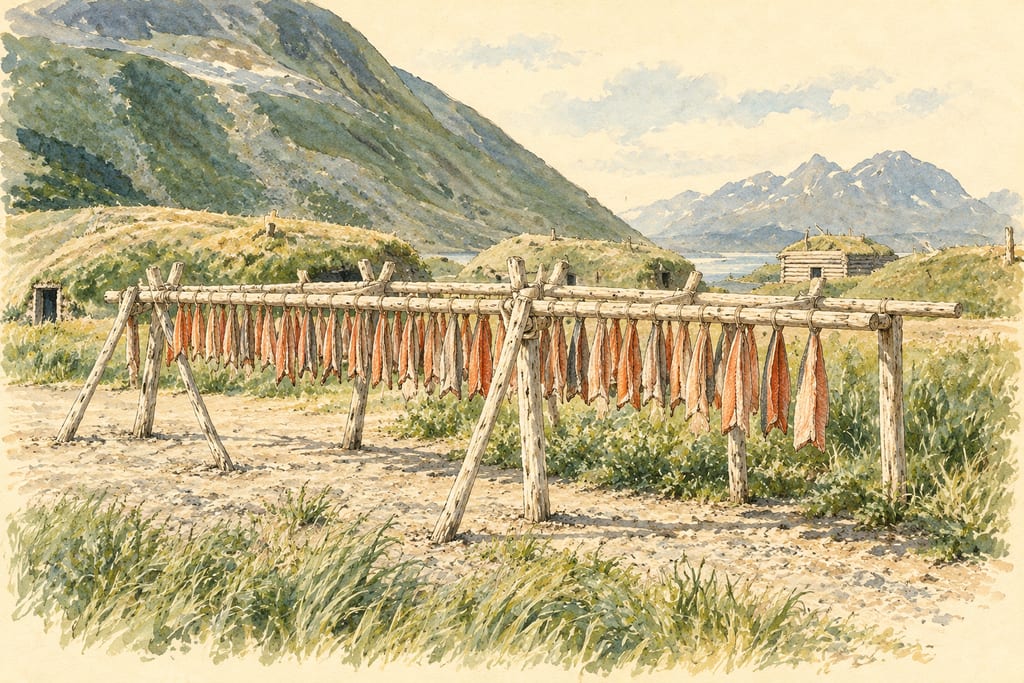
An Alutiiq initaq is a wooden hanging rack for air-drying fish around Kodiak. An 1889 Old Harbor photograph shows an open rail structure; the Alutiiq Museum documents contemporary spruce-pole or lumber racks and airflow-preserving covers.
A large clay-lined depression built beneath some Alutiiq house floors in the Kodiak region, documented in Koniag contexts for food storage and possibly fermentation.
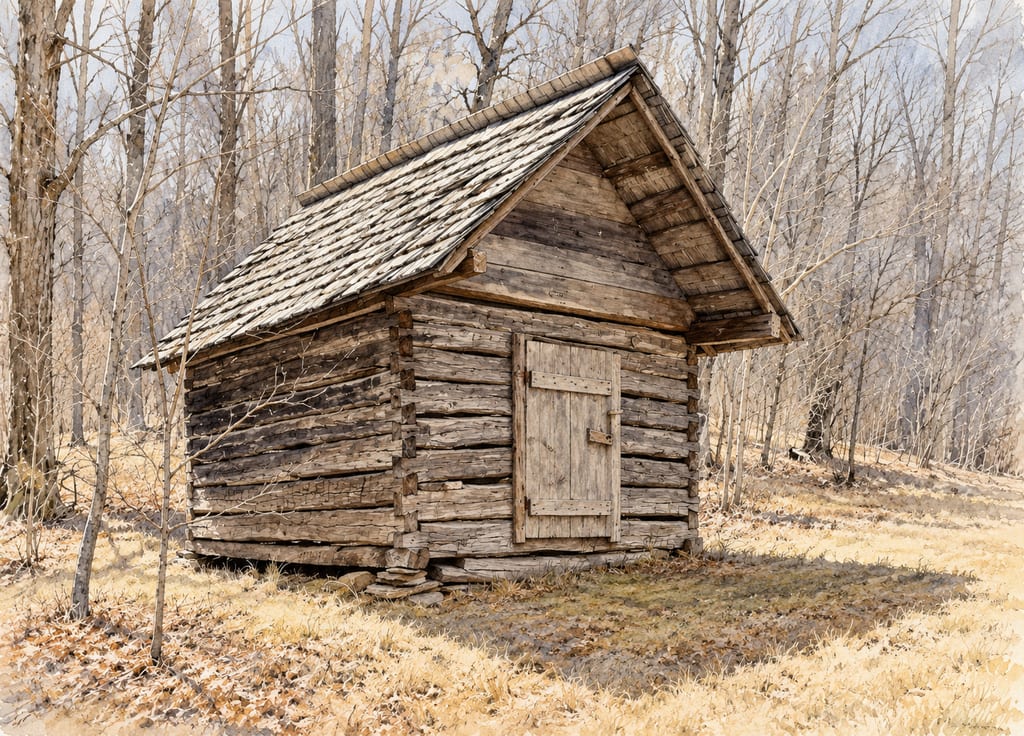
A source-based account of Appalachian meat-curing outbuildings, centered on the Henry Whitehead Place smokehouse at Cades Cove, Tennessee. Regional practice and this one building are kept distinct.
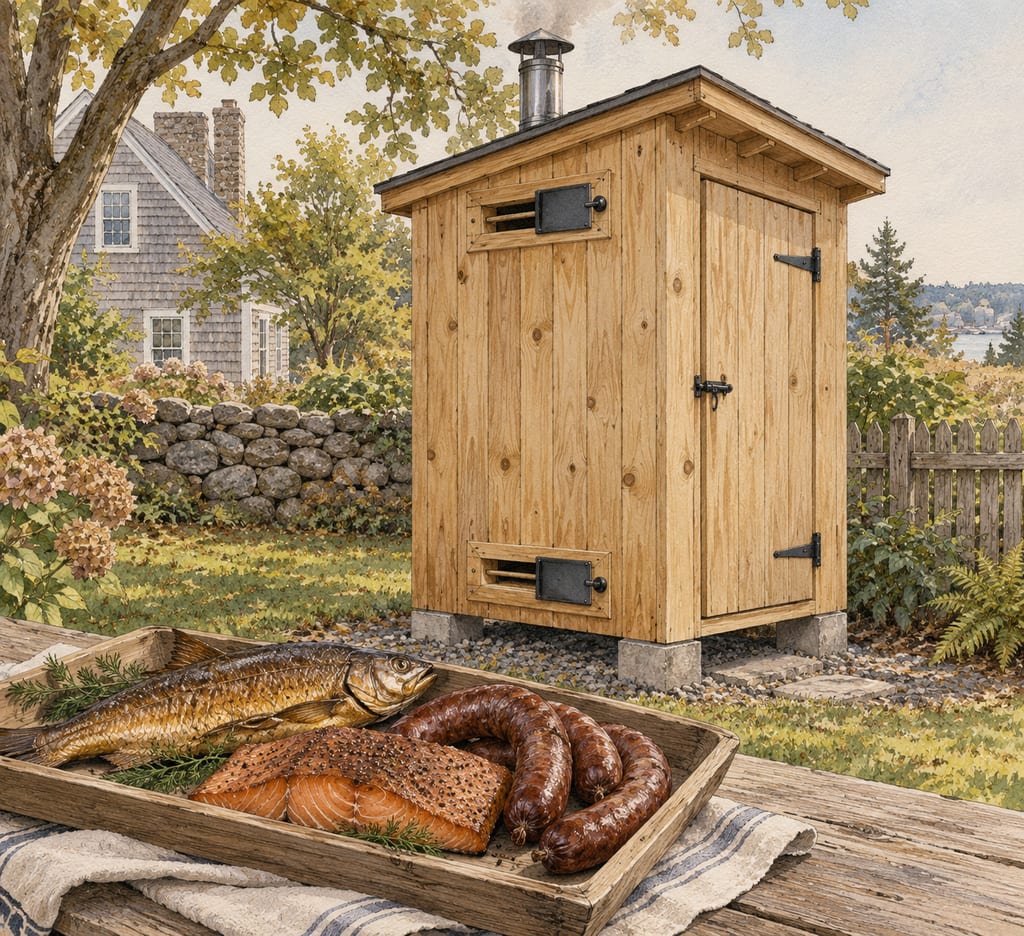
A wood-framed backyard smokehouse built from pine tongue-and-groove boards, with a sloped roof, vent dampers and a door, set out in a Connecticut Extension guide for smoking fish, pork, turkey, jerky and sausage.
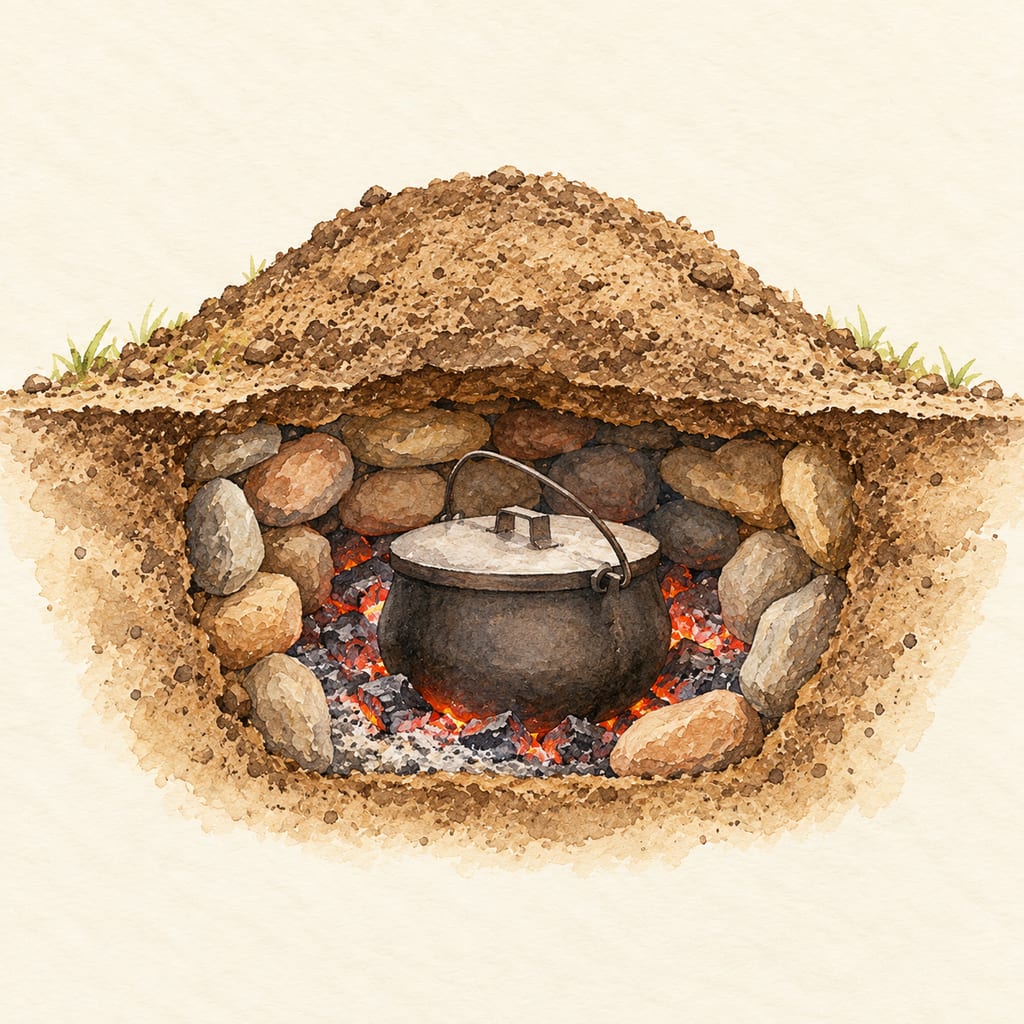
A Maine bean hole is a fixed, stone-lined pit that holds a covered iron pot among coals beneath earth. Logging-camp testimony and present-day demonstrations document related local practices.
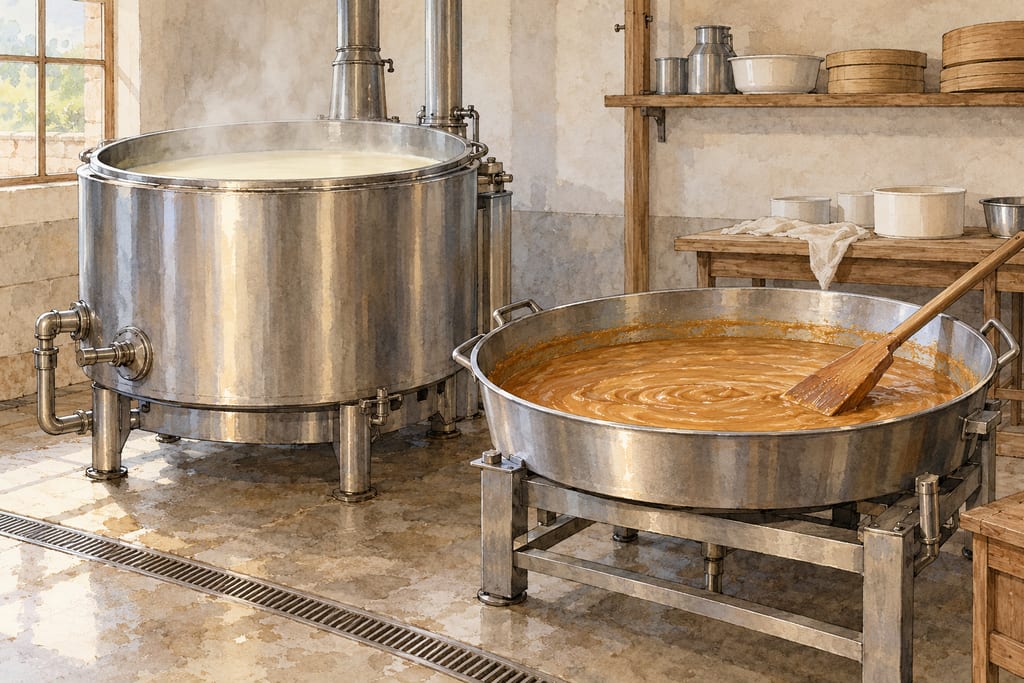
The kettle heats and reduces a large volume of thin liquid such as whey; before it nears the brewer's minimum fill the batch moves to a wide pan for the thick, stirred finish.
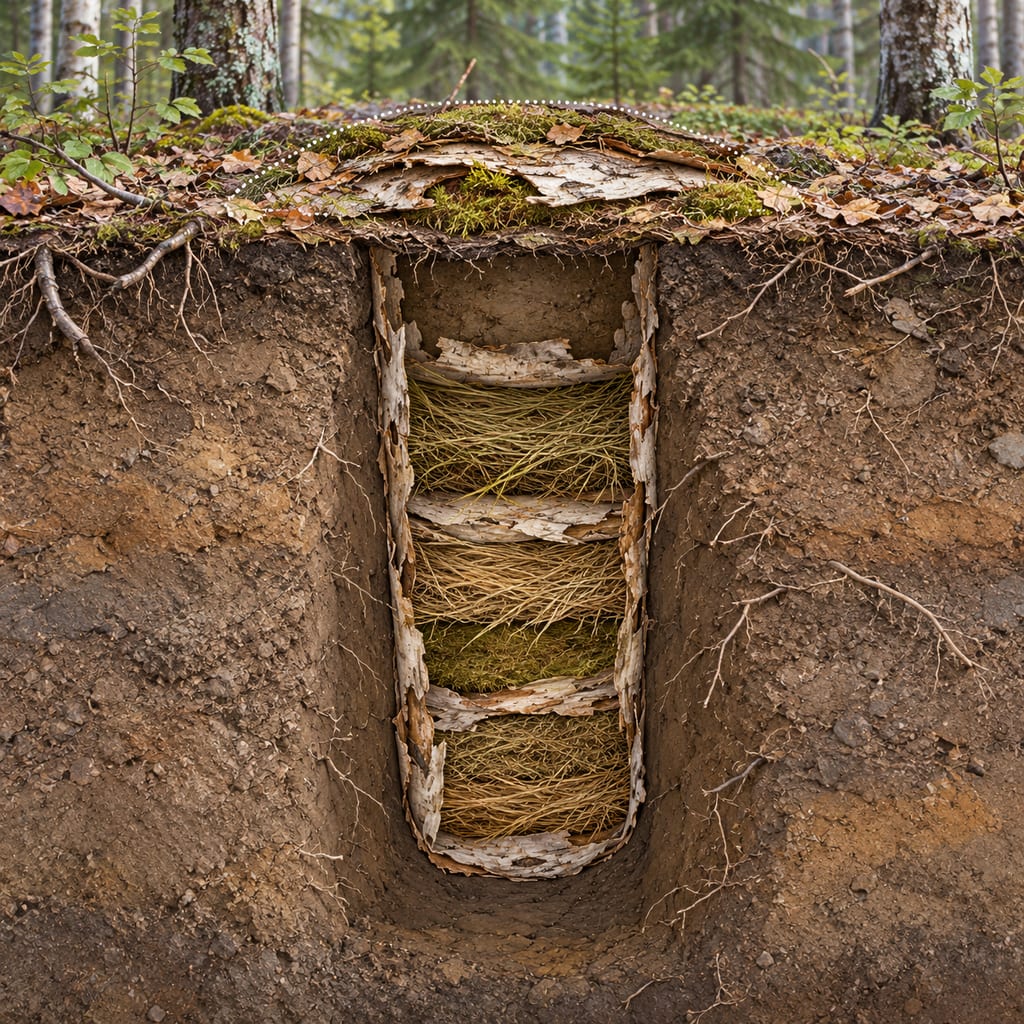
A Dene cache pit at Upper Cook Inlet, Alaska, initially dated to around 1,000 years ago. JBER documents a below-ground feature lined with birch bark and grasses; exact contents and construction details remain under study.
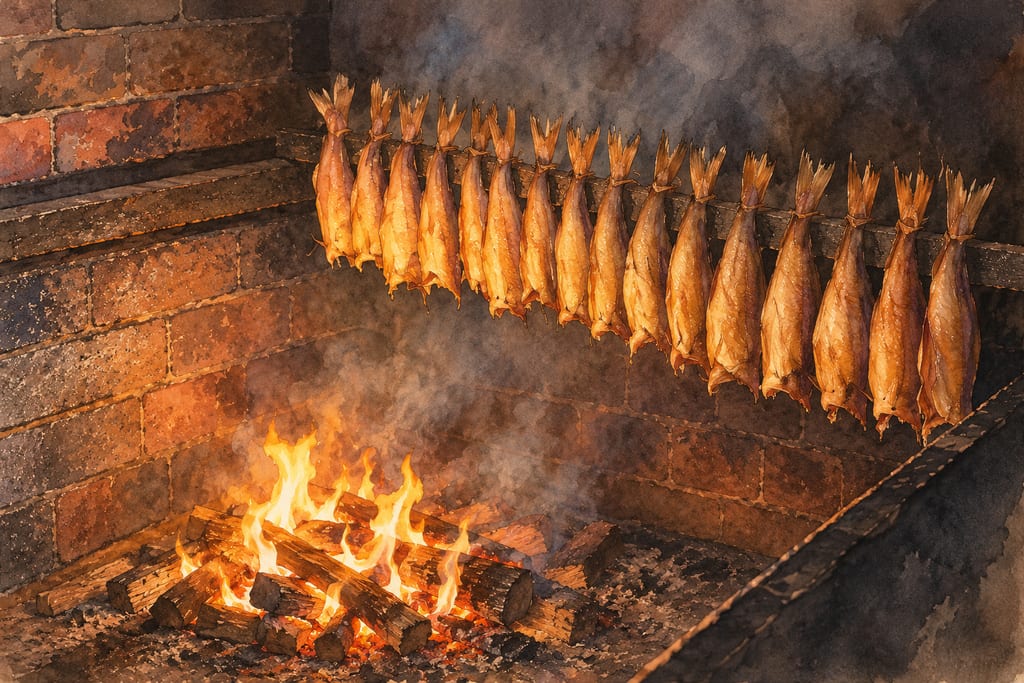
The Arbroath “barrel” is a hardwood-fired smoking pit with triangular rails and a cover. Its documented form belongs to the traditional hot-smoking of haddock around Arbroath and Auchmithie, Scotland.

Crisp battered white fish in warm corn tortillas with shredded cabbage, lime and fresh salsa. This home version draws on the Ensenada style without claiming to be a definitive historic formula.

Baked milk is an Eastern European preparation of milk held at high heat for hours until it turns cream-coloured with a cooked, mildly sweet flavour, without any fermentation.

A coarse South African farmhouse sausage of beef with pork or mutton fat, defined by its coriander seasoning and cooked fresh over coals rather than preserved.
A flood-season pit store described for Omagua communities along the Amazon: manioc tubers were buried before inundation and recovered as waters receded. Its shape and lining are not recorded.

Chuño negro is a source-documented Andean potato-preservation practice. This entry records producer tradition; it is not a validated household process for making potentially toxic bitter potatoes safe.
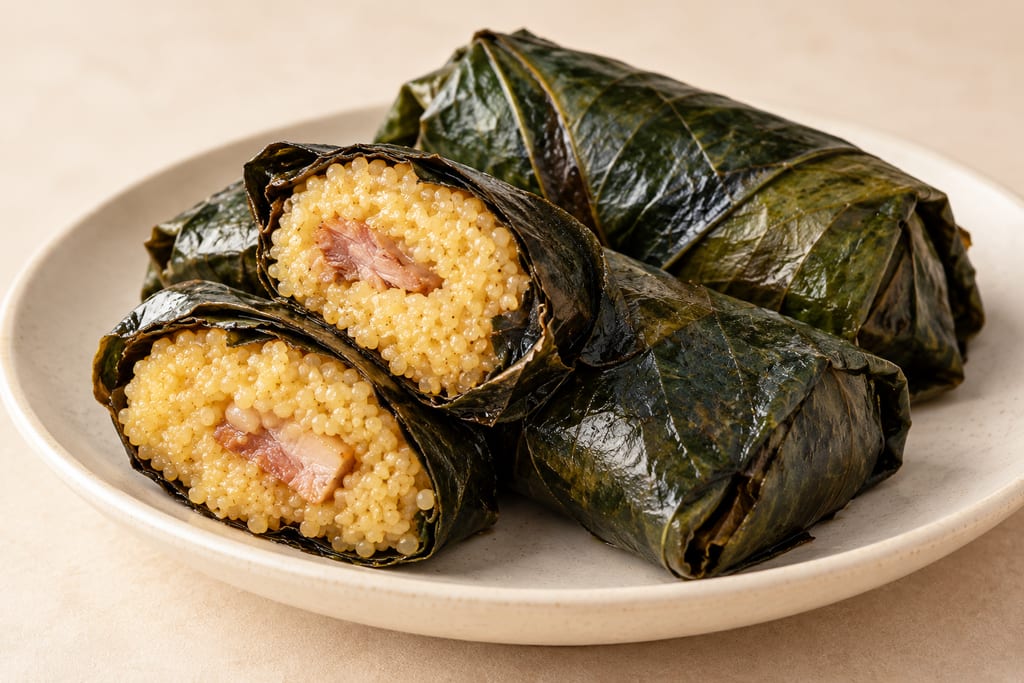
Cinavu is a Paiwan leaf-wrapped parcel built around millet or taro, meat and locally gathered leaves. It belongs to a food culture of harvest, hospitality and shared work, with village recipes differing in both filling and cooking time.

A coconut chutney whose ground base is finished with a separate oil tempering of mustard, urad dal, curry leaves and spices; the author pairs it with South Indian breakfast foods and snacks.
No community contributions have been published for this entry yet.
Sign in to contribute. Published comments and photos are free to read.
University of Minnesota, Studies in the Social Sciences no. 9Primary historical account
Agriculture of the Hidatsa Indians: An Indian InterpretationHidatsa family storage of corn, beans, sunflower seed and dried squash; pit form; willow and grass lining; crop arrangement; closures; use and limits.
Cited in: Place and account; Below-ground form and lining; Stores and the reason for their arrangement; Closure, reuse and limits
National Park ServiceHistorical context
CacheThe NPS identifies the cache as a Hidatsa underground storage structure and summarizes the crops stored for winter.
Cited in: Place and account; Stores and the reason for their arrangement; Closure, reuse and limits
Library of CongressBibliographic and rights context
Agriculture of the Hidatsa IndiansThe 1917 publication, contributors and public-domain reuse status of the digitized book.
Cited in: Place and account