Alutiiq clay-lined subfloor pit
A large clay-lined depression built beneath some Alutiiq house floors in the Kodiak region, documented in Koniag contexts for food storage and possibly fermentation.
 FermenteaWhere food goes to change
Built structures · Place · Pits and cavities
A Dene cache pit at Upper Cook Inlet, Alaska, initially dated to around 1,000 years ago. JBER documents a below-ground feature lined with birch bark and grasses; exact contents and construction details remain under study.
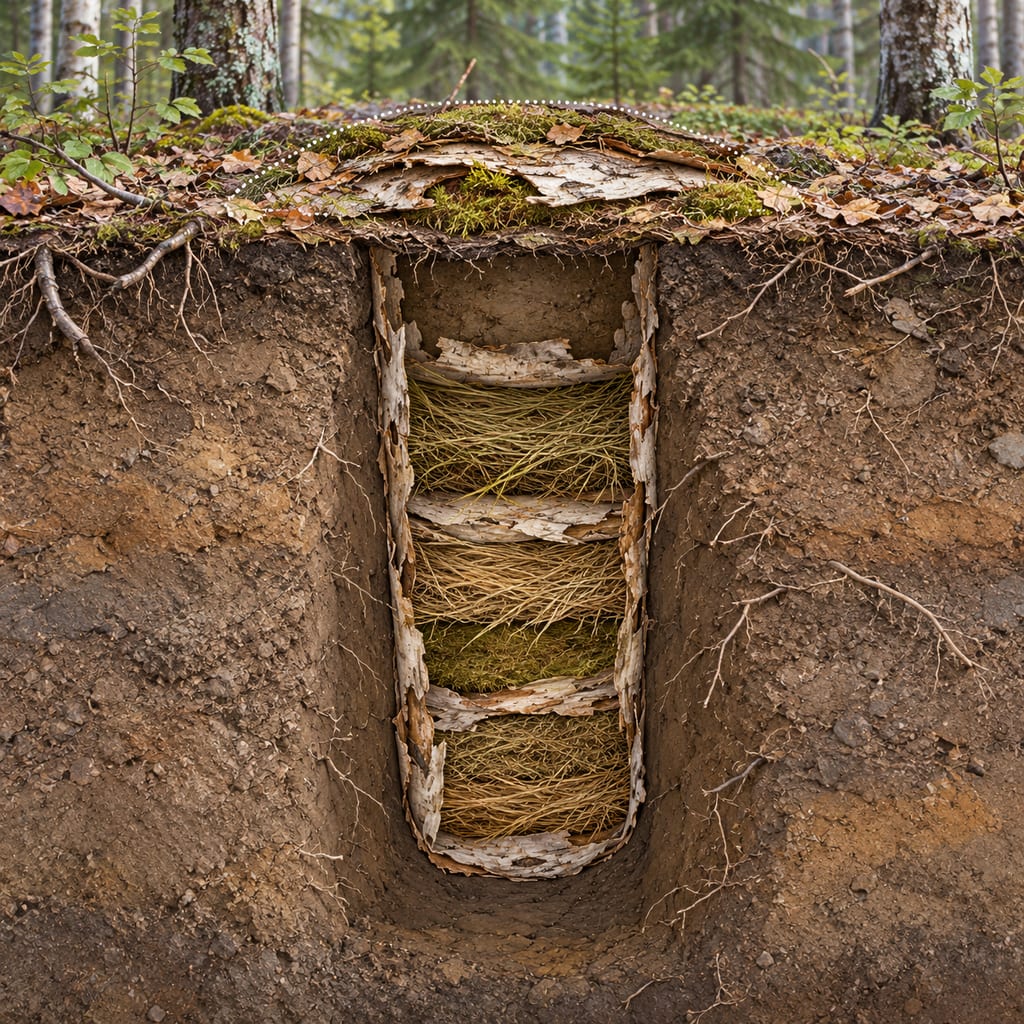
In June 2024, archaeologists from Joint Base Elmendorf-Richardson, Northern Land Use Research Alaska, and area tribal councils encountered a birch-bark-lined cache at a known Dene site along Upper Cook Inlet. Initial radiocarbon dating placed its use at around 1,000 years ago. The feature is a food cache pit similar to a root cellar, a rare intact survival in a site where most other features were destroyed in 1942. It documents one place and storage feature, not one design used by every Dene community.
Dene is a language group extending across Alaska, Canada, and parts of the American Southwest. Dena’ina and Ahtna people are Dene speakers, and this site is associated with both. It lies near a traditional trail toward the Matanuska and Susitna valleys; the public account does not provide exact site coordinates.
The pit was dug into well-drained soil and lined with birch bark and layers of grasses. The attached excavation photograph shows an open pit in the soil with measuring rods; it records below-ground placement but does not show the bark lining. No standard dimensions or full construction sequence are reported, so this page describes the documented feature rather than presenting a build plan.
In a broader Dena’ina fish-storage practice, underground cold-storage pits were lined with birch bark and moss, and dried fish was layered with grass during fall freeze-up. This regional comparison helps explain how underground storage related to winter food supplies, but it does not establish this cache’s exact lining or closure.
People came to the area in spring and stayed through summer to catch and preserve salmon. Hunting, fishing, gathering, weather, travel, and social life shaped movement through the region. Area tribal councils participated in the investigation, and researchers describe ongoing collaboration with Chickaloon Village Traditional Council and Native Village of Eklutna. The cache belongs to this lived landscape, not to an isolated story detached from the communities whose histories it helps document.
Bark samples were used for dating and contents research. Regional caches preserved fish, meat, and berries, but the exact contents of this feature remain under study. Initial stable-isotope results could indicate moose or caribou; researchers have not established whether those animals were stored here or merely lived nearby. The archaeological date supports a history of storage, not fermentation or a specific treatment of the food.
Initial radiocarbon dating places this feature’s use at around 1,000 years ago. The investigation involved JBER archaeologists, Northern Land Use Research Alaska, and area tribal councils; it does not establish when this cache form began.
A build is made where it stands: moving it means building it again.
The site is associated with Dena’ina and Ahtna people. Exact coordinates are not public in the source; this row stays at regional precision.
A large clay-lined depression built beneath some Alutiiq house floors in the Kodiak region, documented in Koniag contexts for food storage and possibly fermentation.
CDC guidance depicts fish heads in a grass-lined hole in the ground and describes it as a traditional Alaska Native food-preparation method; it names no specific Nation or community.
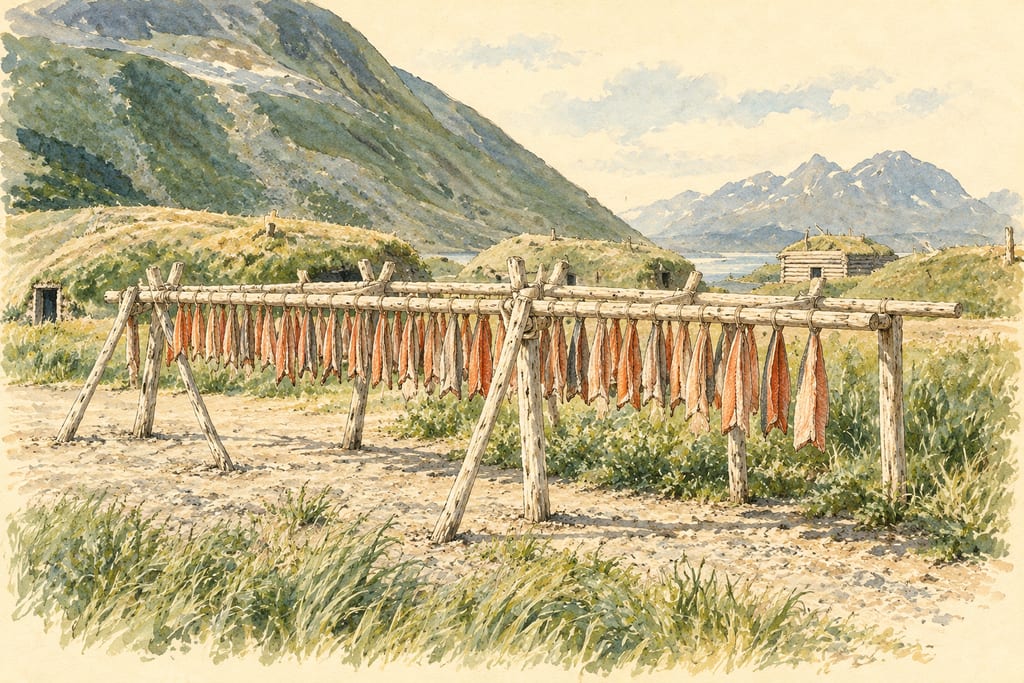
An Alutiiq initaq is a wooden hanging rack for air-drying fish around Kodiak. An 1889 Old Harbor photograph shows an open rail structure; the Alutiiq Museum documents contemporary spruce-pole or lumber racks and airflow-preserving covers.

Protected Italian vinegar made only from cooked grape must, fermented and aged in a battery of wooden barrels for at least 12 years: sweet, sharp and syrupy.
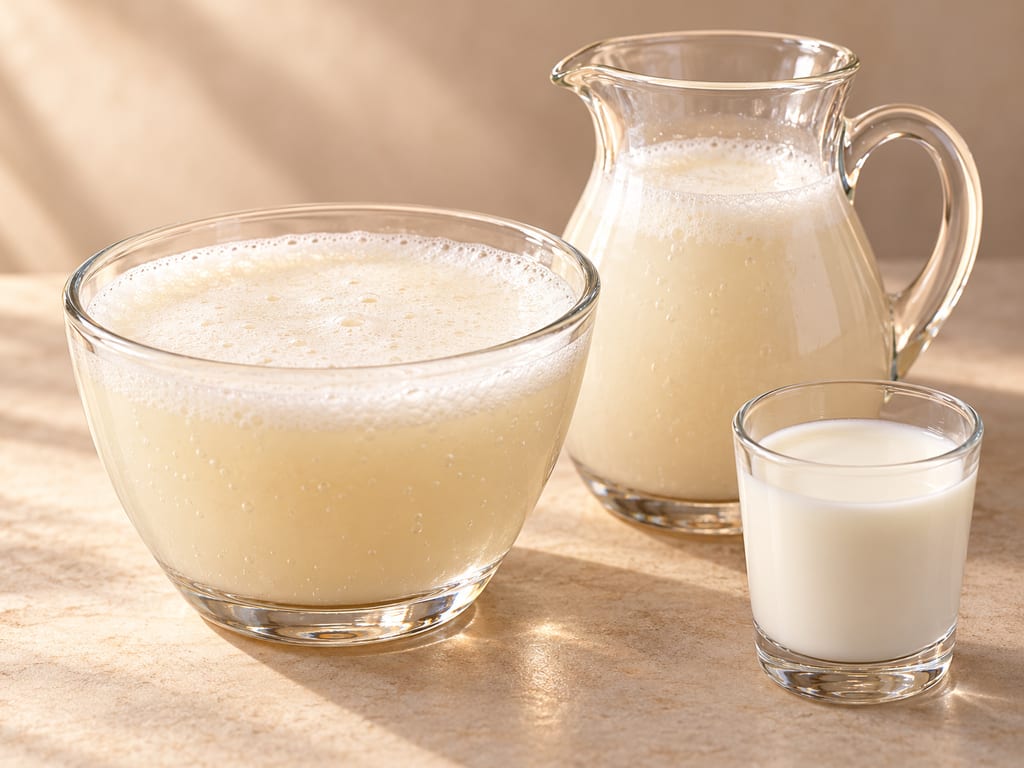
Airag is Mongolia’s fermented mare’s-milk drink, traditionally churned with saved starter in a reusable cowhide khokhuur.

Appam, or hoppers, are South Indian and Sri Lankan rice pancakes made from a fermented coconut-and-rice batter and cooked in a curved pan to a crisp lacy rim and a soft, spongy centre.
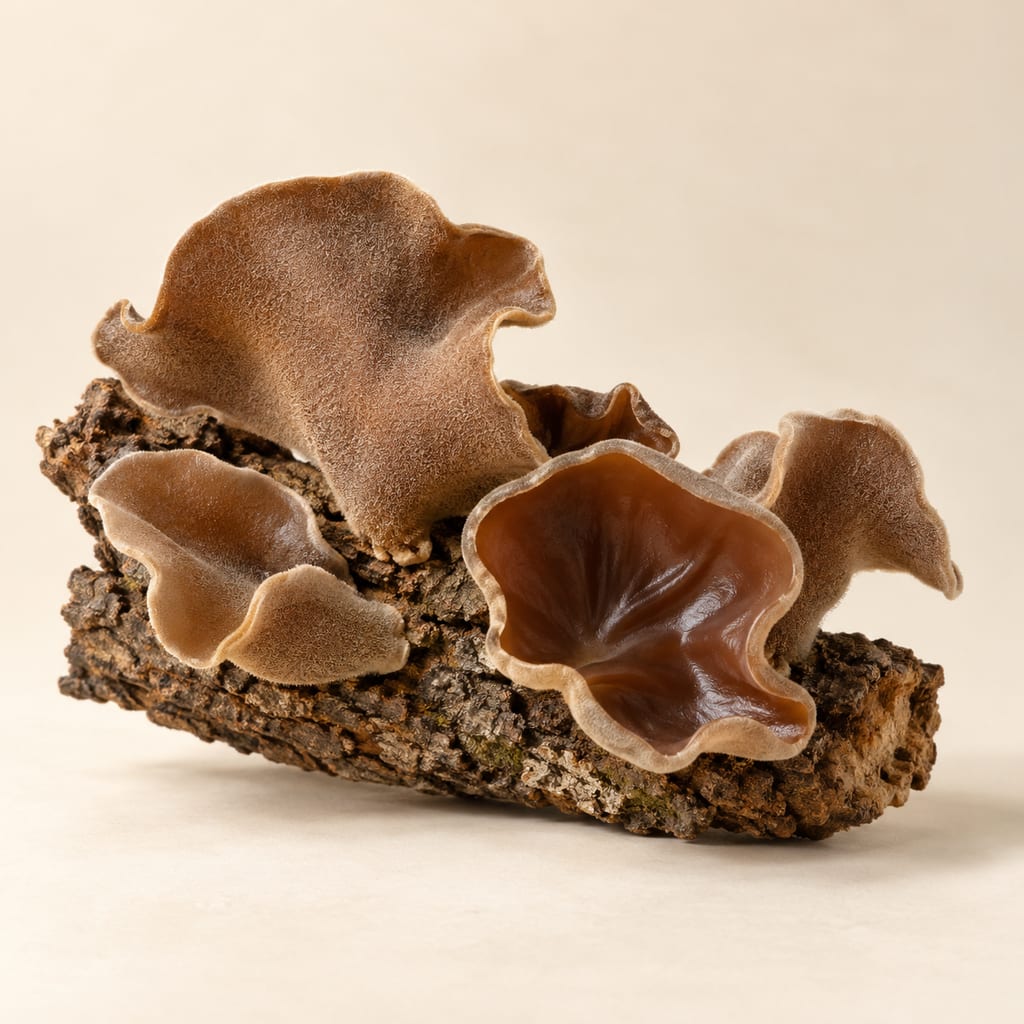
Auricularia tremellosa is a wood ear fungus of the genus that supplies most dried wood ear sold in China; its own food record is thin, and the culinary practice described here comes from the closely related wood ear species.

Ayran is Turkey’s cold, savoury yogurt drink: plain yogurt is loosened with water and lightly salted, then whisked smooth or aerated into a soft cap of foam.
A thin stone griddle used over an open hearth. Norwegian archaeology documents the established tradition from the early Middle Ages; a Viking-period origin is only a cautious suggestion linked to Shetland.

Crushed or milled barley cooked in water until the starch softens and the mixture thickens, the plainest way a northern household turned stored grain into a meal, here with apple and hazelnut.

Black carrot is the anthocyanin-pigmented Eastern carrot (Daucus carota var. atrorubens), the purple root that preceded orange types and still colours kanji and şalgam.
No community contributions have been published for this entry yet.
Sign in to contribute. Published comments and photos are free to read.
Joint Base Elmendorf-Richardson Public AffairsArchaeological report · Form · Geography
JBER yields rare Dene cacheThe 2024 investigation found a birch-bark-lined cache at a known Dene site along Upper Cook Inlet; Dena’ina and Ahtna are Dene speakers and the site is associated with both peoples.
Pits were dug into well-drained soil and lined with birch bark and layers of grasses; regional caches preserved fish, meat and berries.
Initial radiocarbon dating placed use around 1,000 years ago; further testing is needed to identify contents.
Cited in: A cache near Upper Cook Inlet; Below-ground form and materials; Seasonal movement and evidence limits
Alaska Department of Natural Resources, Office of History and ArchaeologyRegional cultural context · Traditional use
Ch’u’itnu Traditional Cultural LandscapeThe Dena’ina cultural-landscape report describes underground cold-storage pits in the Ch’u’itnu drainage and nearby Dena’ina/Ahtna territory; it distinguishes regional fish-storage traditions from this single 2024 archaeological cache.
The report describes a Dena’ina cold-storage pit lined with birch bark and moss, with dried fish layered with grass during fall freeze-up.
Cited in: Below-ground form and materials
National Park Service, Lake Clark National Park and PreserveRegional context
Nanutset-GaulThe NPS account describes Dena’ina underground cold-storage pits lined with birch bark and moss and dried fish layered with grass for winter and spring use.
Cited in: Below-ground form and materials