
Alutiiq dried, smoked and half-dried fish (tamuuq, kupcuunaq, kac'amaasaq)
Kodiak salmon, halibut and cod cut as seg'aq and hung on an initaq rack to become tamuuq, with kac'amaasaq and kupcuunaq named as different results.
 FermenteaWhere food goes to change
Built structures · Terraces, platforms and stands
initaq · Alutiiq fish rack · fish-drying rack · hanging rack
An Alutiiq initaq is a wooden hanging rack for air-drying fish around Kodiak. An 1889 Old Harbor photograph shows an open rail structure; the Alutiiq Museum documents contemporary spruce-pole or lumber racks and airflow-preserving covers.
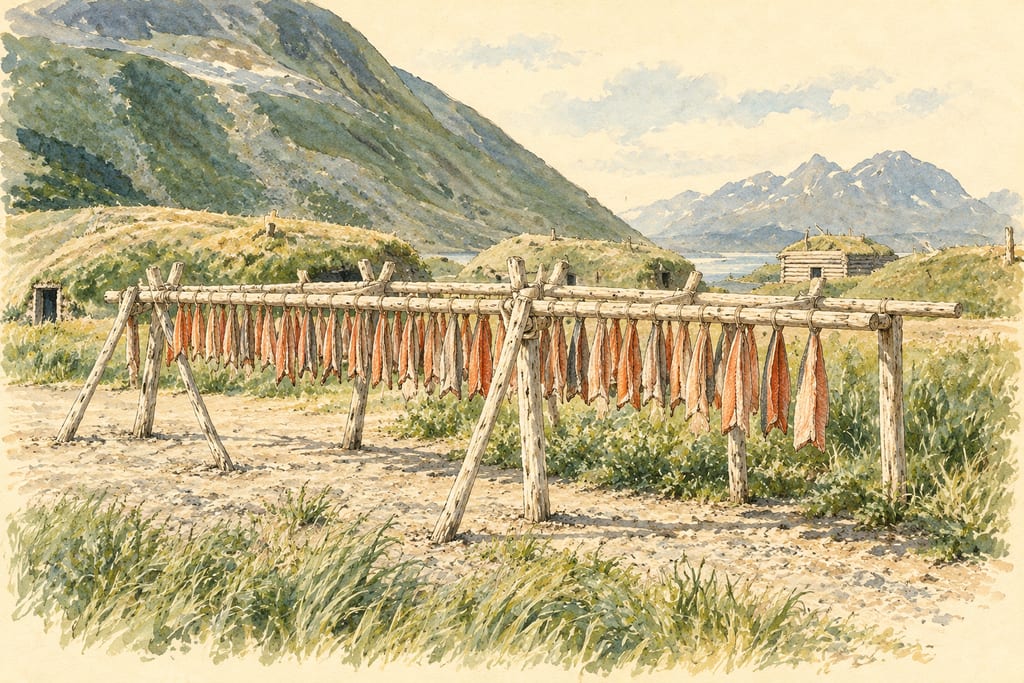
Initaq means “something you hang something on.” The Alutiiq Museum uses it for the fish rack and notes that the same word can describe other kinds of racks. The name identifies a support structure by what it does; it is not the name of the dried fish, which is tamuuq, or the fish prepared for drying, seg’aq.
A museum-published photograph records fish hanging on a rack at Old Harbor in 1889. It shows a long open rail among village houses, a dated example of the form rather than a complete construction drawing. The museum also describes archaeological post holes suggesting racks both inside and outside structures, a broader record that should not be collapsed into this one outdoor view.
The Alutiiq Museum describes contemporary racks made from limbed spruce poles, branches, young tree trunks or rough-cut lumber. Upright members brace a long bar, from which thin strips or whole fillets can hang. The museum supplies no standard span, height, post spacing or joinery, so the page does not turn a recorded form into an invented blueprint.
Kodiak rain makes shelter a practical concern. Some people loosely cover a rack to shed rain, but the museum cautions against tight wrapping because it can encourage mould. A fishing net may deter small scavengers while its open weave still admits air and sun. These details describe contemporary practice; they are not visible in the 1889 photograph and should not be assumed for every historical rack.
Salmon return in quantity in summer and fall, while other fish become easier to catch nearer shore in warmer months. The museum describes drying as one way Alutiiq families used air and sun to preserve seasonal catches for later use. Racks provide a place to hang fish rather than a cure in themselves.
The museum documents salmon, halibut and cod as dried fish. It also describes fillets and strips eaten with sea-mammal oil or carried for travel. Fish preparation differs: the separately documented seg’aq account describes paired fillets connected at the tail and reports that weather affects which surface faces outward. Those details concern preparation and use, not fixed specifications of the initaq.
The museum's archaeological discussion suggests racks in village contexts many thousands of years old, but it does not provide a precise date for a surviving rack or establish an origin point. The 1889 photograph is a useful historical witness, not proof that all racks had the same layout.
The sources do not establish universal dimensions, timber species, foundations, fish spacing or a validated drying endpoint. This record describes the structure and its documented cultural setting; it is not construction or food-preservation instruction.
The Alutiiq Museum reports archaeological post holes at village sites many thousands of years old as evidence suggesting racks, and describes an 1889 Old Harbor photograph of fish drying on long racks. The archaeological interpretation is not a direct dated rack specimen.
The museum documents racks across Alutiiq communities and a specific 1889 photograph from Old Harbor; the row locates the tradition in the Kodiak region, not at every village site.
Kodiak salmon, halibut and cod cut as seg'aq and hung on an initaq rack to become tamuuq, with kac'amaasaq and kupcuunaq named as different results.
A large clay-lined depression built beneath some Alutiiq house floors in the Kodiak region, documented in Koniag contexts for food storage and possibly fermentation.
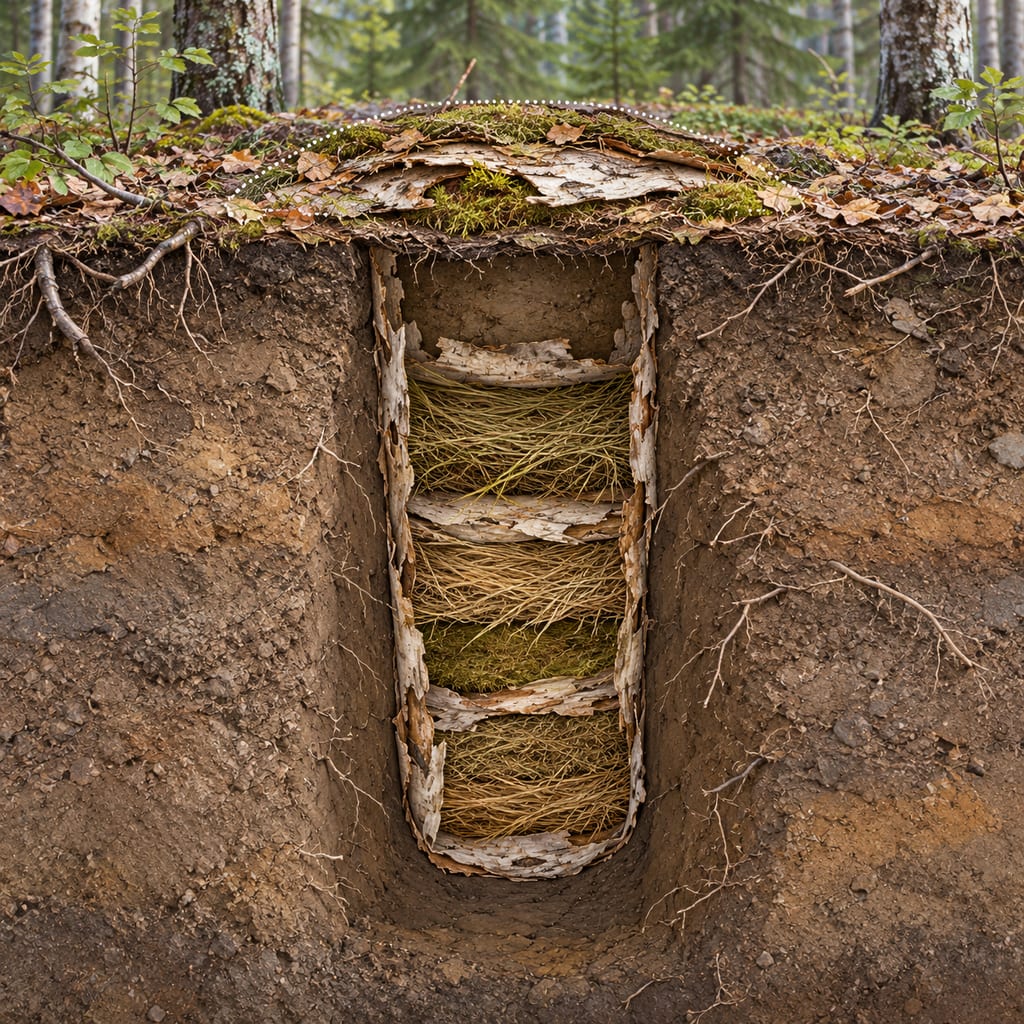
A Dene cache pit at Upper Cook Inlet, Alaska, initially dated to around 1,000 years ago. JBER documents a below-ground feature lined with birch bark and grasses; exact contents and construction details remain under study.
CDC guidance depicts fish heads in a grass-lined hole in the ground and describes it as a traditional Alaska Native food-preparation method; it names no specific Nation or community.
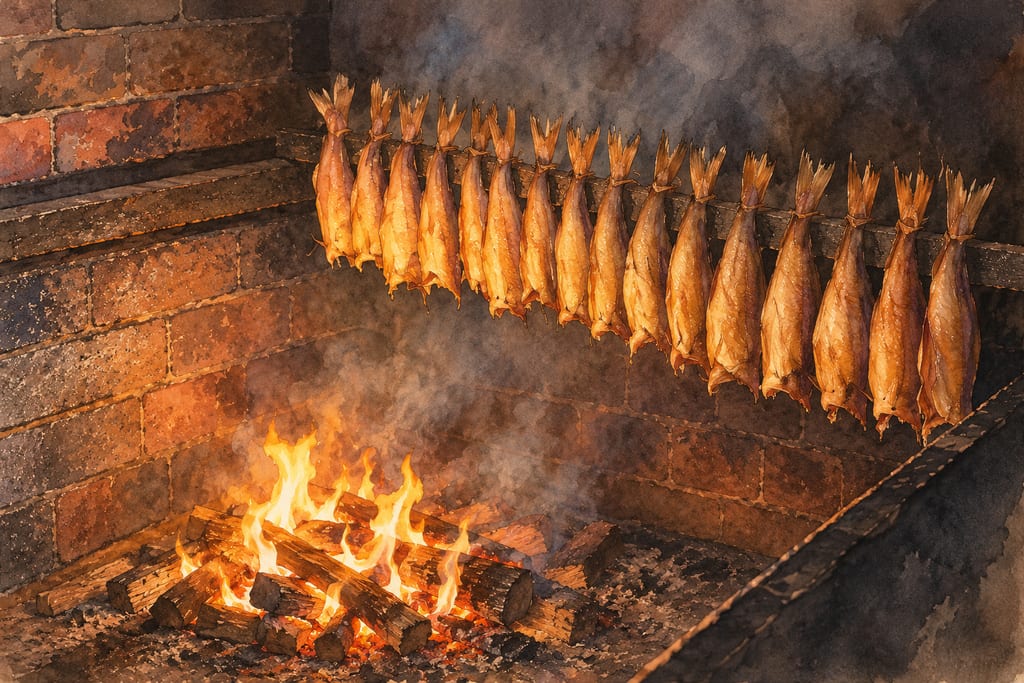
The Arbroath “barrel” is a hardwood-fired smoking pit with triangular rails and a cover. Its documented form belongs to the traditional hot-smoking of haddock around Arbroath and Auchmithie, Scotland.
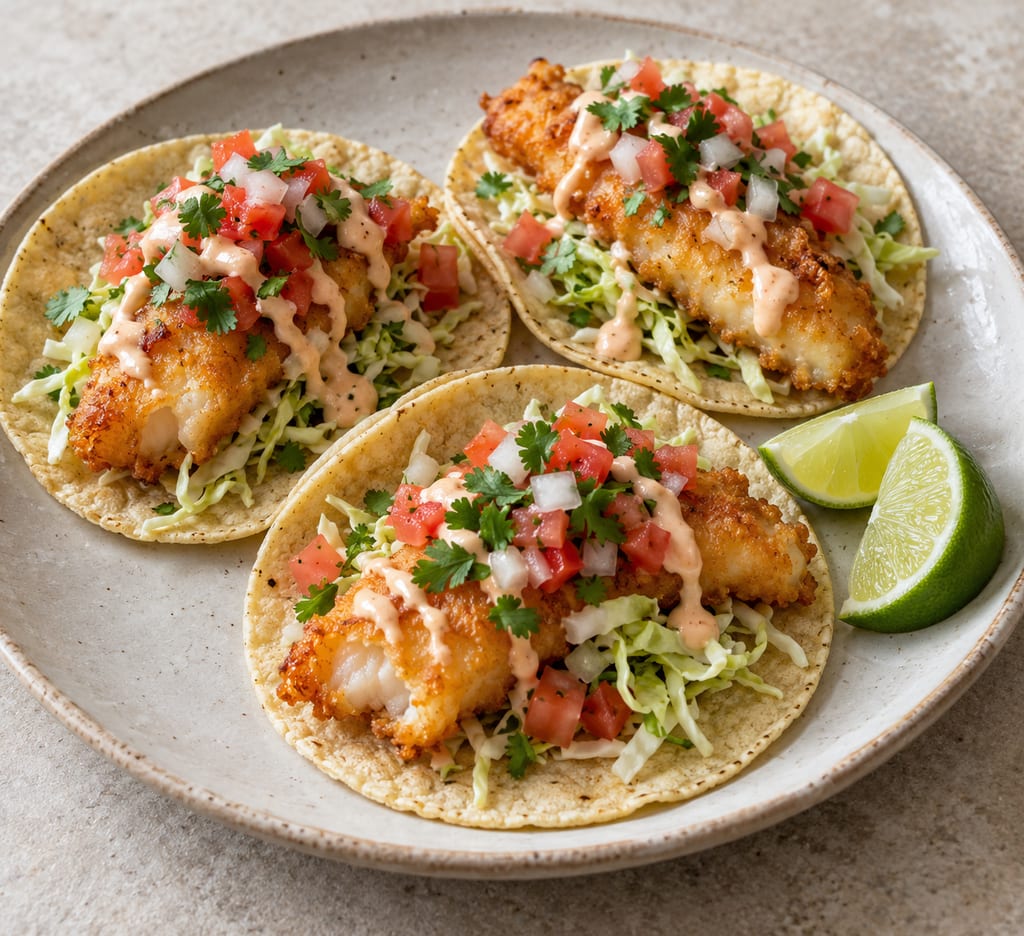
Crisp battered white fish in warm corn tortillas with shredded cabbage, lime and fresh salsa. This home version draws on the Ensenada style without claiming to be a definitive historic formula.
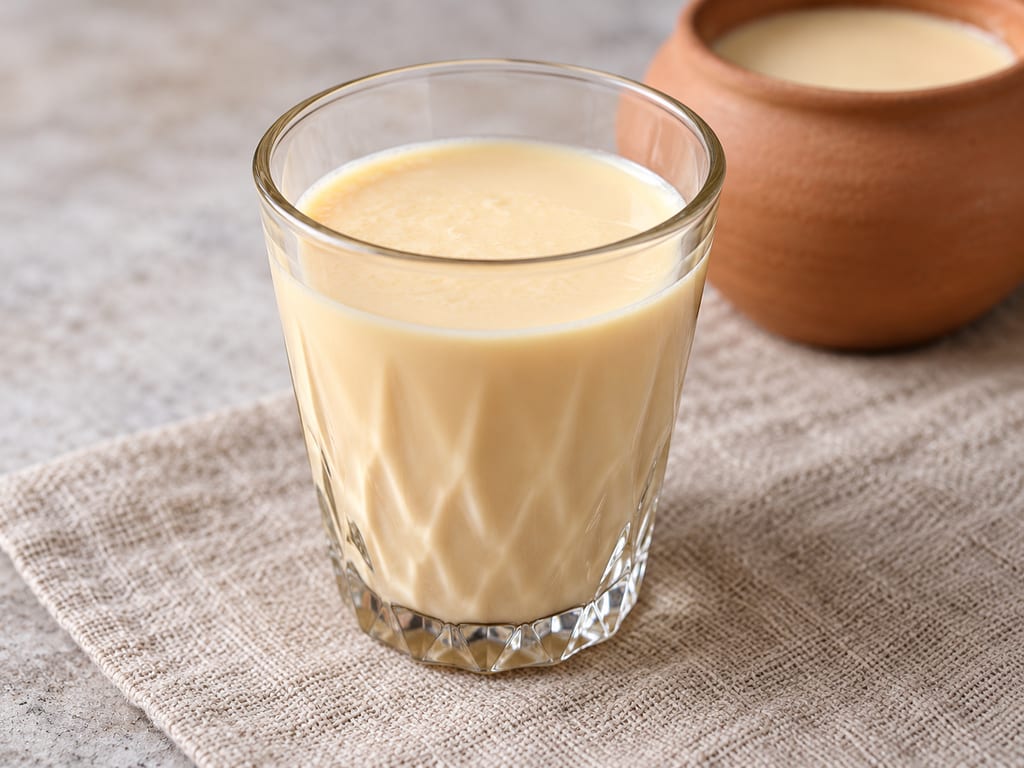
Baked milk is an Eastern European preparation of milk held at high heat for hours until it turns cream-coloured with a cooked, mildly sweet flavour, without any fermentation.
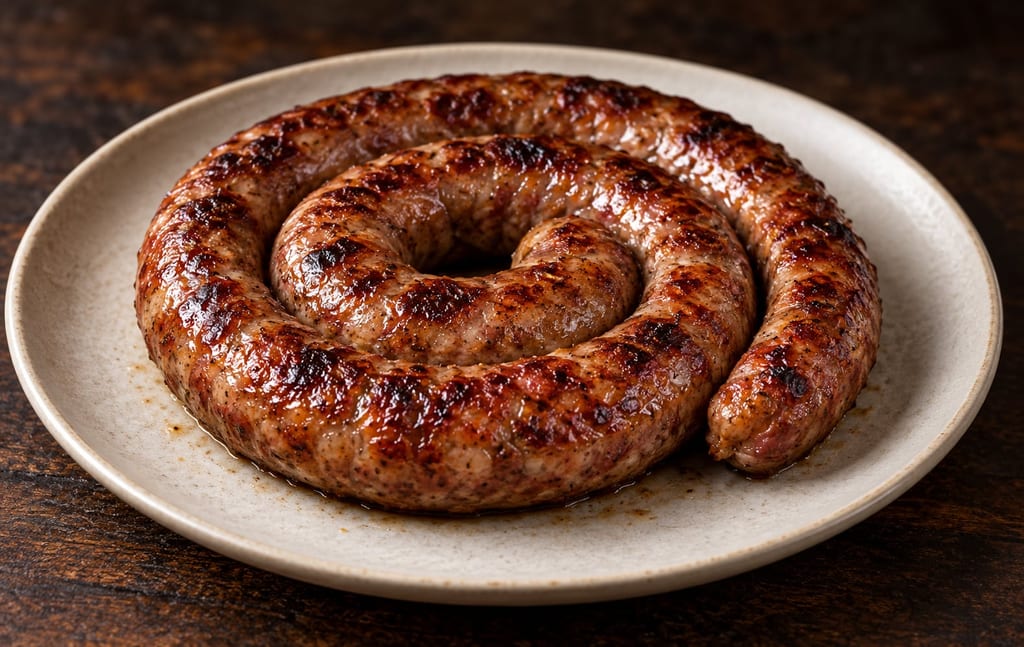
A coarse South African farmhouse sausage of beef with pork or mutton fat, defined by its coriander seasoning and cooked fresh over coals rather than preserved.
A flood-season pit store described for Omagua communities along the Amazon: manioc tubers were buried before inundation and recovered as waters receded. Its shape and lining are not recorded.
A temporary, in-place earthen oven used to cook camas with heat retained by fire-heated stones. The dimensions described here belong to one Kalispel-supervised reconstruction, not a universal form.

Chuño negro is a source-documented Andean potato-preservation practice. This entry records producer tradition; it is not a validated household process for making potentially toxic bitter potatoes safe.
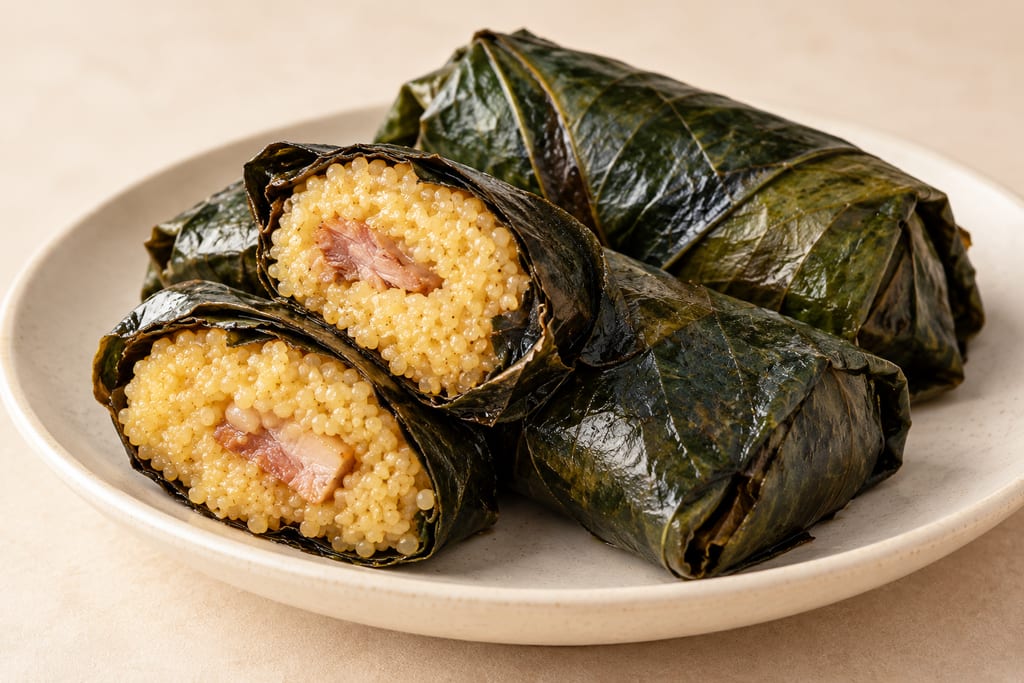
Cinavu is a Paiwan leaf-wrapped parcel built around millet or taro, meat and locally gathered leaves. It belongs to a food culture of harvest, hospitality and shared work, with village recipes differing in both filling and cooking time.
No community contributions have been published for this entry yet.
Sign in to contribute. Published comments and photos are free to read.
Alutiiq Museum and Archaeological RepositoryForm · Materials · History · Geography · Use
Fish Rack — InitaqInitaq means something one hangs something on and is used for fish racks and other racks.
The museum describes limbed spruce poles, branches, young trunks or rough-cut lumber, uprights bracing a long rail, optional rain covers and loose nets that allow airflow.
The museum says archaeological post holes suggest racks inside and outside structures and that historic Kodiak images show fish drying on long racks around sod houses.
The page identifies a 1889 Old Harbor photograph and describes seasonal harvesting and air-and-sun drying.
Cited in: A rack named in Alutiiq; Poles, rails and moving air; Part of a seasonal food system; What the evidence does not fix
Alutiiq Museum and Archaeological RepositoryUse · Context
Fish Cut for Drying — Seg’aqAlutiiq drying preparation varies; the source describes fish prepared for drying and hung on wooden racks.
The source states that fish are suspended by the tail and weather affects which side faces outward; it reports a salmon drying period of about three weeks without making it a universal endpoint.
Cited in: Part of a seasonal food system; What the evidence does not fix
Alutiiq Museum and Archaeological RepositoryUse · Geography · History
Dry Fish — TamuuqAlutiiq families continue to hang salmon fillets and halibut strips; fish historically hung by the tail on wooden racks.
Dried fish includes salmon, halibut and cod, and can be eaten with sea-mammal oil or carried while travelling.
The page locates the museum's account in Kodiak and describes the continued practice.
Cited in: Part of a seasonal food system
National Archives and Records Administration, via Wikimedia CommonsHistorical visual reference · Rights
Salmon drying. Aleut village, Old Harbor, Alaska, 1889 — NARA 513089Photograph catalogued as 1889, Old Harbor, Alaska, National Archives identifier 513089 and local identifier 22-FA-264.
The Commons page identifies the image as a U.S. Fish and Wildlife Service official-duty work and marks it public domain.
Cited in: A rack named in Alutiiq