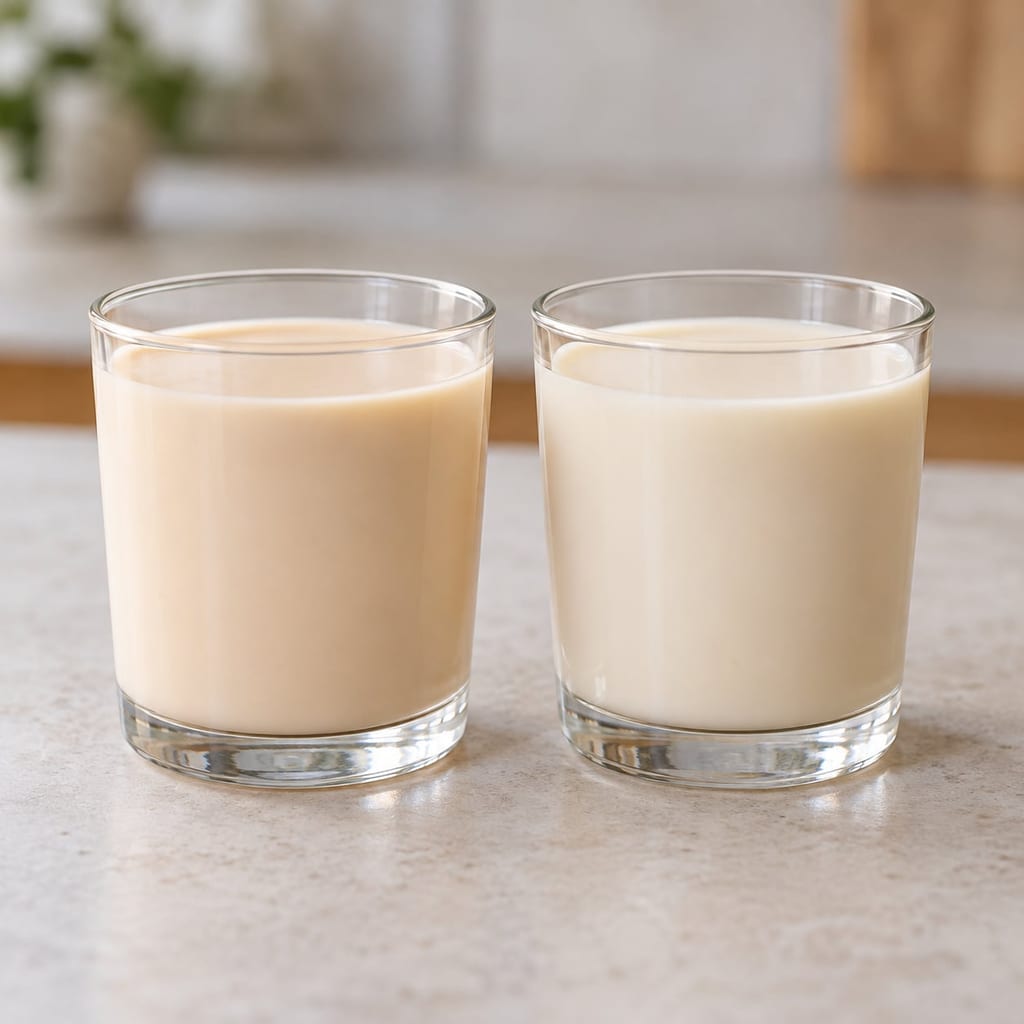
Ryazhenka and varenets
Ryazhenka is a Ukrainian and Russian cultured milk made from long-heated, baked cow's milk, cream-coloured and gently sour; varenets is its close relative with a shorter heat treatment.
 FermenteaWhere food goes to change
Modern adaptation
Топлёное молоко · Baked milk · Russian baked milk · Slow-baked milk · Toplyonoe moloko · Toplenoe moloko · Toplyonoye moloko · Топленое молоко · Томлёное молоко · Томленое молоко · Priazhene moloko · Pryazhene moloko · Пряжене молоко · Топник · Топёлка · Красное молоко · Hawottumaido · Kettumaido
Baked milk is an Eastern European preparation of milk held at high heat for hours until it turns cream-coloured with a cooked, mildly sweet flavour, without any fermentation.
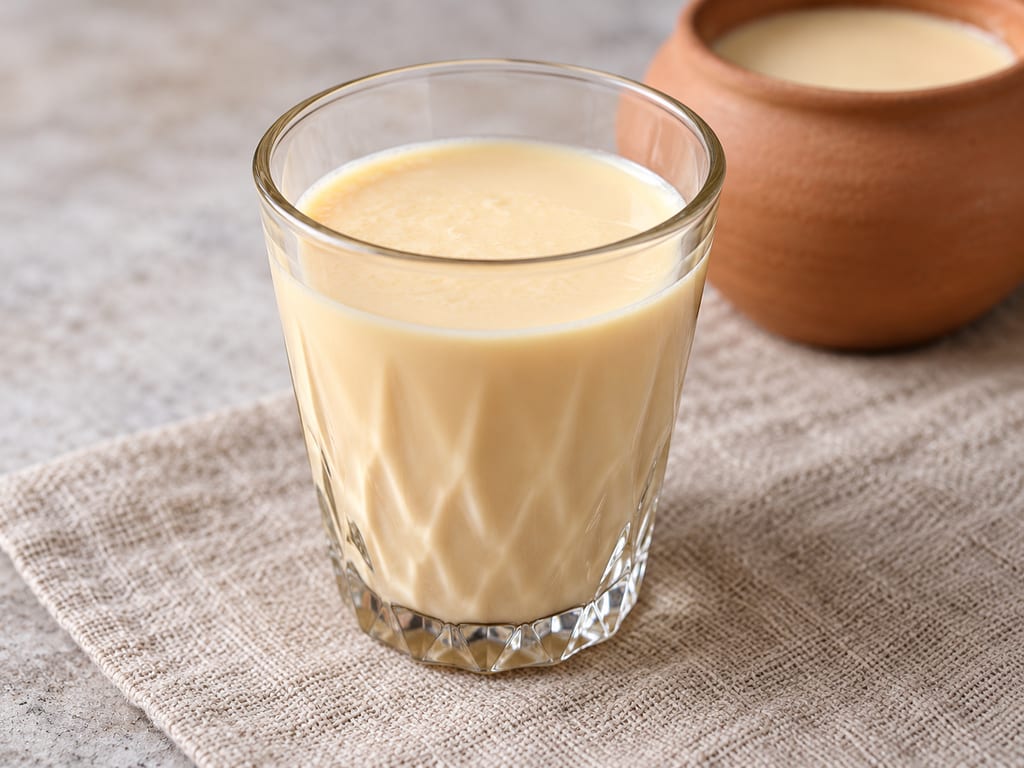
Baked milk is cow's milk held hot for hours until it turns cream to pale brown, takes on a cooked, faintly caramel flavour and tastes mildly sweet with no sugar added. Russian calls it топлёное молоко, toplyonoe moloko, or sometimes томлёное, tomlyonoe; Ukrainian says пряжене молоко, priazhene moloko. English "baked milk" is closer to the truth than "boiled milk", because the defining step is long, gentle heating and not a brief boil. It stays liquid, though evaporation and protein changes can thicken it a little.
It is not fermented. There is no starter, no yeast, no mould and no souring, and the change is thermal and chemical: lactose reacts with milk proteins, whey proteins change shape, aroma compounds form and, in an open pot, water evaporates. The colour comes chiefly from non-enzymatic browning, the Maillard reaction. The result tastes rounder and sweeter than ordinary pasteurised milk.
The traditional method put milk in a ceramic pot and left it in the residual heat of a masonry oven, sometimes until a golden skin formed and then for further hours. Factories reproduce it in controlled vessels. Russia's terminology standard GOST R 52738-2007 defines baked milk as a dairy product heated at 85 to 99 C for at least three hours until its characteristic sensory properties develop, and the drinking-milk standard GOST 31450-2013 lists it as a separate heat-treated category beside pasteurised, sterilised and ultra-pasteurised milk.
It is a drink and an ingredient. It is served warm or cold, used with porridge, and cooled and inoculated to make ryazhenka. Varenets preparations may also start from baked or specially heated milk, though modern industrial definitions separate their heat treatments. The line matters: plain baked milk is non-fermented, and adding a starter makes ryazhenka, a lactic ferment.
Homemade baked milk may carry a golden-brown skin of concentrated protein and fat. Some cooks remove it, some push it back under the surface, some eat it separately. Commercial baked milk is usually homogenised and uniformly liquid without a thick skin, so the skin belongs to some methods and is not required of every version. What every version shares is the heat-induced change in flavour and colour.
The history of baked milk is tied to the masonry oven. After bread was baked, the walls kept a great deal of heat, and a pot of milk set inside could go on heating for hours without a separate fire. It developed a cooked flavour, and an uncovered pot lost water. Russian and Ukrainian domestic cooking describe this. But oven technology does not date the food, because the existence of such ovens does not prove that any named milk preparation was made in them.
The earliest written evidence used here is Vladimir Dal's Explanatory Dictionary of the Living Great Russian Language, first edition, volume IV, printed in 1866. Dal describes heating milk for a long time in the oven's leftover warmth and calls the result reddish, thick milk with skins on it. So the named food and method were established by the middle of the nineteenth century. That says when it was written down, not when or where it began.
Dal's second edition, in 1882, adds regional names. Topnik belongs to the Novgorod area and can mean the milk or the vessel it is made in, and topelka and toplenka are Pskov words. Kseniya Osipova's 2016 linguistic study examines this vocabulary and finds prolonged oven heating widespread in the Russian North, with local names from Vologda, Arkhangelsk, Kostroma, Novgorod and nearby areas. That shows a wide spread of names, not one place of origin.
Ukrainian usage is documented separately. Borys Hrinchenko's Ukrainian dictionary, compiled in the early twentieth century, gives пряжене молоко as the equivalent of Russian toplyonoe moloko, and a 2026 review from the National University of Food Technologies treats it as one of the country's traditional dairy technologies alongside ryazhenka and varenets. These establish Ukrainian use. They give no securely dated medieval recipe.
Industrial history is firmer. A Russian patent filed in 1998 and published in 2000 sets out a baked-milk process, a 1999 dairy-technology handbook gives time and temperature conditions, GOST R 52738-2007 defines the product, and GOST 31450-2013 recognises it as drinking milk and came into force in Russia in July 2014. One popular story says the word toplyonoe arose from a printing mistake in the 1930s. Dal used the word in the nineteenth century, so the story cannot be right and should not be repeated as fact.
Baked milk gets its flavour and colour from heat reactions, not from microbes. The milk starts with water, lactose, casein micelles, soluble whey proteins, fat globules and minerals, and prolonged heating changes several things at once: Maillard browning, whey protein denaturation, changes in lactose, formation of aroma compounds and, in an open vessel, evaporation. How far each goes depends on the milk's true temperature, how long it stays hot, its composition and how much water leaves.
The Maillard reaction starts when lactose, a reducing sugar, meets free amino groups on milk proteins, above all the epsilon-amino groups of lysine. The first product can rearrange into a stable Amadori compound, lactulosyllysine, and later steps make reactive carbonyls and then many flavour and colour compounds. High-molecular-weight brown substances called melanoidins give the cream to pale brown colour. This is Maillard browning, not caramelisation, though the taste is often called caramel-like.
Heat also unfolds proteins. Beta-lactoglobulin, a main whey protein, loses its native structure, exposing buried hydrophobic regions and reactive sulfhydryl groups that can bond with other proteins, including the kappa-casein on casein micelles. Those changes affect how the milk behaves when cooled and processed, and are one reason baked milk behaves differently from fresh milk when it is inoculated for ryazhenka. Heat alone does not make the acid gel of the fermented product.
Lactose chemistry shifts too. Heat can turn some lactose into lactulose by alkaline isomerisation, and harder treatment gives more degradation and Maillard products. Researchers use lactulose, furosine and 5-hydroxymethylfurfural as markers of heat load. They are indicators of what happened, not ingredients anyone wants, and their levels depend strongly on time and temperature, so figures from ultra-high-temperature milk do not carry over to milk held for hours at a lower temperature.
Cooked aroma comes from sulfur chemistry and lipid-derived compounds. Heated proteins can release sulfur compounds such as hydrogen sulfide, and reactions among amino acids, lactose and milk fat make aldehydes, furans and ketones. A 2018 dairy-science study of heated milk found furfural, methional, methylbutanals and dimethyl sulfide, but its samples were ultra-pasteurised milk, so it shows possible pathways and not the exact aroma of toplyonoe moloko. Evaporation adds a physical effect: water leaves an open vessel, concentrating fat, protein and lactose, while a sealed industrial vessel can develop cooked flavour without a comparable loss of volume.
The only essential ingredient is milk. Traditional accounts mean cow's milk, often in an earthenware pot. Whole milk gives a creamy flavour and a more substantial skin because it carries more fat, but industrial baked milk can be made from standardised or skimmed milk, and GOST 31450-2013 recognises products of different fat contents. A recipe should state its starting milk and fat instead of assuming every traditional or commercial version is the same.
The traditional method fills a ceramic vessel with milk and sets it in a hot oven after the main fire has died down, where it stays exposed as the oven cools. A skin forms as water evaporates at the surface and protein and fat concentrate there. Some households remove the skin or push it under again and again. An uncovered vessel loses more water and lets the skin brown more; covering the vessel reduces evaporation and surface drying. Neither guarantees a final volume unless it is measured.
The household recipe on this page is Roskachestvo's classic oven method of 23 October 2026: 1 litre of milk with at least 3.2 per cent fat, brought to the boil, moved to an oven held at 80 to 90 C for four to five hours, with the vessel partly covered, or open if a pronounced skin is wanted. It estimates a yield of 700 to 750 ml. The temperature is the oven setting and not a measured milk temperature, so it may differ from what the milk actually reaches. A separate Roskachestvo recipe for 5 litres at 80 to 90 C for seven to nine hours is a different formulation and is not blended with this one.
The Ukrainian producer Rud gives a different ceramic-pot method: an oven at 180 C, milk brought to a boil, the oven turned down to 100 C for about an hour while a golden crust forms, then the pot is covered and the oven set to 70 C for another six to seven hours. A Gastronom recipe of 2025 uses an eight-hour treatment at 130 C in a foil-covered clay pot. These show how widely modern oven recipes vary, and none should be merged with another or read as an industrial specification. All of them try to copy the long, falling heat of a cooling oven.
Industry is more controlled. A 1999 dairy-technology handbook describes standardising the milk, homogenising where needed, heating to 95 to 99 C and holding for three to four hours for 4 or 6 per cent fat or four to five hours for low-fat milk, with periodic mixing to limit film formation and keep heating even, then cooling and packing. The aim is consistent flavour, colour, texture and microbial quality from batch to batch.
Cooling and storage finish the job. A brown colour does not make milk shelf-stable. Long heating reduces vegetative bacteria, but resistant spores may remain, so the milk should be cooled promptly and kept refrigerated unless it has had a separate validated sterilisation and packaging. For ryazhenka, baked milk is treated as a prepared base and inoculated only under the conditions of that separate fermentation.
Russian baked milk has many regional names, especially in northern dialects. Dal records topnik in Novgorod and topelka or toplenka in Pskov, and Osipova's study adds names built on heating, boiling, steaming and the milk's colour, among them varenets-type words and krasnoe moloko, literally red milk. These are not always exact equivalents: some words also mean the vessel, the skin lifted off the surface or a later fermented preparation.
In Ukraine пряжене молоко is the established name, tied to the verb for heating or cooking, and current Ukrainian recipes describe clay pots, long oven heating and a golden crust. It is closely linked to ryazhenka, made by cooling and inoculating the heated milk. The 2026 Ukrainian review places baked milk among traditional Ukrainian dairy technologies, which shows a distinct Ukrainian culinary context without proving the method began there.
Karelia gives a useful comparison. The Karelian tourism information centre records baked milk as hawottumaido and kettumaido: fresh milk in a pot or pan in the oven, sometimes with cream and butter added, the browned skin pushed into the milk again and again. It also records an older practice of adding a pretzel or bread ring for a thicker result. The milk went with tea and coffee, was eaten with curd cheese and was used in a curd dish called rahkamaido. Those belong to the Karelian version, not the basic Russian formula.
The Komi tradition is another example. In April 2026 the Pechora Museum of Local History published an account of traditional Komi foods that mentions baked milk made in Russian-style masonry ovens, and it treats fermented milk and curd cheese as separate operations. A community may use one oven for several dairy transformations, but heating milk, fermenting it and making curd are different processes.
Commercial baked milk is made in Russia, Ukraine and Belarus. Belarusian producer records list it among the products of the Shklov and Mstislavl dairies. Industrial versions use standardised, homogenised milk in closed vessels at controlled temperatures, so they are more uniform and lack the heavy skin of open domestic pots. A Russian patent published in 2000 describes a manufacture of baking followed by sterilisation, a modern shelf-life technology that does not show traditional baked milk was sterile. Thermos and multicooker methods are modern adaptations that give cooked flavour but not necessarily the browning, concentration or skin of an open clay pot.
Baked milk is drunk warm or chilled. The flavour comes from the long heating and not from added sugar: gentle sweetness, a cooked aroma and a cream colour that set it apart from ordinary pasteurised milk. Accounts describe drinking it alone or with bread and other simple foods. On homemade milk the skin is eaten separately by some people and stirred back in by others, which is a matter of preference and not a separate method.
Porridge is a well-documented use. Gastronom recommends cooking semolina, rice and millet porridge in baked milk, which supplies the liquid and dairy while adding a cooked, caramel-like note. It also goes into cocoa and other hot drinks, a modern use not independently dated. Heating finished baked milk again for cooking may change the flavour further, especially if it evaporates or scorches.
The Karelian record has baked milk served with tea and coffee and with curd cheese, used in rahkamaido, and favoured as a summer drink in rural areas and at afternoon tea. Those are regional uses and not a claim about all Eastern Europe. A separate account of traditional Russian oven cooking describes collecting the browned skins and serving them as a delicacy, though the age of that custom needs stronger documentation.
Its most important processing use is as the base for fermented baked-milk products. After baking, the milk is cooled to an inoculation temperature and combined with lactic acid bacteria to make ryazhenka. Traditional accounts use sour cream and modern manufacture uses selected starters, and varenets may use baked or specially heat-treated milk depending on the regional definition. The baked milk itself has not been through a lactic fermentation, and the starter makes a separate product with its own acidity, texture and microbiology.
Commercial baked milk is sold as refrigerated drinking milk, while homemade versions come from clay pots, ordinary ovens or multicookers. Industrial baked milk should not be assumed to contain sweetener just because it tastes sweet, and bakery goods, desserts or drinks labelled with a baked-milk flavour do not necessarily contain actual baked milk. The ingredient list settles it.
Good baked milk is evenly cream-coloured, smells of cooked milk and is smooth. GOST 31450-2013 describes baked drinking milk as an opaque, homogeneous liquid without protein flakes or lumps of coagulated fat, allowing a slightly viscous consistency, a pronounced cooked-milk flavour, mild sweetness and a cream colour. A little fat separation may be acceptable in higher-fat commercial milk. Homemade milk from an uncovered vessel may be darker and carry a substantial brown skin, which is not a defect in that traditional preparation.
Milk that stays white and tastes little different from ordinary heated milk may not have browned enough: the heating may have been too short, the true milk temperature too low, or the vessel too well insulated. A covered container can develop cooked flavour without much evaporation, so the lack of volume loss alone does not prove under-processing. Industrial specifications and household oven methods have different aims and should not be judged by the same colour or evaporation targets.
Excess browning, a bitter taste or black residue point to scorching, particularly when solids concentrate against a hot surface or a thick skin sits under strong radiant heat. Controlled Maillard browning gives the right colour and flavour, and burning is a different process. Stirring limits deposits on the bottom, a thick-bottomed pan or suitable ceramic pot spreads heat more evenly, and some methods leave the surface alone on purpose, but an exposed skin should not turn black.
Flakes, curds or a grainy texture suggest the protein has destabilised. Milk that is already acid, mineral imbalance, local overheating or contamination can contribute. Fresh milk of normal acidity suits long heating better than milk beginning to sour, and baked milk is not a way to rescue spoiled milk. A sour smell or taste is not a property of the unfermented product and can indicate microbial deterioration.
The nutritional effects need careful wording. Calcium and other major minerals survive ordinary heating, though their distribution and interactions with proteins can change. Heat-sensitive vitamins may fall and Maillard reactions can reduce the available lysine. A 2024 review documents effects like these across milk treatments, and they depend on the exact conditions. Claims that baked milk is more nutritious, more digestible or suitable for lactose intolerance are not established: it still contains lactose and the milk allergens.
Safety needs particular care because baked milk is not acidified. Long heating destroys many vegetative microbes but is not commercial sterilisation, and heat-resistant spores such as those of Bacillus cereus may survive. A 2022 review of Bacillus cereus in dairy products names poor cooling and temperature control as important hazards, and Germany's Federal Institute for Risk Assessment explains that ordinary heating does not reliably eliminate spores. Milk held warm for long after heating can let survivors germinate and multiply, and a cooked smell does not show it is safe.
For home preparation use pasteurised milk and clean equipment, avoid recontamination, and cool promptly. FoodSafety.gov advises a refrigerator at 4 C or below and refrigerating perishable food within two hours. Do not leave a large volume in a warm oven or sealed insulated vessel to cool slowly. No validated home shelf life exists, and commercial products last differently because their manufacture and packaging are controlled. Ryazhenka made later from baked milk needs its own validated inoculation and acidification.
Dictionaries record the method in 1866; earlier origins are not securely dated.
Raw milk may carry Campylobacter, pathogenic E. coli, Listeria, Brucella, Salmonella and Cryptosporidium; pasteurised milk lowers the risk before home preparation.
Hazard sourceProlonged heating below commercial sterilisation does not reliably remove spores; Bacillus cereus spores can survive and germinate if cooling or storage is poor.
Hazard sourceLeaving the milk in a switched-off oven or warm insulated vessel lets it pass slowly through temperatures that support microbial growth.
Hazard sourceUnclean utensils, containers, hands or surfaces can add microbes after the heat treatment.
Hazard sourceBaked milk is a high-moisture, non-acidified dairy food and cannot be kept at room temperature.
Hazard sourceBurnt milk solids or skin taste bitter and can raise unwanted heat-reaction products; controlled cream colour is different from blackened deposits.
Hazard sourceMilk that is already acid, deteriorating or contaminated may curdle during long heating; baked milk should stay a homogeneous liquid.
Hazard sourceBaking removes neither milk proteins nor lactose; it is unsuitable for cow's-milk allergy and may cause symptoms in lactose intolerance.
Hazard sourceUse commercially pasteurised whole cow's milk, not raw milk.
Control sourceUse the documented quantity and fat specification.
Control sourceKeep to the documented baking conditions without uncontrolled temperature rises.
Control sourceUse clean food-safe vessels and utensils.
Control sourceCool promptly instead of holding in a slowly cooling oven overnight.
Control sourceRefrigerate the finished milk promptly in hygienic containers.
Control sourceReject deteriorated milk; do not use heat to salvage it.
Control sourceThis is a documented household oven recipe, not a validated commercial heat treatment.
Do not mix its quantities, temperature or time with other oven or industrial recipes.
An oven setting of 80 to 90 C does not prove all the milk stays in that range.
Do not use raw milk in place of pasteurised milk.
Baked milk is not fermented; do not add starter, sour cream or yoghurt except in a separate fermented-milk recipe, and do not let it ferment spontaneously warm.
Cooling in the switched-off oven is not permission to cool slowly or overnight; prompt cooling and refrigeration take priority.
Prolonged heating is not pressure sterilisation, UHT treatment or aseptic packaging; spores may survive.
Do not store homemade baked milk at room temperature, and do not assume the shelf life of commercial baked milk applies.
No validated refrigerated shelf life exists for this recipe.
Cream or golden-brown colour is expected; burnt deposits, offensive smell, sourness or unintended curds are not.
Colour, smell and taste cannot show that milk is microbiologically safe.
Baking does not remove lactose or milk allergens.
The 700 to 750 ml yield depends on evaporation and the vessel.
Country-level; no locality of origin is claimed.
Regional dairy vocabulary, not a single origin.
Country-level.
Called hawottumaido and kettumaido; earliest attestation not established.
Describes Komi oven dairy practice; dates for the preparation are not supplied.
Producer listings only; no traditional origin date.
Industrial technology and standards.
Ryazhenka is a Ukrainian and Russian cultured milk made from long-heated, baked cow's milk, cream-coloured and gently sour; varenets is its close relative with a shorter heat treatment.
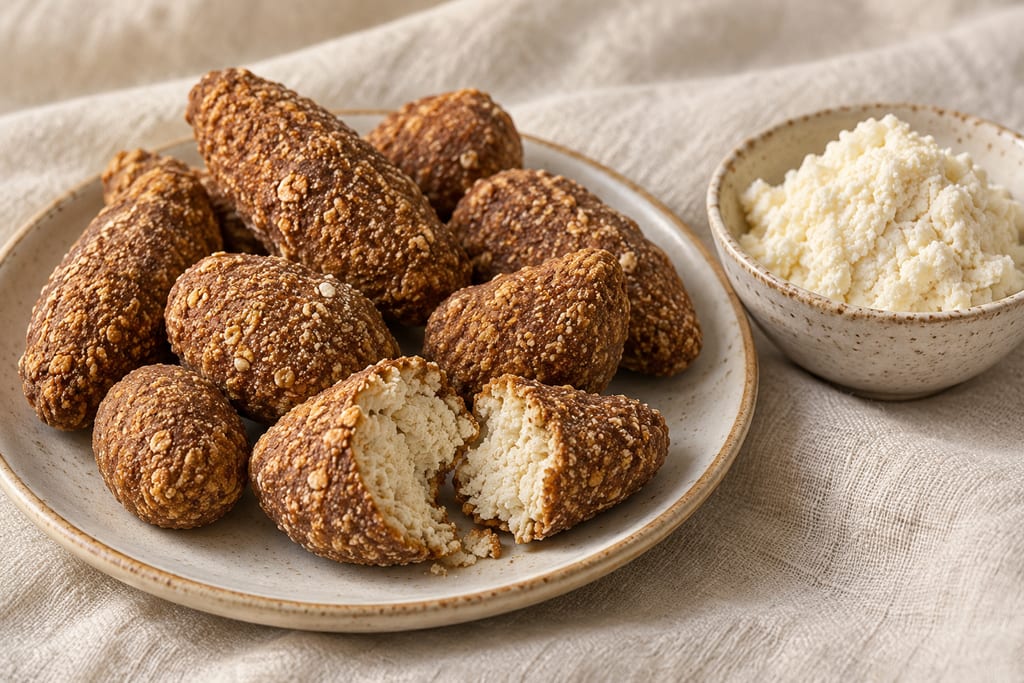
A two-stage Altai dairy preparation: sour chegen is heated into soft aarchi, then portions are drained, pressed and traditionally smoked into firm kurut.

Adygean salt is a seasoned table salt associated with Adygea and the wider North Caucasian culinary tradition. Salt is blended with garlic and a variable selection of herbs and spices; the exact mix depends on the named style and maker.
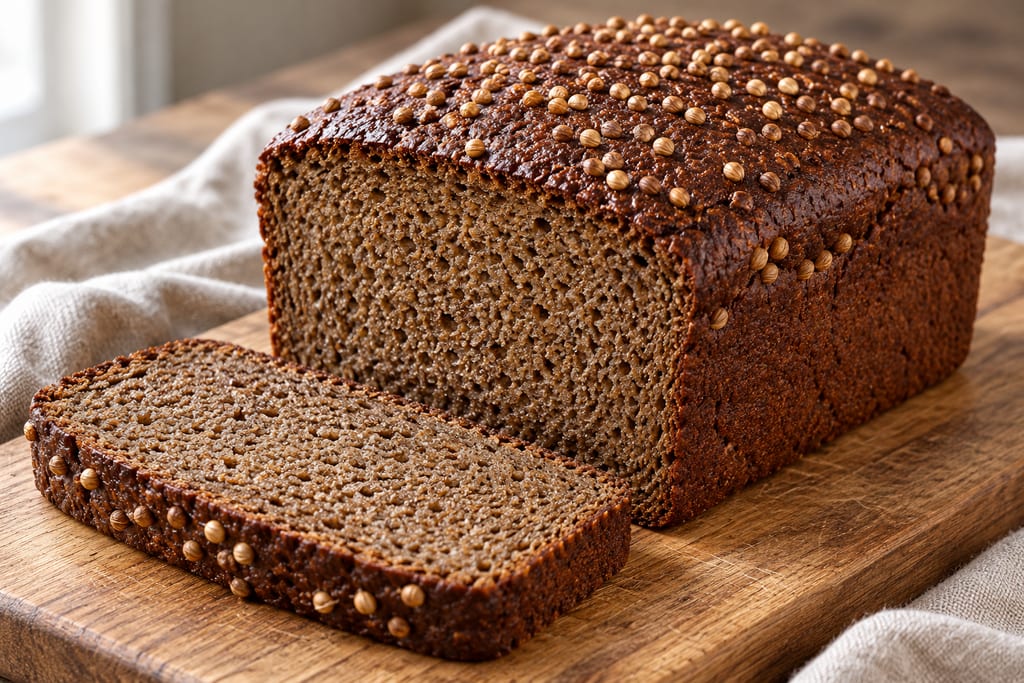
A dark rye sourdough with coriander and roasted barley-malt scald, based on Lily McCann's measured Borodinsk-ish home formula.
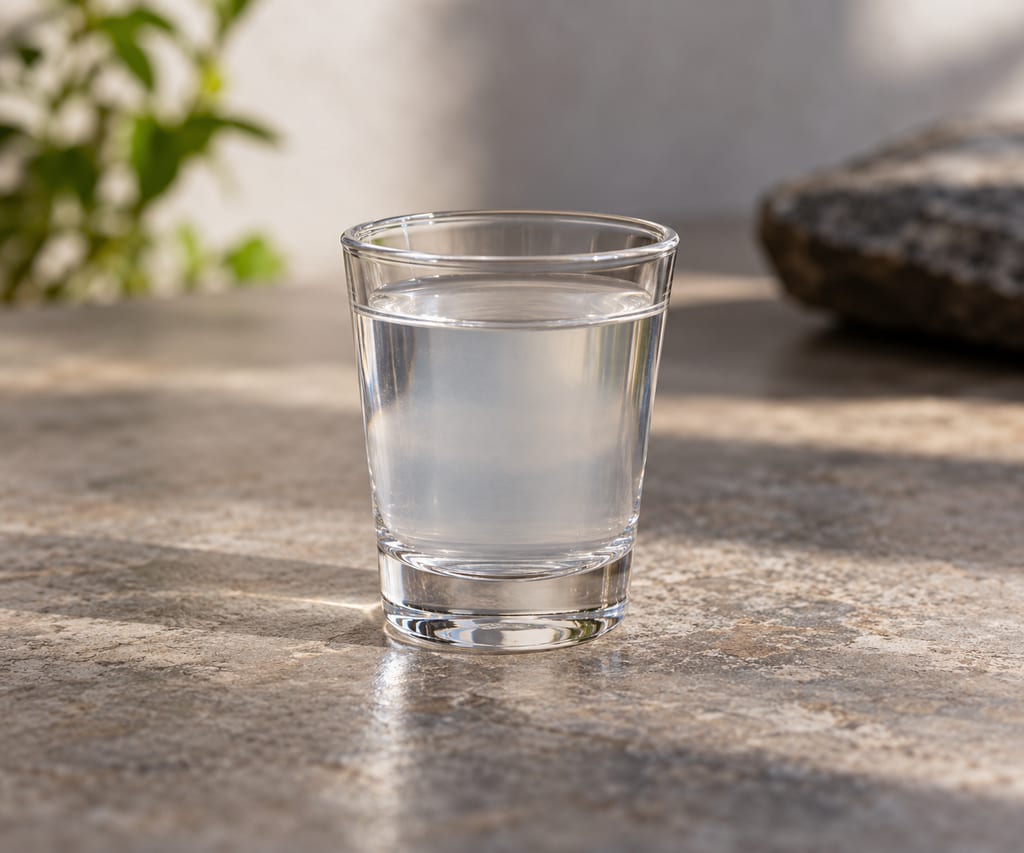
A Buryat milk spirit distilled from khurenge, the backslopped sour dairy ferment, in a cauldron still: a distillate that keeps milky and cheese-like aromas from the dairy it came from.
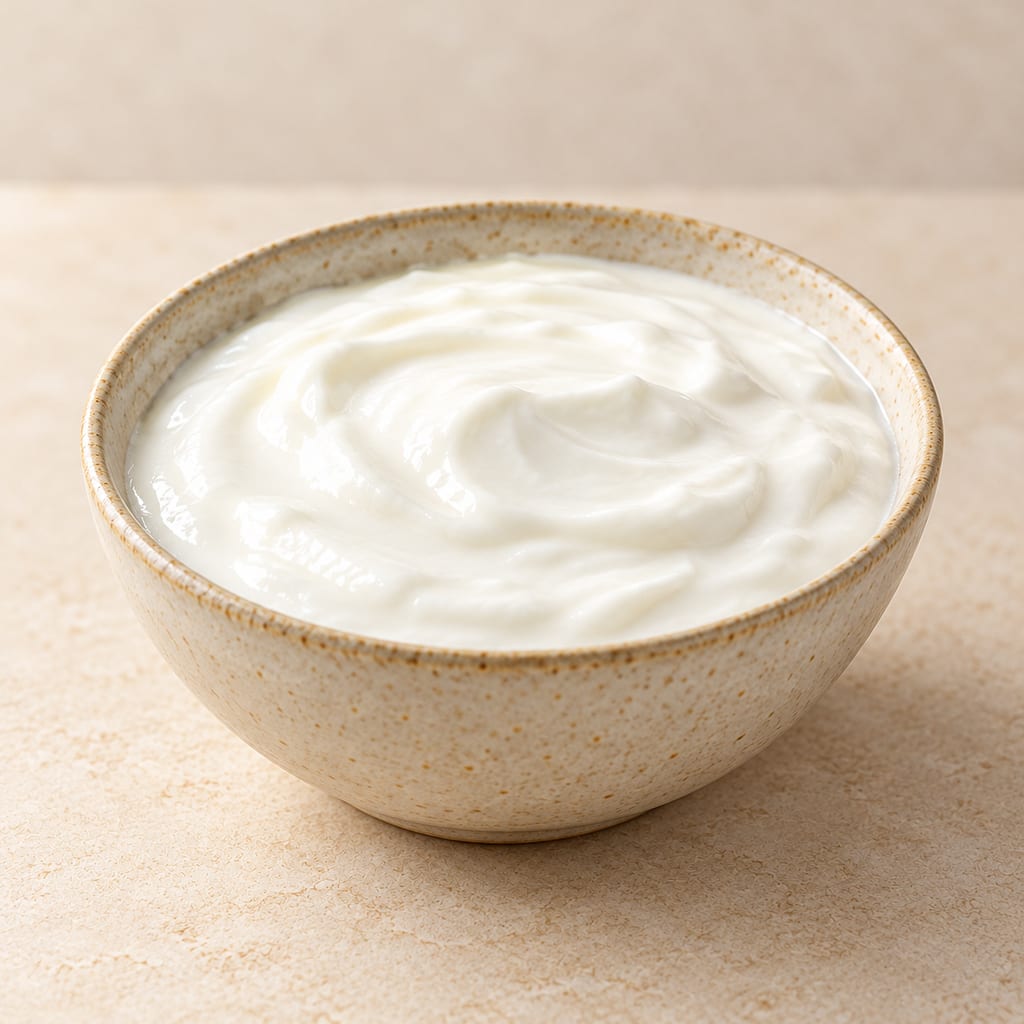
Katyk is a traditional fermented milk of Turkic-speaking peoples, made by souring heated milk with lactic bacteria, often with a spoonful of the last batch, into a thick, sour curd.
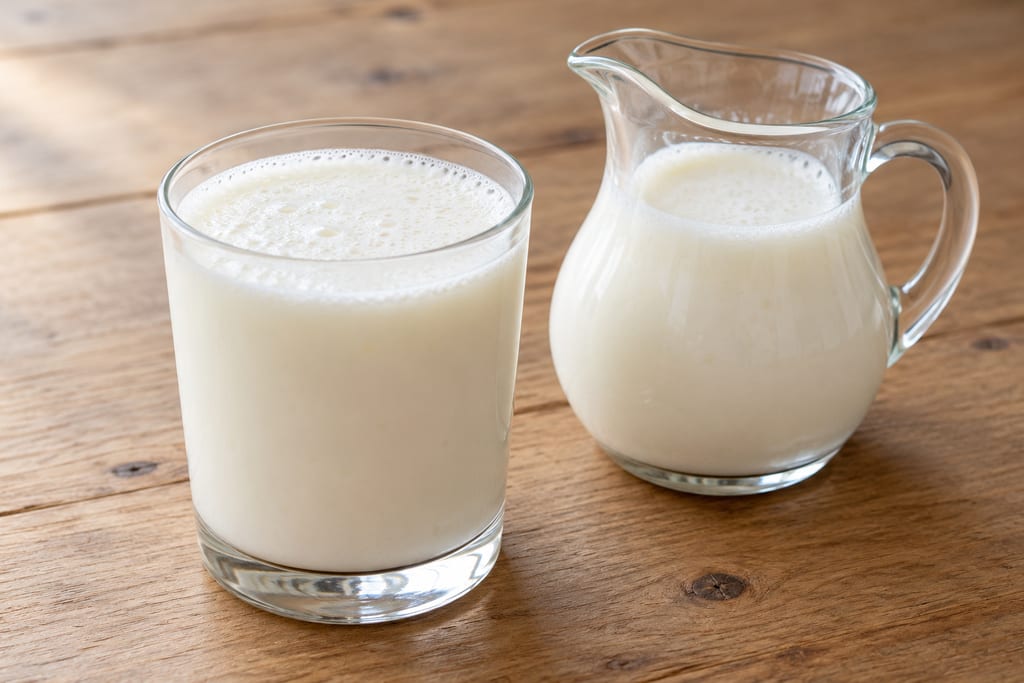
Khurunga is a traditional Buryat fermented milk made with a kept mixed bacteria-and-yeast starter, giving a sour, lightly alcoholic and often fizzy drink that is also the base for milk spirit and curds.

Mochenye yabloki are whole apples held under prepared liquid for several weeks. Russian sources from 1892 and 1959 describe the method. It is not the same as vinegar pickling.
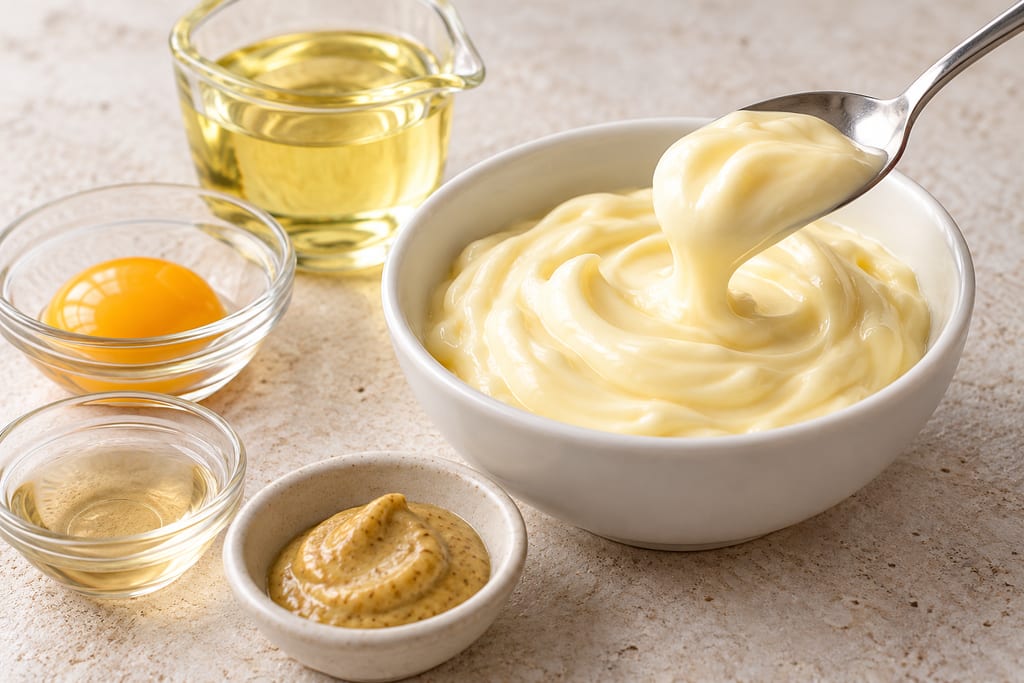
A plain mayonnaise of 200 g refined neutral oil emulsified into pasteurised yolk, vinegar, water and a little Dijon mustard: a clean base for tasting, comparing and flavouring.
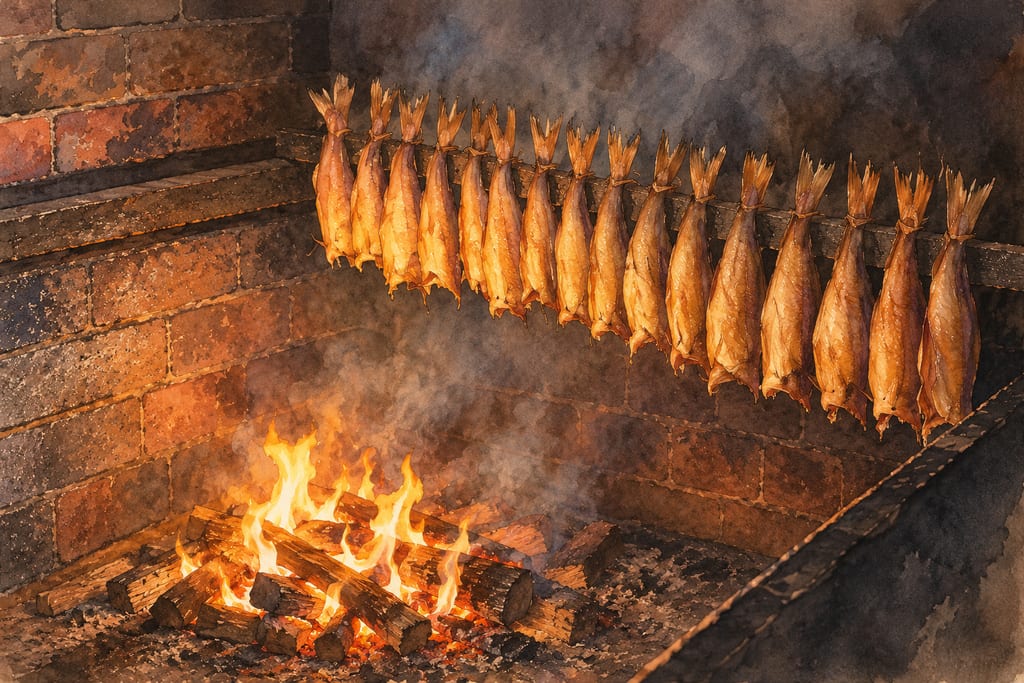
The Arbroath “barrel” is a hardwood-fired smoking pit with triangular rails and a cover. Its documented form belongs to the traditional hot-smoking of haddock around Arbroath and Auchmithie, Scotland.

Crisp battered white fish in warm corn tortillas with shredded cabbage, lime and fresh salsa. This home version draws on the Ensenada style without claiming to be a definitive historic formula.
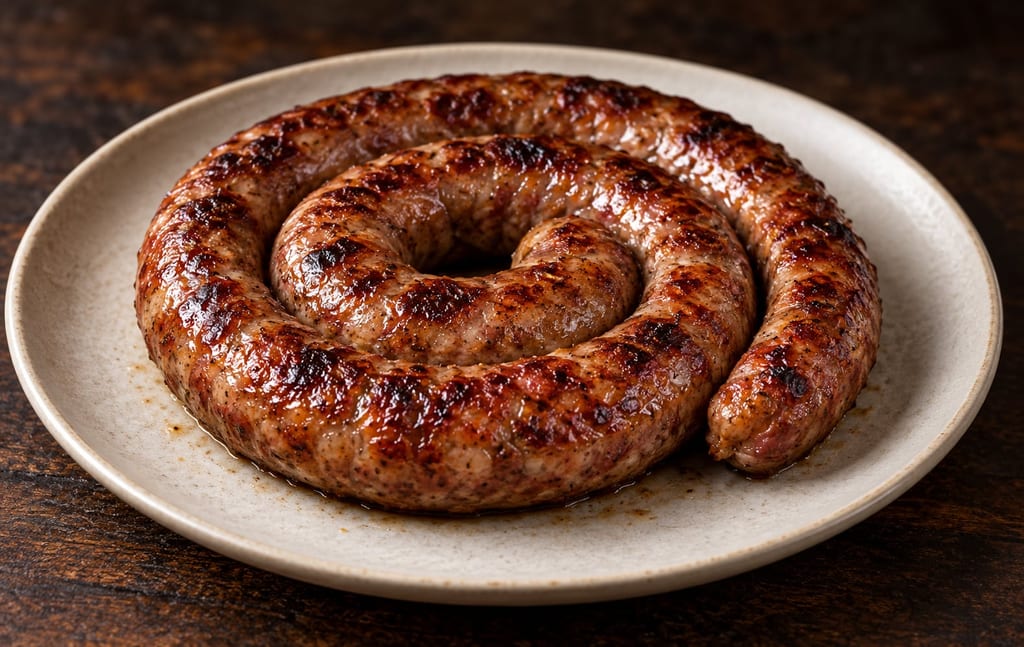
A coarse South African farmhouse sausage of beef with pork or mutton fat, defined by its coriander seasoning and cooked fresh over coals rather than preserved.
A flood-season pit store described for Omagua communities along the Amazon: manioc tubers were buried before inundation and recovered as waters receded. Its shape and lining are not recorded.
A temporary, in-place earthen oven used to cook camas with heat retained by fire-heated stones. The dimensions described here belong to one Kalispel-supervised reconstruction, not a universal form.

Chuño negro is a source-documented Andean potato-preservation practice. This entry records producer tradition; it is not a validated household process for making potentially toxic bitter potatoes safe.
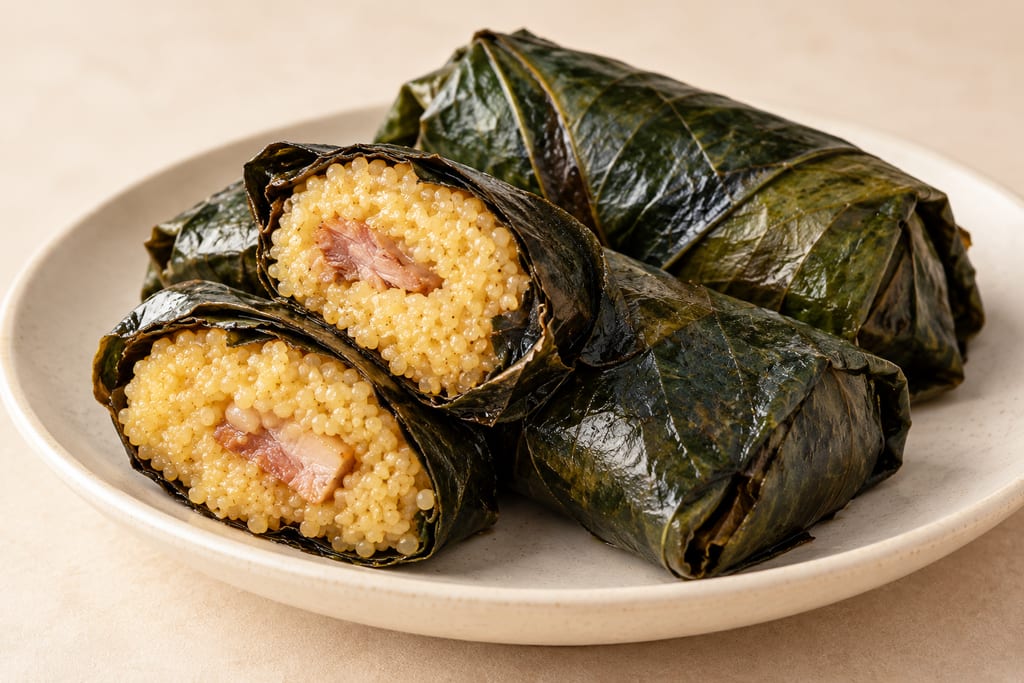
Cinavu is a Paiwan leaf-wrapped parcel built around millet or taro, meat and locally gathered leaves. It belongs to a food culture of harvest, hospitality and shared work, with village recipes differing in both filling and cooking time.
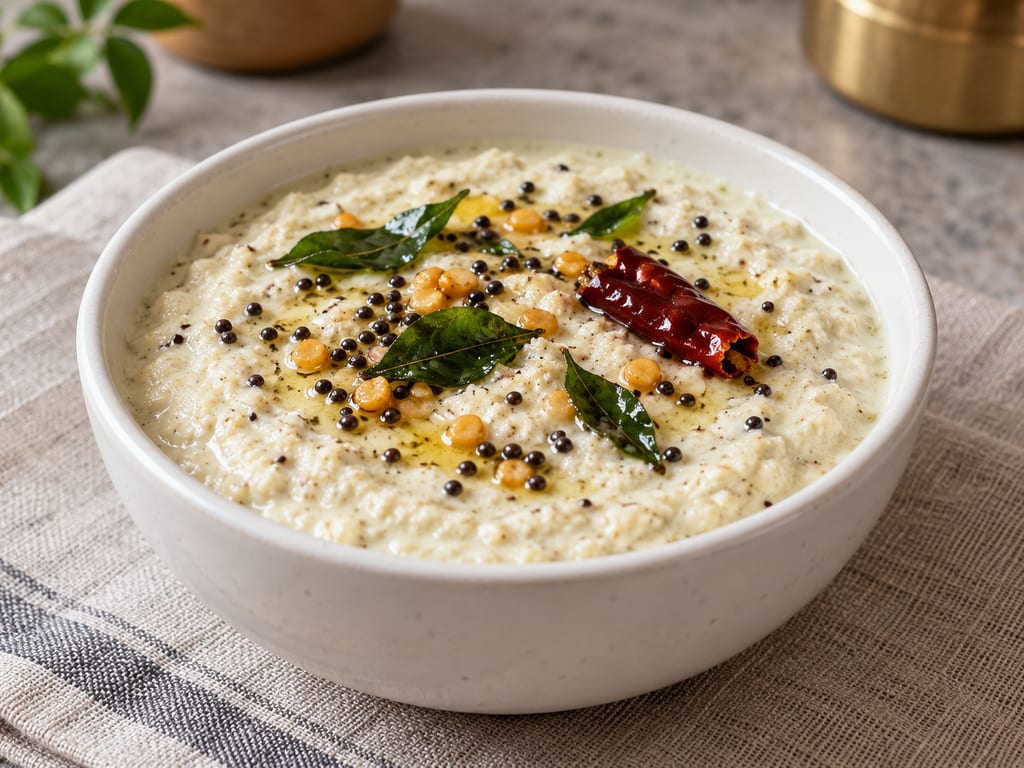
A coconut chutney whose ground base is finished with a separate oil tempering of mustard, urad dal, curry leaves and spices; the author pairs it with South Indian breakfast foods and snacks.

A Cap-Pelé boucanière is an Acadian herring-smoking building. The documented Willie Niles example is a one-storey wood-frame structure with a ridge smoke vent and interior bays for hanging fish-bearing cannes.

Achcharu is a family of Sri Lankan vinegar pickles made with mixed vegetables or seasonal fruit and a piquant spice dressing. This version is a quick, refrigerated, non-fermented mixed-vegetable pickle.

The acocote is a long, hollowed and dried gourd used to draw aguamiel from a mature maguey. It is a harvesting tool: the sap is transferred to a separate vessel before it ferments into pulque.

Adrak murabba preserves young ginger in sugar syrup, a sweet South Asian preparation recorded in Indian cookery and food-processing sources.

Parkia biglobosa seeds are fermented into regional West African seasonings, including nététou, iru, dawadawa and soumbala. The yellow fruit pulp is a separate food, and names and methods vary by place.

Japanese reddish-brown vinegar from sake lees matured about three years, turned to vinegar by acetic bacteria; the vinegar of Handa and Edomae sushi rice.

A refined common-wheat flour blended for a broad range of baking; its protein and behavior vary with wheat, milling and market.

The almond mushroom, Agaricus subrufescens, was cultivated in eastern North America in the 1800s, lost its market, and returned as a cultivated mushroom from Brazil, where it is grown under several names.
No community contributions have been published for this entry yet.
Sign in to contribute. Published comments and photos are free to read.
RoskachestvoMethod
Рецепты томленого молока1 litre milk, at least 3.2% fat; boil, then oven at 80 to 90 C for 4 to 5 hours
loose cover; skin pushed under; yield 700 to 750 ml
scorching, boil-over and coagulation problems
Cited in: How it is made and why each step is there; Eating and using it; Reading results and problems
RoskachestvoMethod
Польза топленого молока и как приготовить его домаindustrial heating at about 95 to 99 C for 3 to 4 hours
separate 5-litre household recipe, 7 to 9 hours at 80 to 90 C
Cited in: What baked milk is; How it is made and why each step is there; Reading results and problems
Рудь (Rud)Method · Variation
Рецепти пряженого молокаUkrainian name пряжене молоко; ceramic-pot method from 180 C down to 70 C
baked milk as the base for ryazhenka
Cited in: What baked milk is; How it is made and why each step is there; Variations; Eating and using it
Gastronom.ruMethod · Use
Топленое молоко в домашних условиях: секреты приготовленияoven method at 80 to 90 C; ceramic and cast-iron vessels; skin; porridge use
Cited in: Eating and using it
Gastronom.ruVariation
Топленое молокоclay-pot recipe, eight hours at 130 C
Cited in: How it is made and why each step is there; Variations; Eating and using it
RosstandartDefinition · Quality
ГОСТ 31450-2013 — Молоко питьевое. Технические условияbaked milk as a separate category of heat-treated drinking milk
in force in Russia 1 July 2014
Cited in: What baked milk is; The record of its past; How it is made and why each step is there; Eating and using it; Reading results and problems
Interstate Council for Standardization, Metrology and Certification, via GarantQuality
ГОСТ 31450-2013 — Молоко питьевое (text)opaque homogeneous liquid, cream colour, cooked-milk taste, mild sweetness
Cited in: What baked milk is; How it is made and why each step is there; Reading results and problems
WikisourceHistory
Толковый словарь живого великорусского языка, 1-е изд., ч. 4 (1866), с. 381milk heated long in the oven's residual heat; reddish thick milk with skins
Cited in: The record of its past
WikisourceHistory · Variation
Толковый словарь живого великорусского языка, 2-е изд., т. 4 (1882), с. 435topnik, topelka and toplenka in northern dialects
Cited in: The record of its past; Variations
Russian Academy of Sciences, Vinogradov Russian Language InstituteHistory · Variation
Regional dairy vocabulary of the Russian North (2016)prolonged oven heating widespread in the Russian North; regional names
Cited in: The record of its past; Variations
hrinchenko.comHistory
пряжений (Hrinchenko dictionary)priazhene moloko as the equivalent of Russian toplyonoe moloko
Cited in: The record of its past; Variations
National University of Food Technologies, KyivHistory
Review of traditional Ukrainian dairy technologies (2026)baked milk among traditional Ukrainian dairy technologies
Cited in: The record of its past; Variations
Russian patent, published 2000Method
RU2146094C1: baked milk production methodbaking followed by additional processing including sterilisation
Cited in: The record of its past; Variations
djvu.onlineMethod · Science
Dairy technology handbook (1999)standardise, homogenise, heat to 95 to 99 C for 3 to 4 hours (4 to 5 for low-fat); periodic mixing; cooling
Cited in: The record of its past; What the heat does; How it is made and why each step is there
Tourist Information Centre of the Republic of KareliaVariation · Use
Молоко и молочные продукты (Karelian cuisine)hawottumaido and kettumaido; skin pushed under; served with tea, coffee and curd cheese
Cited in: Variations; Eating and using it
Pechora Museum of Local HistoryVariation
Traditional Komi foodsbaked milk in Russian-style masonry ovens; fermented milk and curd as separate operations
Cited in: Variations
prodinfo.byVariation
Whole-milk productscommercial baked milk producers in Belarus
Cited in: Variations
International Journal of Molecular Sciences, 2024Science
The Impact of Thermal Treatment Intensity on Proteins, Fatty Acids, Macro/Micro-Nutrients, Flavor, and Heating Markers of Milk: A Comprehensive ReviewMaillard reaction, lactulosyllysine, melanoidins
heating markers lactulose, furosine, HMF
nutritional effects of heating
Cited in: What baked milk is; What the heat does; Reading results and problems
Foods, 2025Science
Effect of Heat Pasteurization and Sterilization on Milk Safety, Composition, Sensory Properties, and Nutritional Qualityeffects of heat treatment on milk composition and quality
Cited in: What the heat does; Reading results and problems
Foods, 2022Safety
Bacillus cereus in Dairy Products and Production Plantsspore survival; cooling and temperature control as hazards
Cited in: Reading results and problems
German Federal Institute for Risk Assessment (BfR)Safety
Bacillus cereusordinary heat treatment does not reliably remove spores
Cited in: Reading results and problems
US Centers for Disease Control and PreventionSafety
Raw Milkpathogens in raw milk; choose pasteurised milk
Cited in: Reading results and problems
FoodSafety.govSafety
4 Steps to Food Safetyrefrigerate within 2 hours; refrigerator at 4 C or below
Cited in: How it is made and why each step is there; Reading results and problems
US Food and Drug AdministrationSafety
Safe Food Handlingclean equipment; prevent contamination after heating
US National Institute of Diabetes and Digestive and Kidney DiseasesSafety
Eating, Diet, and Nutrition for Lactose Intolerancelactose remains in milk
Cited in: Reading results and problems