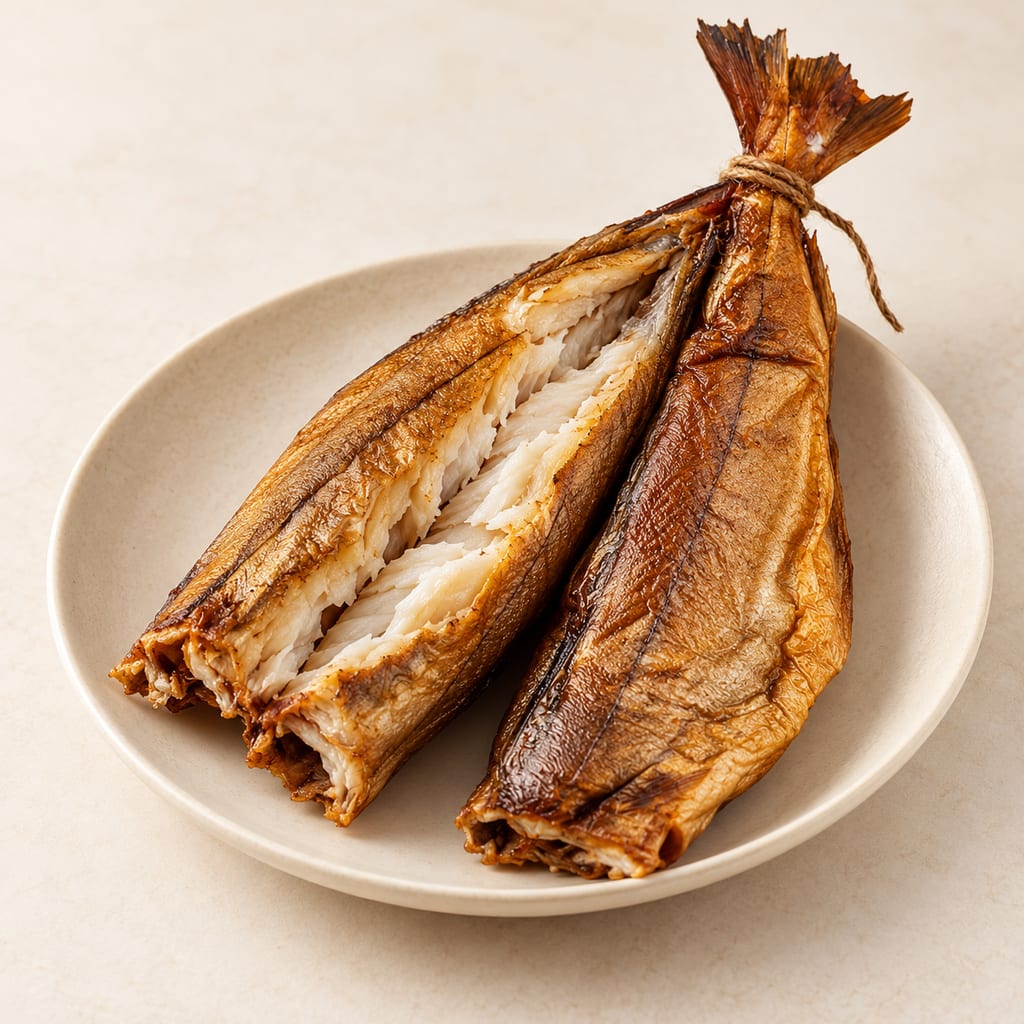
Arbroath smokie
Arbroath smokies are whole haddock dry-salted, paired by the tail and hot-smoked in a protected coastal area. Their recorded history links Auchmithie and Arbroath, though the exact origin is unsettled.
 FermenteaWhere food goes to change
Built structures · Pits and cavities
Arbroath smoking pit · smokie barrel
The Arbroath “barrel” is a hardwood-fired smoking pit with triangular rails and a cover. Its documented form belongs to the traditional hot-smoking of haddock around Arbroath and Auchmithie, Scotland.
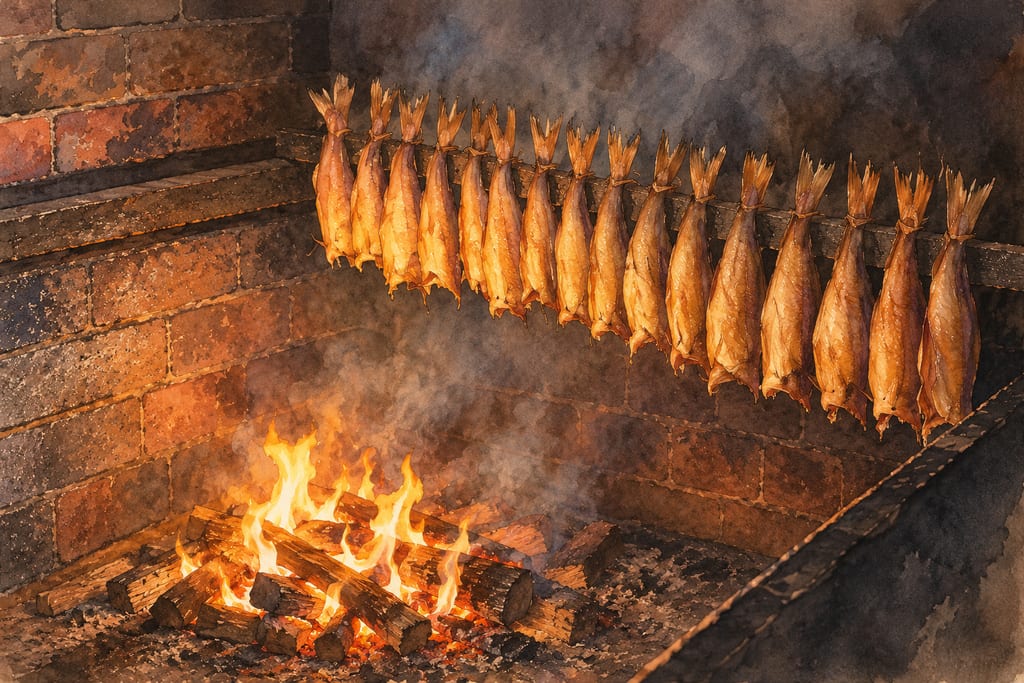
In the protected Arbroath method, “barrel” is the traditional name for the smoking pit. The UK product specification describes hardwood blocks of beech or oak burning at the bottom, with fish suspended above on triangular-section rails. A cover limits oxygen to the fire and brings the flames down while the embers, heat and moisture create the conditions that cook and colour the fish.
This is a fixed smoking structure rather than a generic wooden barrel used as a container. The word survives as a local name for the pit. The specification gives the structure a practical relationship to the food: the hearth is below, and the fish rails span above it.
Local producer descriptions distinguish an earlier arrangement in which the barrel was sunk into the ground from later above-ground brick chambers. One account gives a contemporary brick chamber as about two metres square, but that measurement belongs to the described modern structure and is not a historic standard. The protected specification does not assign one universal material, depth or size to every barrel pit.
The illustration depicts the contemporary, above-ground brick chamber visible in the Visit Angus photograph. It is an editorial image of that present-day interior, not a reconstruction of the earlier buried arrangement and not a claim about every producer’s installation.
The method is associated with the coast around Arbroath and Auchmithie in Angus. The product specification identifies Auchmithie as the village where the smokie was first recognised and traces the documented process to the late nineteenth century. It describes the hand-smoked method as essentially unchanged since then. Local interpretation places the smokehouses among the harbour-side fishing district of Arbroath.
The product's protected name has a defined production area, and its product specification describes the method used by registered producers. The barrel should therefore be understood in that local production context, rather than as a generic smoke pit for any fish or region.
Paired fish are placed on triangular-section rails over the hardwood. The cover reduces the fire's oxygen supply; heat and humidity then cook and colour the haddock. The specification gives 45 to 60 minutes for its commercial smoking stage but says the weather, dryness of the wood and the smoker's judgement affect the result. Those details describe the registered production method, not a guaranteed schedule for another structure.
The local producer account mentions a hessian cloth over the lid in the present setup. Since the product specification does not define hessian as a universal cover, it is retained as a reported variation rather than a defining feature of every historic barrel.
The traditional structure contains a hardwood fire and hot embers; the published product specification describes a commercial method, not a safe construction or operating plan.
Hazard sourceTreat the historical record as descriptive; it supplies no modern fire-safety design or operating limits.
Control sourceThis entry describes a traditional food structure and is not construction or process-validation guidance.
This reflects the protected local production tradition, not the location of every contemporary smokehouse or any single illustrated structure.
Arbroath smokies are whole haddock dry-salted, paired by the tail and hot-smoked in a protected coastal area. Their recorded history links Auchmithie and Arbroath, though the exact origin is unsettled.
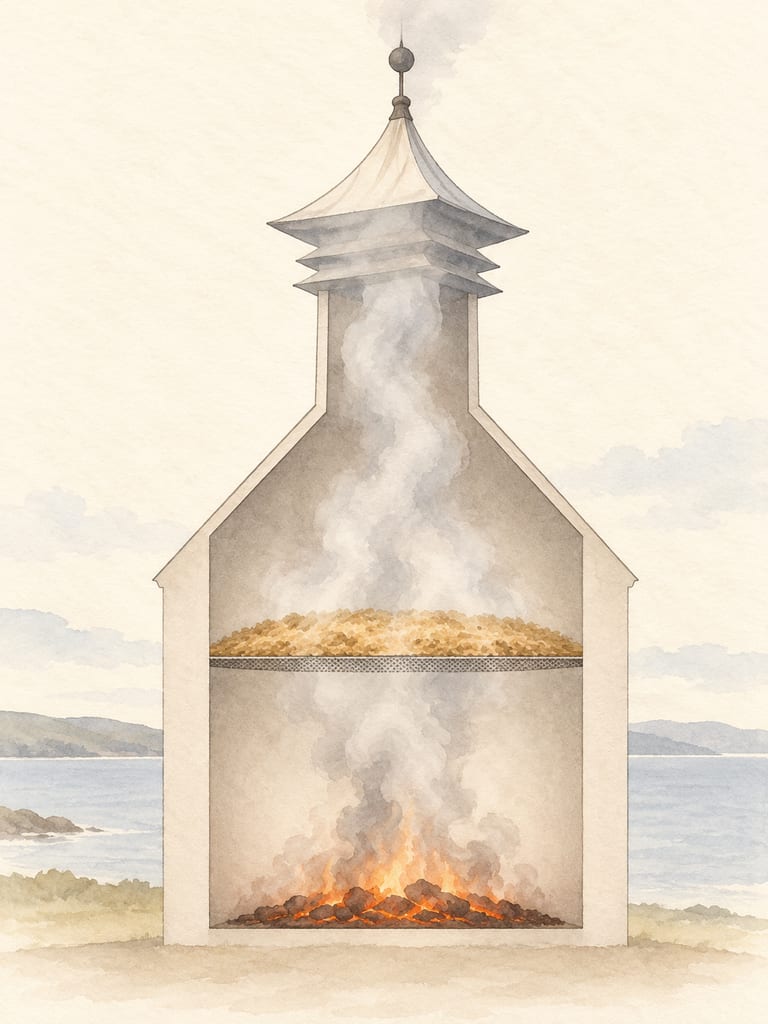
A fixed malt-drying kiln at Laphroaig on Islay, where peat smoke passes through damp malt before it is fully dried.
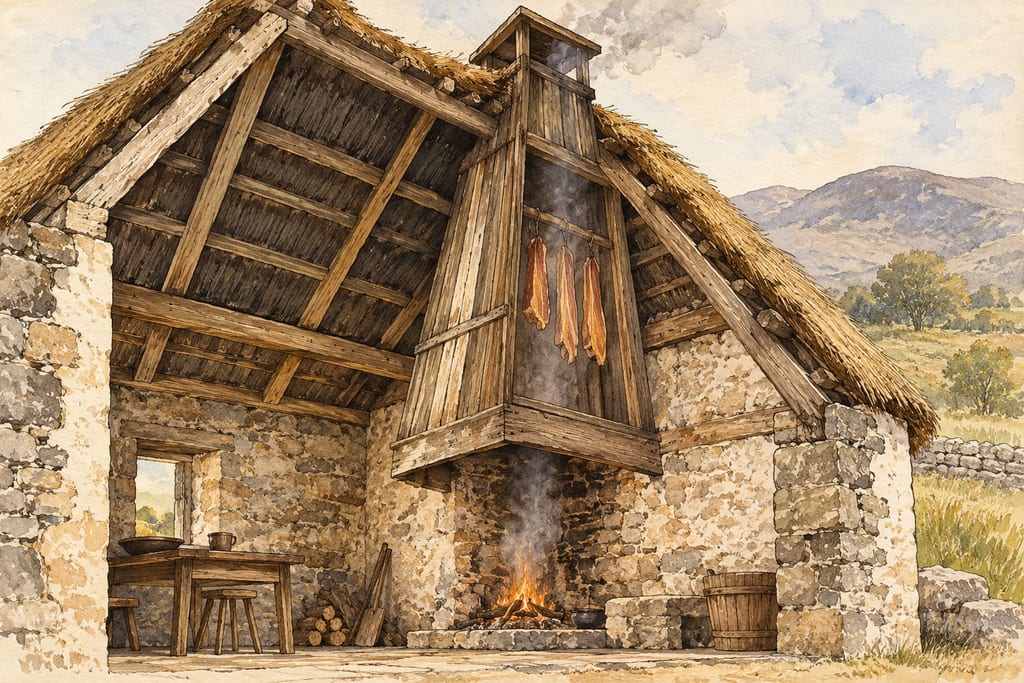
A domestic hearth chimney used to smoke cured meat in historical Scottish practice. It was part of the house, not a freestanding smokehouse, and the surviving chimney forms were varied.

Crisp battered white fish in warm corn tortillas with shredded cabbage, lime and fresh salsa. This home version draws on the Ensenada style without claiming to be a definitive historic formula.
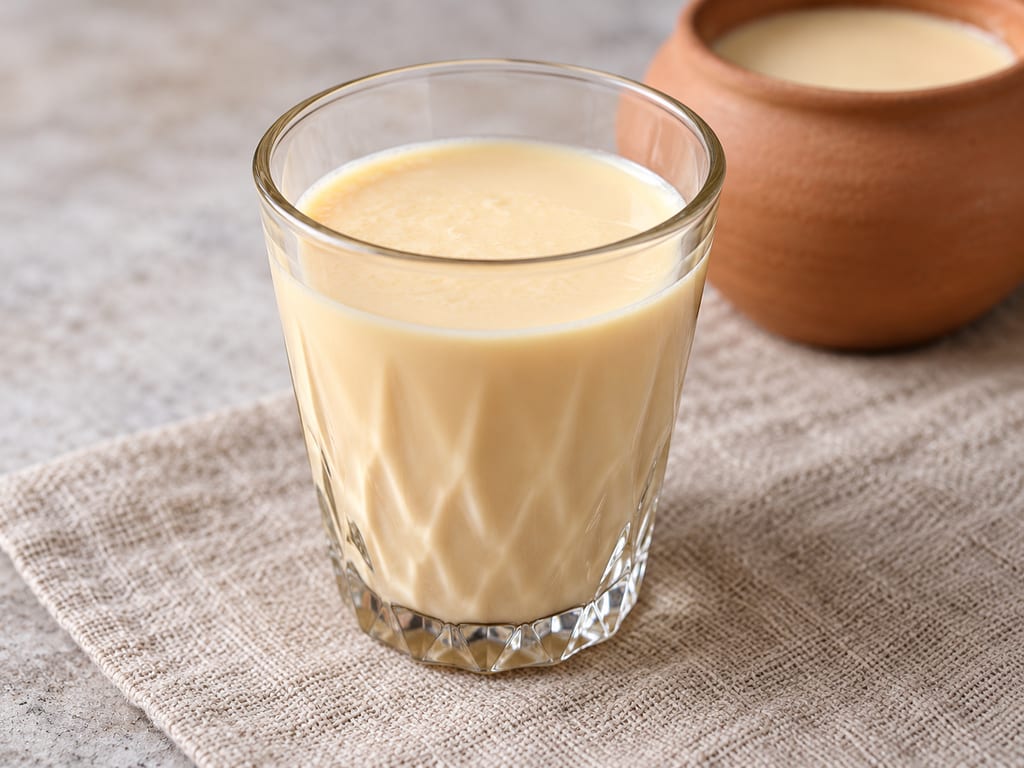
Baked milk is an Eastern European preparation of milk held at high heat for hours until it turns cream-coloured with a cooked, mildly sweet flavour, without any fermentation.
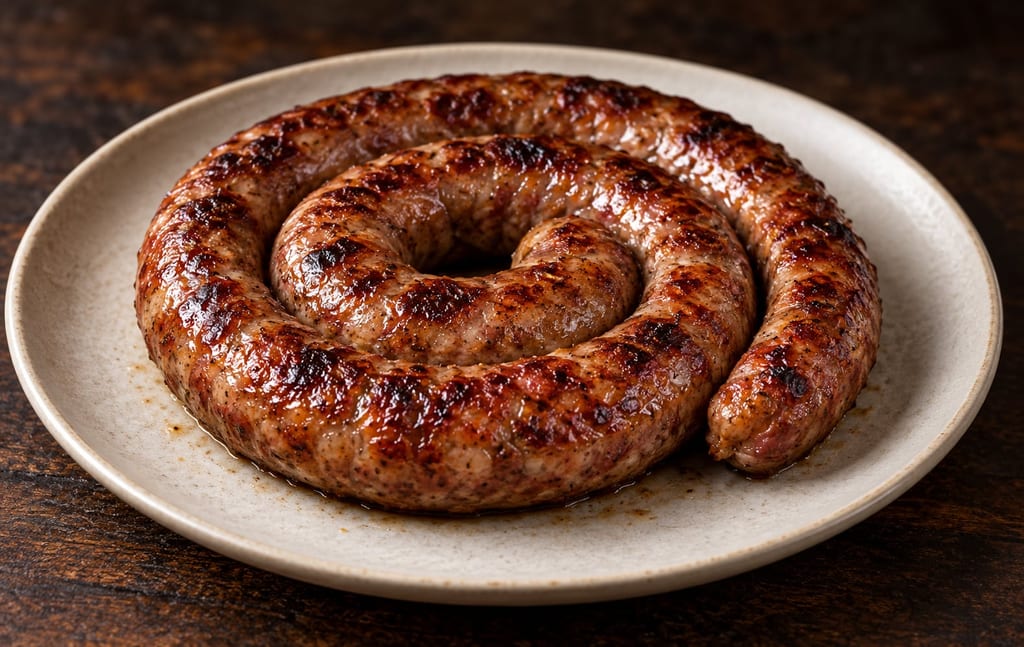
A coarse South African farmhouse sausage of beef with pork or mutton fat, defined by its coriander seasoning and cooked fresh over coals rather than preserved.
A flood-season pit store described for Omagua communities along the Amazon: manioc tubers were buried before inundation and recovered as waters receded. Its shape and lining are not recorded.
A temporary, in-place earthen oven used to cook camas with heat retained by fire-heated stones. The dimensions described here belong to one Kalispel-supervised reconstruction, not a universal form.

Chuño negro is a source-documented Andean potato-preservation practice. This entry records producer tradition; it is not a validated household process for making potentially toxic bitter potatoes safe.
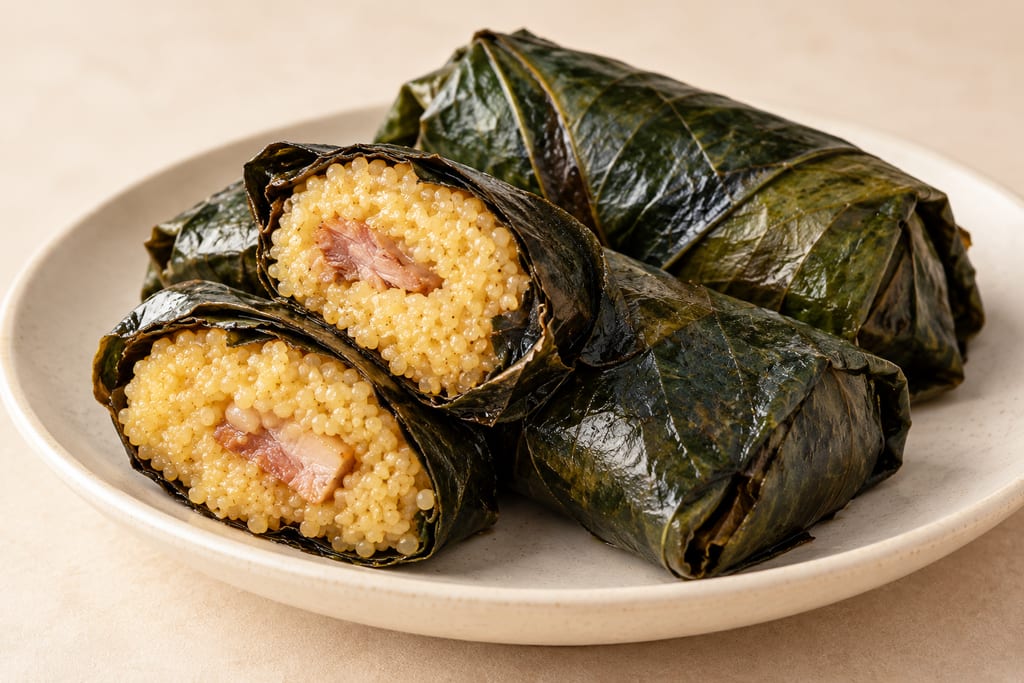
Cinavu is a Paiwan leaf-wrapped parcel built around millet or taro, meat and locally gathered leaves. It belongs to a food culture of harvest, hospitality and shared work, with village recipes differing in both filling and cooking time.
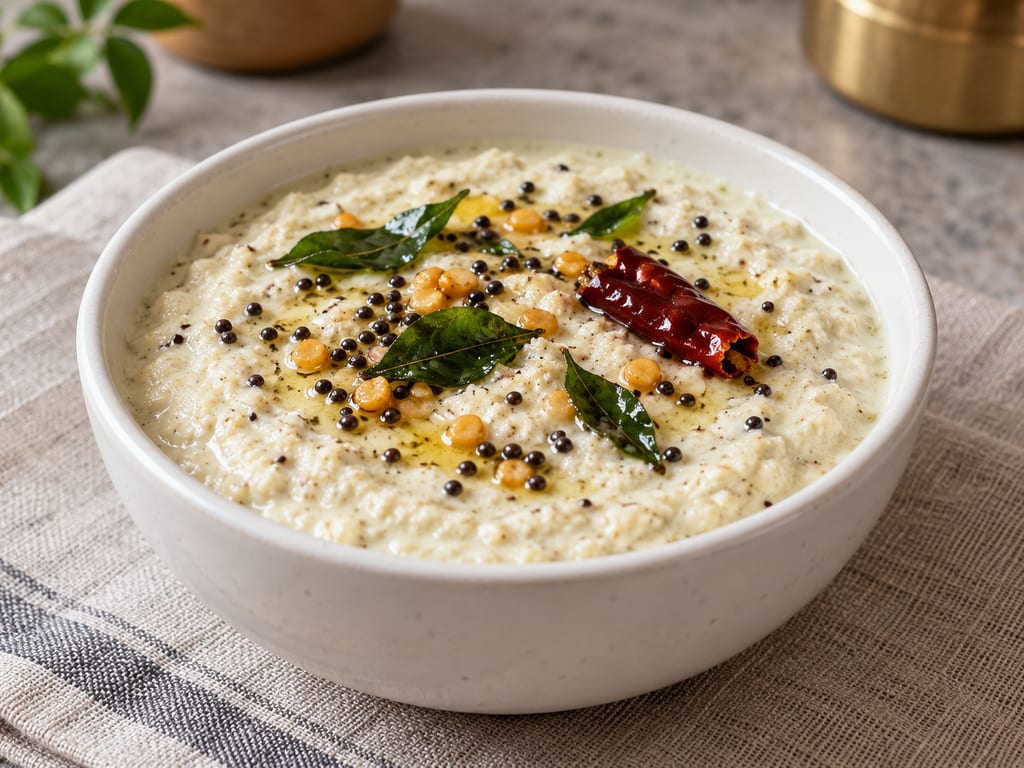
A coconut chutney whose ground base is finished with a separate oil tempering of mustard, urad dal, curry leaves and spices; the author pairs it with South Indian breakfast foods and snacks.

A Cap-Pelé boucanière is an Acadian herring-smoking building. The documented Willie Niles example is a one-storey wood-frame structure with a ridge smoke vent and interior bays for hanging fish-bearing cannes.

Achcharu is a family of Sri Lankan vinegar pickles made with mixed vegetables or seasonal fruit and a piquant spice dressing. This version is a quick, refrigerated, non-fermented mixed-vegetable pickle.

The acocote is a long, hollowed and dried gourd used to draw aguamiel from a mature maguey. It is a harvesting tool: the sap is transferred to a separate vessel before it ferments into pulque.

Adrak murabba preserves young ginger in sugar syrup, a sweet South Asian preparation recorded in Indian cookery and food-processing sources.

Parkia biglobosa seeds are fermented into regional West African seasonings, including nététou, iru, dawadawa and soumbala. The yellow fruit pulp is a separate food, and names and methods vary by place.

Japanese reddish-brown vinegar from sake lees matured about three years, turned to vinegar by acetic bacteria; the vinegar of Handa and Edomae sushi rice.

A refined common-wheat flour blended for a broad range of baking; its protein and behavior vary with wheat, milling and market.

The almond mushroom, Agaricus subrufescens, was cultivated in eastern North America in the 1800s, lost its market, and returned as a cultivated mushroom from Brazil, where it is grown under several names.
No community contributions have been published for this entry yet.
Sign in to contribute. Published comments and photos are free to read.
Department for Environment, Food & Rural Affairs; The Arbroath Fish Processors AssociationStructure · Process · History · Geography
Protected food names: Arbroath smokies — product specificationDefines the smoking pit, traditionally called the barrel, with beech or oak hardwood at the bottom, triangular rails and a cover.
Describes the 45–60-minute commercial hot-smoking phase and variation with weather, wood dryness and smoker judgement.
States the method is essentially unchanged from the 19th century and traces documentary evidence to late-19th-century Auchmithie.
Cited in: The “barrel” is a smoking pit; Buried pits and later chambers; A place-bound process; Rails, cover and heat
Arbroath Smokies (local producer information)Historical form · Structure variation
Arbroath SmokiesDistinguishes a traditional barrel sunk into the ground from a contemporary above-ground brick structure, described as approximately two metres square.
Describes hardwood fire, fish sticks placed above the fire, lid and hessian cloth.
Cited in: Buried pits and later chambers; Rails, cover and heat
Visit AngusRegional context · Traditional use
The Arbroath Smokie TrailPlaces the Arbroath Smokie in and around Arbroath in Angus and describes fish hung in pairs over hardwood in a lidded barrel.
Describes local smokehouses in the Fit o’ the Toon and a route between Arbroath and Auchmithie.
Cited in: The “barrel” is a smoking pit; Buried pits and later chambers; A place-bound process
Department for Environment, Food & Rural Affairs, GOV.UKGeographical indication
Arbroath SmokiesRecords UK Protected Geographical Indication registration and links to the product specification.
Cited in: A place-bound process
TasteAtlasImage reference
Arbroath SmokiesThe linked photo shows a wooden barrel-style smoker with haddock suspended from rails; the page does not identify its photographer or license.