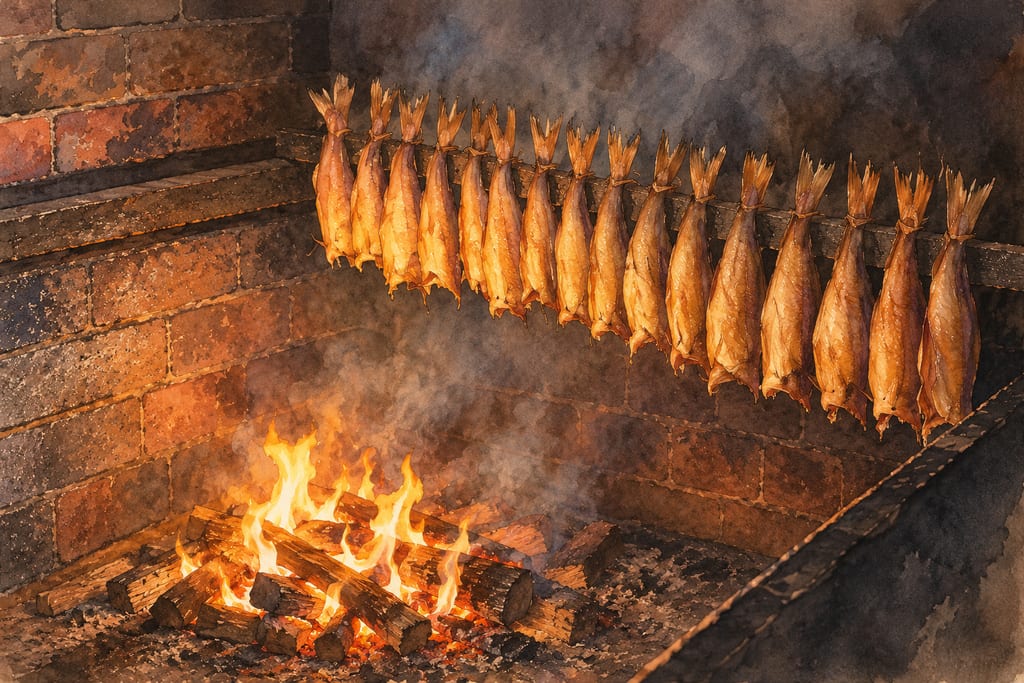
A kiln built around peat smoke
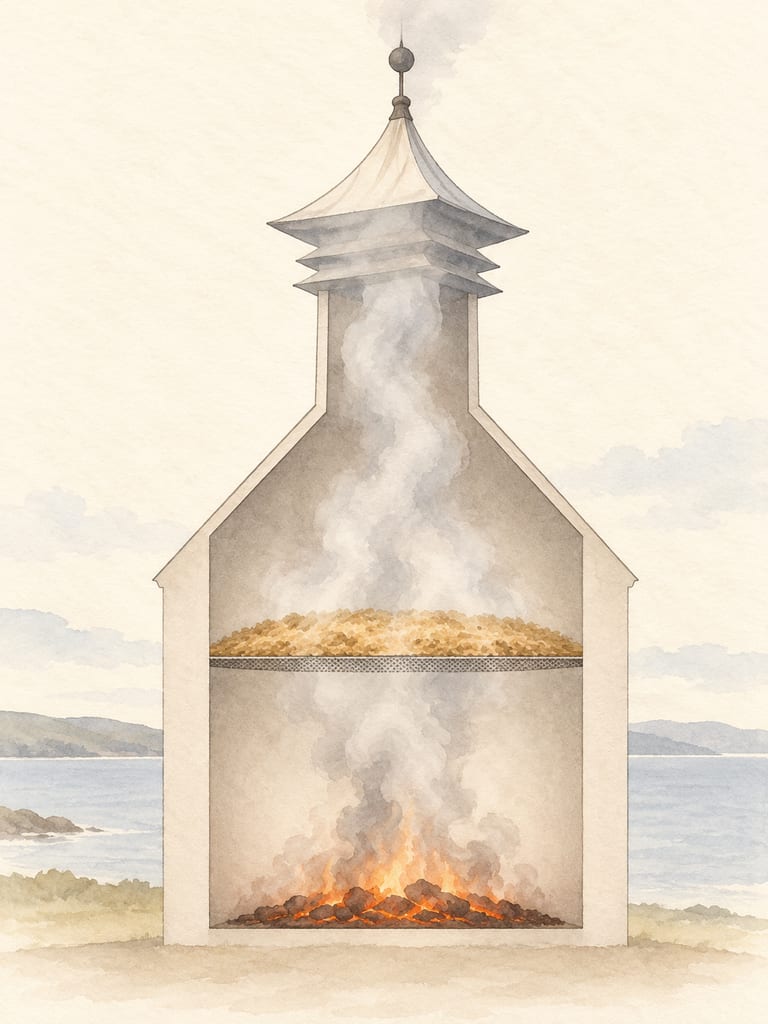
Laphroaig places its peat kilns on Islay overlooking the bay and dates them to 1840. That date belongs to the distillery's account; it should not be read as proof that the present structure retains every element from the first kiln. A photograph identified with the distillery shows the distinctive pagoda-shaped chimney, while the company's process description explains the interior path of the smoke.
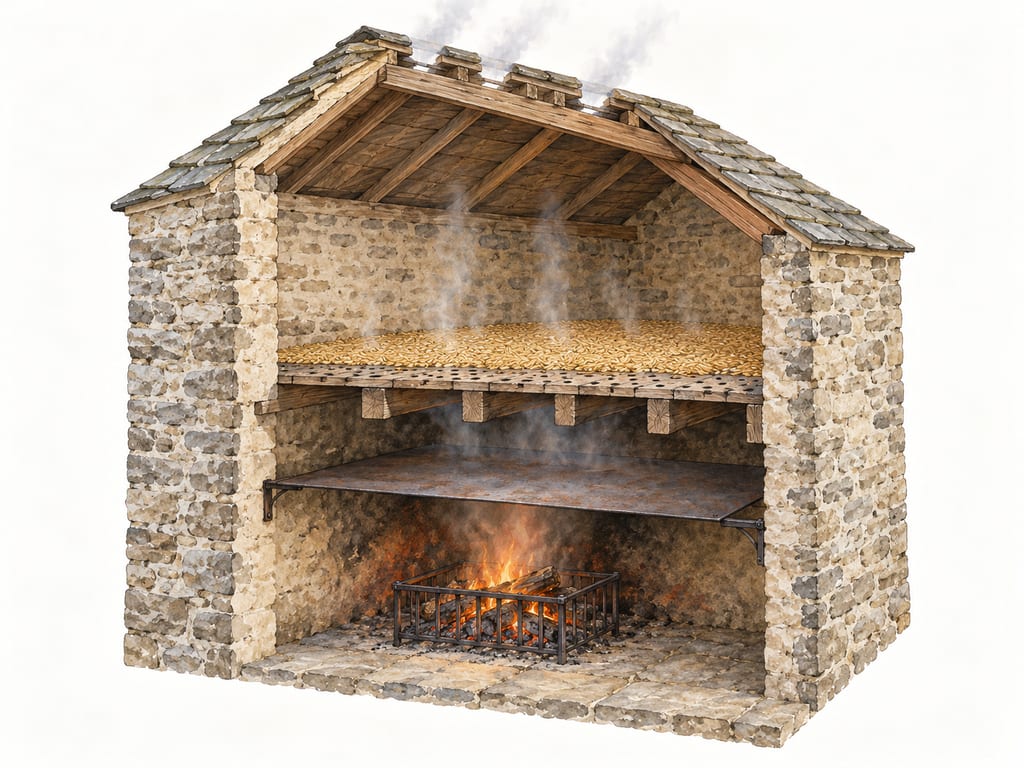
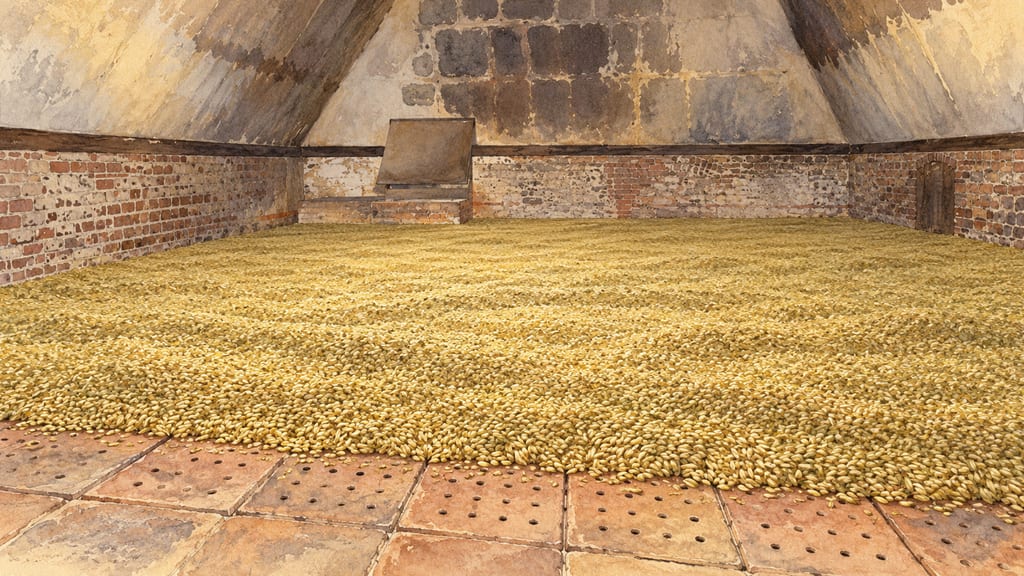
The key feature is the perforated drying floor. Damp, germinated barley is exposed to peat smoke passing upward through that floor before the malt is fully dried. Laphroaig describes this as a deliberate smoke-first sequence and reports a smoke stage of around 10 to 12 hours. The source calls the smoke stage cold-smoking but supplies no numerical fire temperature.
Sources for this section
The malt, fire and drying distance
The material on the floor is malted barley, not finished whisky. Laphroaig says that once the grain is malted it is spread on mesh 16 feet above the peat fire for drying. This is a grain-to-fire separation, not the building's total height or a general dimension for Scottish kilns. The company links the slower drying at this distance with more time for the damp grain to absorb flavour.
After drying, the malt goes on to mashing. The kiln therefore belongs to the grain preparation stage of whisky-making; the spirit is not smoked in this building. The process page supports this Laphroaig example, not an identical layout at every distillery.
Sources for this section
What the sources do not specify
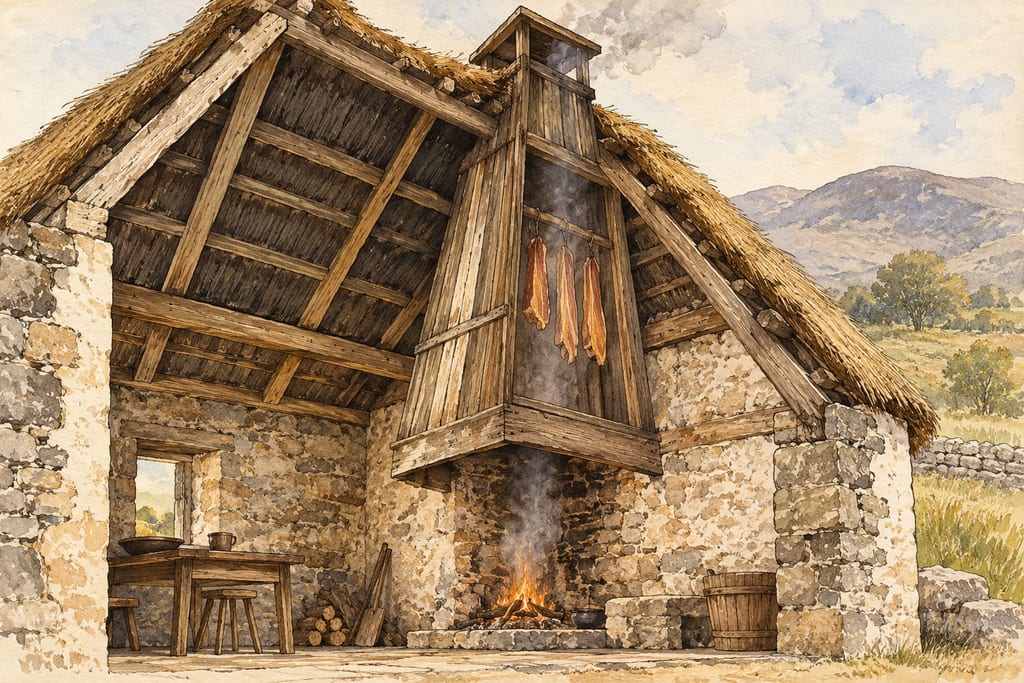
The public description does not give the overall footprint, foundation, wall or roof materials, floor thickness, load rating, construction sequence, kiln capacity or a fire-control specification. Those details are left unstated here. The source documents the site's use and a few parts of its working arrangement, but this page is descriptive and should not be used as a construction or operating plan.
Sources for this section
History
Laphroaig's own process account says its peat kilns were built in 1840. This is the company's date for its kilns, not independent proof that every present wall or roof is unchanged from that year.
Site
SettingLaphroaig's peat kilns overlook the bay on Islay.
NotesThe source identifies the site and kiln arrangement but gives no foundation, ground conditions, overall footprint, building materials or construction sequence.
A build is made where it stands: moving it means building it again.
How it is built
Risks and precautions · High risk
Fire and fuelThe documented arrangement burns peat beneath malt-drying surfaces.
Hazard source
Hot smoke and air pathPeat smoke rises through the perforated floor during the documented process.
Hazard source
This historical description is not a construction plan or fire-safety specification. The source gives no structural loads, material specifications, fire controls or ventilation design.
Materials
- peat — Burned as the smoke source; not specified as a building material.
- perforated drying floor — Allows peat smoke to rise through damp malt.
- mesh — Supports malt above the peat fire for full drying.
- Peat is burned below a perforated drying floor; smoke rises through the floor.
- Damp, germinated barley receives peat smoke before full drying; Laphroaig reports about 10–12 hours for this smoke stage.
- For the later drying stage, malt is spread on mesh 16 feet above the peat fire. This is a grain-to-fire distance, not the kiln's overall height.
Places
Laphroaig distillery, Islay
Documented use · Locality evidenceThe source pins the kiln to Laphroaig on Islay and does not generalise its structure to every distillery there.