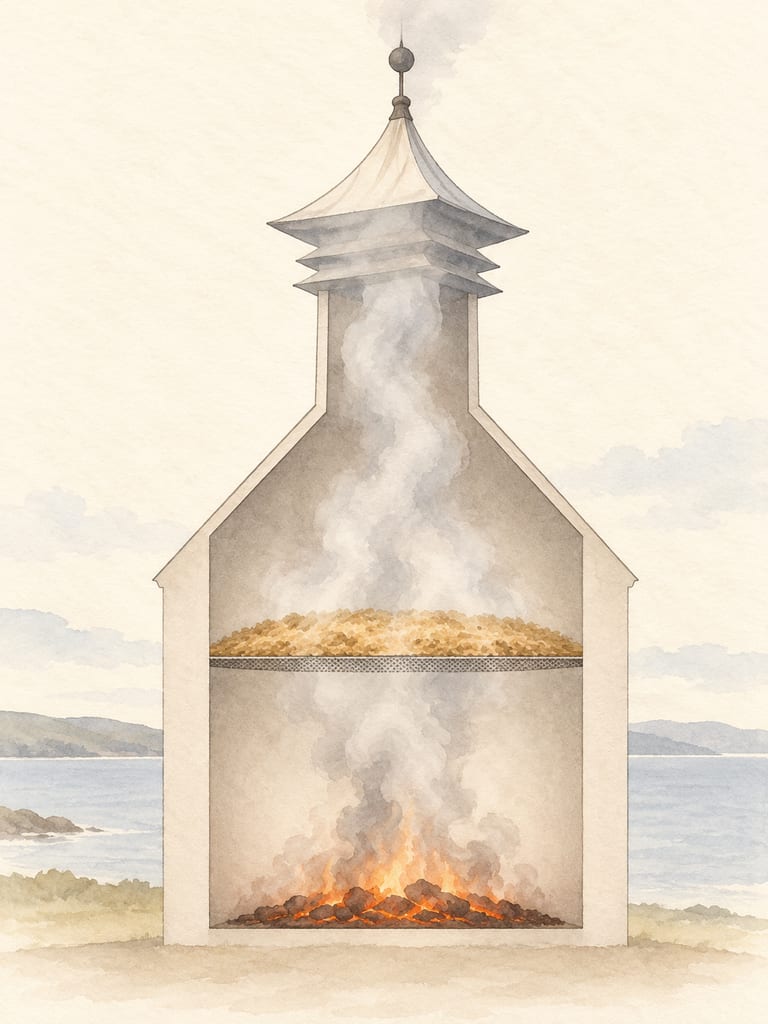
Peat-fired malt kiln
A fixed malt-drying kiln at Laphroaig on Islay, where peat smoke passes through damp malt before it is fully dried.
 FermenteaWhere food goes to change
Built structures · Place · malt-kiln-buildings
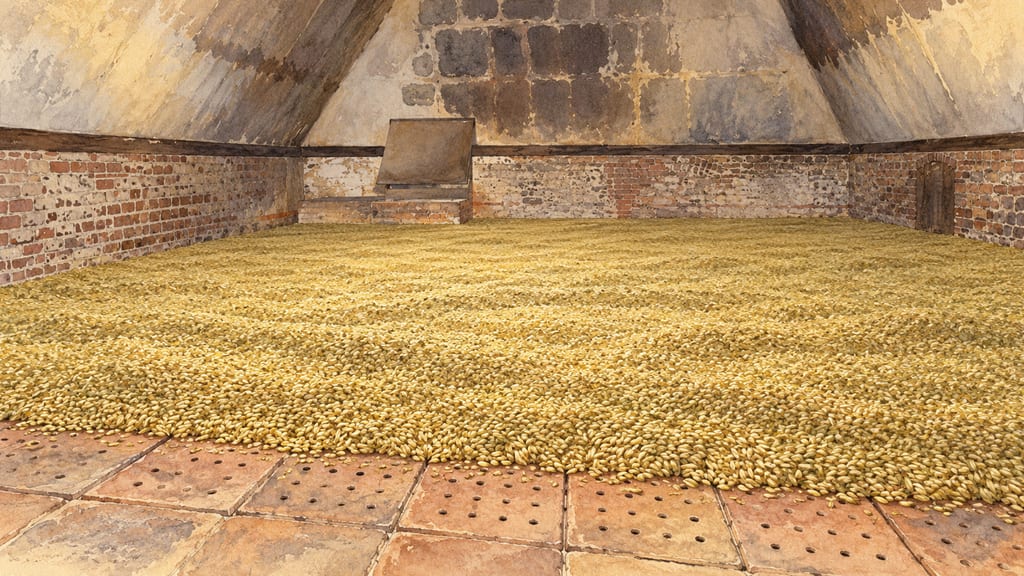
A Tuckers Maltings kiln floor in Newton Abbot: the 1900 complex grew from two kilns to four. A 2010 photo shows wire mesh; the original floor used perforated ceramic blocks.
Tuckers Maltings is a site-specific floor-malting complex in Newton Abbot, Devon. Historic England dates the listed building to 1900 and describes two long ranges, with hipped-roofed kiln blocks as part of the larger maltings. The current owner's history says the original 60-quarter malthouse opened with two kilns in 1900; another block added two more between 1901 and 1903. This page covers that fixed malting structure, not a portable dryer or a universal floor-kiln design.
Historic England records four kilns formerly heated by coal delivered directly from the railway behind the site. Its description of the building includes Devon limestone rubble, red brick details and slate roofing. Those are listed materials for the complex; the source does not allocate every wall or roof component to a particular kiln chamber. The site's owner records production ceasing in October 2018 and says parts of the original building were later repurposed. The 2010 kiln-floor image therefore documents a working production period, not the present condition of the interior.
A photograph taken at Tuckers Maltings on 23 October 2010 shows a bed of grain spread over a broad kiln floor. The Geograph caption says the floor visible at that time was wire mesh; it also states that the earlier floor was made from ceramic blocks perforated with small holes. The accompanying description identifies a vent at one end and says hot air was forced through the grain. It describes kilning as a two-stage sequence of drying followed by curing.
The drying floor is recorded with two surfaces: an older ceramic-block surface, and the wire mesh shown in a 2010 photograph.
The broader HMRC manual describes traditional malt kilns as a furnace beneath a drying floor, which could use perforated tiles or wire. It also describes varied natural-draught roofs and other ventilation arrangements. Those are general features across traditional maltings; this page keeps the Tuckers-specific facts tied to the site record and the 2010 floor photo.
In floor malting, grain first germinates on a floor and is then moved to a kiln floor for drying. The HMRC account describes the growing grain as being turned or raked to manage the heat created by germination; after it is sufficiently modified, kilning arrests growth and affects malt colour and flavour. Tuckers' 2010 photograph and caption concern the drying floor, not the germination floors, and the two areas should not be confused.
The historical record shows changes to the Tuckers kiln floor over time: perforated ceramic blocks preceded the wire-mesh surface photographed in 2010. The listed building record documents coal-fired kilns, but neither that text nor the photo specifies every later heat source or the control system used at the time the photograph was taken. The site history says the malt operation ended in 2018, so the former kiln is described as a historic installation rather than a currently operating appliance.
Historic England's broader history explains that floor malting was later displaced in many places by pneumatic systems that controlled air and moisture mechanically. That history provides context only: it does not mean Tuckers adopted a particular pneumatic kiln or that its photographed floor was replaced by one.
Tuckers shares the broad purpose of drying malt with other kiln buildings, but its materials, site and fuel history should not be assumed elsewhere. Laphroaig's peat-fired kiln on Islay is a separate site-specific example: the distillery says peat smoke rises through a perforated floor before a later mesh drying stage. Historic England records coal-fired kilns at Tuckers, whereas Laphroaig describes peat smoke as a product-defining stage. A link between the pages marks this shared malt-kilning function and through-floor arrangement, not identical fuel, layout or flavour.
The Tuckers building is also not a single abstract 'floor malting kiln.' The site had four kilns in an expanded complex, and the image shows only one floor view. There are no source-backed dimensions, capacity figures, foundation details, floor load limits, fire clearances or safe operating controls here. This account documents a named industrial maltings and its recorded changes; it should not be treated as a construction plan or operating guide.
Historic England dates Tuckers Maltings to 1900 and records four kilns formerly heated by coal delivered from the railway. The site's current owner's history records production ceasing in October 2018. A Geograph photo from 2010 records the kiln floor with wire mesh, and its caption says perforated ceramic blocks were used originally.
A build is made where it stands: moving it means building it again.
Historic kilns heated drying floors with coal; the described process exposes grain to hot air and elevated temperatures.
Hazard sourceThe sources do not provide a verified structural load rating, fire-control specification or operating safety plan.
Hazard sourceThis is a historical site description, not a construction or operating guide. No new loads, dimensions, fuel controls or safe temperatures are inferred.
The Tuckers building is at Newton Abbot, Devon. The Geograph photograph documents one kiln floor at this site; it does not establish the current condition of the interior.
A fixed malt-drying kiln at Laphroaig on Islay, where peat smoke passes through damp malt before it is fully dried.
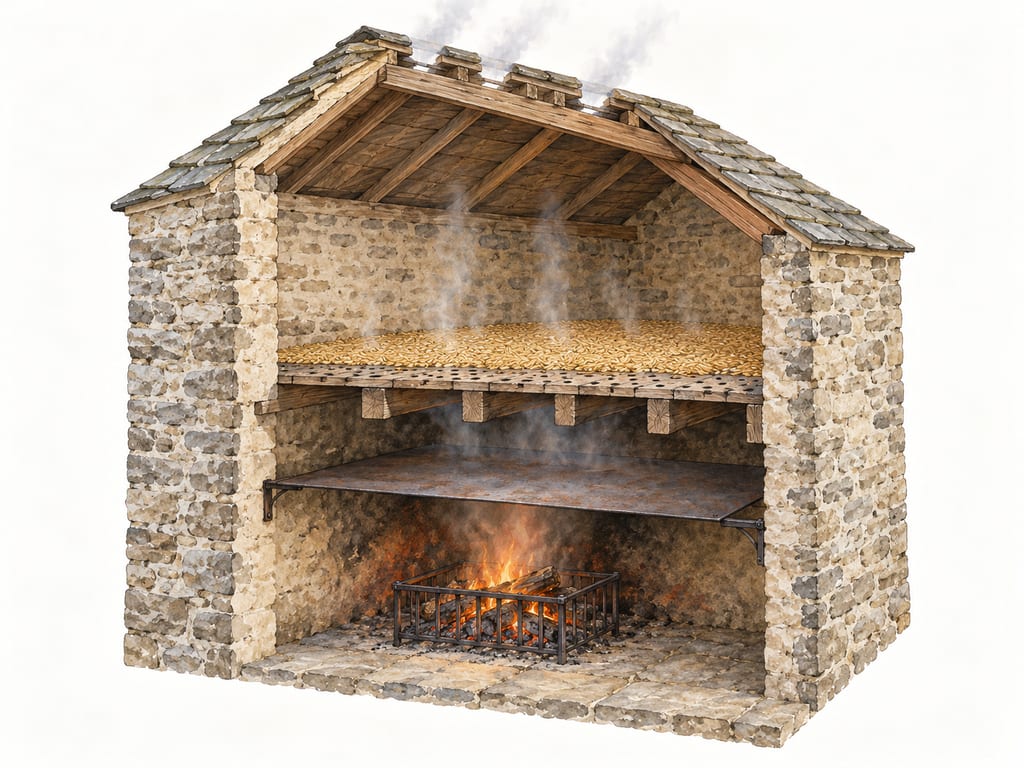
A reconstructed two-level grain-drying kiln at Acorn Bank Watermill in Temple Sowerby, Cumbria. A lower fire grate warms oats on a raised perforated floor; a baffle spreads heat, while smoke historically escaped through the roof ridge.
A surviving nineteenth-century stone smokehouse at Craster, Northumberland. Its tall, narrow rooms, hanging racks and roof vents belong to a commercial herring-curing works; the evidence describes this listed building, not a universal smoke
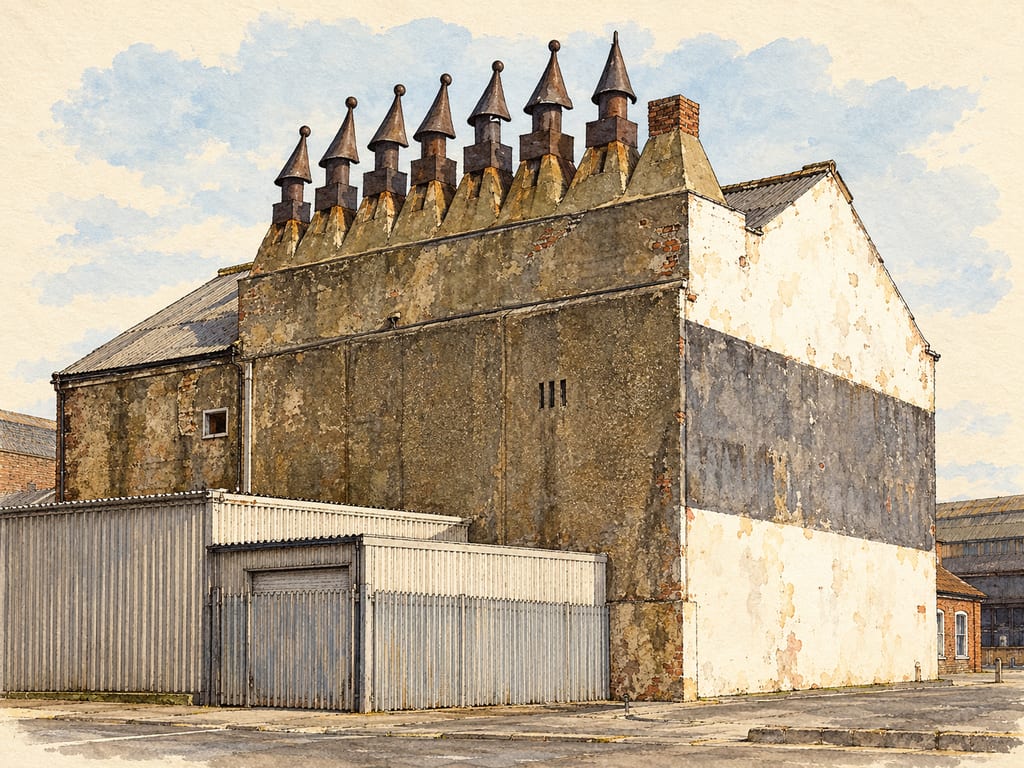
A brick chimney smokehouse associated with Grimsby's traditional fish-curing trade. Individual buildings varied; one working Alfred Enderby example documents tall chimney bays with smoke pits and speats for hanging fish.
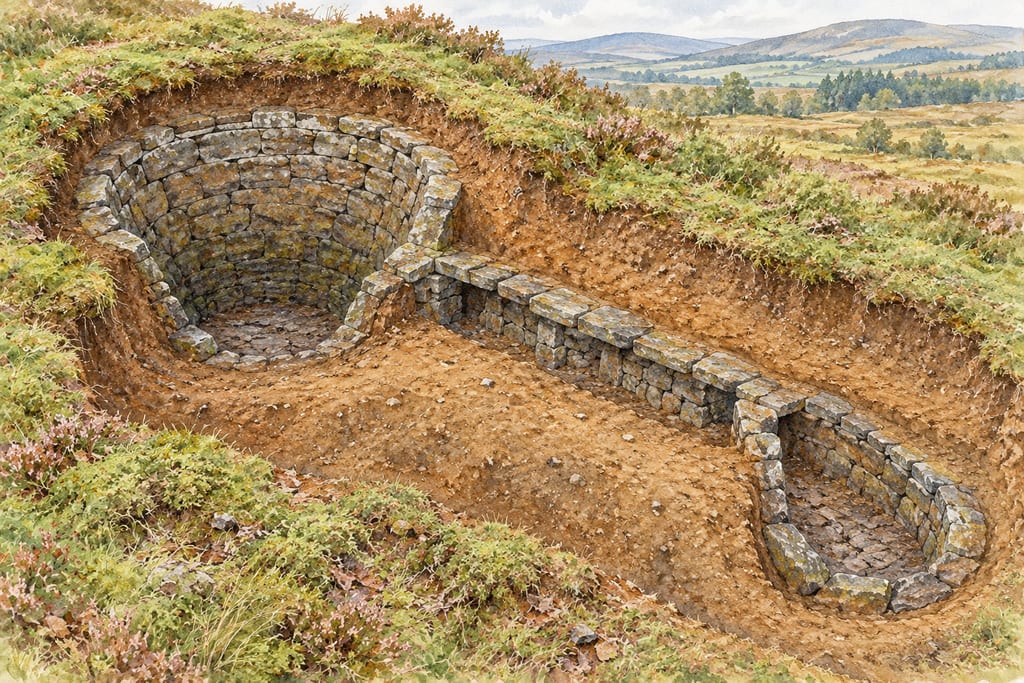
An excavated Scottish grain-drying kiln at Lockerbie Academy, with a deep stone-lined bowl connected by a flue to a separate firepit.
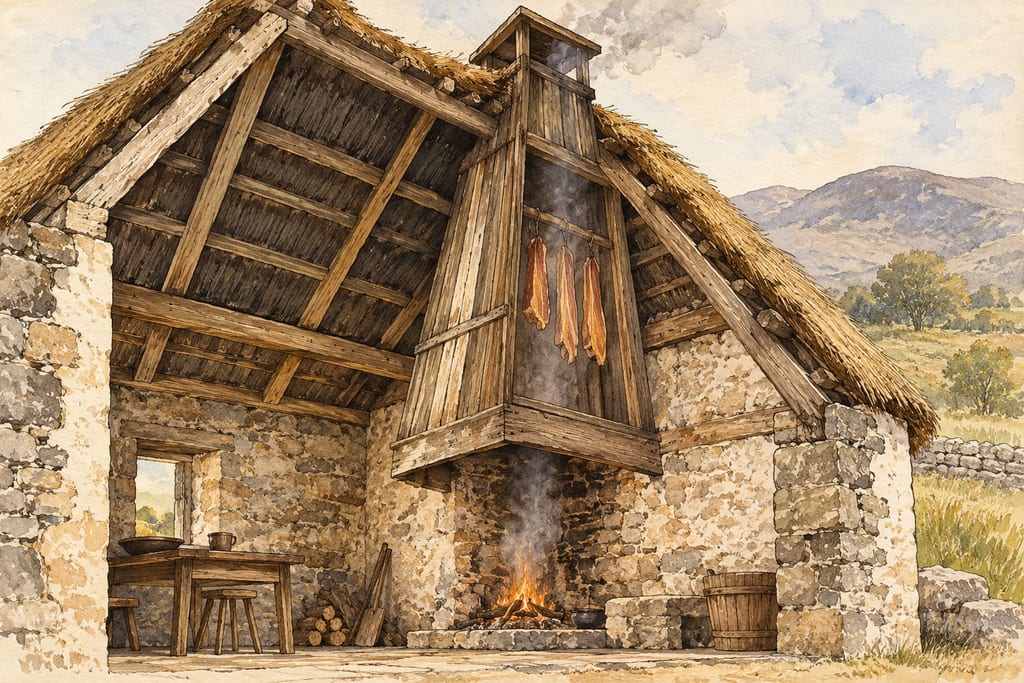
A domestic hearth chimney used to smoke cured meat in historical Scottish practice. It was part of the house, not a freestanding smokehouse, and the surviving chimney forms were varied.
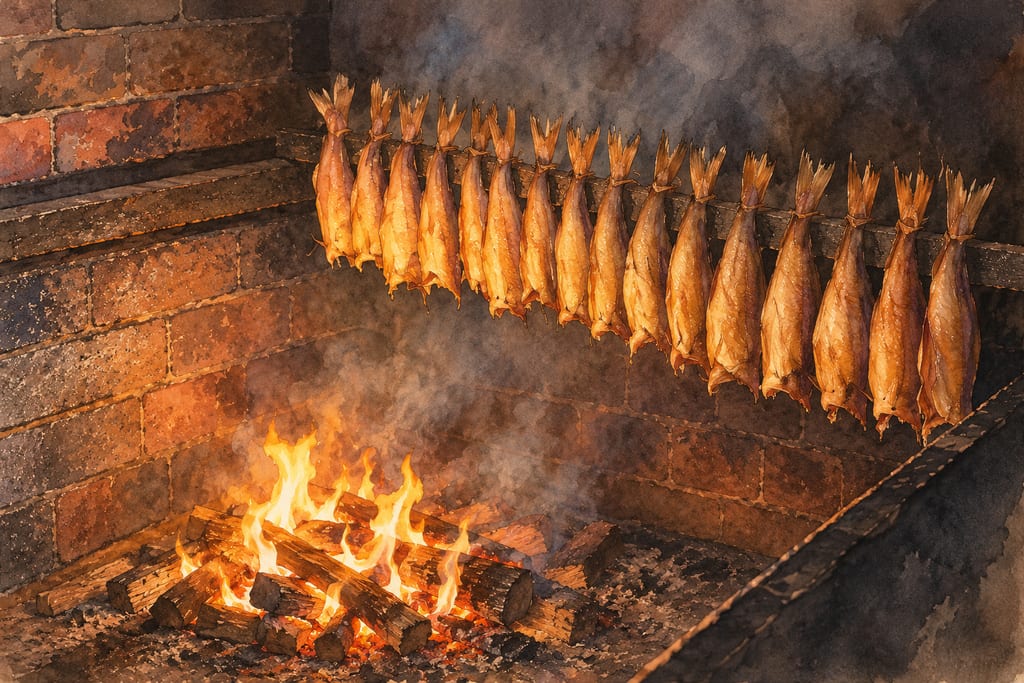
The Arbroath “barrel” is a hardwood-fired smoking pit with triangular rails and a cover. Its documented form belongs to the traditional hot-smoking of haddock around Arbroath and Auchmithie, Scotland.
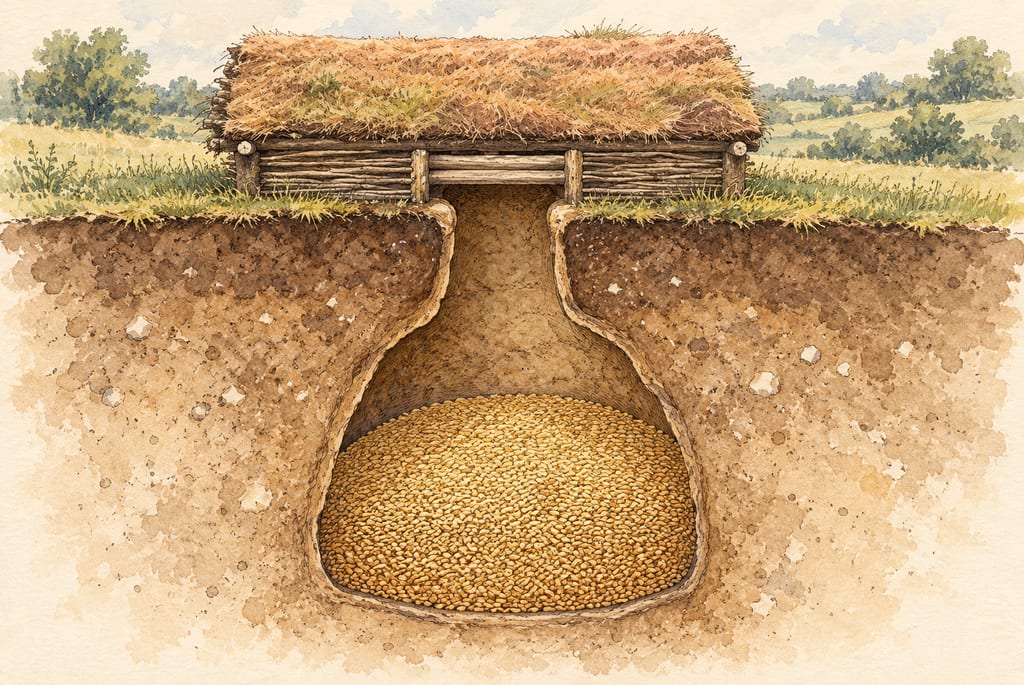
An underground grain-storage pit is a dug cavity for keeping dry grain, distinct from raised granaries and portable silos. Iron Age British examples are archaeological interpretations; experimental forms and results varied.

A Cap-Pelé boucanière is an Acadian herring-smoking building. The documented Willie Niles example is a one-storey wood-frame structure with a ridge smoke vent and interior bays for hanging fish-bearing cannes.

Achcharu is a family of Sri Lankan vinegar pickles made with mixed vegetables or seasonal fruit and a piquant spice dressing. This version is a quick, refrigerated, non-fermented mixed-vegetable pickle.

The acocote is a long, hollowed and dried gourd used to draw aguamiel from a mature maguey. It is a harvesting tool: the sap is transferred to a separate vessel before it ferments into pulque.

Adrak murabba preserves young ginger in sugar syrup, a sweet South Asian preparation recorded in Indian cookery and food-processing sources.

Parkia biglobosa seeds are fermented into regional West African seasonings, including nététou, iru, dawadawa and soumbala. The yellow fruit pulp is a separate food, and names and methods vary by place.

Japanese reddish-brown vinegar from sake lees matured about three years, turned to vinegar by acetic bacteria; the vinegar of Handa and Edomae sushi rice.

A refined common-wheat flour blended for a broad range of baking; its protein and behavior vary with wheat, milling and market.

The almond mushroom, Agaricus subrufescens, was cultivated in eastern North America in the 1800s, lost its market, and returned as a cultivated mushroom from Brazil, where it is grown under several names.
No community contributions have been published for this entry yet.
Sign in to contribute. Published comments and photos are free to read.
Historic EnglandSite · Date · Architecture · Materials · Kilns · Fuel
Tuckers Maltings, Newton Abbot (List Entry 1256785)Historic England dates the Tuckers Maltings building to 1900, describes its building materials and two hipped-roofed kiln blocks, and records four kilns formerly heated by coal delivered from the railway. The page describes an industrial maltings site, not a complete kiln construction plan.
Cited in: A kiln within the Tuckers Maltings complex; Floor malting and later changes; A comparison with other malt kilns
Tuckers Maltings Self StorageDate · Site · Production span
HistoryThe site opened in 1900 with two kilns; an expansion from 1901 to 1903 added two more. The site's history records malting production ending in October 2018 and partial repurposing of the building from 2022.
Cited in: A kiln within the Tuckers Maltings complex; Floor malting and later changes
Geograph Britain and IrelandImage · Kiln floor · Method · Geography
Kiln floor at Tuckers MaltingsPhoto dated 23 October 2010 and located near Newton Abbot. Its description says germinated barley is placed on the kiln floor, hot air is forced through the grain from a vent at the end, the floor is now wire mesh, and the original floor used ceramic blocks with holes. The kiln process has drying and curing phases. The image is licensed CC BY-SA 2.0.
Cited in: The drying floor and its two recorded surfaces; Floor malting and later changes; A comparison with other malt kilns
HM Revenue & CustomsGeneral form · Process · Distinction
Rating Manual section 5a: valuation of all property classes — MaltingsThe manual distinguishes traditional floor malting from pneumatic malting. It describes traditional kilns generally as having a furnace below a drying floor, often perforated tile or wire, and a roof or ventilator arrangement; these are general characteristics and are not all asserted for Tuckers.
Cited in: The drying floor and its two recorded surfaces; Floor malting and later changes
Historic EnglandHistory · General form · Process
Malt Kilns and MalthousesHistoric England's industrial archaeology overview explains how traditional floor malting and kiln forms changed over time. It describes a furnace below a drying floor, commonly perforated ceramic tiles or woven wire, and pyramid or cone-shaped kilns as broad historical patterns; the Tuckers listing is used for its specific architecture.
Cited in: Floor malting and later changes
LaphroaigComparison · Related build
How to Make Whisky: Step-by-Step GuideLaphroaig describes its own site-specific peat kiln, with peat smoke through a perforated floor and a later mesh drying stage 16 feet above the fire. This is cited only to distinguish a linked Islay structure and its peat-smoking stage from Tuckers' coal-heated malting site.
Cited in: A comparison with other malt kilns