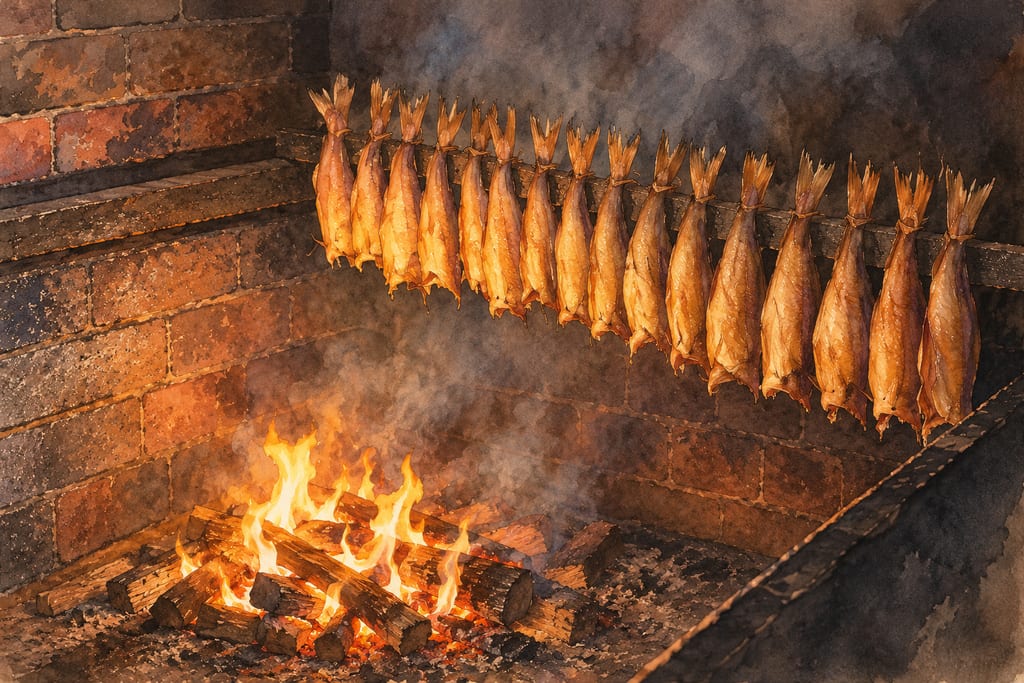
Arbroath smoking barrel
The Arbroath “barrel” is a hardwood-fired smoking pit with triangular rails and a cover. Its documented form belongs to the traditional hot-smoking of haddock around Arbroath and Auchmithie, Scotland.
 FermenteaWhere food goes to change
Built structures · Pits and cavities
A flood-season pit store described for Omagua communities along the Amazon: manioc tubers were buried before inundation and recovered as waters receded. Its shape and lining are not recorded.
This was a fixed pit store associated with Omagua communities living on islands in the Amazon floodplain. Barghini's review of Acuña's 1641 account describes manioc roots buried before the seasonal inundation. When the floodwaters went down, people recovered what they needed and left the rest underground. The timing connected the store to the river's cycle: food was placed ahead of the flood and made available again after recession.
The historical account identifies the function and sequence, but not a standardized structure. It gives no diameter, depth, pit shape, soil type or construction tool. The page therefore records a hole dug in the ground without supplying an imagined lining or roof.
The buried roots served as a reserve that could be recovered after flooding; whether every batch fermented is not established. Barghini treats a possible fermentation connection as a hypothesis awaiting confirmation. His discussion separately describes manioc bread stored in the raised parts of houses and later crumbled in water to make a drink. That above-ground food cache is a different structure and route of use.
The Food and Agriculture Organization also distinguishes Amazonian pit or trench storage of fresh cassava from the many processing methods that ferment cassava. That wider comparison supports identifying the Omagua feature as a storage pit, but does not fill in its local design.
No exact island, measurements, lining, cover, root arrangement, capacity or retrieval tool is supplied in the inspected account. The feature cannot be reconstructed as a visual cutaway with those details without adding unsupported design. The evidence also does not establish a safe present-day process or a fermentation endpoint; this is a historical account of storage through seasonal flooding, not a building plan.
Acuña's 1641 account, as discussed by Alessandro Barghini, describes manioc buried in pits before the Omagua islands flooded and recovered as water levels fell. The feature is documented as storage; fermentation of these buried tubers is not established.
A build is made where it stands: moving it means building it again.
Barghini locates Acuña's description on the islands of the Omaguas; the source does not identify a particular island, and no modern country boundary is assigned.
The Arbroath “barrel” is a hardwood-fired smoking pit with triangular rails and a cover. Its documented form belongs to the traditional hot-smoking of haddock around Arbroath and Auchmithie, Scotland.

Crisp battered white fish in warm corn tortillas with shredded cabbage, lime and fresh salsa. This home version draws on the Ensenada style without claiming to be a definitive historic formula.
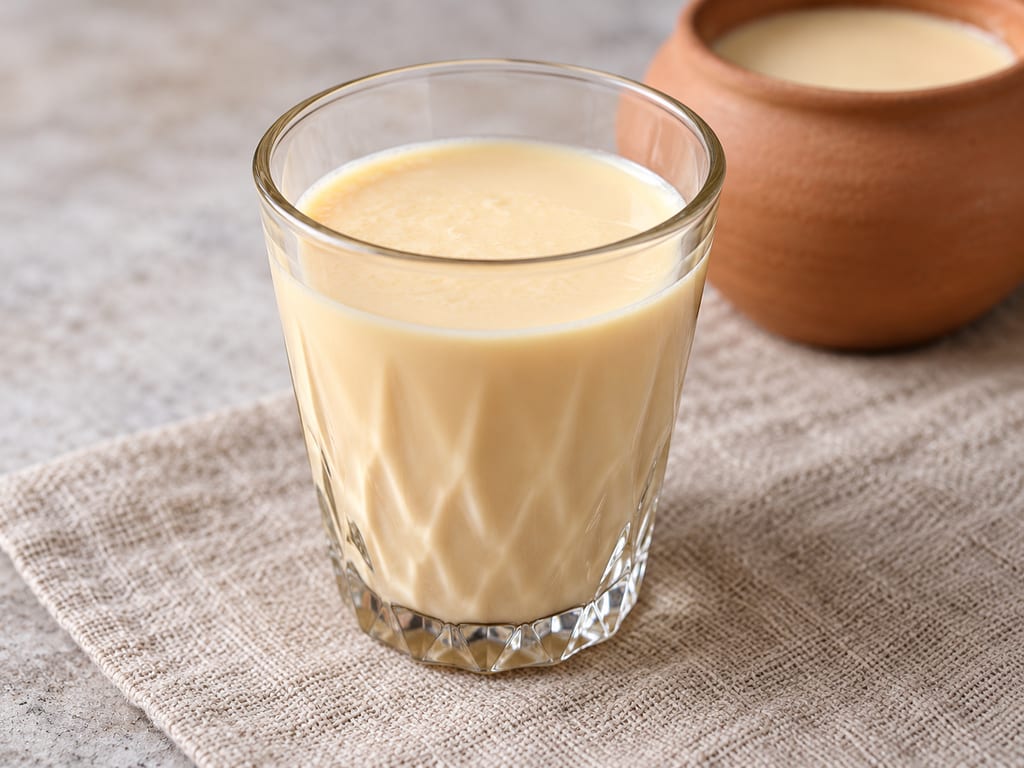
Baked milk is an Eastern European preparation of milk held at high heat for hours until it turns cream-coloured with a cooked, mildly sweet flavour, without any fermentation.
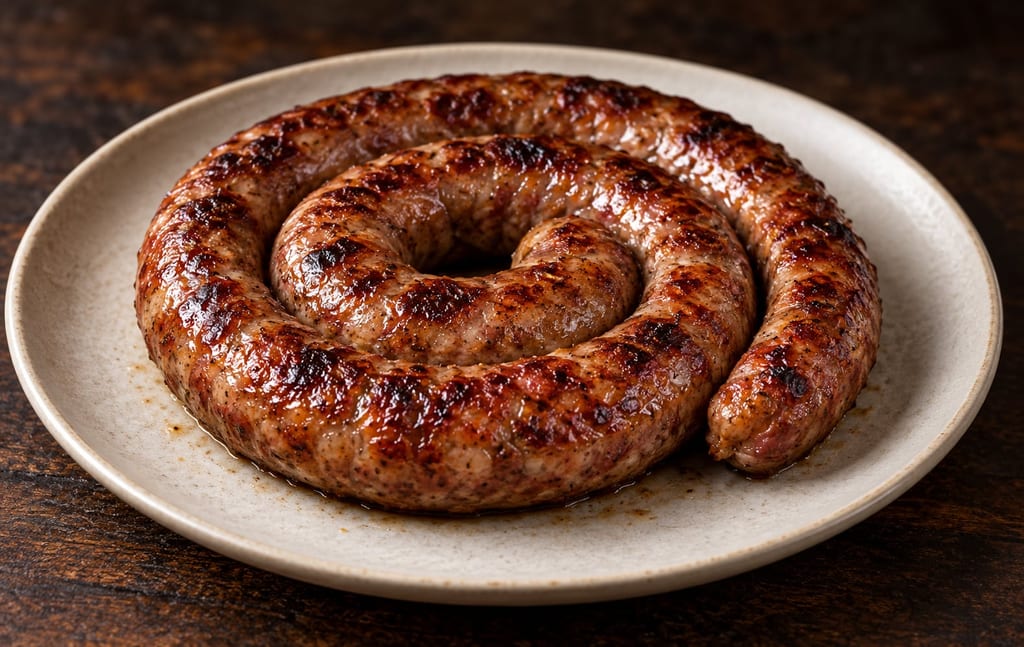
A coarse South African farmhouse sausage of beef with pork or mutton fat, defined by its coriander seasoning and cooked fresh over coals rather than preserved.
A temporary, in-place earthen oven used to cook camas with heat retained by fire-heated stones. The dimensions described here belong to one Kalispel-supervised reconstruction, not a universal form.

Chuño negro is a source-documented Andean potato-preservation practice. This entry records producer tradition; it is not a validated household process for making potentially toxic bitter potatoes safe.
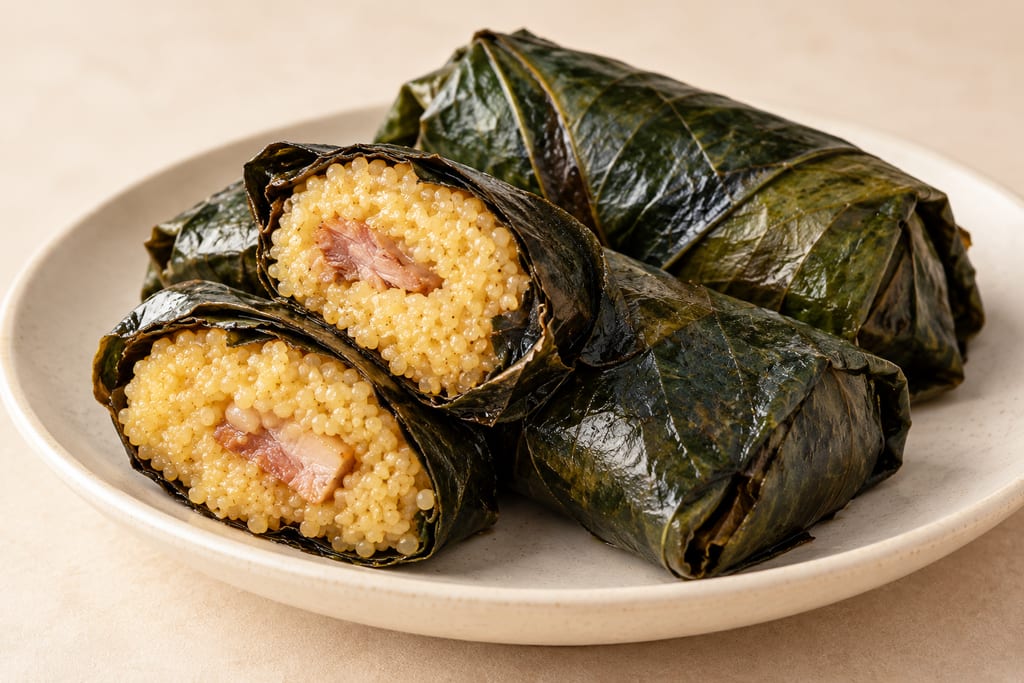
Cinavu is a Paiwan leaf-wrapped parcel built around millet or taro, meat and locally gathered leaves. It belongs to a food culture of harvest, hospitality and shared work, with village recipes differing in both filling and cooking time.
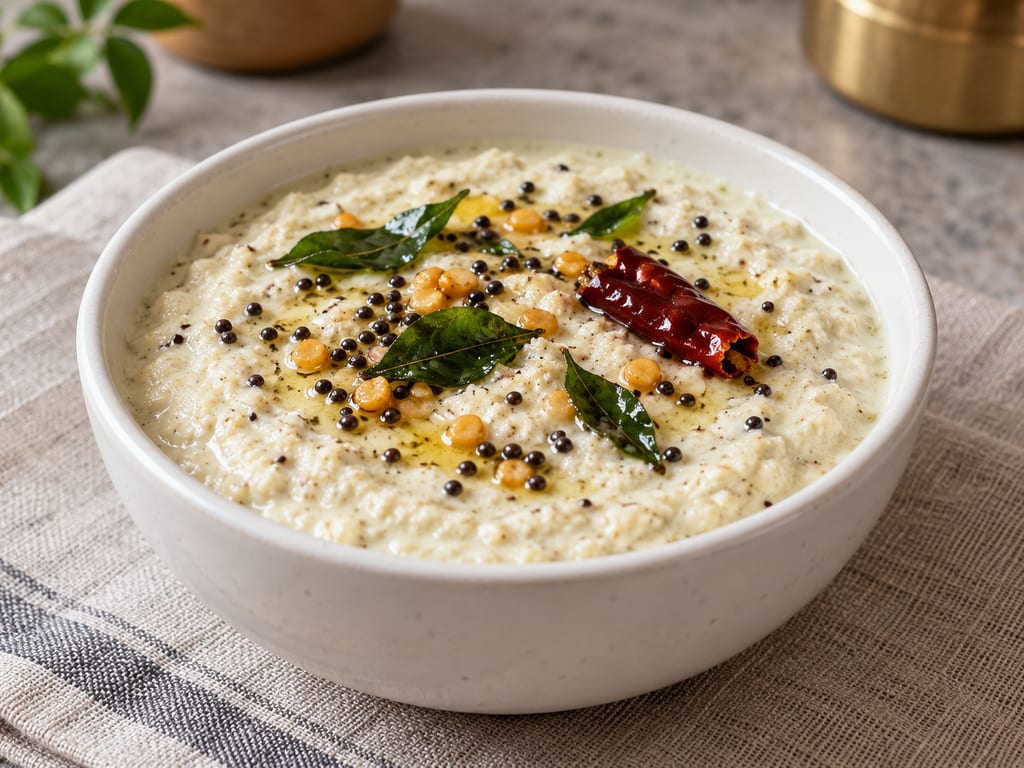
A coconut chutney whose ground base is finished with a separate oil tempering of mustard, urad dal, curry leaves and spices; the author pairs it with South Indian breakfast foods and snacks.

A gelling polysaccharide extracted from red seaweeds, sold as kanten strips or powder; it sets firm at a low concentration and stays solid until about 85 °C.

A Dominican table and seasoning condiment of sour orange juice, mixed with lime and salt and bottled raw; garlic, oregano or a hot pepper may be added for meat or a spicier bottle.

Cicerbita alpina is an alpine perennial whose tender shoots and leaves have been eaten raw or cooked. Sámi milk preparations and modern Carnian dishes are distinct uses, with serious identification and preservation limits.

Japanese skipjack tuna cooked, then repeatedly smoked and dried over a wood fire by the hand-fired tebiyama method into a hard block for shaving into dashi: the first stage of katsuobushi.

A Swedish-style spirit vinegar made by fermenting neutral alcohol with live vinegar bacteria, with a separate guide to commercial ättika strengths.

A yeast-raised wheat ring shaped from a firm dough, briefly boiled and baked. This source-batch formula gives a gently malted crust and a chewy crumb.

A warm dip of garlic, anchovy and olive oil, often enriched with butter, that Piedmont serves over a flame with raw and cooked vegetables and bread.

Bechamel is a white sauce of milk thickened with a butter and flour roux, one of the French mother sauces, and the base from which Mornay and other cheese and cream sauces are made.
No community contributions have been published for this entry yet.
Sign in to contribute. Published comments and photos are free to read.
Boletim do Museu Paraense Emílio Goeldi. Ciências Humanas, 17(3), e20200116History · Form · Use · Geography · Classification
New data on amylolytic fermentation in the AmazonBarghini discusses Acuña's 1641 description of Omagua island communities burying manioc tubers before seasonal floods and recovering them after the water receded.
The account describes pit storage, but the claim that fermentation occurred is explicitly a hypothesis, not established evidence.
Barghini distinguishes this pit storage from beijus stored in the upper parts of houses and later used to make a beverage.
Cited in: A store timed to the flood; Storage is the documented function; What the sources leave open
Food and Agriculture Organization of the United Nations, Agricultural Services Bulletin 59Context · Classification
Traditional post-harvest technology of perishable tropical staples, Chapter 5: CassavaFAO describes burying harvested fresh cassava roots in pits or trenches as an Amazonian storage method, distinct from its sections on fermented preparations.
FAO does not provide an Omagua-specific pit design or enough detail to supply this feature's dimensions or materials.
Cited in: Storage is the documented function