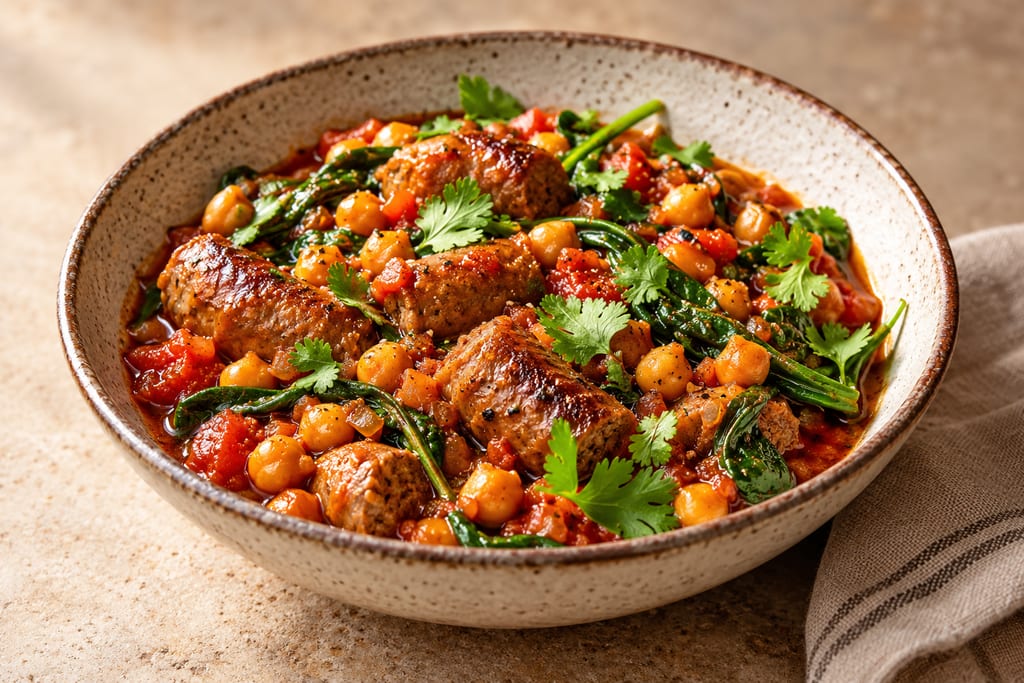
Boerewors and chickpea stew
Lesego Semenya’s contemporary South African stew combines browned boerewors, chickpeas, tomato, spinach and warm spices.
 FermenteaWhere food goes to change
Traditional method
Boerwors · Boer worst · Boerie · Farmer's sausage
A coarse South African farmhouse sausage of beef with pork or mutton fat, defined by its coriander seasoning and cooked fresh over coals rather than preserved.
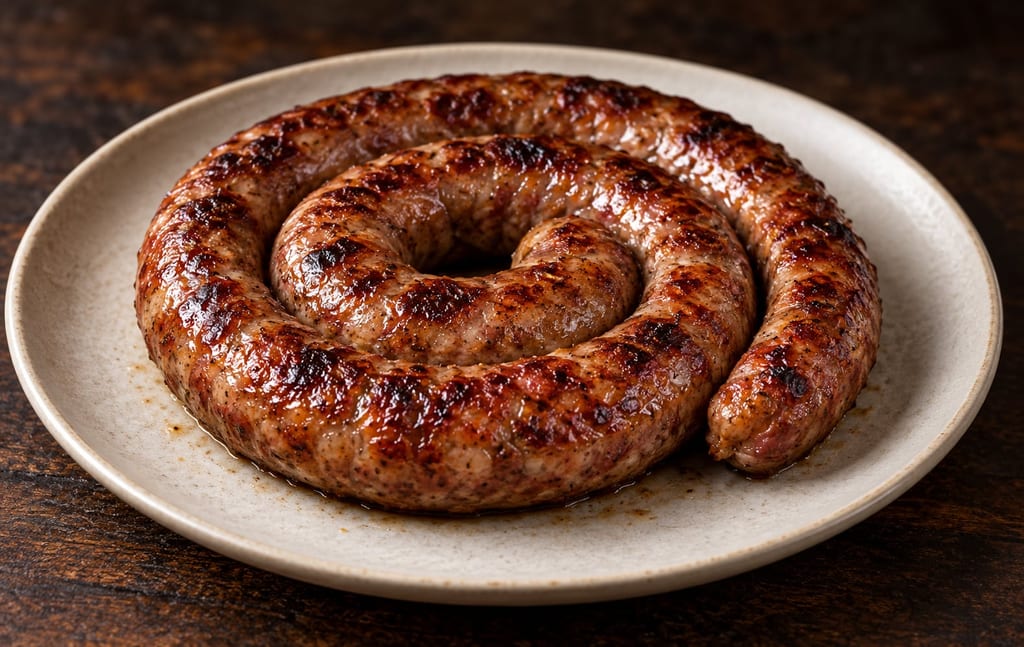
A coil of boerewors looks deceptively simple. Its filling is made from minced meat, fat and seasonings packed into an edible casing. Coriander usually supplies the defining aromatic note, while pepper and other spices complete the flavour. It is traditionally cooked over coals, although pan-frying and oven cooking are also used.
Yet the apparent simplicity hides considerable variation. Families disagree about the ideal proportions of beef and pork, whether mutton improves the mixture, how finely to grind the meat, how much fat is desirable and which secondary spices belong in the filling.
The disagreements are not an unfortunate departure from an original, universally recognised formula. They are part of the sausage's history.
Boerewors belongs to South African farmhouse cookery, but it is equally visible in supermarkets, township food businesses, roadside stalls, restaurants and contemporary barbecue culture. It is eaten at family gatherings and sporting events, on bread rolls, or with maize porridge and vegetable relishes.
Unlike biltong or droëwors, however, ordinary boerewors is not a preserved ready-to-eat product. It is a raw sausage intended to be thoroughly cooked.
Boerewors is an Afrikaans compound. The first element, boere, refers to farmers, and wors means sausage. In English it is often translated as farmer's sausage.
Historical spellings include boerwors and boer worst. The familiar shorter form boerie is also recorded in South African English.
There is no scientific species name for boerewors itself because it is a manufactured food rather than an organism. Its ingredients may come from cattle (Bos taurus), domestic pigs (Sus scrofa domesticus), sheep (Ovis aries) or goats (Capra hircus).
These distinctions matter when discussing commercial products. A sausage containing venison might be called game boerewors in ordinary conversation without necessarily meeting the legal requirements for a product sold as boerewors in South Africa.
The word braaiwors is not simply another legally interchangeable name. It has its own product category.
Boerewors is often described as a Dutch settler invention from the seventeenth century. Although European sausage-making traditions contributed to Cape cookery, the surviving evidence does not establish a single inventor, founding household or precise date when the modern sausage appeared.
Sausages existed across European and Asian cuisines long before the establishment of the Dutch settlement at the Cape in 1652. Southern African food history also involves Indigenous food systems, enslaved cooks, Asian spice traditions, agriculture and changing colonial markets.
Identifying those overlapping influences is different from claiming that one named group invented the particular combination now recognised as boerewors.
The nineteenth-century household cookbooks provide firmer evidence.
Hildagonda Duckitt's Hilda's "Where Is It?" of Recipes, published in 1891, records Cape household preparations that include spiced sausages. One recipe, Sausages (Our Own Recipe), uses mutton, pork, fat, herbs, warm spices and claret.
Its significance is that it documents established sausage-making practice in Cape households. It is not proof of the first boerewors recipe, and the recipe should not be renamed boerewors merely because it comes from South Africa.
A Dictionary of South African English records a 1913 farmer's sausage formula whose beef and fat-pork weights in pounds are given as fractions that did not survive the handover of this research, giving an unusually useful early quantitative reference.
The dictionary also records Boer Worst in M. Raubenheimer's 1930 cookbook.
By 1937, the South African Department of Agriculture and Forestry was publishing a formula explicitly labelled Sausage (Boerwors). Its listed ingredients included 10 pounds of beef, 5 pounds of pork or sheep-tail fat, 4 tablespoons (approximately 1 ounce) of ground coriander and 4 tablespoons (approximately 2 ounces) of salt.
These are historical quantities, not a recommendation for modern production. In particular, a historical meat block containing substantial fat must not be assumed to comply with present-day product standards.
One of the most informative descriptions comes from C. Louis Leipoldt's Afrikaans essay Wors, dated 1 June 1945 and collected in Polfyntjies vir die proe.
Leipoldt describes an aunt who was fiercely critical of inferior commercial sausage. Her preferred filling began with beef, supplemented by pork and mutton. She chopped the meat finely, sometimes working it further, but kept the pork fat in small, distinct pieces.
Her seasonings included coriander, pepper, ginger, sage, rosemary and a little garlic. Wine, vinegar and brandy formed part of the mixture.
The filling was worked thoroughly and packed into cleaned intestines using a hand-operated copper stuffer.
This account challenges two widespread assumptions: that authentic boerewors must always be very coarse, and that garlic, wine or other additions are necessarily modern departures.
Leipoldt also discusses wind-drying sausage for hunting. That is historical testimony, not a safe process specification. He supplies neither the analytical water activity nor the microbiological controls required to establish the safety of a modern dried product.
Taken together, the cookbook and dictionary records demonstrate a sausage tradition that was already varied by the nineteenth and early twentieth centuries. They do not establish when coriander became dominant across all regions or when the modern retail coil became the standard presentation.
South Africa's Regulation R.2410 of 26 August 2022 establishes specific compositional standards for raw boerewors.
The relevant requirements include:
The minimum meat percentage and maximum analysed fat percentage must not be added together as though they are independent recipe components. Fat is already present within the meat materials used.
The regulations therefore do not mean a maker must combine 90% lean meat with another 30% fat.
Nor is it correct that genuine boerewors can contain no binder or additional ingredient whatsoever. Certain cereals, starches and food additives are permitted.
The 2024 amendment R.5420 should be consulted together with the principal regulation for current labelling and compliance. These South African standards do not automatically govern products manufactured and sold in other countries.
Meat sources — Domesticated cattle, sheep, pigs or goats, singly or mixed
Total meat content — Minimum 90%
Fat content — Maximum 30% as analysed
Casing — Edible casing required
Mechanically recovered meat — Not permitted
Added colourants — Not permitted
Offal — Not permitted except casing
Other permitted ingredients — Specified cereals/starch, vinegar, spices, herbs, salt, permitted additives and water
Good boerewors depends on the physical organisation of muscle, fat, dissolved proteins and casing.
Meat muscle contains several protein groups. During mixing, salt helps extract myofibrillar proteins, particularly myosin, from damaged muscle fibres. These proteins contribute to the sticky binding between minced particles.
When properly mixed, the filling holds together rather than falling into loose grains after cooking.
Excessive mechanical working, especially when the mixture warms, can produce an undesirable fine paste. Insufficient mixing gives a weak sausage with poor cohesion.
Temperature control during mincing therefore affects both hygiene and texture. Cold fat fractures into more distinct particles. Warm fat softens and smears across the meat, changing how the filling looks and cooks.
Fat itself is not merely an inexpensive addition. It contributes lubrication, mouthfeel and flavour transport. As the sausage cooks, some fat melts and moves within the filling.
If the balance of fat, water and protein binding is poor, the sausage can lose excessive liquid and become dry, greasy or crumbly.
Coriander seed is especially associated with boerewors. Its major aromatic constituents include linalool, which provides floral, citrus-like notes, alongside a wider range of terpenes.
Dry roasting changes the spice's sensory character and makes it easier to develop the familiar toasted aroma.
However, coriander is not a substitute for refrigeration or cooking. Even where spice extracts demonstrate antimicrobial effects experimentally, a normal culinary quantity cannot be assumed to preserve raw minced meat.
Vinegar introduces acidity and can change flavour and protein behaviour, but ordinary boerewors is not manufactured as a controlled acidified, shelf-stable meat product.
Natural sheep or hog casings are common options. The casing's strength, thickness and elasticity influence the final bite and its behaviour on the grill.
The casing holds the filling together but does not make an otherwise unsafe filling safe.
During cooking, the sausage expands, proteins denature and the fat begins to render. A tightly overfilled casing is more likely to split.
A contemporary butcher's process can be reconstructed from established sausage-manufacturing guidance and the published Championship Boerewors preparation instructions.
Beef is a common base. Pork, lamb or mutton may contribute fat and additional flavour. The precise combination depends on the product and the maker's recipe.
Remove unsuitable connective material, bone fragments and excessive sinew before grinding.
The competition instructions specify cutting lean meat into 50 mm cubes and additional fat into 10 mm cubes before mincing.
These dimensions are preparation guidance, not a mandatory requirement of every commercial boerewors recipe.
Where whole coriander is roasted, heat it carefully and allow it to cool before mixing with the meat.
Cloves and nutmeg are common secondary flavourings. Excessive clove can overwhelm the comparatively delicate coriander aroma.
For commercial consistency, weigh spices rather than measuring them by eye. Spoon measurements can differ considerably with grind size and packing density.
The Championship Boerewors instructions specify a 4.5 mm mincer plate. Other historical and contemporary formulas use different textures.
A coarse grind gives visibly distinct particles of meat and fat. A finer grind gives a more integrated sausage.
Neither texture is sufficient, by itself, to establish historical authenticity.
If a recipe includes water or vinegar, introduce it in the specified way and mix thoroughly enough to prevent isolated wet or heavily seasoned pockets.
Keep the mixture chilled throughout handling.
The Championship Boerewors competition specifies a 28/32 calibre casing.
Fit the casing to a suitably sized stuffing tube, avoiding excessive tension.
Remove conspicuous air pockets without damaging the casing, and avoid packing it so tightly that expansion during cooking will cause splitting.
A continuous coil is the familiar commercial presentation, although sausage segments and links are also used.
That overnight rest is not fermentation, curing or drying. It does not make the sausage shelf-stable.
Steady heat is preferable to exposing the exterior to intense flames while the centre remains raw.
A properly calibrated probe thermometer provides a more dependable measure of doneness than surface colour.
For UK food businesses, government cooking guidance gives 70°C for 2 minutes, or validated equivalent combinations including 75°C for 30 seconds, measured at the centre of the food.
US food-safety guidance gives 71°C (160°F) for ground meat and sausage. Those are alternative guidance frameworks rather than recipe-specific temperatures that should be combined arbitrarily.
Boerewors styles often carry geographic or nostalgic names, but relatively few are rigorously defined regional appellations.
Grabouw boerewors is associated with Grabouw in the Western Cape. Commercial versions commonly feature beef, pork, coriander, cloves and nutmeg. The history of particular butcher recipes is distinct from the broader use of the name by supermarkets and spice manufacturers.
Plaaswors and outydse wors suggest farmhouse or old-fashioned sausages. These names often signal a relatively traditional spice profile, but manufacturers use different formulations.
Ossewa wors evokes the historical ox-wagon. Modern versions may use different meat combinations, and the name alone does not establish a particular recipe.
Kameeldoring wors is used commercially, including for specific spice-pack products. The name is not evidence that camel-thorn wood or smoke is an ingredient.
Karoo lamb or mutton wors places emphasis on sheep meat and the associations of Karoo pastoral food culture. Individual products should identify their actual meat composition.
Spekwors highlights the presence of pork fat or a bacon-type ingredient. Fresh backfat and cured bacon are not chemically or legally interchangeable, and the exact material matters.
Garlic, chilli, cheese, fruit and curry-flavoured versions belong to contemporary product development. Their existence is well documented, but their particular spice combinations must not be presented as ancient local traditions without evidence.
The Shoprite and Checkers Championship Boerewors competition applies narrower rules than South African legislation in general. Its entry guidelines exclude ingredients including garlic, ginger, wine, venison and several contemporary flavourings. These are competition conditions, not proof that the excluded ingredients never appeared in historical sausage making.
Boerewors is particularly associated with the braai, the southern African practice of cooking over coals.
A classic plate combines sausage with maize-meal porridge, often called pap, and a tomato, onion or vegetable relish.
Chakalaka provides a spicier accompaniment, commonly containing vegetables, beans and curry spices.
At a shisa nyama, grilled meat may be purchased and eaten in a social setting alongside pap, chakalaka and other side dishes.
The sausage is also served as a boerewors roll or boerie roll, tucked into bread with onion relish or sauce.
Other uses include casseroles, stews, breakfast preparations and combinations with beans or potatoes.
On Heritage Day, 24 September, braaiing has acquired particular prominence through modern campaigns. National Braai Day is a contemporary promotional tradition and should not be confused with the original historical purpose of Heritage Day.
The 2026 Championship Boerewors winner was Dean De Sousa of Bryanston, crowned on 15 August 2026. That competition demonstrates how a household-associated sausage has also become the subject of national commercial and culinary recognition.
Fresh boerewors should have an even filling, a sound casing and the appropriate aroma of meat and spices.
A cut surface should reveal the intended distribution of fat and lean material rather than an accidental mixture of large fat clumps and empty cavities.
Crumbly texture: Possible causes include inadequate protein extraction, insufficient mixing or an unsuitable formulation.
Greasy sausage: Excessive fat, smeared fat during grinding or excessive fat separation during cooking may be responsible.
Split casing: Overstuffing, a fragile casing, abrupt heat exposure or trapped air may contribute.
Dry texture: Excessive cooking, insufficient fat or poor water binding can lead to dryness.
Uneven seasoning: Inadequate spice distribution or inconsistent batch measurements can create strong and weak portions.
Sour or unpleasant odour: Unexplained sourness, putrefactive smells, sliminess or abnormal discoloration are reasons to reject the raw product, not signs of desirable fermentation.
Absence of unpleasant smells does not establish microbiological safety. Pathogenic contamination may produce no obvious sensory warning.
Boerewors is raw minced meat. Grinding increases the opportunity for microorganisms originally present on meat surfaces to become distributed through the filling.
It must be protected from cross-contamination, handled with clean equipment, kept refrigerated and thoroughly cooked.
Fresh sausage should not be left at room temperature for extended periods or treated as safely preserved merely because it contains vinegar, coriander and salt.
The UK Food Standards Agency and Food Standards Scotland recommend thoroughly cooking minced-meat products, including sausages.
Producers must establish their own compliant shelf-life and refrigeration controls. A precise universal storage life for every fresh boerewors formulation is not established by the supplied historical research.
Do not dry ordinary fresh boerewors as a shortcut to making droëwors. Dried raw sausage requires its own controlled formulation, drying procedure and safety validation.
Boerewors is often described as a seventeenth-century Dutch settler invention, but the surviving written record does not establish a single inventor, founding household or date. Sausage-making existed across European and Asian cuisines long before the Dutch settlement at the Cape in 1652, and southern African food history also runs through Indigenous food systems, enslaved cooks, Asian spice traditions, agriculture and changing colonial markets. The nineteenth-century household cookbooks are firmer ground: Hildagonda Duckitt's Hilda's "Where Is It?" of Recipes of 1891 records Cape spiced sausages, which documents established practice without being proof of a first boerewors recipe.
Scaling: source batch only
Grinding spreads microorganisms from meat surfaces through the whole filling, and pathogenic contamination may produce no obvious sensory warning.
Hazard sourceVinegar, coriander and salt at culinary quantities do not make raw minced meat shelf-stable, and a normal culinary quantity of spice cannot be assumed to preserve it.
Hazard sourceCook thoroughly and measure the centre with a calibrated probe
Control sourceCook ground meat and sausage to the stated minimum internal temperature
Control sourceKeep meat, fat and equipment chilled and protected from cross-contamination through grinding, mixing and stuffing
Control sourceBoerewors is raw minced meat, not a ready-to-eat preserved product: the vinegar, coriander and salt in the filling do not make it shelf-stable.
Do not dry fresh boerewors as a shortcut to droëwors; dried raw sausage needs its own formulation, drying procedure and safety validation.
The UK and US cooking figures are alternative guidance frameworks. Use one of them as stated rather than combining their temperatures and times.
Reject raw boerewors that is unexplainably sour, putrid, slimy or abnormally discoloured; the absence of an off smell does not establish that it is safe.
A country-level association supported by South African lexicography, a primary Afrikaans account and the national composition standard. It is not a claim that the sausage originated at any particular place within South Africa.
Lesego Semenya’s contemporary South African stew combines browned boerewors, chickpeas, tomato, spinach and warm spices.
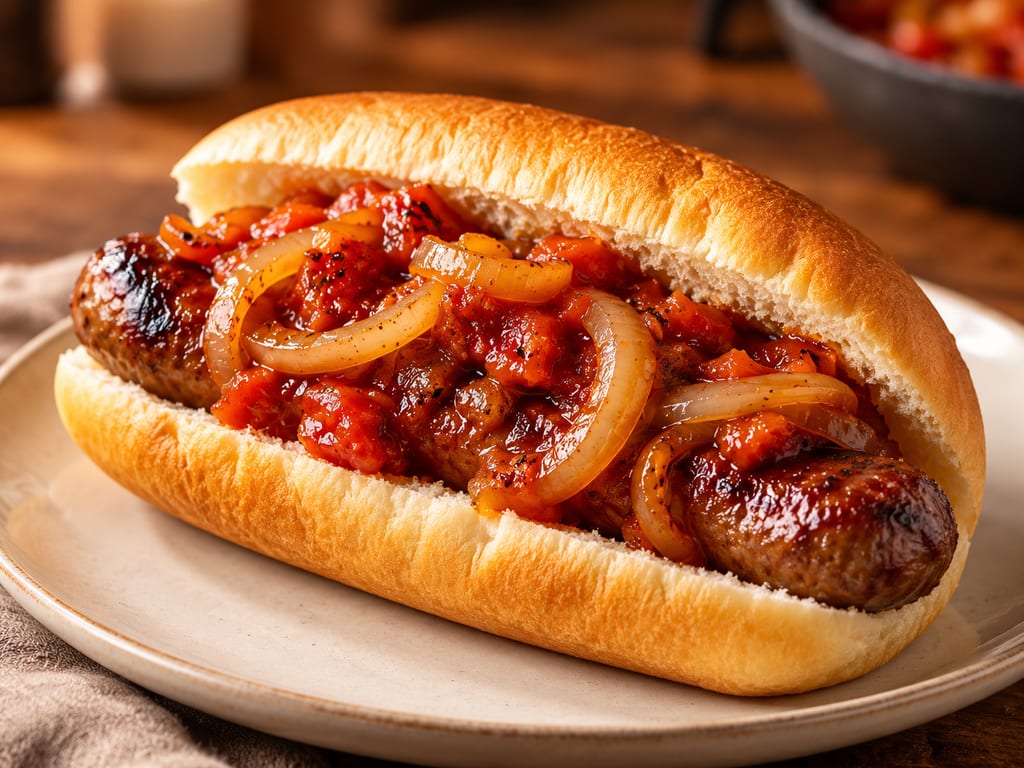
A South African boerie roll puts fully cooked boerewors in a soft bread roll and tops it with warm tomato-and-onion smoor.
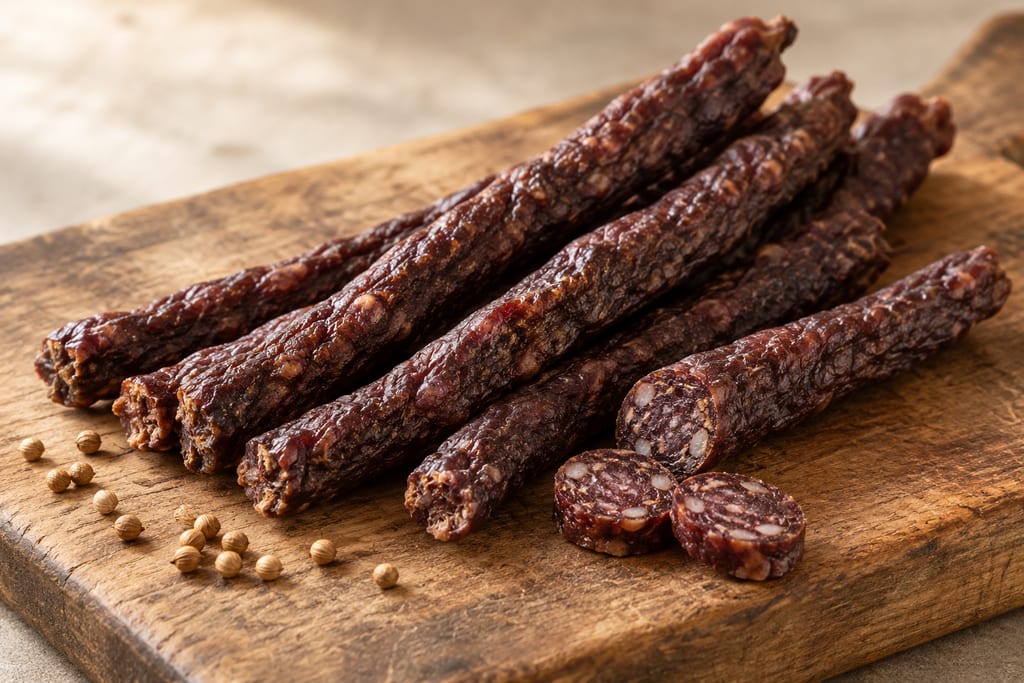
South Africa's dried sausage: seasoned minced meat in narrow casings, dried until it can be eaten without cooking, which makes it a far more demanding product than fresh boerewors.
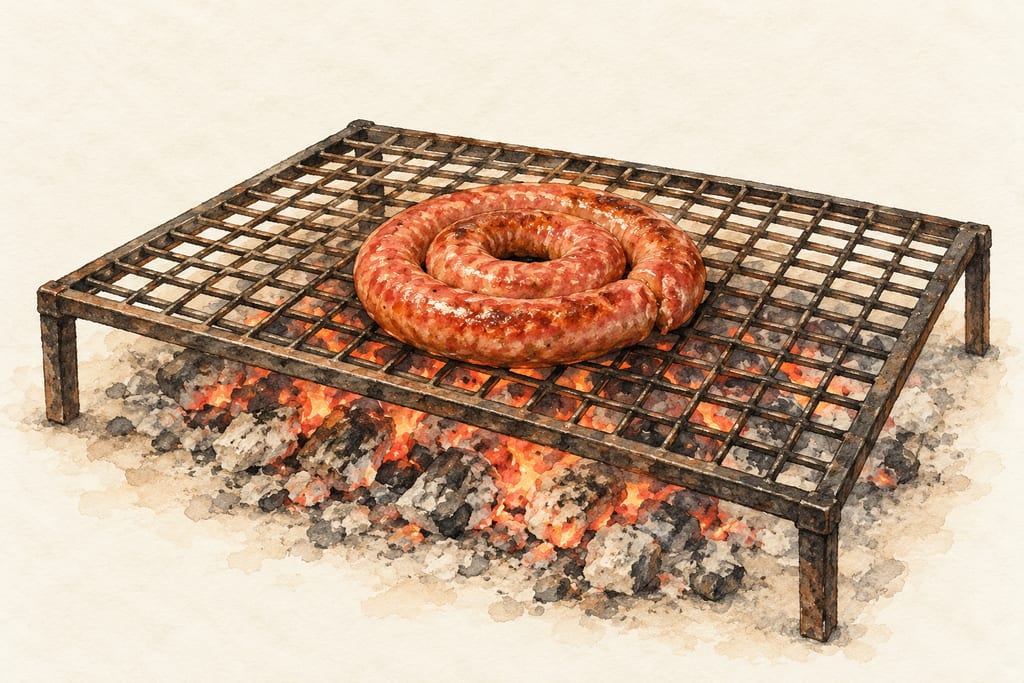
A braai is a South African open-fire cooking practice. This record focuses on the movable cooking grid over coals shown in a documented photograph; sources do not establish one standard grill design or size.
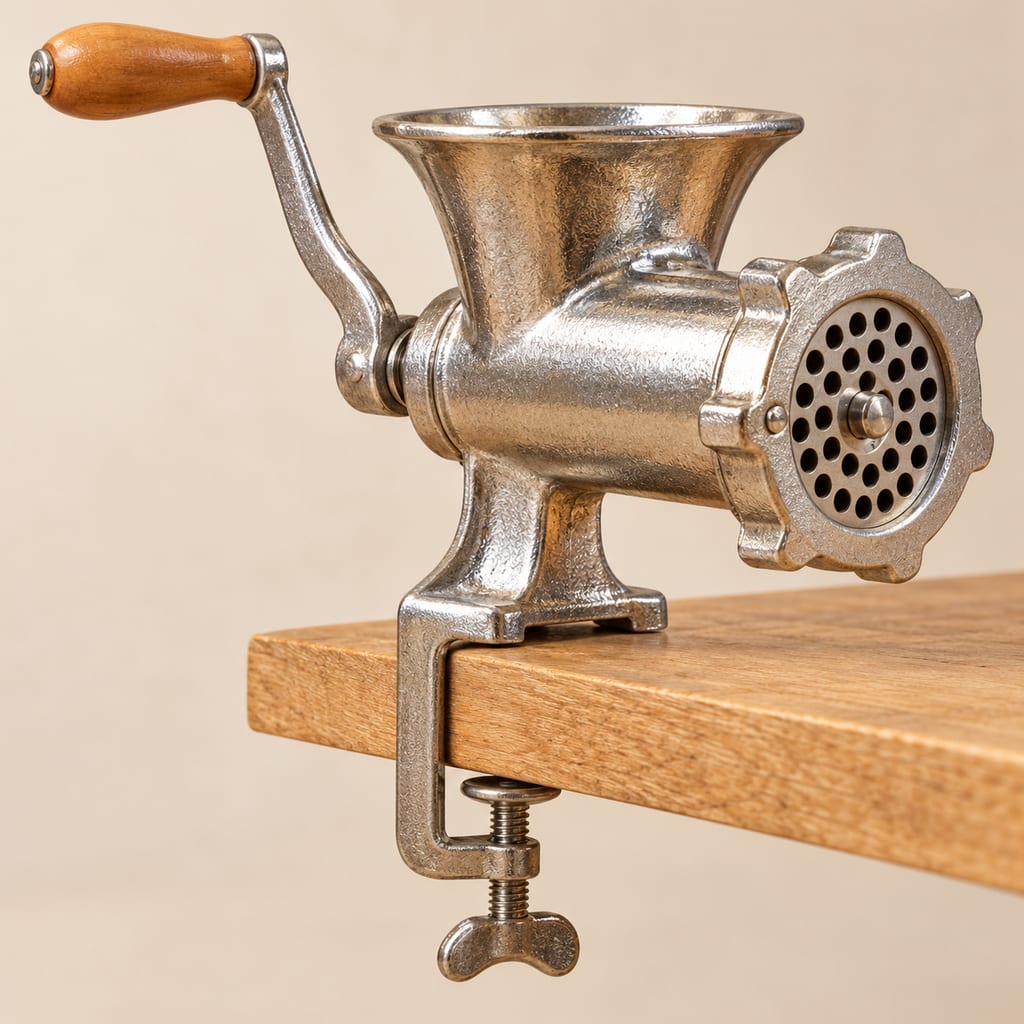
A meat mincer forces meat through a perforated plate to produce a chosen texture. South African sausage sources record plate size as a process choice, not a single defining standard.
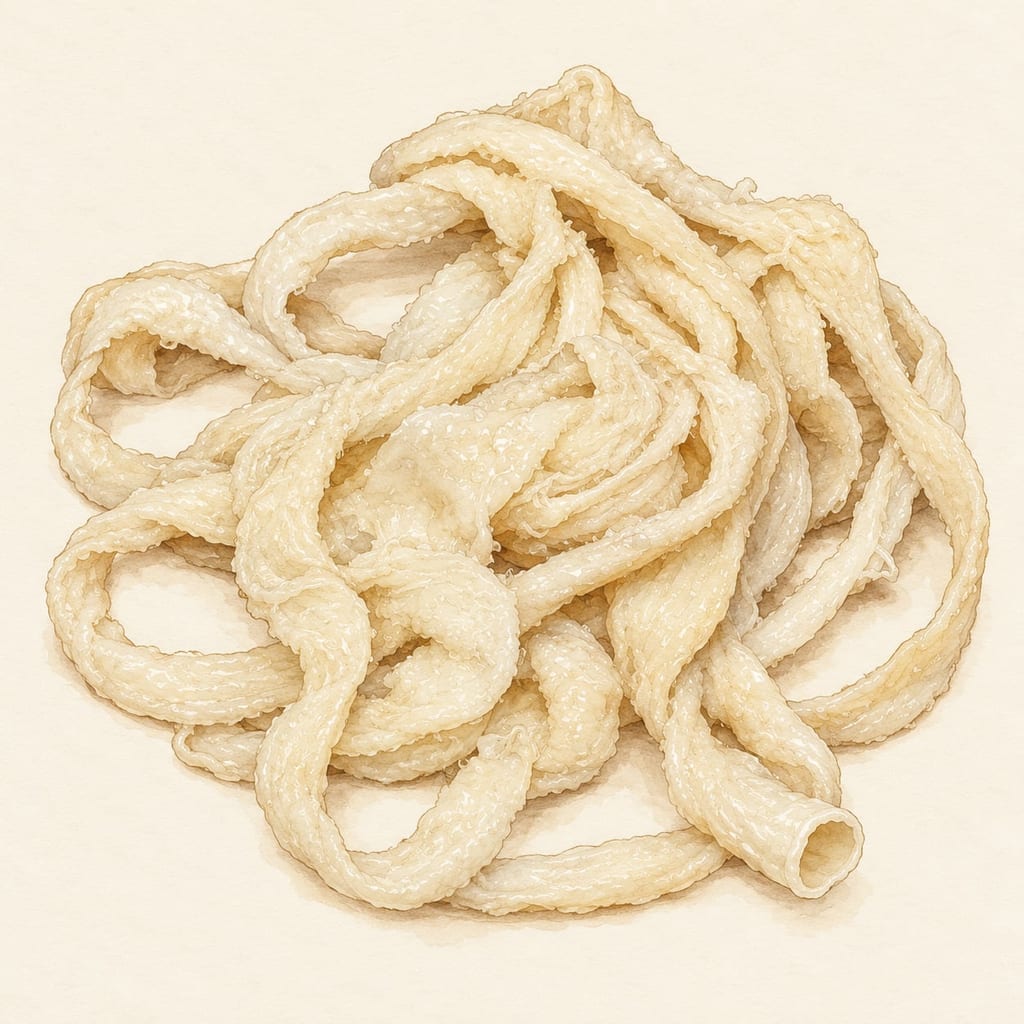
A natural sausage casing is a cleaned animal intestine or, for some products, another prepared organ used as an edible envelope. Its anatomy shapes the sausage, while diameter and material affect stuffing and drying.
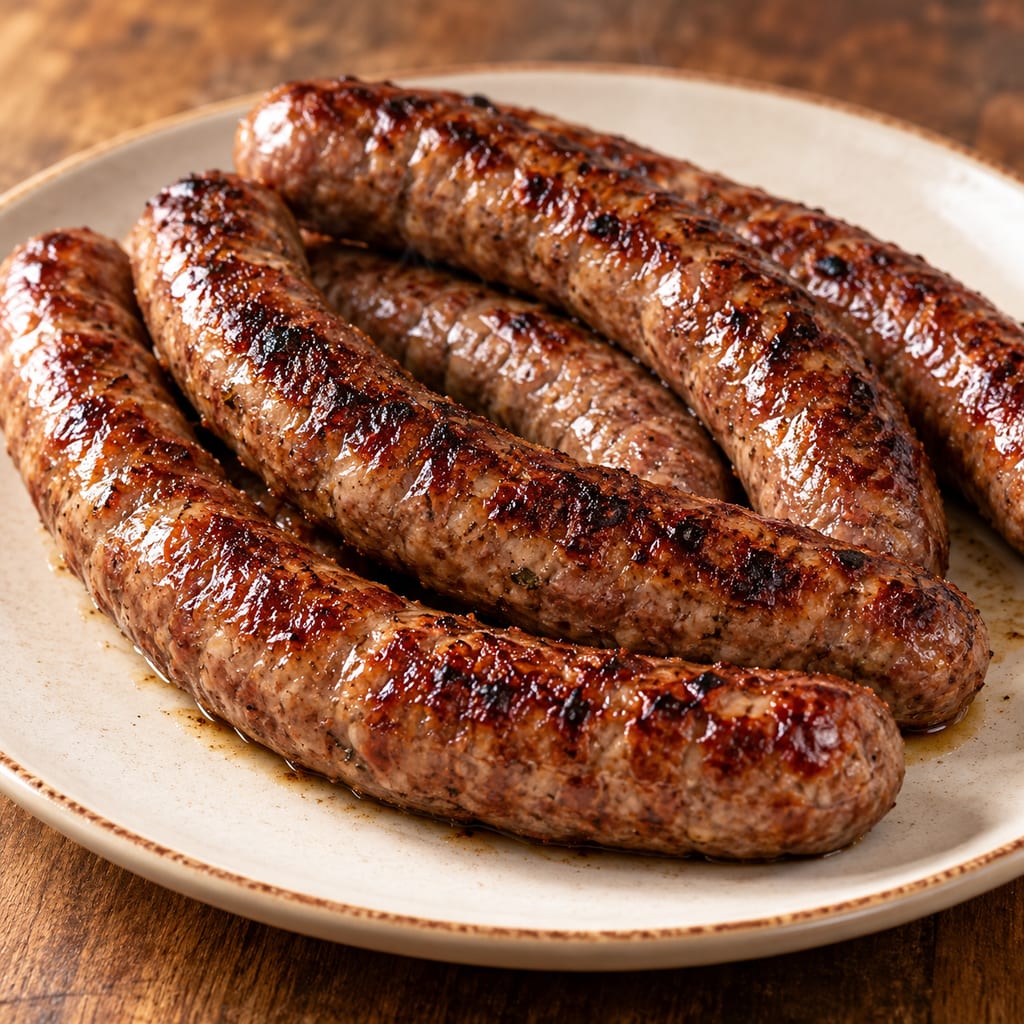
South Africa's regulated grilling-sausage class, looser than boerewors: a minimum of 40% meat, vegetable protein and mechanically recovered meat allowed, and sold raw.
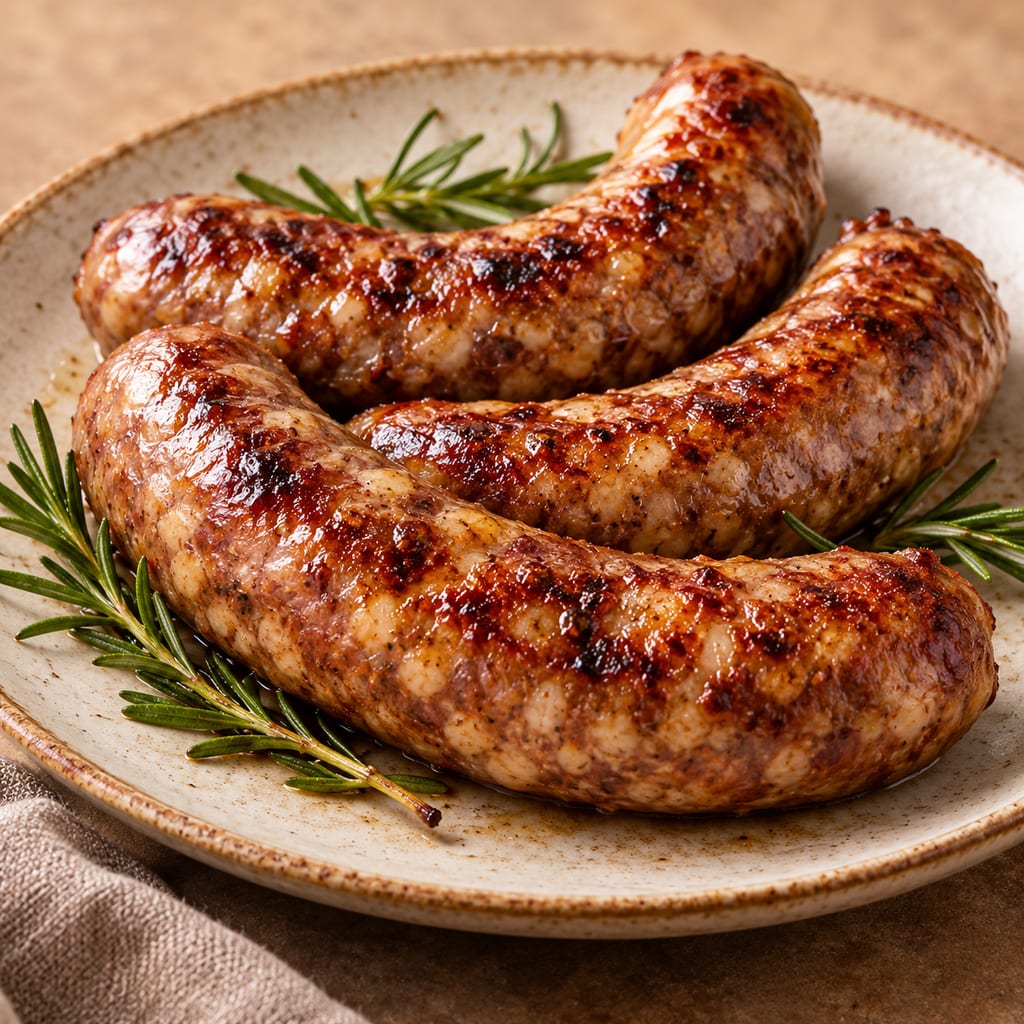
South Africa's spiced fresh sausage family, sold as masala, dhania or Punjab wors: cumin, ginger, garlic and chilli in place of the mild coriander-and-clove seasoning of boerewors.

A spicy South African vegetable relish of onion, carrot, pepper, tomato, curry seasoning and beans, cooked briefly and served warm or cold beside pap and grilled meat.
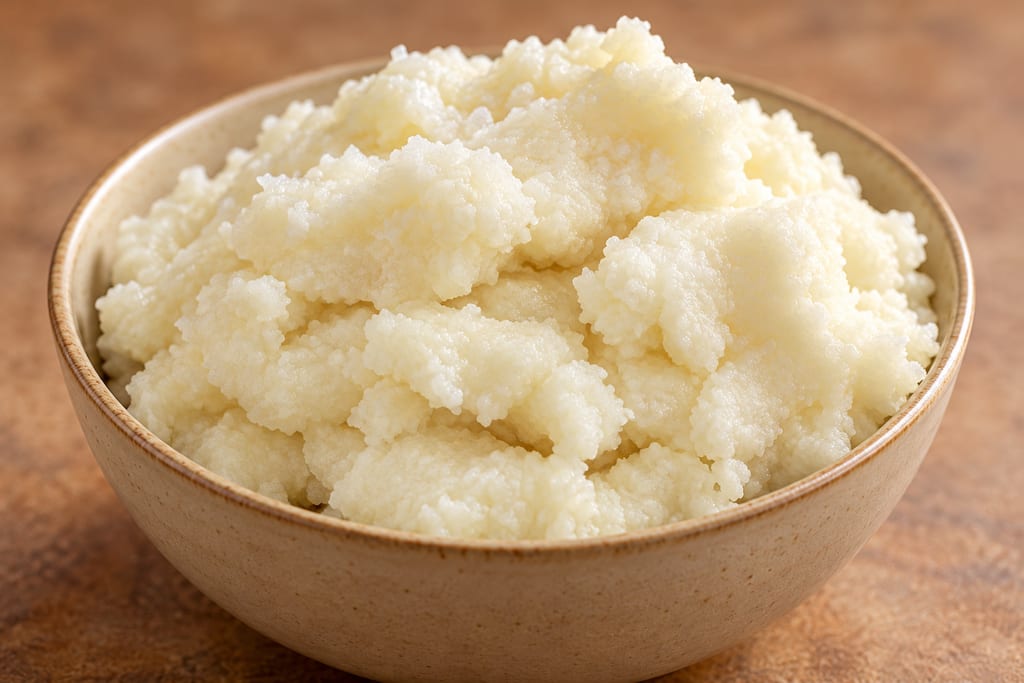
South Africa's maize-meal porridge, which the same white meal turns into a soft breakfast pap, a firm sliceable mound or the separate moist granules of phuthu depending only on water and handling.
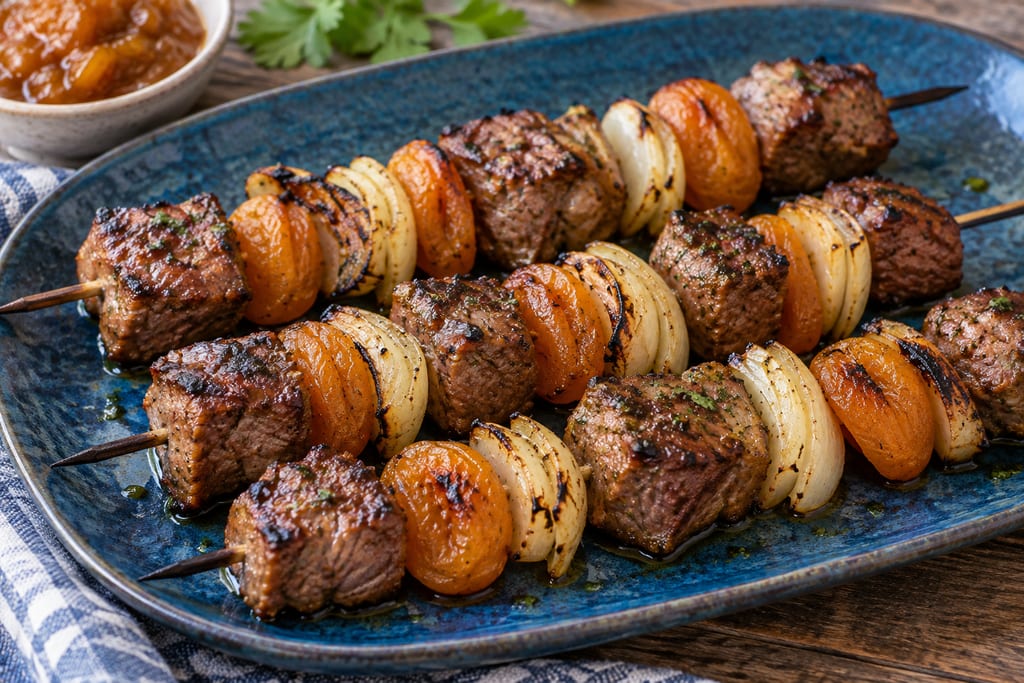
Cape skewers of marinated lamb or mutton threaded with onion, fat or dried fruit and grilled, their marinade balancing curry spice against vinegar or tamarind and something sweet.
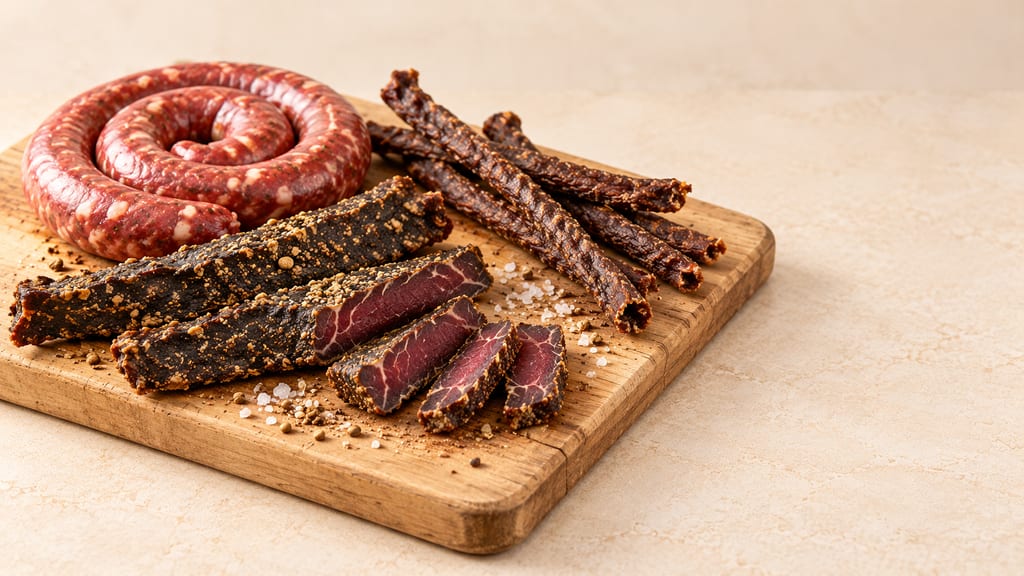
Boerewors, biltong and droëwors share a table but follow different paths from meat to meal. Their histories lead from the braai and butcher's counter to drying lines, household pots and the science of keeping food.
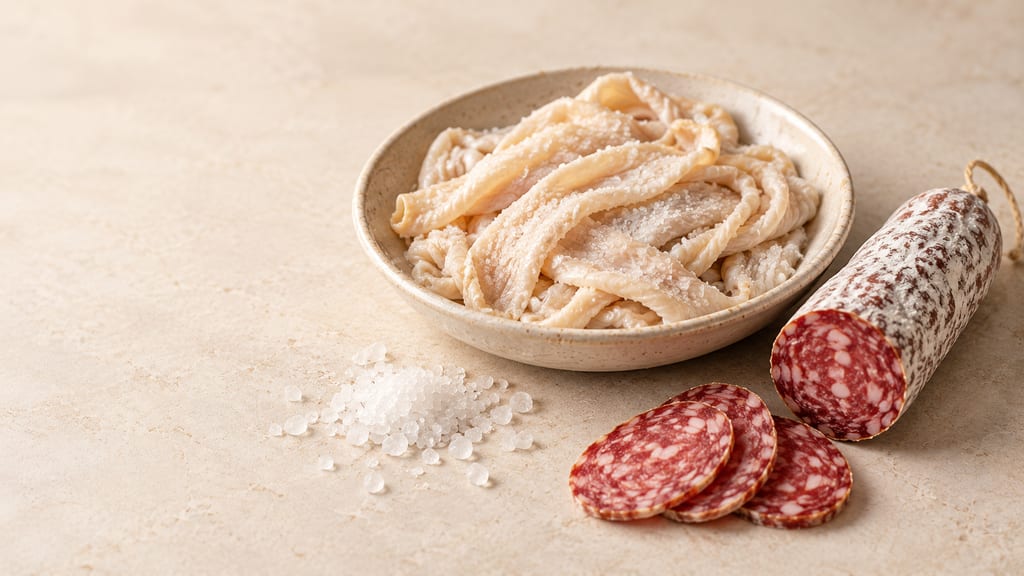
Gut, stomach, bladder, caul and skin have held food for as long as recipes have been written down. Which part of the animal a cook chose still decides a food's shape, how it dries and smokes, and how it is eaten.
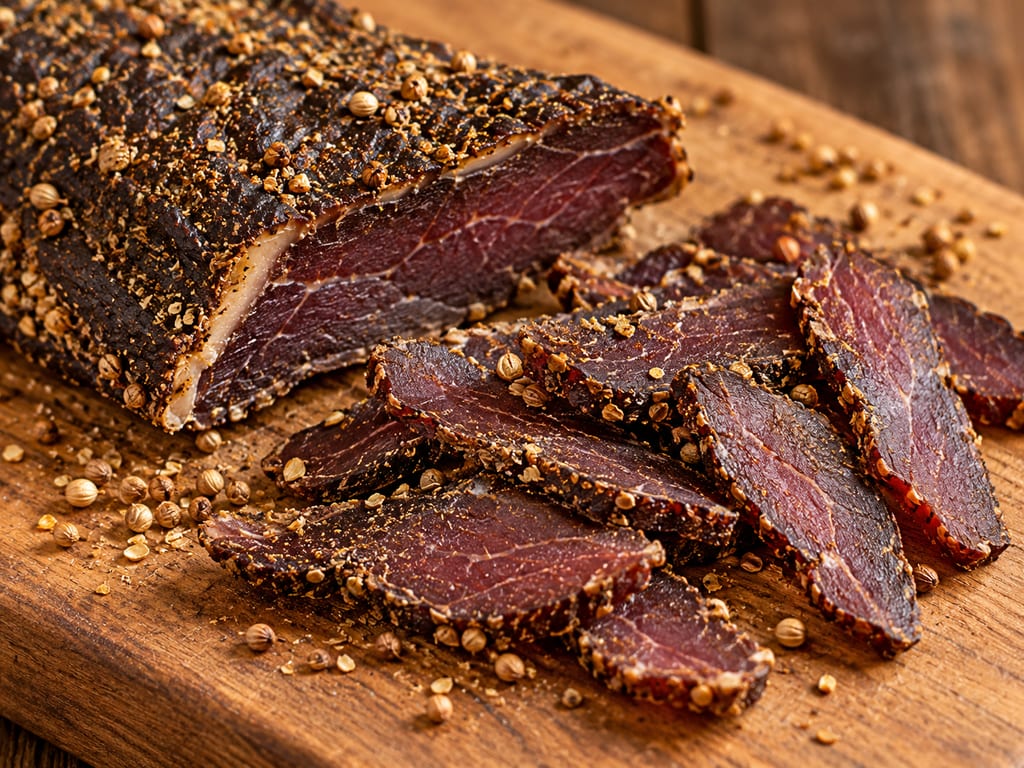
Strips of whole-muscle beef or game seasoned with salt, vinegar, roasted coriander and pepper and air-dried without cooking, sold anywhere from soft and moist to hard and very salty.
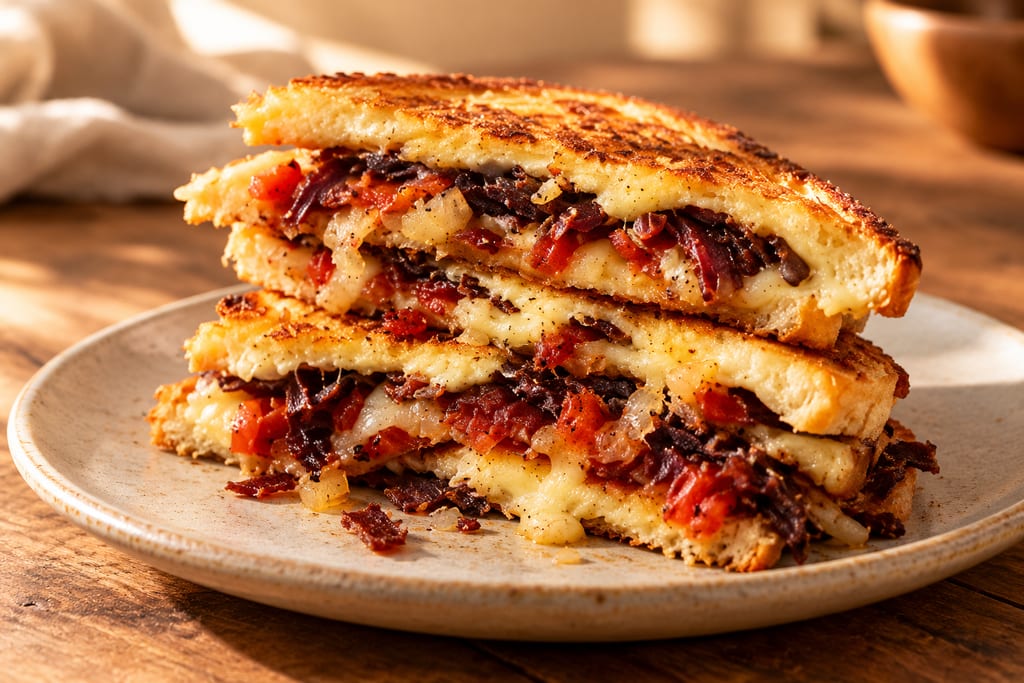
Chopped biltong, sweet onion, cream cheese and Cheddar fill bread toasted in a hinged grid over gentle coals, then finished with biltong dust.
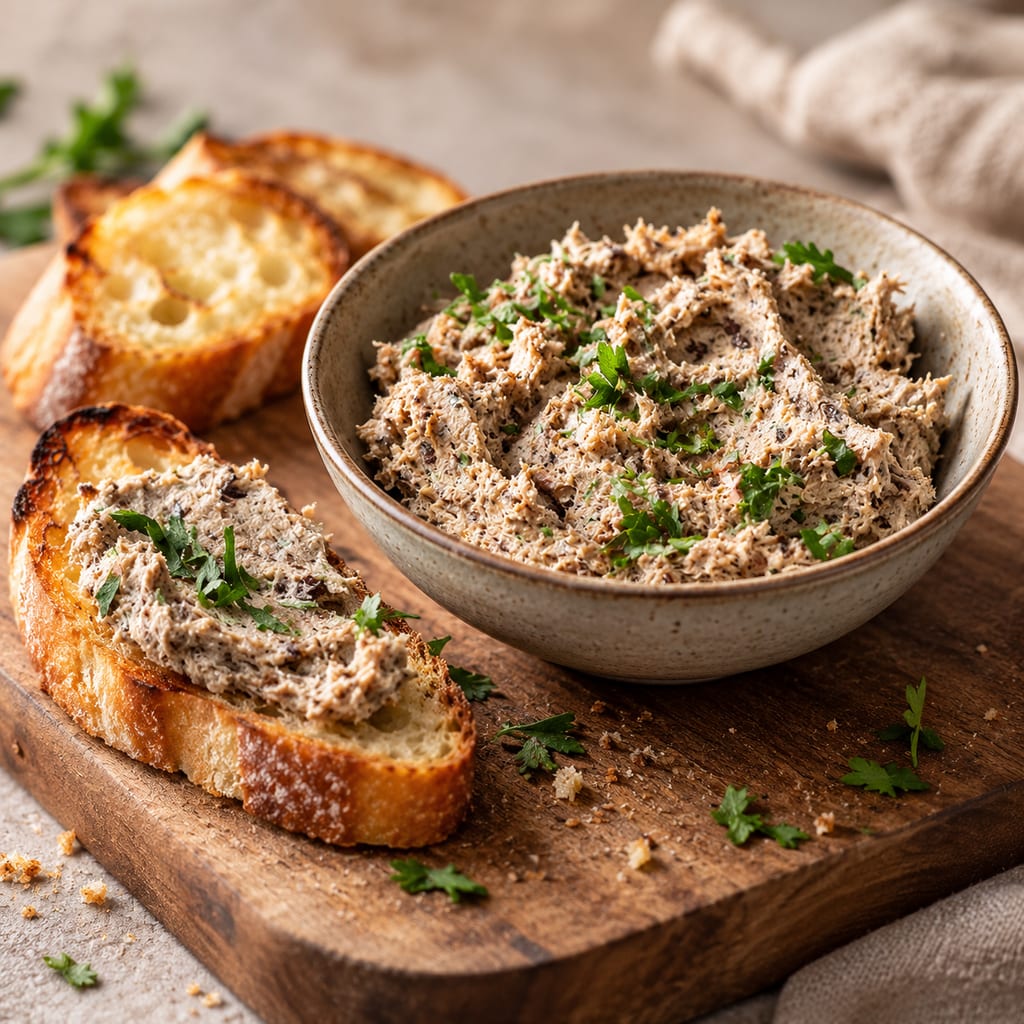
A cold biltong spread with sour cream, mayonnaise, mustard, lemon and herbs; serve it with crackers, crostini or bread.
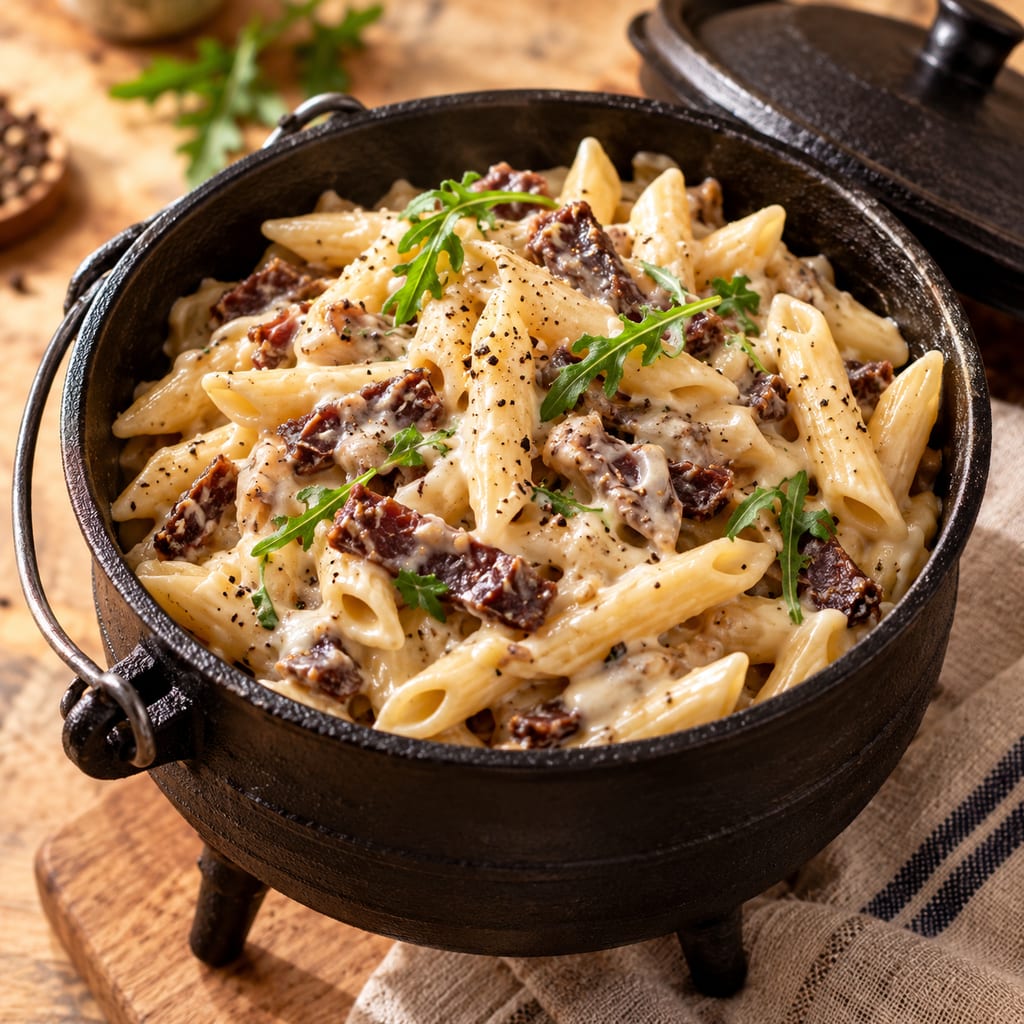
Biltong, bacon and vegetables simmer in tomato-herb stock, then join cooked pasta, milk, cream and Cheddar in this outdoor potjie.
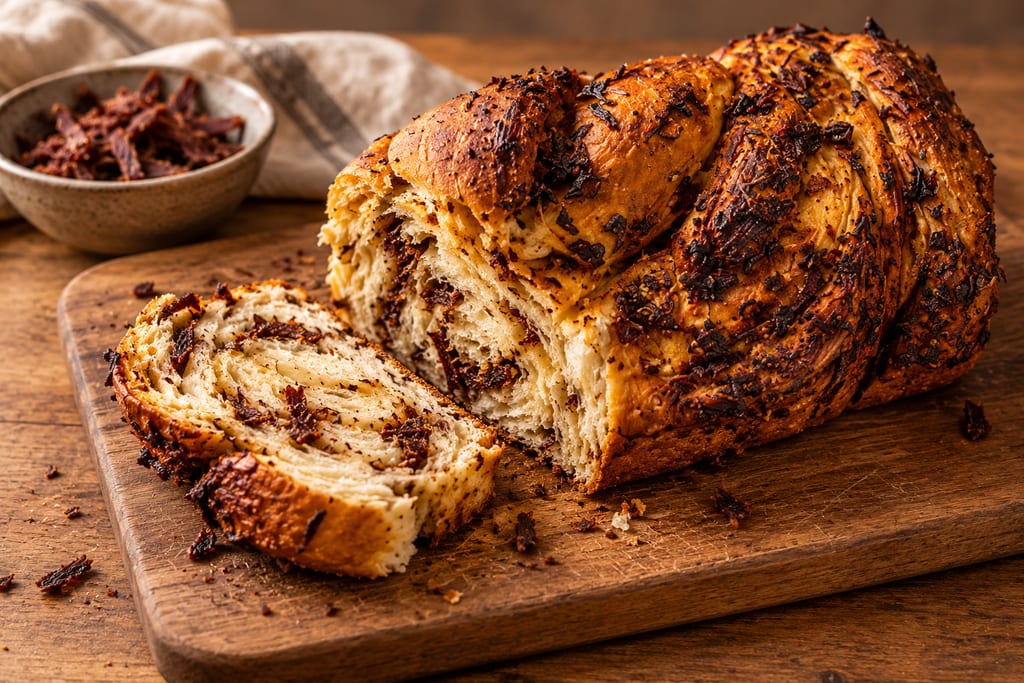
Yeasted bread wrapped around biltong, tomato pesto, Cheddar and feta, split lengthwise into a braid and baked; served with chilli-biltong butter.
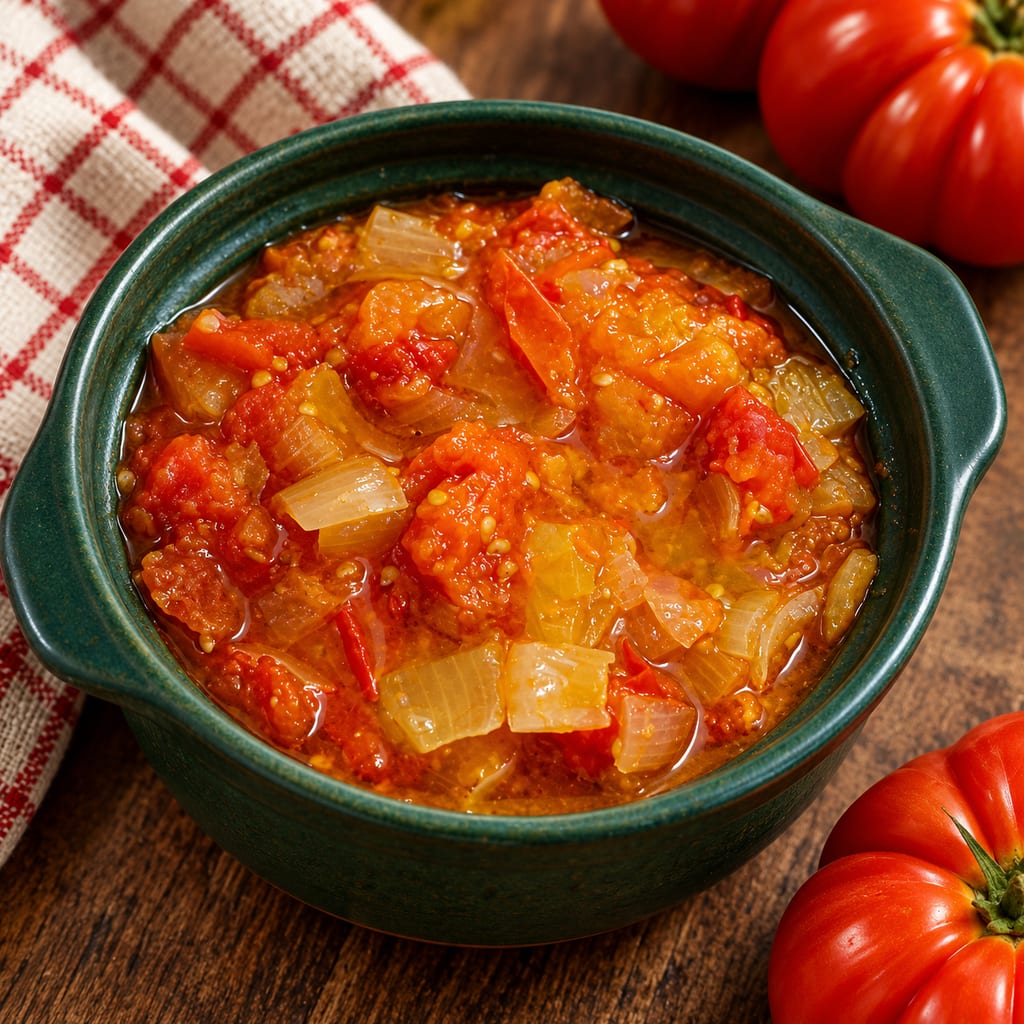
A thick South African tomato-and-onion relish simmered slowly and served warm with boerewors, pap or bread.
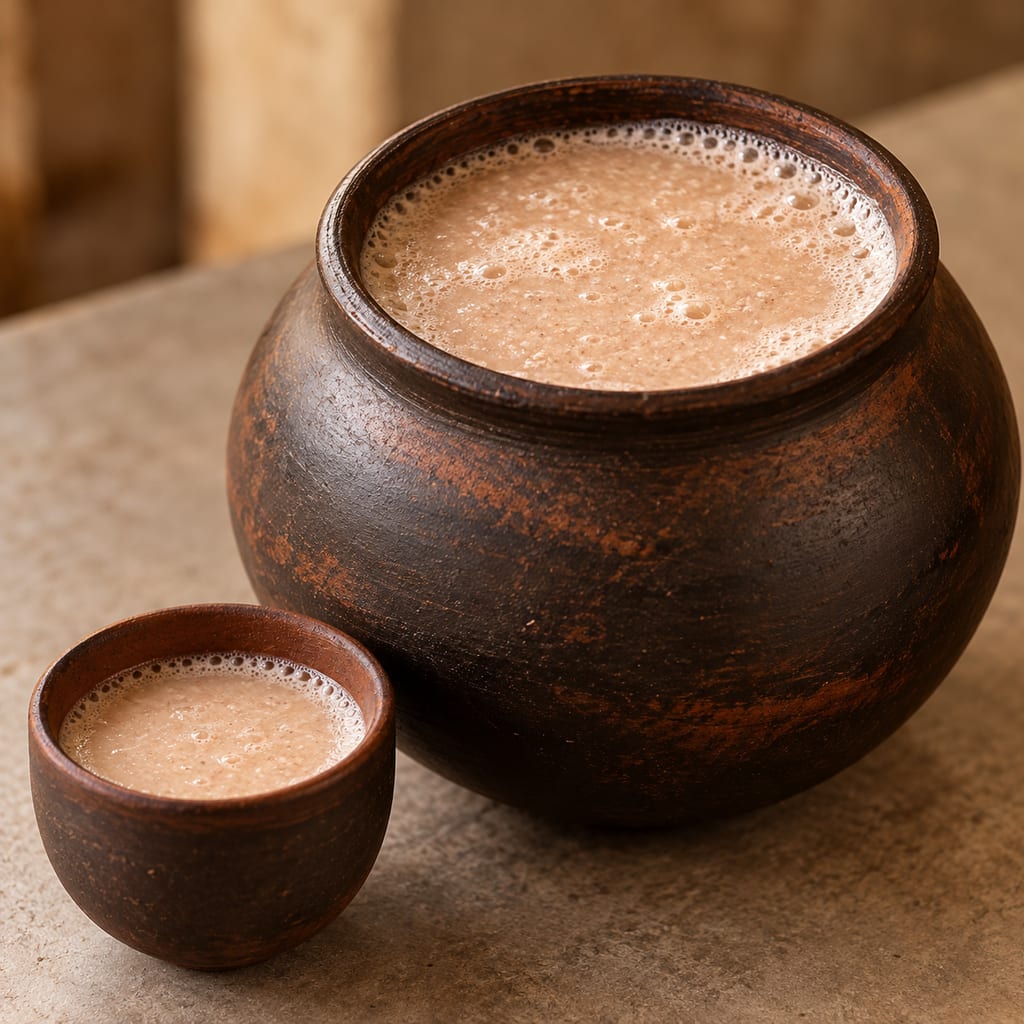
South Africa's opaque sorghum beer, soured by lactic acid bacteria before its mash is cooked and fresh malt stirred in, leaving a cloudy, creamy, cereal-thick drink that keeps only a day or two.
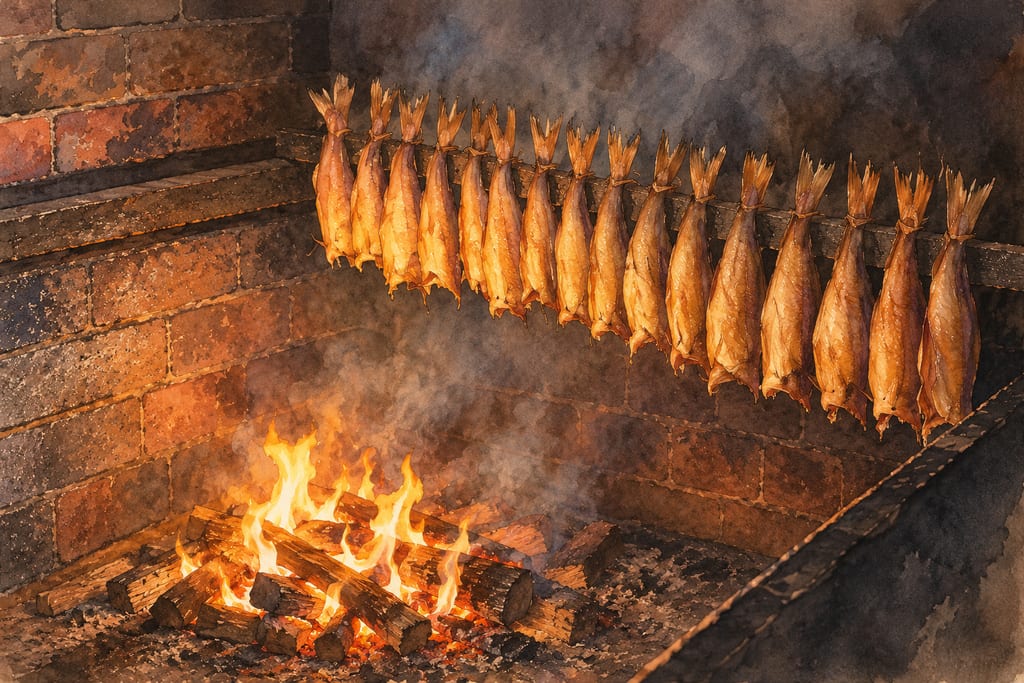
The Arbroath “barrel” is a hardwood-fired smoking pit with triangular rails and a cover. Its documented form belongs to the traditional hot-smoking of haddock around Arbroath and Auchmithie, Scotland.

Crisp battered white fish in warm corn tortillas with shredded cabbage, lime and fresh salsa. This home version draws on the Ensenada style without claiming to be a definitive historic formula.
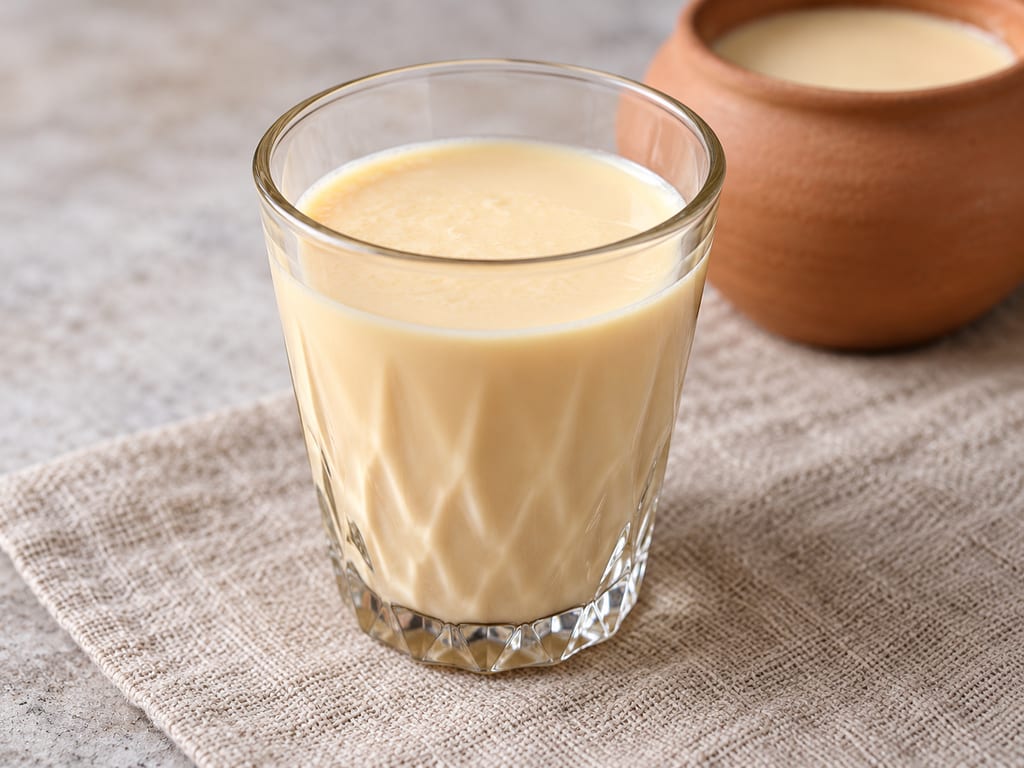
Baked milk is an Eastern European preparation of milk held at high heat for hours until it turns cream-coloured with a cooked, mildly sweet flavour, without any fermentation.
A flood-season pit store described for Omagua communities along the Amazon: manioc tubers were buried before inundation and recovered as waters receded. Its shape and lining are not recorded.
A temporary, in-place earthen oven used to cook camas with heat retained by fire-heated stones. The dimensions described here belong to one Kalispel-supervised reconstruction, not a universal form.

Chuño negro is a source-documented Andean potato-preservation practice. This entry records producer tradition; it is not a validated household process for making potentially toxic bitter potatoes safe.
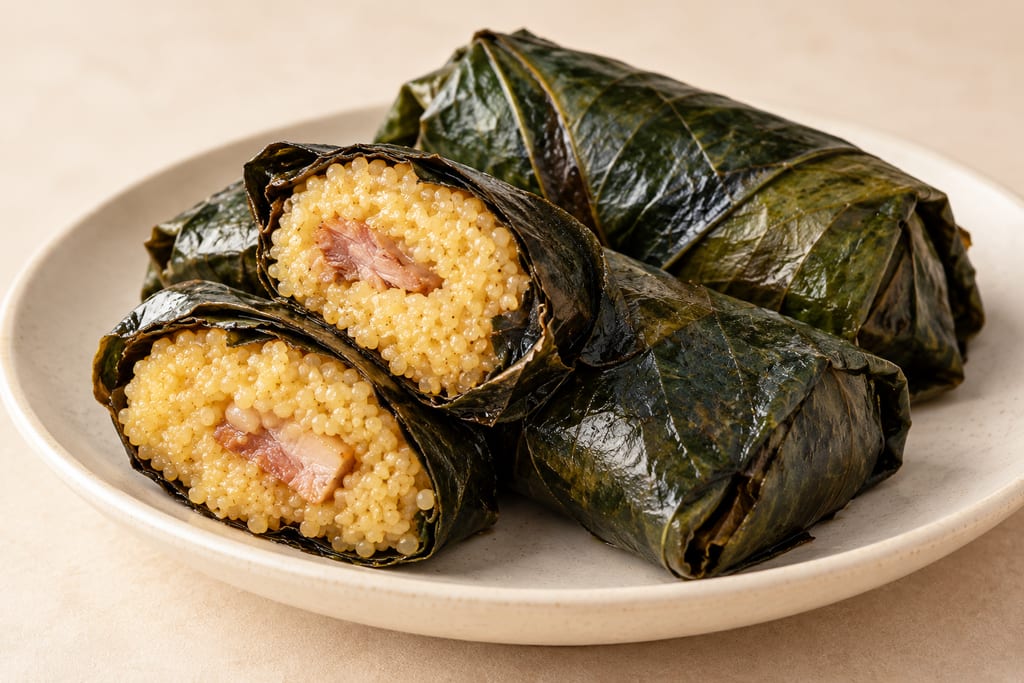
Cinavu is a Paiwan leaf-wrapped parcel built around millet or taro, meat and locally gathered leaves. It belongs to a food culture of harvest, hospitality and shared work, with village recipes differing in both filling and cooking time.
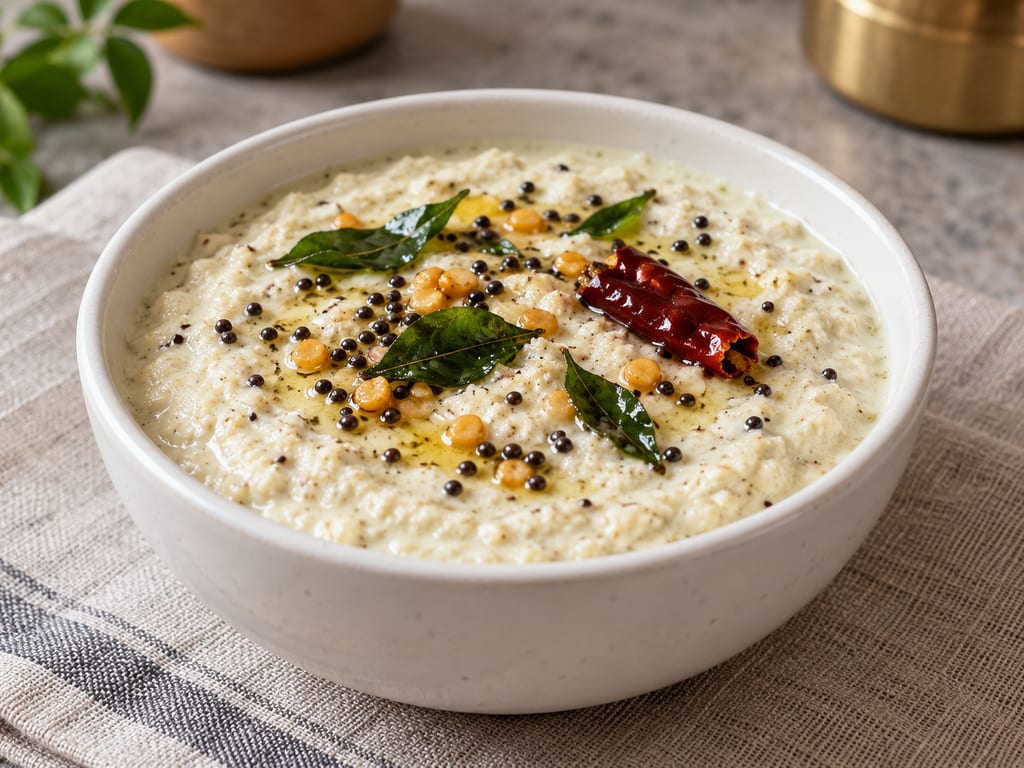
A coconut chutney whose ground base is finished with a separate oil tempering of mustard, urad dal, curry leaves and spices; the author pairs it with South Indian breakfast foods and snacks.

A Cap-Pelé boucanière is an Acadian herring-smoking building. The documented Willie Niles example is a one-storey wood-frame structure with a ridge smoke vent and interior bays for hanging fish-bearing cannes.

Achcharu is a family of Sri Lankan vinegar pickles made with mixed vegetables or seasonal fruit and a piquant spice dressing. This version is a quick, refrigerated, non-fermented mixed-vegetable pickle.

The acocote is a long, hollowed and dried gourd used to draw aguamiel from a mature maguey. It is a harvesting tool: the sap is transferred to a separate vessel before it ferments into pulque.

Adrak murabba preserves young ginger in sugar syrup, a sweet South Asian preparation recorded in Indian cookery and food-processing sources.

Parkia biglobosa seeds are fermented into regional West African seasonings, including nététou, iru, dawadawa and soumbala. The yellow fruit pulp is a separate food, and names and methods vary by place.

Japanese reddish-brown vinegar from sake lees matured about three years, turned to vinegar by acetic bacteria; the vinegar of Handa and Edomae sushi rice.

A refined common-wheat flour blended for a broad range of baking; its protein and behavior vary with wheat, milling and market.

The almond mushroom, Agaricus subrufescens, was cultivated in eastern North America in the 1800s, lost its market, and returned as a cultivated mushroom from Brazil, where it is grown under several names.
No community contributions have been published for this entry yet.
Sign in to contribute. Published comments and photos are free to read.
Dictionary of South African EnglishHistory
Dictionary of South African English — boereworsHistorical spellings boerwors and boer worst, and the short form boerie.
A 1913 farmer's sausage formula of beef and fat pork, and the form Boer Worst in M. Raubenheimer's 1930 cookbook.
A 1937 South African Department of Agriculture and Forestry formula labelled Sausage (Boerwors) of 10 pounds of beef, 5 pounds of pork or sheep-tail fat, 4 tablespoons (about 1 ounce) of ground coriander and 4 tablespoons (about 2 ounces) of salt.
Cited in: A sausage that tells a larger story; Names, language and definition; History: what the written evidence establishes; Leipoldt's farmhouse sausage; Recognised styles and regional variation; How boerewors is eaten
Government of South AfricaRegulation
South African Government — Regulation R.2410 (2022)Raw boerewors composition: a minimum of 90% total meat from domesticated cattle, sheep, pigs or goats, singly or mixed; a maximum of 30% fat as analysed; an edible casing required; mechanically recovered meat, added colourants and offal other than casing not permitted; specified cereals and starch, vinegar, spices, herbs, salt, permitted additives and water permitted.
Cited in: A sausage that tells a larger story; Names, language and definition; What modern South African law requires
Digitale Bibliotheek voor de Nederlandse LetterenHistory · Method
C. Louis Leipoldt — WorsWors, dated 1 June 1945 and collected in Polfyntjies vir die proe: a farmhouse filling of beef supplemented with pork and mutton, finely chopped with the pork fat kept in small distinct pieces; coriander, pepper, ginger, sage, rosemary and a little garlic; wine, vinegar and brandy; packed into cleaned intestines with a hand-operated copper stuffer. Leipoldt also discusses wind-drying sausage for hunting without giving water activity or microbiological controls.
Cited in: History: what the written evidence establishes; Leipoldt's farmhouse sausage
Open LibraryHistory
Hildagonda J. Duckitt — Hilda's Where Is It? of Recipes (1891)Hilda's "Where Is It?" of Recipes, 1891, records Cape household spiced sausages, including Sausages (Our Own Recipe) using mutton, pork, fat, herbs, warm spices and claret.
Cited in: History: what the written evidence establishes
Shoprite Checkers Championship BoereworsMethod
Championship Boerewors — preparation and competition guidelinesPreparation guidance: lean meat cut into 50 mm cubes and fat into 10 mm cubes before mincing, a 4.5 mm mincer plate, a 28/32 calibre casing, and an overnight refrigerated rest so the seasonings distribute.
Competition entry rules exclude garlic, ginger, wine, venison and several contemporary flavourings, which are narrower conditions than South African legislation.
Cited in: What coriander contributes; The casing; Manufacturing boerewors; Select the meat; Prepare the spices; Grind the meat; Prepare the casing; Rest under refrigeration; Recognised styles and regional variation
Food and Agriculture Organization of the United NationsMethod · Science
FAO — Small-scale sausage productionSmall-scale sausage production: salt extracts myofibrillar proteins, particularly myosin, which bind the minced particles; over-working a warming mixture produces a fine paste while under-mixing gives poor cohesion; cold fat fractures into distinct particles and warm fat smears.
Cited in: How boerewors works: meat science; What coriander contributes; The casing; Manufacturing boerewors; Select the meat; Mix; Stuff the sausage; Quality assessment and troubleshooting; Food safety and storage
Government of the United KingdomSafety
UK Government — Cooking food safelyCooking guidance for food businesses: 70°C for 2 minutes, or a validated equivalent combination such as 75°C for 30 seconds, measured at the centre of the food.
Cited in: Cook thoroughly; Food safety and storage
FoodSafety.govSafety
FoodSafety.gov — Safe minimum internal temperaturesSafe minimum internal temperature of 71°C (160°F) for ground meat and sausage.
Cited in: Cook thoroughly; Quality assessment and troubleshooting; Food safety and storage
South African TourismInspiration
South African Tourism — Shisa nyamaShisa nyama: grilled meat bought and eaten socially alongside pap, chakalaka and other side dishes.
Cited in: How boerewors is eaten