
Boerewors
A coarse South African farmhouse sausage of beef with pork or mutton fat, defined by its coriander seasoning and cooked fresh over coals rather than preserved.
 FermenteaWhere food goes to change
Traditional method
Chakalaka relish
A spicy South African vegetable relish of onion, carrot, pepper, tomato, curry seasoning and beans, cooked briefly and served warm or cold beside pap and grilled meat.

Chakalaka is a spicy South African vegetable preparation served as a relish, side dish or accompaniment to maize pap, grilled meats, stews and bread.
It is strongly associated with township food culture and informal meals, but its popularity extends across South African households, restaurants and supermarket products.
There is no single mandatory recipe. A familiar version combines onions, carrots, peppers, tomatoes, curry seasoning and baked beans. Other versions use cabbage, fresh chilli, ginger, garlic or whatever vegetables are available.
Its character comes from the balance between vegetables, savoury spices, heat and the rich tomato-and-bean mixture.
Chakalaka can be eaten warm or cold. Some versions are relatively dry and intensely flavoured; others are loose enough to function almost as a sauce.
Its simplicity is part of its importance. With a few inexpensive ingredients, it provides colour, flavour and vegetables alongside a substantial starch such as pap.
It is especially good with boerewors, where the richness of the sausage contrasts with the vegetable relish's acidity and spice.
Chakalaka is the established name in South African English and local culinary usage.
Unlike a scientific plant name, its precise linguistic origin is not securely established by the materials examined. A convincing-sounding etymology should not be invented.
The principal vegetables have their own botanical identities.
Carrots come from Daucus carota subsp. sativus.
Tomatoes are Solanum lycopersicum.
Bulb onions are Allium cepa.
Sweet peppers and many chilli peppers belong to Capsicum annuum, although chilli products may use other Capsicum species.
The beans used in canned baked beans are commonly varieties of the common bean, Phaseolus vulgaris.
The curry powder is itself a blend, so it cannot be assigned one scientific species name.
Most of the vegetables may be purchased fresh, while the beans and tomatoes are often canned.
The combination is culinary rather than botanical: chakalaka is defined by how the ingredients are prepared together, not by one compulsory plant.
Chakalaka is regularly linked to South African mining communities.
A frequently repeated account places its development among mine workers who pooled vegetables, tinned food and spices to create a substantial relish.
Some versions of the story specifically emphasise Mozambican mine workers.
That history is plausible within the wider setting of migrant labour and township cookery, but the research examined does not establish a contemporary document identifying the first cook, mine hostel or precise date of invention.
The distinction between an oral origin account and a securely dated historical source should be maintained.
What is clear is that chakalaka has become an important feature of modern South African food culture.
It is associated with home cooking, communal meals, braais and everyday plates.
Its recipes are unusually adaptable. They can be adjusted to available vegetables, household preferences and levels of chilli heat.
That adaptability may help explain its wide popularity, but it should not be exaggerated into a precise undocumented origin story.
Modern supermarket canned chakalaka provides another stage in its development. The food is now available as an industrially prepared, shelf-stable product as well as a freshly cooked homemade relish.
Those products may taste similar, but their preservation methods are different.
Chakalaka is not normally a fermented product.
The transformation takes place through vegetable preparation, frying, softening, simmering and flavour extraction.
Each stage changes the ingredients in a different way.
Heating onions in oil softens their structure and changes their flavour.
Moisture is released, sulphur-derived sharpness is moderated and sweetness becomes more apparent.
Garlic and ginger, where included, contribute aromatic compounds that disperse through the oil and vegetable mixture.
Their flavours can become harsh if burned, so temperature control matters.
Ground spices contain volatile aroma compounds.
Heating them briefly in oil helps disperse their flavour through the relish.
The process is commonly called blooming the spices.
Prolonged frying at excessive heat can burn the particles and introduce bitterness.
The precise spice blend matters: coriander-rich, cumin-rich and chilli-heavy curry powders produce different results.
Carrots contribute sweetness, colour and structure.
Grating increases their exposed surface area and helps them soften quickly.
Peppers contribute their own aromas and retain some texture when cooking is controlled.
Different pepper varieties produce different balances of sweetness and bitterness.
Tomatoes add water, acidity, soluble solids and savoury character.
Tomato paste provides a concentrated ingredient that can strengthen colour and depth of flavour.
The balance between fresh or canned tomatoes and tomato paste influences how thick the relish becomes.
Cooked beans make the relish more substantial.
When canned baked beans are used, they also introduce tomato sauce, sugar, salt and other ingredients already present in the can.
This is why a chakalaka recipe made with baked beans can taste different from one made with plain cooked beans, even when the vegetables are the same.
Beans also change the texture. They may remain whole or partly break apart during simmering.
A recipe by Khanya Mzongwana, published by Woolworths TASTE on 22 August 2025, provides a useful reproducible example.
It is described as serving 10, with a preparation time of 10 minutes and a cooking time of 20 minutes.
Grate the carrots.
The different cutting methods are purposeful. Diced peppers and onion provide discernible pieces, while the grated carrots soften and integrate into the sauce.
Add the peppers and onion and cook until softened.
Introduce the grated carrots and continue cooking.
This creates the vegetable base and reduces the raw sharpness of the onion.
The published method specifies frying for a further 5 minutes.
The aim is to combine the spices with the hot vegetables and oil without allowing them to scorch.
Add the baked beans and chopped tomatoes.
Season with salt, pepper and brown sugar.
The canned beans already contribute sauce, so the consistency depends on their formulation.
The vegetables continue to soften, the flavours combine and some liquid may evaporate.
This is a short cooked relish, not a long fermentation.
For a cold dish, the relish must be cooled and held safely rather than left standing indefinitely at ambient temperature.
Cabbage chakalaka adds shredded cabbage, giving a more substantial vegetable texture.
Carrot-heavy chakalaka emphasises grated carrot and may have a sweeter flavour.
Bean-rich chakalaka includes a larger proportion of baked beans or other cooked beans.
Hot chilli chakalaka introduces fresh chilli or a stronger chilli seasoning.
Ginger and garlic chakalaka gives greater aromatic emphasis to those ingredients.
Tomato-heavy chakalaka is saucier and pairs well with pap.
Relatively dry chakalaka uses less free liquid and works well as a spoonable accompaniment.
These are variations within one food. They should not be split into separate historical dishes simply because the ratio of carrot to pepper changes.
Commercial manufacturers also sell chakalaka-flavoured sausages.
A Deli Spices formulation for chakalaka-flavoured wors uses 12.300 kg meat and fat, 3.100 kg water and ice, and 1.000 kg ready pack, producing 16.400 kg in the published batch.
The sausage borrows the flavour of chakalaka; it is not vegetable relish inside an otherwise unchanged sausage unless the manufacturer's actual ingredient specification establishes that.
Pap is among the most characteristic accompaniments.
Its mild, starchy texture balances the relish's spice and acidity.
Chakalaka also appears alongside boerewors, grilled beef, chops and other braaied meat.
At a shisa nyama, it may be one of the vegetable sides served with grilled meat and pap.
Other uses include serving it with rice, samp, bread or stew.
It can also be eaten on toast or used as a savoury topping.
Contemporary recipes incorporate chakalaka into egg dishes, muffins and other preparations.
These uses demonstrate its versatility without requiring the claim that every modern combination is traditional.
The cultural importance of the relish also extends beyond a particular occasion. It is inexpensive to adapt and can feed a group from shared ingredients.
That is consistent with the communal origin accounts, even though those accounts do not establish an exact invention date.
It can resemble a vegetable stew, curry or tomato relish, but its social and culinary identity is distinct.
A plain tomato-and-onion sauce may be served with pap without being called chakalaka.
Chakalaka usually has a broader vegetable base and a noticeable curry-spice component.
A vegetable curry may be intended as a main dish; chakalaka is often served as a relish or side.
The distinction is not entirely rigid. Household preparations overlap, and one family may make a relatively substantial chakalaka while another serves only a small spoonful alongside the main food.
A food reference should describe the characteristic preparation rather than declare that every household outside one narrow formula is making something else.
Good chakalaka has cooked vegetables that remain pleasant to eat, an integrated sauce and a balanced level of spice.
Bitter taste: Curry powder or garlic may have burned during frying.
Watery mixture: Excess liquid from canned tomatoes, vegetables or beans has not been reduced sufficiently.
Dry or scorched base: Too little liquid or insufficient stirring during cooking.
Hard carrots: The pieces have not cooked enough, particularly if cut too thickly.
Mushy texture: Excessive simmering or very finely processed vegetables.
Excessive heat: Too much chilli relative to the intended recipe.
Flat flavour: The balance of salt, tomato acidity, sweetness and spices may be unsuitable.
Unexpected bubbling or sourness during storage: Not a sign of intended fermentation. Treat it as possible spoilage.
The ideal texture and seasoning are matters of household preference, but unexplained spoilage signs are not.
Ordinary chakalaka is not a fermentation recipe.
It is prepared by cooking vegetables with seasonings and often adding beans that are already cooked.
There is no established requirement for a starter culture, controlled lactic-acid fermentation, fermentation vessel or target fermentation pH.
A deliberately fermented vegetable relish might be developed using chakalaka-inspired ingredients, but it would be a different process requiring its own validated recipe.
Such a product should not be assumed traditional merely because its ingredients resemble chakalaka.
Freshly cooked chakalaka is perishable.
The presence of tomatoes or curry spices does not establish a shelf-stable acidified product.
Likewise, a homemade batch cannot be stored at room temperature simply because commercially canned chakalaka is sold unrefrigerated.
Commercial canned products achieve shelf stability through industrial processing and packaging controls that differ from ordinary saucepan cooking.
Beans, cooked vegetables and other ingredients can support microbial growth after preparation.
For homemade chakalaka, refrigerate promptly, prevent cross-contamination and follow applicable guidance for cooked leftovers.
When using canned beans or tomatoes, inspect packaging and follow the manufacturer's instructions.
A specific safe room-temperature storage period or shelf-life for arbitrary homemade chakalaka was not established by the source material.
What is clear is that chakalaka has become an important feature of modern South African food culture, associated with home cooking, communal meals, braais and everyday plates. Its recipes are unusually adaptable, adjusting to available vegetables, household preference and chilli heat, and that adaptability may help explain its popularity without being evidence for a precise origin. Supermarket canned chakalaka is a further stage in its development: the food is now sold as an industrially prepared shelf-stable product as well as a freshly cooked relish, and although the two may taste similar their preservation methods are quite different. The distinction between an oral origin account and a securely dated historical source is worth keeping.
Yield 10 servings · Scaling: source batch only
The presence of tomatoes or curry spices does not establish an acidified shelf-stable product, and beans and cooked vegetables can support microbial growth after preparation.
Hazard sourceCommercial canned chakalaka reaches shelf stability through industrial processing and packaging controls that saucepan cooking does not reproduce.
Hazard sourceRefrigerate promptly after cooking and prevent cross-contamination
Control sourceCool and hold a cold-served portion safely rather than leaving it at ambient temperature
Control sourceA homemade batch cannot be kept at room temperature just because commercially canned chakalaka is sold unrefrigerated.
Unexpected bubbling or sourness during storage is not a sign of intended fermentation: treat it as possible spoilage.
Ordinary chakalaka is not a fermentation recipe, and a deliberately fermented relish built from the same ingredients would need its own validated process rather than inheriting this one's reputation.
A country-level association. The frequently repeated link to mining communities, including Mozambican mine workers in some versions, is an oral origin account rather than a dated source, and no locality is claimed.
A coarse South African farmhouse sausage of beef with pork or mutton fat, defined by its coriander seasoning and cooked fresh over coals rather than preserved.

South Africa's regulated grilling-sausage class, looser than boerewors: a minimum of 40% meat, vegetable protein and mechanically recovered meat allowed, and sold raw.
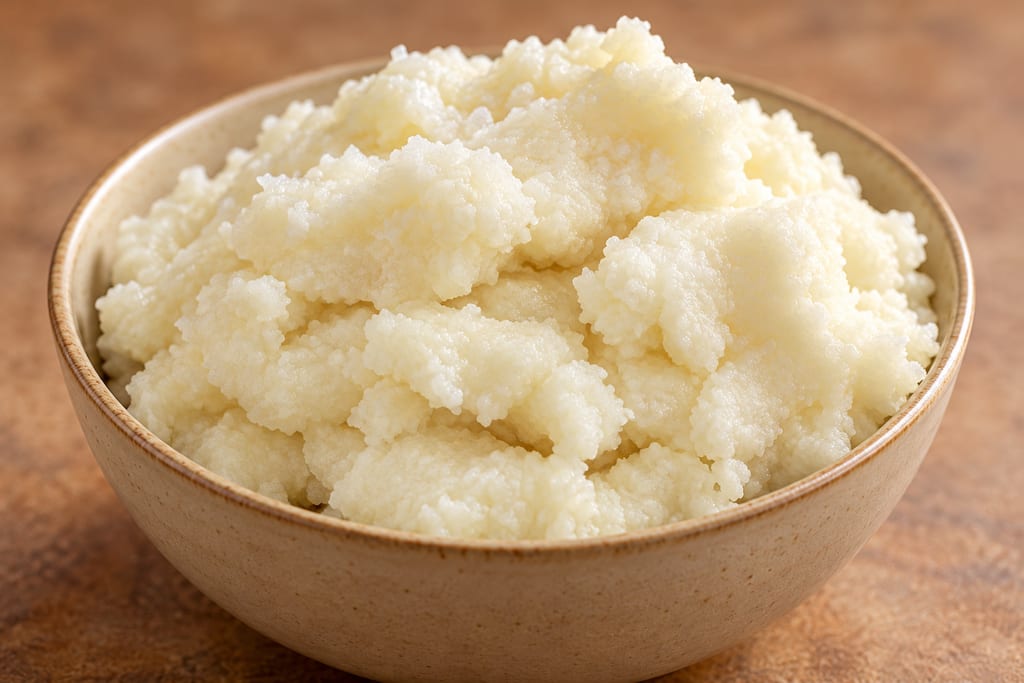
South Africa's maize-meal porridge, which the same white meal turns into a soft breakfast pap, a firm sliceable mound or the separate moist granules of phuthu depending only on water and handling.
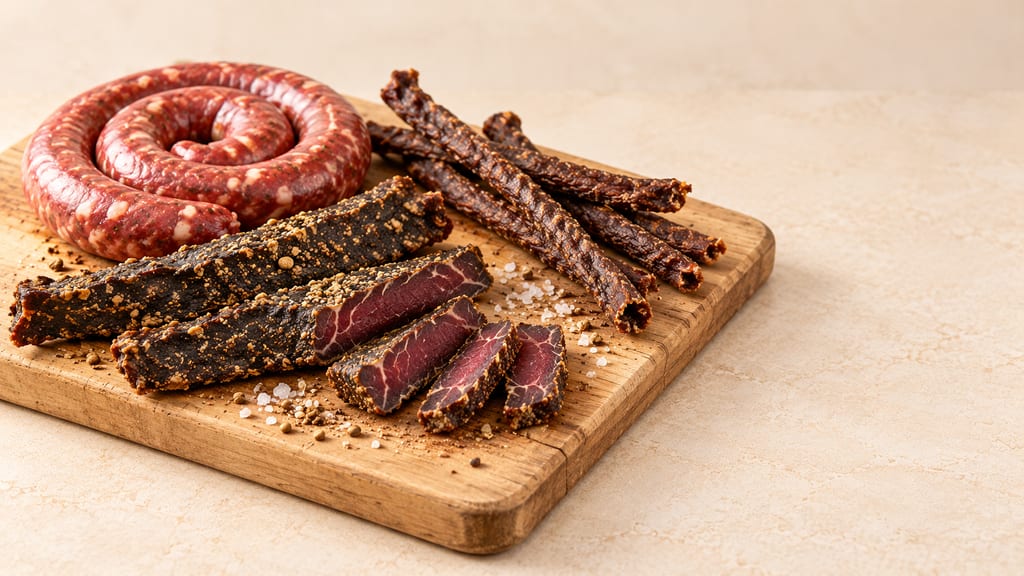
Boerewors, biltong and droëwors share a table but follow different paths from meat to meal. Their histories lead from the braai and butcher's counter to drying lines, household pots and the science of keeping food.
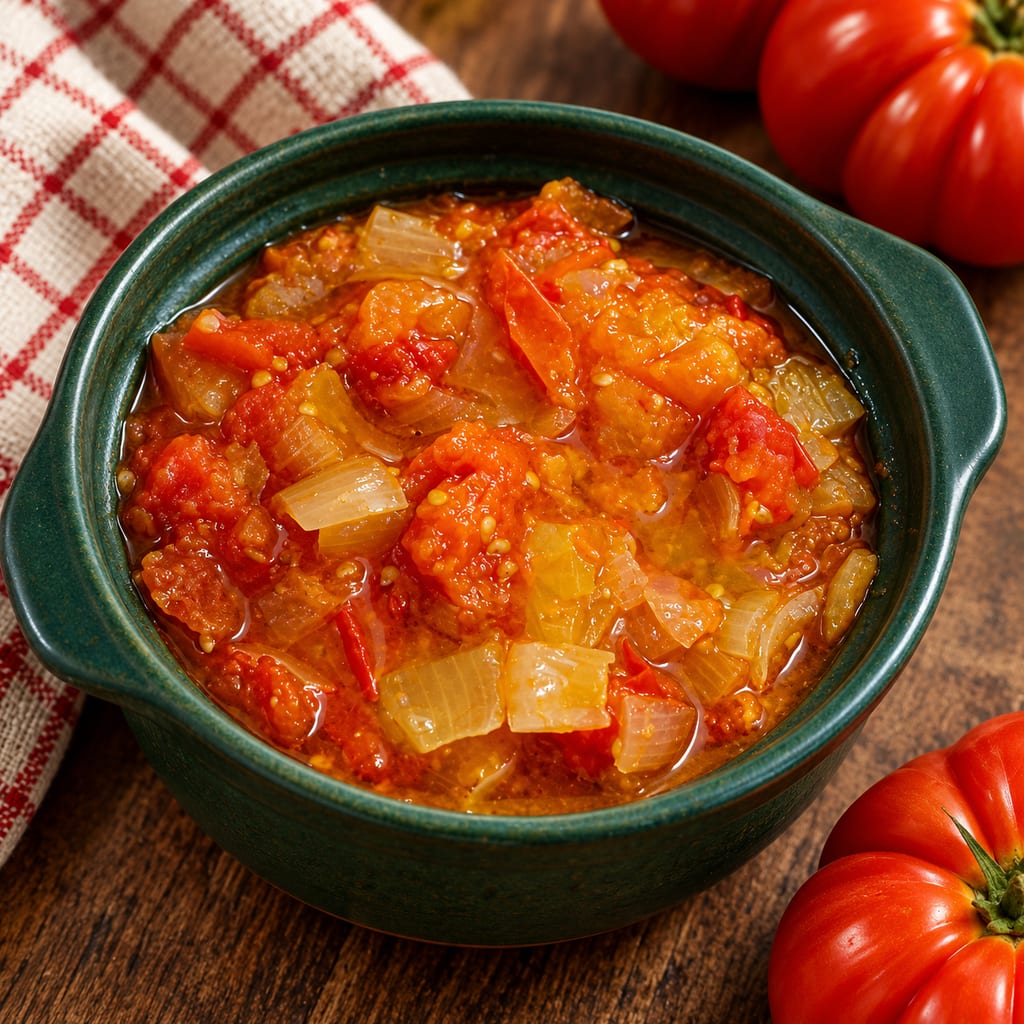
A thick South African tomato-and-onion relish simmered slowly and served warm with boerewors, pap or bread.
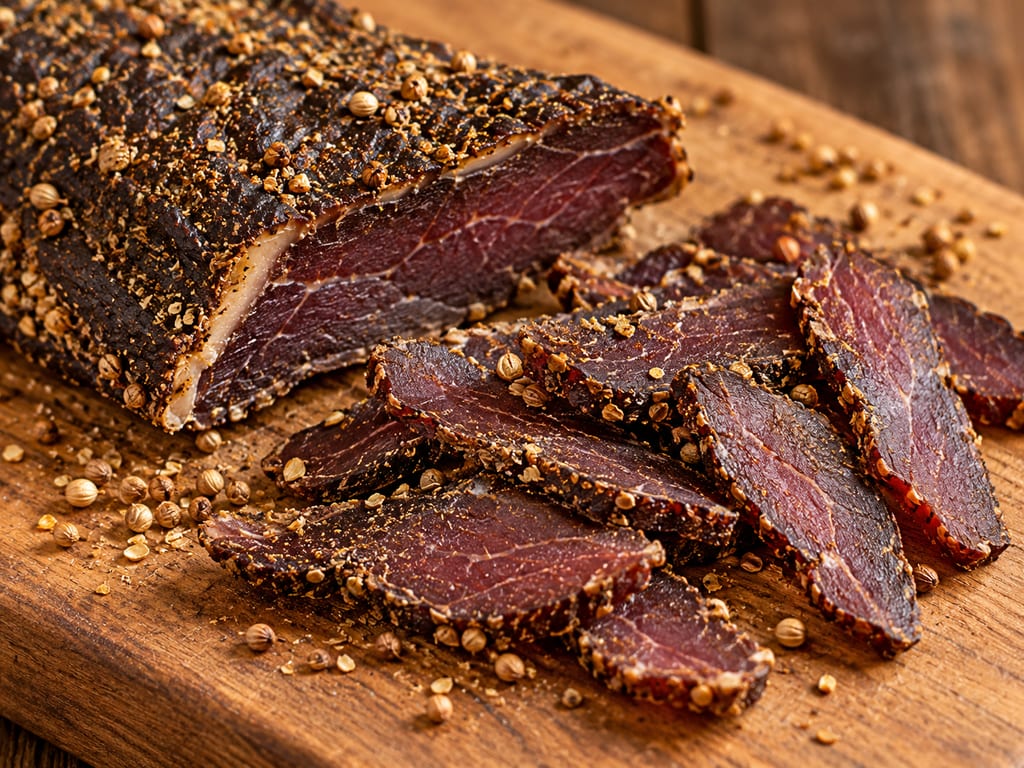
Strips of whole-muscle beef or game seasoned with salt, vinegar, roasted coriander and pepper and air-dried without cooking, sold anywhere from soft and moist to hard and very salty.
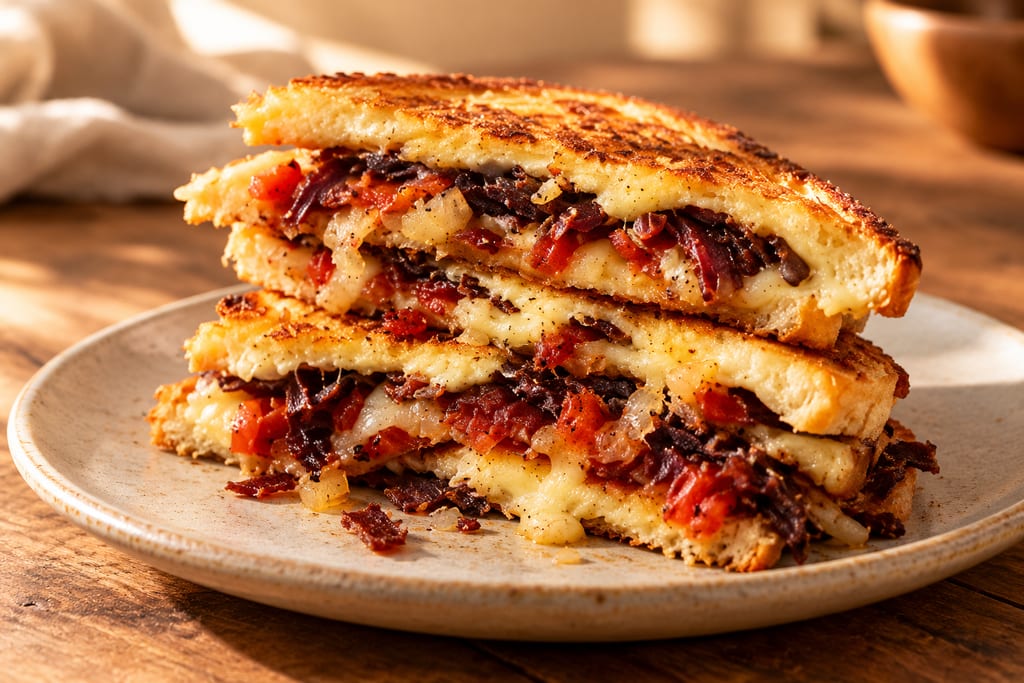
Chopped biltong, sweet onion, cream cheese and Cheddar fill bread toasted in a hinged grid over gentle coals, then finished with biltong dust.
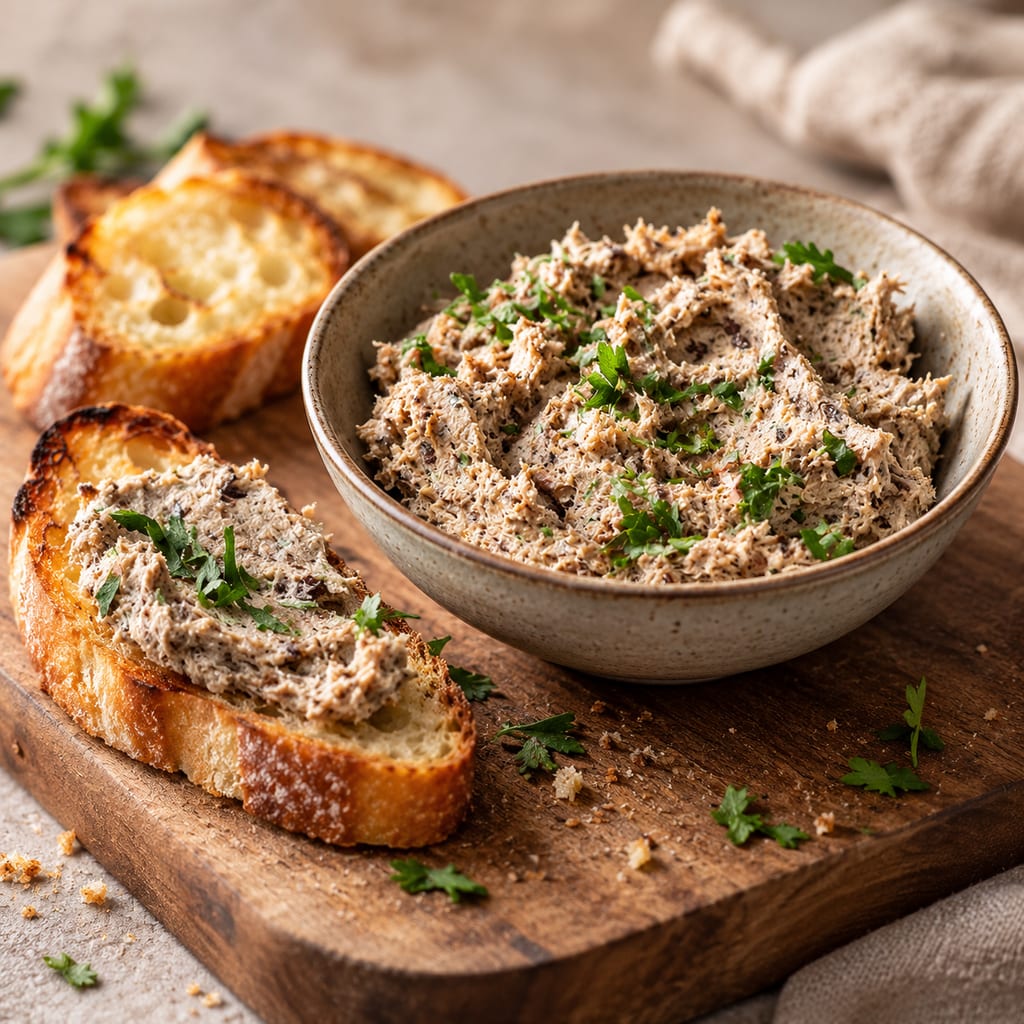
A cold biltong spread with sour cream, mayonnaise, mustard, lemon and herbs; serve it with crackers, crostini or bread.
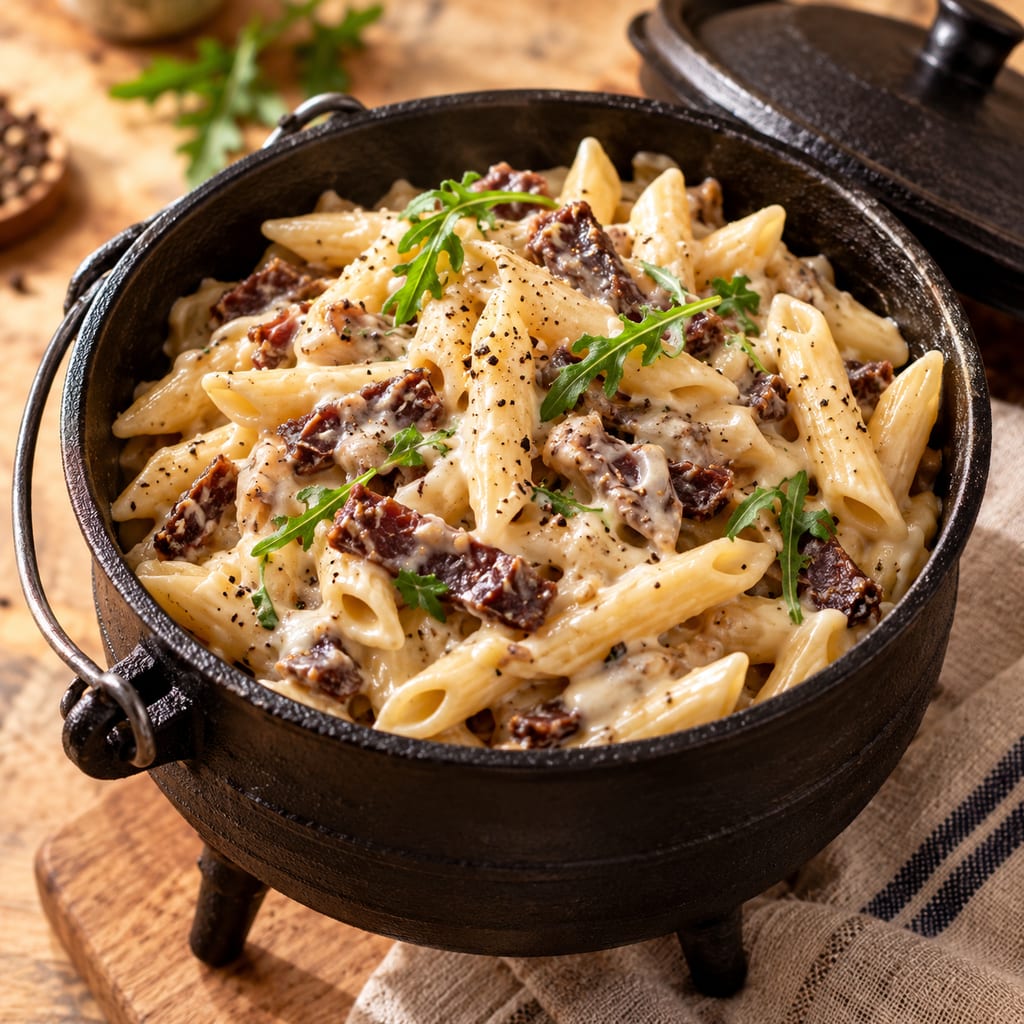
Biltong, bacon and vegetables simmer in tomato-herb stock, then join cooked pasta, milk, cream and Cheddar in this outdoor potjie.
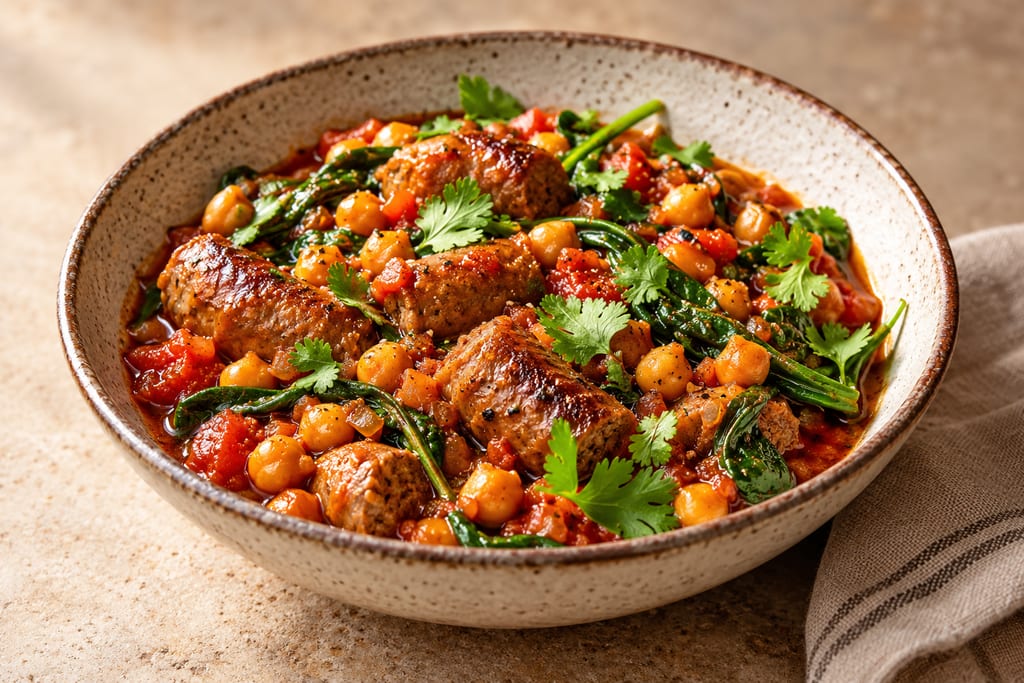
Lesego Semenya’s contemporary South African stew combines browned boerewors, chickpeas, tomato, spinach and warm spices.

A South African boerie roll puts fully cooked boerewors in a soft bread roll and tops it with warm tomato-and-onion smoor.
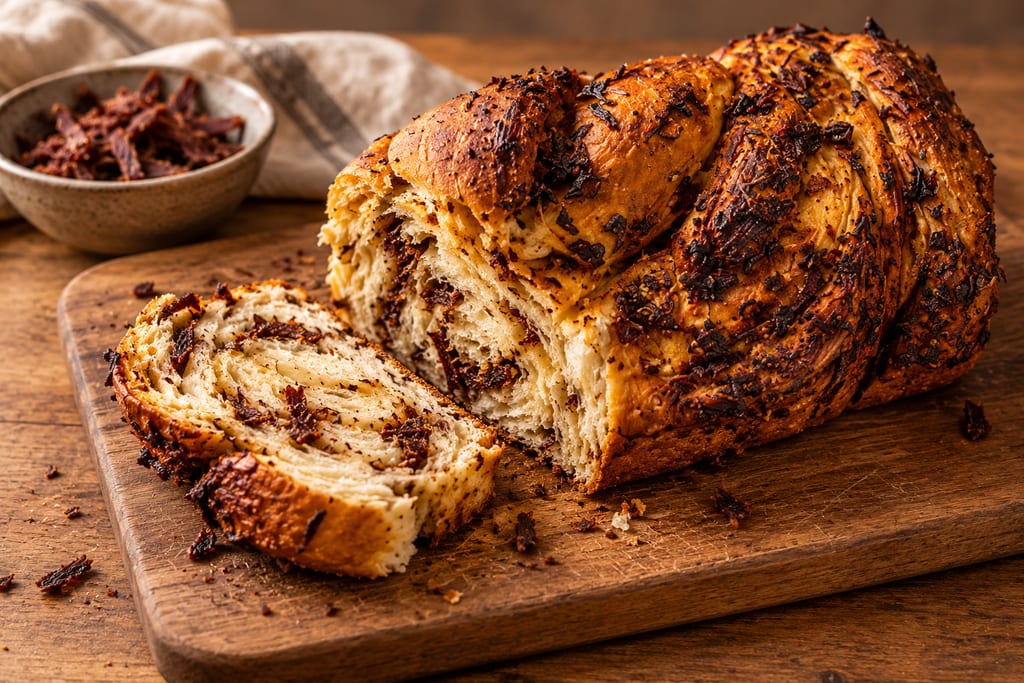
Yeasted bread wrapped around biltong, tomato pesto, Cheddar and feta, split lengthwise into a braid and baked; served with chilli-biltong butter.
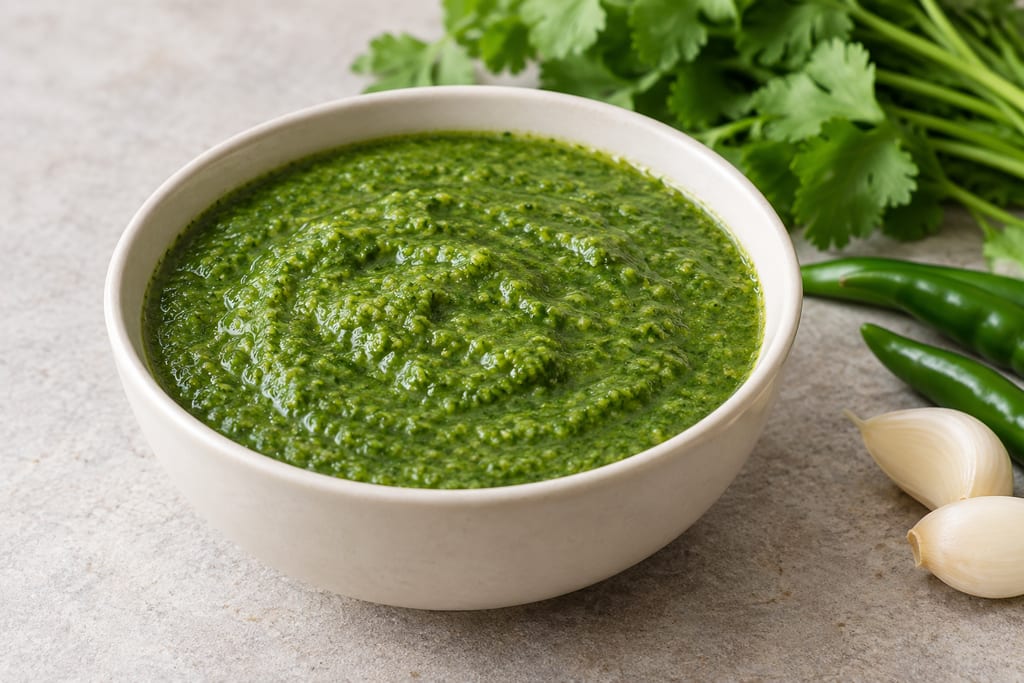
Afghan coriander chatni is a sharp, hot herb sauce with garlic and vinegar. A 2008 Afghanistan manual records green or red pepper and optional walnut; heat and household versions vary.
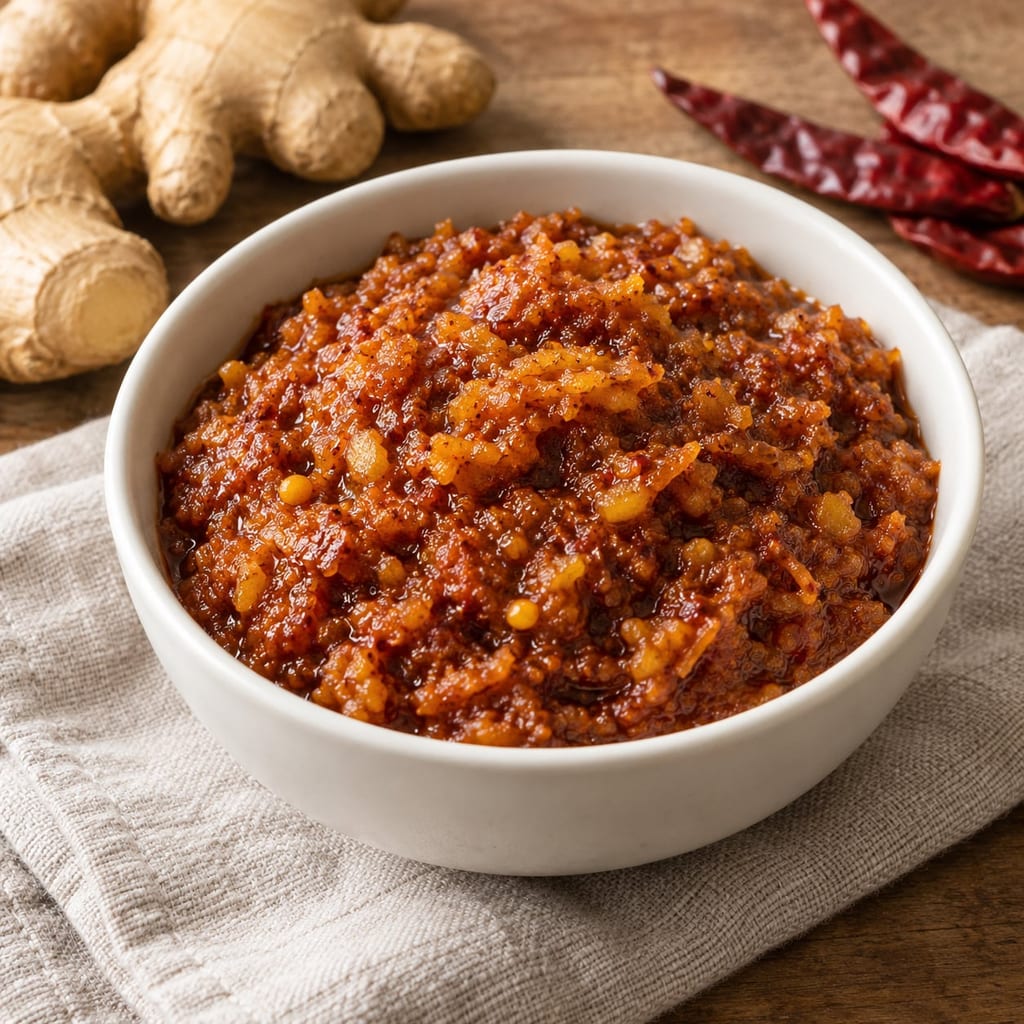
An Andhra ginger-and-urad chutney in which browned dal and briefly fried ginger and chillies are cooled, then ground with jaggery to a coarse paste.
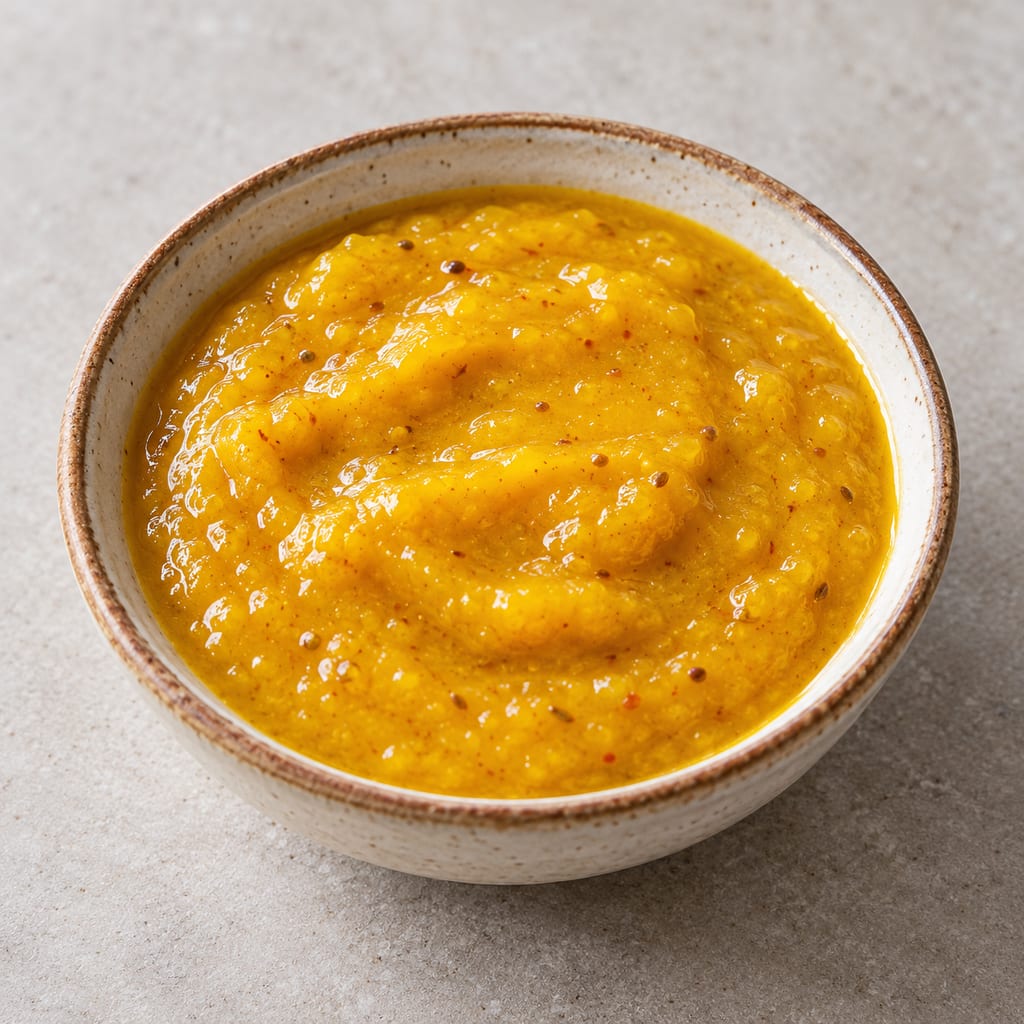
This cooked amba follows a Jewish Food Society recipe that simmers ripe mango with onion, garlic, mustard seed and warm spices into a tangy Middle Eastern condiment.
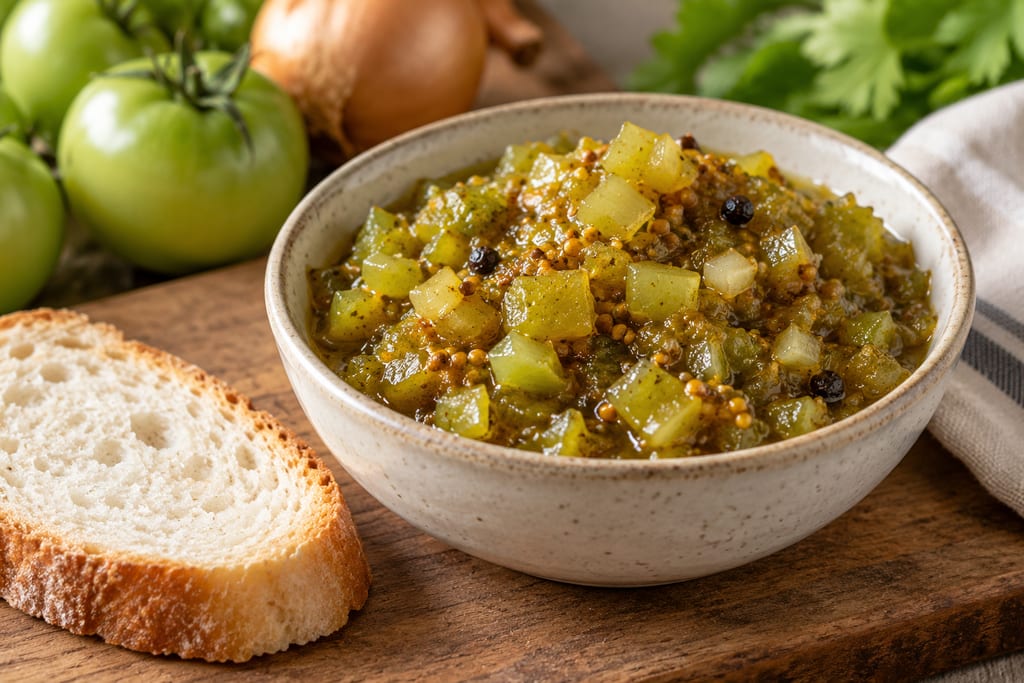
Australian green tomato pickles and relishes vary. This partial version follows ABC Western Victoria’s 2018 pickle recipe, not Beerenberg’s commercial formula. Sources document examples from 1944 onward, not a single origin.
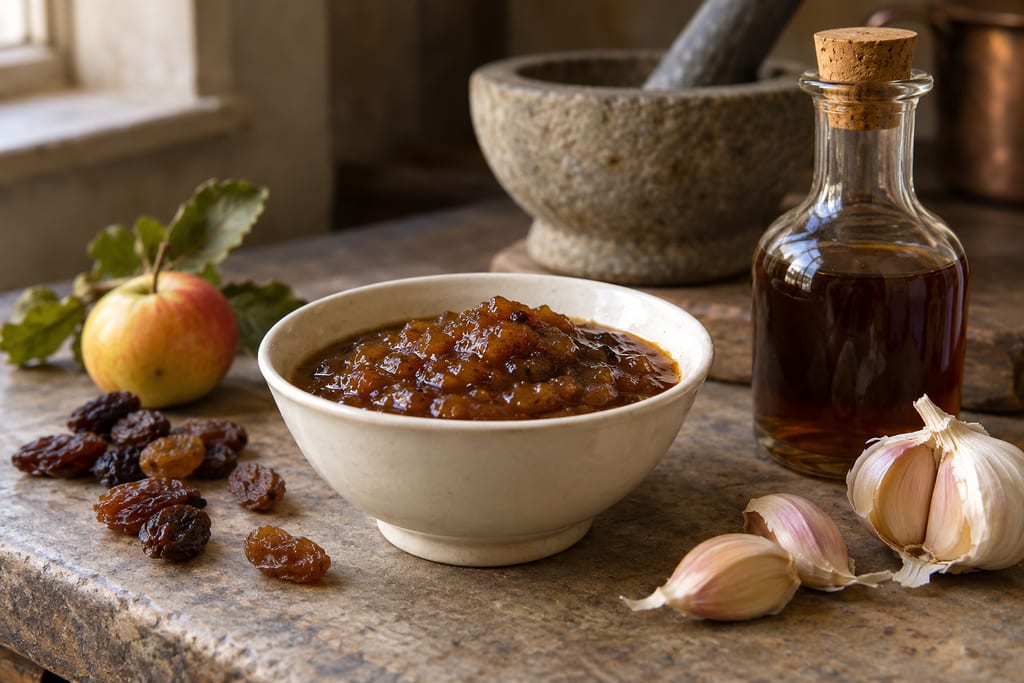
Eliza Acton's Bengal receipt for chetney sauce: stoned raisins and a hard acid fruit pounded with brown sugar, ginger, salt, cayenne and garlic, then thinned with vinegar to the consistence of thick cream.
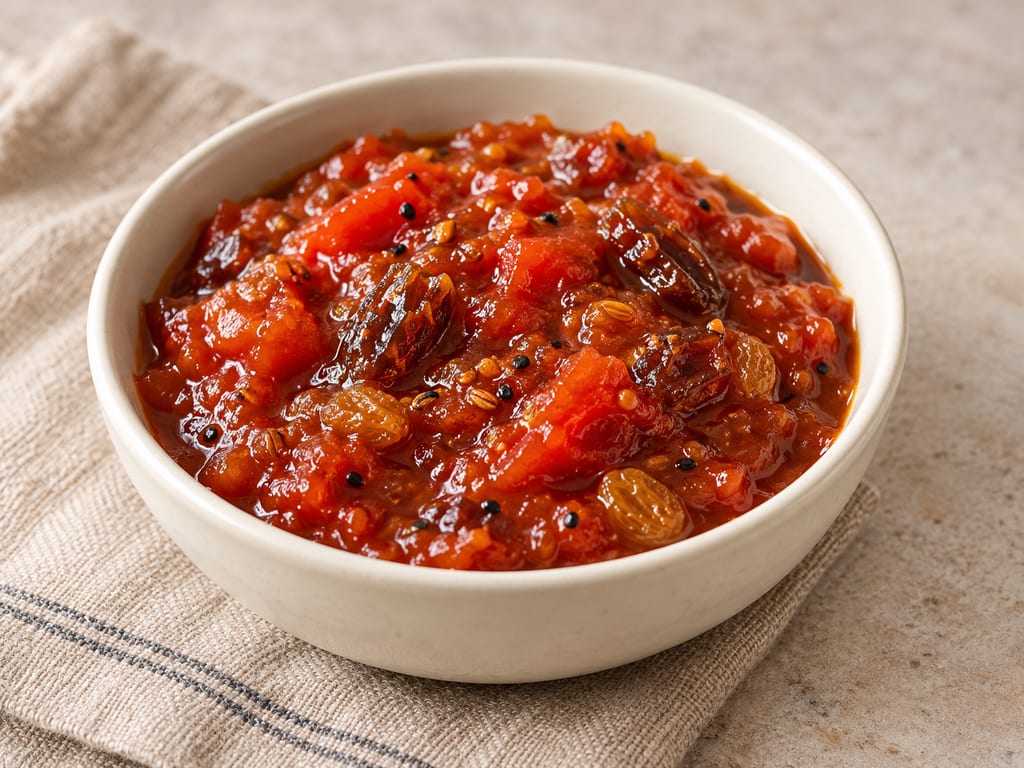
A cooked Bengali meal chutney combining tomatoes, dates, raisins, ginger and panch phoron.
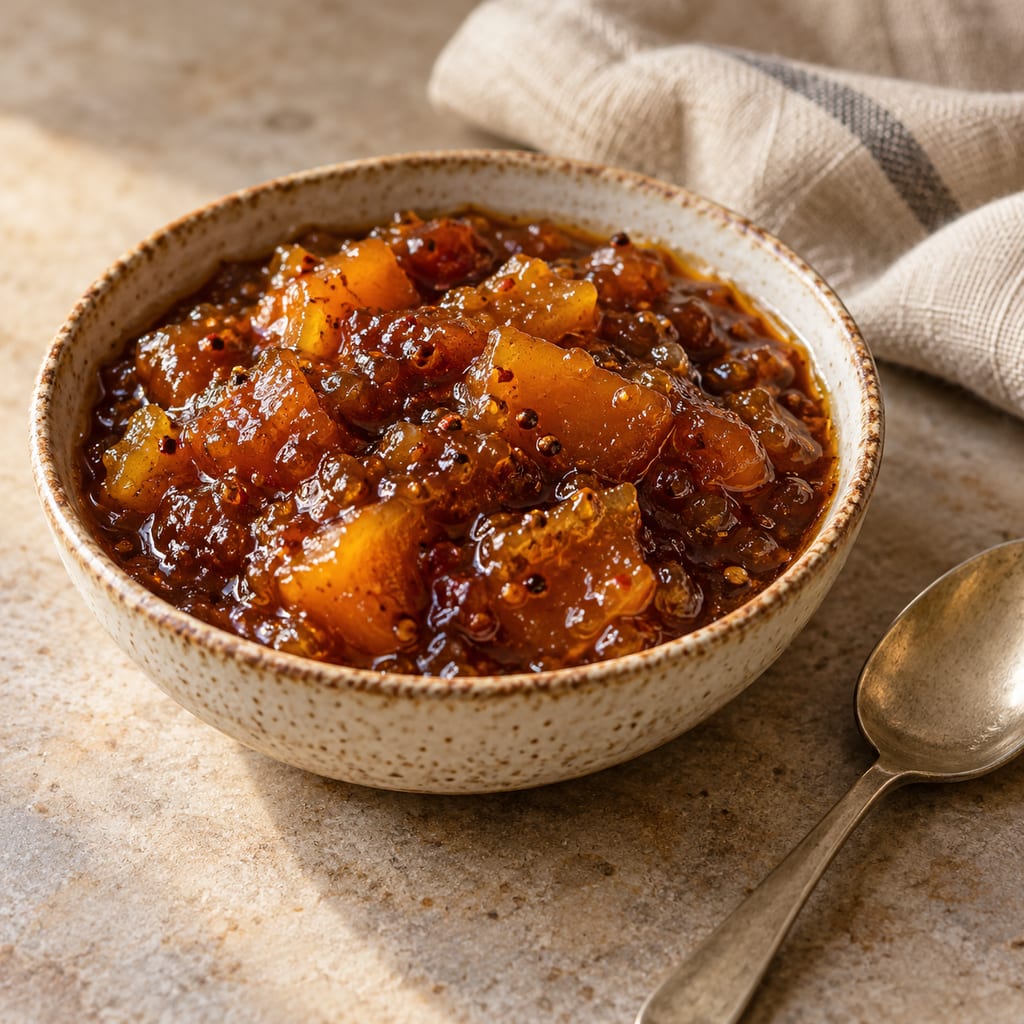
A broad account of cooked chutney traditions: fruit or vegetables combined with sugar, spices and sometimes acid, often boiled into a thick condiment. This record is historical and process context, not a formula or storage recipe.
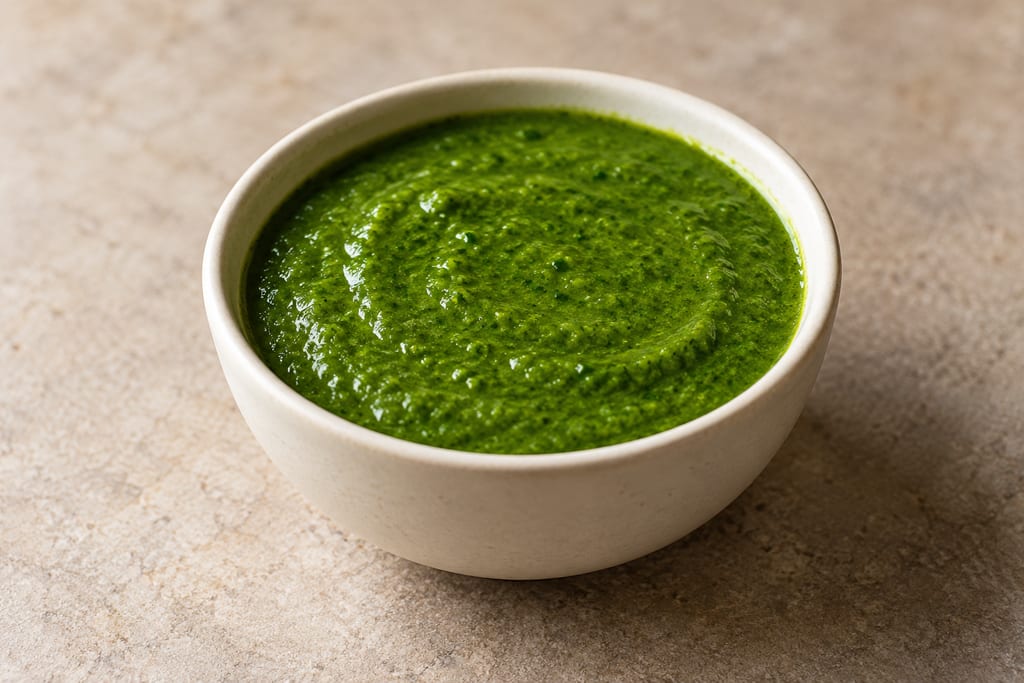
A cold-blended coriander and mint chutney with ginger, green chilli and optional cumin and lemon; the author serves it with snacks, chaat and sandwiches.
No community contributions have been published for this entry yet.
Sign in to contribute. Published comments and photos are free to read.
Woolworths TASTEHistory
Mogau Seshoene (2021) — South Africa's mother sauce: chakalakaChakalaka's place in South African food culture and its association with township cooking, communal meals and everyday plates, and the frequently repeated account linking its development to mine workers who pooled vegetables, tinned food and spices.
Cited in: A history with genuine uncertainty; Chakalaka and the South African meal
Woolworths TASTEMethod
Khanya Mzongwana (2025) — Classic chakalaka, full measured recipeClassic chakalaka, published 22 August 2025, described as serving 10 with 10 minutes preparation and 20 minutes cooking: 4 tablespoons canola oil, 1 large red pepper, 1 large yellow pepper, 1 onion, 2 large carrots, 1 tablespoon mild curry powder, 2 tablespoons spicy seasoning, 100 g tomato paste, one 400 g can of baked beans in tomato sauce, one 400 g can of chopped tomatoes, 2 tablespoons brown sugar, and salt and black pepper to taste.
Method: dice the peppers and onion and grate the carrots; soften the peppers and onion in the oil, then add the grated carrots; add the curry powder and spicy seasoning and fry a further 5 minutes; stir in the tomato paste, then the beans and chopped tomatoes, and season with salt, pepper and brown sugar; cook over medium heat for 10 minutes, stirring frequently; serve warm or cold.
Cited in: The relish that completes the plate; Name and ingredients; What happens when chakalaka cooks; Onions and aromatics; Curry spices; Carrots and peppers; Tomatoes; Beans; A fully documented modern recipe; Step 1: Prepare the vegetables; Step 2: Soften the base; Step 3: Fry the seasoning; Step 4: Add tomatoes and beans; Step 5: Simmer; Step 6: Serve; Common variants; How chakalaka differs from related dishes; Quality assessment; Is chakalaka fermented?
Woolworths South AfricaInspiration
Woolworths South Africa — Commercial canned chakalaka with beansA commercially canned chakalaka with beans, shelf-stable through industrial processing and packaging controls that differ from ordinary saucepan cooking.
Cited in: A history with genuine uncertainty; Food safety and storage
Deli SpicesMethod
Deli Spices — Chakalaka-flavoured sausage formulationA chakalaka-flavoured wors formulation using 12.300 kg meat and fat, 3.100 kg water and ice and 1.000 kg ready pack, producing 16.400 kg in the published batch.
Cited in: Common variants
Food Standards AgencySafety
Food Standards Agency — Safe chilling and refrigerated storageGuidance on safe chilling and refrigerated storage, applied here to cooling a cooked relish promptly and holding a cold-served dish safely rather than leaving it standing at ambient temperature.
Cited in: Food safety and storage