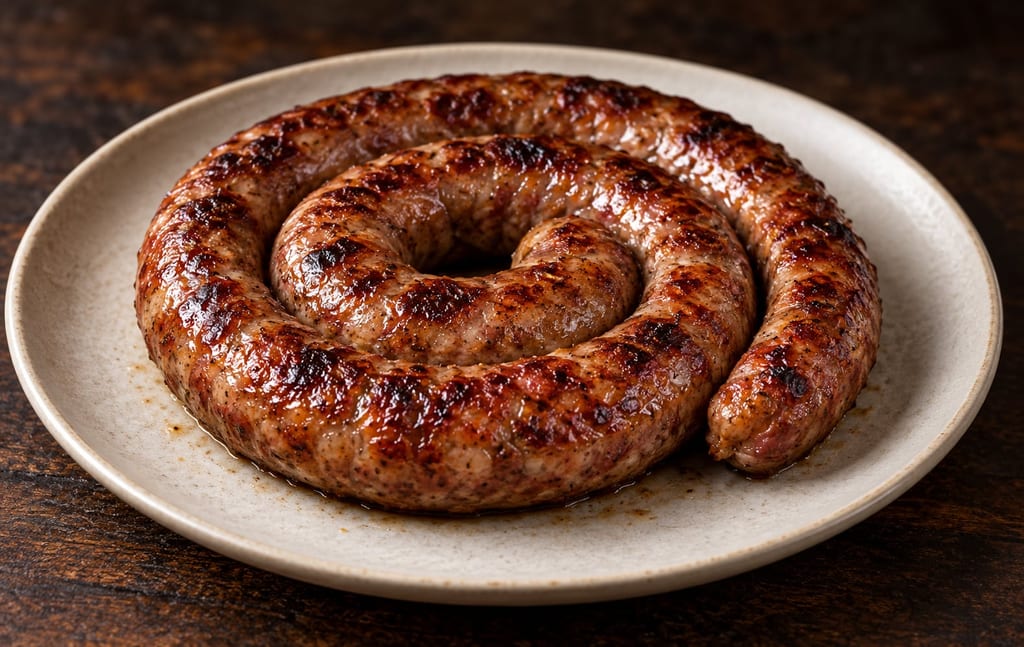
Boerewors
A coarse South African farmhouse sausage of beef with pork or mutton fat, defined by its coriander seasoning and cooked fresh over coals rather than preserved.
 FermenteaWhere food goes to change
Modern method
Braai wors · Sizzler · Raw sizzler
South Africa's regulated grilling-sausage class, looser than boerewors: a minimum of 40% meat, vegetable protein and mechanically recovered meat allowed, and sold raw.
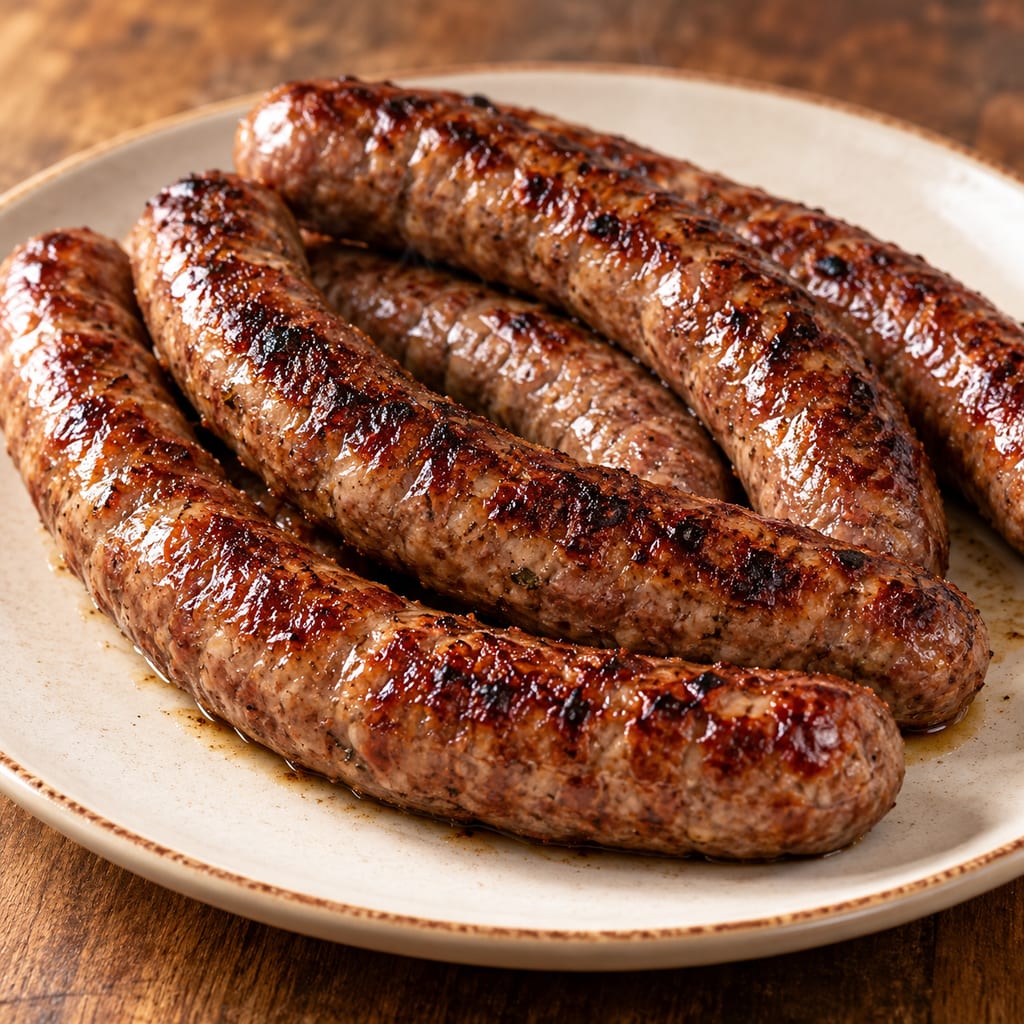
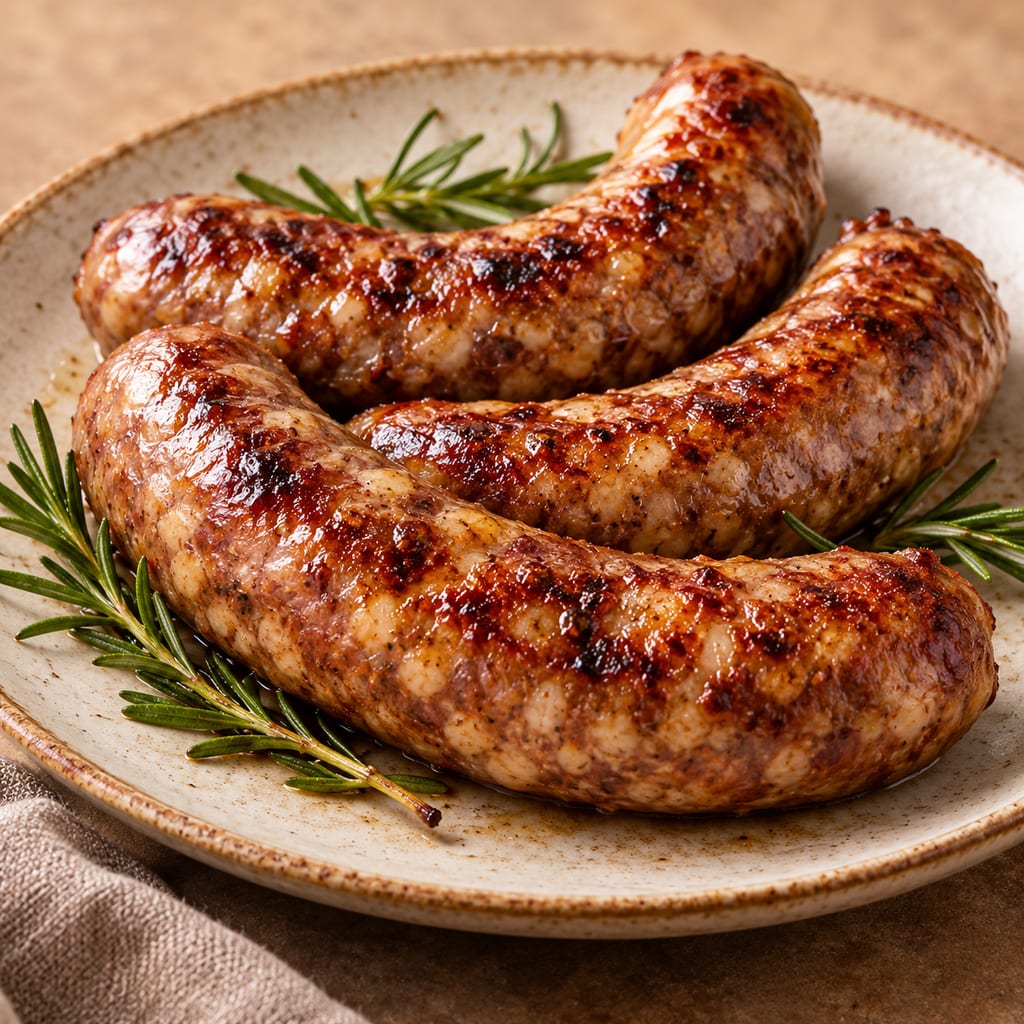
In South Africa, the sight of a seasoned sausage cooking over charcoal does not necessarily tell you whether it is boerewors or braaiwors. Both may be presented as coils. Both may contain coriander and other familiar spices. Both may be eaten with pap and chakalaka, and both may be prepared at a family braai.
The distinction matters most at the manufacturing and retail level.
Braaiwors combines braai, meaning to grill or roast, with wors, meaning sausage. In ordinary conversation it describes a sausage intended for grilling. In South African food regulation, however, raw braaiwors is a defined product class with different composition requirements from boerewors.
This class accommodates a much wider range of formulations, including sausages containing vegetable proteins, starches and, where permitted, mechanically recovered meat.
That flexibility explains why the category is important to manufacturers. It allows products designed for different markets, price points, flavours and textures while retaining the familiar role of sausage at a braai.
It does not mean that every braaiwors is an inferior product. A premium beef braaiwors may be made from carefully selected meat. Equally, an economical product may depend heavily on added water, vegetable protein and other permitted ingredients.
The name alone cannot establish eating quality.
The act of grilling sausages over fire is much older than the present braaiwors classification.
Historical South African sources document many fresh sausages, particularly farmhouse preparations made from beef, pork and mutton. By the twentieth century, boerewors was an established name.
But it would be misleading to invent a seventeenth-century or nineteenth-century origin story for braaiwors as the modern retail category.
The historical relationship is more complicated. Traditional sausage cookery supplied the culinary setting, while industrial meat processing, changing ingredient availability and product legislation created the conditions for more differentiated sausage classes.
The supplied research does not establish the earliest use of the word braaiwors or the date it first became a formal sales classification. That requires additional examination of older standards and trade publications.
What can be verified is its treatment in Regulation R.2410, published on 26 August 2022.
The category also reflects the commercial role of the braai in modern South African food culture. Manufacturers sell sausages specifically for grilling, and wholesale catalogues identify different formulations by product name, flavour and intended market.
A named regional version, such as Albertinia braaiwors, may represent a contemporary butcher or producer's product rather than an independently documented historical recipe.
The South African regulation establishes the following requirements for raw braaiwors or raw sizzler.
The distinction between total meat content and total meat equivalent is especially important.
Meat equivalent is an analytical measure that accounts for protein contributions according to the regulatory definitions. It is not necessarily the same as the physical weight of skeletal meat placed into a mixing bowl.
A sausage advertised under the braaiwors category therefore cannot be judged by assuming that every gram of calculated meat equivalent represents fresh whole-muscle meat.
The 2022 requirements are considerably different from those for boerewors, which requires at least 90% total meat.
These figures apply to the regulated South African product classes. They are not universal international legal definitions.
Source animals — Domesticated animals, birds or wild game
Minimum total meat content — 40%
Minimum total meat equivalent — 60%
Maximum analysed fat content — 30%
Casing — Edible
Inedible offal — Not permitted
Mechanically recovered meat — May be used
Edible offal — May be used
Vegetable protein — Permitted within the specified ingredient rules
Colourants — May be used where legally permitted
The selected species influences flavour, colour, fat behaviour and protein functionality.
Beef typically provides a pronounced meat flavour. Pork may contribute a different fat texture and flavour. Mutton and lamb bring their own characteristic aromas, while poultry gives manufacturers additional formulation options.
Where mechanically recovered meat is used, its physical properties differ from those of coarsely minced skeletal muscle. This may influence the need for binders and the desired processing technique.
Fat makes a substantial contribution to palatability.
Small particles or inclusions can provide a juicy, coarse texture. Finer fat dispersions give a more uniform filling.
Too little fat may leave the finished sausage dry. Excessive fat or inadequate binding can result in greasy cooking losses.
Added water can affect manufacturing yield, tenderness and the distribution of seasoning.
It is not automatically evidence of poor quality: many sausage systems require water or ice to aid mixing and maintain processing temperature.
But added water must be controlled through the formulation. Excessive water relative to the mixture's binding capacity leads to leakage, weak structure or shrinkage during cooking.
Vegetable proteins may improve water binding and alter the protein matrix. Starches can absorb water and influence firmness, tenderness and yield.
Soy-containing systems are an established commercial approach. Soy is also a major allergen requiring appropriate declaration.
These ingredients are permitted in braaiwors within the regulatory rules, but their use should not be concealed behind vague claims of traditional all-meat manufacture.
Coriander, pepper, nutmeg, cloves, garlic, curry spices and chilli may appear in different formulations.
A strongly spiced braaiwors might resemble boerewors in aroma even though the ingredient composition is substantially different.
The culinary impression and legal classification are separate matters.
Commercial formulation catalogues provide unusually useful evidence because they identify meat blocks and batch weights rather than relying entirely on descriptive claims.
The examples below are manufacturer's published formulations, not independently tested production recipes.
One Deli Spices formulation specifies:
The seasoning is described as containing roasted coriander, mild clove and tangy Worcestershire sauce notes.
The ready-pack composition is proprietary, and the available catalogue does not fully disclose its spice percentages. Those quantities must not be invented.
Lean meat — 13.000 kg
Fat — 5.500 kg
Ice or ice water — 5.500 kg
Bushcamp/Boskamp ready pack — 1.000 kg
Total — 25.000 kg
Another manufacturer formula specifies:
The published description emphasises roasted coriander and nutmeg.
This example demonstrates why weighing the complete batch is essential. The lean-meat figure alone does not describe the final sausage, and a manufacturer's designation does not substitute for regulatory analytical verification.
Lean meat — 13.000 kg
Fat — 7.000 kg
Ice water — 9.000 kg
Bosveld ready pack — 3.000 kg
Total — 32.000 kg
Deli Spices also publishes a K40 formulation using mechanically deboned meat, beef fat, beef-flavoured textured soya protein, water and a seasoning pack.
The catalogue lists:
- 9.500 kg mechanically deboned meat - 7.000 kg beef fat - 3.500 kg beef-flavoured textured soya protein - 12.000 kg water - 1.000 kg ready pack
The published total is 33.000 kg.
This illustrates a different approach to sausage structure and price positioning, but it should not be treated as evidence of legal compliance without examining the product's actual protein analysis, ingredient definitions and manufacturing specification.
The ready pack's exact formulation is not provided.
Meat temperature, microbial quality, fat condition and ingredient identity are crucial.
Different raw materials may require different grinding, chopping and mixing operations.
A butcher's coarse braaiwors may visibly display particles of meat and fat. An economical griller can be more finely processed.
The correct grinding plate size is formulation-specific; the supplied sources do not establish one compulsory plate size for all braaiwors.
Vegetable proteins and starches may contribute additional binding.
Cold water or ice can control processing temperature while the mixture is being worked.
Poor temperature control encourages fat smearing and can weaken texture.
Filling pressure needs to balance density and casing strength. Trapped air should be minimised.
The finished sausage may be coiled or portioned into separate links.
It is cooled and packaged according to the manufacturer's hygiene and shelf-life procedures.
Packaging under vacuum or modified atmosphere does not, by itself, transform it into a shelf-stable product.
Braaiwors is particularly well suited to commercial variations because the product category allows considerable flexibility.
Beef braaiwors emphasises beef as the principal meat and can range from coarsely textured premium products to more highly processed formulations.
Pork braaiwors uses pork and is a distinct retail product, with different flavour and dietary implications.
Bushcamp or Boskamp is a named commercial flavour associated with roasted coriander and Worcester-style sauce seasoning.
Bosveld is another commercial name, often evoking bushveld associations. The name alone does not guarantee that the sausage contains wild game.
Chakalaka braaiwors incorporates flavouring inspired by the spicy South African vegetable relish. It is a modern prepared-food interpretation, not the same thing as serving ordinary sausage with chakalaka.
Sosatie-style braaiwors borrows from the sweet-sour curry flavours of Cape skewered meat.
Chilli, garlic and cheese-containing versions also occur in the wider market.
It is not possible to establish one definitive spice blend for any of these broad categories without a specific producer's formulation.
Braaiwors can be grilled over charcoal, pan-cooked or roasted.
The same physical principles apply as with other fresh sausages. Gentle enough heating allows the centre to cook before the casing becomes excessively charred. The filling firms as proteins coagulate, while fat melts and some moisture is lost.
Overcooking leads to dryness, especially in relatively lean formulations.
Undercooking is a food-safety risk.
Serve with pap, chakalaka, tomato-and-onion relish, bread rolls, potato salad or other braai accompaniments.
At a shisa nyama, sausage forms part of a wider offering of grilled meat rather than necessarily being the central dish.
The main quality problems are excessive liquid loss, a rubbery filling, separation of fat, casing failure and unpleasant raw-meat odours.
A product that develops an unexplained sour or putrid smell, sliminess or other spoilage signs should be rejected. Visual appearance alone cannot determine whether pathogenic contamination has occurred.
The most important consumer distinction is between raw sausage and ready-to-eat sausage.
Braaiwors is a raw product unless its label explicitly establishes otherwise.
For minced-meat products, UK government guidance recommends a core cooking treatment of 70°C for 2 minutes, or recognised equivalent time-temperature combinations.
Consumers should also follow product-specific instructions.
Soy, wheat, milk and other potential allergens must be considered according to the actual formulation.
Halal suitability must be established through appropriate ingredient, casing, slaughter and production controls. The absence of pork from a listed meat block is not, by itself, sufficient evidence.
Similarly, a product containing vegetable protein is not necessarily lower in microbial risk than a traditional meat sausage.
Braaiwors as a name combines braai, to grill or roast, with wors, sausage, and in ordinary speech means a sausage meant for the grill. As a food-regulation term it is something narrower: a defined product class whose composition requirements differ from boerewors and which accommodates vegetable proteins, starches and, where permitted, mechanically recovered meat. Traditional South African sausage cookery supplied the culinary setting, while industrial meat processing, changing ingredient availability and product legislation created the conditions for differentiated sausage classes. No seventeenth- or nineteenth-century origin story for the modern retail category is supported, and a named regional version such as Albertinia braaiwors may be a contemporary producer's product rather than an independently documented historical recipe.
Scaling: source batch only
Braaiwors is raw unless its label explicitly establishes otherwise, and vacuum or modified-atmosphere packaging does not make it shelf-stable.
Hazard sourceThis product class permits vegetable protein, and soy, wheat and milk may be present depending on the actual formulation.
Hazard sourceCook the centre thoroughly
Control sourceControl the processing temperature with cold water or ice while mixing, and keep the product chilled
Control sourceBraaiwors is a raw product unless its own label says otherwise; packaging under vacuum or modified atmosphere does not make it shelf-stable.
A braaiwors that smells of coriander like boerewors may still be a very different composition: the culinary impression and the legal class are separate matters.
A formulation containing vegetable protein is not lower in microbial risk than an all-meat sausage.
Halal suitability needs ingredient, casing, slaughter and production controls; the absence of pork from the meat block is not sufficient evidence.
A country-level association with a regulated South African sales class and its commercial formulations. It makes no claim about where the sausage originated.
A coarse South African farmhouse sausage of beef with pork or mutton fat, defined by its coriander seasoning and cooked fresh over coals rather than preserved.

A spicy South African vegetable relish of onion, carrot, pepper, tomato, curry seasoning and beans, cooked briefly and served warm or cold beside pap and grilled meat.
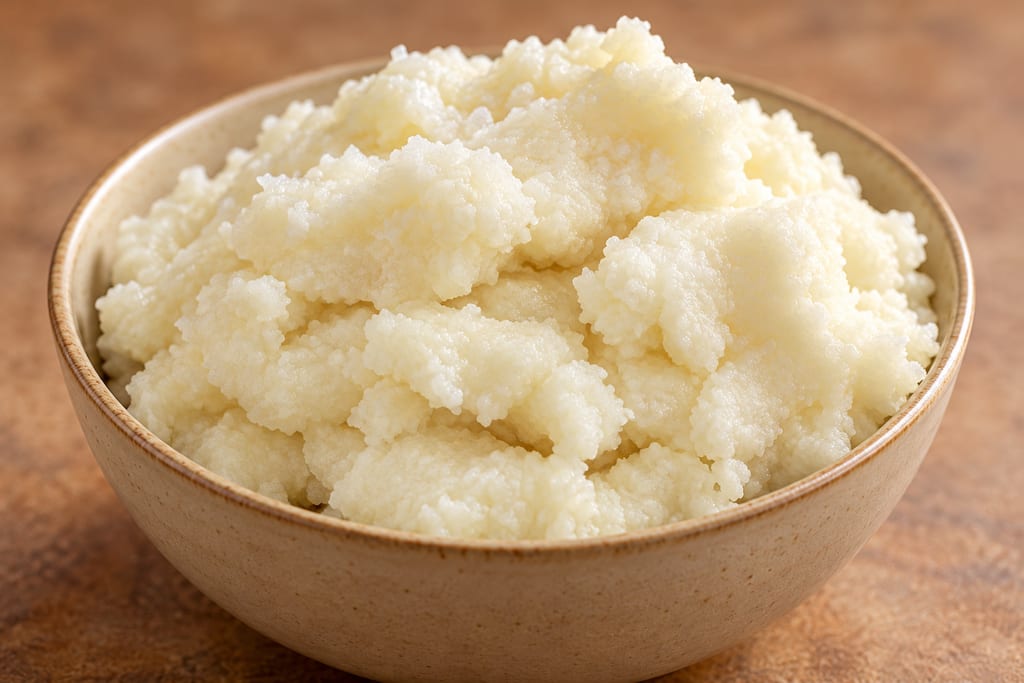
South Africa's maize-meal porridge, which the same white meal turns into a soft breakfast pap, a firm sliceable mound or the separate moist granules of phuthu depending only on water and handling.
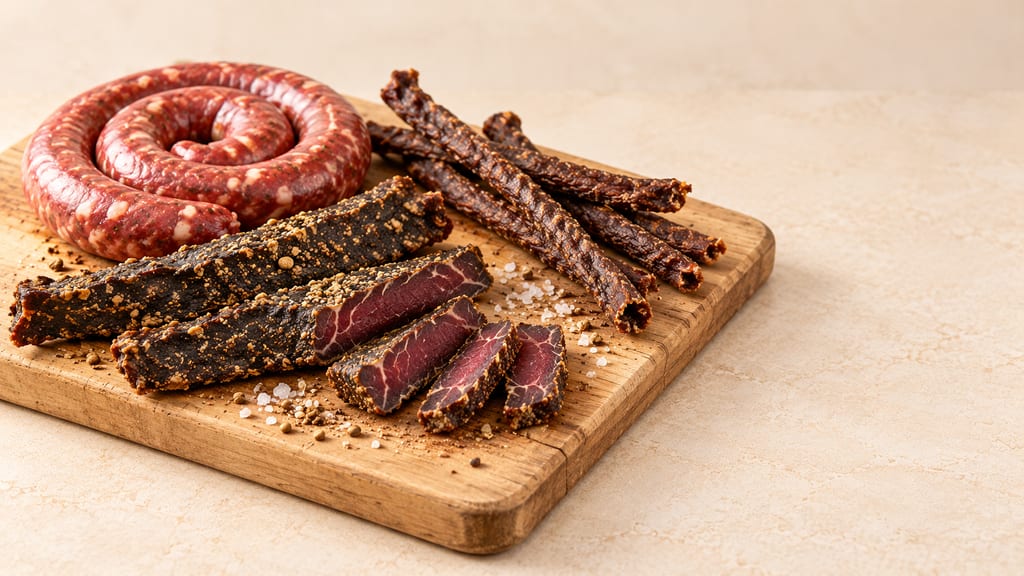
Boerewors, biltong and droëwors share a table but follow different paths from meat to meal. Their histories lead from the braai and butcher's counter to drying lines, household pots and the science of keeping food.
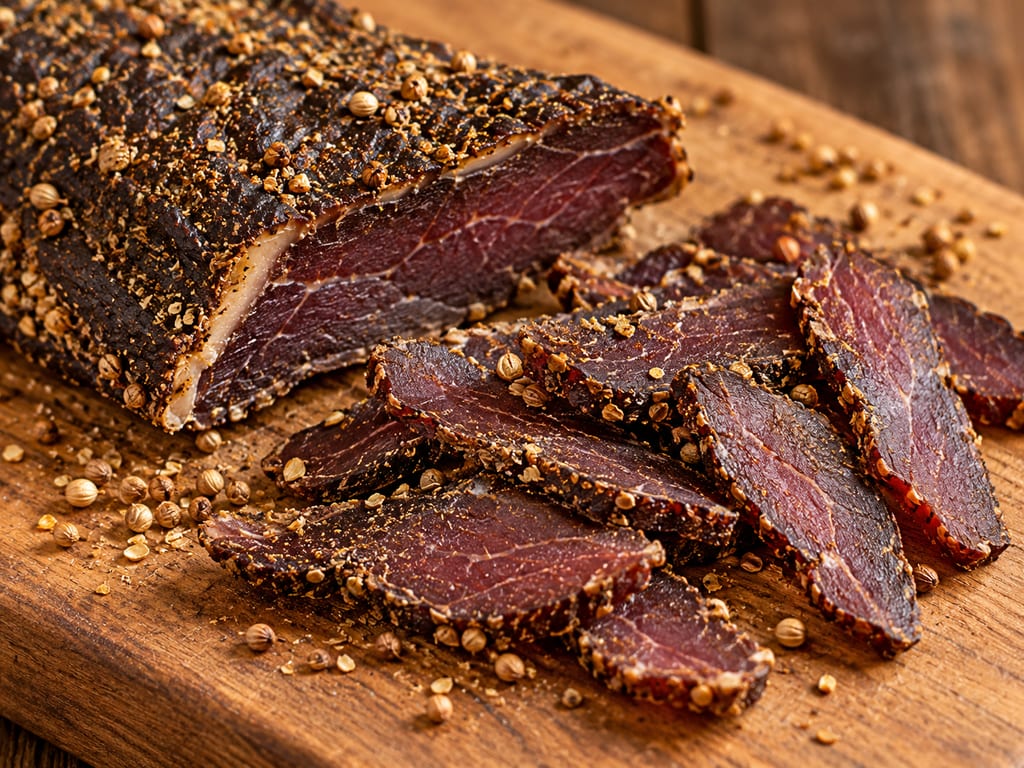
Strips of whole-muscle beef or game seasoned with salt, vinegar, roasted coriander and pepper and air-dried without cooking, sold anywhere from soft and moist to hard and very salty.
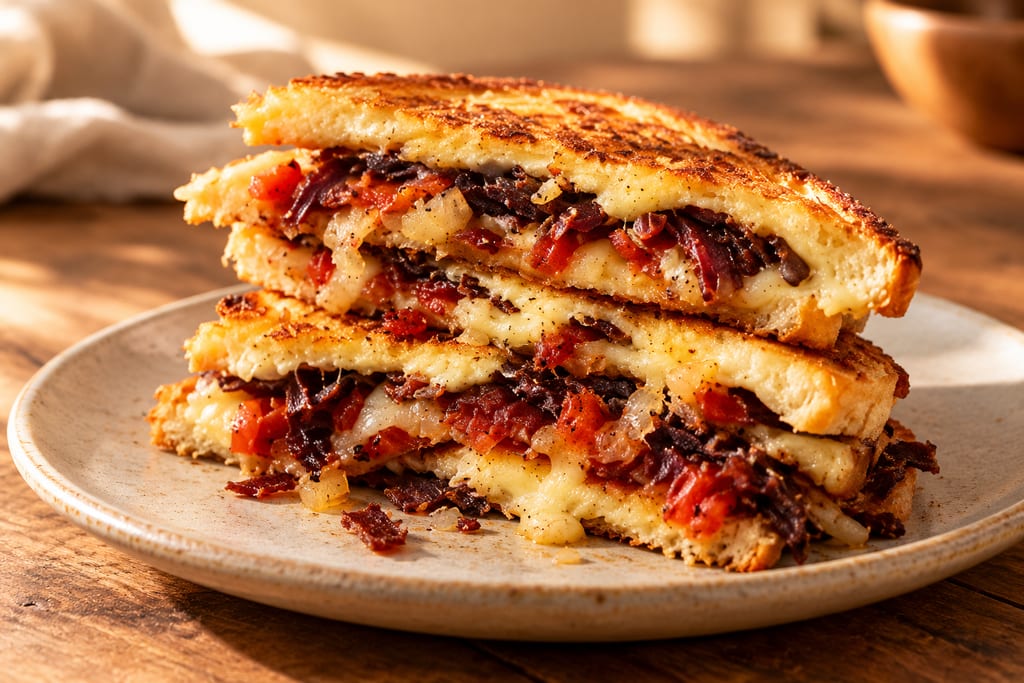
Chopped biltong, sweet onion, cream cheese and Cheddar fill bread toasted in a hinged grid over gentle coals, then finished with biltong dust.
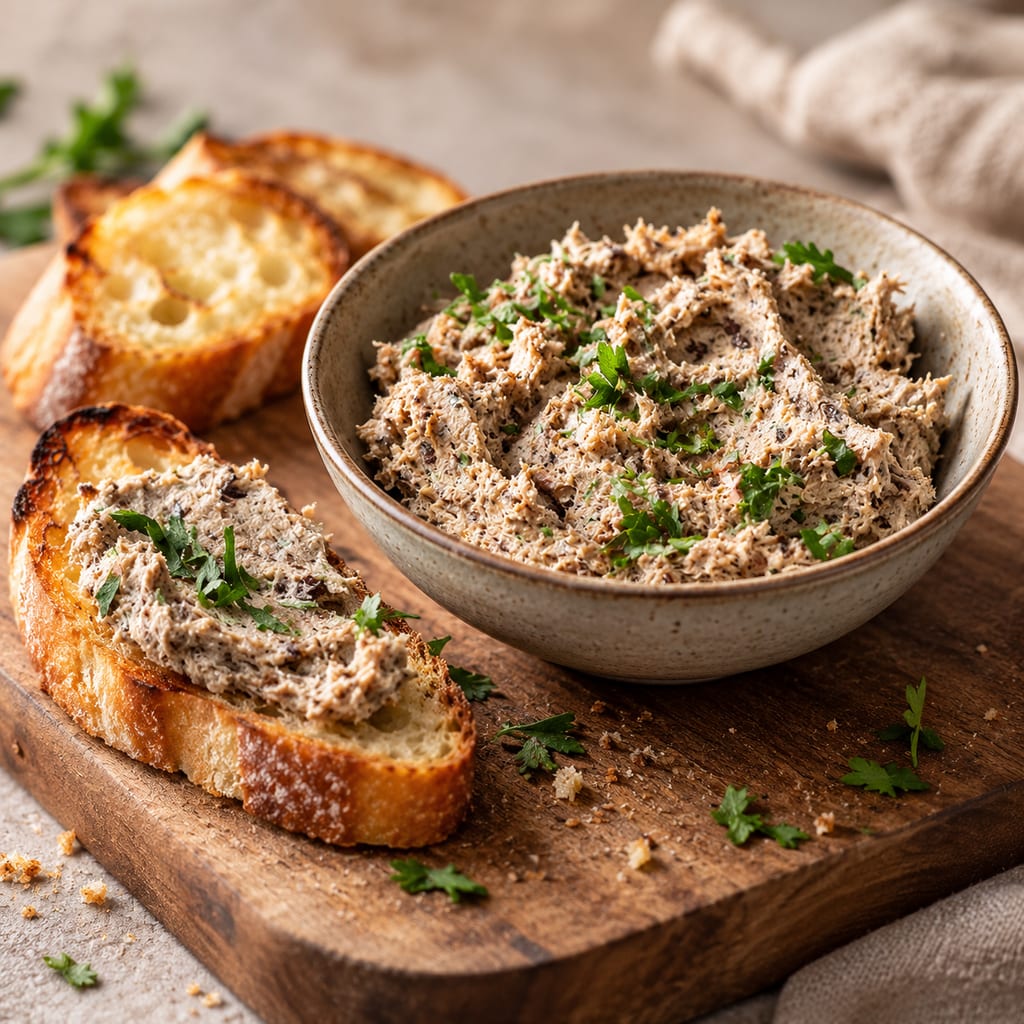
A cold biltong spread with sour cream, mayonnaise, mustard, lemon and herbs; serve it with crackers, crostini or bread.
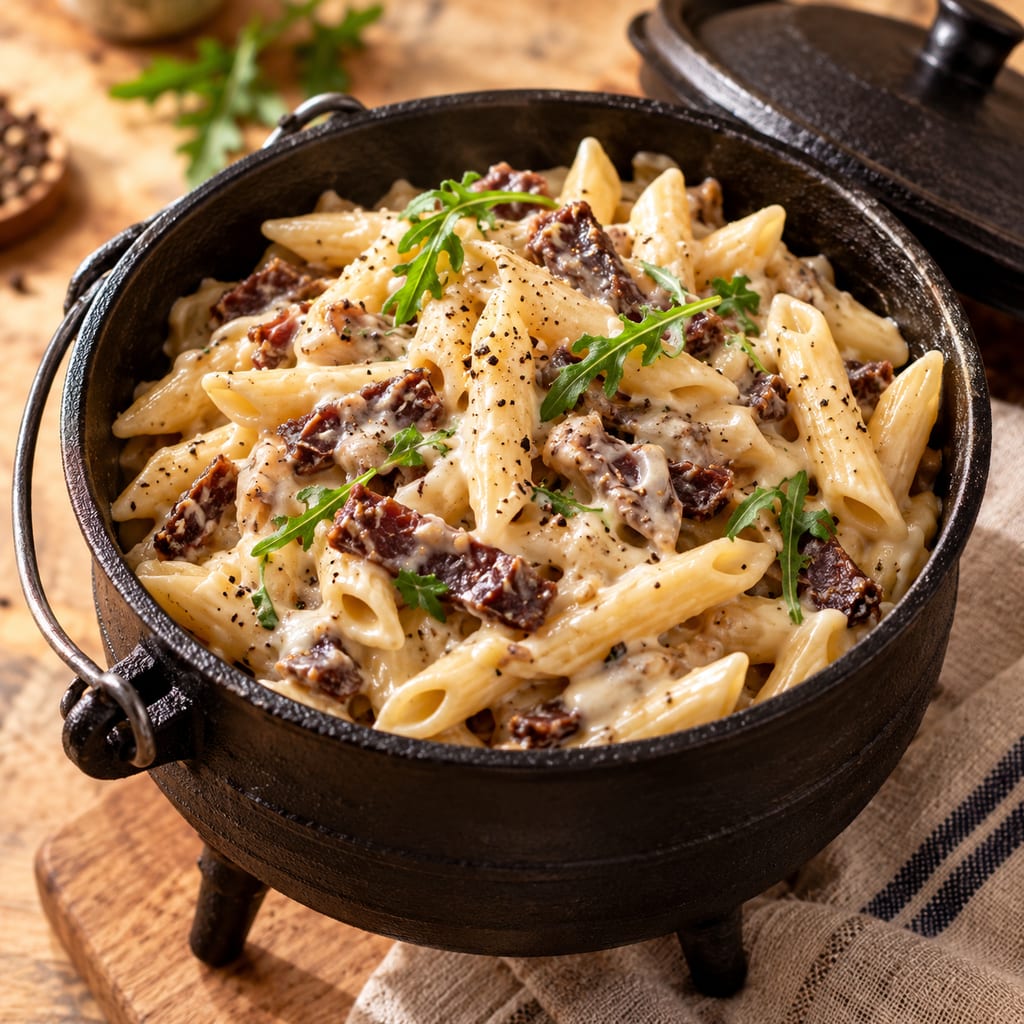
Biltong, bacon and vegetables simmer in tomato-herb stock, then join cooked pasta, milk, cream and Cheddar in this outdoor potjie.
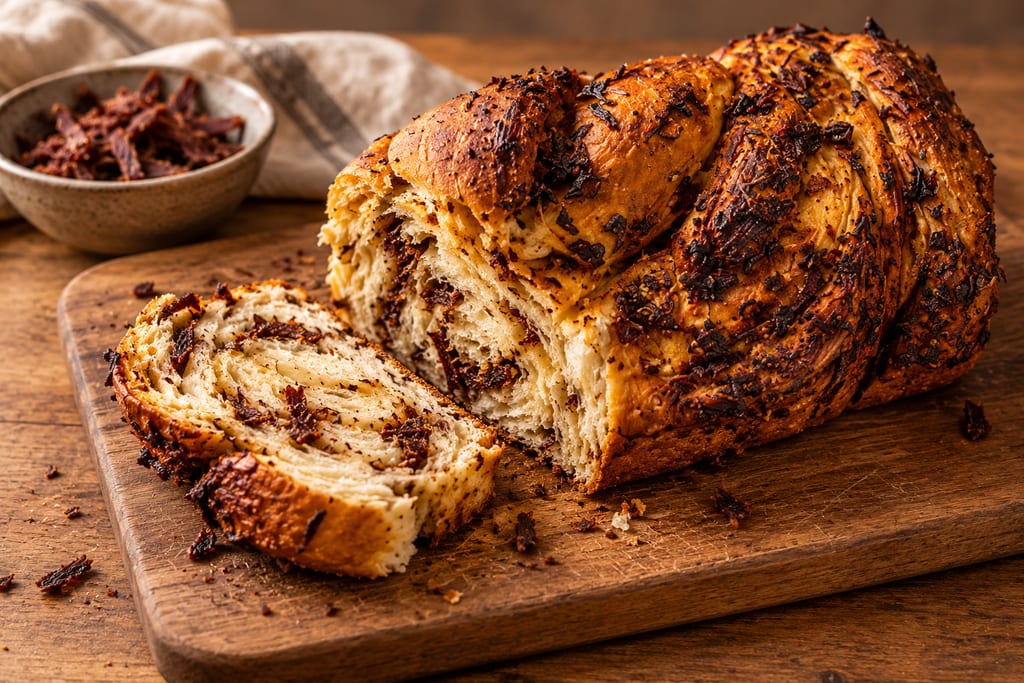
Yeasted bread wrapped around biltong, tomato pesto, Cheddar and feta, split lengthwise into a braid and baked; served with chilli-biltong butter.
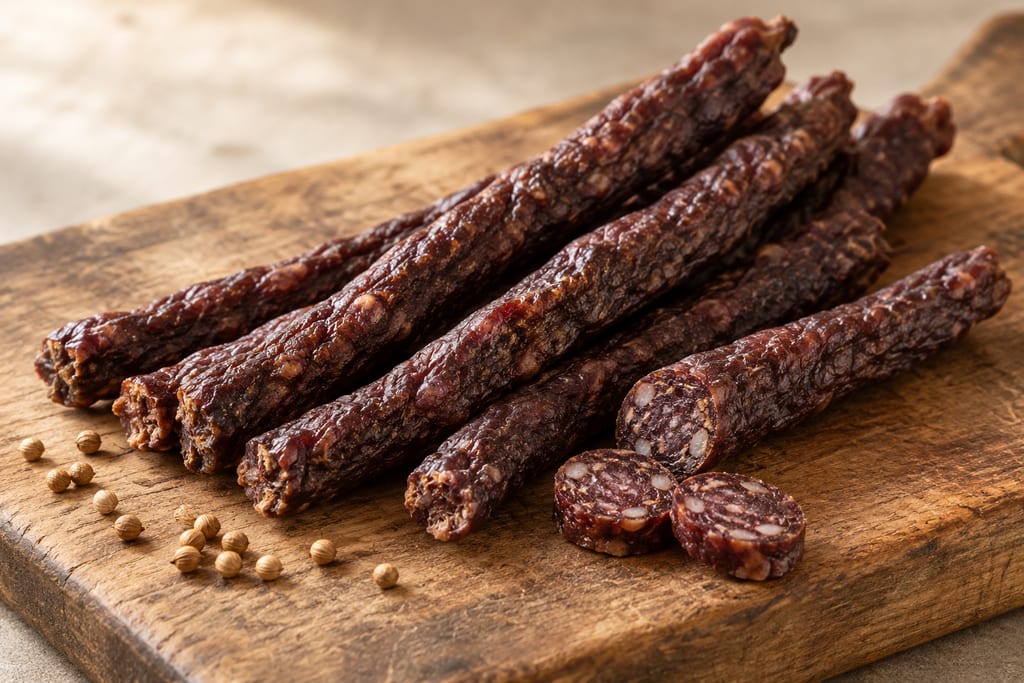
South Africa's dried sausage: seasoned minced meat in narrow casings, dried until it can be eaten without cooking, which makes it a far more demanding product than fresh boerewors.
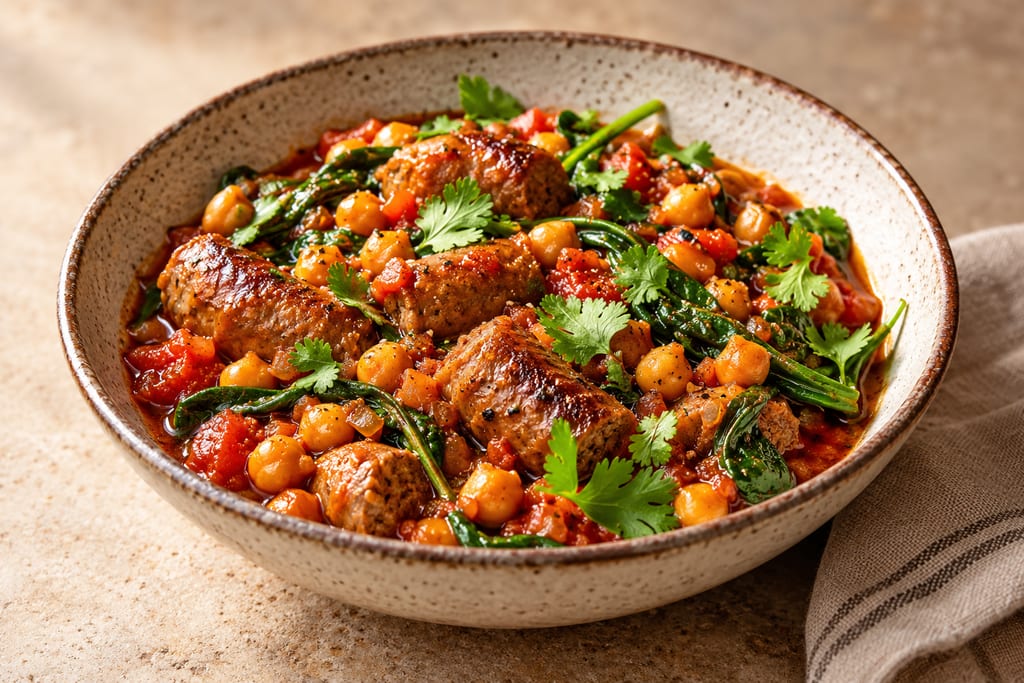
Lesego Semenya’s contemporary South African stew combines browned boerewors, chickpeas, tomato, spinach and warm spices.
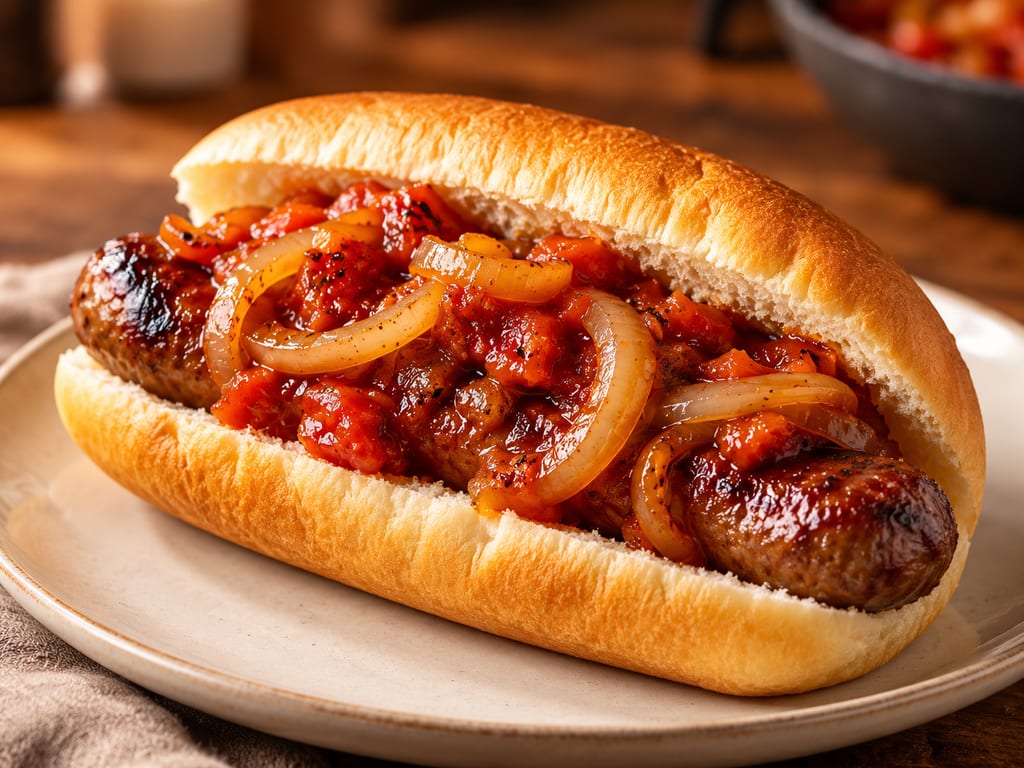
A South African boerie roll puts fully cooked boerewors in a soft bread roll and tops it with warm tomato-and-onion smoor.
South Africa's spiced fresh sausage family, sold as masala, dhania or Punjab wors: cumin, ginger, garlic and chilli in place of the mild coriander-and-clove seasoning of boerewors.

Soft, spreadable Calabrian pork sausage made with a great deal of red chilli and fatty pork, stuffed into natural casings, sometimes smoked and matured while staying soft.

A way to add independent temperature logging to an existing food dehydrator without changing its built-in controls or protections. It is a monitoring method, not a rewiring plan.

Pleurotus cystidiosus is the abalone mushroom, a cultivated oyster-type fungus with dark brown caps that grows more slowly and is more demanding than other Pleurotus species.

A dark, balanced vinegar from Emilia-Romagna made by combining cooked or concentrated grape must with wine vinegar, then acetifying and refining it in wood under a protected specification.

A living dairy inoculum that starts controlled cream fermentation, developing acidity and aroma before sour cream or cultured butter is finished.

A small electric incubator holds jars at a selected temperature for yogurt and other documented warm food preparations. Controls, capacity and vessel arrangement vary by model.

Adygean salt is a seasoned table salt associated with Adygea and the wider North Caucasian culinary tradition. Salt is blended with garlic and a variable selection of herbs and spices; the exact mix depends on the named style and maker.

The African Caesar-group mushroom, Amanita masasiensis, is a wild ectomycorrhizal species of central and southern African woodlands, eaten locally. The genus contains deadly poisonous species, so identification needs care.
No community contributions have been published for this entry yet.
Sign in to contribute. Published comments and photos are free to read.
Government of South AfricaRegulation
South African Government — Raw processed meat standards, Regulation R.2410Raw braaiwors or raw sizzler: source animals may be domesticated animals, birds or wild game; minimum 40% total meat content; minimum 60% total meat equivalent; maximum 30% analysed fat; edible casing; inedible offal not permitted; mechanically recovered meat, edible offal, vegetable protein and legally permitted colourants may be used.
Published 26 August 2022, and considerably different from the boerewors requirement of at least 90% total meat.
Cited in: A familiar sausage with a different definition; History: a product category rather than an ancient recipe; What the regulation actually says; Meat; Fat; Water; Vegetable protein and starch; Seasoning; Raw-material inspection; Chilling and packaging; Safety and consumer understanding
Deli SpicesMethod
Deli Spices — Commercial braaiwors formulationsBushcamp/Boskamp braaiwors: 13.000 kg lean meat, 5.500 kg fat, 5.500 kg ice or ice water, 1.000 kg ready pack, total 25.000 kg, seasoned with roasted coriander, mild clove and Worcestershire sauce notes.
K40 braaiwors: 9.500 kg mechanically deboned meat, 7.000 kg beef fat, 3.500 kg beef-flavoured textured soya protein, 12.000 kg water, 1.000 kg ready pack, published total 33.000 kg.
Ready-pack compositions are proprietary and their spice percentages are not disclosed.
Cited in: Three documented manufacturing systems; Bushcamp/Boskamp braaiwors; Bosveld braaiwors; K40 braaiwors; Regional and flavour variation
Crown NationalInspiration
Crown National — South African sausage product labelsSouth African sausage product labels and retail designations.
Cited in: Regional and flavour variation
Brito'sInspiration
Brito's — Fresh sausage product rangeA commercial fresh-sausage range identifying formulations by product name, flavour and intended market.
Cited in: Regional and flavour variation
Food and Agriculture Organization of the United NationsMethod · Science
FAO — Fresh sausage formulations and handlingFresh sausage formulation and handling: salt and mechanical action extract muscle proteins that bind fat and water into the sausage matrix; cold water or ice controls processing temperature; poor temperature control encourages fat smearing.
Cited in: A familiar sausage with a different definition; History: a product category rather than an ancient recipe; Meat; Fat; Water; Vegetable protein and starch; Seasoning; Raw-material inspection; Protein extraction and mixing; Chilling and packaging; Cooking, serving and quality
Food and Agriculture Organization of the United NationsMethod
FAO — Meat cutting and further processingMeat cutting and further processing: grinding and chopping to the intended particle distribution, and stuffing pressure balanced against casing strength.
Cited in: Size reduction; Stuffing
Food Standards AgencySafety
Food Standards Agency — Cooking your foodFor minced-meat products, a core cooking treatment of 70°C for 2 minutes or a recognised equivalent time-temperature combination.
Cited in: Cooking, serving and quality; Safety and consumer understanding