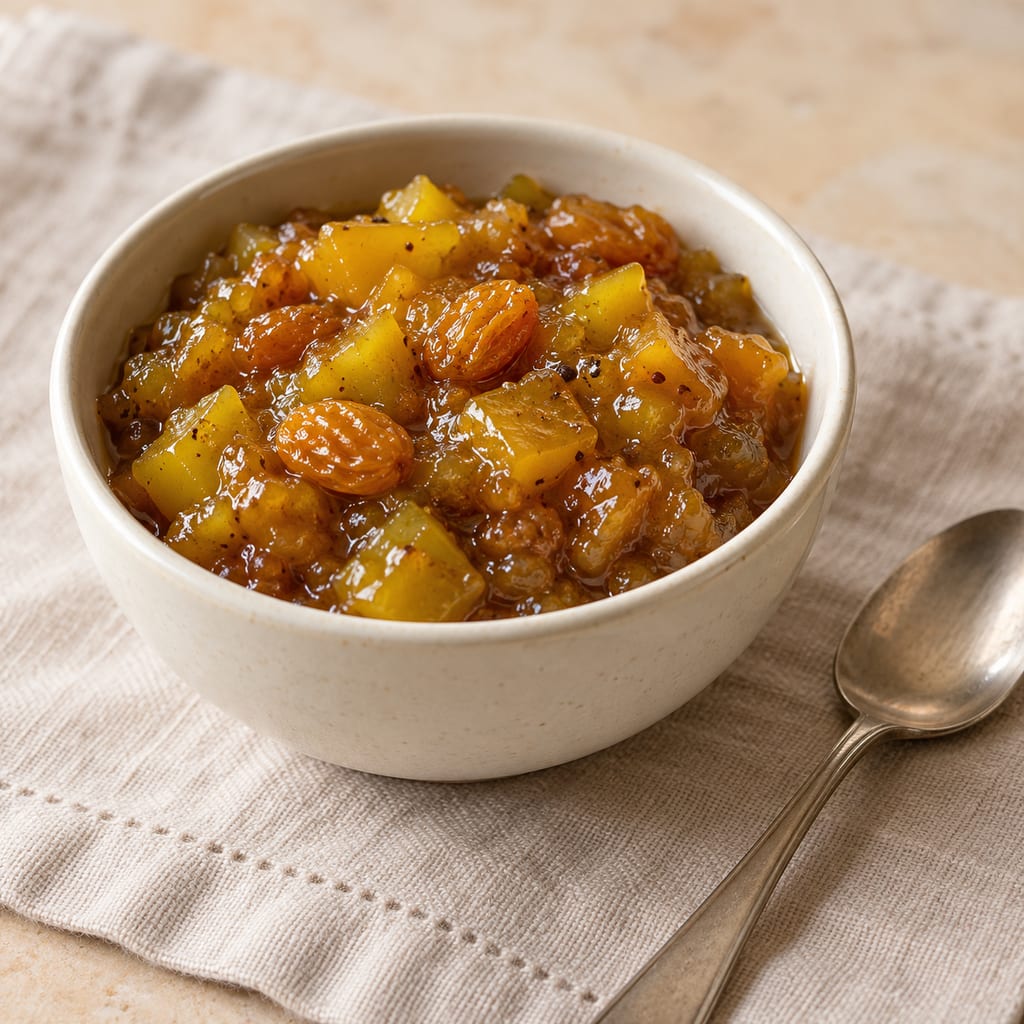
Mango chutney
Hard green mango is cooked with vinegar, sugar, raisins, ginger, garlic and chilli in this tested US home-canning recipe.
 FermenteaWhere food goes to change
amba · Classic Mango Amba · Ripe-mango amba · Iraqi mango condiment
This cooked amba follows a Jewish Food Society recipe that simmers ripe mango with onion, garlic, mustard seed and warm spices into a tangy Middle Eastern condiment.
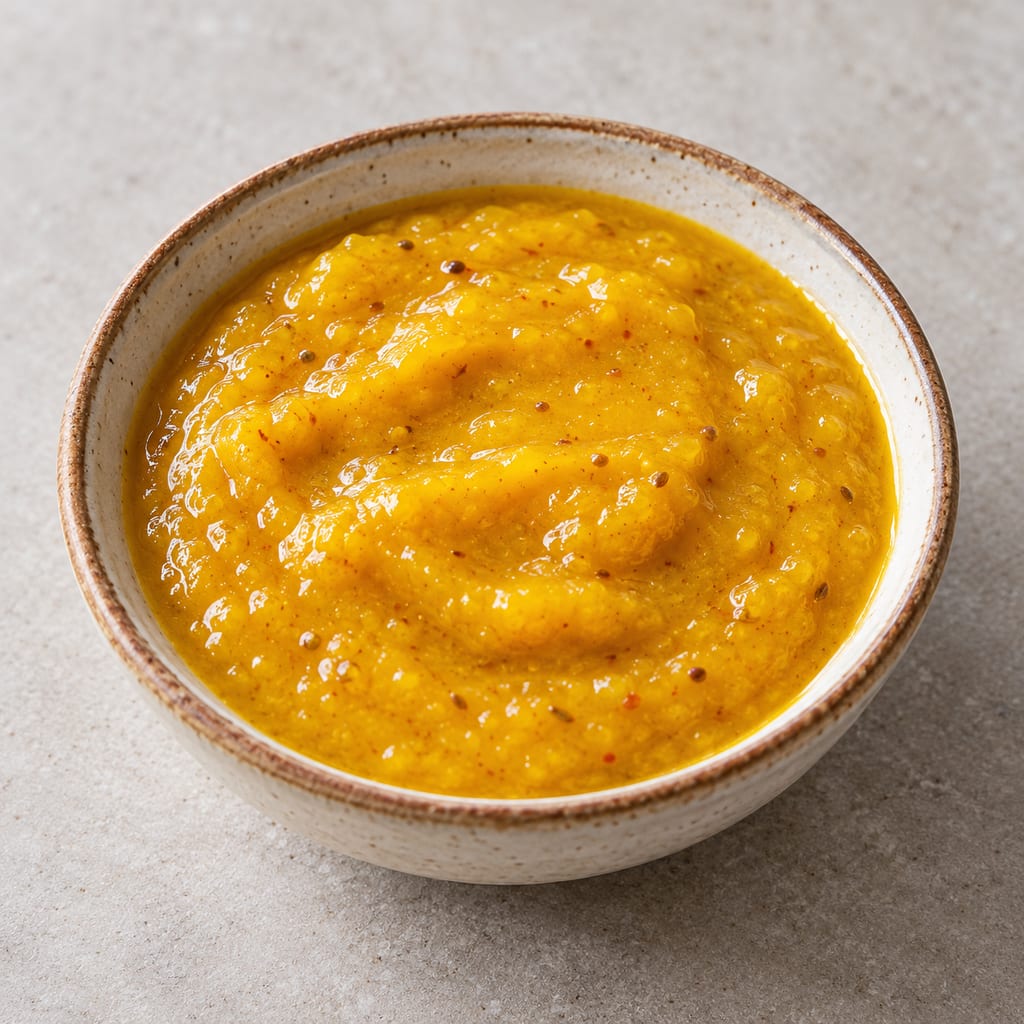
Amba names a family of tangy mango condiments rather than one fixed formula. This entry follows the Jewish Food Society's Classic Mango Amba: ripe mango cooks with onion, garlic, mustard seed and warm spices until it breaks down into a thick sauce. Its texture differs from sour green-mango pickles and from versions that ferment before cooking.
The ripe-mango choice matters. Soft, sweet fruit contributes pulp and sweetness as it collapses in the pan. The recipe does not add a separate sugar or vinegar, and it has no fermentation stage. The mango, aromatics and spices cook together; after cooling, the cook adjusts the seasoning with salt and lemon juice. The result is cooked, not fermented.
The published recipe yields about two cups. That yield belongs to its published formula and cannot be converted into a fixed mass without weighing the fruit and finished sauce. Mango size, ripeness and water content vary, so the record keeps the source's own yield wording.
Amba is part of Iraqi Jewish culinary memory. Writer Samantha Ellis recalls her mother's school lunches: pita filled with foods including eggplant, salad and the mango pickle amba. Her account connects the condiment with family and migration rather than treating it as a generic sauce detached from the people who eat it.
Sonya Sanford describes amba as a mango condiment found in Iraq, across the Middle East and in India. Her article places its origin in India and links its popularity in Israel to the Iraqi Jewish community. The Jewish Food Society's family story offers a possible travel story about Iraqi Jews encountering mangoes in India, but calls the named merchant account a legend. That supports related cultural and geographic associations, not a precise birthplace or a date for the first amba.
Sanford also says the word means mango in Marathi. This linguistic note helps explain the mango association, but it does not by itself establish the full route by which any version travelled. Keep the family story, the origin statement and the documented modern use distinct.
Ripe mango gives this sauce its body. As it heats, the flesh softens and breaks into the liquid phase, while stirring moves the mixture across the pan. The source's reduction cue—about half the starting amount—concentrates the cooked fruit and spices. It is a texture instruction, not a measured solids or preservation endpoint.
Onion and garlic add savoury allium flavours that temper the fruit's sweetness. Mustard seed brings a sharp, warm aroma; here it cooks with the fruit rather than being fried in a separate oil. Turmeric colours the sauce yellow. Cumin and fenugreek contribute earthy, bitter and aromatic notes, Aleppo pepper supplies chilli warmth, and smoked paprika brings a smoke-like aroma. Paprika does not mean the sauce itself is smoked.
Salt seasons the fruit and spices, with extra added after cooling if needed. Lemon juice is also a finishing adjustment rather than a measured acidification step. Its amount is expressed as a squeeze, so sourness varies with the mangoes, the lemon and the cook's preference. This record keeps that flexible finish instead of inventing a quantity or finished pH.
The source combines all ingredients except the finishing salt and lemon juice in a medium saucepan. Medium heat and frequent stirring help soften the mango and reduce excess liquid. The stated time—about 20 minutes—is approximate; the cue is that the fruit has broken down and the mixture has reduced by half. The recipe gives no pan temperature or preservation endpoint.
Cooling comes before final seasoning. The Jewish Food Society recipe says to taste the cooled amba, then add salt and a squeeze of lemon. When the consistency is right, a covered container helps keep the surface from drying and the sauce from picking up refrigerator odours.
This formula differs from Sonya Sanford's green-mango recipe, which salts the fruit ahead, sautés spices, simmers with water and brown sugar, and adds vinegar off the heat. That preparation is another documented amba, not a substitute for the ripe-mango batch here. Similar colour or a shared name does not make the different processes interchangeable.
A spoonful of amba brings sweet fruit, spice and tang to a sandwich. Sanford describes her green-mango amba with falafel and shawarma. Ellis's family account places Iraqi Jewish mango amba in packed pita lunches. These sources document particular uses; they do not mean every household serves every version in the same way.
This ripe-mango formula can accompany food that benefits from fruit sweetness, spice and tang. Keep its identity clear at the table: this batch is cooked from ripe mango, while other amba begins with unripe fruit and may be pickled, dried or fermented. A name alone does not tell the eater which process or texture to expect.
The Jewish Food Society recipe recommends refrigerating its cooled amba in a covered container for up to two weeks. This is the publisher's recommendation for that published recipe. It is not a canning instruction, a room-temperature process or a general storage limit for every amba.
The recipe supplies no finished pH, water-activity result or independently validated preservation process. Lemon juice added to taste does not give a measured acidity target. Cool the sauce promptly and refrigerate it; do not infer shelf stability from fruit, spices, reduction or tangy flavour. FoodSafety.gov's general advice is to refrigerate perishable food within two hours, or within one hour above 90°F (32°C), and keep the refrigerator at or below 40°F (4°C). Those handling guidelines do not validate a recipe-specific keeping time.
The ingredient list and cooking method here come from the Jewish Food Society's Classic Mango Amba. They preserve that recipe's use of ripe fruit, onion and spices, its reduction cue and its seasoning after cooling. The approximate two-cup yield and two-week refrigerated recommendation are the publisher's statements.
This is one contemporary documented version within a wider condiment family. It is not the sole Iraqi, Israeli, Indian or Jewish formula. Sources describe related histories and distinguish ripe cooked amba from green-mango preparations, but they do not establish one universal recipe or a dated origin.
Amba is associated with Iraqi Jewish foodways, while a contemporary culinary article places its origin in India; the precise history and date remain uncertain. This entry records the Jewish Food Society's cooked ripe-mango version, distinct from green-mango pickled and fermented preparations.
Yield 2 cups · Scaling: source batch only
The source suggests refrigeration for up to two weeks, but no process-validation or recipe-specific pH result was located; that recommendation is not a canning or room-temperature stability claim.
Hazard sourceCool and refrigerate promptly in a covered clean container. General guidance says to refrigerate perishable food within two hours, or within one hour above 90°F (32°C), and keep the refrigerator at or below 40°F (4°C).
Control sourceThis is cooked ripe-mango amba, not a fermented mango pickle. The source's two-week refrigerator statement applies to its own recipe and is not independently process-validated here.
Do not can this recipe or store it at room temperature; no tested preservation process or finished pH is supplied.
An Iraqi Jewish family account recalls amba in packed lunches; it documents use, not a precise place of preparation or origin.
A contemporary culinary article places amba's origin in India and relates its name to mango in Marathi; it gives no date or precise place.
The article describes amba's popularity in Israel through Iraqi Jewish foodways; this is a country-level use association, not a birthplace claim.
Hard green mango is cooked with vinegar, sugar, raisins, ginger, garlic and chilli in this tested US home-canning recipe.
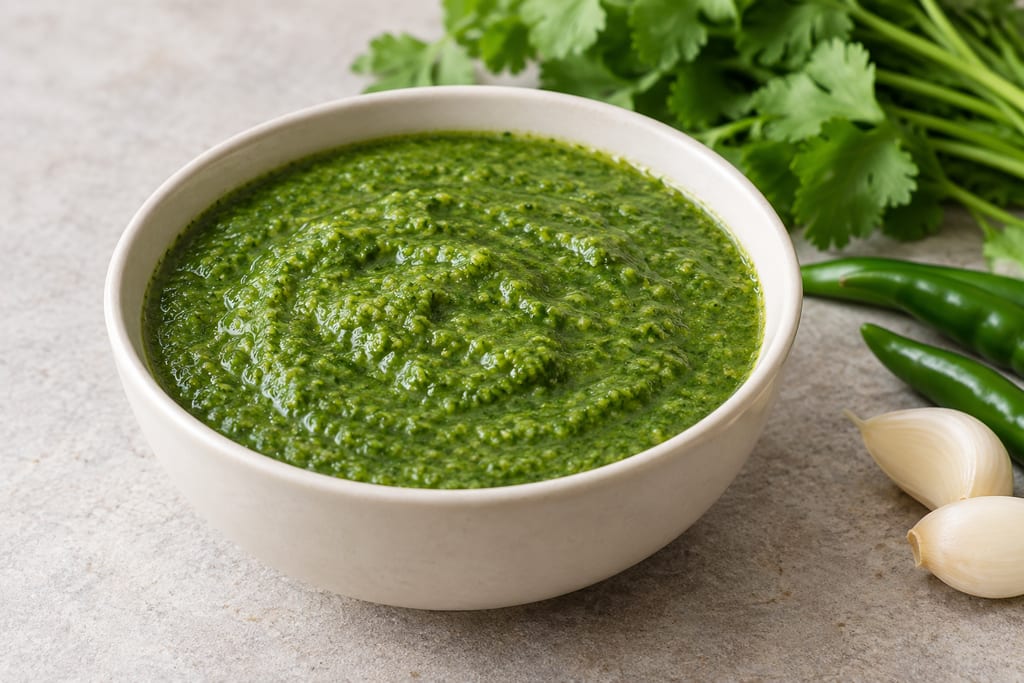
Afghan coriander chatni is a sharp, hot herb sauce with garlic and vinegar. A 2008 Afghanistan manual records green or red pepper and optional walnut; heat and household versions vary.
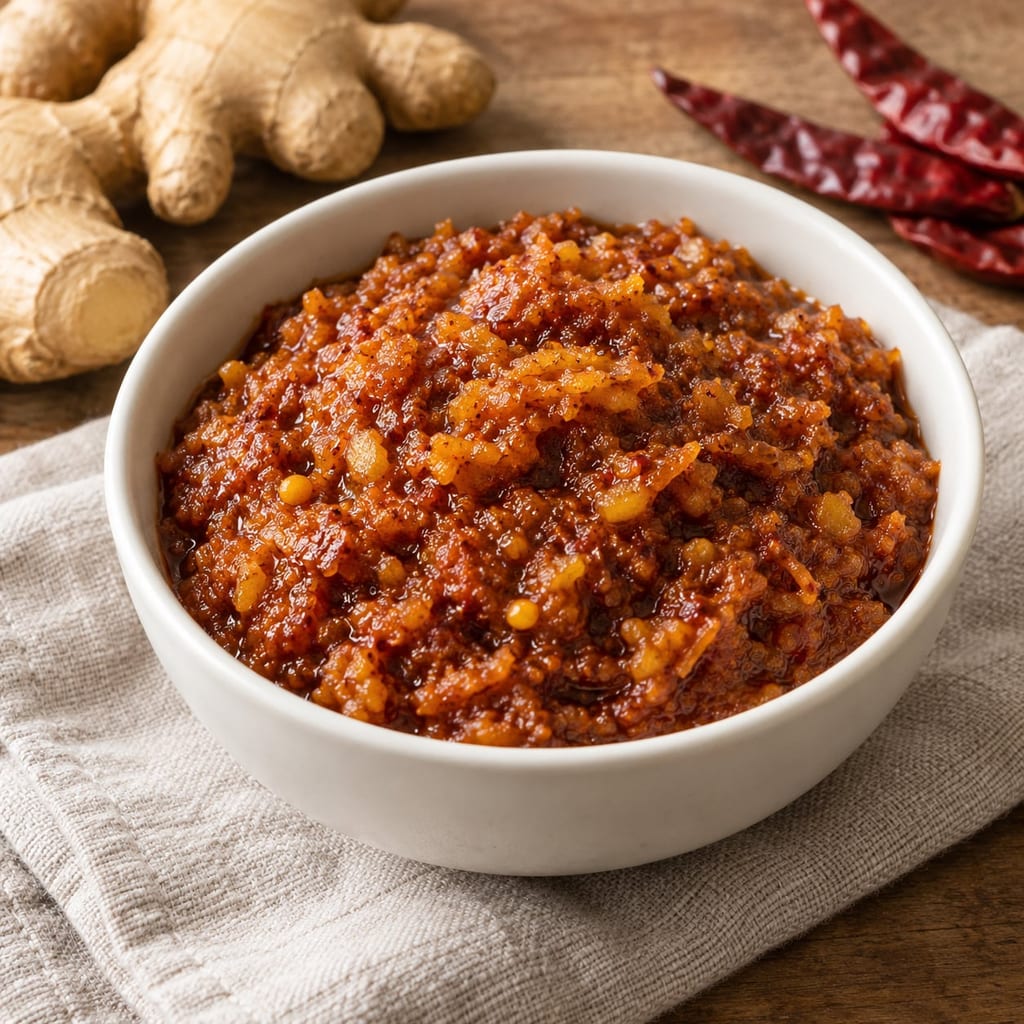
An Andhra ginger-and-urad chutney in which browned dal and briefly fried ginger and chillies are cooled, then ground with jaggery to a coarse paste.
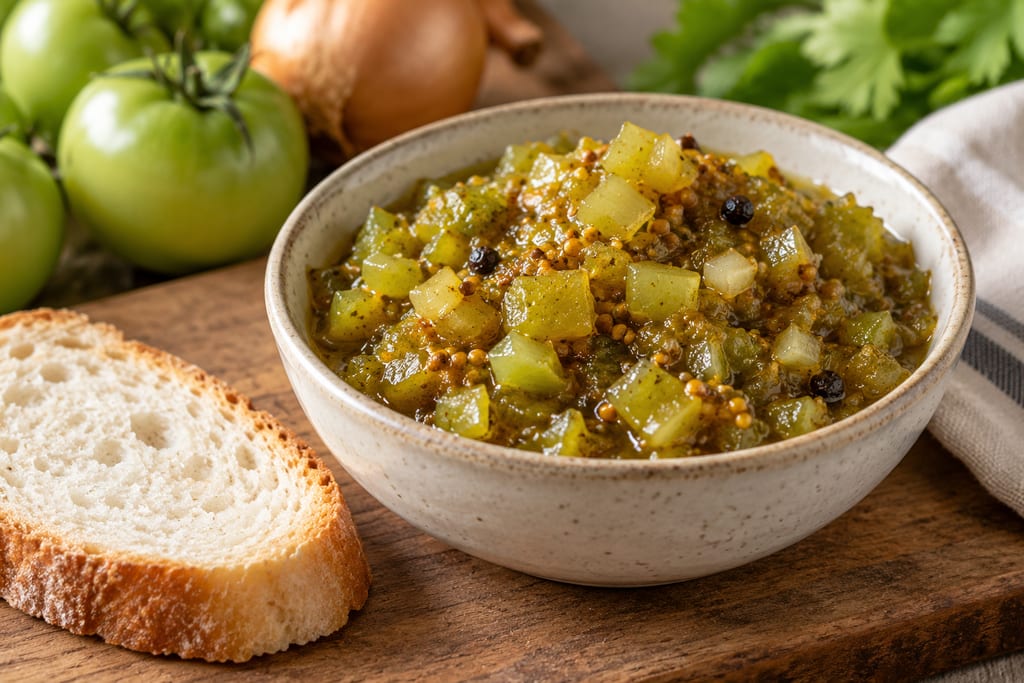
Australian green tomato pickles and relishes vary. This partial version follows ABC Western Victoria’s 2018 pickle recipe, not Beerenberg’s commercial formula. Sources document examples from 1944 onward, not a single origin.
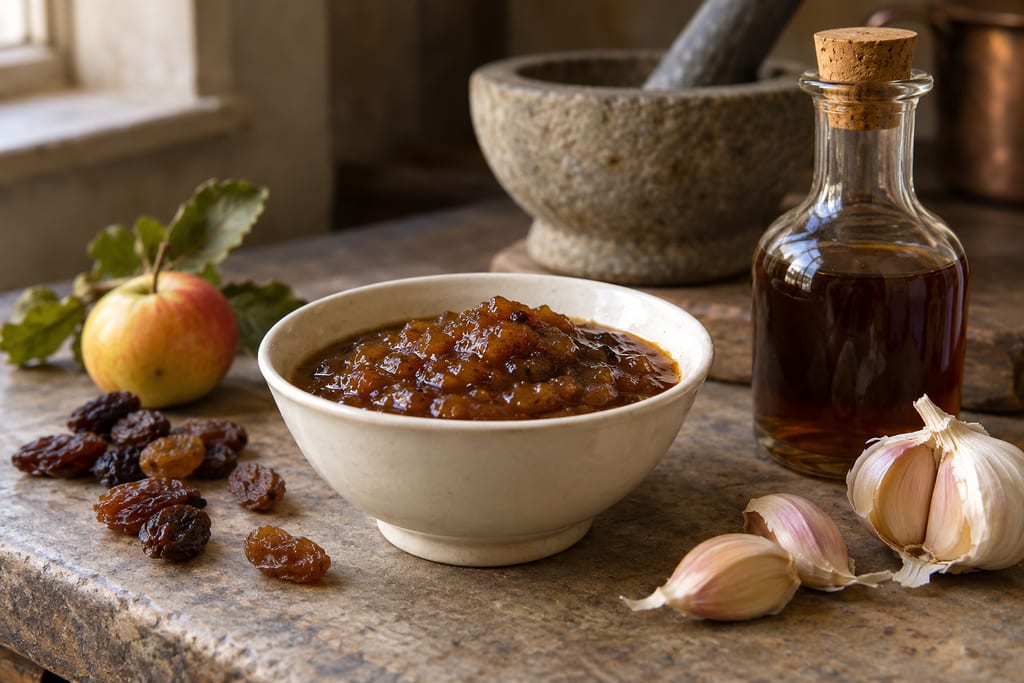
Eliza Acton's Bengal receipt for chetney sauce: stoned raisins and a hard acid fruit pounded with brown sugar, ginger, salt, cayenne and garlic, then thinned with vinegar to the consistence of thick cream.
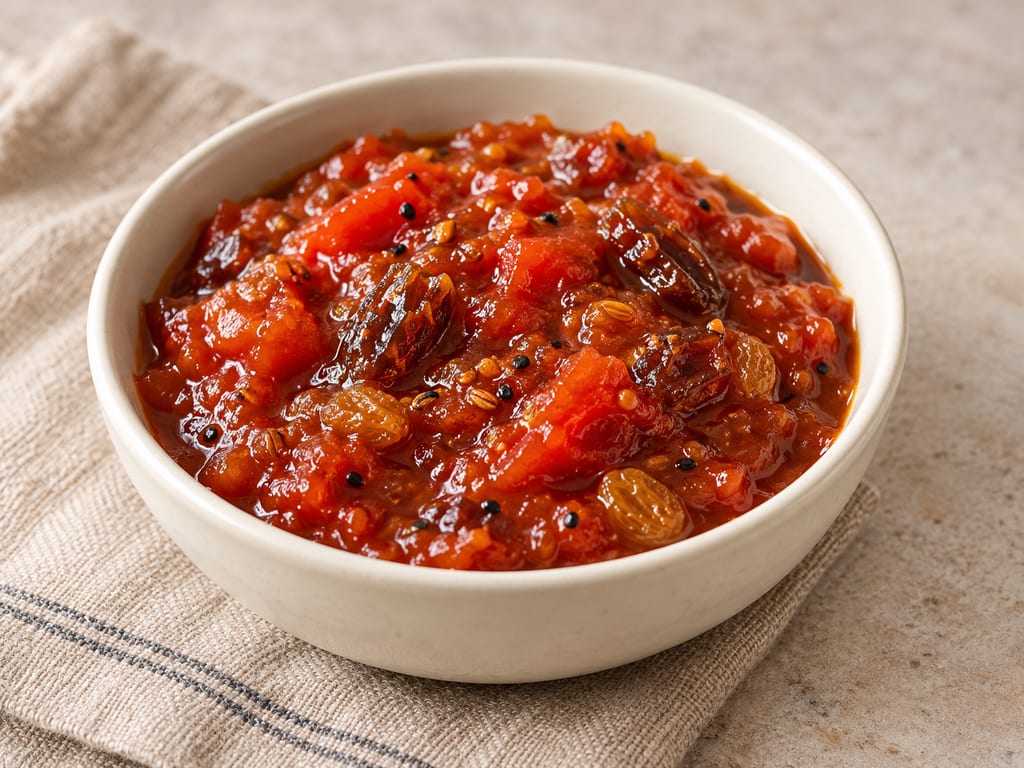
A cooked Bengali meal chutney combining tomatoes, dates, raisins, ginger and panch phoron.

A spicy South African vegetable relish of onion, carrot, pepper, tomato, curry seasoning and beans, cooked briefly and served warm or cold beside pap and grilled meat.
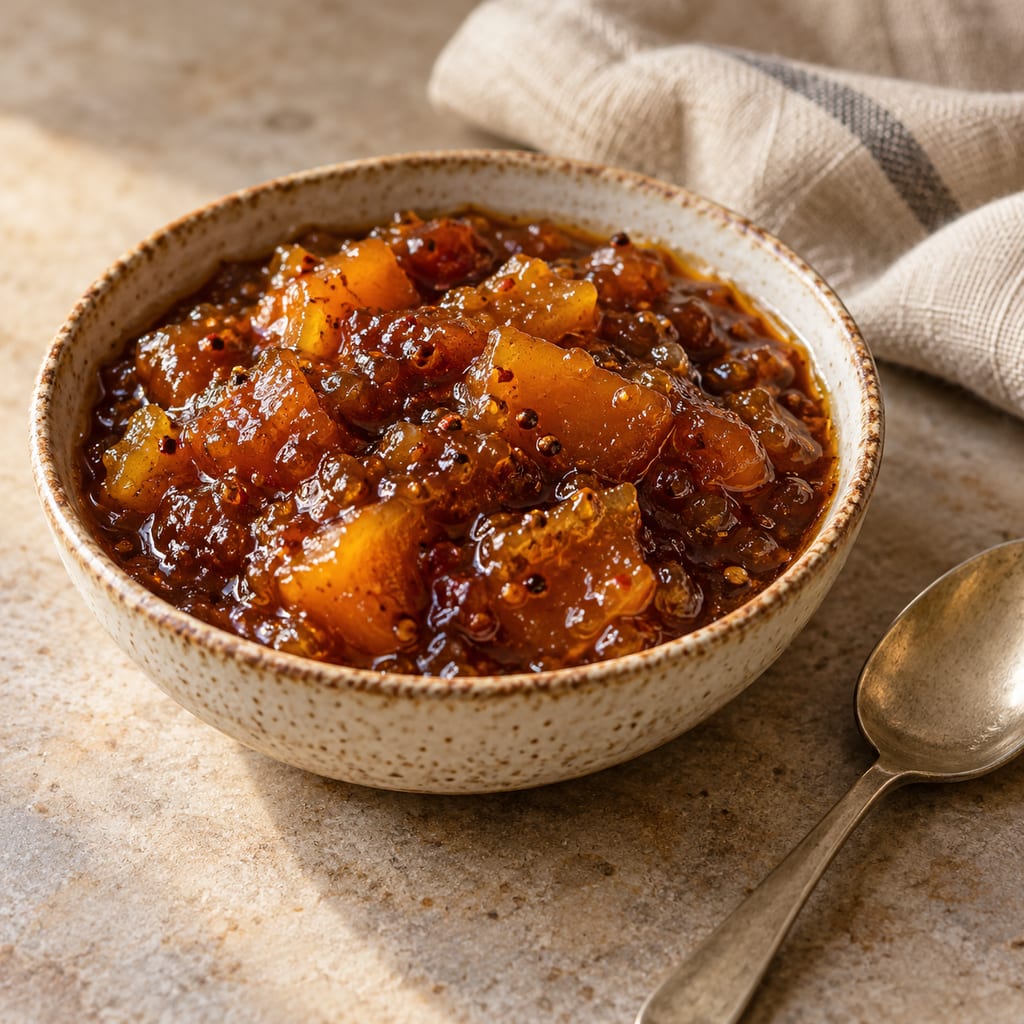
A broad account of cooked chutney traditions: fruit or vegetables combined with sugar, spices and sometimes acid, often boiled into a thick condiment. This record is historical and process context, not a formula or storage recipe.
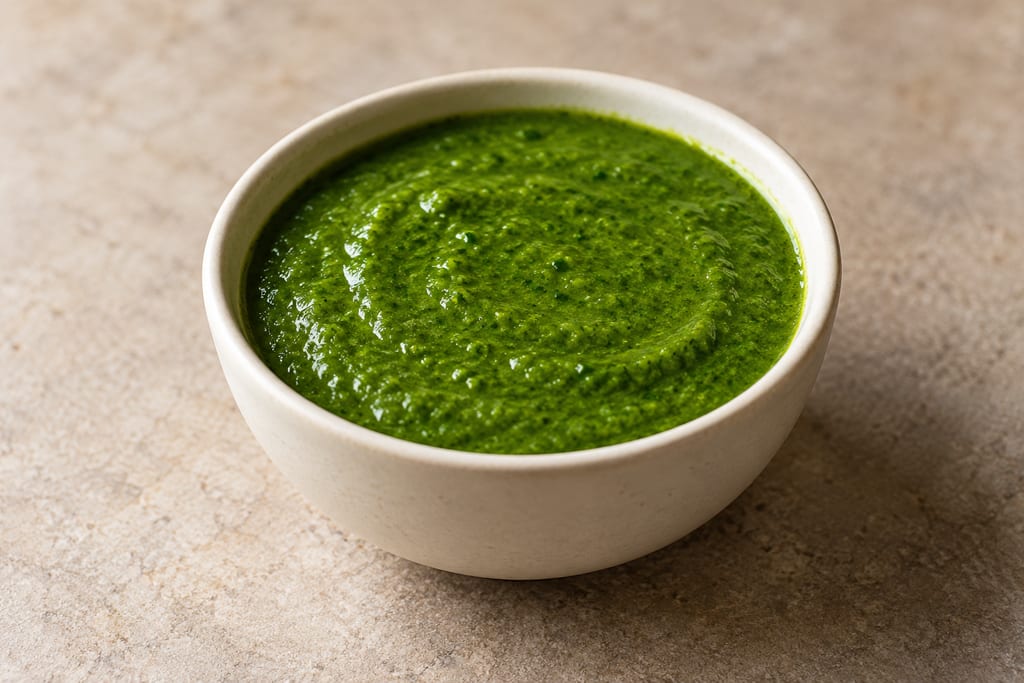
A cold-blended coriander and mint chutney with ginger, green chilli and optional cumin and lemon; the author serves it with snacks, chaat and sandwiches.
No community contributions have been published for this entry yet.
Sign in to contribute. Published comments and photos are free to read.
Jewish Food SocietyInspiration · Process · Use
Classic Mango AmbaThe recipe uses ripe mango, onion, garlic, salt, mustard seed, turmeric, cumin, Aleppo pepper, fenugreek and smoked paprika.
It cooks the ingredients over medium heat with frequent stirring until reduced by half, about 20 minutes, then cools and adjusts salt and lemon juice.
The source says the batch makes about two cups and recommends refrigerating the covered sauce for up to two weeks.
Cited in: A cooked ripe-mango amba; The ingredients shape the sauce; Cook to the source's texture cue; Cooling and storage; One documented version, not a universal formula
The Nosher / My Jewish LearningHistory · Geography · Use · Variation
Your New Favorite Israeli Condiment: Amba, a Pickled Mango SauceIdentifies amba as a mango condiment found in Iraq, the Middle East and India and says it originated in India.
Connects its popularity in Israel with the Iraqi Jewish community and describes falafel and shawarma uses.
Documents a separate green-mango recipe; its ingredients and method are not substituted here.
Cited in: A condiment carried through different foodways; Cook to the source's texture cue; Serving amba; One documented version, not a universal formula
Jewish Food SocietyHistory · Geography · Use
Writer Samantha Ellis Cooks Her Way Back to the Iraqi-Jewish KitchenSamantha Ellis recalls Iraqi Jewish mango amba in packed pita lunches made by her mother.
The page presents the story of Iraqi Jews encountering mangoes in India as an uncertain family legend, not a settled single-author origin.
Cited in: A condiment carried through different foodways; Serving amba; One documented version, not a universal formula
FoodSafety.govSafety
4 Steps to Food SafetyGeneral guidance says to refrigerate perishable food within two hours, or within one hour above 90°F (32°C), and keep the refrigerator at or below 40°F (4°C).
These general handling recommendations do not validate a recipe-specific shelf life.
Cited in: Cooling and storage