
Agar / kanten
A gelling polysaccharide extracted from red seaweeds, sold as kanten strips or powder; it sets firm at a low concentration and stays solid until about 85 °C.
 FermenteaWhere food goes to change
Spices and aromatics
Ground fenugreek seed is a bitter, aromatic spice used in pickles and seasoning mixtures. It differs from dried fenugreek leaf powder in both material and culinary use.
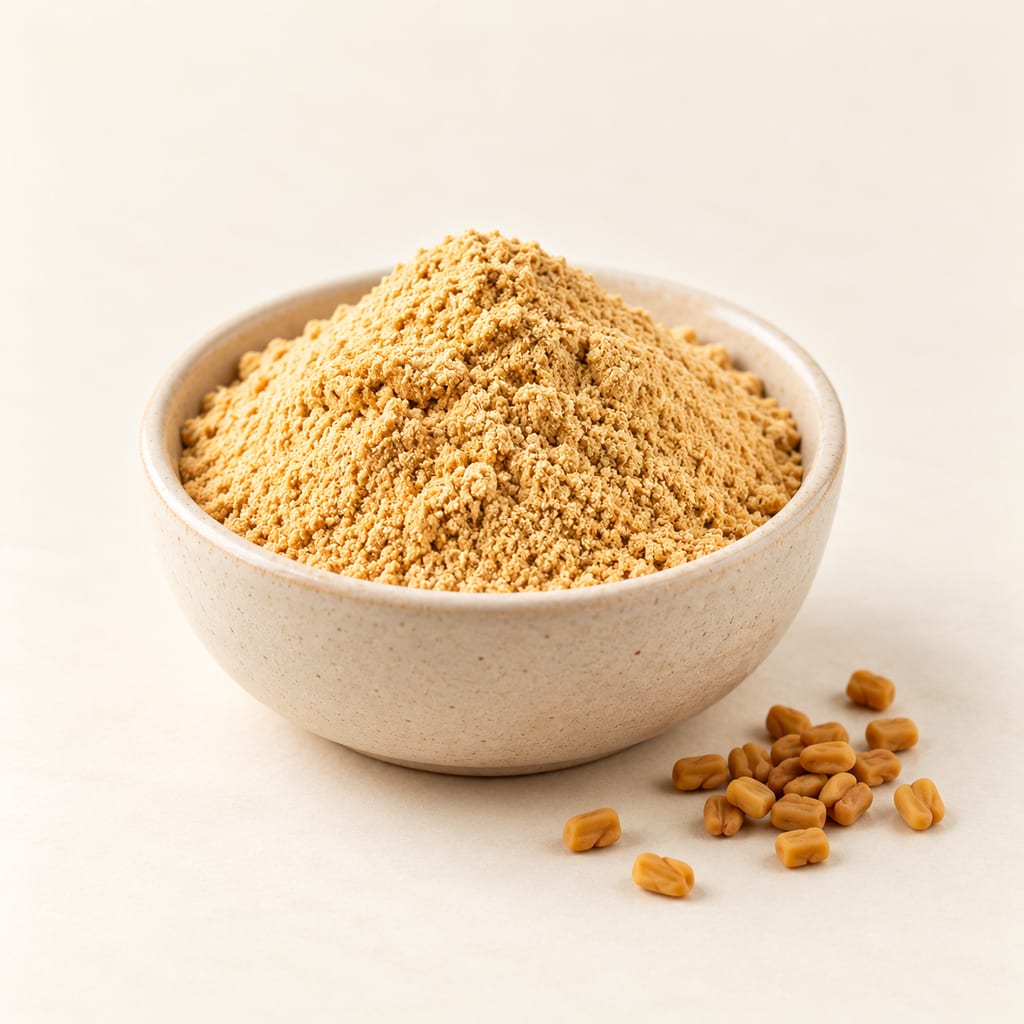
Fenugreek seed powder is a ground spice made from the mature seeds of a leguminous crop. The familiar culinary species is Trigonella foenum-graecum, an annual plant in the Fabaceae family. Its seeds are hard, angular and yellow-brown, with a distinctive bitter, aromatic character. Milling changes their physical form without making them a fermented food.
The plant also supplies edible leaves. Fresh fenugreek greens and dried leaves, often sold as kasuri methi, belong to a different part of the crop's food life. A packet labelled fenugreek powder needs that distinction: powdered seed and powdered leaf are not the same ingredient simply because they come from the same plant.
The linked Galgal pickle resolves its own wording partway through the method. Its ingredient list says fenugreek powder, while the cooking passage explicitly says fenugreek seed powder. That supports the seed form here. The source does not identify a botanical species, cultivar, roasting treatment or grind specification; the general account of cultivated fenugreek should not be mistaken for a laboratory identification of its spice.
Fenugreek's scientific name preserves an association with Greek hay and a history of fodder use. Its seeds, leaves and whole plant have served different purposes, so the history of the crop is broader than the history of a ground kitchen spice. Feeding animals, cooking greens and seasoning food with seed are distinct uses of the same cultivated plant.
An excerpt from Robert Bentley and Henry Trimen's Medicinal Plants, published in 1880 and reproduced by UCLA's Biomedical Library, describes seed use as food and medicine in India, the fresh plant as a vegetable, and seedlings eaten in Alexandria. This is a nineteenth-century botanical account of reported practices. Its medical language belongs to that historical setting; it does not establish present-day treatment advice.
Modern food accounts retain this variety. Fenugreek seed appears in spice mixtures and pickles, while leaf and stem can be eaten as vegetables. A crop review also records seed use in bread-making and food gums, alongside forage and industrial applications. These uses depend on different parts or preparations. An isolated gum, an extract and a spoonful of whole-seed powder should not inherit one another's composition or performance.
Institutional descriptions associate fenugreek with the Mediterranean, western Asia and northeastern Africa, while also documenting cultivation farther afield. Such broad origin summaries do not identify a single domestication event. Present cultivation is easier to describe: India is an important producer and user of both seed and greens, with Rajasthan prominent in institutional accounts of the seed crop.
The growing plant has leaves divided into three leaflets, pale yellow pea-like flowers and curved pods containing angular seeds. The seed harvested from those pods is a different product from young greens cut earlier in the crop. That difference in harvest goal helps explain why one crop name can cover vegetables, fodder and spice.
Tamil Nadu Agricultural University describes well-drained loamy soil and cool, comparatively dry conditions in its regional guidance. It gives separate harvest schedules for greens and grain and lists several named varieties, including the dual-purpose Co.1. These are local production recommendations, not a universal calendar for fenugreek everywhere. A commercial powder's supplier and crop specification are more informative than assuming that all seed follows one regional growing schedule.
Grinding a whole seed and separating it into milling fractions are different operations. In a roller-milling study, cleaned fenugreek seeds passed through grinding and sifting stages that produced flour, coarse husk, fine husk and pollard. The flour fraction came mainly from the embryo, while the coarse husk included the outer coat and endosperm. A product's tissue composition could therefore change along with its particle size.
The researchers compared those fractions with whole fenugreek flour in water-based pastes. The pastes behaved differently under controlled stirring and temperature conditions. Their flow was not like a simple liquid with one constant resistance to movement: the measured response depended on how the material was sheared and on its treatment history.
This gives a practical reason to distinguish whole-seed powder from a selected fraction. A flour's name alone may conceal which tissues it contains. The findings do not prescribe a sauce formula or predict the texture of the Galgal pickle; they explain why two differently milled fenugreek products need not behave alike.
Inside the seed, the endosperm is a reserve tissue surrounding the embryo. Fenugreek accumulates a carbohydrate called galactomannan there. Its name describes its building blocks: a chain of mannose sugars carries branches made from galactose. This large molecule behaves differently from free sugar dissolved in a drink. It is a structural and reserve material with a strong relationship to water.
The branches matter to its properties. Work on galactomannans explains how the degree of galactose substitution affects water solubility. Gums from different plants can therefore behave differently even when they belong to the same broad chemical family. Fenugreek gum is useful in discussions of thickening and water binding, but purified gum is a selected fraction of the seed. Whole-seed powder also contains other tissues and compounds.
The carbohydrate has a purpose for the plant itself. A seed-hydration study compared intact seeds with seeds whose endosperm had been removed. It showed that the galactomannan-rich endosperm takes up water and can buffer the developing embryo against drying. Later, the reserve can supply material for the growing seedling. Water balance and nourishment are connected roles, rather than competing explanations for why the seed contains it.
This biology gives context to the mucilaginous character associated with fenugreek seed. It does not specify how much a particular pickle will thicken. The proportion of powder, its processing and the other ingredients belong to that food's formulation. Seed physiology establishes what the material can do; it does not measure the outcome of every recipe using it.
Galactomannan is built during seed development through enzyme activity. One enzyme system makes the mannose backbone and another adds the galactose branches. These activities are called mannan synthase and galactomannan galactosyltransferase. The first assembles the main chain; the second gives it the side groups that help determine the resulting polymer's behaviour in water. Research on developing fenugreek endosperm combined gene-expression measurements, sugar analysis and enzyme assays to investigate this construction. The result connects the seed's later food properties with material deposited while the plant was growing.
The reserve does not appear at a constant rate throughout development. In the plants examined, the researchers found a period of active accumulation followed by a later plateau. Their timing differed somewhat from earlier work under other growing conditions. A seed-development study therefore gives a mechanism and a measured example, rather than a fixed harvest day for every climate and cultivar.
Germination begins another phase. The seedling draws on stored material as growth starts. This helps distinguish a sprouted seed from an ungerminated spice seed: sprouting is a living developmental process, while milling breaks material into smaller particles. Neither should be casually called fermentation. A powder made from germinated seed may have a different composition from one made by grinding untreated mature seed.
Kitchen processing can alter fenugreek before it reaches a recipe. A study by Hemlata Pandey and Pratima Awasthi compared untreated, soaked, germinated and roasted seed flours from the named cultivar Pusa Early Bunching. The treatments were followed by grinding and sieving. This is an important distinction: the investigators compared processed materials, rather than testing whether grinding alone caused every observed change.
Their flour samples differed in fibre fractions, phytic acid and laboratory digestibility measures. Roasting was a heating treatment, soaking involved water contact and draining, and germination allowed the seed to grow before drying. These are different routes to a powder. The study does not turn any one of them into an instruction for producing the spice in the Galgal pickle.
A later comparison of Egyptian-market seeds likewise treated soaking, germination and boiling as separate preparations. Its untreated seed was cleaned, milled and sieved; other samples were processed and dried before analysis. Such details matter when comparing results. A study's dried and stored analytical sample is not automatically identical to a retail spice or to powder heated briefly with oil during cooking.
Processing does not improve every measured property in the same direction. In the 2023 comparison, total phenolic and flavonoid measurements in seed extracts were lower after the tested soaking, germination and boiling treatments than in the untreated seed sample. The authors themselves discuss earlier studies with different trends. Material, treatment and analytical method all belong alongside the result.
The measurements also concerned extracts. The researchers used an alcohol-and-water mixture to draw compounds from the prepared samples, then tested those extracts. This separates the experiment from putting whole powder into a meal. An extract can enrich a selection of compounds, while a food contains them within a much more complicated mixture.
The same caution applies to antimicrobial tests. Inhibition of a selected organism by a laboratory extract does not establish that a spoonful of fenugreek preserves fruit or makes a jar safe. The experimental concentration, solvent and test system are not the conditions inside the linked pickle. That recipe supplies evidence for a seasoning practice, not a validated microbial control.
Fenugreek's bitterness and aroma explain why it is often one component of a mixture. Institutional culinary descriptions place seed in Indian spice blends and pickles; UCLA's spice account also records raw or roasted seed used to flavour mango chutney. These are uses of a distinctive seasoning, with the form and treatment chosen for the dish. Dried leaves have their own aromatic role and should remain separately named.
The Galgal account offers a particular example. For one kilogram of fruit, it lists two tablespoons of fenugreek powder. The method sautés fenugreek seed powder with mustard oil, turmeric, chilli powder and salt, then incorporates jaggery. This tells the reader how the spice enters that preparation. It does not say whether the powder had already been roasted or how finely it was milled.
That sequence should stay attached to this version of the pickle. A different fruit, a whole-seed spice mixture or powder added after curing would describe another preparation. The source does not establish fermentation of its Galgal pickle, and fenugreek should not be presented as a starter culture. Its documented contribution here is that of a seed seasoning within an oil-and-spice treatment.
Fenugreek can cause allergic reactions. It belongs to the legume family, and clinical research has documented cross-reactivity with peanut in some patients. A 2024 report investigated a child with peanut and fenugreek allergy and used the patient's serum to examine shared reactivity to proteins. This is evidence of a real possibility, not a finding that everyone with peanut allergy reacts to fenugreek.
The authors also draw attention to fenugreek being included under broad spice descriptions in processed foods. Naming it clearly helps readers who need to avoid it. Neither a small seasoning quantity nor roasting should be assumed to remove the allergen risk. The clinical challenge quantities in a case report are medical evidence, not safe intake limits for a recipe.
Fenugreek; peanut cross-reactivity is documented in some patients.
Documented cultivation and seed use in Indian spice mixtures and pickles; no single domestication birthplace established.
Context of the Galgal account; collection locality and powder sourcing place are not specified.
Broad institutional origin descriptions do not establish a single domestication place or the source of this powder.
A gelling polysaccharide extracted from red seaweeds, sold as kanten strips or powder; it sets firm at a low concentration and stays solid until about 85 °C.
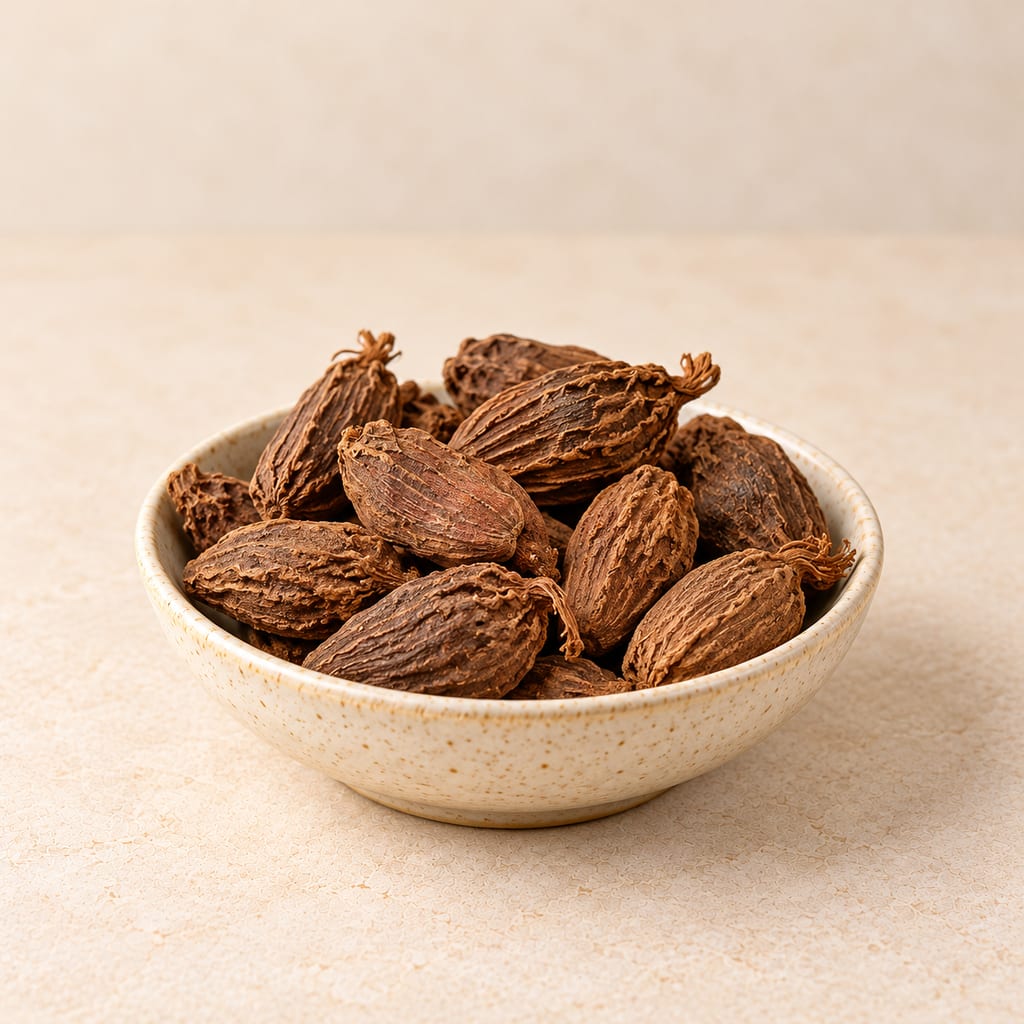
Alainchi is the large or black cardamom of the eastern Himalaya, the dark, smoke-dried pods of Amomum subulatum. Its camphor-cool, smoky seeds season Himalayan and North Indian cooking and a sweet Nepali lapsi achar.
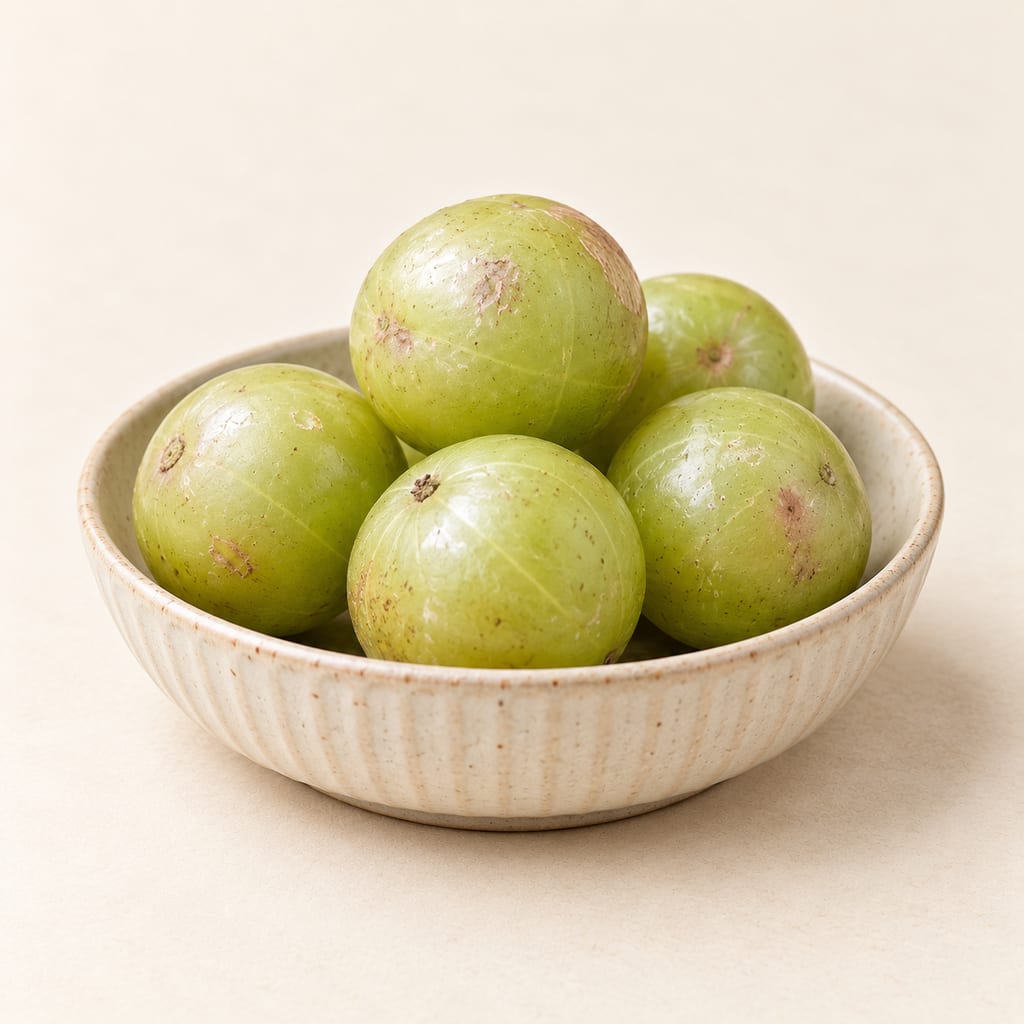
Amla is the firm, sharply sour fruit of Phyllanthus emblica. Cooks transform it into murabba, pickles, chutneys, drinks and dried snacks.
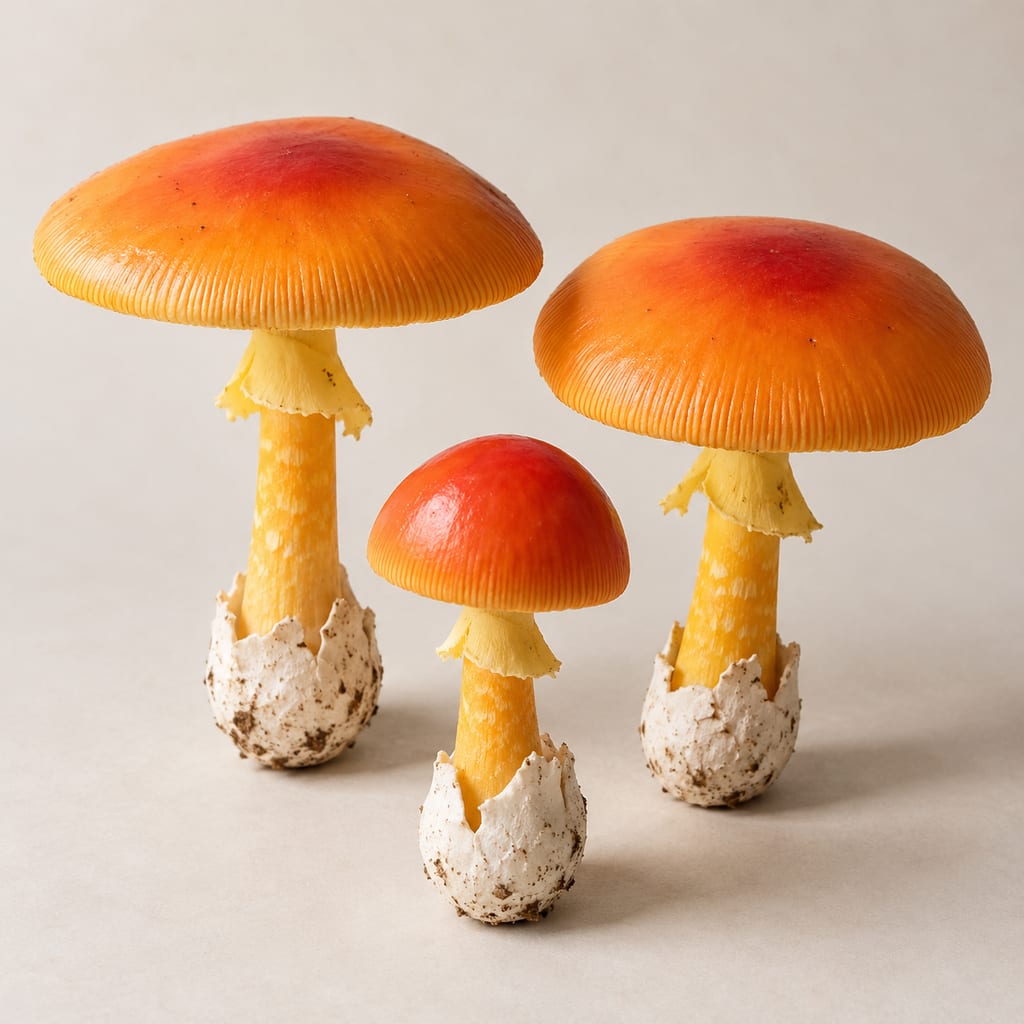
A wild Asian Amanita reported as food in regional literature and listed in China’s edible-fungi catalogue. Lookalikes include lethal species; this record is not a guide to identifying wild mushrooms.
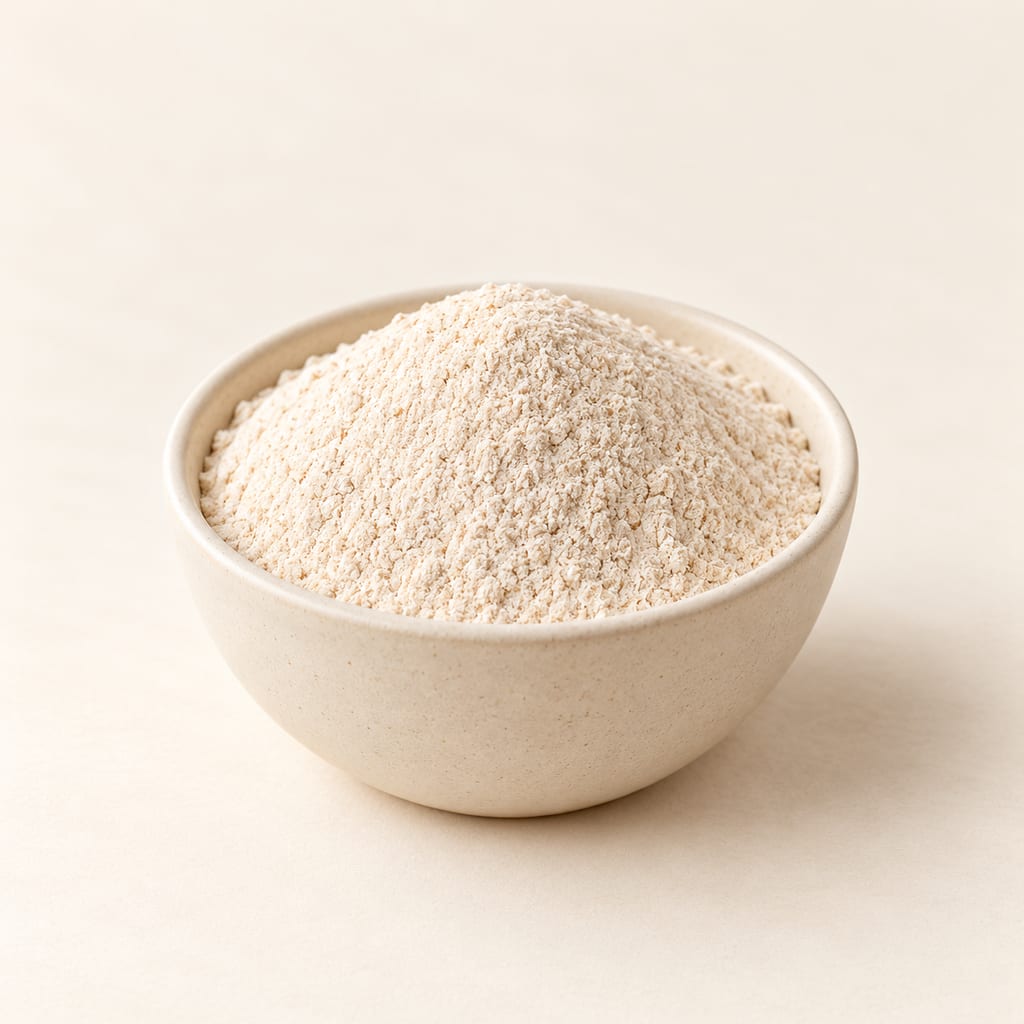
Atta is wheat flour used across South Asian bread traditions. Indian standards distinguish wheat flour (atta) from resultant atta; milling route and particle size shape its behavior in chapati dough.
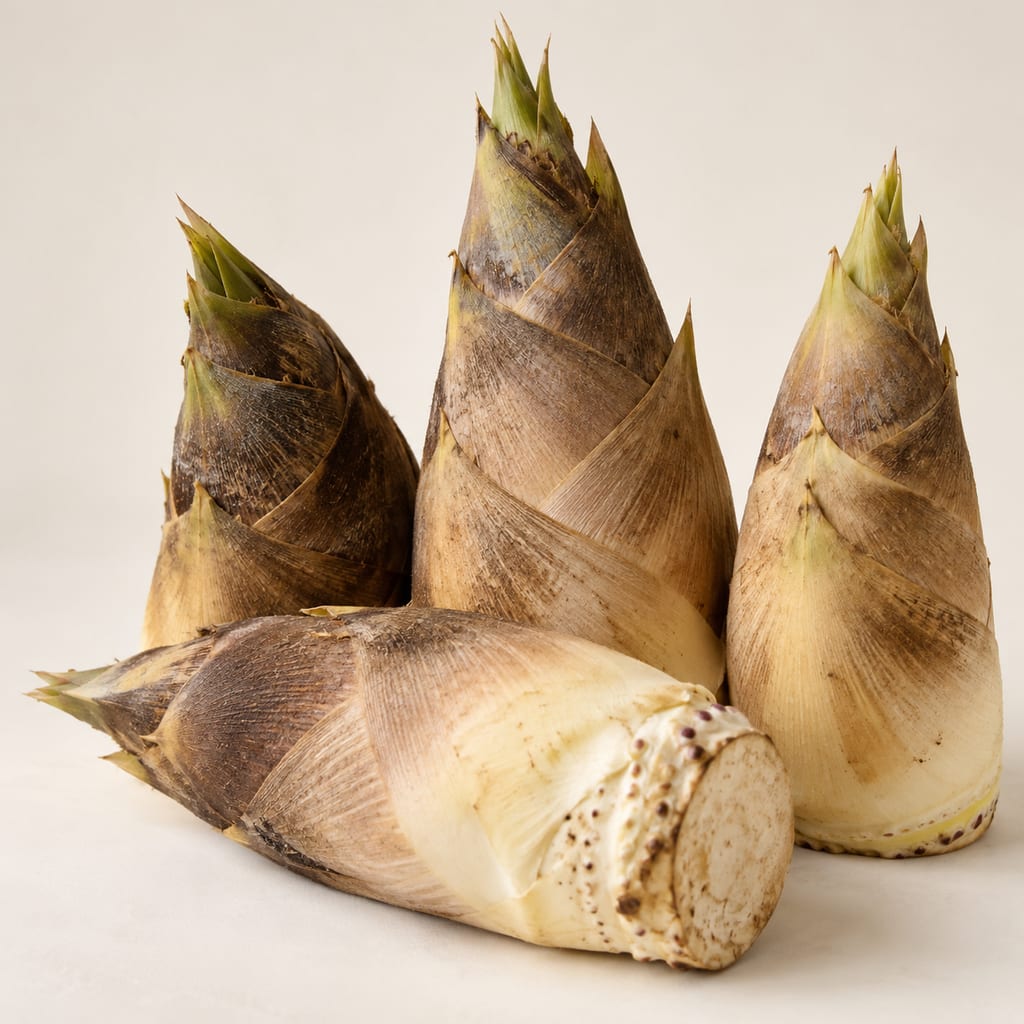
Bamboo shoots are the young culms of many bamboo species, eaten after boiling or leaching in Asia, and fermented into sour and preserved foods in the Himalayas, northeast India and Burma.
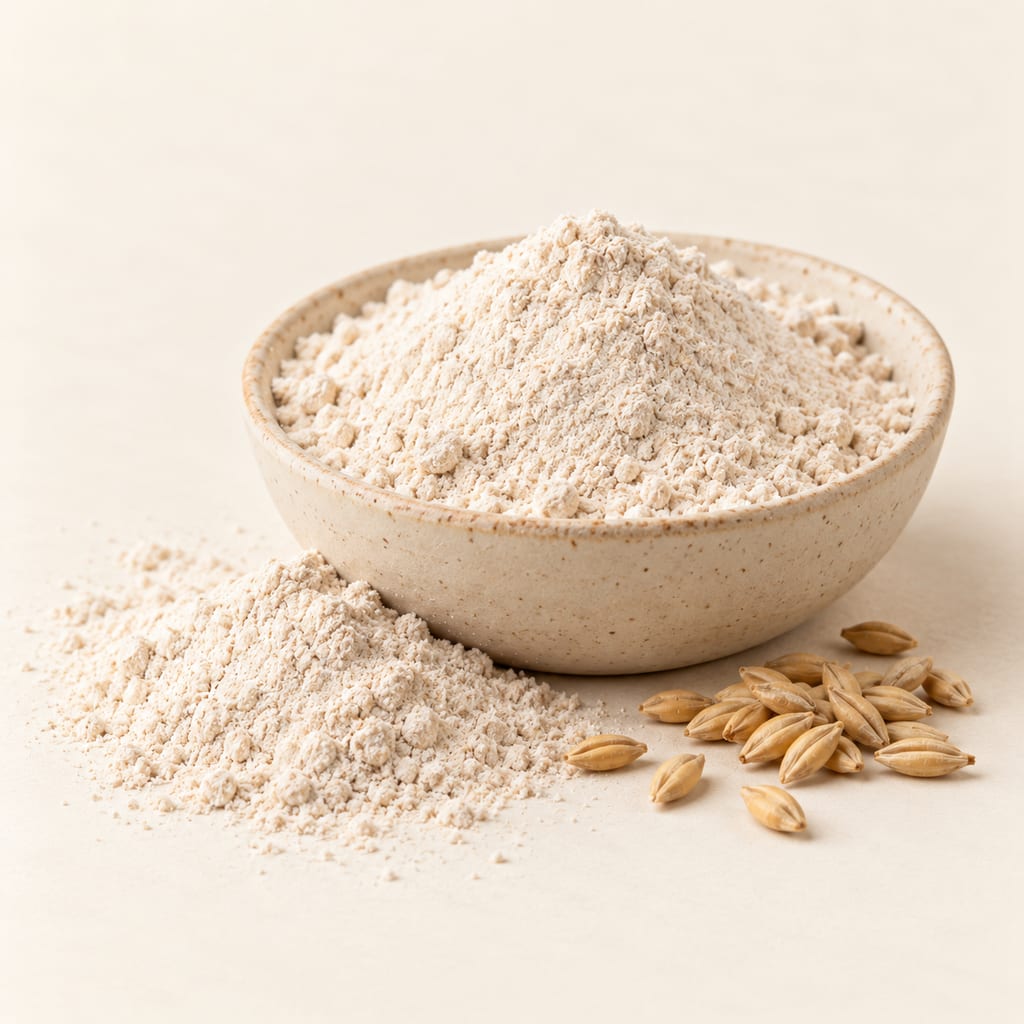
Barley flour is ground barley grain; whether it comes from pearled or hulless kernels, its milling and limited wheat-like gluten-forming ability shape the doughs and foods it can make.

Black carrot is the anthocyanin-pigmented Eastern carrot (Daucus carota var. atrorubens), the purple root that preceded orange types and still colours kanji and şalgam.
No community contributions have been published for this entry yet.
Sign in to contribute. Published comments and photos are free to read.
ICAR–Indian Institute of Spices ResearchIdentity · Context
Fenugreek – Trigonella foenum-graecum L.The crop account distinguishes seed from leaf, describes bitter aromatic seed and kasuri methi, and gives culinary and Rajasthan production context.
Cited in: The seed behind the powder; Cultivation does not identify a birthplace; Bitterness, aroma and the pickle pan
Southern Cross UniversityIdentity · Context
Trigonella foenum-graecumBotany and parts-used sections describe ripe dried angular seeds, trifoliate leaves, flowers and pods, with broad geographical context.
Cited in: The seed behind the powder; Cultivation does not identify a birthplace
Himalayan Wild Food PlantsIdentity · Context
Citrus pseudolimon Tanaka- Galgal (गलगल), KhttaThe pickle source explicitly specifies fenugreek seed powder and describes its use with mustard oil and jaggery. Species, grind and roasting are unspecified; fermentation is not established.
Cited in: The seed behind the powder; Bitterness, aroma and the pickle pan
UCLA Louise M. Darling Biomedical Library, Medicinal Spices ExhibitIdentity · Context
FenugreekThe exhibit discusses food and fodder uses, the Greek-hay name association, chutney and a reproduced Bentley/Trimen 1880 passage. The historical passage is mediated through the exhibit.
Cited in: A food plant with several careers; Bitterness, aroma and the pickle pan
Saudi Journal of Biological SciencesIdentity · Context
Fenugreek a multipurpose crop: Potentialities and improvementsIntroduction and Uses, including Table 6, distinguish seed, greens, bread-making, gum, forage and industrial applications.
Cited in: A food plant with several careers
Tamil Nadu Agricultural UniversityIdentity · Context
Horticulture: Spice Crops: FenugreekThe regional cultivation guide distinguishes varieties and greens versus grain harvests, including a dual-purpose variety.
Cited in: Cultivation does not identify a birthplace
Plant Molecular BiologyIdentity · Context
Deep EST profiling of developing fenugreek endosperm to investigate galactomannan biosynthesis and its regulationThe study describes endosperm galactomannan, mannose and galactose structure, biosynthetic enzymes, development and reserve mobilisation. It does not predict pickle viscosity.
Cited in: A seed that stores water-binding carbohydrate; Growing the reserve, then using it
Planta147(2):145–150Identity · Context
A dual rôle for the endosperm and its galactomannan reserves in the germinative physiology of fenugreek (Trigonella foenum-graecum L.), an endospermic leguminous seedThe abstract compares intact and endosperm-free seeds to investigate water uptake, drought buffering and reserve functions.
Cited in: A seed that stores water-binding carbohydrate
Journal of Food Science and Technology52(2):1054–1060Identity · Context
Effect of processing techniques on nutritional composition and antioxidant activity of fenugreek (Trigonella foenum-graecum) seed flourMethods and Table 1 compare separate soaking, germination and roasting treatments followed by milling, with composition and in-vitro digestibility results. Online 2013, issue 2015.
Cited in: Soaking, roasting and grinding make different materials
Scientific ReportsIdentity · Context
Phytochemical screening and in-vitro biological properties of unprocessed and household processed fenugreek (Trigonella foenum-graecum Linn.) seeds and leavesThe study compares processed seed extracts and measured phenolic/flavonoid values. Extract findings do not establish preservation efficacy or health effects in food.
Cited in: Soaking, roasting and grinding make different materials; Why processing claims need their conditions
Journal of Allergy and Clinical Immunology: GlobalIdentity · Context
Fenugreek allergy caused by cross-reactivity with peanut: An in vitro analysisThe case report describes fenugreek allergy and serum evidence of peanut cross-reactivity. The findings are patient-specific.
Cited in: Allergy and the limits of a spice label
Journal of Food Science and Technology53(1):421–430Identity · Context
A study on rheological characteristics of roller milled fenugreek fractionsMilling results distinguish seed-tissue fractions, whole flour and paste-flow properties. They do not specify the texture of the linked pickle.
Cited in: Milling can separate as well as grind